56 616 résultats
44154various various. Ca. 1918 - 1936. Most items loose disbound. PARTIAL COLLECTION with at least one element a 1919 diary known to be elsewhere. Two letters quite toned and brittle; evidence of photo album removal to verso of postcards and occasional other items including 6 RPPCs affixed to full leaf; slight mustiness. Some photographs poorly developed and/or lightly soiled. Overall text is clean legible and images are sharp. About Very Good. Total of 83 manuscript and 2 typescript letters plus 1 V-mail comprising 250 pp; of these 54 are from Arthur to various friends etc. 155 pp and 29 are from Arthur's parents and 3 are from others 97 pp. "Notes" folder: 64 ruled leaves 1 blank manuscript text to recto only. Scrapbook album: 46 tan construction paper leaves several blank and/or noticeably missing items. Numerous loose ephemera. Over 250 b/w photographs ranging in size from ~2-1/4" x 1-1/4" to 8" x 10" including many official Navy photos. Also 8 b/w RPPCs 2 half-tones and various negatives color printed certificates postcards etc. Most text on 10-1/2" x 8" leaves. <br/><br/>A collection of material detailing career sailor and struggling writer Arthur Gordon’s attempts to find work in the Merchant Marine during the height of the Great Depression as well as his considerable efforts to set aside time for writing and honing his craft. Gordon served as a lieutenant in the Navy during WWI as Chief Writer on the U.S. Coast and Geodetic Survey Oceanographer during the early 1930s and again as an officer in the U.S. Navy during WWII eventually attaining the rank of commander; his stories of sea life were published in various popular magazines primarily during the 1940s. Gordon is an introspective writer with a good if sometimes uneven sense of how to turn his experiences and thoughts into an often humorous and lightly self-mocking story particularly in "Notes upon leaving the Coast Survey and looking for employment as a Merchant Mate Jan 5 - June 14 1935" a 63 pp autobiography of these experiences written in the third person. "Notes" offers a highly detailed account of Gordon's experiences as an unemployed seaman during the Depression and life aboard an oil tanker when his attempt to gain a position as a 3rd Mate didn't work out: "Las Piedras is an oil tank town with a single narrow dock extending from the shore providing bollards for tying up the ships and supports for the pipe lines. The town is small and I think exists only because of the oil tanks for the location has no charm otherwise. The white oil men live as colonials in an impoverished outpost. They take what stores they need from the steward's supplies aboard ship. Loading is done by gravity since the storage tanks ashore are on the cliff." The letters roughly divided between copies of correspondence sent from Arthur to his friends and letters sent to Arthur from his parents show Gordon to be an enthusiastic and encouraging friend to multiple young men and a few women as well as a dutiful son whose unemployed parents relied heavily on his earnings. Of some note as well are a handful of thoughtful if conflicted references to homosexuality with at least one of Gordon's male friends appearing to have a crush on him and hints that Gordon may have been in gay relationships himself and/or struggled with his sexuality: "…. I quite fully agree with you concerning the chemical make-up of man and the push and pull of attraction or dislike. I have had occasion to study what it is that draws me to which I react most noticeably and I am continually dismayed that usually it is the ‘wrong’ thing. . I’m skeptical of any kind of relation that presupposes permanency. Knowing myself I feel that ‘vows’ would soon be broken. I cannot stand constant association. Routine maddens me. The merest suggestion of ‘chain’ of compulsory anything and I’m off. I don’t think hetero marriages are particularly successful and I don’t think homo are either for almost the same reasons. I don’t mind the companionate idea with women. With men I fight shy. I am getting to the age where in others I condemn homo as degeneracy. I mean that among young people it seems almost natural as a manifestation of excess love as an overflow which can be handled without social consequences. At 45 it’s greasy and quite awful. Consider the advanced homos you know . . . Am I right I am not dictating here; nor dogmatizing. I hope to start a discussion. Homos are interesting to me because I find that along with it is usually an unidentified awareness and an understanding of life unequalled in the stolid conventionites. I do not think they are God’s elected but I don’t think that about any one….” All-in-all in interesting multilayered primary source account of one man's experiences at sea during the Depression and his deep engagement with his correspondents with heavy overtones of a writer's bildungsroman traveling seeking new experiences etc. unknown books
1944218031944. Asian American United States Navy sailor and fellow white serviceman appear throughout this World War II photograph archive documenting naval personnel and their families in domestic settings during the 1940s. Thousands of Chinese Americans enlisted in the U.S. Navy during the war forming one of the largest concentrations of Asian American personnel in a single military branch. Many Chinese American sailors initially served in steward or service ratings before gradually gaining access to other assignments as wartime manpower demands increased. The photographs therefore record Asian American participation in the U.S. military during a period marked by heightened racial scrutiny following the Attack on Pearl Harbor and the subsequent wartime environment that produced both expanded military service and intensified discrimination against Asian communities in the United States.<br /> <br /> Archive of twelve black and white vernacular photographs depicting two U.S. Navy sailors one Asian American and one white American serviceman posed with women identified as Asian American family members or companions along with several older relatives. The photographs present informal outdoor scenes taken in residential settings such as front yards and open lawns. Both sailors appear in standard U.S. Navy enlisted uniforms with white sailor caps in several images while another photograph shows the Asian American sailor wearing a darker Navy service uniform with a peaked cap typically used for more formal duties. The women pictured wear modest wartime clothing including dresses cardigans and heeled shoes. The photographs show the two sailors together repeatedly across the images often standing with family members or seated on lawns suggesting a close personal friendship extending into shared social gatherings with relatives.<br /> <br /> The archive documents domestic and social dimensions of wartime military service within Asian American communities at a moment when racial identity shaped the opportunities and restrictions placed upon service members. While thousands of Chinese Americans served in the Navy during the war Japanese Americans encountered far greater barriers to enlistment following the wartime incarceration policies authorized under Executive Order 9066. The photographs therefore capture a social environment in which Asian American servicemen navigated military duty family life and interracial friendships amid wartime tensions surrounding race and national loyalty. Photographs measure typical small snapshot sizes consistent with mid twentieth century vernacular photography. Minor handling wear and light edge wear visible across several prints. Overall condition very good. unknown
16409World War II Original war time U.S. War and Navy Departments first editionsPocket Guide books for 18 countries. These guidebooks were prepared by the U.S. War and Navy Departments to educate American soldiers stationed overseas during the conflict. It includes points on culture language including slang local history and the military justification for American presence in the area; in this sense these pocket books are a unique distillation of American wartime policy composed by the highest decision-makers in government for the soldiers actually setting foot on foreign soil. These guides provide a concise yet rich example of wartime indoctrination and the resulting cultural associations and relationships formed within the average American by the war.<br/><br/> All 18 guide books are war dated and they include: Alaska 1943; Australia 1944; Egypt 1943; France 1944; Paris and Cities of Northern France 1944; Cities of Southern France 1944; Great Britain 1944; India 1944; Iran 1943; Iraq 1943; Italian Cities 1944; New Caledonia 1944; New Guinea and the Solomons 1944; New Zealand 1943; Northern Ireland 1942; Panama 1943; Syria 1942; West Africa 1943. Washington DC: War and Navy Departments 1942-1944. Stapled bindings. 5.25" x 4.25" inches. All first editions. Written often in a casual approachable way From the Pocket Guide to Iraq: "Herr Hitler knows he's licked if the peoples united against him stand their ground" these guides repeatedly drill in the strategic necessity for Americans to create diplomatic relations wherever they are stationed. For example from the Pocket Guide to New Zealand: "Always remember that it is to our enemies' advantage to sow seeds of discord between us and our allies and it is to our advantage to understand them and to make them our friends." They also illustrate explicit policy motivations as with the Pocket Guide to Iran: "As an American soldier assigned to duty in Iran once called Persia you are undertaking the most important job of your life. There is no other war theater where military success by the United States and her fighting allies will contribute more to final victory over the axis. You've heard a lot of talk in this war about life lines - the sea lanes and land routes by which military supplies flow into the combat zones to be turned against the enemy. Iran is much more that a life line. It is a major source of the power that keeps the United Nations' military machine turning over -- oil. Because of its prime strategic value Iran in the only country in the world where the armies of three of the United Nations -- Great Britain Russia and the United States -- are operating in daily touch with each other . You as an American have a responsibility that goes beyond the ordinary military duties required of you. Your country has a reputation throughout the world for decency and unselfishness in its dealings with other nations. That reputation is a major asset for us in this global war. By your actions you can uphold it or destroy it." Includes period maps of the respective regions as well as cartoon illustrations to accompany the instructional text. Scattered soiling and wear. Altogether very good. unknown books
9950P., Nepveu, 1823. 7 vol. in 8 demi-reliures, chagrin dos lisses ornés.
4028P., Albert Morancé, (circa 1930). Deux volumes grand in folio en feuilles sous chemises cartonnées à lacets. 43 pp. de texte et 75 planches et 85 pp. de texte et 85 planches.
132919aafA Marseille, (Publié par Joseph Roux), 1764, in-8vo, oblong (planches 16x22), Feuille de titre gravé orné d'attributs marins + 119 plans (de 121), + 1 feuille de table. (Il manque les planches 9 Alcudia & 83 Porteporo), qqs taches d’eau, reliure en veau brun d’époque (16.5x22.5 cm).
1741001388London: John Millan 1741. Two engraved broadsides - 'A List of His Majesties Royal Navy Shewing When They Were Built & Rebuilt their Several Dimensions and Tonnage with their highest & lowest Compliment of Men ye Number Nature Length & Weight of Guns on ye several Decks of Each Rate' and 'The Pay of the Officers & Men in ye Royal Navy together with the Number in each Rate and their Daily Allowance of Provisions and ye Number of Ships' single sided engraved broadsides. Both cropped to margins with loss to imprint of second mentioned creased from old folds browned with several small chips and tears. First mentioned with significant closed tear from left hand side but missing engraved text with old heavy reinforcing to reverse. The 'Pay' sheet gives detailed summaries including the rates paid to the ships' barber gunners taylor and chaplain. The 'List' sheet covers all rates of ships from First to the smallest yachts as well as hospital and dockyard ships. Both are uncommon the 'Pay' sheet ESTC N490067 shows at the NYPL only and the 'List' sheet ESTC T136812 at the BL and Society of the Cincinnati. First Edition. Unbound. Good. Illus. by Child G. Sculp. Folio. Broadside. John Millan Paperback
1799AQ24138London: s.n. 1799. 10 120 leaves. Predominantly printed on versos only with rectos blank. ESTC T101523. Bound with: ROYAL NAVY. An alphabetical list of the Commission Officers of his majesty's fleet: with the dates of their First Commissions. London. s.n. 1799. 176pp. ESTC T101543. 8vo. Handsomely bound in contemporary richly gilt-tooled red morocco contrasting morocco lettering-piece A.E.G. A trifle rubbed and marked.Marbled endpapers occasional spotting. A beautifully bound volume containing two registers listing commissioned officers including captains masters commanders and lieutenants in the service of the Royal Navy in 1799 - only a few short years before the commencement of the Napoleonic Wars. The first presenting naval officers in order of their seniority with the dates of their commissions as well as being printed on versos only includes several pre-printed columns left blank for manuscript additions. The second presents the same information in alphabetical order presumably for easier reference. The details of the majority of the actors of the naval heroes of the previous and ensuing decades such as Admiral Hood and Horatio Nelson commissioned June 11th 1779 are of course present. Designed to be used and frequently updated few have survived; ESTC records copies of both works at two locations BL and RUSI. . [s.n.] unknown
AQ30935s.i.: s.n. 1871-73 Manuscript on paper. 326pp. Contemporary black morocco tooled in gilt and blind. Heavily rubbed and marked foot of spine and lower joint worn corners exposed. Internally clean and crisp. With an engraved map showing the 1868-69 passage of the HMS Forte from England to Bombay with later passage added in manuscript and a sepia photograph of an unidentified vessel. A midshipman's manuscript log book in a single legible hand recording the passage of HMS Forte from Calcutta to Plymouth via Madras Bombay Aden Ras Hafun Zanzibar the Seychelles Mauritius and St. Helena commencing 3rd February 1871 and ending 16th February 1872. The midshipman in question was Frederick Gordon McKinstry b. 1853 who enrolled in the navy in 1886 was promoted commander in 1890 and retired as a captain. The Forte a fifty-one-gun screw ship launched in 1858 was at this time the flagship of Commander-in-Chief East Indies Station Rear Admiral James Horsford Cockburn 1817- 1872 and under the command of Captain Henry Fairfax 1837-1900 sometime Naval aide- de-camp to Queen Victoria. Following the voyage recorded by this manuscript the Forte was put out of commission and hulked. In 1905 the vessel was destroyed by fire along with her cargo of 1800 tons of coal subsequently sunk at her moorings by boats of the Acteon torpedo school in order to prevent her posing any threat to the crowded Sheerness harbour. The latter half of the manuscript is given over to proceedings of passages undertaken by our 'middie' on three separate vessels between 18th February 1872 and 19th June 1873 - HMS Duke of Wellington HMS Samar and HMS Royal Alfred - variously calling at Gibraltar Malta Madeira Halifax Sydney Bermuda Barbados Antigua Jamaica and Havana. . Folio. [s.n.], [1871-73] unknown
19208575Paris 1920. French naval chart 63 x 91.5 cms black and white with beacons highlighted in yellow insets of Port dAbri the inner harbour at modern day Izmir and two coastal profiles slightly dusty lower margin one or two closed marginal tears blank verso. Engraved in 1866 after British charts by Copeland and Spratt this example of the map was printed in September 1920 during the Greek occupation of the Zone of Smyrna part of the territory awarded to Greece at the expense of the Ottoman Empire by the Allied powers after the Great War. Smyrna became an important base for Greek forces during the resulting Greco-Turkish War of 1919-1922 and in the bloody aftermath of the Greek withdrawal half the city was razed in the Great Fire of Smyrna also known as the Smyrna Catastrophe. Map unknown
1848130118Paris, chez Firmin-Didot 1848 2 volumes. In-4 28 x 22 cm. Reliures demi-basane havane, 1591 pp. en pagination continue, texte à 2 colonnes, 25310 articles, 188-89 figures dans le texte. édition originale enrichie d’un envoi autographe de l’auteur. Manquent les dos. Intérieur frais.
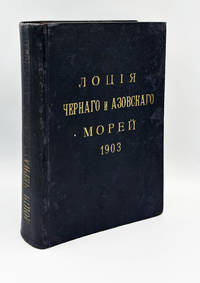
1903009701St. Petersburg: R. Golike & A. Vilborg 1903 8vo 24 cm LXIX 539 pp 2 folding maps 1 folding table 98 plates of photographs and diagrams. Publisher's cloth title gilt binding slightly rubbed and stained gilt partly faded. From the library of Paul v. Hintze stamps on endpapers. The fourth edition of the sailing directions for the Black and Azov Seas comprising an extensive physical-geographical survey covering coastlines currents temperatures salinity ice conditions weather prediction and storms followed by ten navigational chapters describing all shores from the Constantinople Strait proceeding westward northward and eastward around the entire Black Sea littoral to the Anatolian coast with a full chapter devoted to the Sea of Azov. With a prefatory history tracing the work through its four editions from 1851 the present edition prepared by Lieutenant A. M. Bukhtveyev in 1901-1902 and verified in the field by Colonel K. P. Andreyev. Supplemented by 118 autotype photographic views of Black Sea shores 31 wind-rose diagrams a general chart of the Black Sea and Sea of Azov and a composite sheet of charts and plans corrected to 1 January 1903. Provenance: Paul von Hintze German Admiral and diplomat who served as Naval Attaché in St. Petersburg 1903-1908 and later as Foreign Secretary of the German Empire in 1918. R. Golike & A. Vilborg hardcover
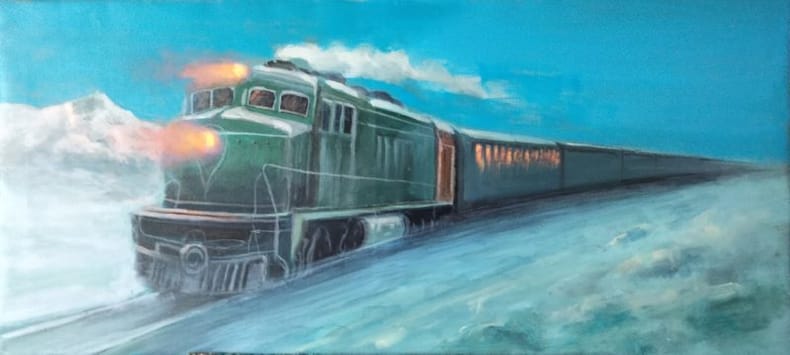
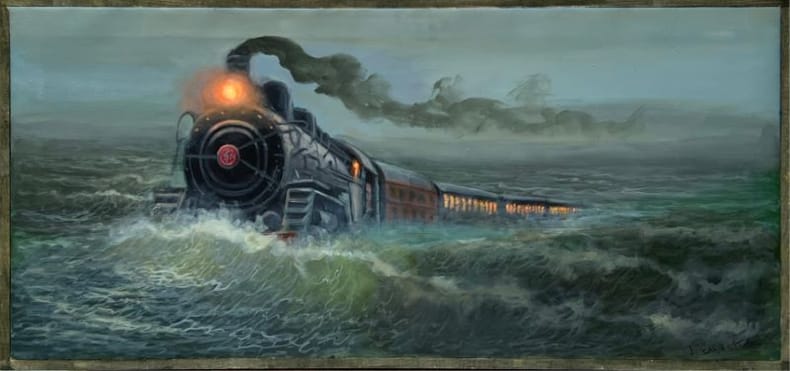
2024250072024 Huile sur toile signée en bas à droite, 2024, 45 x 100 cm.
2024250222024 Huile sur toile signée en bas à droite, 2024, 45 x 100 cm., encadrée d'une baguette bois.
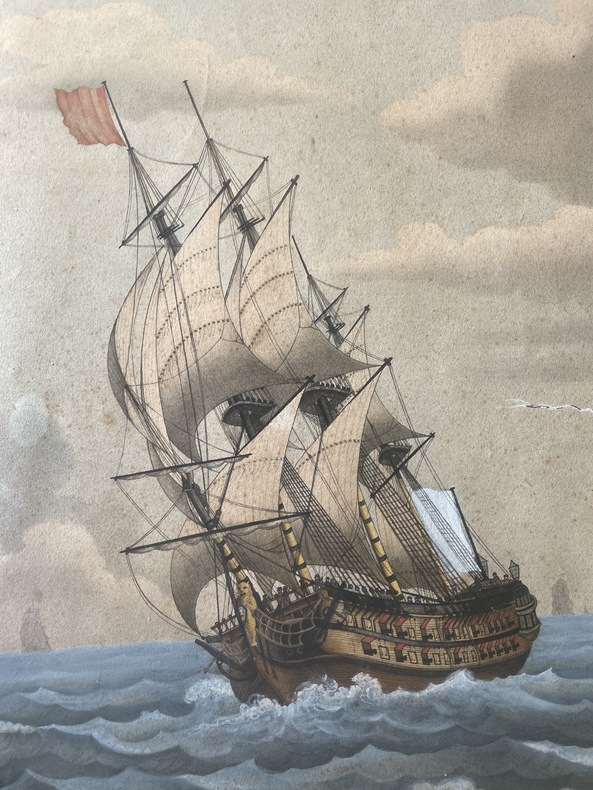
48141811. 1 feuille ( 322 x 403 mm.) Encre, aquarelle et gouache, or, signée et datée en bas à droite. (rousseurs).
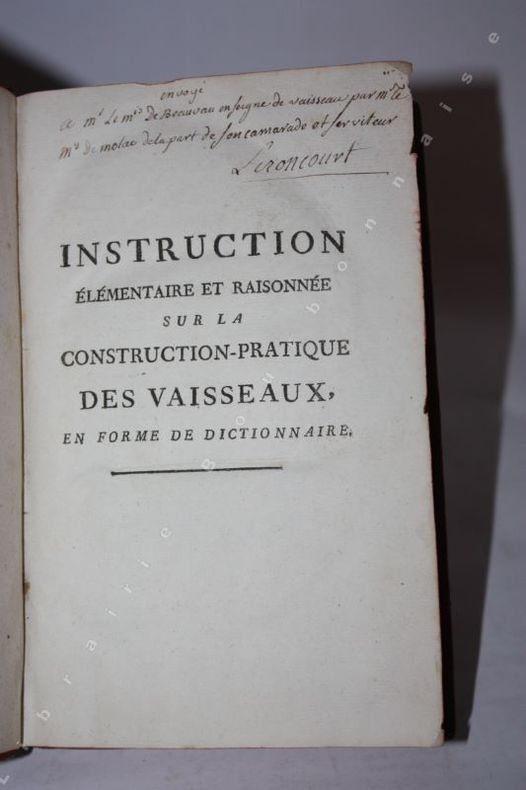
9564Paris, Chez J. B. G. Musier fils, 1771 ; in-8. XXXII-271pp. - 2 tableaux dépliants hors-texte. Basane fauve, dos lisse orné, pièce de titre rouge, tranches rouges. Eraflures sur les plats, 1 coin frotté, petit manque à la coiffe inf.
1950231021950 1 Aquarelle et mine de plomb, signée en bas à droite, (1950), 28,5 x 28 cm., encadrée.
Quaderno manoscritto a penna e matita in 8, pp. (30) in parte scritte e in parte bb. con gora centrale non deturpante. Indicazione ms. all'ultima p.: quaderno delle sue casse porto Dseato (sic). Importante e raro autografo di questo Capitano ed esploratore al servizio del governo argentino. Di origini chiavaresi, dopo aver viaggiato al comando di un brigantino per i mari dell'estremo oriente, fu al servizio tra il 1875 e il 1885 del governo argentino nell'attivita' dell'eslporazione e dello sfruttamento delle sue terre australi. Nel 1883, su sua proposta, venne organizzata una missione esplorativa nell'area di Porto Deseado che duro' tra l'11 aprile e il 14 novembre. In questo periodo vennero effettuate tutte le misurazioni e i rilievi finalizzati allo stabilimento di una colonia, fatto che avvenne l'anno successivo. Questo importantissimo brogliaccio risale proprio agli ultimi giorni di questa missione, come testimoniano le date apposte a margine delle 4 liste dei materiali caricati alla volta di Buenos Aires sul piroscafo Bahia Blanca comandato dal Capitano Ferro (11, 12, 13 e 14 novembre 1883). Di grande interesse l'esame delle liste dei materiali, che vanno da materiale geodeico e da rilevamento a tende, letti e coperte, tende, arnesi da lavoro ecc. Le pagine iniziali, dedicate ad una sommaria descrizione della localita', riflettono quanto pubblicato nella relazione a stampa edita nel 1884 e qui acclusa. Nel manoscritto poi, compaiono ampie annotazioni a matita di altra mano e che potrebbero attribuirdi a tal Luis Marzano, uomo al servizio dello stesso Oneto. Occore anche annotare che Antonio Oneto si reco' l'anno successivo, con 24 famiglie di coloni, al fine di fondare la citta'. La raggiunse il 15 luglio 1884 ma il 21 giugno 1885 mori' senza veder completata la sua opera. Attualmente, ogni 15 luglio, la citta' rende omaggio alla memoria dell'Oneto con cortei alla sua tomba ed al suo monumento. C. De Negri, L'attivita' geografica di Antonio Oneto in: Annali di ricerche e studi di geografia. Marzo 1955.
235981 volume in-4° relié plein veau marron d'époque, dos à nerfs décoré, pièce de titre de maroquin rouge, restauration en coiffes, frontsipice gravé par Ertinger, 12 f., 119 p., 8 f. (table), 21 tables (12 f). et 8 planches dépliantes. Ex-libris en garde. Traces anciennes patinées de rayures, sans gravité. Bel exemplaire. Polak - 7612.
2007SONG1844091031Findhorn Press 2007-06-01. First Edition. paperback. Used: Good. 5.50x0.50x8.00. Buy with confidence. Excellent Customer Service & Return policy. Findhorn Press paperback
Very Good Turkish, Ottoman (1500-1928) Original wrappers. Large roy. 8vo. (25 x 17 cm). In Ottoman script (Turkish with Arabic letters). [1], 39 p. First and Only Edition of the description of an early pilot guide to the Aegean Archipelago with the Mediterranean shores of Africa, Cyprus et alli, not including Morea (Peloponnese peninsula) which was published separately as 'Tarîfât-i Sevâhil-i Mora' [i.e. Description of the shores of Morea]. Admiral / General Süleyman Faik Pasha, who graduated from the Ottoman Naval Academy, was promoted to captain in 1864 after his travel to the Cape of Good Hope, and with the information, he obtained during this trip, he published and translated three guides, especially on the seas and coasts under Turkish / Ottoman rule. This early and rare book was one of his translations from its original pilot guide in English, printed in the Bahriye Matbaasi [i.e. The Press of the Turkish Naval Forces] located in Kasimpasa district which is a quarter within the Pera area of Constantinople, a low-lying area north of the Golden Horn. is one of the oldest residential areas in Istanbul with a strong naval tradition. The ships of Sultan Mehmed II sailed into the Golden Horn from this quarter. After the fall of Constantinople, Kasimpasa flourished. By the 16th century, it contained the Imperial Arsenal and docks of the Ottoman Navy, home to 120 ships. The Turkish Naval High School was founded in 1773 within a printing house shortly after foundation, to teach geometry and navigation to naval and civilian merchant captains on board a galleon anchored at Kasimpasa. The Turkish Naval Academy was housed in Kasimpasa from 1838 to 1850. Extremely rare. Only one copy in OCLC 1030771711 (Orient-Institut of Istanbul).; Özege 19742. Not in ATYB (Askerî Tarih Yayinlari Bibliyografyasi).
Very Good Turkish, Ottoman (1500-1928) Contemporary handsome quarter leather binding raised four bands and gilt lettering to spine. Roy. 8vo. (24 x 17 cm). In Ottoman script (Old Turkish with Arabic letters. 171, [1] p., 15 folded maps. First and only edition of this early naval guide to the Mediterranean and Aegean Islands and shores prepared by the Ottoman Admiral Süleyman Faik. A comprehensive early printed guide to the Cezâyir-i Bahr-i Sefid [i.e. Ottoman Province of the Archipelago] including the descriptions of all islands in the Archipelago such as Patmos, Peraka, Paros, Delos, Ipsara, Acina, Sekino, Mikonos, Bozcaada (Tenedos), Istanköy (Kos), Imroz, Crete, Anti Paros, Alosis Islands with West and East of the Archipelago, and Edremit Bay, Doris Bay, Rafti Port, Aynaroz Bay; and Anatolian shores such as Izmir (Smyrna), Kusadasi, Gallipoli. This rare book has 15 folded portolan maps of Marmaris Port, Makri Port, Naghos Port, Karaagach (Ptelea, Evros in Greece) Port, Kakuve and Tertumos Ports, portolan of Iskenderun (Alexandrietta), portolan of Lazkiye (Al-Lazkiyya in Syria), portolan of Avret Island and Trablus-Sam, and portolan of Beirut and Sida. Süleyman Faik (1845-1909) was a general, and afterwards an admiral and a Chairman of the Turkish / Ottoman Navy General Staff, divisional. Only six copies in OCLC: 773143926, 67075343.; Özege 16579.; Not in ATYB: Askerî Tarih Yayinlari Bibliyografyasi [= Bibliography of Turkish History of Military Books].
3 vols., 8vo., First Editions, with 3 portrait frontispieces, 13 plates, and front and rear endpaper maps in first volume; handsomely bound in full dark red crushed morocco, sides with gilt frame border, backs with raised bands, second and fourth compartments lettered and ruled in gilt, all other compartments tooled in gilt, gilt tops, hand-made endpapers, ribbon markers, custom-made slip-case, an elegant copy ideal as a gift or for presentation. An elegant set of one of the outstanding biographies of the twentieth century. The trilogy comprises 'The Man in the Making' (1933), 'The Years of Peril' (1935) and 'The Saviour of the Navy' (1938). NMML Catalogue II, Part 1, 1194-1196; Albion, p.215.
5 works in 2 vols., 8vo., First Edition, with frontispieces and plates; newly and handsomely bound in full navy blue crushed morocco, sides with double frame borders in gilt, backs gilt with five raised bands, second and fourth compartments lettered in gilt, all other compartments ruled and tooled in gilt with an anchor device, all original pictorial wrappers (a little dust-soiled) preserved, a splendid set ideal as a gift or for presentation. The finest novel of the Royal Navy in WWII and a maritime classic. The story, based upon the author's own experiences [see 'Chronicles' below] , forms the basis of Charles Frend's notable feature film starring Jack Hawkins in one of his most memorable roles. So accurate is its depiction of the Battle of the Atlantic that it is one of the very few works of fiction admitted by Law to his standard bibliography 'The Royal Navy in World War Two'. Law, 1865. Monsarrat's 'WWII Chronicles', arguably the definitive record of corvette service in WWII, are the basis of the novel. The set comprises 'HM Corvette' (1942), 'East Coast Corvette' (1943), 'Corvette Command' (1944) and 'HM Frigate' (1946). The first three volumes were combined and issued in slightly abridged form as 'Three Corvettes' (1945). Taken together and in sequence the four volumes provide a near-continuous record of Monsarrat's own wartime service. Furthermore they contain much of the inspiration and context, and in several cases actual incidents which reappear in the author's masterpiece 'The Cruel Sea' (1951), arguably the finest novel of the Royal Navy in WWII. Monsarrat's seatime began in HMS Campanula [broadly the 'HMS Flower' of the first volume] on the North Atlantic convoys; at one time she was the only RN vessel operating out of St. Johns. She is perhaps best known for her service in convoy OG71 (Milford Haven-Gibraltar, August 1941) which suffered so badly at the hands of a U-boat pack that it was ordered to seek shelter in neutral Lisbon. Many of the merchantmen were lost (including the SS Aquila with 22 Wrens aboard) together with the escorts HMS Bath and HMS Zinnia. The full story is related by Lund and Ludlam in 'Nightmare Convoy' (1987). He then transferred to HMS Guillemot ['HMS Dipper' in the second volume] serving on the East Coast convoys. Among the actions portrayed are the torpedoing of HMS Vortigern by E-boat S-104, and the successful destruction of an HE-111 in August 1941. HMS Guillemot's captain, Lombard-Hobson' has said of Monsarrat 'he was reserved and unpopular, but I liked him myself'. Monsarrat then assumed command of HMS Shearwater ['HMS Winger' in the third volume] operating in the North Sea out of Harwich. Individual volumes are becoming increasingly elusive. COMPLETE SETS ARE SELDOM OFFERED FOR SALE, ESPECIALLY IN THIS CONDITION. Enser, p.120 (HM Corvette); Law 1008 (East Coast Corvette), 1007 (Corvette Command) and 1084 (HM Frigate). Astonishingly 'HM Corvette' is not recorded by Law.