[JAPAN - MEIJI PERIOD]Biblio.com

11 476 résultats
1880613<p>Manuscript 12pp. of gouache paintings on fine cloth pages calligraphic labels in Japanese next to each specimen tipped into a modern binding with a gilt appliqué border 150 x 230mm c.1880</p><p>This album contains illustrations of moths butterflies dragonflies a spider a stag beetle a lady bird a wasp lizards frogs and toads cicadas grasshoppers hornets a cockroach a centipede and the full life cycle of a silkworm executed by a skilled artist in gouache.</p><p>This was produced during the Meiji period an important time for Japanese art. In 1868 the restoration of imperial rule in Japan brough the Edo shogunate to an end and marked the start of the Meiji era which would last until the death of Emperor Meiji in 1912. During this brief period Japan transformed itself from an isolated feudal nation to a world power. The historic skills of Japan's traditional arts played a vital part in the struggle to compete in international markets.</p><p>The masterpieces of Meiji art in a unique style blending the best of traditional design with prevailing international taste are unrivalled in the quality of their craftsmanship and were avidly sought by Western collectors. The blending of styles can be seen in this album of illustrations which were most likely produced for export. The addition of the european-style gilt border exemplifies this.</p> hardcover
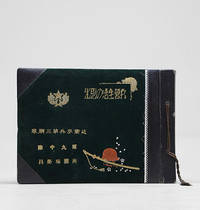
194098081Japan: 1940. Superb personal photo album portraying the training of a Japanese infantry officer cadet at the junior division of the Rikugun Yonen Gakko - Imperial Japanese Army Academy - at Asaka in Saitama province at the outset of World War II. Images show his family and friends; his well-appointed room with stacked arms; group portraits of cadets; the buildings on campus and locally interiors of a mess hall lecture theatre and of a barrack-room; parades and drill on the drill square; training exercises with firehoses and with howitzers and attack training under live fire with smoke drifting across the parade ground; jukenjitsu or kendo-style bayonet training; sumo wrestling and a traditional dance performance. A highly evocative visual document which is further enhanced by the fact that is has the marks of having been captured and passed as legitimate "loot" with the ink-stamp "Examined in the field. passed by Joint Intelligence". It was taken by U.S. Marine Sergeant Michael Kolesar of Ironwood Michigan serving with A Co. 6th Tank Battalion 6th Marine Division and has his ownership inscription to the front free endpaper datelined Okinawa April 1945. The 6th Marine Division was the only U.S. Marine Division formed and disbanded overseas never setting foot as a Division in the United States. It was formed on Guadalcanal in the Solomon Islands in September 1944 composed of the 4th 22nd and 29th Marines and assorted Engineering Medical Tank Headquarters and service battalions. They landed on Okinawa 1 April 1945 as part of III Amphibious Corps swept through the northern Ishikawa Isthmus and then engaged in heavy fighting against the Shuri Line located in hills honeycombed with caves and passages across the southern Coastline fighting for over a week and then advanced through Naha. Kolesar's tank battalion was involved in the campaign through Naha and then the Oroku peninsula sustaining heavy losses. For its part in an operation which came to be known as the "Typhoon of Steel" for the sheer intensity of the fighting the 6th received a Presidential Unit Citation for "extraordinary heroism in action". The Division was prepared for the invasion of Japan which never took place so they were sent to Tsingtao China in October 1945 disbanding in April 1946. Kolesar was evidently back home before the unit reached China the Ironwood Daily Globe of 24 October 1945 recording his presentation of a Japanese rifle that he had brought back as a trophy to the local Conservation Club he evidently retained possession of this attractive and fascinating album. Landscape quarto 215 x 282 mm. Title page with "calligraphic inscription" extolling the five codes of the Imperial Precepts to Soldiers and Sailors - Loyalty Propriety Valour Fai8thfulness and Righteousness and Valour - 75 original photographs of various formats - ranging from 100 x 70 mm to 115 x 155 mm - neatly mounted on 48 black card leaves tissue-guards remaining intact and to verso of the free endpapers some with carefully written captions in Japanese on shaped paper labels beneath. Original silk cord-backed album of black half morocco-grain cloth bottle green velvet boards the front deeply stamped with title in gilt together with Japanese Army Cadet insignia of a star within wreath and motif of a steel helmet in red with gilt katana in a flurry of cherry blossom petals. A little rubbed at the extremities but overall very good. hardcover
19722083002117400241University of Tokyo Press 1972. Soft Cover. Fine. The book is in fine condition. University of Tokyo Press paperback
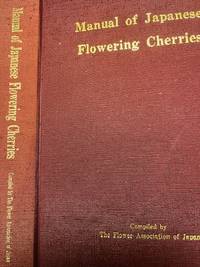
12397Akasaka Minato-ku Tokyo: The Flower Association of Japan 1982. 1st Edition . Hardcover. Very Good/Very Good. 8vo - over 7¾" - 9¾" tall. 1st ed. Tokyo 1982. 8vo. 609 pages plus index with colour photos. Text in English. Red silk in slipcase. Prior owner's bookplate on front cover. Very good. <br/> <br/> The Flower Association of Japan hardcover
1938025443Alexandria: Whitehead Morris Ltd. 1938. Second Edition Revised . Yellow Printed Boards. Very Good. Maps Plates. xii 208 folding map at end. Signed limited issue #106 of 250 copies. Second edition much revised of the 1922 edition and including his new dedication to his old friend Cavafy. Decorative bookplate of "John & Alexandrine Russell" no other names or marks. Russell was in Naval Intelligence in WWII after which in 1945 he was recommended by Ian Fleming as a reviewer for the Sunday Times. He became an art reviewer/commentator/writer of note and later was the New York Times art critic for many years. He was married to Alexandrine Apponyi 1945-1950. This copy lightly used boards slightly soiled and paper lightly aged as usual but no fraying to paper-covered boards. <br/> <br/> Whitehead Morris Ltd. hardcover
199032366Osaka Japan: International Garden & Greenery Exposition. New. 1990. Paperback. FREE UPGRADE to Courier/Priority Shipping Upon Request - IN STOCK AND IMMEDIATELY AVAILABLE FOR SHIPMENT - FLAWLESS COPY BRAND NEW PRISTINE NEVER OPENED - 188 pages; text in Japanese with some English translations. 189 works catalogued and pictured. Among the painters represented: Richet Pelouse Damoye Coignet and many others. Several of the photographers whose works are included are: Kunie Sugiura Adolphe Braun Oliver Wasow & others. -- with a bonus offer-- . International Garden & Greenery Exposition paperback
197159874Kamakura Japan: Museum of Modern Art Kamakura. As New. 1971. Paperback. FREE UPGRADE to Courier/Priority Shipping Upon Request IN STOCK AND IMMEDIATELY AVAILABLE FOR SHIPMENT - AS NEW THE TEXT BLOCK IS PRISTINE CLEAN UNMARKED AND IN EXCELLENT CONDITION - - Text in French and Japanese. 204 pp. With 95 ills. 30 col. . 24 x 26 cm. -- with a bonus offer-- . Museum of Modern Art, Kamakura paperback
199429484Japan: Museum of Modern Art Gunma. New. 1994. Paperback. FREE UPGRADE to Courier/Priority Shipping Upon Request - IN STOCK AND IMMEDIATELY AVAILABLE FOR SHIPMENT - FLAWLESS COPY PRISTINE--text in Japanese with some English translations. -- with a bonus offer-- . Museum of Modern Art, Gunma paperback
198527158Museum of Modern Art Kamakura Japan / Art Life. As New. 1985. Paperback. FREE UPGRADE to Courier/Priority Shipping Upon Request - IN STOCK AND IMMEDIATELY AVAILABLE FOR SHIPMENT - -- with a bonus offer-- . Museum of Modern Art, Kamakura, Japan / Art Life paperback
196959295Tokyo Japan: National Museum of Western Art. As New. 1969. Paperback. FREE UPGRADE to Courier/Priority Shipping Upon Request IN STOCK AND IMMEDIATELY AVAILABLE FOR SHIPMENT - AS NEW THE TEXT BLOCK IS PRISTINE CLEAN UNMARKED AND IN EXCELLENT CONDITION - - Text in Japanese with preface in French as well. 332 pp. With 220 ills. 23 col. . 21 x 15 cm. -- with a bonus offer-- . National Museum of Western Art paperback
196859054Tokyo Japan: National Museum of Modern Art. As New. 1968. Paperback. FREE UPGRADE to Courier/Priority Shipping Upon Request IN STOCK AND IMMEDIATELY AVAILABLE FOR SHIPMENT - AS NEW THE TEXT BLOCK IS PRISTINE CLEAN UNMARKED AND IN EXCELLENT CONDITION - - Text in Japanese and English. 100 pp. With 43 ills. On 39 pls. 6 col. . 26 x 19 cm. -- with a bonus offer-- . National Museum of Modern Art paperback
196859147Tokyo Japan: National Museum of Modern Art. As New. 1968. Paperback. FREE UPGRADE to Courier/Priority Shipping Upon Request IN STOCK AND IMMEDIATELY AVAILABLE FOR SHIPMENT - AS NEW THE TEXT BLOCK IS PRISTINE CLEAN UNMARKED AND IN EXCELLENT CONDITION - - Text in Japanese and English. 152 pp. With 160 ills. col. . 24 x 19 cm. -- with a bonus offer-- . National Museum of Modern Art paperback
199538931Japan: Yomiuri Shimbun. New. 1995. Paperback. FREE UPGRADE to Courier/Priority Shipping Upon Request IN STOCK AND IMMEDIATELY AVAILABLE FOR SHIPMENT - FLAWLESS COPY BRAND NEW PRISTINE NEVER OPENED - Text in Japanese and English. 53 works catalogued many illustrated in color or black and white. Among the artists represented: Jongkind; Degas; Monticelli; Daubigny; and others. -- with a bonus offer-- . Yomiuri Shimbun paperback
74352c.1885. . Hand-colored albumen print; three-part panorama fair tonal range and in fair condition photographer's title and number in negative.<br /> <br /> [c.1885]. unknown
194749698Kyoto: Nakanishi Showa 22 1947. Fan-shaped oblong 8vo. 10.5 x 5.5 in. w/ 63 sample fan designs including 35 hand-painted designs 11 woodblock-printed designs bound in Japanese-style leporello accordion binding with each image opening double-page spanning 17.2 in. Contemporary printed cloth covers hand-lettered calligraphic title label on front cover minor edgewear very slight soiling to back cover NF copy. First edition thus of this sensational post-World War II salesman sample catalogue for fan designs from the Nakanishi family store in Kyoto. Japanese paper folding fans were originally used primarily by the aristocracy and Samurai classes until they became very popular export items during the Edo and Meiji eras. During the Victorian period Western women of all social classes often carried a Japanese fan in their daily life as a decorative and sometimes practical ornament. Their popularity was reflected in European artworks with many examples appearing in paintings by the Impressionists and their height of popularity came during the Jazz Age when nearly 4.5 million fans were being exported annually. This sample book offers several designs of the Nihonga style with visually exquisite examples incorporating landscapes fishermen and a girl fish in a pond beautifully dressed Japanese geisha overlooking a bay palm trees many floral patterns oranges Japanese family crests butterflies Japanese umbrellas and so much more. The Nihonga artist most identified in the catalogue is Takeuchi Seiho 1864-1942 who was active from the Meiji through Showa periods one of the founders of the Nihonga style and considered a master of the pre-War Kyoto circle of painters who established his own private school -- the Chikujokai -- and later in 1913 became an Imperial Household Artist. He was very influential in his role of modernizing Nihonga and although he worked primarily with the famed Kyoto Publisher Unsodo he created some of the most sumptuous print designs of the 20th century. His legacy of students included such famous artists as Hashimoto Shinnosuke; Hashimoto Kansetsu Nishiyama Suisho Tsuchida Bakusen Nishimura Goun Uemura Shoen Tokuoka Shinsen Tsuji Kako Miki Suizan and Ito Takashi. The Nakanishi family were originally fan makers and continued to do so well into the 20th century when they changed over to dealing in antique Japanese dolls which the owner had collected for years. See: Brunei Gallery School of Oriental & African Studies University of London Origin of the Folding Fan; Hutt & Alexander Ogi -- A History of the Japanese Fan 1992; Lavenberg Collection of Japanese Prints. Nakanishi], hardcover
1893163107No place of publication.: 天眞堂. Tenshindō. Meiji 26 1893. A beautifully illustrated colour manuscript Meiji period "house geomancy" 家相 plan folded scale 1:50. On heavy good quality Japanese paper. Pop-up walls gate and some buildings turnable geomantic compass. Some creasing light soiling or browning but generally very good. 179 x 95cm. House divination originated in ancient China and became popular in Japan from the 19th century on. The idea of the house divination remains popular in Japan to this day. <br> <br>This beautiful sheet gives a detailed floor plan of a traditional Japanese house designed for a person of high status. This house was possibly on the grounds of Tenshindō in Yamanashi near Tokyoas Tenshindō is mentioned in the text. The 24 red lines which represent 24 hexagrams diverge from the central movable paper geomantic compass indicating 24 directions. The geomantic compass its range taking in the entire plan enables the planner to be certain that rooms and objects will be placed in such a way as to benefit the residents. By the same token the compass serves to make sure that planning does not work to the detriment of the residents. . [天眞堂]. [Tenshindō] unknown
1910155302Tokyo: Imperial Government Railways. circa1910. 50 delicate hand coloured collotype plates on high quality stiff card each captioned in English presented in Japanese embroidered silk covered boards with tassel ties All edges gilt. patterned gilt endpapers.The hinges of each image have been professionally repaired with Japanese paper and wheat starch paste. Neat pencilled annotations lower corners leaves clean and bright. 26 x 38cm. This beautiful album proved very popular and was reprinted a number of times in some editions all of the plates are in colour as is the case with this copy and at other times the edition only shows some plates in colour and while the others are in black and white. The work also appears in editions both with and without 2 maps later editions in Western bindings. <br> <br>Although his name does not appear in this album it seems highly likely that this album was published by Ogawa Kazumasa 1860-1929. Described by Terry Bennett in his excellent work Japanese Photography in Japan 1850 - 1912 as a "Pivotal figure in early Japanese photography. He adapted cutting-edge Western technology in photo-printing processes to produce numerous half-tone and collotype publications which transformed the market." <br> <br>The interesting and delicate scenes in this album include a number showing Japanese people at leisure in a street scene a crowd at a sumo match people involved in their daily occupations and a number of temples gardens and other places of interest to the early 20th century visitor to Japan. A very good copy of a charming album. . Imperial Government Railways. hardcover
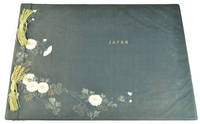
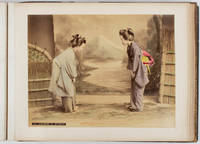
1890178093Circa1890. 24 large 23 x 29cm hand coloured silver nitrate and albumen photographs in an attractive pictorial lacquer album leather spine in compartments - rubbed at the spine gilt dentelles and inner gilt dentelles all edges gilt. Images show some colour breakdown with the colour red highlighted on some album is a little rubbed or scratched in places and some chips with loss to the edges. Faint foxing to a couple of images somewhat heavier on the first image the album measures 27.5 x 36.5cm. Large gift inscription dated '92 1892Yokohama. Endpapers marked and slightly soiled still a handsome and very interesting album containing a number of unusual photographs. Beautiful lacquered album containing a collection of 24 professionally produced hand coloured photographs of Japan in the 1870s -1880s. The identity of the photographers behind these hand-coloured prints of is uncertain but a number of the photos appear to have been taken by photographers associated with the Yokohama studio of English/Italian photographer Felice Beato 1832-1909 which operated in Yokohama from the mid-1860s to the mid-1880s. . hardcover
19722110502151000234University of Tokyo Press 1972. Soft Cover. Fine. Number of books: 40 University of Tokyo Press paperback
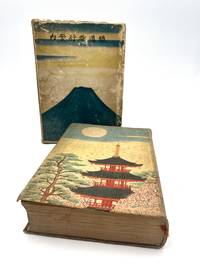
192686404Tky Tokyo: Hakubunkan 1926. Fine. Hakubunkan Tky Tokyo 1926 19.50 x 11 cm relié Work published by the Japanese Ministry of Railways admirably illustrated with 166 illustrations. This new edition was entirely revised and the illustration is completely new. The Ministry of Railways published this collection from 1923 to 1928; from 1923 to 1925 the collection contained numerous bird's-eye view maps by Yoshida which were replaced by photographs and now only adorn the pastedowns. This is the first collection to use photography with 126 black and white photographs and 18 hand-colored ones. 22 color prints by Hatsusaburo Yoshida. 7 folding color maps and several black and white maps in-text. Cloth binding and cardboard slipcase. Pale green cloth covers. Smooth spine with title. Boards printed with a Japanese temple with full moon and trees on the first board and on the second. Illustrated cardboard slipcase with Mount Fuji and birds. Rubbing and dulled edges to the slipcase. Small cut to the cloth on the spine. Fine condition of the collection with some foxing. Spine darkened boards spotted. Handsome copy rare with its original slipcase. A vast undertaking this guide was intended as a monument to the glory of Japan. For the first time modern Japan meets traditional Japan. Celebrated as the Hiroshige of the Taisho era Yoshida 1884-1955 was a painter and cartographer. A major retrospective of his works took place in Japan at the Sakai Museum in 1999. The prints created for this collection are particularly beautiful. Hakubunkan hardcover
19662081002108800467All Japan Student Photographers Federation 1966. Soft Cover. Fine. Number of books: 1 All Japan Student Photographers Federation paperback
19722091502135703948University of Tokyo Press 1972. Soft Cover. Fine. The book is in fine condition. University of Tokyo Press paperback
19692110502150907462Naruyama-do shoten 1969. Soft Cover. Fine. Number of books: 9 Naruyama-do shoten paperback
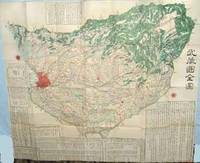
1856826971856. MAP - JAPAN Gyokuransai SADAHIDE & Kikuchi Shuzo. MUSASHI NO KUNI ZENZU. Edo Kikuya Kosaburo & 12 others. Ansei 3 1856 112 X 127 cm. An interesting colored woodcut map of the Musashi plain. Folds into its original titled covers 28 x 18.6 cm. Nice colors impression and colors. Sadahide was not only a talented printmaker but was also responsible for several important maps of the time. Beans 1856.13 in Supplement B page 41. See the UBC website at http://angel.library.ubc.ca/cdm4/item_viewer.phpCISOROOT=/tokugawa&CI SOPTR=312&REC=3 for more info on this map. From The Keyes collection. unknown
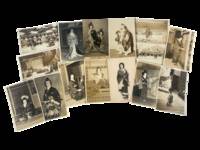
1910227351910. Cross dressing Japan Kabuki Cross-dressing scenes and portraits of Onnagata actors photo archive Japan ca. 1910s-1920s documents the visual culture of Japanese theater at a pivotal moment when modern photographic media intersected with longstanding traditions of gendered performance. Produced during the TaishÅ and early ShÅwa periods these images preserve Kabuki's stylized theatrics and the centrality of onnagata male actors specializing in female roles to social constructions of femininity in Japan. Following the 1629 prohibition on women performing on the Kabuki stage male actors developed the onnagata tradition involving stringent rules of gesture comportment and dress which in turn informed the performance of gender beyond the theater.<br /> Collection of 15 original silver gelatin and collotype photographs Japan ca. 1910s-1920s. The photographs each measuring approximately 4 x 6 inches include both full-stage production scenes and studio portraits of celebrated performers in costume. Several bear Japanese captions and publisher imprints in the margins and some identify specific plays and characters including an example labeled "花ã®å¹‡é–“" Hana no Taiko. Performance images depict painted scenic backdrops including maritime settings elaborately dressed actors captured mid-scene and musicians seated as part of the nagauta ensemble while studio portraits center onnagata figures in heavy white oshiroi makeup elaborate coiffures and richly embroidered kimono. Iconic theatrical gestures such as the mie the climactic stylized pose are represented underscoring the physical vocabulary that defined Kabuki theater. These photographs reflect the ways in which social concepts of femininity informed Kabuki performance and how Kabuki conversely informed societal gender presentation. Such material illuminates the role of onnagata in shaping and exporting images of Japanese femininity during a period of expanding international cultural exchange. Minor edge wear and light toning otherwise crisp and clean. Overall very good condition. An evocative photographic record of Kabuki performance and gendered theatricality in the early 1900s. unknown