358 résultats
New Arabic Original cloth bdg. 592 p. In Arabic. Elephant folio. (49 x 35 cm). First Edition. Illuminated. Reprinted from the original manuscript of Topkapi Palace Museum dated 1584-87. The Koran known as Ahmed Karahisarî's Mushaf-i Serif is leading among the most important works created by artists, who are experts of letters of the Ottoman Palace dealing with the art of books. The work is registered at number 5 among the Hirka-i Saadet books of the Library of Topkapi Palace Museum. Its binding with golden gilded ornament, angle and border has miklep and is made of black leather and was repaired in time. Being the Koran with the largest size written in the Ottoman world, is sized 61.5x42.5 cm and consists of 300 sheets. The place of the work where the name of the calligrapher and the date of transcription would have been written, i.e. the colophon is left empty. The reason for attributing it to Ahmed Karahisarî, the famous calligrapher of the period of Kanunî Sultan Suleyman, is based on a foundation record at its beginning: in this foundation record on page 1b, it is briefly stated that the work is the Mushaf-i Serîf of Karahisarî, was kept in the sultan's treasure until then and was devoted to the Hirka-i Serîf Chamber (Private Chamber) for being recited in 1107 (1696) by Sultan Mustafa II. The beginnings of Fâtiha and Bakara chapters of the Koran, every page of which is gilded carefully, are written with celî muhakkak (large cursive style) and reyhanî calligraphy. Two opposed pages following the epigraph demonstrate a different arrangement. Here, one line each of celî calligraphy at the bottom and top and reyhanî calligraphy in a round medallion at the middle are used. In the opposed pages following this, the same arrangement is used without the medallion. Following this diversity at the beginning, the Koran is written according to a classical arrangement known as Yakut style, consisting of one line of celi muhakkak, five lines of nesih (roundish writing), one line of celî sulus (large style), again five lines of nesih and celî muhakkak calligraphy at the bottom. Ahmed Karahisarî is the most famous artist writing in this style among 16th century Ottoman calligraphers. However, it is quite surprising that the signature of Ahmed Karahisarî, who had great reputation in his time, is not seen at the end of the work. This can be explained by the failure to complete the Koran of the artist due to his death or his old age. It is possible to determine the period in which the work, accepted to be written by Ahmed Karahisarî, famous calligrapher of the time of Kanunî Sultan Suleyman, and incorporating the richest examples of Ottoman palace gilding art was completed with its main lines in the light of some documents.It is understood that 220 pages of the Koran known as Ahmed Karahisarî Mushaf-i Serif and which is one of the most valuable works of Topkapi Palace Museum were written by Karahisarî at the time of Kanunî Sultan Suleyman between 1545-55 and was left unfinished upon the death of the artist. It is also understood that the remaining 80 pages completing the Koran were possibly written by Hasan Celebi, his adoptive son, under the patronage of Sultan Murad III between 1584-87. Conjunction, drawing of rulers, gilding of every page and binding and final completion of the work was performed between 1584-1596. Murad III, who died in 1595, could not see the result of this study that he assumed the patronage of for long years.
New English Original bdg. Small 4to. 184, 564, 216 p. A heavy volume. Ills. In Arabic. This is a facsimile edition of the copy (Mushaf) of the Holy Quran which is attributed to the time of Ali b. Abi Talib and located in Sana'a, Yemen. It comes out as a third publication in IRCICA's series of editions of oldest copies of the Quran. Earlier IRCICA had published editions, accompanied by descriptive and comparative studies, of two Quran copies that are attributed to the time of Othman b. Affan namely the copies of Topkapi, Istanbul and al-Mashhad al-Husayni, Cairo. The other copies attributed to the same period are in the following cities: Istanbul (the Museum of Turkish and Islamic Arts, edition published by ISAM, Istanbul, 2008); London; Paris; St. Petersburg, and Tashkent. There are other editions of Quran copies that IRCICA published outside this series. One of them is the copy dated 582 H/1186 and known as the Fazil Pasha (Sherifovic) Mushaf, which is located in Gazi Husrevbegova Library, Sarajevo. Another edition, supervised by IRCICA, is the reprint of the Mushaf of Kazan dated 1803 which is known to be the first copy printed in the Muslim world; it was reprinted in cooperation with Kazan Municipality in the year 2005 corresponding to the millennium of Kazan city. By publishing these editions, with studies in the case of the former ones, IRCICA aims to contribute in preserving them and making them known and accessible to all. The Sana'a copy is located at the Grand Mosque of Sana'a. The elaborate Introduction to the edition is a study by Dr. Tayyar Altikulaç, specialist of the history of copies of the Quran and ex-Head of Religious Affairs in Turkey. The study is a concise history of the dissemination of the Holy Quran through its copies and of the developments relating to script, orthography, punctuation, locations, etc. of the copies. It examines, describes and analyses the characteristics of the Sana'a copy as to script, orthography, binding, etc. It also describes the other copies attributed to the period of Othman b. Affan as well as the copy printed by the King Fahd Complex for the Printing of the Holy Quran, Medina, which is known to be in conformity with the orthography of the time of Othman b. Affan. IRCICA planned to publish this edition during the 2010-2011 period which, at the suggestion of IRCICA, was designated by the 2010 meeting of the OIC's Council of Foreign Ministers as the "1400th Year of the Revelation of the Holy Quran". The Council had invited all OIC member countries and Muslims' associations and institutions world-wide to commemorate this anniversary of the beginning of the revelation with cultural and scholarly activities that would contribute in diffusing a correct and deeper understanding of the Holy Quran. IRCICA for its part is honoured to have been able to record this publication among its activities related to the said Year.
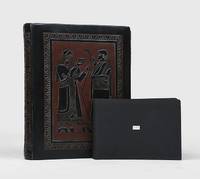
New Turkish Original aesthetics full leather bdg. in traditional Ottoman style. With flap (miklep). In publisher's special luxury box. Large 4to. (30 x 25 cm). In Arabic. All edges gilt. Fully illuminated as traditional: Serlevha, hecde hizb, cüz roses, zahriye semses, müsenna besmele, with 'tevafuk' and color secavends, and med-kasirs. 605, 11, [4] p. The glorious Quran. Kur'an-i Kerim. was an Islamic calligrapher born during Ottoman times. His real name is Sheikh Musa Azmi, which is why his works may be found to be signed as Azmi. He is known by the pseudonym Hamid. He is also known as Hamid Al Amidi in international circles. Hamid learned the jali-thuluth (Turkish: celi-sülüs) style from Mehmed Nazif (1846-1913), the naskh and thuluth styles from Kamil Akdiç (1862-1941) and the ta'liq style from Mehmed Hulusi (1869-1940). His works are on display in many countries including Egypt and Iraq. His works are also on display in many newly built mosques of Istanbul. Some of his popular students include Hasan Çelebi and Fuat Basar. He was buried in the Karacaahmet Cemetery of Üsküdar district, Istanbul.
New Turkish Original aesthetics full leather bdg. in traditional Ottoman style. In publisher's special box. 4to. (30 x 20 cm). In Arabic. All edges gilt. Fully illuminated as traditional: Serlevha, hecde hizb, cüz roses, zahriye semses, müsenna besmele, with 'tevafuk' and color secavends, and med-kasirs. 605, 11, [4] p. The glorious Quran. Kur'an-i Kerim. was an Islamic calligrapher born during Ottoman times. His real name is Sheikh Musa Azmi, which is why his works may be found to be signed as Azmi. He is known by the pseudonym Hamid. He is also known as Hamid Al Amidi in international circles. Hamid learned the jali-thuluth (Turkish: celi-sülüs) style from Mehmed Nazif (1846-1913), the naskh and thuluth styles from Kamil Akdiç (1862-1941) and the ta'liq style from Mehmed Hulusi (1869-1940). His works are on display in many countries including Egypt and Iraq. His works are also on display in many newly built mosques of Istanbul. Some of his popular students include Hasan Çelebi and Fuat Basar. He was buried in the Karacaahmet Cemetery of Üsküdar district, Istanbul.
1996USD_9780815181453Mosby 1996. 2nd. Unknown Binding. UsedLikeNew/UsedLikeNew. Mosby unknown
1996AME_9780815181453Mosby 1996. 2nd. Unknown Binding. New/New. Mosby unknown
arabe Sans date. Reprint 1913 and 1918. 2 tomes en 2 volumes in-8 de XII-XV + Texte en arabe ; reliure de l'éditeur. Edited by Shaykh Muhammad 'Asal, M.A. (Cambridge), with indices by R. A. Nicholson, Litt. D. Vol. III, 4 and 5 of E. J. W. Gibb Memorial series.
1732845913.Gpaperback. Good. Access codes and supplements are not guaranteed with used items. May be an ex-library book. paperback
B9781732845916Paperback / softback. New. paperback
Collana “Reports and Memories”, XXI. Un volume di XVII-59(-105)-77 pagine, brossura editoriale. Dimensioni: 24x34 cm. Tracce d'uso alla brossura (in particolare al piatto inferiore), ottime condizioni interne. 36 figure (alcune su foglio ripiegato) e 56 tavole in b/n fuori testo. Le ultime 77 pagine seguono la numerazione araba e contengono la traduzione dei testi in lingua araba.
New English Paperback. Demy 8vo. (21 x 14 cm). In English and Arabic. 128 p. The development of the linguistic semantics emerges from the development of the human society itself due to either the necessity or the creativity which grow throughout time using synecdoche, metaphor, metonymy, and connotative meanings. Studies on the semantic development have significant implications which are associated with the philosophy of human development itself. Therefore, this study aims at identifying the semantic development of the word "asubh" and its derivations in the Holy Quraan, the Hadith, and Arab's provers, and poetry. The research problem lies in the fact that the word "Asubh" is expressed by words like "sabah" and "isbah" and several meanings used by the dictionaries, whereby this word has become a wide semantic area used in several contexts, such as "to become, pray, light, clarity, hope, scandal, war, death, and warning". As a result, the relationship between the meanings of "asubh" and these contexts should be clarified since the semantic development cannot be identified without them to remove the apparent contrasts in these denotations or show their rhetorical aspect as well as demonstrate the way of generating meanings of the word "asubh" from each other.
198339151ABHarlow, Longman / Boulder, Westview Press, 1983. 8° (22x14), xvii, 350 p., 2 maps, publisher's hardbound with photo jacket, sl rubbed, tight and clean, well cared,
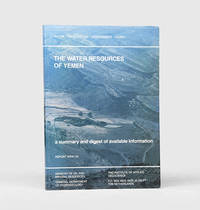
167682Sana'a and Delft: Printed for Ministry of Oil and Mineral Resources General Department of Hydrology; TNO Institute of Applied Geoscience 1995. With attractive maps and cross-sections First edition first printing consolidating hydrological data on Yemeni geography information sources climate monitoring networks and surface- and groundwater with a particular focus on evapotranspiration and flash flows. An institutional search locates only seven copies in Europe and the US. The Yemen Arab Republic formed the General Department of Hydrogeology GDR in 1978 and the Yemeni-Dutch Water Resources Assessment Yemen WRAY programme was launched four years later. WRAY investigated the water resources while building a public database and its fourth phase began in 1990 to ensure the GDR's self-reliance and consolidate earlier findings. The study focuses on western areas such as Tihama Al Jauf and Marib while the east is largely limited to the Wadi Hadhramaut. It looks at ancient water systems such as the old Marib Dam the collapse of which is noted in the Koran. Also shown is spate irrigation illustrated by Van der Gun's map of Wadi Surdud. Ghayls open canals capturing groundwater are identified as future study potential. Modern projects are assessed including the new Marib Dam and irrigation project and the increasing challenges of groundwater depletion are examined. Folio. With 6 colour folding maps and colour geological cross-section illustrations in the text. Original illustrated wrappers front wrapper lettered in white. Some rubbing of extremities soiling of rear wrapper end edges of text block internally clean. A very good copy. unknown
98820aafLondon, George Allen & Unwin, 1958, lg. in-8vo, 180 p., richly illustrated, small legacy stamp ‘Guggisberg’, original red clothbound, with illustrated jacket. Very good to fine copy.
Il racconto drammatico e commovente di Zana Muhsen che, dopo anni, lotta ancora per liberare dalla schiavitù la sorella ed il figlio.
80 pages. Features: Carter and Begin meet for one last try to save peace talks; Jerry Brown's Budget Balancing Act; Jane Byrne knocks out Mayor of Chicago; American foreign policy in the middle east; Khomeini's Kingdom Qum; China's Putative War Against Vietnam; China's War with India; Saudi fears of subversion from Yemen; Queen receives valuable gifts from Dubai; Idi Amin's Big Trouble; The Oil Squeeze of 1979; Oil Authority Walter Levy; China Faces Reality - still much promise, but also worry about money and lower goals; Treasury Secretary Michael Blumenthal meets Hua Kuo-feng; Henry Bloch of H&R Block Co.; Concerns over fallout from nuclear testing; Chaos in Television as the networks claw for audiences; Manic of Mork - Robin Williams - article with color photo; Features with the heads of ABC, CBS and NBC, Fred Pierce, William Paley, Fred Silverman; John McPhee writes of his favorite restaurant, "The Bullhead" in Shohala, PA; Color-photo ad for the Peugeot 604 SL; Voyager 1's rendezvous with Jupiter; Passing of Dewey Bartlett, Mustafa Barzani, W.A.C. Bennett, Henrich Focke; and more. Unmarked. Moderate wear. A sound copy. Magazine
112 pages. Features: Pitney-Bowes ad features Mike Lawlor; Kodak M18 Movie Camera ad; Map of Canadian Pacific's holdings; Artist Claude Goulet; X-15 Crashes in Mojave Desert, taking the life of Air Force Major Michael J. Adams; Vietnam war coverage; Ferdinand Marcos electoral victory in the Philippines; Fantastic two-page photo ad for Crown Zellerbach Canada Limited features large black and white archival photo of loggers with color inset photo of the lovely Mrs. Tom Radford of (our hometown) Ladysmith, BC; Dressing up the Masai in Tanzania; South Yemen - Yoke of Independence; Photo of Miss World, Madeleine Hartog-Bel who passed out when she was named the winner; Photo of Oregon State's Haggard kicking field goal vs. U.S.C.; Passing of racehorse Dark Star; German Publisher Axel Springer; Stella's Radial Rainbows; Nice color photo of John D. Garnet in Schaefer Pen ad; Passing of Major General Bruno A. Hochmuth, Bernard Kilgore, Joan Lowell, Serafino Romualdi, Clementine Paddleford, Ida Cox, Sir Archibald Nye and Dr. Elmer V. McCollum; Divorce of Ralph Schoenman and J.D. Salinger; San Antonio's fast-rising Hilton Palacio Del Rio Hotel; Jeep Wagoneer ad; Photo of band "The Doors" at the Fillmore; Canadian Club ad inside back cover features Dick Honey tree-chipping in New Zealand. Average wear. Unmarked. A sound vintage copy. Magazine
In-16 gr. (mm. 184x124), tela editoriale, pp. VI,(2),296, con 14 tavv. in b.n. f.t. “Early explorers in Arabia - Niebuhr’s travels in Yemen - Wellsted’s explorations in Oman, etc.”. Ben conservato.
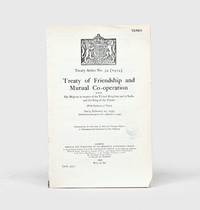
1934164042London: His Majesty's Stationery Office 1934. First English-Arabic edition first impression of the diplomatic agreement which acknowledged "the complete and absolute independence of His Majesty the King of the Yemen the Imam and his kingdom in all affairs of whatsoever kind" p. 2. In June 1934 shortly after this agreement was concluded Ibn Saud and Imam Yahya signed the Treaty of Taif which brought an end to armed hostilities between the two countries. In this development Britain had played a major part with its support for Yemen and comparatively lukewarm stance vis-à-vis Ibn Saud helping to both precipitate military conflict and ultimately bring it to an end. The English text of the treaty without the ratifications was first published earlier in the year as HMSO Yemen No. 1. Octavo 232 x 151 mm pp. 11. Royal coat of arms of the UK on first page. Sometime disbound with no subsequent stitching. Small faint Admiralty ink stamp dated 14 December 1934 on first page. Light creasing and skinning where previously bound a few nicks small chip at foot of first leaf text bright. A very good copy. unknown
14677Paris, Nathan/Panoramic, 1976 18 x 24, 199 pp., nombreuses, illustrations en couleurs, cartonnage d'édition, très bon état.
1935169367Aden: 1935-36. A superb window onto Yemen in the 1930s Two albums depicting the experiences of British servicemen stationed in Yemen around the time of the Second Italo-Abyssinian War 1935-7 mixing the documentary and the personal. The images include very rare contemporary aerial photographs of towns including Aden Ta'izz and Shibam graphic pictures of war in Addis Ababa urban military and agricultural scenes and records of free time on the RAF base at Khormaksar. Nearly all carry explanatory manuscript captions. Aden was of crucial strategic importance to the British Empire having been brought under the control of the East India Company in 1839. After the opening of the Suez Canal in 1869 it became one of the world's busiest ports. The RAF maintained a base at Khormaksar now Aden International Airport which played host to numerous squadrons throughout the 1930s. Of these No. 8 Squadron was stationed at Khormaksar for the longest period of time maintaining a policing and day-bombing role. Photographs of military aircraft belonging to No. 8 Squadron can be seen in these albums alongside pictures of planes flown by Nos 203 41 and 55 Squadrons. The photographs give a vivid impression of the volume of air and maritime traffic - mostly British but also French and Dutch - which passed through Aden after Mussolini's invasion of Ethiopia. Aerial shots show Fairey MK IIIs and Vickers Vincent planes flying in formation as well as night and day bombers and flying boats. There are also detailed close-ups of ships including British aircraft carriers. It seems probable that the photographer who assembled these albums was involved in surveying: there are fine aerial shots of Aden and Crater the Sultan's palace at Lahij Shuqra Shibam Tarim Ibb al-Mukalla and Ta'izz giving an outstanding sense of how these towns looked in the early 20th century. The pictures of Ethiopia include one aerial photograph of Addis Ababa a number of ground shots of an execution the wounded and the dead and images of buildings on fire. There is only one photograph captioned as having been taken in Somaliland but this provides a further clue that the photographer was sent from Yemen to the Horn of Africa with the intention of documenting Italian military activities there. As a result of the Second Italo-Abyssinian War Ethiopia was incorporated into Italian East Africa consisting of Italian Somalia Ethiopia and Eritrea. Britain ruled British Somaliland and France controlled French Somaliland Djibouti. Many of the images may have been taken when the photographer was off duty. There are several almost touristic shots of everyday life in Crater showing children playing and Friday prayers images taken on the beach and in the salt pans around Aden pictures of Yemeni pastoralists with their cattle and photographs of Yemeni Indian and Somali women. A significant minority of the pictures show downtime at Khormaksar with a string of images depicting airmen in fancy dress playing football and drinking. There are even two photos of the squadron's dog in a cap and glasses and with a pipe in its mouth. 2 albums. Album I with 175 silver print photographs of various dimensions 100 x 65 mm - 240 x 180 mm mounted on card. Album II with 55 silver print photographs all c.100 x 150 mm or c.75 x 100 mm. Almost all photographs with period ink captions. Album I: quarto 290 x 230 mm. Original cloth covers spine and sides decorated with pictorial designs in relief marbled endpapers 36 card stock leaves. Album II: landscape octavo 130 x 187 mm. Contemporary black card wrappers "Aden" title sticker on front cover 22 card stock leaves. Album I: superficial rubbing to spine and rear cover short splits to inner hinges fore edges nicked. Album II: rear inner hinge split glue residue to gutters. Photographs all in very good condition. hardcover
Very Good Turkish Paperback. Cr. 8vo. (20 x 14 cm). In Turkish. 268 p. Türkiyenin siyasi^ hayatinda batililasma hareketleri. Westernization and reform movements in Turkish history from Ottoman to Republican period.
New English Paperback. Roy. 8vo. (24 x 17 cm). Papers in Turkish and Arabic. 430 p. Uluslararasi Dördüncü Orta Dogu Semineri: Ilkçaglardan Islâmiyetin dogusuna kadar Orta Dogu. Elazig 29-31 Mayis 2009. Bildiriler. Papers of the fourth international seminar on the Middle East. pp.271-335 in Arabic. 500 copies were printed.
20041222166(CEFAS; Sanaa), (2003 / 2004). Ca. 250 Seiten; A4-Kopien; 30 cm; rückengoldgepr. Leinenband.