289 résultats
185649036Paris Mallet-Bachelier 1856. 4to. No wrappers. In: "Comptes Rendus Hebdomadaires des Séances de L'Academie des Sciences" Tome 43 No 13. Pp. 637- 672. Entire issue offered. Vulpian's paper: pp. 663-665. <br/><br/><em>First appearance of the paper in which Vulpian described his discovery of adrenaline in the adrenal medulla. Vulpian established that the medulla synthesised a substance that was liberated into the blood circulation. This substance was later identified as adrenaline.Garrison & Morton No. 1141. </em> unknown
181843871Paris Crochard 18181819. No wrappers. In: "Annales de Chimie et de Physique Par MM. Gay-Lussac et Arago." tome 8 Cahier 3 a. 10 Cahier 2 pp. 225-336 and pp. 129-240. Entire issues offered. Pelletier & Caventou's papers: pp. 323-324 tome 8 and pp. 142-176 tome 10. A few scattered brownspots. <br/><br/><em>First printing of these classic papers in chemistry in which the authors announced their discovery of Strychnine. This was the first alkali of vegetable origin to be discovered after morphine. This discovery and their discovery of chlorophyll brought them international fame. The first small paper contains the announcement of the discovery and the second long memoir contains the elaborate exposition of the discovery."Strychnine was only the second alkaloid to be extracted the first was morphine. Pelletier and Caventou wanted to name their new alkaloid vauqueline after Nicolas Vauquelin one of their associates who had refined the technique of ether extraction for use in isolating alkaloids. However the officers of the Académe des Sciences in Paris rejected the idea on the grounds that a respected scientist’s name should not be paired with a deadly poison. In addition to strychnine the pair isolated other important compounds from plants including caffeine chlorophyll and the anti-malaria drug quinine. Paul L. Burnham.Parkinson:"Breakthroughs" 1818 C. - Garrison & Morton: 1846.The first issue also contains their importent memoir "Examen chimique de la Cochenillee et de sa matière colorante" pp. 250-287 which describes how they obtained crotonic acid from croton oil and analyzed carmine in the cochineal. </em> unknown
183443654Paris Crochard 1834. No wrappers. In: "Annales de Chimie et de Physique" 2. Series Tome 56 Cahier 4 last issue of tome 56. Entire issue offered. Pp. 337-444. Peltier's paper: pp. 371-386. The text calls for a plate but not present here. <br/><br/><em>First printing of the paper in which Peltier describes his discovery of the "Peltier-Effect" the thermo-electric cooling and heating of an electrical junction dependent on the direction of the current."Stimulated by the work of Nobili Peltier constructed a sensitive galvanometer to measure the conductivities of antimony and bismuth for small currents. Peltier's use of small samples of these nonductile materials was fortunate because the anomalous behavior of these materials led him to construct a thermoelectric thermoscope and to measure the temperature distribution along a series of thermocouple circuits. He discovered that a cooling effect can take place at one junction and an excessive heating at the other. He then confirmed this discovery by using an air thermometer in place of the thermoscope. Peltier did not pursue the effect he had discovered and its importence was not fully recognized until after the thermodynamic work of William Thomson twenty years later."DSB X p. 500.Wheeler Gift no 2684. - Ronald's Library p. 389. - Parkinson "Breakthroughs" 1834 P. </em> unknown
171745962Paris L'Imprimerie Royale 1717. 4to. Without wrappers. Extracted from "Mémoires de l'Academie des Sciences. Année 1714". Pp.361-378 and 1 folded engraved plate. <br/><br/><em>First printing of the paper in which Cassini describes his discovery of the inclination of the orbit of Saturn's fifth satellite. </em> unknown
181046377Paris J. Klostermann 1810. Contemp. hcalf. Spine gilt. Slightly rubbed. A few scratches to binding. Small stamps on verso of titlepage.In: "Annales de Chimie ou Recueil de Mémoires concernant la Chemie" Tome 75. 336 pp. a. 2 folded engraved plates. Some scattered brownspots. The papers: pp. 27-77 129-175 256-263 264-273 274-289 a. 290-316. <br/><br/><em>First French version of Davy's "The Bakerian Lecture for 1809. On some new Electrochemical Researches on various Objects particularly the metallic Bodies from the Alkalies and Earth and on some Combinations of Hydrogene. Read November 16 1809." together with the controversy papers by Davy and Gay-Lussac & Thenard."Mr. Davy having from the commencement of his electro-chemical researches communicated the several steps of his progress to the Society The Royal Society takes the present opportunity of reporting the results of his further inquiries under four principal heads. First on the nature of the metals of the fixed alkalis. Second on the nature of Hydrogen and composition of ammonia. Thirdly on the metals of the earth; and Fourthly he makes a comparison between the antiphlogistic doctrine and a modified phlogistic hypothesis."Abstract. He further gives arguments for considering potassium and sodium which he discovered in 1808 as a element.""Gay-Lussac had a slight rivalry between himself and the creation scientist Sir Humphry Davy. Davy was chemically preparing Potassium and Sodium through an electrical current and this made Gay-Lussac and Thénard envious of his success. They too decided to perform the same task but they had no battery at their disposal as Davy had so they had to form another way to chemically prepare the two elements. In 1808 they used a red-hot iron fused to potash the water-soluble form of a manufactured salt containing potassium to perform this task a method that Davy admitted had its advantageous qualities. Gay-Lussac and Thénard were successful in preparing Potassium and continued to make a full analysis of its chemical properties and began to use it for their own experiments. In 1809 Davy performed the same task using it to reduce Boron in Boracic acid." </em> unknown
187947275Paris Gauthier-Villars 1879. 4to. No wrappers. In: "Comptes Rendus Hebdomadaires des Séances de L'Academie des Sciences" Tome 88 No 7. Pp. 313- 352. Entire issue offered. Boisbaudran's paper: pp. 322-324. <br/><br/><em>First apperance of the paper in which Boisbaudran revealed his discovery of a new earth that precipitated had a unique spectrum. De Boisbaudran named it samaria after the mineral from which it was derived. The mineral samarskite is named for a Russian mining engineer and Chief of Staff - Corps of Mining Engineers Colonel Vasili Evgrafovich Samarsky-Bykhovets."Samarium was discovered by French chemist Paul Émile Lecoq de Boisbaudran in 1879. He noticed in his research that impure didymium praseodymium and neodymium with other impurities seemed to contain more than just didymium based on spectroscopic work on various rare-earth minerals. When Lecoq de Boisbaudran added ammonium hydroxide to a concentrate prepared from the mineral samarskite he observed a precipitate that formed before the didymium Weeks and Leicester 1968 p. 685. Partington "Breakthroughs" 1879 C. </em> unknown
186959086Paris Gauthier-Villars 1869. 4to. In: "Comptes Rendus Hebdomadaires des Séances de L'Academie des Sciences" Tome 68 No 7. Pp. 349- 408. Entire issue offered. Janssen's paper pp. 367-376. <br/><br/><em>First printing of the paper in which Janssen announced the discovery of a new element. On August 18 1868 Janssen managed to do just that. He became the first person to observe helium an element never before seen on Earth in the solar spectrum. At the time though Janssen didn’t know what he’d seen"just that it was something new""Helium the second most abundant element in the universe was discovered on the sun before it was found on the earth. Pierre-Jules-César Janssen a French astronomer noticed a yellow line in the sun's spectrum while studying a total solar eclipse in 1868. Sir Norman Lockyer an English astronomer realized that this line with a wavelength of 587.49 nanometers could not be produced by any element known at the time. It was hypothesized that a new element on the sun was responsible for this mysterious yellow emission. This unknown element was named helium by Lockyer." </em> unknown
184245440Kjöbenhavn Bianco Luno 1842 a. 1845. 4to. Bound in one contemp. halfcalf spine gilt. A small tear to backhinge at lower compartment of spine. IV76 pp. and 3 double-page folded lithographed plates with many figs. XIV88 pp. and 2 double-apge lithographed plates with many figs. Light browning to the last leaves of the second work. <br/><br/><em>The scarce first edition of the work in which Steenstrup describes his discovery of the principle of 'ALTERNATION OF GENERATIONS'' sexual and asexual in plants and animals. "Steenstrup showed that certain animals produce offspring which never resemble them but which on the other hand bring forth progeny which return in form and nature to their grandparents or more distant ancestors." Garrison & Morton No 217. A German translation was published the same year and an English in 1845. Norman 2009 German translation. "The second major publication - the first dealing with geology - of 1842 was "Om Forplantning og Udvikling gjennem vexlende Generationsrækker." the work offered Steenstrup's comprehensive presentation of the form of reproduction that he called 'alternation of generations' that is the alternation of asexual and sexual reproduction or metagenesis. This phenomenon had previously been described by Chamisso but Steenstrup included a greater number of observations based on a significantly wider range of subjects and provided an importent chapter on its meaning. Steenstrup's growing reputation won him an appointment as professor of zoology at the University of Copenhagen where he tought from 1846 until 1885."DSB XII p. 9. </em> unknown
189549284London arrison and Sons 1895. - Paris Gauthier-Villars 1895. 8vo. and 4to. Later full cloth gilt lettering to spine Ramsay and without wrappers Cleve. In "Proceedings of the Royal Society" Ramsay Vol. 58. Entire vol. offered. And in "Comptes Rendus Hebdomadaires des Séances de L'Academie des Sciences" Cleve Tome 120 No 15. Pp. 797- 850. Entire issue offered. Ramsay's papers: pp. 65-67 and pp. 81-89. - Cleve's paper: p. 834. Stamps tp edges and a few corners a bit bumped on vol. 58 otherwise clean and fine. <br/><br/><em>First printing of both papers in which Ramsay and Cleve - independently - announced their discovery of Helium on the Earth. Although Ramsay announced the discovery of Helium before Cleve had completed his research the Swedish chemist was independent discoverer of the element.Helium was discovered in the sun already in 1868 by Jules Janssen and independently by Lockyer the same year. Janssen discovered helium in the sun when he observed a total eclipse in India by studying the spectra of the suns chromosphere and Lockyer also by spectroscopy found that the new line in the spectrum did not belong to any element then known and he named it Helium for the sun.In the same volume as Ramsays paper there are 5 papers by NORMAN LOCKYER dealing with the discovery of Helium on the earth examining Ramsay's and Cleve's findings.Parkinson "Breakthroughs" 1895. </em> hardcover
189844238London Taylor and Francis 1898 No wrappers. In "Proceedings of the Royal Society of London." Vol.63 Nos. 399-400 both issues offered. Pp. 373-480 a. 5 plates. Ransay & Travers' paper: pp. 405-408. <br/><br/><em>First appearance of the paper in which Ramsay and Travers announced their discovery of a new element which they named "krypton" meaning hidden."Dr. William Hampson presented them Ransay & Travers with about a liter of liquid air which they used not for liquefying the argon but for obstaining sufficient skill in manipulation so that they would not risk loosing their precious fifteen liter of argon.The residue left after most of the liquid air had boliled away consisted largly of oxygen and nitrogen which Ramsay and Travers temoved with red-hot copper and magnesium. .they then examined the twenty-five cibic centimeters of residual gas and when they found it to be inerst they immediately placedit in a Pl'ucker tube connected to and induction coil and observed its spectrum. There was a bright yelælow line with a greener tint than that of the helium line and a brilliant green line that did nor coincide with any line of argon helium mercury or hydrogen. They discoverede this gas on 30 May 1898 and named it 'krypton'.they found that it belonged between bromine and rubidium in the periodic table and so great was their excitement that the younger chemist almost forgot about his examination for doctor of sciwence which had been schedules for the next day."Weeks p. 267.Parkinson "Breakthroughs" 1898 C. </em> unknown
180442469London Bulwer and Co. 1804. 4to. Without wrappers as extracted from "Philosophical Transactions of the Royal Society of London." Year 1804-Part II. Pp. 419-430. Clean and fine. <br/><br/><em>First appearance of the paper in which Wollaston announced his discovery of the metallic element Rhodium."Dr. Wollaston dissolved a portion of crude platinum in qgua regia and neutralized the excess acid with caustic soda. He then added salammoniac to precipitate the platinum as ammonium chloroplatinate and mercurous cyanide to precipitate the palladium as palladium cyanide. After filteringoff the precipitate he decomposed the excess mercurous cyanide inthe filtarate by adding hydrochloric acid and evaporating to dryness. When he washed the residue with alcohol everything dissolved except a beautiful dark red powder which proved to be a double chloride of sodium and a new metal which because of the rose color of its salts Dr. Wollaston named 'Rhodium'. He found that the sodium rhodium chloride could be easely reduced by heating it in a current of hydrogen and that after the sodium chloride had been washed out the rhodium remained as a metallic powder. he also succeeded in obtaining a rhodium button."Weeks: Discovery of the Elements. p. 104-05. </em> unknown
184342662London Richard and John E. Taylor 1843. 4to. No wrappers as extracted from "Philosophical Transactions" 1843 - Part I. Pp. 1-6. <br/><br/><em>First appearance of a pioneer-paper in the history of early photography as Herschel here for the first time describes his discovery of the iron printing process with ammonio-citrate of iron by both methods namely with blue lines on a white background and white lines on a blue ground. </em> unknown
182543119London W. Nicol 1825. 4to. No wrappers as extracted from "Philosophical Transactions" 1825 - Part II. Pp. 440-466. Clean and fine. <br/><br/><em>First appearance of this remarkable paper in which Faraday announces his discovery of Benzene. Berzelius described this research as "without doubt one of the most importent which has enriched chemistry during 1825.""The first public announcement of the discovery of benzene the greatest chemical discovery made by Faraday. Originally named by him "bicaburet of hydrogen" benzene is the parent substance of all aromatic compounds. It constitutes the basis of thousands of organic compounds dyes perfumes and medicinal products as well as many polymers and structural materials. The discovery of benzene led to the creation of numerous chemical companies and the manufacture of materials previously unknown. This paper is a thourough study of the physical and chemical properties of benzene."Neville I p. 443. - Parkinson "Breakthrough" 1825 C. </em> unknown
184242843London Richard and John E. Taylor 1842. 4to. No wrappers as extracted from "Philosophical Transactions" 1842 - Part II. Pp. 181-214 and one double-page folded engraved plate. <br/><br/><em>First appearance of a pioneer-paper in the history of early photography in which Herschel announced some of his importent discoveries of the photographic printing processes the process of photographic contact-printing in Prussian blue brought to light just three years after Louis Daguerre and Henry Talbot had announced their independent inventions of photography in silver using metal and paper substrates respectively. and the photographic properties of red ferro sesquicyanuret of potassium."This is the first recorded observation of Prussian blue being formed for a photographic purpose by the action of light on potassium ferricyanide so it represents the moment of discovery of the first cyanotype process although this name still lay in the future. The significance of this observation impressed Herschel sufficiently to mention it also in his general diary entry for 23 April 1842."Mike Ware in "John Herschel's Cyanotype. Invention or discovery ". </em> unknown
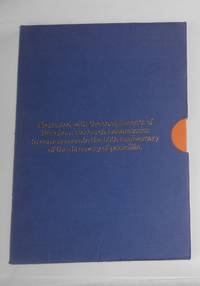
1979TN254373British Journal of Experimental Pathology / Beecham Research Laboratories London 1979. 1st Edition Thus. SOFTCOVER. Mde to commemorate the 50th anniversary of the discovery of penicillin and published by Beecham Research Laboratories in 1979. 4to in black printed orange card covers pages numbered 191 to 236 - a very nicely produced facsimile using well matched paper of the exact size of the complete issue for June 1929 which contains Flemings famous paper. Housed in a cloth backed thin card slip-case with single leaf insert on thick glossy paper with a brief history and time-line for penicillin. Fleming made his own limited edition reprint of the offprint in 1944 but this is the first reprint of the whole issue. __CONDITION : The journal and insert are AS NEW the slipcase is a little shelf rubbed and faintly sunned. Overall an excellent copy of this facsimile which has become almost as hard to find as the original. __NOTE. Depending on destination this item may require an extra payment for shipping insurance. If so orders made by card will be completed only after you have approved the extra cost. . __We always ship in PROTECTIVE CARD PARCELS British Journal of Experimental Pathology / Beecham Research Laboratories, London paperback
183747418London Richard and John E. Taylor 1837. No wrappers. Extracted fron "Scientific Memoirs selected from The Transactions of Foreign Academies of Science and Learned Societies. Edited by Richard Taylor." Vol. I. Pp. 540-547. <br/><br/><em>Henry's milestone paper announcing his discovery of electrical self-induction. "Henry independently discovered electro-magnetic induction and in this paper announced his discovery of electric self-induction one of the prime properies of an electro-magnetic circuit. Henry was an eminent experimenter but was casual in publishing his findings with resulting lack of recognition of his contributions."Bern Dibner.Dibner "Heralds of Sciece" No.63.It was also printed the same year in "Transactions of the American Philosophical Society New Series Vol. 5". The paper was later printed in "Philosophical Magazine" 1840."The direction of Henry’s thought became somewhat apparent in his 1835 paper refers to the papers reading before the American Phil. Soc. febr. 6th 1835 on the action of a spiral conductor in increasing the intensity of galvanic currents. The paper started out as an affirmation of Henry’s priority in the discovery of self-induction. He then combined induction proper using Faraday’s findings and his own with selfinduction to show how these produce a pattern of repulsions yielding an increased effect in spirals. He specifically linked these “magneto-electrical†results to the principles of static induction developed by Cavendish and Poisson. This explanation was then applied to Savary’s report of changes of polarity when magnetic needles were placed at varying distances from a wire in which a current was being transmitted "Mémoire sur l’aimantation" in Annales de chimie et de physique 34 1827. That is currents appeared periodically in the air surrounding a current-bearing straight wire as a result of the actions of induction and self-induction." DSB.Wheeler Gift: 2724-2725a. </em> unknown
192349718Paris Gauthier-Villars et Cie 1923. 4to. Bound in one contemp. full buckram. Spines gilt and with gilt lettering. In: "Comptes Rendus Hebdomadaires des Séances de L'Academie des Sciences" Tome 177. Bound with orig. printed front-wrapper to No. 1 half-title and title-page to vol. 177. 1513 pp. Entire volume offered. De Broglie's papers: pp. 507-510 pp. 548-551 a. pp. 630-32. Clean and fine. A punched stamp on foot of title-page. <br/><br/><em>First edition of these papers which ESTABLISHED A NEW ERA IN PHYSICS by introducing the epochal new principle that particle-wave duality should apply not only to radiation but also to matter and thus CREATING QUANTUM MECHANICS. These 3 papers were extended to form his doctoral thesis of 1924 "Recherches sur la Théorie des Quanta."De Broglie relates "After long reflection in solitude and meditation I suddenly had the idea during the year 1923 that the discovery made by Einstein in 1905 should be generalized by extending it to all material particles and notably to electrons" Preface to his PhD thesis 1924."He made the leap in his September 10 1923 paper: E=hv should hold not only for photons but also for electrons to which he assigns a 'fictitious associated wave'. In his September 24 paper he indicated the direction in which one 'should seek experimental confirmations of our ideas': a stream of electrons traversing an aperture whose dimensions are small compared with the wavelenght of the electron waves 'should show diffraction phenomena' ."Pais "Subtle is the Lord" pp. 425-436.In the third paper October 8 he discusses "The interplay between the propagation of the particle and of the waves could be expressed in more formal terms as an identity between the fundamental variational principles of Pierre de Fermat rays and Pierre Louis Maupertuis particles as de Broglie discussed it further in his last communication . Therein he also considered some thermodynamic consequences of his generalized wave-particle duality. He showed in particular how one could using Lord Rayleigh’s 1900 formula for the number of stationary modes for phase waves obtain Planck’s division of the mechanical phase space into quantum cells.Louis de Broglie achieved a worldwide reputation for his discovery of the wave theory of matter for which he received the Nobel Prize for physics in 1929. His work was extended into a full-fledged wave mechanics by Erwin Schrödinger and thus contributed to the creation of quantum mechanics. After an early attempt to propose a deterministic interpretation of his theory de Broglie joined the Copenhagen school’s mainstream noncausal interpretation of the quantum theory."DSB."This idea i.e. de Broglie's that matter might behave as waves was tested and confirmed by Davisson and Germer in 1927. Thus the duality of both light and matter had been established and physicists had to come to terms with fundamental particles which defied simple theories and demanded two sets of 'complementary' descriptions each applicable under certain circumstances but incompatible with one another." Printing and the Mind of Man 417. </em> hardcover
192346949Paris Gauthier-Villars et Cie 1923. 4to. Bound in 2 contemp. full cloth. Spines gilt and with gilt lettering. In: "Comptes Rendus Hebdomadaires des Séances de L'Academie des Sciences" Tome 177. With htitle a. titlepage. 1513 pp. Entire volume offered. De Broglie's papers: pp. 507-510 pp. 548-551 a. pp. 630-32. Clean and fine. A stamp to verso of titlepage. <br/><br/><em>First edition of these papers which ESTABLISHED A NEW ERA IN PHYSICS by introducing the epochal new principle that particle-wave duality should apply not only to radiation but also to matter and thus CREATING QUANTUM MECHANICS. These 3 papers were extended to form his doctoral thesis of 1924 "Recherches sur la Théorie des Quanta."De Broglie relates "After long reflection in solitude and meditation I suddenly had the idea during the year 1923 that the discovery made by Einstein in 1905 should be generalized by extending it to all material particles and notably to electrons" Preface to his PhD thesis 1924."He made the leap in his September 10 1923 paper: E=hv should hold not only for photons but also for electrons to which he assigns a 'fictitious associated wave'. In his September 24 paper he indicated the direction in which one 'should seek experimental confirmations of our ideas': a stream of electrons traversing an aperture whose dimensions are small compared with the wavelenght of the electron waves 'should show diffraction phenomena' ."Pais "Subtle is the Lord" pp. 425-436.In the third paper October 8 he discusses "The interplay between the propagation of the particle and of the waves could be expressed in more formal terms as an identity between the fundamental variational principles of Pierre de Fermat rays and Pierre Louis Maupertuis particles as de Broglie discussed it further in his last communication . Therein he also considered some thermodynamic consequences of his generalized wave-particle duality. He showed in particular how one could using Lord Rayleigh’s 1900 formula for the number of stationary modes for phase waves obtain Planck’s division of the mechanical phase space into quantum cells.Louis de Broglie achieved a worldwide reputation for his discovery of the wave theory of matter for which he received the Nobel Prize for physics in 1929. His work was extended into a full-fledged wave mechanics by Erwin Schrödinger and thus contributed to the creation of quantum mechanics. After an early attempt to propose a deterministic interpretation of his theory de Broglie joined the Copenhagen school’s mainstream noncausal interpretation of the quantum theory."DSB."This idea i.e. de Broglie's that matter might behave as waves was tested and confirmed by Davisson and Germer in 1927. Thus the duality of both light and matter had been established and physicists had to come to terms with fundamental particles which defied simple theories and demanded two sets of 'complementary' descriptions each applicable under certain circumstances but incompatible with one another." Printing and the Mind of Man 417. </em> hardcover
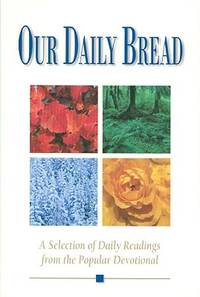
1989Q-0929239032Discovery House Pub 1989-04-01. Paperback. New. In shrink wrap. Looks like an interesting title! Discovery House Pub paperback
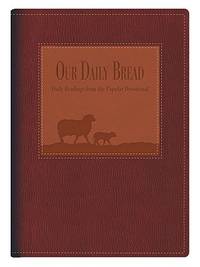
2010Q-1572933933Discovery House Publishers 2010-09-01. Leather Bound. New. In shrink wrap. Looks like an interesting title! Discovery House Publishers hardcover
157293350X.Gpaperback. Good. Access codes and supplements are not guaranteed with used items. May be an ex-library book. paperback
1988Q-0929239016Discovery House Publishers 1988-01-01. Hardcover. New. In shrink wrap. Looks like an interesting title! Discovery House Publishers hardcover
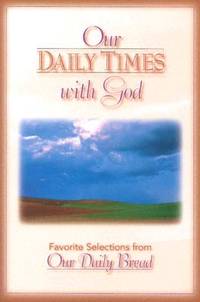
1997Q-1572930195Discovery House Publishers 1997-01-01. Paperback. New. In shrink wrap. Looks like an interesting title! Discovery House Publishers paperback
2009Q-9781572933507Discovery House Publishers 2009-09-01. Paperback. New. New. In shrink wrap. Looks like an interesting title! Discovery House Publishers paperback
19852090202118202648Fukutakeshoten 1985. Soft Cover. Fine. The book is in fine condition. Fukutakeshoten paperback