289 résultats
183143365Paris Crochard 1831. No wrappers as extracted from "Annales de Chimie et de Physique" 2. Series Tome 48. Titlepage to vol. 48. Pp. 113-157. A few brownspots but fine. Small stamps on verso of titlepage. <br/><br/><em>First appearance of an importent paper in chemistry and medicine as it for the first time relates the finding of Chloroform which some years later was proved to have anaesthetic effects and was introduced in chirurgy in 1848 by Simpson.Justus von Liebig Souberain and Guthrie independently discovered Chloroform in 1831 but Souberain was the first to publish his results. - Garrison & Morton No. 1851. - Gedeon "Science and Technology in Medicine" 36.7. </em> unknown
189846852Paris Gauthier-Villars 1898. 4to. No wrappers. In: "Comptes Rendus Hebdomadaires des Séances de L'Academie des Sciences" Tome 126 No 15. Entire issue offered. With htitle and titlepage to vol. 126. Pp. 1059-1110. Curie's paper: pp. 1101-1103. <br/><br/><em>First printing of this milestone paper being the first "Note" from Marie Curie about "radioactivity". This same "Note" contains a the fundamental observation: "Two uranium ores. are much more active than uranium itself. This fact. leads one to believe that these ores may contain an element much more active than uranium." This paper gives the first proof of the fact that radiation is an atomic property."Henri Becquerel discovered 1896 that uranium salts shielded from light for several months spontaneously emit rays related in their effects to Roentgen rays. Mme. Curie became enthusiastic about this subject filled with the unknown and as she later acknowledged involving no bibliographic research.The first step in the research was to determine whether there existed other elements capable like uranium of emitting radiation. Abandoning the idea of hyperfluorescence couldn’t one calculate by electrical measurement the effects on the conductivity of air that were revealed by the gold-leaf electroscope Pierre Curie and his brother Jacques had constructed an extremely sensitive apparatus to measure weak currents; Mme. Curie employed it in testing both pure substances and various ores. In her first "Note" in the Comptes rendus"de l Académie des sciences 12 April 1898 she described the method that she followed throughout her life the method that enabled her to make comparisons through time and crosschecks with other techniques:"I employed. a plate condenser one of the plates being covered with a uniform layer of uranium or of another finely pulverized substance diameter of the plates eight centimeters; distance between them three centimeters. A potential difference of 100 volts was established between the plates. The current that traversed the condenser was measured in absolute value by means of an electrometer and a piezoelectric quartz. In general she preferred the zero method in which the operator compensates for the current created by the active material by manipulating the quartz. All of her students followed this procedure."DSB.The first results came in 1898: the measurements varied between 83 × 10-12 amperes for pitch blende to less than 0.3 × 10⁻¹² for almost inactive salts passing through 53 × 10-12 for thorium oxide and for chalcolite double phosphate of uranium and copper. Thorium would thus be "radioactive" the term is Mme. Curie’s; its radioactive properties were discovered at the same time independently by Schmidt in Germany. </em> unknown
2090502113702419Not Available N.A. Soft Cover. Fine. The book is in fine condition. Not Available paperback
198447169London Royal Society 1984. Royal8vo. Full buckram gilt lettering to spine.In: "Proceedings of the Royal Society of London" Series A vol. 392. IV478 pp. Entire volume offered. Berry's paper: pp. 45-57. Clean and fine. <br/><br/><em>First printing of the paper in which Berry describes his discovery of the "Berry phase" a unifying concept in quantum mechanics."In 1983 Berry made the surprising discovery that a quantum system adiabatically transported round a closed circuit in the space of external parameters acquires besides the familiar dynamical phase a non-integrable phase depending only on the geometry of the circuit. This Berry phase which had been overlooked for more than half a century provides us a very deep insight on the geometric structure of quantum mechanics and gives rise to various observable effects. The concept of the Berry phase has now become a central unifying concept in quantum mechanics with applications in fields ranging from chemistry to condensed matter physics. In particular the Berry phase plays an important role in modern magnetism an allows to reach a deeper understanding of a broad range of phenomena such as the spin-orbit coupling the Aharonov-Bohm effect the quantum Hall effect the anomalous Hall effect the magnon dynamics the tunneling of magnetization in molecular magnets etc. Further in the light of the Berry phase a number of new phenomena can be predicted in ferromagnets with a textured magnetization or in semiconductors with spin-orbit coupling." Patrick Bruno. </em> hardcover
1587381346.Gpaperback. Good. Access codes and supplements are not guaranteed with used items. May be an ex-library book. paperback
Q-0131299786Prentice Hall Pearson Education. Hardcover. New. New. In shrink wrap. Looks like an interesting title! Prentice Hall, Pearson Education hardcover
173546590Paris L'Imprimerie Royale 1735. 4to. Without wrappers. Extracted from "Mémoires de l'Academie des Sciences. Année 1733". Pp. 23-39 pp. 73-84 pp. 233-254 a. 1 engraved plate pp. 457-476. With titlepage to the volume 1733/1735. Margins of titlepage with a few brownspots. <br/><br/><em>First appearance of these milestone papers in the histroy of electricity in which Dufay explains his discovery of two kinds of electricity and the relation between them attraction and repulsion shocks and sparking and the full recognition of electrostatic repulsion. He formulates the two-fluid theory of electricity. He further showed that "not all bodies can become electrified themselves" by friction and went on to show "that they can all acquire a considerable electrical virtue when the tube of rubbed glass wood metals or liquids are brought near them" provided only that they are insulated by beiing stood on "a support of glass or of sealing-wax".Dufay "TRANSFORMED A COLLECTION OF MISCELLANEOUS WEEDS INTO THE FIRST GARDEN OF EUROPE" Heilbron"Dufay's substantive discoveries - ACR the two electricities shocks and sparking - are but one aspect and perhaps not the most significant of his achievement. His insistence on the impiortence of the subject on the universal character of electricity on the necessity of organizing digesting and regulariizing known facts before grasping new ones all helped to introduce order and professionel standards into the study of electricity at precisely the moment when the accumulation of data began to require them. He foundthe subject a record of often capricious disconnected phenomena the domain of the polymaths textbook writers and prfesional lecturers and left a body of knowledge that invited and rewarded prolonged scrutinity from serious physicists." Heilbron "Electricity in the 17 & 18 Centuries" p. 260.Parkinson "Breakthroughs" 1734 P - Ronalds Library p. 145. - Not in Wheeler Gift Cat. </em> unknown
1949BOOKS25738Surrey England: Merle Press. Very good condition: upper corner gently bumped/No Dustjacket. 1949. First Edition. 12mo. 47pp. . Merle Press unknown
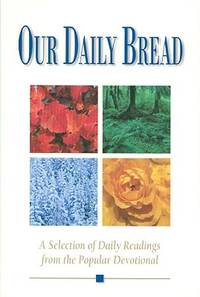
2006Q-157293204xDiscovery House Publishers 2006-10-01. Paperback. New. In shrink wrap. Looks like an interesting title! Discovery House Publishers paperback
2009DADAX1572933208Discovery House Publishers 2009-04-01. hardcover. New. 5.00x0.69x7.00. Buy with confidence. Excellent Customer Service & Return policy. Discovery House Publishers hardcover
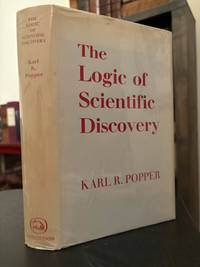
1959508<p><strong>Large Octavo. Publisher's cloth & dustwrapper. First edition first printing of one of the most significant works on the philosophy of science. The Logic of Scientific Discovery was originally published in Germany in 1934 and Popper rewrote and republished it in English in 1959 with the New York edition preceding this much rarer UK edition. A fine copy in an unclipped slightly worn and faded very good dust wrapper. Small inscription on the front pastedown of David Keyt 1930-2025 Professor Emeritus of Philosophy at Washington University Seattle. The book is mostly unopened and looks mostly unread. A very nice copy. Popper argues that science should adopt a methodology based on falsifiability because no number of experiments can ever prove a theory but a reproducible experiment or observation can refute one. According to Popper: "non-reproducible single occurrences are of no significance to science. Thus a few stray basic statements contradicting a theory will hardly induce us to reject it as falsified. We shall take it as falsified only if we discover a reproducible effect which refutes the theory". Popper argues that science should adopt a methodology based on "an asymmetry verifiability and falsifiability; an asymmetry which results from the logical form of universal statements. For these are never derivable from singular statements but can be contradicted by singular statements".</strong></p> Hutchinson hardcover
0525463763.Ghardcover. Good. Access codes and supplements are not guaranteed with used items. May be an ex-library book. hardcover
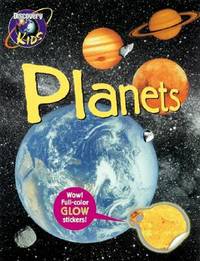
20191682206548-NDiscovery Education 2019. hardcover. New. 8x0x10. BOOK IS IN NEW CONDITION. Discovery Education hardcover
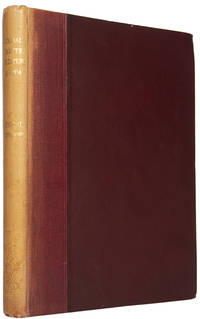
115668London Royal Society 1908. . First edition; 4to; 2 coloured maps 1 folding 21 plates including 8 lithographs photographic plates including a folding panorama; original red buckram-backed boards spine faded a very good copy; v 192 pp.<br /> From the library of Professor Otto Nordenskjöld 1869-1928 the distinguished Swedish Antarctic explorer and scientist. Nordenskjöld was on the Swedish scientific expedition to the Antarctic 1901-1903 and would have had a particular interest in the results of the Discovery expedition.<br /><br />Physical Observations is notable for the series of eight lithographs of aurora observations including seven of aurora effects on thick brown paper.<br /> Rosove 288-8.A1; Spence 839; Taurus 47. London, Royal Society, 1908. hardcover
19852090202118202648Fukutakeshoten 1985. Soft Cover. Fine. The book is in fine condition. Fukutakeshoten paperback
1989Q-0929239032Discovery House Pub 1989-04-01. Paperback. New. In shrink wrap. Looks like an interesting title! Discovery House Pub paperback
2010Q-1572933933Discovery House Publishers 2010-09-01. Leather Bound. New. In shrink wrap. Looks like an interesting title! Discovery House Publishers hardcover
157293350X.Gpaperback. Good. Access codes and supplements are not guaranteed with used items. May be an ex-library book. paperback
1988Q-0929239016Discovery House Publishers 1988-01-01. Hardcover. New. In shrink wrap. Looks like an interesting title! Discovery House Publishers hardcover
1997Q-1572930195Discovery House Publishers 1997-01-01. Paperback. New. In shrink wrap. Looks like an interesting title! Discovery House Publishers paperback
2009Q-9781572933507Discovery House Publishers 2009-09-01. Paperback. New. New. In shrink wrap. Looks like an interesting title! Discovery House Publishers paperback
192349718Paris Gauthier-Villars et Cie 1923. 4to. Bound in one contemp. full buckram. Spines gilt and with gilt lettering. In: "Comptes Rendus Hebdomadaires des Séances de L'Academie des Sciences" Tome 177. Bound with orig. printed front-wrapper to No. 1 half-title and title-page to vol. 177. 1513 pp. Entire volume offered. De Broglie's papers: pp. 507-510 pp. 548-551 a. pp. 630-32. Clean and fine. A punched stamp on foot of title-page. <br/><br/><em>First edition of these papers which ESTABLISHED A NEW ERA IN PHYSICS by introducing the epochal new principle that particle-wave duality should apply not only to radiation but also to matter and thus CREATING QUANTUM MECHANICS. These 3 papers were extended to form his doctoral thesis of 1924 "Recherches sur la Théorie des Quanta."De Broglie relates "After long reflection in solitude and meditation I suddenly had the idea during the year 1923 that the discovery made by Einstein in 1905 should be generalized by extending it to all material particles and notably to electrons" Preface to his PhD thesis 1924."He made the leap in his September 10 1923 paper: E=hv should hold not only for photons but also for electrons to which he assigns a 'fictitious associated wave'. In his September 24 paper he indicated the direction in which one 'should seek experimental confirmations of our ideas': a stream of electrons traversing an aperture whose dimensions are small compared with the wavelenght of the electron waves 'should show diffraction phenomena' ."Pais "Subtle is the Lord" pp. 425-436.In the third paper October 8 he discusses "The interplay between the propagation of the particle and of the waves could be expressed in more formal terms as an identity between the fundamental variational principles of Pierre de Fermat rays and Pierre Louis Maupertuis particles as de Broglie discussed it further in his last communication . Therein he also considered some thermodynamic consequences of his generalized wave-particle duality. He showed in particular how one could using Lord Rayleigh’s 1900 formula for the number of stationary modes for phase waves obtain Planck’s division of the mechanical phase space into quantum cells.Louis de Broglie achieved a worldwide reputation for his discovery of the wave theory of matter for which he received the Nobel Prize for physics in 1929. His work was extended into a full-fledged wave mechanics by Erwin Schrödinger and thus contributed to the creation of quantum mechanics. After an early attempt to propose a deterministic interpretation of his theory de Broglie joined the Copenhagen school’s mainstream noncausal interpretation of the quantum theory."DSB."This idea i.e. de Broglie's that matter might behave as waves was tested and confirmed by Davisson and Germer in 1927. Thus the duality of both light and matter had been established and physicists had to come to terms with fundamental particles which defied simple theories and demanded two sets of 'complementary' descriptions each applicable under certain circumstances but incompatible with one another." Printing and the Mind of Man 417. </em> hardcover
192346949Paris Gauthier-Villars et Cie 1923. 4to. Bound in 2 contemp. full cloth. Spines gilt and with gilt lettering. In: "Comptes Rendus Hebdomadaires des Séances de L'Academie des Sciences" Tome 177. With htitle a. titlepage. 1513 pp. Entire volume offered. De Broglie's papers: pp. 507-510 pp. 548-551 a. pp. 630-32. Clean and fine. A stamp to verso of titlepage. <br/><br/><em>First edition of these papers which ESTABLISHED A NEW ERA IN PHYSICS by introducing the epochal new principle that particle-wave duality should apply not only to radiation but also to matter and thus CREATING QUANTUM MECHANICS. These 3 papers were extended to form his doctoral thesis of 1924 "Recherches sur la Théorie des Quanta."De Broglie relates "After long reflection in solitude and meditation I suddenly had the idea during the year 1923 that the discovery made by Einstein in 1905 should be generalized by extending it to all material particles and notably to electrons" Preface to his PhD thesis 1924."He made the leap in his September 10 1923 paper: E=hv should hold not only for photons but also for electrons to which he assigns a 'fictitious associated wave'. In his September 24 paper he indicated the direction in which one 'should seek experimental confirmations of our ideas': a stream of electrons traversing an aperture whose dimensions are small compared with the wavelenght of the electron waves 'should show diffraction phenomena' ."Pais "Subtle is the Lord" pp. 425-436.In the third paper October 8 he discusses "The interplay between the propagation of the particle and of the waves could be expressed in more formal terms as an identity between the fundamental variational principles of Pierre de Fermat rays and Pierre Louis Maupertuis particles as de Broglie discussed it further in his last communication . Therein he also considered some thermodynamic consequences of his generalized wave-particle duality. He showed in particular how one could using Lord Rayleigh’s 1900 formula for the number of stationary modes for phase waves obtain Planck’s division of the mechanical phase space into quantum cells.Louis de Broglie achieved a worldwide reputation for his discovery of the wave theory of matter for which he received the Nobel Prize for physics in 1929. His work was extended into a full-fledged wave mechanics by Erwin Schrödinger and thus contributed to the creation of quantum mechanics. After an early attempt to propose a deterministic interpretation of his theory de Broglie joined the Copenhagen school’s mainstream noncausal interpretation of the quantum theory."DSB."This idea i.e. de Broglie's that matter might behave as waves was tested and confirmed by Davisson and Germer in 1927. Thus the duality of both light and matter had been established and physicists had to come to terms with fundamental particles which defied simple theories and demanded two sets of 'complementary' descriptions each applicable under certain circumstances but incompatible with one another." Printing and the Mind of Man 417. </em> hardcover
183747418London Richard and John E. Taylor 1837. No wrappers. Extracted fron "Scientific Memoirs selected from The Transactions of Foreign Academies of Science and Learned Societies. Edited by Richard Taylor." Vol. I. Pp. 540-547. <br/><br/><em>Henry's milestone paper announcing his discovery of electrical self-induction. "Henry independently discovered electro-magnetic induction and in this paper announced his discovery of electric self-induction one of the prime properies of an electro-magnetic circuit. Henry was an eminent experimenter but was casual in publishing his findings with resulting lack of recognition of his contributions."Bern Dibner.Dibner "Heralds of Sciece" No.63.It was also printed the same year in "Transactions of the American Philosophical Society New Series Vol. 5". The paper was later printed in "Philosophical Magazine" 1840."The direction of Henry’s thought became somewhat apparent in his 1835 paper refers to the papers reading before the American Phil. Soc. febr. 6th 1835 on the action of a spiral conductor in increasing the intensity of galvanic currents. The paper started out as an affirmation of Henry’s priority in the discovery of self-induction. He then combined induction proper using Faraday’s findings and his own with selfinduction to show how these produce a pattern of repulsions yielding an increased effect in spirals. He specifically linked these “magneto-electrical†results to the principles of static induction developed by Cavendish and Poisson. This explanation was then applied to Savary’s report of changes of polarity when magnetic needles were placed at varying distances from a wire in which a current was being transmitted "Mémoire sur l’aimantation" in Annales de chimie et de physique 34 1827. That is currents appeared periodically in the air surrounding a current-bearing straight wire as a result of the actions of induction and self-induction." DSB.Wheeler Gift: 2724-2725a. </em> unknown
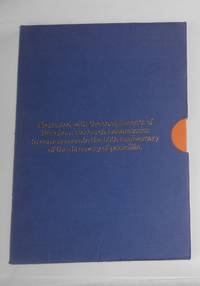
1979TN254373British Journal of Experimental Pathology / Beecham Research Laboratories London 1979. 1st Edition Thus. SOFTCOVER. Mde to commemorate the 50th anniversary of the discovery of penicillin and published by Beecham Research Laboratories in 1979. 4to in black printed orange card covers pages numbered 191 to 236 - a very nicely produced facsimile using well matched paper of the exact size of the complete issue for June 1929 which contains Flemings famous paper. Housed in a cloth backed thin card slip-case with single leaf insert on thick glossy paper with a brief history and time-line for penicillin. Fleming made his own limited edition reprint of the offprint in 1944 but this is the first reprint of the whole issue. __CONDITION : The journal and insert are AS NEW the slipcase is a little shelf rubbed and faintly sunned. Overall an excellent copy of this facsimile which has become almost as hard to find as the original. __NOTE. Depending on destination this item may require an extra payment for shipping insurance. If so orders made by card will be completed only after you have approved the extra cost. . __We always ship in PROTECTIVE CARD PARCELS British Journal of Experimental Pathology / Beecham Research Laboratories, London paperback