William FAULKNERBiblio.com
48 402 résultats
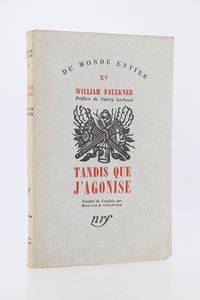
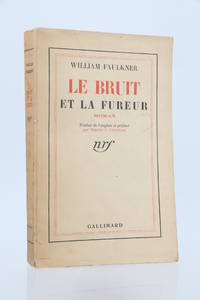
193888034Paris: Gallimard 1938. Fine. Gallimard Paris 1938 12 x 19 cm broché First edition in French a Service de Presse advance copy. Spine sunned with dampstains pale dampstain to right margin of front board. Autograph inscription signed by the translator Maurice Edgar Coindreau to Pierre Ripault. Gallimard unknown
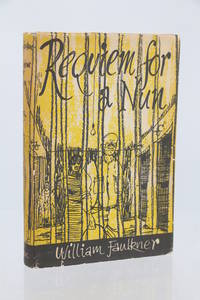
195384610London: Chatto & Windus 1953. Fine. Chatto & Windus London 1953 13 x 19 cm reliure de l'éditeur British first edition. Publisher's full blue cloth binding smooth spine complete with its dust jacket designed by Paul Hogarth which has small marginal tears at the head of the spine. Light marginal shadows on the endpapers. Chatto & Windus hardcover
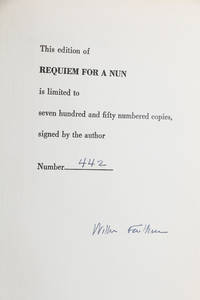
195181535New York: Random House 1951. Fine. Random House New York 1951 12 x 19 cm reliure de l'éditeur Requiem for a Nun Random House New York 1951 12 x 19 cm publisher's binding First edition one of 750 numbered copies signed by the author the only grands papiers deluxe copies. Publisher's binding in half black cloth marbled paper boards. Autograph signature of William Faulkner on the justification page. A beautiful copy complete with its original acetate dust jacket. Random House hardcover
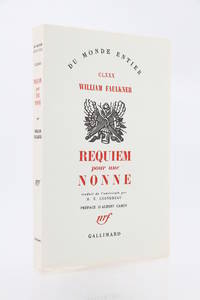
195787811Paris: Gallimard 1957. Fine. Gallimard Paris 1957 12 x 19 cm broché sous chemise et étui First French edition one of 77 numbered copies on pur fil only deluxe issue. Preface by Albert Camus. Nice copy housed under a chemise and slipcase by Devauchelle. Gallimard unknown
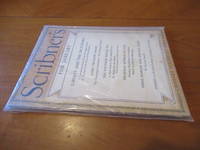
1936026326New York: Charles Scribner's Sons 1936. First Edition . Printed Wrappers. Very Good. Complete Magazine Light Wear 1/2" Chip At Bottom Of Spine. Includes "The Brooch" By William Faulkner. Also Includes "The Return Of The Source" By Writer And Screenwriter Jo Pagano Inscribed "For My Friend Napolitano With Best Wishes - Jo Pagano". Napolitano Was An Italian-American Muralist In Southern California Active 1920'S To 1970'S Including Work On Bullock's Wilshire City Hall Countless Churches And Other Architectural Work Textiles Movie Studio Work Etc. Although Relatively Unknown He Was Subject Of A Book By Merle Armitage In 1935. <br/> <br/> Charles Scribner's Sons unknown
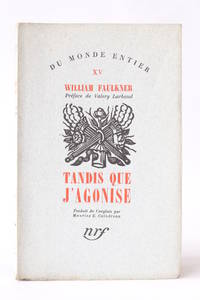
193485806Paris: Gallimard 1934. Fine. Gallimard Paris 1934 12 x 19 cm broché First edition in French one of 210 numbered copies in roman numerals on alfa paper the only deluxe copies. Preface by Valéry Larbaud. A handsome copy. Gallimard unknown
193463266Paris: Gallimard 1934. Fine. Gallimard Paris 1934 12 x 19 cm broché First edition in French one of 210 copies numbered in Roman numerals on alfa paper the only deluxe copies. Preface by Valéry Larbaud. Minor light foxing at head of first endpaper. Handsome copy. Gallimard unknown
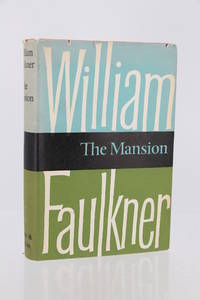
196184609London: Chatto & Windus 1961. Fine. Chatto & Windus London 1961 13.50 x 20.50 cm reliure de l'éditeur First British edition. Publisher's full orange cloth binding smooth spine top edge red complete with its dust jacket designed by John Woodcock which shows small marginal tears and whose spine is very slightly sunned. Chatto & Windus hardcover
19150009144MEDICINE BOW NATIONAL FOREST WYOMING WY. Very Good. 1915. On offer is an interesting diary written in the early 20th century by William F. Will a young forest ranger working in the Medicine Bow National Forest of Wyoming. The diary kept a log of his daily activities from April 1 1915 to January 31 1916. There is an entry for every day during this time period. Wills duties were many and varied and he often logged the hours spent on each task in the diary. The young ranger spent a good deal of time throughout the course of the year working on several maps showing boundaries domestic grazing allotments telephone lines several types of fire maps and others. Finished drawing protractors on fire location map and wrote memo on some. Started to make a map showing location of stool-boxes and caches etc. After reporting for duty on May 24 at Laramie a great deal of his time was spent in the repair and installation of telephone lines. Especially in the summer months Will often joined other Park Service employees to fight forest fires often for several days at a time. He also monitored campsites to make sure fire prevention techniques were being followed by the residents or campers. He was called upon to search for a missing woman and on one occasion he even searched for a lost horse. In the fall he helped build a bunk house at Brooklyn Lake and got ready for winter by moving the horses to a ranch and making mouse proof storerooms. The firefights make for very interesting reads. For example: July 17 1915. Rode Woolfs range with him and Herder. Showed him the allotment lines and the closed area around Brooklyn Lake. Started out on telephone work but lookout man reported Turpin Lake Sawmill on fire at 1:30. Duther called up and said to wait until he talked over long distance. He called up and said to get Chase and go to the fire.arrived at fire at 6pm then rode to Turpin Saw mill found four of Bueolys men there. Men started to arrive at fire had 9 men on fire that night. Fire suppression - 11 Hrs. Munroe the camp watchman stated the fire started from the sawdust pile and he tried to stop it from burning the mill but found it impossible to check the timber fire. The grazing of domestic livestock was permitted in the park in certain areas. This practice continues today and is still the subject of some controversy. It was one of the ranger's duties to make sure that the boundaries for grazing were adhered to. There were times when the local ranchers and the Park Service employees did not get along August 18. Rode over to So ____ Fork hunted up the herder. I told him the sheep had been in my pasture and he had to keep them out. Then rode the range between Brooklyn Lake and Coney Ridge and found a little pocket that Woolf had just run through.Started to storm hail and ran so started back to Brooklyn Lake.; June 8. Repaired telephone line Rayfork to Ropers ranch got wire all spliced but not tied in called on Roper to see about moving telephone camp in there. He informed me that his place was closed to all Forest Service men and we could not stop there and he wanted all Forest Service equipment at his place including telephone taken from there. Census records of 1910 show a William F Will living with his parents in Laramie WY. The Census shows his year of birth as 1897 making him 18 years old when he joined the Park Service. The diary measures about 3 1/2" x 6 1/2". It was issued by the US Department of Agriculture. The front page reads: United States Department of Agriculture Forest Service. Notice. This book is Government property. The finder is requested to mail it to The Forester Washington D.C. or to deliver it to any officer of the Forest Service. There are over over 150 handwritten pages. The covers and spine are in good condition both aesthetically and structurally. The pages within are without any age-toning or significant rips or tears. The paper is a grid-lined yellow paper. The handwriting is easy to read and legible throughout in black ink and without significant fading or smudging. OVERALL: VG.; Manuscript; 16mo - over 5¾" - 6¾" tall; KEYWORDS: HISTORY OF MEDICINE BOW NATIONAL FOREST BROOKLYN LAKE CONEY RIDGE CARBON COUNTY LARAMIE WYOMING UNITED STATES FOREST SERVICE U.S. FOREST RANGER WILLIAM F. WILL WORLD WAR 1 ERA AMERICA FIGHT FOREST FIRES U.S. FEDERAL LANDS PARKS SERVICE AMERICANA HANDWRITTEN MANUSCRIPT DOCUMENT LETTER AUTOGRAPH WRITER HAND WRITTEN DOCUMENTS SIGNED LETTERS MANUSCRIPTS HISTORICAL HOLOGRAPH KEEPSAKE WRITERS AUTOGRAPHS PERSONAL MEMOIR MEMORIAL ARCHIVE DIARY DIARIES JOURNAL LOG ANTIQUITÉ CONTRAT VÉLIN DOCUMENT MANUSCRIT PAPIER ANTIKE BRIEF PERGAMENT DOKUMENT MANUSKRIPT PAPIER OGGETTO DANTIQUARIATO ATTO VELINA DOCUMENTO MANUSCRITTO CARTA ANTIGÜEDAD HECHO VITELA DOCUMENTO MANUSCRITO PAPEL . unknown
19300002600LINCOLN NEBRASKA CHEYENNE WYOMING. Good. 1930. On offer is an original historically significant 1930 manuscript diary handwritten by noted Nebraskan William Eugene Guthrie sometimes Guthrey Civil War historian; Nebraska cattleman and ardent activist involved in a government dispute concerning water rights and the Platte River. Guthrie had hunted buffalo; broken in horses to be used by soldiers in the Civil War; was an ardent genealogist making copious notes from the family Bible and recorded herein; was an historian of the battles in the Civil War just to name a few of his credits. William E. Guthrie was also known for having shaken every President's hand since Lincoln up to and including President Hoover in 1930. On the 26th day of September in 1930 he was on his way to Washington D.C. to fight yet another battle. William Eugene Guthrie was a noble man of high character family values and fascinating personal first person history to be told. This historic journal commences as Guthrie is in Washington D.C. to see Willis Van Devanter an Associate Justice of the Supreme Court of the United States to hear Guthrie's case pertaining to water rights along the Platte River in the state of Nebraska; the date is September 1930. The Platte River is a major river in the state of Nebraska and is about 310 mi long. Measured to its farthest source via its tributary the North Platte River it flows for over 1050 miles. The government and Guthrie and his associates had an ongoing disagreement pertaining to their water rights along the Bridgeport irrigation district; Belmont Canal and Empire Canal water rights on Guthrie's property along the Platte. He is going to Washington DC to urge the importance of securing a hearing to get a final decision on this case. His handwritten entries include: "My first reaction upon being asked this mission was appalling. To approach a Justice of the United States Supreme Court and to talk to him about land in which I was personally invested seemed to me most fool hardy. Assured by both R. O. Canaday and Judge Wright of Omaha attorney for the district that such an attempt would be entirely ethical I finally agreed to undertake the mission and as a result landed in Washington D.C. on the 28th day of September and registered at the Hotel Raleigh." "I learned that Justice Van Devanter had not returned from his summer vacation and as it would be a few days before his return my thought was why not see Gettysburg. I had many times wished I would have an opportunity of going to that famous battlefield. I have been something of a student of the life of Pres. Lincoln and of the Civil War. Many of the municipal battles of that war have been an interesting study to me and none more interesting then the battle of Gettysburg and the battle of Vicksburg. In 1881 I made a trip from Cincinnati to New Orleans in one of the famous steamers. The steamer stopped at Vicksburg half a day and gave the passengers an opportunity to visit the city and the battleground. Vicks and Gettysburg were the deciding battles of the Civil War. Having seen Vicksburg i had hoped I would some day see Gettysburg and I did in 1930! He goes on to say that the battle of Gettysburg in his opinion was not only the decisive battle of the war but a decisive battle of the world." He was able to be on the tour bus alone and the tour guide gave him an answer to all his questions. Then Guthrie stood where Lincoln delivered his Gettysburg address and was overcome with the historical importance of this sacred place. Returning to Washington and calling Van Devanter office he was able to secure a private talk with him on Oct. 3 at 8:30 A.M. They talked about the famous "lease" as to the property and the water rights. Van Devanter's final remark to Guthrie was "This lease will probably come before me and I will sift it through from top to bottom." I said thank you very much and this ends my mission. Before I left having been acquainted with Van Devanter 40 years ago Justice Van Devanter then said to me; before you go you must go with me to my rooms and meet with Mrs. Van Devanter; he then called on Mrs. Van Devanter and Mrs. and I had a very pleasant visit. A very pleasant ending to a rather trying ordeal - and thats that." The following day Guthrie decided he would like to go and talk to President Hoover. He knew Mr. McKenna who had been at the Whitehouse for years and would be the go-between he would need to get through to have a private visit with Hoover and thus he went to speak to McKenna and reminded him that he had shaken every Presidents hand since he shook the hand of Lincoln. McKenna was moved by this and secured a private visit in the Whitehouse. "Jan. 23 Needless to say I was at the Whitehouse the following day at 1:30 and on that Friday of Oct. 3 1930 I was admitted to the President's office and was cordially received. President Hoover seemed much interested in the fact that I had seen President Lincoln and he asked me many questions. One question was "do you remember how President Lincoln looked" I certainly do Mr. President. I shared my very clear impression as to the rough course of his jaw and the sadness apparent in every feature and especially I do remember his eyes. Hoover remarked to me "Mr. Guthrie you are indeed fortunate." The President then shook hands with me cordially and I remarked "Mr. President I hope to have the opportunity to vote for you in 1932 and he replied you are good for another 10 years at least." Guthrie was 81 years old at this time and had arrived in Washington D.C. by train and bus. Before going back home to Nebraska he then and there decided to go and visit as many living relatives as he could and as many of the Civil War battlefields as he had the energy to do and thus begins his fascinating odyssey as he writes in captivating detail of all that he saw and did. Midway through this diary after all his visiting traveling and sight seeing in Marion Ohio Shenandoah Woodstock Harpers Ferry Manassas Indianapolis St. Louis MO St. Joseph MO &c. he decides to write his memoirs. He commences to remember when he was 12 years old in 1861 and with his older brother Silas's transporting horses to Washington D.C. to be sold to the United States Government for their use in the Civil War and when he first saw Lincoln. This part of the journal goes on for several pages and is spell binding as to how this whole horse transporting selling and trading procedure was carried out by the government. It was there that he not only saw Lincoln but was able to shake his hand. His handwritten entry: "The incident which stands out most clearly in my mind during my stay in Washington was the day I saw President Lincoln. Returning to our hotel one day we found the street for blocks filled with crowds of people waiting for the President to pass by. Presently there appeared a Landau drawn by two big black horses driven by a big Negro in uniform and high hat. In the carriages there were 4 men two facing the horses and two facing backwards; all wore high hats. On the right side facing front was as I then thought the tallest man in the world and this was Lincoln. The impression left on my mind that day is confident as to that appearance of Lincoln and still clear to this day. I too remember soldiers everywhere. The country surrounding the city was literally covered with lamps and tents. I recall that one Ohio regiment was camped near the city and a company that was recruited near Marion Ohio. Captain Schofield of this company was an old friend of ours and Uncle John visited the Captain in his tent taking me with him. After several weeks in Wasington D.C. returning home and taking up farm work was quite a let down after so much "high life" and how I longed to get into the army and have a uniform like the "boys." He goes on to write about his exploits while buffalo hunting; His mother's visit to "her boys" in 1882; The Pioneers; Then and Now; &c. He ends this memoir by signing his name "William E. Guthrie Bridgeport Nebraska March 31st 1931." He then adds his handwritten "The Sequel" to include Grandmother's Bible and Old Time Religion; Pioneer Mothers; Religion Then and Now &c. The last few pages of this incredible and engrossing handwritten book are genealogy records copied from "the old Bible belonging to Isaac & Rachel Guthrey; Marriages Births Deaths and a final foot note; "From Maggie he was the first to go." Maggie was his daughter and she was recording that he died before her. This historically important diary may have history in here that one could not find in a history book as it is a first person account of life as it was lived by William Eugene Guthrie born July 26 1849; married Margaret Snow Hewitt 12-3-1885 and known by his friends as Billy Guthrie died at the age of 85 on Nov. 15 1935. Affixed to a page is a cut-out from the Wyoming Stock Growers' Association of the "Guthrie & Oskamp Cattle Company W.E. Guthrie General Manager Cheyenne Wyoming 1885 PO address Cheyenne Wyo. Range La Bonte Wagon Hound and La Prele Creeks." BIO NOTES: Guthrie in the History of Western Nebraska: William E. Guthrie whose extensive business activities and public efforts had made him prominent for years in Wyoming and Nebraska was a resident of Bridgeport since 1904 and was then the secretary of the board of irrigation in this district. Mr. Guthrie was born at Rue in Marion County Ohio July 26 1849 the son of Isaac F. and Rachel Fredrick Guthrie. The father was born in Ohio a son of Joseph Guthrie and a grandson of Colonel John Guthrie an officer in the Revolutionary War. Mr. Guthrie's parents were married in Ohio and he was the second born of their twelve children the other survivors being as follows: S. A. in the sheep business in Wyoming; a sister the wife of County Clerk Clelland of Converse county Wyoming; P. E. in the cattle business in Broken Bow Nebraska; and another sister the wife of J. B. Russell a capitalist of Savannah Missouri. The father of this family was very prominent in Marion county Ohio for many years. He was a successful farmer there and owned his Ohio farm until the time of his death although in 1885 he came to Merrick County Nebraska bought land near Clarks and died on that place. In politics he was a Democrat. For twelve years he was county commissioner of Marion county and for fifteen years was a justice of the peace. He belonged to the Masonic fraternity and lived up to every rule of the order. The mother of Mr. Guthrie was a member of the Methodist Episcopal church and the father was a liberal contributor. Guthrie enjoyed educational advantages in the district schools in boyhood and later in the Wesleyan University at Delaware Ohio. From college he returned home to give his father assistance and remained until 1878 when he went to Wyoming and there for twenty-five years prospered in the cattle business. In 1895 he located in Omaha and shortly afterward bought a farm and feedyard at Clarks in Merrick County where he continued to handle cattle for the next twenty years. In the meanwhile he had become active in the political field and in 1890 was elected to the Wyoming state legislature on the Republican ticket and took part in bringing about some very important legislation. In 1904 when Mr. Guthrie came first to Morrill county he became deeply interested in the irrigation projects and bought land along the Belmont Irrigation Canal where he continued his active interest and as mentioned above is secretary of the board that is expending $75000 in putting in drains and headgate in the Morrill county irrigation district. Mr. Guthrie owned four irrigated farms and spent much of his time to their development. In 1885 Mr. Guthrie was united in marriage to Miss Margaret Hewitt who was born at Zanesville Ohio but was reared in Des Moines Iowa. They had one daughter Margaret the wife of I. P. Hewitt who was connected with the Puget Sound Navy Yard at Everett Washington. They had two children: William Guthrie Hewitt and Helen Hewitt. Mr. Guthrie was a York Rite Mason and a Shriner and belonged also to the Knights of Pythias and the Elks.Condition: Hardbound in red covers with "National Diary 1930" in gilt lettering front cover and date on spine this absorbing handwritten book is in good to very good condition internally fresh and tight and is a very worthy acquisition indeed. Using a page a day book though not using it in order of the dates it is very well filled with every page having handwritten entries. Journal measures approx. 4 1/2 x 7 inches and has one small tear in the red cloth cover at the bottom as seen in images. ; Manuscript; 12mo - over 6¾" - 7¾" tall; KEYWORDS: HISTORY OF; WILLIAM EUGENE GUTHRIE GUTHREY WATER RIGHTS AND THE PLATTE RIVER; BUFFALO HUNTER NEBRASKA MARGARET HEWITT LINCOLN GUTHRIE & OSKAMP CATTLE COMPANY W.E. GUTHRIE GENERAL MANAGER CHEYENNE WYOMING CHEYENNE WYO. RANGE LA BONTE WAGON HOUND LA PRELE CREEKS CATTLEMAN CATTLE RANCHERS CATTLE DRIVES AMERICANA HANDWRITTEN MANUSCRIPT DOCUMENT LETTER AUTOGRAPH WRITER HAND WRITTEN DOCUMENTS SIGNED LETTERS MANUSCRIPTS DIARY DIARIES JOURNALS PERSONAL HISTORY SOCIAL HISTORY HISTORICAL HOLOGRAPH WRITERS AUTOGRAPHS PERSONAL MEMOIR MEMORIAL ANTIQUITÉ CONTRAT VÉLIN DOCUMENT MANUSCRIT PAPIER ANTIKE BRIEF PERGAMENT DOKUMENT MANUSKRIPT PAPIER OGGETTO D'ANTIQUARIATO ATTO VELINA DOCUMENTO MANOSCRITTO CARTA ANTIGÜEDAD HECHO VITELA DOCUMENTO MANUSCRITO PAPEL . hardcover
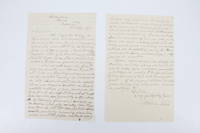
187182314Hoddesdon Herts Hoddesdon 1871. Fine. Hoddesdon Herts Hoddesdon 28 février 1871 13.50 x 21 cm 4 pages sur un double feuillet et un simple Autograph letter signed on the Vazimba pepople of Madagascar Unpublished autograph letter signed by William Ellis four pages in black ink on one folded leaf and one single leaf. Interesting letter by Rev. William Ellis missionary for the London Missionary Society in Madagascar and author of the earliest preserved photographs of the island. A beautiful testimony of Ellis' ethnographic approach far from the ""theory of the savage"" commonly conveyed in European societies. He gives his interlocutor precious information on the Vazimba still unidentified in the 19th century and described by first explorers as a warlike pygmy people living in the Malagasy mountains. Ellis is very critical of the fantasized descriptions of his predecessors and favors the direct testimonies of the inhabitants keeping the memory of this extinct people. Author of several books on Malagasy history Ellis describes in detail the legends on the Vazimba believed to be the island's first inhabitants characterized by their small size and reddened skin. Ellis doubted the accounts of explorers Flacourt 1648 and Abbé Rochon 1768 who referred to this people as ""Kimos"" or ""Quimos"" and described them as a ""dwarf race"". He relies more on the testimonies of the island's inhabitants collected during his travels among the Hovas and the Betsiles reporting the fear and respect that Vazimba spirits and burials still inspired. The letter gathers and criticizes current knowledge on the subject and mentions the experience of his successor Rev. Charles Jukes of the London Missionary Society for whom he celebrated a mass sending him to proclaim the Gospel on July 8 1866. In this letter he mentions a hypothesis later confirmed by modern scientific research: the Vazimba are one of the founding communities of the island at the origin of the Malagasy language and culture. "" By the Hova's & others who spoke of them they were called Vazimba. They were said to be smaller in stature and lighter in colour than the Hovas & to be regarded with superstitious feelings by the other inhabitants who hold their tombs in extreme veneration & frequently offer at their tombs sacrifices or gifts to the spirits of the Vazimba. During my own intercourse with people on the coast & in the interior I made repeated enquiries but never met with a native who had seen a Vazimba. Their graves I saw frequently in my journeys among the people in the interior. I saw also many of their tombs at which offerings had been recently presented and found that many of the people regarded them with superstitious fear and seemed exceedingly afraid of doing any thing likely offend them. The Hovas didn't appear to know anything of the name of Kimos all elapses of whom I enquired call the diminutive race Vazimba & spoke of them as the ancient or earliest inhabitants of the country. My friend informed me that the Betsiles do not speak of the Vazimba as remarkable on account of their small size or light colour many of the Hovas are of quite a light colour. . My own opinion is that the Vazimba are the dwarf of which early writers speak & that they are not as diminutive as they have been represented to be. As our missionaries now occupy the Betsiles country I have no doubt we shall soon have reliable accounts of the Vazimba relating of their present condition as well as their traditions of the past. If the foregoing statements should prove in any way revocable it will be gratifying so."" A fascinating and well-documented study on the customs and origins of Madagascar's inhabitants by one of the main historians of the island in the 19th century. In the intimacy of private correspondence these pages reveal the evolution of ethnology and the diverse questionings raised by the missionaries' visits to the island. unknown
18930002088TANGIERS MOROCCO 1893. On offer is a fascinating nine page 1893 manuscript account of voyage handwritten by United States Navy midshipman William E. McKay aboard the flagship Franklin. McKay was made lieutenant and commanded the Inca 1898. Titled: 'Morocco Melilla and the Moors. A Boar Hunt at Tangiers by William E. McKay Boston 1893' William relates the history of the area religion war and a personal account of boar hunt in Tangiers. Here are some snippets: "Throughout Morocco all idiots and lunatics are accounted saints. When Allah withdraws the reason it is a mark of his special favour." "Above all Mohammedan countries Morocco is the land of Allah." "It is the duty of Rifs to kill to steal and to murder; it is their disgrace to die in bed." ".slavery exists but in an easy form. Even a freed slave may come to rule over Morocco." "It was as a midshipman on board the flagship Franklin that I first made acquaintance with Tangiers." He reminisces about a boar hunt in Tangiers: No boar caught but much excitement "The United States Consul invited the officers of the fleet to go on a boar-hunt. The beaters made a terrific hulla-baloo the dogs howled and we waited all the forenoon."; "I proposed that we relieve the monotony of the ride by racing across a great sandy stretch; then we began discharging our Colt revolvers in true Cow-boy style." ".many of the Rifs are easily distinguished by the odd custom of wearing a long lock of hair on one side of the head." "I saw four Riffians attack a Jew for no cause whatever.they fell upon him with sticks and stones." "The Moorish arch is a jewel of architecture." Handwritten legible ink on onionskin paper. With cover leaf. Affixed at top with two clasps. 9" x 11". Overall G. HISTORICAL NOTES: The Melilla War was a conflict between Spain and 39 of the Rif tribes of northern Morocco and later the Sultan of Morocco. It began in the Fall of 1893 and was resolved by the Treaty of Fez 1894. Good. 4to - over 9¾" - 12" tall. Manuscript. unknown
1861000633New York New York NY. Good. 1861. On offer are two handwritten manuscript diaries written by William Dufour of New York City. We are not sure of the precise connection but these diaries came from a Scenery Hill Pennsylvania estate and connected to famed Civil War Governor Curtin of Pennsylvania. Further research should establish the connection. Mr. Dufour identifies himself on the fep of the earliest diary. While no war content these diaries are fascinating for the fact that these diaries are a look at the New York social scene and the gender sensibilities of the times. Young Dufour is obsessed with relationships with the girls around him. He has no problem expressing his most intimate thoughts and in fact writes whole essays about a few particular girls in the memoranda section of the book. The diaries detail his ups and downs with the various young women in his social strata and he is extremely active. Also of considerable interest are the changes William has gone through between 1861 and 1864. His issues and problems are the same but they have matured as he has. These diaries will provide a treasure trove of early New York and civil war era genealogists and social studies observers. 1861 is in somewhat rougher shape of the two some text blocks lose and old dampstaining though very legible. 1864 is in very good shape. Both books are approximately 60% full.; Manuscript; 24mo - over 5" - 5¾" tall; DUFOUR HANDWRITTEN MANUSCRIPT DOCUMENT LETTER AUTOGRAPH WRITER HAND WRITTEN DOCUMENTS SIGNED LETTERS MANUSCRIPTS HISTORICAL HOLOGRAPH WRITERS AUTOGRAPHS PERSONAL PERSONAL HISTORY MEMOIR MEMORIAL DIARY JOURNAL DIARIES JOURNALS LOG LOGS KEEPSAKE AMERICANA Civil War War Between the States GENEALOGY PENNSYLVANIA NEW YORK CIVIL WAR CIVIL WAR ERA SOCIAL STUDIES WOMEN STUDIES PRE SUFFRAGE . unknown
1896009582London: Longmans Green and Co 1896. Very informative book on this area 213 pages in good condition but with light foxing throughout. Many B/w photographs and illustrations all present as listed plus fold out map at rear this map is complete with some very light browning to edges and some wear to right blank edge where it has been puuled out many times over the years.Very informative text NO dustwrapper outer boards are a little rubbed to edges and light wear to top and bottom of spine which is a little darkened from age. A pleasing example of this book SEE IMAGES. DETAILED IMAGES CAN BE TAKEN ON REQUEST . First Edition. Boards. Good Plus/No Jacket. 19 x 13.5 Cms. Hardcover. Longmans Green and Co Hardcover
183414681New-York New York: Georges p. Scott. 1834. Fine. Georges p. Scott. New-York New York 1834 24.50 x 15 cm 2 Tomes reliés en 2 vol First edition. Nineteenth-century half cloth with raised diamond pattern. Headcaps rubbed with small cloth losses. Important work constituting a solid reference in the field. The author founded the National Academy of Design. Numerous artists referenced. This work extends to very diverse fields such as Egyptian architecture. It begins with a history of drawing in England in the second half of the 18th century. Georges p. Scott. hardcover
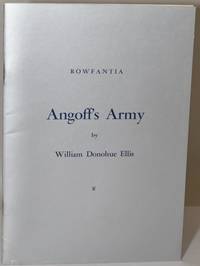
1983249812Cleveland OH: The Rowfant Club 1983. Stapled Pamphlet. Very Good binding. 19pp. Very Good binding. The Rowfant Club unknown books
1921000529SPAIN Spain Cuba USA Panama Japan. Very Good. 1921. An interesting peek into the daily doings of a sailor whether at sea on trips traversing the world or in the plodding down times during a strike or between ships. This is the 1921 handwritten diary of William D. Goodsmith a merchant sailor home based in Chicago Illinois. William is an Engineer and/or Fireman on the ships he has duty. On his first berth it appears the Doctor and he are closest amongst the crew. Much time spent partying in the rooms when the ocean was quiet. Commencing in Vigo Spain January 1st this is completely full for everyday and it appears almost daily a notation of weather times of arrival and departure sometimes longitude and latitude etc. There is time at sea for the most part but he does spend time in New York between ship assignments. William notes his daily doings movies and even seeing Babe Ruth at The Polo Grounds some shows and other ball games are noted. The year starts in Spain onto Cuba and ends in Japan. Hawaii and Panama were also visited. He was relieved of duty and there are notes about a strike heading toward a cyclone seeing Naval exercises troop movements whale sightings and much much more. The print on this is very clear. Very legible. There are 6 Oriental stamps inside the fep. ; Manuscript; 48mo - over 3" - 4" tall; Sailor Seaman Seamanship Sailing Manuscript Handdrawn Naval Navy Engineering HANDWRITTEN MANUSCRIPT DOCUMENT LETTER AUTOGRAPH DIARY JOURNAL LOG KEEPSAKE WRITER HAND WRITTEN DOCUMENTS SIGNED LETTERS MANUSCRIPTS HISTORICAL HOLOGRAPH WRITERS DIARIES JOURNALS LOGS AUTOGRAPHS PERSONAL MEMOIR MEMORIAL PERSONAL HISTORY AMERICANA MARINER MERCHANT SEAMAN . unknown
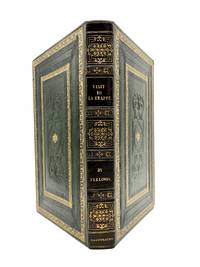
182386415London: Printed for Thommas M'Lean 1823. Fine. Printed for Thommas M'Lean London 1823 18 x 26.80 cm relié Superb illustrated edition with 12 hors-texte aquatints finely hand-painted and drawn by the author printed on strong laid paper with wide margins and airy typography. Statement of 4th edition the first having been published by William Stockdale. The plates bear the date of May 1818 by William Stockdale. 2 plates in black and one engraving painted in colors bringing the total number of plates to 15. Contemporary full straight-grained dark green morocco binding. Spine with false flat raised bands decorated with 3 mirrored tools in compartments with ornaments and fillets roulettes on the bands. Green morocco title labels. Boards decorated with a succession of blind and gilt frames radiating from center outward and a curious central blind ornament with gilt fleuron. Interior decorative border. Edges gilt. One gathering protruding with visible stitching. A fine scratch on the upper board. Very clean throughout and remarkably fresh except for the darker trace of the tissue guard which fortunately were not left on the title page. Very handsome copy in a deluxe binding of this deluxe edition. This journey symbolizes a romantic and literary pilgrimage to the abbey of La Trappe in the environs of Paris in Anjou Mayenne Brittany Poitou and Brittany. Printed for Thommas M'Lean hardcover
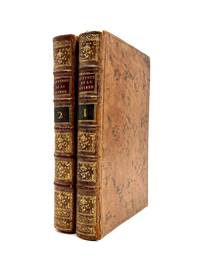
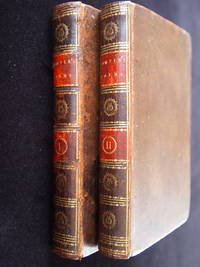
178185377A Paris: Chez Belin 1781. Fine. Chez Belin A Paris 1781 12 x 19.80 cm 2 volumes reliés Second complete edition with some parts in first edition expanded with a second volume in the translation by Ramond de Carbonnières annotated and augmented with his observations. 8 pages of catalogue at rear. Contemporary full brown marbled calf binding. Spine with raised bands decorated. Red morocco title label green morocco volume label. Headcap of volume I worn down joints cracked at foot. On volume 2 upper joint cracked at foot. Rubbing. 4 corners slightly bumped. Some foxing in margins. Coxe made 2 journeys in 1766 and 1779 through the Swiss cantons his letters abound with picturesque descriptions augmented by the translator's remarks who also made a journey to Switzerland. A second volume would appear the following year. Chez Belin hardcover
192032405Paris: Editions Phaidon 1920. Fine. Editions Phaidon Paris s. d. 23 x 31 cm reliure de l'éditeur First edition in French. Publisher's full red cloth binding. Rich iconography. Handsome copy complete with its illustrated dust jacket which has small tears with slight lacks of no significance. Editions Phaidon hardcover
179850824London: Printed for J. Johnson 1798. Fine. Printed for J. Johnson London 1798 9.50 x 16 cm 2 volumes reliés New and first illustrated edition with 10 charming figures by Stothard and engraved by Neagle Heath Angus on heavy paper. A first collected edition but unillustrated had appeared in 1782 for the first volume and 1785 for the second. Contemporary full brown sheep binding. Smooth spine decorated with 4 lyre stamps within a crown; fillets roll tools. Red morocco title and volume labels. Dark area on the upper board of the first volume. Some foxing in the margins of the engravings the tissue guards not having been removed. Handsome copy. William Cowper prefigures English Romantic poetry and Coleridge would call him ""The best modern poet""; he indeed gave a new direction to English poetry by turning toward the depiction of nature and his work was very well received by a large audience. At this end of the 18th century one will note that English taste and manner in engraving are quite different from that of France England tending very clearly in these engravings toward Romanticism while France was in the midst of the neo-classical period. Printed for J. Johnson unknown
190218505<p>Good HCs no DJs. Half bound in natural calf leather with Spanish pattern marbled paper over boards gilt overlaid veins on covers; pseudo raised bands on spine with extra gilt stamped floral and vine designs in compartments and with gilt stamped titles on red and brown spine panels; all edges marbled in Spanish pattern; end papers match cover marbling; tissue-guarded frontispiece portrait in volume 1. Bright clean square covers and spines; light edge rubbing - slight loss at volume 2 spine head; spine title panels have chipped off; leather remains supple; fine short crack at volume 1 front cover/spine tail joint; tightly bound; owner bookplate on front pastedowns; light clean interior with some age darkening at page edges. Memoir by Harris Nicolas. A very handsome set. Small 8vos 1107 total pp xciii 465 549.</p> Boston/Cambridge: Houghton Mifflin and Company/Riverside Press; no date (Ca. 1902) hardcover
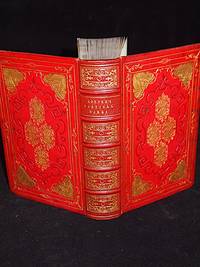
184048798London Londres London: Charles Daly 1840. Fine. Charles Daly London Londres London 1840 10 x 16.70 cm relié New edition illustrated with a frontispiece portrait and 20 steel engravings by G. Standfast on heavy paper tissue guards present. Contemporary English binding in full red shagreen. Raised spine richly decorated. Boards very ornate with different frames large corner pieces. Floral roulette on leading edges and interior floral frieze. Edges gilt. Minor rubbing traces to joints at headcaps. Very handsome copy completely free of foxing on tinted paper. Charles Daly hardcover
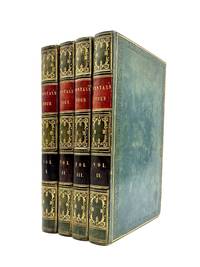
182086416London: R. AckermannJ. Johnson 1820. Fine. R. Ackermann J. Johnson London 1820 - 1821 14.50 x 23.30 cm 4 volumes reliés Very rare set in uniform binding of the 4 journeys of Doctor Syntax illustrated with 3 large hand-painted color title vignettes and 97 aquatint plates also hand-painted watercolor and gouache. First edition of the second tour third tour and final volume: The tour through London. The first volume bears a mention of fifth edition undated but certainly published at the same date as The second tour in 1820. This fourth volume is generally never joined with the first three it is only found separately. One will note that it is not entitled the fourth tour but appears as a new book apart. Officially one considers indeed that there are three books which compose the journeys. We count 30 plates for volume I 24 for the second and third and 19 for the last. Contemporary English binding in full glazed turquoise calf. Spine with raised bands decorated with 3 compartments ornamented with mirrored tools dotted fillets on the bands and at headcaps. Red calf title label black calf volume labels. Spine uniformly turned green. Green discoloration on boards. Traces of rubbing. Some rare foxing on an otherwise fresh set. One leaf partially detached in volume I. Two leaves protruding in volume III. In the 4th volume a lack to the last page at the lower right corner. Famous and very popular English satire of travel literature whose fashion culminated during the Romantic period. R. AckermannJ. Johnson hardcover
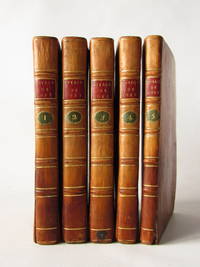
178669052à Genève Geneva: Chez Barde Manget 1786. Fine. Chez Barde Manget à Genève Geneva 1786 12.50 x 20.50 cm 5 volumes reliés First French edition published simultaneously with a 2-volume quarto edition by the same publisher expanded with Mallet's journey to Norway. The first English edition appeared in London in 1784. The illustration comprises 12 folding maps and plans Poland Russia Caspian Sea Denmark 4 portraits engraved by Topfler Stanislas Auguste Catherine II Pugat Chef Gustav III and 3 folding plates including one of costume Swedish man and woman and one relating to ornithology. A fifth volume was formed as an atlas with 11 bound folding maps the twelfth map of the Caspian Sea is found in volume 3. Contemporary full glazed blonde calf binding. Spine with raised bands decorated with fillets. Red morocco title label volume label in a green morocco medallion. Large brown dampstain on the first third of the bindings. Joints of volumes 1 and 2 split at foot for 1 cm then narrowly cracked. Upper joints of volumes 3 and 4 split at foot. Upper joint of volume 5 split at foot. Traces of pale dampstains and humidity in lower margin of volume 4 slightly on some gatherings of volume 1. Title pages of volumes 2 3 and 4 with browned margins the title page of volume 3 with hole through the author's name. Missing half-titles of volumes 1 2 and 4. Traces of dampstaining on the atlas maps. A 10 cm tear from the margin on the map of European Russia. Missing the notice consisting of 2 leaves normally placed after the preface. English historian Coxe traveled to the Northern countries in 1778 and 1779. The sections on Sweden and Denmark are particularly interesting the author concerning himself with the political system demographics religion commerce. The chapters on Poland are more historical Coxe drawing the portrait of Poland's revolutions. Chez Barde, Manget hardcover