Cadman, Charles WakefieldBiblio.com
8 829 résultats
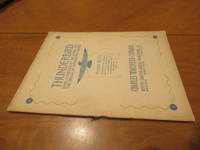
1917058742New York / Boston / Chicago: White-Smith Music Publishing Cp 1917. Soft cover. Very Good . 29 Pp Ads At Rear. Light Usage Some Browning Of Covers Pencil Ownership Information And A Couple Of Pencil Notes In Margins. Per Wikipedia Charles Wakefield Cadman 1881 - 1946 Was An American Composer. For 40 Years He Worked Closely With Nelle Richmond Eberhart Who Wrote Most Of The Texts To His Songs Including Four American Indian Songs. She Also Wrote The Librettos For His Five Operas Two Of Which Were Based On Indian Themes. He Composed In A Wide Variety Of Genres. He Was Greatly Influenced By American Indian Music Which He Had Been Studying Especially Through The Work Of Ethnologists Alice Fletcher And Francis La Flesche. Fletcher And La Flesche Had Studied The Omaha Tribe And Recorded Their Music And Stories. Having Published Several Articles On American Indian Music Cadman Became Regarded As One Of The Foremost Experts On The Subject. In 1908 He Began Touring To Present Lectures Known As The "Indian Talk" Or "Indian Music Tour" Accompanied By The Performance Of Native American Music And His Own Compositions. Tsianina Redfeather Muscogee / Cherokee Billed As "Princess Redfeather" Performed As A Singer On Some Of His Tours. Her Signature Song Was Cadman's "From The Land Of The Sky-Blue Water". Another Such Song Was "At Dawning" Which Became Widely Known In The 1920S. Cadman Toured Both The Us And Europe For 25 Years To Present This Lecture. Cadman Drew From Omaha And Iroquois Songs For His Four American Indian Songs Op. 45 Which Became His First Commercial Success In 1909. This Was Aided By Performances Of These Songs By Noted Soprano Lillian Nordica Who Was On A Concert Tour. In The Summer Of 1909 He Went To Nebraska To Study The Music And Traditional Instruments Of The Omaha And Winnebago Tribes. He Lived With The People On Their Reservations Learning To Play Their Instruments. During His Trip To The West He Met Francis La Flesche An Omaha Ethnologist Who Was Working With The Smithsonian Institution On Studies Of The Omaha And Osage Peoples. Cadman Assisted Him In Making Recordings On Wax Cylinders Of Traditional Songs. These Works Are Now Held By The Library Of Congress And Some 60 Songs Are Available Online. Cadman Drew From La Flesche's Recordings And He Was Also Interested In His Stories Collected From These Peoples. They Began Work That Year On An Opera; Cadman Had Already Started To Pull Melodies From Three Printed Collections Of Omaha And Pawnee Music Published By Ethnologist Alice Cunningham Fletcher Who Also Was With The Smithsonian. The Songs Were Transcribed Or Harmonized By Others. Cadman And Eberhart Worked Closely With La Flesche By Mail And He Continued To Provide Cadman With Omaha Melodies For The Opera. They Were Not Permitted To Use Melodies Which La Flesche Had Collected For An As Yet Unpublished Report For The Smithsonian. Together With Librettist Nelle Richmond Eberhart Cadman And La Flesche Worked Together For About Three More Years To Create An Opera Based On Omaha Stories And Music. Cadman Made Occasional Indian Music Tours To Raise Money For The Project. He Moved To Denver In 1911. Cadman Completed The Music For Da O Ma 1912 And Sought A Venue For It But It Was Never Produced Or Published. It Was Rejected By The Boston Opera Company The White-Smith Music Publishing Company Which Had Published Numerous Songs By Cadman; And The Metropolitan Opera. In The Course Of Their Work The Team Had Changed The Opera From An Omaha To Sioux Lakota/Dakota Setting. Cadman Did Gain Some Distribution For This Music: Selections From The Opera Were Published By White-Smith In 1917 As A Piano Suite And By Boosey In 1920 As An Orchestral Suite. <br/> <br/> White-Smith Music Publishing Cp paperback
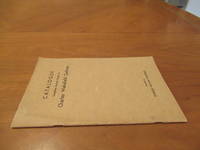
1926054020Charles Cadman Wakefield 1926. 1st Edition . Soft cover. Very Good. Portrait Plate. 32 Pp. Brown Card Covers. Compiled And Published By Cadman No Date But After 1926 And Before 1928 Includes 1926 Opera Does Not Include 1928 Opera. One Page Autobiography And Portrait Plate At Front. Per Wikipedia Charles Wakefield Cadman 1881 - 1946 Was An American Composer. For 40 Years He Worked Closely With Nelle Richmond Eberhart Who Wrote Most Of The Texts To His Songs Including Four American Indian Songs. She Also Wrote The Librettos For His Five Operas Two Of Which Were Based On Indian Themes. He Composed In A Wide Variety Of Genres. He Was Greatly Influenced By American Indian Music Which He Had Been Studying Especially Through The Work Of Ethnologists Alice Fletcher And Francis La Flesche. Fletcher And La Flesche Had Studied The Omaha Tribe And Recorded Their Music And Stories. Having Published Several Articles On American Indian Music Cadman Became Regarded As One Of The Foremost Experts On The Subject. In 1908 He Began Touring To Present Lectures Known As The "Indian Talk" Or "Indian Music Tour" Accompanied By The Performance Of Native American Music And His Own Compositions. Tsianina Redfeather Muscogee / Cherokee Billed As "Princess Redfeather" Performed As A Singer On Some Of His Tours. Her Signature Song Was Cadman's "From The Land Of The Sky-Blue Water". Another Such Song Was "At Dawning" Which Became Widely Known In The 1920S. Cadman Toured Both The Us And Europe For 25 Years To Present This Lecture. Cadman Drew From Omaha And Iroquois Songs For His Four American Indian Songs Op. 45 Which Became His First Commercial Success In 1909. This Was Aided By Performances Of These Songs By Noted Soprano Lillian Nordica Who Was On A Concert Tour. In The Summer Of 1909 He Went To Nebraska To Study The Music And Traditional Instruments Of The Omaha And Winnebago Tribes. He Lived With The People On Their Reservations Learning To Play Their Instruments. During His Trip To The West He Met Francis La Flesche An Omaha Ethnologist Who Was Working With The Smithsonian Institution On Studies Of The Omaha And Osage Peoples. Cadman Assisted Him In Making Recordings On Wax Cylinders Of Traditional Songs. These Works Are Now Held By The Library Of Congress And Some 60 Songs Are Available Online. Cadman Drew From La Flesche's Recordings And He Was Also Interested In His Stories Collected From These Peoples. They Began Work That Year On An Opera; Cadman Had Already Started To Pull Melodies From Three Printed Collections Of Omaha And Pawnee Music Published By Ethnologist Alice Cunningham Fletcher Who Also Was With The Smithsonian. The Songs Were Transcribed Or Harmonized By Others. Cadman And Eberhart Worked Closely With La Flesche By Mail And He Continued To Provide Cadman With Omaha Melodies For The Opera. They Were Not Permitted To Use Melodies Which La Flesche Had Collected For An As Yet Unpublished Report For The Smithsonian. Together With Librettist Nelle Richmond Eberhart Cadman And La Flesche Worked Together For About Three More Years To Create An Opera Based On Omaha Stories And Music. Cadman Made Occasional Indian Music Tours To Raise Money For The Project. He Moved To Denver In 1911. Cadman Completed The Music For Da O Ma 1912 And Sought A Venue For It But It Was Never Produced Or Published. It Was Rejected By The Boston Opera Company The White-Smith Music Publishing Company Which Had Published Numerous Songs By Cadman; And The Metropolitan Opera. In The Course Of Their Work The Team Had Changed The Opera From An Omaha To Sioux Lakota/Dakota Setting. Cadman Did Gain Some Distribution For This Music: Selections From The Opera Were Published By White-Smith In 1917 As A Piano Suite And By Boosey In 1920 As An Orchestral Suite. <br/> <br/> Charles Cadman Wakefield paperback
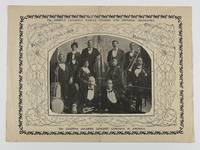
19023833Hamilton Ontario 1902. About very good. 4pp. on a single folded folio sheet. Illustrated. Minor wear old fold a few short closed tears one longer closed horizontal tear at spine fold even toning. With two small ink stamps on front cover advertising a 1904 performance. A very rare and visually appealing promotional for the Famous Canadian Jubilee Singers and Imperial Orchestra just after the turn of the 20th century. The front cover is decorated with a large group portrait surrounded by floral decorations. The remaining three pages contain a wealth of information on the group and its activities including the artists in the group the nature of their program numerous press notices from Canada England and the U.S.A. and more. The final page under the title "Black but Comely" touts the talents of four soloists for the Jubilee Singers namely Marie Dorsa C.H. Francis S.R. Overstreet and F.N. Warner with a portrait of each inside a six-pointed star. Two other photographs on the second page also picture quartettes within the group which include the four soloists and a couple of other performers including the proprietor of the group W. Carter. The ink stamps on the front cover advertise a performance by the collective at the Congregational Church in South Royalton Vermont on Friday January 1 1904. We found just one other copy in OCLC at the University of Vermont which also exhibits a notice regarding a local Vermont performance. unknown
D19829Good. A little chipped along the edges but a nice example. Image upon request. <br /> <br /> <br /> <br/><br/>Bifolium of a musical manuscript on vellum in Latin. Seven red line staves with black musical neumes of a square shape notation taken from the Roman rite of the Mass. Five enlarged initials. 15th c. hardcover
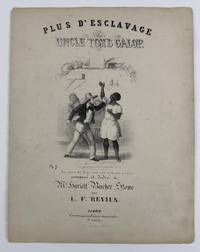
18555441La Haye The Hague: Correspondence Musicale 1855. Very good. 3pp. on a single folded folio sheet lithographic illustration on front cover. Minor toning foxing and edge wear. Stated second edition of rare Dutch sheet music for a piano piece inspired by Harriet Beecher Stowe's Uncle Tom's Cabin. The central illustration on the front cover depicts a scene from the novel with Uncle Tom under threat of the whip by his master likely representing the villain of the novel Simon Legree. The subtitle reads "Non maitre dit Tom mon ame nest pasa vous! No master said Tom my soul is not yours!." The present musical score was written by Dutch composer Louis F. Revius 1833-1902 a cellist and sheet music publisher in The Hague. In 1852 he founded the Society for the Printing and Publishing of New Cheap Music with partner Achille Defossez. We locate a handful of copies in OCLC mostly in the Netherlands but otherwise at the British Library the University of Chicago and the University of Virginia. Correspondence Musicale unknown
199322668San Francisco CA: The Arion Press 1993. First Edition. First Printing. Hardcover. As New/As New Dust Jacket. San Francisco CA: The Arion Press 1993. Hardcover. As New/As New. First Edition/First Printing. 144 pages. The author's play presented as an Artist Book. One of the greatest plays of the 20th century. Limited Edition of 300 numbered and signed copies. Accompanied by original music. Should not be confused with the regular trade edition. There is no ISBN. The Limited Edition is now rare. An austerely elegant production by Andrew Hoyem and The Arion Press: Oversize-volume format. Pictorial hard boards with navy-blue goatskin leather overboards and titles on cover and spine as issued. Text and Introductory Notes by Sam Shepard. Drawing Art by Stan Washburn one of the finest artist/printmakers of our time. "The Music of Sam Shepard's 'A Lie of The Mind' by The Red Clay Ramblers" Compact Disc CD laid-in. The CD is NOT a bonus but is instead integral to the Limited Edition. In his Notes Shepard discusses its central importance to the spirit atmosphere and texture of his play. The bluegrass music of Red Clay Ramblers was used for the original production by Shepard who directed the play himself. He insists upon not just recommends its being listened to by readers and viewers of the play and its being used for all future productions. Prospectus and Promotional Materials laid-in. Printed on French Mould-Made Lana Royal archival stock paper in the United States to the highest standards. The production values are outstanding in every respect. In protective plastic DJ as issued. Presents in its Limited Edition format Sam Shepard's "A Lie of The Mind: A Play In Three Acts". "A love ballad" Sam Shepard. He premiered the play in 1985 at the Promenade Theater New York with Harvey Keitel Aidan Quinn Amanda Plummer and Will Patton. Universally hailed as the most important theatrical event of the 1985-1986 season it won the New York Drama Critics Circle Award. "As wide long deep mysterious and unruly as the Mississippi River" Frank Rich. Shepard is an American cultural icon who has written 45 plays eleven of which won Obie Awards and at least five of which are now regarded as masterpieces of 20th-century theater: "Buried Child" "Curse of The Starving Class" "True West" "Fool For Love" and "A Lie of The Mind". He was a force in Hollywood as an actor screenwriter and film director. He is one of America's genuine cultural exports his plays translated into 36 languages and performed throughout the world. An absolute "must-have" title for Sam Shepard and Stan Washburn collectors. This is a copy of the Limited Edition indicated/numbered as such in black pen-marker on the Back Limitation Page. It is very prominently and beautifully signed in blue ink-pen by Sam Shepard and in black ink-pen by Stan Washburn. This title is a great play. This is one of few copies of the Limited Edition still available online and is in especially fine condition: Clean crisp and bright. Please note: The Compact Disc CD which is integral to the Limited Edition is laid-in. It's missing in almost ALL other copies online. A rare signed copy thus. 15 plates 1 CD Prospectus/Promotional Materials. One of the greatest writers of our time. A fine collectible set. . The Arion Press hardcover
1971147547New York: New Era Productions 1971. Draft script for the 1971 musical which premiered off-Broadway on September 12 at Theatre Four. Notated in manuscript ink as copy No 14A on the title page.<br /> <br /> An experimental musical based on Walt Whitman's 1855 collection of poetry.<br /> <br /> Green titled Studio Duplicating Service wrappers. Title page present with credits for poet Walt Whitman and music and adaptation credits to Stanley Harte Jr. 38 leaves with last page of text numbered II-36. Mimeograph duplication rectos only. Pages Near Fine wrapper Very Good plus bound with two gold brads. New Era Productions unknown
19432092902143902060Dalian Music School 1943. Soft Cover. Fine. Number of books: 1 book Dalian Music School paperback
19432092902143802096Dalian Music School 1943. Soft Cover. Fine. Number of books: 1 book Dalian Music School paperback
0887974236-11-1Frederick Harris Music. 2nd Edition. Very Good. It's a well-cared-for item that has seen limited use. The item may show minor signs of wear. All the text is legible with all pages included. It may have slight markings and/or highlighting. Frederick Harris Music unknown
21138Without place or date. London Circa 1865. 3pp. foolscap 8vo. On a bifolium of laid paper. In fair condition aged and worn. The first poem 'Balooning sic' covers both sides of the first leaf. No evidence has been discovered that this poem was ever published but it is inspired by the exploits of 'Mr. Green' in a humorous essay titled 'Ballooning' which appeared in Charles Dickens's 'Household Words' on 25 October 1851. The choice of two phrases 'pipes & backy' and 'Mounted Meershaums' is given in the present manuscript these variants perhaps suggesting that this item is authorial rather than a transcription. The second poem which covers the recto of the second leaf the verso being undated is untitled in the manuscript but is Harry Sydney's 'It's just as well to take it in a quiet sort of way' which was published in 1865 in London by Henri D'Alcorn George Henry Stannard Allcorn. ONE: 'Balooning sic'. 2pp. The poem is forty-eight lines long divided into twelve stanzas each stanza followed by the refrain 'Fal de ral.' The present poem begins: '1st. Verse When the London people used to think of going out of Town They'd take a Stage & that would to the Country take 'em down But Mister Green has lately proved as clear's the sun at noon The finest way to take the air is to take an air balloon - Fal de lal. 2. The other day when Mister Green went out just for a fly He took up two companions for a ride towards the sky Though Lords & Butler thus ventured up they found the difference soon For they were all reduced to Carmen when they rode in the Balloon Fal de ral.' The poem describes their journey made without 'fears of Highwaymen'. In the ninth stanza the travellers 'take their pipes & backy out' and the word 'backy' is glossed with the variant reading for 'pipes & backy' at the foot of the second page: 'Mounted Meershaums out.' The final stanza reads: '12. Now we find that different trav'lers will travel diff'rent ways Some like a railroad some a stage & some a Horse & Chaise Some being fond of water think a steam boat quite exquisite But there's nothing like an air balloon to pay a flying visit. Fal de ral'. TWO: Untitled Harry Sydney's 'It's just as well to take it in a quiet sort of way'. 1p. Twenty-four lines in eight stanzas. Begins: '1 We smile at the unnecessary trouble people take For fortune is not regulated by the fuss we make. I don't advise indifference but this I mean to say: Its just as well to take things in a quiet sort of way.' The poem was hugely popular being described as 'a certain sort of comic singing which I can't stand' by a character in Fun magazine 2 September 1865. The American impressario Tony Pastor 1837-1908 published a version of the poem in New York in 1868 without the following stanza of the present manuscript: 'To rise in your opinion most earnestly I hope But promise you I'll never mount the trapeze or the rope: I fancy in the long run that common sense will pay; And its just as well to take things in a quiet sort of way.' Without place or date. [London? Circa 1865.] unknown
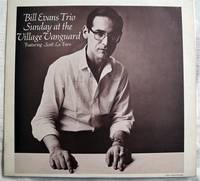
196119236United States: Riverside Records. Very Good in Very Good dust jacket. 1961. Non-Book. The Bill Evans Trio - Sunday At The Village Vanguard Label: Riverside Records RLP 9376 / Format: Vinyl LP Album Stereo / Country: US / Released: 1961Genre: Jazz / Condition: VG/VG Sleeve has a light scratch on front image rear panel very lightly rubbed at lower edges. Previous owners name at left tip on sleeve verso. Disc shows light signs of usage and plays with very light surface noise in one or two areas otherwise a beautiful copy. ; 12" . Riverside Records unknown
0980142725-11-1SUBLingual Music. Pap/Com. Very Good. It's a well-cared-for item that has seen limited use. The item may show minor signs of wear. All the text is legible with all pages included. It may have slight markings and/or highlighting. SUBLingual Music unknown
2010045296University Readers 2010. Soft cover. Fine. New & unopened. With musical examples throughout. Benefits the Friends of the Albany CA Library. <br/> <br/> University Readers paperback
2090502113717115Not Available N.A. Soft Cover. Fine. The book is in fine condition. Not Available paperback
1954MU-4New York: St. Martin's Press 1954. Revised 10-Vol. Set nearly 9000 pgs. with over 75 plates. Contains comprehensive definitions of musical terms; origin structure and successive modifications of instruments; histories and descriptions of societies and institutions; biographies of representative composers players singers and patrons of music etc. Gililt spine. Stamps on front endpaper title page and bottom outer edge. Small lettering in white on lower spine above gilt. Minor shelfwear some rubbing to small areas of covers in some volumes. Vol.II has a slight amount of moisture damage along the rear cover hinge- no damage to interior text. Overall a very good reference copy. Heavy Item. Fifth Edition. Hard Cover. Very Good. 8vo - over 7¾" - 9¾" tall. Ex-Library. St. Martin's Press Hardcover
19303008New York NY: The University Society Inc. . 1930. Hardcover. Good in No Dust Jacket dust jacket. The International Library of Music; Sm4to; Russett colored cloth bindings rubbed at edges spine ends and corner tips. Books solid and tight. Text block clean and unmarked. Pages tight but beginning to yellow. Fourteen volume set. . The University Society, Inc. hardcover
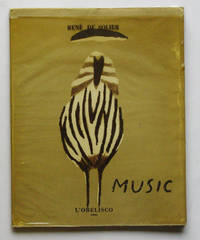
54153Roma 1955. 4° Fronti. 15 S. einge Textabb. 23 farb Taf. Broschur m. Deckelillustr. in. Transp.-OU Transp.-OU min gekürzt tadell. Sonderheft über Music. Text: ital.Music 1909-2005 geht nach Abschluss seines Studiums an der Kunstakademie Zagreb 1934 auf Reisen. Der Künstler verbringt einige Zeit in Madrid Paris Wien und Zürich bevor er sich 1940 in Venedig niederlässt. Music wird 1943 nach Dachau deportiert wo er unter schwierigsten Bedingungen fieberhaft das Leiden im Lagerleben aufzeichnet. 1945 kehrt der Künstler nach seiner Befreiung nach Venedig zurück wo ihm seine Arbeiten auf der Biennale 1950 den ersten Preis einbringen. Bereits 1951 und 1952 folgen die nächsten Auszeichnungen als Music erst mit Corpora zusammen dann allein den Prix de Paris erhält. Den Ausgangspunkt für einen malerischen Neubeginn bildet die Beschäftigung mit den dalmatinischen Landschaften seiner Kindheit. Die Auseinandersetzung mit seiner Umgebung den italienischen Landschaften ist der nächste Schritt. Von byzantinischen Mosaiken und Ikonen wird Music stilistisch stark beeinflusst. Der Künstler arbeitet in den fünfziger Jahren auch in Paris wo die "lyrische Abstraktion" das französische Informel weitgehend das Kunstleben bestimmt. Music behält jedoch auch sein Atelier in Venedig und stellt 1956 und 1960 wieder auf der Biennale aus. Diesmal wird dem Künstler der Große Preis für die Grafik und der Unesco-Preis zugesprochen. Die organischen Motive Music's werden in den sechziger Jahren abstrakter und die Bildkomposition löst sich von den Gesetzen der tiefenräumlichen Darstellung. Die vielbeachtete Serie "Wir sind nicht die Letzten" entsteht in den siebziger Jahren in der er die Schrecken seiner KZ-Erfahrungen in Zeugnisse universell gültiger Tragik verwandelt. Die Werke des Künstlers werden in vielen internationalen Ausstellungen gewürdigt. Beispielsweise 1995 in einer großen Retrospektive im Pariser Grand Palais. 010 Roma, 1955 unknown
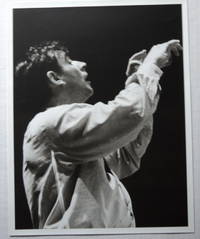
195629338New York Carnegie Hall 1956. 1956. Fine. - sc - A 14 inch high by 11 inch wide photograph by Emmerich Gara depicting Leonard Bernstein in profile from the from the waist up. Attired in a white cotton shirt hands raised high as he delicately shapes the music the young Lenny tilts his head back in response to the sound. Photographed by Cellist Emmerich Gara during a recording session at Carnegie Hall with his name & address stamped on the verso of the photograph. Signed by Gara in pencil on the verso. Fine. <p>Emmerich Gara b.1901 d.1963. Born in Vienna Austria in 1901 Gara established lifelong careers as a portrait photographer and professional cellist. Before the outbreak of the Second World War he and his wife emigrated to the United States where he was hired as cellist for the NBC Orchestra led by Arturo Toscanini. He performed with the orchestra later called The Symphony of the Air until his death.<p>From his seat in the front row of the orchestra Gara was in the unique position to photograph all the great conductors and soloists who appeared with the orchestra during this extraordinary period of musical activity. His subjects were captured in performance rehearsal and in candid moments during recordings and while socializing.<p>Gara's action portraits were used for record covers for the Book of the Month Club and in articles in Time Life and other major magazines around the world. (New York, Carnegie Hall), (1956). unknown
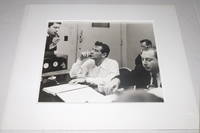
195697100New York CBS Records 1956. 1956. Fine. - An 11 inch high by 14 inch wide photograph by Emmerich Gara depicting Leonard Bernstein seated at a desk with recording equipment to his right a cigarette pensively held up near his mouth. The great violinist Isaac Stern seated next to him reaches towards the score while the classical music producer and clarinetist David Oppenheim stands at left smoking a pipe. The three together with a partially visible fourth man appear to be attentively listening to the playback. Photographed by Cellist Emmerich Gara during a studio recording session with his name & address stamped on the verso of the photograph. Identified by him on the verso as "Leonard Bernstein & Isaac Stern / CBS Recording Session Spring 1956" the photograph is signed by Gara in pencil on the verso. Fine. <p>The Koussevitzky Foundation commissioned Leonard Bernstein to compose "The Serenade after Plato's Symposium" in memory of Serge and Natalie Koussevitzky. Bernstein completed the work for solo violin strings and percussion on August 7 1954 and premiered the work in Venice with violinist Isaac Stern and the Israel Philharmonic Orchestra on September 12th of that year. Bernstein & Stern subsequently recorded "The Serenade" for Columbia Records with the Symphony of the Air on April 19 1956. The American clarinetist David Jerome Oppenheim 1922-2007 was also a classical music and television producer directing the Masterworks division of Columbia Records from 1950 to 1959.<p>Emmerich Gara b.1901 d.1963. Born in Vienna Austria in 1901 Gara established lifelong careers as a portrait photographer and professional cellist. Before the outbreak of the Second World War he and his wife emigrated to the United States where he was hired as cellist for the NBC Orchestra led by Arturo Toscanini. He performed with the orchestra later called The Symphony of the Air until his death.<p>From his seat in the front row of the orchestra Gara was in the unique position to photograph all the great conductors and soloists who appeared with the orchestra during this extraordinary period of musical activity. His subjects were captured in performance rehearsal and in candid moments during recordings and while socializing.<p>Gara's action portraits were used for record covers for the Book of the Month Club and in articles in Time Life and other major magazines around the world. (New York, CBS Records), (1956). unknown
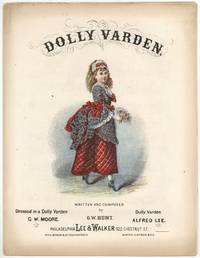
1875584591Philadelphia: Lee & Walker 1875. Softcover. Very Good. First edition. Folio. Two nested bifolia making eight pages. Light foxing and offsetting throughout toning to the exterior and light bumping to the corners still a very good and complete copy. For voice and piano. Plate number 13189 - 4. The cover illustration shows a young woman in a style of dress that was popular at the time known as "Dolly Varden" named after the Charles Dickens character from Barnaby Rudge. The song speaks playfully of the new fashion stating "Have you seen my little girl She doesn't wear a bonnet/She's got a monstrous flip-flop hat with cherry ribbons on it/She dresses in bed furniture just like a flower garden/A blowin' and a growin' and they call it 'Dolly Varden.'" The front cover of this piece features a beautiful example of the style. OCLC locates only two holdings and it appears to be equally scarce in the trade. Lee & Walker unknown
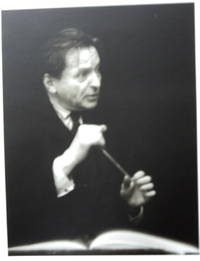
194732994New York February 1947. 1947. Fine. - sc - A powerful 14 inch high by 11 inch wide photograph by Emmerich Gara depicting the great Romanian composer and conductor from the chest up standing at the podium in three-quarter profile. Attired in a dark suit and tie over a striped shirt the disheveled conductor looks up from a score into the dark distance. His furrowed brow belies the softer look of his features as he gently holds a baton between his two hands. Photographed by Cellist Emmerich Gara with his name & address stamped on the verso of the photograph. Signed by Gara in pencil on the verso. Fine. <p>The Romanian composer violinist and conductor and teacher George Enescu 1881-1955 was born in the village of Liveni. Known as Georges Enesco in France Enescu was a child prodigy who created his first composition at the age of five. His works influenced by Romanian folk music include the two Romanian Rhapsodies his opera "Oedipe" five symphonies a symphonic poem "Vox Maris" and much more including chamber music. He made his American debut as a conductor at Carnegie Hall in 1923 and made several recordings as a violinist. He was considered as a possible successor to Toscanini. The town of Liveni where he was born was later renamed "George Enescu" in his honor.<p>Emmerich Gara b.1901 d.1963. Born in Vienna Austria in 1901 Gara established lifelong careers as a portrait photographer and professional cellist. Before the outbreak of the Second World War he and his wife emigrated to the United States where he was hired as cellist for the NBC Orchestra led by Arturo Toscanini. He performed with the orchestra later called The Symphony of the Air until his death.<p>From his seat in the front row of the orchestra Gara was in the unique position to photograph all the great conductors and soloists who appeared with the orchestra during this extraordinary period of musical activity. His subjects were captured in performance rehearsal and in candid moments during recordings and while socializing.<p>Gara's action portraits were used for record covers for the Book of the Month Club and in articles in Time Life and other major magazines around the world. (New York, February), (1947). unknown
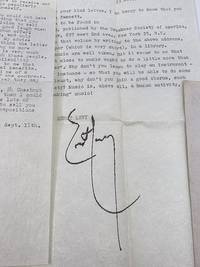
1964512131964. 8.5" x 11" folded sheets. Very good both folded with minor signs of handling. 8.5" x 11" folded sheets. Two engaging and characteristically forthright letters from the distinguished pianist composer and musicologist Ernst Levy 1895-1981 written to an admirer of his work.<br> <br> In the first letter May 22 1963 Levy responds with humor and candor to an inquiry about locating certain of his recordings echoing the fan's willingness “to pay any price†for the unspecified records. He notes that he does not possess “the Liszt nor the Haydn records and only some of the Beethoven†and advises writing directly to Kapp Records and Unicorn for assistance. Levy adds pointedly that he desires “no contact with those people†referring to Kapp and goes on to condemn the label’s decision to withdraw his recordings from circulation:<br> <br> “I consider it an act of deep dishonesty to prevent availability of those records. By pulling the record out of the market they have deprived me of a legitimate hope and simply haven’t fulfilled their part of the contract.â€<br> <br> Levy had recorded a number of performances for Kapp in the late 1950s including highly regarded interpretations of Beethoven and Liszt which were later deleted from the catalog and became highly desirable among collectors because of their rarity.<br> <br> Levy closes by recommending that the correspondent contact his friend Mr. Stephen Fassett who might offer advice and possibly access to other recordings.<br> <br> In the second letter November 23 1964 Levy expresses pleasure that the recipient has reached Fassett mentions his Bruckner article in Chord and Discord Bruckner Society of America 1963 and offers warm encouragement that his correspondent not remain merely a “platonic lover†of music urging him instead to learn an instrument or join a choir:<br> <br> “Music is above all a human activity and nothing can replace ‘making’ music!â€<br> <br> Two thoughtful and personal letters from Levy offering insight into both his frustrations with the music industry and his deeply humanistic view of art. <br /> <br /> PLEASE NOTE that all our First Editions are also First Printings unless we specifically note otherwise. All our dust jackets are protected in clear mylar covers. unknown
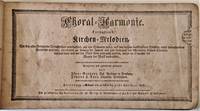
1818545Philadelphia and Baltimore: G. W. Mentz; Schäffer und Maund 1818. Oblong 8vo. 145 x 2 70 mm. 5 ¾ x 10 ½ inches. 10 2 105 3 pp. Contemporary leather spine over paper covered boards; spine and boards rubbed with a 2 x 2-inch circle of paper missing from lower board; paper stock aged brown and lightly foxed small piece missing from title-page not affecting text. This copy with the repeated inscription which reads "Henry Landis his book bought in Harrisburg January 20th 1818." With faults a very good copy of a scarce book. First edition reprinted in Harrisburg in 1822. John Wyeth was a Harrisburg printer who produced music and voice books for ministers and church groups during the first quarter of the 19th century. He was the first printer to use shape-note type in his books for the German religious community. In addition to printing for Rev. Isaac Gerhart he printed music books for James Doll and Johannes Rothbaust. Rev. Isaac Gerhart was a Reformed Minister of the Lykens Valley in Dauphin County Pennsylvania. "In addition to preaching administering the sacraments and conducting catechetical instructions Rev. Gerhart set about to improve church worship. He found a 'great defect' in the singing in those early churches. Since he had musical knowledge and talent he prepared a music book called Church Harmonia." Shaw and Shoemaker American Bibliography 44154. Arndt German Language Printing 2274. Biographical information found at LykensValley.org/rev-isaac-gerhart. G. W. Mentz; Schäffer und Maund unknown
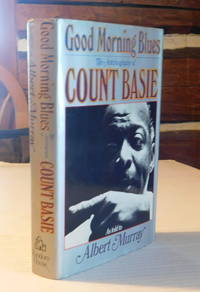
198597798<p>New York NY: Random House 1985. 1985. Very good. SIGNED BY ALBERT MURRAY & 13 GREAT JAZZ MUSICIANS - Octavo 9-1/2 inches high by 6 inches wide. Hardcover bound in black boards backed with black cloth titled in silver on the front cover and the spine in a dust wrapper featuring a photographic portrait of Count Basie. The top edge of the dust jacket is lightly creased with a couple of tiny tears xiv 1 & 400 pages illustrated with a frontispiece and 16 pages of photographs. There is a small brown stain to the front edge of the front endpaper. Very good.</p><p>First edition.</p><p>The book is inscribed by the co-author Albert Murray on the half-title. Murray 1916-2013 was a novelist and a jazz critic. He was the author of "Stomping the Blues" and "The Hero and the Blues". The jazz musicians who have signed are:</p><p>Rudy Rutherford 1924-1995 American jazz clarinetist and saxophonist. He played with Count Basie for three years in the early 1940's. Of him Basie said: "He was also a hell of a clarinet player. Rudy really had that sound on clarinet. That's him in the V-disc take of 'Kansas City Stride' and also most of the other clarinet solos for the next year or so".</p><p>Grover Mitchell 1930-2003 American jazz trombonist. Mitchell was a member of the Count Basie Orchestra from 1962-1970 and again from 1980-1984.</p><p>Butch Miles b.1944 American jazz drummer. He was with the Count Basie Orchestra from 1975-1979.</p><p>Jimmy Lewis 1918-2000 American double bassist. He was with the Count Basie sextet in 1950. Lewis has signed twice.</p><p>Eddie Preston 1925-2009 American jazz trumpeter. He played with Count Basie in 1963.</p><p>Frank Wess 1922-2013 American jazz saxophonist and flutist. According to Count Basie "Frank Wess is the man who really brought the flute into the jazz scene". Wess played with Count Basie from 1959-1964.</p><p>Buddy Tate 1913-2001 American jazz saxophonist and clarinetist. He was with Count Basie from 1939-1948.</p><p>Frank Foster 1928-2011 American saxophonist flutist and composer/arranger. Foster was a frequent collaborator with Count Basie. Foster has signed twice.</p><p>Freddie Green 1911-1987 American swing jazz guitarist. Green played rhythm guitar with the Count Basie Orchestra off and on for nearly 50 years.</p><p>Bill Hughes 1930-2018 American jazz trombonist and band leader. Hughes was a member of the Count Basie Orchestra from 1953-1957 and later from 1963-2010.</p><p>Eddie Durham 1906-1987 American jazz guitarist trombonist and composer/arranger. Durham played with members of the Count Basie Orchestra in the late 1930's. He was a pioneer of the electric guitar in jazz.</p><p>Benny Powell 1930-2010 American jazz trombonist. Powell played in the Count Basie Orchestra from 1951-1963.</p><p>Ermet "E.V." Perry c.1912-2000 American jazz trumpeter. Although he played with many of the great jazz bands of the era we are uncertain as to his relationship with the Count Basie Orchestra.</p> New York, NY: Random House, (1985). hardcover