Gloesener, MichelAntiquariat.de

41 776 résultats
18533187Mit 14 gefalt. lithogr. Tafeln. Lüttich, H. Dessain, 1853. 8vo. (22,0 x 13,5 cm). 2 Bll., 124 S. (inkl. S. 83bis). Neuer Pappband.
18533362Ein unentbehrliches Handbuch für Eisen- und Stahlarbeiter jedes Faches, namentlich für Grob-, Zeug- und Waffenschmiede, Schlosser... insbesondere aber auch für Gewerbvereine und polytechnische Anstalten. Nach dem englischen Werke des Ingenieurs [Frederick] Overmann deutsch bearbeitet. Mit 26 Textholzstichen. Frankfurt a. M., C. Jügel, 1853. 8vo. (17,3 x 10,8 cm). VIII, 313 S. Marmorierter Halblederband d. Zt. mit rotem Lederrückenschild u. dezenter Rückenvergoldung.
18503321Mit 7 (1 gefalt.) gest. Tafeln. Wien, C. Gerold, 1850. 8vo. (24,7 x 15,5 cm). 2 Bll., VIII, 111 S., (3 S.). Halblederband d. Zt.
18331835Geologische und physikalische Betrachtungen über das Entstehen von Springquellen durch gebohrte Brunnen, nebst Untersuchungen über den Ursprung und die Erfindung des Erdbohrers, den gegenwärtigen Standpunkt der Brunnenbohrkunst, und über den Grad von Wahrscheinlichkeit des Gelingens der Bohrbrunnen. Aus dem Französischen übersetzt und mit einem Anhange vermehrt, von C. W. Frommann. Mit 8 (7 gefalt., 3 teilkol.) lithogr. Tafeln. Koblenz, in Kommission bey K. Bädecker, 1833. 8vo. (20,0 x 12,2 cm). XXXII, 375, (1) S. Marmorierter Pappband d. Zt. mit Rückenschild.
In-4 p. (mm. 327x220), p. pergam. coeva, tit. ms. al dorso, 10 cc.nn., 660 pp.num., 18 cc.nn., frontespizio con tit. in rosso e nero e grande marca tipografica xilografata (una nave in tempesta sul mare aperto, in cornice figurata con sirene e mostri marini; monogramma dell'editore “GGH”); ornato da testate e grandi iniziali pure inc. su legno. Nell'opera "Accesserunt huic Editioni hactenus inediti Casus Medicinales Annorum 1659.60. & 61.. Itemque Collegium Nosocomicum ab Authore habitum, unà cum Appendice de Formulis quibusdam Remediorum ad varios affectus ab eodem praescriptis. Cum duplici Indice (Librorum & Capitum - Rerum)”. "Lo scienziato olandese, Francesco De la Boe Silvio (1614-1672) è il fondatore della iatrochimica. Medico illustre e straordinariamente fortunato nelle sue cure, professore nell'Università di Leyda, dove accorrevano studenti da ogni parte di Europa per ascoltare le sue lezioni, egli fondava il suo sistema su quelle cognizioni della circolazione del sangue, delle funzioni dei vasi linfatici e delle glandole, che erano comuni ai suoi tempi.. Silvio è fautore convinto della dottrina di Harvey; ricercatore assiduo, è il primo a riconoscere l'importanza dei tubercoli nella tisi; il suo nome è legato, nell'anatomia, alla scoperta dell'acquedotto e della fossa che portano il suo nome". Così Castiglioni, p. 545. Cfr. anche Sallander,9428 e 9429 che cita 2 ediz. secentesche - Garrison Morton,2321 la I ediz. di Amsterdam, 1679 - Biographie Médicale,II, pp. 303/307. Con aloni margin. e lievi arross. interc. nel t. ma complessivam. discreto esemplare.
18601646Textheft u. Tafelmappe. Mit 23 Kupfertafeln u. 3 gefalt. Tabellen. Wien, C. Gerold, 1860. Gr.-8vo. (23,7 x 15,3 cm) u. Quer-Großfolio (35,7 x 49,4 cm). IV, 188 S., 1 Bl. Orig.-Umschlag u. Halbleinwandmappe d. Zt. mit mont. Deckelschild.
18963736Eine geschichtliche, technische und wirthschaftliche Darstellung des öffentlichen Beleuchtungswesens in Berlin, sowie des Beleuchtungseffectes auf den Berliner Strassen. Auf Grund officiellen Materials hrsg. Mit 1 doppelblattgr. lithogr. Plan u. 256 (3 auf 2 gefalt. Tafeln) Abb. Berlin, S. Fischer, 1896. Gr.-8vo. (26,5 x 17,5 cm). XIV S., 1 Bl., 468 S., XIV S. Anzeigen, 1 Bl. Halblederband d. Zt. mit etwas Rückenvergoldung.
In-16 (mm. 177x115), 2 volumi, brossura orig. figurata, pp. IV,XIV,520; VIII,628,XII (editor.); illustrati nel t. da complessive 252 figure. "Prima edizione" di questa importante opera. L’autore è soprattutto un isto-neurologo che scrive tante pubblicazioni sulla biologia e sulla struttura della cellula nervosa e dei suoi organelli (come i corpi di Nissl, le neurofibrille, i pigmenti, il nucleo e nucleolo) in stato normale e in patologia. Questi studi sono largamente descritti in questo suo libro del 1909 e continuarono per tutta la vita. Santiago Ramón y Cajal, al quale è dedicato, scrive una prefazione elogiativa, in cui sottolinea che il suo "onorevole e dotto collega Marinescu è, allo stesso tempo, un acuto osservatore ed un forte e tenace sostenitore del metodo sperimentale” e che “nella sua infaticabile attività, la sua feconda ricerca in un campo cosi difficile come l'istologia del sistema nervoso, gli ha fatto guadagnare una reputazione e una più che sufficiente autorità per imporre il suo libro all'attenzione e alle lodi del mondo scientifico”. Il rumeno “Gheorghe Marinescu (Bucarest, 1863-1938) è stato allievo di Jean-Martin Charcot e di Emil Du Bois-Reymond; fu fondatore della Scuola rumena di Neurologia, membro titolare dell'Accademia rumena e professore della facoltà di medicina dell'Università di Bucarest. Nel 1882 si iscrive alla Facoltà di Medicina dell'ospedale Brâncoveanu a Bucarest e diventa l'assistente di Victor Babes nell'istituto di batteriologia, laureandosi nel 1889. Grazie all'aiuto di Babes, ottenne dal governo rumeno una borsa di studio che gli permise di trascorrere 9 anni a Parigi per studiare neurologia. In seguito entrò a far parte della Clinique des Maladies du Système Nerveux, guidata dal professore Jean-Martin Charcot nell'ospedale Salpêtrière. Per tutta la sua vita rimase fedele alla memoria di Charcot e non smise mai di ritenersi il suo pupillo e di mostrare l'ammirazione nei suoi confronti”. Cfr. J. Soury “Le syastème nerveux central. Structure et fonctions” (Paris, Carré, 1899) che tratta a lungo l’opera di Moresco. Esemplare molto ben conservato.
Folio (226 x 360 mm). (4) pp., 13 (instead of 16) engraved plates (lacking numbered plates 8, 12, 13). Papered spine. Seventh edition, first published in 1734. A finely engraved instruction book for drawing landscapes. Johann Daniel Preißler (1666-1737), a member of a Nuremberg artists' dynasty of Bohemian origin, published several such pattern books and is also known for his series of ornamental, Biblical and allegorical engravings. - Light browning and brownstaining throughout; lower corner of plate 10 missing (no loss to engraving), two small holes cut into plate 7, but well preserved. Cf. Kat. Ornamentstichslg. Berlin 4631 (the 6th edition, lacking plates the same plates as this copy, as well as plate 10). Thieme/Becker XXVII, 374.
178130866ABParis, Demonville, 1781. 8°. (4) Bl., 364 S. Mit 4 mehrfach gef. Kupferstichen und einer gestochenen Karte. Pappband der Zeit mit Kleisterpapierbezug. + Wichtig: Für unsere Kunden in der EU erfolgt der Versand alle 14 Tage verzollt ab Deutschland / Postbank-Konto in Deutschland vorhanden +, A|B|C|D [4 Warenabbildungen]
Oblong folio (ca. 530 x 695 mm). 2 vols. in one. 35 (instead of 38) numbered coloured lithographed double-page plates (including lithograph tile-pages). Contemporary half calf over marbled boards with giltstamped spine and spine-title. Fanciful reconstruction of the lost frescoes created by the ancient Greek painter Polygnotus in the Lesche of the Knidians in Delphi. Essentially "a product of pure fantasy in the late classicist style" (Thieme/B.), this splendid cycle shows scenes from Ulysses' Descent into the Underworld and the Sack of Troy. The illustrations were inspired by the careful description of Polygnotus' paintings as observed by the 2nd century traveller Pausanias, and were carried out by the German artist brothers Franz and Johannes Riepenhausen. As early as 1804, they had sent Goethe a series of 12 'Polygnotan' drawings which inspired his long essay on the work of Polygnotus in 1804. - The first part of the Riepenhausens' work was printed in 1805 in the form of outline etchings, containing only 15 plates showing the Sack of Troy; the second part, illustrating Ulysses' descent into Hades, appeared in 1826. The present edition is the first complete one. - Part II lacks plates X, XV and XVIII. Binding somewhat rubbed, paper somewhat foxed throughout; 5 plates in part II show a small marginal tear each, not touching image. A Jesuit library's ownership stamp to title-page. A fine copy. Pollen 1740. Cf. Nagler XIV, 469. Thieme/B. XXVIII, 337 (1805 edition). OCLC 185546420.
In-4 gr., tela coeva, pp. 8, dattiloscritte (solo al recto). In allegato 3 grandi grafici, più volte ripieg., relativi a: “Piano di costruzione - Sezione longitudinale: Piani stiva e coperta - Piano dei legni, Robustezza Longitudinale, Assetto”. Ben conservato.
684 pages. "A unique combination of textbook and reference." - from dust jacket. Book clean and unmarked with light wear. Average wear to dust jacket now preserved in glossy new archival-grade Brodart. A sound copy. Book
BN66190Alkyl Polyglycosides: Technology Properties Applications Hill Karlheinz; Rybinski Wolfgang von and Stoll Gerhard <br/><br/> unknown
RO80051538SOCIETE DU FILTRE GASQUET. Non daté. In-4. Broché. Etat d'usage, Couv. légèrement passée, Dos satisfaisant, Quelques rousseurs. Lot de 11 chemises cartonnées contre-pliées, contenant divers documents d'archives. Nombreux plans, dessins, schémas, photos, tableaux, graphiques et croquis, en oir et blanc, dans le texte, en hors-texte et en planches dépliantes. Quelques lettres et documents dactylographiés et manuscrit originaux. Quelques banderoles (papier) publicitaires. Quelques accrocs en marges.. . . . Classification Dewey : 663-Technologie des boissons
AA.VV. Lotto di 166 riviste "National Geographic Italia". , National Geographic Italia 2000, Buono (Good) . <br> <br> <br> <br>
334 pages including index. "This is one of the most original books on political and social thought to appear in recent years. The author projects the impact of technology and electronics on the political and social values of the United States, the Soviet Union, and other 'post-industrial' states." - Foreign Affairs. Brzezinski has been one of the most influential men in America for decades. Clean, bright and unmarked with very light wear. Binding tight. An excellent copy of this significant work. Book
490 pages. Index. List of biographical sources. Compiled from articles Major Chamberlain had published during the preceeding twenty-five or more years. Printed on glossy stock. Attractive black and white photographic frontis portrait of author. Many additional black and white photos and line drawings in text. Above-average but not excessive external wear. Binding and hinges intact. Unmarked. A worthy first edition copy of this excellent compilation. Book
pp.x, 235. "As a research scientist and product design engineer [the author] has been directly involved with programs and projects for the design and development of portable cell phones, radio frequency mobile radios, microwave telecommunications systems, video display systems, and biological effects research." - vi. "Provides a broad view of the scientific landscape that clearly advises us that there is danger here. Provides a historical accounting of the research that is available, has been available for forty years or more, and has been neglected or buried by an industry that will place its absolute need to sell products above the health and well-being of its own customers. The practice of producing such products can only be viewed as predatory. Offers a commentary on a litany of past research studies, hundreds of research studies from the 1950s through the mid-1990s. These older studies are alarming in their findings of radiation exposure, DNA damage, chromosome damage, tissue damage, radiation absorption, cataract formation, tumor formation, memory loss, motor skills degradation, and more." - ix-x. Clean and unmarked with light wear. Sunning to spine and parts of front cover. Binding tight. A quality copy of this extraordinary and most timely expose. Book
208 pages. Printed upon glossy stock. Includes 24" x 15" color-photo poster at back. Profusely illustrated with black and white photos and diagrams. Section I discusses how to make bullets, with tips on casting, moulds, accuracy, bullet selection and more. Section II provides the history of the bullet, and the extensive and very informative data section includes details of older cartridges not offered in later editions. "A priceless reservoir of information, advice and experience for every man who shoots, who wants more fun out of shooting, who wants to shoot better and shoot more - and who wants to save money while doing it." - page 6. Binding intact. Unmarked with average wear. Minor evidence of moisture exposure to lower fore-edge of last few pages. Crease to top corner of front cover. A sound first edition copy of what many consider to be the Holy Grail of bullet casting. Book
273 pages. Index. Line and detail drawings. Volume Six of The Library of Electrical Science. Includes 11 page chapter, complete with five black and white photographic plates, entitled 'Electrical Communication With The Planets' by Nikola Tesla. Other chapters include: Polyphase Generators; Combinations of Polyphase Currents; Properties of Rotating Magnetic Fields; Early Development of Rotary-Field Motors; Structure of Polyphase Motors; Elementary Theory of Polyphase Motors; Analytical Theory of Polyphase Motors; Monophase Motors; Miscellaneous Alternate-Current Motors; Polyphase Transformers; Measurement of Polyphase Power; Notes on Design of Polyphase Motors; Mechanical Performance of Polyphase Motors; Some Examples of Modern Polyphase Motors; Distribution of Polyphase Currents from Stations. Extensive Bibliography of Polyphase Currents and Rotary-Field Motors. Hinges and binding intact. Unmarked. Above-average wear externally with heavy chipping and tearing to spine ends. Marble decorations to all text edges. Book
615 pages. "In the preparation of the third edition of this standard textbook for the boot and shoe industry, all the necessary revision has been made to keep it fully up to date. In particular the chapter on Direct Moulded Construction has been considerably modified and includes a new section on Injection moulding. The general arrangement into nine parts has been retained: Shoe Design - its Basis and Development; Pattern Cutting; Clicking; Closing; Bottom Stock; Making; Finishing; Shoe Room; Slipper Manufacture. This new edition is a complete textbook describing for students all the methods in use in the manufacture of boots and shoes and is also an invaluable reference book for foremen, managers and directors in the industry who need to keep abreast of modern techniques." - from dust jacket. Above-average wear. Usual library markings. Back hinge open. A worthy reference copy of this excellent reference. Book
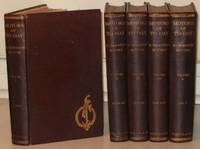
3821London: Virtue and Co. Set of 5 volumes. Quarto. Not dated about 1930. 1864 pages. Many b/w illusts diagrams and text illusts. Several coloured fold-out models. Index. Original deep brown cloth with gilt titling on spines and gilt decoration on lower right-hand corner of upper boards. A beautiful set. Heaps of information on English European and American motor vehicles presented in alphabetical order. . Hard Cover. Very Good. Virtue and Co hardcover
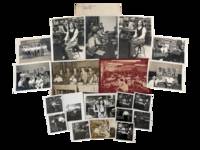
1940233241940. Dictaphone Corporation factory photographs documenting women and men manufacturing dictating machines in Bridgeport Connecticut circa 1940s showcasing the postwar expansion of women's employment inside a growing communications technology industry. The group centers on Dictaphone's Bridgeport plant at 335 Howard Avenue where workers appear at long rows of benches with recording and transcription equipment tool drawers lamps wiring and partly assembled machines placing this archive within the larger World War II and postwar reorganization of American factory labor. Several photographs give women a central place within that system not as incidental figures but as seated operators bench workers and posed employees inside the production rooms themselves grounding the archive in the history of women's industrial employment as office technology manufacturing expanded beyond clerical use into large scale commercial production.<br /> <br /> Archive of 21 pieces including 20 black and white and one red photographs ranging from 2" x 2" to 5" x 7" and original envelope. Bridgeport Connecticut circa 1940s. One original company envelope is printed "DICTAPHONE CORPORATION / 335 HOWARD AVENUE / BRIDGEPORT CONN." fixing the factory location. Interior views show crowded production rooms under fluorescent strip lighting with dozens of workers seated at benches operating or assembling dictating machines and related components; in the largest image male workers fill a deep factory floor while several men in the foreground lean into handsets or testing devices at stations packed with equipment. One view shows a male worker alone at a bench in a long machine lined room with belts tools and suspended mechanisms overhead; several smaller prints show women seated at desks or worktables women and men posed together on the shop floor and mixed groups of workers assembled outdoors or around demonstration tables with supervisors and visiting men in suits. The images repeatedly emphasize rows of benches machine bodies cords lamps and standardized work positions while the envelope and repeated factory interiors tie the lot to Dictaphone's manufacturing operation rather than to sales or office promotion alone.<br /> <br /> During World War II and the immediate postwar years firms producing office equipment occupied an important place in the broader American communications and business machine economy supplying devices that organized dictation transcription record keeping and administrative workflow for corporations law offices and government users. This archive makes that industrial system visible at the level of labor showing how the growth of business technology relied on factory discipline gendered employment patterns and the integration of women into production space during a period when wartime labor demand altered who worked at the bench and who appeared in the industrial workforce. Light edge wear envelope toned. Overall very good condition. A concentrated visual record of 1940s office machine manufacturing placing women's industrial labor inside the production history of one of the leading American dictation companies. unknown
185544440Leipzig, Ernst Schäfer, 1855. Lex8vo. Recent boards with printed titlelabel on spine. VI,514 pp. and 73 lithographe plates of which 66 are chromolithographed. Text with some scattered brownspots. the last two plates with small nicks to margins