34 831 résultats
18972092902144200899Not Available 1897. Soft Cover. Fine. The book is in fine condition. Not Available paperback
Z1-L-017-01553Architectural Association. Used - Good. Ships from UK in 48 hours or less usually same day. Your purchase helps support Sri Lankan Children's Charity 'The Rainbow Centre'. Ex-library so some stamps and wear but in good overall condition. 100% money back guarantee. We are a world class secondhand bookstore based in Hertfordshire United Kingdom and specialize in high quality textbooks across an enormous variety of subjects. We aim to provide a vast range of textbooks rare and collectible books at a great price. Our donations to The Rainbow Centre have helped provide an education and a safe haven to hundreds of children who live in appalling conditions. We provide a 100% money back guarantee and are dedicated to providing our customers with the highest standards of service in the bookselling industry. Architectural Association unknown
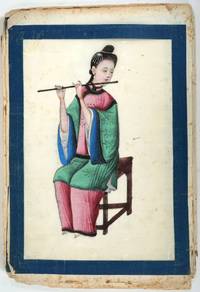
98101501Canton 1860-80's Cheungqua. A group of 7 pith or Tongcao color paintings usual minimal issues mostly clean & solid sold "as is" as a collection with the typical chips & a few fox spots else very good clean examples. A RARE GROUP ! . . . . A SUITE OF 7 FINE CHINESE COLOR PITH PAINTINGS . . . SHOWING BEAUTIFULLY DRESSED CHINESE WOMEN . . . PLAYING MUSICAL INSTRUMENTS . . . EXECUTED IN STUNNING & BRILLIANT COLORS . . . AKA: CHINESE EXPORT WATERCOLOURS . A group of typical "trade paintings" executed by Chinese native artists for foreign traders visiting Canton or Macao during the early to mid-19th century. . A SUPERB SUITE OF FABULOUS COLOR PITH PAINTINGS: A stunningly beautiful group of hand-painted color pith paintings depicting a woman playing a musical instrument. . "GOLDEN LOTUS" or "LOTUS FEET" BOUND FEET Chanzu: This like most illustrations of the period show the women with bound feet. Chanzu bound feet was an erotic obsession and fetish in ancient China. The erotic ramifications are outlined in the references below. . The paintings illustrate Chinese women in a domestic scene with furniture playing musical instruments. Subjects are: . a. Yue1in Ruan Moon Guitar Moon Zither 4 stringed . b. Yanqin Chinese Dulcimer . c. Sanxian three-stringed Chinese lute . d. Drumming on the back of a Chinese ceramic bowl . e. Dizi Chinese bamboo flute . f. Huqin Chinese violin . g. Tong Luo Chinese Brass Gong . DESCRIPTION OF THE PAINTING ART WORK AND CONDITION: . Each painting is in brilliant vivid and stunning colors. Each is skillfully painted with a fine hand delicate fine-point brush with great detail incredible reality texture and appeal. . As usual the set paintings were tipped to a contemporary backing period Each painting is backed with a contemporary stiff paper or a more current back card. . Items "a" & "b" are matted see cover.jpg & title.jpg photos posted to our website. . Each painting is approximately 21 x 34 cm. most have a blue silk ribbon border partial border or border lacking chipped and the like on has restorations on the verso in the margin only. . Each painting has some chips parts missing on the edges or with small holes here and there 'e' by and large the images are complete but some may have usual and often typical age-related cracks or splits a touch of fox spots on "c." . Suitable for framing & display. Please review photographs posted to our website for details. . "RICE PAPER" PAINTINGS: Several authors refer to this name rather than the proper name "Pith" paper paintings also can be called "Tung Tsao." . THE CANTON ARTIST OR 'SCHOOL' OF CHEUNG QUA: Cheung Qua was an export watercolor painter in Canton. He and followers of his school produced various single and albums of these paintings which were sold from his studio. . Often his in-house artists began painting on their own thus replicating the techniques subjects and essence of their masters. Because these paintings were rarely signed the one and only identification ever found was occasionally on the album cover or spine with the studio name. . Often these paintings were sold in various shops in Macao the main resting and gathering place of foreigners during part of the year. . REFERENCE: . CLUNAS Craig.: CHINESE EXPORT WATERCOLOURS. This entire book is devoted to Pith or Rice paper paintings. For musical instruments see color plates on pp.50-53 especially plates on pp.66-67 plates 39 & 40 are particularly similar to our examples that is to say by the same or an artist who was in the same house of Cheungqua or that school. CHU Arthur. et al.: ORIENTAL ANTIQUES AND COLLECTIBLES: A GUIDE pp.62-66. THE CHINESE PITH PAINTING COLLECTION AT THE NATIONAL LIBRARY OF AUSTRALIA: An Annotated Guide. Crossman Carl L. The decorative arts of the China trade : paintings furnishings and exotic curiosities. LEVY Howard S.: CHINESE FOOT BINDING: The History of a Curious Erotic Custom. . --. THE LOTUS LOVERS: The Complete History of the Curious Erotic Custom of Foot binding in China. JACKSON Beverly.: SPLENDID SLIPPERS: A THOUSAND YEARS OF AN EROTIC TRADITION. . . unknown
1870279111870. Finely executed portraits of women and their musical instruments larger and more detailed than many other albums. From the school of Youqua. The portraits have no background painting. 8 images mounted with dark turquoise border silk some with cracks; 3 images are mounted on card at a later date. All images loose in papered boards which open Western style and are disbound and very rubbed. Most images are in lovely and larger than most. Besides some small cracks they are in very good condition. 4to 11 1/2 x 8 unknown
1800225275England 1800. Watercolor drawing. 31.8 x 45.7 cm. 12-1/2 x 18 inches. Framed and matted. Watercolor drawing. 31.8 x 45.7 cm. 12-1/2 x 18 inches. Superb hilltop view of the old port in this village in North Devon showing several large frigates anchored in the bay sloops moored in the harbor cattle grazing on the slopes sea and sky in the distance. unknown books
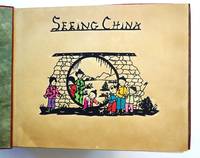
006911Chefoo China: Women's Bible School American Presbyterian Mission Book. Near Fine. Soft cover. First Edition. Oblong Folio. No Date circa 1930. Near Fine pages with light toning. Oblong folio 10" x 13 3/4". Bound in beautiful red pictorial embossed silk over limp boards string-tied 28 pp of cut-out illustrations in black and white many with colorful silk inlays with tissue guards publisher's 1 page explanatory leaf laid in also an original 6 1/2" x 10 1/2" cut-out with colorful silk inlays and string hanger readt-to-hang laid in. Cut-out chapter headings are Travel and Transportation Customs and Habits Chinese Birth-Year Cycle latest date 1935 Occupations The Eight Immortals Myths and Legends Chinese Recipes Chinese Children Chinese Junks and The Magician. Well over 100 cut-outs in all including the bonus laid in cut-out and SCARCE THUS. Women's Bible School, American Presbyterian Mission Paperback
8380Vista panoramica di Venezia.Gouache sur trait gravé,avec rehauts de gomme.L’auteur serait P. MAJOOCHI,et la gravure de Francesco CITTERIO. Chez Vallardi éditeur à Milan,vers 1850.1075x425mm y compris son cadre doré, d’époque.880x230mm hors marges. Très bon état.Le cadre n’a jamais été démonté,ce qui explique ces quelques traces de poussière sur le verre. Coloris frais. La vue de Venise est centrée sur la piazza San Marco, la tour du Campanile bissectrice de la composition avec le port sur la droite. Antonio VALLARDI est une maison d’édition italienne basée à Milan. Fondée en 1750 par Francesco Cesar VALLARDI
Acquaforte, 1932, esemplare unico terminato ad acquarello. Lastra 130x220 mm. Firmata e datata in lastra 1932. Titolo autografo a matita in basso a sinistra dove riportata l’iscrizione “unica a colori”. Firma a matita in basso a destra “Luigi Bartolini”. Un esemplare unico della stampa viene descritto in diversi repertori (vedi bibliografia sotto) e riprodotto ne Gli esemplari unici o rari (Casini editore, Roma 1952). Il presente esemplare sarebbe dunque l’unico terminato a colori da Bartolini. Luigi Bartolini è considerato uno dei maggiori incisori italiani del Novecento, insieme a Giorgio Morandi e Giuseppe Viviani. Oltre ad essere un prolifico incisore (al suo attivo oltre mille acqueforti), fu anche pittore e scrittore. Partecipò sia come pittore che come incisore a diverse edizioni della Biennale di Venezia dal 1928 al 1962. Presente a varie manifestazioni artistiche, sviluppò diverse maniere definite: ‘maniera bionda’, ‘lineare’ e ‘nera’. Ricordiamo soprattutto le acqueforti della serie Marche e della serie Sicilia. Iniziò la sua produzione grafica nel 1914 e il suo stile si rifà alla tradizione naturalistica dell’Ottocento. Molte sue incisioni si possono ricollegare ad alcune opere del Goya, di Telemaco Signorini e di Giovanni Fattori. Eccellente nella rappresentazione della natura morta e del paesaggio, spesso il Bartolini rappresentò dolcemente le cose e gli oggetti più umili, i soggetti di natura più dimessi. In essi ritroviamo il sentimento che diviene immagine e la forma che si sviluppa in espressione. Con Bartolini l’incisione torna ad essere un mezzo di espressione poetica libera dal simbolismo e dal vedutismo allora in voga presso le accademie. Nelle sue acqueforti prevale ora un tratteggio leggero (genere biondo), ora una ricerca del chiaroscuro alla Rembrandt (genere nero). Magnifica prova, con margini, in ottime condizioni. Il presente esemplare proviene dalla mostra di Bartolini presso la Galleria d’Arte Moderna Viotti di Torino, tenutasi il 22 febbraio 1969. Viene allegata la targhetta della galleria. Etching, 1932, unique example finished in watercolor. 130x220 mm plate. Signed and dated on plate 1932. Autograph title in pencil at lower left where inscribed "unique in color". Signature in pencil at lower right "Luigi Bartolini". A unique example of the print is described in several repertories and is reproduced in (Casini editore, Roma 1952). The present example would therefore be the only one finished in color by Bartolini. Magnificent proof, with margins, in excellent condition. The present example comes from Bartolini's exhibition at the Galleria d'Arte Moderna Viotti in Turin, on February 22, 1969. The gallery plaque is enclosed. Born in Cupramontana near Ancona, Luigi Bartolini was the twentieth century Italian etcher, who came closest to the stature of his great rival, Morandi. As a teenager, he saw the collection of etchings, including work by Callot, owned by the Corradi family in Iesi. From 1907 to 1910 Bartolini studied at the Istituto di Belle Arti in Siena, and started to etch c. 1909. He moved to Rome in 1910, where until 1912 he frequented the Accademia di Belle Arti, while also attending lectures on literature and the history of art, and courses on anatomy at the University in Rome. Bartolini studied the etchings of Goya and took lessons on drawing at the Accademia di Spagna. From there, he went to Florence in 1913, where he attended the Scuola del nudo. Bartolini continued his anatomical research, as well as studying architecture, making himself the most assiduous student of all Italian twentieth century printmakers. He also visited the Uffizi and Florentine print dealers to look at the etchings of Rembrandt and Fattori. Bartolini painted his first oils just before the outbreak of the First World War. Although he painted pictures throughout the rest of his career, and was awarded the Premio Marzotto for them in 1956, they have been far eclipsed in fame by his etchings and writings. During the First World War, Bartolini published his first collection of poetry. A very prolific and accomplished writer, in this field he is best known today as the author of the novel, 'Ladri di biciclette' (Bicycle thieves), of 1946, which was quickly turned into a celebrated film by Vittorio de Sica and Cesar Zavattini. After the First World War, Bartolini held a series of minor teaching posts in Macerata, Sassari, Avezzano, Pola, and Caltagirone, while he continued to etch, and started a long career as a polemical journalist and critic of art and architecture. From 1923 to 1929, he wrote for the Naples periodical, 'Cimento', but he also contributed to 'Il Selvaggio', 'Quadrivio', 'Italia letteraria', and 'L'Ambrosiana'. Bartolini's 1924 exhibition of etchings at the Casa d'Arte Bragaglia in Rome was a great success, and later that year he showed 70 etched landscapes of the Marches at the Casa Palazzo di Roma. The following year he visited Paris, where he paid particular attention to the paintings of Van Gogh. Bartolini's political convictions led him to being assaulted by Fascists and hospitalised in 1928. Two years later, he won a prize at the Venice Biennale, where he had exhibited a portfolio of etchings. In 1930, the Turin publisher, Buratti, began to issue a series of portfolios of etchings by contemporary Italian artists under the editorship of Cipriano Oppi, selecting Bartolini for the first album. The following year, Buratti published 'Le carte parlanti', a portfolio of 10 of Bartolini's etchings, which was published in an edition of 20. In 1932, Bartolini shared the first prize at the Prima mostra dell'incisione moderna at the Uffizi with Morandi and Boccioni. His close friend, the leading anti-Fascist art historian, Lionello Venturi, acted as his agent selling his etchings in Paris. Bartolini's correspondence with his compatriots in exile led to his imprisonment, from which he was released on Mussolini's personal intervention. He was then placed under political surveillance. From 1933 to 1938, Bartolin... Gli esemplari unici o rari, Casini editore, Roma 1952; C.A. Petrucci, Le incisioni di Luigi Bartolini, Calcografia Nazionale Roma (1951), n. 379 (e.u.); G. Ronci, Le incisioni di Luigi Bartolini, Calcografia Nazionale Roma (1962), n. 379 (e.u.); C. Barsan
1889E00911889. Titelblatt von J. Berjon in Tinte signiert / titre signé en encre par Berjon. 11 Lagen starkes Papier mit Kordelbindung. Lederband der Zeit mit goldgeprägtem Deckel- u. Rückentitel. Zustand 1.
Bulino, 1600 circa, firmata in lastra nell’immagine, in basso a destra: “Joannes Muller. fecit”, at left: “Harmannus Muller. excud. Amstelodamj”. Magnifica prova, ricca di toni, impressa su carta vergata coeva, rifilata al rame ed applicata su antico supporto del XIX secolo, tracce di usura nella parte inferiore, nel complesso in buono stato di conservazione. Questa incisione, anche se per ragioni stilistiche strettamente legata a Spranger, dev’essere stata disegnata dallo stesso Muller. Il disegno di questa stampa, firmato "JMuller fecit", è attribuito da Bartsch (III, p. 284, n. 64) a Spranger. Obheruber (cfr. Die Stilistiche Entwicklung im Werk Bartholomaeus Spranger, p. 294 n. 93), ha evidenziato l'inesattezza di quest’attribuzione. Bibliografia Bartsch, III.286.64; The New Hollstein, II, p. p.177, 64 II/IV; Filedt Kok (Print Quarterly, september 1994) pp. 250 -251; Hollstein, XIV, 10. Engraving, 1600 circa, signed below in the image, at right: “Joannes Muller. fecit”; at left “Harmannus Muller. excud. Amstelodamj”. A fine impression, printed with tone on contemporary laid paper, trimmed to the borderline and pasted on 19th Century mounting, good condition. This print, though stylistically closely related to Spranger, must have been designed by Muller himself. The drawing for this print, signed “JMuller fecit”, is attributed by Bartsch (III, p. 284, n. 64) to Spranger. Obheruber (cf. Die Stilistiche Entwicklung im Werk Bartholomaeus Spranger, p. 294 n. 93), has pointed out the inaccuracy of the attribution to Spranger. Literature Bartsch, III.286.64; The New Hollstein, II, p. p.177, 64 II/IV; Filedt Kok (Print Quarterly, september 1994) pp. 250 -251; Hollstein, XIV, 10.
19612080302106809091Nagasaki University School of Medicine 1961. Soft Cover. Fine. Number of books: 2 Nagasaki University School of Medicine paperback
16502091202133203518Suharaya Mohei 1650. Soft Cover. Fine. Volume: 1 Suharaya Mohei paperback
20122081502111905134old books in shanghai 2012. Soft Cover. Fine. The book is in fine condition. old books in shanghai paperback
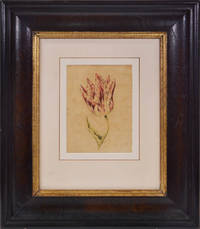
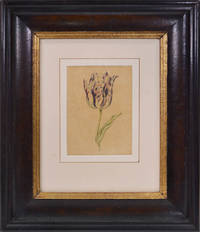
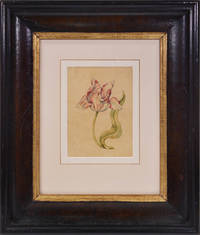
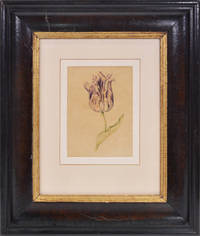
61952Holland 18th Century. . Water-colour on Dutch laid paper some light spotting and toning to paper. Framed and glazed overall size: 38.7cm x 45.7cm. Dimensions: 180 x 130mm. 7 x 5 inches.<br /> From a "Tulip Book" in the manner of Anthony Claesz who produced his own "Tulip Book" in c. 1641. These florilegia were commissioned to illustrate the differences between varieties of tulip bulb which at the time demanded such high prices. The beauty of these works ensured that their images would be copied for decades to come by amateur painters and gardeners alike. Claesz was a Dutch master in his own right with several highly accomplished works to his name. However as with most of the great Dutch masters of this period they happily supplemented their income by illustrating such books. It also allowed them to study in detail subjects that would later be incorporated in their great flower pieces.<br /><br />Provenance: Private Dutch collection.<br /> [Holland, 18th Century]. unknown
60722Holland 18th century. . Water-colour on Dutch laid paper some light toning. Framed and glazed overall size: 38.7cm by 45.7cm. Dimensions: 18 by 13cm. 7 by 5 inches.<br /> From a "Tulip Book" in the manner of Anthony Claesz who produced his own "Tulip Book" in c.1641. These florilegia were commissioned to illustrate the differences between varieties of tulip bulb which at the time demanded such high prices. The beauty of these works ensured that their images would be copied for decades to come by amateur painters and gardeners alike. Claesz was a Dutch master in his own right with several highly accomplished works to his name. However as with most of the great Dutch masters of this period they happily supplemented their income by illustrating such books. It also allowed them to study in detail subjects that would later be incorporated in their great flower pieces.<br /> [Holland, 18th century]. unknown
60952Holland 18th century. . Water-colour on Dutch laid paper light paper toning. Framed and glazed overall size: 38.7cm x 45.7cm. Dimensions: 180 x 130mm. 7 x 5 inches.<br /> From a "Tulip Book" in the manner of Anthony Claesz who produced his own "Tulip Book" in c. 1641. These florilegia were commissioned to illustrate the differences between varieties of tulip bulb which at the time demanded such high prices. The beauty of these works ensured that their images would be copied for decades to come by amateur painters and gardeners alike. Claesz was a Dutch master in his own right with several highly accomplished works to his name. However as with most of the great Dutch masters of this period they happily supplemented their income by illustrating such books. It also allowed them to study in detail subjects that would later be incorporated in their great flower pieces.<br /><br />Provenance: Private Dutch collection.<br /> [Holland, 18th century]. unknown
60719Holland 18th Century. . Water-colour on Dutch laid paper some light toning. Framed and glazed overall dimensions: 38.7cm by 45.7cm. Dimensions: 18 by 13cm. 7 by 5 inches.<br /> From a "Tulip Book" in the manner of Anthony Claesz who produced his own "Tulip Book" in c. 1641. These florilegia were commissioned to illustrate the differences between varieties of tulip bulb which at the time demanded such high prices. The beauty of these works ensured that their images would be copied for decades to come by amateur painters and gardeners alike. Claesz was a Dutch master in his own right with several highly accomplished works to his name. However as with most of the great Dutch masters of this period they happily supplemented their income by illustrating such books. It also allowed them to study in detail subjects that would later be incorporated in their great flower pieces. <br /><br />Provenance: Private Dutch collection.<br /> [Holland, 18th Century]. unknown
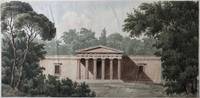
RGW26779Watercolour on wove paper later inscription in ballpoint on reverse of surround 'View of Kew' inlaid small loss on far right The Archives of Kew Gardens in an email dated March 2026 were unable to identify this watercolour with any particular building but point towards a similar design of a garden pavilion by William Chambers 1723-1796 in the Sir John Soane's Museum https://collections.soane.org/THES70660 Ref. 43/7/12. Numerous garden buildings were erected at Kew Gardens by Chambers and other designers and many are unrecorded. This pavilion could even have been for another garden in Kew like Syon Park.See HARRIS J. & SNODIN M. Sir William Chambers Architect to George III. 1996 and DESMOND R. Kew The History of the Royal Botanic Gardens 1995.Provenance: Tom Greeves 1917-1997 Architect and Artist. unknown
20212081502111905282Chinese book office 2021. Soft Cover. Fine. The book is in fine condition. Chinese book office paperback
98166101Japan n.d. ca 1830. A superb scroll painting on silk 39.5 cm. wide by 233 cm. long painting size: 29.5 x 185cm. fine mounting pale silk chrysanthemum patterned border flawless flawless excellent pastel colors excellent condition.RARE! THIS IS A GREAT AND STUNNINGLY BEAUTIFUL HAND-PAINTED SCROLL THE SUBJECT: Kato Kiyomasa 1562-1611 was the son of Kiyotada a relative of Hideyoshi Toyotomi and served him and distinguished himself as one of the seven most famous warriors of that time by his heroic acts at the Battle of Shizugadatake. . During the invasion of Korea he followed Yukinaga Konishi -1600 to Pusan and on to Seoul in 1592 where he fought so fiercely that the Koreans named him "Devil Kiyomasa." Yukinaga was a Christian warrior & retainer of Hideie Ukita and was appointed Lord of Settsu by Hideyoshi Toyotomi. . Hideyoshi appointed these two to spearhead the Korean invasion with Yukinaga the commander. The plan was to launch waves of army corps by ship across the 56 mile wide Tsushima straits to Pusan. Some 300000 fighting men a truly serious force embarked. The first force of 9200 Samurai armed with matchlocks bows and swords set out. Upon landing they rapidly advanced North up the peninsula taking out Korean castles and subduing the regions through power of force. They advanced to Seoul as the armies divided into two parts each racing to see who would enter Seoul first. . At Cho-ryung pass they united then both advanced on Seoul & took the castle as the Korean King and his entourage fled over the river at Imjin where the Koreans up their valiant effort to check the Japanese. This is a most magnificent painting of both Kiyomasa and Yukinaga as each holds a Naginada while the Korean King prepares to rides a black steed effecting his escape while being protected by a retainer who also holds an elaborate Naganada with the Imperial banner. THE ARTIST AND PAINTING SCHOOL: . This work was done in the Utagawa school style and was likely painted by Utagawa Kuniyoshi or one of his star pupils. It was painted in the "Ukiyo-e" style similar to that of a color woodblock print. . It is painted in a firm solid confident strong hand this work is executed with most impressive brush strokes style & manner expressing the Bushido spirit celebrating triumph over the Koreans. Marvelous detail to the whole work renders this a major piece. Skillfully drawn & painted on silk which is the most difficult medium to control ink flow this work is flawless and a fine example worthy of display in any Tokunoma. . The top is blue paper with black Sumi inscription naming the heroes and citing the Korean Battle. REFERENCE: For biographical details see JAPAN BIOGRAPHICAL ENCYCLOPEDIA & WHO'S WHO pp.592 689-90. . F. Brinkley: A HISTORY OF THE JAPANESE PEOPLE pp.509-520. . unknown
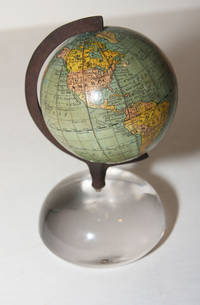
189110008Seneca Falls NY 1891. No Binding. Near Fine. 3-inch diameter globe anchored in magnifying glass as issued; 5 ½ inches total height. Color-printed wax-engraved gores; some fading of place names a few repair in extreme southern portion but overall remarkably little wear; overall excellent condition. An unrecorded delightful cartographic curiosity: a very good quality miniature globe with a magnifying paperweight as its base. Only two other globes by the American Globe and Supply Company are known: a six-inch terrestrial recorded by Rumsey dated 1892 and an eight-inch terrestrial cited in Rittenhouse dated 1891; see below. This Seneca Falls New York company was one of several for which Rand McNally supplied gores for the globes it produced. Rand McNally did not issue its first globe until 1887. Very nice condition for an object of this kind. Cf. Rumsey 5120; Rittenhouse Vol. 2 No. 1 p. 23. unknown
189110008Seneca Falls NY 1891. No Binding. Near Fine. 3-inch diameter globe anchored in magnifying glass as issued; 5 ½ inches total height. Color-printed wax-engraved gores; some fading of place names a few repair in extreme southern portion but overall remarkably little wear; overall excellent condition. An unrecorded delightful cartographic curiosity: a very good quality miniature globe with a magnifying paperweight as its base. Only two other globes by the American Globe and Supply Company are known: a six-inch terrestrial recorded by Rumsey dated 1892 and an eight-inch terrestrial cited in Rittenhouse dated 1891; see below. This Seneca Falls New York company was one of several for which Rand McNally supplied gores for the globes it produced. Rand McNally did not issue its first globe until 1887. Very nice condition for an object of this kind. Cf. Rumsey 5120; Rittenhouse Vol. 2 No. 1 p. 23. unknown books
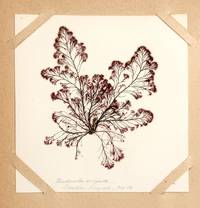
188423391884. A unique quarto 15 x 12 1/2 inches 382 x 318 mm; 30 double-sided sheets containing approximately 80 preserved specimens of seaweed and sea mosses which are individually dried mounted to card stock and tipped-in; each with the genus in Latin and the date and location of collection handwritten in pencil in the lower mount. Approximately 1 to 5 specimens per page. Binding is broken and significantly worn with some pages loose. Specimens are intact and separated by blotting paper and remain in very good to excellent condition with some exhibiting only minor losses. <br /> <br /> While seaweed collecting was a popular Victorian pastime in Britain this rare herbarium is filled with a profusion of north American specimens primarily from Bay Ridge Brooklyn to Nantucket island as well as some from California and Bermuda. In the Victorian era seaweed collecting or algology was far more than a casual beach activity; it was a massive cultural trend that married scientific curiosity artistic expression and social freedom. While the Victorians were obsessed with all things natural history a trend called "natural theology" seaweed held a unique appeal especially for women. While studying animal anatomy was seen as "unladylike" at the time collecting seaweed was considered a genteel and healthy outdoor activity. As a result several women used the opportunity to make significant scientific contributions.<br /> <br /> Often called "Ocean Flowers" or "Sea Mosses" these specimens became the focus of elaborate scrapbooks and pioneered some of the world's first photographic techniques Anna Adkins's Produced Photographs of British Algae: Cyanotype Impressions 1843 was the first book ever illustrated with photographs. Today these Victorian albums are more than just relics of a cultural fad; they are vital biological records. Scientists utilize the DNA from these 150-year-old pressed samples to track how ocean temperatures and species distributions have changed since the Industrial Revolution.<br /> <br /> Creating a seaweed album was a meticulous process. Collectors didn't just dry the weeds; they "resurrected" them to look alive on the page. This album demonstrates the incredible skill of the maker. unknown
1895223921Paris: Gauthier-Villars et Fils 1895. First. hardcover. fine. Illustrated throughout with nicely printed portraits and other historical reproductions. 3 volumes. lxviii 519; 572; 646pp. Very thick short 4tos beautifully rebound by Stroobants in older 3/4 tan morocco over marbled boards; ornate gilt-stamped spines with burgundy leather labels; uncut edges t.e.g. original wrappers bound-in marbled board slipcase worn. Paris: Gauthier-Villars et Fils 1895-1897.<br/> <br/> Fore-edges foxed and also some light foxing throughout the first volume otherwise a fine copy in a lovely binding.<br/> <br/> Gauthier-Villars et Fils unknown
1895223921Paris: Gauthier-Villars et Fils 1895. First. hardcover. fine. Illustrated throughout with nicely printed portraits and other historical reproductions. 3 volumes. lxviii 519; 572; 646pp. Very thick short 4tos beautifully rebound by Stroobants in older 3/4 tan morocco over marbled boards; ornate gilt-stamped spines with burgundy leather labels; uncut edges t.e.g. original wrappers bound-in marbled board slipcase worn. Paris: Gauthier-Villars et Fils 1895-1897.<br/><br/> Fore-edges foxed and also some light foxing throughout the first volume otherwise a fine copy in a lovely binding.<br/><br/> Gauthier-Villars et Fils unknown books