34 831 résultats
19412080502106917326Not Available 1941. Soft Cover. Fine. The book is in fine condition. Not Available paperback
197530284Cleveland: Falling Down Press 1975. Reprint. Paperback. Very Good . Stapled wrappers. Unpaginated and printed on rectos only. Original collage elements glued in on the final page of the booklet. Cover print by Michael Schaefer. One of only 100 copies of this reprint edition originally published by Levy in 1967. A handsome very good copy. Now quite scarce. Falling Down Press paperback books
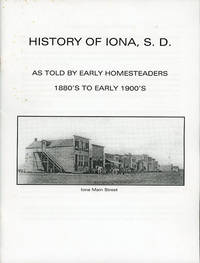
196052863N. P.: Privately printed n. d. ca 1960. 1960. SOUTH DAKOTA. First edition. 4to. Pictorial wrappers 28 pp. Iona Main Street pictured on the front cover. A number of Iona residents provide essays on pioneers activities and events that were part of the development of the town. Iona remains an unincorporated community in Lyman County South Dakota. Although not tracked by the Census Bureau Iona does have a zip code. The town is named after a Native American term meaning "fire around." This pamphlet is a limited printing. Minor soiling to front cover else a near fine copy. Privately printed, n. d. (ca 1960). unknown
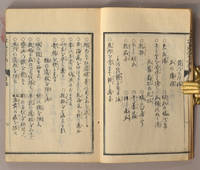
91057Kuriya no Kokoroe 厨ã®å¿ƒå¾— Knowledge of the Kitchen<br /> Ishikawaken Daiimeiko Shiken Gakko 石å·çœŒç¬¬ä¸€å¥³åå¸«ç¯„å¦æ ¡ Ishikawa Prefectural First Women's Normal School compiler<br /> Meiji 13 1880 明治13å¹´<br /> <br /> Single volume 22.3 x 15 cm in yellow wrappers with original brushed title slip. Published in Meiji 13 1880. 57pp. Striking original double-page color woodblock print frontispiece and Japanese text throughout. Compiled by Ishikawaken Daiimeiko Shiken Gakko 石å·çœŒç¬¬ä¸€å¥³åå¸«ç¯„å¦æ ¡ Ishikawa Prefectural First Women's Normal School.<br /> <br /> The lovely double-page woodcut with bright yellow purple red and green illustrates five Japanese beauties preparing traditional foods. Kuriya no Kokoroe 厨ã®å¿ƒå¾— Knowledge of the Kitchen is a cooking manual that starts with how to cook rice 飯 and continues with dishes such as miso 味噌 soy sauce醤油 pickles 漬物 egg dishes 嵿–™ç† natto ç´è±† vegetables é‡Žèœ and fruit 果物. The inside front wrapper has a publisher ad with a purposely made round cut-out in the center that reveals a woodcut flower on the paper underneath. Preliminary text is followed by a Table of Contents. Colophon is on the final sheet which is pasted down onto the inside rear wrapper.<br /> <br /> Our copy compares with Shin Nihon Kotenseki SÅgÅ Database 新日本å¤å…¸ç±ç·åˆãƒ‡ãƒ¼ã‚¿ãƒ™ãƒ¼ã‚¹online copy although our copy has the circular cut out as well as a red hanko on the title page and on page 1.<br /> <br /> Small chip in bottom of title slip not affecting text; otherwise very fine condition. unknown
19982080302106804782Not Available 1998. Soft Cover. Fine. The book is in fine condition. Not Available paperback
19362080302106804302Tsushoshin Main Building Johoku Inko 1936. Soft Cover. Fine. Number of books: one Tsushoshin Main Building Johoku Inko paperback
2081502111904610Chinese social sciences N.A. Soft Cover. Fine. The book is in fine condition. Chinese social sciences paperback
195028641nantes ECOLE EVARISTE LUMINAIS 1950 in-8 demi- percale un volume, reliure bradel demi-percale saumon grand in-octavo (half hard-back percale in-8) (31,3 x 21,7 cm cm), dos long (spine without raised band ), pièce de titre sur fond noir , titre frappé or, date or avec ilet "or" de part at d'autre, double filet or en tête et en pied, papier peigné bleu, crème et saumon aux plats (cover with painting paper), toutes tranches lisses, orné d'un frontispice depliant ORIGINAL dessiné au crayons de couleurs par un élve : ALAIN VILAINE, titré : "L'ECOLE EN AVION - L'ETOILE NANTAISE - JE PORTE CHANCE" et noté en bas à l'encre violette : ECOLE EVARISTE LUMINAIS - C.S INSTITUTEUR A. GERNOUX (avec noté au dos à l'encre violette, le nom des eleves et de leur instituteur, le nom du personnage qu'ils interpretent et le pays qu'ils représentent) + 2 cartes hors_texte dessinées DEUX CARTES HORS6TEXTE DESSIN2ES AUX CRAYONS DE COULEURS PAR UN DES ELEVES + 50 histoires ronéotypées (imprimées d'un seul côté en noir) par les eleves et leur instituteur "A. GERNOUX" (l'Interprète), tirage confidentiel réalisé à l'école Evariste Luminais en 1950, ( Collection A. Gernoux - Ecole Evariste Luminais)
1768127511768 deux livres reliés ensemble en un volume, reliure demi-velin havane moucheté petit in-octavo (binding half calfskin in-octavo), dos long (spine without raised band), décoré or (gilt decoration)roulettes et filets or (gilt line) - titre frappé or (gilt title) - pièce de titre sur fond havane clair (label of title) avec filet or (label of title with gilt line), coiffe supérieure légèrement manquante (head and tail of the spine lightly faded), léger manque sur 2 millimètres carrés, papier peigné aux plats (cover with painting paper), toutes tranches lisses (all smooth edges) bleues (all blue edges), sans illustration (no illustration) excepté une vignette sur la page de titre et des bandeaux et des culs-de-lampe in-texte (illuminated of headpieces and headpieces) gravés sur bois (engraving wood) en noir pour le premier volume et une marque d'imprimeur gravée sur bois (engraving wood) en noir en bas de la page de titre du deuxième livre , XXX pages de discours +72 pages + (3) feuillets de table pour L'ART DE CONSERVER SA SANTE et 134 pages + 1 feuillet d'errata pour TRAITE DES CAUSES PHYSIQUES ET MORALES DU RIRE, sans date (1749) Douai Derbay Editeur, sans date (1749) + 1768 AMSTERDAM Marc-Michel REY Editeur,
Opera tratta dai "Los Caprichos", per la prima volta pubblicati nel 1799. Prova della quarta edizione di dodici, stampata dalla calcografia di Madrid, circa 1870. Aquaforte, acquatinta brunita e puntasecca, in perfetto stato di conservazione. La serie chiamata Los Caprichos, è composta da ottanta incisioni, la cui prima edizione [l’unica a non essere pubblicata postuma] venne alla luce ne 1799. Curata in fase d’edizione dallo stesso artista, la serie fu commercializzata e dopo poco tempo ritirata dal mercato. Infatti, a causa dei numerosi soggetti che ironizzavano sulla società spagnola di fine secolo, il Goya subì una censura. L’interpretazione dei soggetti rappresentati su queste lastre, sempre enigmatiche, è spesso controversa. Etching with burnished aquatint and engraving, 1799. From the fourth edition of twelve of the so-called "Los Caprichos" series, edited by the Madrid Calcografia [circa 1870].A very good impression, with good contrast, printed on contemporary paper, customary margins, in very good conditions. The series called Los Caprichos, consists of eighty etchings. This first edition of 1799, the only one not to be published posthumously, is imprinted on soft laid pape. Cured in phase edition by the same artist, the series was marketed and before long withdrawn from the market. In fact, because of the many subjects that mocked the Spanish society of the century, Goya suffered censorship. The interpretation of the subjects represented on these plates, always enigmatic, is often controversial. Harris 68, Delteil 70
Opera tratta dai Los Caprichos, per la prima volta pubblicati nel 1799.Prova della quarta edizione di dodici, stampata dalla calcografia di Madrid, circa 1870.Acquaforte, acquatinta brunita e puntasecca, in perfetto stato di conservazione.La serie chiamata Los Caprichos, è composta da ottanta incisioni, la cui prima edizione [l’unica a non essere pubblicata postuma] venne alla luce ne 1799. Curata in fase d’edizione dallo stesso artista, la serie fu commercializzata e dopo poco tempo ritirata dal mercato.Infatti, a causa dei numerosi soggetti che ironizzavano sulla società spagnola di fine secolo, il Goya subì una censura. L’interpretazione dei soggetti rappresentati su queste lastre, sempre enigmatiche, è spesso controversa. Etching with burnished aquatint and engraving, 1799.From the fourth edition of twelve of the so-called Los Caprichos series, edited by the Madrid Calcografia [circa 1870].A very good impression, with good contrast, printed on contemporary paper, usual wide margins, in very good conditions.The series called Los Caprichos, consists of eighty etchings. This first edition of 1799, the only one not to be published posthumously, is imprinted on soft laid pape.Cured in phase edition by the same artist, the series was marketed and before long withdrawn from the market. In fact, because of the many subjects that mocked the Spanish society of the century, Goya suffered censorship.The interpretation of the subjects represented on these plates, always enigmatic, is often controversial. Harris 68, Delteil 70.
Opera tratta dai "Los Caprichos", per la prima volta pubblicati nel 1799. Prova della quarta edizione di dodici, stampata dalla calcografia di Madrid, circa 1870. Aquaforte, acquatinta brunita e puntasecca, in perfetto stato di conservazione. La serie chiamata Los Caprichos, è composta da ottanta incisioni, la cui prima edizione [l’unica a non essere pubblicata postuma] venne alla luce ne 1799. Curata in fase d’edizione dallo stesso artista, la serie fu commercializzata e dopo poco tempo ritirata dal mercato. Infatti, a causa dei numerosi soggetti che ironizzavano sulla società spagnola di fine secolo, il Goya subì una censura. L’interpretazione dei soggetti rappresentati su queste lastre, sempre enigmatiche, è spesso controversa. Etching with burnished aquatint and engraving, 1799. From the fourth edition of twelve of the so-called "Los Caprichos" series, edited by the Madrid Calcografia [circa 1870].A very good impression, with good contrast, printed on contemporary paper, customary margins, in very good conditions. The series called Los Caprichos, consists of eighty etchings. This first edition of 1799, the only one not to be published posthumously, is imprinted on soft laid pape. Cured in phase edition by the same artist, the series was marketed and before long withdrawn from the market. In fact, because of the many subjects that mocked the Spanish society of the century, Goya suffered censorship. The interpretation of the subjects represented on these plates, always enigmatic, is often controversial. Harris 102, Delteil 104.
Opera tratta dai "Los Caprichos", per la prima volta pubblicati nel 1799. Prova della quarta edizione di dodici, stampata dalla calcografia di Madrid, circa 1870. Aquaforte, acquatinta brunita e puntasecca, in perfetto stato di conservazione. La serie chiamata Los Caprichos, è composta da ottanta incisioni, la cui prima edizione [l’unica a non essere pubblicata postuma] venne alla luce ne 1799. Curata in fase d’edizione dallo stesso artista, la serie fu commercializzata e dopo poco tempo ritirata dal mercato. Infatti, a causa dei numerosi soggetti che ironizzavano sulla società spagnola di fine secolo, il Goya subì una censura. L’interpretazione dei soggetti rappresentati su queste lastre, sempre enigmatiche, è spesso controversa. Etching with burnished aquatint and engraving, 1799. From the fourth edition of twelve of the so-called "Los Caprichos" series, edited by the Madrid Calcografia [circa 1870].A very good impression, with good contrast, printed on contemporary paper, customary margins, in very good conditions. The series called Los Caprichos, consists of eighty etchings. This first edition of 1799, the only one not to be published posthumously, is imprinted on soft laid pape. Cured in phase edition by the same artist, the series was marketed and before long withdrawn from the market. In fact, because of the many subjects that mocked the Spanish society of the century, Goya suffered censorship. The interpretation of the subjects represented on these plates, always enigmatic, is often controversial. Harris 111
Opera tratta dai "Los Caprichos", per la prima volta pubblicati nel 1799. Prova della quarta edizione di dodici, stampata dalla calcografia di Madrid, circa 1870. Aquaforte, acquatinta brunita e puntasecca, in perfetto stato di conservazione. La serie chiamata Los Caprichos, è composta da ottanta incisioni, la cui prima edizione [l’unica a non essere pubblicata postuma] venne alla luce ne 1799. Curata in fase d’edizione dallo stesso artista, la serie fu commercializzata e dopo poco tempo ritirata dal mercato. Infatti, a causa dei numerosi soggetti che ironizzavano sulla società spagnola di fine secolo, il Goya subì una censura. L’interpretazione dei soggetti rappresentati su queste lastre, sempre enigmatiche, è spesso controversa Etching with burnished aquatint and engraving, 1799. From the fourth edition of twelve of the so-called "Los Caprichos" series, edited by the Madrid Calcografia [circa 1870].A very good impression, with good contrast, printed on contemporary paper, customary margins, in very good conditions. The series called Los Caprichos, consists of eighty etchings. This first edition of 1799, the only one not to be published posthumously, is imprinted on soft laid pape. Cured in phase edition by the same artist, the series was marketed and before long withdrawn from the market. In fact, because of the many subjects that mocked the Spanish society of the century, Goya suffered censorship. The interpretation of the subjects represented on these plates, always enigmatic, is often controversial. Harris 109, Delteil 111.
Opera tratta dai "Los Caprichos", per la prima volta pubblicati nel 1799. Prova della quarta edizione di dodici, stampata dalla calcografia di Madrid, circa 1870. Aquaforte, acquatinta brunita e puntasecca, in perfetto stato di conservazione. La serie chiamata Los Caprichos, è composta da ottanta incisioni, la cui prima edizione [l’unica a non essere pubblicata postuma] venne alla luce ne 1799. Curata in fase d’edizione dallo stesso artista, la serie fu commercializzata e dopo poco tempo ritirata dal mercato. Infatti, a causa dei numerosi soggetti che ironizzavano sulla società spagnola di fine secolo, il Goya subì una censura. L’interpretazione dei soggetti rappresentati su queste lastre, sempre enigmatiche, è spesso controversa. Etching with burnished aquatint and engraving, 1799. From the fourth edition of twelve of the so-called "Los Caprichos" series, edited by the Madrid Calcografia [circa 1870].A very good impression, with good contrast, printed on contemporary paper, customary margins, in very good conditions. The series called Los Caprichos, consists of eighty etchings. This first edition of 1799, the only one not to be published posthumously, is imprinted on soft laid pape. Cured in phase edition by the same artist, the series was marketed and before long withdrawn from the market. In fact, because of the many subjects that mocked the Spanish society of the century, Goya suffered censorship. The interpretation of the subjects represented on these plates, always enigmatic, is often controversial. Harris 65
Opera tratta dai "Los Caprichos", per la prima volta pubblicati nel 1799. Prova della quarta edizione di dodici, stampata dalla calcografia di Madrid, circa 1870. Aquaforte, acquatinta brunita e puntasecca, in perfetto stato di conservazione. La serie chiamata Los Caprichos, è composta da ottanta incisioni, la cui prima edizione [l’unica a non essere pubblicata postuma] venne alla luce ne 1799. Curata in fase d’edizione dallo stesso artista, la serie fu commercializzata e dopo poco tempo ritirata dal mercato. Infatti, a causa dei numerosi soggetti che ironizzavano sulla società spagnola di fine secolo, il Goya subì una censura. L’interpretazione dei soggetti rappresentati su queste lastre, sempre enigmatiche, è spesso controversa. Etching with burnished aquatint and engraving, 1799. From the fourth edition of twelve of the so-called "Los Caprichos" series, edited by the Madrid Calcografia [circa 1870].A very good impression, with good contrast, printed on contemporary paper, customary margins, in very good conditions. The series called Los Caprichos, consists of eighty etchings. This first edition of 1799, the only one not to be published posthumously, is imprinted on soft laid pape. Cured in phase edition by the same artist, the series was marketed and before long withdrawn from the market. In fact, because of the many subjects that mocked the Spanish society of the century, Goya suffered censorship. The interpretation of the subjects represented on these plates, always enigmatic, is often controversial. Harris 53, Delteil 55.
Veduta della riva di un fiume a Chelsea; in primo piano a sinistra, persone con cani, due che portano lunghi bastoni; chiatte ormeggiate vicino alla riva; la casa di Whistler vista a sinistra. Iscrizione in lastra, in alto a sinistra: "Whistler's House at Old Chelsea Seymour Haden ft. an[no] 1863". Acquaforte e puntasecca; secondo stato di due (Harrington); settimo stato di sette (Schneiderman). "All the foreground boats have vertical reflections. There is now a line at the base of the house most to the left, which extends almost to the margin of the plate. This plate 'wore out very soon and had to be destroyed before it had given its full quota of impressions. Published in Études à l'eau-forte (No. VIII.), under the title of 'Old Chelsea,' some copies having the First, others the Second State. Exhibited at the Royal Academy, 1865." [cf. Harrington, p. 28] "There are several preliminary drawings for this print […] similar in composition though the view point is from farther into the river. State VII. Published in Études à l'eau-forte (N. VIII). Line added at base of house on left and a few lines to indicate modeling at right on the wall. The smoke, rising from the chimney of the house, second from the right of Whistler's house, is no longer visible." [cf. Schneiderman, p. 143] Seymour Haden era l'improbabile combinazione di un chirurgo e un incisore. Sebbene abbia perseguito una carriera medica di grande successo, è ricordato soprattutto per i suoi lavori all'acquaforte e per i suoi scritti sull'acquaforte. Fece parte di un gruppo di artisti, tra cui James McNeill Whistler (1834-1903) e Alphonse Legros (1837-1911), il cui appassionato interesse per questo mezzo portò al cosiddetto revival dell'acquaforte, un periodo che durò fino al XX secolo. L'esaltazione dell'acquaforte per le sue intrinseche qualità spontanee raggiunse il suo apice durante questo periodo. Mentre la linea dell'ago da acquaforte, scrisse Haden, era "libera, espressiva, piena di vivacità", quella del bulino era "fredda, costretta, poco interessante" e "senza identità". Stampata su carta vergata coeva, con margini, condizioni perfette. Bibliografia Henry Nazeby Harrington The Engraved Work of Sir Francis Seymour Haden, P.R.E.: an illustrated and descriptive catalogue. Liverpool, 1910, cat. no. 54 ii, p. 28, ill; Richard S. Schneiderman A Catalogue Raisonné of the Prints of Sir Francis Seymour Haden. London, 1983, cat. no. 50 vii, p. 143, ill. View of a river bank in Chelsea; in the foreground at left, people with dogs, two carrying long sticks; barges moored near the bank; the house of Whistler seen to the left. Lettered in plate, lower left: "Whistler's House at Old Chelsea Seymour Haden ft. an[no] 1863". Etching and drypoint; second state of two (Harrington); seventh state of seven (Schneiderman). "All the foreground boats have vertical reflections. There is now a line at the base of the house most to the left, which extends almost to the margin of the plate. This plate 'wore out very soon and had to be destroyed before it had given its full quota of impressions. Published in Études à l'eau-forte (No. VIII.), under the title of 'Old Chelsea,' some copies having the First, others the Second State. Exhibited at the Royal Academy, 1865." [cf. Harrington, p. 28] "There are several preliminary drawings for this print […] similar in composition though the view point is from farther into the river. State VII. Published in Études à l'eau-forte (N. VIII). Line added at base of house on left and a few lines to indicate modeling at right on the wall. The smoke, rising from the chimney of the house, second from the right of Whistler's house, is no longer visible." [cf. Schneiderman, p. 143] Seymour Haden was the unlikely combination of a surgeon and an etcher. Although he pursued a very successful medical career, he is mostly remembered for his etched work as well as for his writings on etching. He was one of a group of artists, including James McNeill Whistler (1834–1903) and Alphonse Legros (1837–1911), whose passionate interest in the medium led to the so-called etching revival, a period that lasted well into the twentieth century. The extolling of etching for its inherent spontaneous qualities reached its pinnacle during this time. While the line of the etching needle, Haden wrote, was "free, expressive, full of vivacity," that of the burin was "cold, constrained, uninteresting," and "without identity." Printed on contemporary laid paper, with margins, perfect condition. Bibliografia Henry Nazeby Harrington The Engraved Work of Sir Francis Seymour Haden, P.R.E.: an illustrated and descriptive catalogue. Liverpool, 1910, cat. no. 54 ii, p. 28, ill; Richard S. Schneiderman A Catalogue Raisonné of the Prints of Sir Francis Seymour Haden. London, 1983, cat. no. 50 vii, p. 143, ill.
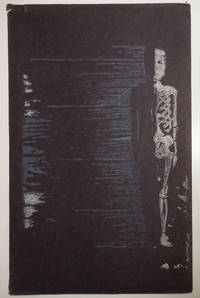
Acquaforte e puntasecca su carta vergata, 1878, firmata a matita in basso a destra Hubert Herkomer. Una bella impressione, con margini, buone condizioni. Il berretto arruffato e il grande cappello nero indossati da questa donna sono tradizionalmente gallesi. Herkomer era attratto dai soggetti umili, concentrandosi all'inizio della sua carriera sui residenti della sua nativa Baviera – suo padre era un artigiano che emigrò prima in America, poi in Inghilterra nel 1863. Alla fine degli anni 1870 Herkomer iniziò ad esplorare temi britannici e probabilmente si interessò al Galles attraverso la sua amicizia con il pittore e proprietario terriero gallese Charles William Mansel Lewis. Il nucleo familiare dell'artista comprendeva, dal 1874, Lulu Griffiths, un'infermiera gallese che divenne sua moglie nel 1884. Un'impressione di questa stampa fu esposta da M. Knoedler & Co, New York nel 1882 (n. 2) con la seguente didascalia dell'artista: "Un altro tentativo giovane e audace di fare qualcosa di insolito. Le linee sono troppo mordaci e non si fondono con il lavoro a puntasecca". Sir Hubert von Herkomer era un artista britannico di origine tedesca, e anche un regista e compositore pioniere del cinema. Sebbene fosse un ritrattista di grande successo, soprattutto di uomini, è ricordato soprattutto per le sue prime opere che avevano un approccio realistico alle condizioni di vita dei poveri Bibliografia Algernon Graves The Royal academy of arts; a complete dictionary of contributors and their works from its foundation in 1769 to 1904. London, 1905, vol. IV, p. 83, 1878, no. 1176: A Welsh woman, etching. Etching and drypoint on laid paper, 1878, signed on pencil at the bottom right Hubert Herkomer. A fine impression, with margins, good condition. The ruffled cap and large black hat worn by this woman are traditionally Welsh. Herkomer was attracted to humble subjects, focussing early in his career on residents of his native Bavaria–his family were craftspeople who emigrated first to America, then to England in 1863. In the late 1870s Herkomer began to explore British themes and likely became interested in Wales through his friendship with the painter and Welsh landowner Charles William Mansel Lewis. The artist's household included, from 1874, Lulu Griffiths, a Welsh nurse who became his wife in 1884. An impression of this print was exhibited at M. Knoedler & Co., New York in 1882 (no. 2) with the following caption by the artist: "Another young and bold attempt to do something unusual. The lines are too heavily bitten and do not blend with the drypoint work." Sir Hubert von Herkomer was a German-born British artist, and also a pioneering film-director and composer. Though a very successful portraitist, especially of men, he is mainly remembered for his earlier works that took a realistic approach to the conditions of life of the poor. Bibliografia Algernon Graves The Royal academy of arts; a complete dictionary of contributors and their works from its foundation in 1769 to 1904. London, 1905, vol. IV, p. 83, 1878, no. 1176: A Welsh woman, etching.
182196971821 16 volumes, reliure demi-maroquin rouge (half morocco) in-octavo, dos long (spine without raised band) décoré or (gilt decoration) - titre frappé or (gilt title) et tomaison (volume numbering), papier vert aux plats (green paper on the cover), tranches jaspées (marbled edges) - mouillures sur les tranches de tête et les haut de page des volume I - II - III - IV - VI et VII (waterstain on the top edge and head of the page for the book number I - II - III - IV - VI and VII), sans illustration (no illustration), entre 412 et 596 pages par volume, 1821 à Dijon Chez Victor Lagier Libraire et Frantin Imprimeur du Roi,
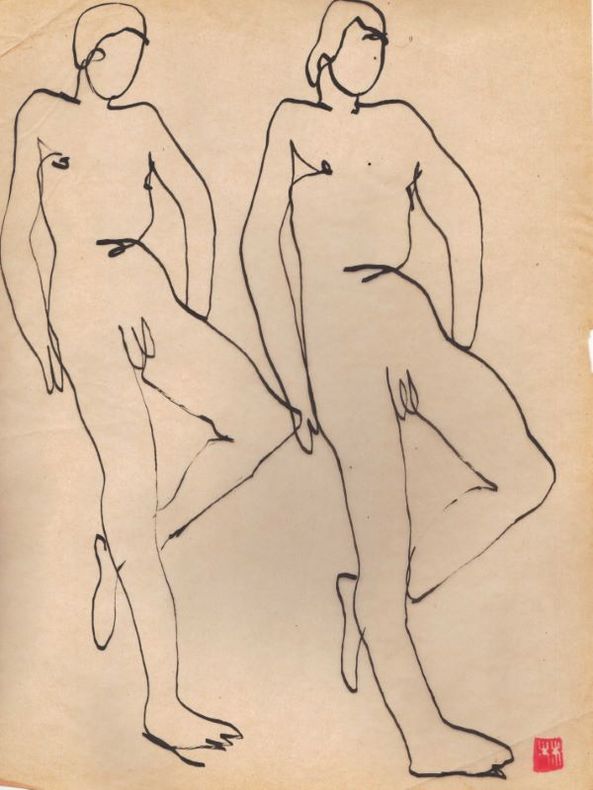
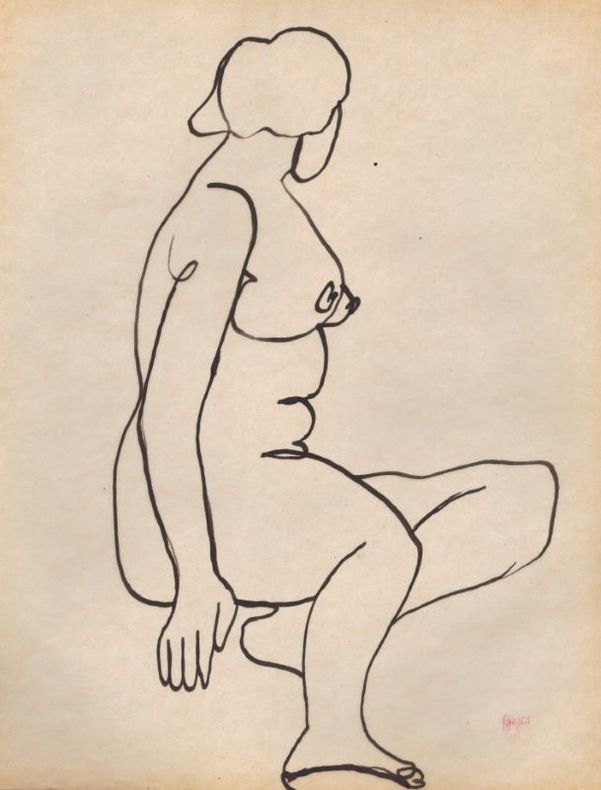
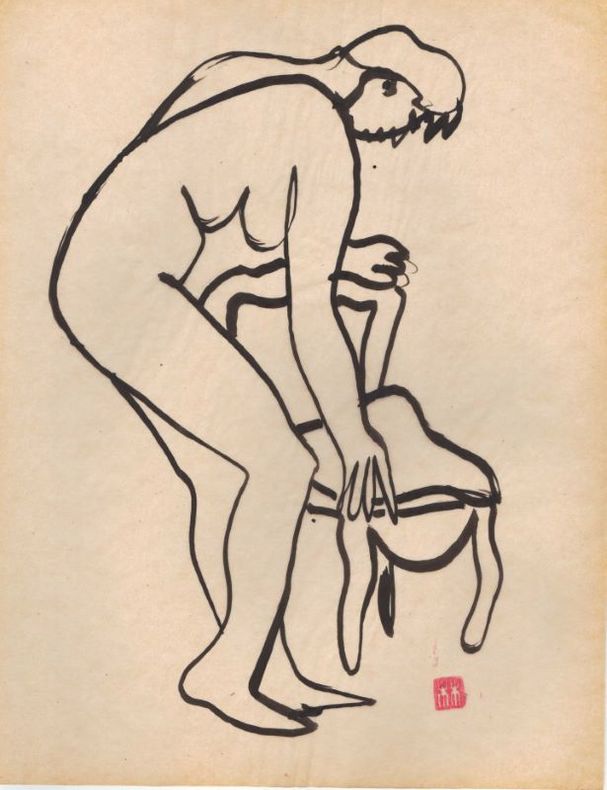
21059Encre de chine sur papier de soie, signé d'un cachet rouge, 33 x 24 cm. (1930)
21060Encre de chine et trace de mine de plomb sur papier de soie, signé d'un cachet rouge, 32 x 24 cm. (193 0)
21058Encre de chine sur papier de soie, signé d'un cachet rouge, 32 x 24 cm. (1930)
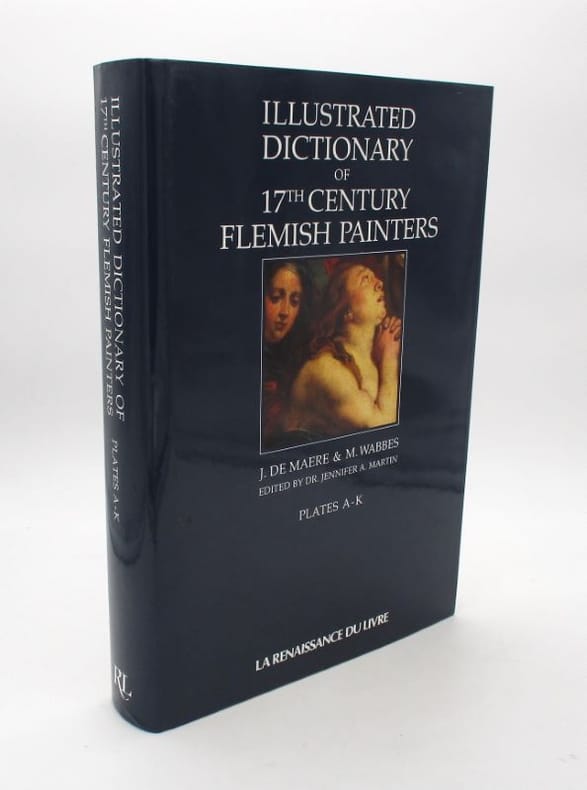
18207Bruxelles, La Renaissance du Livre, 1994. 3 vol. in-4, 542 pp. + 694 pp. + 711-1319 pp., cartonnage éditeur de toile bleue, jaquette originale illustrée, étui éditeur illustré (quelques petites taches éparses à l'étui, petits frottements)
Acquaforte, 1878, firmata e datata in lastra in basso a destra. "A. Piccinni / Roma 1878" seguita dal titolo sotto "L'Avaro". Magnifica prova, impressa su carta cina applicata, con margini, in perfetto stato di conservazione. Un vecchio avaro che indossa un lungo cappotto appoggiato su uno scrittoio aperto, con la mano appoggiata su un mucchio di monete. Pittore e incisore italiano soprannominato “il re dei disegnatori”. La più grande vocazione dell’artista è, infatti, la grafica. Dal 1860 studia a Napoli all’Istituto di Belle Arti sotto la guida di maestri come Domenico Morelli (Napoli 1826 – 1901), Filippo Palizzi (Vasto 1818 – Napoli 1889), Tommaso Aloysio Juvara (Messina 1809 – Roma 1875) e Francesco Pisante (Napoli 1830 – 1889). Qui egli studia la tecnica dell’acquaforte d’invenzione e aderisce al verismo di matrice palizziana. Agli inizi del 1873 si trasferisce a Roma e frequenta i corsi di incisione alla Calcografia Nazionale. Tra il 1878 e il 1880 è a Parigi presso l’editore Cadart e proprio questa parentesi parigina colloca il Piccinni tra gli artisti europei fautori della rinascita dell’acquaforte originale. Sperimentatore delle nuove possibilità legate al mezzo fotografico è tra i primi in Italia a impiegare la fotoincisione tra il 1874 ed il 1886. I temi affrontati da Piccinni dimostrano l’attenzione costante verso i gesti più semplici della quotidianità della vita, gli individui vengono rappresentati come modelli di categorie sociali. Etching, 1878, signed and dated in plate at lower right "A. Piccinni / Rome 1878" followed by title below "The Miser". Magnificent proof, impressed on applied China paper, with margins, in perfect condition. An old miser wearing a long coat leaning on an open desk, his hand resting on a pile of coins. Piccinni was one of the European artists who were responsible for the rebirth of the original etching. Experimenter of the new possibilities related to the photographic medium, he is among the first in Italy to use the photoengraving between 1874 and 1886. The themes addressed by Piccinni show the constant attention to the simplest gestures of everyday life, individuals are represented as models of social categories. A. Petrucci, “A. Piccinni incisore”, 1931, p, 220, f. 126
19660050071966 Paris, Gonthier, 1966. In-8 (140 X 215 mm) broché, couverture illustrée couleurs ; 154 pages, (1) f.