83 090 résultats
176535062DBZürich, bey Orell, Gessner und Compagnie., 1765-1768. 8°. XVI, 975 S., 1 S. Druckfehler, mit einem Holzschnitt im Text; VIII, 778 S., 1 Bl. Druckfehler, 1 w. Bl.; VIII, 783 S., 1 S. Druckfehler; VI, 680 S., 112 S., 32 S. Zusätze und Verbesserungen, 1 Bl. Anzeige. Halbpergamentbände der Zeit. + Wichtig: Für unsere Kunden in der EU erfolgt der Versand alle 14 Tage verzollt ab Deutschland / Postbank-Konto in Deutschland vorhanden + 4 Bände.
180761857Heidelberg, Muhr und Zimmer, 1807. 8vo. Uniformly bound in three recent card-board bindings with gilt lettering to spine. Spines with sunning. Ex-libris (Philosopher Carl Henrik Koch) pasted on to pasted down front front end-paper. Verso and recto of front and back free end-paper in vol. 1 closely annotated in contemporary hand. With light occassional brownspotting throughout, a nice set.(2), L, 347 pp. 327 pp." 392 pp.
175831570AB2 Bände. Lausanne, Marc-Mich. Bousquet 1758. 8°. 3 n.n. Bl., 472 S.; 4 n.n. Bl., 366 S. mit einer gestochenen Tafel in Band 2. Mamorierte Kalbslederbände der Zeit mit blindgeprägter Deckelfiletierung, je zwei roten Rückenschildern und reicher floraler Rückenvergoldung.
180868508Leipzig, Verlag Johann Ambroius Barth und Pau Gotthelf Kummer 1808. 8°. braunes Halbleder mit Lederecken.,
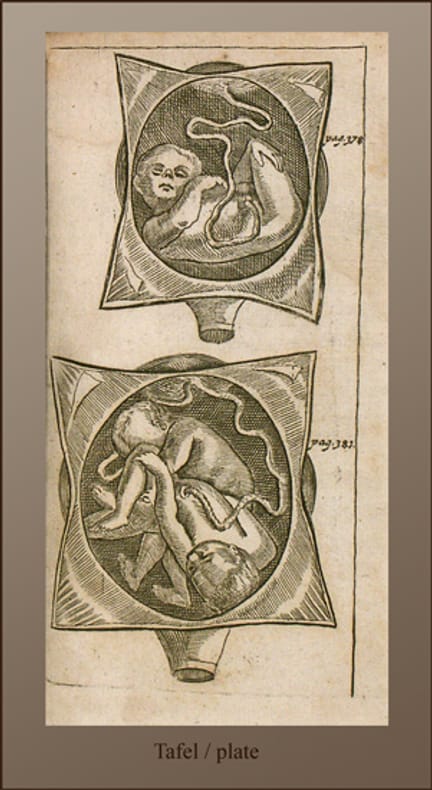
170740351DBNürnberg, Johann Hofmanns seel. Wittib. und Engelbert Strecken, 1707. 8°. 7 n.n. Bl., 607 S. Mit gestochenem Frontispiz, 22 Kupfertafeln und 3 Holzschnitten im Text. Lederband der Zeit. + Wichtig: Für unsere Kunden in der EU erfolgt der Versand alle 14 Tage verzollt ab Deutschland / Postbank-Konto in Deutschland vorhanden +, 40351D
Royal octavo. Pp. vi, (ii), 139. With 40 illustrations to text. Hardcover, bound in contemporary green full cloth, spine gilt, sides blind-ruled, remnants of minute shelf label at foot of spine; inner hinges cracked, paste-downs plasticized along edges, small card pocket. In good condition with bright, spotless interior. ~ First German edition. Translated from the Spanish by Johannes Bresler. With a foreword by E. Mendel. Ramón Y. Cajal (1852-1934), son of a struggling Aragonese doctor, lived to become one of the greatest of all histologists. He shared the Nobel price in Physiology with Camillo Golgi (1844-1926) in 1906. [Provenance:] Formerly in the library of the Psychiatric Institution Endegeest, Leiden, with old stamp to that effect to first free endpaper. An exceptionally bright copy.
176535062DB4 Bände. Zürich, bey Orell, Gessner und Compagnie. 1765-1768. 8°. XVI, 975 S., 1 S. Druckfehler, mit einem Holzschnitt im Text; VIII, 778 S., 1 Bl. Druckfehler, 1 w. Bl.; VIII, 783 S., 1 S. Druckfehler; VI, 680 S., 112 S., 32 S. Zusätze und Verbesserungen, 1 Bl. Anzeige. Halbpergamentbände der Zeit.
Leipzig, 1899. Lex 8vo. 2 original brown full cloth bindings with gilt lettering to front boards and spines. A few traces of wear to hinges, capitals, and corners, but both bindings are nice, tight, and solid. Internally very nice and clean, with only some brownspotting to endpapars and minimal brownspotting to some leaves of text. Book-plate of ""Dr. med. Junghaus. Artzt. Freiburg i. B."" to front free end-papers. XIII, (1), 362" " X, 607, (1) + 9 plates, three photographical and 6 autotypical.
0078050529New. Brand new and still unused unknown
1998059033Viking 1998. Book. Very Good. Hardcover. 1st Edition. Stated First Edition dust jacket in protective mylar. 452pp. Viking Hardcover
4851 Relié, pleine toile aubergine et étui de l'éditeur. Grand in-4°, 30 x 24,5 cm, 318 pp., ill. noir et coul. Bruxelles, Laconti, 1967. Edition originale
1018DGStuttgart, Franckh'sche Verlagshandlung. Farblithographie. + Wichtig: Für unsere Kunden in der EU erfolgt der Versand alle 14 Tage verzollt ab Deutschland / Postbank-Konto in Deutschland vorhanden +, 1018DG
170740351DBNürnberg, Johann Hofmanns seel. Wittib. und Engelbert Strecken, 1707. 8°. 7 n.n. Bl., 607 S. Mit gestochenem Frontispiz, 22 Kupfertafeln und 3 Holzschnitten im Text. Lederband der Zeit.
158840481DBVenedig, Felice Valgris, 1588. Folio. (4) Bl. (Titel und Vorrede), (20) Bl. (Index), 492 (recte 494) S., (1) Bl. (Druckermarke). Mit einem doppelblattgrossen Holzschnitt, einem Holzschnitt im Text und wiederholter Druckervignette auf dem Titel und dem letzten Blatt. Etwas späterer Halblederband. + Wichtig: Für unsere Kunden in der EU erfolgt der Versand alle 14 Tage verzollt ab Deutschland / Postbank-Konto in Deutschland vorhanden +, A|B [2 Warenabbildungen]
168730236DBGenève, Samuel de Tournes, 1687. 4°. (7) Bl., 733 (recte 735) S., (22) Bl., 20 S., (2) Bl. Halbpergamentband aus der Zeit mit handschriftlichem Rückentitel. + Wichtig: Für unsere Kunden in der EU erfolgt der Versand alle 14 Tage verzollt ab Deutschland / Postbank-Konto in Deutschland vorhanden +, A|B [2 Warenabbildungen]
168230166DBGenève, Leonard Chouët, 1682. Folio. (12) Bl., 987 S., (15) S. Index. Mit einer gest. Titelvignette. Pergamentband aus der Zeit. + Wichtig: Für unsere Kunden in der EU erfolgt der Versand alle 14 Tage verzollt ab Deutschland / Postbank-Konto in Deutschland vorhanden +, 30166D
173330113DBLeiden, J. und H. Verbeek, 1733. 4°. (8) Bl., 320 S., (1) Bl.; (5) Bl., 67 S., (7) S. (Index). Mit 36 gestochenen (7 mehrfach gefalteten) Tafeln. Marmorierter Lederband aus der Zeit mit rotem, goldgeprägtem Rückenschild und floraler Rückenvergoldung. + Wichtig: Für unsere Kunden in der EU erfolgt der Versand alle 14 Tage verzollt ab Deutschland / Postbank-Konto in Deutschland vorhanden +, 30113D 2 Teile in 1 Band.
Five volumes. Crown quarto. Pp. 524; 513; 497+88 Supplement; 515; 626. With a total of ca. 3000 illustrations (578; 638; 591+70; 511; 567 respectively). Hardcover, bound in he original publisher's three-quarters calf and matching marbled boards, spine with raised bands, gilt lettered and decorated, top edge gilt, marbled endpapers, triple-colour cloth ribbon marker, publisher's name stamped in gilt on turn-ins; some rubbing to extremities, few superficial scratches. In fine condition. Excellent set. ~ First edition. Extremely rare complete set. Eugene Louis Doyen (1859-1916). Pioneer and innovative, skilled physician, "the Scandalous Dr. Doyen" had a career of enormous output. He was editor-in-chief of the Revue Critique de Médecine et de Chirurgie, as well as the Archives de Doyen, and published numerous books and articles. His interest in cinematography and photography and his pioneer use of this media to document his work and to spread knowledge is legendary. He was a controversial personality with extraordinary views about medicine and life alike. His magisterial "Traité de thérapeutique chirurgicale et de technique opératoire" was translated to English as "Surgical Therapeutics and Operative Technique", (New York, William Wood, 1917-20). The English work appeared in 3 volumes and was prepared by Doyen himself in collaboration with H. Spencer-Browne. A wonderful set of a mammoth work in excellent state of preservation.
In-4°(4cc), pp.88, (8cc); legatura in pelle, con fregi in oro e titolo al dorso lievemente difettoso. L'hospidale de' pazzi incurabili è dedicato al medico Bernardino Paterno; l'opera è articolata in trenta discorsi, ciascuno dei quali dedicato a un tipo diverso di follia, nella finzione di ripercorrere la visita di un ospedale nelle cui stanze siano reclusi i vari generi di pazzi, descritti secondo i loro temperamenti e comportamenti. Appare inutile il tentativo - che pure è stato compiuto - di ritrovare nella tassonomia garzoniana della follia elementi realistici che ci consentano di riportarla alla nomenclatura della psichiatria odierna, anche se nelle pagine del G. emerge qualche riferimento a concreti luoghi di reclusione contemporanei (si fa cenno, per esempio, all'"Hospidale di Milano", cioè all'ospedale di S. Vincenzo presso porta Ticinese a Milano). Né si possono trovare in queste pagine tracce dell'elogio della follia di erasmiana memoria e di radice paolina, anche se la fortuna cinquecentesca dei temi della pazzia, della melanconia, ecc. è certamente alla base della scelta dell'argomento dell'opera. Il libro presenta un intreccio dei consueti materiali di repertorio con vicende tratte dalla storia contemporanea (rilevante in particolare l'accenno polemico e ingiurioso agli ugonotti a proposito della strage di S. Bartolomeo, che conferma l'attenzione del G. alla vita politica francese e dai poemi cavallereschi (in particolare dal Morgante maggiore di L. Pulci e da T. Folengo) con storie d'ogni sorta di balordi di paese (vere o inventate non sappiamo), ambientate in buona parte in un'area veneta che il G. doveva avere frequentato a lungo. The Hospidale de 'pazzi incurabili is dedicated to doctor Bernardino Paterno; the work is divided into thirty speeches, each of which dedicated to a different type of madness, in the pretense of retracing a visit to a hospital in whose rooms the various kinds of madmen are imprisoned, described according to their temperaments and behaviors. The attempt - which has also been made - to find realistic elements that allow us to bring it back to the nomenclature of today's psychiatry, even if in the pages of the G. some reference emerges to concrete contemporary places of confinement mention, for example, of the "Hospidale di Milano", that is, the hospital of S. Vincenzo at the Porta Ticinese in Milan). Nor can we find in these pages traces of the praise of the madness of Erasmian memory and of the Pauline one, even if the sixteenth-century fortune of the themes of madness, melancholy, etc. it is certainly the basis for choosing the subject of the work. The book presents an interweaving of the usual repertoire materials with events drawn from contemporary history (in particular the polemical and insulting hint to the Huguenots about the massacre of St. Bartholomew, which confirms the attention of G. to French political life and from chivalry poems (in particular from Morgante maggiore by L. Pulci and from T. Folengo) with stories of all sorts of village idiots (true or invented we do not know), mostly set in a Venetian area that G. must have attended for a long time.
Fourteen volumes bound in thirteen. Crown quarto. Several individual parts in each volume, paginated consequently. Pp. 342; 349; 341; 337; 349; 345; 331; 345; 347; 321; 316; 349; 641. Plus many full- and double-page lithograph plates, often coloured, and a series of superb folding collotype plates, bound-in. The last volume, comprising of volumes XIV-XV, is in honour of Van Gehuchten, commemorating 25 years of his professorship. The volume has a superbly printed tinted collotype portrait of Van Gehuchten as frontispiece. Numerous text figures, diagrams, tables. Hardcover, uniformly bound in contemporary full pebbled cloth, gilt spines, these of three volumes are broken, uniform neat oval shelf label at foot of each spine, book plate to first paste-down of some volumes, stamp. In a very good condition. ~ First edition. Rare. Volumes 2-15, published over a span of 12 years between 1901 and 1913. The journal's existence came to its with the beginning of World War I. Haymaker/ Schiller p.120-123. Arthur van Gehuchten (1861-1914). (NOTE: a very heavy set, over 20 kg).
Octavo. Two parts in one volume. Pp. 103. Original addenda and corrigenda slips pasted onto blank margin of some leaves. Appendix. Extended footnotes. Bound in the original gray wrappers, bit discoloured and frayed, author's name later added in manuscript to title-page, small catalogue ticket to verso of cover, old institutional stamp and small shelf label to cover. In a very good condition. ~ First edition. Signed by the author on cover "by T. H. Heineman". Extremely rare. A most unlikely survivor of an extraordinary publication. Heineman was a medical instrument distributor and manufacturer. In 1908 he published "The physical basis of civilization: a revised version of 'Psychic and economic results of man's physical uprightness'" which is also offered by Librarium.
Three volumes bound in five. Crown quarto. Pp. 794; 795 - 1531; 958; 652; 653 - 1260. Plus 4 colour lithographed plates with a total of 38 images. With a total of 476 wood-engraved illustrations to the text, 16 of which are coloured. Hardcover, uniformly bound in contemporary cloth and marbled boards, spines gilt, cloth French corners. In fine condition. Excellent set. ~ First edition. Rare complete set of this mammoth work. In a fine state of preservation.
Crown quarto. (265 x 190 mm). Pp. xviii, 236, (2) publisher's catalogue. Plus 29 colour lithographed plates with a total of 128 figures. Hardcover, bound in contemporary full cloth, discoloured, spine gilt, corner-tips and spine-ends trifle rubbed, inner hinges tender, stamp chemically effaced from title-page by expert hand, two plates with short tear at fore-margin slightly touching image, discreetly closed by expert hand and are practically invisible. In a very good condition, very clean interior and plates. ~ First edition. Exeedingly scarce. Eduard Jaeger Ritter von Jaxtthal (1818-1884). Jaeger's atlas greatly advanced ophthalmoscopy, and was unsurpassed for many years. The chromolithographed plates were based on his remarkable fundus paintings, which were accomplished in sittings which might run to over one hundred hours per painting. The original paintings are now housed at the University of Pennsylvania. Jaeger's atlas is a noted example of how 19th Century ophthalmology embraced new printing technologies and ingenious uses of the book, enabling students far and wide to benefit from the famous ophthalmologist's research. A second edition appeared in 1890. It was then translated into English as "Jaeger's Atlas of Diseases of the Ocular Fundus". Becker 206; Garrison-Morton 5904 "A fine atlas"; Keys & Rucker 888; Geschichte der Augenheilkunde, Vol. 7, P. 123 (1918); "Ophthalmology 1700-1900: Celebrating the Collection of Jerry F. Donin, M.D." (2015).
in-8 gr., pp. (4), 746, con 8 tavole f.t. in litogr. (di cui 3, num. IV,V,IV, ma i.e. VI, riproducono facsimili di autografi di delinquenti). Legatura coeva in mezza pelle e percallina ai piatti, al dorso titoli e fregi in oro. Nel 1876 con la prima preziosa edizione di questa fondamentale opera "L'uomo delinquente" nasce l'antropologia criminale, intesa come "quella parte della medicina che studia l'uomo delinquente e in tale studio include non solo l'indagine sull'aspetto fisico, ma anche l'indagine sull'aspetto fisiologico, psicologico e psichiatrico delle personalità". In questa seconda edizione del 1878 Lombroso (Verona 1835 -Torino 1909) risponde alle obiezioni che erano state rivolte alla sua teoria, la quale, secondo alcuni critici, avrebbe limitato la spiegazione della delinquenza al dato costituzionale del criminale, trascurando le influenze dell'ambiente e l'aspetto psicologico. La presente nuova edizione viene quindi ampliata con studi sul significato del tatuaggio e sul gergo criminale, il suicidio, la prostituzione. Infine analizza il fenomeno criminale in base all'età, al sesso, al clima, all'alimentazione, alla povertà. Buon esemplare, foxing marcato ad alcune pagine comprese tra pp. 470 e 520. . Il Diz. Biografico degl Italiani, vol.65 pp.548-553, offre esaurienti notizie sull'illustre criminologo''..