RACHILDEBiblio.com
66 614 résultats
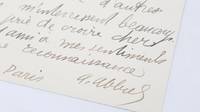
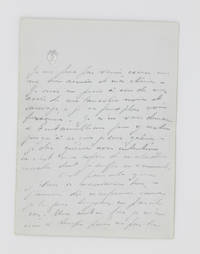
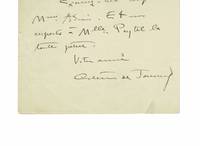
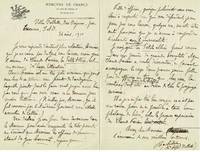
191076250Bas-Vignons 1910. Fine. Bas-Vignons 24 août 1910 13.70 x 21 cm 2 pages sur un double feuillet Unpublished autograph letter signed by Rachilde two pages written in black ink on a double sheet with Mercure de France letterhead. Interesting letter addressed to an unknown recipient perhaps a ""naval officer"". Rachilde defends Les Petites Alliées by Claude Farrère and his style in general: ""Je ne veux pas du tout vous laisser croire que l'oeuvre de Claude Farrère les Petites Alliées est un ouvrage de basse littérature . Claude Farrère est un très joli écrivain qui joint aux becs de sa plume une pointe de dandysme laquelle pointe peut le faire mal juger aussi bien par vous que par moi mais n'en demeure pas moins littéraire."" ""I do not want you to believe at all that Claude Farrère's work les Petites Alliées is a work of low literature . Claude Farrère is a very fine writer who adds to his pen's nibs a touch of dandyism which touch may make him badly judged by you as well as by me but nonetheless remains literary."" This ""touch of dandyism"" led to an amusing misunderstanding as highlighted by Henri Troyat Farrère's successor at the French Academy in his reception speech: ""As for the feminist Rachilde deceived by the first name Claude she had led a fierce campaign for Farrère taking him for a fellow woman writer."" unknown
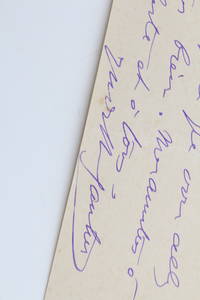
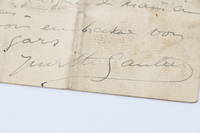
191080881Alger Algiers 1910. Fine. Alger Algiers s. d. ca 1910 16.30 x 20.90 cm 3 pages sur un double feuillet Autograph letter signed by Judith Gautier addressed to Francis Chrétien the husband of her maid Céleste. Three pages written in violet ink on a double sheet with letterhead from 30 rue Washington. Transverse folds inherent to mailing. Judith Gautier sends Francis some instructions regarding the renovation of her house in Dinard le Pré aux oiseaux: ""Je pensais à la cuisine qui va être très noire et à la fenêtre bouchée qui est du côté du jardin sous la fenêtre de la salle à manger. Il me semble qu'elle rendrait du jour et même du soleil si elle était débouchée et bien disposée."" ""I was thinking about the kitchen which will be very dark and the blocked window which is on the garden side under the dining room window. It seems to me that it would provide light and even sunlight if it were unblocked and well arranged."" unknown
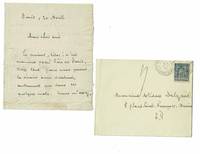
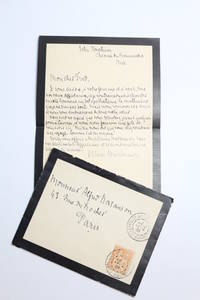
189476269Paris 1894. Fine. Paris 30 avril 1894 11 x 13.20 cm 3 pages sur un double feuillet et une enveloppe Autograph letter signed by Stéphane Mallarmé to Alidor Delzant; three pages written in black ink on a bifolium. With the original envelope. Alidor Delzant was a lawyer collector and bibliophile. A friend of the Goncourt brothers he devoted a book to them and served as Edmonds secretary and executor. A cordial letter in which the poet offers his condolences to his friend following his fathers death: ""Vous m'avez au hasard de nos rencontres amicales plusieurs fois parlé de votre père de façon à ce que je devinasse bon haut et délicat et que cette tardive mais prompte séparation à un âge qui donne une illusion chère de continuelle durée soit pour moi comme pour ceux qui vous aiment un deuil."" unknown
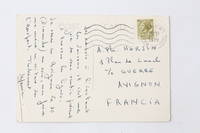
197270632Capri 1972. Fine. Capri 20 juillet 1972 10.40 x 15 cm une carte postale Autograph postcard signed by Maurice Béjart from Capri addressed to André-Philippe Hersin then in Avignon for the theatre and dance festival. On the verso a drawing depicting the coat of arms of Sir Galahad. The choreographer sends a warm message to the editor of Saisons de la danse whose latest issue he had just read. Hersin was indeed a great champion of Béjarts choreographic style and devoted laudatory articles to him in his journal as well as monographic booklets on his work. unknown
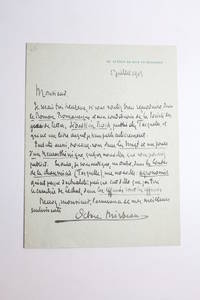
190373704s. l. Paris 1903. Fine. s. l. Paris 1er Juillet 1903 13.80 x 18.30 cm une feuille Autograph letter signed by Octave Mirbeau addressed presumably to Léon Tonnelle director of the review Le Roman Romanesque. 12 lines in black ink on a folded sheet grey paper with letterhead ""68 avenue du bois de Boulogne"". ""Monsieur je serais très heureux si vous vouliez bien reproduire dans Le Roman Romanesque et aux conditions de la Société des gens de lettres Sébastien Roch publié chez Fasquelle et qui est un livre auquel je tiens particulièrement. Peut-être aussi trouverez-vous dans Les vingt et un jours d'un neurasthénique quelques nouvelles que vous pourriez publier. En outre je vous indique en outre dans Les Contes de la Chaumière Fasquelle une nouvelle : Agronomie qui est presque d'actualité puisque c'est d'elle que j'ai tiré le caractère de Lechat dans Les Affaires sont les affaires. ."" ""Sir I would be very happy if you would kindly reproduce in Le Roman Romanesque and under the conditions of the Société des gens de lettres Sébastien Roch published by Fasquelle and which is a book to which I am particularly attached. Perhaps also you will find in Les vingt et un jours d'un neurasthénique some short stories that you could publish. Furthermore I also indicate to you in Les Contes de la Chaumière Fasquelle a short story: Agronomie which is almost topical since it is from this that I drew the character of Lechat in Les Affaires sont les affaires. ."". Octave Mirbeau published his novel Le Calvaire in issue 8 of the review le Roman Romanesque published in December 1903. The titles mentioned in the letter were ultimately not published. unknown
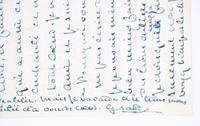
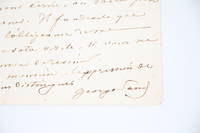
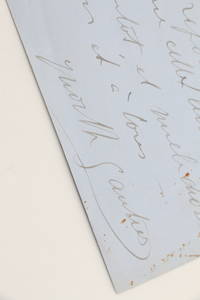
185976839Nohant Nohant-Vic 1859. Fine. Nohant Nohant-Vic 16 août 1859 13.50 x 20.90 cm 4 pages sur un double feuillet Autograph letter signed by George Sand addressed to Ernest Feydeau. Four pages written in blue ink on a double sheet bearing at the head of the first page the sender's blind stamp. This letter was published in the complete correspondence of George Sand established by Georges Lubin. Fine and lengthy letter discussing literature and friendship between writers. Initially a stockbroker and specialist in Antiquity Ernest Feydeau launched himself late into fiction. Anxious to occupy a literary space in which he did not feel justly appreciated he used his connections and maintained a regular epistolary relationship with illustrious correspondents such as Gustave Flaubert Sainte-Beuve and George Sand to whom he sent drafts of his novels and whose opinions he sought. This letter forms Sand's response after having just finished reading Daniel Feydeau's second novel. George Sand then at the height of her literary career describes herself thus: ""I am quite old enough to be your mother for I am 55 years old and I have good hands quite skillful but not beautiful at all. I have earned the right to no longer be coquettish I have been quite reproached for never having been so. I will tell you anything about myself that you wish."" As was her habit much solicited by her peers she delivers a very detailed critique of the text her colleague submits to her: ""I am not against sentences that jar where they need to jar but I am not for harmony being sacrificed to rhythm. Nor am I for the contrary. Understand me well I only blame what is too noticeable what reveals the technique. Do not touch the passages you speak of they are excellent. And in sum I will not insist furiously on the question of form in style seeing that if the qualities of yours should disappear with what sometimes seems to me a flaw I would be in despair at having pointed out the flaw."" Herself very close to Flaubert whom she nicknamed her ""leaden bottom"" Sand seems delighted that the two men know each other: ""I do not have time. But I will have time to receive you when you are free you must come with Flaubert who also has in me an enchanted reader and a wholehearted literary friend. I did not know he was your friend and I am pleased that he is."" The friendship goes so far that Sand soon brings the two writers together placing them on complete equal footing: ""It is no misfortune for you any more than for Flaubert to belong to the race of seers."" A form of solidarity then establishes itself in the face of critical adversity: ""All this is felt better than it can be said and that is why criticism loses its reason three-quarters of the time."" For criticism has had the misfortune of labeling Feydeau as it did with Flaubert a realist: ""People have taken it upon themselves to baptize your manner and his as realism. I do not know why; unless realism is something entirely different from what the first adherents attempted to explain to us. I suspect indeed that there is a way of envisaging the reality of things and beings which is great progress and you bring triumphant proof of it. But the name realism does not suit because art is a multiple infinite interpretation. It is the artist who creates reality within himself his own reality and not that of another. Two painters paint the portrait of the same person. Both create a work that represents the person if they are both masters. And yet the two paintings do not resemble each other. What has become of reality"" This long diatribe - a true manifesto - forms a powerful testimony to the repulsion of George Sand and Flaubert for theorists obsessed with the idea of classifying literature according to a ""system that . blinds"". unknown
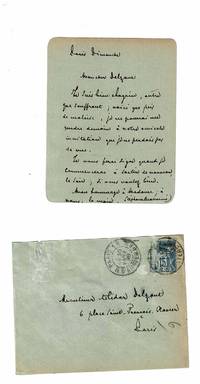
189876329Paris 1898. Fine. Paris 30 janvier 1898 11.40 x 8.80 cm une carte recto et une enveloppe Autograph postcard signed by Stéphane Mallarmé addressed to Alidor Delzant written on the front in black ink. Envelope enclosed. Alidor Delzant was a lawyer collector and bibliophile. Friend of the Goncourts he devoted a work to them and was secretary and testamentary legatee of Edmond. ""Je suis bien chagrin outre que souffrant ; voici que pris de malaise je ne pourrai me rendre demain à votre amicale invitation que je ne perdais pas de vue. Je vous ferai signe quand je commencerai à sortir de nouveau le soir ; si vous voulez bien."" ""I am quite grieved besides being unwell; here I am taken with malaise I will not be able to respond tomorrow to your friendly invitation which I had not lost sight of. I will give you a sign when I begin to go out again in the evening; if you would like."" unknown
194186762Paris 1941. Fine. Paris s. d. ca 1941 14 x 15.50 cm une page sur un double feuillet Autograph letter signed by sculptor André Abbal 13 lines in black ink on a double sheet. Traces of folding inherent to postal dispatch. The sculptor discusses his various productions: ""I am now certain that my Tarn et Garonne will not return to the workshop. With peace of mind on this front I will work hard on other things that interest me greatly."" André Abbal student of Alexandre Falguière is renowned for his direct-carved stone sculptures. unknown
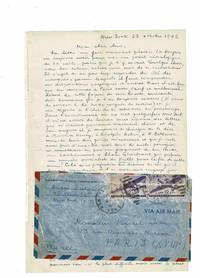
194576388New York 1945. Fine. New York 23 octobre 1945 17.10 x 25.40 cm 2 pages sur un feuillet et une enveloppe Unpublished autograph letter signed by André Breton addressed to Marcel Jean two pages written in blue ink on a sheet. ""Air mail"" envelope enclosed. Creases inherent to mailing. This letter is mentioned and very briefly quoted in Marcel Jean's autobiography Au galop dans le vent. Important and lengthy letter sent from New York when Breton in exile since 1943 as he was considered a ""dangerous anarchist"" by the Pétainist government was forced - like many intellectuals - to leave France in order to continue working. He shares with his friend the ""overwhelming despair"" ""l'accablement"" that the city brings him and one still senses his eagerness to return to his homeland. Painter draftsman and decorator Marcel Jean joined the Surrealist group in 1933 and became one of the movement's first chroniclers. One can sense all his emotion upon receiving this letter which he discusses at length in his autobiography: ""October 1945 I write to André Breton in New York. In response two densely written pages of fine calligraphy. My letter whose tone must have pleased him gave him ""real pleasure"" ""vraiment plaisir"". He finds me ""healthy safe and by no means lacking in that lucid smiling very human way of seeing"" ""sain sauf et nullement dénué de cette façon de voir lucide souriante très humaine"" that he has always known in me ""I just thought ""Je viens de penser"" he says of your firm handshake ""à ta rude poignée de main""."". I had mentioned to him the study on Lautréamont whose elements I am gathering he encourages me to give extracts of it for a Surrealist issue being prepared for the magazine Vrille ""this without prejudice to a drawing by you that Vrille should reproduce"" ""cela sans préjudice de dessin de toi que Vrille devrait reproduire"" and for the same magazine to submit ""a certain number of recent works to an in-depth analytical and critical commentary"" ""un certain nombre d'ouvrages récents à un commentaire analytique et critique approfondi"". This is followed by advice and encouragement regarding a work of literary criticism he would like to see me undertake. Then some news from America and our friends: Max Ernst Tanguy Péret who is bored in Mexico Matta who ""paints large panels in a new genre sadistic figurative much remarked upon."" ""peint de grands panneaux dans un nouveau genre figuratif sadique très remarqués."". And the vigorous signature. Breton's letters their contrast between the text with extremely regular handwriting and the flourish hurried and in both scripts something controlled have always given me the impression that in writing to me he was doing me the favor of an autograph. His message outlined for me a program as chronicler in view of his return to Paris in the spring but I had in mind something other than commenting on the commentaries of critics whose interest he pointed out to me - Maurice Blanchot or Léon-Pierre Quint. My projects concerned the study of Lautréamont and then - or at the same time: to paint and to draw."" unknown
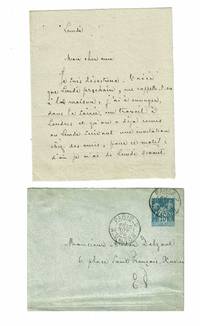
189276338Paris 1892. Fine. Paris 21 novembre 1892 11.20 x 134 cm 2 pages sur un double feuillet et une enveloppe Autograph letter signed by Stéphane Mallarmé addressed to Alidor Delzant; two pages written in black ink on a double sheet. Envelope included. Alidor Delzant was a lawyer collector and bibliophile. Friend of the Goncourts he devoted a work to them and was secretary and testamentary legatee of Edmond. ""Je suis désastreux. Voici que lundi prochain me rappelle-t-on à la maison j'ai du envoyer dans la soirée un travail à Londres et qu'on a déjà remis au lundi suivant une invitation chez des amis pour ce motif."" ""I am disastrous. Here it is that next Monday I am reminded at home I have to send in the evening some work to London and that an invitation from friends has already been postponed to the following Monday for this reason."" The ""work"" mentioned in this letter is the article entitled ""Théodore de Banville"" which would appear in the National Observer of December 17 1892. unknown
190079000s. l. Paris 1900. Fine. s. l. Paris s. d. 1er semestre 1900 12.30 x 16.70 cm 2 pages sur un double feuillet Handwritten signed letter addressed to Natalie Clifford Barney: I am in the grips of one of my bouts of black and wild melancholy - I can no longer see anyone. Paris 1st half-year 1900 12.3 x 16.7 cm 2 pages on a double leafHandwritten letter from Renée Vivien signed Paule and written in pencil on a double leaf with a silver-coloured heart with the poet's monogram at the top of the first sheet. Transverse fold from having been sent. Beautiful letter of apology after a dispute with the Amazone: Suis en proie à un de mes accès de mélancolie noire et sauvage je ne peux plus voir personne. Je m'en vais demain à Fontainebleau pour y rester jusqu'à ce que je sois guérie je dis : guérie avec intention car c'est une espèce de maladie morale dont je souffre en ce moment. C'est pour cela que j'étais si mauvaise hier j'aurais dû m'enfermer comme je le fais toujours en pareil cas. Une autre fois je m'en irai à temps pour ne pas te faire du mal si toutefois tu me permets de dire : une autre fois et si tu ne me renvoies pas à jamais de ta présence. Je n'ai qu'une excuse c'est que je souffre. Je n'ai pas été digne de l'amour que tu m'as si généreusement et si largement donné je n'ose plus te demander pardon je t'ai tant de fois offensée ! I am in the grips of one of my bouts of black and wild melancholy - I can no longer see anyone. Tomorrow I am going to go to Fontainebleau to stay there until I am healed - I say: healed with intent because it is a kind of moral illness from which I suffer at the moment. That's why I was so bad yesterday - I should have locked myself up as I always do in such a case. Another time I will go sooner so as not to cause you harm - if nevertheless you allow me to say: another time and if you do not dismiss me forever from your presence. I only have one excuse that is that I suffer. I have not been worthy of the love that you have so generously and so widely given me - I dare not ask you anymore for forgiveness - I have offended you so many times! unknown
191475220Paris 1914. Fine. Paris 1914 13.60 x 21.20 cm en feuillets Autograph letter signed by Colette addressed to her friend the man of letters and lawyer Adrien Peytel two pages written in black ink in hurried handwriting on a double sheet with L'Eclair newspaper letterhead. A central fold inherent to the folding of the letter for mailing. Fine letter from Colette testimony to the confusion that seized France at the dawn of the Great War: ""Nothing is working. I am stuck here for a piece they are asking me to write."" The writer worries: ""I have no news from Sidi Henry de Jouvenel. I am creating a whole head of worries for myself. I don't know where he is he wrote to me that he was leaving with the 29th for the Somme. Ah! la la la la la la."" ""Colette a entendu sonner le tocsin en Bretagne où elle passait un séjour ensoleillé avec le baron Henry de Jouvenel et leur fille dans sa maison de Rozven. La guerre la surprend en plein bonheur à quarante et un ans. . Son mari appelé dès le 2 août devant rejoindre le 29e régiment d'infanterie à Verdun elle a aussitôt envoyé sa fille à peine âgée d'un an avec sa nurse au château de Castel Novel en Corrèze - chez sa belle-mère. Et elle est rentrée à Paris."" ""Colette heard the tocsin ringing in Brittany where she was spending a sunny stay with Baron Henry de Jouvenel and their daughter in her house at Rozven. The war surprised her in the midst of happiness at forty-one years old. . Her husband called up from August 2nd having to join the 29th infantry regiment at Verdun she immediately sent her daughter barely a year old with her nurse to the château de Castel Novel in Corrèze - to her mother-in-law's. And she returned to Paris."" Dominique Bona Colette et les siennes unknown
184077244Paris 1840. Fine. Paris jeudi 7 mai 1840 13.60 x 20.90 cm une page sur un double feuillet Autograph letter signed by George Sand addressed to publisher Léon Curmer. One page written in black ink on a double sheet. This letter was published in the complete correspondence compiled by Georges Lubin. ""Monsieur J'ai parcouru votre recueil avec beaucoup d'intérêt et j'accepte la collaboration que vous m'avez offerte mais je ne pourrais m'occuper de vous satisfaire que dans six semaines ou deux mois. Si cette époque vous convient veuillez bien me le faire savoir ainsi que les conditions de la rédaction."" ""Sir I have perused your collection with great interest and I accept the collaboration you have offered me but I could not undertake to satisfy you for six weeks or two months. If this timing suits you please let me know as well as the conditions of the writing."" The ""recueil"" ""collection"" in question here is none other than Les Français peints par eux-mêmes. Sand would not however collaborate on this monumental compendium of types preferring instead several years later Le Diable à Paris published under the direction of her close friend publisher Hetzel. unknown
197170820Sommières 1971. Fine. Sommières 16 septembre 1971 17.90 x 12.80 cm un feuillet Autograph letter signed by Lawrence Durrell addressed to Jani Brun written in blue felt tip pen. The writer gives his news to his young French lover: ""I'm going to Geneva for 10 days to have my expertise assessed for my psychosome exema sic and discuss a script. Am happy because the servants in Provence are getting insolent see back "": the last part of the sentence referring to the waved santons on the back of the postcard. After many years spent in Greece Egypt and Rhodes the travel writer Lawrence Durrell was forced to flee Cyprus following popular uprisings which led to the island's independence from the British crown. Rich only in a shirt and a typewriter but crowned with the success of his novel Bitter Lemons of Cyprus Acid lemons he arrived in 1956 in France and settled in the Languedoc village of Sommières. In the ""Maison Tartès"" his large house surrounded by trees he wrote the second part of his work his monumental Quintette d'Avignon devoted himself to painting and received his illustrious friends including the couple Henry Miller and Anaïs Nin the violinist Yehudi Menuhin the London editor Alan G. Thomas and his two daughters Pénélope and Sappho. Among the olive trees and under the Mediterranean sun he met there in the mid-1960s the young and sparkling ""Jany"" Janine Brun Montpellier of thirty years with ravaging beauty who worked in the Department of Antiquities of the Sorbonne in Paris. It was named Buttons in memory of their first meeting where the girl wore a dress covered with buttons. Henry Miller also fell in love with ""Buttons"" praising his beauty and his eternal youth in exceptional letters that were never published. The three friends spent memorable Parisian evenings of which we keep precious autograph traces through their correspondence. Recommended by Durrell she made numerous trips notably to England from where she received a large correspondence from the writer as well as original works of art signed by her artist pseudonym Oscar Epfs. unknown
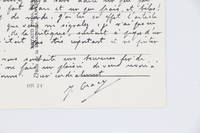
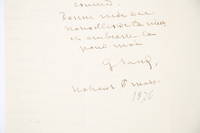
199578741Sion-sur-l'Océan Sion-sur-l'Océan 1995. Fine. Sion-sur-l'Océan Sion-sur-l'Océan s. d. circa 1995 15 x 10.50 cm une carte postale Autograph signed postcard from Julien Gracq with 16 lines addressed to his friend and monographer Ariel Denis written in black felt-tip pen on the reverse of a photograph showing the beach of Saint-Hilaire-de-Riez in Vendée not far from his apartment in Sion-sur-l'Océan. Julien Gracq thanks Ariel Denis for the news he sent him from Constantinople : "". je suis heureux que votre voyage se soit terminé sans hostilités."" "". I am happy that your journey ended without hostilities."" while lamenting the August crowds disturbing his peaceful retreat in Vendée: "". Je suis à Sion.et hélas ! il y a beaucoup de monde"" "". I am in Sion. and alas! there are many people"". Then the author of ""Le Rivage des Syrtes"" celebrates the critics' benevolence toward him with his characteristic modesty : "". j'ai lu en effet l'article de France soir que vous me signalez : je n'ai pas eu à me plaindre de la critique surtout à propos d'un ouvrage qui n'était pas très important et qui ne prétendait pas l'être."" "". I did indeed read the France Soir article you pointed out to me: I have not had cause to complain about the critics especially regarding a work that was not very important and did not claim to be."" unknown
187676872Nohant Nohant-Vic 1876. Fine. Nohant Nohant-Vic 6 mars 1876 13.20 x 20.70 cm deux pages sur un feuillet remplié Autograph letter signed by George Sand addressed to Gustave Flaubert. Two pages written in black ink on a double sheet bearing at the head of the first page the sender's dry stamp. This letter was published in the complete correspondence of George Sand established by Georges Lubin. Fine letter written by George Sand a few months before her death and addressed to her lifelong friend Gustave Flaubert. The writer wishes to offer her friend a seat so he may attend the revival of her play Le Mariage de Victorine : ""Je t'écris en courant ce matin parce que je viens de recevoir de Mr Perrin avis de la 1ère représentation de la reprise du Mariage de Victorine une pièce de moi au théâtre français. Je n'ai ni le temps d'y aller ni l'envie de partir comme cela au pied levé mais j'aurais voulu y envoyer quelques amis et il ne m'offre pas une seule place. Je lui écris une lettre qu'il recevra demain et je le prie de t'envoyer au moins un orchestre."" ""I'm writing to you hurriedly this morning because I've just received notice from Mr Perrin of the first performance of the revival of Le Mariage de Victorine a play of mine at the Théâtre Français. I have neither the time to go nor the desire to leave like that at a moment's notice but I would have liked to send some friends and he doesn't offer me a single seat. I'm writing him a letter which he will receive tomorrow and I ask him to send you at least an orchestra seat."" Letters from the correspondence between George Sand and Gustave Flaubert are renowned and highly sought after. unknown
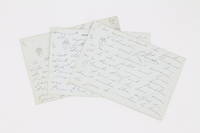
190078850s. l. 1900. Fine. s. l. Vendredi soir printemps 1900 12.50 x 8.40 cm 6 pages sur 3 cartes Handwritten letter addressed to Natalie Clifford Barney: Je t'écris ce mot dans le train tu t'en apercevras vite en observant l'irrégularité de mon écriture. I write this to you on the train you will quickly notice that by observing the irregularity of my handwriting. s.l Friday evening Spring 1900 12.5 x 8.4 cm 6 pages on 3 cards Handwritten letter from Renée Vivien written in pencil on three blue cards with the poet's monogram. This letter has been published in Renée Vivien et ses masques in A l'Encart n°2 April 1980 A very beautiful letter written on a train: Je t'écris ce mot dans le train tu t'en apercevras vite en observant l'irrégularité de mon écriture. I write this to you on the train you will quickly notice that by observing the irregularity of my handwriting. Renée had just left her cher petit amour dear little love for a short stay outside of Paris: Quelle folie de me séparer de toi même pour deux jours et comme je le regrette amèrement maintenant : - Seulement j'étais inquiète tu sais une fois rassurée j'aurai l'esprit tranquille désormais et je pensais goûter un bonheur absolu et parfait dans ton ombre tout près de toi. Comment ai-je pu être assez stupide et assez folle pour m'en aller ! Deux jours c'est si long ! C'est deux éternités de joie dont je me prive par ma bête faute ! - Vois-tu je t'aime à ne pouvoir vivre sans toi. Ne plus te voir est une souffrance accablante. Pense à moi Lys blanc - Lys blanc aime-moi car je suis triste ce soir. What madness to separate myself from you even for two days and as I bitterly regret it now: - Only I was worried you know once reassured I will have peace of mind from now on and I thought I would taste absolute and perfect happiness in your shadow very close to you. How could I be stupid enough and crazy enough to go away! Two days is so long! It is two eternities of joy that I deprive myself of by my own stupid fault! - You see I love you and cannot live without you. Not seeing you again is an overwhelming suffering. Think of me White Lilly - White Lilly love me because I am sad this evening. In this letter we encounter Vivien's obsession with flowers: J'ai reçu avant de partir l'adorable petit bouquet de violettes blanches que tu m'as si tendrement envoyé et le cher petit mot qui m'a touchée comme une plainte d'enfant triste. Before leaving I received the adorable little bouquet of white violets that you so tenderly sent and the dear little note that touched me like a sad child's complaint. It is at the end of 1899 and through Violette Shillito that Renée Vivien - then Pauline Tarn - met Natalie Clifford Barney cette Américaine plus souple qu'une écharpe dont l'étincelant visage brille de cheveux d'or de prunelles bleu de mer de dents implacables this American woman softer than a scarf whose sparkling face shines with golden hair sea blue eyes never-ending teeth Colette Claudine à Paris. Natalie who had just experienced a summer romance with the scandalous Liane de Pougy who introduced her to sapphism paid little attention to this new acquaintance. Renée on the other hand was totally captivated by the young American woman and describes this love at first sight in her autobiographical novel Une Femme m'apparut: J'évoquai l'heure déjà lointaine où je la vis pour la première fois et le frisson qui me parcourut lorsque mes yeux rencontrèrent ses yeux d'acier mortel ses yeux aigus et bleus comme une lame. J'eus l'obscur prescience que cette femme m'intimait l'ordre du destin que son visage était le visage redouté de mon avenir. Je sentis près d'elle les vertiges lumineux qui montent de l'abîme et l'appel de l'eau très profonde. Le charme du péril émanait d'elle et m'attirait inexorablement. Je n'essayai point de la fuir car j'aurais échappé plus aisément à la mort. I lived again the hour already well past when I saw unknown
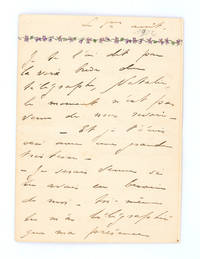
190278981s. l. Paris 1902. Fine. s. l. Paris Le 1er avril 1902 11.50 x 15.90 cm 7 pages 1/2 sur deux doubles feuillets Handwritten signed letter addressed to Natalie Clifford Barney: I told you by the raw voice of the telegraph Natalie the time has not come for us to see each other again. Paris 1st April 1902 11.5 x 15.9 cm 7 pages 1/2 on two double leavesHandwritten letter signed Pauline from Renée Vivien addressed to Natalie Clifford Barney and written in black ink on two double leaves edged with violettes. Transverse folds from having been sent. Interesting letter mentioning Brumes de fjords and Freddy Manners-Sutton. Tu te trompes en croyant retrouver dans Brumes de fjords un reflet de femme ou l'influence d'une pensée de poète norvégien. Je les ai faites d'un souvenir très lointain de ce pays mystique et de quelques rêves lourds de nostalgies. You are mistaken when you think that you find a reflection of a woman or the influence of a Norwegian poet's thinking in Brumes de fjords. I wrote them as a very distant memory of this mystical country and of some dreams heavy with nostalgia. Brumes de fjords is the first collection of prose poetry by Renée Vivien to be published in June 1902. Natalie and Renée were then separated but this letter shows that the Muse aux violettes continued to send her texts to the Amazone despite the physical and sentimental distance that separated them. Car j'ai dans ma vie une tendresse que je crois sincère quoi qu'il me soit difficile aujourd'hui de croire à la sincérité même lorsqu'elle me montre ses larmes. Since I have a tenderness in my life which I believe to be sincere - though it is difficult for me today to believe in sincerity even when it shows me its tears. This letter was indeed sent to Natalie Clifford Barney while she was in the United States: Je serais venue si tu avais eu besoin de moi. Toi-même tu m'as télégraphiée que ma présence était inutile. lorsque ton temps était pris par un flirt Freddy Manners-Sutton qui sait et qu'importe Il est trop tard maintenant. Je ne viens pas t'amuser ni remplacer une distraction absente. Si tu viens à Paris cet hiver je te verrai une ou deux fois comme on revoit le visage lointain de son passé sans colère sans haine mais aussi sans amour. I would have come if you needed me. You yourself telegraphed me that my presence was useless. when your time was taken by a flirt Freddy Manners-Sutton Who knows And what does it matter It's too late now. I don't come to amuse you or replace an absent distraction. If you come to Paris this winter I will see you once or twice - as you see the distant face of your past - without anger without hatred but also without love. Here Renée gives free reign to her jealousy mentioning Freddy Manners-Sutton Natalie's friend: En réalité Vivien ne pouvait supporter Manners-Sutton. Dans Une femme m'apparut elle l'appellera tout simplement Le Prostitué et dira de lui : Il est banal comme l'adultère. Cette antipathie se transformera en une haine féroce lorsqu'un peu plus tard Vivien apprendra que cet homme se faisait passer pour le fiancé de Natalie Barney. Sacrilège suprême. ! Mais Vivien ne savait pas ou bien voulait ignorer que cette rumeur était en fait propagée par Natalie Barney elle-même afin de donner le change à ses parents. Non pensait-elle ce personnage au-dessous de toute insulte veut tout simplement capter la fortune de Natalie ! In reality Vivien could not bear Manners-Sutton. In Une femme m'apparut she will very simply call him Le Prostitué and will say of him: He is common like adultery. This antipathy will turn into a fierce hatred when a little later Vivien learns that this man pretends to be Natalie Barney's fiancé. Supreme sacrilege.! But Vivien did not know - or even wanted to ignore - that this rumour was actually spread by Natalie Barney herself in order to pull the wool over her parent's eyes. No she thought this below any insult character simply wan unknown
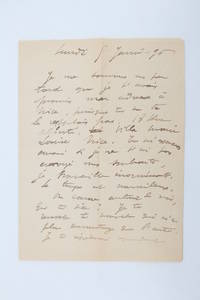
189180763s. l. 1891. Fine. s. l. 5 janvier 1891 14.20 x 19.20 cm 3 pages sur un double feuillet Autograph letter signed by Maurice Leblanc to an unknown recipient; three pages written in black ink on a double leaf. Transverse folds inherent to posting. At the beginning of this year Maurice Leblanc left the Norman coast to spend the winter in Nice: ""Je me souviens un peu tard que je t'avais promis mon adresse à Nice puisque tu ne te la rappelais pas. 18 rue Alberti villa Marie-Louise Nice. Tu m'excuseras aussi si je ne t'ai pas envoyé mes souhaits je travaille énormément le temps est merveilleux on cause autour de moi que te dire "" ""I remember rather late that I had promised you my address in Nice since you couldn't recall it. 18 rue Alberti villa Marie-Louise Nice. You'll also excuse me if I haven't sent you my wishes I'm working enormously the weather is wonderful people are chatting around me what can I tell you"" Though he had then published only one work he gives his opinion to his correspondent on a text the latter had sent him: ""Je te répèterai répondant ce que je t'ai dit pour ton style : il n'est pas assez travaillé tu écris un peu au hasard de ta plume on ne sent pas de nerfs là-dessous d'os de solide c'est du style de journal de lettre mais pas de style littéraire. Pourquoi n'essayes-tu pas de réfléchir sur chaque phrase avant de l'écrire."" ""I'll repeat in response what I told you about your style: it's not worked enough you write somewhat at random with your pen one doesn't feel any sinew underneath bone solidity it's newspaper style letter style but not literary style. Why don't you try to reflect on each sentence before writing it."" unknown
196970623Sommières 1969. Fine. Sommières 10 novembre 1969 13.90 x 10.10 cm une carte postale enveloppe jointe Autograph postcard signed addressed to Jani Brun written in black felt-tip pen on the reverse of a humorous drawing. Envelope included. The writer gives news of his life in his house in Sommières to his French lover: ""Je me force de sic travailler un peu - c'est à dire je tripote des livres des nuages des femmes et des calembours . Il pleut. Je coupe du bois aussi et bientôt il faut que je ramasse les mûres. Much love Larry D"" ""I force myself to work a little - that is to say I fiddle with books clouds women and puns . It's raining. I also chop wood and soon I must pick blackberries. Much love Larry D"". After many years spent in Greece Egypt and Rhodes the traveling writer Lawrence Durrell was forced to flee Cyprus following popular uprisings that led the island to its independence from the British crown. Rich only with a shirt and a typewriter but crowned with the success of his novel Bitter Lemons of Cyprus Les citrons acides he arrived in France in 1956 and settled in the Languedoc village of Sommières. In the ""Tartès house"" his large residence surrounded by trees he wrote the second part of his work his monumental Avignon Quintet devoted himself to painting and received his illustrious friends including the couple Henry Miller and Anaïs Nin violinist Yehudi Menuhin London publisher Alan G. Thomas and his two daughters Penelope and Sappho. Among the olive trees and under the Mediterranean sun he met in the mid-1960s the young and vivacious ""Jany"" Janine Brun a woman from Montpellier in her thirties with devastating beauty who worked in the Antiquities department of the Sorbonne in Paris. She was nicknamed ""Buttons"" in memory of their first meeting where the young woman wore a dress covered with buttons. Henry Miller also fell under the charm of ""Buttons"" praising her beauty and eternal youth in exceptional unpublished letters. The three companions spent memorable Parisian evenings of which we retain precious autograph traces through their epistolary exchanges. Recommended by Durrell she made numerous trips notably to England from where she received vast correspondence from the writer as well as original works of art signed with his artist pseudonym Oscar Epfs. unknown
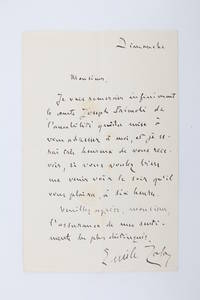
189480728s. l. Rome Rome 1894. Fine. s. l. Rome Rome Dimanche 4 novembre 1894 13.20 x 20.50 cm une page sur un double feuillet et une enveloppe Autograph letter signed by Emile Zola addressed to Ugo Ojetti. One page written in black ink on the first page of a double sheet. Folding inherent to postal transmission. Envelope included. This letter was addressed by the father of naturalism to journalist Ugo Ojetti when he had just arrived in Rome: ""Monsieur je vais remercier infiniment le comte Joseph Primoli de l'amabilité qu'il a mise à vous adresser à moi et je serai très heureux de vous recevoir si vous voulez bien me venir voir le soir qu'il vous plaira à six heures."" ""Sir I wish to thank Count Joseph Primoli infinitely for the kindness he has shown in directing you to me and I shall be very happy to receive you if you would be so good as to come and see me any evening that suits you at six o'clock."" Having arrived a few days earlier in the eternal city to conduct research for Rome Emile Zola hoped to meet Count Joseph Primoli there. The latter was unfortunately in Paris but he sent him this young journalist from La Tribuna who would serve as his guide but also as secretary. The two men clearly got along well and Zola even authorized Ojetti to adapt an opera libretto from his famous Nana. The project would unfortunately never come to fruition. Joseph Napoléon Count Primoli 1851-1927 was the great-great-nephew of Napoleon Bonaparte. Very close to the imperial family under the Second Empire he subsequently remained faithful to the salon of his beloved aunt Princess Mathilde in her private mansion on rue de Berri. His refined and witty conversation worked wonders there and he met as a passionate bibliophile some of the greatest writers of his time: Gustave Flaubert Théophile Gautier the Goncourts and Guy de Maupassant. unknown
191480878Alger Algiers 1914. Fine. Alger Algiers s. d. ca 1914 13.70 x 18 cm 4 pages sur un double feuillet Autograph letter signed by Judith Gautier addressed to Céleste Chrétien her maid. Four pages written in black ink on a double sheet. Transverse folds inherent to mailing. Judith announces the upcoming visit of a friend to Dinard: ""I come to announce to you today that a young man who is my friend will come to settle in the house next Saturday for the month of June. He wants to be there all alone to finish some urgent musical work. You will give him my room with the dressing room and the room next to it the ground floor in order and the piano well polished."" unknown
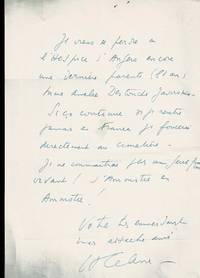
195076172s. l. Klarskovgaard 1950. Fine. s. l. Klarskovgaard 8 décembre 1950 21 x 34 cm 2 pages sur un feuillet Autograph letter signed partly unpublished by Louis-Ferdinand Céline addressed to his lawyer Maître Thorvald Mikkelsen. Two pages written in blue ink on a large sheet of white paper; numbered 575 in Célines hand in red pencil at the top left corner. Fold marks from mailing. This letter was only partially transcribed in Année Céline 2005 p. 64. A moving and bitter letter by Céline who had just lost his aunt Amélie the Aunt Hélène of Death on Credit and witnesses the slow disappearance of the world he once knew. The writer finds solace in the memoirs of Élisabeth de Gramont another witness to a bygone era. From his Danish exile Céline learns with sorrow of the death of his Aunt Amélie the last surviving member of the Destouches family: Je viens de perdre à l'hospice d'Angers encore une dernière parente. Although he had not spared his alter ego in Death on Creditthe scandalous Aunt Hélène meets a shameful end trailed by suitors lovers or clientshe recalls: À Saint-Pétersbourg elle est devenue grue. . Elle est venue nous voir au Passage deux fois de suite frusquée superbe comme une princesse et heureuse et tout. Elle a terminé très tragiquement sous les balles dun officier. The real Aunt Amélie had settled in Romania married to a diplomat Zenon Zawirski. Unfortunately reality caught up with fiction: she returned to Paris in utter destitution at the age of 80. Céline arranged for her transfer from the hospice of the Little Sisters of the Poor in Breteuil to the hospital in Angers where she died in December 1950 Que la pauvre femme meure gentiment. Assez de fins tragiques dans la famille ! he had written to Dr. Camus on 11 July 1949. His secretary Marie Canavaggia met her before her arrival in Angers: elle avait par moments des gestes et des expressions qui en éclairs me rappelaient son neveu 13 July 1949. With the last of his family gone Céline reflects on his own end: si ça continue si je rentre jamais en France je foncerai directement au cimetière. Devouring the books his lawyer sent to ease the burden of exile Céline describes his current readings: Le Temps des équipages by Élisabeth de Gramont est un des livres fameux parus vers 1920 ! Lun des « Guides des Snobs » les mieux réussis de lÉpoque. It is striking to imagine Céline delighting in this aristocrats social chronicle so alien to his world: Javais un ami Carré de Rennes étudiant en droit qui lavait appris par cur ! . il sen est établi marchand de tableaux. As a young medical student Céline had indeed crossed paths with Louis Carré later a successful Parisian art dealer who exhibited Paul Klee Juan Gris Le Corbusier and Picasso: il y a fait 10 fois fortune ! Preuve que tous les livres ne sont pas déprimants ! In 1947 pursued by French justice for his collaborationist stance Céline took refuge in Denmark. In May 1948 accompanied by Lucette and Bébert he arrived at the home of his lawyer Maître Thorvald Mikkelsen in Klarskovgaard. Mikkelsen owned a large estate on the Baltic Sea and welcomed the exiled writer to stay. On 21 February 1950 as part of the post-war purge Céline was definitively sentenced in absentia by the Civic Chamber of the Paris Court of Justice to one year in prison for collaboration a sentence already served in Denmark. Raoul Nordling the Swedish consul general in Paris intervened on his behalf with Gustav Rasmussen the Danish Foreign Minister successfully delaying his extradition. On 20 April 1951 Jean-Louis Tixier-Vignancour his lawyer since 1948 obtained Célines amnesty as a severely disabled veteran of the Great War submitting the case under the name Louis-Ferdinand Destouches without the magistrates making the connection. Céline left Denmark that summer after three years spent in his lawyers home. unknown
191080820Alger Algiers 1910. Fine. Alger Algiers s. d. ca 1910 13.40 x 18 cm 4 pages sur un double feuillet Autograph letter signed by Judith Gautier addressed to Céleste Chrétien her maid. Four pages written in black ink on a double sheet. Transverse folds inherent to mailing last page soiled in lower margin without hindrance to reading. Judith Gautier asks her maid if the latter's husband can do work in her house at Pré aux oiseaux in Dinard: ""Je voudrais savoir si Francis pourrait se charger de rafraîchir ma maison et de repeindre les moulures de bois et les persiennes. Il s'agit de refaire un peu les fausses briques . et aussi les fenêtres lucarnes rondes du 2eme étage du côté de la mer qui sont à jour et qu'il faudra boucher avec du coton. On pourrait aussi reblanchir la cuisine qui n'a été faite qu'à peu près et le plafond de la salle à manger qui est très sale. ."" ""I would like to know if Francis could take care of refreshing my house and repainting the wood moldings and shutters. It's about redoing a bit the false bricks . and also the round dormer windows on the 2nd floor on the sea side which are open and will need to be plugged with cotton. We could also rewhiten the kitchen which was only roughly done and the ceiling of the dining room which is very dirty. ."" unknown
190173700Nice Villa Ibrahim chemin des Baumettes Nice 1901. Fine. Nice Villa Ibrahim chemin des Baumettes Nice 8 Février 1901 12.50 x 17.60 cm une feuille Friendly autograph letter signed by Octave Mirbeau addressed to the playwright and founder of the Revue Blanche Alfred Natanson some time after his marriage. 12 lines in black ink on a folded sheet mourning paper with black border watermarked ""JDL & cie"" envelope included. ""Je vous envoie à votre femme et à vous tous nos vux affectueux et je voudrais pouvoir chanter en votre honneur un bel épithalame. Le malheur est que je ne suis pas poète. Mais nous somme vos amis et nous vous embrassons de tout notre cur. Nous avions espéré que vous viendriez passer quelques jours à Cannes et nous nous faisions une fête de vous avoir ici. Misia nous dit que vous avez renoncé à ce voyage. Comme c'est ennuyeux ! ."". ""I send to your wife and to you all our affectionate wishes and I would like to be able to sing a beautiful epithalamium in your honor. The misfortune is that I am not a poet. But we are your friends and we embrace you with all our heart. We had hoped that you would come to spend a few days in Cannes and we were looking forward to having you here. Misia tells us that you have given up this trip. How annoying! ."". Mirbeau was particularly close to the Revue Blanche group since its launch in Paris in 1891. But it was from the Dreyfus affair that his intimate and lasting friendship with the Natanson brothers Thadée Alexandre and Alfred was strengthened. After aesthetic disagreements about Art Nouveau and the Nabis Mirbeau finally reunited with Thadée around 1900 in a now common inclination for the young Nabis painters of the Revue Blanche Bonnard Vallotton and Vuillard. The Revue Blanche played an essential role in France as confirmed by historian Paul-Henri Bourrelier: ""Most of the most prominent writers painters musicians politicians intellectuals of the late 19th and early 20th centuries collaborated with it or were associated with it. Created financed and directed by the three Natanson brothers young Polish Jews with the enthusiastic complicity of their classmates from the Condorcet lycée La Revue blanche quickly became a place of debate on all subjects that stirred France. It led political battles under the impulse of anarchists like Fénéon Mirbeau; socialists such as Blum G. Moch Péguy; Dreyfusards and founders of the League of Human Rights like Reinach and Pressensé."" unknown