WILLIAMS, HELEN MARIABiblio.com
69 633 résultats
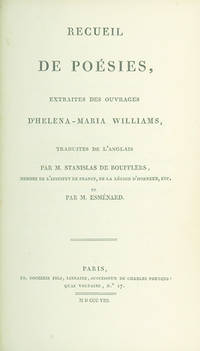
180828308Paris: Fr. Cocheris Fils Libraire 1808 1808. First and only edition. Jackson Romantic Poetry by Women Williams 8c; OCLC records 15 copies. Edges a little rubbed; fine copy. 8vo contemporary French red straight-grain morocco blue watered silk doublures with gilt-decorated borders boards spine and inner dentelles gilt lettering a.e.g. Errata. A French translation of more than 30 poems by Helen Maria Williams including ones on her real and imaginary travels: "Sonnet sur la ligne équinoxiale"; "Sonnet sur l'oiseau du tropique"; "Les glaciers des Alpes"; "Hymne composé au milieu des Alpes"; and "Nouvelle Américaine." French scholar writer and friend of Williams Charles Pougens 1755-1833 arranged the translations specifically for this sole edition; the majority of the poems were not published in English until 1823. Paris: Fr. Cocheris Fils, Libraire, 1808 unknown
195410074THE KINGDOM OF EARTH WITH HARD CANDY A BOOK OF STORIES New Directions 1954 first edition very fine in just about fine publishers slip-case with some professional restoration to the spine of the slip-case. Of allegedly 100 SIGNED copies this is copy #9 with numbered copies seemingly showing up less frequently than presentation copies. This title story was not included in the original simultaneous publication entitled HARD CANDY A BOOK OF STORIES. The actual number of copies extant is unknown. Apparently the authors scarcest book to locate in first edition. New Directions unknown
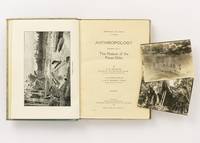
1924143258Port Moresby: Government Printer and printed in Sydney by Alfred James Kent Government Printer of NSW 1924. First Edition. Hardcover. Very Good. Port Moresby Government Printer and printed in Sydney by Alfred James Kent Government Printer of NSW 1924. Large octavo xvi 283 pages with numerous line illustrations plus 50 plates comprising 27 reproduced from photographs 19 line illustrations - one with added colour - 2 maps overprinted in red a folding map and a genealogical diagram. Original light blue cloth lettered in gilt on the spine; spine moderately sunned and a little worn at the extremities; sides unevenly sunned; edges and endpapers a little marked; free endpapers tanned; a very good copy. 'Cloth 20/-; Paper 15/-' is printed at the foot of the title page. 'The report was written in 1923 after a stay of nearly eight months in the Purari Delta during the previous year' author's preface. The four-page introduction by Sir John Murray Lieutenant-Governor of Papua is a worthy addition to the report. <p>Loosely inserted are ten original vintage prints each 87 × 116 mm or the reverse of photographs reproduced as full-page plates in the published report. They are the plates before pages 7 13 and 33 and after pages 28 106 110 112 148 154 and 160. The quality of the prints suggests they are produced from the original negatives exposed by Williams in the field. A large-format modern print of another plate facing page 66 is loosely inserted. Government Printer (and printed in Sydney by Alfred James Kent, Government Printer of NSW) hardcover
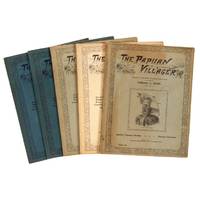
38880Port Moresby Papua : Government Printer 1929-1933. Five volumes bound in the original pictorial wrappers as issued at the end of each respective year by the Government printer; Volume 1 nos. 1-11 complete; Volume 2 nos. 1-12 complete; Volume 3 nos. 1-12 complete; Volume 4 nos. 1-12 complete; Volume 5 nos. 1-12 complete; all issues in uniform 8-page format with photographic and line-drawn illustrations; from The Papuan Collection of Charles Fletcher Melbourne his bookplates to the inside of the front wrappers; in excellent condition throughout. An exceptional set of the first five years' issues of this immensely significant periodical published by the Australian colonial administration in Papua and edited by the Government Anthropologist Francis Williams. Extremely rare. The last time any issues from the first five years of The Papuan Villager were offered for sale at auction was in 1970 Sotheby's London: Vol. 1 no. 1 to vol. 2 no. 1 twelve issues unbound. 'The Papuan Villager 1929-1941 was unique in colonial history. It was a newspaper produced by the Australian administration in Papua as a vehicle for what is now called “social marketing.†The Government Anthropologist Francis Williams had the idea that a newspaper might be a good way to help Papuans learn English as part of assimilating into western culture. Sir Hubert Murray Papua’s literate and forward-thinking Lieutenant-Governor agreed; he thought the newspaper could engender a sense of “national†unity. He diverted native education tax money to pay for the venture because he viewed their “little experiment†as adult education. The “experiment†persisted for thirteen years until Williams' death in an airplane accident. Williams personally edited the newspaper over its entire lifespan which is an indication of how seriously he took the project. Francis Williams used the newspaper to teach Papuans the few things that he felt they needed to know in order to improve their daily lives: principally facility with English better hygiene and improved gardening practices. Other than those three areas Williams thought that Papuans ought to keep their culture as intact as they could. His theory of cultural assimilation was eventually published as ""The Blending of Cultures"" 1935. In that essay in The Villager and in his academic writing Williams takes a modified functional approach to anthropology. The Papuan Villager used a tabloid format and was 10-16 pages long sic. Its contents were interesting and its tone friendly; it contained the results of sporting events simplified versions of international news especially exotic articles about the British royal family gardening hints tips on how to understand western culture detailed information on different indigenous cultures in Papua local news stories and two centre pages of photographs featuring the faces of islanders and expatriates whom readers would know. The newspaper engaged its readers even more by offering contests for the best village gardens. But the reason that The Papuan Villager is important for both literature and print culture is that Williams used it to encourage Papuans to retain their own cultures and to use the written word for communication. He began by valorizing native customs such as the making of arrows and baskets. He included many pen and ink illustrations of Papuan artifacts describing how they were used and how important they were to keeping Papuan cultures alive. He urged his readers to become writers telling them that this was their paper and offering to pay for successful submissions. His readers responded by sending Williams written versions of Papuan folklore and by serving as village correspondents for local news. Each writer was acknowledged with a short biography. Early in The Villager’s history Williams included samples of editing in order to show his Papuan writers what he considered to be acceptable newspaper style. His editorial hand was light. Williams' readers responded to his approach and to the literature competitions by submitting many stories and tales. Although the newspaper was intended for adult readers principally those Papuan men who worked for the administration and who were associated with the Christian missions it was given free of charge to all mission schools and sold otherwise at very reasonable rates. Williams used the newspaper to indicate to his adult readers that such things had to be paid for. However because it penetrated schools and homes its readership was wide; soon school children and women were contributing as well. After Williams’ death and the colony had recovered from the War the newspaper was re-introduced as a school magazine called The Papua and New Guinea Villager 1950-1960. The first issue of this magazine pays tribute to both Williams and Murray and testifies to the popularity of the earlier newspaper. From 1960 onwards a number of increasingly “hip†school magazines took the place of the now old-fashioned Villager. However the notion of indigenous writing was revived just prior to Independence with the publication of New Guinea Writing 1970-72 and later Papua New Guinea Writing 1972-1977.' Athabasca University. Australian holdings: SLNSW: v.1 no. 1 Friday 15th Feb. 1929-v. 13 no. 11 Nov. 1941 NLA: v.1 no. 1 Feb. 1929-v.7 no. 2 Feb. 1935 imperfect Macquarie University: vols.1-3 1929-31 only University of Tasmania: v.1 no. 1 only unknown
43651Harry 1878-1948 Composer and influential teacher of Harmony and Composition at the Royal Academy of Music saying he thinks "we must stop 'mistering' each other. Many thanks for your letter - I have written to Mr Decca & Thatcher - but I have little hope of any result. I imagine Mr Darner Jones is one of those independent people whom one admires so much - but who are so annoying when one wants to help them." 1 side 4to with original autograph envelope The White Gates Dorking 20th April postmarked During the Second World War Vaughan Williams was active in civilian war work chairing the Home Office Committee for the Release of Interned Alien Musicians helping Myra Hess with the organisation of the daily National Gallery concerts serving on a committee for refugees from Nazi oppression and on the Council for the Encouragement of Music and the Arts CEMA the forerunner of the Arts Council. In 1940 he composed his first film score for the propaganda film 49th Parallel. unknown
1914p475<p>PLEASE SEE PHOTOS: New York: Scribners 1914. This is the original release of "Why Marry" Pulitzer Prize Winner for Drama 1918. It was a flop off Broadway and got tweaked and opened 3 years later to win the Pulitzer. This is a very scarce titlemost all you can get is the On Demand Printings for about $50. This book is very tight and squarelinen cloth spine with paper labelintactand red paper boardsWITH SMALL WATER STAINS they do not appear any furtherthere is edgewear to spine ends and and edges of the boardslight foxing to spine. No markings inside.</p><p>WITH A SIGNED INSCRIBED PAGE. $3K CHEAPER THAN THE OTHER ONE.</p> Scribners hardcover
199325314ESan Francisco CA: Privately Published by Robin Williams n.d. 1993. First Edition. Original privately printed 135 page shooting script for one of Robin Williams’s most acclaimed films Mrs. Doubtfire written by Anne Fine Randi Mayem Singer and Leslie Dixon. Signed and inscribed by Robin Williams to a crew member at the half-title. Inscribed: “To Steve Thank you Keep on truckin’ Robin Williamsâ€. Also signed by Marsha Williams Robin’s wife at the time “Marsha Williamsâ€. Illustrated at a special page with a black & white frontispiece still photograph of Robin Williams in character as the resourceful and hilarious Mrs. Doubtfire. Beautifully bound in brown cloth and quarter brown leather with bright gilt-stamping 6 /38 inches by 9 1/8 inches. With some minor scuff marks to the cloth else fine. Unbeknownst to the many admirers of Robin Williams was that he was a lover of books. Over the years Williams had his own private press specially printing on fine papers and handsomely binding editions of the screenplays of some of the films he appeared in. They were all printed in very small quantities. Williams would sign them and then they would be sent to members of the cast and crew of the productions. As a unique item this is a special opportunity to honor and celebrate Williams’s love of his craft his love of books and his appreciation of the people who helped to bring his films to life. Mrs. Doubtfire was directed by Chris Columbus starring Robin Williams Sally Field Pierce Brosnan and Harvey Fierstein. The film tells the story of eccentric actor Williams who goes through a bitter divorce with his wife Field and is frustrated with the terms of custody of their two children which is limited to only one visit a week. In an act of creative desperation he decides to turn himself into an elderly British lady with makeup a wig and prosthetics in order to become the children’s nanny Mrs. Doubtfire. To make things even more frustrating for him he must deal with his wife’s new boyfriend Brosnan. The film won an Oscar for Best Makeup. Privately Published by Robin Williams hardcover
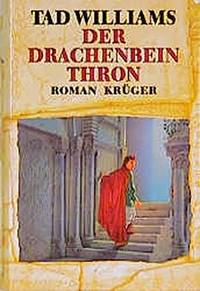
199438544KRÜGER WOLFGANG 1994. 4. hardcover. Osten Ard Simon Schneelocke Sirmkovrilo! KRÜGER, WOLFGANG hardcover
COD-03449Spirit 2000. paperback. Very Good. Dedicated amd inscribed by author. Otherwise As New. Spirit 2000 paperback
0072512903New. Brand new and still unused unknown
1552783014New. Brand new and still unused unknown
0132606887New. Brand new and still unused unknown
020135408XNew. Brand new and still unused unknown
1342692438New. Brand new and still unused unknown
0521710138New. Brand new and still unused unknown
0520269950New. Brand new and still unused unknown
0486843408New. Brand new and still unused unknown
0138021775New. Brand new and still unused unknown
0791437035New. Brand new and still unused unknown
0470682671New. Brand new and still unused unknown
0521688035New. Brand new and still unused unknown
0516224883New. Brand new and still unused unknown
013468589XNew. Brand new and still unused unknown
0030561329New. Brand new and still unused unknown
047339006XNew. Brand new and still unused unknown