7 770 résultats
Folio (218 x 304 mm). 101 ff., final blank. With woodcut printer's device at the end and numerous woodcut initials. Modern red morocco, blindstamped to style, with gilt spine and inner dentelle. Marbled endpapers. All edges sprinkled in red. In cloth slipcase. A rare medical compendium drawing strongly on the Arabic physicians who dominated the medieval medical schools of France and Northern Italy, including the author's treatise on fevers (fol. 68 ff.), based on Avicenna, who is variously quoted. Some of the surprisingly modern ailments discussed include tinnitus (fol. 40), diabetes (fol. 61), and manic depression (an extensive chapter, fol. 13-16). This is the third edition of the collection first published thus in 1501 (not counting the only incunabular edition of 1485). "Concoreggio, born in Milan around 1380, was made professor in Bologna in 1404 before teaching at the Universities of Pavia, Florence and (in 1439) Milan. His works are composed after the model of the Arabs, without much personal observation, and were published as a collection after his death in Pavia around the year 1440" (cf. Hirsch). - Some waterstaining to margins (more pronounced near beginning). Bound in a sumptuous modern morocco binding decorated with rollstamps showing Renaissance heads, likely for the 20th-century physician and collector Piergiorgio Borio (his bookplate on the front pastedown). Only 3 copies in Italy (Biblioteca comunale dell'Archiginnasio Bologna; Biblioteca Angelica Roma; Biblioteca Casanatense Roma). Edit 16, CNCE 14741. Durling 1008. Hirsch VI, 645. Sangiorgio, Cenni storici sulle due Università di Pavia e di Milano (1831), p. 57f. Brambilla I, 128. Astruc 211.
Folio (225 x 318 mm). 2 parts in one volume. (36), CXXXIII (but: 134), 106 ff. Later full vellum with old giltstamped red label to spine. The first authoritative work of antiquity on the 'materia medica', the branch of science treating remedial substances, based on the author's first-hand research throughout the Middle East. This is the rare first printing of this edition with the commentary by G. B. Egnatio: the third Latin (altogether the fourth) edition of Dioscorides, the first to contain the translation of Ermolao Barbaro. The appendix contains the first edition ever of "Corollarii", Barbaro's conclusions, sometimes considered a separate work by bibliographers. - "Dioscorides' work is the authoritative source on the materia medica of antiquity. He described over 600 plants and plant principles" (Garrison/M.). "Very little is known about its author [...], except that he was a Cilician Greek who lived in the time of Claudius and Nero, and that he travelled widely in the Middle East, probably as a physician in the Roman army [...] It is no exaggeration to say that from its publication until well into the 17th century [...] all botanical studies were based on this book, and the greater part of any new botanical matter published during the 16th and 17th centuries was in the form of commentary on Dioscorides [...] It is only with the rise of modern scientific botany in the 18th century that his influence began to wane" (PMM). - Occasional light browning with more noticeable brownstaining to final leaves; a few wormholes (some within the text). A small paper flaw to the lower edge of the last few pages. - Provenance: 1) 17th-century ink ownership of Sinobaldi di Verona to title-page; 2) French bookseller Lucien Scheler (1902-99) with his collation mark "Coll. complet / L.S." pencilled to pastedown. Edit 16, CNCE 17255. IA 154.303, 112.852. Bird 669. Panzer VIII, 429, 767. Proctor/Isaac 12338. Wellcome I, 1794. Choulant, Hdb. ält. Med. 80 (erroneously stating "s. l. e. a.") & 82. Durling 1140. Haeser II, 9. Johnston, The Cleveland Herbal, Botanical, and Horticultural Collections (Kent, 1992), no. 28. Not in Adams, Lesky, Osler or Waller. Cf. PMM 20.
Folio (222 x 332 mm). (6), 131 ff., final blank f. With 20 woodcuts in the text. - (Bound with) II: Floridus (Sabinus), Franciscus. Kriegsübung dess fürtrefflichsten und streitbarsten ersten Römischen Kaisers Julii [...]. Strasbourg, Hans Knobloch & Georg Messerschmidt, 1551. (4), 153 ff., final blank f. - (Bound with) III: Stumpf, Johannes. Keyser Heinrychs des vierdten Hertzogen zu Francken und am Rhyn etc. fünfftzigjärige Historia [...]. Zurich, Christoph Froschauer (the Elder), 1556. (10), 134 (instead of 137) ff. With 104 woodcuts in the text. Contemporary blindstamped leather on four raised double bands with two clasps; handwritten title to uppermost spine compartment. Second edition of one of the 16th century's most important treatises on warfare and military history, previously published in 1555. The fine woodcuts are not by Jost Amman, as are those of his well-known and similarly titled "Kriegsbuch", but rather were cut by an unidentified artist after drawings by Virgil Solis. - Bound with this rare and well-preserved work are two other contemporaneous editions of (military) historiography: Heinrich von Eppendorff's German translation of "De C. Iulii Caesaris praestantia" by Franciscus Floridus in a fine Strasbourg impression, and a Swiss chronicle of the times and rule of Emperor Henry IV (1050-1106), characterized by intense conflicts with the Pope (lacking the final three leaves and blank, containing "Ein Sendtbrieff Sant Ulrychen, Graaffen zu Kyburg"). - Slight browning throughout, waterstaining to gutter near the end. Handwritten ownership of N. V. Wernsdorff, dated 1559, on front pastedown, with note about his having passed away in Denmark and a slightly later ownership by Degenhard Grimm. Latterly in the library of the Viennese collector Werner Habel (1939-2015) with his handwritten and stamped ownership, dated 1978, to flyleaf. Binding well preserved with finely roll-tooled designs to covers; both clasps intact. I: VD 16, F 3129. Adams F 1075. Jähns 549. Not in BM-STC German. - II: VD 16, F 1675. Adams F 636. Muller II, 340, 58 & III, 443, 27. Ritter 872. Not in BM-STC German. - III: VD 16, S 9869. BM-STC German 839. Not in Adams.
8vo. 60 ff. With Giunta's device on the title-page (a Florentine lily with the L. A. initials). Later vellum with more recent end leaves. First edition of Jacob Mantino's translation into Latin of the fourth part of the first book of Ibn Sina's Canon of Medicine (original title: al-Qanun fi at-Tibb), divided into 31 chapters. Mantino dedicated it to the Doge of the Venetian Republic, Andrea Gritti (1455-1538). - Jacob Mantino (1490-1549) was a Jewish doctor, rabbi and philosopher. He was born in Spain, but he, his family and the Jewish community in Tortosa were forced to flee after refusing Catholic baptism, as decreed by King Ferdinand II and Queen Isabella I of Spain. Mantino grew up in Italy and studied philosophy and medicine at the universities of Bologna and Padua. Most of his adult life was spent being a doctor to the pope and other prominent members of society like cardinals, bishops and ambassadors in Bologna, Verona, Venice and Rome. He was also involved in the (religious) controversy over Henry VIII's divorce from Catharine of Aragon. In 1549, just before his death, he moved to Damascus as ambassador of Venice. Mantino's intellectual production focused on the translation of scientific works from Hebrew and Arabic into Latin, especially medical and philosophical treatises by leading authors of the medieval period, including Moses ben Maimon (Maimonides), Ibn Rushd (Averroes), and Ibn Sina (Avicenna). - Abu 'Ali al-Husayn Ibn Sina (also known by his Latinized name Avicenna, 980-1037) was one of the most prominent intellectuals of the medieval period and of the Islamic Golden Age. He was a Persian polymath; he wrote works on an incredible wide variety of subjects, including philosophy, medicine, astronomy, geography, psychology, Islamic theology, physics, and even poetry. Ibn Sina is mainly known for his medical encyclopaedia The Canon of Medicine, which became a standard medical text for medical students until the late 17th century. - The present work was printed by one of the most successful and important late 15th and early 16th century Italian publishers, Lucantonio Giunta (1457-1538). He was originally from Florence, but was active in Venice from 1489. He was a member of the Giunta family of printers, publishers and booksellers, who were active throughout Europe. - With owner's inscriptions on the front and back paste-downs and on the title-page, and some marginal annotations in brown ink. The paste-downs are partially covered by the newer, slightly foxed, end leaves. The binding is somewhat stained, light water staining to the first half of the work, small restored tears in the outer margin of leaves d1 and d2 without affecting the text. Otherwise in good condition. Durling 397. Edit 16, CNCE 3543. USTC 811590.
12mo. 418, (42) pp. Contemporary brown morocco with straight and curved fillets stamped in blind and gilt, central medallion with the author's name on both covers, fleur-de-lis stamps to corners and in spine compartments, structured by three raised bands. Edges goffered and gilt. Pretty and scarce edition in miniscule italics, meticulously printed by Gryphius, "l'un des hommes les plus savants de son temps, qui fut le maître de Jean de Tournes et, sans doute aussi, celui de l'imprimeur Estienne Dolet" (Béraldi). - Charmingly bound in full contemporary morocco with the characteristic stamps of Marcantonio Guillery of Rome: a wide band whose two lines variously interlock in the shape of two Cs, sparingly decorated with a variety of small ornaments, encloses a large central compartment neatly filled with tendril designs, at the centre of which an oval cartouche contains the name of the author. Guillery was one of the masters of Roman bookbinding in the mid-16th century; only a small number of his works survive. "He was a son of a French printer, Etienne Guillery of Lunéville, who established himself in Rome at the beginning of the century and married an Italian wife. The date of the son's birth is unknown [...] He bound seventy-one volumes for [Giovanni Battista] Grimaldi, almost half the total extant, but not more than thirty books bound by him are known outside the Apollo and Pegasus collection: a surprisingly small œuvre for a binder of his skill and taste with a working life of over twenty years" (Hobson). - Light foxing to interior. Hinges and spine-ends imperceptibly restored; in immaculate condition. - Provenance: 1) From the library of the famous French collector of fine bindings, Henri Béraldi (1849-1931; cf. Bogeng I, 197f.), with his bookplate to the front pastedown. 2) Acquired at the Béraldi sale (I, 29 May 1934, lot 17) by the French tobacco industrialist and philatelist Maurice Burrus (1882-1959); his bookplate to the front flyleaf and his purchase note on the lower flyleaf. 3) Acquired at the Burrus sale (Paris, 15 Nov. 1971, lot 78) by the French industrialist and philanthropist Paul Louis Weiller (1893-1993). An additional, earlier but unidentified bookplate on the lower pastedown, referencing a Théophile Belin catalogue. Gültlingen, Lyon V, 937. Baudrier, VIII, 205. Schweiger 2.1, 488. Hobson, Apollo and Pegasus, p. 89, no. 11. Not in Adams or BM-STC French. Cf. Hobson/Culot, Italian and French 16th Century Bookbindings, p. 25f.
4to. (8), 434, (2) pp. With woodcut title border by Hans Holbein. - (Bound with) II: The same. [Dikduk de-lishan arami. In hakhasda'ah] Chaldaica grammatica [...]. Ibid., 1527. (8), 212, (4) pp. Both works have woodcut printer's devices at the end. Contemporary blindstamped browns calf with 2 clasps. Sammelband containing two rare works by Münster: the first grammar of Aramaic written in Germany, a principal work, and the first German-produced Aramaic dictionary. "His dictionary [was] adapted from Pagninus's excerpt of Nathan Ben Yehiel's Arukh [...] Münster's most important work [...] was his Aramaic grammar, the first of its kind. The 'Chaldean' element in the Bible has of course long since been recognised, and people like Aurogallus and Fagius had treated the subject earlier in connection with their Hebrew studies. But just as Sanctes Pagninus was the first to exclude deliberately the Aramaic vocabulary from his Hebrew dictionary (1529), so Münster was the first to publish both a grammar and a dictionary devoted solely to Aramaic [...] A special feature of this grammar is the lexicographical introduction to the rabbinical Bible commentaries, with various Latin-Hebrew wordlists of technical terms. Münster also gives examples of the Sephardi and Ashkenazi rabbinical script in woodcut [...] The author compares the Aramaic with Arabic (called by him Saracenica lingua) which he quotes in transcription" (Smitskamp). - Binding restored; endpapers replaced. Obliterated contemp. ownership to t. p.; a few contemp. marginalia near the beginning of the grammar. I: VD 16, M 6657. Burmeister 23. BM-STC German 633. Adams M 1920. Steinschneider 2014, 6. Hieronymus 236 (note). Smitskamp 8d (note). BNHCat M 841. OCLC 13588558. - II: VD 16, M 6648. Burmeister 3 (& p. 11). BM-STC German 632. Adams M 1903. Steinschneider 6591, 6. Smitskamp 8. Leslau 398. BNHCat M 827. OCLC 20468455.
Small 4to (20 x 14 cm). XXXVIII, (2) ff. Title-page with a 4-piece woodcut border (using material from Laurent Hylaire). Modern limp sheepskin parchment. Third edition of a collection of three medical and gastronomical texts by two 15th century Italian physicians. All were published separately for the first time at the end of the 15th century, the first collected edition appeared in 1508. - The first, "Pillarium" by Pantaleone di Confienza, is one of the earliest treatises dealing exclusively with pills as remedies for all kinds of diseases. He treats all kinds of aspects of pills, including their various (natural) substances of pills, their various forms (powders, tablets, tinctures, extracts, etc.), their physiological and pathological effects, the preparation and conservation, etc. - The second, "Summa lacticiniorum", by the same author, is the first treatise specifically devoted to cheese and Dalby calls it a "landmark" in the literary discourse for cheese. "It opens with a general section discussing the nature of milk and the range of products made from its, especially cheese; it outlines the variety of cheeses, relating them to the seasons, the climate, the origin of the milk and the methods of making and maturing. In part two Pantaleone surveys the regional and local cheeses known to him, beginning in his own native norther Italy [...] He continues his cheese itinerary through Savoie and across France [...] He thinks little of German cheese, but considers the English ones that he had seen on sale at Antwerp equal in quality to the best Italian kinds" (Dalby). - The third, a treatise on medical ethics by Gabriele Zerbi (1445-1505), aims to protect the integrity of physicians and the medical profession. - Manuscript notes at the last page and a few pages with some underscoring and other marks. Waterstain throughout at the foot, larger towards the end, and the last leaves with wormholes; a good copy. Baudrier II, 431 & V, 98. Durling 3438. USTC 155658 (9 copies). Cf. Dalby, Cheese: a global history (2009), p. 117; Di Troggio, "Confienza, Pantaleone" in: Treccani Enciclopedia Italiana (online ed.).
4to. (8), 365 [but: 371], (25) pp. Title page printed in red and black. With 67 half-page woodcuts in the text (mostly views of cities) and woodcut printer's device. Contemporary vellum with multiple gilt and blindstamped cover fillets, large gilt lozenge-shaped central compartment with heraldic supralibros bearing the legend "Nicolaus Haunolt Sac[rae] Caes[aris] M[ajesta]tis [...] Secretarius". Corner fleurons; spine sparsely gilt. First edition; reprinted without changes in 1608. "Contains descriptions of Florida, New-France, New-Spain, Nova Galicia, Yucatan, Cuba, Brazil, Peru, etc." (Sabin). Also with views of Constantinople, Jerusalem, Genoa, London, Rostock, Rome, Vienna, Prague, Riga, Zurich, Genf, Bremen, Dresden, Geneva, Lubeck, Cologne, Leipzig, Mainz, Marburg, Munich, Nuremberg, Strasbourg, Trier, Ulm, Venice, Wittenberg and many others. - From the library and with the bookplate of Nicolaus Haunolt, whose biography can be traced up to the year 1586 (cf. Yerasimos, Stephane. Les voyageurs dans l'Empire Ottoman (XIVe-XVIe siécles). Ankara 1991. In: Turkish Biographical Archive G 18, 68). However, other books from the Imperial secretary's library printed as late as 1597 could be established in public and private collections. - Slightly browned throughout; last f. has small section cut out (no loss to text). Title page with ms. ownership of the Piarists' school in Tata near Györ (dated 1767). Very pretty and well-preserved copy in a decorative contemporary binding with interesting provenance. VD 16, R 3024. Adams R 694. Bachmann 14. Muller 1376. Sabin 73000. Alden 595.
15691Paris, Enguilbert I, Jean I et Geoffroy I de Marnef (impr Philippe Pigouchet), 1491. In-8 gothique (143 x 100 mm) de (96) ff. (sig. a-m8), maroquin brun, dos à 5 nerfs, quadruple filet d'encadrement et fleurons aux angles à froid sur les plats, tranches dorées (reliure du XIXe siècle).
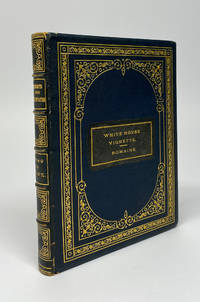
189511071n. p. but Washington: U. S. Treasury Department Bureau of Engraving and Printing 1895. Hardcover. Near fine. Square octavo 21 numbered leaves of portrait plates plus four unnumbered. Bound in full crushed navy morocco with elaborate gilt tooling to boards spine compartments and edges with gilt dentelles all edges gilt and marbled endpapers. In near fine condition overall very well-preserved with a few tiny nicks to the corners and some scattered internal foxing mostly at the gutters and borders; and not on the proof images. The first two engravings depict the U. S. Capitol Building and the White House. The last two portraits of sitting President Grover Cleveland and his wife Frances are each SIGNED by their subjects in different ink below the images. The main contents consist of extremely well-executed and quite familiar portraits of the presidents; the very portraits that were used by the Bureau of Engraving and Printing on official U. S. banknotes. These Treasury Department specimen books were produced in very small numbers and presented to important diplomats cabinet secretaries members of Congress and the like. The proof engravings contained within were designed for use on official US banknotes though some of the images were likely never used on actual money. At the turn of the 21st century numismatic experts had counted 47 known examples. Several more have come to auction primarily numismatic since then but they remain extremely rare in the trade. No two specimen books are exactly alike. We could trade one example closely matching the contents of ours however that copy was in a different binding and did not include the signed portraits of President and Mrs. Cleveland. <br /> <br /> The name "Romaine" is stamped on the gilt-stamped morocco label on the front board and is almost certainly the surname of the intended recipient of this volume though without any further context nor any bookplates or written provenance we are unable to identify this person. <br /> <br /> When these books do occasionally come to auction there is much buzz. It is difficult to imagine a more interesting and treasured sort of volume for anyone who has an interest in numismatics and rare books. A rare chance to own a special volume of American printing history. (U. S. Treasury Department Bureau of Engraving and Printing) hardcover
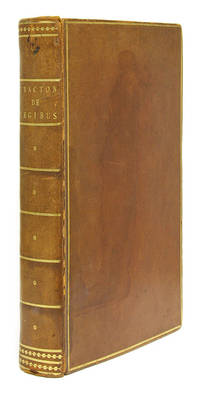
1569673671569. London 1569. First edition. London 1569. First edition. Printing and the Mind of Man 89: The "Crown and Flower of Medieval Jurisprudence" Bracton Henry de d. 1268. De Legibus et Consuetudinibus Angliae Libri Quinq; In Varios Tractatus Distincti ad Diversorum et Vetustissimorum Codicum Collationem Ingenti Cura Nunc Primu Typis Vulgati; Quorum Quid Cuiq; Insit Proxima Pagina Demonstrabit. London: Apud Richardum Tottellum 1569. xvi 444 i.e. 442 ff. Folio 11-1/4" x 7-3/4". Nineteenth-century diced calf gilt rules to boards gilt fillets ornaments and title to spine gilt rules to board edges gilt inside rules marbled endpapers ribbon marker. Light rubbing to boards faint dampstain to front board moderate rubbing to extremities front joint just starting at head corners bumped and somewhat worn armorial bookplate to front pastedown. Attractive large woodcut decorated initials. Light toning to text somewhat heavier in places light foxing and finger smudges to some leaves some fading to text of ff. 1 and 2. A handsome copy of a landmark work. $10000. First edition. Written between 1250 and 1256 De Legibus et Consuetudinibus Angliae The Laws and Customs of England is the first treatise on English law. A systematic work it emphasizes the separation of procedural and substantive matters and also cites cases as sources of at least intellectual if not formal authority. The principles formulated in this work and its use of precedents determined the development of English law and established the method adopted by Littleton and Coke. In Maitland's words it is "the crown and flower of English medieval jurisprudence" and "by far the greatest of our medieval law books.": Maitland Collected Papers II:43. Beale Bibliography of Early English Law Books T323. Printing and the Mind of Man 89. English Short-Title Catalogue S122159. unknown books
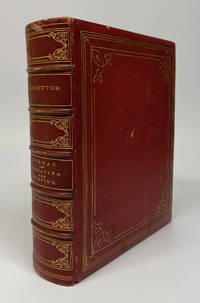
187511070Washington DC: U. S. Treasury Department Bureau of Engraving and Printing 1875. Hardcover. Near fine. Small quarto unpaginated. Bound in full red crushed morocco with gilt borders edges spine title and compartments. All edges gilt. 144 engravings plus frontispiece and engraved title page. A near fine example with some small nicks to the boards and some mild scattered foxing internally. An extraordinary volume one of a small and undetermined number of these U. S. Treasury specimen books. These were printed and bound by the Treasury Department's Bureau of Engraving and Printing and presented to a select few diplomats cabinet secretaries and members of Congress. The proof engravings contained within were designed for use on official US banknotes though some of the images were likely never used on actual money. At the turn of the 21st century numismatic experts had counted 47 known examples. Several more have come to auction primarily numismatic since then but they remain extremely rare in the trade. No two specimen books are exactly alike; they usually contain a number of portraits of Presidents and other notable politicians but some as in our copy contain a number of vignettes of major events and places in US history along with more abstract concepts such as "Loyalty" and "Liberty and Union." Some significant examples herein include "Reconstruction" "Valley Forge" "The Patent Office" and far too many more to list. A number of the engravings have no caption and some of these are the most alluring. For example one of the largest images depicts a Native American man sitting on a cut-down tree head in hands as though he is weeping. Before him is a modern city with dozens of billowing smokestacks. Clearly this image is meant to portray the imminent conclusion to the United States Government's closing of the frontier and final usurpations of land from Indigenous people. It almost goes without saying that each and every one of the vignettes and portraits is of the most excellent quality both in design and execution as both the artists and the printing tools were of the highest order of the day. Though undated the title page names George B. McCartree as Chief of the BEP on the title page a position he held from 1869-1876 which would approximate the date.<br /> <br /> When these books do occasionally come to auction there is much buzz. It is difficult to imagine a more interesting and treasured sort of volume for anyone who has an interest in numismatics and rare books. A rare chance to own a special volume of American printing history. U. S. Treasury Department Bureau of Engraving and Printing hardcover
4038FBLuzern, Quaternio Verlag Luzern, 2020. 28.5 cm x 18.5 cm. 184 Blatt; 333 Seiten. Original-Lederband auf 4 Bünden mit Blindprägung nach Streicheisenlinien, Rundum-Rotschnitt und 2 verzierten Messingschließen und Original-Leinenband in Original-Lederkassette mit goldgeprägtem Wappensupralibros. [10 Warenabbildungen]
153143504Paris, Philippe Le Noir, sans date, (1531). Petit in-4 gothique (130 x 187 mm) de 75-(6) ff. (sign. A8 B-Q4 R6), table, vélin à petit rabats, dos muet, traces de lacet (reliure de l'époque).
158215603Paris, Imprimé Par Jean Le Blanc pour Julien Duval, 1582. Petit in-8 gothique de (108) ff. [aaaa8-oooo8]. 2 grand bois portent les initiales JLB (pour Julien Le Blanc) et 30 petites vignettes sur bois la plupart signées JLB. Imprimé en rouge et noir. Nombreuses initiales ornées. Les Quinze Effusions du tres precieux sang de nostre sauveur et redempteur Jésus-Christ. S.l.n.d. [Paris, Jean Leblanc, 1585]. Petit in-8 gothique de (8) ff. [A8]. 9 grands bois in texte portant les initiales JLB. Initiales ornées. La Vie de Madame Sainte Marguerite, vierge et martyre avec son oraison. Imprimé à Paris par Jean Leblanc, 1585. Petit in-8 gothique de (8) ff. [A8]. Vignette sur bois au titre. Les 3 pièces reliées en 1 vol. petit in-8 (11 x 7 cm), maroquin rouge, triple filet doré en encadrement sur les plats, dos lisse orné, pièces de titre en maroquin vert, dentelle dorée sur les tranches et filet doré sur les coupes, signet de soie bleue, tranches dorées (reliure du XVIIIe siècle).
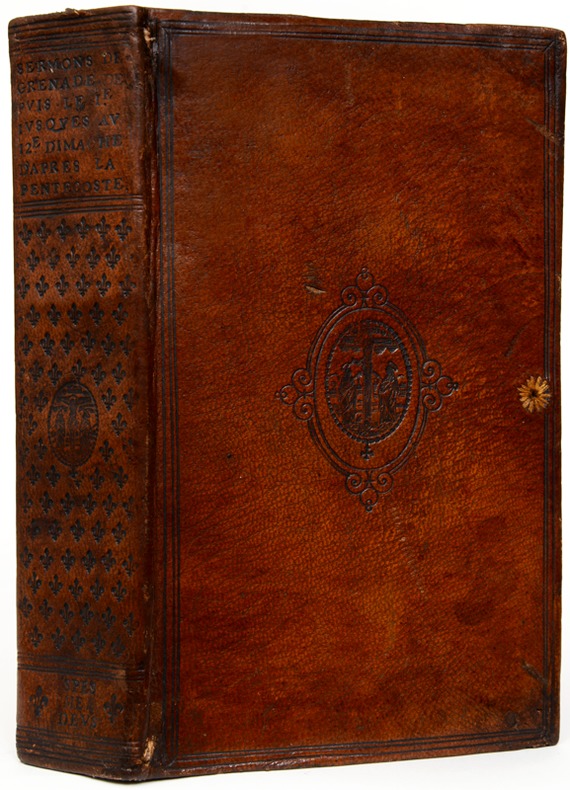
158539802Paris, Guillaume Chaudiere, 1585. In-8 réglé (11 x 18 cm) de (8)-399-(13) ff. (sign. a8 A-Z8 Aa-Zz8 AAa-EEe8 FFf4), maroquin souple brun, dos lisse semé de fleurs de lys orné d’un médaillon ovale figurant la Crucifixion, titre et devise royale « Spes mea Deus » en pied de dos, médaillon de la Crucifixion répété sur les plats, triple filet à froid d’encadrement, oeillet de fil ocre, tranches dorées (reliure de l'époque).
4to (142 x 196 mm). 51, (1) ff. Modern half calf using 18th century gilt calf spine and modern marbled boards. Rare second edition of Agostino Ricci's "De motu octavae sphaerae", edited by the French mathematician Oronce Finé, originally published in 1513 by Giolito in Trino. Discussing both spherical geometry and kabbalistic theories, the treatise denies the existence of a ninth heavenly sphere by refusing a presumed oscillation of equinoctials and the connected variation in the ecliptic. Ricci (Ricius) was a disciple of Abraham Zacuto, a Spanish Jew who moved to Portugal after the 1492 expulsion of Jewish people from Spain, and whose perpetual almanac was used for all navigational tables (including Vasco da Gama's ones) from its publication in 1496 until Nunez's tables of 1537. - This edition is an important work also for the history of typography. Colineus was one of the pioneers who introduced Italian Renaissance typography to France. This movement, which established many of the still-present typographical idioms, would culminate in the 1530s with books featuring the Roman types developed by Claude Garamond and other masters. - Issued without the "Epistola" mentioned on the title-page (as explained in the colophon). Annotated throughout in a rather rough contemporary hand with numerous underlinings and manicules. An excellent copy. BM-STC French 376. Adams R 519. Steinschneider 2143ff. Houzeau/Lancaster 2355. Lalande p. 42. NUC pre-1956, NR 0236124. Renouard (Colines), p. 22. BN 151, col. 716. OCLC 31083036.
4to (220 x 150 mm). (4), 95, (13) pp. Half vellum (ca. 1892). First complete edition, in the original Latin, of one of the most famous and longest of De Thou's poems, a didactic verse in about 2780 hexameters devoted to hunting with falcons and other birds of prey, composed in three "libri" and addressed to François, Duke of Alençon, Anjou and Brabant (1555-84), the youngest son of the late King Henri II and Catherine de' Medici, and brother of the reigning King Henri III. It is the first major Latin work on the subject of falconry. Book 1 discusses the various kinds of birds of prey used in falconry and how to choose one, book 2 discusses their care and feeding, training and the practice of hunting with them, and book 3 discusses their medical care. De Thou anonymously published an advance version of books 1 and 2 at Bordeaux in 1582, but his own correspondence indicates that he had only a few copies of that edition printed, primarily to send them to colleagues (including Pierre Pithou, Claude Dupuy and Joseph Scaliger) for their corrections and suggestions. Harvard University has the only known copy of that edition, and De Thou decided not to complete it but instead to make extensive revisions and add the third book for the present edition, beautifully printed by the King’s Printer in Paris. The poem ends on p. 95, with the next page containing an “important” (Harting) note about the various kinds of birds of prey used for falconry and giving their French and Latin names. The last six leaves contain Thou’s 11-page letter to Philippe Huralt (1528-99), French chancellor under King Henri III, on the subject of falconry, and on the last page the corrigenda. Falconry was so popular in France from the reign of François I to that of Louis XIII that it can be considered the national pastime of the French nobility, as well as the prominent clergy, military figures and politicians in that period, 1515-1643. - With a modern armorial bookplate of the Verne d’Orcet family, whose great library on the subject of hunting was begun ca. 1900. Formerly side-stitched through 4 holes, B1 and B4 no longer conjugate but still securely attached, a faint marginal stain in the lower outside corner of the last few leaves and the foot of the title-page slightly thumbed, but still in very good condition and with large margins. The outer free endleaf at front and back slightly browned, but the binding also very good. Adams T 657. Harting 306. Souhart 461. De Smet (ed.), La fauconnerie à la Renaissance: le Hieracosophion, passim (a critical edition and French translation with extensive commentary). De Smet, Thuanus: the making of Jacques-Auguste de Thou, pp. 51-66. French vernacular books 88799. Kinser, Works of Jacques Auguste de Thou (1966), 7 (pp. 205-207). Sotheby’s (Marcel Jeanson coll.) 28 Feb. to 1 March 1987, lot 560. Thiébaud 897. USTC 171837. Cf. Schwerdt, p. 261 (1582 & 1587 eds.).
153815643Bâle, Thomas Platter, 1538. In-8 grec (170 x 100 cm) de (8)-382-(2) ff., maroquin noir estampé, dos à trois nerfs (reliure de l'époque).
19974061FBGütersloh, Wertkontor/Belser Verlag, 1997/2020. Faksimile: 2°. 49 x 38 cm. Kommentar: 4°. 31 x 22 cm. 516 Blatt; 90 Seiten. Blindgeprägter Original-Lederband mit insgesamt 4 Eckbeschlägen und einer verzierten Schließe aus Sterlingsilber eingeschlagen in Veloursdecke mit Schleifenverschluss und Original-Leinenband mit goldgeprägtem Deckeltitel. [12 Warenabbildungen]
12mo. (58) ff. Gothic type. With lombards and rubrication throughout. With 36 woodcuts, of which 30 in original hand colour, 3 recurring woodcuts full-page sized (twice in colour). Modern full calf with giltstamped and blindstamped spine. Rare Latin edition of the illustrated devotional prepared by the Dominican friar Bertholdus around 1350. Intended for day-to-day worship, this popular prayer book is divided into 24 parts, each prayer corresponding to an hour of the day, and each concerned with an event in the Life of Christ, commencing with the Annunciation and concluding with the Last Judgement. - The work was first published in German under the title "Zeitglöcklein des Lebens und Leidens Christi"; the first Latin edition appeared in 1488. The present edition is not dated, but VD 16 considers it to be published ca. 1503, Grebe dates it ca. 1507. - 16th century notes in Latin to title-page and last page. - Top margin of fol. e8 reinforced. Last page narrowly cut with slight loss to the handwritten notes. An attractively coloured copy. HC 8930. Goff B-509. GW IV, Sp. 57a. Schramm VIII, 27. Proctor 1482. BMC I, 303. VD 16, B 2190. Grebe (Landen) 29. ISTC ib00509000.
Folio. 5 vols. (22) ff. (last blank), 24 ff., 1226, (2) pp. (6), (11) ff., 1 blank f., 870, (2) pp. (4), 18 ff., 986, (2) pp. (6), 15 ff., 1 blank f., 927, (1) pp. (2), 14 ff., 791, (1) pp. Title-page printed in red and black throughout. Two different printer's devices to title-page and final leaf of each volume. Contemporary blindstamped pigskin over wooden boards; 2 clasps each. Nicolini's rare five-volume collection of Synods, surpassing all previous collections (cf. LThK). - All volumes but the first bear a ms. dedication on the front flyleaf: "Dises Buech ist dem Herrn Spitelmaister unnd seinem Convent zu Memmingen von Herr Jacob Fugger dem Eltern verehrt worden Imm December Ao. 1588"; all volumes are marked on their spines as "Donum generosi dni. Baronus Jacobi Fuggeri" (the original flyleaf of vol. 1 is probably lost). Jacob Fugger (1542-98; after 1560: Herr von Babenhausen, Wellenburg und Boos) was the son of the banker Anton Fugger (nephew and successor of Jacob Fugger "the Wealthy"). He was known as "the Elder" to distinguish him from his like-named nephew (1567-1626) who in 1588 was still a student in Rome and later became Bishop of Constance. - Slight worming throughout, more pronounced in vol. 2 (especially near beginning and end; some loss to text). The splendid, exceptionally well-preserved pigskin bindings (slightly rubbed, back cover of vol. 2 showing minute chafing, otherwise perfect) are probably the work of the Augsburg master Jakob Bitmer (cf. Haebler). Adams C 2773. Edit 16, CNCE 13060. LThK VI, 185. OCLC 6967756. Not in BM-STC Italian. Binding's plate stamps: Haebler I, 55f.: I.B. VI, plates I & II.
(6) Bll., 39 Zeilen. Mit großem Titelholzschnitt. Moderner Halbpergamentband über Marmordeckeln. 4to. Bislang nicht nachgewiesene Inkunabelausgabe der klassischen katholischen Beichtanweisung. Der bemerkenswerte Titelholzschnitt zeigt eine Beichtszene, hinter dem Beichtstuhl ein Teufel, der seinen (im Spruchband gedruckten) Spruch "Cras, cras" ("morgen, morgen") einflüstert. - Diese Schrift, erstmals um 1471 erschienen, erlebte allein in der Inkunabelzeit über 100 bekannte Ausgaben; die vorliegende ist über den Gesamtkatalog der Wiegendrucke nicht ermittelbar. - Der aus Lissabon stammende Dominikaner-, dann Augustiner- und schließlich Benediktinermönch Escobar (um 1367-1430) promovierte 1393 in Wien zum Doktor der Theologie und war später Bischof von Ciudad Rodrigo (1408), Ajaccio (1422) und Titular-Erzbischof von Megara (1428). Der päpstliche "poenitentiarius minor" war einer der am häufigsten gedruckten Autoren des späten 15. Jahrhunderts. - Etwas fleckig und mit kl. Quetschfalten.
4to (152 x 208 mm). 3 volumes. (6), 236 ff. (6), 203 ff. (8), 284 ff. With woodcut printer's device to title-pages. Early 19th century full vellum with giltstamped spines and double labels. All edges gilt and goffered with a floral design. Rare collection of correspondence by significant personalities and rulers, including Andrea Doria, Annibale Caro, Baldassare Castiglione, Bernardo and Pietro Bibiena, Cardinal Bessarion, Lorenzo and Cosimo de' Medici, Pietro Gonzaga, Hieronimo Fracastoro, Giovanni Bembo, Francesco Guiccardini, Emperor Charles V, Pope Clement VII (Giulio de' Medici), etc. Important both as historical and linguistic documents; the definitive edition. - Ruscelli was a prolific and versatile Italian scholar who published on topics ranging from cartography to alchemy. A native of Viterbo, he eventually settled in Venice, where the first edition of "Delle Lettere Di Principi" was published in 1562 in a single volume. The collection demonstrates the rich social context of 16th century Venice, as Ruscelli himself is a classic example of the multidisciplinary Renaissance man. - Light foxing throughout and occasional light soiling or waterstaining. A prettily bound set with 19th century collection stamp to title-pages of vols. 1 and 3. Edit 16, CNCE 16617. Adams L 564. BM-STC Italian 376. Melzi II, 115f. Gamba 1470 ("a very valuable collection").
8vo. (16), 168 (misnumbered: 167) pp. Title-page printed in red and black. With a woodcut in the text. Contemporary limp vellum with ties. All edges red. Very rare first German edition of this collection of alchemical works. The preface ("Typographus lectori") by the Basel printer Peter Perna, who printed the first Latin edition of the "Auriferae artis" in 1572, mentions Geber (Jabir ibn Hayyan), Avicenna (Ibn Sina), Rhases (al-Razi), Arnaldus de Villanova, and Raymond Lull. - The present edition is of special importance for containing the first German printing of Bacon's "Lapidis philosophorum" (pp. 109-168; not present in the Latin edition). Bacon believed that certain alchemical metals, produced under the influence of the stars and planets, were capable of prolonging human life. The book describes the various steps of alchemical art necessary for producing the Philosopher's Stone and for completing the Opus Magnum. The volume also contains the "Satzungen der Goldkunst" ("Propositions of the Art of Gold") and "Turba philosophorum" ("Philosophy of the Art of Gold"). - Binding a little rubbed and rather stained; upper cover warped; light edge damage. Interior somewhat browned and stained throughout with occasional dampstaining in the margins; corners a little buckled. Title-page a little dust-stained and trimmed closely at the upper edge. Wants front free endpaper; corners torn from lower free endpaper. VD 16, A 4356. Kopp II, 344. Brüning 693. Cf. Ferguson I, 405 (1608 reprint). Not in Adams or BM-STC German.