7 770 résultats
98 SS., letztes weißes Blatt. Mit figürlicher Holzschnitt-Initiale. Marmorbroschur. 4to. Erste und einzige Ausgabe des Hauptwerks: Porzio behandelt die Seele und den Intellekt des Menschen und macht sich dabei die materialistischen Ansichten seines Lehrers Pietro Pompanazzi zu eigen, indem er die Sterblichkeit der individuellen Seele vertritt (vgl. Ziegenfuß II, 304). Im 23. Kapitel setzt sich Porzio mit den Argumenten Averroes' in Bezug auf das dritte Buch von Aristoteles' Abhandlung "De Anima" auseinander. Aufgrund seiner mangelnden Orthodoxie hinsichtlich der Frage der Unsterblichkeit wurde der Verfasser heftig angegriffen. - Porzio (1497-1554) lehrte Philosophie und Medizin in Pisa, später in Neapel (vgl. Poggendorff II, 506). "His philosophic theory was identical with that of Pomponazzi, whose 'De immortalitate animi' he defended and amplified in a treatise 'De mente humana'. There is told of him a story which illustrates the temper of the early humanistic revival in Italy. When he was beginning his first lecture at Pisa he opened the meteorological treatises of Aristotle. The audience, composed of students and townspeople, interrupted him with the cry 'Quid de anima' ('We would hear about the soul'), and Porzio was constrained to change the subject of his lecture. He professed the most open materialism, denied immortality in all forms and taught that the soul of man is homogeneous with the soul of animals and plants, material in origin and incapable of separate existence" (Enylopaedia Britannica, 11th ed., s.v.). - Schöner Druck, durchgehend leicht braunfleckig. Aus der Bibliothek des Medizinhistorikers Walter Pagel (1898-1983). Edit 16, CNCE 34588. BM-STC Italian 537. Adams P 1962. Durling 3745.
Folio (208 x 290 mm). (17), 154 ff. With engr. title page and 42 full-page engravings in the text. Contemp. vellum in later slipcase. First Italian edition, second printing with the year on the title page changed from 1559 to 1560. Valverde's famous anatomy boasts beautiful engravings, mainly based on Vesalius, but with many improvements. "Setting of type unchanged, but many of the plates have been re-engraved (and reversed)" (Cushing). - Binding rubbed and wormed. Several carefully restored tears to t. p.; several leaves professionally restored (plate on leaf 96 covered with paper slip), some brownstaining. Cushing, Vesalius VI.D.-36. Durling 4532. Haller I, 215. Hirsch/Hübotter I, 123. Mortimer 513. Waller 9800.
4042FBLuzern, Quaternio Verlag, 2016. Bände: 29,5 x 20,5 cm. Schuber: 234 Blatt; 351 Seiten. Original-Samteinband mit vergoldeten Medaillons, Zierecken und 2 Schließen und Rundum-Goldschnitt sowie Original-Samteinband mit goldgeprägten Titeln auf blauen Rückenschildchen in geschlossenem Original-Acrylglasschuber. [10 Warenabbildungen]
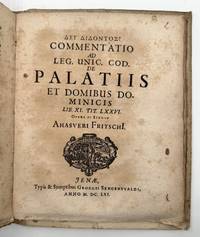
1661372198Cologne: Kinchium 1661. Mallinckrot: Engraved additional title dated 1639. 20 125 11pp. Kortholt: 8 56pp. Fritsch: 6 74 2pp. 4to. Early drab paper boards alla rustica binding on three cords manuscript title on spine text uncut. Foxing and heavily toned. Provenance: Princes of Liechtenstein armorial bookplate. Mallinckrot: Engraved additional title dated 1639. 20 125 11pp. Kortholt: 8 56pp. Fritsch: 6 74 2pp. 4to. Mallinckrot's monograph published on the occasion of the celebration of the second centenary of Gutenberg's invention is the first thorough investigation of the early testimonies to the discovery of printing with the author in favor of Mainz against Haarlem. The work contains the first use of the word "incunabula" in connection with printing. The additional title engraved by Loeffler includes portraits of Gutenberg Faust and Shakespeare and a scene in a printing shop. <br /> <br /> The second work here bound following Mallinckrot is Protestant theologian Kortholt's study on the origins of mathematics and astronomy asserting the Greeks were taught by Chaldeans and Egyptians. Bigmore & Wyman 2:16 Kinchium unknown
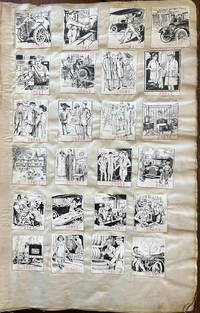
192061659New York: American Publishing & Engraving Co. J.J. Schultz & Co. 184 William St. Bookbinder ca. 1920-1939. Thick folio. 13 x 19 x 3.5 in. 135 leaves numbered reverse in pencil on versos of last half. on linen with 4274 camera-ready clipart samples all w/ inventory numbers rubber stamped below the image sized approx. 2 x 2 in. throughout arranged in montages of 24 28 32 & 40 per page each carefully mounted some crossed out w/ annotation “Killed†and others worn through at the lower right corner of some leaves while just a few have been removed and in once case clipped from the upper fore-edge of the leaf. Contemporary light gray/beige buckram soiled dampstained wear at fore-edges partially shaken rebacked still a VG- exemplar. An extraordinary printing & engraving firm’s factory sample catalogue for over 4000 of their camera-ready clipart advertisements for subscribing businesses following World War II through the Great Depression and the New Deal programs of President Roosevelt. This superlative archive of images traces Art Deco styles spanning nearly two decades advertising campaigns printing styles fonts and with almost not repeated images offered by American Publishing & Engraving Co. AP&E Co. to their extensive client list. In addition these engravings capture the revolutionary changes in American industry and commerce with nearly 50% devoted to the automobile industry including automobile manufacturers and dealerships accessory suppliers automobile repair public safety from bad driving the fast-growing electric motors and battery industries and more. Ford the Dodge Brothers Buick Studebaker Cadillac Plymouth Auburn Chrysler Essex Auburn-Cord DeSoto Hudson Terraplane and many others all are featured here advertising their service departments features speed and more. A significant portion also reveal the very real needs to wash the cars clean engines repaint the lacquer update the automobile tops replace batteries repair radiators and the always pressing need to maintain safety equipment and tires. Interspersed as well are automobile movers commercial body builders for trucks and commercial delivery vehicles with a significant percentage showing cylinder grinding engine rebuilding boiler repair and other very necessary secondary market needs as metal alloys and tolerances were far less durable with breakdowns an ever pressing problem for the motorist. Public safety notices reflecting the impact of the Progressive Era illustrate the dangers of the automobile with many indicating streetcars potentially hitting stalled cars which had not been repaired properly gridlock automobile accidents from ignoring traffic signals and police traffic officers as well as speeders hitting pedestrians or ignoring motorcycle police traps. Early in the sample illustrations are many reflecting the interest in building large Tudor Revival or Arts & Crafts homes installing electric lighting new furniture stylish clothes & shoes beautiful Oriental carpets and jewelry and watches for young flapper-era women. There are also promotional ads for Art & Stained Leaded Glass windows for homes interior decorators a panoply of beauty products many reflecting the Flapper Era hair and dress styles as well as evolution of the Art Deco lettering. As the AP&E Co. continued to add their sample engravings through the Great Depression not only is there a greater emphasis on repairing automobiles shoes recovering furniture and even repairing mattresses reflecting the belt tightening of the 1930’s but there are also increasing influences of more streamlined automobiles introduction of appliances such as refrigerators appearance of beer ads following the repeal of Prohibition and the fast growing radio industry. American Publishing & Engraving Co. based out of New York was one of a myriad of job printer engraving firms who emerged at the end of the 19th Century and initially specialized in publishing local histories and genealogies for historical societies by subscription typically with illustrations. Although this cataloguer could find no specific trade reference either in contemporary magazines or newspapers they appear to have operated out of the same locations as the Atlantic Publishing & Engraving Co. with some overlap and by the beginning of the 20th Century had largely dispensed with publishing local histories engraved portraits or vanity press projects. Contemporary court cases and other references indicate that they operated a subscription service for businesses advertising art to be run in magazines newspapers pulps or added to trade literature for matchbook covers business flyers etc. and by 1916-1925 were managed by Thomas W. Smith. No similar factory sample collection or published collection located in Worldcat. American Publishing & Engraving Co., J.J. Schultz & Co., 184 William St., Bookbinder, hardcover
202011157Tacoma WA 2020. Limited Edition. Hardcover. Fine in Fine Archival Box. Limited Edition. Hardcover. Quiet sophisticated and remarkably powerful Gabby's newest work is an exquisite blend of book art and binding. Gabby has from early in her career gone beyond her roots in design binding creating the text art and printing for several books now. Just as her design bindings push limits and explore possibilities so does her art and print work. It is a remarkable evolution.<br /> "Ralph Emerson wrote this poem "Blight" in July of 1843. He spoke out on climate change and the ways we could shift course by not blindly following others. In describing his travels to Europe while writing on life and nature Emerson said "same faces under new caps and jackets another turn of the old kaleidoscope."<br /> I took some liberties with Emerson's poem surrounding his words with photographs captured at Owen Beach in Washington state on a rainy winter day in 2019. This public beach in the middle of an urban old-growth forest will close for a year beginning in fall of 2020 to mitigate the effects of climate change and rising sea levels. Emerson's words of anger and disappointment at environmental destruction only resonate more with our current climate of melting glaciers and raging fires. As we continue to twist the kaleidoscope I remain optimistic we will find a way to rearrange these fragments and improve the view for future generations." artist statement<br /> <br /> This copy a 'making copy' adds tests of inks gouache type and design on a lot of the pages on the main book. The clamshell box includes a drawer of three separate folios of ink photo transfer and gouache. Inset into the drawer are two test covers as well more like miniature bindings of the big book. One is just the case and one has a separate small binding to test the structure. Housed in a custom box. Tight bright and unmarred. Brown textured paper boards by Hook Pottery Paper in a modified case binding letterpress printed with handset type on inkjet photo transfers silkscreen printed panels and acrylic painted Kozuke paper printing completed at Springtide Press with assistance from Jessica Spring; housed in an archival dropspine box. 4to. np. Illus. color plates. Numbered limited edition of 28 this being AP1. Signed by the artist. hardcover
153542543Lyon, Denys de Harsy, 1535-1536. In-4 gothique de CXXV-(11) ff. (sign. A-R8), 4 feuillets liminaires manuscrits, maroquin brun janséniste, dos à nerfs, frise dorée intérieure, tranches dorées sur marbrure (Chambolle-Duru).
151741471Paris, Jehan Petit, (1517 ca). In-16 gothique (87 x 119 mm) de (259) ff. (sign. A-Z , a-i , k ), veau fauve glacé, dos orné à nerfs, pièces de titre en maroquin fauve et vert, triple filet doré d'encadrement sur les plats, filet et frise dorées intérieures, tranches dorées (Petit succr de Simier).
4to. 2 pts. in 1 vol. (8), 368, (18) pp., final blank. (8), 305 (but: 307), (13) pp. Both title pages printed in red and black. With 2 different woodcut title vignettes and numerous text woodcuts. Contemp. blindstamped pigskin over wooden boards with bevelled edges. Remains of clasps. All edges red. Principal alchemical work of the Swiss physician, botanist and zoologist Gessner: the first complete German edition of the "Thesaurus de remediis secretis", translated by the Zürich theologian Johann Rudolf Landenberger and the physician Johann Jakob Nüscheler. The first part had appeared in German in 1555; only in 1569 did Caspar Wolf edit the posthumous Latin first edition of the second part, based on Gessner's notes. "This collection of recipes for medicines, the distillation of essential oils, and winemaking was first published under the pseudonym Euonymus Philiatrus because Gesner considered it not quite up to his own exact standards. It became his most popular book" (Wellisch). The woodcuts picture various destillation apparatus. - Binding rather rubbed; interior somewhat fingerstained; paper defects to the final three leaves of the index professionally restored (including portions of lost text). As always, the year of printing on the title page, stated as "1582" in Roman numerals, has been corrected to "1583" in slightly different ink. Contemp. ownership of the surgeon Christoff Zirckendorffer in red and brown ink ("A[nn]o 16[0]1 Jar") on the flyleaf. VD 16, G 1809, ZV 25033. Graesse III, 69. Wellisch A 32.18 & B2.14. Wellcome I, 2789. Ferguson I, 315 (note). Vischer (Zürcher Druckschriften des 15. u. 16. Jhs.) K 96. Cf. Durling 2084. Schoene 13415ff.
1796ST12327Paris: P. Didot l'aîné 1796. ONE OF 100 COPIES. 330 x 235 mm. 13 x 9 1/4". 2 p.l. 165 1 pp. <br/> Original gray boards flat spine dark gray paper title label two-thirds of the leaves UNOPENED. Engraved printer's device on title page and SEVEN FINE COLOR-PRINTED ENGRAVINGS AFTER PEYRON BY CHAPUY AND LAVALLÉE SOME FINISHED BY HAND. Cohen-de Ricci 730; Brunet III 1860. ◆A couple of very small brown spots and just a hint of soiling as well as minor abrasions to covers corners somewhat mashed as expected isolated trivial foxing to text but A VERY FINE COPY clean and bright internally with vividly colored plates and in a surprisingly sturdy and generally well-preserved original temporary publisher's binding.<br/> <br/> This is the fine Levy copy of a strictly limited Large Paper edition of a handsomely illustrated work offered here in what seem to be the publisher's temporary boards mostly unopened and virtually untouched internally. Attractively printed with enormous margins the text of the first and by far the most important work here is a prose poem on love supposedly translated from the Greek by one of the great political philosophers of the Enlightenment Charles de Secondat Baron de Montesquieu 1689-1755. In its own day the work was popular largely because of its racy content; today it is considered as a more serious accomplishment by modern scholars who are inclined to see it as a philosophical fable. The colophon informs us that this limited edition was printed with a new type cut and cast by Firmin Didot "with such perfection that up to this moment none other can equal it." The dramatic and animated plates are strikingly different from the Eisen engravings in other editions of this work and are more modern in sensibility than the usual 18th century French engravings. The colophon notes that the plates were broken after the 100 copies of this edition were printed. Our copy was in the outstanding library of American bibliophile Jacques Levy 1905-80 a man of wide-ranging interests who assembled an eclectic collection over 40 years always with a discriminating eye toward visually pleasing and historically important bindings and illustration. In his sale Sotheby's described our binding as being publisher's boards and although the volume seems almost too well preserved to be original we are persuaded by the collector's reputation that this is the correct characterization. P. Didot l'aîné unknown
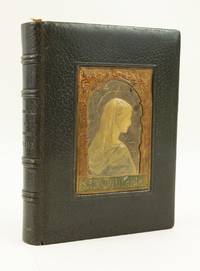
1909ST16339Paris: Bouasse-Lebel et Marrin ca. 1909. 188 x 140 mm. 7 3/8 x 5 1/2". 72 pp.; 1 leaf miniature; XXXII pp. <br/> Tasteful contemporary olive green crushed morocco each cover WITH A CENTRAL RECESSED PANEL OF MODELLED AND PAINTED LEATHER that on the upper cover with a portrait of the Virgin Mary within an arched frame of acanthus leaves that on the lower cover with the coat of arms of the Deburghgraeve family. With text and decorations lithographed featuring decorative borders and initials throughout those on 55 pages COLORED AND ILLUMINATED BY HAND many of these in a Medieval or Renaissance style others with Japanese or Greek motifs with a small hand-painted miniature of the Crucifixion against a golden sky and WITH A FULL-PAGE HAND-PAINTED MINIATURE showing the Flight into Egypt within a decorative border featuring vignettes of a peasant gathering wood and a knight in armor praying. With a hand-painted ribbon bookmark "Souvenir de ma 1ère Communion" dated 6 June 1909; carbon copy of a poem "A la Memoire de ma tres chere et regrettee cousine Mathilde Deburghgraeve-Canal" by Lucy Salze-Bouchet dated February 1945 this with short curving tear into one margin. Just the most trivial signs of wear but A VERY FINE COPY the vellum leaves quite clean and very bright with shining decorations and the binding lustrous and virtually unworn.<br/> <br/> Luxuriously lithographed on vellum handsomely bound and illuminated and painted by hand in vibrant colors this charming prayer book was obviously treasured by its owners--the first of whom may have been a young lady who received it on the occasion of her First Communion. The text and decorations here have been reproduced lithographically from a manuscript of the period being printed apparently by Bouasse-Lebel et Massin--a company specializing in devotional prints and books. The firm's name appears in very small letters at various places in the volume. Each leaf contains a different border design inspired by Medieval and Renaissance manuscripts as well as artwork from around the world in a pleasing pastiche of Western Egyptian Japanese Indian and Grecian motifs. Many of the borders have been hand-colored and present an array of distinct palettes usually richly hued which adds greatly to the book's appeal and the viewer's sense of discovery from page to page. The bespoke binding featuring the Madonna in profile beautifully modelled in leather adds another element of luxury to the book. The coat of arms suggests that it was made for a member of the Deburghgraeve family and the laid-in poem suggests that it remained with them through the death of the family's matriarch Mathilde Deburghgraeve-Canal in 1944. We know that Mathilde had three daughters all born around the turn of the century; based on the presence of a bookmark commemorating a First Communion in 1909 it is likely that the original recipient was among these three young ladies. Bouasse-Lebel was established in 1845 by Eulalie Bouasse-Lebel 1809-98 as a means of supporting herself and her children following the dissolution of her marriage. Though founded under difficult circumstances Bouasse-Lebel became a very successful enterprise and even earned a papal commendation in 1871 for consistently excellent work. The company was highly regarded for the quality and delicacy of their productions of which the present work is a choice example. Although individual religious cards printed by Bouasse-Lebel show up fairly frequently far scarcer are complete books in the estimable condition seen here--particularly those with the kind of deluxe upgrades that make this particular item so desirable. Bouasse-Lebel et Marrin unknown
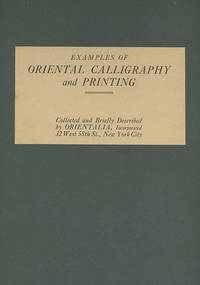
192428163New York: Orientalia Incorporated 1924 1924. First edition limitation not stated. OCLC records 17 copies in three separate records none outside the U.S. The leaves overall are very good condition with the expected occasional staining and wear to the edges most notably in the Arabic manuscript on vellum browning and worming to a few of the older leaves; the portfolio boards are slightly worn. Portfolio 37 x 27 cm printed paper label on the upper cover. 20 examples of printed and manuscript leaves 18 single and two double leaves from the 14th to the 19th centuries each with a small printed label identifying the leaf neatly affixed to the lower margin or verso. A wide-ranging and interesting collection of Asian manuscript and printed leaves issued as a leaf book; the only commentary is in the identification of the leaves. From the few copies that have come onto the marketplace in recent years it appears that the contents vary somewhat from copy to copy. The examples in this copy date are from both sacred and secular sources. The earliest is a leaf from a 14th century Arabic manuscript on vellum; the most recent is a leaf from a manuscript of the Saddharma Pundarika Sutra in Chinese copied by a Japanese priest in 1834. Other examples include a leaf from a Japanese manuscript on secret Buddhist rites written in Chinese by a priest at Kya-san and dated 1571; a leaf from a Persian manuscript containing the Poems of Nidhami dated 992 of the Muhammadan era - or about 1584; a leaf from a Persian manuscript Miraj Nama describing Muhammad's ascent to heaven dated H. 1046 or 1636 A.D.; a leaf from Indian religious manuscript containing extracts from the Puranas in Sanskrit 18th century; a double leaf in Chinese characters printed in Korea probably 18th century which contains Buddhist scriptures as interpreted by the Syen sect; and a printed leaf from a Chinese medical work of the 17th century. A complete list of the leaves is available. Orientalia Incorporated was a bookseller and publisher in New York that specialized in all things Asian during the first half of the 20th century. Among other notables they published the works of Yone Noguchi. The individual leaves were originally stored in 18 paper glassine envelopes; due to the browning of the envelopes the leaves have been removed and placed in mylar sleeves. <br/><br/> New York: Orientalia, Incorporated, [1924] hardcover books
4036FBLuzern, Quaternio Verlag, 2018. Kassette: 37 x 28 x 10 cm. Bände: 34 x 23,5 cm. 147 Blatt; 310 Seiten. Original-Lederband auf 5 Bünden mit goldgeprägtem Rückentitel und Rundum Goldschnitt und Original-Leinenband mit goldgeprägtem Rückentitel in Original-Leinenkassette mit goldgeprägtem Titel. [10 Warenabbildungen]
First and only edition, small folio (305 x 190 mm), [12], xix, [1], 705, [1]pp., woodcut title page vignette in Arabic, woodcut head- and tail-pieces, several leaves folding, a couple of minor repairs to inner margin of title, recent half calf to style, marbled boards, spine tooled in gilt, red morocco spine label lettered in gilt, a handsome copy with text clean and fresh. This volume 'forms a complete treatise in itself, since the it exhausts the Science of Arabic Inflexion'?Preface. All published, the intended second volume of Arabic "syntax" never made it to print.
4to. (36) pp. Modern marbled boards. Very rare treatise: a report from the dean and medical faculty to the magistrate of Vienna, stating that they had inspected the city's pharmacies by order of the government, since "astrology" had predicted a plague epidemic for this year. Their evaluation is followed by a discussion of the nature of the plague, its causes (including eclipses and comets), and methods to prevent and to cure the disease (cf. Denis). - Possible authors are Crato von Krafftheim (1519-85) and Franz Emrich (1496-1560). Crato had developed an "Electuarium salutis Cratonis" against the plague, a popular mixture of theriac, mithridate, terra sigillata, bolus armenus, bezoar, and other remedies. That the use of "Thyriackh" is discouraged (fol. E2v) reinforces the case for Emrich's authorship: after the university reforms of 1537 he was the standard bearer of the modern hippocratic-galenic school of medicine, which disapproved of the previously favoured Arabic authorities. Indeed, the chapter on food and drink begins with a praise of Galen. In 1554 he published, under his own name, a treatise on plague prevention entitled "Ratschlag zu Verhüetung pestilentzischer Ansuechung". - Some browning and fingerstaining; trimmed rather closely in some places. VD 16, ZV 28156. BNHCat W 177. Denis, p. 398, no. 416. Lesky 710. Not in Durling, Adams, or BM-STC German.
16mo (12.5 x 8 cm). [44], [4 blank], 499, [8], [5 blank] pp. With dozens of woodcut illustrations in text. Contemporary limp sheepskin parchment. Third edition in the original Latin, of the first part of Conrad Gesner's very popular book of secrets. It primarily concerns distillation and its use in making medicines, with most of the woodcuts illustrating furnaces, glassware and other equipment for distilling. It discusses the various kinds of distillation, the equipment and techniques, aqueous solutions, the making of medicines from a wide variety of plants, animals and minerals (including metal salts), extracting oils, etc. - "The work begins with a short historical introduction which says that the Greeks and Romans could not yet distil and claims that the art was invented by the Barbarians, Carthaginians and Arabs shortly after the famous Hellenistic physicians. He gives a few short notes on Arabian scientists like Mesue, Avicenna and Bulcasis, describing their methods of making rose-oil" (Forbes). - Conrad Gesner (1516-65), a Zurich scholar of remarkable breadth who wrote on bibliography, botany, zoology, medicine and pharmacology, published the first volume of his De remediis secretis in 1552 under the pseudonym Euonymus Philiatrus. It quickly went through many editions and was translated into French, German, Italian and English by 1559. A second part appeared posthumously, edited by Gesner's student Caspar Wolf (1532-1601) and Froschauer, who printed its first edition. - Binding soiled and a few stains and smudges throughout; a good copy. USTC 151668. Wellcome I, 2778. Not in Durling. Cf. Forbes, A short history of the art of distillation, pp. 120-126.
8vo. (8), 247, (1) ff. With woodcut printer's device on title-page, repeated on recto of final leaf. Contemporary limp vellum with traces of ties and remannts of a handwritten spine title. The twelve books on medicine by Alexander of Tralles, the first parasitologist in medical history (and the younger brother of Anthemius, architect of the Hagia Sophia), issued together with al-Razi's classic treatise on smallpox and measles ("Kitab fi al-Jadari wa al-Hasaba"): the first book ever published on smallpox, also known as "Peri loimikes" or "De pestilentia". - Indeed, Al-Razi was the first physician in the history of medicine to distinguish between smallpox and measles, and consider them as two different diseases. The influence of his diagnostic concepts on Muslim medicine was very clear, especially on Ibn Sina. This work gained great popularity in Europe and was also translated into French, English and German; Brockelmann states it saw some 40 Latin editions between 1498 and 1866. - Al-Razi (also known as Rhazes; 850-923 or 932) is considered the greatest mediaeval physician next to Avicenna; he also conducted alchemical experiments. According to his biographer al-Gildaki, he was blinded for refusing to share his secrets of chemistry. - Binding professionally repaired along the edges. Occasional browning and staining, some waterstaining near the end. 18th century ink ownership "A. Gonnella" to title-page. Rare; a single copy in auction records (Swann, 1 March 1979, Sale 1132: Distinguished Collection of Historic Medicine, lot 9). Edit 16, CNCE 1120. Wellcome I, 212. Durling 152. Cf. GAL S I, 419, no. 3. M. H. Fikri, Treasures from the Arab Scientific Legacy in Europe, No. 44 (Venice 1555 ed.). Not in Adams or BM-STC Italian.
8vo. (168) pp. With printer's woodcut device to title-page and final page. 18th century full calf with remains of a gilt spine label; florally gilt spine; all edges red. Marbled endpapers. Silk divider. Scarce work on medicine among the Arabs, referencing Avicenna and Rhazes among other authorities. "The thought of the Arabs was not derivative [...] The original nature of Arab contributions has had an impact on Europe [...] The book by Jacobus Allaxinus found an audience for its treatise [...] on medical topics in the viewpoint of both European and Arabic medicine" (Jordan, The Mentally Retarded, p. 75). - Occasional light brownstains to margins, otherwise a very good, prettily bound copy. Rare: a single copy in auction records of the last 40 years internationally. BM-STC French 11. Durling 172. Wellcome I, 222. Jöcher I, 280. OCLC 14325907. Not in Adams.
8vo. 186 ff. Contemporary boards. First publication of these four Turkish letters. Busbecq, a Fleming, was Emperor Ferdinand's ambassador at the Porte from 1555 to 1562. "The first collected edition of all four letters appeared at Paris in 1589. The first letter was printed at Antwerp in 1581, and the second in 1582" (Atabey). Busbecq's letters contain observations of Turkish life and analyses of the Ottoman state. - Insignificant browning; a few old underlinings. Title and endpapers have dated ownerships. Of the utmost rarity, no copy at auction internationally (only the second edition). Adams B 3331. Graesse I, 580. OCLC 457194296. Cf. Blackmer 249. Göllner II, 2026 (both the 1595 Frankfurt second edition).
8vo. (24), 207, (1) ff. With Giunta's woodcut device on title-page and repeated on the otherwise blank last leaf. Modern brown morocco. Second edition, the first printed by Giunta, of Galen's "On the composition of medicine according to locality", edited and translated into Latin by Johann Winter von Andernach (1505-74). Andernach's translation was first printed in the previous year in Paris by Simon Colines. "There is no name more illustrious in the whole history of medicine than that of Galen [...] Written in Greek, this Galenic treasure reached the Latin Western World only through Arabic translations" (Hagelin). - The recipes, mostly taken from earlier authorities such as Andromachus, Asclepiades, Pharmacion, Archigenes and others, are arranged from head to foot, starting with ailments of the hair, head, ears and nose, eyes, face and teeth, and mouth, and continuing down the body through the respiratory tract, stomach and liver, genitalia, kidney and bladder, and ending with sciatica and gout of the feet. - "During the 1530s the eminent printer, Luca Antonio Giunta (1517-37), decided to publish a comprehensive edition of Galen's works in Latin so that physicians would no longer have to rely on writings from Greek and Arabic sources. Montanus, who led the editorial effort, chose many noted authorities and scholars to aid in the massive undertaking" (Heirs of Hippocrates). Giunta's editions of Galen are considered the most import together with those of Aldus, and together with those Froben considered the most readable. - With the stamp of the Birmingham University library bindery on the end pastedown. Some underscoring and early manuscript annotations. Some wormholes through the title-page and smaller ones through a few following leaves, dampstains throughout and one leaf with a tear; a fair copy. Durling, A chronological census of renaissance editions and translations of Galen 1536.9. Durling 1862. USTC 831429. Wellcome I, 2564. Cf. DSB V, pp. 227-235; Garrison, History of medicine, pp. 116f.; Hagelin, Rare and important medical books, pp. 12-15; Heirs of Hippocrates 37.
177244477Paris, , 1772. In-8 sur un grand papier vergé (204 x 132 mm) de 2 ff.n.ch. (titre et frontispice), (1)-8-124 pp., figures et texte gravés, veau marbré, dos lisse orné, pièce de titre de maroquin rouge, triple filet doré d'encadrement sur les plats, filet doré aux coupes, roulette intérieure, tranches rouges (reliure de l'époque).
153714346Paris, Pierre Sergent, 1537. In-8 gothique (160 x 100 mm) de (160) ff. (sign. A-V8), maroquin Lavallère, dos orné à nerfs, sur les plats motif de rinceaux disposés en candélabres à l'antique dans un un encadrement de filets et frise dorés, tranches dorées, dentelle intérieure (reliure du XIXe siècle).
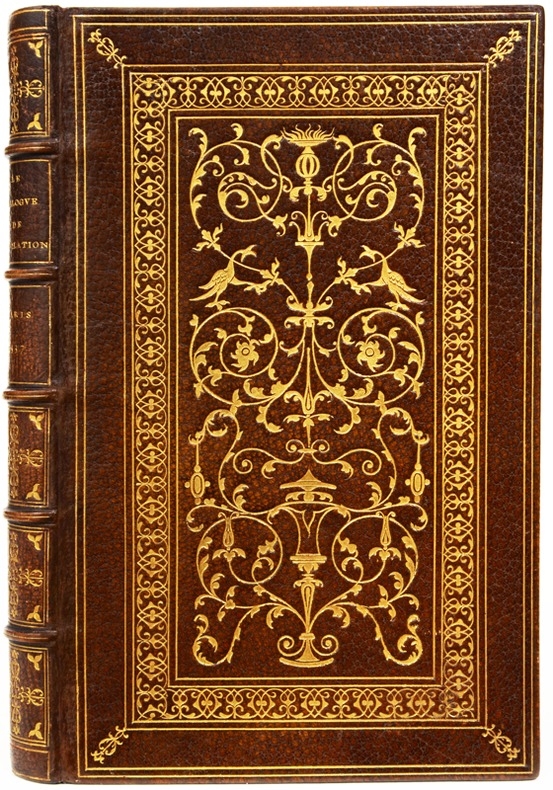
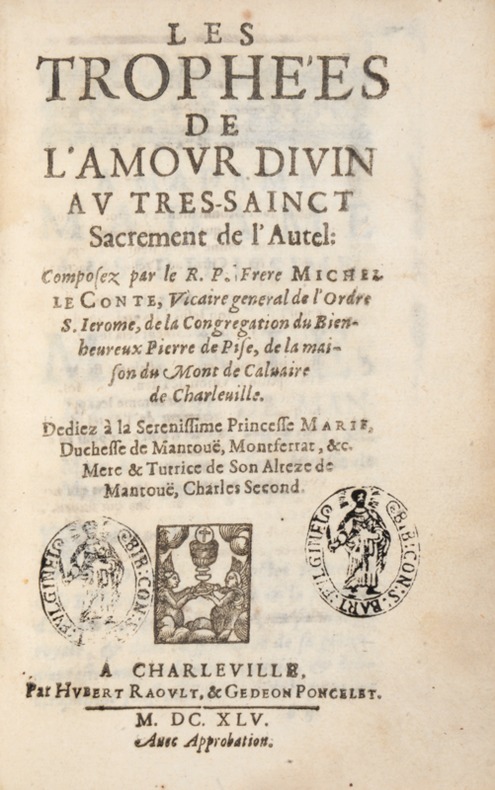
164540232Charleville, Hubert Raoult et Gédéon Poncelet, 1645. Petit in-8 (10,5 x 17 cm) de 15-(5) pp. 364 pp., maroquin fauve décoré à petits fers, dos orné de fleurons, sur les plats deux encadrements entre lesquels est dorée une frise, à l'intérieur de l'encadrement central est doré un chiffre C couronné dans un ovale entouré d'ornements, tranches dorées (reliure de l'époque).
4to. (8), "225" [= 215], (1 blank); "80" [= 72] pp. Including: Nicander of Colophon. Alexipharmaca. In Nicander Theriaca scholia auctoris incerti, et vetusta et utilia. In eiusdem Alexipharmaca diversorum auctorum scholia. 3 parts in 1 volume. Each part with its own title-page, with a woodcut caduceus device on all three. Set in roman and Greek types. 17th-century(?) richly gold-tooled red morocco, gilt edges; subtly rebacked, with the original backstrip laid down. Bilingual edition (Greek & Latin) of two medical hexametric poems by the Hellenistic poet and physician Nicander of Colophon (fl. second century BC), followed by a part with ancient scholia in Greek. The two poems are followed by comments by its translator, the Parisian pharmacist Jean de Gorris (1505-1577). They were first published separately in 1549 and 1556 and here for the first time published together. Nicander wrote at least 20 works, but "only his Theriaca (958 hexameters on poisonous creatures and on antidotes for their bites and stings) and Alexipharmaca (630 hexameters on antidotes to poisons) are extant". - "Nicander's influence on later Greek and Latin literature was considerable. Not only did Virgil, Ovid, and Antoninus Liberalis draw on his works, but Lucan, Pliny the Elder, Erotian, Aelian, and Athenaeus of Naucratis also benefited from direct or indirect familiarity with Nicander. In the 1st century BC the enormously learned scholar Didymus ("Chalcenterus") appears to have made extensive use of Nicander's lexicographic contributions. Although Dioscorides only twice cites Nicander's views in his Materia Medica, Galen in his pharmacological works quotes a number of verse passages from Nicander. Papyrus fragments from the 1st to 3rd centuries AD further confirm Nicander's popularity in the Roman empire" (Von Staden). - With the bookplate of the British politician John Thynne, Baron Carteret of Hawnes, dated 1841. Washed, with some faint early manuscript notes. Durling notes that, like in our copy, a general title-page is lacking in their copy, but this appears to be as usual. Internally in very good condition. Rebacked, lower hinge weakened, front hinge professionally repaired. Durling 3341. USTC 160585. Wellcome I, 4530. Cf. H. Von Staden, "Nicander" in N. Wilson, Encyclopedia of ancient Greece (2006).
151415290Venetiis, In aedibus Aldi et Andreae soceri, 1514. In-8 de (4) ff. dont 1 f.bl., 230 ff. (signatures *4, a-z, A-E8, F6) veau fauve, dos lisse orné, pièce de titre en maroquin rouge, tranches dorées, nom de l’auteur en lettres capitales ciselées sur la gouttière, non rogné (relié vers 1800).