3 889 résultats
196178570Les Editions de Minuit | Paris 1961 | 14 x 22.50 cm | broché
1st edition. Later boards. 8vo. 543 pages, 21 cm. In French. Title translates to From the Urban and Rural Economy of the Arabs and Jews. A monumental history of Arabian economy drawn from Greco-Roman sources. Reynier (1762-1824) was an notable Swiss-French scholar of ancient and modern economic history who accompanied Napoleon on his expedition to Egypt, where he served as High Superintendent of Revenues and Finances. SUBJECTS: Arabs. Jews -- Politics and government. Jews -- Social conditions. Jews -- Agriculture. OCLC lists 10 copies worldwide, but only 2 copies in North America (Penn and Harvard) (OCLC: 698357953) . A colleague offers a copy for sale for USD 2500. Ex-library with usual markings. Pages are ridged and wavy, but Very Good Condition. (YID-41-9-PE)
189069382Maison Quantin | Paris 1890 | 24.50 x 31.50 cm | relié
183161718Théophile Barrois et Benjamin Duprat | Paris 1831 | 13 x 21 cm | relié
Very Good Turkish, Ottoman (1500-1928) In contemporary cloth bdg. Roy. 8vo. (24 x 17 cm). In Ottoman script. 43, 59 p. Divan literature is described as "a certain tradition literature with its rules and boundaries" in the most general form. These rules and boundaries have enabled the formation of common expressions in religion and in Sufi intellection in particular and in poetry by the influence of Persian literature, and they have made it traditional in time. In this context, in classical Turkish poetry, whose male poets are predominant in quality and quantity, patriarchal rhetoric presents an outlook that its frame has been established by common tropes, metaphors, poetic themes and in short by similar imaginations and ideas. The divans of Lady Mihri (died after 1512), Lady Leyla (died in 1848) and Lady Seref (1809-1861) have different aesthetic understandings in that context. Laylâ Hanim was one of the few Turkish women poets who made a collection of her poems. Lived in Istanbul and died in 1848. Her family was close to the Ottoman Sultanate and Leylâ Hanim, witnessed the reign of Mahmud II (1808-1839) and Abdülmecid I (1839-1861). She is the daughter of Moralizâde Hâmid Efendi. Her mother Hadîce Hanim is the sister of Keçecizâde Izzet Molla, a notable bureucrat and poet of the times. She has three brothers, Atâullah Mehmed Efendi, Nurullah Mehmed Efendi and Hâlid Efendi, who died at a young age. She had financial problems after her father's death and she expressed those in her poems. Some of her poems in the divan mention that her father and brother Hâlid Efendi have lived in Bursa for a while. She is educated by Keçecizâde Izzet Molla, she is quick-witted. She experienced a short marriage, which lasted about a week; after the divorce she devoted herself to poetry. Her grave is in Galata Mevlevîhanesi. Following books include information of her life, characteristics and poetry: Fatin Tezkiresi (363), Ahmet Rif'at's Lugat-i Târîhiyye ve Cogrâfiyye (154), Tuhfe-i Nâ'ilî (895), Sicill-i Osmânî (93), Bursali Mehmet Tahir's Osmanli Müellifleri (406), Haci Begzâde Ahmet Muhtar's Sâir Hanimlarimiz (51-2), Mehmed Zihnî Efendi's Mesâhir'ün-Nisâ (195), and Semseddin Sâmî's Kâmusü'l-A'lâm (4060). These resources indicate that Leylâ Hanim is from a noble family and the links of the family to the high cadres of Ottoman bureaucracy and their intellectual property have left traces in her poetry. AH 1299 = AD 1882. Fourth Edition. (Source: All poetry). OCLC 163633996.; Özege 4177 / 2. First Bulaq Edition. Litho. Rare.
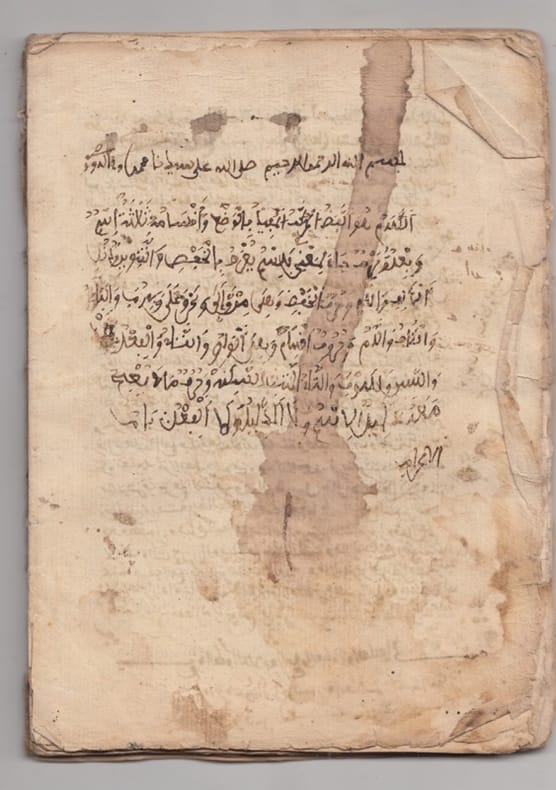
178073849Timbuktu Mali: N.p. ca. 1780. Timbuktu manuscript of northern Mali - handwritten pages written in Arabic - from the same previous collection which is dated of 21/03/1780 24 safar 1194 Hegira. but this one has no date because it is missing a few leaves but I justify that it is from the same collection of the same mosque and same Shaikh masterArabic manuscript in papers former is the 3rd of the same manuscript116 leaves and 36 pages consisting of 36 lines in black and red ink nasghe on strong brown paper written in three different black inks see photos notes in margins.Size: 30 x 26 cmBinding in leather by its former owner written in it: Au nom de Dieu le Miséricordieux Manuscrit de la mosquée de Tombouctou and herffan Mahdi and religious signsThe manuscript has some stains due to passage of time but clearly visible text see pictures purchased from heirs together with other manuscripts N.p. hardcover
- Librairie de Hachette, Paris 1868, Grd. in-8 (16,5x24,5cm), 693pp., relié. - Edition originale illustrée de 6 cartes (2 dépliantes et 4 sur double page) et 2 plans, ainsi que de 81 figures sur bois in-texte et hors-texte. Reliure en demi chagrin bordeaux d'époque. Dos à nerfs orné. Les plats ont été retendus d'un papier marbré ainsi que les gardes intérieures. Traces brunes sur les premiers feuillets, ensuite quelques brunissures sur certains feuillets. Bon exemplaire. Un des meilleurs livres illustrés sur l'Afrique de l'ouest. En 1863, le général Faidherbe, gouverneur du Soudan, missionna le lieutenant Mage pour une expédition d'exploration le long du Niger en Afrique de L'ouest, et au Sénégal. Ce voyage d'exploration, destinée également à installer des routes commerciales dura trois années. Mage pénétra dans des régions jamais encore explorées, et donna la première description de l'empire Toucouleur de Ségou. [ENGLISH DESCRIPTION ON DEMAND]
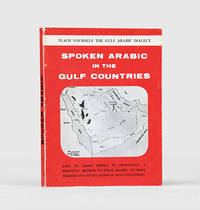
1971171721al-Khobar: The International Publications Industries 1971. Keep the following in mind and everything will be easy Fourth printing of this institutionally rare phrasebook which adopts "a short cut method simple and easy enough for a businessman to teach himself the spoken Arabic while relaxing in the Aircraft or in his Hotel room. Many of the oil industry people in Arabia owe their local friendship to this book". Arranged by topic the book has sections on greetings shopping food and drink and other practicalities such as taking one's car to a mechanic. The unnamed author places a premium on language as a key to understanding local culture: "you will find the Gulf Arabs intensely loyal to their friends as well as to their families. Most of them are blessed with a keen sense of humor. For these and other reasons such as their hospitality and courtesy you will enjoy getting acquainted with them". Further sections discuss the etiquette of being a guest at a traditional wedding and how to behave if invited to a private house as a guest. WorldCat lists only four copies in institutions Oxford National Library of Wales National Library of Israel Bilkent University. Small octavo 115 x 117 mm. Wire stitched in the original printed wrappers spine lettered in black. Minor wear to wrappers contents lightly toned not affecting text. A very good copy. unknown
Very Good Arabic Original pamphlet. Large roy. 8vo. (25 x 17,5 cm). Texts in completely Arabic. [4] pp., ills. An extremely rare propaganda and political proclamation in Arabian related to Jerusalem and Palestine question. It has a "call to arms" for the struggle. A unique brochure. Not in OCLC.; Not in IISG.
Very Good Arabic Original chromo-lithograph map in brown tones. On a special paper with an ongoing blindstamped "Regestre Robur" during the borders. Folded. 70x100 cm. In Arabic. Scale: 1 /1.000.000. Chipped on margins, split on folded traces. Slight discoloration and one stain on lower margin. Otherwise a good copy. An attractive and detailed map of Syria shows the capital (as Aleppo n that map), other cities like Damascus, Raqqa, Homs, Latakia, Ayn al-Arab, Idlib, Hama, Deir Ez-Zor, Jarabulus, et alli. And it shows Turkey on the north (as Turkey containing Hatay and Alexandrette), The Mediterranean shores of the land as well as Lebanon and Palestine (and Jerusalem) on the west, Sharq al-Urdun (Jordan) and Iraq on the south and east. It's very detailed on showing the roads spread throughout the land like railways and ancient roads from the Roman period. Additionally this roads can be followed to the other Arabic countries and regions on the map. This map was calligraphed by Kamel Al-Baba, (1905-1991), who was a Lebanese contemporary / modern calligrapher. He is the son of famous calligrapher Mokhtar Al-Baba. Cannot be found in WorldCat.; Not in Library of Congress Map Collection. Very scarce.
191590403Imprimerie de l'Institut français d'archéologie orientale | Le Caire 1915 | 16.5 x 25 cm | Broché
183089751Truchy | Paris 1830 | 13.7 x 21.7 cm | Broché
23023In8 broché,sans couvertures,texte bicolore; quelques mouillures, dans l'état
PHO-2150Sd, sl, se. In-8 (20 × 14,5 cm), demi-basane du XIXe siècle, dos lisse orné de pièces de titre et d’auteur rouges, frottements, mouillures marginales sur quelques feuillets, ancien travail de vers, un feuillet replié.
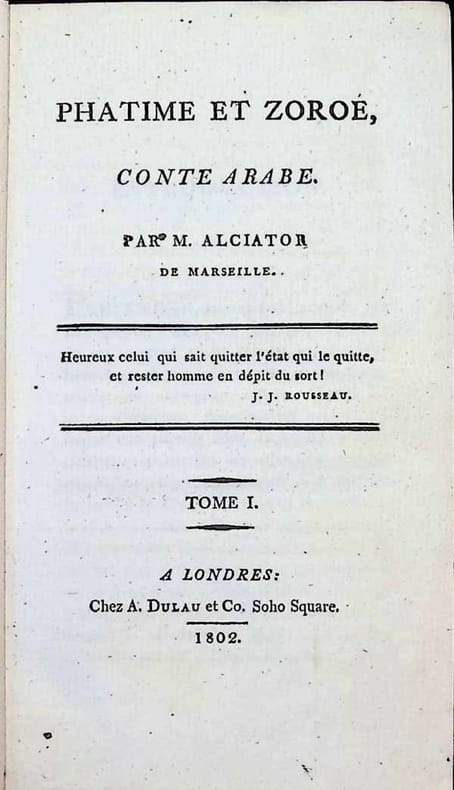
1802029633Londres 1802 Chez A. Dulau et Co Full-Leather (Hardcover) 1st Edition
19580044351958 Paris, 1958. Petit in-folio (256 X 335 mm) en feuilles, sous couverture rempliée imprimée en rouge, chemise et étui de l'éditeur ; (1) f. blanc, (2) ff. de faux-titre et titre imprimé en deux couleurs, 183 pages, (1) page, (2) ff. de table et justification du tirage, (1) f. blanc. Quelques rousseurs sur la couverture, sans gravité, petite tache brune en tête du dos de la chemise.
183388625Dondey-Dupré | Paris 1833 | 15.5 x 23.4 cm | Broché
183532923Firmin Didot | Paris 1835 | 14 x 21 cm | 2 volumes reliés
190374905Paris, Librairie Charpentier et Fasquelle. Eugène Fasquelle Editeur, 1903-1910, in-8, élégant demi-chagrin rouge, dos décoré à la colonnade, tête dorée, gardes peignées, Bel ensemble. Texte frais, sans rousseurs.
503 columns. Latin text, translation and editorial matter in English. ; Asfar, Deel 2; 503 pages
- Béthune & Arthus Bertrand 1840, 302pp., relié. - Edition originale, très rare, on la confond souvent avec la réédition chez le même éditeur de 1860, plus courante. Une grande carte dépliante du nord-ouest de l'Afrique avec les stations de pêche et les pêcheries projetées ; un plan. Reliure en demi chagrin noir grainé d'époque. Dos à caissons à froid et filets dorés. Une partie de la coiffe de tête arrachée. Légeres traces de frottements. Ensemble très frais imprimé sur beau papier avec quelques rares rousseurs. Découpe au coin droit du faux-titre et à de la page de titre, sans atteinte au texte. Bon exemplaire. Etude sur la pêche en Afrique occidentale, avec les migrations des poissons, les espèces, le type de pêche en Afrique, les sécheries, l'économie de la pêche. NB : Cet ouvrage est disponible à la librairie sur demande sous 48 heures. [ENGLISH DESCRIPTION ON DEMAND]
- Hachette et Cie, Paris 1892, Grd. in-8 (18,5x27cm), 513pp. et 416pp., 2 tomes en 2 volumes reliés. - Edition originale, illustrée, de nombreux croquis de détail et cent soixante-seize gravures sur bois d'après les dessins de Riou, dont 26 hors-texte, 5 cartes, sans la grande carte générale annoncée. Reliures en demi basane chocolat d'époque. Dos lisse ornés de filets. Titres dorés. Chiffre en queue DB. Plats de papier rouge et noir. Frottements en coiffes et bordures. Extrémités des coins dénudés de papier. Rousseurs sur les tranches et sur les premiers feuillets, assez rares sur l'ensemble, sur un papier demeuré frais. Dos du premier tome légèrement éclairci uniformément. Bon exemplaire. Mission d'exploration de l'Afrique équatoriale ordonnée par le général Faidherbe ; partant de Bamako en 1887, Bigner parcourut les états de Saory et de Tieba, puis la Volta et explora le pays Mossi pour la première fois. La narration de voyage est extrèmement complète et ne manque aucun domaine, botanique, géographique, moeurs, coutumes... A l'issue de ce voyage, la Côte d'Ivoire deviendra officiellement une colonie française en 1893 dont Binger sera nommé gouverneur. [ENGLISH DESCRIPTION ON DEMAND]
- Librairie Hachette, Paris 1895, In-4 (24x31,5cm), 436pp., relié. - Edition abondamment illustrée de 167 gravures sur bois dont 37 hors-texte et 3 cartes en dont une en couleurs. Reliure en demi maroquin noir à coins d'époque. Dos à nerfs orné de 5 fleurons caissonnés. Titre doré. Filets sur les plats. Tête dorée. Couvertures conservées. Exemplaire non rogné. Les 2 coins bas légèrement émoussés, les couvertures portent des rousseurs. Très bel exemplaire, d'une belle fraîcheur, dans une splendide reliure. Le docteur Louis Caltat fut chargé en 1888 d'une mission scientifique d'exploration à Madagascar par le ministère de l'instruction publique. Il parcourut 8000 km durant trois voyages. A son retour, il rédigea ce livre très riche de descriptions, tant sur les moeurs, la géographie, les peuplades, le commerce... Ce voyage avait primitivement paru dans la fameuse revue Le tour du monde sur plusieurs numéros. [ENGLISH DESCRIPTION ON DEMAND]
- Imprimerie Impériale, Paris 1809-1829, 70x51,5cm, une feuille. - Original, unshaved, full-page etching from the "Imperial edition" of the Description de l'Égypte, or 'Recueil des observations et recherches faites en Égypte pendant l'expédition française, publié par les ordres de Sa Majesté l'Empereur Napoléon le Grand [A Collection of the observations and research carried out in Egypt during the French expedition, published on the orders of his Majesty the Emperor Napoleon the Great]'. Produced between February 1802 and 1830 on the orders of Naopleon Bonaparte and published between 1809 and 1828, 1,000 copies were printed and distributed to institutions, on vergé paper with an 'Égypte ancienne et moderne' watermark, visible when held up to the light. Light marginal spotting not touching image, otherwise in very fresh, fine condition. An engraving from the Description de l'Egypte, one of the masterpieces of French printing and the birth of a new field: Egyptology. A gigantic survey of Egypt at the time of Bonaparte's conquests in 1798 and 1799, the work is divided into 13 volumes of engravings making up 892 plates, of which 72 colored, as well as presenting the splendors of the Egypt of the Pharaohs in 9 volumes. The other volumes discuss natural history and present a fascinating portrait of Coptic and Islamic Egypt as it was seen by Bonaparte's Eastern Armies. The 'Egyptian campaign', militarily a disaster, demonstrates, through the engravings of the Description d'Egypte, the scientific success it nonetheless became thanks to the 167 expert members of the Commission of the Sciences and Arts of the Institut d'Egypte [Egyptian Institute] who followed Napoleon's army. The Institut gathered together in Egypt the mathematician Monge, the chemist Berthollet, the naturalist Geoffroy Saint-Hilaire as well as numerous artists, engineers, architects and doctors. They were tasked with re-discovering modern and ancient Egypt and displaying its natural treasures as well as the know-how of its inhabitants. This edition, the so-called "Imperial" edition of the plates for the Description de l'Egypte was printed in four large formats, two of which were specially created for it and christened "Moyen-Egypte" and "Grand-Egypte". A special press was built to print it, the process extending over 20 years, from 1809 to 1829. The "Imperial" edition proved so popular that a second edition, this time in black and white and without the "Egypte ancienne et moderne" watermark - known as the "Royal Edition" - was published during the Restoration by the printing house of C.-L.-F. Panckoucke (Paris). The engravings of the Description d'Egypte owe a great deal to Baron Dominique-Vivant Denon, illustrator, diplomat, collector and later Director of the Musée Napoléon (the Louvre). His exploration of the South of Egypt gave Bonaparte the idea of sending the experts of the Institut there, thus creating a faithful and complete portrait of the area. This was the research gathered together from 1802 in the mammoth Description de L'Egypte. Denon embarked on this story of archeological exploration at the age of 51, reaching first Alexandria and then Cairo before exploring Upper Egypt. Along with the members of the Institut d'Egypte, the Natural History Museum's painter H.J. Redouté (brother of Pierre-Joseph Redouté, author of Roses), the mineralogist Dolomiue, and the draughtsman Joly, Denon then explored the Nile Delta and Lower Egypt. When, however, he joined the 21st Light Infantry Regiment as it marched across Upper Egypt in pursuit of the retreating Mameluks in November 1798, he found himself the only civilian. In the very midst of the battle itself, he reeled off sketches of the works of art that peppered his path right up to the threshold of the Sudan. He said that he had crossed "a country that is, apart from its name, entirely unknown to Europeans, and therefore everything was worth describing" (Voyages dans la Basse et la Haute Egypte pendant
- C. F. Winter'sche Verlagshandlung, Leipzig & Heidelberg 1873, 18,5x26,5cm, relié. - Edition originale. Nach dem von Dr. Kersten während der v. d. Decken'schen Ost-Afrikanischen Expedition im Jahre 1862 und von C. Cooke auf der Insel Sansibar im Jahre 1864 gesammelten Material bearbeitet von A. Gerstaecker. Mit 10 colorirten Kupfertafeln (und nicht 18 wie gesagt), eine von dem mit einem fehlenden Stück). Etabli par A. Gerstaecker d'après les observations recueillies par le Dr. O. Kersten durant l'expédition en Afrique de l'est en 1862 et par C. Cooke sur l'île de Zanzibar en 1864. Comprend 10 planches au lieu de 18, dont une en partie découpée. [ENGLISH DESCRIPTION ON DEMAND]