Meyer, Ernst - 1797 Altona - Rom 1861Antiquariat.de

54 336 résultats
125-Io.J. Aquarell, über Bleistift, auf cremefarbenem Velin, links unten datiert und signiert ?Juli (1824) Meyer?. 23,1:31 cm. ? Verso am Oberrand leichter Papierabrieb durch alte Montierung. Die Ponte della Paglia ist eine Brücke in Venedig im Sestiere San Marco. Sie überspannt den Rio de Palazzo o de la Canonica und verbindet den Molo San Marco mit der Riva degli Schiavoni. Ihren Namen verdankt sie den mit Stroh beladenen Booten, die hier festmachten und von deren Existenz man aus verschiedenen Gesetzen und Erlässen der Republik weiß. Beispiele von Zeichnungen, die am Beginn des Italienaufenthaltes entstanden, der von Juli 1824 bis Anfang 1849 dauerte, kommen im Handel äußerst selten vor.
183215317Zürich, Fuessli, 1824 (- 1832). 28 Bll. 24 Aquatinta-Tafeln. Fol. Pp. des 19. Jahrhunderts mit Rückenschild (bestoßen).
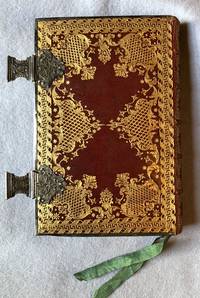
17562896Rome: Gioacchino & Giovanni Giuseppe Salvioni 1756. 8vo 208 x 133 mm. 24 407 1 pp. 2 parts the Office of the Dead separately titled. Printed in red and black. Engraved frontispiece and 12 full-page engravings by Arnold Van Weserhout and Jacob Frey after Joseph Passarus Giuseppe Passaro two engraved title vignettes 12 engraved tailpiece vignettes a few unsigned others by Frey after Passaro or by M. Schedi engraver 3 engraved capital initials numerous red-printed woodcut initials. Foxing occasionally severe short marginal tear to fol. Z7.Slightly later eighteenth-century Roman gold-tooled red goatskin covers with large dentelle border composed of a triple neo-classical roll-tooled outer frame enclosing six large ornaments each with a basketweave design of diagonally crossing gilt fillets framed in volutes and leafy sprigs a few tiny petal or star tools board edges protected with a probably later frame of silver or silver-plated metal discreetly nailed to the binding two elaborately chased silver fore-edge clasps and catches spine in six uniformly gold-tooled compartments gilt edges with gauffred border design pair of green ribbon page markers marbled endpapers; 20th-century black morocco felt-lined case. Provenance: with Gumuchian Catalogue XII/1930/225; Maurice Burrus bookplate purchased from Gumuchian in 1934 purchase notes at end. A striking rococo binding in fine condition on a luxuriously printed and illustrated Office of the Virgin from the official Vatican press.From the mid- to late eighteenth century the Salvioni press used one or more bookbinding workshops that produced finely gold-tooled bindings for their Vatican publications. Although often referred to as the "Salvioni bindery" this appellation is circumstantial: "the Salvioni firm was responsible for promoting the bindings but it is not known which workshop produced them" British Library Database of Bookbindings. Some of these "Vatican" bindings incorporated variously colored or mottled leather. This example with its basketweave cartouches relies purely on tooling for its effect. An example evidently from the same workshop on a book printed at Rome in 1791 by Salomini using analogous cartouches as corner-pieces as well as a similar "spiraling" border design and some of the same leafy spray and star tools is reproduced in Legature papali no. 264."Whereas the . more flamboyant bindings produced by the Salvioni Bindery rely frequently on polychrome enamel heightening these Vatican bindings strike a somewhat more sober note with their very fine dark-red morocco and rich gold-tooling of high quality" Martin Breslauer Catalogue 107/428.Gumuchian Catalogue de Reliures du XVe au XIXe siecle no. 225 plate 68. Cf. British Library Database of Bookbindings Shelfmark c27e18; For other "Salvioni" bindings see Miner / Walters Art Gallery The History of Bookbinding no. 523; Biblioteca Apostolica Vaticana Legature papali da Eugenio IV a Paolo VI no. 264 plate CXCIII. Gioacchino & Giovanni Giuseppe Salvioni hardcover books
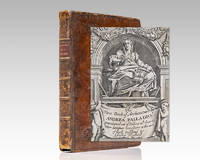
1733151582London: Printed for A. Bettesworth and C. Hitch and J. Osborn in Pater-noster-Row 1733. Finely bound eighteenth century example of Godfrey Richards' English translation of the first book in Palladio's monumental work. Octavo bound in full contemporary polished calf with a morocco spine label lettered in gilt front and rear panels decoratively stamped in blind title page printed in red and black additional engraved pictorial title page illustrated with 71 engraved plates and full-page illustrations 4 folding including a view of St. Paul's Cathedral woodcut illustrations advertisement leaf at end. Twelfth edition. Neat ownership inscriptions and small bookplate to the front free endpaper. Bookseller's ticket to the pastedown. In very good condition with the engravings very crisp and bright. One of the foremost architects of the Venetian Renaissance Andrea Palladio 1508–1580 based his designs on the principles of classical Greek architecture and the traditions of Roman building as described by Vitruvius. He is widely regarded as one of the most influential figures in the history of Western architecture particularly known for his villas in the Veneto as well as his palaces in Vicenza and churches in Venice all within the Venetian Republic. His architectural theories were codified in his treatise I Quattro Libri dell’Architettura The Four Books of Architecture which exerted a lasting influence on architectural practice across Europe and the United States. Palladio’s style later termed Palladianism combined elements of Greek Roman and Renaissance design emphasizing symmetry proportion and harmony in a manner inspired by classical temple architecture. Printed for A. Bettesworth and C. Hitch, and J. Osborn in Pater-noster-Row unknown
1870WRCAM51331Venice 1870. Panoramic photograph 11 1/4 x 150 inches. Mounted on card linen-backed in nine sections folding into leather slipcase stamped "VENISE" in gilt. Light surface dusting. Slipcase worn and partially split. Panorama near fine. An amazing panorama of the "Queen of the Adriatic." Measuring over twelve feet this striking panorama shows the southern side of Venice as taken from the bell tower of the Chiesa del San Giorgio Maggiore a 16th- century Benedictine church located just east of the barrier island of Giudecca directly opposite San Marco and the Doge's Palace. The photograph shows the entire expanse of the city from the western end to the public gardens on the eastern extreme of the island and depicts a bustling port city with numerous ships running in the Venetian Lagoon. A stunning and important photographic record of one of the planet's most romantic cities. hardcover books
Dal 15 ottobre 1952 al 31 maggio 1953 / 8 fascicoli. Riproduzione dei testi che hanno accompagnato le mostre più importanti di M.A.C. fra il 15 ottobre 1952 e il 31 maggio 1953. Tra questi Gianni Monet ("Prima mostra antologica dell'opera di Soldati"), Gillo Dorfles ("Forma-colore senza metafora"), Albino Galvano ("Mostra di pittori concreti di Milano e Torino alla Saletta Gissi"), Franco Passoni ("Spazialismo"), Filippo Scroppo et al. Tra i manifesti riprodotti su tavole ripiegate: "Manifesto del Macchinismo", "Manifesto dell'Arte Totale", "Manifesto dell'Arte Organica", "Manifesto del Disintegrismo". Opere originali a collage e tavole grafiche di Gianni Monnet, Atanasio Soldati, Giannattasio, Antonio Franchini, Renè Charles Acht, Adriano Parisot, Pino Serpi, Michele Provinciale, Mario Nigro, Bruno Munari, Alberto Moretti, Garau, Gillo Dorfles, Filippo Scroppo et al. Sommario dei contenuti di ogni singolo fascicolo In copertina pittura di Monnet in un appartamento a Milano arredato dallo Studio B24. Impaginazione di Bruno Munari (tranne quelle dei numeri 13 e 15 che è di Michele Provinciali e delle pagine di Torino che è di Adriano Parisot). Le copertine del N. 10 sono formate da 4 fogli trasparenti diversamente stampati. 16mo (Cm 17 x 17). pp. 142. . Ottimo (Fine). . Prima edizione (First Edition). . Il decennio 1948-1958, che convenzionalmente circoscrive le vicende M.A.C., è segnato puntualmente da uno scandito percorso editoriale: le raccolte degli inviti delle esposizioni "Arte Concreta" che documentano i primi due anni di attività e poi i quindici bollettini "Movimento Arta Concreta" pubblicati con cadenza pressoché mensile e caratterizzati dal formato quadrato. A questi seguono i bollettini "Sintesi delle Arti" ed i quattro volumi "Documenti d'Arte d'Oggi" a cadenza annuale dal 1954 al 1958. Per l'intero svolgersi del cammino del Movimento, alle pubblicazioni si affianca una cartella di grafica che, pur nella povertà dei mezzi espressivi, documenta le caratteristiche artistiche del gruppo e dei singoli protagonisti. In queste tappe si svelano tutte le intenzioni e le potenzialità inventive, la loro forte ed originale caratterizzazione grafica che a prescindere dalla statura artistica del Movimento e dalle qualità dei singoli artisti, pongono queste opere nel novero delle più interessanti pubblicazioni d'arte del secolo (Giorgio Maffei, M.A.C. Movimento Arte Concreta).Dal "Manifesto del Macchinismo":'Il mondo, oggi, è delle macchine. Noi viviamo in mezzo alle macchine, esse ci aiutano a fare ogni cosa, a lavorare e a svagarsi. Ma cosa sappiamo noi dei loro umori, della loro natura, dei loro difetti animali, se non attraverso cognizioni tecniche, aride e pedanti?Le macchine si moltiplicano molto più rapidamente degli uomini, quasi come gli insetti più prolifici; già ci costringono ad ocuparci di loro, a perdere molto tempo per le loro cure, ci hanno viziati, dobbiamo tenerle pulite, dar loro da mangiare e da riposare, visitarle continuamente, non far loro mai mancar nulla. Fra pochi anni saremo i loro piccoli schiavi.Gli artisti sono i soli che possono salvare l'umanità da questo pericolo. Gli artisti devono interessarsi delle macchine, abbandonare i romantici pennelli, la polverosa tavolozza, la tela e il telaio; devono cominciare a conoscere l'anatomia meccanica, il linguaggio meccanico, capire la natura delle macchine, con i loro stessi mezzi. Non più colori a olio ma fiamma ossidrica, reagenti chimici, cromature, ruggine, colorazioni anodiche, alterazioni termiche. Non più tela e telaio ma metalli, materie plastiche, gomme e resine sintetiche.Forme, colori, movimenti, rumori del mondo meccanico non più visti dal di fuori e rifatti a freddo, ma composti armonicamente. La macchina di oggi è un mostro!La macchina deve diventare un'opera d'arte!Noi scopriremo l'arte delle macchine!'
204-Do.J. 4 Federzeichnungen in Braun, braun laviert, mit einzelner Federlinie umrandet, unterhalb der Darstellungen jeweils bezeichnet, auf Bütten (Der Geruchssinn mit WZ). 13,1:9,2 cm, 13,6:9,5 cm, 13,3:8,1 cm, 13,2:8,3 cm. Provenienz: Sammlung Giorgio Dalla Bella (geb. 1923), Venedig, Lugt 3774. Literatur: Ugo Ruggeri. Disegni Veneti e Lombardi dal XVI al XVIII secolo. Katalog des Istituto Nazionale per la Grafica Gabinetto dei Disegni e delle Stampe. Rom 1989, S.15 u. 16, Abb. 4-7.
005-Io.J. Aquarell, über Bleistift, auf cremefarbenem festem Velin, rechts unten bezeichnet und datiert ?Ferentino Porta Romana Oct 1849?. 28,4:42,7 cm. Provenienz: Galerie Gerda Bassenge, Berlin, 1966; Galerie Joseph Fach, Frankfurt am Main; Sammlung H. Märkt, Reutlingen. Literatur: Chr. Steinhoff: Salomon Corrodi und seine Zeit 1810-1892. Ein Schweizer Künstlerleben im 19. Jahrhundert, Fehraltorf 1992, vgl. Abb. 26, S. 89; Ausst. Katalog: Carl Morgenstern und die Landschaftsmalerei seiner Zeit. Frankfurt am Main, Museum Giersch, 2011, Abb. 37. Ferentino ist ein mittelalterliches Städtchen in landschaftlich schöner Lage zwischen dem Apennin und dem Sacco-Tal gelegen. Seine Stadtmauern, in denen sich vorrömische, römische und mittelalterliche Bauelemente verbinden, gehören zu den schönsten des an antiken Stadtbefestigungen reichen Gebiets.
019-Io.J. Zeitgenössisch aquarellierte Umrißradierung, mit schwarzer Tuschlinie umrandet und mit braun laviertem ca. 1 cm breitem Rand, in der Platte links unten signiert ?Keiserman (sic!)?, auf Bütten mit Wasserzeichen: C & I Honig sowie bekröntes Posthornwappen. 31:43,5 cm. In lichten Gelb- und Blautönen aquarelliert, wie für L. Ducros und seinen Schüler Kaisermann üblich. Leicht fleckig, doch von sehr gutem Gesamteindruck.
020-Io.J. Zeitgenössisch aquarellierte Umrißradierung, mit schwarzer Tuschlinie umrandet und mit braun laviertem ca. 1 cm breitem Rand, in der Platte links unten signiert ?Keiserman (sic!)?, auf Bütten mit Wasserzeichen: C & I Honig sowie bekröntes Posthornwappen. 30,5:43,2 cm. In lichten Gelb- und Blautönen aquarelliert, wie für L. Ducros und seinen Schüler Kaisermann üblich. Leicht fleckig, doch von sehr gutem Gesamteindruck.
142-Io.J. Feder in Schwarz, über Bleistift, auf cremefarbenem Velin, aufgezogen. 31,5:48,7 cm. Das untere Drittel der Zeichnung sowie ca. 2 cm des rechten Randes wurden von Rebell korrigiert und mit dem neuen Entwurf überklebt, horizontale Mittelfalte geglättet, insgesamt etwas vergilbt. Vorstudie für ein Gemälde. Möglicherweise besteht ein Zusammenhang mit dem Auftrag für J. Murat 13 Ansichten von Neapel zu malen (s.u.).
007-Io.J. Aquarell, über Bleistift, dreifach umrandet, auf chamoisfarbenem Velin, links unten signiert ?Riepenhausen ad vivum del.?. 30,5:31,7 cm.
628-Eo.J. Bleistift, 1820, auf cremefarbenem Velin. 29,5:17,7 cm. - Mit leichtem Lichtrand rundum und etwas knitterfaltig. Provenienz: Englischer Privatbesitz, bis 1972. Entwurf zur ausgeführten Zeichnung. Vergleichsliteratur: Galerie Joseph Fach, Frankfurt a.M., Kat. 11, 1976, Nr. 157; Amrei Gold, Der Modellkult um Sarah Siddons, Emma Hamilton, Vittoria Caldoni und Jane Morris. Diss. Westfälische Wilhelms-Universität, Münster/New York, 2009, S. 152 mit Abb.; Ausst. Katalog: Die Nazarener - Vom Tiber an den Rhein. Drei Malerschulen des 19. Jahrhunderts. Bearbeitet von N. Suhr und N. Kirchberger. Mainz, 2012, S. 65-68, Farbabb. S. 67, 182, 183, 185-187 und 189; Ausst. Katalog: Nanna. Entrückt, überhöht, unerreichbar. Anselm Feuerbachs Elixier einer Leidenschaft. Wiesbaden/Hamburg, 2013/14, S. 42, Kat.-Nr. 15, Abb. S. 43; Auktion 294, Villa Grisebach, Berlin, 25.10.2018, Sammlung Bernd Schultz I, Kat.-Nr. 29 mit Farbabb.
14051Ronco, Paris, Lyon, sans nom, Mabre-Cramoisy, Anisson & Posuel, 1677 - 1679. 8 volumes in-4 de [2]-574; [2]-735; [4]-596-[10]; [2]-637-[9]; [4]-892-[8]; [2]-892-[10]; [2]-811-[7] et [2]-796-[6] pages. Plein maroquin bordeaux, dos lisses avec titre, filets et décor dorés, triple filet doré encadrant les plats, double sur les coupes, roulette intérieure, tranches dorées sur marbrures. Dernier feuillet du volume V manuscrit. Certains coins et coiffes frottés, quelques rousseurs. Ex libris armorié dans chaque volume.
29-EFo.J. Bleistift, auf cremefarbenem Velin, rechts unten bezeichnet ?Nach dem durchbrochenen Felsen, wo ich Genua zuerst sah-?, rechts oben nummeriert ?16?. 20,4:27,9 cm. - Verso: Eckiger Turm an einer Hafeneinfahrt an der ligurischen Küste. Bleistift. [2 Warenabbildungen]
25-EFo.J. Bleistift, mit Deckweiß gehöht, auf gelblichem Velin mit Wasserzeichen: Ligatur aus mehreren Buchstaben. 28,5:38,3 cm. - Horizontale Knickfalte im oberen Drittel der Zeichnung, Ränder mit Knickspuren.
021-Io.J. Zeitgenössisch aquarellierte Umrißradierung, mit schwarzer Tuschlinie umrandet und mit braun laviertem ca. 1 cm breitem Rand, in der Platte links unten signiert und bezeichnet ?Keiserman (sic!) Roma?, auf Bütten mit Wasserzeichen: C & I Honig sowie bekröntes Posthornwappen. 31,3:43,5 cm. In lichten Gelb- und Blautönen aquarelliert, wie für L. Ducros (1747-1810) und seinen Schüler Kaisermann üblich. Zu den Rändern hin leicht gebräunt, minimale Ausbesserung im Himmel rechts oben.
17562896Rome: Gioacchino & Giovanni Giuseppe Salvioni 1756. <p>8vo 208 x 133 mm. 24 407 1 pp. 2 parts the Office of the Dead separately titled. Printed in red and black. Engraved frontispiece and 12 full-page engravings by Arnold Van Weserhout and Jacob Frey after Joseph Passarus Giuseppe Passaro two engraved title vignettes 12 engraved tailpiece vignettes a few unsigned others by Frey after Passaro or by M. Schedi engraver 3 engraved capital initials numerous red-printed woodcut initials. Foxing occasionally severe short marginal tear to fol. Z7.<br /> Slightly later eighteenth-century Roman gold-tooled red goatskin covers with large dentelle border composed of a triple neo-classical roll-tooled outer frame enclosing six large ornaments each with a basketweave design of diagonally crossing gilt fillets framed in volutes and leafy sprigs a few tiny petal or star tools board edges protected with a probably later frame of silver or silver-plated metal discreetly nailed to the binding two elaborately chased silver fore-edge clasps and catches spine in six uniformly gold-tooled compartments gilt edges with gauffred border design pair of green ribbon page markers marbled endpapers; 20th-century black morocco felt-lined case. Provenance: with Gumuchian Catalogue XII/1930/225; Maurice Burrus bookplate purchased from Gumuchian in 1934 purchase notes at end. <br /> <br /> A striking rococo binding in fine condition on a luxuriously printed and illustrated Office of the Virgin from the official Vatican press.<br /> <br /> From the mid- to late eighteenth century the Salvioni press used one or more bookbinding workshops that produced finely gold-tooled bindings for their Vatican publications. Although often referred to as the “Salvioni bindery†this appellation is circumstantial: â€the Salvioni firm was responsible for promoting the bindings but it is not known which workshop produced them†British Library Database of Bookbindings. Some of these “Vatican†bindings incorporated variously colored or mottled leather. This example with its basketweave cartouches relies purely on tooling for its effect. An example evidently from the same workshop on a book printed at Rome in 1791 by Salomini using analogous cartouches as corner-pieces as well as a similar “spiraling†border design and some of the same leafy spray and star tools is reproduced in Legature papali no. 264.<br /> <br /> “Whereas the . more flamboyant bindings produced by the Salvioni Bindery rely frequently on polychrome enamel heightening these Vatican bindings strike a somewhat more sober note with their very fine dark-red morocco and rich gold-tooling of high quality†Martin Breslauer Catalogue 107/428.<br /> <br /> Gumuchian Catalogue de Reliures du XVe au XIXe siecle no. 225 plate 68. Cf. British Library Database of Bookbindings Shelfmark c27e18; For other “Salvioniâ€Â bindings see Miner / Walters Art Gallery The History of Bookbinding no. 523; Biblioteca Apostolica Vaticana Legature papali da Eugenio IV a Paolo VI no. 264 plate CXCIII. </p> Gioacchino & Giovanni Giuseppe Salvioni unknown
123-Io.J. Aquarellierte Bleistiftzeichnung, auf Bütten mit Wasserzeichen: J Honig & Zoonen, verso mit Bleistift bezeichnet ?Franz Horny?. 42,7:60,3 cm. ? Zwei Knickfalten in der linken oberen Ecke geglättet, oben mittig leichter brauner Fleck schwach sichtbar (abgelöster Tesafilm). Mit seiner 1796-1799 entstandenen Ölstudie (Größe 28:41 cm), hat der Maler einen nahezu identischen Landschaftsausschnitt gewählt, wobei der gewählte Standpunkt weiter links war und dadurch einige Häuser von Olevano sichtbar werden, wogegen die Mauer und der angeschnittene Baum rechts fehlen. Dafür reicht der Blick in die Campagna weiter. (Vgl. Ausst. Katalog: Johann Martin von Rohden 1778-1868. Hrsg. von M. Heinz. Kassel/Wuppertal, 2000/2001, Nr. 6 mit farb. Abb. S. 51). Wie bei von Rohden öfter zu beobachten, fehlt auch bei unserer Zeichnung die Vordergrundausführung. Die Behandlung der Bäume entspricht ganz und gar seinem Zeichenstil, wie man ihn in den Landschafts- und Baumstudien findet.
137072aafNapoli, Litografia Cuciniello e Bianchi, 1827, gr. in-4to, (35x23 cm) 1 feuille de texte (2 p.: Titre - Persone & Omaggio. en fait deux feuilles, la deuxième feuille ayant été montée sur le dos de la première) + 29 planches de costumes coloriées à la main, qqs légères rousseurs sur les bords de qqs planches seulement, reliure en toile originale. (Titre doré sur le plat devant: Les quatre grands Poetes d’Italie).
010-Io.J. Aquarell, über Bleistift, auf Papier mit Wasserzeichen: J Whatman Turkey Mill 1824, rechts unten bezeichnet (vermutlich von fremder Hand) ?Naples?. 29,3:48 cm. Zwei Braunfleckchen am Oberrand. Literatur: W. Hauptmann: Peindre l?Italie Keiserman et Knébel: deux Vaudois à Rome vers 1800, Lausanne 2005, vgl. z.B. Abb. 67 u. 75.
015-Io.J. Aquarell über Bleistift, mit einigen Deckweißlichtern, mit schwarzer Tuschlinie umrandet, verso vom Künstler bezeichnet ?Aussicht von Velletri aus über die Pontinischen Sümpfe nach Terracina zu?, auf Velin. 25:40 cm.
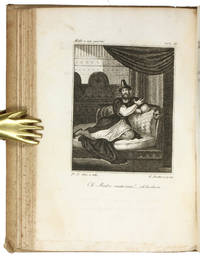
1833ABC_49352Venice: Giuseppe Antonelli 1833. Contemporary boards with a red title label and a black volume number label both lettered in gold on each spine. 16mo. With an engraved frontispiece in each of the 15 volumes. 15 volumes bound as 5. First illustrated Italian edition: a charming edition of the Heyaryek-Rouz or Thousand and One Days so-called to give the work an air of originality Chauvin IV 124. A Persian manuscript of this work was given to Francois Petit de la Croix in Isfahan in 1675 but enjoyed far fewer editions and translations than the Alf layla wa-layla. As Chauvin notes it cannot be determined whether the Thousand and one days or the Thousand and One Nights was composed first nevertheless to this day the Heyarek-Rouz is much less well-known to the Western world IV 123f. Chauvin quotes one commentator who declares the Heyarek-Rouz much more ingenious and more realistic as it sometimes includes marvels following the taste of the Oriental. The lovely frontispieces are drawn by Pietro Zandomeneghi and engraved by Giorgio Buttazzon.The bindings show signs of wear with some worming to the spines occasional light worming to the gutters blank margins. Otherwise in good condition.l Graesse IV 525; OPAC SBN ITICCUTO00988443 12 copies incl. 8 incomplete; WorldCat 1403675888 and other numbers; 1 incomplete copy also in OPAC SBN; cf. this edition not in Chauvin. Giuseppe Antonelli, hardcover
Folio; frontespizio inciso su rame da G. De Lairesse (1640-1711), e tavole 98 + 12. Il frontespizio è una celebrazione di Reynst, e della sua opera tesa a salvare dal tempo l'arte. Legatura in piena pergamena con tassello, titolo e fregi in oro al dorso. Timbro a secco in alcune tavole. Splendida copia molto marginosa che contiene le traduzioni in incisione dei pezzi di scultura classica di quella che fu la più importante collezione olandese di statuaria antica, pittura italiana, naturalia, fossili e monete: il cabinet di Gerard Reynst. Il carattere tutto italiano di questa collezione la rende particolarmente inusuale per l'Olanda di quel tempo. Gerard, uno dei sette direttori in carica della Compagnia delle Indie Orientali, mise insieme questa raccolta a Vienna assieme al fratello Jan, e quando, alla morte di quest'ultimo, si decise a venderla, ne fece realizzare un catalogo inciso. Una parte della collezione fu venduta allo Staten van Holland en West Friesland, e nel 1673 la maggior parte dei pezzi erano ormai venduti. Timmers pp. 128-131; Hollstein X, p. 16-21. Folio; copper engraved title page by G. De Lairesse (1640-1711), and plates 98 + 12. The title page is a celebration of Reynst, and of his work aimed at saving art from time. Full vellum binding with label, gilt title and friezes on the spine. Blind stamp on some plates. Splendid copy with large margins that contains the engraved translations of the classical sculpture pieces of what was the most important Dutch collection of ancient statuary, Italian painting, naturalia, fossils and coins: the cabinet of Gerard Reynst. The all-Italian character of this collection makes it particularly unusual for Holland at that time. Gerard, one of the seven directors in charge of the East India Company, put this collection together in Vienna with his brother Jan, and when, on the latter's death, he decided to sell it, he had an engraved catalog made. Part of the collection was sold to Staten van Holland in West Friesland, and by 1673 most of the pieces had been sold. Timmers pp. 128-131; Hollstein X, p. 16-21.
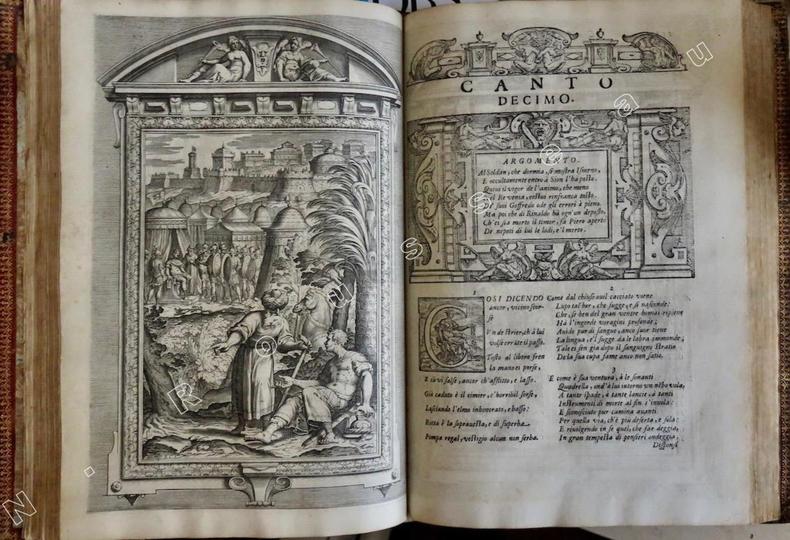
161794581617 Stampata Per Giuseppe Pavoni ad inflanza di Bernardo Castello, in Genova, l'Anno MDCXVII (1617) ; in-folio, plein maroquin rouge de l'époque, double encadrement de triples filets dorés sur les plats avec fleurons d'angle, armoiries dorés au centre des plats, dos à nerfs très orné de multiples petits fers dorés , titre doré, roulette intérieure, tranches dorées. (8) ff.,255pp. (dont 1 blanche), 72pp., 36pp., (2)ff. Exemplaire réglé en sépia. Illustré de deux titres-frontispices allégoriques dont un avec le portrait du Tasse en médaillon et en arrière-plan le port de Gênes, et l'autre avec le portrait de Charles-Emmanuel I de Savoie en médaillon, 20 gravures à pleine page par Agostino Carracci et Giacomo Franco d'après les dessins de Bernardo Castello. 20 vignettes à mi-page en entête de chaque chant, culs de lampe et lettres ornées. Très belle édition illustrée de la Jérusalem délivrée. (cf.Brunet V-666). Exemplaire aux armes de Jean du Bouchet (cf. Olivier-Hermal-Roton pl. 1706).