54 413 résultats
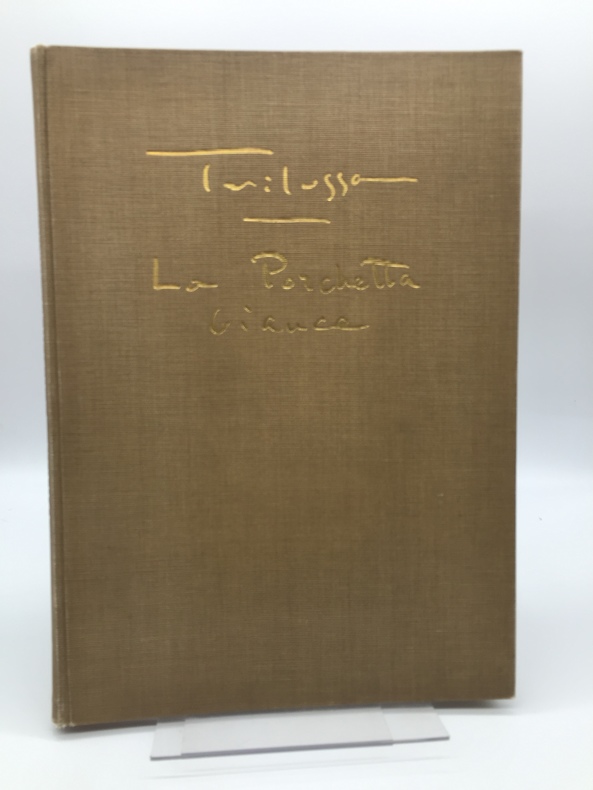
Dark red octavo, red half leather, gilt to spine, 388 pages. Custom bound. In Italian. Stated limitation of 50 copies of which this copy hand-numbered "47". Bookplate of Vicenzo di Prata to front paste-down. Rare thus || Occultism, Magic. Traditionalists.
17630408-09Bouchard & Gravier [ca. 1763]. Orig.-Kupferstich v. Freicenet nach Jean Barbault. Bildausschn.: 40 x 50 cm; Blattgr.: 47 x 64 cm Ger. Fleckenfreies, breitrandiges Blatt in kräftigem Abdruck.
1910014520Paris Louis Michaud 1910 In-12 Rare cartonnage éditeur Edition originale Dédicacé par l'auteur
1827066-E1827. Aquarell über Bleistift, auf Velin, links unten bezeichnet und datiert "Rom 27". 18,7:14 cm. Mit Reißnagellöchlein in den Ecken.
17280Lyon, Guillaume Rouillé, 1569. 2 ouvrages en 1 vol. in-8, 296-[8] pp. [suivi de:] [8]-145-[7] pp. (insolation du dos, petits frottements ou épidermures, trous de vers, quelques petites taches éparses, rousseurs, N3 et N4 reliés dans le désordre
1787STLE0050A Paris, Veuve Duchesne 1787. 8°. 3 Bde. XXIII, 424 S.; Vort., Titelbl., 364 S.; Vort., Titelbl., 366 S., 1 nn. Bll., mit je e. Titelblattvignette, e. Kopfstück u. zahlr. Schlussvignetten. Halbleinenbände aus neuerer Zeit in tadellosem Zustand, Rückenbeschriftung goldgeprägt, Schnitt buntgesprenkelt, Seiten sehr gut erhalten, teilw. gebräunt, vereinzelt fleckig oder unwesentlich wasserrandig. Mit je e. Wappen-Exlibris am vorderen Innendeckel (Greif mit Schwert u. Blumen auf fünfzackiger Krone stehend) u. e. Bibliotheksstempel d. ungarischen Volksbibliothekszentrale auf d. Rückseite jedes Titelblattes. Jolly. Encyclopedia of Live Writing I,387. Querard 3,400 - Erstausgabe dieser Autobiographie des italienischen Komödien- u. Librettidichters Carlo Goldoni (1707-1793). Goldoni, der seine Memoiren Ludwig XVI widmet, war 1761 nach Paris, an das dortige ?Italienische Theater? berufen worden und blieb bis zu seinem Lebensende in Frankreich. - DIESES OBJEKT UNTERLIEGT DER DIFFERENZBESTEUERUNG.
091-Io.J. Bleistift, auf Velin, rechts bezeichnet und datiert ?Grotta ferrata Giuglio 829? sowie ?albaner Gebirge bey Rom.?, verso von fremder Hand bezeichnet ?F. Peipers?. 22,5:30,5 cm.
141-Io.J. Bleistift, auf braunem Velin, rechts unten bezeichnet ?bei Cefalu in Sicilien?, verso Nachlaßstempel. 43,5:55,5 cm.
629-Eo.J. Bleistift, auf cremefarbenem Velin. 24:18,6 m. - Rechts unten etwas knitterfaltig. Provenienz: Englischer Privatbesitz, bis 1972. Vergleichsliteratur: Ausst. Katalog: Die Nazarener - Vom Tiber an den Rhein. Drei Malerschulen des 19. Jahrhunderts. Bearbeitet von N. Suhr und N. Kirchberger. Mainz, 2012, S. 65-68, Farbabb. S. 67, 182, 183, 185-187 und 189.
013-Ao.J. Radierung, auf Bütten. 11,9:17,9 cm. Aus der Folge ?Vue d'Italie?. Literatur: Bartsch (pièces citées dans le dictionnaire de Fuessli. Edition von 1814), aus 1 ; Nagler 9 ; Andresen 5.
248 leaves. Manuscript in Italian on the History of Germany, and virtually all of Europe, in the momentous era of the 1620's, prepared for Pope Urban VIII (Maffeo Barberini) by the Papal Nuncio to the Holy Roman Emperor. Written in a graceful Italian hand. Folio. 340 mm. Text generally clean, but with scattered mold stains. Remains of old vellum binding. Interesting colorful paste paper end sheets. With the bookplate of Elkin Mathews = Charles Elkin Mathews (1851-1921) London publisher, bookseller, and collector who played an important role in the literary life the English speaking world in the late 19th and early 20th centuries. Also with a circular Sneyd family book plate [probably Ralph Sneyd (1793-1870), but perhaps earlier]. This work is often attributed to Carlo Carafa [an incompetent and criminal administrator who was executed for treason at Castel San Angelo on Mar 4, 1561 by Pius IV]. but it is certainly by a later Carlo Carafa, born in Naples in 1611, who was bishop of Aversa and Papal Nuncio to Switzerland, the Republic of Venice, and to the Holy Roman Emperor. The Holy Roman Emperor at this time was Ferdinand II (1578-1637), a member of the House of Habsburg. He was also King of Bohemia, and King of Hungary. His rule coincided with the Thirty Years' War. Ferdinand's aim, as a zealous Catholic, was to restore Catholicism as the only religion in the Empire and suppress Protestantism. The Neapolitan Carafa family produced a large number of bishops, cardinals, and some saints. Cardinals in the Carafa family include (with dates of their elevation to Cardinal): Filippo Carafa (1378); Oliviero Carafa (1467); Gianvincenzo Carafa (1527); Carlo Carafa (1555); Diomede Carafa (1555); Alfonso Carafa (1557); Antonio Carafa (1568); Decio Carafa (1611); Pier Luigi Carafa, seniore (1645); Carlo Carafa della Spina (1664); Fortunato Ilario Carafa della Spina (1686); Carafa di Belvedere (1764-1830); Francesco Carafa della Spina (1773); and Domenico Carafa della Spina (1844). Biographical and bibliographic confusion among them is rampant. UNIQUE. A wonderful item for further scholarly study. Chest 2/4
25091The first three-quarters from Paris 18 June to 16 November 1859. The last quarter from Dresden and Copenhagen 1860 to 1863. The papers of Sir Charles Stewart Scott an Ulsterman: see his entry in the Ulster Dictionary of Biography are held by the British Library. The present journal described by its writer as ‘Private & most Confidential’ covers the very start of his career from Paris in 1859 to Copenhagen in 1863. The basic details of his career to this point together with information regarding his colleagues are to be found in the Foreign Office List for January 1865: Scott was nominated attaché in 1858 and transferred to Paris on 31 March 1859 and to Dresden on 5 October of the same year to Copenhagen three years later and was promoted to position of a third secretary in April of 1863. This journal is 186pp 8vo; all edges gilt in embossed brown cloth binding with the label of Paris stationers Delarue & Hivert. The paper is lightly aged with a little discoloration and a few loosening leaves and the binding is worn but the general overall condition is good. On reverse of front free endpaper: ‘33 Rue de la Madelaine / Charles: S: Scott. / Attached to H.B.M Embassy Paris’. The diary is as Scott admits kept in a ‘negligent way’. The first page is headed ‘Private / Paris’ and the first three-quarters of the journal consist of 140pp covering the period between 18 June to 16 November 1859 followed by three and a half pages headed ‘Nearly A year afterwards in Octr 1860’ but with only one entry: 4 October 1860. After a blank page the final quarter of the journal consists of 45pp carrying desultory entries between March 1861 and January 1863 as follows: 4pp Dresden 26 March 1861; 6pp ‘January 1862’; 7pp 6 to 14 January 1862’; 16pp 16 October to 12 November 1862; 2pp Copenhagen 21 December 1862; 2pp ‘January 1863’; 3pp ‘Princess Alexandra’. The diary contains a good mixture of the personal and professional. Of particular interest is Scott’s description of Embassy news and gossip: reports and telegrams received communications composed the views of superiors articles in the newspapers. The pre-eminent topic is the Parisian response to the conclusion of the 1859 Franco-Austrian War Second Italian War of Independence including a description of Napoleon III’s victory parade and a couple of references to Garibaldi. Other topics include the American Civil War and the marriage of Princess Alexandra of Denmark to the future King Edward VII. There is also a description of initial reports of the Second Battle of the Taku Forts June 1859 in the Second Opium War. On the personal side there what Scott himself sees as his ‘illspent youth’ with frequent references to money worries 4 August: ‘we all dined at Voisin’s capital dinner but enormously dear 18 frs a head. Afterwards we played Loo and I lost £16 - my state of mind is something awful. I could scarcely sleep a wink all night & vowed I never should play a gambling game again’. The following day he ‘must borrow £25 from somebody’. He searches for new lodgings in Paris describes his dinner engagements and socializing ‘I saw some very pretty faces in the Champs Elysees’ his private reading ‘I finished Tennyson’s New poem. I like it as a whole very much Enid is very pretty & so is the last Guinevre sic I think my favorite is Alaine evidently the Lad of Shalott’ the weather and much Embassy news and gossip. With reference to the Franco-Austrian War Second Italian War of Independence on 25 June Scott describes an early report of the victory of Napoleon III and the Sardinians at the Battle of Solferino: ‘On my way down to the Chancery at 12.30 I saw an “Affiche†giving the news of a great battle dated Caravina June 24 9.15 in the morning to the effect that the Allies had engaged the whole Austrian. Army in a line of 15 miles taken all the positions & captured several guns flags & prisoners. The details have not yet been given. It appears to have been a very bloody affair & I should not wonder at hearing a very different version soon.’ The following day is the Fête de Dieu: ‘The Chancery was very intolerable & as there was no news of any importance we had not much to do. Laurence & I spent the afternoon on chairs in the Champs: Elysee. The rest of the Chancery seem to have done ditto - We then drove to the Tavern & dined. We found Atlee there too. A very fine woman was dining near me I liked her face very much. Atlee seemed to know her. After dinner we did the coffee & liqueur dodge at the Cardinal & while we were there the newest telegram was posted up stating that the Austrians had lost 1500 prisoners in the hands of the French 30 guns & 3 flags. On one side of us as the news arrived were some Italians on the other Germans. The effect on the respective parties was worth seeing.’ The long entry for 12 July is headed ‘Conclusion of Peace of Villafranca’ discusses aspects of the conclusion of the war. The entry for 21 July begins: ‘I was in the Embassy at 11.30 Cowley sent down an angry minute with a request that some of us shd. be in the Chancery every day from 11. till 7. & that we shd be on duty by turns. He & Norton went in full tog to St Cloud where the Emperor received the Corps Deputations. made a short speech expressing the pleasure of the Corps at his safe return & the speedy reestablishment of peace. The Emperor replied with some little asperity in his tone that Europe had been unjust to him at the commencement of the war that he was glad now to have an opportunity of proving that once the honor & interests of France satisfied he did not desire to provoke further confusion of a more general war. A very important Tel: from Rome passed thro’ Paris this morning a measure of reforms has been recd by the French Ambassador at Rome to be submitted to HH. The Pope is in secret negotiation with Spanish. Minister. to reconquer Legations. In case of distress he will probably retire to Spain.’ Scott speculates regarding ‘what sort of a Foreign. Minister. Ld John will make’ Lord John Russell had been appointed to the post in the new Liberal government. On 4 July he reports: ‘There was rather an important Desp: from Ld. John relative to the Perugia atrocities he desires C. to read the Desp: to Wal: & in it he expresses his conviction that the Papal Govt is a crying evil in Italy & that at any future negotiations it would be desirable to take steps to deprive H.M. of all temporal powers - C. wrote an important Conf: Desp home upon the rumoured agreement between France & Sardinia. respecting cession to former of Savoy he expressed a wish that the gentlemen of the Chancery shd not speak about it to anyone. It appears that steps have been already taken towards negotiation by Prussia she has made proposals at London & St. Petersburg to England & France to join her in settling Bases Austria wished Prussia to act alone Prussia will not assent to do so. Claremont writes from Valeggio the Sardinian Army are besieging Peschiera the Emperor seems to have turned his attention to Venice.’ The entry for 22 July contains a long account of a despatch from Cowley: ‘a 5 sheeter an important one which he has taken two days to concoct. it is in answer to the question “should England take part or not in a Congress on Italyâ€â€™ ‘C. answers emphatically no’. He describes the French victory parade on 14 August: ‘Up at 7. dressed in white tie & tails & down & sic the Chancery at 9. there I found Lord C. and Atlee in morning coats so went back to the Rue de la Madelaine changed & got to the Place Vendome at 9.30. The Place had a most gorgeous appearance one enormous amphitheatre packed tight with well dressed ladies & gay uniforms among them an Irish milita uniform. Proh sic Patria! above us in front of the Ministere de la Justice & facing the column the Imperial balcony. Covered with crimson flock & shaded by a crimson velvet awning & this was crowded with the members of the court among them the Prince Jerome Princesse Mathilde Walewski Hamelin Gould & c. After a short time the Empress’s carriage drove into the Place amid the most enthusiastic cheering. She made her appearance some minutes afterwards in the balcon with the Prince Imperial. The latter in the uniform of the chasseurs de la garde. He is a pleasing looking little child yellow like most French babies with pudding cheeks. His mother looked very nice it was the first time I had any chance of seeing her to advantage she has such a charming expression. & was looking her very best. After this there came a long pause which I employed in looking round at my neighbours I was in the diplomatic gallery. Ld Cowley & Kisseleff Nikolai Kiselyov the Russian ambassador below me the Swedish Minr. behind some Persian attaches beside me in full uniform & the American mission a little in front. On the neat tribune the Duchess of Montrose & Lady H Graham & lots of charming English faces everybody nicely dressed & as happy as possible under the hotters sun I have felt for some time. - Soon a rustling of dresses & a number of impatient & excited explosions of “les voila†made us all strain our eyes towards the entnree by the Re de la Paix & in a few seconds the Emperor at the head of the Cent Gardes & surrounded by his staff cantered into the Place on a beautiful charger. I shall never forget the magnificence of this sight.’ The following two pages contain a description of the review of the troops ‘the Cent Gardes with the captured Austrian colours & the assorted colors of some of the regts.’. news articles in French papers ‘The Patrie has this evening rather a bitter article against the English dread of invasion - alluding to article in Moniteur.’. English fears of invasion are apparently genuine. On 28 July he writes: ‘There was an article in the Moniteur to-day giving notice of the Emperor’s intention to place the army & navy on a peace footing if this be really carried out it will be a stopper on the fears of invasion on the other side of the Channel. This Announcement is said to be the result of a Privy Council meeting who upon the suggestion of to do something to appease the fears in England met yesterday to consider what course they should take.’ News from Italy on 1 August: ‘I decyphered a long Tel. from Elliot this morning to the effect that the Neapolitan. Govt had been informed that Garibaldi with 12000 men meditated a descent on some part of the Neapoln. States & had engaged steamers at Genoa & Cagliari for that purpose. the Govt of H.S.N. wished to know whether Her .Majesty’s. Government. would protest agst Sardinia permitting this expedition & if H.Ms. fleet wd allow it to be carried out.’ Cowley asked Wal: whether he had received any intimation to the same effect he said he had been applied to by the Neapn. Govt & had accordingly written to Sardinian Govt but he did not believe there was any foundation for these apprehensions.’ On 7 September 1859 he is ‘again reduced to the same miserable pauper state’ and ‘thinking of changing to Lisbon. I have been spending too much money here - and as Sir A. Magennis is appted: Minister at that place & Grey his greatest friend has offered to recommend me strongly to him. I have thought to accept Grey’s offer & have written to Papa about it’. The same entry contains a discussion of ‘political news’ including ‘the great question’: ‘What is to become of the Duchies’ A week later 15 September he is ‘of course getting poorer & poorer. to-day Friday I had to borrow 60 frs. from Adams 20 of which went to little A - who is also hard up.’ In the same entry he gives an account of the Second Battle of the Taku Forts June 1859: ‘Matters are coming to an interesting crisis and a new European mess is brewing & this time on a very respectable scale. 1st. in China. The Frh: & English Minrs: proceeding up the Reiko in order to ratify Treaty were fired upon on the 20th of June & 3 guns boat were lost 460 men killed & wounded & the Minrs. forced to retire to Shangai. This was the first telegram which came to our hands. & a startler it certainly was. The details soon followed telegraphed by Rumboldt sic who was on his way home with Desps:’. Further details are given including ‘the P.P. ordered Adml. Hope to force the passage which he succeeded in doing when all of a sudden the batteries on either bank were unmasked & a slashing fire poured upon them. The batteries were manned by Mongols an enemy which we met for the first time in the field. An attempt to land some of our marines in gun-boats was signally unsuccessful the banks being formed of a soft mud in which our men sank up to their middle exposed all the time to a desperate fire. Adml. Hope is wounded & the affair is altogether a most signal disaster’. He continues to discuss this and ‘The 2nd mess’ - ‘a more serious one . the result of the Death of the Emperor of Morocco’. ‘Papa & the girls’ pay a visit in mid-September and he reports ‘My people are gone’ at the beginning of the following month. On 16 September 1859 he writes from ‘Dresden’ stating that he came to the place ten days before and that his ‘first fealing on hearing of my appointment was sheer disgust’ but that he is ‘beginning to know the place’ and ‘far happier than at Paris. Strange enough Dresden is to me twice as gay as Paris.’ In the pages that follow he describes the opera at Dresden and a visit to ‘Saxon Switzerland’ before giving a review headed ‘January 1862’ of his ‘illspent youth that has planted its vices in my blood and weighs me down into the mire’ and his desire to ‘emerge mothlike from the chrysalis of the past & with blood keeping an even tenour follow the “Beautiful†that now only comes to visit me in visions. - How hard now to acquire the strenghth of will that has failed me hitherto! and yet I feel that unless the change be effected now my future happiness will be ruined.’ Regarding the brewing American Civil War he writes: ‘Each day may bring us important answers from America: I fervently hope such an unnatural war may be averted.’ On 5 January 1862 he writes that ‘The news from America continues to be pacific’ but on the following day: ‘A Telegraph has come in to the effect that the Privateer Sumpter has made some prizes has sunk them & run into Cadiz. - pretty warfare this for the 19th: Century’. On 16 October: ‘Little prospect of a peaceable settlement of affairs on the other side of the Atlantic. Lincoln’s proclamation emancipating the slaves not only an uncivilized but a useless & an impolitic move. / Prussian affairs looking bad. The lower House has unanimously refused to vote the military Budget “in toto†without details. The Herrenhaus sides with the Govt: & the Chambers closed. - I do not see how the question can be settled. - We have also had a meeting of Deputies at Weimar & the National Verein at Coburg. both seem bent upon restoring the Reich Verfassung of 49. - the 1st: in favor of exclusion of Austria.’ 24 October: ‘2 new battles in America account as yet confused. - Confederates. said to have retreated. - Garibaldi a little better.’ He gives a full-page description of a ‘Jewish wedding’ on 25 October: ‘The Congregation a most curious assemblage of Jewish faces in wh: the hooked nose was the most characteristic feature.’ On 30 October he responds to a speech by Cobden proposing ‘to exempt private property from capture at sea’ and the blockade of continental ports: ‘the raw material of our food & industry come fm. America the only three powers w. whh. we cd. go to naval war are France Russia U. States. F. cd. always make use of Haburgh & the free ports & from Russia & the U:S: we draw our principal imports. In the Crimean War we purposely abstained from enforcing a blockade until we had imported sufficient grain fm. the Rn: ports. - Disputation in N of England showed what a state we shd. be reduced to if we strictly enforced the blockade of the Baltic Ports.’ On 12 November 1862 he comments sarcastically on the ‘pleasant announcement’ that he has received his orders to proceed to Copenhagen. On 21 December he records his arrival there ‘This place is certainly no pleasant residence in winter.’. January 1863 sees ‘the Federals in a worse state than ever the accounts of the late battle at Fredericksburg are terrible & the loss almost unparalleled’. Another question he discusses at this time is the ‘Affairs of Greece’. On 12 January 1863 he describes his socializing: ‘I dined twice with the Chief and went to the Lutzerodes where I met everybody & did my duty to all acquaintances. I was presented to Countess: Hohenan Prince: Albert of Prussia’s wife. She seems agreeable. - A party at the Sawyers where I was introduced to Mme: de Benst Freyburg & her daughter who has the reputation of being a beauty. I was disappointed.’ He is presented to ‘Princess. Alexandra our future Pss: of Wales she is lovely & graceful natural & charming in her manners & will certainly have great success in England.’ Over a page he describes the ‘“tableau†at the Landgraf’s’ at which he first saw Alexandra. ‘It was the Landgts. birthday & the Pce: & Psses: had arranged a series of tableaux vivants each subject to begin with one of the Initial Letters of H. Hs. name.’ The last three pages give an ecstatic account headed ‘Princess Alexandra’: ‘without being a great beauty has one of the loveliest faces & expressions I have ever seen . She leaves Denmark in tears & will find England awaiting her with smiles & English welcomes!’ In conclusion we give in its entirety the very first entry in the journal 17 June 1859. It is lengthy and gives a good indication of the general tone and level of detail and the good mix of personal and professional: ‘I found some difficulty in opening my eyes at 10 A.M. & when I succeeded in doing so found them fixed on Darand’s garçon arranging my breakfast. My conscience painfully reminding me that I owed him 60 francs for breakfast & that each day I had promised to pay his little “note†“demainâ€. Future entrie contain complaints against his debtor ‘Conyngham the wretch’ and a row with ‘Duraud’s garçon’ takes place ‘consisting of mild expostulation on his part confusion and indignation on mine’. I closed them again & answered his ‘Monsieur est serve†said in a hesitating tone only by a low grunt & he departed. After taking my usual time for consideration before committing the rash act of getting up and after taking my bath I found my breakfast as cold as my breakfasts generally are when I take half an hour to consider about getting up. / I did not go to fence but booted slowly down to the Embassy we only moved to our new pig stye of a Chancery yesterday. I found Laurence in the Chancery he had deserted Ruas too. There was no work a Tel: had been sent off about Despatches. to be forwarded to Turin. Bayly soon made his appearance I answered a Mons d’Hartville about some book which he had sent Cowley a copy of. Little news in any of the Papers. Later in the day there came in news of a conspiracy in Athens to dethrone King Otto & the intelligence was sent in cypher to the F.O. details to be sent by messenger. It appears that the Conspirators have called themselves the Italian French Society & tried to implicate the French. Minister. / Very important news arrived of the state of the Prussian policy drawn from a Convention. of French. Ministers. with Schlemetz. General. opinion in Chancery that Germany wd. join Austria before the end of the month. / I wrote to Conyngham about the £4. 10 travelling expenses asking him to send it to me. I am in a fearful state in the way of finances and I am afraid to tell the Govenor but what am I to do this is the 17th. Quarter does not commence before 23rd day of July & I have only the £4. 10 with lots of debts. - I read a book called Lama the style & character ridiculously extravagant & unnatural. Something in it excites me so I could not put it down I think it must be the present unhealthy state of my mind. / We dined at the Tavern why I say we I mean Atlee Sandford Laurence & myself. My dinner cheapest 3.75 with waiter. Then to the Cardinal coffee & petits verres. Atlee & Sandford went to their - & Laurence & I to the Embassy & his diggings where we played double dummy & talked on various subjects. I borrowed Shelley from him - walked home by the Avenue Gabriel beautiful moonlight tho’ nothing to what I saw on Wednesday night in the Place de la Concord - / Letters - from Tom. is going to be priested - Parish matters. good advice &c / Lizzie - State of religious excitement in North - to my weak mind this looks like a damned humbug. & that it is the effect of living in the same uncivilized spot without new ideas that has made everybody so superstitious. However Liz: seems rather to believe in it. / I feel rather maudlin & sentimental in fact in low-spirits tonight - the state of my funds. Darand’s bill & other details weigh upon me like a nightmare or an over feed - I have been a great fool I am doing nothing to get myself on in my profession & instead of improving my mind I think I am stupifying myself more & more every day. I wonder if the Diary will do me any good. It will never do to go on at this rate writing 5 pages a day so good-night I am off to Shelley & Bed. -’ The first three-quarters from Paris, 18 June to 16 November 1859. The last quarter from Dresden and Copenhagen, 1860 to 1863. hardcover
082-Io.J. Aquarell auf Velin, rechts unten signiert ?E. Gigante?. 12,5:17,6 cm. Mit leichtem Lichtrand an drei Seiten.
19303358Couverture rigide 1ère Édition Edizioni Mondadori 1930 Milano 35x25 cm
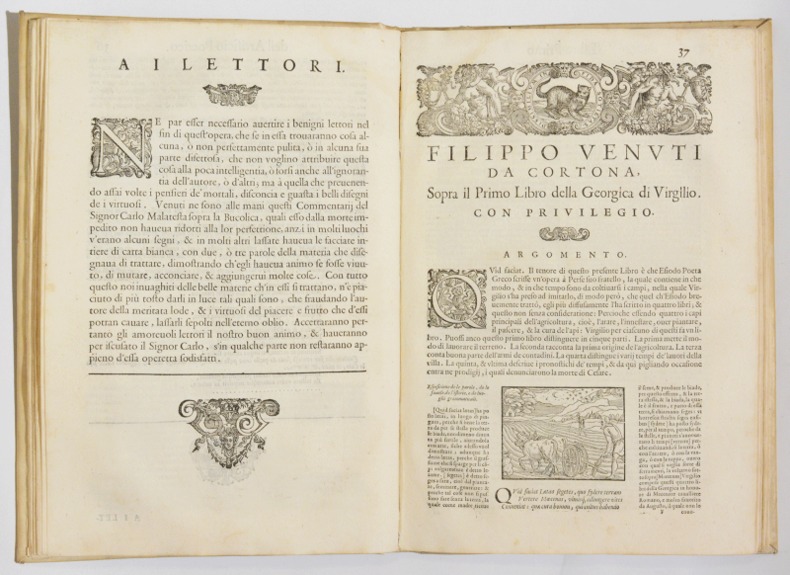
15880048811588 In Venetia [Venise], Appresso gli Heredi di Marchiò Sessa, 1588. Petit in-folio (212 X 304 mm) vélin rigide ivoire à coutures apparentes, lettre «V » peinte et dorée, dans un cadre peint et doré, en tête du dos (reliure de l'époque) ; (1) f. blanc, (100) ff. dont titre. Pointes de taches noires au dos, quelques petits trous de vers sur les mors de la reliure, infime travail de ver dans la marge latérale gauche et petit manque en lisière de la marge de tête du feuillet de titre, petit travail de ver aux trois derniers feuillets avec perte de quelques lettres, tampon encré en grande partie illisible sur le premier feuillet blanc, petite mouillure brune en lisière de la marge latérale des feuillets 38 à 54 avec quelques petits manques de papier ; ex-libris et mention manuscrits à l'encre brune en marge du titre.
189081900AB(Um, 1890-1895). Quer-Folio. Lederalbum mit goldgepr. Deckeltitel und Ganzgoldschnitt.
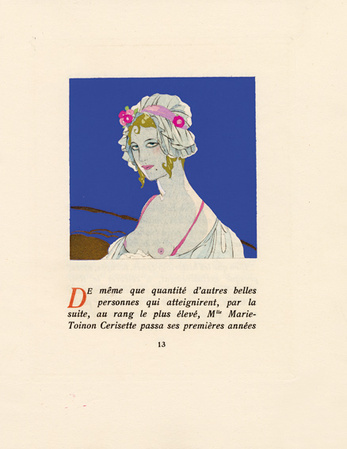
192611007Paris, L'Estampe Moderne, 1926 ; petit in-4, broché, chemise-étui de l'éditeur recouverts de papier simili-percaline à décor japonisant blanc et doré sur fond bleu-de-Prusse ; 207, (3) pp., couverture crème rempliée illustrée en couleurs et en tout 27 illustrations originales en couleurs dont 15 grandes têtes de chapitres gravées sur cuivre et toutes coloriées au pochoir, certaines rehaussées à l'or ou à l'argent, plus 14 petits dessins en noir et blanc.
17979211Ettingersche Buchhandlung, Gotha, 1797 - 1801. XXIV,144; 126; 122 Seiten, Pappband d.Z. mit rotem Rückenschildchen. Mit insgesamt 15 Kupfertafeln (z.T. ausklappbar). 3 Teile in einem Band (insgesamt erschienen bis 1809 sechs Teile). Notizen von alter Hand (überwiegend mit Bleistift) auf den Vorsatzblättern, älterer Stempel a.V. Die Einbandecken leicht gebogen. Innnen ein gut erhaltenes Exemplar. Die Kupfer in hervorragendem Zustand (zeigen u.a. Die Klippe Strombolino, Die Insel Volcano mit Ansichten des Inneren des Kraters, Der Thun Fischfang, Bruchstücke alter Baukunst). Ursprungstext: "Voyage pittoresque des isles de Sicile, de Malte et de Lipari". Sehr selten. Very rare in this german edition. With 15 originally graphics.
17822767AB[Paris], [Desaint], [ca.1782]. 29,5 x 23 cm. 36 Kupferstiche (2 Landkarten, 34 Stadtpläne und Ansichten)- Original Halbleder (Hardcover) ggpr. RS, Sprenkelpapier, Fadenheftung auf 5 echten Bünden, Vollrotschnitt. [3 Warenabbildungen] Einband etwas bestoßen, beschabt und berieben. Kapitale mit Fehlteilen. Rückenschild beschabt. Tafeln nur vereinzelte (Braun)Flecken.
117-Io.J. Bleistift, auf gelblichem Velin. 25,9:20,2 cm. Verso: Die Villa Raffaels in Rom. Bleistift, links unten signiert ?gez. V. Fr. Peipers, Architect.?, rechts unten bezeichnet und datiert ?Alla Passeggiata 1827 il 27, Marzo.?. Doppelblatt aus einem Skizzenbuch von 1828. Möglicherweise ist der ?Dächerblick? eine Vorzeichnung für Peipers lithographiertes Panorama ?Rom gesehen von der öffentl. Promenade des Monte Pinsio?. [2 Warenabbildungen]
181755691ABRom, Giovanni Scudellari, 1817. 16,3 cm x 21, 6 cm. Mit gest. Titel mit Widmung an Alessandro Narischkin und 50 num. Kupfertafeln. HLn. d. Zeit mit morm. Deckelbezügen.
185017174Paris, Turgis, um 1850. Ca. 48 cm x 32 cm (Bild); 64 cm x 48 cm (ganze Blatt). [3 Warenabbildungen]
179614042Ohne Ort und Drucker, 1796. Ca. 28 cm x 44 cm.
185017175Paris, Turgis, um 1850. Ca. 48 cm x 31 cm (Bild); 64 cm x 49 cm (ganze Blatt). [3 Warenabbildungen]
190015143(Triest, um 1900). 1 kalligrafiertes Widmungsblatt und 15 Original-Photochromdrucke der Firma Photochrom Zürich nach Fotografien (alles unter Passepartout). Quer-Gr.-4°. Ldr. der Zeit mit Deckervergoldung und Deckeltitel (etw. beschabt und bestoßen, Rückengelenke etw. angeplatzt). [8 Warenabbildungen]