(Binding, Italian)Biblio.com
54 410 résultats
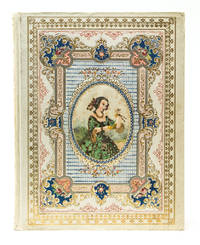
1860257826Milan Venice & Verona: P. Ripamenti Carpano 1860. Volume 13 only. Engraved title and 9 engraved plates after contemporary Italian painters. xxxix i 68 xv iii pp. 4to. Bound in the publisher's "chocolate box" style of white paper boards elaborately embossed and chromolithographed front cover with a central die-cut oval revealing a hand-colored engraving of a woman pulling a necklace from a jewellery box her dress embellished with small jewels rear cover with a central embossed image of a floral boquet some foxing throughout in a custom cardboard chemise. Volume 13 only. Engraved title and 9 engraved plates after contemporary Italian painters. xxxix i 68 xv iii pp. 4to. Volume 13 of this Italian art periodical in a beautiful "chocolate box" style binding of embossed and chromolithographed paper boards. P. Ripamenti Carpano unknown
1860257826Milan Venice & Verona: P. Ripamenti Carpano 1860. Volume 13 only. Engraved title and 9 engraved plates after contemporary Italian painters. xxxix i 68 xv iii pp. 4to. Bound in the publisher's "chocolate box" style of white paper boards elaborately embossed and chromolithographed front cover with a central die-cut oval revealing a hand-colored engraving of a woman pulling a necklace from a jewellery box her dress embellished with small jewels rear cover with a central embossed image of a floral boquet some foxing throughout in a custom cardboard chemise. Volume 13 only. Engraved title and 9 engraved plates after contemporary Italian painters. xxxix i 68 xv iii pp. 4to. Volume 13 of this Italian art periodical in a beautiful "chocolate box" style binding of embossed and chromolithographed paper boards. P. Ripamenti Carpano unknown books
Very Good Turkish, Ottoman (1500-1928) A fine half leather bdg. with marbled boards. Two volumes in one. Cr. 8vo. (20 x 14 cm). The text in Ottoman script (Old Turkish with Arabic letters) with bilingual titles in Ottoman Turkish and French on frontispieces and title pages. 2 volumes set: (248 p.; 270, [1] p., the first volume has Columbus' engraved portrait frontispiece, the second has Amerigo Vespucci's portrait). Hegira: 1310 = Gregorian: 1893. First and only edition of this very rare book, which is the first Turkish original work on the history of the discovery of America printed for the Quadricentennial of the Discovery. With this book, Christopher Columbus and Amerigo Vespucci quickly became popular among Ottoman readers (soon after Iranian readers with a translation of the first volume only), and immediately among other Middle Eastern readers, and thus the first comprehensive and original text describing Colombus and the discovery of America appeared in the Middle East and Islamic world. It's been published in Istanbul under the title "The history of the discovery and conquest of America". The first volume is on Christopher Columbus, and the second volume is on Amerigo Vespucci, their lives and travels. Andreas Kopassis Efendy (1856-1912) was one of the few Ottoman Greeks proficient in the Ottoman literary language. Cretan Kopassis is an intriguing figure who made a remarkable career serving the Ottoman state. At the time of the publication, he was a member of the State Council (Sura-yi Devlet). He displayed quite an extraordinary interest in scholarly research and he seems to have been one of the first to have studied Ottoman "tahrir defterleri" [i.e. Ottoman tax registers]. This could be called a translation in a sense. Kopassis makes no reference to preceding translations, nor does he refer to Robertson's history of America. His main source was a more recent equally "classic" work on Christopher Columbus, Washington Irving's "History of the life and voyages of Christopher Columbus" (first published in 1828). Another source referred to by Kopassis is J. H. Campe's "Entdeckung von Amerika" (first published in 1781). His educational background is evident particularly in the introductory chapter where ample references are made to Pliny, Ptolemy, and Plato's Timaios which contain allusions to Atlantis. In his takri (Introduction) to this work, Kemalpasazade Said Bey (1848-1921) praised the author for his elegant prose. Sultan Abdülhamid awarded the order of merit (liyâkât) in gold to the author. In the same year (1315=1895), an aide-de-camp at the Iranian Ministry of War, Muhibb-i 'Âli Khan, translated the first volume into Persian. At the turn of the century, Christopher Columbus had become a very popular figure for Ottoman readers of all ages...". (Source: STRAUS, JOHANN: Nineteenth-century Ottoman Americana.; "Frontiers of the Ottoman Imagination: Studies in Honour of Rhoads Murphey."). Only one copy in OCLC 777274675 (Leiden University Library). Not in American libraries.; Özege 19857.
First edition, 3 parts in one, oblong 4to (195 x 260 mm), 4; 4; 4pp., 146 engraved plates (complete), cont. half calf, rubbed.
17447113Bozen, (ohne Drucker), 1744. 64, 3 Bll., 54 S., 3 Bll. 1 Kupfer-Frontisp. und 2 Kupfertafeln. 8°. OLdr. (beschabt und bestoßen, Rücken restauriert).
185018142Venedig, (ohne Drucker), 1850. Bde. 3 - 4 (von 4). S. (3) - 216; S. (3) - 156. 90 (1 gefalt.; statt 92) Kupfertafeln. 8°. HLwd. des 19. Jahrhunderts (beschabt und bestoßen). [6 Warenabbildungen]
109114aafIn Roma, MDCCLXIX. Nella stamperia del Casaletti Con licenza de’ Superiori, 1769, in-8vo, LV (+ 1) + 219 p. (+1 bl.), reliure en maroquin vert aux armes de Jean Baptiste Gabriel Pavée (1752-1814), dos à 4 nerfs, encadrement or à l’int. des plats, gardes en papier marbrée, tranches marbrées à l’identique. Bel exemplaire.
61758aafRome, Apud Venantium Monaldini, 1782, in-4to, With engraved frontispiece-portrait and title-page, each within ornamental border and engraved by Carattoni + engraved dedication leaf + 124 excellent engravings, all accompagnied by a decorative engraved cartouche containing the illustration number, (in all 127 engravings), 18th century engraved armorial bookplate ‘Lord Rendlesham’ and one more recent one ‘Robert Wayne Stilwell’, Contemporary marbled boards backed with green morocco (a bit scratched on joints and sides).
139315aafMilano, dalla Società tipografica de Classici Italiani, M. DCCC. XXIII, 1823, 21 x 13 cm. 1 Bl. + 96 S. + 1 w. Bl., exlibris Piero Nava / + Exlibris Peter E. Obergfell, cartonnage original. Pièce de titre orange au dos.
92681aafParis, Cuchet, 1788, in-8vo, VI + 525 p. + 1 tableau et 4 cartes dépliantes (les 4 îles Ponces: Ponza, Palmarola, Ventotene et Zannone), non rogné, pages seulement partiellement coupées, papier très légèrement bruni, rares petites taches, timbre ex-libris de la famille de ‘... Saussure’, brochure d’attente d’époque, dos avec pièce de titre ms., début de fentes, couverture détachée, manque le 2e plat. (à relier)
94348aafs.d., vers 1990, imp. in-folio, reliure en d.-cuir originale. Ex. en parfait état.
107017aafs.d. vers 1835) 20.3x30 cm, filigrane du papier: ‘LA BRIGLIA’ & ‘D. LORENZO’, 1 feuille.
138663aafPrinted for private circulation, 1878, in-8°, 48 p., illustrated with 5 wood engravings of which 2 full-page, presentation card of ‘Walter N.N. Reid ... Edinburgh’, with his hw. dedication ‘to Lady Geddes with ...'s compliments 15/11/21’ / Exlibris Peter E. Obergfell, original blind tooled cloth binding, gilt title on frontcover. Very good condition.
125249aafVenezia, Tipografia Municipale di Gaetano Longo, M DCCCLXVIII, 1868, gr. in-8vo, 2 ff. + 116 p. + 1 f. ‘errata-corrige’ + 9 planches lithogr. avec 35 figures (Lit. Longo), reliure en d.-cuir recente. Dos orne or.
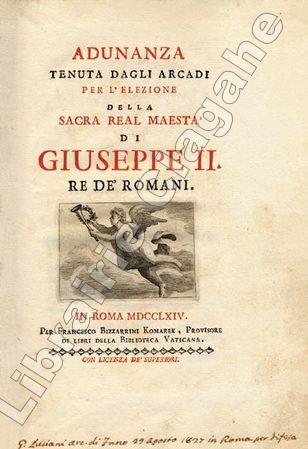
17644373Roma, 1764, per Francesco Bizzarini Komarek, Provisore di libri della Bibliotheca Vaticana ; grand in-8, plein vélin ivoire, titre manuscrit (reliure de l'époque) ; VIII, 120 pp., vignette de titre, lettrine et cul-de-lampe gravés, ouvrage entièrement imprimé en rouge et noir.
17865688Aus dem Italiänischen [übersetzt von Johann Jakob Volkmann]. 3 Teile in 1 Band. Mit gest. Titelvign., 8 gest. Tafeln u. 1 gefalt. Tab. Leipzig, Schwickert, 1784-1786. 8vo. (19,8 x 11,4 cm). 1: 4 Bl., 303 S. 2: 3 Bl., 362 S. 3: 3 Bl., 342 S. Marmorierter Halblederband d. Zt. mit rotem Rückenschild u. etwas Rückenvergoldung. [4 Warenabbildungen]
184063048Pesth, Verlag von C. A. Hartleben, o. J. (um 1840). Gr.-8°. Titel (in Grün gedruckt mit rotbrauner Bordüre) u. 18 Stahlstichtafeln m. Seidenhemdchen. Blindgepr. (Orig.-?)Ppbd. m. Leinenrücken u. gedrucktem Deckelschild.
Acquaforte e puntasecca, circa 1900. Titolo a matita in basso e firma autografa in basso a destra “C. Biseo”. Magnifica prova, impressa con inchiostro verde su carta coeva, tracce di antica inquadratura, per il resto in eccellente stato di conservazione. Marcelle Renée Lancelot, coniugata Croce (Parigi, 26 gennaio 1854 – ca 1946), è stata una pittrice, scultrice e medaglista francese naturalizzata italiana. In seguito al matrimonio con lo scultore Leonardo Croce, prese la nazionalità italiana, cambiando il nome in Marcella. Visse per diversi anni a Roma, a partire dal 1895. Oltre alla pittura e alla scultura, si dedicò anche fin da giovane alla professione di medaglista. Cesare Biseo pittore, acquarellista e incisore, nasce a Roma, ove il padre, Gian Battista, valente pittore accademico di Brescia, si era da poco trasferito essendo stato chiamato a decorare il castello di Bracciano. Riceve dunque dal padre i primi insegnamenti artistici e, a seguito del genitore, trascorre da giovane un lungo periodo a Parigi. Nel 1869, in occasione dell’inaugurazione del Canale di Suez, il Kedivé d’Egitto lo chiama a decorare prima il suo palazzo in Alessandria e poi il Teatro dell’Opera al Cairo. Innamoratosi dell’Africa la visita più volte e nel 1875 con Edmondo De Amicis e il pittore Stefano Ussi fa parte della prima missione italiana in Marocco. Ne trae diversi albi di schizzi, che utilizza per illustrare, insieme ad Ussi, il libro di De Amicis, Marocco, edito nel 1877 dalla casa editrice Treves di Milano. Nello stesso anno accompagna De Amicis a Costantinopoli, illustrando poi l’omonimo libro dello scrittore pubblicato nel ’78 sempre dalla Treves. Il grande successo di entrambe le edizioni consacra Biseo “orientalista”, spingendolo ad intensificare la produzione di oli ed acquarelli a soggetto arabo. Intanto nel 1875, assieme a E. Roesler Franz e N. Cipriani, fonda a Roma la Società degli Acquerellisti, di cui diviene presidente nel 1881. La vena orientalista, infatti, non gli aveva fatto dimenticare la passione per i paesaggi della Campagna Romana, ritratti con grande fedeltà ed originali tagli di luce (“l’ardito effetto di sole”), evolvendo dall’originario gusto classico verso soluzioni sempre più veriste. Lo troviamo anche tra i soci fondatori del Gruppo dei XXV della Campagna romana, ove Pascarella gli affibbia il nomignolo di “cariate” per i suoi trascorsi egiziani. Ebbe lo studio a via Margutta e fu, come le foto di Oreste Sgambati stanno a dimostrare, un frequentatore assiduo del Caffè Greco, dove fu soprannominato “professorissimo” per la sua maestria a biliardo. Oltre agli affreschi ed alle decorazioni degli esordi, dipinge ugualmente bene ad olio e all’acquarello. Si è inoltre dedicato con successo all’acquaforte, come dimostrano le sue bellissime illustrazioni di libri. Il presente ritratto di Marcella Lancelot Croce, confrontando le biografie dei due artisti, risale al periodo tra il 1895 e il 1909, tra l'arrivo della pittrice a Roma e la scomparsa di Biseo. Opera non descritta da nessuno dei repertori consultati. Molto rara. Etching and drypoint, circa 1900. Title in pencil at bottom and autograph signature at bottom right "C. Biseo". Magnificent example, impressed in green ink on coeval paper, traces of old framing, otherwise in excellent condition. Marcelle Renée Lancelot (Paris, January 26, 1854 - ca 1946) was a French painter, sculptor and medallist naturalized Italian. Following her marriage to the sculptor Leonardo Croce, she took Italian nationality, changing her name to Marcella. She lived for several years in Rome, starting in 1895. In addition to painting and sculpture, she devoted herself to the profession of medallist since she was young. The present portrait of Marcella Lancelot Croce, comparing the biographies of the two artists, dates from the period between 1895 and 1909, between the painter's arrival in Rome and Biseo's death. Work not described by any of the repertories consulted. Very rare. Cesare Biseo painter, watercolorist and engraver, was born in Rome, where his father, Gian Battista, a talented academic painter from Brescia, had recently moved to decorate the castle of Bracciano. Receives therefore from the father the first artistic teachings and, following the parent, spends as a young man a long period in Paris. In 1869, on the occasion of the inauguration of the Suez Canal, the Kedivé of Egypt called him to decorate first his palace in Alexandria and then the Opera House in Cairo. Having fallen in love with Africa, he visited it several times and in 1875 with Edmondo De Amicis and the painter Stefano Ussi was part of the first Italian mission to Morocco. It draws several albums of sketches, which used to illustrate, along with Ussi, the book of De Amicis, Morocco, published in 1877 by the publisher Treves in Milan. In the same year accompanies De Amicis in Constantinople, then illustrating the homonymous book of the writer published in '78 always by Treves. The great success of both editions consecrates Biseo "orientalist", pushing him to intensify the production of oils and watercolors to Arab subject. Meanwhile in 1875, along with E. Roesler Franz and N. Cipriani, founded in Rome the Society of Watercolorists, of which he became president in 1881. The orientalist vein, in fact, had not made him forget the passion for the landscapes of the Roman countryside, portrayed with great fidelity and original cuts of light ("the bold effect of the sun"), evolving from the original classical taste towards more and more realistic solutions. We also find him among the founding members of the Group of XXV of the Roman Countryside, where Pascarella gives him the nickname of "cariate" for his Egyptian past. He had a studio in Via Margutta and was, as the photos of Oreste Sgambati demonstrate, a frequent visitor to the Caffè Greco, where he was nicknamed "professorissimo" for his mastery at billiards. In addition to the frescoes and decorations of the early days, he painted equally well in oil and watercolor. He also devoted himself successfully to etching, as evidenced by his beautiful book illustrations.
16817502CBFranckfurt, Merian, 1681. (2) Bl., 74 S., (2) Bl. Mit 2 doppelblattgrossen gest. Plänen und 96 (von 99) Kupfertafeln Pergamentband der Zeit. + Wichtig: Für unsere Kunden in der EU erfolgt der Versand alle 14 Tage verzollt ab Deutschland / Postbank-Konto in Deutschland vorhanden +, 7502CB
167857356Bozen, Paul Nicolaus Führer, 1678. 8°. Mit einem gefalt. gest. Frontispiz, 12 gest. Wappentafeln, einer gefalt. Kupferkarte u. einigen Holzschn.-Vignetten bzw. -Initialen. 4 Bll., 234 S.; 1 Bl., 224 S., 2 Bll., HLdr. d. Zt. m. goldgepr. Rückenschild u. dreiseitigem Rotschnitt.
40501Paris Librairie Gallimard N.R.F 1928 in 4 (24,5x19,5) 1 volume reliure reliure demi basane fauve de l'époque, dos à nerfs, couverture conservée, 72 pages [1], suivies de 77 illustrations hors-texte en noir et blanc, photogravées d'après les oeuvres de Max Ernst, Giorgio de Chirico, Joan Miro, Georges Braque, Arp, Francis Picabia, Pablo Picasso, Man Ray, André Masson, Yves Tanguy, papier couché. Achevé d'imprimer à la date du 11 février 1928. Edition originale, exemplaire numéroté. Bel exemplaire ( Photographies sur demande / We can send pictures of this book on simple request )
In-8°; pp. 164, (2), legatura in mezza pergamena con tassello e titolo in oro al dorso. il nome dell’autore, Cesare Beccaria Bonesana (Milano 1738 - 1794) , è in fondo alla dedica a Carlo. La seconda parte dell’opera annunciata nella lettera al lettore uscirà solo nel 1809. L’opera, qui in edizione originale e in forma organica, fu il frutto di alcuni studi e ricerche che Beccaria pubblicò sul la rivista il “Caffè”, e che avevano come oggetto la libertà dello stile dall’autorità della tradizione letteraria. In quest’opera l’autore teorizza il rinnovamento dei generi letterari e la maggiore aderenza delle parole alle cose. Ex libris Avv. Queirolo. Firpo II, p. 512. retorica lingua italiana italian language discorso stile style illuminismo milano critica letteraria linguistica beccaria milano
Un testo e due poesie ("Teste" - "Non c'è retorica che basti") di Pietro Consagra. 16 tavole in bianco e nero f.t. applicate su cartoncino che riproducono opere su carta di Consagra. Una delle 60 copie con 2 litografie originali a due colori, numerate e firmate dall'Artista a matita (cm 24,5 x 20,4). Edizione in italiano, francese e inglese Esemplare N. 20. Stampato su fogli di carta alternata verde e rosa. Brossura editoriale illustrata con una composizione di Consagra. 8vo (24,3x21,5). pp. 24 + tavole. . Molto buono (Very Good). Sovracoperta con minime mancanze, riparate con nastro carta nella parte interna (Some chipping and nicks around top and bottom of covers; some repairs repaired with adhesive tape on the inside). Edizione originale di 500 esemplari numerati (Original edition of 500 numbered copies). .
Copia appartenuta all'Autore che l'aveva utilizzata per selezionare alcune parti in previsione della pubblicazione su rivista di un estratto dell'opera. L'Autore ha apportato al testo anche delle correzioni a penna, poi riprese in alcune edizioni successive Edizione privata pubblicata dall'Autore in memoria del fratello Alberto Savinio. 8vo. pp. 190. . Molto buono (Very Good). . Seconda edizione (2nd Edition). .
50 disegni Facsimile di una lettera di D'Annunzio applicata in prima pag. bianca. Cm 30x25. pp. 8 n.n.+ tavole. Dedica e firma autografe dell'Autore (Inscribed and signed by the Author). Ottimo (Fine). . Prima edizione (First Edition). . Primo libro di Favai.