42 311 résultats
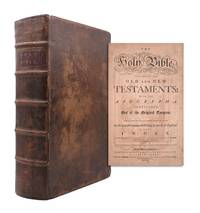
1789101717Philadelphia: William Young 1790 i.e. 1789. First edition thus. 12mo. 816 pp. with separate New Testament title-page. Collation: A-2L¹². Contemporary sheep; covers worn with some loss to leather exposing boards front joint split and holding by one cord rear joint with old sewed repair contents toned and dust-soiled a few gatherings worn at fore-edge touching text U1 "Song of Solomon" torn and damaged with loss to text and old paper repairs FIRST EDITION OF THE SECOND ENGLISH BIBLE PRINTED IN THE UNITED STATES and the first English Bible printed after the adoption of the Constitution. It follows Robert Aitken's Bible published in Philadelphia 1781-2. Printing of Young's 12mo Bible which Hills states was advertised for use in schools was already underway when Aitken's 1789 application to Congress for an exclusive right to publish Bibles in America was rejected. Evans notes that "this edition was published in 1789 although dated 1790" and quotes from the publisher's advertisement: "this edition has two strong recommendations to preference it is cheaper than any imported edition; and it is composed entirely of American manufacture." Young followed with a 24mo edition with metrical psalms in 1790.Rare: ESTC locates three copiestwo at AAS NYPL. Complete and in its original binding.PROVENANCE: contemporary birth records on verso of New Testament title-page for Vannosdoll family; Catherine Pellar early ownership inscription on title-page REFERENCE: ESTC W4491; Evans 22345; Herbert 1348; Hills 25 24mo issue; Rumball-Petre America's First Bibles Appendix no. 13 "Second Protestant Bible in English"; Sabin 5168; not in Darlow and Moule William Young hardcover
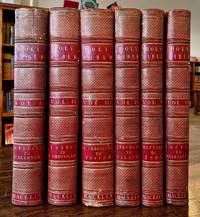
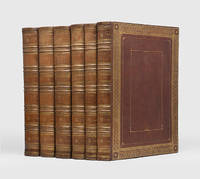
1800173564London: printed for Thomas Macklin by Thomas Bensley 1800. The grandest Bible ever printed in Britain First Macklin edition of the Bible handsomely bound. "The most ambitious edition produced in Britain often pirated but never rivalled" ODNB this Bible is a masterpiece of book art published at the apogee of British copperplate engraving and involving some of the best artists of its day. The Bible dedicated to the king was published serially between 1791 and 1800 in 70 parts each at £1. 1s. Thomas Macklin 1752-1800 began work on the project in the year following the opening of his famous Poets' Gallery in Pall Mall. The prospectus issued in 1789 explained that he was planning to add scripture pictures to his exhibition to be then reproduced in a "magnificent Bible". The paintings were realised by several artists including Hamilton Fuseli and Loutherbourg and exhibited at the Poets' Gallery between 1790 and 1796. Initially promising 60 plates the project eventually included 71 some of which never appeared in Macklin's exhibitions. Most of the headpiece and tailpiece vignettes were designed by Loutherbourg the type was cut by Joseph Jackson and his apprentice Vincent Figgins and the paper made by Whatman. The Bible took 11 years to complete and the publication costs exceeding £30000 almost bankrupted Macklin. Though the final engraving was finished five days before his death the last of the vignettes was not completed for another six weeks and he consequently never saw the finished work. Some copies of the Bible were bound in a fine neoclassical style by contemporary London binders particularly Staggemeier and Welcher. This set is unsigned but the treatment of the spine appears closer to the work of Kalthoeber see Maggs Cat. 1212 II no. 164. This set is bound in six volumes as recommended in the instructions to the binder vol. I. However sets are sometimes found bound in seven. 6 vols large folio 458 x 370 mm. With 71 copper engraved plates after Fuseli and others 113 wood engraved vignette head- and tailpieces. Contemporary diced russia spines with raised bands compartments lettered and tooled in gilt elaborate gilt frames to covers incorporating foliate and flower tools board edges and turn-ins tooled in gilt leather inner hinges marbled endpapers edges gilt silk bookmarkers. Bound with half-titles. A few trivial marks and light scuffs to covers small cosmetic repair to rear cover of vol. I superficial splits to a couple of joints subsequently retouched and now firm occasional foxing to contents and offsetting from plates else clean and bright. A very good set. ESTC T123175; Herbert 1441; Lowndes I p. 192. Maggs Bros Ltd Bookbinding in the British Isles Sixteenth to the Twentieth Century Cat. 1212 Part II 1996. hardcover
1638371824Cambridge: Thomas Buck and Roger Daniel 1638. Large paper copy. Ruled in red throughout. Roman letter in two columns. Engraved title page within architectural border featuring Biblical characters a vignette of the 'Last supper' and printer's device. 12 642 151 3 202pp. Bound with preceding the Bible: The Book of Common Prayer. 104pp. And with following the Bible: Whole Book of Psalmes. 8 1 2-90 10 pp. Folio 17 x 11 inches. Contemporary black morocco gilt covers panelled with roll tool borders and central arabesque design in gilt flat spine gilt with marching morocco labels gilt edges minor wear at joints lower corners bumped. Provenance:Webb early inscription on the front pastedown; Maggs Brothers item 827 in unidentified mid-20th century catalogue clipping laid in; General Theological Seminary bookplate. Large paper copy. Ruled in red throughout. Roman letter in two columns. Engraved title page within architectural border featuring Biblical characters a vignette of the 'Last supper' and printer's device. 12 642 151 3 202pp. Bound with preceding the Bible: The Book of Common Prayer. 104pp. And with following the Bible: Whole Book of Psalmes. 8 1 2-90 10 pp. Folio 17 x 11 inches. This edition contains the first major revisions of the King James version standardising the use of italics and altering several readings. "This remained the standard text until the publication of Dr. Paris' Cambridge edition of 1762" Herbert.<br /> <br /> A lovely example bound in contemporary English black morocco and measuring 430x280mm is considerably larger than the dimensions cited by Darlow & Moole 402 375x234 mm and Darlow & Moole 403 for a "large thick paper" copy 397x270 mm. Bible: Herbert 520; Darlow & Moule 402 and 403; ESTC S123371; STC 2nd ed 2331. Common Prayer: Griffiths 1638:2; STC 2nd ed. 16410; ESTC S902. Psalms: STC 2nd ed. 2682; ESTC S122380 Thomas Buck and Roger Daniel unknown
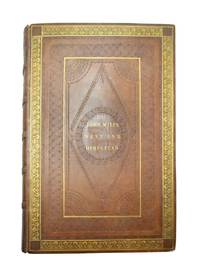
176369256Cambridge: Printed by John Baskerville 1763. BIBLE IN ENGLISH; BASKERVILLE John. BASKERVILLE John. The Holy Bible Containing the Old Testament and the New. Translated out of the Original Tongues and with the Former Translations Diligently Compared and Revised by His Majesty's Special Command. Appointed to be Read in Churches. Cambridge: Printed by John Baskerville 1763.<br> <br> Full Description:<br> <br> BIBLE IN ENGLISH. The Holy Bible Containing the Old Testament and the New: Translated out of the Original Tongues and with the Former Translations Diligently Compared and Revised by His Majesty's Special Command. Appointed to be Read in Churches. Cambridge: Printed by John Baskerville 1763.<br> <br> First edition with the list of subscribers in the third state ending with "The Hon. Charles York Esq; Attorney General." Two large folio volumes in one 19 1/8 x 12 1/4 inches; 480 x 311 mm. Complete with 573 leaves. Text ends on leaf 13E1 and is followed by an Index and Tables a-e f1. List of subscribers bound in after title-page and dedication. Text in double columns.<br> <br> Beautifully bound in early 19th-century full diced tan calf. Boards elaborately ruled and tooled in gilt and blind. Spine stamped and lettered in gilt. Front board lettered in gilt reading "John Miles/ West End/ Hampstead." Marbled endpapers. All edges marbled. Gilt dentelles. Back board with some very mild scuffing and a tiny bit of worming to head of board and at top and bottom of outer hinge. Some light foxing to first title-page and preliminary leaves but text is very clean. With the dates of births and deaths of the Miles family in old ink manuscript on the front free endpaper. Overall a very good clean copy.<br> <br> Originally priced four guineas in sheets for subscribers "the edition consisted of 1250 copies of which 556 were remaindered in 1768 and bought by the London bookseller R. Baldwin at 36s. each.Baldwin was offering copies at three guineas in sheets in 1771" Gaskell.<br> <br> "One of the most beautifully printed books in the world" Dibdin. This edition "has always been regarded as Baskerville's magnum opus and is his most magnificent as well as his most characteristic specimen" T.B. Reed A History of the Old English Letter Foundries p. 279. Gaskell declared that the title-page to the New Testament is "a perfect page of fine printing."<br> <br> Although the Baskerville Bible is now recognized as one of the greatest Bibles of all time it was initially a financial failure. Costing £2000 to print the remaining stock about half of the edition was remaindered five years after publication to a London bookseller. It was Baskerville's last great book.<br> <br> "Aesthetically the highest point in English Bible printing so far was John Baskerville's folio printed at Cambridge in 1763. To achieve his ambition to print a folio Bible Baskerville had to become University Printer on not very advantageous terms. The Bible uses his types paper and ink and shows his characteristic 'machine-made' finish: very smooth and even in colour and impression with glossy black ink on smooth paper. The design is traditional but the quality of material and workmanship is so high and the conventions are so delicately modified and consistently applied that the result is extremely impressive" The Cambridge History of the Bible: The West from the Reformation to the Present Day p. 464.<br> <br> Darlow & Moule 857. ESTC T93106. Gaskell Baskerville 26. Herbert 1146. Huntington Library Great Books in Great Editions 6.<br> <br> HBS 69256.<br> <br> $15000. Printed by John Baskerville unknown
1650778EHB223STDEngland London 1650. Size when opened: 17 x 25 cm. Ivory silk satin richly decorated in a colourful floral design with goldwork metal sequins and clusters of seed pearls the text "voir nostre domine" embroidered on the front and back. Exquisitely embroidered 17th-century English binding with a colourful floral design comparable to the very few silk bindings decorated in London during the years ca. 1625-1650 that have survived. The design which is identical on both sides showcases a crowned Tudor rose with its stem in a vase surrounded by flowers foliage and ornamented leaves with the text "voir nostre domine" at the top. It has been embroidered onto a base of ivory silk satin lined with white linen and decorated with four blue painted ornaments on the interior. The work has been executed with an exquisite pallet of green blue pink red orange white brown and gold threads brilliantly contrasting the ivory white of the base fabric.All sections and shapes have been beautifully outlined with gold thread fastened with red silk. The hearts of the roses the crowns the vases and the initials V and D of the text have been decorated with small pearls. Little round sequins are scattered in the foliage filling the negative space. At the interior two pockets have been sewn intended for the insertion of a book probably a Psalter of ca. 16.5 x 10 cm or 12mo format.Some sections are a little bit faded the embroidery on the spine and around the edges is partly detached missing a few pearls and sequins and likely some goldwork the silk is slightly water stained on the interior. Otherwise an extremely rare specimen of a very richly decorated silk bookbinding in very good condition.l Cf. Barber Textile and embroidered bindings plate 21; Davenport English embroidered bookbindings 43; Tregaskis Catalogue 878 1923 no. 4. unknown
1613U11<p><em>The Holy Bible conteyning the Old Testament and the New: Newly translated out of the originall Tongues: And with the former Translations diligently compared and revised by his Majesties Speciall commandement.</em></p><p><strong>Summary</strong></p><p>A textually complete 72-line folio King James She Bible. Bound with Speed's Genealogies in eighteenth century calf.</p><p><strong>Description</strong></p><p>Pulpit Folio 15.5" x 10.5". General title page in facsimile. Preliminaries include the <em>Translators to the Reader </em>11 pp.; <em>Kalendar</em> in red and black 6 ff.; <em>Almanack </em>1 p. in red and black; <em>The Table and Kalendar Expressing the order of the Psalms and Lessons… </em>5 pp.; <em>The Names of all the Books…</em> in red and black 1 p. Bound with <em>The Genealogies…</em> by John Speed 34 pp. without the double-page map. Text in two column black letter in smaller type with 72 lines to the full column. Text within ruled border. Each chapter begins with a woodcut initial. New Testament title page 1613 features the Tetragrammaton above the Agnus Dei and the Holy Dove with Matthew and Mark on either side; on the left side are the tents of the twelve tribes and on the right side the twelve apostles; below the letterpress are the Lamb slain along with Luke and John. Many headpieces vignettes and decorated initials throughout.</p><p><strong>Collation</strong></p><p>A-B4 -A1 title C6 D4 prelims; A-C6 Genealogies; A-Z6 Aa-Zz6 Aaa-Zzz6 Aaaa-Mmm6 Nnnn6 Bible text. <strong><em>Lacks</em></strong> general title page supplied in facsimile.</p><p><strong>Binding</strong></p><p>Eighteenth century calf rebacked and recornered with original spine laid down. Boards paneled in blind. Spine with six raised bands blind stamps to compartments and a red morocco label with the words "Holy Bible" lettered in gilt. Plain endpapers.</p><p><strong>Condition</strong></p><p>Light browning and staining but generally clean throughout; trimmed occasionally touching headline; A2 A3 of prelims with lower marginal loss; A4 B6 Kkkk2-5 with marginal fraying or loss not impacting text; Z6 Ss6 NT title with small repair to gutter; Uuu6 with small marginal loss; final leaf of Revelation stained and laid down.</p><p><strong>Provenance </strong></p><p>Eighteenth century ownership inscription of Thomas Chisnal to A23. Badder family manuscript record of births from 1765-85 to 3T5v.</p><p><strong>Note </strong></p><p>The true 1613 folio edition "easily distinguishable from the other large folio editions by its smaller type" Herbert. The number of leaves are reduced from 732 to 508 and was "no doubt designed as a cheaper alternative for poorer churches" Norton <em>A Textual History of the King James Bible</em> p. 76. This true second folio introduces four readings that have become standard: 'that ye may have' for 'the he may haue' Ez 6:8 'she poured it not' for 'she powred it' Ez 24:7 'as a flower' for 'as floure' 2 Es 15:50 and 'what thy right hand doeth' for 'what they right doeth' Mt 6:3.</p><p><strong>References </strong></p><p>Herbert 322; USTC 3005767; ESTC S122066.</p> Robert Barker hardcover
1612R28<p>London: Robert Baker 1612. 4to approx. 7.5" x 5.5". A scarce copy of the first separately issued quarto New Testament of the King James Version. A very early printing closely conforming to the first edition He Bible.</p><p><strong>Description: </strong>Title page 1612 with woodcut border featuring the four gospel symbols and the figures of fides and humilitas with the royal arms above. Text in single column black letter with headings and marginal references in Roman type. Concludes with dated colophon 1612. First chapter floriated initials head- and tailpieces.</p><p><strong>Collation:</strong> A-Z8 -A4 A5 Aa-Vv8. Lacks two leaves Matthew 2:17-4.</p><p><strong>Binding:</strong> Nineteenth century blind paneled brown calf. Rebacked with old brown morocco spine. Gray plain endpapers. All edges red. Rubbed with bumped corners.</p><p><strong>Condition:</strong> Text is generally clean with sporadic marginal spotting; final leaf lightly soiled; title page with short marginal tear mounted on a stub with small loss to inner margin; four leaves with lower marginal loss not impacting text; headlines cropped on a handful of leaves; overall a bright copy.</p><p><strong>Provenance: </strong>"M W Stoddard August 1870" to front endpaper; "Thomas Bonn was born in the year 1694" to verso of title page.</p><p><strong>Note:</strong> Arguably the most important book ever published in English and an opportunity to own a first edition at the fraction of the price of a complete He Bible. Macaulay said of it "If everything else in our language should perish the King James Bible would alone suffice to show the whole extent of its beauty and power" PMM 114. The quarto New Testament is more scarce than its complete quarto Bible counterpart H313 and slightly more common than the very scarce octavo and 12mo editions H310 and H315.</p><p><strong>References:</strong> Herbert 318; ESTC 2910; USTC 3004925 with only 18 copies in holdings.</p> Robert Barker hardcover
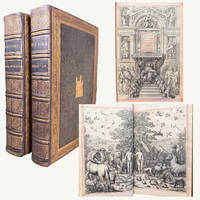
1660T24<p><em>The Holy Bible containing the Bookes of the Old and New Testament…</em></p><p><strong>Summary:</strong> Pulpit Folio in 2 Vols. 19" x 13". A pulpit folio Field's Bible commemorating the restoration of Charles II. Bound in contemporary morocco with six double plate engravings including Adam and Eve in the Garden and Solomon's Temple.</p><p><strong>Description:</strong> 2 works in 2 vols. Begins with <em>The Book of Common Prayer </em>with printed title page 1660 preceded by a full-page engraving of the Royal Arms by Hollar. The entire work is elaborately ruled in red and features wide margins. Engraved title page by Diepenbeeck and Lambart featuring King Solomon on the throne with David Moses and Aaron above. Double page plate of Adam and Eve in the Garden featuring a variety of animals including a unicorn. The second double page plate with vestments and details of the tabernacle. Other plates include a map various views of Solomon's temple and a very large fold-out of Jerusalem.</p><p><strong>Collation:</strong> a2 A-Z2 Aa-Ll2 BCP par4 parpar4 A-Z6 Aa-Zz6 Aaa-Kkk6 Lll4 Genesis-Job; Mmm-Zzz6 Aaaa-Yyyy6 Zzzz8 a-y4 A-Z6 Aa-Dd6 Ee8 Psalms – Revelation.</p><p><strong>Binding:</strong> Nineteenth century dark green paneled morocco. Covers with gilt stamp image featuring Kin's College Chapel in Cambridge around an elaborate gilt rolled border. Spine with six sets of double raised bands and elaborate tooling to compartments with the words "Holy Bible" and "Genesis – Job" or "Psalms – Revelation" lettered in gilt along with a date to foot. Red endpapers. All edges gilt with inner dentelles. </p><p><strong>Condition:</strong> The text is clean and bright appearing unread; Garden of Eden plate mounted to stub with repaired closed tear; Map of Jerusalem with a few short closed tears. Joints in volume 2 cracked but holding firm.</p><p><strong>Note:</strong> A very good copy of the popular Restoration Bible celebrating the return of Charles II. The text was first published the previous year by John Field printer to the University of Cambridge who had been commissioned to supply a lectern bible for use in churches and libraries. Former university Vice-Chancellor John Worthington noted that "For a fair large letter large paper with fair margin … there was never such a Bible in being". This work is the first King James Bible provided with illustrations and beautiful double-plate engravings at that.</p><p><strong>References:</strong> Herbert 668; ESTC R17044; Wing B2258.</p> John Field hardcover
179728174Birmingham England 1797. Oblong quarto. 7 1/2 x 11 inches. 143 engraved plates 13 folding on laid paper priced throughout in manuscript. Period calf-backed marbled paper covered boards<br/> <br/>Provenance: W. G. & Co. inscription on front endpaper<br/> <br/>A rarely encountered pattern book or trade catalogue of 18th century English furniture hardware including drawer pulls keyholes hinges locks castors bolts watch stands and more.<br/> <br/>By 1770 over thirty different brass foundries operated in Birmingham England making it the epicenter of furniture hardware design in the last quarter of the 18th century. At roughly the same period trade catalogues like the present began to be issued by both furniture and hardware makers alike. Although most of the brass foundry trade catalogues of this early period have no indication of the foundry the present pattern book is inscribed W. G. & Co. on the front pastedown. In all nearly 1000 designs are shown on the 143 plates from rather simple hinges and hooks to incredibly ornate pulls knockers watchstands etc. Although no engravers's names are identified it has been suggested that the foundries themselves produced such plates utilizing the talents of their own craftsmen who by their very occupation would have been highly skilled at etching on metal. Such pattern books "illustrate the beginning of what was then a new movement in the conditions of the crafts namely the growth of the organised factory as a means of production and distribution as compared with the earlier limitation of these functions to the efforts of individuals" Young.<br/> <br/>Cf. Hummel Charles F. "Samuel Rowland Fishers Catalogue of English Hardware." Winterthur Portfolio Vol 1 1964: 188-197; cf. Symonds R. W. "An Eighteenth-Century English Brassfounders Catalogue." Magazine Antiques Feb. 1931: 102-105; Young W. A. comp. Old English pattern books of the metal trades: a descriptive catalogue of the collection in the V&A Museum. London: HMSO 1913. unknown books
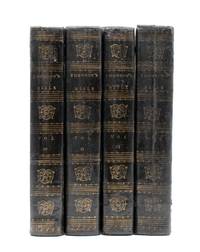
1808354112Philadelphia: Printed by Jane Aitken 1808. First edition. 512; 490; 444; 472pp. 4 vols. 8vo. Contemporary full black morocco gil likely bound by Jane Aitken minor wear at joints one spine splitting but holding. First edition. 512; 490; 444; 472pp. 4 vols. 8vo. "Charles Thomson 1729-1824 made the first translation of the Septuagint into the English language and the first English translation of the New Testament in the western hemisphere. Thomson spent twenty years in making the translation. The books called Apocrypha which are included in the canon of the Greek Old Testament but not in the Hebrew were omitted in his translation. After copying the manuscript four times he had it published at Philadelphia by Jane Aitken the first woman to print any part of the Holy Scriptures in America and the daughter of the printer Robert Aitken. It is of interest that the name 'Cha. Thomson' appears as the signer of the Congressional resolution in the front of the 1782 Aiken Bible" Hills.<br /> <br /> Charles Thomson emigrated to America from his native Ireland in 1739. On recommendation of Benjamin Franklin he served as a tutor at the College of Pennsylvania later the University of Pennsylvania. He later left teaching for business in which he prospered. "Because of his reputation for fairness and integrity he was chosen by the Indians to keep their record of proceedings at the treaty of Easton 1757 and in the following year he was adopted into the Delaware tribe with a name meaning `man who tells the truth'" DAB. He was an early and ardent supporter of the Revolution and was unanimously elected Secretary to the Continental Congress serving in that post from 1774 to 1789. Thomson "was the very man in Philadelphia with whom John Adams busily probing the minds of all and sundry on the vital questions involved would wish to have as he did have 'much conversation.' 'This Charles Thomson' Adams wrote 'is the Sam Adams of Philadelphia the life of the cause of liberty they say.'" DAB. Thomson resigned his post when he was offered no part in Washington's inauguration ceremonies nor any post in the new administration. He devoted the next twenty years to his monumental translation.<br /> <br /> Jane Aitken continued her father Robert's business after his death in 1802. "She had in 1810 a printing house in Philadelphia. She obtained much reputation by the productions which issued from her press" Thomas. In addition to being one of the first American female printers Jane Aitken was also a bookseller bookbinder businesswoman and employer. The typeface Aitken used for the Thomson Bible was an attractive and utilitarian type developed in 1796 by two Scotsmen Binney and Ronaldson at their Philadelphia type foundry. The Thomson Bible is considered her greatest printing achievement and the first Bible printed by a woman in America.<br /> <br /> This set in a very unusual American full morocco gilt binding likely bound by Aitken's shop. See Spawn Willman and Carol Spawn "The Aitken Shop: Identification of an Eighteenth-Century Bindery and Its Tools" in The Papers of the Bibliographical Society of America vol. 57 no. 4 1963 pp. 422-37. Darlow & Moule 1005; Herbert 1514; Rumball-Petre 184; O'Callaghan 1808.2; Wright p.113; Hills 153; Thomas History of Printing in America p.402 Printed by Jane Aitken unknown
1791345231Worcester: Isaiah Thomas 1791. First Edition of Isaiah Thomas's Folio Bible. 50 engraved plates. Folio. Contemporary calf red morocco lettering piece. Expert repairs at top and bottom of spine. Housed in a morocco backed box. First Edition of Isaiah Thomas's Folio Bible. 50 engraved plates. Folio. "The two Thomas Bibles of 1791 were without doubt far in advance of any other publications of the same kind that had appeared in America in point of typography excellence of paper binding and general execution"--Wright Early American Bibles pages 74-88. Evans 23186; Hills 29; ESTC W4497 Isaiah Thomas unknown
185369294Philadelphia: Isaac Leeser 1853. BIBLE IN ENGLISH; LEESER Isaac. LEESER Isaac translator. The Twenty-Four Books of the Holy Scriptures. Carefully translated according to the Masoretic Text on the Basis of the English Version after the best Jewish Authorities; and supplied with short Explanatory Notes. By Isaac Leeser. Hebrew "For it shall not be forgotten out of the mouth of his seed." Dent. xxxi 21. Philadelphia: Isaac Leeser 1853.<br> <br> Full Description:<br> <br> BIBLE IN ENGLISH. LEESER Isaac translator. The Twenty-Four Books of the Holy Scriptures. Carefully translated according to the Masoretic Text on the Basis of the English Version after the best Jewish Authorities; and supplied with short Explanatory Notes. By Isaac Leeser. Hebrew "For it shall not be forgotten out of the mouth of his seed." Dent. xxxi 21. Philadelphia: Isaac Leeser 1853.<br> <br> First edition of the first complete translation of the Old Testament by a Jewish translator into English building upon Leeser's 1845 translation of the five books of the Pentateuch translation in 1845-1846. Folio 10 3/8 x 8 3/8 inches; 275 x 212 mm.<br> <br> Original full brown morocco. Boards ruled and elaborately stamped in gilt. Spine stamped and lettered in gilt. All edges marbled. Marbled endpapers. Binding with some restoration along joints and edges. A bit of foxing mainly to the preliminaries. Some occasional light dampstaining. Overall a very good copy.<br> <br> "Having published a five-volume Pentateuch-cum-haftarot lections from the Prophets translation in 1845-1846 as well as a complete vocalized and accentuated Hebrew Bible in 1848 the first such edition published in the U.S. he proceeded from April 1852 to September 1853 to extend his translation efforts to the entire Hebrew Bible. The result was his Twenty-Four Books of the Holy Scriptures the first translation of all of Tanakh into English by a Jew complete with short explanatory notes. Leeser explained in the preface to his magnum opus that he undertook the project in order to provide Anglophone Jewry with a vernacular version of the Bible "which has not been made by the authority of churches in which they can have no confidence" pp. iii-iv. The book achieved wide popularity among English-speaking Jews and even some Gentiles especially in America and went through multiple editions." Sotheby's<br> <br> "The translation of the Bible was Leeser's great literary achievement and represented many years of patient labor and devotion to a task which he considered sacred. Leeser was not fully equipped for this work for he was no specialist in Hebrew philology nor a master if Jewish learning in general and he was quite conscious of his shortcomings but he was inspired. He says in his preface: 'I thought in all due humility that I might safely go to task confidently relying upon that superior aid which is never withheld from the inquirer after truth.' He made good use of the various German translations by Jews of the collective commentary known as the Biur vol. III sec. 81 and of other Jewish exegetic works. As a result his translation though based in style upon the King James version can be considered an independent work for the changes he produced are numerous and great. His prime concern was to supply the traditional interpretation when necessary and the retention of the Jewish spirit at times even at the expense of beauty of style. The translation went through numerous editions and until the new Jewish Publication Society version was issued in 1917 it was the only source from which many Jews not conversant with Hebrew derived their knowledge of the Bible in accordance with Jewish tradition" Waxman History of Jewish Literature 1090.<br> <br> HBS 69294.<br> <br> $12500. [Isaac Leeser] unknown
175028292Mostly London various imprints and dates 1750-1800 1750. First editions with a few exceptions. The majority of the plays have been disbound and many retain remnants of leather spines. Approximately 150 volumes all 8vo all disbound except for 30 in bound volumes. ¶ A fine representative collection of published plays from the London stage 1750 to 1800 including works by several playwrights who remain well known and others who have been relegated by time and fashion to theatrical by-paths viz: Miles Peters Andrews John Burgoyne Susannah Cibber the two George Colmans Henry Seymour Conway Hannah Cowley Richard Cumberland Charles Dibdin Thomas Dibdin Samuel Foote David Garrick Elizabeth Griffith Thomas Holcroft Elizabeth Inchbald Charles Kemble Edward Moore Arthur Murphy Frederick Reynolds Frances Sheridan George Alexander Stevens et al. A complete list with bibliographical details is available via pdf on our website www.brickrow.com on the catalogues page. <br/><br/> Mostly London, various imprints and dates, 1750-1800 hardcover books
17944016Leeds 1794. Large 4to 308 x 240 mm. 12 leaves text comprising 3 printed titles each with a 6-page description of the items in the catalogue in German French and English and 45 engraved plates of which one folding containing 186 designs numbered 1-152 with an additional 34 numbered and lettered designs for "tea-ware" tea- and coffee-ware in the French and English descriptions. Paper watermarked with a fleur-de-lys and shield with capital letters L V G below Lubertus van Gerrevink. Some light scattered foxing and offsetting plate 20 with closed tear to top margin just entering plate area without loss folding plate 26 torn across and repaired. Modern retrospective calf gilt edges red-stained extremities very lightly rubbed. Provenance: contemporary notes in Portuguese on the blank verso of the last plate; Duncan Grant Warrand loosely inserted ex-libris; Martin Woolf Orskey bookseller 1925-2018 signature at end with purchase date 1972. A multi-lingual catalogue of pottery produced by Hartley Greens and Co. for the use of traveling salesmen. Founded circa 1756 at Hunslet south of Leeds the company gained a reputation for its elegant cream-colored earthenware in the classical style known as creamware a type of earthenware made from white Cornish clay combined with a translucent glaze to produce a characteristic pale cream color. Hartley Greens and Co. so dominated the market that their products came to be referred to as Leedsware or Leeds pottery. Although some of the pieces in this catalogue are for display or special use Leeds pottery was generally a more everyday pottery than that of Wedgewood their principal rival and hence its survival rate is low. The earlier pieces before around 1775 were furthermore unmarked making attribution uncertain thus rendering the firm's printed catalogues all the more important. The present catalogue was "one of the earliest pattern books published in England by pottery manufacturers for the use of their travellers with illustrations of all the articles produced by the firm" Solon. It shows the creamware as issued from the studios before jobbers and importers added colored glazes. Shown are terrines sauce boats salts jugs egg cups covered terrines and bowls cake plates cruet stands candlesticks urns tea services and a remarkable tulip vase among other useful objects of the table many with ornaments some in the characteristic openwork or perforated style. All 186 designs are numbered and identified in the accompanying plate lists. The variety is impressive. Copies of the Leeds catalogues were often cut up by jobbers who relied on the illustrations to transmit orders accurately rather than trusting to written descriptions of the forms. Their consequent rarity makes the publishing history of the catalogues difficult to unravel. The earliest catalogue appeared in 1783 with the text in English only and 41 plates. The Danish National Library has a copy with the text in English and French and the English title dated 1786. Another copy of the present 1794 edition is held by the V&A but it has only 41 plates. Meanwhile there are also copies of a 1794 edition at Yale and RISD with the English text only but with 71 plates. The plates were reissued in 1795 and 1814 or 1815 these undated issues are identified by the watermarked dates of the paper they are printed on. Most of the variously dated copies seem to be reissues of the same plates. Most of the variously dated copies seem to be reissues of the same plates. A comparison of this copy to the Winterthur copy from 1814 which is digitized shows that the same plates were used with the addition of an engraved oval label " Leeds Pottery" on each plate up to and including plate 38 a compotier from which emerges a large cross after which the designs diverge. The editions or issues after 1795 do not have the very useful text with gives the name function and size of each piece: "As the price lists and the general title had been printed independently from the plates and not in sufficient quality to accompany the sets of engravings these late copies are generally found without the title and the printed description of the objects. These price lists now very rare were printed in English French German and Spanish. As the prices were subject to constant revision prices are added with pen and ink" Solon. Our copy is unpriced. Altogether OCLC locates fewer than a dozen copies some incomplete of various issues or editions of the Leeds pottery catalogue. Cf. M.-L. Solon Ceramic Literature 1910 p. 196. unknown books
150136730Doway: Laurence Kellam 160910. 4to I: 22.3 cm 8.75"; II: 21 cm 8.3". 2 vols. I: 2 1115 1 pp. 5 leaves supplied. II: 1124 2 errata pp. 5 leaves in facsimile. <br><br>First edition of the first Catholic Old Testament in English editio princeps of the Douai or Douay or Doway Old Testament half of what is commonly known as the DouaiRheims Bible. The New Testament first appeared at Rheims in 1582; at that time the Old Testament was said to be ready for printing but its actual publication was delayed until 1609 due to lack of funds. Both portions were translated from the Latin Vulgate mainly by Gregory Martin with the intensely controversial Old Testament notes done by Thomas Worthington under the supervision of Cardinal William Allen at Douai the center of English Catholicism in exile during Elizabeth's reimposition of Protestantism.<br>Â Â Â Â This translation is important for all not just Catholics as an enduringly influential milestone in Bible history. => One of the foundational works in any collection of Bibles and Testaments.<br>Â Â Â Â Evidence of Readership / Provenance: Vol. I front free endpaper with early inked inscription: "Cloister of Nazareth"; pastedown with inscription in a different hand reading "The holy Bible some pages cut out for modesty's sake thro' ignorance yt. each word hear in sic is sacred & too sacred for such as finds thmselves unfit to read it." Vol. II front pastedown inscribed "Men have many faults / Women have but two / Nothing wright thay say / Nothing good they doo" sic signed by the Rev. Folkins of Derbyshire dated MDCCCX; back pastedown with inked inscription of John Caldwell and pencilled inscription of Thomas R. Kilching. <br>Â Â Â Â <br>Â Â Â Â Darlow & Moule 231; ESTC S101944; Rumball-Petre Rare Bibles 119; STC rev. ed. 2207. Vol. I: Contemporary vellum with yapp edges spine with early hand-inked title; vellum moderately dust-soiled and worn spine with remnants of shelving label. Vol. II: Contemporary mottled calf framed in gilt double fillets spine with gilt rules; rubbed with small cracks in leather overall especially at joints and spine very unobtrusively rebacked. Inscriptions and annotations as above vol. II also with pencilled annotations on front pastedown and bookseller's small ticket on rear pastedown. Sometime after the "immodest" pages in Genesis were removed they were supplied from another copy tipped in so one can readily see what they were!; five lacking leaves in vol. II in appended historical table and index were supplied in facsimile. Occasional minor foxing and smudging; vol. II with waterstaining to some outer and lower edges edges of first and last few leaves slightly tattered. => A landmark Old Testament here in an intriguing copy. Laurence Kellam hardcover books
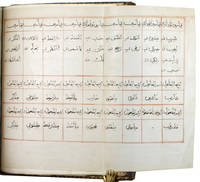
1830ABC_483971830. Contemporary navy blue morocco with the title lettered in gold on spine marbled endpapers. 4to 21.5 x 27 cm. With 2 folding tables 17 lines to the page written in red and black ink. A unique handwritten vocabulary and phrasebook of English and Arabic from the first half of the 19th century. This meticulously prepared manuscript is written in the fashion of a printed book opening with a title page and ending with an index of topics. It is divided into four main sections: nouns adjectives verbs and example sentences. The vocabulary especially in the nouns section is arranged by subjects which include such interesting headings as "Druggist" "Painter" "Merchant" "Cities" "the Bride's Paraphernalia" "Precious Jewels" "War" "The Church" "Clerical Vestments" "Ecclesiastical Degrees & Kinds of Sin" "Festivals" and "Monks their prayers and their dress". Presumably the dictionary was created to help a traveller or merchant who may have had an association with the Church. The final section offers an interesting selection of phrases and sheds some light on the experience of foreign language learning in the early 19th century. The phrases are a mixture of sentences that would be useful in daily life and such as would be included to practice the words from the vocabulary. Examples include: "We roasted a lamb and ate the whole of it and drank wine with it"; "I descended from above with the youth my enemy"; "I shot the bear in the water and he sank"; and "Why dost thou scratch thy head and spit in fire". As a cheat sheet for Arabic grammar the author includes two folding tables of Arabic verb tenses and conjugations. Overall a curious example of a 19th-century Arabic vocabulary and phrasebook.With a presentation note in English indicating it was a Christmas gift in 1881 presented by G. W. Bernard Esq. Binding and spine worn some browning and staining throughout. Otherwise in good condition. unknown
17636390Cambridge: John Baskerville 1763. Very Good/Printing a grand bible had been Baskerville's cherished ambition but the royal privilege belonged exclusively to Oxford and Cambridge Universities. Consequently Baskerville applied and was elected printer to the University of Cambridge. An innovator a micromanager a workaholic and an exacting perfectionist he threw everything into the bible project. He invented a stiffer blacker ink for it designed the types and the page layout and demanded smoother paper than was generally available. Ultimately he emptied his own bank accounts and borrowed money when the support of subscribers failed. Indeed he was not able to sell the entire edition of 1250 copies and ended up remaindering more than a third of the press run for pence on the guinea to his enormous personal disappointment and financial pain. The book remains a landmark in the history of English printing "one of the most beautiful books printed in the world" according to the bibliographer Frognall Dibdin a sentiment frequently echoed in Great Britain. This copy with the third longest list of subscribers ending with York. . Imperial folio 50 cm; 573 leaves. Text in double columns. In straight-grain blue morocco with gold-tooled border. Rebacked with original gold-tooled spine laid down. All edges gilt. Later reinforcements to joints and hinges. Light foxing on first and last leaves. Old bookplate on pastedown. Extra shipping charges will apply. References: Gaskell "John Baskerville a Bibliography" 26; Rothschild 2640; Darlow & Moule 857. John Baskerville unknown books
179864008London: J. and A. Arch 1798. Small 8vo. 2 cancel title viii 1-69 2 70-210 2 errata pp. plus 2 pp. publisher’s advertisements for Joseph Cottle the original Bristol publisher. Full brown goatskin binding gilt ruling on covers gilt ruling lettering & rosette decorations on spine marbled endpapers occasional light creasing to corners thumbing & faint soiling to fore-edges of a few leaves occasional spotting still a VG copy. First edition second London issue and perhaps the earliest obtainable issue of this pioneering work of English Romanticism as well as the first major literary undertaking of these English poets. The first issue printed in Bristol by Biggs & Cottle to whom Wordsworth had sold the copyright for 30 guineas reached 500 copies and thereupon sold the entire edition to J. & A. Arch who inserted their own title bearing their imprint and this one features Coleridge’s poem “The Nightingale†after “Lewti†was dropped. This copy does bear the “Off†not handcorrected to “Oft†on p. 19 “woods†and “thought†complete on lines 14 & 16 of p. 204 rather than later corrected to wood and without final comma after thought. The two young poets and French Revolution sympathizers had parked themselves in the secluded village of Holfond Somerset avoiding scrutiny in London & Bristol of English authorities and along with Wordsworth’s sister Dorothy and John Thelwall developed a distinctive new artistic vision which influenced future generations. Their intent was to write poetry reflecting seriously on the lives of humble rustic people and in a style of language imitating everyday speech so the verse was less artificial and formulaic of traditional poetry. This first appearance of “The Rime of the Ancyent Marinere†explores faith guilt cruelty obsession and endurance of a mariner stranded alone upon a ghost ship afflicted with supernatural forces after killing an albatross and explores the sacredness of nature. See: Mark Reed A Bibliography of William Wordsworth 1787-1930 2013; Wise Bibliography of the Writings in Prose and Verse of William Wordsworth. J. and A. Arch, unknown
1800512129Thomas Bensley for Thomas Macklin 1800. First Edition. Hardcover. VERY GOOD. First edition of The Macklin Bible a masterpiece of book design that has been called 'the last of the great Bibles.' Complete in six volumes without the posthumously published Apocrypha. Elephant Folio 19' x 15.5' and . Full red morocco covers with gilt rolled Greek meander borders spines with double raised bands gilt in seven compartments all edges gilt gilt dentelle marbled endpapers. Sturdy bindings are remarkably solid despite the demands of these heavy textblocks. Very Good ex-libris from the John Wilson Collection of Multnomah County Library with small bookplates on paste downs a few penciled notes to versos of title pages but otherwise unmarked. Wide margins. Bindings scuffed and soiled rubbed along joints wear at heads and tails. Contents generally bright with typical offsetting from engravings; many tissue guards still present. Handwritten 2pp. 1889 note from London bookseller Henry Sotheran tipped-in to Vol. 1 wherein he apologizes for the lack of The Apocrypha which was published in 1816. Exhaustively illustrated throughout with engravings including 70 full-page copperplates after Benjamin West Angelica Kauffman Henry Fuseli William Artaud Joshua Reynolds Philip James de Loutherbourg and others. Weighing in at well over 100 lbs this Macklin Bible will ship in multiple boxes and will require additional fees for international delivery. Thomas Bensley for Thomas Macklin hardcover
36596Birmingham England late 18th century. Oblong quarto. 7 1/2 x 11 inches. 113 engraved plates on laid paper priced throughout in manuscript. Later calf backed marbled paper covered boards flat spine ruled and lettered in gilt.<br/> <br/>A rarely encountered pattern book or trade catalogue of 18th century English furniture hardware including drawer pulls keyholes hinges locks castors bolts and more.<br/> <br/>By 1770 over thirty different brass foundries operated in Birmingham England making it the epicenter of furniture hardware design in the last quarter of the 18th century. At roughly the same period trade catalogues like the present began to be issued by both furniture and hardware makers alike. In all over 500 designs are shown on the 113 consecutively numbered plates from rather simple hinges to incredibly ornate pulls. Although no engravers' names are identified it has been suggested that the foundries themselves produced such plates utilizing the talents of their own craftsmen who by their very occupation would have been highly skilled at etching on metal. Such pattern books "illustrate the beginning of what was then a new movement in the conditions of the crafts namely the growth of the organised factory as a means of production and distribution as compared with the earlier limitation of these functions to the efforts of individuals" Young.<br/> <br/>Cf. Hummel Charles F. "Samuel Rowland Fishers Catalogue of English Hardware." Winterthur Portfolio Vol 1 1964: 188-197; cf. Symonds R. W. "An Eighteenth-Century English Brassfounders Catalogue." Magazine Antiques Feb. 1931: 102-105; Young W. A. comp. Old English pattern books of the metal trades: a descriptive catalogue of the collection in the V&A Museum. London: HMSO 1913. unknown books
1922204721922. Full Limp Red Calf. Slipcase -- marbled paper pastedown on all sides other than opening. Chemise or inner folder -- thick glossy card stock all sides other than that has red calf with title label. Emily Swinton. Magnificent illuminated manuscript version of the Rubaiyat or some verses from the Rubaiyat. The illuminated borders are singular -- their design is unlike that we are familiar with and not even vaguely similar to anything we have ever seen produced by a latter-day illuminator professional or amateur. Their tracery is of blues greens reds some yellow in a few instances and not least the all important gilt. The illuminator surely was paying homage to some Islamic and Persian illumination in her palette but overall these sources are but influences; the illuminations are far from merely imitative. The design pulls you in and as one gazes longer one will discover small figurative imagery woven into the lines and swirls of the larger ornamentation. Words are beyond us to come close to capturing their complexity and character -- our photos hopefully will impart something of that. Let us just say the colors are deep and bold. Within these extraordinary borders is the calligraphic text rendered in a stunning easily legible Gothic Fraktur script. And there are four dream-like miniature watercolors as well of scenic Persian villages. N.d. circa early 1920s. 4to. 28.5 by 19 cm. Unpaginated 14 leaves with illumination -- illumination on one side. The back side of the leaf then left blank. Tissue guards for each page with illumination. The first leaf has no text -- it is a rectangular abstract design suggestive perhaps of a spectacular rug and inspired by such illuminated painting as one finds in many an antiquarian Koran. The next leaf is the title page with the words appearing to float on the page. The lettering has a distinctive verticality and the gilt letters are both clearly the letters they are supposed to be but have an abstraction that one can imagine they are Arabic script as well. The last two leaves with a more restrained formalistic illumination has evenly spaced dome-shaped pointers as one finds in Koranic decoration to highlight important passages. The binding slipcase and chemise are functional but don't really do the contents justice. Other than some crease marks on the calf and light wear overall to these protective features the binding and slipcase present no issues. unknown
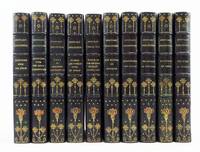
1903ST19464Boston: Privately Printed by Nathan Haskell Dole 1903-05. No. 2 OF 26 COPIES OF THE HELLENIC EDITION printed on Royal Japanese vellum. 230 x 165 mm. 9 x 6 1/2". 10 volumes. <br/> SUPERB CONTEMPORARY INDIGO CRUSHED MOROCCO GILT AND INLAID covers with gilt rule border central panel framed by 20 inlaid lighter blue morocco tulips interspersed with tiny gilt stars raised bands spine with three panels inlaid with sprays of dark red and citron morocco tulips and lilies accented with small tools two panels with gilt titling SKY BLUE MOROCCO DOUBLURES featuring an indigo morocco frame inlaid with red morocco lilies at corners central panel inlaid with eight teal morocco tulips and a large red morocco lily on graceful gilt stems a sprinkling of gilt stars above them ivory watered silk free endleaves all edges gilt. LAVISHLY ILLUSTRATED by artists including A. G. Learned and E. F. Bems with decorative frame on limitations and title pages NINE FRONTISPIECES 97 HEADPIECE VIGNETTES 95 DECORATIVE TAILPIECES AND 269 THREE-QUARTER FRAMES ALL HAND COLORED and 675 black & white three-quarter frames. With engraved bookplate of George Clinton Ward on front flyleaf most now loose. Spines with just a hint of dulling a whisper of shelfwear to a couple of volumes isolated small marginal smudges from the printing process but A VERY FINE SET WITH VIRTUALLY NO SIGNS OF USE.<br/> <br/> This superb set features English translations of important Classical texts handsomely printed on Japanese vellum extravagantly illustrated and sumptuously bound. It contains "The Wisdom of Marcus Aurelius" "The Eclogues of Vergil" "Sayings of Epictetus" "Selections from Gesta Romanorum" "Odes of Anacreon Anacreontics and Other Selections from the Greek Anthology" "The Satires of Horace" "The Story of Odysseus in the Land of the Phacians Being the Sixth and a Part of the Seventh Book of the Odyssey" "Selections from Aristophanes and Lucian" "The Olympic and Pythian Odes of Pindar" and selections from the Koran translated by George Sale. The project was undertaken by writer translator and editor Nathan Haskell Dole a popular member of the Boston literary set. Educated at Philips Andover and Harvard he was much influenced by family friends like Henry Wadsworth Longfellow and Oliver Wendell Holmes Sr. He showed an early facility for languages teaching himself to read French German Greek and Latin. Our set was designed by Dole to be the crown jewel of a library combining beauty and luxury with Classical erudition. The bindings here are unsigned but are very similar to those on a copy of this work in the Phoebe Boyle sale bound by the Adams Bindery. Ralph Randolph Adams was along with Henry Stikeman and a handful or others one of the great American art bookbinders of his era. His workshop produced bindings of notable beauty and craftsmanship. The New York Times 11 October 1902 described an Adams binding as "so exquisite in design and execution that those long skeptical of the ability of Americans to bind artistically should now be convinced of their error. . . . It is to be hoped that all American binders will be encouraged to strive toward producing designs like Adams' that are in a measure original and which show more of the individual touch of the artist.". Privately Printed by Nathan Haskell Dole unknown
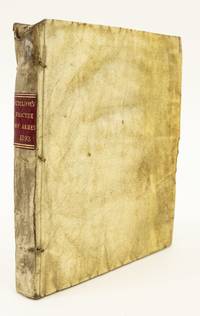
1593ST15853London: Deputies of Christopher Barker 1593. FIRST EDITION. 185 x 140 mm. 7 1/4 x 5 1/2". 12 p.l. 328 327-342 pp. <br/> Contemporary limp vellum yapp edges flat spine with later red morocco label. Inside front cover with ink owner's inscription of George Wilson dated November 1 1854; front flyleaf with engraved armorial bookplate of Thomas Francis Fremantle; early pen trials to title page old mathematical calculations on rear endpaper. Cockle 57; STC 23468; ESTC S117986; Heuser Beatrice "Strategy Before Clausewitz: Linking Warfare and Statecraft 1400-1830" 2017 chapter 5: "A National Security Strategy for England: Matthew Sutcliffe the Earl of Essex and the Cadiz Expedition of 1596." ◆Vellum a bit soiled half-inch chip to head of spine two-inch crack to fore edge of front cover title page with small ink stain and light soiling other trivial imperfections in the text but still an excellent copy clean and fresh internally and in a sound binding.<br/> <br/> This rare treatise addressing all aspects of war has been cited by military historian Beatrice Heuser as perhaps a unique example of a case "in which a civilian an 'armchair strategist' published a book containing a comprehensive concept for how to conduct a war with a specific enemy that was applied in practice." According to Heuser Sutcliffe penned "a national security strategy for England" and one that Robert Devereux Earl of Essex to whom the work is dedicated put into practice in the country's ongoing conflicts with Spain leading to the operation that resulted in the successful capture of Cadiz in 1596. Sutcliffe had met Essex at Trinity College Cambridge where he had likely served as one of the young earl's tutors. DNB observes that Sutcliffe who studied law before becoming a doctor of divinity applied his legal training to this work in which he examines not only fortifications aggressive and defensive tactics and the practical considerations of recruiting paying feeding and housing armed forces but also discusses laws and regulations governing the military. Cockle notes that the work "was well known both at home and abroad" and that it "urged the importance of military studies." Following this consequential work Sutcliffe restricted his writings to theological subjects and enjoyed a 40-year career as dean of Exeter Cathedral. This work is rare in the marketplace: ABPC and RBH find just three other copies at auction in the past 40 years. Deputies of Christopher Barker unknown
1791373866Worcester: Isaiah Thomas 1791. First Edition of Isaiah Thomas's Folio Bible. 50 engraved plates. 4 460; 2 461-1012pp. Text in two columns. 2 vols. Folio. Contemporary calf panelled in gilt and blind spine with raised bands in six compartments tooled in gilt on either side of each band red and black morocco labels expert repairs. Moderate to heavy foxing repaired tears to text leaves and plates. First Edition of Isaiah Thomas's Folio Bible. 50 engraved plates. 4 460; 2 461-1012pp. Text in two columns. 2 vols. Folio. "The two Thomas Bibles of 1791 were without doubt far in advance of any other publications of the same kind that had appeared in America in point of typography excellence of paper binding and general execution" Wright.<br /> <br /> Dubbed "the Baskerville of America" by Benjamin Franklin Isaiah Thomas issued a folio and a quarto Bible almost simultaneously. Published immediately after the ratification of the Bill of Rights the folio edition arguably his magnum opus opens with a note from Thomas situating it as an important accompaniment to this national development: "The civil authority hath set an example of moderation and candor to all Christians by securing equal privileges to all; and it must be their ardent and united wish independently of foreign aid to be supplied with copies of the sacred Scriptures the foundation of their Religion - a religion which furnishes motives to the faithful performance of every patriotic civil and social duty."<br /> <br /> In preparing the work Thomas compared the language of "not less than eight" significant English Bibles most but not all of which were printings of the King James translation and then had every page of the present edition examined by "the Clergymen of Worcester and . other capable persons." <br /> <br /> In keeping with his patriotism all the plates are by American engravers an expensive undertaking: the majority by Joseph Seymour with others by John Norman Samuel Hill and Amos Doolittle. It is unusual to find complete copies with all fifty plates. The plate list often lacking is present in this copy. The work was issued either in one volume or in two volumes as here the latter including an additional general title page for the second volume bound in as a cancel.<br /> <br /> A celebrated American Bible from one of the young country's most important printers. Evans 23186; Hills 29; ESTC W4497; Sabin 5172; Wright Early American Bibles pages 74-88 Isaiah Thomas unknown
1583255181London: Christopher Barker printer to the Queenes most excellent Maiestie 1583. 6 322 19 leaves; 12136 16 pp. Woodcut initials. Texts in black letter that in the second work in double columns. 1 vols. 4to. Full 19th-century crushed levant raised bands gilt inner dentelles a.e.g. by Jenkins & Cecil. Both titles within elaborate woodcut borders with woodcut map on verso of ¶8 and Royal Arms at conclusion of St. John. The first work wants the two preliminary blanks and the final blank. Joints rubbed clearly washed at the time of binding though with occasional light foxing and minor spotting remaining a handful of small marginal repairs lower margins of U2-3 in second work a bit frayed with a few small chips not affecting text; generally a very good copy if somewhat processed. 6 322 19 leaves; 12136 16 pp. Woodcut initials. Texts in black letter that in the second work in double columns. 1 vols. 4to. The Geneva - Thomson text of the New Testament revised by Thomson from the translation by Whittingham Gilby Sampson and others. First printed in 1576 Thomson's revision eventually became the final and most popular version of the Geneva text. The edition of the Psalms by Sternhold and Hopkins was first published in its complete form in 1562 and was frequently reprinted often to be bound to accompany other editions of the Bible. ESTC S123036 & S102250; STC 2885 & 2466; Herbert 180; Darlow & Moule 137; Luborsky & Ingram 2885 Christopher Barker, printer to the Queenes most excellent Maiestie unknown books