Bible. EnglishABAA

42 315 résultats
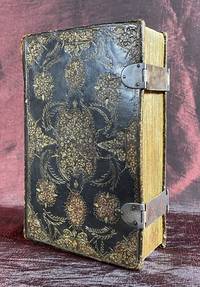
1583314886London: Christopher Barker 1583. New Testament title within elaborate border with woodcut map on verso large woodcut of Jerusalem and temple on f 402 woodcut of Ezekial's vision on ff 362 a few other woodcuts and decorative initials throughout. 12 437 2 438-532 1 137 6 leaves. Black letter text printed in two columns with shoulder notes separate title pages for Psalms Apocrypha and N.T. calendar printed in red and black prelims from a slightly shorter copy. Large folio 41 x 26.5 cm. Contemporary calf rebacked and remargined large centerpiece to upper cover. Lacking 10 leaves of preliminaries including general title and full page engraving of Adam and Eve in the garden all in inexpert facsimile and lacking final three leaves of tables and final leaf "A perfite supputation" including colophon marginal loss to several prelims burnholes to margin of ff 328-339 in O.T. with resulting loss of text inexpertly restored in manuscript small burnhole ff 97-99 N.T. but overall internally clean and bright restoration to binding edges worn. New Testament title within elaborate border with woodcut map on verso large woodcut of Jerusalem and temple on f 402 woodcut of Ezekial's vision on ff 362 a few other woodcuts and decorative initials throughout. 12 437 2 438-532 1 137 6 leaves. Black letter text printed in two columns with shoulder notes separate title pages for Psalms Apocrypha and N.T. calendar printed in red and black prelims from a slightly shorter copy. Large folio 41 x 26.5 cm. Folio Barker Bible Black Letter Geneva Edition. A magnificent folio Geneva bible printed in black letter by Christopher Barker. As often this copy lacks several preliminary and terminal leaves but the scriptures are complete. Woodcut illustrations include Solomon's temple a map situating the garden of Eden another detailing the Israelites' forty years wandering in the desert a large illustration of the Vision of Ezekiel a nearly full-page woodcut of the temple and city of Jerusalem restored and a map of the holy land on the verso of the New Testament title-page. Darlow and Moule 135; Herbert 178. Provenance: Ernest Bryan Gipps bookplate Christopher Barker unknown books
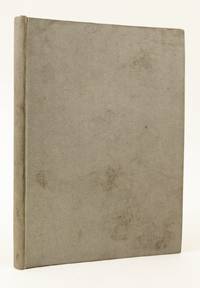
1597ST15850London: Printed by the Widow Orwin for Thomas Man 1597. FIRST EDITION. PRESENTATION COPY. 187 x 130 mm. 7 3/8 x 5 1/8". 5 p.l. 93 pp. <br/> 20th century gray paper boards. Printer's device on title page. Title page inscribed "Gyven to name inked through but perhaps "Thomas Langham" by the aucthor Jo. Norden"; tail margin of title inscribed "Constantin Adyn his booke"; 19th century ink signature of Benjamin Hynam on recto and verso of title. Front pastedown with early 20th century bookseller's description pasted on. STC 18614; ESTC S113322. ◆Boards a bit soiled but otherwise unworn minor dust-soiling or browning to head margins one quire a little browned occasional trivial smudges or tiny rust spots but an excellent copy generally clean and fresh.<br/> <br/> Written during a fallow period in the author's regular career as a cartographer this work emphasizing the importance of service to God for all leaders and common soldiers in the sovereign's army was inscribed by the author to a friend or patron. One of several works Norden dedicated to the earl of Essex it got our author into professional difficulties when Essex's enemy Robert Cecil rose to power and was in a position to impede Norden's career as a mapmaker. Norden quickly tried to push responsibility onto a "false Norden" from Kent he was from Somerset but biographer Frank Kitchen has established that the shared "interests backgrounds written expression everyday circumstances and style" indicate there was but one author. Though best known for his surveys and maps--including the first county maps of England to include roads--the pious Norden ca. 1547-1625 also produced numerous works of devotion and prayer among them the enormously popular "A Pensive Mans Practice" which went to 40 editions in his lifetime. While his sincere religious sentiments are not to be doubted it must be acknowledged that Norden was most moved to write these manuals when he was between surveying jobs and short of money. Aimed at soldiers of every rank the present work urges the "necessity of the fear and service of God" and "the use of all divine virtues both in commanding and obeying practicing and proceeding in the most honorable affairs of war." Norden also encourages civilians to support and respect the military and to pray for men-at-arms. This is an especially rare work: OCLC and ESTC find five copies in U.S. libraries and except for the two copies in the Cottesloe Library there seems to have been only one other--defective--copy at auction listed by RBH and ABPC. The present item is even more desirable as an extremely uncommon presentation copy signed by a 16th century English author. The Constantin Adyn who owned our copy is likely the early seventeenth-century schoolmaster otherwise known as Constantine or Constantinus Adyn fl. 1605-25 whose school was situated in Brighton according to Church of England records. The latest owner is likely the Anglo-Russian writer bibliophile and watchmaker Benjamin Hynam 1769-1859 a prominent figure in the distinguished Hynam family imperial watchmakers to Russian royalty. In the late eighteenth century the Hynams maintained a presence in both St Petersburg and London. Printed by the Widow Orwin for Thomas Man unknown
1946TV253828Pierre Matisse Editions New York 1946. 1st Edition. HARDCOVER. This copy is inscribed and signed by Yves Tanguy with an accompanying small but intricate ink sketch. This is one of a tranche of un-numbered copies given to Tanguy for complimentary distribution there a total of only 1200 numbered copies for sale. Large 4to. in textured paper covered boards with grey on black printed spine and black on grey printed covers. 94pp on thick stiff paper tipped-in colour frontispiece plus one other tipped-in colour plate 36 full page b/w illustrations and numerous small line drawings in text. Dual text in French and English. This was the first significant monograph on Tanguy __CONDITION : Covers slightly dusty and tanned 2cm chip to head of spine spine edges lightly rubbed page-block edges slightly tanned contents very clean and tight. Overall VERY GOOD. Comes housed in a custom made sturdy cloth covered solander case. __NOTE Due to size and/or weight shipping will cost more than the price shown above. Orders made by card will only be completed after you have approved the extra cost. . To see more of our Art Monographs etc type DbbARTIST in the Keywords search box __We always ship in PROTECTIVE CARD PARCELS Pierre Matisse Editions, New York hardcover
185934522n.p. n.d. but Japan 1859. An interesting and instructive look at how the Japanese learned English in the generation following Admiral Perry's opening of Japan. 2 volumes in 1 oblong fukurotoji 5.5" x 8" approx. 198 french-fold pages sewn in the Japanese manner in contemporary and almost certainly original brown paper wrappers; minor working and wear but in all a very good and striking example of a Japanese student's workbook for the attainment of English. The book has apparently been copied from American primers published by A. S. Barnes in New York in 1857 and Sargent's School Primer Boston 1859; both contain a variety of reading and spelling lessons "especially adapted to the capacity and taste of young children. It is hoped that it will proved sic valuable introduction to the national series of school readers prepared by Richard G. Parker." Both Parker's and Sargent's primers were available in bi-lingual editions in the Japanese market. Might this be the manuscript from which a printer might have used to publish the Japanese editions Throughout the English text which has been carefully written in ink is often translated interlineally in red ink with Japanese characters creating an attractive visual appearance on the page. Included are 3 pages of alphabets simple sentences often in rhyme "A cart for me / to ride and see / A ship at sea / with you and me. unknown
185934522n.p. n.d. but Japan 1859. An interesting and instructive look at how the Japanese learned English in the generation following Admiral Perry's opening of Japan. 2 volumes in 1 oblong fukurotoji 5.5" x 8" approx. 198 french-fold pages sewn in the Japanese manner in contemporary and almost certainly original brown paper wrappers; minor working and wear but in all a very good and striking example of a Japanese student's workbook for the attainment of English. The book has apparently been copied from American primers published by A. S. Barnes in New York in 1857 and Sargent's School Primer Boston 1859; both contain a variety of reading and spelling lessons "especially adapted to the capacity and taste of young children. It is hoped that it will proved sic valuable introduction to the national series of school readers prepared by Richard G. Parker." Both Parker's and Sargent's primers were available in bi-lingual editions in the Japanese market. Might this be the manuscript from which a printer might have used to publish the Japanese editions Throughout the English text which has been carefully written in ink is often translated interlinearly in red ink with Japanese characters creating an attractive visual appearance on the page. Included are 3 pages of alphabets simple sentences often in rhyme "A cart for me / to ride and see / A ship at sea / with you and me." <br/><br/> unknown books
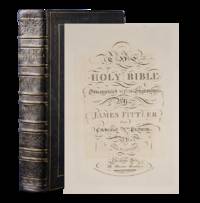
17956211London: R. Bowyer 1795. First thus. Near Fine. Two large quarto volumes 12 1/2 x 9 3/4 inches; 318 x 248 mm. Unpaginated. Text in double columns. With two copper-engraved title-pages with a separate title-page for the New Testament and sixty-two plates including two frontispieces from the works of Dürer Rembrandt Van Dyck Rubens and others. Lower corner of 3H3 possible paper-fault torn away with no loss of text. Some foxing to a few of the plates otherwise remarkably bright and fresh. Contemporary English full dark blue straight-grained morocco. Covers with two gilt borders surrounding blind-stamped Greek key design. Spines with five double raised bands ruled in gilt blind-stamped Greek key design and lettered in gilt in compartments. Board-edges decorated in blind elaborate gilt decorated turn-ins gray liners and endleaves all edges gilt. Gift signature to front flyleaf in volume one dated 1841 and a tipped-in square of paper with another nineteenth century gift inscription. Some light scuffing to the boards otherwise near fine.<br /> <br /> A spectacular example of the large paper edition this Bible sometimes called the "Killer Bible" for its typographical error in Mark 7 verse 27: "Let the children be killed" rather than "filled." It was richly illustrated by James Fittler 1758-1835 an esteemed British engraver of portraits and landscapes who served as marine engraver to King George III. He produced illustrations for the Boydell Shakespeare and Dibdin's Aedes Althorpinae. In this edition Fittler based his engravings on Old Master paintings befitting the gravity of the text. The printer Thomas Bentley produced large editions for Thomas Macklin Rudolph Ackermann and Paul Colnaghi all publishers of plate books; he also printed several of the earliest books for the Roxburghe Club.<br /> <br /> ESTC lists three editions of the Bowyer and Fittler Bible: this one which ESTC describes as the large paper edition; the regular two-volume quarto edition also 1795; and a: two-volume twelvemo edition 1796 which was issued in parts. ESTC T95050. Near Fine. R. Bowyer unknown
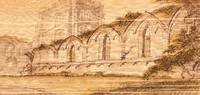
06244Paris: Printed by P. Didot Sen. and sold by W. Edwards and Sons Halifax 1791. A Superb Early Edwards of Halifax Vellum Binding with an Edwards Fore-Edge Painting<br /> <br /> FORE-EDGE PAINTING. EDWARDS OF HALIFAX binder and artist. BIBLE IN ENGLISH. The Book of Common Prayer and Administration of the Sacraments and other Rites and Ceremonies of the Church according to the use of the Church of England: Together with the Psalter or Psalms of David. Paris: Printed by P. Didot Sen. and sold by W. Edwards and Sons Halifax 1791.<br /> <br /> Twelvemo 5 5/8 x 3 3/8 inches; 143 x 86 mm. ii title-page verso blank xxii preface & table 408 pp. <br /> <br /> With a fine contemporary fore-edge painting by Edwards of Halifax. The scene is St. Martin's Church Canterbury and shows the single figure of a cemetery worker seated on the ground and behind him a row of grave stones<br /> <br /> Full contemporary vellum covers bordered in dark blue with Greek key pattern enclosing a decorative gilt border. Smooth spine elaborately decorated in gilt with dark blue stained spine labels lettered in gilt. Gilt decorated board edges and turn-ins pink marbled endpapers all edges gilt.<br /> <br /> A wonderful example of an Edwards of Halifax ' Fore-Edge' painting on a book originally bound and sold by Edwards of Halifax.<br /> <br /> Neat ink gift inscription on second front blank "Eliz. Buckle. / April 2 1818."<br /> <br /> Provenance: Elizabeth Buckle; Tony Hattersley. <br /> <br /> Tony Hattersley was a renowned English antiquarian bookseller who retired to a giant granite mansion hidden up the valley behind Whitby Dracula's landing place. His books were sold by Bonham's in two parts. Part 1 11/09/07. Paris: Printed by P. Didot Sen. and sold by W. Edwards and Sons, Halifax, 1791 unknown
19356911935 - reliure - Sanjian Shuwu 三閒書屋 - Yinyu ji 引玉集 (« Recueil pour attirer le jade ») 木刻五十九幅 - Deuxième tirage, avril 1935 - In-8 (19,5 × 15,5 cm) reliure cartonnée de l'éditeur, dos noir, pièce de titre contrecollée sur le premier plat - 68 pages - 59 reproductions de gravures sur bois soviétiques imprimées au procédé collotype (珂羅版) d'après les tirages originaux fournis par les artistes - Comprend un texte de Chen Jie (陳節), traduction abrégée d'un essai de A. D. Chegodaev consacré à la gravure soviétique contemporaine - Tirage limité à 215 exemplaires, dont 15 exemplaires hors commerce - Diffusion assurée par la librairie Uchiyama (內山書店), Shanghai - Ouvrage en chinois - Avec des œuvres de Dmitri Isidorovich Mitrokhin, A. Kravchenko, N. Piskarev, Vladimir Andreevich Favorsky, P. Pavlinov, A. Goncharov, M. Pikov, Sergei Mikhalovich Mocharov, L. Khizhinsky, Nikolai Vasilievich Alekseev et Sergei Mikhailovich Pozharsky - A PROPOS : Rare anthologie consacrée à la gravure soviétique moderne, publiée à Shanghai par 三閒書屋 et diffusée par la librairie Uchiyama (內山書店). L'ouvrage réunit cinquante-neuf reproductions en collotype de gravures sur bois réalisées par plusieurs figures majeures de l'école russe et soviétique de la gravure des années 1920-1930, parmi lesquelles Vladimir Favorsky, Dmitri Mitrokhin, Alexei Kravchenko et Pavel Pavlinov. Accompagné d'une traduction abrégée par Chen Jie d'un essai de l'historien de l'art soviétique A. D. Chegodaev, ainsi que d'une préface, d'un catalogue des planches et d'une postface, le volume fut conçu comme une introduction à l'estampe contemporaine soviétique pour le public chinois. Témoignage remarquable des échanges artistiques sino-soviétiques dans le Shanghai républicain des années 1930, il s'inscrit dans le contexte du mouvement de la Nouvelle Gravure (新興木刻運動), alors en plein essor sous l'influence des milieux intellectuels de gauche et des réseaux culturels gravitant autour de la librairie Uchiyama et de la figure de Lu Xun. Les reproductions furent réunies à partir de documents et publications soviétiques découverts au début des années 1930, notamment par l'intermédiaire de la revue Graphika. /// ENGLISH: Sanjian Shuwu (三閒書屋) - Yinyu ji (引玉集, “Collection to Draw Forth Jade”): Fifty-Nine Woodcuts (木刻五十九幅) - Second printing, April 1935 - Octavo (19.5 × 15.5 cm), publisher's boards with black spine and mounted title label on upper cover - 68 pages - 59 collotype (珂羅版) reproductions of Soviet woodcuts printed from original impressions supplied by the artists - Includes a text by Chen Jie (陳節), an abridged translation of an essay by A. D. Chegodaev on contemporary Soviet printmaking - Limited edition of 215 copies, including 15 non-commercial presentation copies - Distributed by Uchiyama Bookstore (內山書店), Shanghai - Text in Chinese - Featuring works by Dmitri Isidorovich Mitrokhin, Alexei Kravchenko, Nikolai Piskarev, Vladimir Andreevich Favorsky, Pavel Pavlinov, Aleksandr Goncharov, Mikhail Pikov, Sergei Mikhailovich Mocharov, Leonid Khizhinsky, Nikolai Vasilievich Alekseev and Sergei Mikhailovich Pozharsky. ABOUT: Rare anthology devoted to modern Soviet wood engraving and printmaking, published in Shanghai by Sanjian Shuwu and distributed through Uchiyama Bookstore (內山書店). The volume gathers fifty-nine collotype reproductions of woodcuts by several leading figures of the Russian and Soviet printmaking revival of the 1920s and 1930s, including Vladimir Favorsky, Dmitri Mitrokhin, Alexei Kravchenko and Pavel Pavlinov. Accompanied by Chen Jie's abridged translation of an essay by Soviet art historian A. D. Chegodaev, as well as a preface, plate catalogue and postface, the work was conceived as an introduction to contemporary Soviet printmaking for Chinese readers. A remarkable testimony to Sino-Soviet artistic exchanges in Republican-era Shanghai, it belongs to the context of the New Woodcut Movement (新興木刻運動), then flourishing under the influence of left-wing intellectual circles and cultural networks associated with Uchiyama Bookstore and the figure of Lu Xun. The reproductions were assembled from Soviet books, periodicals and documentary sources discovered in the early 1930s, notably through the journal Graphika. /// 中文:三閒書屋出版 — 《引玉集:木刻五十九幅》 — 1935年4月再版 — 32開(19.5 × 15.5厘米)精裝本,黑色書脊,封面貼書名籤 — 68頁 — 收錄蘇聯木刻作品59幅,以珂羅版工藝依據藝術家提供之原拓本複製印製 — 附陳節摘譯 A. D. Chegodaev(契戈達耶夫)論蘇聯現代版畫藝術之文章 — 限印215部,其中15部為非賣贈送本 — 上海內山書店代售 — 中文版 — 收錄 Dmitri Isidorovich Mitrokhin、Alexei Kravchenko、Nikolai Piskarev、Vladimir Andreevich Favorsky、Pavel Pavlinov、Aleksandr Goncharov、Mikhail Pikov、Sergei Mikhailovich Mocharov、Leonid Khizhinsky、Nikolai Vasilievich Alekseev 及 Sergei Mikhailovich Pozharsky 等藝術家作品。關於本書:本書為三閒書屋於上海出版、由內山書店代售之珍稀蘇聯現代木刻版畫選集。全書收錄59幅以珂羅版精印之蘇聯木刻作品,作者均為1920至1930年代俄羅斯及蘇聯版畫復興運動的重要藝術家,其中包括弗拉基米爾·法沃爾斯基(Vladimir Favorsky)、德米特里·米特羅欣(Dmitri Mitrokhin)、阿列克謝·克拉夫琴科(Alexei Kravchenko)及帕維爾·帕夫利諾夫(Pavel Pavlinov)等人。書中除收錄陳節摘譯之蘇聯藝術史家 A. D. Chegodaev 論文外,尚附序言、圖版目錄及後記,旨在向中國讀者介紹蘇聯當代版畫藝術。本書不僅是研究俄蘇版畫的重要文獻,亦是1930年代上海中蘇藝術交流的珍貴見證。其出版背景與中國新興木刻運動(新興木刻運動)密切相關,反映了左翼知識界、內山書店文化網絡以及魯迅所倡導之版畫思想的深遠影響。書中圖版主要彙集自1930年代初傳入中國之蘇聯書籍、期刊及藝術資料,其中包括《Graphika》等重要出版物。
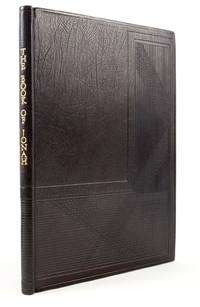
1926ST20084Waltham St. Lawrence: Golden Cockerel Press 1926. No. 48 OF CLXXV COPIES. 258 x 195 mm. 10 1/4 x 7 3/4". 15 3 pp. <br/> Understated black crushed morocco by J. Franklin Mowery stamp-signed "JFM 94" on rear turn-in wraparound design of blind-stamped L-shaped panels of intersecting lines smooth spine with vertical gilt lettering leather hinges edges untrimmed. Original illustrated upper cover of dust jacket repaired at one corner bound in at rear. In a matching morocco-lipped slipcase. Title page with large woodcut of the risen Christ four large vignettes in the text four pictorial half borders and four full-page woodcuts all by David Jones printer's device in colophon. Front pastedown with bookplate of Jan van der Marck. Chanticleer 40. A pristine copy.<br/> <br/> This is a wonderfully--if understatedly--bound copy of one of the most strictly limited Golden Cockerel Press productions. The binding is the work of J. Franklin Mowery retired Head of Conservation at the Folger Shakespeare Library and past president of the Guild of Book Workers. Mowery studied bookbinding under Professor Kurt Londenberg at the Staatliche Hochschule für bildende Künste Academy of Art in Hamburg and trained as a paper conservator under Otto Wächter in Vienna before returning to the U.S. to work at the Huntington Library. According to his article "A Binder's Training" Guild of Book Workers' Journal XX 1981-82 the blind-stamping technique seen here was "particularly favored by Professor Londenberg" and often employed by Mowery for the range of design possibilities it offers. The method uses dies to stamp the patterns: "a photographic process can transfer any black and white image onto zinc plates that are deeply etched and mounted onto type-high metal blocks for heated impressions or onto wood for cold embossing." Mowery stated that lines of the design here represent the driving rain of the storm that struck Jonah's ship. Founded in 1920 with the intention to print fine editions of important well-known books as well as new literary works of merit from young authors the Golden Cockerel Press was purchased in 1924 by the illustrator and wood-engraver Robert Gibbings. "Under his direction" says Cave the Press was "transformed into the principal vehicle for the renaissance of wood-engraved book illustration that took place in the years between the wars." In addition to doing wood engravings himself Gibbings employed a stable of eminent artists including among others Eric Gill Blair Hughes-Stanton John Nash John Farleigh Eric Ravilious and David Jones. The memorable woodcuts are the work of Jones 1895-1974 who had a brief but impressive career as an illustrator before eye strain forced him to abandon engraving in 1930. In his published study of Jones' work Douglas Cleverdon says that in the short time Jones was engraving "he produced a remarkable amount of work of great variety; some witty some mystical; some boldly cut some delicately shaded; some simple to print some virtually impossible. Although he never attained . . . the greatest technical mastery in the conventional sense his prints are nearly always distinguished by their excellence of design personal commitment and absolute individuality." Our binding was commissioned by collector and self-described "radical" museum administrator Jan van der Marck 1929-2010 who championed artists that pushed boundaries--often to the consternation of the museum boards who employed him. Golden Cockerel Press unknown
1961AMO-4505London : George Allen & Unwin ltd. Boston : Houghton Mifflin Company. 3 vol. 8vo 9.0" x 6.0" inches (23 x 15,5 cm) 423pp, folding map ; 352pp, folding map ; 416pp, folding map. First edition. Later printings (12/9/8). The Fellowship of the Ring. First edition first published in July 1954. Twelfth impression 1962. The Two Towers. First edition first published 1954. Ninth impression 1962. The Return of the King. First edition first published, October 1955. Eight impression 1961. Printed in Great Britain in 11 on 12 point Imprint type by Jarrold & Sons Ltd, Norwich. Each volume with a folding map at the end printed in red and black, top edges stained red. Exquisite full dark blue morocco fine leather binding, gilt ruled covers with the gilt "Ring & Eye" design stamped on the both covers, spine with decorated 5 raised bands ans two red gilt lettered morocco labels in the second and fourth compartments, with intertwined "J.R.R.T." initials in the bottom compartment. The amazing quality of the binding in in the style of Sangorski & Sutcliffe in fine condition. Extremely rare and absolutely spectacular.
1846238568New York: Harper & Brothers 1846. First book edition of Harper Bible first issued in 54 parts. Engraved presentation leaf printed in green and black in other copies sepia contents leaf printed in sepia marriages births and deaths pages printed in red blue and sepia respectively engraved main title printed in sepia in other copies blue engraved title to New Testament printed in blue in other copies sepia 2 frontispieces text in triple column the middle column a narrow one with notations and glosses; numerous wood-engraved illus. throughout; bound without the 2 half-titles printed in red; 844 128 256 4 8 14 34 pp. Large thick 4to. In full American black pebble-grain morocco covers with triple gilt rule enclosing decorative floral outer panel with rosettes urns and other decorative elements with an ornate gilt lozenge central gilt decorated spine in 6 compartments gilt-lettered direct in 1 the binder's name J. H. Sackmann and Brother in gilt at the bottom gilt turn-ins and elaborately decorated endpapers with a floral and ornithological motif; small crack at the top of the upper joint else fine and bright in a handsome deluxe American binding of the period. First book edition of Harper Bible first issued in 54 parts. Engraved presentation leaf printed in green and black in other copies sepia contents leaf printed in sepia marriages births and deaths pages printed in red blue and sepia respectively engraved main title printed in sepia in other copies blue engraved title to New Testament printed in blue in other copies sepia 2 frontispieces text in triple column the middle column a narrow one with notations and glosses; numerous wood-engraved illus. throughout; bound without the 2 half-titles printed in red; 844 128 256 4 8 14 34 pp. Large thick 4to. Harper Bible in Deluxe American binding. A copy in deluxe binding of the first complete book edition of the Harper Bible. ".this Harper publication was a remarkable production for its time and place and retains its importance in the annals of American book-making. W.J. Linton noted wood-engraver and author knew 'no other book like this so good so perfect in all its undertakes.' The illustrations are like paintings of history as are so many of the old European Biblical painting and illustrations" Hills quoting Weitenhampf. Hills 1161; Hamilton 198; cf. Exman The House of Harper pp. 34-35 Harper & Brothers unknown books
183333830New Haven: Durrie & Peck; Sold by Hezekiah Howe & Co. and by N. & J. White 1833. 8vo 23 cm; 9". xvi 907 pp. <br><br>First edition of the Bible in English Authorized Version tailored for American readers by Noah Webster 17581843. "His purpose was to remove obsolete words and those offensive to delicacy" Rumball-Petre Webster himself further stipulating "To avoid giving offense to any denomination of christian sic I have not knowingly made any alteration to the passages of the present version on which the different denominations rely for the support of their peculiar tenets" Preface p. iv. Webster further explains that the purpose of his revisions is to make the language clearer and purer so as to not "divert the mind from the matter to the language of the scriptures and thus in a degree frustrate the purpose of giving instruction" Preface p. xvi.<br>Â Â Â Â Webster considered his work on the revision of the Bible more important than that on the dictionary and was sorely disappointed at the Bible's poor reception among all levels of readers.<br>Â Â Â Â Provenance: 19th-century ownership signatures of Luther P. Hubbard undated and R.T. Hall 1894; after ca. 1954 in The Howell Bible Collection Pacific School of Religion properly released. <br>Â Â Â Â <br>Â Â Â Â Darlow & Moule 1793; Hills 826; Rumball-Petre 197. Publisher's sheep spine dry and tending to flake; front board once detached and resecured with a cloth tape repair at the hinge inside. Foxing as usual. Priced to encourage better repair to its binding this is a complete sound copy. Durrie & Peck; Sold by Hezekiah Howe & Co., and by N. & J. White hardcover books
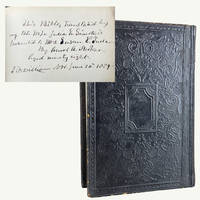
1876R69<p><strong>Description: </strong>Quarto 9.75" x 6.5". Text in two column Roman font. 3-892 Old Testament 1-276 pp. New Testament. The books of the Old Testament are arranged in Jewish order with Chronicles at the end. One of 950 copies.</p><p><strong>Binding: </strong>Rebacked in matching black calf with original spine laid down. Embossed cloth spine with "Holy Bible" and "Translated by Julia E. Smith" lettered in gilt to spine. All edges speckled red. Rubbed to edges with loss of small portions of relaid spine.</p><p><strong>Condition:</strong> Crisp clean and bright.</p><p><strong>Provenance: </strong>Note inked on front flyleaf reads "This Bible translated by my late wife Julia E. Smith is presented to Mrs. Susan E. Tullar by Amos A. Parker Aged Ninety Eight – Fitzwilliam N.H. June 20th 1889."</p><p><strong>Note: </strong>A remarkably well-preserved copy of the first and only Bible translated entirely by a woman. Julia E. Smith 1792–1886 of Glastonbury Connecticut used her knowledge of Latin Greek and Hebrew to render the entire Bible into English. A member of the Sandemanian sect which sought to restore the Apostolic church she dedicated eight years to her translation but did not publish it for another twenty-one years.</p><p>Sampson recounts Julia's deep passion for the project: "I cannot express how greatly I enjoy the work of translating and now the real meaning of different texts would thrill through my mind till I could hardly contain myself." According to one account she became so engrossed in her work that she often failed to hear the dinner bell and had to be summoned by her sisters.</p><p>Elizabeth Cady Stanton in her radical and controversial work <em>The Woman's Bible</em> remarked that Smith's translation would become a rarity in the next century "much sought after by bibliomaniacs to say nothing of scholars who will want it for its real value."</p><p><strong>References:</strong> Herbert 2202; Hills 1918; Rumball-Petre 201; Stanton Elizabeth Cady. <em>The Woman's Bible</em>. Sampson Emily. <em>With Her Own Eyes: The Story of Julia Smith.</em></p> American Publishing Company hardcover
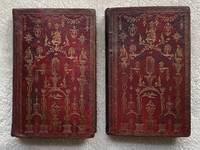
1787271Edinburgh: Assigns of Alexander Kincaid 1787. Very good. Two works in two volumes. Large Octavo 211 x 130 mm. Collation: BIBLE: A-4A8 complete. PSALMS: A-E8 complete. Contemporary Scottish bindings: red morocco elaborately tooled in gilt to a "Chippendale" motif smooth spines gilt; marbled endpapers a.e.g. in vol. 1 the front joint expertly repaired and tape removed from inner hinges. Preserved in a protective cloth case. INNOVATIVE AND HIGHLY UNUSUAL SCOTTISH CHIPPENDALE ROCOCO BINDINGS COMBINING CHINOISERIE AND NEOCLASSICAL ELEMENTS EXHIBITING THE INDEPENDENCE OF SCOTTISH WORK AT THIS TIME. <br /> <br /> The present example is a striking hybrid of late 18th-century decorative art in Britain the likes of which we have not encountered hitherto. Here "oriental" birds and peacocks are juxtaposed with patriotic depictions of Britannia uncharacteristically surmounted by a fleur-de-lis bold anchors columns sunbursts dripping garlands flowers sheaves of wheat and urns. Presented in the Chippendale style the present binder who is as yet unnamed introduces rococo ornaments while enclosing all of the above with an unmistakably neoclassical greek-key roll. <br /> <br /> EIGHTEENTH-CENTURY ROCOCO BINDINGS OF THIS QUALITY ARE RARE PARTICULARLY THOSE EXECUTED IN SCOTLAND. <br /> <br /> Rococo book arts in Scotland have been almost completely unexplored on account of the paltry number of examples with which we are able to study. Robert Adam's designs for the bindings of his "Ruins of Spalatro" 1764 is a bold statement of the neoclassical for he was justly celebrated. But we now know that Adam was not exclusively "Grecian." David Pullins' heroic archival research in Sir John Soane's Museum has shown that Adam received three previously unexamined commissions for a seemingly antithetical kind of decoration which he calls "neoclassical chinoiserie" specifically Adam's drawings for an unrealized chinoiserie looking-glass dated 1769 for Edwin Lascelles 1st Earl of Harewood. SOURCE: "Robert Adam's Neoclassical Chinoiserie" in: West 86th: A Journal of Decorative Arts Design History and Material Culture online. We would argue that the present bindings exhibit such a blend of Chippendale chinoiserie rococo and neoclassical. For a general note on English "Chippendale" and "Chinoiserie" bindings see G.D. Hobson "English Bindings of J.R. Abbey" p. 126.<br /> <br /> ¶ Our bindings may be linked to four others -- all greatly inferior -- which share the large "eagle" tool in common as noted by Mirjam Foot:<br /> <br /> 1. British Library Davis 253 Bible Edinburgh 1790 = Henry Davis Gift Vol. II No. 283; <br /> 2. National Library of Scotland F.4.e.9 Bible Psalms Edinburgh: Assigns of A. Kincaid 1789; <br /> 3. Washington Cathedral Library Bible Edinburgh 1789; <br /> 4. Glasgow University Library DXC 48-48A Bible Cambridge 1792 Psalms Glasgow 1793. <br /> <br /> PROVENANCE: red morocco bookplate of "MARION MALLOCH 1794" inside both volumes -- sold by us to a private collector in 2007 -- bought back by us in 2023. <br /> <br /> ¶ REFERENCES: ESTC 91765 Darlow & Moule 1319; ESTC 91766. Assigns of Alexander Kincaid unknown
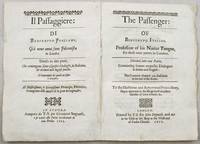
1612ST13801London: printed by Thomas. Snodham. for Iohn Stepneth and are to be sold at his shop at the west-end of Paules Church 1612. FIRST EDITION. 205 x 155 mm. 8 x 6". 18 p.l. 611 1 pp. 601-08 misnumbered 561-68 8 leaves. <br/> New unlettered limp vellum by Courtland Benson in imitation of the original binding. STC 1896; ESTC S124314. ◆Half a dozen gatherings a little browned occasional mild foxing or small rust spots additional trivial imperfections otherwise an excellent copy clean and very fresh in a pleasing new binding.<br/> <br/> This conversation manual by an Italian teacher based in London offers an intriguing glimpse into the lives and concerns of the wealthier classes in 17th century Europe. An early effort to teach language through dialogue the book is part cultural history part guide to better health and it is clear evidence of the importance of the study of Italian in Elizabethan and Jacobean England. The seven dialogues cover subjects from health to travel to servants with Italian and English text on facing pages. Many of the dialogues begin with phrases that will be familiar to all beginning language students: greeting others selecting items of clothing asking prices or directions ordering food. As the conversations progress they explore various topics that one might expect to encounter in polite society. An early morning exchange between master and servant evolves into a discussion of the importance of sleep the optimal amount of sleep for good health and the significance of dreams. A dialogue that begins with ordering meals leads to an involved colloquy about the benefits and disadvantages of fasting and abstinence; the virtues and defects of bread butter meat dairy and eggs; diet recommendations for the healthy and the sick; the best diet for each season; and the importance of a walk after dinner. Other dialogues include advice for travellers observations on the political situation and life at court and finally a discussion of that most eternally fascinating topic: love. This work is of continuing interest and value to linguists as it documents the Benevento Italian dialect which is in need of preservation. It's an extraordinarily rare book probably because it was the sort of volume subjected to hard use: in addition to ours we could trace only two copies in ABPC and RBH since 1948. printed by T[homas]. S[nodham]. for Iohn Stepneth, and are to be sold at his shop at the west-end of Paules Church unknown
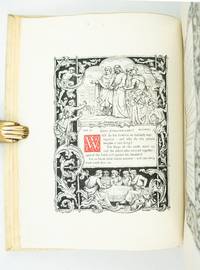
1862ST20857London: Edmund Evans for Sampson Low Son and Co 1862. ONE OF PERHAPS 10 COPIES PRINTED ON VELLUM. 260 x 195 mm. 10 1/4 x 7 3/4". vii 1 235 1 pp. <br/> Publisher's stiff vellum smooth spine with gilt lettering edges untrimmed. In a modern felt-lined blue buckram drop-back box. Decorative initials in red or blue title page and text leaves with full criblé border of vined foliation occasionally inhabited eight or 10 leaves with more extensive illustrations at head or foot all engraved by W. J. Linton after illustrations by John Franklin. Front pastedown with ex-libris of Marion Hope Rattey. A Large Paper Copy. McLean "Victorian Book Design" p. 184. Short thin cracks to head and tail of front joint spine vaguely soiled upper cover with two very small brown spots and one trivial red mark occasional mild rumpling or naturally occurring variations in the grain or thickness of the vellum as usual a couple of minor smudges but still a very agreeable copy the binding solid and without the splaying common in vellum books the interior clean fresh and bright and the margins extraordinarily wide.<br/> <br/> This is an infrequently encountered copy of a beautiful Victorian book on vellum issued by one of the era's top printers. The volume was printed by Edmund Evans 1826-1905 who is now best remembered for his illustrations and advances in color wood engravings. Relatively little is known about this book's production: Ruari McLean tells us that it was "entirely printed" by Evans but it is unknown whether he was responsible for the design as well McLean remarks that "if Evans was responsible for its design it shows his superiority in book-making". We also are unsure how many copies were printed on vellum although the general consensus is 10. Regardless as McLean tells us "it is one of the prettiest books of the 'sixties" with sharp deep impressions of the type on the rich creamy vellum jewel-like colored initials and elegant wood-engraved illustrations. These illustrations are the work of John Franklin ca.1800-68 a painter and draftsman who was highly respected in his own time. The precisely realized borders feature idealized human forms posed within a robust botanical largely acanthus context the figures posing with balletic grace their expressive faces often turned gently away from the reader. The size of the leaf here is significant: the untrimmed edges retain their tiny printing pinholes which would normally have been trimmed away with regrettable loss. And not surprisingly our vellum printing is almost never seen: we could trace just two copies at auction since 1924. Former owner Marion Hope Rattey 1922-97 was likely the daughter of bibliographer Clifford C. Rattey 1886-1970 whose impressive library featured incunabula and block prints. [Edmund Evans for] Sampson Low, Son, and Co unknown
1800CJW1405London: T. Bensley for T. Macklin final volume Bensley for T. Cadell & W. Davies 1800. First Printing of this Edition. 484 x 390 mm. 19 x 15 1/4". Seven volumes. <br/> Once splendid contemporary black straight-grain morocco gilt covers framed by Greek key roll palmette roll and multiple gilt rules double raised bands spine compartments densely gilt with rows of alternating star and circlet tools gilt titling turn-ins with gilt chain roll purple endpapers all edges gilt some inexpert but not obvious repairs to joints and backstrips. With more than 100 allegorical headpieces and tailpieces and some 70 SPLENDID LARGE-FOLIO SIZE COPPER PLATES after Fuseli Reynolds West and others. Herbert 1442 and 1651. ◆Extremities rather rubbed boards a bit scuffed but the decorative contemporaneous bindings solid and not without appeal. Plates somewhat foxed mostly to margins mild to moderate offsetting from plates occasional mild offsetting in the text bed but still a fresh wide-margined copy.<br/> <br/> The most prodigious form of scripture in English ever published the Macklin Bible features very large and bold type fine Whatman paper and a series of engravings by some of the most celebrated artists of the period. Like the Boydell "Shakespeare Gallery" also printed by Bensley our Macklin Bible is a vast picture book with illustrations that are grand both in size and emotional impact. According to DNB Macklin 1752/3-1800 announced his intention to produce a lavishly illustrated luxuriously produced folio Bible in 1789 and he spent the next 11 years and £30000 making his dream a reality. His efforts paid off: "the subscription list for 703 copies at £46 1s. apiece was headed by the king the queen and the prince of Wales." Sadly Macklin died just five days after the last engraving was finished and did not live to see his masterpiece become one of the most acclaimed English Bibles. As DNB observes "The Macklin Bible endures as the most ambitious edition produced in Britain often pirated but never rivalled." Copies of the Macklin Bible were often put into ornate bindings as was the present set; despite the depradations of time the workmanship of a superior London binder remains apparent. T. Bensley for T. Macklin [final volume Bensley for T. Cadell & W. Davies] unknown
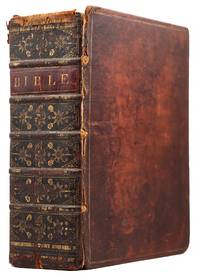
1604372251London: Robert Barker 1604. Text in Roman type in two columns. Titles within woodcut borders woodcut illustrations head and tail-pieces. 4 190; 117 i.e. 127; 128-187 i.e 197 omitting 129 as issued and other errors in pagination; 121 11 leaves. Complete with the leaf signed Ai preceding the general title. Bound with preceding the Bible: The Booke of Common Prayer with the Psalter or Psalmes of Dauid. Title in red and black within woodcut border. 46 leaves complete. ESTC S93831. Bound with following the Bible: The Whole Booke of Psalmes. 10 70pp only. Lacking terminal three signatures. 4to. Early mottled calf rebacked brass corner pieces and hinges lacks clasps upper cover detached marbled endpapers gilt edges. Provenance: William James signature and inscription dated 1663 on leaf preceding the general title; Frances Garway inscription on brass plate on covers dated 1701; Thomas Bever armorial bookplate inscriptions on endpaper circa 1748; Francis Hutchinson Synge; Arthur John Snow Paget inscription dated 1851 General Theological Seminary bookplate. Text in Roman type in two columns. Titles within woodcut borders woodcut illustrations head and tail-pieces. 4 190; 117 i.e. 127; 128-187 i.e 197 omitting 129 as issued and other errors in pagination; 121 11 leaves. Complete with the leaf signed Ai preceding the general title. Bound with preceding the Bible: The Booke of Common Prayer with the Psalter or Psalmes of Dauid. Title in red and black within woodcut border. 46 leaves complete. ESTC S93831. Bound with following the Bible: The Whole Booke of Psalmes. 10 70pp only. Lacking terminal three signatures. 4to. An excellent example of the Geneva Bible with Tomson's revised New Testament and Junius' Revelation. The principal Bible of 16th-century Protestantism and the Geneva Bible was used by Shakespeare Oliver Cromwell John Knox John Donne and John Bunyan. This edition contains the famous reading "breeches" in Genesis Chapter III verse 7 which first appeared in 1579. Although Barker's imprint on title of this edition reads "Printer to the Queenes most excellent Majestie" the colophon reads "Printer to the Kings most excellent Maiestie" as James I had ascended in March 1603. Darlow & Moole 209; ESTC S159; Herbert 274; STC 2190 Robert Barker unknown
1791373037Worcester: Isaiah Thomas 1791. First Edition. 48 engraved plates complete. 1310 2 89 3pp. Separate OT and NT titles. The family register between the Apocrypha and NT unaccomplished. Royal quarto. Contemporary calf covers ruled in gilt spine gilt with raised bands red morocco lettering piece marbled endpapers joints cracked but cords holding worn at extremities spine a bit abraded with some loss at top. Foxing a few leaves with short tears or small voids. Provenance: Ebenezer Byles signature on verso of the OT title. Housed in a blue cloth clamshell box. First Edition. 48 engraved plates complete. 1310 2 89 3pp. Separate OT and NT titles. The family register between the Apocrypha and NT unaccomplished. Royal quarto. Thomas' quarto bible was published in three distinct issues: with 2 copperplates only i.e. frontispieces to the Old and New Testaments; with two copperplates and John Brown's 89-page concordance in the rear; and the rarest and most deluxe form as here with 48 copperplates and the concordance. Of this last issue according to Thomas's catalogue the work was published "in elegant binding." The explanation for the work being complete with 48 plates rather than the 50 plates of the folio Thomas bible of the same year is easily explained: the frontispieces used for the folio bible plates I and XXXIII were too large for the quarto edition and thus were omitted with plates XXIX and XLVIII used as frontispieces of the quarto bible instead.<br /> <br /> A very difficult edition to find in a contemporary unsophisticated binding. Evans 23185; Hills 30; ESTC W4496 Isaiah Thomas unknown
161117388London: Robert Barker 1611. First edition. Hardcover. Very good. Folio. The First and Second Books of Kings complete in 36 leaves. The first page is the final page of the previous book 2 Samuel; on the reverse begins 'The First Booke of the Kings commonly called The third Booke of the Kings'. 36pp. followed by 'The Second Booke of the Kings commonly called The fourth Booke of the Kings' 35pp. The final page ends II Kings and begins I Chronicles. Printed in black letter woodcut initials. Recent binding of quarter calf gilt titles Cockerell marbled paper boards. Some remargining no loss and old stains else a very good copy in a fine binding The binder's notes itemize the steps in rebinding including leaf disinfectant for the stains. Darlow & Moule 240. Robert Barker hardcover
161117388London: Robert Barker 1611. First edition. Hardcover. Very good. Folio. The First and Second Books of Kings complete in 36 leaves. The first page is the final page of the previous book 2 Samuel; on the reverse begins 'The First Booke of the Kings commonly called The third Booke of the Kings'. 36pp. followed by 'The Second Booke of the Kings commonly called The fourth Booke of the Kings' 35pp. The final page ends II Kings and begins I Chronicles. Printed in black letter woodcut initials. Recent binding of quarter calf gilt titles Cockerell marbled paper boards. Some remargining no loss and old stains else a very good copy in a fine binding The binder's notes itemize the steps in rebinding including leaf disinfectant for the stains. Darlow & Moule 240. Robert Barker hardcover books
150741458Cambridge: Pr. by John Archdeacon 177576. 4to in 8s 28.8 cm 11.33". Frontis. 639 ff. <br><br>with accompanying volume The book of common prayer and administration of the sacraments and other rites and ceremonies of the Church according to the use of the Church of England: Together with the psalter or psalms of David. Cambridge: Pr. by John Archdeacon 1781. 8vo 20.7 cm 8.15". 376 ff. bound with Vickers William. A companion to the altar: Shewing the nature and necessity of a sacramental preparation in order to our worthy receiving the holy communion. London: Pr. for Thomas Beecroft 1783. Frontis. 2 v55 1 adv. pp. lacking half-title or initial blank and with Bible. Psalms. English. Sternhold and Hopkins. The whole book of psalms collected into English metre. Cambridge: Pr. by John Archdeacon 1785. 8vo. 64 ff.<br>Â Â Â Â This striking 18th-century set owned by a wealthy Englishwoman who spent much of her life in Switzerland for more on which see below pairs a handsome Cambridge Bible and BCP in => masterfully designed and executed deluxe matched bindings. The Bible opens with a frontispiece engraved by Charles Grignion after Francis Hayman; the Apocrypha are present in this copy and the New Testament has a separate title-page dated 1776. The BCP is bound with Companion to the Altar "Note This Book is bound up with the Common-Prayers of several sorts printed by the University of Cambridge" as per the title-page; Sternhold & Hopkins bring up the rear.<br>Â Â Â Â Bindings: Contemporary mottled green morocco covers framed in Greek key roll and dentelles composed of urn and flower motifs surrounding central JHS medallions with red morocco inlays and gilt-tooled flames; spines with gilt-tooled compartment decorations Bible spine with gilt-stamped red leather title-label. While the covers of the two volumes are strongly similar overall and "read" as => identical on first glance the details of the design vary slightly between the Bible and the BCP as the size disparity and possibly the time gap between the publication dates necessitated the use of different tools. The spine designs differ more notably but still most companionably with the Bible's spine decorations being built up with foliate and floral motifs and the BCP's with suns and stars. => To engage in minute comparison of these bindings' detail is an entrancing exercise.<br>Â Â Â Â Provenance: Front free endpaper of Bible used for family record: Francis James Barwell de Sandol Roy born in 1793 and died in 1813 "Quel angoisse!"; Henri Guillaume de Sandol Roy born in 1797; and a list of grandchildren: François Sophie Anna and Alfred. The title-page inscription confirms that this set was owned by Sophie Bridget Barwell de Sandol Roy 17691850 daughter of William Barwell a director of the East India Company; her brother Richard became a famously wealthy and scandalous nabob. Dubbed "la belle Anglaise" following her arrival in Neuchâtel Sophie made a great splash in Swiss society and received a proposal from Colonel François Isaac de Sandol Roy sometimes given as Sandol-Roy a proposal which she at first rejected until he subsequently saved her from the guillotine in revolutionary Paris! For more on their story please see Musée Neuchatelois 1923 ed. pp. 24 which includes a reproduction of a portrait of Sophie de Sandol-Roy done by Sir Joshua Reynolds. <br>Â Â Â Â <br>Â Â Â Â Bible: Darlow & Moule 1247; ESTC T88808. BCP: Griffiths Bibliography of the Book of Common Prayer 1781:1; ESTC T212010. Companion: ESTC T76554. Psalms: ESTC T221010. Bindings as above moderate rubbing to extremities and sides with limited scuffing only; all edges gilt marbled endpapers and original matching dark blue bookmarks present still attached. Bible with small area of waterstaining to lower inner margins of first few leaves including frontispiece; varying faint to moderate foxing; one leaf with small repair to upper outer margin. BCP with a few instances of light foxing pages mostly clean; laid in is a stitched pamphlet which seems to be a record of additional family information involving Albert Victor and Mary although written in a challenging hand. => A gorgeous lavish production altogether with a remarkable arresting provenance. Pr. by John Archdeacon hardcover books
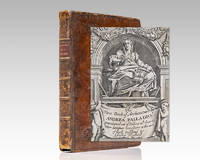
1733151582London: Printed for A. Bettesworth and C. Hitch and J. Osborn in Pater-noster-Row 1733. Finely bound eighteenth century example of Godfrey Richards' English translation of the first book in Palladio's monumental work. Octavo bound in full contemporary polished calf with a morocco spine label lettered in gilt front and rear panels decoratively stamped in blind title page printed in red and black additional engraved pictorial title page illustrated with 71 engraved plates and full-page illustrations 4 folding including a view of St. Paul's Cathedral woodcut illustrations advertisement leaf at end. Twelfth edition. Neat ownership inscriptions and small bookplate to the front free endpaper. Bookseller's ticket to the pastedown. In very good condition with the engravings very crisp and bright. One of the foremost architects of the Venetian Renaissance Andrea Palladio 1508–1580 based his designs on the principles of classical Greek architecture and the traditions of Roman building as described by Vitruvius. He is widely regarded as one of the most influential figures in the history of Western architecture particularly known for his villas in the Veneto as well as his palaces in Vicenza and churches in Venice all within the Venetian Republic. His architectural theories were codified in his treatise I Quattro Libri dell’Architettura The Four Books of Architecture which exerted a lasting influence on architectural practice across Europe and the United States. Palladio’s style later termed Palladianism combined elements of Greek Roman and Renaissance design emphasizing symmetry proportion and harmony in a manner inspired by classical temple architecture. Printed for A. Bettesworth and C. Hitch, and J. Osborn in Pater-noster-Row unknown
16631238London: Ad 1: John Bill and Christopher Barker; Ad 2: Printed for the Company of Stationers 1663. 8vo. Ad 1: Engraved title A-4K8 unpaginated. COMPLETE with OT ending on 3P2v and NT ending on 4K8v. Ad 2: 102 2 pp. A-F8 G4 apparently COMPLETE. Some foxing and blemishes throughout the text. Bound by "Owen" in contemporary full black morocco richly gilt all over with floral and leaf motifs onlaid red and citron morocco pieces to covers and spines a.e.g. fore-ege painted with flowers and "Search the Scriptures" two working silver clasps joints beautifully repaired fore-edge painting dulled and worn from clasps some foxing throughout. Preserved in a protective cloth case. Suitable for exhibition and study. OF SIGNAL IMPORTANCE IN THE HISTORY OF ENGLISH RESTORATION BOOKBINDING: AN UNRECORDED AND UNPUBLISHED BINDING BY "OWEN" WHOSE WORK IS KNOWN FROM ONLY ONE OTHER EXAMPLE. <br /> <br /> In terms of 17th-century English bindings this one in particular is of particular significance: the only other binding by "Owen" is in the Henry Davis Gift British Library. Howard Nixon English Restoration Bookbindings p. 37 and plate 78 describes it in some detail: "It has been stated earlier that signatures on painted fore-edges followed by the word 'fecit' in the seventeenth century are those of binders or booksellers for whom the books were bound. The book in the Henry Davis Gift with the edges signed 'Owen fecit' and dated 1672 is a possible exception to this rule as Owen cannot be traced. The tools used on this book have not however been identified elsewhere." Our binding is far more elaborate the that in the Henry Davis Gift as it features a total of 26 onlays red and citron all elaborately gilt. The Davis Gift example is bound in a single piece of black goatskin. Due to the extensive and complex gold tooling the present binding was not easily attributable to a known workshop but it is now clear that all four major tools on it are identical to those on the "Owen" binding in the Davis Gift see Mirjam Foot Henry Davis Gift vol. II no. 115 with full-page reproduction. While the fore-edge of our binding is worn the word "Search the Scriptures" is just visible alongside depictions of flowers. <br /> <br /> Provenance: inscribed on recto of third blank leaf "John Pounds Carter 1864 bequeathed to him by his aunt Phoebe who died July 14th 1852." This individual was almost certainly the same JPC who was born in Southwark London in 1821 and died in Lambeth London in 1896. Tipped onto the first blank is a small handwritten note which describes this as a "very fine binding by Samuel Mearne." <br /> <br /> References: Ad 1 Bible: Darlow/Moule 539 British and Foreign Bible Society copy lacks the Psalms altogether. Wing STC 2nd ed. B2267. Not in ESTC !. Ad 2 Psalms: ESTC R232588 recording one copy National Library of Wales containing an engraved plate but neither the Yale copy which is likewise bound with Bill and Barker's 1663 Bible nor this copy ever had such a plate bound in. <br /> <br /> We are grateful for the assistance of Philippa Marks British Library and for supplying rubbings of the tools on their Owen binding. Ad 1: John Bill and Christopher Barker; Ad 2: Printed for the Company of Stationers unknown
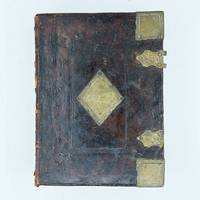
16118272Imprinted at London by Robert Barker printer to the Kings most excellent Maiestie 1611. 1611. 1611 4to. 2 226 231-434 434 misnumbered 435 4 441-554 82 leaves. Herbert 308. BOUND AFTER a defective Book of Common Prayer BOUND BEFORE STERNHOLD Thomas and HOPKINS John The whole booke of Pdalmes Printed by A.G. for the Company of Stationers 1635. 10 90 6 p. Lacking the final 6 pages. Contemporary blind panelled binding with brass corner fittings central lozenges and replacement clasps. Rebacked with most of the original spine re-laid. Trimmed close at the head occasionally cutting into headlines or foliatiion. Leaf Dd3 has small loss of text at the foot. Ee4 has slight loss to a sidenote and Ee5 has a little loss to the blank fore edge margin. The New Testament has a separate title page and is followed by Hervey's Concordances. Nnn2 has loss at the foot. A few light stains some turned corners and a few pen trials. A handsome Jacobean Bible. Imprinted at London by Robert Barker, printer to the Kings most excellent Maiestie, 1611. unknown