AnonymousBiblio.com
253 535 résultats
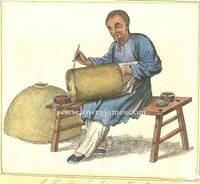
18203199British Isles: c. 1820. Fine condition. A scarce and charming original early nineteenth century watercolor painting on wove paper. 7.25 x 6.5 inches 184 x 165 mm. The painting has been tipped onto ecru wove album paper of the period as was the custom yet the watercolors remain vibrant and rich. Although the origin of this lovely painting is unknown a refined and experienced hand clearly created this detailed and elegant composition. Seated on a slender wooden bench a Chinese Lantern Painter delicately paints the large cylindrical woven lantern which rests on his lap. The details are fine; both the tones and shading display the painter's astute understanding of composition and perspective. The artist no doubt was an armchair or "parlor" watercolorist likely an aristocratic gentlewoman or man who sought inspiration from the vast array of published volumes complete with engraved plates of the trades and costumes of the then exotic regions of the globe. The trades and costumes of China were well documented by the turn of the nineteenth century thus the inspiration seems apparent. Archivally framed in double Ivory French matting with 1" neo-classical gilt moulding glazed with Conservation Glass. Sized to 17 1/2 inches square. unknown
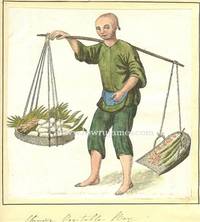
18203202British Isles: c. 1820. Fine condition. A scarce and charming original early nineteenth century watercolor painting on wove paper. 7 x 7.25 inches 177 x 186 mm. The painting has been tipped onto ecru wove album paper of the period as was the custom yet the watercolors remain vibrant and rich. Although the origin of this lovely painting is unknown a refined and experienced hand clearly created this detailed and elegant composition. A young boy balances two hanging trays filled with with leafy vegetables. His vibrant costume mirrors the verdant stock of his offering. The details are fine; both the tones and shading display the painter's astute understanding of composition and perspective. The artist no doubt was an armchair or "parlor" watercolorist likely an aristocratic gentlewoman or man who sought inspiration from the vast array of published volumes complete with engraved plates of the trades and costumes of the then exotic regions of the globe. The trades and costumes of China were well documented by the turn of the nineteenth century thus the inspiration seems apparent. Archivally framed in double Ivory French matting with 1" neo-classical gilt moulding glazed with Conservation Glass. Sized to 17 1/2 x 20 inches. unknown
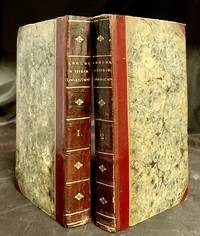
181922534London: Longman Hurst Rees Orme And Brown 1819. First edition. Hardcover. Contemporary half maroon calf marbled boards rebacked with original spine laid-down. Very good. 2 vols. XX 389 318. pages. 9.2 X 5.5 cm. Errata in second volume rear. The preface indicates the writer is male also in the preface notes seeking advise from two friends then throwing their suggestions in the round bin with the following: "I had mistaken their characters they had mistaken mine." A a scare 19th century novel with only 5 on JISC Library Hub all in the UK. Holdings in OCLC seem to confirm the previous. Owner's signature on free front endpapers of both volumes. Flat spines lettered in gilt with gilt florets in the panels. Longman, Hurst, Rees, Orme, And Brown hardcover
191922534London: Longman Hurst Rees Orme And Brown 1919. First edition. Hardcover. Contemporary half maroon calf marbled boards rebacked with original spine laid-down. Very good. 2 vols. XX 389 318. pages. 9.2 X 5.5 cm. Errata in second volume rear. The preface indicates the writer is male also in the preface notes seeking advise from two friends then throwing their suggestions in the round bin with the following: "I had mistaken their characters they had mistaken mine." A a scare 19th century novel with only 5 on JISC Library Hub all in the UK. Holdings in OCLC seem to confirm the previous. Owner's signature on free front endpapers of both volumes. Flat spines lettered in gilt with gilt florets in the panels. Longman, Hurst, Rees, Orme, And Brown hardcover books
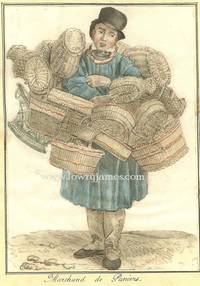
18203203British Isles : c. 1820. Fine condition. A scarce and charming original early nineteenth century watercolor painting on wove paper. 7 x 7.25 inches 177 x 186 mm. The painting has been tipped onto ecru wove album paper of the period as was the custom yet the watercolors remain vibrant and rich. Although the origin of this lovely painting is unknown a refined and experienced hand clearly created this detailed and elegant composition. The details are fine; both the tones and shading display the painter's astute understanding of composition and perspective. The artist no doubt was an armchair or "parlor" watercolorist likely an aristocratic gentlewoman or man who sought inspiration from the vast array of published volumes complete with engraved plates of the trades and costumes of then exotic regions of the globe thus the inspiration seems apparent. Archivally framed in Ivory rag matting with neo-classical gilt moulding. unknown
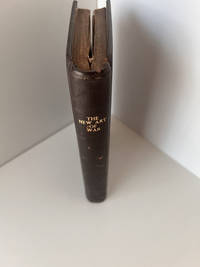
1726ORO0033<p>This is an extremely rare first edition book The New Art of War by Anonymous.</p><ul><li><strong>Published in 1726</strong></li><li><strong>Absence of copyright page</strong></li></ul><p>This 300 year old book is a collection of military treatises by French officers. It provides a detailed look at 18th-century military practices covering the duties and expectations of soldiers from privates to commanders. The book offers practical instruction on various aspects of warfare including marching setting up camps and drawing up battle lines. It also includes specific information on the practices of cavalry and dragoons as well as the rules established by Prince William of Orange for garrisons. The text's focus is on tactical and logistical details of conducting war in the early 1700s.</p><p>Binding is tight and original. Text block has foxing due to age but no tears or missing pages. Backboard has some writing in pencil possibly from a previous seller. Edges are mostly clean with minor wear and some soiling. The book is complete and comes with a pull out which remains in good condition. This book doesn't come with a dust jacket.</p> Printed for E. Midwinter, at the Looking Glass on London Bridge hardcover
187831600St. Louis: Gast & Co. 1878. 1878. IOWA. NEBRASKA. First edition. 8vo. Original yellow wrappers printed in black ink 36 pp. illustrated plates maps. Maps are present on three of the four cover panels. There are four full-page views "Looking southwest from Lincoln Neb.;" "View in Adams County south of Hastings Neb.;" "View on Farmers' Creek Franklin County Neb.;" and "Valley of the Big Blue south of Seward Neb." About 36000 acres remain in Southern Iowa suited for small farms and they are really promoting the South Platte Country in Nebraska. The Burlington Route advises how to reach this country railroad lands available for sale credit and cash terms of sale and rebates allowed and conditions. Also presents conditions in both Iowa and Nebraska crops investment opportunities climate livestock homesteads state laws etc. The illustrations depict scenes in both states and covers contain three maps of the area. A near fine tight copy. Gast & Co.], 1878. unknown
1885000015bBrattleboro Vermont VT. Good. 1885. Softcover. A wonderful hand written diary written in 1895 by a very social woman in Brattleboro Vermont. It would appear that the writer unfortunately unnamed in the diary was either the wife of a Church Minister or the Church's Goodwill Ambassador as she spent nearly every day visiting and calling on Church members sometimes 8 or 10 in a single day. She names dozens and dozens of Brattleboro residents that she visited in her Diary often she brought baked goods or hand made articles of clothing to people. She also wrote much about the local Y.M.C.A. the Woman's Christian Temperance Union and other Brattleboro organizations that she worked very hard for. She wrote nearly every day most days filling the entire page missing only two days during the year when she was away from home. The diary has one page for each day of the year. Here are some quotes from the actual diary: "Jan. 14 1885 Cold but Fine. Did some ironing in the morning then went to see Mrs. Crowell found her better - borrowed some books. Went to see Mrs. O'Neil and tried to comfort her a little then to see Tina. On reaching home found Mira who staid to dinner. Called on Mrs. Tolles who was not at home. Stopped at Mrs. Smith's to leave Mrs. Mitchell's letter. Spent the evening reading & writing. Wrote to Mrs. Cutting." "Jan. 19 1885 Lovely & Cold washed in the early morning. Went down to Laura's with pie. Called on Mrs. Oaks and tried to call on Mrs. Tower in p.m. George Barrett carried me to see the colored people on the fair ground. Mrs. Streeter not at home. Saw Mrs. C.D. Fuller and Mrs. Amos Parker Mrs. Hunter and Mrs. Colman." "Feb 10 1885 Very Cold. Did a little washing a.m. Called on Mrs. Clarkson and Mrs. Reed. P.M. visited Mrs. Rufus Smith Mrs. Ellis s. main st. Mrs. Horton had some conversation with her on personal religion find her anxious to make a profession of her faith in Christ. Miss Amsden not at home. Had some conversation with A.A. Cheny on faith cures. Did some errands." "Friday May 29 1885 Finished ironing and called at the colored folks Mrs. Reed and Clarkson and Mrs. Smith P.M. called at Mrs. Carpenter's and Mrs. Manson's doors - not at home. Called on Mrs. Fuller Mrs. Oneil Mrs. Stearns & Mrs. Horton Canal St. After tea saw Mrs. Carpenter and Mrs. Smith. Too tired to go to meeting." Thursday Nov. 5 1885 Called on Mrs. Bangs. Mr. Bangs a little more like himself. Called at Mrs. Crowell's and Mrs. Hawley's. Mrs. C. brought me home. In the afternoon carried jelly to Laura & blocks to little boy then went to Estey-ville and called on Mr. heald Mrs. Haskins Mrs. Freeman colored Mrs. Strong and Mrs. Blanchard. Went to parsonage to sociable in the evening. Very very tired." "Thursday Dec. 31 1885 Rainy. Called on Mrs. Stone at Brattleboro House and Mrs. Horton on Canal St. In the afternoon carried aprons to Mrs. Chandlers's and called on Mrs. Hudson and Mrs. Stickney. Finished putting my old carpet together. Very rainy evening." All writing is easy to read and this diary is in very nice condition.; Manuscript; 48mo - over 3" - 4" tall; KEYWORDS HISTORY OF Brattleboro Vermont Gender Studies Women's Studies Hand Written Personal Americana Memoir Handwritten hand written autograph autographs signed letters document documents manuscript manuscripts writers writer author holograph personal Americana antiquité contrat vélin document manuscrit papier Antike Brief Pergament Dokument Manuskript Papier oggetto d'antiquariato atto velina documento manoscritto carta antigüedad hecho vitela documento manuscrito Papel . paperback
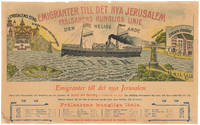
1902NL-02567<p><em><strong>Real and spiritual emigration in turn-of-the-century Sweden.</strong></em></p><p>Few printed documents distill the spiritual fever of fin-de-siècle Scandinavia with the wit visual invention and theological precision of this evocative graphic. At first glance the broadsheet belongs within the commercial idiom of the shipping poster – a genre that had become a dominant visual for mass emigration across northern Europe. Yet every element of the design is in fact a calculated theological allegory. The ocean liner is no ordinary vessel: it is named <em>Evangelium</em> its sails are labeled <em>Sanning</em> Truth and its pennants are inscribed with <em>Jesu Blod</em> the Blood of Jesus and <em>Den Helige Ande</em> The Holy Spirit. The destination is not a port on any earthly chart but <em>Jerusalem's Stad</em> i.e. Heavenly Jerusalem from the Book of Revelation. On the right shore the point of departure is emphatically identified as <em>Staden Fördärf </em>or "Destruction City". That phrase instantly recognizable to any literate Protestant Swede is the direct Swedish rendering of the opening location in John Bunyan's <em>The Pilgrim's Progress</em> 1678. This text had circulated in Swedish translation since 1727 and was among the most widely read books in Swedish nonconformist households.</p><p>In a single composition the anonymous designer fuses the visual language of the emigrant-shipping industry with the metaphysical architecture of Bunyan's allegory setting both against the charged backdrop of a real and sensational mass departure of Swedish farmers for the Holy Land; an event that had gripped the nation since 1896 and was then being immortalized into fiction by Sweden's great storyteller Selma Lagerlöf. The result is one of the most conceptually sophisticated Swedish religious broadsides to survive from the period.</p><p><strong>The Broadside in Detail</strong></p><p>The broadside is a large chromolithograph printed on a single sheet. The composition occupies the upper two-thirds of the sheet in the form of a wide horizontal panorama. At the same time a typeset text block fills the lower third functioning simultaneously as an evangelistic tract and a mock shipping-line advertisement.</p><p>The central and dominant image is a large ocean-going steamship shown at three-quarter view steaming confidently to the left across a deep active sea. Along the hull in large capital letters runs the ship's name: <em>EVANGELIUM</em>. Notably the vessel uses both steam power and full sail suggesting irresistible forward momentum. The fore-sail is labeled <em>SANNING</em> Truth and the main-sail repeats the same word underscoring the dual witness of scripture and spirit. Two pennant flags fly from the masts: the forward one bears <em>JESU-BLOD</em> the Blood of Jesus while the aft pennant reads <em>DEN HELIGE ANDE</em> The Holy Spirit. Smaller text on the vessel itself identifies the passengers as <em>Herrens Apostlar</em> the Apostles of the Lord. Beneath the ship occupying the full width of the water we find the word <em>TIDEN</em> Time spelled out in large block letters indicating that the ocean through which the vessel moves is Time itself; an elegant allegorical conceit.</p><p>To the left of the ship on a rocky elevated shore stands the destination: <em>Jerusalems Stad</em> City of Jerusalem depicted as an idealized cluster of domed and spired sacred buildings rendered in warm ochre and gold and unmistakably evoking the skyline of the earthly Jerusalem as it was commonly imagined in Northern European Protestant iconography. A curving banner beside the city reads "<em>Är resan stormig huru skön är himmel" </em>However stormy the journey how beautiful is heaven. Below the city at water level a small rocky island is labeled <em>Golgata</em>. A tiny sailing vessel is moored beside an inscription reading <em>Vårt skepp blifvit byggt upp på Golgata kulle</em> Our ship was built upon the hill of Golgotha and nearby a second inscription identifies the passengers waiting on the shore as <em>Förbundsfolket </em>People of the Covenant.</p><p>To the right of the ship we find the port of departure and here the designer deploys some of his most pointed satire. A lighthouse on the right shore bears the word <em>GUDSORD</em> the Word of God suggesting that even in the locus of sin divine guidance is available to those who seek it. The shore itself is dominated by a large ungainly building flying the banner of <em>Staden Fördärf </em>Sin City or the city of corruption. The building's windows are labeled with the temptations and institutions of secular modernity: <em>Krog</em> tavern <em>Vinstuga</em> wine bar <em>Biljard</em> billiard hall and even <em>Hospital.</em> A figure by the door labeled 'evangelist' appears to be proclaiming the route to salvation. On the right a signpost reads '<em>Hednaländer'</em> Heathen Lands in front of which a banner flying from the ship's deck declares '<em>Afgångstid: I dag'</em> Departure time: Today mirroring the urgency expressed in the text below.</p><p>Below the panorama a large italic display heading repeats the title. Translated the body text beneath reads: "<em>Emigrants to the New Jerusalem should not fail to secure their places as </em><strong>only one ship</strong><em> is appointed to depart. You who have fallen do not delay for there is provision for you. Grace is sufficient you have not sinned away the love of Jesus do not stay away</em>." The lower portion contains a double-column specification table under the heading <em>Frälsarens kungliga linie.</em> Each column presents the sailing details in the format of a genuine steamship timetable but with every element constituting a biblical reference.</p><p><strong>The Age of Swedish Emigration and Evangelical Revivalism</strong></p><p>The present broadside was produced at the confluence of two of the most powerful cultural forces in Swedish life between 1880 and 1910. On the one hand there was mass emigration of the Swedish population especially to the United States; on the other the extraordinary growth of Free Church evangelical movements outside the established Lutheran church. Both forces found their most vivid symbolic meeting point in the image of a ship crossing a vast ocean towards a promised land. For the emigrant ship companies that promised land was America; for the evangelical tract producers it was the heavenly Jerusalem.</p><p>Swedish emigration reached its peak in the 1880s when hundreds of thousands of Swedes departed their homeland. Shipping lines such as the "Wilson" and "Allan" Lines advertised their routes ubiquitously allowing the iconography of the ocean liner to become deeply embedded in the Swedish visual imagination. The present broadside directly and consciously appropriates that iconography translating the secular shipping poster into the language of Protestant salvation.</p><p><strong>The Swedish Exodus to Jerusalem in 1896</strong></p><p>The broadside's title gains its full charge only when read against a dramatic real event. In the spring and summer of 1896 a group of some forty men women and children from the parish of Nås in Dalarna sold their farms and properties and departed for Jerusalem. Led by a charismatic evangelical preacher they were drawn by the millenarian message of Anna Spafford the American founder of the Jerusalem-based American Colony who had spent time in Chicago preaching the imminence of Christ's Second Coming. A parallel group of Swedish-American evangelicals led by Olaf Henrik Larsson from Nås departed from Chicago at approximately the same time. Their combined arrival in Palestine in 1896 effectively transformed the American Colony into a Swedish-American colony. The new colonists brought practical skills such as farming blacksmithing baking and weaving thereby enhancing the colony's significance in Ottoman Jerusalem.</p><p>The event electrified Sweden. The image of ordinary farming families abandoning their ancestral lands for a religious experiment in the Levant was both compelling and disturbing to the Swedish public. It generated enormous coverage and debate and found its most lasting literary expression in Selma Lagerlöf's two-volume novel Jerusalem 1901–02 which she researched by visiting the American Colony in 1899 interviewing the Swedish colonists and meeting Anna Spafford in person. Lagerlöf's novel became one of the defining Swedish literary events of the early twentieth century. It contributed directly to her receiving the Nobel Prize for Literature in 1909 – the first woman to ever do so. The annual outdoor pageant <em>Ingmarsspelen</em> performed in Nås every year since 1959 keeps the story alive to this day. This evocative broadside belongs to this period of intense Swedish engagement with the religious emigration both as a literal possibility and as a spiritual metaphor.</p><p><strong>The Bunyan Tradition in Swedish Evangelicalism</strong></p><p>The design's debt to John Bunyan's <em>The Pilgrim's Progress</em> 1678 is foundational. Bunyan's allegory had appeared in Dutch in 1681 in German in 1703 and in Swedish in 1727 and by the nineteenth century had become one of the most widely owned and read books in Swedish pietist and Free Church households second only to the Bible itself. The Swedish translation of the City of Destructionwas <em>Staden Fördärf</em> as used here. In contrast the "Celestial City" which Bunyan called the destination of his pilgrimage is transposed directly onto the image of Jerusalem across the water. The designer did not need to make the allusion more explicit than that. Any evangelical Swedish reader would have recognized it immediately. The broadside's real rhetorical achievement is that it fuses three conceptual registers simultaneously: Bunyan's timeless allegory the secular shipping poster of the emigrant age and the charged topicality of the real Swedish departure for an earthly Jerusalem.</p><p><strong>The Artist</strong></p><p>The broadside is unattributed. No artist's signature or monogram appears on the present example or on the comparable examples known in the trade. This anonymity is consistent with the conventions of evangelical tract production in Sweden as elsewhere. Religious publishing societies and Free Church organizations routinely produced illustrated tracts and broadsheets without crediting individual designers with the artistic contribution subordinate to the theological message. Both the chromolithographic technique i.e. color separation and the image's composition nevertheless suggest an experienced commercial lithographer. Being a pre-1909 example of this broadside it does not contain an imprint to identify the publisher either.</p>
6987FOLK ART FLOTILLA 5 SHIP MODELS C. 1920S unknown
183059006404Paris: No Publisher 1830. Printed in the 1800's; Originally dated in the early 17th century. Bound in 1/2 brown leather five raised bands over decorative boards 19th century binding. TEG Decorated endsheets. Some toning to endsheets. Contents: Procez et amples examinations sur la vie de Caresme-Prenant -- Traicté de Mariage entre Julian Peoger dit Janicot et Jacqueline Papinet sa future épouse -- La copie d'un bail à ferme : faict par une jeune dame de son Con pour six ans -- La raison pourquoy les femmes ne portent barbe au menton . -- La source et origine des Cons sauvages . -- La grande et véritable prognostication des Cons sauvages : avec la maniere de les aprivoiser . -- La source du gros fessier des nourrices . -- Sermon joyeux d'un depucelleur de nourrices. 113 pp. in total. Text in French. . Reprint. Hard Cover. Very Good /No Jacket. 8vo - over 7¾" - 9¾" tall. No Publisher Hardcover
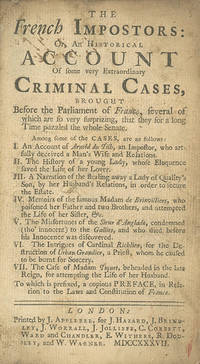
173728073London: Printed by J. Applebee for J. Hazard J. Brindley J. Worrall J. Jolliffe C. Corbet Ward and Chandler E. Withers R. Dodsley and W. Warner 1737 1737. First edition second issue with a cancel title; first published earlier the same year under the title Gallick Reports. This second issue retains the running title Gallick Reports. ESTC N6568 which records six copies of this issue Cambridge Columbia Cornell Harvard Princeton and National Library of Medicine; cf. ESTC T116539 for the first issue. Two leaves misbound following the preface; title-page somewhat soiled and with a small hole not affecting the text; edges of the binding rubbed; very good copy. 12mo contemporary sheep skillfully rebacked red leather spine label gilt rules and lettering. Five pages of publisher's terminal advertisements. ¶ An unusual collection of seven "extraordinary" and "surprizing" French criminal cases as recorded by an anonymous English author who has also supplied an interesting 43-page preface on French law. Among the cases is the 16th century story of Martin Guerre later used by Janet Lewis for her novella The Wife of Martin Guerre Colt Press 1941; that's followed by stories of a man who "debauched" a young woman but is saved from execution by that woman; Mary Margaret de Aubrey who poisoned her father and two brothers; the celebrated history of Urbain Grandier condemned as a Magician; a child claimed by two women to be its mother; Madam Tiquet who attempted to "assassinate" her husband. Interspersed with the cases are relevant extracts from French law the king's edicts against witches and poisoners etc. Modern nautical bookplate on the front free endpaper of Robert J. Hayhurst retail pharmacist and book collector. <br/><br/> London: Printed by J. Applebee, for J. Hazard, J. Brindley, J. Worrall, J. Jolliffe, C. Corbet, Ward and Chandler, E. Withers, R unknown books
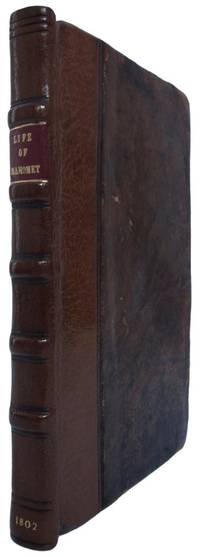
180228803Worcester. Printed by Isaiah Thomas Jun. May - 1802 1802. 1st Edition. Hardcover. 12mo. 17.5cm first edition thus viii13-1542p. publisher's ads. original boards rebacked in quarter brown crushed morocco blind ruled raised bands crimson morocco label gilt titles contemporary book plate a fine copy rare. cgc. Worcester. Printed by Isaiah Thomas, Jun. May - 1802 hardcover
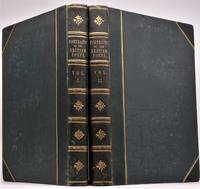
1824008239London: James Carpenter and Son 1824. Book. Very Good Plus. Hardcover. First Edition. Folio - over 12" - 15" tall. SCARCE "Engraved from the best authorities and illustrated by notes biographical critical and poetical." Text describes 138 portraits which are interleaved. "Printed by D.S. Maurice Fenchurch Street"--Vol. 1 page 144." Two folio volumes bound in contemporary pebbled blue morocco over blue moire silk boards backs with gilt lettering and gilt decorations tops gilt. Very Good Plus light to moderate spotting associated with portrait pages light rubbing at tips. A handsome and well-bound set and quite uncommon. James Carpenter and Son Hardcover
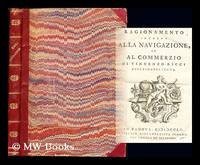
244462Padova: appresso Giovambatista Penada. First Edition. Hardcover. Good copy bound in half anilne-calf over boards with gilt-blocked title to the spine edges very slightly toned. Some wear and tear as with age. Title page torn. Corners sharp with an overall tight bright and clean impression. Physical description; 169 pages. Notes; No clear date or author given. Subjects; Navigation. Vincenzo Ricci Giustinopolitano. Reasoning. Padova: appresso Giovambatista Penada hardcover
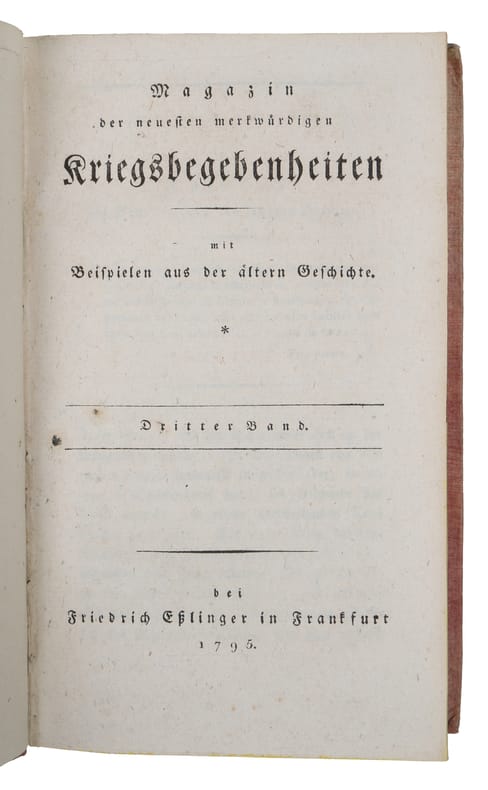
179661495Frankfurt, Esslinger, 1794 - 1796. 8vo. Seven volumes: Four in contemporary blue paper covered boards, three in purple paper covered boards, otherwise uniformly bound with gilt lettering and small paper-label to spines. Wear to extremities, scratches to boards and edges of boards miscoloured. Internally with occassional light foxing, but generally nice and clean. (4), 268 pp. (4), 332, (1) pp. 336, (1) pp. 340 pp. 334, (2) pp. 336 pp. + 2 folded tables. 311 pp. + 3 folded plates.
179661495Frankfurt Esslinger 1794 - 1796. 8vo. Seven volumes: Four in contemporary blue paper covered boards three in purple paper covered boards otherwise uniformly bound with gilt lettering and small paper-label to spines. Wear to extremities scratches to boards and edges of boards miscoloured. Internally with occassional light foxing but generally nice and clean. 4 268 pp.; 4 332 1 pp. 336 1 pp. 340 pp.; 334 2 pp. 336 pp. 2 folded tables.; 311 pp. 3 folded plates. <br/><br/><em>The scarce first edition rarely found complete with all seven volumes as here of this work offering accounts detailing significant and notable events from recent wars supplemented by examples from earlier historical conflicts. </em> hardcover
188882406Paris: Jouaust Librairie des Bibliophiles 1888. Fine. Jouaust Librairie des Bibliophiles Paris 1888 13 x 22 cm relié Illustrated edition with 14 in-text black etchings by Adolphe Lalauze 8 chapter headings 6 tailpieces one of 170 numbered copies on Holland paper. The etchings are in duplicate state in our copy. Preface by Louis Ulbach. Full glazed brown morocco binding smooth spine decorated with a pattern of gilt sextuple compartments location and date gilt at foot gilt roulettes on headcaps covers framed with a pattern of octuple gilt fillets white and purple watered silk endpapers and pastedowns pastedowns framed with a pattern of quintuple gilt fillets double gilt fillets on leading edges original wrappers preserved all edges gilt magnificent unsigned binding. A very handsome copy superbly bound. Jouaust, Librairie des Bibliophiles unknown
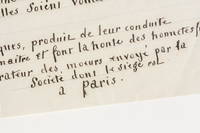
180068537Paris 1800. Fine. Paris s. d. circa 1800 23.50 x 18.30 cm une feuille Brevet d'invention Caisse d'Horloge Patent of Invention Clock Case Paris ca 1800 23.5 x 18.3 cm single sheet A curious manuscript comprising fifteen or so lines in pencil on lined paper bearing the title «Brevet d'invention Caisse d'Horloge». «A noted physiognomist tells us that women of ill repute have the mark of their behavior on their faces. In giving over their bodies to a shameful use the blood changes and becomes watery decomposition begins and colors fade. The skin grows wrinkled dark rings appear under the eyes and the blood as changed by vice has no more of a sex than the case of a clok sic. It is for this reason that an Association has been formed against the corruption of morals which leads to the degeneration of the human race. It marks the easy of virtue with a clok case sic so that they will be exposed to public vilification. They can be recognized by their unusual toilet the product of their criminal behavior and the shame of honest girls. The Repairer of Morals is dispatched by the Association whose seat is in Paris.» A very rare manuscript document. unknown
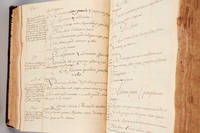
1730764681730. Fine. 1730 In-4 relié Anonymous manuscript of Latin quotations. Large alphabetical table listing the themes of the quotations. Each page is composed of 2 main columns with the translation in the margin and the quotation opposite. The work proceeds by authors and works: Juvenal Horace The Odes and Epodes Propertius and Tibullus Lucan The Pharsalia Petronius; Ovid Book of Fasti The Loves Heroides Letters Elegies The Metamorphoses; Virgil The Aeneid Eclogues Georgics; Martial Epigrams; Seneca Tragedies. From page 169 the handwriting is different more careful more spaced out with initial letters capitals. some titles and letters in bold. Each quotation is preceded by a thematic title which can be found in the table. Contemporary full speckled brown sheep binding. Decorated spine with raised bands. Split headcaps upper joint open with lack of leather. 3 corners slightly bumped. Lower joint open at foot. A strip of leather torn from the upper cover similarly on the lower cover. The work is not a classical collection of Latin quotations but a systematic survey of everything remarkable in each work. The Metamorphoses for example are studied book by book and it is the same for all the works selected. It is thus that this anonymous collection was intended to allow excellent knowledge of Latin authors not through a few well-known quotations but through the memorization of large extracts on all the subjects addressed in the principal Latin works. hardcover
1141July 1859. Drawing. Pencil Drawing: 6 x 9 . Ink Drawing 14 x 8½. Cambridge MA. unknown
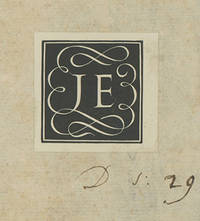
168928493London: Printed in the Year 1689 1689. First edition. ESTC R10117; Wing S5329; NCBEL I 1223 A. Marvell. Edges rubbed with some loss at the end and foot of the spine; hinges starting but sound; some spotting and small stains; very good copy. Folio contemporary sprinkled calf blind rules and decorations red morocco spine label gilt lettering "State / Tracts / Vol. / I" 28 tracts on English affairs during the reign of Charles II written mostly as anonymous pamphlets during the decade 1671-1681 and compiled here as an act of preservation "for the sole use of some particular Gentlemen who set an extraordinary value and estimate upon them." Politics and life under Charles II are the primary subjects with an emphasis on anti-Catholicism including poet Andrew Marvell's An Account of the Growth of Popery first published in Amsterdam in 1677. There was a second volume in 1692 and both volumes were reprinted together in 1693. See ESTC R17906 and R28848. From the library of prominent Englishman of the era John Evelyn 1620-1706 with the later JE bookplate on the front paste-down and contemporary ink manuscript shelf mark. Evelyn Library Part III Christie Manson & Woods March 16 1978 lot 1414; sold again at Sotheby's London December 3 1979 lot 35. A foolish modern owner has clumsily written in ink on the front free endpaper "Sotheby-London December 3 1979 Lot 35 - 1 of 4 all for . . . " The amount paid has been excised. London: Printed in the Year, 1689 unknown
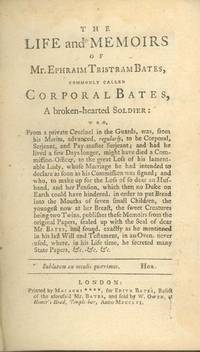
175627951London: Printed by Malachi for Edith Bates Relict of the Aforesaid Mr. Bates and sold by W. Owen 1756 1756. First edition. ESTC T77673; Block The English Novel page 140. Hinges rubbed and starting but sound; light damp-staining to the endpapers; very good copy. 12mo contemporary sprinkled calf gilt rules. One page of publisher's terminal advertisements. A forerunner to Laurence Sterne's The Life and Opinions of Tristram Shandy with numerous parallels in style and subject matter. In the 1770s Mrs. Piozzi wrote to Dr. Johnson that she had found a copy of this "strange book about Corporal Bates which I bought and read . . . and found to be the very novel from which Sterne took his first idea . . . even the name Tristram itself seems to be borrowed from this stupid history of Corporal Bates forsooth." See Helen Sard Hughes "A Precursor of Tristram Shandy" in the Journal of English and German Philology vol. 17 no. 2 who concludes that the story of Corporal Bates "was but one of many minor novels which in halting fashion prepare the way for the more perfect works of masters coming after . . ." Contemporary ink signature of Robert Parsons on the front paste-down. London: Printed by Malachi****, for Edith Bates, Relict of the Aforesaid Mr. Bates, and sold by W. Owen, 1756 unknown
1930319883Printed in Florence Italy: Micheal Angelino Press 1930. Illustrated by Mahlon Blaine. 264pp. 8vo. Pictorial wrappers some wear. Blaine Mahlon. Illustrated by Mahlon Blaine. 264pp. 8vo. Micheal Angelino Press unknown
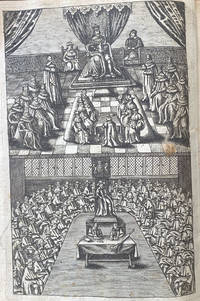
164317509London: Edward Husbands T. Thomas Warren R. Best 1643. FIRST EDITION. Engraved frontispiece of Parliamentary chambers and Charles I title within decorative border with woodcut device and the letters “C V†in contemporary brown ink on either side of the device woodcut initials head- and tailpieces Contemporary full calf possibly repaired at a very early date; interior excellent. From the library of the Birmingham Law Society with the name in gilt on the front cover and bookplate on the paste-down as well as small stamps on title and a few text leaves. First edition. This volume contains the record of all the proceedings between Parliament and King Charles I between the end of 1641 and early 1643. In 1640 Charles established the Long Parliament in order to acquire funds for the Bishop’s War against the Scots. However as soon as the Long Parliament took control they began dismantling the monarchy’s authority by removing the King’s advisors and sympathizers. This text represents a tumultuous period in British history coinciding with the very beginning of the English Civil War making it an important reference source. Edward Husbands, T. [Thomas] Warren, R. Best unknown