ADELE RICE [MRS OWEN R RICE]Biblio.com
109 142 résultats
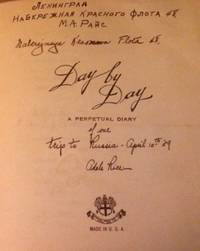
19290002430MOSCOW USSR RUSSIA OAK PARK ILLINOIS. Very Good. 1929. On offer is a super historically significant manuscript artifact of early Soviet Russia and American relations being the handwritten journal of Adele Rice Mrs Owen R. Rice Oak Park Illinois dated April 10th 1929 titled "Our Trip to Russia"; a member of the American Delegation sent on an educational and fact finding mission to Russia a mere 12 years after the Russian Revolutions. The findings and observations of this group are research suggests what the book "Russia and the United States" was based on. The book's first entry of the 185 or so pages of narrative was April 3rd then sporadically filled until the last entry Oct. 22nd which we note was exactly one week before the Black Tuesday stock-market crash. The diary is filled with detailed entries of her personal experiences entries cover politics delegation business Russian history and social commentary and her journeys whether shopping for antiques and jewelry or to the many parties. She takes numerous lessons on Russia while also teaching them. She also does a super job providing specifics with names times dates including; E. Gordon Fox head engineer of the group the diary refers to who wrote 'Russia and the Communist Challenge'; Miss Tolstoy grandniece of the immortal author Count Leo Tolstoy; the Secretary to Swedish Consul; mention of the funeral of Kutlikoff "The Communist head of finance"; Kshesinskaya Danseuse; Mr. Miller of the Hamburg American Line; Sir Perry Chief Engineer at Ford Motor Company this was the time Henry Ford signed an agreement with the Soviet Union to produce cars there; Bill Orr William; Naberezhnaya Krasnogo Flota the Red Fleet; talks about VOKS a cultural society for relations with foreign countries and much much more. Here are some snippets: Saturday April 20th Passport official ordered us off the train because we had no visa in Chicago we were told a visa was unnecessary. Had we been passing thru Holland a visa would not be required. However as we were returning to Germany one was required. Official very mean. Wouldn't return out PP until we were seated in return train. Damn those Dutch! Monday April 22nd - Went down to lunch. Became acquainted with an aristocratic old lady. After I left the dining room she sent the head waiter after me to ask if she could show me around town. I accepted with pleasure. Frau Tipplekirch took me around in the old section where there were a number of antique shops especially on wall Str. Everything was expensive. Monday April 29th - At 1:40 PM We arrived in Moscow where we were met by Miss Tolstoy grandniece of count Leo a man of the legation. Our baggage was locked in the compartments and train switched on another track. Went on a tour of the city in 4 automobiles. Saw the summer palace of Catherine the great but we were so cold we almost froze to death. Tuesday April 30th - Took an automobile and went to the Europa Hotel. Went out to find a restaurant but none were open so we returned to hotel and ordered breakfast which was served at 11:30. I never could bear a soft boiled egg but this morning I ate two! Then we had a business meeting. After which Manus arranged with a Druski driver to take Mary and myself out to see #48 Naberezhnaya Krasnogo Flota our new home. Sunday May 19th - Up at 9 AM for breakfast. Came back and built fire. Heard the band coming down Naberezhnaya Krasnova. Opened our double window and watched the band escort over 200 sailors to the transport boat. A large crowd had followed many wives with little children also sweethearts and parents. One little boy about 2 yrs old cried bitterly to go to his father who was in the ranks. Saturday May 25th - Walter Leck Ed Everhard Willis Cleminult Vance Cronk Earl Collister & Leo Mandeville left for Kharkov tonight. Gipromez sent a touring car for baggage. No one is allowed on train cars with more than one bag. Most of the fellows had two. They'll be gone for 4 or 5 weeks. Saturday June 1st - Cold and rainy. Sinus headache. Our housekeeper says meat is very scarce. No beef until after the 15th and perhaps no pork. Only veal and fowl. This is because the peasants have no fodder for the cattle and so they are killing them for their own use. Friday June 7th - After dinner walked over to see the Eisenbergs a very pleasant evening. Mrs. E walked part way home with me. Promised to take me thru Prince Yusupov's Palace next week. Monday June 10th - Got two cards from Owen - one from Kharkov where he said there were great quantities of Ukrainian Embroidery work. He bought two Emb blouses for himself. The second card was mail in Enakievo. Wednesday June 19th - Had my dinner at 5 instead of 5:30 so I could attend the funeral of Kutlikoff the communist head of finance. Very interesting. Vola Mrs. Fincke and I watched the procession of thousands of people soldiers and sailors a short distance from the palace of Labor. Sunday July 21st - Most of the boys worked today so we had tea and sandwiches at noon and dinner at 5:30. Mrs F. & I took a walk as far as the winter palace. The way was crowded with people who came to see the submarines & nine destroyers or cruisers that are here on holidays. In the evening Owen and I went up to the summer gardens rested a while and then walked down to the church of resurrection. Monday July 22nd - Bill Orr Mr. Thomas Hartog and Ed attended banquet at Europa tonight for the American Delegation. Miss Helen came at 9:20 to give us a lesson. We all laughed and joked quite a lot. Further talk about a dinner with Sir Perry chief Engineer of Ford Motors. Friday August 16th - Had a busy AM got a long letter from sister. Phoned "Voks" - Cultural Society for relations with foreign countries about permit to go thru Kremlin. Friday August 30th - Arrived Moscow 9:20. Took a taxi to Savoy. Ed went directly to Metropole where Freyn and Thomas were stopping. Gordon had wired to Miss Tolstoy to reserve two double-rooms but seemingly it hadn't been taken care of. Could get only one single-room which we took deposited our bags washed up and phone Miss Tolstoy to make arrangements for her services as guide. She arrived at 11 am and soon after we started off for the "Voks" to join group to go thru Kremlin." The 5¾ x 4¾ book is VG. ; Manuscript; 12mo - over 6¾" - 7¾" tall; KEYWORDS: HISTORY OF COMINTERN ADELE RICE MRS OWEN R. RICE OAK PARK ILLINOIS RUSSIAN REVOLUTION SOVIET UNION E. GORDON FOX KUTLIKOFF KSHESINSKAYA DANSEUSE NABEREZHNAYA KRASNOGO FLOTA RED FLEET VOKS KREMLIN MOSCOW USSR UNION OF SOVIET SOCIALIST REPUBLICS RISE OF COMMUNISM COMMUNIST COMMUNISM AMERICANA HANDWRITTEN MANUSCRIPT AUTOGRAPHED AUTHORS DOCUMENT LETTER AUTOGRAPH KEEPSAKE WRITER HAND WRITTEN DOCUMENTS SIGNED LETTERS MANUSCRIPTS HISTORICAL HOLOGRAPH WRITERS AUTOGRAPHS PERSONAL MEMOIR MEMORIAL PERSONAL HISTORY ARCHIVE DIARY DIARIES JOURNAL LOG PRIMARY SOURCE FIRST HAND ACCOUNT SOCIAL HISTORY PERSONAL STORIES LIVING HISTORY ANTIQUITÉ CONTRAT VÉLIN DOCUMENT MANUSCRIT PAPIER ANTIKE BRIEF PERGAMENT DOKUMENT MANUSKRIPT PAPIER OGGETTO D'ANTIQUARIATO ATTO VELINA DOCUMENTO MANOSCRITTO CARTA ANTIGÜEDAD HECHO VITELA DOCUMENTO MANUSCRITO PAPELBIOGRAPHY BIOGRAPHICAL AUTOBIOGRAPHICAL AUTOBIOGRAPHY PERSONAL NARRATIVES . unknown
19660001555TIAN JIN CITY PEOPLE'S REPUBLIC OF CHINA. Good. 1966. On offer is an original significant 1966 manuscript diary and journal handwritten by a student of Nan Kai University in Tian Jin City. Over 200 pages in the 13cm x 18cm book the author who we believe is recorded within the pages details his part in the Communist movement and life at the University as the process of Mao Zedong's Cultural Revolution began. As one online source succinctly sums up the times: "People's Republic of China from 1966 through 1976. Set into motion by Mao Zedong then Chairman of the Communist Party of China its stated goal was to enforce socialism in the country by removing capitalist traditional and cultural elements from Chinese society and impose Maoist orthodoxy within the Party. The most important yet naturally unstated reason for the revolution was the return of Mao Zedong to a position of political power after he lost most of his political influence after his failed Great leap forward." There are a small number of handmade craft items glued to some pages the odd loss of characters from glued spots but overall G.; Chinese Language; 12mo - over 6¾" - 7¾" tall; KEYWORDS: HISTORY OF TIAN JIN CITY NAN KAI UNIVERSITY GREAT PROLETARIAN CULTURAL REVOLUTION CULTURAL REVOLUTION MAO ZEDONG MAO TSE TUNG GREAT LEAP FORWARD MAOIST SOCIALISM COMMUNISM COMMUNIST CHINE CHINESE SINO POLITICS GRASSROOTS SOCIALISM PROPAGANDA POST FIVE YEAR PLAN 5 YEAR PLAN GANG OF 4 GANG OF FOUR LIN BIAO BEIJING PENG LUO LU AND YANG ZHONGFA 267 INDOCTRINATION RED CHINA CHAIRMAN MAO MARXISM-LENINISM MAOISM HANDWRITTEN MANUSCRIPT AMERICANA DOCUMENT LETTER AUTOGRAPH DIARY JOURNAL LOG KEEPSAKE WRITER HAND WRITTEN DOCUMENTS SIGNED LETTERS MANUSCRIPTS HISTORICAL HOLOGRAPH WRITERS DIARIES JOURNALS LOGS AUTOGRAPHS PERSONAL MEMOIR MEMORIAL PERSONAL HISTORY antiquité contrat vélin document manuscrit papier Antike Brief Pergament Dokument Manuskript Papier oggetto d'antiquariato atto velina documento manoscritto carta antigüedad hecho vitela documento manuscrito . unknown
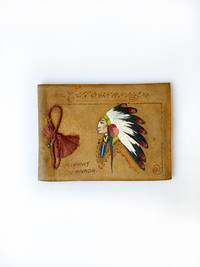
19430010036Italy. Good with no dust jacket. 1943. Full-Leather. On offer is a truly remarkable find from World War II: a small autograph book kept by a Canadian soldier named Herbert John Busch while he served in Italy. Busch was born in 1919 in Calgary Alberta. He enlisted in the Royal Canadian Artillery RCA and served in the Italian Campaign as part of the Central Mediterranean Force CMF. After the war he returned to Alberta where he lived until passing away in 2002 at the age of 83. This autograph book contains pages with dates signatures brief comments addresses and sometimes even short poems or songs by numerous soldiers from across Canada who were serving in Italy. At the top of many pages there are Italian town names written in a different hand than the autographs we presume these were added later by Busch. For example: "Gravina / Some where in Italy 16/12/43 / Dear Herbie / I cook for tomorrow so you can look forward to some Flapper Jacks / Bdr Bombardier Blake Ft McCallum Newfoundland." Several entries were dated in Ortona Italy where the Canadian 1st Division fought a brutal eight-day battle in December 1943 which took many casualties. "Ortona / Some where in Italy. 1./3./44. / Dear Herbie. Here we are in Italy with all its mud and snow. On to Berlin we hope to go. But when the leaves fall again I hope we are back home where we wont have to dig in. / Bill Saunders." "March 1/44. Somewhere else in Italy. Ortona / Dear Herb / Take us back to Canada The place we long to be; To get us clear of Italy. Would be good enough for me. / Sgt M Neil T. A. C. / Spryfield PO / Halifax NS / Canada." This book measures 4 inches by 5.75 inches and contains 44 pages. It is 100 percent complete. The soft leather cover is in excellent condition. It bears an embossed and colourfully painted head of an Indigenous man wearing a traditional feathered headdress of the First Nations peoples of the Great Plains and Canadian Prairies. The cover and the pages are punched with two holes and they are all secured with a lace. The pages are in good condition and the handwriting is legible. This is a superb artefact of Canadian World War II history. With the words and handwriting of over three dozen young men the pages of this book bring to life the experiences of soldiers who fought to liberate Italy from the Germans. The names dates and mailing addresses contained within offer an abundance of detail about the specific Canadian individuals who served in the Italian Campaign at the time. ; Manuscripts; 4" x 5.75"; 44 pages; Keywords: Herbert J Busch; Royal Canadian Artillery; Battle of Ortona; Canadians in WWII; World War Two; Alberta; D-Day; Gravina; Godo; Italy; RCA; Central Mediterranean Force; CMF; Italian Campaign; Allied Forces; Handwritten; Manuscript; Document; Letter; Autograph; Writer; Hand Written; Documents; Signed; Letters; Manuscripts; Diary; Diaries; Journal; Personal History; Social History; Memoir; Memorial; HANDWRITTEN; MANUSCRIPT; ANTIQUITÉ CONTRAT; VÉLIN; DOCUMENT; MANUSCRIT; PAPIER ANTIKE; BRIEF; PERGAMENT; DOKUMENT; MANUSKRIPT; PAPIER OGGETTO D'ANTIQUARIATO; ATTO; VELINA; DOCUMENTO; MANOSCRITTO; CARTA ANTIGÜEDAD; HECHO; VITELA; DOCUMENTO; MANUSCRITO; PAPEL . hardcover
19190001417SPITZBERGEN GREEN HARBOUR NORWAY. Very Good. 1919. Manuscript. On offer is an exceptional archive of two 2 significant historical handwritten note book and diary of Herbert W. Leech Manager of the Marble Dept of The Northern Exploration Company NEC in 1919. It is very interesting reading of the troubles this operation had as the books entirely describe through letters notations and diary entries all the work and grief his operations suffered. Herbert Leech the Manager reports in the letter copies to his superior Mr. W. Holmboe in Tromso from the MINA I Spitzbergen Recherche Bay or Green and King's Harbors. It appears right from the start that Leech was in a sad way as he reports of the ship being unsatisfactory breakdowns continual delays everywhere and always problems with the staff or contractors carpenters especially it seems and he complained of near open mutiny with staff some calling in sick for no reason others barely maintaining a guise as it appears this summer venture was ill-advised or doomed for other reasons. He writes the details of his needs and progress during the expedition including the never ending problems with the ship and his men as well as requests for supplies and spare parts for the engine etc. There are letters telling of the men refusing to work after disagreements over contracts and the continued intoxication of the steward. There are some details of their geological discoveries and the conditions they had to endure. There is a list of expenses incurred on the journey to Tromso Norway and other expense lists including wages of the men etc. The daily diary kept for approximately 3 months of the expedition during July to September in 1919 include details of the mineral deposits they had found in each area with estimated mining output and estimates of the cost of plant and buildings required to open a mine. The area they are surveying is around Spitsbergen including Green Harbour and Kings Bay. There are also geographical geological and technical notes throughout too. The NEC the famous explorer Shackleton was a large shareowner and involved in operations was a British firm firmly established in Norway's Northern and Arctic mining and exploration activities. These books are placed in a very important time as WWI had just ended and the rise of Bolshevism are pertinent as part of the historical backdrop. This is an entirely unique grouping and intimate glimpse into early 20th century arctic exploration and a rare look into their lives as historic explorers. The script is mainly in pencil and reasonably clear to read. HISTORICAL CITINGS: A: Shackleton now became involved in an undercover enterprise. A company the Northern Exploration Company was preparing an expedition to Spitsbergen. Shackleton was asked to be the leader. Ostensibly the company was going to mine mineral claims owned since 1910 by the company. Since 1910 the Germans had a meteorological station at Ebeltofthaven in West Spitsbergen which was only withdrawn at the start of the war. Spitsbergen was a delicate issue as it was administered by Norway a neutral country. With the backing of the British Government the Northern Exploration Company could establish a British presence on the islands. To prove it's commitment the government provided the expedition with an armed merchant ship the ELLA. Frank Wild now commissioned as a temporary lieutenant in northern Russia was selected by Shackleton as his assistant. By the middle of August Shackleton was in northern Norway at Tromsø on his way to Spitsbergen; it was the first time he had crossed the Arctic Circle. It was in Tromsø that Shackleton suddenly became ill. He "changed colour very badly" as McIlroy put it. He suspected a heart attack. Shackleton refused to undress so McIlroy could listen to his heart. This was the first hint that Shackleton might be suffering from heart disease. Shackleton had to turn back arriving in London in early September. Meanwhile the leadership of the expedition was placed under Frank Wild. The northern Russia campaign said General Ironside "was a side show of the Great War". Soldiers could hardly be spared from the front lines so troops were scraped from the bottom of the barrel to be sent to Russia. At this point no one was going to worry about the condition of Shackleton's heart. Early in October Shackleton sailed for Murmansk. As Shackleton wrote it was a "job after my own heart.winter sledging with a fight at the end". As he crossed the Barents Sea he wrote to Janet Stancomb-Wills "All is sheer beauty and keen delight. The very first.snow-squalls bring home to us the memories of our old South Lands. There is a freshness in the air a briskness in the breeze that renews one's youth". "This day 3 years ago the 'Endurance' was crushed in the ice" Shackleton wrote to his younger son Edward on October 26 "and we all were.sleeping on rather moving about on the moving ice with no home to go to. I have been to many places since then now it is the other end of the world". Shackleton had just landed at Murmansk. A fortnight later on November 11 the Armistice was signed. The war with Germany was over. However war in northern Russia was not yet at an end; the Allied forces were now fighting the Bolsheviks instead. The north Russia force had attracted various polar explorers: Macklin Worsley and Hussey from the ENDURANCE EXPEDITION; Stenhouse from the AURORA branch of the Trans-Antarctic Expedition; Victor Campbell the leader of Scott's Northern Party; Dr. Edward Atkinson from the Scott camp and Dr. Eric Marshall from the NIMROD EXPEDITION. Shackleton's official job description was "Staff officer in charge of Arctic equipment". In all actuality he was a glorified storekeeper. He had done most of his work in London and the outfits he now provided were doubtful; his own expeditions had been struggles against poorly designed equipment and clothing. The American troops in the region discarded the Shackleton clothing and boots and reverted to their own. Shackleton was now kept at headquarters in Murmansk with little to do. Shackleton wrote to Emily "I have not been too fit lately. I am tired darling a bit and just want a little rest away from the world and you". The strain of a divided self was showing itself in Shackleton. "I am strictly on the water wagon now" he wrote to Emily at the end of January 1919. He got thoroughly drunk on Christmas Day and in his own words "after a thought I have cut it right out it does me no good and I can tell my imagination is vivid enough without alcohol it makes me extravagant in ideas and I lose balance.I did not upset my superiors everyone was awash only it seems to take different people different ways. If I had not some strength of will I would make a first class drunkard". Shackletons' affairs were in a poor state; money was in short supply. Emily was fending for herself while Cecily was at Roedean and Ray the eldest boy was at Harrow. Shackleton hoped to cover the school fees from selling shares of his stock in the Northern Exploration Company but the transaction never happened. By the end of March 1919 Shackleton was back in London and demobilized after five months in the field. He was regarded well enough by The Times that an interview was requested. In that interview Shackleton stated that nearly half a million people "threw in their lot with us.against the Bolshevist menace. It is thus not merely a question of saving our own troops but a moral obligation to civilization.No domestic or political consideration should be allowed to interfere with steps being taken immediately to prevent anything in the nature of a reverse to our arms in these regions.In Murmansk as elsewhere the peasant is not a Bolshevist.but without armed support he is helpless.do not let us be too late.the British people do not yet realize what Bolshevism means.it is.becoming far worse than German militarism". CITING B The Northern Exploration Company NEC which annexed large expanses of land in Svalbard is engraved into Svalbard history. NEC's land annexations were concentrated where the most profitable mineral deposits were thought to be found. The company was founded in 1910 and was most active in the years around World War I. The background for the activity was the numerous occupations carried out by Ernest Mansfield in Svalbard prior to 1910. NEC bought his land occupations in 1911 and started the construction of Ny-London and the promising marble quarry at Blomstrandhalvøya in Kongsfjorden. NEC owned and operated many mines and prospects in Svalbard most of which were to exploit coal. Other mineral deposits were also prospected such as zinc asbestos iron and marble. Optimism prevailed despite frequent loss of capital in prospects that never materialized. They were big landowners but produced close to nothing. This was the era of Neo-Industrialism and in Svalbard there was a Klondike-like atmosphere in which everyone was affected by the fervour for mineral deposits. Investment capital was readily accessible. The optimism and vitality of the NEC has left many cultural remains. The NEC annexation signs can be found in all the areas they were active with text in three languages to make sure everyone understood this was NEC's land. Transporting equipment to Svalbard was long trying and expensive and the work seasons were short and hectic. The value of the buildings and equipment itself was often less than the cost of disassembly and transport back to the mainland. Installations were therefore often left on site and can today be seen as a witness to dreams for quick profit in enterprises that were discontinued after only a few years of trial operations To summarize: An historic first hand primary account and telling of the 1919 Summer season for the Northern Exploration Company through the manager's diary and letters including: 1 a book of letter-copy letters to head office some suppliers with tucked in notes receipts 60 pages; then 2 a book of financial dealings 30 pages and lastly and most importantly his diary 65 pages. This is a 7 x 5 inch flip style notebook and has some scattered technical geographic technical notes. OVERALL VG.; 8vo - over 7¾" - 9¾" tall; KEYWORDS: HISTORY OF NORWAY NORWEIGAN ARCTIC EXPLORATION FAR NORTH MINING SHACKELTON HANDWRITTEN MANUSCRIPT DOCUMENT LETTER AUTOGRAPH DIARY JOURNAL LOG KEEPSAKE WRITER HAND WRITTEN DOCUMENTS SIGNED LETTERS MANUSCRIPTS HISTORICAL HOLOGRAPH WRITERS DIARIES JOURNALS LOGS AUTOGRAPHS PERSONAL MEMOIR MEMORIAL PERSONAL HISTORY AMERICANA HANDWRITTEN MANUSCRIPT AUTOGRAPHED AUTHORS DOCUMENT LETTER AUTOGRAPH KEEPSAKE WRITER HAND WRITTEN DOCUMENTS SIGNED LETTERS MANUSCRIPTS HISTORICAL HOLOGRAPH WRITERS AUTOGRAPHS PERSONAL MEMOIR MEMORIAL PERSONAL HISTORY ARCHIVE DIARY DIARIES JOURNAL LOG PRIMARY SOURCE FIRST HAND ACCOUNT SOCIAL HISTORY PERSONAL STORIES LIVING HISTORY ANTIQUITÉ CONTRAT VÉLIN DOCUMENT MANUSCRIT PAPIER ANTIKE BRIEF PERGAMENT DOKUMENT MANUSKRIPT PAPIER OGGETTO D'ANTIQUARIATO ATTO VELINA DOCUMENTO MANOSCRITTO CARTA ANTIGÜEDAD HECHO VITELA DOCUMENTO MANUSCRITO PAPEL HANDSKRIFT AUTOGRAFER EGENHÄNDIGT HANDSKRIVET HANDSKRIVEN MANUSKRIPT BREV SIGNERAD SIGNERAT SIGNATUR NAMNTECKNING AUTOGRAF HANDSKRIFTER Spitzbergen Recherche Bay or Green and King's Harbors Blomstrandhalvøya in Kongsfjorden Tromso Northern Exploration Company Holmboe Svalbard Blomstrandhalvya . unknown
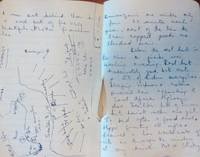
19510002446KIMBLE ENGLAND AFRICA SAHARA CONGO SOUTH AFRICA. Good. 1951. On offer is a sensational original manuscript diary that details and documents an epic 10000 mile journey by truck for the most part that begins in Little Kimble Buckinghamshire a small town north-west of the Greater London area to Europe and then moves to North Africa across the Sahara through the Belgian Congo to the final destination South Africa. Remarkably the expedition was undertaken by 17 year old Sylvia Bond-Smith the author and her 20-year old brother Derek. Driving through much dangerous and wild terrain their difficulties deprivations and triumphs are retold by this erudite and intrepid traveler in this very detailed journal; from the practical and mundane day to day details of their journey to a wealth of keen eyed and charming observations of this very young woman on the adventure of a lifetime. The 300 pages or so 7" x 4.5" book is rife with experiences from mileage numbers to describing an elephant and gorilla hunt. Midway Sylvia and her brother meet up with their father who is exploring in the Belgian Congo. Adding further depth to the super narrative are the tipped in and some tucked in ephemera; train tickets stamps hotel ephemera news clippings the intrepid Smith-Bond siblings meet mid journey two journalists who become attached to the Smith's and document their story: "A boy a girl and a truck and ten thousand miles of adventure. That is the thrilling prospect facing Kimble brother and sister Derek Bond-Smith 20 and Sylvia 17. Very soon the Bond-Smiths embark on their biggest journey yet - 10000 miles by truck to Cape Town. Their route lies across 2000 miles of scorching Sahara - where they will follow a faint track marked every 60 miles by a petrol can through to the steaming Congo Nigeria Kenya and down through Tanganyika and Rhodesia." and a number of hand drawn maps and illustrations litter the journal. With great amusement we read an entry of their accommodations at one point: 'cheap not very clean but a nice old girl running it' then a later hand a one word note in pencil on the top margin with an arrow to the passage reading 'brothel'. Here are some snippets: Dec 6th 1951 To the Spanish frontier at La Jungesa - Gathering Kit getting official forms etc we drove on a bit and found a perfect camping site just off the road. Smooth grass and a kind of Oak tree and little cub bushes and mountains all around very beautiful. Got tent up and found water from a nearby stream and got meal. While eating too Dutchman came up whose signatures above. Cycling to South Africa so they hope through Spain and down West Coast of Africa. Algers Laghanek Dec 23rd 1951 Land flat at first than came to Atlas Telliem it became very rocky. Steep rocks very steep road cut right down. Very sleepy and couldn't keep my eyes open for long come out to a plateau passed through Boyhem in village stopped to talk 3 women and two men French bitterly cold stopped for lunch on desolate plain. Dec 30th 1951 Up at 6:15 supplies very short and all have been hungry for a few days very little breakfast. Jan 4th 1952 Up at 6 after about 4 hours of sleep got booked in what turned out - to be a very nice place with running water hot bath etc. Consists of several buildings and got nice room with bath around corner no sights nets above bed. First we have seen like this. Little would I have thought a year ago I would ever be in Nigeria so far its a very nice place were in now. Not much vegetation but lots of English colonist about which is pleasant like being home again only Colonial atmosphere I soon get into a bath and how I needed one never been so dirty in my life & had a good splash around. Felt really good to be so clean again first time I have had clothes off since we left Alger. Jan 14th 1952 Up at five it was still dusk found then & Skye sleeping in sleeping because of animals on the road. On road at 6:30 just as sun was rising beautiful sunshine. Saw several groups of guinea fowl several of which Derek blasted away and missed- saw no game - except 3 small Gazelle and two big monkeys. At Kobo we stopped at the road and bought two Pawpaws papayas and stopped for breakfast had my first Pawpaw which was quite good soon after Kapo came upon several cry neatly laid out and constructed villages some buildings still use leaina foundations leashed together with creepers. One deserted village rather impressive. Bush in this area very thick and road narrow. Jan 21st 1952 Captured several gorillas from the Rinzori mountains - The biggest gorillas in the world - Mal Shot one weighing 1/2 a ton with Teryizi large dimensions & black & hairy & strong It immediately wounded 2 of the natives while itself was wounded and dying on the ground. It grabbed one of them by the hand and flung him for 30 meters and the natives hand stayed in the gorillas grasp his bones crushed like butter. Another native the gorilla hit in the face which was completely torn in two. Jan 25th 1952 Up at 7 had breakfast than got picked up some of Ron & Skyes kit. Left Stanleyville at 9 after saying goodbye to Ron & Skye which was horrible having come so far with them Boys at Sebana Hotel - dreadful service bad. Good to be on the road again & walking quietly along Enuno & Ura rivers by and also Tslopo river and then through Baywaboli - not very big place. Population fairly dense natives all wearing white and proper looking than around Baywaboli where Govt patrol passed by - Avakabi & over the Kuri river by bicycle - a fast flowing river with lots of flat rocks after Ikani river the forest rather dense - tropical like vegetation all around palms tall trees and think undergrowth 5 monkeys around the road about us about 20 bands bigger baboons & thought for an instant they were gorillas which is quite possible as we are near gorilla county. At Elephant Station at Andudu on Nepoko river. Pygmies are very cruel as regards animals. One way they kill elephants is to smother themselves with the smell of the elephant and creep up on it while its asleep and cut its trunk off so it cannot eat or drink & is in great pain until it dies in about 4 days." The binding is not great but overall G.; Manuscript; 12mo - over 6¾" - 7¾" tall; KEYWORDS: HISTORY OF SYLVIA BOND-SMITH DEREK BOND-SMITH THE SAHARA BELGIAN CONGO KENYA AFRICA TRANS AFRICA EPIC JOURNEY BROTHER AND SISTER EPIC TRAVEL SAGA TANGANYIKA RHODESIA ZAMBIA ZIMBABWE THE DARK CONTINENT SOUTH AFRICA TRAVEL YOUNG TRAVELERS GINETTE LITTLE KIMBLE BUCKINGHAMSHIRE TRANS-SAHARA HWY/N1 PYGMIES HUNTING ELEPHANTS GORILLAS CAPE TOWN ALGIERS AFRICANA HANDWRITTEN HANDWRITTEN MANUSCRIPT AUTOGRAPHED AUTHORS DOCUMENT LETTER AUTOGRAPH KEEPSAKE WRITER HAND WRITTEN DOCUMENTS SIGNED LETTERS MANUSCRIPTS HISTORICAL HOLOGRAPH WRITERS AUTOGRAPHS PERSONAL MEMOIR MEMORIAL PERSONAL HISTORY ARCHIVE DIARY DIARIES JOURNAL LOG PRIMARY SOURCE FIRST HAND ACCOUNT SOCIAL HISTORY PERSONAL STORIES LIVING HISTORY ANTIQUITÉ CONTRAT VÉLIN DOCUMENT MANUSCRIT PAPIER ANTIKE BRIEF PERGAMENT DOKUMENT MANUSKRIPT PAPIER OGGETTO D'ANTIQUARIATO ATTO VELINA DOCUMENTO MANOSCRITTO CARTA ANTIGÜEDAD HECHO VITELA DOCUMENTO MANUSCRITO PAPELBIOGRAPHY BIOGRAPHICAL AUTOBIOGRAPHICAL AUTOBIOGRAPHY PERSONAL NARRATIVES . hardcover
19300011013Omaha Nebraska: Omaha Nebraska Ford Motor Company Labor Relations Greatest Generation. Good. 1930-1945. Hardcover. On offer is a rare 14-volume archive of diaries that chart the course of an American boy's life through the Great Depression and World War II a classic member of 'the Greatest Generation'. This is an outstanding archive of diaries that document the life of a man throughout his boyhood in Midwestern America throughout the Great Depression and into WWII. The author of this archive is Richard Allen Metzler. He was born in 1920 in Omaha Nebraska where his father Clyde was a dentist. He married Doris Cuthbert in 1946. He worked his entire career with Ford Motor Company. His wife taught with distinction in the Dearborn Public Schools system. He passed away in 2000 at the age of 80. His diaries begin at age 10 and continue until he is 25. This is a terrific collection. It traces this boy's growth as a young child teenager college student and young man through some of the most momentous years of the 20th century. As would be expected his writing matures over the years as he begins to add reflection and nuance to his daily entries. Taken as a whole they offer a superb picture of growing up in the America in the pre-war years. The following excerpts will give a sense of the flavour of these diaries: "This afternoon Paul Richard's brother went downtown with Bob Muchow and went to a show. Tonight Eddie came over and we played down in the basement" Mar 28 1930; "Tonight Paul went to the drawing lesson all alone and staid up to Story's and ate supper. Today altogether I won sixteen snurts one glassy and three mossies nicknames for types of marbles May 1 1930"; "This morning Paul went caddying but didn't earn anything. This afternoon Lary me and Paul went swimming. We got a new car and went riding" June 11 1930. Two years later he has a paper route that he manages for the next several years and takes very seriously : "We had a short little moving picture on how to brush your teeth today at school. It snowed all day today. Story carried newspapers with me. Paul went to scout meeting. I made fudge did homework and played with Tag after supper" Feb 16 1932; "In homeroom assembly I had to get up and talk on "the industry of carrying papers". When I went to school this morning I locked myself out of the house so I ate up at 27th with Story . I had to come home from Scout Meeting and go over to P. T. A. At North and demonstrate how to do beadwork in front of a pile of people. "Was I mortified! " May 8 1932; "1 of us kids went on a hike to Stone Park this morning. The other 3 walked but I rode the bike and carried all the stuff. When I was going down a hill I was in a deep rut and didn't have any brakes and there was a log slap bang in front of me ." Nov 30 1934; "Paul Huntley and Bill slept out in Stone Park last night so I carried Paul's route. Snyder helped me carry my route and then dad took us out. Threw axes and knives at trees all day. Ate dinner out there. . Found out that Huntley smokes. . Typed some more chain letters" May 5 1935; ". Eddie Meents is in my Chem class. He flunked Chem 2 last sem. & is going to flunk again. Bob Bierworth is back from reform school. He looks like the sea hag's dad " Sept 23 1936; ". Went to A. Y. McDonald and applied for a job. Fred Hagly even phoned up here for me. He said to start tomorrow. So ----- . Paul left for Beresford to work for three weeks " Aug 14 1938. His entries focus almost exclusively on his immediate world. He does make a passing reference to troubles afar: ". Got a cottage on Lake Carlos with electricity so now we can hear the war nes - it started Thurs. I guess but we didn't know about it" Sept 2 1939; ". I haven't said a thing about the European War. Well there is one and a real one. In fact France is licked and Britain looks pretty sick. Looks like Hitler is on the way. Hadn't better come over here bless his hide." June 18 1940; ". Just started on a letter to Marj when I was called to the phone by Mrs S. I just sensed what it was before she called up the stairs - Paul was phoning that he had gotten a telegram from Dad that mother had passed away at 5: 30 this morning. At 5: 30 A. M. July 18 1941 my mom ceased to suffer and is now with the Lord and waiting for me and Paul and dad." July 18 1941. Clipped in to a back page is a newspaper clipping of the announcement of her death. He notes the Japanese attack on Pearl Harbor and the fact that America will be at war. His Dec 9th entry begins with the laconic: "Well they didn't bomb Detroit - yet "Dec 9 1941. He writes detailed entries about his life at college especially his life as a fraternity member. 1942 however finds him in Detroit working for Ford Motor Company - a place he would work for the rest of his life: ". Johnson and I walked over to the glass plant but got kicked out because its been completely converted into government tool & die ." Dec 5 1942And lest people thought that the war effort made other labour concerns fade away he records this: ". We struggled to keep ourselves occupied - the whole foundry was on strike. Don't like the swing shift. The stinkers should be slapped into the Army " May3 1943; ". Foremen on strike at the Rouge. A negro-white race riot started on Belle Isle bridge last night. Several dead lot wounded "June 21 1943. His last entry is rather poignant: ".Got a card from Dorothy Head. . She asked me why I broke it up & I told her - that I was getting way too much involved & I was too yellow to get married. She told me she loved me at the time & would have married me that I nearly broke her heart. I told her I had walked out on at least 3 other gals just the same way since. So we had quite a talk" Apr 2 1945. Within the next 15 months he would meet and marry Dorothy Cuthbert and they would be married for 50 years. For a historian this is a simply outstanding archive. Its rare to find a large group of diaries started by a young boy and maintained through to adulthood. The diaries chart the not only physical growth of this boy but the development of values and character. It is an excellent longitudinal study of life growing up in Midwestern America - a classic example of a member of what Tom Brokaw described as The Greatest Generation. For genealogists these diaries are a treasure trove. In many of them he keeps detailed lists of people he knows with in some cases phone numbers and addresses as well as class lists. This is a rare and certainly valuable collection of diaries. This collection includes 14 diaries from 1930-1945. Only 1931 is missing. The diaries vary in size most are hardcover all are 100% complete and in good condition. Please contact seller for chart with a breakdown of the size and number of pages in each diary. ; Manuscripts; 8vo 8" - 9" tall; Keywords: handwritten manuscript document letter autograph writer hand written documents signed letters manuscripts historical holograph writers autographs personal memoir memorial antiquité contrat vélin document manuscrit papier antike brief pergament dokument manuskript papier oggetto d'antiquariato atto velina documento manoscritto carta antigüedad hecho vitela documento manuscrito papel Richard Allen Metzler; Omaha Nebraska; Ford Motor Company; America in World War II; Labour Relations in World War II America; Tom Brokaw; The Greatest Generation The Great Depression strike laborers striking corporate America pre-war America intra-war years post-war America boyhood manhood; Signed by Author . Omaha, Nebraska, Ford Motor Company, Labor Relations, Greatest Generation hardcover
19400002096LUFT. D. CAMP IV STALAG GERMANY. Good. 1940. On offer is a sensational original World War II manuscript relic being the 50 page handwritten diary and ephemera of American Airman Marvin J. Miller who documents his capture and time spent in Luft. D. Camp IV Stalag considered one of the most violent and brutal German prison camps noted for bayoneting prisoners beating and mistreating them as a matter of routine in IV-D and after the war there were hearings on this camp in a rough notebook he traded for cigarettes from a camp guard. While Marvin a devout Latter Day Saint didn't smoke he did play Pinochle and he always had a supply for barter. The diary starts out with their ill fated mission; Marvin was in the top turret of a B-24 flying with the 464th Bomb Group in the 776th Bomb Squadron and was shot down on 24 August 1944 flying in "COM-BATTY" which was stationed in Pantanella Italy and was lost to enemy action on a mission to Pardubice Czechoslovakia. Marvin was on the February 6th "Black March" also called the "Starvation March" a long and arduous forced march from the Stalag that took 86 days and nearly 600 miles until liberated on April 26th 1945. He was very ill with dysentery and even while in the sick detachment and he names the men who died from pneumonia etc. Even amidst the horror of captivity by the Germans Marvin and his chums still have times for humor recording a few pages from letters of fellow POWs that had black humor to them. He also wrote several fine poems and thoughts on flying German Flak War Love Peace and Food! He meticulously records the contents of the various Care Packages that the Red Cross delivered: super detailed content and record of daily life in the Stalag and Liberation. Flak smoke in the sky enemy fighters and interrogations. Marvin does a super job with some very stirring and poetic words as well as just plain telling it like it was. Historians and researchers will appreciate Marvin's contribution to history recording the names and addresses of many of his friends that he's made in camp and acquaintances. Listing them by Stalag Building Number and then by room. Many are local Utah internees. Included are four photos taken in Halle of wrecked German ME-109 STUKAS an 88 and a girl on a bicycle and a letter written to Marvin while in captivity! Overall G.; Manuscript; 16mo - over 5¾" - 6¾" tall; KEYWORDS: HISTORY OF MARVIN J MILLER CATERPILLAR CLUB SWITLIK PARACHUTE PILOTS AAF ESCAPE EVASION SURVIVAL PRISONER OF WAR BLACK MARCH SURVIVOR POW STARVATION MARCH BATAAN DEATH MARCH WWII WW2 WORLD WAR II EUROPEAN THEATRE AMERICAN AIRMEN SHOT DOWN SALT LAKE VALLEY LUFT. D. CAMP IV STALAG GERMAN PRISONER HERO COM-BATTY LATTER DAY SAINT AMERICANAHANDWRITTEN MANUSCRIPT AUTOGRAPHED AUTHORS AMERICANA MANUSCRIPT DOCUMENT LETTER AUTOGRAPH KEEPSAKE WRITER HAND WRITTEN DOCUMENTS SIGNED LETTERS MANUSCRIPTS HISTORICAL HOLOGRAPH WRITERS AUTOGRAPHS PERSONAL MEMOIR MEMORIAL PERSONAL HISTORY ARCHIVE DIARY DIARIES ANTIQUITÉ CONTRAT VÉLIN DOCUMENT MANUSCRIT PAPIER ANTIKE BRIEF PERGAMENT DOKUMENT MANUSKRIPT PAPIER OGGETTO D'ANTIQUARIATO ATTO VELINA DOCUMENTO MANOSCRITTO CARTA ANTIGÜEDAD HECHO VITELA DOCUMENTO MANUSCRITO PAPEL . unknown
19600009005Geshen NY New York. Good. 1960. On offer are the powerful and significant letters of John Bruen Senior the grandson of an escaped slave and an exceptional chronicler of African American life and struggle in 1960s America. In these 12 letters all but one written to Bruen and with their original envelopes Bruen writes about and responds to the tremendous changes occurring in 1960s America and the struggle for civil rights for African Americans. All but two letters are complete. Most telling of the letters is the one in which Bruen writes. He writes it in response to someone asking for advice on how to inspire a young person. Bruen writes " Make him know that you are proud of him even though his skin is colored. So many times a worthy champion's deeds are recognized too late like bringing flowers to the dead when they cannot smell them. I hope this isn't too long to print in your and our We who love the Ring magazine. I want to show this to so many of the boosters I can't say all this to them because they won't give me the chance but they'll read it and I'll see that they do. Ever a Ring Reader John Bruen Sr." This is the last page of a 3-page letter. The first two pages are missing. The rest of the 12 letters in this archive were written to Bruen. Ethel Agnew of Beacon NY makes up a number of these letters to to Bruen. She sent along copies of her poems decrying the hatred of racism some of which were published in newspapers. One such poem published on Nov. 18 1960 was in reference to Mrs. Hattie Hallowell 83 who was detained in jail for more than three years for mishandling $2000. "Daily we read of those involved in the mishandling of far greater sums who never see the inside of a jail." In the other letter she sent to Bruen she writes " I like best the term 'colored' not solely because the NAACP sanctions it but in this modern day it is more correct. You for instance have a trace of Indian blood. I have also in my case and it shows only in facial structure high cheek bones and sometimes in my disposition.I note in 'Ebony' that Jallulah refers to the Negroes in the South and there is an article 'The Negro in Russia. You sure get around-quite a feather in your cap too to be chosen to cover such greats as Ingo and Rocky." This is in reference to boxers Ingemar Johansson and Rocky Marciano. In yet another letter she comments about a man of prejudice " I was thinking of writing him to say that most of the colored folks of my acquaintance are so busy with church work and with trying to make a living that they have not time to be vituperative-they leave that to such as he It was as well perhaps that I didn't write." Bruen received received two letters from Ernestine Manuel at Hampton Institute who was helped by the Du-Rite Club in the fall of 1941. Hampton Institute was a college for African Americans. " Words cannot be found to show you how thankful I am for all that you have done. Hampton Institute is a beautiful place " A 2 page letter from the Royal Jewel Club an organization apparently for African Americans at the time solicits funds for a "Bethany Chapel". The Du Rite Club with which Bruen was affiliated contributed $5. In a one-page partial letter written to Bruen about his column the writer takes issue with Bruen and his beliefs: " What is a white skin when underneath a person is rotten to the core. I have many friends among your people have worked with them for years and can understand their feelings toward us whites but acting with hate destroying property and looting doesn't make it any easier. I'm sure that the Colored people want the whites to fear them I'd like to have my people and yours being one and live together in peace. The preaching of Stokely Carmichael and Hubert Brown is just filling your people with deathly poison. Any intelligence and normal thinking persons would shy away from such teachings. Of course there are whites also who do the destroying and looting so the blacks get the blame And with the dope LSD and others no one knows what will happen next. And the leaders with their hate preaching doesn't help your people any." Despite being from a number of different people all the letters are easily readable and in excellent condition complete with their original envelopes. All of them are folded in some sort. Background: Bruen was born April 30 1906 and died on May 14 1998. He was a self-educated man who attended a school for African Americans in Goshen NY where he would live his whole life through the fourth grade then moved to an integrated public school. Bruen fed and groomed horses at the race track before school. He left school at 16 with an eighth-grade education and began working for the Erie Railroad working his whole life for them and finally retiring in 1971. In 1925 he married Gertrude Van Dyke and they had six children. Bruen's grandfather was a runaway slave who had shown John the scars on his back from the whippings he had received as a slave and which remained on him until the day he died. Bruen rose to prominence as a chronicler of African-American life and received many honors during his life. He became the first black columnist to write for the Independent Republican starting in 1959 and continuing until shortly before his death. Through his column "Bruen's Hash" he sought to eliminate discrimination and educate all people on the experiences and struggles of African Americans. He was an exceptional athlete in boxing and baseball playing on and coaching local teams. For several years he was president of the semi-pro Orange Ulster Baseball League. He was a sportswriter for the Middletown Daily Record and The Times Herald-Record for 20 years. By the time of his death Bruen had built a personal collection of over 2000 volumes of black history.; Manuscript; KEYWORDS: HISTORY OF JOHN BRUEN SENIOR SLAVERY IN AMERICA SLAVERY AFRICAN AMERICAN FAMILY TREE PERSON OF COLOR STRUGGLE FOR CIVIL RIGHTS 1960S AMERICA BLACK AMERICANA BRUEN'S HASH DU-RITE CLUB BLACK FAMILIES IN 20TH CENTURY AMERICA AMERICAN SPORTSWRITERS UNITED STATES RACE RELATIONS CIVIL RIGHTS MOVEMENT CIVIL WAR EMANCIPATION COLORED PEOPLE NEGROES RACE RELATIONS AMERICANA HANDWRITTEN MANUSCRIPT DOCUMENT LETTER AUTOGRAPH WRITER HAND WRITTEN DOCUMENTS SIGNED LETTERS MANUSCRIPTS HISTORICAL HOLOGRAPH WRITERS AUTOGRAPHS PERSONAL MEMOIR MEMORIAL AMERICANA ANTIQUITÉ CONTRAT VÉLIN DOCUMENT MANUSCRIT PAPIER ANTIKE BRIEF PERGAMENT DOKUMENT MANUSKRIPT PAPIER OGGETTO D'ANTIQUARIATO ATTO VELINA DOCUMENTO MANOSCRITTO CARTA ANTIGÜEDAD HECHO VITELA DOCUMENTO MANUSCRITO PAPEL . unknown
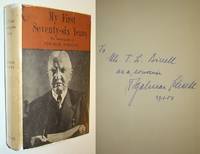
1955871G0085London: Allan Wingate. Good in Fair dust jacket. 1955. First English Edition. Hardcover. Signed and inscribed by author upon front free endpaper. 552 pages. Index. Black and white photographic plates. "One of the most important autobiographies of the post-war period for there can be few personalities still alive who have been so intimately connected with the march of world events for so many years. His first great triumph was to rescue the German Mark from the inflation of 1921. As the Nazi avalanche swelled Hitler persuaded him to occupy the Presidential chair at the Reichsbank. but Schacht soon saw that the Fuhrer was driving relentlessly towards war. A quarrel resulted and he left the Government remaining under a cloud until he was arrested towards the close of the regime." - from dust jacket. Schact was aquitted of war crimes at Nuremberg. Moderate wear to book. Binding intact. Several patches and touch-ups to dust jacket which is now preserved in archival-grade Brodart. Kehr & Langmaid 1217 Aldcroft & Rodger p.83.; 8vo - over 7¾" - 9¾" tall; My First Seventy-six Years: The Autobiography of Hjalmar Schacht Biography Nazi Germany Nuremberg Trials Reichsbank Central Banker German Democratic Party Weimer Republic Hyperinflation Bankers Montagu Norman Mark Inflation; Signed by Authors . Allan Wingate hardcover
15990001479SEGOVIA SALAMANCA SPAIN ESPANA. Very Good. 1599. On offer is a superb late 16th early 17th Century manuscript book in two volumes being the transcribed works of John of Segovia the influential Catholic Theologian who was a professor at the Spanish University of Salamanca represented Castille at the Council of Basel and represented the council in the 1439 Diet of Mainz. He played a large role in the removal of Pope Eugene IV and the placement of Antipope Felix V. Volume One: "Tractatus de Deo" a 333 page work in a fine hand though not necessarily the work of a scrivener the endpapers featuring heraldic and maybe royal watermarks each is topped with a crown very similar to a Spanish heraldic crown of higher nobility. There seems to be the use of quartering and a pallet like central division. Pictured within the escutcheon are castles lions fleur de lis like symbols likely eagles a cross three horizontal circles with the use of borders and orles without the use of supporters or mottoes with other watermarks specifically a star over anchor on interior pages. Volume Two: "Tractatus de Sacramentis" 303 pages both 4to 26.5cm x 20cm. Tucked in the volume is one sheet of paper of identical type which we conclude is a leaf missed in binding or perhaps and erratum paage. Bound in period sheep vellum. There is some general mostly light soiling to the covers one worm hole to the vellum the odd interior fault but overall these volumes are VG. NOTA BENE: John of Segovia - His most important literary work is an extensive history of the Council of Basle "Historia generalis concilii Basiliensis. Libri XVIII" edited by Birk and Beer in "Monumenta conciliorum generalium saeculi decimi quinti: Scriptor." II-IV Vienna 1873-96. His other works are a treatise in favour of the Immaculate Conception of our Lady printed at Brussels in 1664; a refutation of the Koran entitled "De mittendo gladio in Saracenos"; a defense of the "Filioque" against the Greeks entitled "De processu Spiritus Sancti" Basle 1476; a Biblical concordance "Concordantiae biblicae vocum indeclinabilium" Basle 1476; and a few works defending the superiority of a general council over the Pope.; Latin; 4to - over 9¾" - 12" tall; KEYWORDS: RELIGION SPECULATIVE RELIGION JUAN DE SEGOVIA JOHN OF SEGOVIA JOHANNES VON SEGOVIA UNIVERSITY OF SALAMANCA ROMAN CATHOLIC CATHOLIC CATHOLICISM THEOLOGY THEOLOGIANS TRACTATUS DE DEO TRACTATUS DE SACRAMENTIS CASTILE JESUIT WATERMARKS SACREMENT SACREMENTAL COUNCIL OF BASLE UNIVERSITY OF SALAMANCA CHRISTIAN CHRISTIANITY CATHOLIC CHURCH HANDWRITTEN MANUSCRIPT AUTOGRAPHED AUTHORS AMERICANA MANUSCRIPT DOCUMENT LETTER AUTOGRAPH KEEPSAKE WRITER HAND WRITTEN DOCUMENTS SIGNED LETTERS MANUSCRIPTS HISTORICAL HOLOGRAPH WRITERS AUTOGRAPHS PERSONAL MEMOIR MEMORIAL PERSONAL HISTORY ARCHIVE DIARY DIARIES antiquité contrat vélin document manuscrit papier Antike Brief Pergament Dokument Manuskript Papier oggetto d'antiquariato atto velina documento manoscritto carta antigüedad hecho vitela documento manuscrito Papel . hardcover
19660001554XiangLing Brigade SunZhuangZi Commune HuaiLai Co. Very Good. 1966. On offer is a significant historic original manuscript relic of the Cultural Revolution era in People's Republic of China. The 250 page village Cadre log book is dated through 1966 - 1972 peak time of Mao Zedong's push to change the face and fabric of China. As one online source succinctly sums up the times: "People's Republic of China from 1966 through 1976. Set into motion by Mao Zedong then Chairman of the Communist Party of China its stated goal was to enforce socialism in the country by removing capitalist traditional and cultural elements from Chinese society and impose Maoist orthodoxy within the Party. The most important yet naturally unstated reason for the revolution was the return of Mao Zedong to a position of political power after he lost most of his political influence after his failed Great leap forward." This log book was faithfully filled much like a diary or journal recording this village's work efforts and output notes on meetings political movement affairs critical notes in multiple hands in different sections from 1966 - 1972. Besides the manuscript writings there are some charts lists columns of figures plus a number of ephemeral inserts that appear to be receipts and the like. This manuscript uniquely details for historians researchers and collectors the requirements the observances and functions demanded of the village. The book proper is filled with coarse paper sandwiched between two covers with cord holding all together. Approximately 13cm x 19.5cm no missing pages. Overall VG. ; Chinese Language; 12mo - over 6¾" - 7¾" tall; KEYWORDS: HISTORY OF GREAT PROLETARIAN CULTURAL REVOLUTION CULTURAL REVOLUTION MAO ZEDONG MAO TSE TUNG GREAT LEAP FORWARD MAOIST SOCIALISM COMMUNISM COMMUNIST RED CHINA CHAIRMAN MAO MARXISM-LENINISM MAOISM CHINA CHINOISE CHINESE SINO POLITICS GRASSROOTS SOCIALISM PROPAGANDA POST FIVE YEAR PLAN 5 YEAR PLAN GANG OF 4 GANG OF FOUR LIN BIAO BEIJING PENG LUO LU AND YANG ZHONGFA 267 HANDWRITTEN MANUSCRIPT AMERICANA DOCUMENT LETTER AUTOGRAPH DIARY JOURNAL LOG KEEPSAKE WRITER HAND WRITTEN DOCUMENTS SIGNED LETTERS MANUSCRIPTS HISTORICAL HOLOGRAPH WRITERS DIARIES JOURNALS LOGS AUTOGRAPHS PERSONAL MEMOIR MEMORIAL PERSONAL HISTORY antiquité contrat vélin document manuscrit papier Antike Brief Pergament Dokument Manuskript Papier oggetto d'antiquariato atto velina documento manoscritto carta antigüedad hecho vitela documento manuscrito XiangLing Brigade SunZhuangZi Commune HuaiLai County HeBei Province. . unknown
18370009111BOSTON TO KRONSTADT TO BRAZIL STATION. Good. 1837. On offer is a journal recorded during a fascinating time in General American and U.S. Naval History. The journal is written on the U.S.S. Independence as she travels from Boston to Portsmouth England onto Copenhagen and Kronstadt to receive a visit from Russian Emperor Nicholas I. The Independence then leaves Russia for Rio de Janeiro where she becomes the Flagship of the Brazil Station tasked with the duty to guard American commerce along the eastern seaboard of South America during the war between France and Argentina. A page in the very beginning of the book states Private Journal of A Cruise in U.S. Ship Independence During the years 1837 1838 1839 and 1840 Under Commo. John B. Nicolson On the Brazilian Station. Another a bit later states Cyrus E. Joy. U.S. Ship Independence. Cyrus Joy is presumably the author of the journal. The ship leaves Boston on May 20th 1837 in presence of thousands of spectators who crowded the adjacent wharves to witness our departure. On board the ship is the Honorable George M. Dallas who at that time had served as Mayor of Philadelphia U.S. Senator from Pennsylvania 183133 and would eventually become the 11th Vice President of the United States in 1845 under President James K. Polk. According to the journal author he is said to be a man of exalting talents sound discriminating judgements. At the time Mr. Dallas had been recently appointed Minister to Russia. The ship crosses the Atlantic in what a soldier would call quickest time and the ship reaches Portsmouth England after 22 days. On the 20th of June the King of England William IV dies and the next day Queen Victoria his niece ascends the throne. All colours in the harbors and most likely in the kingdom were displayed at half mast and we fired guns in honour of the deceased. Soon after this firing ceased we manned the rigging cheered ship and fired a Royal Salute on the occasion of Queen Victoria's daughter of the Duke of Kent and niece to the late Sovereign. The ship moves on to Copenhagen then Kronstadt situated at the head of the gulf of Finland. The ship is visited by the Emperor Nicholas and wife. We were by no means in condition for such a visit. We had been up the greater part of the preceding night and after coming to anchor pulling sail &c. We proceeded to holy-stone the decks washed and dried them down in the neatest manner. After this we ___ our topmast rigging in afresh and the utmost exertions were used by all hands to put the ship in the best order for the expected visit though she was after all very far from being in first-rate condition. The author describes the Emperor as a tall stout well made man with light reddish hair blue eyes high forehead and high cheek bones and has a remarkably loft and commanding appearance. The author speaks very highly of Nicholas and the visit goes smoothly and enjoyably. The whole event is a thoroughly enjoyable portion of the journal. The author spends time comparing the Danes and the Russians before the ship leaves again this time heading for Rio de Janeiro. This section of the journal ends as the ship reaches Portsmouth England again. The journal begins again in 1839 as the ship is in South America protecting American commerce. Feb. 9th 1839. Here we found our presence much needed for the protection of American property. When we left the first time the French had nothing like a respectable force on the station.Their forces however have been increased but are also too weak for the a blockade of more than the port of Buenos Aires. The entries in this portion are spread out with long periods in between each entry. The ship seems to go between Rio and Montevideo providing protection of American trading ships in the area. The author also speaks of the reasons for the war and the Independences role in helping mediate the conflict as well as thoughts on the role of the American Navy in the formations of a character abroad as well as at home. The soldiers also seem fairly unhappy on the ship after a while. Jan 1st 1840. At Montevideo and little prospect of leaving soon. More than 100 of the men have completed the full term for which they entered the services and are clamorous to be sent home.Under these circumstances no ship can hardly be deemed fit for actual service. The ship finally leaves the Brazil Station after being thirty five months on this cruise. I think I shall stop at home a few months at least. The journal continues with the next entry explaining that after three months of doing nothing Mr. Joy joins the Montezuma Capt. Christiansen bound to Liverpool. Having heard of such a thing as Happy England he is struck all aback to see the number of prostitutes beggars ballad singers &c. I do believe that in this single place there is more persons of the above description than in the whole of the U.S. You can not walk from the docks up in the city without being accosted every two or three minutes by a female with I say Jack wont you treat us or Shipmate give us a chew tobacco will ye or God bless your honour you havnt got never a penny for a poor fellow have ye. The entry ends with a list entitled U.S. Ship Independence. List of Officers 20th May 1837. John B. Nicolson. The list contains more than 3 dozen names of all the men on board including midshipman on the ship. There is also a list of Salutes fired during the years 1837 38 39 & 40. with the columns Date No. of guns Quantity of powder and When and on the opposite page On What occasion. The list is 12 pages long and provides a fantastic and comprehensive list of where the Independence was during the years of the authors journal and the special occasions on which it fired salutes. The journal also contains a hand drawn portrait of the face of Emperor Nicholas I with the date July 29th 1837 written underneath. The drawing is amateur but very well done in a number of colors. The book is roughly 220 pages in which there is writing in approximately 70 or 80 pages. The handwriting is easy to read and legible throughout in black ink which is rarely faded. The pages show some discoloration and wear but nothing that affects the legibility of the writing. The cover shows a good deal of wear and age damage but is still very structurally sound. A number of the pages with writing have come loose from the binding but are still gathered together so they are not loose from each other. There are two major gatherings detached and the rest of the book is still in the binding. Overall: G. Sample Text: May 19th 1837. All ready for sea and people in crowds visiting our ship. Some probably to see and be seen but many very many to take leave of friends and comrades dear bound on a long and tiresome cruise. Such numbers came off in boats that it was impossible to admit all and numbers were compelled to return without bidding their friends farewell as gratifying their curiosity by inspecting our kindly beautiful ship.; July 4th. We fired a National Salute but had no merry making on the occasion. It was in fact the dullest Fourth I have ever witnessed.; June 23rd 1839. We have been nearly 18 months from Boston before we were allowed to go on shore and many of us have been almost two years on board without having been out of the ship.I am of opinion the men should have had liberty much oftener: and I believe they might have had it without detriment to the service or themselves. Background: The USS Independence was a wooden-hulled three-masted ship originally a ship of the line and the first to be commissioned by the United States Navy. Originally a 90-gun ship in 1836 she was cut down by one deck and re-rated as a 54-gun frigate. Independence recommissioned on 26 March 1837 and sailed from Boston on 20 May 1837 as flagship of Commodore John B. Nicholson. On board for her record passage across the Atlantic Ocean to England was the Honorable George Dallas Minister to Russia. She arrived at Portsmouth England 13 June called at Copenhagen; then proceeded into Kronstadt 29 July 1837 to receive a visit from the Emperor Nicholas I of Russia. Two days later a steam boat arrived to transport Mr. Dallas and his family to St. Petersburg. Having received marked social courtesies from the Russian government Independence departed Kronstadt on 13 August 1837 for Rio de Janeiro where she became flagship of the Brazil Squadron to guard American commerce along the eastern seaboard of South America. This duty continued into the spring of 1839 when Commodore Nicholson attempted mediation to end the war between France and Argentina. The Independence returned north to New York on 30 March 1840. She was laid up in ordinary until 14 May 1842 when she became flagship of Commodore Charles Stewart in the Home Squadron. Based at Boston and New York she continued as his flagship until laid up in ordinary on 3 December 1845.; Manuscript; 8vo - over 7¾" - 9¾" tall; KEYWORDS: HISTORY OF CYRUS E. JOY U.S.S. INDEPENDENCE FLAGSHIP THREE MASTED SHIP SHIP OF THE LINE UNITED STATES NAVY U.S. NAVAL HISTORY RUSSIAN EMPEROR NICHOLAS I COMMANDANT JOHN B. NICHOLSON HONORABLE GEORGE M. DALLAS MINISTER TO RUSSIA DEATH OF WILLIAM IV KING OF ENGLAND DIPLOMACY FOREIGN SERVICE ASCENSION TO THE THRONE OF QUEEN VICTORIA PRE CIVIL WAR ERA UNITED STATES U.S. FOREIGN POLICY FLAGSHIP BRAZIL STATION WAR OF THE CONFEDERATION FRENCH BLOCKADE OF THE RIO DE LA PLATA AMERICAN COMMERCE IN THE 19TH CENTURY AMERICANA HANDWRITTEN MANUSCRIPT DOCUMENT LETTER AUTOGRAPH WRITER HAND WRITTEN DOCUMENTS SIGNED LETTERS MANUSCRIPTS HISTORICAL HOLOGRAPH WRITERS AUTOGRAPHS PERSONAL MEMOIR MEMORIAL ANTIQUITÉ CONTRAT VÉLIN DOCUMENT MANUSCRIT PAPIER ANTIKE BRIEF PERGAMENT DOKUMENT MANUSKRIPT PAPIER OGGETTO D'ANTIQUARIATO ATTO VELINA DOCUMENTO MANUSCRITTO CARTA ANTIGÜEDAD HECHO VITELA DOCUMENTO MANUSCRITO PAPEL . unknown
18490002575LEIDEN HOLLAND THE NETHERLANDS. Good. 1849. On offer is the fascinating original 1849 through 1850s journal and letter copy book of the renowned Dutch instrument maker Julius Theodoor Leopold Hoefftcke. Born on 12 March 1800 in Berlin he moved to Leiden at age 26 and within two years he was appointed as the instrument maker of Leiden University. He supplied the academic world with instruments until his death in 1875. After which his grandson took over the company and moved to England. The book is a superb source for researchers and historians as a rare insight into the world of Dutch instrument making which was a growth industry and for which the Dutch were ferociously proud. This book contains all the financial agreements of Mr. Hoefftcke around 1850s to 1860s. For every individual borrowing the instruments or goods he noted how much should have been paid when it had to be paid and once paid he confirmed it in his book. From his letters one could conclude that he did not only loan out his goods but also sold them. The book shows that the financial agreements do not only limit themselves to the University of Leiden and in fact his instruments were shipped long distances. We note a letter shows that instruments were sent to J. Pohl who was an instrument maker located in the Hague since 1820. Besides the financial agreements there are also some formal letters to the clients and suppliers. Based on the letters one could say that some or perhaps all of the letters were just a written copy of an original letters. Many letters point out the author was German born as narrative is peppered with 'mit' and 'und' but most of this material dates about 25 years after he moved to the Netherlands so his Dutch is excellent and definitely understandable. The book proper is somewhat shaken but otherwise G.; Manuscript; 8vo - over 7¾" - 9¾" tall; KEYWORDS: HISTORY OF JULIUS THEODOOR LEOPOLD HOEFFTCKE UNIVERSITY OF LEIDEN HOEFFTKE MUSEUM BOERHAAVE LEIDE SCIENTIFIC INSTRUMENTS MEDICAL INSTRUMENTS H.RIJFSNIJDER J. HOEFFTCKE EN ZN. CHIRUGALE INSTRUMENT MAKERS PRECISION MEDICAL INSTRUMENTS OF THE 19TH CENTURY J.POH HOLLAND NETHERLANDS DUTCH GERMAN BORN DUTCH INVENTORS SURGICAL INSTRUMENTS SURGICAL TOOLS MEDICAL MEDICINE INNOVATION HANDWRITTEN HANDWRITTEN MANUSCRIPT AUTOGRAPHED AUTHORS DOCUMENT LETTER AUTOGRAPH KEEPSAKE WRITER HAND WRITTEN DOCUMENTS SIGNED LETTERS MANUSCRIPTS HISTORICAL HOLOGRAPH WRITERS AUTOGRAPHS PERSONAL MEMOIR MEMORIAL PERSONAL HISTORY ARCHIVE DIARY DIARIES JOURNAL LOG PRIMARY SOURCE FIRST HAND ACCOUNT SOCIAL HISTORY PERSONAL STORIES LIVING HISTORY ANTIQUITÉ CONTRAT VÉLIN DOCUMENT MANUSCRIT PAPIER ANTIKE BRIEF PERGAMENT DOKUMENT MANUSKRIPT PAPIER OGGETTO D'ANTIQUARIATO ATTO VELINA DOCUMENTO MANOSCRITTO CARTA ANTIGÜEDAD HECHO VITELA DOCUMENTO MANUSCRITO PAPELBIOGRAPHY BIOGRAPHICAL AUTOBIOGRAPHICAL AUTOBIOGRAPHY PERSONAL NARRATIVES . unknown
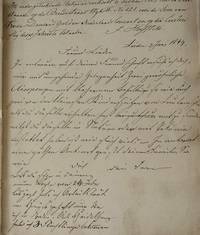
18490001508Donaueschingen Germany Southhern Germany. Very Good. 1849. On offer is a very unique historically significant 1849 - 1859 manuscript relic of the Revolution of Baden. There are fifty three 53 pages in German handwriting containing the journal entries of an unidentified 'rebel' and citizen of Donaueschingen Germany who was arrested as part of the Rebellion. While the participant is unidentified local historians researchers or collectors of the era may have enough clues to ascertain the writer's full identity. The entries are dated 6th of July 1849 the day before his arrest until the 25th of June 1850 the day the sentence of the Royal Court was handed down. The accused describes graphically where and how his accommodations were by whom and when he was interrogated and for which accusations how he responded and gives such an informative picture of that time and those circumstances from the point of view of someone who at the end of the Revolution of Baden was arrested by the Prussians as a supporter of the revolution. Here are some snippets: 6th July 1849: "Friday night at about 11 pm marched the troops and the guards under the leadership of Siegel Werner Gögg and so on off toward Hüfingen." 7th July 1849: "On Saturday marched against them the Hessians the Prussians the Bavarians the Mecklenburgers the Frankfurters and the Nassauers about 6000 men towards Donaueschingen a small city in the Black Forest region where 3000 men mostly Bavarians were stationed. On this day I got 20 meters of accommodations " In the evening at 7 o'clock I was by the Brigadier and the Hessian Provost on orders by the Civil Commissioner Refanie supposedly because of favouring the revolt arrested. There follow descriptions about the type and place of his accommodation observations about the high number of men stationed in Donaueschingen speculation that he could only have been arrested because of a denunciation; on the 9th of July he was apprised of the accusations against him; there follow the days of the hearings with exact descriptions of the proceedings: "on the 2nd January 1850 I had my final interrogation " "Tuesday the 25th June 1850 they revealed the royal court's verdict upon which I on Monday appealed to the upper court registered." With this last sentence the entries end. The first 45 pages are in a 45-page stitched notebook at the approximate size of 15.5 x 10 cm. and a further 8 pages of the same size are loose. Historians collectors and researchers will recognize the the utter uniqueness and rarity of this manuscript. Overall VG. DEUTSCHER: Im Angebot ist ein einzigartiges und historisch bedeutsames Relikt des badischen Aufstandes 1849-1850 in deutscher Handschrift. 53 Seiten deutsche Handschrift auf Papier enthaltend die Tagebuchaufzeichnungen eines Bürgers aus Donaueschingen der am 6. Juli 1849 wegen "Begünstigung des Aufstandes" verhaftet worden war. Die Aufzeichnungen sind in der Zeit vom 6. Juli 1849 dem Tag vor seiner Verhaftung bis zum 25. Juni 1850 dem Tag der Urteilsverkündung durch das Hofgericht erfolgt. Der Beschuldigde schildert anschaulich wo und wie er untergebracht war von wem er wann zu welchen Vorwürfen verhört wurde was er darauf erwiderte und gibt so ein aufschlußreiches Bild der damaligen Zeit und Umstände aus der Sicht eines am Ende des badischen Aufstandes von den Preußen als Begünstiger der Revolution Verhafteten. Einige Textpassagen: 6.Juli 1849: "Freitags Nachts ungefähr 11 Uhr marschierten die Volkstruppen und Wachmänner unter Anführung Siegels Werners Gögg etc. nach Hüfingen ab" 7. Juli 1849: "Samstags zogen dagegen Hessen Preußen Baiern Mecklenburger Frankfurter & Naßauer etwa 6000 Mann nach Donauöschingen wo 3000 Mann meistens Baiern dort einquartiert wurden. an diesem Tag bekam ich 20 M. Einquartierung."".Abends 7 Uhr wurde ich durch den Brigadier und einen heßischen Provosen auf Befehl des Zivilkommissär Refanie angeblich wegen Begünstigung des Aufstandes verhaftet." es folgen Angaben über Art und Ort der Unterbringung Betrachtungen über die hohe Zahl von Einquartierungen in D.onauE.eschingen Spekulationen darüber daß er nur aufgrund einer Denunziation verhaftet worden sein könne und anderes mehr. am 9. Juli wurden ihm die Anschuldigungen eröffnet es folgen die Tage der Verhöre mit genauen Schilderungen des Ablaufs "am 2. Januar 1850. hatte ich Schlußverhör." "dienstags den 25. Juni 1850 eröffnete man mir das hofgerichtliche Urtheil worauf ich am Montag den Rekurs an das Oberhofgericht anmeldete." mit diesem letzten Satz enden die Aufzeichnungen. die ersten 45 Seiten sind in einer 45-seitigen fadengehefteten Kladde in der Größe von ca. 155 x 10 cm und die weiteren 8 Seiten in gleicher Größe lose vorhanden. eEine originale authentische Handschrift von hohem geschichtlichen Wert. VG.; German Language; 24mo - over 5" - 5¾" tall; KEYWORDS: HISTORY OF MECKLENBURGERS REVOLUTION OF BADEN BLACK FOREST DONAUESCHINGEN AUFZEICHNUNGEN PREUßEN ALS BEGÜNSTIGER ANFÜHRUNG SIEGELS WERNERS GÖGG HESSEN HANDSCHRIFT HANDGESCHRIEBEN MANUSKRIPT SÜTTERLIN VON HAND GESCHRIEBEN HANDSCHRIFTLICH UNIKAT EINZELSTÜCK DOKUMENT SCHRIFTSTÜCK KURRENT KURRENTSCHRIFT DEUTSCHE SCHREIBSCHRIFT OSTPREUßEN KALININGRAD NORDRHEIN-WESTPHALEN ADEL PREUßEN BAIERN MECKLENBURGER FRANKFURTER NAßAUER ZIVILKOMMISSÄR REFANIE REVOLUTIONARIES REVOLUTIONARY MOVEMENTS GERMAN HISTORY PRUSSIAN HISTORY 18TH CENTURY RELIKT DES BADISCHEN AUFSTANDES HANDWRITTEN MANUSCRIPT DOCUMENT LETTER AUTOGRAPH DIARY JOURNAL LOG KEEPSAKE WRITER HAND WRITTEN DOCUMENTS SIGNED LETTERS MANUSCRIPTS PHOTO ALBUM PHOTOGRAPHIC ALBUM HISTORICAL HOLOGRAPH WRITERS DIARIES JOURNALS LOGS AUTOGRAPHS PERSONAL MEMOIR MEMORIAL PERSONAL HISTORY antiquité contrat vélin document manuscrit papier Antike Brief Pergament Dokument Manuskript Papier oggetto d'antiquariato atto velina documento manoscritto carta antigüedad hecho vitela documento manuscrito Papel Handschriften . unknown
19280001654ASEA ABOARD THE HMS SUFFOLK CHINA STATION JAPAN. Good. 1928. On offer is a significant original 1928 through 1930 manuscript diary and scrapbook created maintained and handwritten by British seaman Reginald Sands who provides a super almost day-by-day account of the maiden voyage of the storied British warship HMS Suffolk and its critical deployment to the China Station patrol covering the period Feb 7th 1928 to July 19th 1930. Adding tremendous depth to the narrative there are numerous original photographs newspaper cuttings postcards stamps other ephemera and hand drawn maps that record everything from the mundane routine of daily exercises and manoeuvres at sea but also activities ashore such as visits to the Union Jack Club in Shanghai diplomatic calls visits from important political and military and naval persons and much much more all the more compelling with the backdrop of region's political and military turmoil brewing in China Japan the new Soviet Republic and the myriad of other regional problems and events at the time. Using a school-style exercise book Sands begins on Friday June 1st 1928 when HMS Suffolk leaves Portsmouth after completing several months of trials and over approximately 129 pages details a history of the ship and its duties and events of import. He notes events such as: Suffolk's orders to proceed to Nanking to protect and evacuate British residents in the revolt of troops on the Shanghai - Nanking railway. Suffolk Responding to an SOS for the liner 'Jervis Bay'. Visits from and Chinese Government officials and the British Minister Sir Miles Locker-Lampson. Visit from the Japanese Admiral at T'singtao. Accommodating HRH Duke of Gloucester and transporting him on diplomatic mission to Japan. Suffolk's part in the commemoration marking the re-burial of the Chinese political leader Sun Yat-Sen. Participation in a football match on 15th August 1929 in aid of dependants of HMS Devonshire victims we believe this refers to the death of 17 seamen on board Devonshire the month before in a firing accident. Suffolk with HRH Duke of Gloucester onboard is escorted into Yokohama where Prince Chichibu comes aboard and later escorts the Duke to Tokyo to meet the Emperor. Sands aboard Japanese warship KAKO with his breakdown of the KAKO's qualities Suffolk called to assist with fire at the King Edward Hotel in Hong-Kong. Suffolk's attendance at the Review held by Vice-Admiral Sir Reginald Tyrwhitt on his departure as Commander in Chief of the China Station. Inspection by Emperor of Japan presumed Hirohito. Suffolk's part in Hirohito's 'Coronation Review'. Illumination of the ship at Nagasaki as part of celebrations of Hirohito's coronation - photo taken and pasted-in. The diary also recounts numerous rendezvous with other ships including: the Kent the Berwick Hermes and Cornwall and events such as Suffolk winning the sports cup on Sat 7th Sept 1929 at Wei Hai Wei participation in the Regatta at Wei Hai Wei in August 1929 and Sand's visits to the Shanghai Union Jack - a 5 cents credit has been pasted in. Stamps pasted onto the pages are: WEI HAI WEI - George V One Cent revenue Stamp; Japanese 10 Sen Entronement Hall Hirohito stamp; Nagoya Castle 10 Sen stamp; Hong Kong / CHINA - King George V - Four Cents; Egypte brown 5 Cinq Mills; Malta 1 1/2 d George V. The page edges are worn and a little browned and the cover has detached at the staples and there is a faint musty smell but overall G.; Manuscript; 8vo - over 7¾" - 9¾" tall; KEYWORDS: HISTORY OF HMS SUFFOLK BRITISH WARSHIPS CANTON SHANGHAI JERVIS BAY CHINA STATION BRITTANICA BRITISH SEAMEN NAVAL MARINE NAVY BRITISH NAVY CHINA JAPAN PRE WORLD WAR II POST WORLD WAR I T'SINGTAO JAPANESE WARSHIPS KAKO REGINALD SANDS HIROHITO EMPEROR OF JAPAN NAUTICAL HMS DEVONSHIRE NANJING DECADE CHINESE REUNIFICATION NORTHEAST FLAG REPLACEMENT SINO-SOVIET CONFLICT OF 1929 BRITISH ROYAL NAVY ENGLAND GREAT BRITAIN HANDWRITTEN MANUSCRIPT DOCUMENT LETTER AUTOGRAPH KEEPSAKE WRITER HAND WRITTEN DOCUMENTS SIGNED LETTERS MANUSCRIPTS HISTORICAL HOLOGRAPH WRITERS AUTOGRAPHS PERSONAL MEMOIR MEMORIAL PERSONAL HISTORY ARCHIVE DIARY DIARIES ANTIQUITÉ CONTRAT VÉLIN MANUSCRIT PAPIER ANTIKE BRIEF PERGAMENT DOKUMENT antiquité contrat vélin document manuscrit papier Antike Brief Pergament Dokument Manuskript Papier oggetto d'antiquariato atto velina documento manoscritto carta antigüedad hecho vitela documento manuscrito papel. . unknown
18810009157U.S. NAVY EUROPEAN STATION ALEXANDRIA EGYPT. Very Good. 1881. On offer is a thoroughly interesting and unique ships journal from the U.S. Navy Corvette the USS Quinnebaug and handwritten by its Naval Constructor a man named J.J. Woodward. The period covered is between June 24 1881 and March 14 1883. The journal begins with the Quinnebaug being outfitted in the New York Navy Yard. It sets sail on July 14 1881 sailing across the Atlantic and reaching the Strait of Gibraltar on August 9 1881 joining the U.S. Navys European Station. The ship makes numerous European ports of call including locations in France Algeria Tunis Tripoli Egypt Turkey Greece Italy Morocco Madeira Malta Spain and Portugal. Each day there are detailed daily entries include latitude longitude weather and sea conditions. Generally these leave out observations other than simple things other than descriptions for the weather. However there are a few where Woodward remarks on ships seen in passing and a few times on purely personal things such as one entry where he writes Read articles of War at quarters. Started gris for distilling and began to distil. The most lengthy observations come when the ship is in port. The journal ends on March 14 1883 at Gibraltar. Woodward logged a total of 19957 nautical miles during his voyage. Of particular interest is that the Quinnebaug was present for the Bombardment of Alexandria on July 11 1882 where the British fleet attacked Alexandria and invaded Egypt starting the Anglo-Egyptian War and beginning the British occupation of Egypt which would last until 1956. Amazingly Woodward created a detailed illustration of this battle including ship locations and Egyptian batteries. He also illustrated subsequent battles at Kafr-Dowar and Ramleh. Several other illustrations include a gun battery and a ship cross-section. These illustrations are truly remarkable works both for their relationship to the ship itself and to the historically significant events in which the ship participated in. Woodwards engineering background is obviously evident in these sketches. After March of 1882 the log book cedes to a journal section in which Woodward inserts his Professional Notes. The journal notes begin in July of 1881 and continue until March 14 1883. The tone of these notes is much more casual and personal than the log section of the book. It is in this section that the illustrations are located. Woodward describes in much greater detail the ports he visits and the observations he makes at sea and on land. It is also here that the report from the British attack in Alexandria is written. In an almost 20 page account of the Battle Woodward describes in excellent detail what it was like at the battle the positions of the ships especially the Quinnebaug and the tactics of the British and French ships. The bombardment begins on July 11th and ends with Alexandria in flames on the 14th. During the bombardment the American ships including the Quinnebaug opened their ships up to all refugees from the city who needed shelter or medical treatment. Woodwards illustrations of a Plan A and Plan B for the The Bombardment of Alexandria are truly extraordinary pieces of work. The book concludes with 16 pages of Miscellaneous Notes at the back of the book these being more observations and personal anecdotes of the cities and ports through which the Quinnebaug travelled including Gibraltar Marseilles Arles Algiers Alexandria Cairo. The journal has 166 handwritten pages. The remaining pages in the 288 page book are blank. The condition is very good. The spine and covers show some wear and the leather has come off the spine. The binding is still very tight. The pages within show very little signs of wear and tear or any age-toning and the handwriting is easily legible with very little staining in still very dark black ink. Bio Notes: J.J. Woodward would go on to lecture at MIT and publish works on ship design. Woodward was instrumental in commissioning the Navy's first submarines; The USS Quinnebaug was a screw corvette in the United States Navy. It was completed under contract by Neafie & Levy at the Philadelphia Navy Yard She was launched on 28 September 1875 but completion was delayed due to lack of government appropriations and consequently the vessel did not enter commission until 2 October 1878 when Commander Norman H. Farquhar took command. Three of her crew received the Medal of Honor for rescuing shipmates from drowning during this period: Landsman Patrick J. Kyle at Mahón Menorca on 13 March 1879 and Seaman Apprentice Second Class August Chandron and Boatswain's Mate Hugh Miller at Alexandria Egypt on 21 November 1885. Departing Gibraltar on 9 May 1889 Quinnebaug returned to the New York Navy Yard on 17 June 1889. She decommissioned there on 3 July was struck from the Navy List on 21 November 1889 and was sold on 25 March 1891; The Egyptian Expedition in mid-1882 was the United States' response to the British and French attack on Alexandria during the Anglo-Egyptian War. To protect American citizens and their property within the city three United States Navy ships were sent to Egypt with orders to observe the conflict ashore and make a landing if necessary. British and French forces heavily damaged the city so a force of marines and sailors were landed and they assisted in fire fighting and guarding the American consulate from insurgents. OVERALL: VG; Manuscript; 4to - over 9¾" - 12" tall; KEYWORDS: HISTORY OF J.J. WOODWARD NAVAL CONSTRUCTOR SHIP BUILDER USS QUINNEBAUG UNITED STATES NAVY USN U.S. NAVY CORVETTE NEAFIE & LEVY BOMBARDMENT OF ALEXANDRIA ANGLO-EGYPTIAN WAR EUROPEAN STATION EUROPEAN SQUADRON POST WORLD WAR TWO ERA NAVY BRITISH MEDITERRANEAN FLEET NAUTICAL MARINE NAVAL BATTLE OF KAFR EL DAWWAR REAR ADMIRAL JAMES W. NICHOLSON ENGINEERING NOTES AMERICAN INFLUENCE IN NORTH AFRICA AMERICANA EGYPTIAN EXPEDITION USS LANCASTER ADMIRAL BEAUCHAMP SEYMOUR CHANNEL FLEET COLONEL AHMED ORABI COLONIALISM IN NORTH AFRICA HANDWRITTEN MANUSCRIPT DOCUMENT LETTER AUTOGRAPH WRITER HAND WRITTEN DOCUMENTS SIGNED LETTERS MANUSCRIPTS HISTORICAL HOLOGRAPH KEEPSAKE WRITERS AUTOGRAPHS PERSONAL MEMOIR MEMORIAL ARCHIVE DIARY DIARIES JOURNAL LOG ANTIQUITÉ CONTRAT VÉLIN DOCUMENT MANUSCRIT PAPIER ANTIKE BRIEF PERGAMENT DOKUMENT MANUSKRIPT PAPIER OGGETTO D'ANTIQUARIATO ATTO VELINA DOCUMENTO MANUSCRITTO CARTA ANTIGÜEDAD HECHO VITELA DOCUMENTO MANUSCRITO PAPEL . hardcover
1555000865Dégagnac France Lot. Very Good. 1555. On offer is a fascinating handwritten medieval French manuscript book earliest date 1555 with entries through 1597 in original blindstamped calf with small Fleur-de-lis. This stunning book has approximately 300 pages of handwritten entries being a register of acts properties transactions loans personal notes and journal entries the majority concerning Marc-Antoine Hébrart a noted merchant in the village of Dégagnac in Lot in south-western France. Most certainly Jewish it is evident that the Hebrart family was one of the largest land-holding families in the area. "In 1504 and 1505 the two "headmen" of the village Antoine Hebrart and Pierre Peysson together accounted for 15 percent of the land of the village" Ref: By Le Roy Emmanuel and Ladurie John Day The Peasants of Languedoc . A pencil annotation indicates that Marc Hébrard was of Jewish origin. A fairly cursory examination of the manuscript lends no additional support to this assertion but it is possible given the history of the Jews of neighboring Languedoc and the fact that some Jews remained in France under Christian-like assumed names after their expulsion in 1306. The generic 'Marc-Antoine' is cited as a Jewish name in Sara Uckelman's "Jewish Given Names Found in "Les Noms Des Israélites en France." Handsome blindstamped 16th century calf legible bâtarde script some old and minor restoration but otherwise VG.; French; 4to - over 9¾" - 12" tall; KEYWORDS: HISTORY OF FRANCE MERCHANT TRADE COMMERCE ECONOMICS JUDAICA JUDAISM FRENCH REAL ESTATE MANUSCRIPT HANDWRITTEN HAND WRITTEN JOURNAL LEDGER MEMOIR PERSONAL LOG HOLOGRAPH AUTOGRAPH DIARY DIARIES ANCIENT ANTIQUE MEDIEVEL RENAISSANCE antiquité contrat vélin document manuscrit papier Antike Brief Pergament Dokument Manuskript Papier oggetto d'antiquariato atto velina documento manoscritto carta antigüedad hecho vitela documento manuscrito papel. . unknown
19410001500BdM CAMP MOOSBURG GERMANY. Very Good. 1941. On offer is an original historically significant manuscript relic of Nazi Germany and Adolf Hitler's use and manipulation of German women being a 1941 and 1942 diary and journal of a Bund Deutsche Madel BdM League of German Girls or League of German Maidens in English at Camp Moosburg in southern Germany. The journal records nine 9 girls from July 10th to September 4th 1941 and ten 10 girls from July 12th to September 3rd 1942. Included in the group was the Jungmadel Fuhrer or Leader of the Jungmadel. In the earliest index of attendees they are marked as all from Coburg Germany a noted town several hundred kilometers to the north of Camp Moosburg. Almost all of the same girls return in 1942 with at least one new 'madel'. The book was obviously a cherished journal with many flourishes: calligraphic headings and poems photographs handmade shadow art some dry flora and drawings. The book appears hand made with three 3 text blocks bound with a canvas cloth over boards with leather tips on the front cover alone. 121 pages 6 X 8.5 inch. Overall VG. HISTORICAL BACKGROUND: 1. BdM Camps were critical to Hitler's rise to power. One online source quotes Kurt Gruber the director of the movement saying: the Hitler Youth "a new youth movement of young social-revolutionary minded Germans" trained to risk their own lives if necessary to free Germany from "the shackles of Capitalists and the enemies of the German race." Also known as 'The League of German Maidens' or 'League of German Girls' the BdM was the female branch of the Nazi party youth movement the Hitler Youth. It was the only female youth organization in Nazi Germany. Also: "BdM.a very heavy emphasis on competition. Just about every task no matter how big or small was turned into an individual team or unit competition. This included boys and girls sports the quality of singing during propaganda marches and Winter Aid collections. Boys and girls were kept constantly busy. The Nazis took advantage of the natural enthusiasm of young people their craving for action and desire for peer approval hoping ultimately each young person would come to regard his or her HJ or BDM unit as a home away from home or perhaps as their real home." 2. The League of German Girls or League of German Maidens was the female branch of the overall Nazi party youth movement the Hitler Youth. It was the only female youth organization in Nazi Germany besides the RAD camp girls and boys. At first the League consisted of two sections: the Jungmadel or Young Girls League for girls ages 10 to 14 and the League proper for girls ages 14 to 18. In 1938 a third section was introduced the Belief and Beauty Society Werk Glaube und Sch"nheit which was voluntary and open to girls between the ages of 17 and 21. Sport was an important section into the movement to educate girls within the National Socialist belief system and to train them for their roles in German society: perfect healthy wife mother and homemaker. Their Home Evenings revolved about domestic training but Saturdays involved strenuous outdoor training. Some of the girl's work even drew harsh criticism from Nazi party leaders such as Heinrich Himmler who felt that these activities were not befitting young girls. Himmler stated in a speech at Bad Toelz: "When I see these girls marching around with their nicely packed backpacks - it's enough to make me sick." The outbreak of war altered the role of the girls as soon as they turned 18. They helped the war effort in many ways. The older girls volunteered as nurses' aides at hospitals or to help at train stations where wounded soldiers or refugees needed a hand. Often the sports training and other activities of the League stayed. After 1943 as Allied air attacks on German cities increased many girls went into para-military and military services where they served as helpers signals auxiliaries searchlight operators and office staff. ; German Language; 8vo - over 7¾" - 9¾" tall; KEYWORDS: HISTORY OF CAMP MOOSBURG GROSSFAHRT LEAGUE OF GERMAN MAIDENS BUND DEUTSCHE MADEL BDM HITLER NAZI NAZI PARTY THIRD REICH ADOLF HITLER RAD NAZI GERMANY PROPAGANDA YOUTH MOVEMENT HJ HITLER YOUTH HITLER JUGEND REICHSARBEITSDIENST REICH LABOUR SERVICE GERMAN COMMUNITY VOLKSGEMEINSCHAFT KONSTANTIN HIERL WEHRMACHTGEFOLGE MOOSBURG AN DER ISAR LANDKREIS FREISING BAVARIA GERMANY STALAG VIIA SONNENWENDE HOLOCAUST GENDER STUDIES WORLD WAR II WORLD WAR TWO WW2 WW II HOLOCAUST WOMEN STUDIES HANDWRITTEN MANUSCRIPT DOCUMENT LETTER AUTOGRAPH DIARY JOURNAL LOG KEEPSAKE WRITER HAND WRITTEN DOCUMENTS SIGNED LETTERS MANUSCRIPTS HISTORICAL HOLOGRAPH WRITERS DIARIES JOURNALS LOGS AUTOGRAPHS PERSONAL MEMOIR MEMORIAL PERSONAL HISTORY BRITAIN BRITISH BRITISH EMPIRE RAF World War I WW I TRAVEL GERMANY ANTIQUITÉ CONTRAT VÉLIN MANUSCRIT PAPIER ANTIKE BRIEF PERGAMENT DOKUMENT HANDSCHRIFT HANDGESCHRIEBEN MANUSKRIPT SÜTTERLIN VON HAND GESCHRIEBEN HANDSCHRIFTLICH UNIKAT EINZELSTÜCK DOKUMENT SCHRIFTSTÜCK KURRENT KURRENTSCHRIFT DEUTSCHE SCHREIBSCHRIFT OSTPREUßEN ADEL . hardcover
19400001313Würzburg Germany. Very Good. 1940. On offer is an extraordinary original manuscript German home front diary handwritten by the young daughter perhaps 18 or 19 of an officer who would soon become a Colonel-General and one of the Nazi elite. Research suggests that this man may have been Hermann Breith or Josef Harpe but local researchers will certainly have enough clues to be certain in the future. Collectors and historians will agree as to the utter uniqueness of this World War II home front diary. Beginning March 24th 1940 and ending on June 19th 1944 when the woman is drafted into a FLAK Anti-Aircraft unit. The book's upbeat floral pattern of the small square journal hardly belies the backdrop of the horrible War years and the suffering the likes of her father perpetrated. Entries range from the banal to the historic: March 17th 1942 she records: "Father is promoted to General Oberst". A later entry notes when her father is ordered to Hitler's Headquarters and many many more references to life within the 'military life'. Her last entry records being drafted into anti-aircraft service as increasingly elite layers of society were eventually stripped of their status and forced to participate in the War and many such women were near the end. She mentions dating a pilot wearing a Spanish Cross denoting service in the Luftwaffe. These people obviously lead a very elite life. Lots of political discussion and we read of the Nazis sending agents to give political classes and much more. It has entries for almost every day with 100 pages filled in front and back. Here are some snippets: "My Diary" from Easter 1940" March 24 1940 "Easter! Daddy is on vacation! Coffee with lots of Easter eggs. Purzi shot a duck. Laid in the lounge chair in the sun. In the afternoon we played board games. Dad showed pictures from the Front. In the evening we sat and chatted." May 10 "War has begun in Holland Belgium and Luxemburg. German troops marched into these countries. Germany will definitely win!" May 17 "Did train station service" - Provided soldiers with tea from 4:30 - 8 pm." May 21 "Train station service from 4 - 8 pm." May 29 "Went into the city and sent my soldier a package by field postal service." June 5 "Had to stay in bed. Big victory at Dünkirchen. Bells were ringing flags were waved. Dad was made general of the Panzers!" June 6 " Fever is gone but had to stay in bed anyway." June 7 "Was allowed out of bed but not quite feeling well yet." June 10 "Back to school today. Italy declared war on France today. Narvik Norway ultimately subdued by the Germans. A great victory day!" June 13 "2:30 - 9:30 Train station service Served coffee to 3 troop transports. The mountain hunters were very nice." June 14 "German troops have entered Paris! Got a letter from my soldier from the field." June 17 "France wants a ceasefire. Heard a special broadcast announcement in the city. Bought a birthday gift for Mom in the city." June 22 "Ceasefire signed" June 24 "Ceasefire signed by Italy in the evening. At 7:35 in the evening the German "Reichsregierung" learned of the armistice. 6 hours at later at 1:35 am there was a ceasefire. Experienced the solemn moment at night by the radio. Bells ringing "Now Thank We All Our God." June 25 "School holiday - went with my class to visit the wounded." July 1 "Last vacation day. It was a wonderful vacation. The war in Russia is proceeding very successfully." 12 Sept 1940 "Wrote to dad in the afternoon. Gila had night-shift and there met Oberleutnant Baumann Stukka-flyer with a golden Spanish cross EKI-I." Spanish crosses awarded to veterans of the Spanish Civil war from July 1936 - April 1939. Oct 28 "Air-raid alarm. Not in school because of a cold." Nov 13 "In the evening there was a very interesting presentation about the German colonists in Brazil with slides at the Academy." Nov 29 "Was sworn in as a Party member in the evening." Jan 30 1941 "Great celebration day. The Führer speaks. Germany will definitely be victorious." March 14 "Received orders to the R.A.D. To Krautheim/Jadst Take courage the thing will go wrong! Roasted in the sun. Prepared for orals. Sewed overshirt." March 21 "Got my marks at 5 in the afternoon. I am free of orals! Got a gold bracelet from Mom and from Grandma a ring. Thank God I've got my diploma! We are going to Munich. Mom has reserved rooms at the Regina Hotel." March 29 - April 2 Descriptions of what she saw and did in Munich. On March 31st she describes going to see an opera La Traviata - "fantastic music" and when they returned to the hotel suddenly her father was standing before them. He departed early in the morning on April 2nd. April 4 "Travel to the R.A.D. Arrived at 5 pm at the camp in Krautheim." April 5 "Sewed tags into clothing. The girls are very nice. Letters from Mom and Jochen." April 6 "Proclamation by the Führer. War with Yugoslavia has begun. Wrote to Mom. The first Sunday in the camp. Wrote to Dad." April 9 "5 important things during political schooling! through Yugoslavia 20000 prisoners and generals. Saloniki Thessaloniki was taken a part of the Greek army capitulated. A very happy day. Worked a lot in the garden. The feeling of togetherness is especially strong." April 20 "Swore my oath to the Führer Received a pin. A morning ceremony in the City Hall for the Führer's birthday. In the afternoon a book fair." April 23 "In the evening Dad called unexpectedly/suddenly. He was coming from Yugoslavia. Great joy! Got a package from Mom and letters from Gi. And Jochen B. Packed my suitcase." April 24 "An early bus at 7 am to . Arrived at 11:30 in Würzburg. Great reunion joy!" May 5 "Was D.U. Excursion to Stüppach with the comeradeship fellowship In Grünwald looked at a Madonna. Wonderful colour composition. In Hirschen I ate 4 fried eggs with lots of butter without stamps. In the evening heard a magnificent speech by the Führer in Asanstadt. At night we returned to camp and had a beautiful supper served by the leaders feminine." April 5 "Got up at 5:50 again. As of today we will have 8 hours external duties. In the afternoon the section leader female from the district came for inspection. Big excitement in the camp! In the evening Mr. Greusch the examiner checked our blankets. A big trouble box! Received letters from Mom and Wilma." April 7 "Cleaned garden tools early. Listened to a newspaper report. Sang a lot of canons rounds. During the external duty in the afternoon the Colonel Field Master from and asked me how I like it. After I heard that Molotow in Russia is deposed. Wrote to Dad." May 13 "Hess landed in Scotland! Great excitement!" June 22 "A pity! Toiled in the kitchen the whole Sunday! Russia declared war against us. A difficult struggle is looming for us. Wrote Mom a letter. June 26 "Early 6:52 am departure for holidays. Wonderful! Arrived in W. Würzburg at lunch time. Evening with Gila Hellwig and Lieutenant Mark in Charlott. Very nice." July 2 "Back in camp. Assigned to garden duty. In the evening we played the grammophone. July 3 "In the evening a serenade by 10 soldiers. We all listened on the balcony." July 4 Big fight in the camp. Heavy duty lecture." February 19 1942 "Early in the morning the news came on the radio that Dad was honoured with the oakleaf by the Führer. Wrote immediately to Dad. Got a letter from Hilde B." February 21 "In the night a air-raid alarm. Cleaned the operating room until 1 am. During the alarm the doctor performed a c-section." March 3 "Dad became Colonel-General." April 1 She has returned home: "In the morning for the first time in a long time I slept in. Unpacked my suitcase. In the evening sat cozily and told of my adventures over red wine and cookies. Dad told about Russia. After three hours there was an air-raid alarm." Jan 30 1942 "The Führer spoke at 5 pm. The last time I worked in Susi's room. Wrote to Mom. Big Fight with Mrs. Doctor about the serving of dinner. Mr. Doctor has been drafted." July 1 1942 "Special announcement at 10 in the evening: Sevastopol has fallen. The strongest fortress in the world was defeated by our soldiers. Colonel General v. Manstein is promoted to General Field Marshal. Field-Marshal General" December 20 1942 "Dad arrived from Russia. Mom picked him up at the train station. Very joyful reunion." February 1 1942 "In the afternoon the rumour runs wild in the lecture hall that the "nurses aid exam will already be at the end of March! That would be a big letdown. We laughed terribly. Wilfrid and Ulla picked me up from the Julius Hospital . We all sat under the high fence. In the evening we listened to "Something for Everyone". Mom was invited to Mrs. Heglmann's for tea in the afternoon. In the evening Gisi called. A letter from Dad finally arrived after we hadn't heard anything from him for 14 days. Things look very serious in Stalingrad. A part of the Paulus Army had to surrender." February 4 "We've had to ultimately surrender at Stalingrad. One of the greatest heroic deeds of world history ended there. From now on everyone in the homeland feels more than ever how serious this war is for us. Theatres are closed. Finally got mail from Dad and Gisi. In the evening I went home with Hanna Meyer ." April 18 "Two Air-raid alarms at mid-day." April 19 "In the early evening heard a speech by Goebbels in the radio. For the first time heard a lecture by the Gailer. As a final experiment he demonstrated "At the risk of a life" centrifugal force. In the afternoon I practiced in the laboratory." April 20 "Führer's Birthday. Flags everywhere. In the evening Mom and I toasted the Führer with wine. In the afternoon we examined blood and I was at the X-ray for the last time. Vacation starts now but there's still a lot to learn before the exam." Then later near the end she reports: "Integration orders draft notice from the Wehrmacht out of Nürnberg. At 10 am I am to report there ." Roughly 4 inches by 4.5 inches and 1 inch thick. Overall VG.; German Language; 32mo - over 4" - 5" tall; KEYWORDS: HISTORY OF STALINGRAD HOME FRONT FLAK ANTI AIRCRAFT EASTERN FRONT GERMANY VS. RUSSIA SOVIET UNION WORLD WAR II WORLD WAR TWO WW2 WW II HOLOCAUST THIRD REICH GERMANY NAZI GENDER STUDIES WOMEN STUDIES WOMEN IN WAR FEMINISM HANDWRITTEN MANUSCRIPT DOCUMENT LETTER AUTOGRAPH DIARY JOURNAL LOG KEEPSAKE WRITER HAND WRITTEN DOCUMENTS SIGNED LETTERS MANUSCRIPTS HISTORICAL HOLOGRAPH WRITERS DIARIES JOURNALS LOGS AUTOGRAPHS PERSONAL MEMOIR MEMORIAL PERSONAL HISTORY BRITAIN BRITISH BRITISH EMPIRE RAF World War I WW I TRAVEL GERMANY ANTIQUITÉ CONTRAT VÉLIN MANUSCRIT PAPIER ANTIKE BRIEF PERGAMENT DOKUMENT Hitler Jugend Sonnenwende League of German Maidens League of German Girls Hitler Youth Bund Deutscher Mädel Brieth Harpe Panzers . hardcover
19660001556PEOPLE'S REPUBLIC OF CHINA. Good. 1966. On offer is an original historically significant 1966 - 1969 manuscript diary handwritten by a military officer at the beginning through the 'end' of the Cultural Revolution. This diary records this man's work thoughts and personal part and actions in his military service and the camps he attended throughout 1966 to 1969. Historians and researchers of the era will find a number of sections of the book crossed out in the later years as one Party member Lin Biao fell into disfavour and the words or speeches that had been quoted in those pages were excised to avoid political persecution. Over 200 pages in the 12cm x 17cm book the author who we believe is recorded within the pages details his part in the military and as part of the Communist movement and Mao Zedong's Cultural Revolution. As one online source succinctly sums up the times: "People's Republic of China from 1966 through 1976. Set into motion by Mao Zedong then Chairman of the Communist Party of China its stated goal was to enforce socialism in the country by removing capitalist traditional and cultural elements from Chinese society and impose Maoist orthodoxy within the Party. The most important yet naturally unstated reason for the revolution was the return of Mao Zedong to a position of political power after he lost most of his political influence after his failed Great leap forward."; Chinese Language; 12mo - over 6¾" - 7¾" tall; KEYWORDS: HISTORY OF GREAT PROLETARIAN CULTURAL REVOLUTION CULTURAL REVOLUTION MAO ZEDONG MAO TSE TUNG GREAT LEAP FORWARD MAOIST SOCIALISM COMMUNISM COMMUNIST CHINE CHINESE SINO POLITICS JIANG QING GRASSROOTS SOCIALISM PROPAGANDA POST FIVE YEAR PLAN 5 YEAR PLAN GANG OF 4 GANG OF FOUR LIN BIAO BEIJING PENG LUO LU AND YANG ZHONGFA 267 INDOCTRINATION RED CHINA CHAIRMAN MAO MARXISM-LENINISM MAOISM LIN YURONG HANDWRITTEN MANUSCRIPT AMERICANA DOCUMENT LETTER AUTOGRAPH DIARY JOURNAL LOG KEEPSAKE WRITER HAND WRITTEN DOCUMENTS SIGNED LETTERS MANUSCRIPTS HISTORICAL HOLOGRAPH WRITERS DIARIES JOURNALS LOGS AUTOGRAPHS PERSONAL MEMOIR MEMORIAL PERSONAL HISTORY antiquité contrat vélin document manuscrit papier Antike Brief Pergament Dokument Manuskript Papier oggetto d'antiquariato atto velina documento manoscritto carta antigüedad hecho vitela documento manuscrito . unknown
18400007018BARCELONA MADRID SEVILLE SPAIN. Fair. 1840. On offer is an original historically significant and absolutely superb first-hand account of an army officer travelling in 1840s Europe. Was he a tourist or was he a spy His journal takes the form of a pocket notebook measuring 7.25 inches by 4.75 inches. There are 54 pages and they are 100% complete. The handwriting is copperplate. It is hard but not impossible to read. The journal's contents more than make up for its condition. The covers have separated from the book. The pages themselves have separated into their several sections but all are present. The pages are not numbered but there are dates entered in places in his narration. It is the contents though that captures the imagination. Captain H. Herman is a British Army officer. In 1840 he travels from the northeast to the southwest of Spain. Visiting major centres such as Barcelona Seville and Cadiz he paints a detailed picture of the countryside its inhabitants and the customs he encounters. As befits a military person he has a sharp eye for detail and his notes are accompanied by a number of finely-executed ink line drawings. He notes other officers that he meets regiments including one that we would refer to today as 'off-the books' and notable personages. These were tumultuous times in Spain. Ferdinand VII died without a male heir. Prior to his death he changed the succession laws to enable his young 3 years old daughter Isabella to assume the throne instead of his more reactionary brother Carlos. This set off the Carlist wars that raged for years. Isabella's mother ruled as regent and eventually she found a winning general - Baldemero Espartero to help her drive back the Carlists. The country already devastated by the Napoleonic Wars sank further into poverty and destitution. The British government supported Isabella in her endeavours and indeed assisted in raising a regiment for her. The British Legion was a force of 10000 British military volunteers funded and paid by the Spanish crown. These British soldiers were placed under the command of Espartero. Espartero went on to become Prime Minister of Spain in 1840 and ruled the country with an iron fist for two years. Having a British officer travelling throughout Spain either on a personal trip or to report back to Whitehall was of clear benefit to Britain. He travels to Barcelona from Toulouse France in September of 1840. There he meets a Colonel Clarke of the British Legion who has with him 150 Dragoons and a brigade of legionnaires. He makes reference to Espartero receiving a civic crown: Espartero received a civic crown of delicately wrought gold and placed it on the colours of the 'Esparterists' present - 13000 men of his army they are all well made muscular fine men fit for army service. He dines with a newspaperman commenting: Moor who writes for the morning chronicle has £5.00 - he accompanied the army - as a favourite of Espartero often dined with him - has been in some actions with him and has decorations displayed - has seven or eight but the Major of one of the Reg'ts has some 13 I think !!! He met others in positions of authority or influence as well: the American Consul in Barcelona Mr McCulloch - splendid house dining bad champagne tolerable sherry bad port. At Taragonna he sketches the harbour including a ship under sail. notes crops grown in areas along coast. He describes one village as a vile place. Another area is described as : A dusty bad road - no view - no beauty. The populace poor ragged and ugly - not one good-looking woman . terribly dull place cheap houses. There is a 2-page ink and pencil sketch of Alicante with the Santa Barbara Castle on the cliff above and a description of the harbour. He refers to Sir John Murray and his defeat of the French General Suchet at the battle of Castallia Apr 1813 and then goes on to comment on Murray's disastrous attempt to take Tarragonna in June of that same year. He comments on the quality of Spanish troops he encounters - very poor. His journey takes him south to Cartagena and Almeria - and includes 2 excellent ink and pencil sketches. His descriptions of these cities are detailed but quite disparaging - possibly reflecting both his class origins in Britain and his rank as a British officer travelling in country won by Wellington in the Peninsular War. There are 2 excellent drawings of the port of Malaga. He provides a detailed description of what he sees and experiences in Grenada the Generalife and the stunning Alhambra palace: "The whole is beyond all description". There are drawings of a number of notable locations in Granada. he frequently notes formations of Spanish troops: 10th Cordova Regiment review 3000 national guard . some fine men . well skilled . Captain Jml Llamos reviews From Grenada he carries on inland: the approach to Jaen is most beautiful lengthy gentle slopes covered with superb hues. Further west he passes villages where battles were fought in the Peninsular Campaign: The French General was a coward. He surrendered to half his number In Cordova he mentions of Espartero again: Espartero began his influence successfully by shooting half a dozen colonels for cowardice. In Cadiz he noted that Espartero was present for a review of 2500 troops accompanied by a few well mounted well looking lancers and about 40 lancers of the Horse Volunteers Also in Cadiz in December of 1840 he notes the arrival of the Captain General of Andalusia: Captain General of Andalusia here from Sevilla in anticipation of some disturbances of the Election which begins tomorrow. He noted as well that a French frigate came in to the harbour during the election. This is an utterly fascinating first-hand account of travels during the turbulent 1840's in Spain. It is a gold mine for historians especially those studying the Napoleonic Wars or Spain and Britain in the 1840s. Whether from a military or social history perspective Hermans' notebook offers a rich source of first-hand observations. The ink and pencil drawings carry an evocative power of their own. There is a sense of places frozen in place giving them a timeless existence. The constant revolutions and struggles between the traditional forces that supported an authoritarian government and a growing liberal faction were of keen interest to Britain as she had a long-standing ally in neighbouring Portugal. This turmoil was to continue in one form or another into the 20th century culminating with the brutal dictator Francisco France. It wouldn't be until the late 20th century that Spain and the Spanish people would see true democratic freedom.; Manuscript; 12mo - over 6¾" - 7¾" tall; KEYWORDS: HISTORY OF CAPTAIN H. HERMAN; NAPOLEONIC WARS; PENINSULAR WAR; DUKE OF WELLINGTON; ESPIONAGE BALDEMERO ESPATERO; CARLIST WARS; ISABELLA II; FRANCISCO FRANCO; BRITISH LEGION; BARCELONA; SEVILLE; CADIZ ESPANIA SPANISH PENINSULA ENGLAND POST TRAFALGER ESPANOL PORTUGAL HANDWRITTEN MANUSCRIPT DOCUMENT LETTER AUTOGRAPH WRITER HAND WRITTEN DOCUMENTS SIGNED LETTERS MANUSCRIPTS DIARY DIARIES JOURNALS PERSONAL HISTORY SOCIAL HISTORY HISTORICAL HOLOGRAPH WRITERS AUTOGRAPHS PERSONAL MEMOIR MEMORIAL ANTIQUITÉ CONTRAT VÉLIN DOCUMENT MANUSCRIT PAPIER ANTIKE BRIEF PERGAMENT DOKUMENT MANUSKRIPT PAPIER OGGETTO D'ANTIQUARIATO ATTO VELINA DOCUMENTO MANOSCRITTO CARTA ANTIGÜEDAD HECHO VITELA DOCUMENTO MANUSCRITO PAPEL . unknown
1867000060Colebrook Connecticut CT 1867. On offer is a superb archive of 59 original manuscript multi-generational family of diaries spanning the civil war era through the early 20th century. The Carrington Family Diaries 1867 - 1913. All 59 diaries from members of the Carrington Family of Colebrook Connecticut. The patriarch Edward Sr. wife Sarah Ann Terry Carrington sons Edward C. Jr. died in the Civil War and Edwin T. and daughters Sarah and Kate. Edward Sr. died in 1878 and Sarah Ann Terry Carrington died in 1881. Both are buried in the Colebrook Center Cemetery in Colebrook Connecticut. Sarah Ann Terry Carrington mother was the daughter of Eliphalet Terry of New York. The group breaks down as follows: Sarah Terry matriarch wife of Edwin: 11 diaries: 1867 1868 1869 1870 1871 1872 1873 1874 1875 1876 1877. typical diary entries; Edward Carrington Snr father of Edwin: 8 diaries: 1857 1867 1868 1869 1870 1872 1873 1874. sporadic point form entries for the most part business like records of day to day business and some personal content.; Edward Carrington Jnr: 4 diaries: 1855 1855 1857 1860. typical diary entries of an obviously young man.; Katherine Carrington a daughter: 2 diaries: 1868 1872. typical diary entries. Edwin Carrington patriarch after Edward Snr: 34 diaries: 1875 1876 1878 1879 1880 1881 1883 1884 1885 1887 1888 1889 1890 1891 1892 1893 1894 1895 1896 1897 1898 1899 1900 1901 1903 1904 1906 1907 1908 1909 1910 1911 1912 1913. like the father sporadic at tmes point form entries for the most part business like records of day to day business interspersed with personal content. ADDITIONAL BACKGROUND: Lieut. Edward Carrington son was killed in the Civil War in St. Marks Florida in the Natural Bridge Conflict on March 6 1865 but the family did not get the news until March 22 1865. In 1871 the son Edwin was married to Charlotte nicknamed Lottie born April 9. 1847 and the couple moved to Scio NY. Edwin then moved to Bay City Michigan it appears in 1875. His wife and son Winny born in 1873 did not move with him to Michigan but rather stayed in Scio NY. Edwin traveled extensively on business by train and then in the later years by automobile and visited his family about every two months coupled with his business trips. Edwin was Secretary and Treasurer of the Bay City Building Company Rifle Room Company and Ausable Lumber Company in Michigan. Edwin and Lottie's son Winny died at the age of two years and eights months on 2/15/1876 and father did not make it home in time. A daughter Sarah was born in 1876; a son Eddy was born in 1877 and a daughter Gracie in 1882. Some of the earlier years have diaries from more than one member of the family. Edwin's diaries of 1875 - 1913 are both diaries as well as his business day planners. All have notations at the back of expenses and costs. As a hobby he enjoyed duck hunting. In 1901 Edwin and Lottie became grandparents by Sarah. The diaries mention both the deaths of Lincoln and McKinley. Several diaries have newspaper articles tucked at the back. One is an article about Mrs. Abraham Lincoln. There are two articles about how the Edward Carrington Sr. family made their "fortune" in 1874. THIS IS A SENSATIONAL AND UNIQUE MULTI GENERATIONAL FAMILY HISTORY THAT WOULD BE THE PRIDE AND CENTERPIECE OF ANY SERIOUS DIARY COLLECTOR. Good. 32mo - over 4" - 5" tall. Manuscript. unknown
19190002164HMS IRON DUKE EASTERN MEDITERRANEAN THE BLACK SEA. Fair. 1919. On offer is a fascinating significant original manuscript relic of post World War I politics strife and continuing aggression and wars being a 140 page diary handwritten by Frederick J. Chivers A.B of Coventry England who served on the famed HMS IRON DUKE during the period of 1919 to 1920 as inscribed in his own hand on the ffep. We note finding a 1914 Navy Gazette listing for a Frederick J. Chivers RMLI Royal Marines Light Infantry. If the same man we wonder at his diary notation of A.B or Able Seaman. Did he change duties after WWI We believe Chivers was also a DSM Distinguished Service Medal recipient. The storied formidable HMS IRON DUKE Flagship of the Fleet at the Battle of Jutland in World War I and during the period this diary covers the Iron Duke was still operating in historic times and in a leading role. Flagship of the Mediterranean Fleet the ship is bound for Gibraltar then Malta and eventually through the Aegean to the Black Sea through the Dardanelles in the thick of the Russian Civil War and the Greco Turkish War. Chivers writes page after page of significant reportage from a man on the deck and close to command observing Admirals and aware of the significance of orders and not merely a keen observer but also some analysis of the actions of which there are many. He records the IRON DUKE'S part in the Allied Intervention in the Russian Civil War skirmishes with the Bolsheviks the sinking of a Russian destroyer the destruction of Russian submarines interactions with various Admirals and other Royal Navy ships Russian volunteer armies etc and references to her role in the Greco-Turkish war which saw the ship take part in the evacuation of Smyrna. Chivers also details much of the Fleet actions and the Iron Duke's interactions meetings with other of His Majesty's Ship and ships of other nations. Also included is the photograph of the crew of HMS Iron Duke though it has seen better days. We can only speculate which of the crew was the author of this remarkable personal account of these significant events. The approximately 6.75" x 4.25" book has hinges that have rusted and split the spine from inside but all the pages are present a few have light pencil scribble but nothing that would affect reading. Overall Fair.; Manuscript; 12mo - over 6¾" - 7¾" tall; KEYWORDS: HISTORY OF FREDERICK J. CHIVERS HMS IRON DUKE RUSSIAN CIVIL WAR RUSSIAN REVOLUTION GRECO TURKISH WAR GREECE GREEK HISTORY OTTOMAN EMPIRE EARLY 20TH CENTURY POST WORLD WAR I WW1 WWI BOLSHEVIKS BOLSHEVISM THE LEVANT HELLENIC DARDANELLES CONSTANTINOPLE TURKEY WESTERN FRONT BATI CEPHESI TURKISH WAR OF INDEPENDENCE ASIA MINOR CAMPAIGN ASIA MINOR CATASTROPHE TURKISH NATIONAL MOVEMENT PARTITIONING OF THE OTTOMAN EMPIRE ANATOLIA SMYRNA MANISA BALIKESIR AYDIN KUTAHYA BURSA ESKISEHIR MEGALI GREAT IDEA GREEK NATIONALISM IRREDENTIST VISION RESTORATION OF A GREATER GREECE AEGEAN SEA EASTERN MEDITERRANEAN NAVAL BRITISH ROYAL NAVY RN ABLE BODIED SEAMEN MARINES RMLI ROYAL MARINES LIGHT INFANTRY GREAT BRITAIN HANDWRITTEN MANUSCRIPT AUTOGRAPHED AUTHORS DOCUMENT LETTER AUTOGRAPH KEEPSAKE WRITER HAND WRITTEN DOCUMENTS SIGNED LETTERS MANUSCRIPTS HISTORICAL HOLOGRAPH WRITERS AUTOGRAPHS PERSONAL MEMOIR MEMORIAL PERSONAL HISTORY ARCHIVE DIARY DIARIES JOURNAL LOG PRIMARY SOURCE FIRST HAND ACCOUNT SOCIAL HISTORY PERSONAL STORIES LIVING HISTORY ANTIQUITÉ CONTRAT VÉLIN DOCUMENT MANUSCRIT PAPIER ANTIKE BRIEF PERGAMENT DOKUMENT MANUSKRIPT PAPIER OGGETTO D'ANTIQUARIATO ATTO VELINA DOCUMENTO MANOSCRITTO CARTA ANTIGÜEDAD HECHO VITELA DOCUMENTO MANUSCRITO PAPELBIOGRAPHY BIOGRAPHICAL AUTOBIOGRAPHICAL AUTOBIOGRAPHY PERSONAL NARRATIVES . unknown
18150008043GREAT BRITAIN. Very Good. 1815. On offer is simply superb manuscript of a Royal Navy officer's exploits in the age of "Master and Commander: The Far Side of the World". From the Napoleonic Wars through the rest of the 19th century Britain ruled the world and her instrument was the Royal Navy. This outstanding manuscript details the service of one officer who sailed to 'the far side of the world' when the Royal Navy ruled the world's seas. The manuscript is 176 pages in length and is 100% complete. All pages are typed so legibility is total. Pages are 8 1/24 by 14 inches. The pages are in excellent condition. They are enclosed in a hard cardboard folder. There are several other papers with the manuscript including one of note that will be elaborated on below. John Fullerton joined the Royal Navy as a midshipman in May 1815 at 12 years of age. He began his service on HMS Larne a 20 gun corvette. Four days in he saw his first punishment: ". four dozen lashes the first punishment I had ever seen and I never yet met the person who could look upon the infliction without a shudder" p1. From that rather grim introduction he went on to serve in a series of HM ships and travelled the world. He describes his rite of passage when he first crossed the equator on Oct 11th 1819: ". All those who have not been across the Line now go below and the hatchways are guarded . and one at a time blindfolded brought up taken to the chair through a line of people who . "p. 6. He had plenty of adventures. Once after becoming acquainted with a woman in Rio de Janeiro he met a man as he left her home. After exchanging greetings: ". he politely put a knife into my left side and left it there. I gave him an equal portion of my sword and retreated to the ship hospital ." p11. With his friend Hack Hawthorn a Wild Middy p11 he often got into scrapes including one where he and some friends faced off with a Portuguese military street patrol: ". Our swords out and in less than three minutes had possion of their muskets and bayonets but obliged to decamp on board. . Jack generally got those who went on shore with him into similar scrapes." p.12. In 1821 he was commissioned a Lieutenant. His manuscript is rich in observations of places he travelled to and people he met. He mentions a collision with HMS Revolutionaire which was under command of the son of the great Royal Navy Captain Edward Pellew. p24 His descriptions are rich in detail: "I accompanied some Chilinoes to a fair in the country and races many tents with refreshments and dancing people from all parts of the country flocked and a very animated scene it was fair damsels under charge of their sweethearts or lovers and sprightly dame with her shadow not husband he playing the tender to some other man's wife" p77. He also keeps a constant mention of other ships they meet or travel with which provides a first-rate way of cross-referencing other ship's records. On Sept 9th 1827 Fullerton along with some other officers attended the theatre in Valparaiso Chile. He goes into a dispute with a Chilean sergeant which continued to escalate until he shot and killed the sergeant. After a bloody fight in the lounge area of the theatre he escaped wounded to his ship. In reprisal English officers ashore were rounded up and imprisoned. A week later he surrendered to authorities and a jailed until a Spanish court-martial could be convened. At length he was acquitted. What makes this account so historically interesting is that included with the manuscript is the typed statement of the British Consul John White who acted in his defense. The 13 page document is typed on 8 1/2 inch by 14 inch paper and is in excellent condition. It begins: "John White Esq Consul of His Britannic Majesty counsel for Lieutenant John Fullarton Royal Navy accused of having killed Sergeant Jose Maria Minos present the following to the court in justification of the act committed by the said officer ." p1. The defense makes for fascinating reading. It is accompanied by a 46 page packet containing 8 pages of handwritten notes which were part of the original draft. For a naval historian this is an outstanding description of service in the Royal Navy written by an officer with a keen eye for descriptive detail. Written at a time when the Royal Navy truly ruled the oceans of the world it is a treasure trove for information. Whether ship locations customs in foreign lands or life on board it is an outstanding primary source document. The court-martial defense is an excellent example of litigation argument in the early 19th century. It touches on key aspects of self-defense argument that forms the basis for the common law that governs millions of people today. A legal scholar or historian would follow John White's arguments with interest and pleasure.; Manuscript; Folio - over 12" - 15" tall; KEYWORDS: HISTORY OF EARLY 19TH CENTURY REGENCY MID VICTORIAN ERA LTN JOHN FULLERTON JOHN WHITE BRITISH COUNSEL IN VALPARAISO ROYAL NAVY GREAT BRITAIN ROYAL NAVY IN THE NAPOLEONIC WARS COURT-MARTIAL AGE OF SAIL AGE OF NELSON MARINE MARITIME LIFE IN A ROYAL NAVY SHIP NAVAL OFFICERS NAVIES NAVAL DISCIPLINE WARSHIPS CORVETTES NAVAL HISTORY VISITS TO FOREIGN PORTS EARLY 19TH CENTURY LITIGATION CHILE IN 1820S SAILORS - SOCIAL LIFE AND CUSTOMS HANDWRITTEN MANUSCRIPT DOCUMENT LETTER AUTOGRAPH WRITER HAND WRITTEN DOCUMENTS SIGNED LETTERS MANUSCRIPTS DIARY DIARIES JOURNALS PERSONAL HISTORY SOCIAL HISTORY HISTORICAL HOLOGRAPH WRITERS AUTOGRAPHS PERSONAL MEMOIR MEMORIAL ANTIQUITÉ CONTRAT VÉLIN DOCUMENT MANUSCRIT PAPIER ANTIKE BRIEF PERGAMENT DOKUMENT MANUSKRIPT PAPIER OGGETTO D'ANTIQUARIATO ATTO VELINA DOCUMENTO MANOSCRITTO CARTA ANTIGÜEDAD HECHO VITELA DOCUMENTO MANUSCRITO PAPEL . unknown
19450001578BERLIN GERMANY. Very Good. 1945. On offer is the stunning original manuscript relic of Berlin's remaining months in Nazi hands the eventual conquest and the following months in the German capital from the rare perspective of a German policeman's wife. The woman Mrs. Otto Enke we believe wrote her intimate and private thoughts of the very last days of Hitler's Germany and the entire year of 1945 and into 1946. Stranded by her husband and son left alone under the nightly bombing raids of the last months of 1945 she details the horrors deprivations and oncoming onslaught of the Russian army whose path she is directly in front of. She writes of the rape of her neighbours by Russian soldiers; the death of her son on the eastern side of Berlin she writes on every page the true and horrific life she endures as the wife of a policeman in Berlin. Here are snippets: 13.2.1945 The day the fire-bombing of Dresden commenced Went to the publishing house to pick up my pay. Spoke with Tiburtgius sic Krocher Cashier and ladies. There are 18 dead and wounded there. Caskets were still being carried out. Went to the hairdresser in the afternoon. Gerhard and his girlfriend came and Gunter and Erika. 14. 2. Wednesday - Alarms the whole morning. Went with Mrs. Weber to the basement. Another attack in the evening now it's 11 pm and I'm going to sleep. As of today the Berlin Volkssturm troups are to return. The Battalion leader told me this personally. Mr. Hagemann got his return booked - he was just there. 15. 2. Thursday Went to the Market. The alarm sounded so I went into the air raid shelter with Mrs. Linke. In the evening I went to Weltersdorf. I initiated several conversations hoping to get news of Otto unfortunately nothing yet. Thursday - 8.3.45 Telephoned Miss Freitag sister of Sargent Gisiecke. In the morning I went to the market in the afternoon I went to the agency to look for information about Papa. The Hambuger also already returned on 3. Feb . 45. I am going again next week to speak with him personally. Miss Erika was here and this evening there was an alarm. Went to bed at 10. Friday 7.3.45 Went to the cinema with Gunter in the morning saw "Blue Fox". In the afternoon Mr. Kuhn repaired my In the evening there was an alarm It boomed quite impressively I was quite afraid. Gunter came over in the cellar. Thank God! Air mines as opposed to land mines came down. Our apartment looked crazy. We started clean-up work right away. The apartment was without glass panes. Went to bed at 10. Wednesday 4.4. 45 In the morning alarm. I slept until 9 am and then the alarm already sounded. After the alarm close to noon I ent to Karlshorst. In the afternoon rather evening at 6 pm the sister-in-law of Sargent Giericke came. We set up a petition and now I am gathering signatures. Where are our men Alarms in the evening and during the night. 22.4.Sunday - in the afternoon at 4 Gunter left to go to Beelsburg. Will he come home again We Erika and I brought him to the Stezl train station. So now I am alone. I sit here in great danger the enemy is firing at Berlin the tears are rolling down my cheeks and there is an awful racket. Miss Erika came again in the evening and wanted to get me so I wouldn't be alone. She brought me coffee beans. Really kind. Until 8 pm I stayed in our apartment then I went to the Hagemann's. Mr Hagemann was afterall my Otto's Volkssturm comrade. I had intended to spend the night in our air raid shelter because Gunter had suggested it. The Hagemanns let me sleep in their apartment it was in any case the best I could do. Mrs. Hagemann even brought coffee for her daughter and for me to our bedside. I slept until about 8 but burdened with many things. What will the new day bring Monday 23. 4. I got up at 8 am. There was shooting the whole day. I tried to shop for some groceries but I wasn't successful. Everywhere there were long line-ups of people. most didn't get anything. I did get a package of cigarettes. Mr. Hagermann brought some good news: the Americans and English are to declare a cease-fire. Went to bed at midnight. Tuesday 24. 4. Slept again at Hagermanns until 8 am. Despite the unbelievable amount of shooting I did sleep. Today it's almost impossible to leave the house. Now and again I go to my apartment to get or do something. Around 5:30 pm there was an awful crash. Mrs. Hagermann and I were sitting doing some darning. Our building was hit. Everyone was shouting "fire" and I lost my nerves Many air raid shelter helpers came everything was checked out and it turns out that only the roof had been blown off. There ws lots of dirt shards and dust. Wednesday 25.4. In the morning I tried to shop for my groceries there were even free wares at the freight train station. But there were constantly lowflying bombers and there were many casualties and wounded. I was glad I hadn't gone. I went as far as city hall and on the way home I took shelter in several cellars. Bombs rained down every half hour. Across the way the house collapsed. So we spent the entire day in the cellar. In the evening there was more shooting. It was a terrible night. From 11:30 pm until 5 am we were in the cellar. Thursday 26.4. Now I am waking up. It's said that in the Bahnstrasse the apartments are being vacated evacuated. I've had enough. I got up immediately freshened up and went to Hagermann's where we had coffee. Another big attack. I fled to the air raid shelter . I felt as if I was witnessing the end of the world. Mr. Koch and his daughter were wounded by shattered glass. We were first at the Hagemanns. In the Holscheimische Street the Liefke's apartment was hit by artillery fire. In general everything was being hit. My apartment is surely full of shattered glass. And everything is being demolished. Just now I swept up in the living room. I wanted to spend the night in the apartment but unfortunately the shooting was so heavy that I went over to my air raid shelter again. And that was another horrible night! Friday 27.4 And one is alive! The only thing: at 5:30 in the morning there was an indescribabledetonation. I wanted to go over to my apartment quickly to get myself some coffee. Mr. Beckmann thought that I shouldn't go up because was announced through a Volkssturm soldier that a firebombing was coming everyone should be in shelters. And so it began. One can't even grasp a clear thought. It continues on for several pages but the pencil is smudged and the writing is unclear likely due to stress Monday 30.4. the day Hitler committed suicide. Drank coffee at the Hagemann's in the morning. Now it's starting again what should one do first Honeypots are ripped out of peoples hands. The people are beating each other up and I didn't get anything. Mrs. Kuhn gave me a glass full of I didn't even get bread because were standing there. I went to Scharzatt because I felt restless. Miss Erika stood there crying the day before yesterday she was raped by three Russians. Just now there was a terrible bombing - I had to take shelter. I slept at Hagemanns againg because there was artillery fire again.Tuesday 1.5. I got up at 8 am. Drank coffee. Stood on line to get bred until 4:30 - in the meantime had lunch. I got a voucher for bread for the day after tomorrow! In the line with Kuhn Hagemann Miss Kviea to the freight train station got potatoes. One can only wiggle one's ears shake one's head. The situation is indescribable. Wednesday 2.5. Stood on line 2 hours to get water in Pezau. Looked for Miss Erika brought her 1 bag potato flakes. Mr. Hagermann nailed all the windows. The whole morning and afternoon there were no shots! Could it be cease-fire There is a considerable amount of looting 3 patrols visited our house building up to the 1st North American 2nd Floor. Mrs. Beckmann spoke with them. Slept in the living room slept wonderfully until 8 am. At Durrbach two men got on Stood on the balcony at Stutzners until 10:15 pm. Thursday 3.5. Picked up bread it took two hours I had a voucher. "Edict" posted and being "read aloud". But I wanted to read it myself. Red the City Hall edict. Handel Square is under protection. First we go together to Belliz. Looked for Nunzilo. Went to the cemetery saw at Father Wuttig's that the house had burned out. I am shocked! AT the cemetery the corpses were lying with bloody cloths. At the corner of Berg Street and Bismark Street there were two Volkssturm men lying ded. A bouquet of lilacs was on top. I wept bitterly. How may it be with my Otto He who didn't want to become a Volkssturm-soldier was hanged. So it was required! The Fuhrer has all the people on his conscience. Since yesterday I have hiccups I assme my son Gunter is thinking about me intensely. I hope he iswell my feeling tells me that he lives. I will soon try to go to him I already was at the city hall. For now it's not possible yet. I am afraid my bicycle will be taken from me. Mrs. Scharrgott visited she gave me two stems of lilacs. When I came back in the evening Mrs. Beckmann brought me carrots potatoes and dried potatoes. Went to bed at 22:00 I slept restlessly one heard from a distance artillery. I think Potsdamm is being shot at. On 22.1.45 my husband my man became Volkssturmmann! a paramilitary rank in the militia formed toward the end of WWII to defend the German Homeland At 2:30 pm in the Flarastreet. In the evening I/we took the train from Feuerbach street station to Friedrich street station and walked to Faegerstreet 32. On 23.1.45 I was with him in the morning. At his request I went to the bookstore to get a z-card. Unfortunately all the z-cards that had been delivered had been given out. Otto was outfitted he even looked very good. At 5:40 pm I travelled to . 2. 45. Thursday Sister Gertrud was here was good . Acceptance/reception. In the evening I was at Paul Flemmings . Again alarm. I was at Hartzelstr . Inquiry about went to bed early. 9.2. Friday midday. Alarm . Weber came to me also on together we went to the local office. We spoke with a returned Volkssturmmann who sam 20 meters through the Oder river .said only how through a he escaped death . Fritz Schaale was hit . Made me hopeful dad was devastated about Otto's fate then with spoke Saturday. Guenter went to the movies in the evening a pleasant visit Miss Krause. Slept well in the night. Sunday 1.9.46 This night I was constantly awake waking up I had terrible "beating of the heart" anxiety. At 6 am I already started to sew in bed. 12 noon Guenter wanted to leave the house very early. I went at 2 pm and to Blanckenfeld to Mr. Fischer unfortunately he'd moved. In the evening I drank a strong beer stout spoke with Luehrs. 11pm Monday 2. 9.46 Slept well this night until 8:45 am. IN the morning I went to the coal place but it was in vain. Then I visited customers. When I returned there was a telegram from brother Karl there from Belzig from the camp! I went immediately to Knorr and obtained a certificate that he will be employed again. Mia was also already here they had already received the telegram yesterday. Tomorrow I will make further inquiries. But I am glad that the family is in Germany. Good Night! In the evening Miss Tutti came and darned. Tuesday 3.9. This morning and afternoon I visited customers and even got two assignments. Also I hurried and made inquiries with regard to repatriation home for my brother and family. I spent 3 hours at city hall on Geraminstreet. Only prisoners of war can get bookings for the next day since I want to go to Belzig. Now it's 11pm. Exhausted I fall into my bed. Wednesday 4. 9. So in the morning at 6:30 we set out unfortunately we Mia and I only got on the 10:20 train. Around 1pm we arrived in Belzig. Gretel and Juergen were in the camp Karl had travelled to Berlin in the morning. When I arrived home at 10 in the evening Karl was there. We talked until midnight in Bed. One has do much to relate. Miss Tutti had in the evening cooked a Tomato soup it was very good. She brought fruit etc. Thursday 5.9. We slept until 7:30 then I drove with Karl to Fauke's. Karl went from the Nalindorfplatz and I went to Fehlar v. Eraazt and with Mr. Gold and Mr. Prinz. On Monday I will go again and get an answer. In the evening I went to the Lehar hour. Gunter and Miss Tutti picked me up. I am exhausted. Overall VG.; 32mo - over 4" - 5" tall; KEYWORDS: HISTORY OF NAZI GERMANY BERLIN BATTLE OF BERLIN ADOLF HITLER OTTO ENKE RUSSIAN ONSLAUGHT DRESDEN FIRE BOMBING WWII WORLD WAR II WORLD WAR TWO WOMEN IN WAR WOMEN'S STUDIES GENDER STUDIES PRIMARY SOURCE FIRST HAND ACCOUNT EYEWITNESS HANDWRITTEN MANUSCRIPT DOCUMENT LETTER AUTOGRAPH DIARY JOURNAL LOG KEEPSAKE WRITER HAND WRITTEN DOCUMENTS SIGNED LETTERS MANUSCRIPTS HISTORICAL HOLOGRAPH WRITERS DIARIES JOURNALS LOGS AUTOGRAPHS PERSONAL MEMOIR MEMORIAL PERSONAL HISTORY ANTIQUITÉ CONTRAT VÉLIN DOCUMENT MANUSCRIT PAPIER ANTIKE BRIEF PERGAMENT DOKUMENT MANUSKRIPT PAPIER OGGETTO D'ANTIQUARIATO ATTO VELINA DOCUMENTO MANOSCRITTO CARTA ANTIGÜEDAD HECHO VITELA DOCUMENTO MANUSCRITO PAPEL HANDSKRIFT AUTOGRAFER EGENHÄNDIGT HANDSKRIVET HANDSKRIVEN MANUSKRIPT BREV SIGNERAD SIGNERAT SIGNATUR NAMNTECKNING AUTOGRAF HANDSKRIFTER . hardcover