109 145 résultats
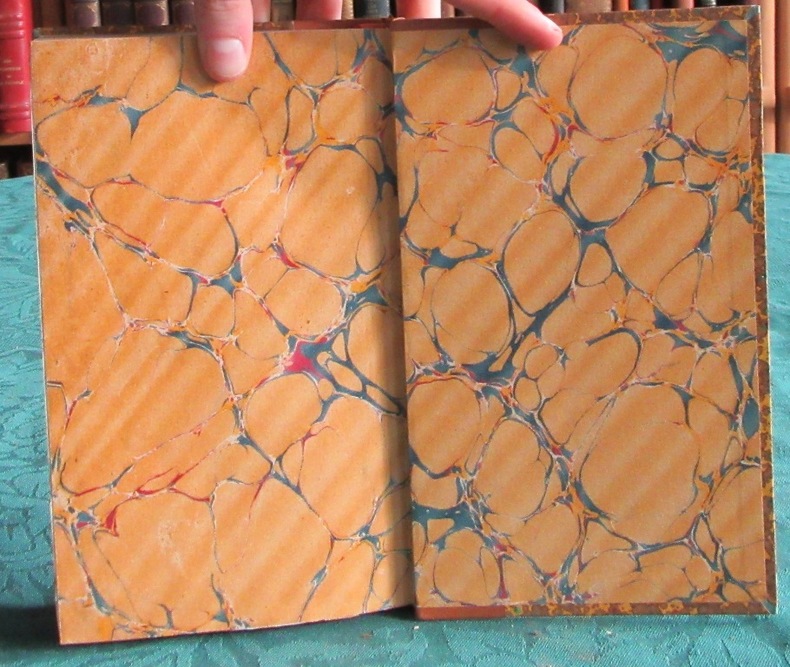
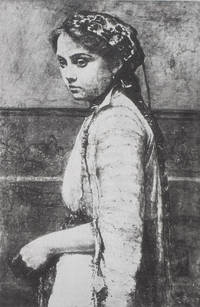
194842859Paris: H. Fleury Catalogue; Arts et Métiers Graphiques First Supplement 1948. Limited First edition. Hardcover. g to vg. 1/370. Folio 14 1/2 x 11". 356 4pp Vol. 1; 395 3pp Vol. 2; 400 2pp Vol. 3; 404 4pp Vol. 4; 70 2pp Vol. 5. 1/550. Folio 15 1/4 x 11 1/4" 113 3pp First supplement. Original 3/4 dark blue morocco over marbled paper covered boards with gold lettering to spines. Raised bands. Top edges gilt. Marbled endpapers. Original gold-lettered wrappers bound in. Tissue-guarded photographic frontispiece portrait of Corot in first volume. Title vignettes. Title pages in orange and black lettering. First supplement: Original glassine over printed dust-jacket and blind wrappers. <br /> <br /> Splendidly produced catalogue raisonné of Jean-Baptiste Camille Corot's work preceded by an extensive biography of the artist's life and artwork by Etienne Moreau-Nelaton. <br /> <br /> This work is lavishly illustrated throughout with hundreds of photogravures and heliotypes.<br /> <br /> One of 370 sets printed on vélin à la cuve of which this is set No. 33.<br /> <br /> With this catalogue raisonné is added the first supplement to Robaut's "L'Oeuvre de Corot" published 43 years later.<br /> <br /> The first supplement is one of 550 copies of which this is No. 298.<br /> <br /> Catalogue raisonné: Bindings rubbed along joints and raised bands. Text in French. Bindings in overall good interior in very good condition. <br /> <br /> First supplement: Original glassine partly torn. Text in French. Glassine in overall fair dust-jacket in good wrappers and interior in very good condition. H. Fleury (Catalogue); Arts et Métiers Graphiques (First Supplement) hardcover
181418974Suivies d'une vie de Mozart, et de considérations sur Métastase et l'état présent de la musique en France et en Italie. Par Louis-Alexandre-César Bombet.Edition originale rare du premier livre de Stendhal.Paris, de l'imprimerie de P. Didot l'ainé - 1814 - 468 pp.Belle reliure demi veau postérieure. Dos lisse orné d'une harpe dorée, avec auteur, et titre dorés. Tête dorée. Signet. Quelques rousseurs. Très bon état. Format in-8°(20x13).À son retour à Milan en 1814, Angela, sa maitresse, veut mettre un terme définitif à leur relation. Il hésite à se brûler la cervelle. Finalement, il termine vies de Haydn, Mozart et Métastase dont le titre complet de la 1ère édition est "Lettres écrites de Vienne en Autriche, sur le célèbre compositeur J. Haydn", qui sera publié en janvier 1815 sous le nom de Bombet. Il est rapidement accusé de plagiat par le musicologue italien Giuseppe Carpani, auteur d’un essai sur Haydn.
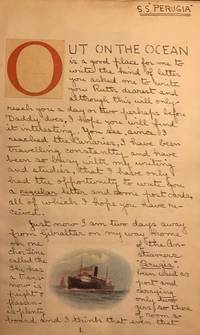
19150002560Good. 1915. On offer is a remarkable original 1915 illustrated manuscript travel journal/scrapbook by the renowned Renaissance man Charles Wellington Furlong of Massachusetts lovingly created deliciously detailed for his daughter Ruthie. The noted trip to Madeira and the Canary Islands 'Morocco Etc. A Story' was sponsored by Harvard from which a number of academic writings from this voyage were written including the Harvard Alumni magazine publishing an article on the expedition written by Henry Amory citing C.W. Furlong as a representative of Harper's and Dr. Erving as the ship's doctor. Researchers and historians will no doubt understand the precariousness of the expedition given World War I served as a backdrop and ocean travel was risky even for Americans not in the War. Both Amory and Dr. Erving are mentioned. This expedition became the basis for an article in the March 1919 issue of Harper's called "Hunting with the Lords of the Dezertas" this charming book is fanciful; includes illustrations that include Furlong's own rather cartoon-like watercolor sketches photographs postcards ephemeral pieces cut from magazines clever puzzles and even a real now dried flying fish. Furlong was a fascinating individual whose life credits include: an officer of the Massachusetts Naval Brigade partook in scientific expeditions for the US that also provided military and political intelligence appointed to the War College during 1923-1924 created the Geographic Military Intelligence Division produced a series of tactical field handbooks for officers on Mexico Siberia and Russia about the oil production facilities named a member of the American delegation to the Paris Peace Conference served as a military aide to President Wilson Rome as a military attaché providing intelligence about the Middle East and the Balkans emissary to the Sheik of Senoussi King Faisal Major General Sir Harry Watson General Sir Archibald Wavell and Field Marshall Allenby establish a voting system in Tacona Africa from designing ballots and setting up polling places in remote areas and much much more. Overall G.; Manuscript; 12mo - over 6¾" - 7¾" tall; KEYWORDS: HISTORY OF CHARLES WELLINGTON FURLONG RUTHIE FURLONG HARVARD MADEIRA CANARY ISLANDS TRAVEL JOURNALS EXPLORER AFRICA ISLANDS OFF WEST AFRICA SCIENTIFIC VOYAGE GEOGRAPHIC MILITARY INTELLIGENCE DIVISION HARVARD UNIVERSITY AMERICANA HANDWRITTEN MANUSCRIPT DOCUMENT LETTER AUTOGRAPH WRITER HAND WRITTEN DOCUMENTS SIGNED LETTERS MANUSCRIPTS HISTORICAL HOLOGRAPH WRITERS AUTOGRAPHS PERSONAL MEMOIR MEMORIAL AMERICANA ANTIQUITÉ CONTRAT VÉLIN DOCUMENT MANUSCRIT PAPIER ANTIKE BRIEF PERGAMENT DOKUMENT MANUSKRIPT PAPIER OGGETTO D'ANTIQUARIATO ATTO VELINA DOCUMENTO MANOSCRITTO CARTA ANTIGÜEDAD HECHO VITELA DOCUMENTO MANUSCRITO PAPEL . unknown
19130009018China Station Shanghai Hong Kong England UK. Good. 1913. On offer is an exceptional and significant piece of British naval history the diary of a petty officer and watchman from the HMS Kent The author's name is on the front but it is extremely faded. It appears to be "E. W. D. Sayers" but the name has not turned up researching the HMS Kent. The author does mention taking his petty officers exam on December 2nd 1912 which may assist local historians in confirming the name one of 10 Monmouth-class armoured cruisers built for the Royal Navy in the first decade of the 20th century. The 75 page diary begins on August 24 1912 and goes until January 1 1914. At the beginning of the diary the author is preparing it for sea cleaning it and doing mechanical work on it. On September 1 the ship "entered Bay of Biscay 4 AM." The ship goes around Portugal "off Cape Vincent" and makes its way to Hong Kong going through Gibraltar Malta Port Said the Suez Canal Aden and Singapore. During the trip the author often keeps watch participates in "Torpedo routines" and coals the ship "500 tons". The entries are short for this part. Often they say little more than "Thursday Sept 26th at sea" "Wednesday Oct 2nd Heavy storm 2:45 AM" or "Wednesday Oct 9th Sailed for Hong Kong 6 AM." There is also the mention of the HMS Talbot and the HMS Monmouth sailing with them for a brief moments in time. From Hong Kong the ship goes onto Weihaiwei in Northeast China at that time under British rule. In Weihaiwei the author does much of what was being done before: coals the engine cleans the ship "took on duty as dayman. Recovered anchor cable and moored" "ran torpedoes. One sunk but was recovered in the afternoon." Sometimes they just read "Usual routine". The ship is kept in tip-top shape and often runs battle and weapons exercises. Early 1913 the ship goes back to Hong Kong. The routine is still usual though the author notices an increased number of Japanese ships. The entries also begin to get a bit longer at this time. "Sunday Jan 19th Bishop of Hong Kong preached aboard - Japanese cruisers arrived at noon. Went to Cathedral in evening." In Hong Kong the author continues much of his 'usual routine' noting the weather outside usually rain and the exercises routines and tasks he does day-to-day. In May the author takes leave and goes to Japan for a few days. He goes first to Kawasaki then Yokohama and finally to Shinagawa. He does not mention much of what he did during these days except visiting palaces. On July 27 1913 he writes "Captain attended conference at Shanghai arsenal. Attacked 11 30pm at Shanghai." The next day he writes "Shanghai arsenal attacked 3 am again replaced. Captain at Shanghai transports and off the entrances ready.Landed 150 men." What the author is referring to here is the "Second Revolution of 1913" in which in July 1913 seven southern Chinese provinces rebelled against the Chinese President Yuan Shikai the autocratic first formal presdient of the Republic of China beginning the Second Revolution. The revolution was over in a few weeks thanks to the military strength of the North. The revolution also resented the Chinese government's dealings with Great Britain and so attacked the HMS Kent while in Shanghai. "Wednesday July 30th - Japanese gun boats arrived and proceeded to Shanghai 1:30pm. Shots fired 2 blank charges 90mm." Shortly after the North Chinese troops arrive and begin attacking the revolutionaries. "Saturday Aug 2nd - Chinese ships bombarded Fort 4:30 AM till 5 AM. Fort replied but with no avail. rounds were exchanged. Landed at 5 aM and proceeded to naval base. Usual routine remained of day." The next few days have only a few details about the revolution mostly focusing on the author's duties on the ship. On Aug 10 he writes "Prepared for leaving. Barrackers orders cancelled 11 A.M. A few of the Northern Troops armed & reoccupied the Police Quarters." The HMS Kent leaves Shanghai on August 17 and sails back to Japan "Saturday Aug 22nd went to Michimo 11 AM and visited Japanese Hotel also Sulphur baths. Returned at 300 pm and returned aboard at 10pm." By the middle of September the ship is in Newcastle. During the trip back the 'usual routine' persists but with seemingly more attack and defense exercises especially with other British gun boats especially the HMS Monmouth. At the end of September there are a number of pages of "Regatta Results of races skiffs Hampshire." It seems that in the first few days of August there were competitions amongst Royal Navy ships in terms of skills speed and agility. These races include "32 foot cutters" "30 foot cutters" "Whalers" "12 barrelled cutters" and other ships. The ship stays in the China Station patrolling and protecting British interests until the end of November when it begins to head back to England with the HMS Monmouth. The ship reaches England in December. By Christmas the author is back home visiting friends and family writing that he is off of duty until the end of January. After the January 1st 1914 entry there are no more. The very end of the diary is fascinating however. The author pens two essays one entitled "Weddings in China" and dated "Shanghai Aug 15th 1913" and the other entitled "Funerals in China" and dated "Shanghai Aug 10th 1913." In "Weddings in China" the author describes a typical wedding writing of the customs he finds interesting. In "Funerals in China" he writes "I have had a pretty good insight as to the disposal of a corpse of all grades during my stay here as the road leads to the Chinese burial ground if it can be termed as such." He writes of the presentation of the dead the coffin they lie in and the customs and traditions around honoring the dead. The writing in this little back section is in stark contrast to the matter-of-fact diary entries. Here the entries are still mostly detail but much more sussed out and interesting reflecting a definite opinion of the strangeness of Chinese customs. Finally the last page of the book contains a list entitled "Distance Run" which lists all the places the HMS Kent travelled with the author on board the kilometers in between each big city or province and then a final count of kilometers for the whole trip: 8340. The book is in excellent condition slightly worn in a sometimes cramped but ultimately readable script in pencil. Background - HMS Kent was one of 10 Monmouth-class armoured cruisers built for the Royal Navy in the first decade of the 20th century. She was placed in reserve when completed in 1903 but was recommissioned for the China Station in 1906. She remained there until she returned home in 1913 for a lengthy refit.; Manuscript; 16mo - over 5¾" - 6¾" tall; KEYWORDS: HISTORY OF E. W. D. SAYERS HMS KENT HMS MONMOUTH ARMOURED CRUISERS ROYAL NAVY EARLY 20TH CENTURY BRITISH ROYAL NAVY BRITISH NAVAL HISTORY PRE-WORLD WAR 1 SHANGHAI REBELLION SECOND REVOLUTION CHINESE CIVIL WAR ESTABLISHMENT OF THE REPUBLIC OF CHINA YUAN SHIKAI SUN YAT-SEN EARLY REPUBLIC OF CHINA CHINA STATION SINGAPORE NAVAL BASE BRITISH NAVY IN EAST ASIA SIR ALFRED WINSLOW CHINA PRE-WW1 BRITISH MILITARY IN THE ORIENT FAR EAST MIDDLE KINGDOM MARINERS SAILORS TARS NAVAL MARINE LIFE OF A PETTY OFFICER BRITTANICA HANDWRITTEN MANUSCRIPT DOCUMENT LETTER AUTOGRAPH WRITER HAND WRITTEN DOCUMENTS SIGNED LETTERS MANUSCRIPTS HISTORICAL HOLOGRAPH WRITERS AUTOGRAPHS PERSONAL MEMOIR MEMORIAL AMERICANA ANTIQUITÉ CONTRAT VÉLIN DOCUMENT MANUSCRIT PAPIER ANTIKE BRIEF PERGAMENT DOKUMENT MANUSKRIPT PAPIER OGGETTO D'ANTIQUARIATO ATTO VELINA DOCUMENTO MANOSCRITTO CARTA ANTIGÜEDAD HECHO VITELA DOCUMENTO MANUSCRITO PAPEL . unknown
18070001437OXFORD ENGLAND. Good. 1807. On offer is an exceptional early circa 1807 manuscript travel journal of an unidentified man we suspect an American traveling extensively throughout England. Historians researchers and collectors of the era will find an astonishing amount of detail from this keenly observant and near obsessive writer who is in effect writing a combination encyclopaedia of facts details and observations relating to the history and relationships of all he sees and encounters plus he has also created a census mentioning the number of houses in each and every town village and city he passes or visits. He writes in a 7 x 5 inch soft leather book with over 220 closely written pages and only a few blanks. We have never seen a more detailed almost obsessively detailed account of travels. Beginning as a 'Journal of a Trip to Oxford' it morphs into a comprehensive state of the nation. Historically significant and not without intrigue. From the language that we believe the author is from America and given the time is 'Between the Wars' the manuscript would be well placed as an intelligence report. Besides the details of the country he writes about his journey's successes and failures his encounters and even struggles and much more. On several different occasions he encounters military units or men and he records great details including soldier's complaints and dissatisfaction. He also seems to court danger at least on one occasion he believes he is in danger as two "black men" begin walking with him or falls or gets bogged down. Here are just a few snippets: "I arrived at Rochester about 3 o'clock and having taken a view of the bridge I proceeded to the Cathedral. Rochester Bridge is a handsome structure and was completed in about the year 1392 but is now very much disfigured owing to some accident in the middle The river in this part is 560 feet broad of the bridge is only surpassed by those of London and Westminster Having proceeded another mile with my companion I turned off to go to where formerly King Alfred had a palace. The town is small but neat and is governed by a . There is a good oyster fishery in the Swale and at Kings fleet about 4 miles distance overtook my old companion who acquainted me that he was an Irishman and about 4 years ago in company with 4 people 1 of whom was a young woman had walked from Minihead to London a distance of 169 miles in 3 days The waterman who keeps a public house there wished me a good morning. In stepping into the boat a sad disaster befell me for it being rather wet and my feet covered with mud I slipped and fell to the bottom not so much hurt but that I could make shift to walk to the public house Having walked about the town for some time I proceeded to Mr. Shadgett's to obtain my pass to the castle they insisted upon my taking breakfast and soon after doing so forth with Miss Shadgett who was so good as to offer to lead me to the town we walked upon the beach as far as Sir Sidney Jolly the habitation of Sir Sidney Smith it is a curious range of low buildings and may parts are in ruins The church near which is erected a monument of Capt Hanson the officer of company of his Majesty's ship Beazen lost near this place on the 26 Jan 1800 105 men were lost only one surviving to bear the news of this melancholy catastrophe. The monument is surrounded with iron rails and is adorned with naval troopers shells . We parted and making towards a house seated in a bottom to enquire my way and asking for a glass of water the woman insisted on my taking a pint of beer and would not let me make any return. I ascended a very steep hill to the lighthouse which is a low building but seated naturally so very high I arrived in Exeter about ½ past 9 and proceeded to the Cathedral walking about the body of the church and was addressed by verger asking if I would walk up the tower. To this I assented he informing me that from thence is a fine prospect of the city which I found to be the case the city from the tower looks very neat the roof of the houses being all covered with a kind of grey slate. This tower is 130 feet high the ascent is by a flight of the steps very much like those of the monument but much smaller Two chimney sweepers who were sitting by the wayside on my passing immediately joined me enquiring if I was going to Which I could not deny He observed that he had seen my face before this I thought did not look at all well knowing he had not. After walking a little farther in which time I bore a rather silent part of the conversation he said perhaps I was afraid of 2 such black fellows but he was sure there was no reason. In this way we walked for about 4 miles and during this time his behavior seemed to indicate some bad intentions. I parted with them saying I was going to the lead mines this was the place we were to stop having seen them safe in the house and thinking I had made a lucky escape. I went to the lead mines. My way to these mines which are rather small is over a very steep mountain one of the workmen got to accompany me he led me into a very narrow passage I was obliged to sleep in the same room with the Man and his wife which was not very agreeable and I don't think I should have stopped had I known this soon enough to have provided myself with another In Exeter I saw several very curious machines laid across the horses as a saddle by means of which they carry immense weights. I now proceed on my way to Bath then to the town of Callumpton .this day tho very lame walked about 32 miles. The Inn I chanced to stop at was but an indifferent one but they paid me great attention. I had for supper some veal pork and mashed potatoes cheese beer and cyder and in the morning I had about 1 qt of mead for which I paid 2. Here I overtook a little boy who was going to Bexhill and offered to show me the way across some fields which saves a great deal of ground he amazed with several little anecdotes of the Hanoverian Regiment and gave me an account of the loss of the Spanish vessel near Bexhill. To the left of Bexhill are more fortifications and to the right are the remains of Bulver H castle where King At Bexhill is the 40th regiment the Hanover and a few artillery. The ships were all open as on another day this being Sunday A sergeant knowing which way his interest lay asked me from whence I came having answered him very dryly he requested me to join his regiment but I very soon undeceived him and he retired with great humility stood the shrine of Sir Thomas Becket. Part of the floor is curiously inlaid with mosaic work. It contains the monuments of Henry 4th & his queen Edward the Black Prince . In the opposite side of this isle is the place where Becket was killed. I crossed the fields to Winchester . intended to have slept but could not procure a bed being all occupied by the military. Winchester is the prettiest place I have yet been to.You enter the town by a curious old gate over which over which are 4 towers. The Church I believe was formerly an abbey of which are some remains exclusive of part now occupied as a Church.but here appears to be only the walls remaining here is a pretty house belonging to Mr. Dent. From Stilton to Homan Cross I walked with a soldier of one of the York Regiments he informed me everything about the Garrison and complained much of the strictness of their generals there were then 3 regiments 1/3 of which was on duty every day. Both persons and barracks are very indifferent buildings. The prisons are very old and at a distance have the appearance high barns. I believe there are 8 of these buildings each containing 2 or 3 stories and are enclosed by a double wood fence between it the sentinels walk since their attempt to escape about 3 months after my being there they have begun to erect a high wall " Just an astonishing record of England seen from a super diarist's eyes over 200 years ago. The book's cover is loose and well worn some edges are exposed and there is some wear to the pages but otherwise and overall G. ; 12mo - over 6¾" - 7¾" tall; KEYWORDS: HISTORY OF ENGLAND GREAT BRITAIN UK UNITED KINGDOM OXFORD URBAN STUDY CENSUS PRE WAR OF 1812 HANDWRITTEN MANUSCRIPT DOCUMENT LETTER AUTOGRAPH DIARY JOURNAL LOG KEEPSAKE WRITER HAND WRITTEN DOCUMENTS SIGNED LETTERS MANUSCRIPTS HISTORICAL HOLOGRAPH WRITERS DIARIES JOURNALS LOGS AUTOGRAPHS PERSONAL MEMOIR MEMORIAL PERSONAL HISTORY TRAVEL 19TH CENTURY antiquité contrat vélin document manuscrit papier Antike Brief Pergament Dokument Manuskript Papier oggetto d'antiquariato atto velina documento manoscritto carta antigüedad hecho vitela documento manuscrito Papel . hardcover
19350008178EAST HANOVER NJ 1935. On offer is a fascinating collection of journals from a family struggling through the Great Depression in pre-WWII America. It includes four journals for the years of 1935 1936 1937 and 1943 and a notebook all items are in fair condition. The Journals were written by William J. Timmons and members of his family. Timmons was born in 1889 in Navan Ireland. He emigrated to the United States in 1906. He married and he and his wife had 7 children - 5 girls and 2 boys. His wife passed away in 1933 apparently from injuries resulting from burns. Timmons worked in some manufacturing firms - in particular the Walter Kidde Company and context suggests that he also worked some land. Casual research has not turned up any additional information on him. The journals do not follow a strict chronological structure. Some in fact have entries made by some of his children or are written entirely by one of his daughters. The first journal was written in 1935 it measures 8.25'x6.75' and has 52 pages and is 50% complete. It is a composition book in which he appears to write out the drafts of letters he will then send out. One in particular details his personal and family history as he struggles to raise his 7 children on his own. Written to Rt Rev Monsignor Meehan possibly Rev Robert Meehan he details his difficult circumstances his personal history and his request for a job at the parish cemetery: ". I am working at present for the Walter Kidde fire extinguisher co in Bloomfield NJ. . I find it very difficult to continue sending them his 3 high school age daughters to Bayley High School with the money I make at present. I get 55¢ per hour for eight hours each day . I can't work seven days a week so I can make ends meet My wife and children moved into East Hanover in 1925. My wife and I agreed to live in very humble living quarters so that we could afford to send our children through a Catholic High School. ." draft letter Oct 7 1935. Another letter is to Walter Kidde detailing improper activities at work including theft of metal and metal scrap. It appears that this was not his first communication and there was tension between himself and other men working in the shop: ". I am bewildered and timid in writing to you as Mr. Hiss has informed me that you do not wish to receive any more letters from me. He also told me that you turned over the last letter to him and that it was confidential between the three of us but it was known throughout the shop and for three weeks the men would not speak to me ." draft letter Oct 7 1935. Other entries detail what he sees as theft or misappropriation of company material. The second journal measures 9.5' x75' has 120 pages and 99% complete. It is written by one of his daughters. She never identifies herself. It opens with good news: "In the year of our Lord nineteen hundred and thirty six on the twenty seventh day of April God bestowed the blessings on Daddy of winning two thousand two hundred and eighty dollars $2280" Page 1. This is the equivalent of nearly 20 years wages for Timmons. Covering the time period from April 27 to July 23 1936 she keeps a record of family expenses and daily events: "Daddy went to Whippany to see about plowing and Charlie Beaumont about truck. Uncle Joe got from Dad $3.00" Jun4. 1933 The 3rd journal measures 95' x75' has 112 pages and is 99% complete. It covers the period June 15th 1936 to July 17 1937. Not all entries are in chronological order. This one appears to have been written by either a son or daughter. It is more likely a son as it refers to the writer working in a shop. Many of the entries describe day-to-day work tasks. He describes an accident he suffered from in which parts he was hand carrying exploded. He also talks about the manufacture of 15 navy shells. He also records conversations about attempts to unionize their shop: ". The men told Dad that Val Hill wanted the shop all one he wanted the union and they said it was Dad who was keeping it from being a union. Dad asked how many men worked there they said about 360. Dad said if 359 joined the union they would never get 360 to join. ." June 19 1937; "Dad had no money to get Bill clothes for graduation so he stood home from work. Cat daughter Catherine and I went to Uncle Joe's house but he was already at work and then we went to Sharkeys and Ruth told us she wouldn't have it. ." June 22 1937. This journal also includes some list of expenses and more importantly full names of people that the family knows. The 4th journal is written by Ann Timmons. It measures 85' x 675' has 50 pages and 78% complete it covers the period from March to October 1943. It begins with a letter dated Mar 17th to the Internal Revenue Service: "Gentlemen I cannot pay. Please grant me a month's grace to pay the balance $50.83 on my income tax. I am sorry to have this happen but faithfully promise to pay the rest on Apr 15th Mar 17. A number of pages appear to be a time record extending from April to Sept. In July she replies to a letter from her brother Bill who is serving in the United States army in North Africa likely as part of Operation Torch: ". I received your letter Saturday July 10 and am really proud of you. It sure gives me a proud feeling to get a letter from a brother of mine in Africa that can beat the h____ out of any enemies that gets in his way. But anyway I'd like to see anybody cross an Irishman and get away with it. ." July 11. On Oct 26 1943 she writes a letter in which she provides her brother Pat's address to a Pvt. Adams. Pat is already in uniform attached to the 92nd Field Artillery Battalion. Also in October she drafts a long 16 page letter to her brother Bill. The last volume is a top-bound writing notebook dated from 1937 it measures 975'x8' has 78 pages and 100% complete. This was written by William Timmons and goes into significant detail about the problems and in-fighting at the Walter Kidde Company where he was working. It is notable that although his full name is William Timmons as evidenced from previous letters he has written the men at work refer to him as 'Mike'. He refused to join a union which caused great animosity: ". He said - Boys when Floria and I go away you boys start to work on Mike Timmons and make him join the C.I.O. Union. . I said to them if the President of the United States asked me to join the C.I.O. Union I would refuse Then the mob made all sorts of threatening and insulting remarks". This collection offers a fabulous insight into the day-to-day challenges of an ordinary working class man and his family. For a historian it is valuable from several perspectives. It describes the struggle of this man to raise his family on his own it describes industrial life on the shop floor and it provides an insight into the rough world of union organizing. What makes it special is the inclusion of entries and comments by at least two of his children who provide another perspective on life around them. Fair. Illus. by /. 8vo - over 7¾" - 9¾" tall. Manuscript. hardcover
187992531879 Paris/ Bruxelles, V. Palmé, 1879 - In 8 - Broché - 2ème édition augmentée de nouveaux documents inédits - XXIV-541 pages - rousseurs éparses aux 20 premières pages - Bel exemplaire
Signed and inscribed by author upon front free endpaper. 552 pages. Index. Black and white photographic plates. "One of the most important autobiographies of the post-war period, for there can be few personalities still alive who have been so intimately connected with the march of world events for so many years... His first great triumph was to rescue the German Mark from the inflation of 1921... As the Nazi avalanche swelled, Hitler persuaded him to occupy the Presidential chair at the Reichsbank... but (Schacht) soon saw that the Fuhrer was driving relentlessly towards war. A quarrel resulted and he left the Government, remaining under a cloud until he was arrested towards the close of the regime." - from dust jacket. Schact was aquitted of war crimes at Nuremberg. Moderate wear to book. Binding intact. Several patches and touch-ups to dust jacket which is now preserved in archival-grade Brodart. Kehr & Langmaid 1217, Aldcroft & Rodger p.83. Book
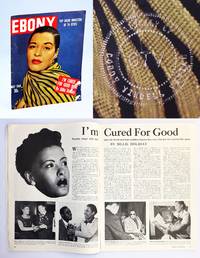
1949417j1549Chicago Illinois: Ebony. Good. 1949. First Edition. Single Issue Magazine. Iconic Billie Holiday cover issue with seven-page photo-illustrated article documenting her struggle to return to normal life after her incarceration for possession of narcotics in 1947. "Billie Holiday 1915-1959 was inducted into the Grammy Hall of Fame and the National Rhythm & Blues Hall of Fame. In 2000 she was also inducted into the Rock & Roll Hall of Fame their website stating that 'Billie Holiday changed jazz forever'. She was named one of the 50 Great Voices by NPR and was ranked fourth on the Rolling Stone list of '200 Greatest Singers of All Time' 2023. Several films about her life have been released." - Wikipedia. "With few exceptions every major pop singer in the US during her generation has been touched in some way by her genius. It is Billie Holiday who was and still remains the greatest single musical influence on me. Lady Day is unquestionably the most important influence on American popular singing in the last twenty years." - Frank Sinatra in Ebony 1958. From the personal collection of Presidential Medal of Freedom recipient C.T. Vivian whose blind stamp appears at bottom of front cover. "Vivian 1924-2020 was an American minister author and close friend and lieutenant of Martin Luther King Jr. during the civil rights movement. On the March 2007 anniversary of the 1965 Selma to Montgomery marches Barack Obama refered to him in the words of MLK Jr. as 'the greatest preacher to ever live.'" - Wikipedia. Bits of peeling from lower right corner of front cover otherwise complete unmarked and intact with average wear. A truly extraordinary Billie Holiday memento.; Cover Photo; Folio . Ebony unknown
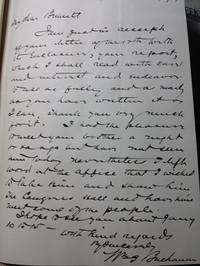
19020002348Good. 1902. On offer is a sensational original scrapbook and group of ephemera related to both the 1901 Pan-American minor focus and 1904 Louisiana Purchase major focus Expositions of the publicity superintendent and man responsible for the public faces of the Fairs being a scrapbook of his incoming correspondence including several typed and signed letters from William Buchanan the Director General of Pan-American Exposition handwritten notes news and magazine clippings photos there is a wonderful F.P. Stevens aerial photo of 1904 fairgrounds looking east documents and other ephemera tucked and tipped in regarding the Fairs making for an original unique behind the scenes look. Compiled and created by Mark Bennitt sometimes Bennett a highly successful writer who became involved with both the 1901 Pan-American and 1904 Louisiana Purchase Expositions as the Publicity Superintendent. While the book goes a very long way in detailing the Fairs it is obviously Mr. Bennitt's personal scrapbook and it is apparent from the outset that Mr. Bennitt was a brilliant hire for those responsible for the Fairs' success as witnessed by the clippings related to his hiring and personal background as befits a man of success and proud of his ongoing accomplishments but that stated Mark was a master of his craft and the book tells the story of the machinations to making the Fairs and the man who made them publicity successes. Of particular interest will be that the book provides a mirror view of the Fairs as seen by the outside public while for the historian also providing a look at the Fairs from the inside. We note: Near the back are some dozen pages of later writings of Bennitt's sojourn up the West coast in 1906. The rear cover is off but present the front holding for now one or two pieces of ephemera have come off the pages but overall the scrapbook is G.; Manuscript; Folio - over 12" - 15" tall; KEYWORDS: HISTORY OF MARK BENNITT BENNETT EARLY PUBLICIST PUBLICITY ADVERTISING MARKETING PROMOTION 1901 PAN-AMERICAN EXPOSITION 1904 LOUISIANA PURCHASE EXPOSITIONS INTERNATIONAL FAIRS WORLDS FAIRS INTERNATIONAL EXPOSITIONS MISSOURI LOUISIANA BEHIND THE SCENES AMERICANA HANDWRITTEN MANUSCRIPT AUTOGRAPHED AUTHORS DOCUMENT LETTER AUTOGRAPH KEEPSAKE WRITER HAND WRITTEN DOCUMENTS SIGNED LETTERS MANUSCRIPTS HISTORICAL HOLOGRAPH WRITERS AUTOGRAPHS PERSONAL MEMOIR MEMORIAL PERSONAL HISTORY ARCHIVE DIARY DIARIES JOURNAL LOG PRIMARY SOURCE FIRST HAND ACCOUNT SOCIAL HISTORY PERSONAL STORIES LIVING HISTORY ANTIQUITÉ CONTRAT VÉLIN DOCUMENT MANUSCRIT PAPIER ANTIKE BRIEF PERGAMENT DOKUMENT MANUSKRIPT PAPIER OGGETTO D'ANTIQUARIATO ATTO VELINA DOCUMENTO MANOSCRITTO CARTA ANTIGÜEDAD HECHO VITELA DOCUMENTO MANUSCRITO PAPELBIOGRAPHY BIOGRAPHICAL AUTOBIOGRAPHICAL AUTOBIOGRAPHY PERSONAL NARRATIVES . unknown
18650009032BANTON VERMONT VA BUENOS AIRES ARGENTINA. Good. 1865. On offer is a fascinating and unusual diary written by Salon C. Currier of Banton Vermont written towards the end of the Civil War. Currier is an American who travels from Vermont to Argentina to become a cowboy of sorts. Instead of cattle in the United States he herds sheep in Argentina. He documents his entire experience from his first experiences aboard the steamship heading to the new country to his days of work in Argentina. All is documented in great detail. There is also a very strong sense from portions of his diary that Currier did not leave the United States fully voluntarily that he is most probably fleeing something from his past though he never states what that is. The inside cover of the diary reads Book Bought of Miron Joslyn Nov. 30th 1864. The last night in Boston. Bound for Buenos Aires South America. The diary begins The diary begins Dec 3 1864. These entries are located in the Memoranda section of the diary after the main diary entries and are short and concise. They begin with Currier getting onboard the steamboat: Dec. 3 1864. Went onboard the ship tonight at 4 OClock. Eat supper at 5 OClock. The steamboat is called the "Saint Dominique" and is commanded by Capt. D Gerrior. It takes him almost two months to reach Argentina. Sunday January 1 1865. We were within 8 degrees of the Equator it would be impossible to count the number of showers we had through the day besides a gail and a hard one to.I think that this is a beginning a new year under difficulties. We could not stay on deck nor in the cabin it was a lonesome day at 4 o'clock a norther calm I guess we shall have to spend the winter here. And quite different from Vermont you may tell rested very well The Chinese say Bad Beginning makes a good ending they say. He has some sort of run in with the Capt. and holds him in contempt for the entire journey. He states. I will have words with the Capt. as soon as we land in South America.; January 10 1865. There was a heavy swell today the old ship rolled so I did not sleep one night. This is the hottest day we have seen. There was a great excitement onboard. We had a pie for supper it made me dream of home. I wish some of the folks of Banton were here to experience the living we have. I found only four hairs in my pie.It was splendid I never hated a man quite so bad as I do the Capt. I think he will get some of my mind when we land. Currier spends much of the time on the boat very wistful about Vermont and his abrupt departure from Banton. At the end of January he arrives in Buenos Aires. Jan 25 1865. I stayed at Miss Brodleys Boarding House in the city of Buenos Aires South America and rested the best ill have since I left Boston. I have been traveling over the city some have been up to the depot and seen the cars.They look odd and strange to me I have run over the city until I am tired all out. It is hot enough to roast eggs in the sun. Today I have seen all of the city I want at present I want a change now. They are about 100 years behind the times in my notion. How I wish I could speak Spanish I should be perfectly happy. When he arrives in Buenos Aires he is met by a gentleman Mr. Mellion who is some sort of middleman or fixer for a Sheep herding operation. Jan 30 1865. Well this is my birthday & I wish I could spend it in my native state. We road out a little ways & it has made me awful lone you may bet it was a hard horse to ride. I wish I was 10 years younger than I am but that cannot be. I hope that when the day comes gain I shall feel better comfort than I am today. If I live to see it & I hope I shall not have to see more than two of them in this country. It is not very warm today rather pleasant of the two. Mr. Mellion came today & he looked comical & rough. One can hardly keep from laughing in his face. After preparing and resting in the city he is prepared for his profession and the adventure continues. He sets out with other North Americans by horseback and they ride to a fairly remote part of Argentina. Along the way he buys his own horse with gold and they ride many miles camp in old battle fields filled with cannon balls. Feb 31865. I bought a horse this morning for 12 dollars in gold the first one I ever owned. he is a good one to ride him out to the camp we are going to is a rather pretty place. I had a nice ride and made the acquaintance of Mr. Frank Danver he is a smart looking fellow I like him very well what I have seen of him. My horse has got a very easy gallop for me I hope he will be a good one. His first few months in Argentina are very difficult for Currier. A typical entry reads something like this: Feb 24 1865. I got up as soon as there was any day light & started with the sheep without any breakfast & my jaw was lame I could not eat much all day. So I started not in the best of spirits that I ever was. We got the sheep down to the river at sunrise & then we had trouble getting them across the river. We worked hard until noon before we got across with all the help we could get. We stopped at a natives house at 1 oclock to get some meat to eat it was strong and tough. I drank water that the folks at home would not wash their hands in it was so nasty. This was the longest day in my life I have ever seen.; March 6 1865. We work on the well today and putting on the finishing touch it is awful hot today. I carried my dirty clothes to the wash woman today for the first time since I left home and they were dirty to. I am so sick and through with this life that is so.I wish i was in tiger places about now and going home. Money is of no merit. At one point he and his companions even have their horses stolen: March 19 1865. Well we cant find the horses that aint the worst of it for I guess they are gone for good. But such is life that is one of the customs of the county to have horses stolen from you. It is clouding up and its going to rain. The bricks have arrived for the house & I am glad. We had some potatoes for the first time in camp and they were good.You may bet after living so long without them. I wish I was in Benton so i could go to church for that is a privilege i have not had since I left home. He often writes about loneliness and missing a young lady. He also gets word of some major events of the civil war and comments on the death of President Lincoln: There has been two English gentleman here today and they were warmly received. They brought us news that Charleston S.C. was taken by the North. Our feelings can hardly be imagined than described. We gave three loud cheers for the Union. Such news as this set me to thinking about going home rather than looking after sheep. He fills the page with his thoughts on Argentina his inability to speak Spanish cultural misunderstandings and much more. Eventually he settles into a rhythm and life becomes easier for him it seems. June 14 1865. This is another fine day in So. America. The flock has been very quiet all day and I am very thankful for it. I comment a letter for home today. It does not seem as if I could wait another week before I can have a letter. I was over to Mr. Melliions place today he has comment on his after so long a time. We had a great time tonight trying to catch the cow. I thought we never should ge her but we did after a long time and got some milk for supper and it paid us well for our trouble. Such is life.; Nov 10 1865. This is a little cooler morning than usual. Olsen is a looking after the flock and horses today and he says he shall have a man as soon as possible. I thought one day would bring him to getting someone soon For I am not going to look after sheep for a living out here for I can do better. Finally near the end of the year Currier prepares to go back home. Dec 201865. Well I called on the American Consul this morning Mr.Helper - and found him to be a very pleasant man to meet with. I had a good visit with him and met two gentlemen just out from the States and they are very pleasant to meet and asked me to their rooms to give a good description of camp life but they do not seem to like it much and seem to be anxious to get home. I am the happiest mortal on earth they have seen. Finally he leaves back for America on December 31st. We commence sailing at 4 oclock this morning homeward bound and at the same time bidding good bye to the old year. What changes have been made in this world to many a mortals life and soul during that short space of time. It seems like a dream to look back upon ones life. How I wish I could be home tomorrow to wish them all a Happy New Year but I hope to be soon at least. I have been reading all day on deck we have been sailing 6- 8 knots an hour and it makes us all pleasant to say the least. There are over 350 pages of writing in the diary. Currier writes in pencil and often in small script but the book is often very legible. There are frequent spelling mistakes on most pages but they are not hard to look past. The cover is black and worn and has a large tear.; Manuscript; 8vo - over 7¾" - 9¾" tall; KEYWORDS:HISTORY OF SALON C. CURRIER BANTON VERMONT BOSTON MASSACHUSETTS BUENOS AIRES ARGENTINA AMERICAN GAUCHO COWBOY AMERICAN IN SOUTH AMERICA ON THE LAMB LAYING LOW STEAMBOAT SAINT DOMINIQUE CAPTAIN D. GERRIOR CIVIL WAR ERA 19TH CENTURY EXPATRIATE SHEEP HERDING AMERICAN ABROAD RURAL ARGENTINA 1865 IN ARGENTINA POST-COLONIAL SOUTH AMERICA AMERICANA HANDWRITTEN MANUSCRIPT DOCUMENT LETTER AUTOGRAPH WRITER HAND WRITTEN DOCUMENTS SIGNED LETTERS MANUSCRIPTS HISTORICAL HOLOGRAPH WRITERS AUTOGRAPHS PERSONAL MEMOIR MEMORIAL ANTIQUITÉ CONTRAT VÉLIN DOCUMENT MANUSCRIT PAPIER ANTIKE BRIEF PERGAMENT DOKUMENT MANUSKRIPT PAPIER OGGETTO DANTIQUARIATO ATTO VELINA DOCUMENTO MANOSCRITTO CARTA ANTIGÜEDAD HECHO VITELA DOCUMENTO MANUSCRITO PAPEL . hardcover
19320008040NEW YORK NY AT SEA ABOARD SHIP. Fine. 1932. On offer is superb handwritten account of a 1932 world cruise. The writer a woman sailed from New York Jan 9th 1932 aboard RMS Franconia an ocean liner operated by the Cunard Line. The Log Book measures approximately 8 1/2 inches by 6 inches. It is 2-hold punched and bound with string. The Log Book's first 6 pages are filled with autographs and contact information of people from the United States England and Germany The next section is a pre-printed information section with pages showing itinerary currency exchange rates in effect at the time nautical terms and general information. The third section consists of 46 double-sided pages of handwritten comments. The entries consist of general society with comments about fellow passengers and extensive observations about the various ports of call but elevating the diary are a number of historic moments captured by the writer and while entries are undated the year becomes evident with the momentous times the they follow given the itinerary of the ship's cruise plan. The handwriting is clear and legible. We know the writer was a woman from this entry: ". at dinner I wore my black lace dress. "p 2 "Most of the cruise people were still out on the Grand Corniche and we did not see them until the next day. Some of the younger set put on lovely evening dresses and went back to the Monte Carlo Cabaret and night clubs of Monaco." p 1 "The National Museum was especially interesting owing to the comparatively recent excavations where some beautiful pieces of statuary had been found on some of the islands and even in the sea" Athens p 3-4 "We visited all the different temples tombs gates and gymnasiums scheduled the outstanding high spots being the Acropolis and Hill. Mr. L took is to the Byzantine Church which he said was perfect in its architecture . We sailed at 7 o'clock that night after another cold fifteen minutes ride on Phaleran Bay to our ship. We are to arrive at Haifa tomorrow. "p 4 "We did little shopping in Bombay buying two star sapphires a small rug . " p 10. Included in the Log Book is a printed passenger manifest for this cruise including the names of the key Cunard staff on board. Other excerpts will detail the significant historic moments when her their trip made port in Shanghai: 1932- Off the Coast of Italy I saw Vesuvius with it's plumy vail turned to gold by the mourning sun. I had never seen it''s full outline before it was most beautiful & to the West was the big yellow moon just going off duty from it's night vigil. There was a large Chinese boat on our right and as I turned an English fraighter on our left. 1932 Haifa - Jerusalem We are to arrive at Haifa tomorrow & travel by special train for Jerusalem where we are to spend two days in & around the Holy City tonight there is a clear sky but the sea is a little rough. 1932- Egypt Long after leaving Cairo we came into a very dismal country & soon into the desert. On our right in the distance was the Egyptian mountains this was all very interesting to us. Suez is small with quite a few modern houses. Our train passed through the very center of the town. Last Saturday night we were scheduled to have a fancy dress ball but for some reason it was post postponed for some reason until Wed night. They paraded twice through the social hall and I think the prizes were fairly given. The first ladies prize went to Gloria Baker who they say is only 11 years old. She took the part of Cleopatra dressed in a beautiful Egyptian costume of white & silver. She is quite grad looking & is the daughter of the second Miss Alfred Cousins Vanderbilt. 1932- India The Hindus cremate their dead in this way this place looked like a vacant lot in some out of the way alley with huge wood yard cut with rather small pieces were kept for cemetery purposes. There was a small lot were the earth had been turned up in many places for children under ten years old were buried and the sod was turned over until they were mixed thoroughly. We drove to quite an imposing burial place up high with beautiful doors of stone & a glorious white" tombs of silence " a body with a white covering shoulders of six men was being carried up the steps we had to wait until they had disappeared when we reached the top just across from us was the tombs where vultures were sitting massed together like a squirming black pall noisily chattering just as human beings over a voluptuous satisfying meal. In less than 15 mins that body had passed us had been devoured. 1932 - Singapore We entered the causeway to Singapore arriving at 12:55 at the famous Raffles Hotel where we sat at table with Madam & where we had a million dollar cocktail- which was not so good. I bought a very pretty jade ring set in silver for $ 1.25 We had to pass the customs officers at the end of the Causeway on our way to where Balorne at the wharf. 1932 - Siam We saw the Kings palace & in part of it the King who comes to America for his We saw the Royal white elephant of his father & also a white monkey. Mr & Mrs Higgen's were standing together when our auto companion came up and asked us to come & see an opium place for incurables. We found all or many of the cursed people invading this den that was at the end of a long building barn like. We saw rows of pipes and near each man was a glass tube & other things. We didn't understand them. 1932 - Saigon At Saigon I was able on account of the little French I knew to get our car immediately we get our seats on a splendid boat in the center are reclining chairs where most of us went to sleep. They say drinking on the Ankor boat was heavy. Mrs H also took a mighty drought of whisky & soda. 1932 - Off the coast of Shanghai China Our boat was to sail promptly at 5 pm for Shanghai I think - on account of the war - we were as much excited at reaching Shanghai as when we were to land at Bombay. Before dark April 5th we came into the yellow sea. We encountered wind rain & lighting we had a rolling sea & a number in the waiting room thought they would have to retire with mal de mers while in here there was a big noise & some show of excitement. It seems the sea had burst in a the gangway D deck starboard some said dining room stewards looked odd in their dinner clothes - their trousers rolled up in their bone feet mopping up a great quantity of water. 1932- Shanghai The wide Yangtze rises so wide in places you cannot see land. But here it was full of all kinds of war ships of foreign countries many waving our handkerchiefs & hats at our own stars & stripes on a big grey monster. We passed. We passed destroyed sections where some said bombs were dropped from Japanese airplanes the term was shot into from vessels the native boats & shipping craft were very picturesque. Many of us felt we were in the midst of war. Especially when we got into our automobiles & drove by barricades of sandbags piled up 4 or 5 high & barbed wire fences & entrapments. For a social historian this is an excellent window into a long-gone world - a world where people unaffected by the global depression had the money and the time to enjoy a leisurely cruise and indulge themselves. In seven short years as the world descended into world war RMS Franconia would be requisitioned by the Royal Navy and refitted as a troopship.; Manuscript; 8vo - over 7¾" - 9¾" tall; KEYWORDS: HISTORY OF 20TH CENTURY 1930s GREAT DEPRESSION CRUISE SHIPS CRUISE LINES RMS FRANCONIA; LOG BOOK; PRE WORLD WAR II CIRCUMNAVIGATION CUNARD LINE; CARNIVAL CORPORATION PLC TRAVEL DIARIES OCEAN TRAVEL AROUND THE WORLD CRUISE LUXURY CRUISES IN 1930s DIARY HANDWRITTEN MANUSCRIPT DOCUMENT LETTER AUTOGRAPH WRITER HAND WRITTEN DOCUMENTS SIGNED LETTERS MANUSCRIPTS DIARY DIARIES JOURNALS PERSONAL HISTORY SOCIAL HISTORY HISTORICAL HOLOGRAPH WRITERS AUTOGRAPHS PERSONAL MEMOIR MEMORIAL ANTIQUITÉ CONTRAT VÉLIN DOCUMENT MANUSCRIT PAPIER ANTIKE BRIEF PERGAMENT DOKUMENT MANUSKRIPT PAPIER OGGETTO D'ANTIQUARIATO ATTO VELINA DOCUMENTO MANOSCRITTO CARTA ANTIGÜEDAD HECHO VITELA DOCUMENTO MANUSCRITO PAPEL . hardcover
18910001312JACKSONVILLE FLORIDA FL BROOKLYN NEW YORK NY. Good. 1891. On offer is a sensational archive of twelve 12 original manuscript diaries all handwritten by Maria Diven second wife of General Alexander Samuel Diven who married Maria his junior by 25 years in 1876 after the death of his first wife Amanda Beers who died in 1875. The diaries represent the years of their lives in 1891 1892 1896 1897 1900 1902 1906 1907 1911 1910 1912 and 1917. Save for the last year when her health declines and there are entries in only the first third of the year she writes rather densely throughout. In the early years they were living at their home called Hazzard's Bluff on River Point Road just across the river from Jacksonville Florida. In later years they are based in Brooklyn. Their Florida estate was built in an area well known for the many wealthy Northerners that settled their after the civil war. Collectors and historians of the area and the era will no doubt find a treasure trove of details of what life was like living as a very wealthy and prominent family along the St. John's River. The family seems to travel around by yacht and launches a lot and in the company of other prominent Generals and Colonels. There are lavish parties trips on the yacht trips to their Elmira New York home plenty of socials sitting on the piazza and much much more. This is a large wealthy family with much on the go all described in great detail. At the turn of the century we find the family based in Brooklyn for most of the year then head to Orange County in the fall. They also take a longish trip in the West and the mountains visiting and every other conceivable activity and adventure. This is a look with a breathtaking vista of breadth and depth by an articulate intelligent woman of means and position. BIO NOTES: Alexander Samuel Diven soldier politician businessman popular Board of Director for the New York & Eire Railroad had a distinguished military career along with other outstanding accomplishments. He was the grandson of John Means and Elizabeth Clark and great grandson of Robert Means and Jane Irving sister of General Irving of the Continental Army. Online sources say he was born in 1809 but in these diaries his wife says he celebrated his 74th birthday in 1893 which makes his birth year 1819. Also from another source: 'There's a big house with columns at 4915 River Point Road. It's not brick though it's wood but you may have thought it was painted brick. In 1850 the first circular steam sawmill in Florida was built at the mouth of Pottsburg Creek. After the Civil War in 1876 the old Empire Mill site was sold to Alexander S. Diven a general in the Union Army and Congressman from New York. Apparently he was just one of many Northerners who settled along the southern bank of the St. Johns River after the War. The house was built around 1877 and the property contained 34 acres at that time. The timbers used to construct the house are huge some 10" by 12". They were taken from the log pond next to where the old mill had been. The foundation and chimney are made from bricks that were made at the claypit one-quarter mile from the homesite. General Diven started a grove of 700 orange trees on this site with their own irrigation system. This grove continued until 1952 and the last of these trees was killed by the Christmas Freeze of 1983. I don't know if you were in Jacksonville then BJ but it snowed and school was out for days due to power outages and icy streets. Major Joseph Durkee another Union officer was County Sheriff State Senator and railroad executive. His son Dr. Jay Durkee bought this home in 1909 from General Diven's son. in 1952 Major Durkee's grandson developed the adjacent 90 acres into a subdivision and named it "Empire Point" after the area where his old family home still stands.' Lastly this information: Amanda Malvina Beers b. 22 Oct 1810 m. 16 July 1834 at Angelica New York Alexander Samuel Diven b. 15 Feb 1809 Dix Schuyler County New York. Resided Elmira New York. Amanda d. 18 Aug 1875 63y 9m 27d Elmira City Death Record buried Woodlawn Cemetery Elmira. Some of the diaries are in great shape some in poor shape but all pages seem to be accounted for. Overall G.; 48mo - over 3" - 4" tall; KEYWORDS: HISTORY OF BROOKLYN JACKSONVILLE FLORIDA HAZZARDS BLUFF ELMIRA NEW YORK AMERICANA CIVIL WAR CIVIL WAR ERA PRE SUFFRAGE UNION ARMY GRAND ARMY OF THE REPUBLIC GENDER STUDIES WOMENS STUDIES HANDWRITTEN MANUSCRIPT DOCUMENT LETTER AUTOGRAPH DIARY JOURNAL LOG KEEPSAKE WRITER HAND WRITTEN DOCUMENTS SIGNED LETTERS MANUSCRIPTS HISTORICAL HOLOGRAPH WRITERS DIARIES JOURNALS LOGS AUTOGRAPHS PERSONAL MEMOIR MEMORIAL PERSONAL HISTORY AMERICANA antiquité contrat vélin document manuscrit papier Antike Brief Pergament Dokument Manuskript Papier oggetto d'antiquariato atto velina documento manoscritto carta antigüedad hecho vitela documento manuscrito Papel ; Signed by Autograph . unknown
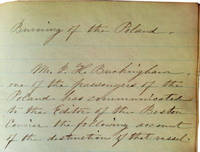
1840000234025 MILES SOUTH OF NANTUCKET SHOALS. Good. 1840. On offer is a sensational original 38 page manuscript account dated Boston 1840 of the ill-fated voyage of the packet ship 'Poland' which caught fire on May 16 en route from New York to Le Havre in France her passengers being rescued two days later by Captain J.B. Ingersoll with the Clifton. The narrator and survivor was Mr. J.H. Buckingham a descendent of Thomas Tinker one of the Pilgrim Fathers on the Mayflower his father being Hon. Joseph Tinker Buckingham 1771-1861 politician journalist and founder of the Boston Courier in 1824. J.H. Buckingham is also associated with the Boston Courier for many years serving his father's enterprise as editor publisher and reporter. Before this voyage he had just resigned as publisher of the Boston Courier in 1939 but would return as a reporter shortly thereafter. In July 1847 he made a stage-coach trip to Chicago and throughout Illinois as a delegate to the River and Harbor Convention and as a reporter for his father's paper accompanying none other than later President Abraham Lincoln. The actual writer appears to be Elizabeth Elise Russell Tyson daughter of George Tyson a railroad official and former merchant in the China trade and Sarah Anthony Tyson. She lived with her family at 314 Dartmouth Street in Boston and in 1915 married attorney and fox hunting aficionado George D. Vaughan. The detailed account of Poland's final voyage interrupted and ended by a lightning induced fire about 25 miles south of Nantucket Shoals leaves little to the imagination as Buckingham describes all: the beginning of the journey the devastating storm and subsequent fire to the cotton and flour in the cargo hold measures taken by crew and passengers for survival the struggles and the collaborative efforts the slowly passing and uncertain hours are recounted in detail until the final rescue. Luckily for historians and researchers the witness to these events was one of the few who remained on the vessel after most were placed on longboats. Not knowing if he would survive at all his observations are recalled in a calm stoic manner his recollections vivid and clear. We quote from the Sydney Gazette: "No language" says the writer of narrative. "can tell of the sufferings of that night which was far more dreadful than the previous night." After a variety of the most agonizing apprehensions and sufferings during which the mothers who had been compelled to hold their youngest children in their arms were well nigh exhausted the ship was put before the wind in the hope of falling in with some sail and as the vessel leaked the men were put to the pump and the water first pumped up was hot. At two o'clock on the afternoon of Monday a sail was discovered from the mast-head. It proved to be the Clifton Captain J. B. Ingersoll bound from Liverpool to New York with two hundred and fifty steerage passengers. The transfer of the crew and passengers of the Poland to the Clifton was effected. At the time the last boat's load left the former her decks had become too hot to stand upon and as she rolled in the sea the water ran from her reeking sides as from hot iron. On board the Clifton every attention was paid to these who had escaped such extreme danger and in due time they were landed safely in New York." Overall G. HISTORICAL NOTES: On 11 May 1840 she left New York with a total of 63 persons on board 24 being cabin passengers. On the 16th she was struck by lightning a disastrous event which resulted in a fire being sparked onboard creating a desperate situation which just in time ended in a rescue. On the 18th the Boston built 'Clifton' commanded by Captain J. B. Ingersoll bound from Liverpool to New York with two hundred and fifty steerage passengers came upon the Poland with her passengers sequestered to the vessel's bow. She took all persons onboard along with any salvageable provisions until the Captain deemed it unsafe to continue. At the time of the last load being removed Poland's decks had become too hot to stand upon. The deeply grateful group watched the Poland burned into the sea knowing that they had so narrowly escaped the same end. The loss of property to the Poland was estimated at $150000. The captain crew and all passengers were saved - within only hours of the ship's sinking. ; Manuscript; 8vo - over 7¾" - 9¾" tall; KEYWORDS: HISTORY OF ELISE R. TYSON BURNING OF THE POLAND LIGHTNING STRIKE AT SEA ATLANTIC COTTON TRADE DISASTER SURVIVOR ACCOUNT AMERICAN PACKET SHIP POLAND SHIPWRECK BOSTON MASSACHUSETTS CAPTAIN J.B. INGERSOLL SHIP CLIFTON J.H. BUCKINGHAM THOMAS TINKER PILGRIM FATHERS MAYFLOWER HON. JOSEPH TINKER BUCKINGHAM BOSTON COURIER ELIZABETH ELISE RUSSELL TYSON GEORGE TYSON GEORGE D. VAUGHAN MARINE NAUTICAL MERCHANT SHIP DANGER AT SEA ATLANTIC COTTON ROUTE AMERICANA HANDWRITTEN MANUSCRIPT AUTOGRAPHED AUTHORS DOCUMENT LETTER AUTOGRAPH KEEPSAKE WRITER HAND WRITTEN DOCUMENTS SIGNED LETTERS MANUSCRIPTS HISTORICAL HOLOGRAPH WRITERS AUTOGRAPHS PERSONAL MEMOIR MEMORIAL PERSONAL HISTORY ARCHIVE DIARY DIARIES JOURNAL LOG PRIMARY SOURCE FIRST HAND ACCOUNT SOCIAL HISTORY PERSONAL STORIES LIVING HISTORY ANTIQUITÉ CONTRAT VÉLIN DOCUMENT MANUSCRIT PAPIER ANTIKE BRIEF PERGAMENT DOKUMENT MANUSKRIPT PAPIER OGGETTO D'ANTIQUARIATO ATTO VELINA DOCUMENTO MANOSCRITTO CARTA ANTIGÜEDAD HECHO VITELA DOCUMENTO MANUSCRITO PAPELBIOGRAPHY BIOGRAPHICAL AUTOBIOGRAPHICAL AUTOBIOGRAPHY PERSONAL NARRATIVES . unknown
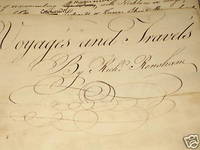
1796000897NNNMANCHESTER LANCASHIRE UK AFRICA EGYPT. Poor. 1796. On offer is the original handwritten manuscript "Voyages and Travels of Richard Renshaw" of the British Army's heralded Royal Regiment of Artillery Renshaw of the 4th Battalion. Some parts of this manuscript were later published as 'VOYAGE TO THE CAPE OF GOOD HOPE' in 1804. Renshaw retells in detail and with a keen observer's eye the story of his service for Great Britain. He is an educated man who writes insightful and sometimes rollicking accounts of his and the group's adventures. He describes everything he sees through Africa and into Egypt as part of Admiral Nelson's fleet and the ill-fated elderly Scot Lieutenant-General Sir Ralph Abercromby being part of "war reserved for the British nation to annihilate their Napoleon and the French ambitious designs their fleet was attacked defeated and destroyed in Aboukir " An absolutely incredible first hand account of this robust man's life. Whether dodging buffaloes doing a bit of amateur archaeology grave robbing! in Egypt and he does not hesitate to tell all in this very beaten up and we believe incomplete journal. We also suggest that Richard is writing the diary after the fact as he writes of the near past with near total recall and then seems to catch up to himself in around 1801. Here are snippets from the preface and other short quotes: "Voyages and Travels of Richard Renshaw Preface. As the following voyages and travels are now made public I think it is proper to lay before the reader a short acct of my life previous to my leaving England. I was born in ManChester in the County of Lancaster and chiefly educated there. My parents in the early part of my life were in affluent circumstances but in consequence of misfortunes in trade in he order of Divine providence they were visited with the bitter cup of adversity my mother being _____ of delicate feelings . Her constitution was not and terminated in her death. My Father knowing I had a natural inclination for the army taking frequent opportunities to lay before me the shocking numbers in the papers of those slain in previous engagements . I left my fathers house November 1795. I never had the happiness of seeing him after . Without seriously weighing the circumstance of so important a nature I enlisted in the 4th Battalion of the Royal Regiment of Artillery the consequence of this step was in the following pages will inform the reader. I embarked aboard the Crescent Frigate at Spithead on the 28th of February 1796 & sailed in company with the Sceptre sixty four and some few transports the 1st of March the wind being tolerable fair During my time in Africa we trained a Regiment of Hottentots I was attacked by a buffalo but owing to a small lake I escaped from him .On the 17th of August we disembarked the Island of Rhoda and joined Major General Baird On the 12th of December 1801 we marched on Alexandria . During my stay in Alexandria the plague was raging in an astonishing manner " Renshaw has made numerous deletions and corrections to the narrative manuscript for future publication. NOTE: Curiously there is one handwritten note upside down on a blank page titled "Cure for Love" which informs in a rather shaky aged hand a sad unhappy verse. The covers are detached but present the text block in pieces though the narrative is complete from beginning but there are most likely a page or two missing from the end given the way it stops. There is no loss given the narrative begins in 1796 and continues through 1802 over 150 pp or so. The author wrote on the recto pages and saved the verso for later notes clarifications etc. of which there are many. Truly a one of a kind historical diary of an important period of British Empire's glory.; English; 8vo - over 7¾" - 9¾" tall; KEYWORDS: HISTORY OF Cape Town South Africa Aboukir Bay Battle of the Nile 4th Battalion of the Royal Regiment of Artillery MILITARY MILITARIA BRITISH ARMY NAVY NAVAL SCOTLAND IRELAND AFRICA EGYPT NAPOLEONIC WARS NAPOLEON ADMIRAL NELSON ABERCROMBY ABERCROMBIE MANUSCRIPT DOCUMENT LETTER AUTOGRAPH DIARY JOURNAL LOG KEEPSAKE WRITER HAND WRITTEN DOCUMENTS SIGNED LETTERS MANUSCRIPTS HISTORICAL HOLOGRAPH WRITERS DIARIES JOURNALS LOGS AUTOGRAPHS PERSONAL MEMOIR MEMORIAL PERSONAL HISTORY antiquité contrat vélin document manuscrit papier Antike Brief Pergament Dokument Manuskript Papier oggetto d'antiquariato atto velina documento manoscritto carta antigüedad hecho vitela documento manuscrito Papel . unknown
197012230San Lazzaro di Savena BO: Privately Printed 1970. First Edition. Hardcover. Copy #763 of a non-commercial numbered edition. Signed and inscribed on the title page by Enzo Ferrari to the famous Italian actress Lina Volonghi in 1971. 249 18pp. Red cloth lettered in white on the spine panel. This is a new edition of the most famous title by Ferrari Le mie gioie terribili an autobiographical work in which he discusses his life and his cars with revised text different photographs and printed in a slightly different format. Profusely illustrated with b/w photographs. A fine copy in near fine dustjacket with just a hint of wear a faint spot to the verso and a very mildy faded spine panel. A really charming an indeed rare presentation copy. ; Quarto; 249 pages; Signed by Author. <br/><br/> Privately Printed hardcover books
19690001557PEOPLE'S REPUBLIC OF CHINA. Good. 1969. On offer is a super original late 1960s manuscript relic of Mao Zedong's Cultural Revolution and the cruel manipulation of the people as the politics of the times changed to the socialist agenda of the Great Proletarian Cultural Revolution. This document attests to the forced recanting of many former managers as evidenced by this document being a 38 page manuscript confession handwritten by a director of a local bureau during the revolution. This bureau or cadre manager like many others in China were called upon forcefully much of the time to expose and confess their so called crimes of anti-socialist revolution activity in the bureau they had worked in. This was unfortunately all too common during the Revolution and sometimes the results were fatal. This 19cm x 26cm 38 page document is comprised of papers held by paper clip with some small rusting to the clip and one page has a tape repair to the back. Overall G. HISTORICAL NOTE: As one online source succinctly sums up the times: "People's Republic of China from 1966 through 1976. Set into motion by Mao Zedong then Chairman of the Communist Party of China its stated goal was to enforce socialism in the country by removing capitalist traditional and cultural elements from Chinese society and impose Maoist orthodoxy within the Party. The most important yet naturally unstated reason for the revolution was the return of Mao Zedong to a position of political power after he lost most of his political influence after his failed Great leap forward."; Chinese Language; 4to - over 9¾" - 12" tall; KEYWORDS: HISTORY OF GREAT PROLETARIAN CULTURAL REVOLUTION CULTURAL REVOLUTION CONFESSIONS RECENT ANTI SOCIALIST ACTIVITIES ANTI CAPITALISM MAO ZEDONG MAO TSE TUNG GREAT LEAP FORWARD MAOIST SOCIALISM COMMUNISM COMMUNIST CHINE CHINESE SINO POLITICS JIANG QING GRASSROOTS SOCIALISM PROPAGANDA POST FIVE YEAR PLAN 5 YEAR PLAN GANG OF 4 GANG OF FOUR LIN BIAO BEIJING PENG LUO LU AND YANG ZHONGFA 267 INDOCTRINATION RED CHINA CHAIRMAN MAO MARXISM-LENINISM MAOISM LIN YURONG HANDWRITTEN MANUSCRIPT AMERICANA DOCUMENT LETTER AUTOGRAPH DIARY JOURNAL LOG KEEPSAKE WRITER HAND WRITTEN DOCUMENTS SIGNED LETTERS MANUSCRIPTS HISTORICAL HOLOGRAPH WRITERS DIARIES JOURNALS LOGS AUTOGRAPHS PERSONAL MEMOIR MEMORIAL PERSONAL HISTORY antiquité contrat vélin document manuscrit papier Antike Brief Pergament Dokument Manuskript Papier oggetto d'antiquariato atto velina documento manoscritto carta antigüedad hecho vitela documento manuscrito Liu ShaoQi . unknown
19100010311Maine Usa. Fair with no dust jacket. 1910-1914. Hardcover. On offer is the five-year diary of Dora J. Bradbury Pinkham 1891-1941 of Fort Kent Maine. Dora kept this diary while completing her undergraduate degree at Mount Holyoke College graduated 1913 and her Masters degree at Columbia University graduated 1914. Less than a decade after graduation she made political history and became a pioneer for women in politics in the state of Maine see BIO NOTES following the diary description. Doras entries throughout her post-secondary education show her to be devoted to Christ her music sport and expanding her mind. She attends lectures outside of school hours on a range of topics studies incessantly is an available friend and daughter and makes space for her passions for music and sport when possible. She seizes opportunities such as joining the college debate team. It is no wonder she made a political splash a few years later and changed the landscape of Main politics for generations of women to come. Everything Dora writes in her college years offers a window into the woman the Sun Journal would describe in 1923 when she entered the Maine legislature the following way: She has a cheery smile a laughing kind of voice can see a joke and is decidedly human in every way. At the tender age of 18 Dora was already keeping an eye on politics: A Democratic landslide. First Dem. Governor elected in 30 yrs when this Plaisteds father was governor Sept 13 1910 Dora is referring to the election of Governor Frederick William Plaisted whose father had been governor from 1881-1883. Election day - College vote. Wilson 43 Roosevelt 180 Taft 160 the results of the real election. Wilsons landslide! Took Jennie Lewis to the Senior-Freshman reception. Good time Nov 5 1912. She does a nice job describing student life at Mount Holyoke College. Her time there was focused on academics music rehearsals she played the banjo of all things and was in glee club and performances hockey and Christianity: Rev E. Paddock spoke in chapel on as your day is so shall your strength be. Hate to think I won't see him again for a year or maybe more. English Exam in A. M. .Not so bad. Studied Math in P. M. In little room D. H. Botany in eve. Postcard from Sadie Jan 31 1910. Mountain Day Miss Bridges invited all her advisees to breakfast the Holyoke ranges 23 peaks miles Took us over 3 Home at 4: 30 Oct 12 1910. Structure paper back. Favorable criticism for which I was wisely prepared by Miss Lester. Good understanding . Discrimination and rigor of thought . Mission committee meeting at nine. Was able to play hockey today Oct 13 1911. Dora completed her Masters of Arts at Columbia in only one year and she seems to be too busy to keep a diary for much of it. As her career at Columbia ends and her professional life begins she is sure to record it: Went to work! Everybody very nice to me. Lots of nice oldish men there wildly interesting young woman next to me Miss Miladolfsky. Went to work on lowly wages got so I could turn the crank quite some. Requires too much thought! May 11 1914. Studied an hour and a half and did exam all over now! Doing proof-reading in the office - very tiring May 21 1914 This diary is a gem. Through it we learn the roots of a brave bold and unique woman who chose to enter politics as a Republican in the early 20th century. Learning about the ambitious hardworking engaged young woman Dora was allows us a window into who she became. This diary is also a precious piece of history for those interested in the earlier days of Mount Holyoke College and Columbia University. DORA JULIA BRADBURY PINKHAM BIO NOTES: Dora J. Bradbury Pinkham was born in New Limerick Maine and raised in Fort Kent. She married Niles Pinkham a lumber industry executive in 1917. Following graduation she briefly taught at Madawaska Training School. A long-time member of the Republican State Committee she ran for state legislature and in 1922 she defeated two-term Democrat William J. Audiber. Pinkham was the first woman to win election to the Maines legislature. Remarkably Pinkham was not only a Republican but also a Yankee Protestant while her district was known to be overwhelmingly Democratic Franco American and Catholic Potholm 2011 p. 115. While she was a one-term member of the legislature she made an impact passing five of six bills she sponsored in the Maine House of Representatives. In 1926 her political star rose higher when she became one of the first two women ever elected to the Maine senate. Following her two terms in the Senate Pinkham served as special secretary to Maine Governor William Tudor Gardiner. She was very active in her community and the state serving as the local Chairman for the Red Cross. There is much information available on Dora Pinkham but this article from the Sun Journal helps the reader to know who Dora was as a person as well as a politician: https: //www.sunjournal.com/2023/01/22/when-dora-pinkham-took-office-as-maines-fir st-woman-lawmaker-a-century-ago-the-journal-predicted-a-lot-more-by-2023/ The diary measures 7.75 inches by 5.0 inches and contains 365 pages. The covers have separated from the spine. The pages are in good condition. Dora writes regularly in 1910 through 1912 her entries becoming more scarce in 1913 and she only writes in May of 2014. The diary is about 65% complete. The handwriting is legible. Overall Fair. ; 12mo 7" - 7½" tall; 365 pages; Signed by Author . hardcover
B113987s.l., s.d. [19th cy.] [6bl] + [740] + [14bl] pp., containing 242 biographies of the Great Councils members (each starting on top of the page with their coat of arms (pre-printed, 220 of them handcoloured), followed by 1 to 3 pages of text in French) and followed by a chronological and alphabetical list of the members, included is also a text of 9 pages: Translation du Grand Conseil à Namur à cause des troubles des Pays-Bas le 7 juin 1580, 40x27 cm., 19th cy. hardcover binding (spine in vellum, marbled boards, edges bit rubbed, small defect at lower end of spine), very neat and uniform handwriting, text and interior is clean and bright, no date mentioned but most probably dating from the first half of or mid 19th cy., well preserved and in good condition, [The Great Council of the Netherlands at Malines was the highest court in the Burgundian Netherlands. It was founded by Charles the Bold in 1473 and disbound after his death. It was re-erected in 1503 by Philip the Handsome in 1503 and its influence and importance grew till the Eighty Years War, after which its power declined and it was finally abolished during the French Revolution. The composition of the Great Council was quite stable throughout the period of its existence, and consisted of a chairman, 15 to 16 councillors, one procureur-general, one fiscal advocate, some secretaries and clercs, advocates and a Huissier de justice], weight: 4.3kg., B113987
19180002124THAMES NEW ZEALAND SALT LAKE CITY UTAH. Good. 1918. On offer is the super original 1918 manuscript diary and travel journal handwritten by a young 25 year old Mormon missionary named James Milton Olsen b. January 20 1893 who after three years of Christian outreach and preaching the Gospel of Mormon in Thames New Zealand to the Maoris the indigenous people of New Zealand returns to America. The son of Utah rancher George Theodore Olsen and Catherine Maria Edwards Olsen. He married Hazel Acord on March 5th 1919. Beginning April 15 1918 James' is at the end of his 3 year mission and heading back to the United States. The 43 page narrative begins with Elder Olsen in New Zealand spending his last weeks attending meetings saying goodbyes and packing for his trip home. He spends much of the time with the President of the New Zealand Missions Elder James N. Lambert. BIO NOTES: President Lambert: "Elder James N. Lambert former president of the New Zealand mission returned July 3rd 1920 after nearly 51 months of missionary work in that far-off land. While there he published in the Maori language the second edition of the Book of Mormon 3000 copies." 1920 Improvement Era official magazine of The Church of Jesus Christ of Latter-day Saints. Goodbyes said Elder Olsen boards a train for Auckland spends a few days there and then boards the SS Niagara for the trip home. Here are some snippets: "On board ship were the Premiers of Australia The Rt. Hon. Mr. Massy of New Zealand and to this Mr. Massy I had a letter of introduction. Then there were other big men such as Sir Joseph Ward one Prime Minister of N.Z. the Sect of the Navy of Australia and several French Generals. So we had a Whakahihi crowd." Sir Walter Massy-Greene major politician and entrepreneur; Joseph Ward 17th Prime Minister of New Zealand; George L. Macandie Australia's Secretary of the Navy. "April 17th 1918 .At 12 o'clock we ate dinner with Billman's and at 1 o'clock I had my photo taken with Howard Johnson. At 2 o'clock we called in at Parne Thorn's pawn shop and had a good conversation then caught the train and rode 12 miles to Omahu. Arriving there we walked 2 or 3 miles and met all the natives and latter all the elders rode in from Kerikeri. In the evening they gave us a lovely dinner and at 7 o'clock began the meeting. Elder Russon and I were called on to speak to give our farewell talk. Elder Mow interpreted for me. After we had finished the Maoris talked to us telling their sincere love for the Elder's and biding us goodbye. We went to bed late." "April 18th 1918. It was raining all day so we remained at Omahu until 4 o'clock. We played the phonograph read the Improvement Era and jumped until we were very stiff and sore. In the afternoon train time I had to bid them all goodbye. I rubbed noses with nearly 15 natives and I bid good luck to Elders Mow and Moody. We were driven to the train in a two wheeled cart by a native .I cleaned up and wrote up my diary preparing to meet Elder Wright who is supposed to arrive today by the 1 o'clock boat. His is taking my place. At one o'clock we walked to the boat and waiting until 1:30 for it to arrive at the wharf. Elder Wright came. We all strolled back to Sister Johnston's home. I gave him possession of the bed which I had been sleeping in for two years also the wardrobe which I had been in possession of. In the afternoon we visited the chapel. He found it to be much smaller than the one in Auckland. In fact it used to be the mayor's barn." "April 20 1918. I slept with Howard Johnston didn't get up until 7:30. Washed and wrote diary. Elder Wright and I caught the 9:30 train and took two boys to Kerikeri where I baptized them. The water was very cold so early in the morning but managed and the boys fared all right. There were several elders so it was a nice service. After that I went around to all the natives and rubbed noses with them all biding them farewell. One old lady gave me a kit Clara Watene's mother. We bought several pictures of the last conference from Bro. Spencer of Auckland then caught the train and rode back to Thames .In the evening Pres. Lambert came from Auckland. We were all happy to see him. He always brings a happy spirit. We ate dinner at Sister Johnston's. At 7:30 we held a good open air service. I did not assist in singing as my throat was too bad. I stood on the corner however. Elder's Mow Wright and the president talked ." "April 23rd 1918. I ate breakfast at Payne's then came home and destroyed all my letters with the exception of a very few. I also tied strings around all my books and prepared them for packing. In the afternoon Elder's Wright Stalling and I visited the hospital where I bid goodbye to Mrs. Rutallia whom I had been visiting for 2 years. The poor soul had lain there for over 14 years. From the hospital we went to the police station. Elder Moody was with us. I bid him goodbye also. He had been a very good companion and helpmate ." "April 24 1918. I ate breakfast at Royal's then came to the house and began packing up. If ever I had to plan it was then to get all my belongings in my suit cases and trunk then I had to give away many things. But finally everything was packed. I had one trunk weighing 200 lbs. 2 suitcases one hand bag and a roll of blankets ." He attends a social and then for the final time he meets many of his good friends and bids them goodbye and many of them give him gifts which he lists. Then he says "After the social it was with difficulty that I bid most of them goodbye." "April 25th 1918. Went to Monteque's Lemmee's and others bidding them goodbye then went to the station where several of the saints and friends were there to see me off. It was hard to say farewell as one never can tell when friends will meet again especially those of a foreign country. It was hardest of all to say goodbye to Bro. Payne as he had been my heartiest supporter. Elder Russon and I left at 9:30 Sister Payne Johnston and Wasene rode with us as far as Parekura then we bid them farewell. We rode on to Auckland getting there at 5 o'clock P.M. We had a cater take our things to headquarters costing us 2 shillings each. In the evening after a lovely supper we went in company with President and the Auckland Elders and the President's daughter Phyllis to a cottage meeting at Mrs. Trae Farland's. Four of us were called on to speak." "April 26th 1918. Went with the president and a number of elders to the American council's officer and obtained my permit to leave New Zealand. My companions Elder Gallacher and Pearson could not get theirs until later. After this I bought three towels costing me 5 S. then the president Elder Patrick and I tried to find the home of Sister Johnston a saint who does not know where to stay with us or join the reorganized church. We were unable to find her. Coming back to headquarters I wrote two letters one to Mr. Johnston of Thames and Toki Watene of Kopu. Then wrote up in my diary. In the afternoon President Lambert gave me two letters one to my father and one to Mr. Hardy a life insurance man recommending me to that business. After taking with the president Jack Monteque came to the mission home and he and I went downtown. We had a shave in Frank Monteque's shop ." "April 30th 1918. I packed my trunk and visited. I went to Mrs. Elizabeth Johnston's and while there I met two Elders of the Josephite Elders. They had been given our mission a very bad name. They are very prejudice against us. Their main subjects are blood atonement polygamy true succession to the President. They argued with me 4 hours. I held my own. In the afternoon I received letters and telegrams from the following ." He then lists many names "May 2nd 1918. He is sailing on the steamship "Niagara" We took our trunk and suit cases to the boat as we expected it to leave any moment. The custom officer examined a few of our things then we were able to take them on board. At noon I ate dinner at headquarters then at half-past 12 Elder Patrick and I visited the Hanby's. They treated us very kindly. They gave me several photos. In the afternoon I received my release a diploma which I had worked for for nearly 3 years. I was happy to get it " He again bids everyone goodbye but the boat was running late so they bid more people goodbye including Miss Hanby who was at the gate. He says "She was the last girl I said goodbye to in New Zealand. She is certainly one of the best girls I ever met in my life." "We went back to the ship and finally went to bed. The next morning we were out in the mid ocean. The passengers were all lovely. On board ship were the Premiers of Australia The Rt. Hon. Mr. Massy of New Zealand and to this Mr. Massy I had a letter of introduction. Then there were other big men such as Sir Joseph Ward one Prime Minister of N.Z. the Sect of the Navy of Australia and several French Generals. So we had a Whakahihi crowd. Our cabin was no. 124 and 72' 2" square. In there was a fan electric lights 3 beds a dresser a wardrobe a wash basin and cloths racks." "May 4th 1918. Was not feeling too well so remained in bed a few hours. Missed two meals. I played a game of tennis with two ladies and wireless operator. He was a splendid friend taking us over the boat and informing us to every move and movement. Saturday evening we sang and held a dance. We were even asked to join several times but didn't have the nerve to try." Then to Sura and off for a little while and have lemonade in the hotel. "May 6th 1918. If you will remember 3 years ago I mentioned in my diary that we went to bed on Tuesday and got up on Thursday losing a day. Tonight it is making up that day. We go to bed Monday night and get up on Monday morning. Had hotcakes for breakfast also egg omelet. Began reading "The Light of Western Skies" by Zane Grey. We played deck quotes and other games. Met the Sec. to Mr. Ward one prime minister of New Zealand. We held a concert at night." "May 7th 1918. It was very warm. Several persons were curious over our being "Mormons." We conversed with several over religion. I had my laundry done up. We couldn't get fresh water as it had been mixed by mistake with the salt water .The boat games were very interesting. There were many of the women who smoked. Some thought it strange that we wouldn't gamble ." "May 12th 1918. Hawaii We were in American waters at 8 o'clock. It was a happy day for us to see American flags flying all over. Our boat flew an American flag. The doctor came on board and examined all of us. There our passports were ____. Then at 2 o'clock we went ashore. I was one of the first off. We rented a motor car for 3 hours and rode over the island. It was one of the most beautiful places I had ever seen. We went to what is known as the Ecquarium Aquarium where you see several kinds of fish. They are of every color known. All kinds' sizes and colors. We also rode to Diamond Point Mountain. We rode to Waikiki Beach where we saw surf riding. After riding we visited the "Mormon Church." We met the secretary his wife and three elders. They were not very sociable. We ate a big dinner down town .At 5 o'clock we went back on the ship. There were hundreds of people to see us off. Many of the natives were selling flowers .The boat pulled out of Honolulu at 5:30. We went to bed early. Two new Elders came on board returning home." BACKGROUND NOTES: One online source: "Most Maoris had been converted to Protestant and Roman Catholic Christianity by the 1850s; but because they believed they had been cheated in land deals by the whites whom they called pakehas the Maoris made war on the pakehas. These wars lasted from the late 1850s until the 1870s. When the wars ended the time seemed to be right to take the restored gospel to this outstanding part of the Polynesian race. When William Bromley was called as New Zealand mission president in 1881 President Joseph F. Smith told him that the time was right to take the gospel to the Maoris. The first successes among them came in 1883 but once the Maoris and the Mormons got together Maori converts flocked into the Church. By the end of 1884 the missionaries had firmly established the restored gospel among the Maori people. The next several years were very satisfying to most of the elders and sister missionaries several couples were sent to New Zealand beginning in 1885. In August 1885 there were 16 Maori and 4 pakeha branches of the Church and this number continued to grow steadily for the next 15 years. At the close of 1887 there were 2573 Latter-day Saints and by the turn of the century there were nearly four thousand members of the Church in New Zealand. Most of the Maori tribes including large numbers in the north around Whangarei and the Bay of Islands had been introduced to the gospel. In 1901 there were 79 branches. Clearly since the early years in Hawaii the Church had not enjoyed so much success with a Polynesian people." The 5¼" x 8½" diary is written in a unique once rich looking red leather gilt stamped flip top style book that has a worn and torn red leather cover detached but accounted for with his name stamped in gold lettering. The book is hand numbered beginning at 313 to 358. We note that like all LDS Church diaries each page has a carbon copy. What is unusual and unique is that most other Mormon missionary diaries had carbons with one copy given to the church. It appears Elder Olsen kept his copies. Overall G.; Manuscript; 8vo - over 7¾" - 9¾" tall; KEYWORDS: HISTORY OF ELDER JAMES MILTON OLSEN NEW ZEALAND MISSIONARY UTAH MORMON CHURCH CHRISTIAN OUTREACH CONVERSION OF NATIVE PEOPLES ABORIGINALS AND RELIGION RELIGIOUS CONVERSION CHRISTIAN OUTREACH THEOLOGICAL MISSIONARY MISSIONARIES CHRISTIAN CHRISTIANITY MAORIS WWI WW1 POST WORLD WAR I THE CHURCH OF JESUS CHRIST OF LATTER-DAY SAINTS LDS CHURCH NEW ZEALAND MISSIONS ELDER JAMES N. LAMBERT PAKEHAS KIWI ANZAC PROSELYTIZING JOSEPHITE ELDERS AMERICANA HANDWRITTEN MANUSCRIPT AUTOGRAPHED AUTHORS DOCUMENT LETTER AUTOGRAPH KEEPSAKE WRITER HAND WRITTEN DOCUMENTS SIGNED LETTERS MANUSCRIPTS HISTORICAL HOLOGRAPH WRITERS AUTOGRAPHS PERSONAL MEMOIR MEMORIAL PERSONAL HISTORY ARCHIVE DIARY DIARIES JOURNAL LOG PRIMARY SOURCE FIRST HAND ACCOUNT SOCIAL HISTORY PERSONAL STORIES LIVING HISTORY ANTIQUITÉ CONTRAT VÉLIN DOCUMENT MANUSCRIT PAPIER ANTIKE BRIEF PERGAMENT DOKUMENT MANUSKRIPT PAPIER OGGETTO D'ANTIQUARIATO ATTO VELINA DOCUMENTO MANOSCRITTO CARTA ANTIGÜEDAD HECHO VITELA DOCUMENTO MANUSCRITO PAPEL . hardcover
18300001523MIDDLETOWNE NEW JERSEY MONMOUTH CTY NEW YORK CITY. Good. 1830. On offer is a fascinating massive archive of letters notes diaries and some ephemera of particular interest to researchers historians and collectors of mid 19th century New York City and New Jersey and religion of the day. The archive is made up of two 2 main components: 1 approximately 50 diaries and notebooks and 2 approximately 69 letters of inter-family correspondence dated from the 1830s through to the late 1870s they are mostly by and between three people; James Hoagland of Jersey City New Jersey; Lavinia Murray of NYC and her brother George C. Murray of Middletowne New Jersey. Lavinia is the main recipient receiving letters though some are in her hand from her brother George her cousin and one day husband James Hoagland her mother and father and some cousins and friends. The diaries are unusual and unique as the author George Crawford the books are unsigned but the handwriting is assuredly the same as George's letters to Lavinia kept 'double' books; one set of books are diary like entries describing his life and times travel and business dealings but also a real picture of New York City of the era as George was in love with the city and he seemed to have a number of real estate holdings perhaps he moved a lot that he wrote from many different addresses. He would delight in describing the color of the sun as it came up over a particular street or intersection. George also must have had a touch of obsessive compulsive behaviour as is evident in his writings. He is incredibly detailed and a keen observer. The other side of the diaries is his obsession with religion. He keeps a diary of his devotions the many different Churches he goes to the sermons and lectures heard the speakers . He expostulates in essay form and writes detailed descriptions of the sermons and sometimes point form notes. We have never seen anything quite like the breadth and depth of this man's writings. The books themselves are mostly coverless or perhaps handmade mostly 8 x 5.5 inches with a few smaller and a couple larger. Some are about 25 - 27 pages some a few pages and the odd one or two are triple thick but there are approximately 1000 pages from 1851 to 1881. Historians and researchers will find a treasure trove of Christian activity thought and devotion regarding New York City in this group. This archive was once held by Milton Wyatt of NYC a long time ephemera dealer in Greenwich Village NYC and was purchased from his estate. HISTORICAL NOTES from several online sources: 1 Murray George Crawford Ideal Citizen Legislator. The late George Crawford Murray of Middletown Monmouth County New Jersey was one of those men whose lives and characters are of inestimable value as exemplars of what worthy lives should be. His ambition was ever along the worthiest lines and his whole life was devoted to the highest and best ideals. His nature was of singular sweetness openness and sincerity. He had a profound knowledge of human nature and was ever thoughtful for the welfare of his fellow beings. His family which was of Scotch descent was resident in New Jersey from about the middle of the eighteenth century. 2 Lavinia Murray born December 17th 1818 died 1876 married August 26th 1847 James M. Hoagland a merchant of New York City whom she survived; resided in Jersey City and New York City; no issue. 3 James M. Hoagland Birth 13 Sep 1818 Father Nathan Hoagland 1778-1848 Mother Elizabeth Bird 1782-1847 Spouses 1 Lavinia Murray Birth about 1820. Overall G.; 8vo - over 7¾" - 9¾" tall; KEYWORDS: HISTORY OF GEORGE CRAWFORD MURRAY LAVINIA MURRAY JAMES M. HOAGLAND MIDDLETOWN MONMOUTH COUNTY NEW JERSEY MILTON WYATT CHRISTIANITY RELIGION ECCLESIASTICAL ECUMENICAL EPISCOPALIAN BAPTIST EPHEMERA HANDWRITTEN MANUSCRIPT DOCUMENT LETTER AUTOGRAPH DIARY JOURNAL LOG KEEPSAKE WRITER HAND WRITTEN DOCUMENTS SIGNED LETTERS MANUSCRIPTS HISTORICAL HOLOGRAPH WRITERS DIARIES JOURNALS LOGS AUTOGRAPHS PERSONAL MEMOIR MEMORIAL PERSONAL HISTORY TRAVEL 19TH CENTURY antiquité contrat vélin document manuscrit papier Antike Brief Pergament Dokument Manuskript Papier oggetto d'antiquariato atto velina documento manoscritto carta antigüedad hecho vitela documento manuscrito Papel . unknown
19440001459AUW NURNBURG GERMANY BALTIMORE MARYLAND MD. Good. 1944. Softcover. On offer is a riveting simply sensational original manuscript relic of World War II being a US Army Prisoner of War diary kept by Lieutenant David M. Woerner of Company A of the 81st Engineer Battalion. Lt. Woerner originally from Baltimore Maryland was initially captured on December 16 1944 in Auw Germany quickly escaped only to be recaptured on December 19 1944. He spent 136 days in captivity in the final chaotic days of the War in Europe. The diary is a gripping 71 page account of his initial imprisonment at Offizierlager XIII-B at the Kriegsgefangen in Hammelburg Germany and his forced march with his German captors to Nuremburg. It is a chilling first-hand account of German brutality deadly air raids terrible neglect and deprivation grisly scenes and casual breathtaking murder. He describes the conditions at the camp at Bad Orb notations for those KIA killed in action the wounded and those who escaped. The entries run from December 16 1944 to May 3 1945 with some undated entries at the end containing some not-so-kind words about the German civilians. Historians and researchers of prisoners of the German Army conditions for POWs will find a very intimate very detailed record of prisoner's horrible circumstances and the brutality of their keepers plus a great deal about the Serbian contingent that assisted the Nazis. Here are snippets: "Assigned to the detail of maintaining the 422 supply route. Our headquarters is near the Siegfried Line. German Artillery registered on my jeep at the first crossroad. We fought like wild-cats. Not an ordinary fight. It was for keeps. He or I. I wrenched his rifle to the ground and finished him with his own helmet. One by one the boys crawled through the blood and snow to safety - all but Schonova. I dragged him. AUW was butchered the next day. We were surrounded. We are always cold dirty and hungry and everyone is irritable. A cigarette butt could cause a riot. Among the real unselfish gentlemen are Col. Matthews Col. Nagle and Chaplain Neal. Others whined like babies. There was never any medical attention from the Germans. Illness often meant curtains. On one occasion a German beat Lt. Edwards with a spike bayonet at interrogation. We inform the Germans we are receiving 300 grams below a starvation diet The Red Cross representative says our diet is sufficient. At 10:22 A.M. a German guard shot and killed Lt. Werks outside of our barracks. It was a case of deliberate murder. A "kind" old lady and daughter warned me in GARS to be careful of the S.S. troops. All Germany fears them and I thought it fine of these nice people to warn us of their activities. Yet a picture of the old lady's son found by a tank crewman revealed an S.S. trooper." Some general soiling and chipping to the paper cover but overall G.; 7 x 5 OBLONG; KEYWORDS: POW PRISONERS OF WAR SIEGFRIED LINE OFFIZIERLAGER XIII-B KRIEGSGEFANGEN WOERNER AUW 81ST ENGINEER BATTALION SIGNED PERSONAL MEMOIR WORLD WAR II WW II HANDWRITTEN AMERICANA AEF AUTOGRAPH AUTOGRAPHS SIGNED LETTERS DOCUMENT DOCUMENTS MANUSCRIPT MANUSCRIPTS WRITERS WRITER AUTHOR HOLOGRAPH PERSONAL AUTHOR SELF PUBLISHED CONCENTRATION CAMPS ESCAPE ATTEMPTS STALAG GERMANY POLAND FORCED LABOR ANTIQUITÉ CONTRAT VÉLIN DOCUMENT MANUSCRIT PAPIER ANTIKE BRIEF PERGAMENT DOKUMENT MANUSKRIPT PAPIER OGGETTO D'ANTIQUARIATO ATTO VELINA DOCUMENTO MANOSCRITTO CARTA ANTIGÜEDAD HECHO VITELA DOCUMENTO MANUSCRITO PAPEL HANDSCHRIFT HANDGESCHRIEBEN MANUSKRIPT SÜTTERLIN VON HAND GESCHRIEBEN HANDSCHRIFTLICH UNIKAT EINZELSTÜCK DOKUMENT SCHRIFTSTÜCK KURRENT KURRENTSCHRIFT DEUTSCHE SCHREIBSCHRIFT OSTPREUßEN KALININGRAD ADEL . paperback
1888000093Hamilton Ontario/Montreal Quebec. Very Good. 1888. Remarkable archive of 58 handwritten manuscript diaries covering 1888 - 1944 1922 includes a travel diary authored by Private James R. Adams of the famed red-coated 13th Battalion of Infantry Hamilton Ontario Canada. Beginning in 1888 age 25 James does more than detail his adult life on paper he actually writes a history of the Canadian textile industry and the Ontario Cotton Mills Company a name that changed a number of times and eventually to the Canadian Colored Cotton Mills company a Hamilton based company that gained fame on a number of fronts. Biographic notes on the company at the end of the listing. The first diary begins with only the odd financial and business note. It actually takes James a couple of years 3 or 4 before he begins to use the diaries more fully beyond business appointments prices of commodities contacts made and the odd news item. As he ages he does more and writes more but he does not make it easy as he uses shorthand frequently. Most of what you learn about James is obliquely but what James does amazingly is capture the history of the textile industry in Canada. There are copious notes throughout that we are sure that for someone with knowledge of the industry terms and sizes and such could dig out a mass of historical information through this lot. We also noted that even in the 19th century diaries James worked with large numbers. He had an important job and we assume he was successful enough that he was sent to help open up the Montreal office in 1894 as evidenced by the change to his address the particulars area. Beyond the business writings there are his personal finances and family matters. In one diary we found a genealogy area but all intials and we only realized the value of the notes by the description 'Mater' and 'Pater'. A fascinating voyage of discovery awaits the new owner of this sensational historic record of one man's life and business career. BIOGRAPHICAL NOTES: The Ontario Cotton Mills Company was established in 1881 in Hamilton Ontario by a group of men including William Hendrie Sr. Edward and Charles Gurney and C.B. Snow. The name was changed the same year to the Ontario Cotton Manufacturing Company O.C.M. and production began in 1882. The factory covered almost the entire block bounded by James Simcoe MacNab and Ferrie Streets except for a hotel on the west side of the property. The company manufactured such cotton products as denims shoe linings flour bags and carpet yarns under the brand name "Kingcot". By 1886 the mill's 400 employees mostly women and girls were producing 2.5 million yards - over 14000 miles - of cloth per year. However two years later the company "met with a financial reverse" according to the Hamilton Spectator and was purchased by a Hamilton syndicate of businessmen comprising mostly the same businessmen who established the O.C.M. in 1881. In 1892 it was reorganized again as the Ontario Cottons O.C. subsidiary of the Canadian Colored Cotton Mills Company Limited C.C.C. headquartered in Montreal Quebec. C.C.C. controlled about a dozen mills throughout the Dominion including three in Cornwall Ontario and three in New Brunswick. The company was also noted in 1898 as being the first company in Hamilton to switch from steam power to hydroelectric power.; Manuscript; HAMILTON HANDWRITTEN MANUSCRIPT DOCUMENT LETTER AUTOGRAPH DIARY JOURNAL LOG KEEPSAKE WRITER HAND WRITTEN DOCUMENTS SIGNED LETTERS MANUSCRIPTS HISTORICAL HOLOGRAPH WRITERS DIARIES JOURNALS LOGS AUTOGRAPHS PERSONAL MEMOIR MEMORIAL PERSONAL HISTORY CANADIANA Canada Fenians Royal Blackwatch World War I Word War II WWI WWII Clothing Industry Spinning Yarn Looms Montreal Hamilton Textile Textiles Quebec Ontario Canada . hardcover
19750001646BAO DING CHINA PRC. Very Good. 1975. On offer is an exceptional historically significant manuscript relic of Mao Zedong's Cultural Revolution being a diary handwritten by Xi Tao Fang started during his enlistment in the People's Liberation Army from 1975 to 1978. Xi Tao records and details his life in the military camp impressions of the army and the strong encouragement by others: from his recruitment officer to the guards that he should "learn from Comrade Lei Feng" a person characterized and praised by Mao as selfless and modest who was devoted to the Communist Party. The slogan was often used in nationwide propaganda. The People's Liberation Army decided to grant him a probationary membership to the Communist Party. After three years he agreed to become discharged and return to the place where he grew up named Bao Ding and was assigned to work at the local petroleum plant. He comments on the positive impacts of the years in the army-strenuous requirements both physical and psychological that have prepared him well for this position. Due to his exceptional performance at this position he became formally recognized as a member of the Communist Party. In all there more than 200 pages 10cm x 15cm and complete. Overall VG. ; Chinese Language; 24mo - over 5" - 5¾" tall; KEYWORDS: HISTORY OF XI TAO FANG GREAT PROLETARIAN CULTURAL REVOLUTION CULTURAL REVOLUTION CONFESSIONS RECENT ANTI SOCIALIST ACTIVITIES ANTI CAPITALISM MAO ZEDONG MAO TSE TUNG GREAT LEAP FORWARD MAOIST SOCIALISM COMMUNISM MOVEMENT OF SUPPRESSING COUNTER-REVOLUTIONARIES MIAO ZI YU COMMUNIST CHINE CHINESE SINO POLITICS JIANG QING GRASSROOTS SOCIALISM PROPAGANDA POST FIVE YEAR PLAN 5 YEAR PLAN GANG OF 4 GANG OF FOUR LIN BIAO BEIJING PENG LUO LU AND YANG ZHONGFA 267 INDOCTRINATION RED CHINA CHAIRMAN MAO MARXISM-LENINISM CHINA MAOISM LIN YURONG HANDWRITTEN MANUSCRIPT DOCUMENT LETTER AUTOGRAPH DIARY JOURNAL LOG KEEPSAKE WRITER HAND WRITTEN DOCUMENTS SIGNED LETTERS MANUSCRIPTS HISTORICAL HOLOGRAPH WRITERS DIARIES JOURNALS LOGS AUTOGRAPHS PERSONAL MEMOIR MEMORIAL PERSONAL HISTORY antiquité contrat vélin document manuscrit papier Antike Brief Pergament Dokument Manuskript Papier oggetto d'antiquariato atto velina documento manoscritto carta antigüedad hecho vitela documento manuscrito . unknown
19440009006Hurtgen Forest Germany Belgium Western Front. Good. 1944. On offer is an exceptional and fascinating handwritten diary of Anthony Pasternak a private in the 387th Anti-Aircraft Artillery Battalion Battery A recording action in one of the deadliest and lengthiest battles of World War Two the "Battle of Hurtgen Forest". Hurtgen Forest was a series of fierce battles that were fought from September 19 1944 to February 10 1945 between American and German forces on the Western Front. It was the longest battle on German ground during WWII and went down in history as the longest single battle the U.S. Army has ever fought. Pasternak's anti-aircraft battalion was attached to the 47th Armored Field Artillery Battalion for the duration of the war. This diary presents an extraordinary account of what it was like to be a soldier on the ground during this pivotal and bloody battle. The diary begins with 16 pages of names and addresses of friends from the war friends at home those he met in England and in Paris. There is also an address for his "Special Girl" and "Sweetheart" Stella Dobazynski who also lived on Medill Avenue in Chicago and whom he seems to have married since there is a note "Anthony Pasternak and Stephanie Dobzynski - married in Chicago January 8 1946." There is also one address entitled "My sweetheart! Miss Stella Dobazynski". After the addresses end the diary entries begin. The first entry is a quick summary of the points up to the battle: "Left U.S.A. Feb. 9 1944. Arrived in England on February the 25th 1944; Left England July 23rd 1944; Arrived in France July 25 1944; Went into action August the 1st 1944; Lost two M-7s. August the 10th 1944; Left France Sept. 9 1944; Arrived in Belgium September the 9th 1944;" After this quick list the diary entries expand in length and detail. "September the 9th 1944 - Time 9:30A.M. Went Through Gay Paree! August 30th 1944. Better known as Paris! Ha! Whee! What a time we boys had Cognac! - Wine and Beautiful Women! Ha! Went through Luxemburg September the 10th 1944. Luxemburg is right on the border line of Germany. Fired our first round into Germany Sep. 13. 1944 Time - 5:15 P.M. We are exactly 3 miles away from German soil." For a couple months Pasternak's company is not in battle. He does not specify why. On the fourth page of the diary Pasternak finally enters battle: "November the 2nd 1944. Finally have entered Germany Boy! What a reception those Jerry's gave us. Dog fights and what not. Whee!"; "Nov. 30. 1944. Well here we are in Hurtgen Germany. Believe me it's plenty hot over here we happen to be The Front Line Artillery and the Jerry's are sure throwing plenty of artillery at us. Boy's out here in fact it's to close for comfort. Ha!"; "Dec. 2. 1944. Well! Here we are still in the Hurtgen Forest saw one of our P47's shot down today. The pilot bailed out in enemy territory." Pasternak keeps an intriguing attitude to the war he is fighting in possibly a way to deal with horror of it all. If the death and destruction around him is affecting him he does not put it in writing. "Dec. 3. 1944. I and two other fellows helped bury a dead Jerry about 20 Jerry planes came over today and really strafed our positions. Our Ack Ack Boy's got 7 of the Jerry planes. These Jerry planes have been strafeing us for at least 30 minutes if not more. There sure are plenty of Dead Jerry's here in this Hurtgen Forest also a few dead American." He also mentions shooting down two British planes by accident. The dog fights in the sky are of particular interest to Pasternak: "Dec. 18. 1944. Boy! Talk about planes flying around here today. Whee! All kinds American P47's P51's P38's British Spitfires Hurricane's and Typhoon's. Sure have seen some good dog fights out here today.One of those Jerry plane's went down in Flame's." On December 23 after 23 days of "some good fighting" Pasternak leaves back to Belgium. "Dec. 25. 1944. Christmas Day back in Belgium once again! Went to church today the mass was in French also had plenty of turkey for Christmas also have seen a lot of good dog fights out here." This part of his diary covers 11 pages each numbered at the top. There are a few additional pages with handwritten entries of money owed him from card games etc. Anthony Pasternak has written his name and address on the first page "Tony Pasternak 2313 Medill Ave. Chicago Illinois". There is the address of Joe Pasternak c/o M-G-M Studio's Culver City California who was a big producer of movies in Hollywood at that time and who quite possibly may have been a relative of Tony. This diary is somewhat delicate. A number of the pages from the address section are loose but still present. The handwriting is in all capitals and exceedingly easy to comprehend.; Manuscript; 12mo - over 6¾" - 7¾" tall; KEYWORDS: HISTORY OF ANTHONY PASTERNAK BATTLE OF HURTGEN FOREST WESTERN FRONT OF WORLD WAR TWO AMERICAN INVASION OF EUROPE LONGEST BATTLE IN U.S. HISTORY 387TH ANTI-AIRCRAFT ARTILLERY BATTALION 47TH ARMORED FIELD ARTILLERY BATTALION U.S. FIRST ARMY OPERATION QUEEN US SOLDIERS IN WORLD WAR II EUROPEAN THEATER SCHLACHT IM HÜRTGENWALD OMAR BRADLEY COURTNEY HODGES WALTER MODEL AMERICANA HANDWRITTEN MANUSCRIPT DOCUMENT LETTER AUTOGRAPH WRITER HAND WRITTEN DOCUMENTS SIGNED LETTERS MANUSCRIPTS HISTORICAL HOLOGRAPH WRITERS AUTOGRAPHS PERSONAL MEMOIR MEMORIAL AMERICANA ANTIQUITÉ CONTRAT VÉLIN DOCUMENT MANUSCRIT PAPIER ANTIKE BRIEF PERGAMENT DOKUMENT MANUSKRIPT PAPIER OGGETTO D'ANTIQUARIATO ATTO VELINA DOCUMENTO MANOSCRITTO CARTA ANTIGÜEDAD HECHO VITELA DOCUMENTO MANUSCRITO PAPEL . unknown