109 124 résultats
1866000765Indianpolis Indiana Marion County IN. Good. 1866. On offer is the super 1866 handwritten manuscript diary of Kate Wood French of Indianapolis Indiana in Marion County immediately following the Civil War and in the thick of the Reconstruction Era. Kate is ideally placed to comment on the times as she is married to her adored husband Charlie a successful executive in an oil and mining firm and mother to their daughter "May" who was the love of her life. She married Charlie on May 28 1863 and their daughter was born on May 30 1865. Charlie was the Vice President of "International National Petroleum Mining Company" and they seemed to be quite well off financially. Here are snippets: " . We have entered upon another year. This year we have a dear little Babe to brighten our days. I a mother and Charlie a father Sweet names they are indeed to us . This evening after supper I went up home to sit awhile with pa. He is very sick tonight. We feel almost afraid to hope . Sad day for us all. This morning at 6 oclock dear Father breathed his last. The patient sufferer has gone to dwell evermore with his Saviour. Lent for us 2 oclock this morning. Pa's mind was clear to the very last. He spoke to and knew us all. His suffering was intense but he is now at rest will know no more pain or suffering but will live where all is happiness through eternity . How lonely we have all felt today and particularly poor mother but Charlie and I took the baby and spent the afternoon with mother as all of the friends have left. Can it be we will never hear his kind voice anymore nor see his pleasant smile. Ah! It is true . Charlie and I went to church this morning it did not seem possible that I should go to church and not see my kind Father on the steps to meet us as he always was but he was not there. We can not see his kind face there any more. Oh can it be true Dear Savior in pity look upon us . A lovely day but so very muddy that it is almost out of the question for ladies to go out . Mother and the boys spent afternoon and staid for supper we always talk of dear Father who has gone never to return. I cannot yet realize that Pa will not come here anymore . We should always make it a rule to get up early Monday morning for that is "washday" and an early start to work ought always to be had . A lovely day. This afternoon I got ready and commenced to walk down street but as luck would have it the kindest husband coming for me we took a delightful ride we did not get back till five . So cold and windy that the men have not been down street but have had a pleasant day reading and talking in the parlor. In the afternoon they walked over to the Arsenal this evening Bryon has been telling us of his imprisonment in "Andersonville Prison" . I got up early and went shopping wih mother. We did not get back till 3 oclock then I found Charlie waiting to take May and I riding. We went and had a nice ride all enjoyed it. Charlie has had workmen out fixing the pipes to the bathroom . My girl ironed the clothes today and then went up to mothers for some milk. Dr Thompson was here again this afternoon to vaccinate May as the first did not take. Charlie is delighted - is offered $350.00 for Fancy. After supper took a nice ride . Well today we have had our little pet Christened - May Wood French. It is a sweet name. There were three others besides ours. May acted so like a little lady that we were all delighted with her . This evening after supper we took a delightful ride in our little "Central Park Carriage" and so Baby "May" rode in it for the first time . After dinner we dressed May up so sweet and called at Mrs Smiths and Halb. Everyone who sees little Baby May on the street admires her a great deal . This afternoon the man put down our carpet a beautiful "tapestry brussels" in our bedroom. It is so pretty. Now we are going to have the furniture varnished and then it will be nice . We got up pretty early this morning as we had a considerable to do before we could start. I finished packing our trunk and Charlie went for a carriage. We started at 12 oclock we got into Lafayette at 4 pm. Stopped at Lahr House.We have all had enough of Delphi already so I think or rather hope we shall start back tomorrow - I went up to see Aunt Delia this afternoon. The rememberance of Dear Pa filled her mind and was too much for words he having been there so lately . Our darling little girl is one year old today and yet it seems but a few weeks since she was brought into existance. I did intend going down street and getting her a birthday present but Charlie brought her a beautiful doll as large almost as herself . Charlie came home early telling me that next Monday he and Capt. Smith would start for "Canada Oil Wells" its too bad but then it can't be helped . This beats us for what should Charlie do but have a chill and he was feeling extremely well. I can not imagine what caused it . Charlie feeling better but thinks he will not eat much so as to starve the chills . Charlie went down street this morning and brought home "Morgan" the handsomest horse with the exception of "Beauty" I ever saw. Then after supper C May and I took a nice ride in little Pheaton the entire rig the attraction of all . Charlie received word today that "Oil is struck" hurray for us . Oh! How our hearts ached this morning. May was very sick we were up from 2 1/2 till day-light but now we are happier for she is better . Charlie came home early and I had May dressed so sweetly so while supper was getting ready we took May and rode down street. The "observed of observers" why Because Baby May held the reins of fiery Morgan just as if she drove him . In the evening Charlie and I went to the "Opera" we are not partial to operatic singing but we went more to see the new Hall and people . My new girl came early this morning and Melia whom I have had working for me a year next month left for her home on the noon train. She has been an excellent girl and I thought a great deal of her . I have felt in rather a strange mood today been wondering if anyone loves me or not. I believe precious little May does. I know I had a Father who has gone to that bright shore loved me. I know he did. I am sometimes afraid that I am not a very lovable person. Well I don't know what to do to make myself any other way . Somehow or other today has been dreary enough for me and then too I feel in sort of wretched state and wonder either taking into consideration the peculiar feelings I have. God to Thee I look for strength to bear my pains and sufferings ." Larger format journal 6 1/2" x 8" 311 handwritten entries there are some dried rose pedals in-between some pages pasted on back pages are some newspaper clippings for home remedies and cures; Pickled Tomatoes Pickled Cauliflower Gerken Pickles Chili Sauce etc. Genealogical record of births & deaths of babies are recorded by grownup May who wrote that she had a "darling baby born Sunday August 30 1896 at a quarter past three oclock in the afternoon and was taken from us Friday Sept 4th was not named - May Black" and there are a number of others. The rough covers are detached but present. ; Manuscript; 8vo - over 7¾" - 9¾" tall; HANDWRITTEN MANUSCRIPT DOCUMENT LETTER AUTOGRAPH KEEPSAKE WRITER HAND WRITTEN DOCUMENTS SIGNED LETTERS MANUSCRIPTS HISTORICAL HOLOGRAPH WRITERS AUTOGRAPHS PERSONAL MEMOIR MEMORIAL PERSONAL HISTORY AMERICANA ALS ARCHIVE DIARY DIARIES CIVIL WAR ERA WAR BETWEEN THE STATES CONFEDERACY CONFEDERATE INDIANA INDIANAPOLIS MARION OIL INDUSTRY ANTIQUITÉ CONTRAT VÉLIN MANUSCRIT PAPIER ANTIKE BRIEF PERGAMENT DOKUMENT . hardcover
19700009152REPUBLIC OF SOUTH VIETNAM. Good. 1970. On offer is a particularly interesting document of the War in Vietnam and the history of Vietnam in general a notebook written by a soldier in the South Vietnamese army in 1971 the very heart of the war. The notebook itself is printed in French but all the content within the book is in Vietnamese. The author T. H. fought for the Republic of Vietnam also known as South Vietnam. The book contains roughly 380 pages with about 50 or so pages of writing. There are also about 30 loose pages as well dated but not with the year as well as a two page letter from the author and numerous pieces of ephemera. Most notably the ephemera provides interesting context to the author in question. There are 10 photographs of the author in his uniform including a few that look quite official. Included in the ephemera are also a Subud member card of the authors father. Subud is an international spiritual movement that began in Indonesia in the 1920s. The authors fathers name is L.F.M. Hardjono. Also included in the ephemera are a printed New Year card from Nguyn-Van-Chiu a Vietnamese martial arts master with whom the author may have studied and a 2 page typed letter from Cao Van Vin the Chief of Staff of the Armed Forces of the Republic of Vietnam giving encouragement to his soldiers. For anyone interested in the War in Vietnam as fought by those on the Americans side fighting against the North Vietnamese this would be a fascinating diary to possess and read through. As stated before the entire diary is in Vietnamese. The book is in good condition. It was produced by Laboratoires Duyet a pharmaceutical company and therefore there are numerous French-language advertisements throughout the book for pills and medicines. The covers show some aesthetic wear but the binding is still tight. The pages within have some age-toning but never enough to affect the legibility of the content. The authors handwriting can be cramped but will undoubtedly be easier to read for someone with knowledge of the Vietnamese language. OVERALL: G; Manuscript; 8vo - over 7¾" - 9¾" tall; KEYWORDS: HISTORY OF WAR IN VIETNAM REPUBLIC OF VIETNAM SOUTH VIETNAM ARMY OF THE REPUBLIC OF VIETNAM ARVN VIETNAMESE SOLDIERS IN THE VIETNAM WAR SECOND INDOCHINA WAR NGUYN-VAN-CHIU L.F.M. HARDJONO T. HARDJONO CAO VAN VIÊN CHIEF OF THE ARMED FORCES OF THE REPUBLIC OF VIETNAM VIETNAMESE LANGUAGE DIARY LABORATORIES DUYET 1970S COLD WAR CONFLICT AMERICAN PROXY WARS HANDWRITTEN MANUSCRIPT DOCUMENT LETTER AUTOGRAPH WRITER HAND WRITTEN DOCUMENTS SIGNED LETTERS MANUSCRIPTS HISTORICAL HOLOGRAPH KEEPSAKE WRITERS AUTOGRAPHS PERSONAL MEMOIR MEMORIAL ARCHIVE DIARY DIARIES JOURNAL LOG ANTIQUITÉ CONTRAT VÉLIN DOCUMENT MANUSCRIT PAPIER ANTIKE BRIEF PERGAMENT DOKUMENT MANUSKRIPT PAPIER OGGETTO DANTIQUARIATO ATTO VELINA DOCUMENTO MANUSCRITTO CARTA ANTIGÜEDAD HECHO VITELA DOCUMENTO MANUSCRITO PAPEL . unknown
0012284Wellesley Massachusetts Mass MA. Fair with no dust jacket. Softcover. On offer is the diary of a woman ahead of her time who spent her life in academia advocating for womens education through her roles as professor of Greek and later Dean of Residence at Wellesley College. Edith Souther Tufts 1862-1935 was born in Dover New Hampshire to Dr. Charles Augustus Tufts 1821-1899 and Anne Blanchard Souther 1827-1907. Dr. Tufts was well-known in Dover as a pharmacist physician councilman alderman town clerk associate judge and senator. He ran the family apothecary shop which had been opened by his father Asa Alfred Tufts in 1815 and was one of the oldest apothecary shops in the country. Edith completed a five-year B. A. In Music from Wellesley College in 1885 a M. A. From Yale in 1895 and was granted an honorary Doctor of Laws degree from the University of New Hampshire in 1927. She taught Greek at Wellesley College and then at the Norwich Free Academy. In 1902 she returned to Wellesley where she remained for the duration of her career. Tufts was named Dean of Residence at Wellesley in 1919 and held that position until her retirement in 1930. She was a trustee of the University of New Hampshire. She passed away suddenly while attending a Wellesley class of 1884 reunion. At the time of her death Tufts was staying at the Presidents House with her dear lifelong friend and Wellesley president Ellen Fitz Pendleton 1864-1936. Edith writes of Pendleton regularly referring to her mostly as E. F. P. in her diary. While Tufts was never married and had no children she clearly had extremely fulfilling and loving female friendships. Ediths diary is rich with details of her working life social life and summer travel and activities such as the trip to Europe in Summer 1924 which involved Pendleton. Though she is 62-years-old when she begins her diary Edith is an incredibly busy and sought-after academic balancing her work as professor and dean with her speaking engagements and event commitments. She also notes the goings-on of other faculty members and administrators. While Tufts is a successful and well-respected professional she remains humble. For example she was granted an honorary Doctor of Laws degree from University of New Hampshire on June 20 1927. Her diary entry for the day makes it seem like she simply took an unremarkable day trip back home: Drove by motor for Durham at 7am. Lake Minnie to Dover and bring Sandy and Marion back. Meet J. A. T and G. Sawyer. Interesting exercise. Address by C. R. Browne Charles Reynolds Browne Dean of the Yale Divinity School. Lunch with J. A. T and E. C. S. Reach Wellesley in time for dinner June 20 1927. Ediths writing varies by day. Some days she writes detailed newsy entries some days she skips altogether and some days she makes cursory notes with only the highlights. Most days she is engaging in activities connected to Wellesleys academics recruitment or housing and building operations. Some excerpts give the flavour of her writing: .Take train to Leamington. Change at Stratford. Reach L. Between 5 to 6. E. F. P. Already there. ABM arrives shortly Room with E. F. P. Aug 51924. Village after breakfast to talk about room for French instructors. Office hours. Call from Pauline Hayes. Keep her to lunch with group of contemporary alumnae. Call at Calflin. Busy afternoon. Evening in rooms Sept 17 1924. Lunch for Wellesley Teachers Association. 730 Sophomore Prom Nov 15 1924. Speak in N. Y. At school for Ethical Culture. Entertained at dinner by Mrs. Weinberg Feb 9 1925. Note: The Brooklyn Eagle reported on Tufts speech to the Manhattan PTA of the Ethical Culture School. She stated that college girls have an exaggerated sense of individuality and the lack of a true sense of community responsibility . Tea for parents at Presidents House. Appointment for freshmen in evening at Billings Hall. E. F. P. And E. Smith make excellent speeches. Conference about registration slips. Belle Wardwell Mary Fraser Smith Effie Jane Buell . Sept 22 1925. First chapel. Good representation of faculty. E. F. P. Speaks well. Florence Carpenter sings new Wellesley song. Reception on Guest House lawn. Cool but lovely. Priscilla Cooper married in Chapel Sept 26 1925. Appt. With Dr. Keen re swollen ankle. Nothing much amiss. Advised stern reducing. Home dinner March 17 1926. Anne leaves at 7.56. Office as usual. Thorough inspection of Severance Hall w. E. F. P Mr. Wendell Howard Kayser and Mr. Ellery K. Taylor of Day & Klauder. Mary F. Sime. Comes in time for dinner. E. F. P. Goes to own house Aug 30 1926. Tom Griffin goes to Westport Point for Miss Kendall and brings her to Hallowell House. K. Hall drives back with her and spends night. Art Dept. At lunch with B. Straight. Lovely drive for autumn colouring with Charlotte G. Oct 7 1926. Conference with E. F. P. And Mr. K. Do village plan for next year. Work out figures. Mary comes back from Philadelphia Nov 15 1926. Call on Dr. P. D. White after 9 mos. Makes good report. Advises loss of 10 lbs by Xmas. Meet Anna Morse H. And her son Sept 14 1927. 1st communion Sunday. Good congregation but rather small number remain. E. F. P. Leaves in early afternoon for Oberlin. Dr. Calkins at dinner Oct 23 1927. Lunch at Washington House. Mrs. Harriet C Woodwards funeral manager of College Lodging House at Village Church. Tea dance at Lower Courts. Dinner for Liffy Tiffy . E. F. P Gamble C. W. E Walker M. B. J Nov 26 1927. E. F. P mentions fire anniversary at Chapel. Various office-hour callers. Etta Newell at lunch. Tells me of the desertion of Miriams husband. Call from A. Adele Lathrop re her new position in N. Y. Play at Wood Gut the Hero March 17 1928. Freshman blanks in a. M. Boston w E. F. P. Mr Wilford Priest Hooper drives us in. Lunch with A. B. H. At College Club. Few errands. Hot supper w E. F. P. Conference w rooms. Thunder shower Aug 3 1928. Freshman come. Unusually quiet day for first. Few snarls. All but four on list accounted for at ten o clock. Mr. And Mrs. Hodges and sister at lunch. Mr. Hodges spends the night at J. C. Sept 17 1928. Mr. Arbuckle preacher. E. F. P. Invites Lida K. And me to dinner w Miss Chapin. Alarm of fire at Eliot Hall shortly after two. Apparently from chimney. Hole burned in roof but no serious damage. Thankful! Oct 7 1928. The 1920s were a time of great change for American women. The decade opened with women winning the right to vote and womens voices were becoming stronger. More women began entering postsecondary institutions and finding their places in the workforce. Tufts and her Wellesley contemporaries were many steps ahead having held advanced degrees and leadership positions in higher education for years. Tufts diary is an exceptional document for those interested in the history of Wellesley College the role and experience of American women in the 1920s women in leadership roles and the leadership faculty and students of Wellesley College between 1924-1928. The diary measures 6.75x4 inches. It is a 5-year diary containing 365 pages plus memoranda. Edith has filled approximately 70% of the diary. While her periods of consistent writing and breaks are sporadic she seems to forget to write for most of December each year. The diary covers shows signs of age and are faded and chipping. The spine is in-tact but loose. All pages are present and attached. The writing is in pencil and is very legible though Tufts handwriting is sometimes rushed and challenging to interpret. Overall the diary is Fair to Good. ; Manuscripts; 16mo 6" - 7" tall; 365 pages . paperback
19450012246Roorke India Italy England Europe. Good with no dust jacket. 1945. Hardcover. On offer is an outstanding journal of an officer who was part of the spring 1945 offensive in Italy codenamed Operation Grapeshot - the final Allied attack during the Italian Campaign in the final stages of WWII. The diary belongs to R. J. Double a 28 year Lieutenant in the Royal Engineers. Our informal research has not been able to find any additional information about him. The Royal Engineers served in every theatre of conflict in WWII. Indeed their motto is Ubique Latin for Everywhere. We know that Double was in India not only from his diary entries but also from a pass that permitted him access to the Bombay Port Trust Docks. This pass dated Nov 18th 1943 confirms both his name and his Regiment. He was stationed at Roorkee India on the Burma Front. In January 1945 Double was serving in Roorkee India. He was posted then to the Reinforcement Battalion and prepared to travel to Italy to join the British Eighth Army which was preparing for the massive assault on the German Gothic Line. On January 21st he shipped out beginning a long trip to Italy. An excerpt follows: .I caught the 10: 45 train on my way to Delhi. The train arrived in Saharanpur at midnight. The train for Delhi arrived at 6: 00 am. I slept in the waiting room Jan 21. On Mar 14 Double arrived at his destination a camp near Forli Italy south of the Senio River. For the next few weeks he was busy with the engineering work that had to be done before the major assault could begin. Excerpts follow: Demonstration of flame throwing and building our trestle bridges everything went ok Mar 23. SENIO RIVER ATTACK I do not intend to write about it I shall never forget what happened It was my first time in action and I now value the experience I was more or less prepared to die or be wounded afterwards. I almost wondered why I received nothing. The attack was a success even though casualties were high Apr 9. I returned to our H. A. About 10 oclock very hungry and very very tired. I went to bed. I woke up for dinner in the evenings and went to bed again. The guns were firing heavily all night but I hardly noticed them April 10. For the next several weeks he worked in and around the battle area inspecting bridges clearing mines etc. "I tried to sleep was woken up several times for wireless heard Pollack was killed. I went up to Po to do checking on other side of River. Found nothing Apr 26. He notes the Italian Surrender on May 2nd. He also notes some of the carnage: .There are many dead German bodies which keep floating down the river. They catch in the wreckage below the bridge and remain there together with the dead horses. It is a very unpleasant sight May 11. On leave he takes some time to visit Rome and Assisi before he is ordered to return to India and the front lines there where the war is still raging. On June 20th he ships out. The next 2 weeks of his diary are filled with detailed notes on his journey until he arrives at Roorkee India on July 11th. He notes the detonation of the first nuclear bomb the entry of Russia into the war against Japan and finally in an entry highlighted in red the end of the war: FINAL VICTORY The day we have waited for for six long years. The Japanese surrender was accepted and arrangements were made for their complete surrender all over the Pacific. On a day like this I naturally think of Frank and wonder how long it will be before he is free and what he will be like. The day went on as usual. Dave Lang came down to dinner and we went to Cinema. Sa No sic Voyager Bette Davis Aug 15. On August 16 Double and his peers were given a two day victory holiday. Double continues to record his time in India even after victory was declared including the signing of the surrender of Singapore on September 12. He leaves Roorkee India on September 21 and records in detail his journey back to Europe and his travels around when he returns. He finally arrives back in England on November 18 at which time he writes This was really my Victory Day He continues to write daily about his life back at home until the end of 1945. For a historian this is a superb first-hand account of a young officers life in WWII. Not only was the author present at one of the major campaigns in Europe but he also served on the Burma front in what some have referred to as the Forgotten War. It would be an outstanding addition to the library of a WWII researcher. Measuring 7.25 inches by 6.75 inches this 1945 diary contains 183 pages and is 98% complete. Tipped into the diary are handwritten notes and newspaper articles. The cover is in good condition although it shows wear marks. The binding is sewn and is in good condition as are the pages. The writing is legible. Overall G. ; Manuscripts; 8vo 8" - 9" tall; 183 pages; Signed by Author . hardcover
18520007008JUNIATA COUNTY SPRUCE HILL TOWNSHIP PENNSYLVANIA. Good. 1852. On offer is unique and quite rare diary/journal written by a young woman in pre-Civil War America. The book itself is a mixture of diary and journal created by Carrie C Browne a young woman attending the Tuscarora Female Seminary. It is important to note that the term 'seminary' in the 19th Century did not have any religious connotation. It signified an institution of higher learning. It was started by a wealthy farmer named Alexander Patterson in 1847 and it educated young women for almost twenty-five years before closing. Carrie Browne was likely about 15 or 16 years of age when she began this. It appears Tuscarora Seminary did not survive the Civil War as many students were young women from the aristocratic families south of the Mason-Dixon Line and if the school did not close immediately after the declaration of war it was abandoned soon after because of lack of patronage. The ruins of Tuscarora Female Seminary are still standing. Over time legends of hauntings and other mysterious goings-on have grown up and some consider it a major haunted site. Entries in Browne's journal are not necessarily contiguous - there are both small and large time gaps in her entries as well as a number of missing pages. Taken together though they span a period from 1852 to 1857. Most of the entries are from 1855. They offer a rare glimpse into life in mid-19th century rural America in the years immediately preceding the Civil War. Here are samples of entries that she made: 'Started for Mills to visit Bell Patterson Miss Hutchins Mattie and myself. Jamie Patterson took us up. Started a little after Seven O'clock and arrived there about a quarter of eleven o'clock. Has a pleasant ride up Rode through a great deal of woods saw squirrels and various kinds of birds when we when we arrived there Bell came out from the to meet us seemed glad to see her old schoolmates After dinner John Laughlin a young gentleman clerk in her father's store came over to see us he took us to the factory to show us how they leather etc. I got on the wheel and rode with him then we got weighted then we took a walk up what the call the "Lovers Path" called on Uncle Mr. Patterson they have a Piano there . June 8 1855 Arose before the bell rang arranged my room went to study hour. In school all day. After wrote a letter to 4 pages long had a thundershower in the evening met in the students parlour for our class in sacred vocal music Mattie got some tomatoes and vinegar up together with some bread and butter returned 9 o'clock July 24 1855 Matilda Gale John White and Charles Everett Pratt came from New York and stayed all night. Called on Craig Pratt played and sang divinely and was remarkably handsome Aug 19 1857 He obviously made an impression from this entry 6 days later: engaged myself to be married to "Charles Everett Pratt'. Had a very pleasant tete-a-tete in the front parlour on the "sofa" . August 25 The journal is chock full of side notes poems short notes from friends etc. It is full of names of those in her life. Patterson a prominent name in that area figures frequently. For a historical researcher focusing on life in rural southeastern Pennsylvania or life immediately prior to the Civil War this journal is a goldmine. Names local places daily activities and routines - Carrie's chatty forthright style gives a very clear impression of what that world would look like through the eyes of a school girl. In just 5 years her world would dissolve in war and the bloodiest Civil War campaign - Gettysburg - would reach to with 35 miles of her school. It measures 8 inches by 7 inches and contains approximately 144 pages. There is evidence of pages torn out some have been partially torn and others have had portions cut out. The cover is worn but intact. The pages are 100% complete.; Manuscript; 8vo - over 7¾" - 9¾" tall; KEYWORDS: HISTORY OF CARRIE C. BROWNE TUSCARORA FEMALE SEMINARY ACADEMIA PENNSYLVANIA PRE CIVIL WAR ALEXANDER PATTERSON JAMES PATTERSON BATTLE OF GETTYSBURG LIFE IN MID-19TH CENTURY RURAL AMERICA HISTORY OF PENNSYLVANIA EDUCATION IN ANTE BELLUM AMERICA JUNIATA COUNTY SPRUCE HILL TOWNSHIP AMERICANA HANDWRITTEN MANUSCRIPT DOCUMENT LETTER AUTOGRAPH WRITER HAND WRITTEN DOCUMENTS SIGNED LETTERS MANUSCRIPTS DIARY DIARIES JOURNALS PERSONAL HISTORY SOCIAL HISTORY HISTORICAL HOLOGRAPH WRITERS AUTOGRAPHS PERSONAL MEMOIR MEMORIAL ANTIQUITÉ CONTRAT VÉLIN DOCUMENT MANUSCRIT PAPIER ANTIKE BRIEF PERGAMENT DOKUMENT MANUSKRIPT PAPIER OGGETTO D'ANTIQUARIATO ATTO VELINA DOCUMENTO MANOSCRITTO CARTA ANTIGÜEDAD HECHO VITELA DOCUMENTO MANUSCRITO PAPEL . hardcover
19140008227Royal Navy Britain England United Kingdom. Good with no dust jacket. 1914. On offer is a fascinating literary relic from a ship that was involved in one of the great Naval battles of World War One kept by a lieutenant who would fight on this very ship in the significant Battle of Jutland. The journal is entitled Navigating Officer's Note Book. The owners name is not on the book just his ship. Research suggests that it belonged to Lieutenant Charles Hammill RN 1891-1980. This is the normal rank for a Navigating Officer and there are several other journals kept by Hammill that are extant. The notebook contains a number of sections showing Hammills trajectory as he trained for his role on the HMS Colossus. First is several pages of notes from Seamanship classes spanning February 1914 to August 1915. It opens with a list of names likely class members. That is followed with a listing of topics studied and the hours spent on each: Splicing wire knots and splices lead line rules of the road anchors etc. Over the time period of February 16 through Oct 26 1914 he lists the various topics he has to study. The next section of the notebook contains handwritten details of the HMS Colossus: Colossus Particulars of Ship Length between perpendiculars 510 ft Length Exterior 546 ft.Breadth 55 ft Displacement 27 ft draught 20000 tons Fully loaded 30 ft 6 in 20300 tons Horse Power 25000 hp and the list continues for 10 pages. He makes six pages of notes about the various lines on board there are no ropes on a ship. He also discusses and provides definitions related to one of the most important books on board the deck log: The Deck Log Supplied for registering everything that happens on ship. Kept up-to-date by Officer Of Watch under Navigating Officer. Two logs in use. Fair and Rough. Fair kept by Navigating Officer. Rough kept in gangway by Quartermaster. In front pages you will find the following tables for registering the state of weather state of sea and force of wind . What follows is a list of abbreviations that the Royal Navy used to record that information. He also notes the rules for operating various things on the ship with headings such as Rules of the Road Fog Signals Fog Horn Collision Mat and a section describing all the rooms on the ship. This is a fine piece of naval history. A naval historian would find its description of training a useful piece of corroboration. A collector of militaria would appreciate that this notebook was most likely carried into one of the great naval battles of WWI. BIO NOTES AND HISTORY: In the run-up to WWI the Royal Navy constructed a number of new massive battleships. Named after the first such ships these 'dreadnoughts' revolutionized big-ship construction with their emphasis on size massive armament and steam propulsion. HMS Colossus was the lead ship of her class of two dreadnought battleships built for the Royal Navy 575 feet long she displaced nearly 24 000 tonnes. Her main armament consisted of 10 12-inch guns plus many more secondary and specialized weapons. Charles Ford Hammill was attached to Colossus as a Lieutenant. He came from a naval family where both his father and his brother served as Royal Navy officers both in time being promoted to Captain. Born in 1891 he joined the Royal Navy in 1905 as a midshipman. As a midshipman he kept a journal that was full of notes and drawings. After being commissioned he was at some point transferred to HMS Colossus. One of the great naval battles of WWI was the Battle of Jutland. In an attempt to lure out and destroy a portion of the British Grand Fleet the German High Seas Fleet composed of sixteen dreadnoughts six pre-dreadnoughts and supporting ships sortied early on the morning of May 31st 1916. The two fleets numbered 250 ships between them. In the ensuing battle Colossus engaged several German warships receiving very light damage. Fourteen British and eleven German ships sank with great loss of life. Although both sides claimed victory Britain's long-term goal of bottling up the German fleet was successful as they never sortied again. This book measures 6.25 inches by 4 inches and contains 164 pages. It is about 50% complete. The Journal was issued for the use of Junior Officers by the Royal Navy. The covers are a brown/maroon cloth over marbled boards. The pages are faintly lined. The style is flip-top. Both the covers and the pages are in good condition. ; Manuscript; 16mo - over 5¾" - 6¾" tall; 164 pages; KEYWORDS: HISTORY OF; BRITAIN; EARLY 20TH CENTURY; 1910S; FIRST WORLD WAR; GREAT WAR; BRITISH NAVY; HMS COLOSSUS; BATTLE OF JUTLAND; LT. CHARLES FORD HAMMILL; TYNTE FORD HAMMILL; ANNE SCHOMBERG; DREADNOUGHTS; ROYAL NAVY; BRITISH GRAND FLEET; GERMAN HIGH SEAS FLEET; SEAMANSHIP CLASSES IN THE EARLY 20TH CENTURY; MARITIME HISTORY; NAVAL HISTORY; ROYAL NAVY; MILITARIA; NAVAL BATTLES; ROYAL NAVY ABBREVIATIONS; BRITISH NAVAL CAPTAINS; HANDWRITTEN MANUSCRIPT DOCUMENT LETTER AUTOGRAPH WRITER HAND WRITTEN DOCUMENTS SIGNED LETTERS MANUSCRIPTS DIARY DIARIES JOURNALS PERSONAL HISTORY SOCIAL HISTORY HISTORICAL HOLOGRAPH WRITERS AUTOGRAPHS PERSONAL MEMOIR MEMORIAL ANTIQUITÉ CONTRAT VÉLIN DOCUMENT MANUSCRIT PAPIER ANTIKE BRIEF PERGAMENT DOKUMENT MANUSKRIPT PAPIER OGGETTO D'ANTIQUARIATO ATTO VELINA DOCUMENTO MANOSCRITTO CARTA ANTIGÜEDAD HECHO VITELA DOCUMENTO MANUSCRITO PAPEL . hardcover
19420001707COBHAM SURREY ENGLAND. Good. 1942. On offer is a superb original World War II and beyond manuscript diary handwritten by Dallas H. W. Young dated January 1942 to October 1946 being a fascinating and eclectic melange of intelligent observation and commentary on the global war news family business his toy soldier hobby malaria bouts and his return to the Bedfordshire and Hertfordshire Regiment since the Commandos are being disbanded after the war and many references to his distinguished famous and future author son Peter including entries about big war events with Young Sr.'s analysis: Stalingrad Pacific war events D-Day a very interesting dissertation on what the Atomic Bomb might mean to mankind written the day of Hiroshima as well as notes about Ghandi and the trouble he was causing the British. Included in the book are a few ephemeral items including one very interesting letter signed by W.G.H. Rawlinson a former Captain connected to Dallas. The letter makes a sadly bigoted reference to Harold Laski and 'yidds'. BIO NOTES: Mr. Young was a senior civil servant in the India Office in the 1930s/40s we note that Dallas Young was awarded an MBE and his son was a quite famous war hero and later author: Brigadier Peter Young DSO MC. Peter Young joined the newly-formed Commandos and landed with them at Dieppe Sicily and on D-Day being decorated for bravery each time. It's a journal style notebook lined diary 8 inches by 6.5 approximately 300 pages overall G.; Manuscript; 8vo - over 7¾" - 9¾" tall; KEYWORDS: HISTORY OF DALLAS H. W. YOUNG WORLD WAR II INDIA BRIGADIER PETER YOUNG DSO MC. BEDFORDSHIRE AND HERTFORDSHIRE REGIMENT ENGLISH GLASGOW SCOTLAND BEF BRITISH EXPEDITIONARY FORCES WWII WW2 COBHAM SURREY ENGLAND ANTI-SEMITISM LABOUR PARTY HAROLD LASKI HANDWRITTEN MANUSCRIPT DOCUMENT LETTER AUTOGRAPH KEEPSAKE WRITER HAND WRITTEN DOCUMENTS BIOGRAPHY SIGNED LETTERS MANUSCRIPTS HISTORICAL HOLOGRAPH WRITERS AUTOGRAPHS PERSONAL MEMOIR MEMORIAL PERSONAL HISTORY ARCHIVE DIARY DIARIES ANTIQUITÉ CONTRAT VÉLIN MANUSCRIT PAPIER ANTIKE BRIEF PERGAMENT DOKUMENT antiquité contrat vélin document manuscrit papier Antike Brief Pergament Dokument Manuskript Papier oggetto d'antiquariato atto velina documento manoscritto carta antigüedad hecho vitela documento manuscrito Papel . unknown
19200001452ALLAHABAD INDIA BOMBAY JAMUNA RIVER SANGAM. Good. 1920. On offer is a sensational original scrapbook compiled and owned by Dr. H.G. and Mrs. Kribs of Pennsylvania. The book details their journey to India and their social life and meetings with the upper strata of East Indian society and many many government leaders with the background of their educational missionary work. That said much of the content shows that they were attempting to bridge the cultural gap between societies as many of the invites reveal 'mixed race' parties and functions. The diary is packed - to the point of the covers bursting and off though present - with invitations letters to and from photos newspaper clippings and much much more dated through the 1920's. There are a few photos at the very back in later years. The Kribs were based in Allahabad and were very highly connected as evidenced by the invitations. Invites include: Rai Bahadur Jagmal. Raja The Vice-Chancellor of Allahabad University Members of the Indian Science Congress The Chancellor and Members of University of Bombay His Excellency The Governor and Lady Hailey The Senate House 8th December 1926 The Staff and Students of Oxford & Cambridge Hostel 1924 etc. Online references flesh out the details of the Kribs' trip and experience in India: 1 Narberth Presbyterian SPEAKER: Dr. H. G. Kribs University of Pennsylvania. SUBJECT: Some World Problems of Religion." This service will be under the auspices of the H. C. Gara Men's Bible Class. Dr. Kribs is a man of wide experience and will bring a worthwhile message. EVERY MAN is cordially invited to be present. 2 Dr. H. G. Kribs of the Department of Zoology of the University of Pennsylvania will speak on "Some Problems of Religion. He has had world experience as a teacher traveler and social worker only recently returned to this country after seven years residence at Allahabad India where he taught Biology in the Christian College. 3 Ewing Christian College ECC was established in 1902 as Allahabad Christian College by the American Presbyterian Mission ECC is one of the oldest colleges established in India. However this claim is doubtful because the British East India Company was long gone at the time of the college's founding as the British had taken over the control of India after the first war of Independence in 1857. At the beginning the college was named Vernacular school. Later its governance was shifted to the Presbyterian Church. In 1910 it was called Allahabad Christian College. The campus is located on the northern bank of Jamuna River near Sangam on the southern part of Allahabad City. Spread on a sprawling green campus of 42 acres 170000 m2 the college opened its Agriculture Economics Extension Department on the other side of the river which soon developed into Allahabad Agriculture Institute now a deemed university. The college took giant strides in the field of higher education with Dr. Dudgeon opening a first laboratory course in botany laying a very strong base for research in the college. In 1903 many undergraduate offerings were initiated. However in 1922 on the account of a new university act the school lost its college status. In 1935 it started offering classes in a coeducational setup. In 1950 after the permission of Allahabad University classes for degree students began and once again it acquired college status. More recently in 1995 it achieved its autonomous status as institution in India which could offer its own examinations under the affiliation with Allahabad University.; 8vo - over 7¾" - 9¾" tall; KEYWORDS: JAMUNA RIVER SANGAM ALLAHABAD UNIVERSITY ALLAHABAD CHRISTIAN COLLEGE EWING CHRISTIAN COLLEGE SOCIAL STUDIES RACE RELATIONS CASTE SYSTEM DR. H. G. KRIBS ALLAHABAD PENNSYLVANIA BIOLOGY INDIAN SCIENCE CONGRESS INDIA HANDWRITTEN MANUSCRIPT DOCUMENT LETTER AUTOGRAPH DIARY JOURNAL LOG KEEPSAKE WRITER HAND WRITTEN DOCUMENTS SIGNED LETTERS MANUSCRIPTS HISTORICAL HOLOGRAPH WRITERS DIARIES JOURNALS LOGS AUTOGRAPHS PERSONAL MEMOIR MEMORIAL PERSONAL HISTORY TRAVEL SCRAPBOOKS antiquité contrat vélin document manuscrit papier Antike Brief Pergament Dokument Manuskript Papier oggetto d'antiquariato atto velina documento manoscritto carta antigüedad hecho vitela documento manuscrito Papel MISSIONARY MISSIONARIES CHRISTIAN CHRISTIANITY OUTREACH . unknown
18880008030Scotland. Good. 1888. On offer are 15 detailed diaries of a Scottish minister's wife at the turn of the 19th century and extending into the first quarter of the 20th century 1888 through 1929. Comprising about 200 pages each these leather-bound volumes are in very good condition. They measure about 5 inches by 3/34 inches. Most of the annual diary entries are 99% complete. Several are 33-50%. There are additional notes in the Memoranda sections. The entries are brief and her handwriting is very tight but fairly legible. The 1923 volume contains an insurance policy attached to the inside rear cover. It was issued by the Ocean Accident & Guarantee Company Limited. Ocean was incorporated in 1876 and through mergers continued in business until 2005 when it was wound up. The 1929 volume was printed by Letts & Co the firm that invented the world's first commercial diary more than 200 years ago. Under a red-sealed ribbon it contains 2 unique sales offerings. One is an accident insurance policy which notes it is not necessary for the . policy or the diary to be on the person at the time of accident. The 2nd insert offers an anonymous mailing forwarding & redirect service. The firm British Monomark had been established only 4 years previously and remains in business today as one of the UK's largest mail forwarding and virtual business service providers. The other interesting feature of this 1929 volume is a folding memo tablet attached to the rear cover. It can be used as a mini whiteboard as its polished surface can be erased with a damp cloth. The volumes for 1924 1925 1927 and 1928 are Edinburgh Diaries manufactured by George Waterston & Sons. They contain a very extensive information section including the usual lists such as Postal rates MP's and UK and Scottish holidays etc. Additionally there are some unique sections such as an extensive Gardening Kalendar Game Laws Terms Tide Tables for Principal Scottish Ports and a detailed listing of the Members of the Royal Family. The author of the diaries is unknown. From context we can gather that her husband 'A' is a minister possibly Church of England. There are a number of references to locations that lead one to believe they live in Edinburgh. Her entries recount personal events and happenings within her community: "Went into town in the afternoon and accomplished all my errands which were numerous. Called on Mrs. Mrs also on Miss Gibson" April 27 1888. "Stopped at Britismans a cod fishing station. 31 millions caught this year . "July 4 1888. "Lunched with D McGregor and Lady Jane Dundas and Lady Caroline Charteris. Aunt Helen had baptism . " Mar 5 1889. "Left Edinburgh at 10:30 for Abington where the 4-in-hand coach awaited us. The party consists of Mr & Mrs Thomas Leadbetter Miss Thomas Ball P & E and us. Lunched at Leadhills down Menock Pass past Canonbridge to Thornhill. Called at the Rogersons" May3 1889. She notes with a great deal of tenderness: ". Tonight at ten minutes past eleven our little girl came to us - our first born. How strange it all seems! God be praised" Aug 7 1889. "Percy left this morning. Mary at Creigs. A left this morning for Balmoral with P who was going across to Fife ." Sept 21 1889. "Meeting about various messages in the morning Shopping with E in the afternoon. Made calls in connection with the projected mission. Harry Parker came in at night. Called on Mrs. Williamson" June 8 1891. "At Graham Park Mission all day decorating the hall." Dec 23 1892. Many entries note shopping excursions and lunches with friends. She helps out with church events and bazaars. She has a very busy social life as would befit someone who is married to a minister with some standing in his community. The diaries contain a section for noting who visited the date of their visit and when the visit was reciprocated. There are many entries over the time period. Her cash accounts are sporadic but do note costs of various items plus her donations to various causes. Twenty five years on her life is still focused around family her very busy social life and church activities. "A went to 's funeral and took the service. I had no black or dark clothes so I sent flowers. I called upon Mrs . Fresh but cold. ." Aug 13 1924; "Went hunting for carpets for Joppa Home in the morning."Apr 14 1927. Joppa Home was a home for unmarried mothers and their babies. This is a superb resource for a social historian looking at the role of women in a society with a highly defined structure. This would be especially the case for Victorian Scotland. The author is a very literate educated woman who diligently records her daily life over a period of many years. Church historians would find the many notes of churches and church events an excellent research reference.; Manuscript; 24mo - over 5" - 5¾" tall; KEYWORDS: HISTORY OF 19TH CENTURY 20TH CENTURY 1880S 1890S 1900S 1920S CHURCH OF ENGLAND VICTORIAN EDINBURGH ROLE OF WOMEN IN VICTORIAN SCOTLAND CLERGY IN SCOTLAND OCEAN ACCIDENT & GUARANTEE COMPANY LIMITED LETTS & CO DIARY BRITISH MONOMARK INSURANCE POLICIES IN 1920S E GEORGE WATERSTON& SONS EDINBURGH DIARIES; LADY CAROLINE CHARTERIS SOCIAL LIFE OF WOMEN IN VICTORIAN EDINBURGH WOMEN STUDIES CHURCH HISTORY ANGLICAN COMMUNION IN SCOTLAND HANDWRITTEN MANUSCRIPT DOCUMENT LETTER AUTOGRAPH WRITER HAND WRITTEN DOCUMENTS SIGNED LETTERS MANUSCRIPTS DIARY DIARIES JOURNALS PERSONAL HISTORY SOCIAL HISTORY HISTORICAL HOLOGRAPH WRITERS AUTOGRAPHS PERSONAL MEMOIR MEMORIAL ANTIQUITÉ CONTRAT VÉLIN DOCUMENT MANUSCRIT PAPIER ANTIKE BRIEF PERGAMENT DOKUMENT MANUSKRIPT PAPIER OGGETTO D'ANTIQUARIATO ATTO VELINA DOCUMENTO MANOSCRITTO CARTA ANTIGÜEDAD HECHO VITELA DOCUMENTO MANUSCRITO PAPEL . hardcover
19550002134NUREMBURG GERMANY. Good. 1955. On offer is a super original scrapbook album and photographic diary detailing an important and significant post War tour of Germany by over 100000 Jehovah's Witnesses. The 1955 "Triumphant Kingdom" Assembly of Jehovah's Witnesses Convention was held at the Nuremberg Stadium site of many Nazi rallies. The trip and the site and even the name were obviously chosen with care to send a message to Nazis whose dead leader was committed to destroying the Witnesses as he tried with Jews homosexuals Gypsies etc. One online source provides: "Conventions have also been organized in some countries where Jehovah's Witnesses were persecuted or were not allowed to preach for some time. Those were very emotional occasions for those who were there. For example Adolf Hitler had said that he would destroy Jehovah's Witnesses in Germany. But in 1955 in Nuremberg 107000 Witnesses had a convention in the same place where Hitler and his supporters used to gather. Many of those there cried because they were so happy." The book was compiled we believe was Miss Irene Schwarz from Phoenix Arizona. While she has not specified ownership her name on some of the postcards slipped between the pages are addressed to her in Phoenix Arizona. Sailing to Quebec City first then aboard The Arosa Star and her shipboard observations and activities take the first 20 pages followed by 27 pages devoted to touring England Switzerland and France. Finally they head for Germany for the Triumphant Kingdom Convention and 5 pages are full of photos from that event. While in Germany she takes several photos showing the war damage which is still quite visible considering the war only ended less than 10 years earlier. The 11 x 13 inch scrapbook has about 200 original photos and about two dozen postcards most with handwritten titles which identify the photos. The covers are detached and absent but Overall G.; Manuscript; Folio - over 12" - 15" tall; KEYWORDS: HISTORY OF IRENE SCHWARZ AROSA STAR JEHOVAH'S WITNESSES CONVENTION NUREMBERG GERMANY TRIUMPHANT KINGDOM MILLENARIAN RESTORATIONIST CHRISTIAN DENOMINATION NONTRINITARIAN CHRISTIAN EVANGELICAL CHRISTIANITY GOVERNING BODY OF JEHOVAH'S WITNESSES NEW WORLD TRANSLATION OF THE HOLY SCRIPTURES CHARLES TAZE RUSSELL ZION'S WATCH TOWER TRACT SOCIETY JOSEPH FRANKLIN RUTHERFORD WATCH TOWER SOCIETY NATHAN KNORR HANDWRITTEN MANUSCRIPT AUTOGRAPHED AUTHORS DOCUMENT LETTER AUTOGRAPH KEEPSAKE WRITER HAND WRITTEN DOCUMENTS SIGNED LETTERS MANUSCRIPTS HISTORICAL HOLOGRAPH WRITERS AUTOGRAPHS PERSONAL MEMOIR MEMORIAL PERSONAL HISTORY ARCHIVE DIARY DIARIES JOURNAL LOG PRIMARY SOURCE FIRST HAND ACCOUNT SOCIAL HISTORY PERSONAL STORIES LIVING HISTORY ANTIQUITÉ CONTRAT VÉLIN DOCUMENT MANUSCRIT PAPIER ANTIKE BRIEF PERGAMENT DOKUMENT MANUSKRIPT PAPIER OGGETTO D'ANTIQUARIATO ATTO VELINA DOCUMENTO MANOSCRITTO CARTA ANTIGÜEDAD HECHO VITELA DOCUMENTO MANUSCRITO PAPELBIOGRAPHY BIOGRAPHICAL AUTOBIOGRAPHICAL AUTOBIOGRAPHY PERSONAL NARRATIVES . unknown
19420009070MARINE BASE QUANTICO GUADALCANAL BETHLEHEM STEEL. Good. 1942. On offer are a pair of two 2 daires that belonged to U.S. Marine Corps Captain late Major J. H. Storer. The first diary covers the years 1942 to 1944 and the second is a five-year diary covering the years 1945 to 1949. The first diary is technically supposed to be used for only one year however Storar uses single dates for entries of any or all of the years 1942 1943 and 1944. He differentiates this through the use of different color pens. The code to this is located on the front cover page: Sept. 1942 to Sept. 1943 pencil; Sept. 1943 to Sept. 1944 red ink; Sept. 1944 to black ink. It is fairly common in the months past September for all three years to appear on a single date entry. For the most part his entries in the first year of dairying are simple dealing with his day-to-day activities and news about the soldiers in his company. He also is a member of the National Sojourners an American patriotic organization of Freemasons and there are occasional entries about meetings of this group. The diary entries begin on September 7th 1942. Monday - Physical final exam for Marine Corp. Passed OK. To Statler Hotel Buffalo for Final dinner.; September 9 1942. Arrived Quantico 8:30 AM. Reported for duty assigned E Company the Training center. Vaccination: 1st Shot - Paratyphoid. 1st Shot - Tetanus.; October 19 1942. Appointed to Post Coding Board under Major H.W. Whitney. Moved to new quarters in Red cross Bldg. Capt. Storar 3 officers. 159 men. Officer of Day to-day.Appointed Senior officer on board to recommend enlisted men for promotion. For much of the year he is stationed between the Quantico Marine Base and Guadalcanal. This makes me believe he is part of the 1st Marine Division as they were the primary Marine division to take part in the Guadalcanal Campaign. January 16 1943. Inspected Company in AM and worked in Code Room in PD.; To Capt. McKee in P.M. Played 3 sets of Tennis in PM with Rus. Lt. John Ross Lt. Curt Norton transfer. Ross to New River Norton to Dallas Texas.; February 23 1943. Arrived at New River 0830. Reported to adjutant 1100. P.F. Thompson. Had noon chow with Gen. Smith. Bus fr. Jacksonville 1800 to Wilson. Sleeper fr. Wilson 0100 to Quantico.; June 10 1943. Non coms interviewed for Hazardous duty. Two summary courts. U.S.O. show in evening. Fred Astaire. The year between Sept. 1943 and 1944 are similar going between short entries of day-to-day routine activities and more detailed entries of his work. He recommends men for promotion serves on guard duty often participates on a General Court Martial referred to often just as G.C.M. conducts a number of internal investigations and participates in a number of court martials and does a number of other jobs as a captain then major of the E company. He does not participate in the invasion of Europe on June 6 1944 but he does write INVASION on the date. On June 8th he is promoted to Major.: March 23 1944. Thrus. Dot to Wash. D.C. to see Bud Hoffmans wife. Very Rainy. Guard company loses bowling to P.S. Bn.; April 22 1944. Staff Duty. Investigation of death of Pvt. Snyder USMCWR. the final entries done in black ink are from September 1944 to the end of the year: October 15 1944. Sunday. Picnic at 10.30 with Col. Henry and wife. Golf in A.M. to Skyline drive - Blue Ridge Mountains of Va. with Col. Henry 1030 to 1915.: October 17 1944. Inspected Guadalcanal with Maj. Hamblet Capt. Daley in P.M; A.M. General Court. The second diary is a more traditional 5-year diary with dedicated spaces for each years entries. It begins where the last one ends January 1st 1945. The front cover states: Major J.H. Storar U.S.M.C. Quantico Va. Classification. Post Intelligence 2162; Port Operations 9307. The entries are very similar to the previous book. Mostly day-to-day activities and occasional remarks about his troops or fellow officers. March 12 1945. Appointed to Board of Investigation with Lt. Shissen Dr. Phillips. Inspection trip to Guadalcanal area.; April 12 1945. President of U.S. Franklin Delano Roosevelt dies. Golf in P.M. 45 score. Kilmartin Daly myself.; May 7 1945. GERMAN UNCONDITIONAL SURRENDER.; May 8 1945. Tuesday Dot to D.C. Routine. In Gen. Torreys office to listen to President Trumans proclamation.; August 5 1945. Sunday. Golf in A.M. to MacArthurs for water ____ in evening. Atomic Blast in Hiroshima.; August 14 1945. JAPAN SURRENDERS. General Court all day. In 1946 Storar is honorably discharged from the Marine Corps and begins working for Bethlehem Steel in Johnstown Pennsylvania. He is assigned to the Car Shop making train cars. In the years he works there there are may strikes and worker disputes at the plant. It seems as if Storar strongly supports and participates in them. He often notes the days that the shop is closed because of the strike. It seems he participates strongly in the union meetings between the workers and management. Excerpts: September 6 1946. Warned management about Strike threats.; May 16 1947. Pay check 299.50 for 2 weeks. Need raise 53.00 per month. Told new agreement to Supervisor.; December 7 1947. Hemorrhage in A.M. To bed all day and Hospital in evening.; September 28 1948. Present flag to Gold Star mothers from supervision club. Had pictures taken. Governance meetings.; November 3 1948. Landslide for Democrats. Men went home to celebrate.; November 1 1949. STRIKE OVER. Beth Steel and union. Both diaries are in very good condition. The first diary has a blue hard leather cover in very good condition and the pages show very little wear or age. The second diary has a brown soft leather cover in very good condition as well. The pages inside show little wear or age. Storars handwriting throughout both book is very legible. In both books almost every single page has writing in it often the writing of many different years. Both books are roughly 370 pages in length.; Manuscript; 24mo - over 5" - 5¾" tall; KEYWORDS: HISTORY OF J. H. STORAR U.S. MARINE CORPS CAPTAIN MARINE CORPS MAJOR WORLD WAR 2 ERA WW2 MILITARY HOMEFRONT GUADALCANAL CAMPAIGN SOLOMAN ISLANDS HENDERSON FIELD NATIONAL SOJOURNERS MARINE CORPS BASE QUANTICO U.S.O. ENTERTAINMENT BETHLEHEM STEEL CAR SHOP UNION SUPPORTER POST WORLD WAR TWO LABOR STEELWORKER STRIKES WORK STOPPAGES AMERICANA HANDWRITTEN MANUSCRIPT DOCUMENT LETTER AUTOGRAPH WRITER HAND WRITTEN DOCUMENTS SIGNED LETTERS MANUSCRIPTS HISTORICAL HOLOGRAPH WRITERS AUTOGRAPHS PERSONAL MEMOIR MEMORIAL ANTIQUITÉ CONTRAT VÉLIN DOCUMENT MANUSCRIT PAPIER ANTIKE BRIEF PERGAMENT DOKUMENT MANUSKRIPT PAPIER OGGETTO DANTIQUARIATO ATTO VELINA DOCUMENTO MANUSCRITTO CARTA ANTIGÜEDAD HECHO VITELA DOCUMENTO MANUSCRITO PAPEL . hardcover
19320008054SAN DIEGO CALIFORNIA. Good. 1932. On offer are 3 diaries spanning 12 years in the life of a teacher at a private military boarding school in California. The diaries cover the years 1932 1939 and 1944. The first two measure 7 inches by 4 inches while the third one measures 8 inches by 5 1/2 inches. The first two each contain 365 pages with the third having 182 pages. All three are 100% complete. They are in good condition with some wear evident on the cover of the third volume. The handwriting is legible. James Allaben is a teacher on staff at the Army Navy Academy in San Diego CA. The school follows the rank structure of the United States Army. However it is a completely civilian organization. Allaben carries the title/rank of Major. However that is a school position title and not a substantive rank in the armed forces. There is a card inserted in the 1932 diary wherein using his full name and rank he expresses gratitude to the faculty of the Army and Navy Academy for their expression of sympathy on the death of his mother. Allaben was born about 1879 making him 52 in the first diary 59 in the second and 64 in the third. Casual research did not turn up any other biographical information. He is married to Mildred a year older than him but there are no references to children. His diaries are a study in early 20th century middle class life. He makes frequent reference to going to school to teach but is generally silent on his students. School activities such as parades are noted. His weekdays are inevitably similar: "In school all day. Walked both ways for exercise. Has early session on account of dress parade. . Worked on papers in the evening .Played cards. Listened to the radio Went to bed at 10 o'clock". Feb 25 1932. There is a passing reference to the ravages of the Depression: "The Seymores moved away having lost their home and all Pacific beach property" Mar 30 1932. He also notes at one point having to take stock in the school business in lieu of his paycheck. He refers to the Lindbergh kidnapping: "Lindberg baby kidnapped between 7:30 and 10 P.M." Mar 1 1932. He comments on the progress of the kidnapping investigation every day until the sad news reported on May 12th: "The Lindberg's baby was reported dead and left at the Estate at Hopewell. What a horrible crime!" May 12 1932. Seven years later his daily routine is little altered - up early shave do an exercise routine and go to the ocean for a swim. This is followed by going to school returning home and completing various domestic tasks: "We got up at 6:15 shaved and I went to the ocean for a swim and morning exercises. Millie and Brynda their dog walked to school where I stayed until 3 PM. I came home in the rain changed clothes did some shopping and went to town for a hair cut errands and what not ." Feb 3 1939. After dinner they usually listened to the radio and retired between 9 and 10 o'clock. They do meet friends either at their home or visiting them: ". down to Ogden's for supper. All were well and happy there We had a nice supper and good visit." May 17 1939. His references to the school are brief. He talks about some class assignments examinations and parades. ". I had no study hall spending the morning with Blatt. In the afternoon I played ping pong with Lt. Hadley Chaplin Green and Cadet Burns ." May 13 1939. In late summer he notes the deteriorating state of affairs in Europe: ".The war situation in Europe is getting serious ." Aug 31 1939; "Germany under Hitler is fighting in Poland. England and France not in the war yet . " Sept 1 1939; "War of Germany on Poland is all over ." Sept 2 1939; "War is declared by France and Britain today against Germany. The U.S. is working out neutrality which is an embargo in arms and munitions what are they. We have been listening to the radio reports on the war situation . at six we listened to President Roosevelt's speech. ." Sept 3 1939. He notes the completion of the Parker Dam on the Colorado River: "The Colorado River has been harnessed at the Parker Dam . the water will come to a reservoir in two weeks supplying 13 golden cities ." Oct 14 1939. 1944 was a very significant year for Allaben. The year began with his wife Millie obviously unwell. As the months passed she seemed to decline steadily and finally: ". 2:30 AM Millie passed away . and she gave me a sweet last kiss with her arms around my neck. It is such a sad time Poor dear suffered much" Sept 17 1944. Much of the entries up until this time concern her health and treatment. He does note on June 6th: "Invasion of Europe by the Allies started at dawn today." June 6 1944. Allaben mentions many places in the southern California region and his diaries are full of references to neighbours and friends. Although Allaben is very much a creature of routine a social historian would easily see the world in which he lives. Mildred Allaben's life would be an excellent illustration of a woman's life in that time and place for a Women's Studies program.; Manuscript; 12mo - over 6¾" - 7¾" tall; HISTORY OF 20TH CENTURY 1930S 1940S WW2 SECOND WORLD WAR CALIFORNIA JAMES ALLABEN MILDRED ALLABEN ARMY NAVY ACADEMY SAN DIEGO CA; CALIFORNIA IN THE GREAT DEPRESSION; WORLD WAR II; PRIVATE MILITARY ACADEMIES; BOARDING SCHOOLS MILITARY ACADEMY TEACHERS LINDBERGH KIDNAPPING WOMEN'S STUDIES AMERICANA HANDWRITTEN MANUSCRIPT DOCUMENT LETTER AUTOGRAPH WRITER HAND WRITTEN DOCUMENTS SIGNED LETTERS MANUSCRIPTS DIARY DIARIES JOURNALS PERSONAL HISTORY SOCIAL HISTORY HISTORICAL HOLOGRAPH WRITERS AUTOGRAPHS PERSONAL MEMOIR MEMORIAL ANTIQUITÉ CONTRAT VÉLIN DOCUMENT MANUSCRIT PAPIER ANTIKE BRIEF PERGAMENT DOKUMENT MANUSKRIPT PAPIER OGGETTO D'ANTIQUARIATO ATTO VELINA DOCUMENTO MANOSCRITTO CARTA ANTIGÜEDAD HECHO VITELA DOCUMENTO MANUSCRITO PAPEL . hardcover
19500001758BALSAS RIVER MEXICO CENTRAL AMERICA. Good. 1950. On offer is a super original circa 1950s first person account of one man's sojourn down the Balsas River in Mexico. Titled "Wandering Down the Balsas River Mexico" written by James R. Forster who was attending the Mexico City College during the period his journal was kept and this may well have been a college paper or manuscript intended for publishing as casual research finds he did become an anthropologist and archaeologist and a published author. In 1951 wrote a thesis titled "Gingerbread figures of the Toltec-Mazapan Period." Two other books written by James were called "New Type of Sacrificial Knives from the Valley of Mexico" and "Masterkey". At the end of the journal he says his paper on the Mazapan period was suppose to be turned in 6 months before this trip was taken and thusly we assume he took this trip in 1951 or thereabouts. Two other people accompanied Forster: John Neris and Sten Bergman who we believe was the famed Swedish explorer Sten Bergman. Forster appears to confirm this stating at the outset that Sten "having climbed nearly all of the major mountain peaks in his spare time and now wanted to try something different." The 25 page typed manuscript approximately 300 words per page was likely written retrospectively from Forster's original handwritten notes perhaps. Adding immense depth to the manuscript are 12 superb original black and white 8" x 10" photos of the trip. Eight 8 smaller duplicate photos are identified and listed further on in the description. Historians and researchers of the area and era will be delighted. Here are some snippets: WANDERING DOWN THE BALSAS RIVER MEXICO; "I first learned of the river in my classes of Mexican archaeology at Mexico City College where the classes are taught in English. As the state of Guerrero is one of the least known areas in Mexico several of my professors had visited the region in search of archaeological ethnological and historical material. I never thought of making a trip to the region until Sten Bergman who lived in the boarding house where I stayed decided that he wanted to make a boat trip. He had climbed nearly all of the major mountain peaks in his spare time and now wanted to try something different; to go through an area marked "unexplored" on the map. When he began this trip many of the students at school wanted to go. By the time we were ready to go at the end of the school quarter the number had boiled down and only three were left Sten Bergman John Neris and myself " They take a train and cross the Pedregal Lava Beds and the Valley of Mexico and Valley of Morelos. On to the town of Tepotzlan and Igualla " .Two more hours and we were at Las Balsas. The station is at the end of the tracks immediately after crossing the Balsas River. The town which is not connected with any automobile road is strung out along the tracks. The current of the river is very swift here even in times of low water and everyone uses the railroad bridge to cross it. Near the station there was a man who looked tall and lanky like a Texan. He was the local Aftosa man from Texas sent here by the American and Mexican governments to inspect the cattle and livestock for the hoof-and-mouth disease. We soon learned that the best thing we could do was to look up an Aftosa man on entering the small town which lay on our route. He introduced us to his Mexican friends in town and they told us we were too late. The last boat had left the day before to be sold in Coyuca a town far down the river. As for burros there were none to be had. We were offered the opportunity of going with our new friend on his inspection route but we turned it down because it lay south of the river and did not pass near any known archaeological sites. That night we laid our sleeping bags along side his in a small warehouse and got what sleep can be had on a cement floor. In the morning we took the train back to Iguala. We had not given up but planned to return to the river at another point. We changed to the bus which took the new unpaved road to Altamirano across the river from Coyuca. This meant that we had to bypass the archaeological sites near Tetela del Rio Mound of the River. ." Crossed a "new" bridge over the river then they hitched a ride in a truck to Plateros gold mining town where they purchased burro's. " We did not sleep well or it was our first night on the trail and there was no protection from bandits. Here the people were strange and popular belief held that it was unsafe to sleep out in the open. The truth is that you are more likely to be robbed in the city than in the country any country. The next day on coming back into town we met the local Aftosa man. His name was Fisher and of course he was a Texan. Having heard that we were in town he tried to find us but did not know where we had gone. Fisher earns a good salary inspecting cattle but has no place to spend it. Because of this he has become the town benefactor. He and the other Aftosa men have opened up the country for outsiders at least for Americans. It is hard to set a value on the goodwill that they have made for United States. On returning from vacations in Mexico City Fisher would bring back books paper and pencils for the school children. They are not free as in most parts of the United States. Once a week he brought them "paletas" or popsicles. We found out that a friend of his living there in Plateros owned the building on the corner near school in Mexico City. According to the map this was on the edge of unexplored territory. We began to wonder if we were very far from civilization after all." He showed them around to many of the Mexican "Mounds" where there were tunnels full of "Escorpion Real" or the Royal Scorpion. They also found a baby vulture they photographed. " There was a local fiesta the next day March 25 but there was nothing to see. The only thing of interest was that we met the man who was to be the "devil". He wore a devil's costume and was to chase the women. We understood that provided he caught them he was free to do with them whatever he pleased. This looks like an old Indian custom as it does not appear to be something that the good padres of the church would introduce " They then walked 11 ½ hours to Zintandaro Ziandaro and on to Mexiguio " .The companero who did not speak English gave us a room on the street. There were no bars on the window and people looked in at us but it was too hot to close the shutters. We soon got used to the natives who would sit just outside of our camp for several hours without saying a word. There wasn't much sleep that night not because we were un-certain of our surroundings but because we ached all over from the long days walk. By over doing it the first day we put a damper on the rest of the trip and each other's nerves. The next day we bathed in the river according to local custom. The water felt good but the bottom was rocky and our feet tender. Most of the morning was spent resting. In the afternoon we went to Mexiquito an Aztec fortress a few miles down the river. This archeological site is located near the entrance to the Tacambaro River from the north into the Balsas. It consists of pyramids courts ball-courts and plazas all of which are heavily overgrown with trees cactus and thorny bushes. Some day after it has been excavated and rebuilt it will be an excellent tourist attraction. I don't know the road but it should be possible to drive there in dry weather in a truck or jeep." Tamarindo and Churumuco where they waited for days for a truck any truck to come along to take them to the next spot " The loading of the sacks of grain was slow but it seemed slower. Each sack had to be weighed carefully and then placed onto the truck by a poor "mozo" laborer .The loading of the grain was finally completed and we started off into the night. After about ten miles the driver stopped the truck for the night. He did not bother parking off of the road for no one drove on that road at night and very few in the daytime. We made ourselves as comfortable as possible on the truck and did not sleep on the ground for we were taking no chances of being left behind. At four or five o'clock in the morning the truck started again. As we went along the road climbed out of the dry tropical area and eventually into the pine covered mountains of Michoacan " Ario de Rosales and Patzcuaro Lake " On approaching Patzcuaro he pointed out "la laguna' and there below us lay Lake Patzcuaro like a piece of turquoise in a setting of dark green serpentine. On one of the islands which we saw in the lake the Tarascan Empire had its birth. On another island is the great statue of Morelos the priest-general. You can climb inside the statue and from the cuff of his extended arm see the whole lake region below you. It is an easy climb to the top. Later that summer my mother who was seventy one at the time climbed up the trail to the base of the statue. She took one look at it and said that she wasn't going to the top. Inside it was a different story. Between each short flight of steps there was a series of pictures depicting the life of this early revolutionist. My mother became engrossed in the pictures and before she knew it was looking out the cuff of Morelos's sleeve at the lake below ." "Our train reached Mexico City at 7:30 A.M. the next morning. Hot baths were the first order of the day. The trip took two weeks and two days. Our friends had begun to worry about us because they had received no word. Sten and John went back to their classes. I went back to my thesis on Mazapan figures which was six months late when I left on the trip. Recently John visited me here in California. He had just come from Mexico and brought word that Sten was again overdue on one of his excursions. I later received a copy of the school paper from Mexico City College which announced his return from the famous Baranca de Cobre Cooper Canyon in southern Chihuahua. He and his friends approached the canyon from the north by driving the twenty eight miles from Creel to the rim of the canyon on an old railroad bed that never had any tracks. It took a recent scientific expedition a week by burro to approach it from the west. Sten is now working in Los Angeles. He wants to go back to that fabulous canyon and after looking at his pictures I want to go too. June 1953. Inglewood California. James R. Forster." The small identified photos they are as follows; 1 A section of the Pedragal where the new university has been built. Photo by James R. Forster. 2 Approaching Tamarindo Guerrero Photo by John Neris. 3 Family at Los Negritos West of Melonar Guerrero. Photo by John Neris. 4 Farm house west of Mexiquito Guerrero. Photo by James R. Forster. 5 The author trying to get Quetzalcoatl on to the boat at Balsas Guerrero. Tlaloc and Sten are already on the boat. 6 After leaving Melonar Guerrero. Photo by John Neris. 7 John Neris Tlaloc and friends. Military post of Balsas Guerrero in the background. Photo by James R. Forster. 8 Mask from Placeros del Oro Guerrero; Metate from Melonar Guerrero; Head and mask from Altamirano Guerrero. Photo by James R. Forster. The pages are housed in a light mustard colored folder that measures about 9" x 11 ¼". The pages and photos are in good shape the cover is very worn. Overall G. BACKGROUND REFERENCE: Wikipedia: The Balsas River Spanish Río Balsas also locally known as the Mezcala River or Atoyac River is a major river of south-central Mexico. The basin flows through the states of Puebla Morelos Guerrero and Mexico. The river empties into the Pacific Ocean at Mangrove Point adjacent to the city of Lázaro Cárdenas Michoacán. Several rapids along the course of the Balsas River limit its navigability and thus the river has been largely used for generation of hydroelectric power flood control and irrigation. With a length of some 771 kilometers 479 mi the Balsas River is one of Mexico's longest rivers. It originates at the confluence of the San Martin and Zahuapan Rivers as Atoyac River in the state of Puebla. From here it flows south-west and then westward into a depression through the state of Guerrero and discharges into the Pacific Ocean. ; Manuscript; 4to - over 9¾" - 12" tall; KEYWORDS: HISTORY OF JAMES R. FORSTER STEN BERGMAN J. NERIS MEXICO CITY COLLEGE BALSAS RIVER MEXICO MEXICAN ANTHROPOLOGY ARCHAEOLOGY SWEDISH EXPLORER AFTOSA PLATEROS ZINTANDARO ZIANDARO MEXIGUIO TAMARINDO CHURUMUCO CENTRAL AMERICA LATIN AMERICA THE AMERICAS HANDWRITTEN MANUSCRIPT DOCUMENT LETTER AUTOGRAPH DIARY JOURNAL LOG KEEPSAKE WRITER HAND WRITTEN DOCUMENTS SIGNED LETTERS MANUSCRIPTS PHOTO ALBUM PHOTOGRAPHIC ALBUM HISTORICAL HOLOGRAPH WRITERS HANDSCHRIFT HANDGESCHRIEBEN MANUSKRIPT DIARIES JOURNALS LOGS AUTOGRAPHS PERSONAL MEMOIR MEMORIAL PERSONAL HISTORY antiquité contrat vélin document manuscrit papier Antike Brief Pergament Dokument Manuskript Papier oggetto d'antiquariato atto velina documento manoscritto carta antigüedad hecho vitela documento manuscrito Papel . unknown
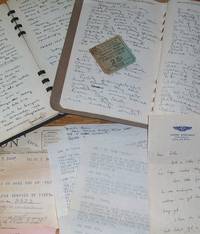
18710001355CAMDEN NEW JERSEY NJ. Good. 1871. On offer are the original historical manuscript diaries handwritten by Judge Charles Preston Stratton of Camden New Jersey. Dated 1871 and 1877 there are entries for nearly every day. Stratton was a well known as a lawyer and a judge and he proves to be a super diarist with many amazing entries of local and national interest: his wheeling and dealing with well known politicians remarks about cases he was involved with lobbying and lobbyists speaking at Princeton his alma mater at Princeton an outbreak of small pox the Great Chicago Fire the hanging of a man who murdered his own father the Railroad Riots of '77 and much much more about the railroad business which he was heavily involved in. Much more so; we find in him an astute writer and observer but also a devoted father and family man and these diaries make for a very complete picture of the man and his times. Researchers and collectors of New Jersey Americana will be hard pressed to find a more balanced diary. Here are snippets: "Met some politicians at the Continental Hotel by accident and dined there with them. They were consulting in regard to the chances of Mr Freling For US Senate. I talked to the Secretary on the business that took me down. I afterwards visited the Department with my client and did all I could for his cause with Chief Engineer King. The New Jersey Legislature organized today. I found Maten full of politicians. The Senatorial contest is now becoming a very warm one. Mr Freling vs. Mr Walsh being the opposing candidate. The news is that Paris is about surrendering and the final triumph of Prussia almost complete. Have devoted the day to the family in reading to the children and hearing them read and occupying the time pretty much with a view to their entertainment. The trial of the Camden In the US District Court has resulted in the conviction of Sarden. The first one of the indicted at trial. This verdict has rather surprised everybody and has perfectly astounded the Democrats. Clara Cooper read the Lady of the Lake aloud to me. Mr Howes house 3rd St just below Penn took fire and we were awakened by the alarm at 3 this morning. The whole neighborhood warm and excited. The family hardly escaped from the building. The inside of the house pretty well burnt out. Engaged in taking testimony in contested election cases. Today moved the safe to the new office and prepared to evacuate finally. Went to Fox's Theatre with S.H. Grey. He has just finished the protracted murder case of Ward and the jury have gone out The case is one of circumstantial testimony and not clear to right minds .has prosecuted very viciously and thinks there is proof sufficient for conviction. The great fire has gone out. Burglaries continue in our neighborhood. Some house is entered almost every night. The children went to Sunday School at Christ Church where they mean to attend under the care and direction of Miss Helen Cooper. I went this morning to Quaker meeting to hear Lucretia Mott who was over in Camden. She is an old woman now but still talks well and in her younger days must have been fascinating in her oratory. She is an advocate of very liberal opinions. The stockholders meeting of C&A Railroad company to elect directors held at Trenton. The question of the leaving the works to the Pennsylvania RR Co came up and was decided by the election of the board favorable by a large majority. I have sold out all to Clara shares and have a personal interest in the matters. My opinion is that the move is perhaps a good one for stockholders but on the grounds of public policy and state pride should not be carried out. Went tonight to see the Amateur Dramatic performance called the Color Guard at the Soldiers Wigwamon Federal St. The soldiers are the actors had gone away as some sent to a military spree had not got back at 9 o'clock the audience was dismissed without seeing the play. Attended the Color Guard performance tonight. Was quite pleased at the manner in which the boys went through their performance. Took the children to the Walnut St Theatre to see Jefferson play Rip Van Winkle. The performance was as good as ever and gave us great pleasure. It is a piece of acting the thing is perfect. Today went to Princeton commencement. Belknap delivered the oration before the societies and that part took me thither. The President was there with Robeson and many other prominent people. Ten of my class met at this time and by invitation we had a reunion at the residence of Dr Westin Hodge. The meeting was a pleasant one and brought out a good deal of class feeling very glad that I had made the visit upon this occasion to my alma mater. Belknap's address was rather a taking one with the boys but was not a very high grade oration. Left the Ft William Henry House by the steamer Minnehaha and sailed up the The scenery enchanting reached the Ticonderoga Landing when an excitement was created by a gentleman falling from the top of the stage under the horse feed. Was hurt but not killed. Did Montreal an intelligent hackman offered his services We saw the country the monasteries the nunneries and lastly the shops. We're charmed with the cheapness of things and felt a longing to buy out Montreal. Bought too much. Left Montreal for Quebec by steamer. Under the Citadel and battlements of Quebec. Winding up the narrow steep Streets through the quietest town. Have at last found a novelty. This is a real traveling sensation .Rode to the falls of Mont mounce Saw a white woman with a black husband at the Falls. Went out fishing with A.C. Scovel took Preston with us who surprised himself by catching a dog shark. When the monster arrived on board which he did through the assistance of the fishermen. Pres left for the other side of the boat. Great fire in Chicago going on it looks as though the whole city would be destroyed. Much excitement in regard to the matter all through the country. Started today on a railroad excursion under the lead and management of AW Meckley took the rail to Penn RR at 2 PM for Wilkes Barre. Dr Garrison has returned from Europe and made his appearance today at church although he did not preach. I turned out in honor of the event and flowers were also lavishly bestowed about the pulpit and furniture. Small pox said to be in the vicinity of 3rd and Penn our neighborhood therefore much avoided. We are sorry to see so little of our fellow citizens here abouts but they are putting themselves through unnecessary trouble in keeping out of our street we are all in unusual good health. Heavy rain last night one solitary peak of thunder which we knew every one and impressed all with the idea that the great globe itself was trembling to pieces. I leaped out of bed instantly convinced that we had been struck by the prevailing earthquake Called to see William and Dr Cooper both of whom are laid up with gout. Saw the King at the Navy Department did not succeed in obtaining what I went for. Called on Belknap at the War Dept and talked over the matter of Eyre's dam for which nothing can be done. The street cars began running this morning for the first time in Camden on the Federal street route. Rudolph opens his handsome confectionary store on Federal St to the public. The children give a grand account of its splendor. 233 deaths last week in Philadelphia from small pox which startled people no knowing how many cases there are. The disease is not very bad here it prevails but it is not malignant. Birds birds birds my friends keep sending in quail and pheasants until we are beginning to tire of game Prince of Wales lying very ill with typhoid fever and almost despaired of by his physicians much excitement prevails in England about it. John Ware hung today in Camden behind a high fence at the prison. A considerable number of spectators were allowed to be present. The condemned man died unrepentant. Went down to Malaga to make an investigation for the West Jersey railroad company respecting the putting of railroad obstructions upon the tracks. Snow began to fall about 11 o'clock and cautioned through the day. I got home at 5 o'clock satisfied myself that the guilty person was the man who had made the charge against another person. Went to town with Clara Christmas shopping the pavement covered with snow and pretty slippery. A good many people in the street but less than usual at the shops owing to the great dread of small pox which prevails throughout the country and keeps people out of town. Went with General Sewell and upon his invitation we occupied a special car and the journey was made the occasion of a very pleasant entertainment. Chief Justice Waite and Secretary Robeson joined us at Philadelphia and we dined all the way to New York. Stopped at the Metropolitan and went to Walleck's Theatre and saw Shanghai. Held an orphan's court this morning. The New Jersey House of Assembly organized by electing a democratic speaker instead of A.C. Scovel a result which as yet I do not understand. Engaged all day in the quarter session court called to see A. C. Scovel and get the political gossip from Trenton. In quarter session tried a case of bigamy which involved some new questions. Got at the law though upon discussion an examination we decided orthodoxy. The democrats yesterday elected John McPherson U.S. Senator by a majority of one in joint sessions. The compromise bell for counting the electoral vote passed the U.S. Senate. Read Gill Glass. My successor in office was appointed today David J. Pancrest. I have drawn my last quarter's salary and shall retire on the first of April. Charles has got possession of an old account book of Buck and Whitaker doing business in Chansey in 1704 which is an interesting document. It has a memorandum in it of the marriage of Freelove Stratton one of our ancestors of whose marriage we have not heretofore known. I don't like being extinguished by a political opponent. To have my career terminated by a spiteful demagogue like Bedle otherwise my retirement goes very pleasant. Saw a play called Our Boarding House which rather disappointed us. We were not able to laugh as much as we expected to. Hayes was declared president the result is a bitter one to the democrats but the country is relieved. Governor Hayes inaugurated president this day successfully and satisfactorily. Bought the tickets for New Orleans passenger and sleeper. This morning it blew a gale and none of the boats went out. The boys were greatly disappointed but managed to amuse themselves about the hotel. Found great excitement prevailing with respects to the railroad riots. The thing is spreading and people are anxious mobs may rise up everywhere. In Pittsburg there is fighting in the streets the same in Baltimore. The streets full of people and the country threatened by the all the militia under arms and such feeble effort as is possible being made everywhere for the protection of property and people. Preston and I went to the zoological gardens and found many people there unconcerned apparently by the condition of the county and being highly entertained by the monkeys. No new bloodshed reported this morning. 400 regular troops arrived with General Hancock. No outbreak in Philadelphia but very uneasy conditions as the country and the railroads are stopped everywhere. I think there will be no further violence or loss of life but it will take some time for things to get back to their normal condition. In the afternoon we went to the American side and saw the Niagara Falls then over the bridge to Canada. Went boating with the children on the race. Preston sailed his toy steamer with great success went out to the Centennial Building to see the permanent exhibit. Grindewell was made General of the militia in the place of General Hart. Republican convention in Trenton where Governor Newell was nominated. The storm of last night proved to have been a very violent one. A great many railroad accidents occurred by the washing out of bridge and bank and numerous vessels were blown ashore and sunk. At night saw Colonel Potter who read me an article prepared by him for the press on General McClellan. Great McClellan reception this day. The democrats are excited and rallying from all corners. Mr. Jenkins decorated the courthouse elaborately for the occasion. Mr. Browning entertains the hero of an Antietam at his own house with 18 gentlemen. Much dissatisfaction among the republicans at the nominations for assembly in our county and in particular that in our district General Gile was nominated. Today Governor Newell was in town. There was a meeting at the courthouse in the evening large and enthusiastic. After the meeting a collation at General Newell's which was a very nice affair in every respect. Governor Newell thinks it highly probable that he will be elected. It did not seem possible at the beginning of the campaign but evidently General McClellan is turning out to be the success as a candidate that they expected he would be. I cannot however see how the democrats can be defeated. At night we had Moody and Sankey. At night a republican meeting at the courthouse addressed by Mr. Robeson and others the attendance was good and the speech of Robeson which was excellent was well received. The political prospect is not good. Governor Newell says he shall be elected and probably thinks so but he will be beaten by five to ten thousand. Here in Camden we shall elect Isaiah Woolston democrat to the assembly. In the evening began the reading of Christmas Carol according to our annual custom. Then the children went to bed and we arranged their presents for the morrow. Christmas morning - The children were up bright and early and we found them happy when we came down to breakfast. The long expected day had come and was satisfactory in its results. Heard this evening of the sudden death of Ms. Elizabeth McCalla the news has startled us as such tidings as these we know well always do. Preston went over the river to a lecture at the Franklin Institute with James Carpenter. Claire and I went to the Chestnut Street Theatre to see the Cricket on the Hearth matinee. Went to Booth's Theatre saw Mrs. Fanny Davenport as Lady Gay Spanker also as Lady Teazel in the screen scene of School for Scandal." Very complete neatly laid out monthly financials complete the daily diary. Overall VG.; Manuscript; 12mo - over 6¾" - 7¾" tall; CAMDEN NEW JERSEY STRATTON JUDGE PRINCETON ROBESON BELKNAP CIVIL WAR ERA RECONSTRUCTION RAILROADS RAIL INDUSTRY HANDWRITTEN MANUSCRIPT DOCUMENT LETTER AUTOGRAPH DIARY JOURNAL LOG KEEPSAKE WRITER HAND WRITTEN DOCUMENTS SIGNED LETTERS MANUSCRIPTS HISTORICAL HOLOGRAPH WRITERS DIARIES JOURNALS LOGS AUTOGRAPHS PERSONAL MEMOIR MEMORIAL PERSONAL HISTORY AMERICANA VADE MECUM antiquité contrat vélin document manuscrit papier Antike Brief Pergament Dokument Manuskript Papier oggetto d'antiquariato atto velina documento manoscritto carta antigüedad hecho vitela documento manuscrito Papel . unknown
19400008126OBAN AIR BASE. Good. 1940. On offer is a unique original 1940s diary handwritten by British RAF pilot K. Halliday. The diary measures 3.5'x 6.5' contains 100 pages about 80% of which are complete. The leaves are saddle-stitched but staples started to rust and the center leaf is detached and the cover is partially detached. Otherwise the diary is in very good condition and the handwriting is very legible. The diary was kept by 188335 Flying Officer K. Halliday. F/O Halliday was a pilot of Sunderland Flying Boats with 302 FTU and 240 Squadron until March 1946 and 205 Squadron from April 1946. No. 240 and No. 205 Squadrons were a Royal Air Force flying boat and seaplane squadrons. No.240 Squadron spent the first half of the war serving in Home Waters and the second half operating from India. From July 1942 until the end of the war it flew anti-shipping and submarine patrols over the Bay of Bengal and the Indian Ocean. In December 1944 the squadron also began to fly agents and supplies into the Dutch East Indies it was disbanded on 1 July 1945. No 205 squadron flew anti-submarine and air rescue patrols out of Koggala Ceylon from July 1942 to the end of the war. The squadrons were flying Consolidated Catalina and since summer 1945 Short Sutherland a British flying boat patrol bomber one of the most powerful and widely used flying boats in WW2. The diary records details of flights between Oban Gibraltar Port Augusta Kasfereit Habbaniya Bahrein Korangi Creek Trombay Red Hills Lake Koggala Cochin Calcutta Syriam Burma Penang Singapore Seletar Hong Kong Labuan Borneo Macasser Dutch East Indies and the UK. The text on the front paper says: "Observations taken "en-route" on Transit Trips"; F/O Halliday K.; No ops or routine flights recorded; Non-secret" The diary covers several ferry trips made between Marc 6th 1945 and March 20th 1946. The first ferry flight was from Obam to Gibraltar and return to UK it took 101.05 hours in 17 days. RAF Oban was a Royal Air Force RAF flying boat base located at the northern end of the island of Kerrera Scotland during the Second World War. Halliday gives details of the flights weather conditions occurrences with the flights problems with the aircraft provides information about the bases where they stopped including sleeping arrangement food and service. He also kept lists of many of his passengers crew rosters etc. Many of his passengers signed the diary particularly those shortly after the war ended. Here are some excerpts from his entries: "Ferry No 1. Oban to Gibraltar. 6th March 1945. Took off from Oban at 1850. ½ route after take off radar packed in went out three times during the trip. "George" automatic pilot went u/s with same old trouble. I/c was howling a lot. Fuel pressure lights came on for S.O. Engine. Had a wizard trip down weather perfect the whole way. Things weren't too bad up till the time the S.O. gave trouble but decided to stay airborne till daylight than risk a landing at night with bad engine"; "8th March. Got cracking on D.I's and snags. There are no radar mechs at New Camp but North Front will lend you a few. The crystal current is apparently the trouble as it drops right off every now and then.The nuts were loose on the "George" oil bottle resulting in loss of oil we ran theP.I. up to the test here and came to the conclusion the compressor had sgeared. - They haven't any new ones here and so as they come by sea from England I'll be flying without it."; "Friday 9th March.On the first leg from Gib. Though there is a little Spanish island to be watched as they boast 2 20mm guns and occasionally use them." He also gives information about personnel meals and accommodation at each destination: "Summary of stay in Gib. Accomodation for officers O.K. the NCO's were rather crowded. Food in both messes O.K. Maintenance fellows quite keen and helpful Cigarettes very cheap 2/4 for 50 as were the wines."; "Summary of stay in Fanara. Officers and N.C.O's eat and sleep together accommodation very crowded indeed - 7 of us in one tent c.o. Mentioned they were arranging more accommodation. Food quite good in the mess quite sufficient spirits in the bar." Most of his flights after the war were in Asia where there were not many large runways and their ability to land on water was required. In addition the diary contains crew rosters lists of passengers etc. Among the passengers were war correspondents Lieutenant Colonels Lathbury and Biddle and other officers and some civilians. Many of his passengers signed the diary particularly those shortly after the war ended The diary provides wealth of technical details names of RAF personnel information about airfields and can be an excellent source of information for a military or aviation historian.; Manuscript; 16mo - over 5¾" - 6¾" tall; KEYWORDS: HISTORY OF 20TH CENTURY WW2 SECOND WORLD WAR AVIATION ROYAL AIR FORCE RAF FERRY FLIGHTS RAF OBAN AIR BASE RAF FLYING OFFICERS IN WW2 RAF SQUADRON 240 RAF SQUADRON 205 FERRY TRAINING UNIT 302 FTU RAF TERMINOLOGY AND SLANG PILOTS' SLANG AVIATION HISTORY MILITARY HISTORY WW2 RAF AIRBASES RAF ABBREVIATIONS NORTH FRONT TECHNICAL PROBLEMS WITH FLYING BOATS RAF GIBRALTAR STATION PORT AUGUSTA KASFAREET AIRFIELD SUEZ CANAL ZONE BRITISH OVERSEAS AIRWAYS CORPORATION B.O.A.C. RAF HABBANIYA FLYING BOATS MUHARRAQ AIRFIELD BAHREIN FLYING BOAT BASE AT KORANGI CREEK FLYING BOATS MOORING LIEUTENANT COLONEL LATHBURY LIEUTENANT COLONEL BIDDLE HANDWRITTEN MANUSCRIPT DOCUMENT LETTER AUTOGRAPH WRITER HAND WRITTEN DOCUMENTS SIGNED LETTERS MANUSCRIPTS DIARY DIARIES JOURNALS PERSONAL HISTORY SOCIAL HISTORY HISTORICAL HOLOGRAPH WRITERS AUTOGRAPHS PERSONAL MEMOIR MEMORIAL ANTIQUITÉ CONTRAT VÉLIN DOCUMENT MANUSCRIT PAPIER ANTIKE BRIEF PERGAMENT DOKUMENT MANUSKRIPT PAPIER OGGETTO D'ANTIQUARIATO ATTO VELINA DOCUMENTO MANOSCRITTO CARTA ANTIGÜEDAD HECHO VITELA DOCUMENTO MANUSCRITO PAPEL . unknown
19430001755SOUTH PACIFIC PHILIPPINES ABOARD THE USS SANGAMON. Good. 1943. On offer is a sensational group of World War II relics including original manuscript diaries 2 maps photographs and related ephemera handwritten and compiled by Lieutenant Commander Robert Manning Carr a senior medical officer on the USS Sangamon from September 1943 until November 10 1944. Casual research finds Carr was a native of Junction City Kansas and a graduate of Northwestern University in Chicago. The Sangamon was an escort carrier providing fuel and planes for support of the fleet and men on the ground. The ship took part in many battles including Marshall Islands Guam The Philippine Sea and The Battle for Leyte Gulf. The first diary begins September 17th 1943 and ends June 29th 1944 while the second diary begins June 30th 1944 and ends on November 10th 1944. There are nearly daily entries. The doctor deals with common things influenza appendicitis and then of course the more gruesome occurrences war. Many of the injuries the soldiers survived were terrible burns from the aircraft fuel either from accidents on the flight deck one famous one that the doctor actually saw from the air as he was flying with one of the other pilots or from Japanese Suicide bombers. His angst at treating these soldiers is evident throughout. He also talks of burials at sea and the capture of the first Japanese pilot who tried to fly into their ship he was treated and then sent to the brig even though the doctor thought he should stay in sick bay. Historians and researchers and collectors of the American war effort in the Pacific will have a treasure trove of his keen personal observations as the doctor describes many of the famous battles the Sangamon and her crew took part in. The diaries are crammed full and the included ephemera such as copies of telegraphs from the high command congratulating the crew on a job well done and a good number 25 8" by 10" glossy photographs taken of the destroyed cities ports and villages after the occupation. A few of them are also quite gruesome which all add depth and breadth to the narrative. The journals end abruptly on Nov 10 1944. The USS Sangamon was eventually hit by a Kamikaze and badly damaged. It was being repaired when the war in the Pacific ended. The ship was sold and eventually scrapped. In all this is a very intimate look at life on an active ship during wartime from the key vantage point and perspective of a senior medical officer. Unnumbered but almost 150 pages in all. Overall G. ; Manuscript; 12mo - over 6¾" - 7¾" tall; KEYWORDS: HISTORY OF USS SANGAMON CVE-26 ESCORT CARRIER MEDICAL OFFICER BATTLE OF LEYTE GULF LIEUTENANT COMMANDER ROBERT CARR MARSHALL ISLANDS GUAM THE PHILIPPINE SEA SOUTH PACIFIC WORLD WAR II WW2 WWII ESCORT CARRIERS NAVY USN NAVAL SERVICE MARINE NAUTICAL MARITIME PACIFIC THEATRE AMERICANA HANDWRITTEN MANUSCRIPT DOCUMENT LETTER AUTOGRAPH DIARY JOURNAL LOG KEEPSAKE WRITER HAND WRITTEN DOCUMENTS SIGNED LETTERS MANUSCRIPTS PHOTO ALBUM PHOTOGRAPHIC ALBUM HISTORICAL HOLOGRAPH WRITERS HANDSCHRIFT HANDGESCHRIEBEN MANUSKRIPT DIARIES JOURNALS LOGS AUTOGRAPHS PERSONAL MEMOIR MEMORIAL PERSONAL HISTORY antiquité contrat vélin document manuscrit papier Antike Brief Pergament Dokument Manuskript Papier oggetto d'antiquariato atto velina documento manoscritto carta antigüedad hecho vitela documento manuscrito Papel . unknown
19090008143SWEETWATER NEVADA. Good. 1909. On offer is a very unique collection of diary and papers from store keeper in the American west at the turn of the last century. The collection consists of a small diary and a collection of ephemera. The diary measures 4 inches by 2.75 inches. It is leather bound. It contains 365 pages plus memoranda and is about 60% complete. The cover is in good condition and all of the pages are intact. The handwriting is legible. The ephemera consists of 3 letters a photograph/portrait newspaper clippings and receipts. Milton Diltz Holton a member of a noted Kentucky family was born in Mount Sterling Montgomery County KY in 1869. He came to Murray at the end of the 19th century was a second Mayor of Murray and a Master Commissioner of the Calloway county in the early 1900s. He studied law changed several jobs but since 1905 was mainly working in the insurance business. He was married and he refers to 3 children in his letters home. He passed away in 1948 at the age of 78. His wife Juliet lived her life in Murray KY. She was born in 1877 and passed away in 1960 at 82 years of age. Some time around the turn of the century Holton left his home and travelled to Dawson Springs KY. Later he became interested in a mining proposition in Sweetwater Nevada where it appears that he while looking after it worked in a General Store then he worked for a Travel Insurance Company near Chicago. His diary is dated 1909. The ephemera contains letters dated as early as 1904 Dawson Springs and 1908 and 1909 from Sweetwater. NV. These along with U.S. Postal Money Order receipts would suggest that he has been seeking work to support his family. The Sweetwater Range was the scene of a great deal of prospecting and mining. It was not as productive a region as nearby Brodie Aurora or Masonic regions the latter mentioned several times in the diary. ". not much business. Dave Leroy came down on his stage - which came down from D.O. Moodies camp and staid all night says he has a contract for 50 feet." Feb 8. ". Stage business is good. Not much in store." Mar 8 ". Groves over. Buck Top Conway and Gord's partner left for Brodie this A.M. Cohn left this morning. Davis said he was going to Yenington also Brodie and Mono Lake ." May 9. The work is hard and business is fairly slow. He recounts the comings and going of men working in fairly isolated communities in the Sweetwater mountain range. Both his diary and the money order receipts show that he continually sent money east to his wife. One of the 3 letters is a beautiful note from his wife: ". You mustn't forget Dily a little momma who is playing the best little mother she knows how to your children and remember she needs all the assistance i you can give her. You'll be a better happier man to know you are doing all in your power to help your own. With Love and best wishes . your wife Julie Ann." Letter dated Mar 28 1909. Also included is a black and white portrait of Holton taken in St Louis MO. At some point in time Holton returned home to his family. A fourth child was born. He resumed the life insurance business and over a long career became very successful in that industry. He is buried with his wife in Murray KY. This is an outstanding personal collection illustrating the struggles and efforts of a man to support his family at the turn of the 20th century. His diary provides a fascinating glimpse into the way of life in the small villages and camps of Nevada that are now long gone ghost towns. This would be quite helpful to genealogists as he mentions many names in the sparsely-populated Nevada - California mountain region around Sweetwater as well as the names and descendents noted in the obituary.; Manuscript; 48mo - over 3" - 4" tall; KEYWORDS: HISTORY OF UNITED STATES EARLY 20TH CENTURY; 1910S; PROGRESSIVE ERA; MILTON DILTZ HOLTON; SWEETWATER RANGE; CALIFORNIA GOLD RUSH; SWEETWATER USMC; BRODIE NV; MASONIC GULCH NV; MURRAY KY SWEETWATER NEVADA; LYON COUNTY; MURRAY KY; CALLOWAY COUNTY KY GENEALOGY; KENTUCKY; DAWSON SPRING KY; MINING IN NEVADA IN THE 1900s; PROSPECTING IN NEVADA; INSURANCE BUSINESSES IN KENTUCKY AMERICAN WEST; MURRAY MAYORS IN THE EARLY 1900S; KENTUCKY POLITICIANS IN THE EARLY 20TH CENTURY; INSURANCE BUSINESSES OF CALLOWAY COUNTY; KENTUCKY BUSINESSMEN OF THE EARLY 20TH CENTURY NEVADA ECONOMY OF THE EARLY 20TH CENTURY; AMERICANA HANDWRITTEN MANUSCRIPT DOCUMENT LETTER AUTOGRAPH WRITER HAND WRITTEN DOCUMENTS SIGNED LETTERS MANUSCRIPTS DIARY DIARIES JOURNALS PERSONAL HISTORY SOCIAL HISTORY HISTORICAL HOLOGRAPH WRITERS AUTOGRAPHS PERSONAL MEMOIR MEMORIAL ANTIQUITÉ CONTRAT VÉLIN DOCUMENT MANUSCRIT PAPIER ANTIKE BRIEF PERGAMENT DOKUMENT MANUSKRIPT PAPIER OGGETTO D'ANTIQUARIATO ATTO VELINA DOCUMENTO MANOSCRITTO CARTA ANTIGÜEDAD HECHO VITELA DOCUMENTO MANUSCRITO PAPEL . hardcover
19630008062SERBIA CROATIA GREECE THE BALKANS CALIFORNIA. Good. 1963. On offer is an interesting account of a young woman's travels through the Balkans and Greece in the early 1960's. The notebook holds 148 pages and is approximately 48% complete. Also included is very detailed account of a visit to her home two years later by a close friend. The notebook measures 6.25 inches by 3.5 inches. It is in good condition and all pages are intact. The handwriting is clear and legible. The author who is unidentified is a young American woman living with presumably her husband Dick in Lienz Austria. Quite likely he is there on a Fulbright Scholarship as she records meeting another "Fulbrighter" en route Apr 10. In notes made 2 years later they are married and living in California. The 37 pages of entries detail a driving trip they took from Lienz to Athens in April of 1963. While Dick drove she observed and made notes each day. Much of it reads as a typical travelogue but there are many interesting observations. Driving through then Yugoslavia she notes: ". People were plowing fields spreading fertilizer sowing washing clothes in ponds etc. The oxen and horse carts look quite primitive. The road from Zagreb to Belgrade was concrete but very bumpy. Few cars Russian-made trucks. The men wear blue berets or black square hats the women long black clothes and scarves. ." Apr 6. The road conditions certainly seem quite poor and at one point: ". finally took off over a bridge thru a field up the bank & and back to the Autoput to Skopje - good little car ." Apr 7. They meet celebrities along the way and folks who have had experiences in America: "I took a bath while Dick went to the bar for a scotch. . He talked with Richard Widmark who coincidentally we also saw at the Walterspiel in München in'60. ." Apr 6. "Stopped at bar for a martini. . Looked up next to us only to see Sidney Poitier. ." Apr 14. "Our guide was good. He had been on David Brinkley's show a while back ." Apr 9. She provides detail on the places they visit. They booked several tours in Athens: ". We visited the Propylaea Temple of Wingless Victory Parthenon Erechteum sic The Peropolis . The whole trip was fascinating the city be autiful the people very friendly the crafts and souvenirs tasteful. . From there we went to the Theatre of Dionyseus drove past the Agora & the Stoa." Apr 9. In other towns in Greece the entries are similar - account of drive details of what they ate and a listing of places they see. They return to Lienz on Apr 16th and she ends with this comment: "Back in the old routine - classes for Dick at 8 and 9. Fini. "Apr 17. Two years later in 1965 in another section of the notebook she records a 7 week visit to their home in Berkeley CA. Her friend is simply identified as "Lillie". Dick by this time is working: "Got up with Dick at 6:30 & he left for work at College of Marin at 7.15. ." July 26. The College of Marin is highly regarded 2-year college in Marin County CA. Over the seven weeks she describes shopping trips with her friend details of meals they eat and places they visit: "Slept late. Had breakfast on sundeck - sausage eggs pancakes cantelope. We then drove to Tilden Park The Botanical Gardens and to Jack London Square & the Bret Harte Boardwalk. We returned home - sat on the sundeck and munched and drank. Then we cleaned up & went to S.F. for a Japanese dinner at our favorite place. Parked the car in a lot rode the trolley to North Beach had Irish Coffee at Enricos where we were almost shortchange $10 visited Keane Gallery and took in a show at the Moulin Rouge . returned about 2:30 am." July 31. Travel writers and geographers would be interested the descriptions of life and surroundings in the Balkans of the early 1960's. Especially from a comparative perspective. Social historians and researchers would find her descriptions of suburban life in California valuable when looking at lifestyles in the mid-1960's - a time of tremendous cultural change in the United States.; Manuscript; 16mo - over 5¾" - 6¾" tall; KEYWORDS: HISTORY OF 20TH CENTURY; COLD WAR; EARLY 1960S; SOUTHEAST EUROPE; EASTERN EUROPE; BALKANS IN THE 1960'S; TITO'S YUGOSLAVIA; GREECE; AUSTRIA; UNITED STATES; CALIFORNIA; FULBRIGHT SCHOLARSHIP; LIENZ; ATHENS; RICHARD WIDMARK; SIDNEY POITIER; COLLEGE OF MARIN; TRAVEL JOURNAL; TRAVELOGUE; CAR TRIPS IN SOUTHEAST EUROPE; AMERICAN TEACHERS IN EUROPE; RICHARD H. GOTT; 1962 FULBRIGHT RECEPIENTS; AMERICANA HANDWRITTEN MANUSCRIPT DOCUMENT LETTER AUTOGRAPH WRITER HAND WRITTEN DOCUMENTS SIGNED LETTERS MANUSCRIPTS DIARY DIARIES JOURNALS PERSONAL HISTORY SOCIAL HISTORY HISTORICAL HOLOGRAPH WRITERS AUTOGRAPHS PERSONAL MEMOIR MEMORIAL ANTIQUITÉ CONTRAT VÉLIN DOCUMENT MANUSCRIT PAPIER ANTIKE BRIEF PERGAMENT DOKUMENT MANUSKRIPT PAPIER OGGETTO D'ANTIQUARIATO ATTO VELINA DOCUMENTO MANOSCRITTO CARTA ANTIGÜEDAD HECHO VITELA DOCUMENTO MANUSCRITO PAPEL . hardcover
18520008148Massachusetts West Newton Boston. Good. 1852. On offer is an outstanding journal/manuscript written in the mid-19th century by a well-recognized educator. Measuring 8.5 inches by 7 inches the journal contains 235 pages. They are 100% complete with some editing alterations. The volume is in good condition and the handwriting is quite legible. Several pages have been cut out and several others have pieces cut out of them. This is not damage from an external source but rather part of his editing process as this is a draft for a final publication. Samuel Edward Warren was born in West Newton MA in 1831. His father was a physician as well as a farmer and it is little surprise that his son was well educated. Warren was educated at the Massachusetts State Normal School School of Education and Teacher Training and Renssaeler Polytechnic Institute. Established in 1824 Rennssaeler describes itself as the oldest technological university in the English speaking world and focuses on research and applied sciences. He graduated in 1851 and immediately began teaching 'descriptive geometry and drawing'. In 1854 he was promoted to professor of that chair and retained the position until 1872 when he resigned and took up a similar position at the Massachusetts Institute of Technology. He resigned in 1875 to concentrate exclusively on a series of text books that he was writing. Warren passed away in 1909 at the age of 78. The journal is titled Volume 5 and a notation on the inside cover reads: "Thorough revision complete Oct 22nd 1865". The last sentence of an entry in Jan 1852 confirms the author's identity: ". I have been pressed so much about it a piece of overdue writing that I must get off this week the other two on Orphan Asylum and a Temperance movement the later which will be signed S. Edw. Warren" Jan 31 1852. p 26. Entries however date back to 1852 and appear to span that year. There are editorial notes that do date from 1865 on various pages. "On this day of rejoicing it would be a sin to suffer one gloomy note to enter into the chorus of content ." Jan 1 1852. He notes seeking work or engagements and is not above a wry turn of phrase: "I went to Albany this morning and Mr. March the uncivil Resident engineer said there was no business for me. I found that the new division engineer had not come into power and I could not find Vernon the R or Richmond the D nor Prof Mitchell the eng. of the Cincin & St. Louis RR but I am not discouraged yet. I shall ask Mr. Bergher for letters of introduction . and Prof Green for a recommendation to Prof Mitchell ." Jan 31 1852 pp 26-7; Professor Mitchell whom he mentions is probably Ormsby M. Mitchel an astronomer educator and Union army leader during the Civil War who was working at the Cincinnati and St. Lewis railroad at that time and after whom town Mitchell in Illinois was later named. "I got leave to go home from Prof Green found he will engage new Repeaters and have heard from Plympton that Mr. Edely his former partner is so unsettled as to business that it would not be worthwhile to apply to him. On Monday I shall go to Albany to hand my petition to the canal Board and see Mr. McAlpine William Jarvis McAlpine was an American civil engineer and politician from New York he was New York State Engineer and Surveyor from 1852 to 1853 and also some of the city engineers and see if they want to engage an assistant. I have got a no letter from N. York and if I do not get one soon shall write again or advertise in the Tribune for a situation as a teacher of Mathematics and Drawing for to teach such subjects to advanced scholars would be the happiest situation I could have ." Feb 21 1852 p. 38. What is significant is that the above paragraph is starred in the margin with the following note at the bottom of the page: "Here my true calling appears. Oct 15 1865". He relates a visit with his father to Boston and shows him around a number of factories engaged in engineering & manufacturing: ". Mother and Father and I went to Boston Father and I went through the freight house and engine house. I showed him the pump valve. Then we went to Algers and saw the huge shaft of the Hoosac Drill. Then we went to Wilmarths Locomotive works where is one of the finest screws in the world part of an iron planning machine it is 65 ft long and about 5 1/2 inches diam. But was first cast about 6 1/4 in diameter. . Today I wrote a momentous letter to Prof Green about returning to Troy with an increase of duties and pay $125 for a session. . I am getting very fond of Tupper and found some grand hints about teaching children ." Mar 19 1852 pp 53-4. He makes an interesting notation on the number of steam ships plying various waters: "Ocean steamers early '51 from Maine to C Sable 46 in the Gulf 13 on Pacific 37 total 96. Whole number including small steamers 625. Inland steamers on the northern frontier 164 Ohio Basin 348 Mississippi Valley 255 Total 767 which alone exceed the whole steamer tonnage of Great Britain by 60000 tons" Apr 2nd 1852 pp. 63-4. He makes an interesting reference to the American Civil War when he notes the death of one of his former students: "Died of fever in the U.S. War of Civilization" Oct 15th 1865 p. 107. The journal contains a 5-page Index of all entries. In all this outstanding journal offers terrific insights into the early thinking of a man who go on to be a noted educator and author of at least 15 books. It gives an interesting view of the state of engineering in pre-civil war America and hints at the industrial strength of the northern states which would play a crucial role in the North's victory in the American Civil War.; Manuscript; 8vo - over 7¾" - 9¾" tall; KEYWORDS: HISTORY OF MID 19TH CENTURY 1850s; 1960s; UNITED STATES MASSACHUSETTS BOSTON; SAMUEL EDWARD WARREN; MASSACHUSETTS STATE NORMAL SCHOOL; RENSSAELER POLYTECHNIC INSTITUTE; ENGINEERING IN THE MID-19TH CENTURY; STEAM BOATS ON AMERICAN WATERS; AMERICAN CIVIL WAR; MASSACHUSETTS INSTITUTE OF TECHNOLOGY; CINCINCINNATI & ST. LOUIS RAILROAD; WILMARTHS LOCOMOTIVE WORKS; HOOSAC TUNNEL; TECHNOLOGICAL EDUCATION IN THE 19TH CENTURY AMERICA; INDISRIAL DEVELOPMENT IN THE MID 19TH CENTURY; ENGINEERING JOBS IN MASSACHUSETTS IN THE 19TH CENTURY; RAILWAYS AND EMPLOYMENT IN THE MID-19TH CENTURY AMERICA; HISTORY OF RAILROADS IN THE UNITED STATES INDUSTRIALIZATION IN THE NORTHERN STATES; AMERICAN EDUCATORS OF THE MID 19TH CENTURY; BOSTON INDUSTRIES IN 1850s; ORMSBY MCKNIGHT MITCHEL; WILLIAM JARVIS MCALPINE; CYRUS ALGER'S SOUTH BOSTON IRON WORKS; ENGINEERING IN PRE-CIVIL WAR AMERICA; RENNSSAELER ALUMNI AND PROFERSSORS; MASSACHUSETTS INSTITUTE OF TECHNOLOGY PROFESSORS IN THE 19TH CENTURY; AMERICANA HANDWRITTEN MANUSCRIPT DOCUMENT LETTER AUTOGRAPH WRITER HAND WRITTEN DOCUMENTS SIGNED LETTERS MANUSCRIPTS DIARY DIARIES JOURNALS PERSONAL HISTORY SOCIAL HISTORY HISTORICAL HOLOGRAPH WRITERS AUTOGRAPHS PERSONAL MEMOIR MEMORIAL ANTIQUITÉ CONTRAT VÉLIN DOCUMENT MANUSCRIT PAPIER ANTIKE BRIEF PERGAMENT DOKUMENT MANUSKRIPT PAPIER OGGETTO D'ANTIQUARIATO ATTO VELINA DOCUMENTO MANOSCRITTO CARTA ANTIGÜEDAD HECHO VITELA DOCUMENTO MANUSCRITO PAPEL . unknown
19410002419ALTOONA PENNSYLVANIA to RUMMEUG CHINA. Good. 1941. On offer are a fascinating pair 2 of original 1941 and 1945 manuscript World War II diaries handwritten by a young Jewish man Sidney Schulman from Altoona Pennsylvania. Born May 25th 1923 he would be a mere 17 years old at the start of the first diary. Sidney is an erudite writer and certainly has a lot of pizzazz but what makes this pair of diaries significant to even the casual reader we witness this high school boy become this barely freshman at Pennsylvania State College as he is just graduating from high school and in the fall he heads to college and then in the fall of 1942 he enlists in the Army Air Force and serves as a B-29 Gunner until the war is over. From boy to man from car dates in America to looking for action in the red light districts of Asia as Sidney details a fair bit in 1945 of his service while stationed in the heart of China. One cannot fail to be impressed seeing this young college student grow into a fighting man in the span of the two diaries. Here are some snippets: 1941 "January 9th School uneventful. Same old routine. Talked to Bill for ½ hr on plane about _____. Don't know whether doing things right. Have to have real show down with her a lot but Time will tell. Am really in a bag. Studied then was over on her. Really a reward tish tish . Hellish driving right now wondering whether to go after dad or not coming in at 12:43. I did. Schulman you're a queer guy. To all goodnight." "February 20th Gov. James isn't coming tomorrow. He has a bad cold. Postponed Youth Rally until ____boy gets better. Ankle feels much better. Listening to radio a hell of mixup in the Balkan's and the Far East. The damn Japs in the news. What next Tomorrow might tell. So Goodbye." "March 23rd Almost didn't go today. Mother was mad she wanted to go. But it was too much for her 600 miles in 2 days. Got to Niagara Falls about 7:00 P.M. I drove from home to there Niagara Falls was our goal. Saw the store. Not bad clean and business could be ______. Stayed at the Moose a crap joint. Drank a bottle of beer. So Goodnight." "April 5th Am I disgusted. I had a hell of a day in the store. Feel like quitting. Gable is a nice fellow to work for. Went with Ben and Randall to Vernon. We passed time away. Went to Ben's for refreshments. Germany has declared war on Yugoslavia and Greece. Outcome time will tell. Goodnight." "May 25th Happy Birthday to me 18 years old. Congratulations. I went out with Goldy in auto. Harry W. got a car 35' Chevy. So so. Went to Ableson's. Listened to records and Roslyn. Went to meeting AZA. Putzed around Alexander Willowbrooks and Hershey's. Goodnight." "June 28th Today was a day. Went to work got out at four went swimming at 5. Did dad's work. Went for Neal and Ben. Went to party. It turned out pretty good. Dancing eating drinking sober drinks. Went out to Willowbrook's. Danced a bit took the women home drank a bit bitters played cards smoked and raised hell. Played poker again from 6 to 7:30 won 15 cents. At 7:00 went to Dixonville. Slept a bit went home again at 2:00. Slept from 5 till 10:30. Did a bit of work for dad. Goodbye." "July 24th Thursday & July 28th Sunday. Just heard that a cleanup is coming. Oh! Well there's plenty of time. Just to tell you something confidential diary Audrey is in town. I have a date for Sunday. Tess has one for Saturday Did the work for dad this morning. Went swimming with Ben Tess and Bernie up at Blue Hole. Bill and twins were up. Had the best swim of the year today. The date with Audrey proved a flop. Gave her hell but what else could I expect from her than a bad date. Goodnight." "August 29th & 30th Today I went with dad. First to Coudersport. We stayed there overnight. Ray's wife is going to have a baby in near future. We decided to go to Letchworth State Park tomorrow . Went to Letchworth. It's a nice place. Falls gorges canyons etc. Decided to go to Rochester and did. Went to see Mr. Epstein. Abe was there and was he surprised to see us. Hyme Epstein and cousin are going to show us the town tomorrow. Goodnight." "September 29th Had an 8:00 class. I have a graduate student as an English teacher. So far I don't like him. I received a letter and check from home. We heard fight last night. Louis knocked Nova out in 6th round. Goodnight." "October 30th I took gym today. It was there I started to really thinking of my education. What should I do My ability in math isn't so hot in my opinion and all technical course require it. Ben Beerman came home today. I talked with him about my troubles. I am still in same old boat. I personally would like to take up a liberal arts course history physic ete. etc. But goodnight." "November 28th I made a date for tonight but Patty broke it at 9:15. She said she felt sick well maybe she did but she waited a long time to tell me. I went out anyway. There were two girls modeling dresses in Summond's and Ben and Ben Stilwartz dated them. Not bad at all. We went to Skytop. I was stag. Goodnight." "December 7th Today was a co memorable day. As I arrived back at State from Altoona I found out Japan had attacked the possessions of U. S. in the Pacific. We spent most of the day and evening listening to reports. The President will speak to a joint session of Congress tomorrow for a decision of war." "December 9th I got a part in the player's production. It is small but better than nothing. I got 76 in my math bluebook. I cut swimming today. The war is gaining momentum. Air raid warnings have even sounded from New York. Rumors are flying around like feathers in the wind. Goodnight." MEMORANDA: Well so ends another year and what an eventful one. As I look back one year ago it seems years ago. And when I look at the things that have happened it seems unbelievable. In 365 day's time we have been thrust into a world war and when it will end nobody knows. So I end this personal manuscript of mine with a hope that this year of 1942 will prove to be a year of prosperity and by the time 1943 rolls around this world will again be its normal self. Signed Sidney Schulman." 1945 entries start on January 25th "January 25th Arrived in Miami. Got in at 1:30. Went to ATC Hotel Floridian and then to sleep at our quarters the Fleetwood. Three formations a day a few lectures and rest of time tanned at the beach and saw the sights of Miami Beach." "January 30th Arrived at Casablanca around 7:30. Went out to Ironside Camp where we stayed in tents. Use French paper money. The natives Arabs are quite filthy. Really worse than you can imagine. We couldn't get any passes so wasted away the time. Gets quite chilly in the evening." "February 1st Got in Cairo at 7:30. Got out bunks. In a barracks and went to sleep around 9 after eating breakfast. Slept till about 4 or 5. Went to PX bought a cigarette case and then went to service club. Want to see pyramids tomorrow. Use Egyptian pounds and _____here." "February 4th Arrived Karachi at 4 in afternoon. Went out to camp and got assigned bunks. It's a desolate looking place I must say. Camp spread all over the place. No lights. Use mosquitoes bars." "February 6th This place is situated on a desert. Level dusty hot sun but cool breeze. Went in town tonight. Traveled about the bazaar section. Interesting but filthy smelly and rather disgusting." "February 11th Went in town Rented a bike and went out to visit the place where the Hindu's were having some kind of holiday at Clifton Beach. Quite the thing. 1000's of people milling around. Quite colorful." "February 19th Spent the day not doing much. Kept going to PX roaming about etc. this is some place. Rank doesn't mean a damn. Colonels carrying own bags not saluting generals etc. Not a bad place except they say heat and monsoons aren't good. Should go out in a day or so." "February 24th Went down to see the Major. Got a DF assignment to Rummeug. 3.00 per day diem 2 miles out. Went out. It's in a Chinese's graveyard. Here in a tent as yet. The set isn't even up 241. Quite the outdoor life. Should be quite the thing building it up." "March 16th They got some telephone poles out today but haven't put them up yet. One of these days they'll get started. Wrote a batch of letters while on duty. Already I'm beginning to get periods of depression and remorse. Maybe if the war would end it would cheer me up." "March 27th Still pulling these all day and night shifts. Still sleep in the shade. I put my cot there. Engine trouble still persists and not more than one motor will run at a time. They should move down from the hill anytime now. In the Pacific the J-ps claim we landed men 350 miles from Japan mainland. Not confirmed as yet ." "April 27th Boy you forget the date and the day of the week here. Time doesn't mean much. In Europe the Russians are in Berlin and supposedly have it all. Patton is in Austria. Munich is surrounded. Why in the hell can't they quit." "May 5th & 8th Armistice signed in most of the European war. Only a lot of fighting is going on Tonight at 12:01 is the official end of the European war. After 5 years and 8 months it's over. 2 down and one to go. Hope it doesn't take too long as I'm in a hurry to get home." "May 17th Well a lot has happened since I got in the army that beautiful day in May. Some of the fellows I came in will never come back. Gee I'll sure miss Ben. Can't forget him. Hope by this time next year I can at least be in the states though there's doubt in my mind." "June 23rd Went to base. A plane was going to Nanning and coming back here the same day. So I went along. Cargo was mules and horses 4 of them 7 of us in crew's compartment. Went with a combat cargo ship. Brought about 30 melons. Enjoyed the trip. Hot as hell at Nanning. Flew over Indo China. Got back at 6:15. Saw Dragoneered been the 3rd time. Still propaganda for my part." "July 19th What a mess this place is in. Rained like hell last night and everything is flooded. Cook tent is full of water. Built a levy around it but it still fills up. No drainage. No boats out here and water is up to our ankles. What a life. Bugs running around our tent." "July 21st Almost passable around here now rain reseeding. Getting fed up with this damn place. Feel like blowing my top. China is no place for a white man. Still the dirty disgusting place. Indiscernible in words." "July 25th Worked today. Didn't do much. Went in base. Had memorial service for the 2 pilots who were killed yesterday. Two of them crashed up as they were leaving for a mission. Tough luck. War is surely hell." "July 27th Had quite a spat today about digging a crapper. Be and I really had it out. Almost went to see Co. Really a silly assed argument. Got things straightened out. A P-38 crashed about ¼ mile away. Blew up. Went out to see it. As yet they didn't find remains. Quite a sight. Went in base and saw movie "Have and Have Not." Gen. went out continued tomorrow." "August 6th Went in base in evening. Abe Rollins and I went in town downed a bottle of rum and went around the red light district of Mengtzi. Really not any good stock around." "August 8th & 9th We've given Japan an ultimatum either they give up or else we'll open up and use the Atomic Bomb. It's quite a weapon. One bomb is equal to the force of 2000 super bombs loaded. Suppose to destroy everything. Supposedly the greatest discovery of all times. Rotations is now down to 18 months .Woke up this morning to hear Russia declared war on Japan. Now with this Atomic Bomb and everything how long can the damn thing last. Personally I don't believe I'll spend 18 months in China " August 15th IT'S OVER. Pres. Truman announced it at 7 this morning. Went in base played poker won $1.25. Big deal. Came out to D/F and found tent flooded. What a war. It's just beginning for us. 4th ____policy to send home guys 1st with most time." His last entry is on January 21st and he still hasn't returned home. The covers are worn a few loose pages but overall the 5 ½" x 8 ½" books are G.; Manuscript; 8vo - over 7¾" - 9¾" tall; KEYWORDS: HISTORY OF SIDNEY SCHULMAN ALTOONA PENNSYLVANIA JEWISH AMERICAN SERVICEMEN JEWS AT WAR CHENGKEMY CHANGMAI CHABUA CHINA THEATER WORLD WAR 2 WW2 WWII WORLD WAR II PACIFIC THEATER RUMMEUG RUNGAMUITY B-29 GUNNER AMERICAN AIRMEN ARMY AIR FORCE AMERICANA HANDWRITTEN MANUSCRIPT AUTOGRAPHED AUTHORS DOCUMENT LETTER AUTOGRAPH KEEPSAKE WRITER HAND WRITTEN DOCUMENTS SIGNED LETTERS MANUSCRIPTS HISTORICAL HOLOGRAPH WRITERS AUTOGRAPHS PERSONAL MEMOIR MEMORIAL PERSONAL HISTORY ARCHIVE DIARY DIARIES JOURNAL LOG PRIMARY SOURCE FIRST HAND ACCOUNT SOCIAL HISTORY PERSONAL STORIES LIVING HISTORY ANTIQUITÉ CONTRAT VÉLIN DOCUMENT MANUSCRIT PAPIER ANTIKE BRIEF PERGAMENT DOKUMENT MANUSKRIPT PAPIER OGGETTO D'ANTIQUARIATO ATTO VELINA DOCUMENTO MANOSCRITTO CARTA ANTIGÜEDAD HECHO VITELA DOCUMENTO MANUSCRITO PAPEL . unknown
19500002157EUROPE USA. Good. 1950. On offer are two 2 fascinating mid 20th Century travel diaries handwritten by Stanley Wade Baron a Philadelphia born 1922 American novelist and art critic who was also a gifted pianist. Baron worked in the US Embassy in London as a political analyst but in 1950 he resolved to become a writer and spent two years in Europe. His time was productive leading to two novels: 'End of the Line' and 'All My Enemies' and some candid reminiscences entitled 'People and Americans: A Memoir of Transatlantic Tourists'. In 1954 while in Majorca he wrote another novel 'The Facts of Love' about a spoiled but charming American woman in Paris and her exasperating treatment of men. These two diaries make for a fascinating glimpse into a privileged literary travelling life in post War Europe and America. These diaries for historians and researchers provide an unparalleled glance in Mr. Baron's psyche as he is ever analytical and has a keenly observant eye balanced between a pragmatic political observer and an ever open minded artistic brain. His thought processes are simply remarkable in many ways. Here is an example: "Not too cold particularly this am. Reading David Copperfield which reads admirably like autobiography the beginning certainly like Tristam Shandy though less fantastic. What makes the Heeps so awful love of girl children one of unconscious themes. Are there really too many characters so many simply thrown away so I suspect some that seems wrong we will have their uses later. In David Copperfield the reliance on coincidence D. seeing Michamber on the street while taking tea with the Heeps D running in to Steerforth at London pub en route to Yarmouth. Dickens does not flinch of these things. Miss Mowember the cosmetician dwarf an amazing creation but has she a purpose and doesn't she reminds one of the dollmaker Fanny Claiming Jenny Wren in Our Mutual Friend Is there a case for saying Dickens uses practice characters who he later perfects" As to the two books proper: His first diary written while travelling includes entries made in London France Majorca and Tangiers. It details his social life his writing plotting and reading and his state of health. He meets such notables as Paul Bowles Elsa Maxwell Speed Lamkin Gwen Ffrangcon-Davis Esme Percy Trevor Howard Duff Cooper Anne and Mohamed Mehdevi and others. He describes his visit to two bull-fights and his travels by sea train and car. The 6 x 4 inch book has approximately 135 or so pages well filled and written in a precise small hand. Overall G. The second diary is written while the author is in America and includes trips to New York and Boston. He writes about his very active social life his writings and refers to books he is reading such as David Copperfield offering his insights and opinions regarding the style the characters and the author's rationale. Overall G.; Manuscript; 8vo - over 7¾" - 9¾" tall; KEYWORDS: HISTORY OF STANLEY WADE BARON AUTHOR ART CRITIC PIANIST DIPLOMAT NOVELIST PHILADELPHIA WRITERS LIFE THE LIFE OF WRITERS PAUL BOWLES ELSA MAXWELL SPEED LAMKIN GWEN FFRANGCON-DAVIS ESME PERCY TREVOR HOWARD DUFF COOPER MOHAMED MEHDEVI LITERARY LIVES AUTHORS HANDWRITTEN MANUSCRIPT AUTOGRAPHED AUTHORS DOCUMENT LETTER AUTOGRAPH KEEPSAKE WRITER HAND WRITTEN DOCUMENTS SIGNED LETTERS MANUSCRIPTS HISTORICAL HOLOGRAPH WRITERS AUTOGRAPHS PERSONAL MEMOIR MEMORIAL PERSONAL HISTORY ARCHIVE DIARY DIARIES JOURNAL LOG PRIMARY SOURCE FIRST HAND ACCOUNT SOCIAL HISTORY PERSONAL STORIES LIVING HISTORY ANTIQUITÉ CONTRAT VÉLIN DOCUMENT MANUSCRIT PAPIER ANTIKE BRIEF PERGAMENT DOKUMENT MANUSKRIPT PAPIER OGGETTO D'ANTIQUARIATO ATTO VELINA DOCUMENTO MANOSCRITTO CARTA ANTIGÜEDAD HECHO VITELA DOCUMENTO MANUSCRITO PAPELBIOGRAPHY BIOGRAPHICAL AUTOBIOGRAPHICAL AUTOBIOGRAPHY PERSONAL NARRATIVES . unknown
1859000401Very Good. 1859. Hardcover. On offer is a fascinating handwritten diary kept by a Mr. John Tovey. The diary consists of actually two different voyages with the first trip having been written while on board the steamer the "Golden Fleece". The second recorded trip was while on board the screw steamship the "Hydaspes". It's not often you find diaries that have such detailed ship board entries as this one does. Mr. Tovey was a superb diarist. The first trip takes place in 1859 of which he and his wife Ellen leave for Algoa Bay in South Africa from their home in Gravesend England. There are 82 handwritten long pages about each specific trip. They leave Gravesend on January 31st 1859 and are on the sea for almost 3 months. The second trip 7 years later starts off on May 26 1866 and it's a two month voyage that our same man takes only this time with his young son. It seems to be the trip home from South Africa to England. It appears she has died because at one point he alludes to wanting to be with her in heaven. He does seem to be a bit depressed on the trip home. These particular entries go on for about 95 pages. The entries are not just one lined entries they are entire pages. Some of the pages are perhaps only ½ full but most of them are entire pages. He not only writes down his deep feelings but talks about the ship itself the food the other passengers the soldiers on board the whales sited the other ships sited the weather hurricanes his very sick wife deaths on board his "naughty" little boy his feelings of inadequacy because of his social status and so much more. Here are just a very few snippets; 1859 Voyage to South Africa "About 10 O'clock there was a sail in sight. As soon as we got near enough to her the Captain ordered our signal that is the British Flag. He soon discovered it and he run up his which was the Norwegian Flag. Our Captain asked him what his name was it was The Solade from Cardiff bound to Havana and had been out 11 days. He had not been able to see the sun so was anxious to know his position. It appears as if that is a common thing to state one another's position .My wife has been very sick indeed. I wished some times it had been me instead of her. While dressing I heard a tremendous crash and opening the cabin door I beheld the saloon strode with the tea things or rather the fragments of them. They was carried away by the steward and some more brought out on the table Having a steady breeze and all in good spirits because of the shift in the wind one of the passengers got out his gun and amused himself by shooting some of the sea gulls. In the afternoon we spoke with a requisition baroque. Some of the other passengers wished to have a shot at something so the Captain got a bottle and tied a piece of string to it and threw it over board so that it was a very good mark but none of us could hit it on account of it's drifting about. After that we saw a Portuguese Man of War or Naturalist. It was a beautiful creature to look at but not to handle. The Captain caught it but it stung him very bad indeed .We went to the other end of the vessel to see the porpoise it being the first time that we had been that end of the vessel where the sailors sleep called the forecastle. One of the sailors came and chalked our shoes. At first we wondered what the meaning of it was and I was given to understand that we had been trespassing and must pay our farthing and those that would not had to be strapped down to the Bon Split until they did .After tea we all went on deck to see the supposed Neptune. As we crossed the line that night he was to board us. When all at once a voice was heard to say "Sail Ahead". When then was a clamor about that the said Neptune was under our bows. Then there was a few more questions asked when he made his appearance in his costume dressed in sheep skin with a blue cap and a spear in his hand. The question was asked him what he wanted He said that he wanted to see the Captain for to see if he had any of his children on board and much more on that .We had another sheep die thrown overboard. A very good bait for the sharks. One of the passengers was measuring the deck. I made enquire about what it was for and he informed me that he wished to know how many miles he walked during the day .Today we saw some Cape hens and some birds called the Tropic birds. The sailors say that they are the souls of the drowned sailors. The superstitions still prevails in England this day .Have not felt well for sometime no more has my wife. I do not like to see her so poorly for I think that it must be braking up her system and I fear if we do not get to our destination very soon I shall have her laid up all together if it was not for the sun she would look like a corpse .This has been a very ruff night. Squally rain and blowing all the night which caused us to roll about most dreadfully enough to roll us out of bed if we did not hold tight. Quite a hurricane it appeared to travel in puffs in a circular fashion like a whirl wind ." and much much more. 1866 Voyage to England "Sailed from Cape Town South Africa by the screw steamship Hydaspes registered tonnage 2600. Having on board 350 souls and about 2600 tons cargo most valuable goods from India silks indigo sugar and other produce. Both from India and the Cape. On this same page he lists some of the passenger's names .I dress my little boy to be ready when the breakfast bell rang. There being so many children on board they go to breakfast at eight and the adults at nine. Soon Sunday Service was announced to commence the troops have mustered on deck with the passengers .I proceed to dress my son taking caution to clean him thoroughly as a few remarks I heard which greatly annoyed me for he was as clean as any on board but his clothes being not of the very best articles as the others he was I thought slighted Towards night a wealth of melancholiness set over me that I was so low in spirits that the flood gates of my heart gave way for really I do feel so lost on board this ship all being above my rank in life and I being so low spirited that life and energy seem to be entirely gone. That really the wicked thoughts comes over me that I wish that the Lord would have memory upon my soul and take me to join Her that has gone before me .All at once I heard a person call to Jonny to get down and looking see he was leaning over the rail. I am sorry he is such as naughty boy. I am surprised to see some of the married women with children frolicking about with the officers after dinner .We have an old gentleman on board lying dangerously ill a Mr. Auckland Esq. returning to England to spend the remainder of his days but I fear according to accounts that his constitution is broke up and he's fast leaving this world .After dressing Jonny and cautioning him not to go and play with the water I let him go. Had not been long on deck when he was like a drowned rat and I was obliged to bring him down and then I tied his hands and took him in the cabin and made him stop. He made me so cross. After dinner I went up on deck and was informed that one of the passengers was dead. So many souls being on board the Doctor ordered the body to be ready and by half past nine it was committed to the deep. Thus was the end of that poor man he sunk down .We are making our way down to the Western Isles as the Captain intends sending a boat off to see if he can get any provisions for the troops as the meat is nearly all bad. The Islands are said to contain thirty thousand inhabitants. Portuguese settlements . He goes on with much more about these Islands the people etc. ." and much much more. 4 ¾" x 7 ¾". The cover is a beautiful tan cover that looks almost stitched together. VG.; Manuscript; 8vo - over 7¾" - 9¾" tall; KEYWORDS: HISTORY OF ENGLAND TO AFRICA BRITTANICA TRAVEL STEAMSHIP SOUTH AFRICA AFRICA BRITAIN NAVAL MARITIME STEAMERS DIARY DIARIES THE GOLDEN FLEECE HANDWRITTEN MANUSCRIPT DOCUMENT LETTER AUTOGRAPH DIARY JOURNAL LOG KEEPSAKE WRITER HAND WRITTEN DOCUMENTS SIGNED LETTERS MANUSCRIPTS HISTORICAL HOLOGRAPH WRITERS DIARIES JOURNALS LOGS AUTOGRAPHS PERSONAL MEMOIR MEMORIAL PERSONAL HISTORY AMERICANA ANTIQUITÉ CONTRAT VÉLIN MANUSCRIT PAPIER ANTIKE BRIEF PERGAMENT DOKUMENT . hardcover
19440002386LONDON ENGLAND GREAT BRITAIN UK. Good. 1944. On offer is a sensational original manuscript notebook handwritten during the summer of 1944 in London during the horrible 'Buzz Bomb' onslaught or V1 campaign that began in June of 1944 by Nazi Germany. Not merely a home front diary filled with 60 pages of street view entries of life and living conditions during the awful summer of 1944 from an astonishing woman in even more astonishing circumstances along with the back drop of death coming from the air from July 26th through to August 22nd this not quite month long diary is a treasure of emotion a significant memoir of the time and a couple of movies rolled into one. The unidentified author a woman of education practicality and sensuality she is also a symbol of British steadfastness and the 'keep calm and carry on' spirit that propelled England in its determination to defeat the Germans. The definition of indomitable she begins the journal: July 26th 'It might be a good idea to find out just exactly where I am and start this new volume in an assessment of things. There are still bombs and there will be more. I still do not like them but am contemptuous rather than frightened and without any defiance but just plain feeling I would prefer to die rather than run from them. All this is not without its bad effects. I work hard. Too hard because the nervous strain is quite out of proportion. I am easily depressed by the lack of effort on the part of authorities to cope with this thing more than this I am becoming really bitter about the suffering of the public to a state where I blot out all sympathy of the more personal sort and do the job mechanically. The attempt to close down on all my larger emotions is successful but will have its payoff and I a dull deadly dull.' Further reading and we learn she appears to be living with two men one an artist Arthur who 'drew his usual series of dead and staring bodies and bombed buildings' the other a writer. Like the plot of a movie this seems to be a love triangle or more apt a want-to-be-love triangle: 'After a couple of hours it dawned on me they weren't talking in the abstract at all and that even without my amazing ego's influence it was possible John at any rate had a pretty good idea of the woman he would share with Arthur. Me for instance.' A fascinating woman the type who calls other men's girlfriends wenches and a pragmatic gal who admits she figures John will use her as 'a stop gap' and references to her own needs and why they are unmet. A mere month if that and packed with drama intrigue and historic perspective by a very capable and erudite woman. The pressures of the day jump from the page with much talk of fire watching and the result of stresses on those living through a possible death at any moment from the sky: her Mother accuses Father of a dalliance with Molly and the writer's own turmoil. Add the precariousness of life the pervasiveness of death all the while on the front line of terror makes for a singularly unique diary. Overall G.; Manuscript; 16mo - over 5¾" - 6¾" tall; KEYWORDS: HISTORY OF AIR RAIDS BOMB SHELTERS WAR AGAINST GERMANY NAZIS HITLER CHURCHILL WW2 WWII WORLD WAR 2 WORLD WAR II BUZZ BOMB V1 V-1 FLYING BOMB VERGELTUNGSWAFFE 1 DOODLEBUG KIRSCHKERN CHERRYSTONE MAIKÄFER MAYBUG PULSEJET-POWERED CRUISE MISSILE BATTLE OF BRITAIN BOMBARDMENT OF LONDON LUFTWAFFE BRITISH WAR EFFORT BRITISH SPIRIT BRITISH HOME FRONT ENGLAND WAR EFFORT ENGLISH SPIRIT KEEP CALM AND CARRY ON INDOMITABLE SPIRIT BRITANNICA HANDWRITTEN HANDWRITTEN MANUSCRIPT AUTOGRAPHED AUTHORS DOCUMENT LETTER AUTOGRAPH KEEPSAKE WRITER HAND WRITTEN DOCUMENTS SIGNED LETTERS MANUSCRIPTS HISTORICAL HOLOGRAPH WRITERS AUTOGRAPHS PERSONAL MEMOIR MEMORIAL PERSONAL HISTORY ARCHIVE DIARY DIARIES JOURNAL LOG PRIMARY SOURCE FIRST HAND ACCOUNT SOCIAL HISTORY PERSONAL STORIES LIVING HISTORY ANTIQUITÉ CONTRAT VÉLIN DOCUMENT MANUSCRIT PAPIER ANTIKE BRIEF PERGAMENT DOKUMENT MANUSKRIPT PAPIER OGGETTO D'ANTIQUARIATO ATTO VELINA DOCUMENTO MANOSCRITTO CARTA ANTIGÜEDAD HECHO VITELA DOCUMENTO MANUSCRITO PAPELBIOGRAPHY BIOGRAPHICAL AUTOBIOGRAPHICAL AUTOBIOGRAPHY PERSONAL NARRATIVES . unknown
19010002308Good. 1901. On offer is a super original manuscript relic of early 20th Century and World War I era United States Naval history of particular significance to those researchers and historians who delight in seeing the rise of a common sailor to the lofty heights of commander. The author enlisted as a seaman in 1901 and worked his way up to rank of Commander and Captain without attending Naval Academy a self made man who would also during his illustrious Navy career be discharged and reenlist the next day without ever getting off the ship! Students of naval history know that it is a rare ascension of any man who serves below decks to become the god-like presence of a ship's captain and such is the case of William Arthur Fulkerson there is no indication of ownership in the book proper it came directly from an archive of his papers whose naval career begins thusly: "Enlisted March 20th 1901 at Chicago Illinois and was sent to the Training Station at Newport Rhode Island; was transferred from Training Station to the Training Ship Essex Aug 22nd 1901. Transferred from the U. S. S. Essex on April 5th 1902 at Norfolk Virginia and reported on board the U. S. S. Minneapolis at Philadelphia Pennsylvania April 22nd 1902. Transferred from the U. S. S. Minneapolis to the U. S. S. Columbia July 19th 1902 at New York." This 80 page log book meticulously details every ship every port with arrival and departure time every day they anchored; how long they remained in port; and the day and time of departure. He served on the U.S.S. Essex; U.S.S. Minneapolis; U.S.S. Dolphin; U.S.S. Columbia; U.S.S. Lancaster; U.S.S. Wabash; Ordered to temporary duty in 1913 in North Dakota; Ordered to Receiving Ship Norfolk Virginia; U.S.S. Franklin; U.S.S. Richmond; U.S.S. Maine; U.S.S. Iowa; U.S.S. Indiana; U.S.S. Hannibal; and on Sept. 16th 1916 he reported for duty at the Navy Yard in Portsmouth New Hampshire. August 15 1917 - Appointed Ensign U.S.N. February 1 1918. Appointed Lieutenant Commander. August 15 1918 Appointed Lieutenant. "November 9 1918 detached duty Navy Yard at Portsmouth NH and reported to Commander Naval Station New London Conn in connection with the Anti Submarine Squadron Nov. 11 1918. On November 16 1919 Fulkerson was to Command/Captain the U.S.S. Eagle Boat #12. This was changed to PE-1 or 2 3 4 in 1920. While most of the writings are factual there are many narrative entries of auspicious events such as: While on the U.S.S. Dolphin October 22 1901 "Took Crown Prince of Siam to West Point and Return." "January 11 1903. While in port at La Guaira Venezuela we got Minister Bowen and took him to the U.S." "In 1905 at Oyster Bay Long Island we received Japanese Envoys." Etc. The 7 1/2 x 9 inches ledger style book is overall G.; Manuscript; 8vo - over 7¾" - 9¾" tall; KEYWORDS: HISTORY OF WILLIAM ARTHUR FULKERSON USN UNITED STATES NAVY NAVAL MARINE NAUTICAL MARITIME SAILORS SAILING WWI WW1 WORLD WAR I EAGLE BOAT CAPTAIN COMMANDER S.S. ESSEX U.S.S. MINNEAPOLIS U.S.S. DOLPHIN U.S.S. COLUMBIA U.S.S. LANCASTER U.S.S. WABASH U.S.S. FRANKLIN U.S.S. RICHMOND U.S.S. MAINE U.S.S. IOWA U.S.S. INDIANA U.S.S. HANNIBAL ANTI SUBMARINE SQUADRON FROM SEAMAN TO OFFICER AMERICANA HANDWRITTEN MANUSCRIPT AUTOGRAPHED AUTHORS DOCUMENT LETTER AUTOGRAPH KEEPSAKE WRITER HAND WRITTEN DOCUMENTS SIGNED LETTERS MANUSCRIPTS HISTORICAL HOLOGRAPH WRITERS AUTOGRAPHS PERSONAL MEMOIR MEMORIAL PERSONAL HISTORY ARCHIVE DIARY DIARIES JOURNAL LOG PRIMARY SOURCE FIRST HAND ACCOUNT SOCIAL HISTORY PERSONAL STORIES LIVING HISTORY ANTIQUITÉ CONTRAT VÉLIN DOCUMENT MANUSCRIT PAPIER ANTIKE BRIEF PERGAMENT DOKUMENT MANUSKRIPT PAPIER OGGETTO D'ANTIQUARIATO ATTO VELINA DOCUMENTO MANOSCRITTO CARTA ANTIGÜEDAD HECHO VITELA DOCUMENTO MANUSCRITO PAPELBIOGRAPHY BIOGRAPHICAL AUTOBIOGRAPHICAL AUTOBIOGRAPHY PERSONAL NARRATIVES . unknown
18770007011Lancaster County Pennsylvania PA. Good. 1877. On offer is the 1877 diary of a noted lawyer newspaper editor and politician. William Uhler Hensel was born in Lancaster County Pennsylvania in 1851. Upon graduation he studied law and was admitted to the bar in 1873. A year later he purchased a half interest in the local newspaper becoming its editor. His dual career prospered and along with it his involvement in local politics. He became very active in state politics and served four consecutive terms as state Democratic Party Chairman. He was also active in national politics writing campaign material and biographies for Democratic candidates including President Grover Cleveland. As his political work expanded he sold his newspaper interest and concentrated on building his law practice. In time he and his partner J. Hay Brown built a very successful law practice. Hensel was eventually appointed Attorney-General for the state of Pennsylvania; Brown as Chief Justice of the Pennsylvania State Supreme Court years later. His term was marked with great distinction. He went on to become President of the Pennsylvania state bar and eventually vice-president of the American Bar Association - roles he served in with great distinction. He was a noted writer and public speaker He was also an avid supporter of local causes such as the Lancaster Historical Society and his two alma maters - Franklin and Marshall College and Dickinson College. He died in February 1915. This diary was written during his early years as a lawyer and editor of the Lancaster Intelligencer. He records various transactions he was involved with . sale of lots at courthouse at 10 AM Mar 11 . at 2 PM heard case of Graham Potter Mar 21 put case of Wm. Aug14 References to his newspaper include . wrote opinion . Trust Coy & Savings Bk Mar 22 Hensel built a long solid career and fine reputation as a legal professional and also as a journalist. He achieved these in both fields while being very active in politics and public life - a significant accomplishment. This volume gives an insight into the formative years of this very accomplished man. The diary is in very good condition. It measures 3 3/4 inches by 2 1/2 inches and holds approximately 400 pages including memoranda. The diary is about two-thirds complete. The writing is a neat very small script.; Manuscript; 48mo - over 3" - 4" tall; KEYWORDS: HISTORY OF WILLIAM UHLER HENSEL LANCASTER HISTORICAL SOCIETY FRANKLIN AND MARSHALL COLLEGE DICKINSON COLLEGE PENNSYLVANIA STATE ATTORNEY GENERAL LANCASTER INTELLIGENCER AMERICAN BAR ASSOCIATION LANCASTER COUNTY PENNSYLVANIA DEMOCRATIC PARTY PRESIDENT GROVER CLEVELAND JOURNALIST EDITOR AMERICANA HANDWRITTEN MANUSCRIPT DOCUMENT LETTER AUTOGRAPH WRITER HAND WRITTEN DOCUMENTS SIGNED LETTERS MANUSCRIPTS DIARY DIARIES JOURNALS PERSONAL HISTORY SOCIAL HISTORY HISTORICAL HOLOGRAPH WRITERS AUTOGRAPHS PERSONAL MEMOIR MEMORIAL ANTIQUITÉ CONTRAT VÉLIN DOCUMENT MANUSCRIT PAPIER ANTIKE BRIEF PERGAMENT DOKUMENT MANUSKRIPT PAPIER OGGETTO D'ANTIQUARIATO ATTO VELINA DOCUMENTO MANOSCRITTO CARTA ANTIGÜEDAD HECHO VITELA DOCUMENTO MANUSCRITO PAPEL . unknown