Spatola, AdrianoMareMagnum

152 147 résultats
Edizione originale. Ottimo esemplare, completo in ogni sua parte (appena percettibile lieve ingiallitura perimetrale alle carte); in quarta di copertina etichetta editoriale che annuncia «Questo volume L. 1500 (Iva compresa)». Rara seconda raccolta di poesie visive, ospitata così come la prima («Poesie da montare», 1965) nella collana sperimentale «Il Dissenso», pubblicata dall’editore Sampietro di Bologna — uno dei protagonisti editoriali del periodo della neoavanguardia — per una decina di fascicoli nel corso degli anni sessanta, tutti accomunati dallo stesso, raffinatissimo design ideato dallo studio Cuniberti-Mignani. Se in «Poesia da montare» Spatola era comunque rimasto ancorato alle parole, pur slegate dai tradizionali vincoli testuali ed editoriali, qui financo le singole letter sono frammentate e decostruite per diventare, appunto, «zeroglifici». L’artista parte dall’assunto paradossale che se «i testi concreti si avvicinano spesso, data la loro dipendenza tipografica, ai testi pubblicitari, deve allora essere in qualche modo verificabile anche il contrario: i testi pubblicitari sono cioè già, almeno tipograficamente, progetti di poesia concreta» (dalla quarta di copertina). Il libro inaugurò una delle vie di Adriano Spatola all’interno della poesia visiva (o concreta che dir si voglia), probabilmente la più originale, coltivata indefessamente fino agli «Ultimi zeroglifici» — appunto — del 1985, a tre anni dalla prematura scomparsa dell’artista. -- Il primo «Zeroglifico» avrà l’onore di una seconda edizione / anniversario nel 1975, come numero 20 della collana «Poesia» delle Edizioni Geiger, con una prefazione di Giulia Niccolai, poetessa, traduttrice e per un ampio periodo compagna di vita e di lavoro di Adriano Spatola, quindi indefessa redattrice del progetto Geiger in tutte le molteplici sue forme. La seconda edizione sarà prontamente tradotta in inglese due anni dopo da Paul Evangelisti, per i tipi di The Red Hill Press, Los Angeles - Fairfax. Tonini, I libri di Adriano Spatola (2011), n. 3; Fontana, In forma di libro, p. 31; Osti e Minarelli, 3 editori storici d’avanguardia, p. 53 (con illustrazione)
80 p., f.to cm 17x12,5, brossura. Ottimo stato
br. I pensieri di ciascuno di noi sono scritti nel profondo di ciò che resta delle nostre esperienze. La poesia è il risultato di quanto abbiamo provato e rielaborato, di uno o più vissuti che in qualche modo influenzano e scuotono quanto di sopito si nasconde dentro di noi. I pensieri diventano poesia quando escono fuori, talvolta confusi, convulsi o ineffabili, altre volte invece quando si mostrano reali, crudi ed esistenziali. La poesia si genera dentro di noi, spinta dai nostri sentimenti, permette la materializzazione di qualcosa di segreto e profondo o di un istinto primordiale manifestato in tutto il suo potenziale materiale e transigibile. Il mio "fare" poesia non è consacrato in inutili esercizi di stile, poiché essa è spontanea, selvaggia e naturale. Di essa si potrebbe affermare che vive prima di posarsi in forma di lettere sul foglio in cui viene scritta e che cerca di ripetersi quando suscita lo stesso stato d'animo anche in chi la legge.
trad. di Daniele Brolli tela edit. con sovrac. ill.
Con 8 acqueforti originali in nero, numerate e firmate, di Francesco Franco (cm 9,5x9,5). 8 poesie di Balzola e una nota di Gabriele Ghiandoni Quartini sciolti. Incisioni tirate da Giulio Serafini sui torchi a mano della Stamperia La Pergola di piergiorgio Spallacci. 8vo. pp. 48. . Perfetto (Mint). . Edizione originale di X + 50 es. numerati. .
Very Good Russian Paperback. 16mo. (14 x 9 cm). In Russian. 15 p., color ills. No illustrator info. Zernishko. (Seria: Dlia Malen'kikh). Tokmakova was a Soviet and Russian writer of children's books, a poet, playwright, and a translator of classic children's literature into Russian. Her translations of Tove Jansson, Astrid Lindgren and Kenneth Grahame's works were particularly renowned. She was a laureate of the State Prize of the Russian Federation for children's literature, and the Alexander Grin literary prize. Irina Manukova was born in Moscow to Perch Manukian (an Armenian, whose Russified name was Pyotr Manukov), an electrical engineer, and Lidia Diligenskaya, a paediatrician at a local orphanage. During the Second World War, she and her sister were sent to Penza to stay with relatives. For a while, there was no news from her parents, but some time later, her mother's orphanage was evacuated to Penza, and her parents were able to join her. They lived in Penza till 1943, after which they returned to Moscow, where the orphanage was re-established. Manukova graduated from high school with a gold medal in 1948. She had been writing poetry from her childhood onwards, but feeling that she lacked a literary talent, she decided to take up a career in languages. In 1953, she graduated from the philological department of the Moscow State University. She then entered a postgraduate programme in general and comparative linguistics, and began to work as an interpreter. Manukova married Leo Tokmakov, an illustrator. Their son, Vasily Tokmakov, also became a writer of children's fiction. The first literary translation into Russian undertaken by Tokmakova was a collection of Swedish folk songs for children. These had been sent to her by a visiting Swedish energy executive named Borgqvist, who had recognised her love for Swedish song. Initially, the translation was meant for her son, but Tokmakova's husband took it to a publishing house, which then printed it in the magazines Merry pictures and Murzilka. The writers Samuil Marshak and Agniya Barto saw Tokmakova's works in Murzilka and encouraged her to write and publish more. Subsequently, Leo Tokmakov illustrated many of their books. To join the Union of Soviet Writers, Tokmakova needed sponsorships from three members; Marshak, Boris Zakhoder and Valentin Berestov recommended her. Her first book of poetry, illustrated by Leo Tokmakov, was titledTrees, and was published in 1962. Tokmakova was able to travel abroad to attend international seminars and conferences on children's literature. She was a juror for the Hans Christian Andersen Award. (Source: Wikipedia).
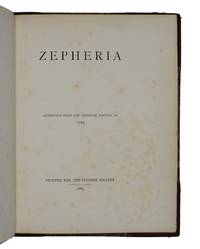
1869AQ26316Manchester: Printed by Charles S. Simms for the Spenser Society 1869. xi 1 44 8 4pp. Contemporary gilt-tooled red half-morocco marbled boards T.E.G. Rubbed. Marbled endpapers scattered spotting. A well-executed facsimile of an anonymous Elizabethan lyric sequence consisting of forty numbered 'canzons'; first published in 1594. . Quarto. Printed [by Charles S. Simms] for the Spenser Society hardcover
trad. di Luciano Bianciardi n. 1 bross. edit., tracce d'uso e lieve gora in cop.
Cm. 21, leg. ed. in cartone ondulato con titoli in nero e fregi ai piatti, pp. 17, con incisioni all'acquaforte di Titina Maselli. Coll. ''I Quad(r)erni di Artificina'', 13. Ediz. a cura di Massimo Riposati Ottimo (Fine) Ottimo. <br> <br> <br> (0000000040557)
Vol. in -8 (16,7 x 24 cm.), brossura editoriale marrone chiaro con titoli e disegno in marrone scuro, pp. 112, (4). In ottime condizioni.
(Codice TI/0336) Poesia in dialetto genovese, 12 strofe. Foglio volante, carta rosa, piegato in 4, dedica autografa al verso. Buono stato. ~~~ SPEDIZIONE IN ITALIA SEMPRE TRACCIATA
1992353894London: Faber and Faber. 1992. 752 S. 21,5 cm. Zustand: Gut min. gebräunt (Innen); Einband (Außen) hat leichte Gebrauchsspuren; Buchrücken ist etwas lesespurig; Eine Gelenkseite nahe Kapital oben gering bestoßen; Schnitt oben ist min., Seitlicher geringfügig braunfleckig; Broschiert
Staple-Bound Paperback. Very good condition. From the collection of poet Gavin Ewart, with a few of his penned annotations. Back and front inside cover with slight markings. Pages and text fine. RB Used
Arte+Antropologia. Antropologia+Arte. Libro d'artista pubblicato in occasione della mostra di Dortmund, febbraio - marzo 1975. Testi di Eugen Thiemanne e dell'Artista. Numerose illustrazioni in nero . 4to. pp. 62. . Buono (Good). Copertina leggermente sporca e sciupata (Lightly soiled cover). Prima edizione (First Edition). .
Very good paperback. Light shelf and handling wear only. Content in 'as unread' condition. CN Used
Paperback in good condition. First edition. Signed and dedicated by author on FEP. Covers and page block are marked and tanned. Minor scores, creases and edge-wear on covers. Pages are clean and text is clear throughout. HCW Used
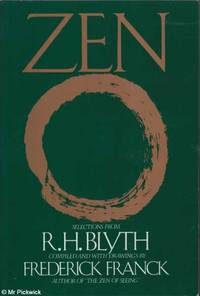
197829220Heian International 1978. Later Edition. Softcover. Very Good Condition/No Dust Jacket. Illustrator: Frederick Franck. From the 1000 volume private collection of well-known Australian poet and author Guy Weller all of which are listed or will soon be listed on this site. Includes many hardcover Collected Poems from sought-after 20th century poets from all countries. Search Mr Pickwick's store on this site under category Poetry or else do a Keyword search for the special keyword '"pickwickpoems" to display these as an isolated group. Size: Octavo standard book size. 292 pages. Text body is clean and free from previous owner annotation underlining and highlighting. Binding is tight covers and spine fully intact. No foxing in this copy. All edges clean neat and free of foxing. The publication date given above is an estimate only there being no date given in the book. Illustrator: Frederick Franck. Quantity Available: 1. Shipped Weight: Under 1 kilogram. Category: Poetry; Japan; Literature & Literary. ISBN: 0893463531. ISBN/EAN: 9780893463533. All our pictures shown here are of the actual item not stock photos. Inventory No: 29220. . 9780893463533 Heian International paperback
5453Rutland Vermont/Tokyo, Tuttle 1971, 195x150mm, editor's binding. Book in good condition.
Very Good English Modern cloth bdg. Foolscap 8vo. (18 x 12 cm). In Ottoman script. 3 volumes set in one: (77, [1] p.; 109, [3] p.; 90, [1] p. / Hejra: 1300 - 1306 = Gregorian: 1883 - 1889). Ozege: 23693. Recaizade's study including first new and modern poetics. Recaizade gave his old (Diwan poetry) style in his study. Zemzeme. 3 volumes set.
177063048CBGeneve [i.e. Paris], [um 1770]. 8°. 23,5 x 15,5 cm. 1 Blatt, 36 Seiten. Brauner Ganzlederband der Zeit auf 5 Bünden mit goldgeprägtem Titel auf rotem Lederrückenschild und floraler Rückenvergoldung sowie marmorierten Vorsätzen und Rundum-Goldschnitt. [3 Warenabbildungen]
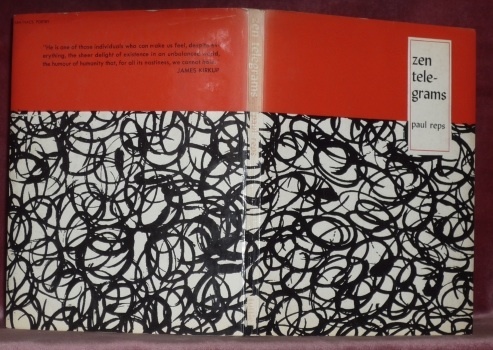
1978724105San Francisco: City Lights Books 1978-01-01. First Edition. paperback. Good. 9x6x0. Signed. Inscribed and signed by the author. City Lights Books paperback
19621072638(Düsseldorf), Diederichs, (1962). 62 S., 1 Bl. OPp.
1994147988Bergatreute. Verlag Wilfried Eppe 1994. 104 Seiten. Hellblauer Original-Satin-Einband (Geringe Gebrauchsspuren). 22x14,5 cm