CHAR (René)Livre Rare Book

8 007 résultats
193732052Exemplaire René Char sur papier teinté Paris, GLM, (15 décembre) 1937. 1 vol. (190 x 250 mm) de [36] p. Broché, sous couverture orange. Édition originale. Illustrée de 5 pointes sèches de Valentine Hugo. Un des quelques exemplaires hors commerce sur papier teinté, justifié et signé par le poète «exemplaire d'auteur».
248 pages. Printed upon glossy stock. More than seventy black and white photos. "The first authentic account of the romantic rise to fame and ultimate disbandment of the Air Transport Auxiliary, the little-known Ferry Pilot service of the (second world) war. Starting with 30 amateur pilots, its numbers finally totalled over 700 who, between 1939 and 1945, ferried more than 308,000 aircraft of more than a hundred different types from the factories to the Royal Air Force." - dust jacket. Appendices include: Special Commendations; Honours List; List of A.T.A. Pilots Who Actually Ferried Aircraft at Pools; Ferrying Figures; Lists of All Types of Aircraft Ferried. Book clean and unmarked with average wear. Binding intact. Heavy wear to dust jacket, now preserved in archival Brodart, which is missing large chunk from top of backstrip, affecting front and back panels. Bonus: Laid-in is A.T.A. Association Newsletter No. VIII from 1955 which runs 16 pages, including a seven-page list of current members. Also, laid inside this newsletter is an obituary news clipping of the A.T.A.'s wartime second in command, Philip Wills, plus a letter signed by Lieutenant Colonel Anthony Mather, O.B.E., dated 10 May 1996, which concerns the wartime record and award of Mr. James Bain, MBE, who served as Superintendent, Flight Engineers, A.T.A. ENSER p.376. Book
1769002098Paris Cellot 1769
1900198801900 Aquarelle sur papier, signée en bas à droite, titrée au verso avec le cachet d'atelier, (1900), 104 x 104 cm.
108Paris : vers 1890. UN RARISSIME ET SUPERBE EXEMPLE DE LA FUGITIVE RENAISSANCE DE L'ENLUMINURE EN FRANCE À LA FIN DU XIXE SIÈCLE
80 pages. Features: Magnificent cover illustration by William Winter depicts a quintessentially Canadian backyard skating rink; Household Finance (HFC) ad on page one features photo of Mr. J.B. Vaillancourt, manager of the Shawinigan Falls, Quebec office; Our Sham Defense Battle - Editorial; Krupp, Schacht and Rommel - Beverley Baxter reflects on what happened at the Castle Harben on October 1, 1946 in the wake of the Nuremberg Trials verdicts; William Stephenson - The Biggest Private Eye of All - he directed the most secret of all cloak-and-dagger operations of the Second World War - here, for the first time, is the story of the man who pulled the strings which spiked Hitler's guns in the western hemisphere - article with photo; Dr. Gordon M. Bell's School for Sobriety - The Shadow Brook Health Foundation for men and the Willowdale Hospital for Women, both located on the outskirts of Toronto; Karsh's Charlottetown (PEI) - The City That's One Big Farm - article with great Karsh photos, especially a large shot of Premier Walter Jones meeting voters to resolve their issue, and another of Dr. Roderick Macdonald at age 94; Maude Burbank and her Musical Moppets - she takes care of two musical bands of Moncton youngsters; Manitoulin Island - The Eden Isle of Evil Spirits - article with nice colour photos; What the Boyd Gang Fiasco Can Teach Us - the Mayor or Toronto, Allan Lamport assails conditions which helped the Boyd Gang terrorize his city; The Slide That Shook The West - A Maclean's Flashback article to the April 29, 1903 Frank Slide, in which part of Turtle Mountain crashed into Crowsnest Pass, destroying the town of Frank; The World's Most Ardent Birdwatcher - Peter Scott, the gifted son of Scott of the Antarctic will fly anywhere to gaze lovingly at rare wildfowl - article with photos; You Can't Stop a Woman Crying; Nice one-page colour ad for Stanfield's "Look-Alike" Balbriggan Pajamas with happy family scene; Gaines Meal dog food ad features illustration of Saint Bernard; Vintage Frigidaire ad includes lengthy Christmas message and suburban evening scene of appliances being delivered to happy homes; Cream of Wheat ad features Li'l Abner; Vintage colour ad for Christie's Premium Crackers; Colour centrefold ad for Ekco and their many kitchen products; Champion Spark Plug ad includes photos of 12 new members of the 100-mile-an-hour club at Indianapolis; Two-page colour ad for Revere Cookware - 'the world's finest'; Lightning Zipper ad shows irate wife fixing husband's trousers while he stands, semi-dressed, taking her abuse; and more. Unmarked with moderate wear. Two-inch opening to fore-edge of front cover and first two pages mended with archival tape. A sound copy of this very special issue. Book
193632067L'exemplaire nominatif de l'artiste avec gravure signée et suite Paris, Creuzevault, (11 novembre) 1936. 1 vol. (160 x 250 mm) de 45 p., 1 et [2] f. + suite. Demi-maroquin framboise, titre doré, tête dorée, plats papier glacé blanc, filet vertical à froid sur les plats, couvertures et dos conservés (reliure de l'époque). Première édition illustrée. 21 pointes sèches originales d'Hermine David. Un des 10 exemplaires de collaborateurs, celui-ci nominatif pour l'artiste (justifié et signé par l'éditeur) sur Gaspard-Maillol comprenant : une double suite des illustrations, en noir et en couleur, 1 pointe sèche signée et réhaussée en couleur par l'artiste, 1 épreuve d'essai justifiée et signée et 1 tirage supplémentaire, signé.
1857List3026Wilcox County Alabama 1857. Two documents totaling five double-sided pages measuring 8 x 13 inches and six double-sided pages measuring 7 ½ x 12 inches. Folded with some stains and wear; Near Fine. Two legal documents from an Alabama chancery court suit brought against Susannah Nettles by her husband James C. Nettles concerning ownership of an enslaved woman named Chloe. The documents are a set of cross interrogatories and objections and their replies which were given by William Mellard the writer of the deed that originally gave Susannah ownership of Chloe. Mellard recalls that the deed written in 1829 provided the following:<br /> <br /> “Mary Rudd declared to him while directing him how to write the Instrument that as Susannah was her youngest child and a daughter that she wished while she yet lived to secure to her that much of her Estate to wit Chloe and her future increase; and she wished the Instrument so written that it would convey to Susannah the said girl Chloe in such a manner that she would not be subject to the control of her husband should she afterwards marry . and that the negro girl should not be subject to the debts of her husband should she marryâ€.<br /> <br /> Mellard claims that after Susannah’s marriage “James C. Nettles admitted the right of his wife to the Negroes and acquiesced in her title to them and did not claim any right to them.â€<br /> <br /> At the time the deed was drawn up the legal doctrine of coverture was in effect: a married woman did not have legal rights and obligations including a right to property ownership separate from her husband. Though Susannah was single at the time Chloe would have become James Nettles’ property on his marriage to Susannah were it not for the part of Mary Rudd’s deed which Mellard insists he is remembering correctly that set aside Chloe as only Susannah’s property. Though some states had passed Married Women’s Property Acts or similar Alabama would pass any such laws until 1867.1<br /> <br /> These documents are a striking example of the enforcement of a key aspect of women’s rights—the right to own one’s own property—in which it specifically hinges on the denial of rights to another group of women—those who are owned as property. Of interest to legal historians particularly of women’s rights and enslavement.<br /> <br /> 1 B. Zorina Khan The Democratization of Invention: Patents and Copyrights in American Economic Development 1790–1920 Cambridge University Press 2005 167. unknown
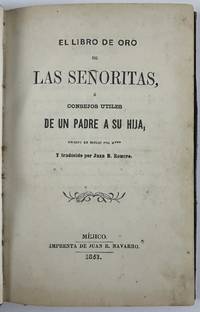
185113052Mexico City: Juan R. Navarro 1851. 208pp. Contemporary Mexican green morocco gilt borders to boards spine stamped in gilt. Minor edge wear some scuffing to boards light soiling. Uneven toning to text occasional minor staining. Overall very good. An apparently unrecorded book of manners supposedly translated from the English language by Juan B. Romero in Mexico in 1851. The title translates roughly to English as The Golden Book for Young Ladies or Useful Advice from a Father to His Daughter. We were unable to identify any English sources for this work thereby providing either an excellent research opportunity for a bibliographer to identify its source or as a new and interesting original work for scholars of Mexican literature in the 19th century. The half title indicates the work is part of the Biblioteca de la Semana de las Senoritas; OCLC reports just three other works under this series title all works of poetry. All of the works in the series were printed by Juan R. Navarro who also published a women's magazine under a similar title La semana de las senoritas mexicanas. Navarro's magazine was aimed at educating and informing women on cultural events history and science in response to the absence of formal schools. The present work presents an ideal of female behavior through advice from a helpful father figure. The chapters cover topics such as friendship education reading manners conversation entertainment interpersonal relationships marriage religious sentiments humility proper use of time and more. Somewhat morbidly the twentieth and final chapter advises young women on "prepararse para la muerte" "preparing for death". Juan R. Navarro unknown
1930List328Boston 1930. Oblong quarto 49 pp. With appx. 1400 photos most measuring less than an inch square with roughly 175 in larger formats up to 3 ½ by 5 inches. Very Good. A wonderful labor of photographic love created by an unidentified young woman with ties to the Cabot family of Beacon Hill. The album composed largely of tiny contact prints glued in neat grids. Off-kilter compositions - a portion of a steeple against the sky the tail of a dog etc. - are mixed in with more traditional landscapes leading one to question whether the photographer had modernist aspirations or just took a lot of pictures.<br /> <br /> The photographer is unknown but our best guess is that it was someone who was a friend of Ellen Cabot of Beacon Hill perhaps while both were students or just after. Ellen Cabot the most frequent subject of the album is shown in a variety of settings often accompanied by her dog Prowler. Aerial photography the New England coastline camping life in Cambridge and equestrian competition are all on display. Other highlights include a dog named Benito Mussolini and artful shots of a monk’s torso. A portion of the photos perhaps five or ten percent are not present though the album is otherwise in excellent condition. Handwritten label on the front reads “Newport Races to Topsfield autumn 1930â€. Overall the album is a testament to the energy and spontaneity of youth and the possibilities of the photographic form as well as an intimate look into Boston’s storied upper class. unknown
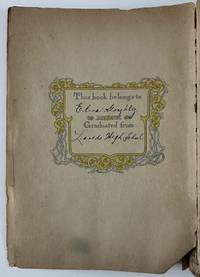
192512981Laredo TX 1925. 118pp. of content of various types including thirty-six photographs most once in mounting corners but now loose plus 41pp. of manuscript inscriptions to Gonzalez an original drawing and various kinds of mounted ephemeral items. Contemporary scrapbook 8.75 x 6 inches. Ownership signature on early page. A well-used personal scrapbook lacking spine and rear cover front cover detached and with significant wear. Front free endpaper also detached. Some photographs somewhat worn but contents generally sound though dust-soiled. Good condition overall. A unique record of a young Texas woman Elena Gonzalez and her experiences as a senior at Laredo High School in 1925 containing numerous photographs a legion of manuscript messages to her from fellow students and dozens of ephemeral items related to her educational experiences in a prominent Texas border town. The book includes thirty-six photographs which mainly picture Gonzalez and her fellow students in individual portraits small groups and class photos almost always in outdoor settings. The photos also include two slightly larger studio portraits of Gonzalez each measuring about 8 x 5 inches.<br /> <br /> The work also includes about forty pages of manuscript inscriptions from fellow students to Gonzalez dated mostly in March and April 1925. Many of the messages take up most or all of an entire page with Gonzalez's classmates sharing memories funny stories good wishes for the future and so forth. Interestingly but not surprising considering where Elena lived several of the manuscript inscriptions are written in Spanish. In addition to the personal inscriptions to Gonzalez the book also contains an eleven-page "Prophecy of the Class of 1925" handwritten by Phyllis Ellis "Prophet of Class of '25." The prophecy was "read in the Laredo High School Auditorium Thursday night May 21 1925 by the writer." Ellis's prediction for Elena is as a model for the Tar Soap Company "to pose for magazine pictures showing the benefits of their products to one's hair." The photographs and manuscript elements are complemented by various kinds of ephemeral items including calling cards programs program clippings mementos from school events clippings from school publications and newspapers including numerous jokes and funny story clippings in both English and Spanish and so forth. Though the condition of the memory book has seen better days the fact that it survives at all is a feat in itself. A wonderful primary source for Mexican-American life in the borderlands. unknown
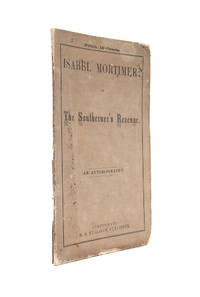
18584036Cincinnati: H. M. Rulison 1858. First edition. Original publisher's printed wrappers with price 15 cents and publisher misspelled on front wrapper Wright II 1328. Wrappers somewhat chipped and soiled with rear wrap tender. 36 pages with 2 woodcuts. The only copy on the market of this scarce and delicate title OCLC reports 7 institutionally preserved copies. Isabel Mortimer last appeared at auction over a century ago in 1916. <br/><br/>Scarce and understudied Isabel Mortimer's sensational tale of seduction and revenge in New Orleans offers opportunities for considering how this popular Victorian form not only dealt with representations of femininity generally but more specifically forms of white Southern femininity. On a general level sensation novels explored the "ideological constructs of female irresponsibility passivity explosiveness and inacapacity" by pushing them to their limits; as female characters encounter or engage in seduction and murder they "undermine the validity of these constructions of womanhood.By linking women's subversive behavior directly to the stifling economic and psychological conditions of their lives the novels reveal women's madness is not the result of their instability as the doctors claimed but of their confined lives" Zahn. In the case of Isabel Mortimer a privileged young woman living in antebellum New Orleans readers witness her response to being taken advantage of by "a professional gambler a married man!" who trifled with her feelings and her virtue "hoping in some covert manner to obtain possession of her fortune." As a commodity on a marriage market Isabel's prospects are ruined. But the story proves that she is not the passive recipient of men's advances; she will not perform shame nor will she accept her current status with genteel docility expected of Southern women. Instead she decides to take her behavior to the opposite extreme: "I resolved like a second Delilah to shear these proud sons of Adam of their boasted strength and humiliate them." Isabel places blame for her situation on a patriarchal system that infantilizes women then punishes them for failing to see and respond to danger. A knowing Delilah now she will punish the representatives of that system. Ultimately the troubling contradictions that exist within the small space of the novel urge readers not to take popular value systems at face value encouraging them to look for tears within the seams of social expectation. H. M. Rulison unknown books
1930List328Boston 1930. Oblong quarto 49 pp. With appx. 1400 photos most measuring less than an inch square with roughly 175 in larger formats up to 3 ½ by 5 inches. Very Good. A wonderful labor of photographic love created by an unidentified young woman with ties to the Cabot family of Beacon Hill. The album composed largely of tiny contact prints glued in neat grids. Off-kilter compositions - a portion of a steeple against the sky the tail of a dog etc. - are mixed in with more traditional landscapes leading one to question whether the photographer had modernist aspirations or just took a lot of pictures.<br /> <br /> The photographer is unknown but our best guess is that it was someone who was a friend of Ellen Cabot of Beacon Hill perhaps while both were students or just after. Ellen Cabot the most frequent subject of the album is shown in a variety of settings often accompanied by her dog Prowler. Aerial photography the New England coastline camping life in Cambridge and equestrian competition are all on display. Other highlights include a dog named Benito Mussolini and artful shots of a monk's torso. A portion of the photos perhaps five or ten percent are not present though the album is otherwise in excellent condition. Handwritten label on the front reads "Newport Races to Topsfield autumn 1930". Overall the album is a testament to the energy and spontaneity of youth and the possibilities of the photographic form as well as an intimate look into Boston's storied upper class. unknown books
1842003510Lisboa Lisbon: Imprensa Nacional 1842. Hardcover. Very Good. xx 154 vi p. 50 leaves of lithographed plates containing 196 illustrations; 26 cm. Rebacked retaining most of contemporary quarter calf with gilt-tooled spine title and decoration; marbled paper over boards. Blue endpapers. Includes list of subscribers. The extremely scarce Portugese edition of Atlas der Geburtshülflicher Abbildungen the important work of obstetrical plates by Dietrich Wilhelm Heinrich Busch first published the previous year. This was the first such obstetrical work published in Portuguese. In Very Good Condition: corners of boards are rubbed; reback as described; browning and foxing to both text and plates heavy at times; otherwise clean and tight. Imprensa Nacional hardcover
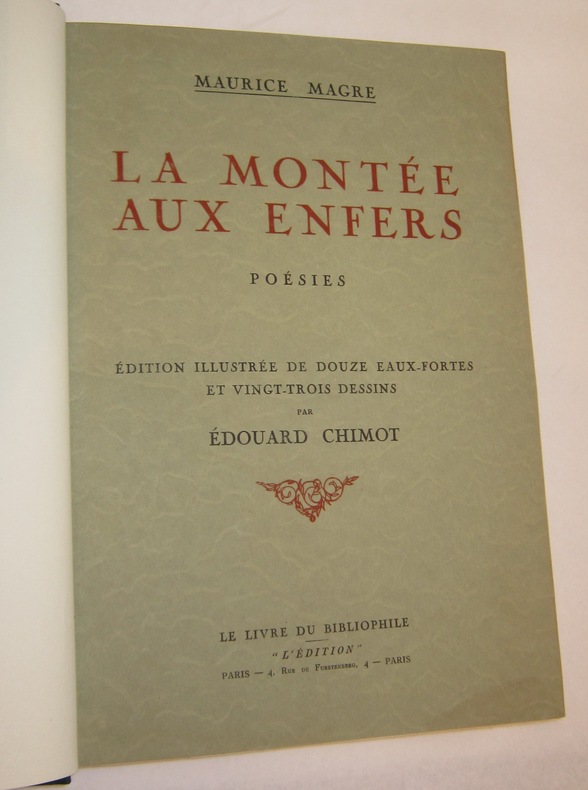
1920001284Paris Le Livre Du Bibliophile 1920
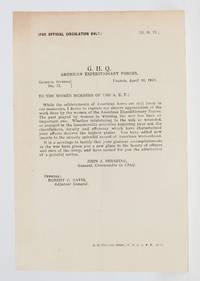
19195562France: AG Printing Department 1919. First edition. Handbill measuring 195 x 127 mm with text to recto only. A Fine example of a scarce piece which is not listed in OCLC. <br /> <br /> As the American Expeditionary Forces under General Pershing faced the violence of the European warfront women also took on more official military positions than they had in the past. "At the time of the First World War most women were barred from voting or serving in military combat roles" but many professionally "provided support on the front lines as nurses doctors ambulance drivers and translators" as well as serving as secretaries operators and canteen workers National WWI Museum & Memorial. In fact "World War I marked the first major mobilization of American women in Europe in US history. More than sixteen thousand women served as part of the AEF in sex-segregated environments in non-combat roles. Thousands worked stateside in the armed services in order to free up men for war. Hundreds more traveled to France to work for newspapers relief societies and to staff wartime agencies.This was waged work so it attracted women interested in serving but without the means to perform volunteer service" Missouri Over There.<br /> <br /> As the war ended these brave women received some acknowledgement for their contributions as evidenced here. Marked "for official circulation only" this small pamphlet contains Pershing's "desire to express my sincerest appreciation of the work done by the women of the American Expeditionary Forces. The part played by women in the winning of the war has been an important one.you have added new laurels to the already splendid record of American womanhood." Notably however the women of the AEF were not considered veterans and as such they did not receive the same types of benefits -- financial or otherwise -- given to their male counterparts. "Despite women's overseas actions their heroism and the celebration in the media of their work most authorities continued to view women's wartime service as an aberration. Women who returned were urged to settle down and return to the domestic sphere" -- much as Pershing hints in his missive Missouri Over There. AG Printing Department unknown
4581Paris, Michel Levy Frères, (1868). (Imprimerie J. Claye, Paris). In-18 (17,5 cm) (2) feuillets, frontispice portrait de l’auteur gravé sur acier par Jean-Denis Nargeot, 411, (1) pages. Reliure d’époque demi-chagrin vert (passé au brun), dos à 4 nerfs ornés de filets dorés, fleurons dorés aux entre-nerfs, plats cartonnés verts très frotttés, pages de garde marbrées. Exemplaire usé aux coins et coupes. Mouillures claires à une partie des marges latérales, 4 petites taches d’encre aux pages 109 à 112, rares rousseurs. Transcriptions manuscrites anciennes sur 2 1/2 pages in fine à l’« Appendice », pages 351-353, aux parties des pages non imprimées donnant les 16 premiers quatrains de « Femmes damnées : À la pâle clarté … », l’un des 6 poèmes condamnés et absents de la première édition des « Œuvres complètes », notre exemplaire est sans tomaison au dos. Talvart 9c. Vicaire I, 344.
SONG1945529458Gateway Press 2018-05-01. paperback. Used: Good. 7.20x0.51x9.02. Buy with confidence. Excellent Customer Service & Return policy. Gateway Press paperback
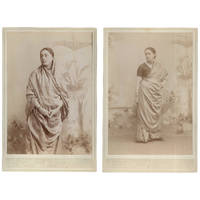
1892307182San Francisco: Abell & Priest 1892. Two fine images of pioneering physician Pauline Root dressed in a sari presumably one she wore in Madurai India while working as a doctor for the American Board of Commissioners for Foreign Missions ABCFM. <br /> <br /> Root 1859–1944 graduated from the Women's Medical College in Philadelphia and was the first female doctor to hold many posts throughout her working life. She spent seven or eight years in India establishing a Woman's Hospital in Madurai. She left India in 1891 and visited China and Japan before returning to the West Coast of the United States giving talks on her work to Christian groups along the way. She gave a lecture to the Occidental Board of Foreign Missions in San Francisco on February 3 1892 and these photographs are likely to have been taken at that time. <br /> <br /> After returning to the East Coast Root studied surgery at Cornell obtained licenses to practice in Massachusetts and New York and took a position as the resident physician at Smith College. In the 1920s she taught "social hygiene" sex-ed for the Bureau of Indian Affairs. <br /> <br /> Nineteenth century photographs of Dr. Root and other female physicians are uncommon. Drexel University has two poor condition cabinet cards of Root in Japan a few months before she arrived in San Francisco. Both images are fine with medium contrast sepia tones. The albumen silver prints measure 3-3/4 by 7-7/16 inches on 4-1/4 by 6-7/16 inch mounts. The photographer's imprint is "Abell & Priest Bancroft Building / 723 Market St. S.F. Cal." Both have blank backs with the notation "Dr. Pauline Root" and "India. Abell & Priest unknown
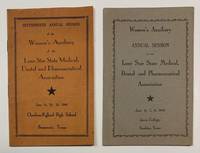
194612633N.p. likely Houston Tx 1946. 4; 4pp. Both in original printed wrappers stapled. Minor overall wear. Very good. A pair of very rare if not unrecorded pamphlets printing the events which took place at two different annual meetings of the Women's Auxiliary of the Lone Star State Medical Dental and Pharmaceutical Association a vitally important African-American health organization in Jim Crow Texas. The earlier of the two publications covers the June 6-8 1944 session held at Jarvis College in Hawkins Texas; the latter session was held at Charlton-Pollard High School in Beaumont. Both pamphlets print the schedule of events for the sessions along with a "Social Calendar" and a list of officers. The events included musical performances addresses devotionals readings of minutes and so forth. Interestingly the opening song of the 1946 session is listed as the "Negro National Anthem" also known as James Weldon Johnson's "Lift Every Voice and Sing." We are unable to find any holdings of these two pamphlets explicitly in OCLC but a couple of institutions hold collections of papers from various health professionals who were members of the organization which may include these two publications.<br /> <br /> "The Lone Star State Medical Dental and Pharmaceutical Association an organization of African Americans in the health field came into existence on August 25 1886 in Galveston. J. H. and L. M. Wilkins brothers and Galveston doctors with J. S. Cameron a San Antonio pharmacist and twelve men from nine towns met to establish the association the second organization of Black professionals in the medical field in the nation. The founders had approached the Texas Medical Association concerning participation but it refused to admit them. After sporadic activities in the 1880s and 1890s the association revived in 1901 through the efforts of six members who held a meeting in Austin. Thereafter it grew steadily to attain a membership of almost 300 by 1928. Its members-physicians dentists pharmacists and nurses-selected their first female president A. E. Hughes in 1934. Throughout its history the association emphasized discussion of medical practice and public-health education. It also reviewed hospitals and schools for nurses to provide information on standards. During the 1930s leaders successfully urged the establishment of a state-supported tuberculosis sanatorium for Blacks at Kerrville. After the TMA was opened to Blacks in 1955 the organization which had been retitled the Lone Star Medical Association remained active but declined from 250 members in 1959 to eighty in 1985 after a decision allowing dentists and pharmacists to form their own groups" - Handbook of Texas online. unknown
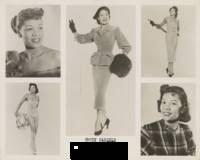
1960List3205New York City: Bruno of Hollywood and other uncredited photographers 1960. Photo album measuring 9 ¼ x 11 ¼ inches containing forty-seven photographs mainly 4 x 5 inches and smaller with some 8 x 10. Most photos loosely affixed with some having detached. Overall excellent. An album of photographs of African American models from the 1950s and 1960s many with stamps verso from Ophelia DeVore’s Grace del Marco Modeling Agency. DeVore’s was among the first agencies for African American models and was highly influential with talent including the first Black supermodel Helen Williams Shaft actor Richard Roundtree and pioneering actresses Diahann Carroll and Cicely Tyson. Identified models in this album include Trudy Daniels Haynes and Lourdes “Lulu†Guerrero. Guerrero was a cover girl for Ebony and Jet magazines and had a role on The Jackie Gleason Show in 1958 making her one of the first Black women to have a role as a regular performer on national television. Trudy Haynes had a brief modeling career before becoming the first African American TV weather reporter working with WXYZ-TV in Detroit in 1963. There is also a photograph of radio DJ Pat Connell; though not a fashion model Connell was the first African American hired as a staff announcer by CBS. Of interest to historians of African American fashion and media. Bruno of Hollywood and other uncredited photographers unknown
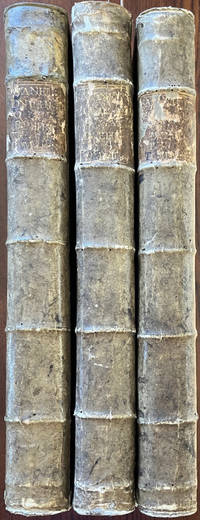
175861510Venice: Typis Antonii Zattae 1758-1762. Three vols. Folio. 11.5 x 15.5 in. xxxii 600; v 1 618; 8 579 1 xl pp. Title of vol. I in red & black woodcut-engraved vignettes historiated initials couple text copper plate engravings in vol. II splendid woodblock-engraved printer’s device tailpiece in Vol. III. Uniformly bound in contemporary vellum raised bands on spines brown morocco & gilt spine labels marbled fore-edges heads of a couple spines expertly repaired minor bumping to corners some soiling to back cover of final vol minor rippling to textblocks still VG set w/former armorial ownership stamps on titles old bookseller notes & pricing on endpapers typescript translation title on red ruled paper laid-in to vol. II. Second edition substantially revised and corrected of this sweeping history of the Hieronymites monastic orders of monks and nuns of the Poor Hermits of Saint Jerome Pisa first established near Pisa in 1377 and would eventually grow to fifty houses of which two still survive in Rome and Viterbo Italy. Sajanelli was a general director of the Hieronymite Poor Hermits of Blessed Saint Jerome Pisa and doctor of theology of Padua who has carefully assembled all of the related documents along with detailed indices and chronologies together with Papal Bulls and monastic orders chronicling the origins and ongoing mission of the this order. Convents with extensive documentation included by Sajanelli include those of the Convent of the Most Holy Trinity founded in 1380 near Montebellum the Convent of Saint Jerome outside of Ariminum and that of Saint Mary of the Annunciation in the town of Saint Anthimum founded originally in 1490. Originating in Spain the monastic order was recognized by Pope Gregory XI in his Papal Bull dated Oct. 18 1373 recognizing the religious order to operate under the Rule of St. Augustine and both monks and nuns adopted the religious order habits of white tunics with brown scapulars similar to the Carmelites. The first nunnery convent began in Toledo Spain led by Maria Garcia near Toledo and perhaps the most revered and well known was Sor Juana Ines de la Cruz of the convent of San Jeronimo y Stanta Paula in Mexico City considered the “Tenth Muse.†See: Perennes Dicionnaire de Bibliographie Catholique Vol. III 1839 p. 933-934; Besse Hieronymites Catholic Encyclopedia 1910. Typis Antonii Zattae, hardcover
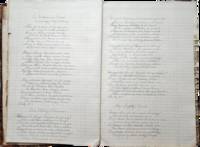
1943List3433Reading Vermont 1943. 156 pp with approximately 207 poems plus a 1934 rejection letter from Perry Mason & Co. Spine broken cover nearly detached and pages coming detached; some toning and wear to edges of pages with smell. Overall very good minus. A book of poems by Vermonter Mary S. Fay likely 1875–1968. Fay’s topics include friends’ special events; current events such as “Titanic†May 15 1912 and “America We Are Ready†1915 presumably concerning World War I; nature themes and seasonal poems; and especially nostalgic and sometimes defensive poems about Vermont including “Strike Not The Land That Shelters†which was “Written on learning slurs cast in Vermont by alliens who come to Vermont to resideâ€.<br /> <br /> However Fay sometimes took up expressly political causes in her poetry. For instance in April 1911 she penned “Equal Rights Proclaimingâ€:<br /> <br /> “Sister Woman look ahead / For there dawns the gladsome time / When thy queen Equal rights treads / O’er the land with light sublime: / O raise your voice on high / Loudly in sweet acclaim / ‘Till they reach yonder sky / And there the rights proclaim. . Sister Woman of today / Thou have striven long and well / Thou’ve waited in twilight grief / For the ring of Freedoms bell. / Though at times all seem’d as lost / Thou upheld thy banner height; / And you counted not the cost / But press’d onward thru’ the night.â€<br /> <br /> In March 1915 she took up the topic again in a poem titled “Enfranchisementâ€:<br /> <br /> “Fled the years of servile shame! / Woman ‘tis this hour at last / Honor thy glorious name / Spread thy banner to the blast. / Brave my sisters in thy might / Steadfast yet and valiant be; / On thy noble standard write / Equality law and liberty. . Enfranchisement thus we vow / Shall be ours ere we abate / Our strife which thru and thru / Of our life’s blood we consecrate / Upon the altar upon the shield / Equality for all eternity; / Shall be ours at home afield:- / Equality law and liberty.â€<br /> <br /> Despite the efforts of groups such as the Vermont Equal Suffrage Association formed in the early 1880s Vermont women did not get the right to vote until the rest of the country did ratifying the Nineteenth Amendment in 1921.<br /> <br /> She also writes an intriguing more general protest poem seemingly for labor rights titled “Justice Where†August 1911:<br /> <br /> “Tho labor’s toils in day by day / Beneath the heat and the cold; / While the oppresser sits in grandest state / With a mere pittance to pay / To keep hunger from the fold / And in false pride his tyranny relate. / Awake all ye toilers / Drive at the oppresor bold! / Unfurl thy glorious standard of Right / O’er many a dear home fold / And thus ever protect it with thy might.â€<br /> <br /> Another of Fay’s causes was temperance; in 1914 she wrote “A Temperance Boy†dedicated to “six year old Clark A. Ritchieâ€:<br /> <br /> “A little temperance boy am I / And proudly its banner I will fly. / Pure cold water is what I drink / And its the best of all I think. / A big promise don’t expect of me / for I’m only a little boy you see.â€<br /> She objects to smoking as well writing in “Why is it†1932 that “I must relate / smoking I hate. / ‘Be a sport girls’ / That is the cry / If in the whirl / They are a bit shy.â€<br /> <br /> Overall a charming document of a woman’s progressive politics expressed in verse. unknown
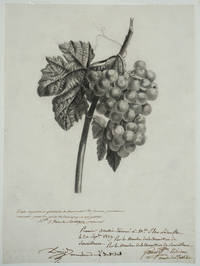
1829262371829. An intricate drawing of a bunch of grapes a survival from the Age of Enlightenment in France first prize in the annual competition given to a young woman by one of the women who ran the school. Free drawing schools were established in France from the 1740s onward with the aim of training and supporting poor children. The painter Ferrand de Monthelon was concerned about idleness of children after leaving school age 10 and before beginning apprenticeship age 15. The schools were supported by charitable donations and aimed to form the sound basis for further training in a dizzying list of trades. One of the most prominent free drawing schools was established in Paris by the painter Jean-Jacques Bachelier former artistic director of the royal porcelain manufacture at Sevres in 1766. Called "Ecole royale gratuite de dessin" it was initially only open to men. Bachelier was critical of the Guilds apprenticeship training as expensive and uninspiring. It continues today as "École nationale superieur des arts decoratifs".<br /> <br /> This drawing is a survival from another school that also trained women run by women. According to the "Almanach Royal et National pour l'An 1839" this school was directed by two sisters the Misses Frère de Montizon for young people destined to working in the arts and industrial professions. They were instructed in drawing & lithography. There was an annual prize awarded and honorable mentions instituted in 1828 the year before this drawing was done. The judges were the "Membres de la Commission de surveillance" and the artwork was publicly exhibited. The drawing is signed by Mlle Justine Frère de Montizon M. David and M. Garnier the judges & members of the "Commission". <br /> <br /> Inscribed "École royalle et gratuite de dessin pour les jeunes personnes / concours pour les prix de l'an 1829 ce 27 juillet. Mlle. T. Frère de Montizon professeur. Premier Acuellir déservé a Mlle. Flore Lécoufler le 30 Septre.1829. Par le Membres de la Commission de Surveillance. Par les Membres de la Commission de Surveillance / Garnier President Membres de l'Institute / David Membres de l'Institut".<br /> <br /> Exquisite pencil drawing approx. 6 x 9" on paper 9 1/4 x 12 3/4". Manuscript inscriptions beneath the drawing. Small pinholes in the lower left corner perhaps where the award was first pinned on exhibition. In remarkable condition.<br /> <br /> A rare survival and an accomplished drawing.<br /> <br /> De Munck Bert Steven L. Kaplan Hugo Soly edit. "Learning on the Shop Floor: Historical Perspectives on Apprenticeship" 2007. unknown
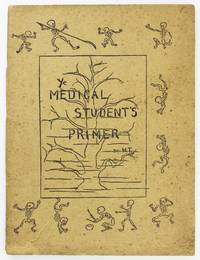
19016405Philadelphia 1901. Very good. 52pp. Quarto. Original tan printed wrappers stitched as issued. Closed tear and slight loss in lower front corner repaired with tape on verso. Light wear toned minor soiling. A charming small-press publication comprised of humorous poetry and drawings by Martha Tracy during her tenure as a medical student at the Women's Medical College of Pennsylvania. Each set of lines is preceded by a title page such as "Ye Serene Skeleton" which is then accompanied by a line drawing: "Ye skeleton seems happy quite / Hung by his head morn noon and night -- / Though students come and students go / He still swings gently to and fro". Other stanzas are dedicated to Ye Booklover Ye Distasteful Drugs about a female medical student testing drugs by tasting them Ye Frightful Germ etc. Martha Tracy 1875-1942 graduated from Bryn Mawr in 1898 and thence from medical school in 1904. After post-graduate work at Cornell she became a professor of chemistry at WMCP in 1907 then served as dean from 1917 until her death in 1942. The present work was edited by her classmate Ellen Culver Potter 1871-1958 who graduated in 1903; Potter went on to become a prominent physician and public health official. A wonderfully charming production and quite rare likely due to a very limited production run. We locate three copies in OCLC. unknown