ICART (Louis).Livre Rare Book
Élégante au chapeau bleu.
1920210221920 Pastel sur papier, signé en bas à gauche, 42 x 33 cm. (1920), cadre argenté Art-déco au motif de vagues.

Librairie Chrétien · Paris, France2 000,00 €
8 007 résultats
15590WILSON Elisabeth. A Scriptural View of Woman's Rights and Duties in All the Important Relations of Life. Philadelphia: Published by William S. Young 1849. First Edition. 376 pages. This impassioned defense of women's rights faults the oppressive role of patriarchal church and society values. Challenging prominent male biblical scholars Wilson asserted that male and female were created by God as equal co-sovereigns over creation and thus biblical patriarchs and matriarchs exercised equal authority within the marriage relationship. Wilson's most striking example is Abigail who distributed household property an extravagant gift of dressed sheep and other food to David against her husband Nabal's wishes 1 Samuel 25. Wilson uses this example to argue that the bible supports the equal administration of marital property between husband and wife; a radical proposition in 1849 when only 12 US States allowed women to own property. A rare and striking early text arguing for women's rights. unknown books
1920210221920 Pastel sur papier, signé en bas à gauche, 42 x 33 cm. (1920), cadre argenté Art-déco au motif de vagues.
17133648A La Haye, chez Henry Scheurleer, 1713. In-12 de 508-(8) pp., maroquin bleu, dos orné à nerfs, triple filet doré d'encadrement sur les plats, dentelle intérieure, tranches dorées sur marbrure (David).
18905955Kutztown PA 1890. Quarter roan over marbled boards measuring 8 x 6.25 inches and comprised of 73 pages of manuscript text including a mixture of notes passed between friends on the verso of the final leaf and on the rear pastedown. Spine largely perished with boards and textblock held together by cords. Several leaves neatly excised towards rear. Containing notes from Fannie Hottenstein's courses in teacher training the present volumes offer researchers a range of study topics including the history of pedagogy and women's increasingly visible place in American education; the book also is a valuable resource for examining how educated young women were thinking through their own lives and roles -- as individuals and as a generation. <br /> <br /> Trained in one of the most educationally progressive states at the time Fannie Hottenstein was one of a generation of women who could more widely dream about and pursue more independent lives than their matriarchs. Historically Pennsylvania had been a vanguard for public and progressive education. "In his 1830 address to the state legislature Governor George Wold championed the cause of universal public education" as a scaffold for "the security and stability of the individual privileges we have inherited from our ancestors" Explore History. Before the decade was over "more than 1000 local school districts under a single statewide system of instruction" had been founded working to regularize "educational standards curriculum and instructional credentials" in tandem with the 1857 Normal School Act which founded "a network of ten state academies to prepare public school teachers" Explore History. Fannie attended one of these preparing for a career in education that would give her a new level of social and economic independence. <br /> <br /> Much of Fannie's notebook reflects the kind of rigorous work required to teach middle and high school students. Contents include for example three pages of facts on basic Botany; fifteen pages on the practice of Logic in writing and debate including an extensive section on presenting proper Opposition accompanied by text book page numbers; and five pages on pedagogical methods for helping students develop curiosity and drive it forward into productive study. There are additional fairly staid essay samples on topics such as Influence and Gentleness. Yet it is in the thirteen page essay We Girls that sparks of Fannie's individuality ambition and independence show. In it she reveals how much contact she has had with the period's literature on women's rights and suffrage; she shows her familiarity with anti-feminist arguments in opposition to women like her; and she powerfully expresses her hopes not only for her generation but the ones that follow.<br /> <br /> Fannie opens: "It is a recognized fact that the degree of civilization of every nation is marked by the social position of woman. Indeed one of the most prominent features of the progress of civilization is her gradual elevation in society and the clear perception and recognition of her rights. In the earlier ages of the world when the sphere of her influence was bounded by the narrow prejudices of the opposite sex her happiness as well as her mental improvement and social rank depended more on what was done for her at the hands of men than on what she could do for herself. All this is changed now." Fannie praises the hard-won changes women accomplished in accessing education and job training; and she touts how many opportunities are available for women to dream about and pursue. This does not mean she's unaware of the challenges that continue -- particularly from men. "We have to contend with the prejudice sometimes entertained against us that our highest destiny in life is to be a pretty piece of furniture in a handsome parlor. Men who entertain this notion we girls must always urge to get their furniture somewhere else." To those who accuse women of being too emotional and insufficiently intellectual she also has a response. "Our aim must be to develop and perfect our entire nature mental social and moral" she argues. Only by embracing both thinking and feeling as strengths can any individual -- man or women she contends -- succeed. Women are in a unique position to embrace both. <br /> <br /> A truly rich document which also includes brief notes among Fannie and her friends about their flirtations and recent purchases of accessories at the end gives insight into the development of a young woman who would go on to live what she preached. According to the US Census of 1900 Fannie remained single and lived in a boarding house working as an office stenographer. unknown
15272Very Rare Photo Archive. 1889-1912. 30 photos dated 1910-1912 of the Native American Sac & Fox village of Chelan Washington with vivid descriptions on verso focusing on the graduates of Carlisle and the other first schools formed for the purpose of assimilating young Native Americans into western culture sometimes with the intentions of expanding their opportunities but too often with a careless disregard for native culture. Approx 2"x4". Also an accompanying letter and 2 news articles from the photographer of the Sac & Fox Indian Agency 1910. A very rare Department of Indian Education ribbon of 1902 and accompanying "Committee" pin. A very rare collection documenting a program which holds a mixed place in history; at once formed in the hope that building bridges between worlds would be the best chance for these children to prosper and at the same time doing so by separating them from their cultural background. This collection vividly portrays the children caught in the middle. <br/><br/>In the Summer of 1896 young William Jones and his father entered Kansas Indian Territory on a contract to bring pupils for the Carlisle Indian School in Carlisle Pennsylvania. Carlisle was the first of its kind a boarding school at once devoted to proving the equality of Native peoples by providing their children with a quality education and opportunities outside the Reservation and to suppressing the signs of culture that white populations viewed fearfully. Purposely located far from any reservation the school was designed to put physical as well as cultural distance between its young students and their past. Again and again Jones' overtures were rejected by tribal chiefs and councils suspicious of their intentions. However Jones who was of one-quarter native blood a happy graduate of a Native American college program and contemplating Harvard medical school for the coming year was able to make the argument to some parents that the best chance of success for their tribes lay in their children learning to read and write in English. On August 15 he picked up teenage Leona Greyeyes from her Sac & Fox village and brought her to Carlisle as a student. There she underwent a process of cultural assimilation similar to the over 10000 students that walked through Carlisle's doors between its opening in 1879 and closing in 1914. One of the greatest risks of sending children to the boarding schools was contracting western diseases to which they had no immunity. The collection includes a very rare red ribbon worn by a member of the Department of Indian Education to the National Education Association convention of 1902 in Minneapolis at a time when the boarding school was still touted as "making a good citizen" of the boys and girls of the Indian nations by westernizing them. The department of Indian Affairs commissioned an inquiry to follow up on the lives of graduates with photos as well as detailed notes. This set of 30 photos document Leona Shelah Lelia as well as other members of their tribe living in Chelan Washington. These young women appear through photos to live as many graduates of their generation did with one foot in each of two very different worlds; we see the enduring tribal customs in a setting of rugged natural beauty contrasted with Edwardian floor-length garb and the inquisitive and ever-present eye of government service agencies. Very rare collection of 37 photos most with handwritten records verso and very rare pin and ribbon. unknown books
17542306160124xbvkSpain, 1754. Calligraphic titlepage in a handpainted watarcolour frame; 5 sheets dedication ''A LA REYNA DEL CIELO MARIA SSA. EN SU SOLEDAD DOLOROSA SA MADRE DEL AMOR HERMOSO, y delicias de la celestial Syon, aunque max grande de penas y amanguras de la gracia, que en el dura, pero o lorioso campe de la soledad ...''; 1 blank sheet; 2 sheets ''TABLA DE LAS SANTAS ANACORETAS CONTENIDAS EN ESTE SEGUNDO TOMO DEL DESIERTO DELICIOSO''; 2 sheets 'PROTESTA . . .' etc.; 334* sheets Description of the Saints. - Vellum binding of the periodover 4 raised bands with manuscript title at spine and possibly younger frangments of ribbon clasps; 4to.(ca. 24 x 19 x 6 cm; ca. 1,47 kg.).
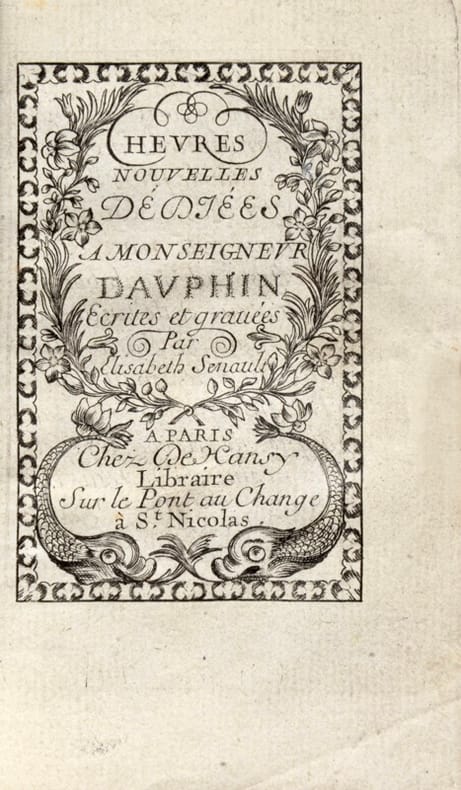
170042641A Paris, Chez De Hansy, s.d., 1700 ca. Petit in-12 de 1 portrait, 2 ff.n.ch. (titre et dédicace) et 212 pp., maroquin rouge, dos orné à nerfs, large dentelle dorée sur les plats, doublures et gardes de papier vert semé d’étoiles dorées, dos à nerfs orné, tranches dorées (reliure de l’époque).
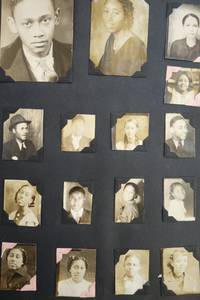
1950List1810Mostly Atlanta 1950. Leatherette album measuring 12 x 9 inches. With over 225 images most 4 ½ x 2 ¾ inches. Very well preserved and nearly complete with three empty slots about fine overall. Near Fine. A compelling visual record of the childhood of Mable Williams of Atlanta Georgia a high school student at Booker T. Washington High School in Atlanta the first public high school for African-American students in the state. Williams graduated from Booker T. Washington High School in 1953 per a newspaper article included here and would attend Spelman College. Composed mostly of snapshot photographs of her friends and family as a group the album provides a visual record of a vibrant network of family and friends in Atlanta during the time period. <br /> <br /> The album begins with a picture showing her as a girl alongside a picture of a house perhaps hers and traces her life through early adulthood through snapshots and family photographs. We find records of Williams performing at the Greater Atlanta Music Festival in 1950 as a representative of her high school. A newspaper article laid in shows Williams in a newspaper showing her graduation picture and stating that she will attend Spelman College in Atlanta in September of 1953. Pictures show her in New York City visiting a friend at N.Y.U. She would later marry Billy Reid a local jazz musician from Atlanta and would remain active in the Spelman community after graduating in 1957. <br /> <br /> Overall a very well preserved document of the African-American community in Atlanta during the 1940s and 1950s. unknown
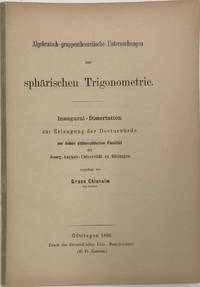
1895160351895. Chisholm Grace. Algebraic Group Theoretical Studies on Spherical Trigonometry. 1895. Scarce. Submitted in 1895 at the University of Göttingen this dissertation marks the first doctorate awarded to a woman in any discipline by a German university. At a time when Prussian institutions largely excluded women from formal academic candidacy Grace Chisholm crossed national boundaries from England to pursue advanced mathematical study under Felix Klein a leading architect of modern geometry. Her research applied group-theoretical methods then at the forefront of mathematical innovation to spherical trigonometry aligning with the Klein school's effort to unify algebra and geometry. The work stands at a pivotal moment in both the professionalization of mathematics and the gradual opening of European higher education to women.<br /> <br /> Chisholm Grace. Algebraic Group Theoretical Studies on Spherical Trigonometry. Göttingen: University of Göttingen 1895. Doctoral dissertation in German. Soft covers; 73 pages with mathematical figures and diagrams. Outer wrapper absent; green spine reinforcement visible. Minor edge wear and toning consistent with age. Chisholm later collaborated extensively with William Henry Young in analysis and measure theory while also publishing independent work such as On Infinite Derivatives 1915 which earned the Gamble Prize in Mathematics. Her career illustrates both intellectual accomplishment and structural barriers faced by women mathematicians at the turn of the twentieth century positioning this dissertation as a foundational document in the history of women in science. Overall very good condition. Scarce. Only two copies held in American institutions as per OCLC Worldcat. unknown
200021905Emmaus Pennsylvania U.S.A.: Rodale Pr. New. 2000. Paperback. 1579540376 . FREE UPGRADE to Courier/Priority Shipping Upon Request - IN STOCK AND IMMEDIATELY AVAILABLE FOR SHIPMENT - 342 pages -- Pages are intact and tight to the spine. Interior text is clean and tight. -- with a bonus offer--; 4to - over 9¾" - 12" tall . Rodale Pr paperback
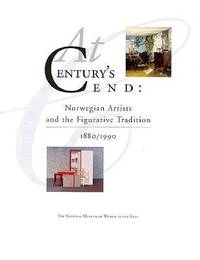
199639490Washington D.C. U.S.A.: Natl Museum of Women in the Arts. New. 1996. Paperback. 0940979322 . FREE UPGRADE to Courier/Priority Shipping Upon Request IN STOCK AND IMMEDIATELY AVAILABLE FOR SHIPMENT - FLAWLESS COPY BRAND NEW PRISTINE NEVER OPENED - 32 works catalogued and illustrated. Among the artists represented: K. Ytreberg; A. Norregaard; H. Backer and others. -- with a bonus offer-- . Natl Museum of Women in the Arts paperback
18853978Springfield Mass: Star Publishing Co 1885. First edition. Near Fine. Two variants of the first edition both in publisher's printed wraps lettered in red to front. Both exceptional survivors one in untrimmed wraps with some offsetting to the rear and fore-edges a bit chipped. Preliminary and terminal leaves uniformly toned else internally fresh. Collating 2 108 with adverts to interior of wraps. Second copy in trimmed wraps complete in 108 pages with dedication to verso of front wrap and adverts to recto of rear wrap issued without title page. Some toning to the first and final leaves else fresh. A scarce work considering the sexual dangers faced by women including women of color in a society that inadequately prepares them for male treachery. OCLC reports 8 first editions at libraries. The present pairing gives researchers a unique opportunity to study the print history of this rare work on gender and race. <br /> <br /> A contemporary publisher's advertisement for Sara Mecracken's tale of "social wrong" touts it as the story of "a beautiful pure young girl from New York" who is courted kidnapped and forced into marriage; and the publishers market her tragedy as "thrilling dramatic and touching.appropriate for the home of every mother who would prepare her daughters to meet the dangers of society." Such an overview focused on sensational thrills and conservative morality belie the sharp social critique that Mecracken delivers to white patriarchy. At its opening the book introduces us to an elderly Elsie. Watching her innocent grandson play she realizes that she has an opportunity to counteract a violent system in some small way by educating him to value the bodily rights and autonomy of women: "No he shall not be one to mar the life of the innocent nor wear the victor's crown of debauchery and wrong; my few remaining days shall be devoted to pluck one brand from the seething hell of social wrong. He shall be taught the true responsibilities which belong to his own soul." <br /> <br /> As the narrative unfolds the reader learns that in her youth Elsie a white woman trusted her suitor Albert Ainslie who would go on to sexually assault her abduct her and force her into marriage. Painfully aware now of her own vulnerability within the sexual economy she further learns that she is not the only woman Albert has victimized: he also assaulted Mira and Dora women of color "beautiful creole" girls who went on to be institutionalized and die by suicide. Women of any race are commodified and devalued by the system Albert operates within. Yet even they have stratified levels of empowerment. That the narrative comes from Elsie's perspective is notable. The suggestion persists throughout that Elsie' racial purity allowed for her survival her coerced marriage rather than abandonment and the chance to procreate and change the future through her offspring. Preserved by her whiteness she is freed from patriarchal oversight by the story's end in a way no other women are -- her father is fatally shot by Albert while attempting to free her and Albert subsequently flees to California and dies of alcoholism. No longer a victim but a survivor and a free woman under the legal system she can become a savior to future generations of women by preventing at least one boy from growing into violent manhood. In this sense Mecracken's story is progressive and conservative placing blame for systemic violence on the patriarchy while placing responsibility for its solution on individual women. Near Fine. Star Publishing Co unknown
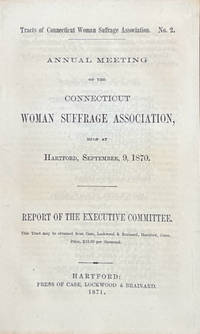
187160730Hartford CT: Printed by Case Lockwood & Brainard 1871. 8vo. 24 pp. Self-printed softcovers sewn at spine slight age toning very slight dustsoiling still NF copy. First edition of the second scarce Women’s Suffrage tract published by the pioneering Connecticut Woman Suffrage Association CWSA in 1871 subsequent to their second Annual Meeting held in 1870. This tract features the extended letter to Chicago IL suffragette and editor Myra Bradwell from Judge Howe of Wyoming detailing women serving as jurors on a murder trial jury after the passage of the Wyoming Territory’s 1869 Suffrage Act and that they discharged their duties with skill and also refutes the spurious claims that the men and women jurors had been improperly sequestered together for 4 days and nights. Following the publication of this tract Howe was replaced as a judge in the First District by Joseph Fisher a Union Army veteran who refused to recognize women being in the jury pool or allowed to set on juries even though they did have the right to vote. Isabella has also incorporated suffrage reports from the National Society for Woman Suffrage in England including specific mentions of petitions before Parliament in 1869 & 1870 on the admission of women to the suffrage by Lydia E. Becker along with excerpts of speeches by Mill delivered to the London Society of Woman Suffrage.Hooker closes with a report on a proposal by the Executive Committee to send women to meet with small local committees to “obtain signatures to the petitions for a 16th Amendment and to circulate tracts on the subject of Equal Suffrage.†See: Jessica Jenkins The Long Road to Women’s Suffrage in Connecticut Connecticut Explored Vol. 14 No. 2 Spring 2016; Kim Viner Women on the Jury: Wyoming Makes History Again Wyoming Historical Society Encyclopedia Jan. 23 2020. Printed by Case, Lockwood & Brainard, paperback
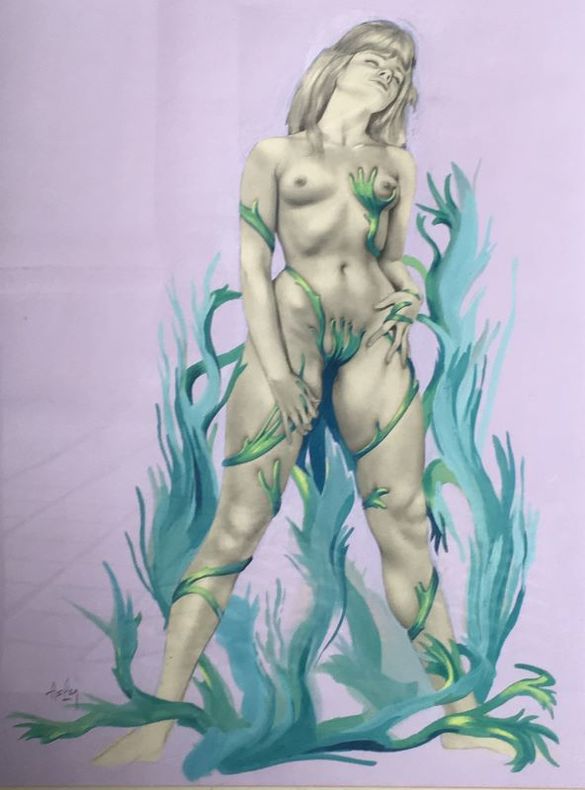
1960210721960 Gouache sur papier, signée en bas à gauche, (1960), 42.5 x 30 cm, encadrée.
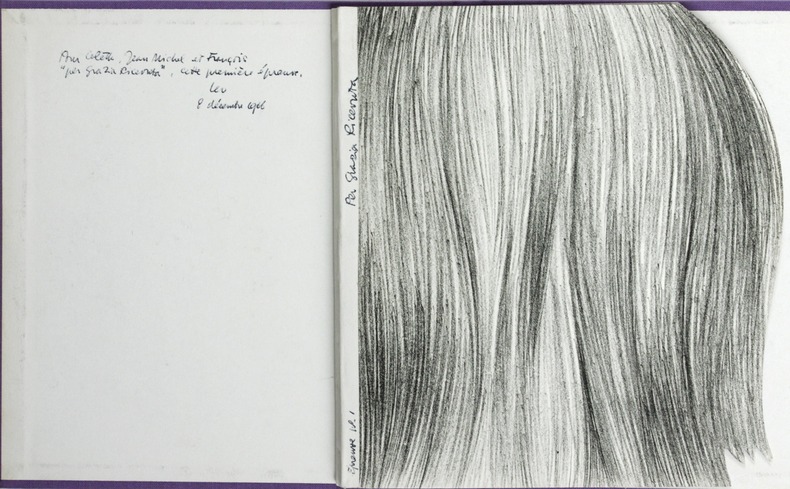
19663481Milan Grafica Uno 1966 in-12 broché Sl [Milan], sn [Grafica Uno], sd [1966]. 16,5 x 15 cm, 11 figures de femmes découpées dans du papier fort et lithographiées en noir sur chaque face formant une série de 20 profils et de 2 chevelures de femmes, broché, sous chemise de toile mauve muette.
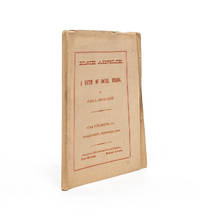
5607 [1847] 1st edition thus. Original publishers cloth, 12mo, 116 pages. Singerman 1006. The 1st edition of any of these titles published by a Jewish publisher or under Leesers editorship. The new introduction (by the committee) notes that Leesers essay, The Jews and Their Religion had earlier been supplied to the author of A History of Various Religions in the United States. This publisher, Leesers own Jewish Publication Society, which lasted only 3 years, from 1845-1848, was a forerunner of the modern Jewish Publication Society. OCLC worldcat lists 5 copies worldwide (Princeton, Penn, HUC, Towson, Amer Antiquarian). Some foxing and staining, especially to the blank end papers, light wear to boards, Good Solid Condition. (KH-9-26-BD)
Small to (184 x 128 mm), [8], 80, 79-174, 173-133 [i.e. 233], [1]pp., without final blank, fore-edge shaved effecting some margin notes, marbled endpapers, nineteenth-century full smooth calf, boards with floral gilt border, spine tooled in gilt, all edges gilt, a nice copy. An enlarged version of part 2 of his: Countrey contentments, in two bookes, 1615. Also issued as part 3 of his: A way to get wealth, 1623. Poynter, 34.1; STC 17343; Cagle, 847; Rothamsted, p.97.
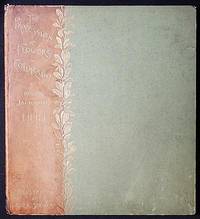
1886003136Boston: Roberts Brothers 1886. Hardcover. Very Good. 30 4 p.: hand-painted water color floral illustrations on 13 pages; 29 cm. Original wide cream calf spine with gilt-stamped cover title; light green paper over remainder of boards with gilt-stamped floral decoration running along leather-paper border. White moire endpapers. Lacking original slipcase. This is no. 47 of a limited edition of 100 copies each numbered and signed by the artist Alice Stewart. There are two or more binding variants. The illustrations vary in each of the 100 copies of this beautiful book. In Very Good Condition: edges are rubbed; binding lightly soiled; front free endpaper detached but present lacking lower gutter corner; first blank leaf following front endpapers also detached but present; a few small spots of light discoloration as is typical of this book; otherwise clean and bright. Roberts Brothers hardcover
193361492Tacoma Lakota Beach & Seattle WA: Fay Muridge 1933-1985. 8vo. 230 pp unpaginated. With ink sketches pencil sketches watercolour paintings drawings inserted and tipped-in photos business cards drawings & paintings in process clippings and even a 3 pp. ALS from Fay to her mother Naomi Muridge 1878-1967 on Elysees-Star Hotel stationery dated June 1960. Blue cloth enhanced with a Areovias Reforma precursor to Aeromexico sticker and laminated over later some edgewear rubbing still a VG exemplar. This outstanding artist’s manuscript sketchbook traces the development of this noted Seattle/Tacoma artist and window display designer from high school into the 1980’s. The opening pages dated 1933-1934 for her Architecture class at Stadium High School in Room 400 indicate an early advanced skill set with architectural renderings details house plans and more. At some point about 1950 following her divorce she restarts her career as a window designer for the Bon Marche and as contract artist filling the notebook over the succeeding 35 years with ideas paintings sketches. and pen & ink nude sketches at the end from her Sketch Classes in 1952. She documents her trip to Mexico in 1954 with a sketch of the engine cowling and then details of a Chinese Garden in Mexico the Iglesia de Santa Prisca in Taxco Mexico the Taberna del Greco and architectural details she comes upon. She appears to have subsequently stopped off in Los Angeles for an extended inspiration tour as she includes 20 pages of quick sketches of display cases window displays floor display equipment and lighting at various department stores and retailers including Robinsons Haggerty’s Bullocks Saks Fifth Ave. and Mildred Moore in Beverly Hills. Together with quick sketches of your 7-year old daughter Fay Marie 1947-2018 at ballet class in 1952 she has also included three Christmas-related sketches apparently related to her work on Bon Marche holiday windows. This sketchbook also contains several full watercolour paintings and dozens of sketches in colour with water colour paintings of the Muckleshoot Indian Missionary Church June 18 1952; Spring Gultch Campsite - Bitterroot River; Big Horn Mountains -- S.E. Sheridan June 20 1983; Near Sun Dance Wyoming along Hwy I-90 East 1983; Big Hole Country Wisdom MT 1983 and many others some showing progression. Muridge 1917-2007 was born in California but then grew up in Seattle and Lakota Beach near Tacoma WA and during the 1930’s after attending the University of Washington she was a popular window display designer for the Bon Marche often creating elaborate automata and manikins. She married Ray Suttles in 1941 and was divorced with custody of her daughter by 1950 designing windows & floor displays for Bon Marche in Seattle and Tacoma Frederick & Nelson and Bremer’s in Bremerton WA. She traveled extensively taking her daughter on the Cunard Line Queen Elizabeth in 1958 and again in 1960 to Paris leaving her daughter with her mother as indicated in the laid-in ALS. She was also known not only for her displays for Northwest Orient airlines but well-known as well for creating “cachets†for envelope covers and post cards often with military themes. See: Cachet Maker Marie Fay Muridge Naval Cover Museum 2024; Doug Henkle U.S. First Day Cover Cachet Display Catalog: Philadelic Birth Dates Indiex & Links 2024. Fay Muridge, hardcover
16993Photo Album Women Education Album from student at Wellesley College filled with 143 original silver gelatin print photographs. Chronicles a young woman's educational path from high school through college and onto her later work as a teacher. Dated 1911-1919. Photos of various sizes from 2 x 3" to 4 x 9.5". Original black cloth boards. 9 x 12". 100 pages. Many photographs of Wellesley College its campus and traditions. Photo of Lake Waban and the campus chapel. Image of a house labeled "Wellesley 1911-1912" placed in album next to photo with 3 young women with their arms full of books standing outside the same house labeled "Students". 6 women bundles in hats and coats on a snowy street: "Off for math exam". Others show young women reading books and studying outside eating meals together and enjoying campus life. Includes 5 photos of the "Senior Hoop Rolling" tradition on May Day 1912. Photos of friends lovingly labeled with nicknames such as Chub Selina Honey and Marion. Includes photos from many locations around upstate New York including the Hudson Valley and Finger Lakes regions: Frontenac Point Minnewaska Mohonk and Yankee Lake. Also photos from Digby a small town in Nova Scotia Canada. In addition to the images of Wellesley there are photos of several other academic institutions. Images of academic interiors labeled Drawing Room Mr. Wilson's Room Assembly Room Physics Lab Library and Hall at M.H.S. Group photo of a 16 boys wearing "M" shirts and 3 coaches posing with a trophy and banner reading: "OCIAA Relay Race 1912". Building labeled "Harmony Hall" next to a photo of 14 women with the caption "Inmates of H.H. 1913". 2 large group photos with women in white dresses and a banner "ETA Clionian" one labeled 1914. The ETA Clionian Sorority was active on the SUNY New Paltz campus then a state teachers' college. Later photos appear to be from when the album owner transitioned from being a student to working as a teacher. Young groups of children are photographed together with the handwritten captions "Primary" or "Intermediates". One photo shows a school production with many children on a decorated stage wearing Pilgrim costumes. Building labeled Quassaick Hall. I page detached. Very good condition. unknown books
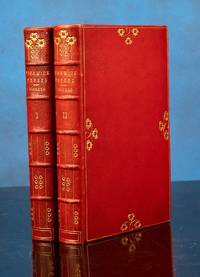
06155London: Chapman & Hall Ltd. 1890. The Posthumous Papers of the Pickwick Club<br /> In a Fine Binding by The Guild of Women Binders<br /> <br /> DICKENS Charles. GUILD OF WOMEN BINDERS The. The Posthumous Papers of the Pickwick Club. With illustrations. London: Chapman & Hall n.d. ca. 1890. <br /> <br /> Two octavo volumes 8 1/2 x 5 1/2 inches; 216 x 140 mm. i-vii viii-xvi 2 list of illustrations verso blank 1-471 1 imprint pp.; i-v vi-viii 2 list of illustrations verso blank 1-491 1blank pp. Forty-three engraved plates by George Cruikshank including two frontispieces and engraved title.<br /> <br /> Bound by The Guild of Women Binders stamp signed in gilt on front turn-in. Full red Morocco covers bordered in gilt with four gilt floral decorations. Spines with five raised bands decoratively tooled in gilt in the Art Nouveau style with hearts and flowers lettered in gilt in compartments marbled endpapers top edge gilt. Armorial bookplate of Adam Rivers Steele on front paste-down. Half-title to volume one slightly creased. A fine copy.<br /> <br /> The Guild of Women-Binders was an organization founded to promote and distribute the work of women bookbinders at the turn of the 20th century. It was founded by Frank Francis Karslake in 1898 and disbanded in 1904. It helped sell bindings produced by women binders already practicing and instituted training programs to teach other women. Frank Karslake was a London bookseller and a founder and financial backer of the Hampstead Bindery. At the 1897 Victorian Era Exhibition at Earl's Court he encountered several bindings by women including Annie S. Macdonald on display and his interest was piqued. Soon after he invited several women binders to exhibit their work in his London shop; this "Exhibition of Artistic Bookbinding by Women" which ran from November 1897 to February 1898 garnered a substantial amount of interest from the public and convinced him that promoting women's bookbindings could be a profitable venture if perhaps partially for the novelty. Whatever his motivations Karslake soon began acting as an agent to women binders already practicing such as Annie MacDonald and Edith and Florence de Rheims.<br /> <br /> The Posthumous Papers of the Pickwick Club also known as The Pickwick Papers is the first novel by English author Charles Dickens. His previous work was Sketches by Boz published in 1836 and his publisher Chapman & Hall asked Dickens to supply descriptions to explain a series of comic "cockney sporting plates" by illustrator Robert Seymour and to connect them into a novel. The book became a publishing phenomenon with bootleg copies theatrical performances Sam Weller joke books and other merchandise. London: Chapman & Hall Ltd., 1890 unknown
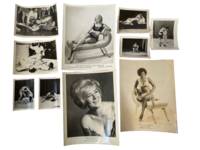
1940206421940. Women's Sports Women's wrestling photograph archive documenting amateur competitions gymnasium training and professional wrestling performers between the 1940s and the 1970s. The images record women participating in a sport historically dominated by men illustrating the gradual emergence of female wrestling as both an amateur athletic activity and a professional entertainment circuit during the mid twentieth century.<br /> <br /> Archive of ten photographs including nine black and white silver gelatin prints and one sepia toned image measuring approximately 3.5 x 4.5 inches to 8 x 10 inches. Several early photographs from the 1940s depict women grappling in an indoor ring during staged matches. Later images show girls wrestling during a gymnasium class setting while classmates watch from the sidelines. Three studio photographs from the 1970s portray professional wrestlers associated with promoter Mary Lillian Ellison known professionally as The Fabulous Moolah.<br /> <br /> Portraits include full length promotional photographs of Joyce Grable of Ozark Alabama Lilly Thomas of Memphis Tennessee and a headshot of Paulla Kaye of Oklahoma City Oklahoma. These performers were active on the professional wrestling circuit during a period when women's wrestling was gaining visibility in regional promotions across the United States. Female wrestling remained controversial throughout much of the twentieth century facing both cultural criticism and sensationalized marketing. Light wear consistent with age. Very good condition. A visual record of women participating in amateur and professional wrestling across several decades of American sports culture. unknown
1944235151944. Women's Royal Naval Service photograph album documenting life at HMS Royal Arthur the Royal Navy's training camp establishment at Skegness where a prewar holiday camp was transformed into a military training and accommodation center during the Second World War. Named individuals throughout with handwritten identifications the album follows Dorothy Gardner and other Wrens serving in the expanding wartime navy while also capturing the theatrical entertainment routines featuring cross dressed men and ceremonial duties that shaped daily life away from the front lines. Beyond its images of uniformed women the album records a military community of offices dining halls stages chalets and training facilities that supported Britain's wartime naval operations at a camp which was bombed by German aircraft on February 21st 1942.<br /> <br /> Photo album of approximately 73 silver gelatin photographs various sizes ranging from 1.5" x 1.5" to 8.5" x 6.5" chiefly HMS Royal Arthur Camp Skegness Lincoln and other British locations c. 1944. Large group portraits are captioned "H.M.S. Royal Arthur July 1944" showing rows of Wrens in naval caps and dark uniforms. Several photos show soldiers by artillery navy men on small military boats and canons. Multiple group photos show men and women in Navy uniform. The photographs place women within the essential but often overlooked machinery of wartime naval administration including supply clerical work communications camp management transport and food service. Captions identify Peggy Marjorie Dorothy Margaret Joan Harry Blake Farnsworth Bernard Cavanagh Dennis Leo Dugay May of Glasgow Geoffrey Roy Bluemel Mrs. Thomason of Leigh Pat Taylor Nancy and Cynthia of HMS Ariel. Additional off camp photographs show bicycle outings skating scenes shipboard snapshots barracks and chalet interiors social gatherings and a guard of honour at Lincoln near the cathedral. Particularly notable is the album's extensive documentation of entertainment and morale-building activities. Several photographs are captioned "Up Spirits" and "concerts at H.M.S. Royal Arthur" revealing an active performance culture within the camp. Sailors appear in theatrical productions alongside women in costume while musicians perform with accordions and pianos before assembled audiences. One series features actor Charles Redgrave "with the girls" and another photograph captures the wartime tradition of gender-crossing stage entertainment in which male servicemen performed in women's clothing for camp audiences. These scenes provide an unusually vivid record of military leisure performance and social life within a wartime naval community.<br /> <br /> HMS Royal Arthur was bombed by German aircraft on 21 February 1942 The album therefore records daily life at a site that was both a military workplace and a target of wartime attack. By 1944 the Women's Royal Naval Service had expanded dramatically from its earlier First World War role with women serving in hundreds of naval occupations while remaining largely excluded from combat at sea. The photographs capture that transformation through named individuals workplace groups ceremonial events friendships and recreational activities illustrating how women became integral to the operation of Britain's wartime navy. The album documents the social world created when thousands of servicewomen and servicemen lived and worked together inside one of Britain's largest naval shore establishments. Sailors Wrens airmen Canadians civilians performers and local acquaintances appear throughout its pages creating a rich portrait of wartime relationships and community formation. Album shows handling wear page wear and a few removed photographs; handwritten captions remain extensive and legible throughout. Overall in good condition. An unusually dense and highly personal record of women's naval service wartime labor military entertainment gender performance and everyday life at HMS Royal Arthur during the Second World War. unknown
183040052Sans lieu, , (c. 1830). 2 vol. in-8 manuscrits à pagination continue de (1)-922 pp. à 19 lignes par page, veau brun granité, dos lisse orné, filet et frise dorés d'encadrement sur les plats, tranches dorées (reliure de l'époque).
1st American Edition and 1st edition with Leeser introduction. Period full tooled leather boards. 8vo. 446 pages ; 21 cm. Singerman 1812. Civil War-era imprint. Grace Aguilar (1816 1847) was an English novelist, poet and writer on Jewish history and religion Aguilar was the eldest child of Sephardic Jewish refugees from Portugal who settled in the London Borough of Hackney. An early illness resulted in her being educated by her parents, especially her mother, who taught her the tenets of Judaism In the 1840s her novels began to attract regular readers The Jewish Faith: Its Spiritual Consolation, Moral Guidance, and Immortal Hope (is) addressed to a Jewess under the spell of Christian influence (and) is devoted to immortality in the Old Testament. (Wikipedia, 2016) This edition was edited by Isaac Leeser, pioneer of the Jewish pulpit in the United States, founder of the Jewish press of America (and) one of the most important American Jewish personalities of the nineteenth century America. (Wikipedia, 2016) Contains a preface written by Leeser in which he writes, The editor has discharged to simple duty to send forth a new addition of the least known, though the best, works of Miss Aguilar, (which) she valued more than her tails and novels OCLC lists 25 copies worldwide. Bertha J. Myers, 1866, Augusta, GA penned on inside of rear board. Front board detached, otherwise very good condition. (AMR-47-3A)