[Women]. Verzure, Madame deBiblio.com
8 017 résultats
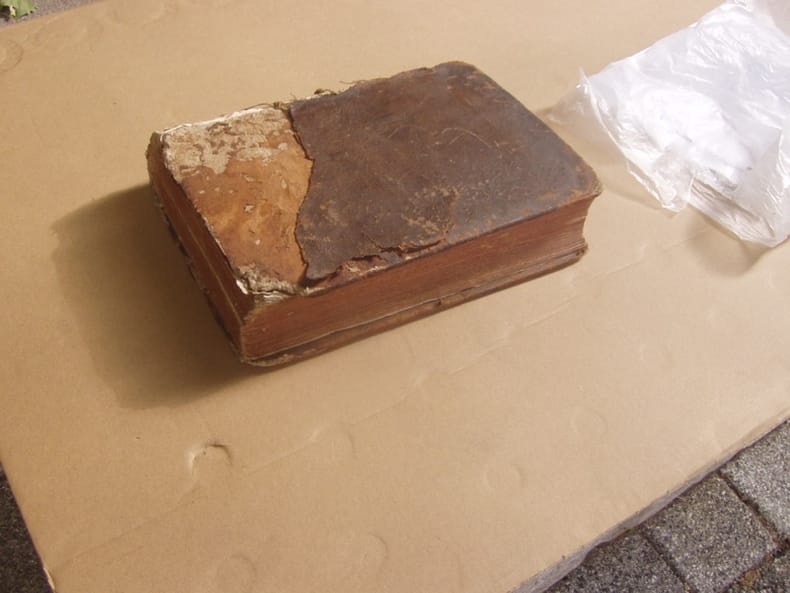
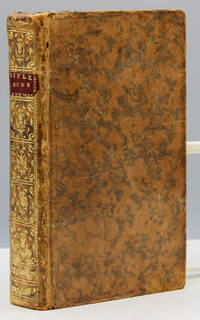
176614914A Amsterdam; & se trouve à Paris: chez Vincent Imprimeur-Libraire rue S. Severin 1766 First edition of a legendary rarity. Barbier and Cioranescu ascribe this work to Madame de Verzure about whom little is known though Quérard tells us she was the wife of a Geneva banker. She apparently wrote no other books. Contemporary mottled calf. Gilt spine with burgundy morocco label blue marbled edges. . Two volumes in one twelvemo. Bottom corners worn leather worn in one spot on back cover. Otherwise a very good copy. In the dedication to Mirabeau the author notes "Une femme qui savise décrire & cqui ose hazarder limpression doit se cacher avec soin & se garder de jamais se laisser appercevoir." Madame Verzure has retired from society in order to better understand herself as woman and as a thinking person. This work which is principally addressed to women contains about sixty chapters of reflections on the world and her position in it. There are chapters on the passions honor celibacy marriage goodness humor law pain ennui paternal love one's duty in the world truth and sincerity notions of the soul self-love etc. The last two chapters "La femme raisonnable" and "La femme du monde" present the central concern of this book: the woman of the world versus the woman of intellect: "L'une veut qu'on la croie parfaite; lautre cherche à le devenir." OCLC lists ten copies six in North America: Harvard Yale Duke Indiana UCLA and Cal State Bakersfield. chez Vincent, Imprimeur-Libraire, rue S. Severin,
1915843011915. WOMEN. LADIES' CITIZENS COMMITTEE MEDALLION/RIBBON 1915. 5 7/8 x 2 inches pale printed ribbon with gilt lettering: "LADIES' CITIZENS COMMITTEEWASHINGTON D.C.1915." The ribbon is affixed to a decorative photo pin framed brass-tone with pin on reverse intact. Sewn under the pin is an American flag motif ribbon from which is suspended a set of six laminated paper circular medallions. The uppermost one of these is a photo image of the Lincoln Memorial. Underneath in descending order are b/w photo portraits of women officials captioned with their names and titles: Mrs. W. E. Andrews Chairman L.C.C. Ladies' Citizens Committee Mrs. Mamie P. Dorsey Chairman W.R.C. Mrs. Lottie Johnson Chairman Ladies of the G. A. R. Grand Army of the Republic Mrs. Jennis L. Hamilton Chairman D. of V. Mrs. Rose S. Rutledge Auxiliary to the S. of V. The ribbon and medallions are in very good condition. unknown
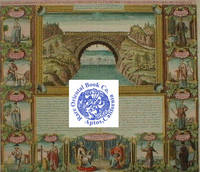
97017401Paris n.d. ca.1710-20. A single large broad side hand- colored very good center fold print size ca. 43 x 37.5 cm with inset text and 13 individual border illustrations.RARE A grand work. Illustrated with 13 portraits of various Chin- ese people: Femmes de Honan Xanfi Chekiang Fokien. Also paifans de Suchuen Huqueng doceuir de Nankin soldat de Quicheu & QuansiJesuit of China likely an Italian Catholic priest and the Roy de la Reme des Tartares Chinois. With a large center view of a grand river running under a stone bridge and waterfall. The lower portion is with a lengthy French language text discussing China her army population forts & c.&c. Each portrait is found in a cartouchewith an elaborately dressed individual. Superbly done highly deocrative work a handsome addition to any library display. unknown
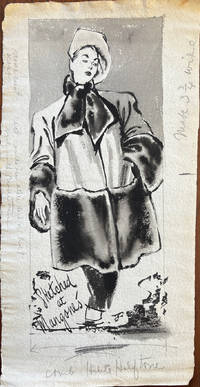
194261064Brooklyn NY: Barbara Duffy ca. 1942-1945. Seven pieces of original pen & ink art and gouache colouring and overpainting sized from 10 x 15 in. 3 up to 15 x 20 in. 3 on “Winsor & Newton’s Illustration Board 30 x 40†while the 7th piece is 9 x 17 in. executed on textured thick laid-paper pencil annotations in MS on fore-edges all pieces signed in thick black pen on versos some dustsoiling staining to fore-edges to a couple bumping to corners edgewear still a VG set of well-done exemplars. These original fashion design illustrations encompass women’s dresses hats fur coats evening wear and a post-War design by Mangone. The two dresses drawn by Duffy are reminiscent of the Claire McCardell easy to wear and comfortable dresses which emerged at the end of the War and featured a cinched-in waist floppy collars and padded shoulders retaining the influence of men’s tailoring on women’s fashions during the War. The “Toppers†are splendid examples of box or swagger coats often made in light wool cotton or rayon blends and in this case with fetching hats and cinched-in waists. The two smaller designs with mink or beaver coats include one with a matching purse and the other with a pillbox hat. The two “Paris†style Cloche hats are nicely drawn and one is fitted with a mesh veil. The exceptional Mangone design indicates it was “Sketched at Mangone’s†which was probably one of the frequent sessions the designer would put on fashion shows at the Fashion Institute or local boutiques in and around New York following World War II and features a coat trimmed in beaver fur with Cloche hat and according to Duffy was available in light and dark wool along with an ascot. Mangone 1884-1957 was not only a significant Italian-American designer who quickly adapted Paris fashion trends into his own American style and was very popular from before World War I until after World War II. Strikingly he also was a survivor of the Hindenburg disaster who managed to leap from the Zeppelin at Lakehurst NJ with his daughter and grand-daughter looking on suffering significant burns and after shock and hospitalization spent considerable time recovering. Duffy b. 1919 taught at the Jacob Gould Vocational School for girls in Prospect Park Brooklyn NY from the time she left college until after World War II after which she worked as designer in local department stores and then disappears from census and public records. Barbara Duffy, unknown
1940List329Haverhill 1940. First Edition. Seven journals each approximately 70 pages with pages measuring 4 ½ x 2 ½ inches. Near Fine. These journals by an unnamed member of the Dean family of Haverhill were assembled around 1940 from collected family and historical photographs. Taken as a whole they provide a richly detailed social history of the region from the perspective of a well-to-do military family with many ties to the local business community. They bridge the gap from the post-Civil War era with reference to G.A.R. reunions and the like to the late 1920s. The author's perspective - conservative sometimes horribly bigoted with a penchant for underlining key passages of her own writing - is on full display throughout. We have not identified the author though she is shown in several photographs. <br /> <br /> Much of the journals recount the details of civic-minded local life often with surprising detail. On an evening in city hall she writes "the walls hung with banners - flags and scrolls of all descriptions front of boxes were elaborately draped the stage represented a campground. " Two entries for 1886 log a fire in Music Hall followed by an account of the "First Hebrew Jew Wedding" about which she writes "too bad it wasn't the last no doubt the people of Haverhill would have been just as well off and I believe better." Some entries show the way in which information from the outside world was filtered by various family members who left Haverhill. An account of a family member's adventures in the Alaskan gold fields " It was very interesting to hear them tell of their experience.the picnic parties and good fishing for salmon and trout in the summer when the weather is warm and nice. Also the Ways of the eskimo. the gold nuggets nice to look at too;" <br /> <br /> Interspersed with the diary entries are many cut photographs and postcards some of family and some of the region and the author weaves her entries onto the versos of the photographs from the diary paper. The photographs are meticulously trimmed in a uniform rounded edge with an impressive aesthetic result. The diaries were likely assembled in the late 1930s or early 1940s as one mentions the hurricane of 1938. Overall they show an uncommonly detailed and lengthy account of a family's life in Massachusetts with much information about the civic history of the Haverhill region. Well preserved in near fine condition with minimal normal wear. unknown books
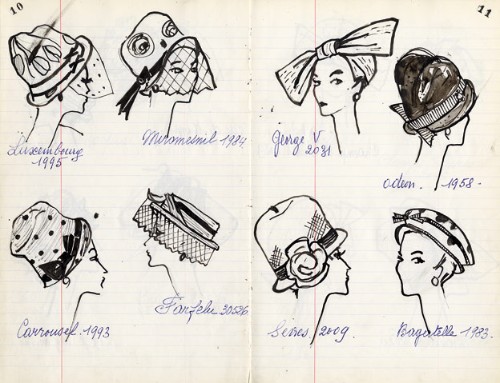
196011254Petit in-folio, ; demi-toile noire à coins, feuillets numérotés réglés ; 279 dessins originaux de modèles de chapeaux féminins, la plupart dessinés à l'encre de Chine et lavis, quelques uns au stylo-bille, sur 78 feuillets, avec leur nom ou leur référence.
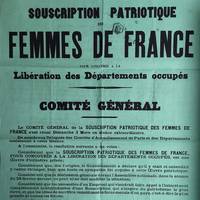
187219739<p><strong>Rare Parisian poster for the Souscription patriotique des femmes de France.</strong></p><p>It was part of the liberation of French territory following the Frankfurt Peace Treaty signed between the French Republic and the German Empire on May 10 1871. France was obliged to pay war indemnities of 5 billion francs.</p><p>Thiers' government launched an international loan and paid part of the sum so that by the end of 1871 German soldiers had evacuated the occupied territories remaining only in the city of Belfort and six departments of eastern France including the Ardennes.</p><p><strong>March 1872 the date of this poster marked the start of private initiatives to speed up repayment of the remaining war indemnity and liberate the last occupied territories as quickly as possible.</strong><br />The Souscription patriotique des femmes de France was part of this national and local movement. "<em>The Charleville municipal archives . contain documents relating to the local committee of this association. They show that after dividing the town into neighborhoods the women of this association knocked on the doors of every inhabitant to obtain cash donations or pledges." .</em> <em>"Despite this state support the subscription did not reach its target of 500 million francs and the subscribers were reimbursed. It did however bear witness to the shared determination of the population and the government to raise the funds needed to liberate the country as soon as possible."</em></p><p><strong>Fragile testimony to the central role played by women in this patriotic effort to liberate France.</strong></p><p>Information in this entry comes from the articleon the Ardennes departmental archives website.</p> Typography A. Pougin
1731276501731 Aix : impr. de D. David, 1731; etc- 1 fort vol. in-folio, précédées d'un feuillet de titre général et d'un feuillet de table, veau brun trés abimé, dos orné à nerfs en partie manquant,plats trés usés ; tranches rouges (reliure de l'époque). contenant 28 des pièces en premier tirage (liste sur demande). total = 881 pp.,paginations separées - titre identique à l'exemplaire de la BNF du premier factum seul (58p.).- + copie manuscrite époque in fine: les lettres au Chancelier: magistrat à M. le président de Maliverny, la réponse de ce juge, et celles des autres messieurs qui ont été de son opinion (11 octobre-23 novembre 1732). 22 pp.; bon état,reglé - Sorcellerie et possession à Aix en Provence; Ollioules ; la Cadière.- Trés rare, rèstaurable.-
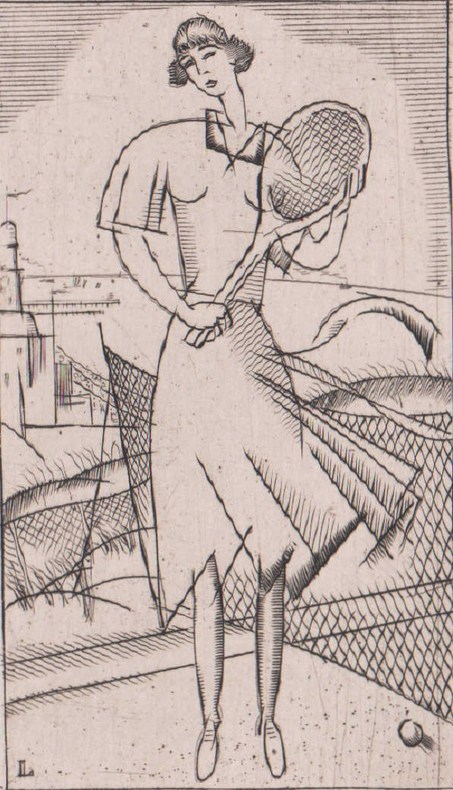
191921304Paris Camille Bloch. 1919 1 in-12 Orné de gravures au burin de Jean-Emile LABOUREUR, Paris, Camille Bloch, 1919, in-12, maroquin noir orné sur les plats de filets entrecoisés cubisant, dos lisse titré, plats de maroquin rouge, tranches dorées, sous étui bordé de maroquin noir, couverture couleur lilas montée sur onglet, 69 pages, (Loutrel Relieur).
1847240Paris Mellier, Lyon, Guyot 1847 in-8 chagrin rouge, plats finement décorés, armes au centre du premier plat, dos à nerfs, orné et doré, tranches dorées [Rel. de l'époque], infimes rousseurs
1929242301929 1 Huile sur toile signée du cachet monogramme en haut à gauche, (1929), 30 x 13 cm. (format à vue).
1938224161938 Paire de deux huiles sur carton signées en bas à droite, titrées et datées au verso, 1938, 22 x 26 cm, encadrées.
181Paris : Alexis Emery, 1813. LES POÉSIES D'UNE DES GRANDES TENEUSES DE SALON DE L'EMPIRE RELIÉES AU CHIFFRE PRÉSUMÉ DE LUCIEN BONAPARTE
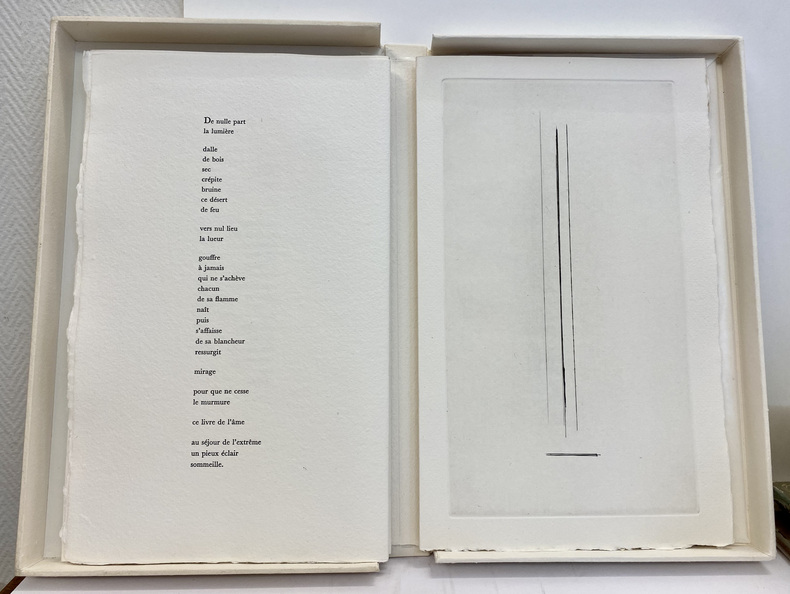
AMA-993Paris, [Pierre Lecuire], 1981. In 4° oblong, en feuilles, emboitage. [18 ff.], 4 gravures originales de Vera Pagava (pointe-sèche), Brigitte Simon (pointe sèche), Vieira da Silva (burin), Geneviève Asse (pointe-sèche).
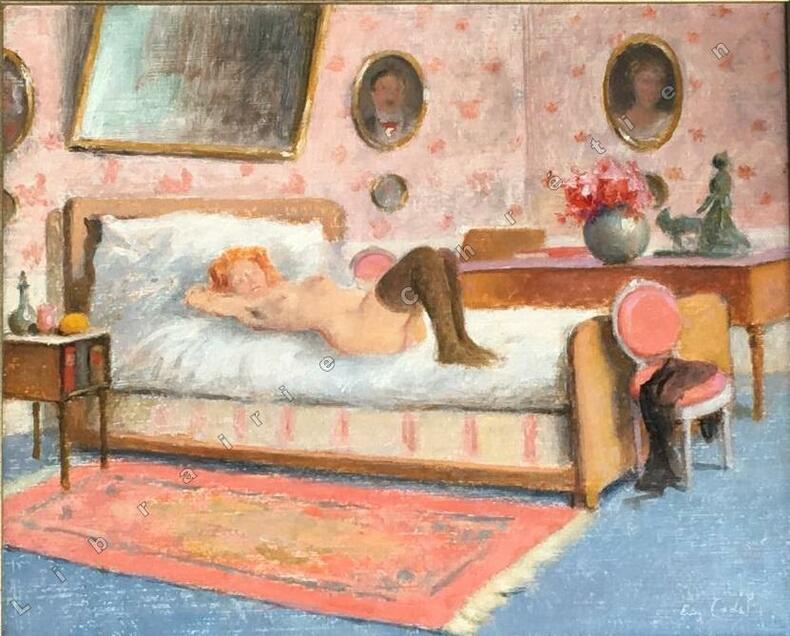
1893248381893 Huile sur toile, signée et datée en bas à gauche, 1893, 46 x 61 cm., cadre doré.
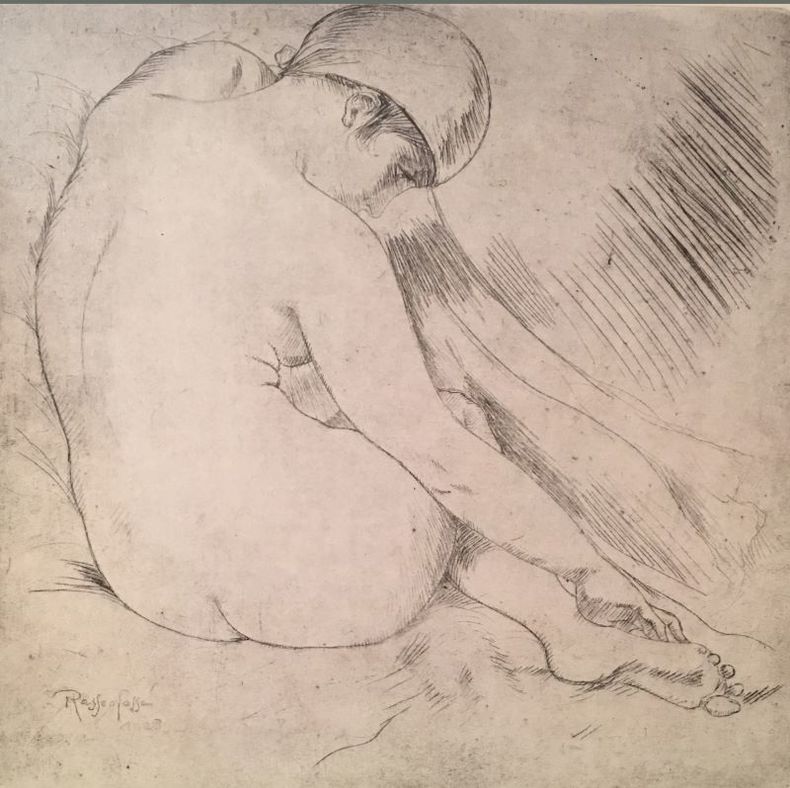
1928213881928 1 Dix pointes-sèches par Armand RASSENFOSSE. Liège, Éditeur Mawet, 1928, in-4, broché, couverture rempliée, titre imprimé en bleu, 26 pages.
179642064A Lausanne en Suisse, chez Jean Mourer ; Hignou et Comp., 1796. In-8 de 376-(2) pp., demi-veau blond à petits coins de vélin, dos lisse, pièce de titre en veau rouge (reliure de l'époque).
1827152741827. Philis Mr. Report of the Commission Charged to Examine Memoirs Relative to the Education of Women. Third Subject: Morality. 1827. This 1827 manuscript records one of the earliest sustained formal debates advocating systematic education for women across social classes. Structured as a commission evaluation of submitted memoirs the text advances the argument that education should be universally accessible to women "from the daughter of the Prince to that of the most humble of the subjects" asserting that the "elements of Language and Calculations" are "necessary and indispensable to women in all stations." At a time when formal education for girls was limited and higher education for women virtually nonexistent the manuscript situates female instruction not as ornamental refinement but as moral and civic necessity.<br /> <br /> Philis Mr. Report of the Commission Charged to Examine Memoirs Relative to the Education of Women. Third Subject: Morality. 1827. Folio manuscript in paper boards. 68 pages of handwritten script in black ink. The manuscript is organized around three submitted theses: "The Education Best Adapted to Form A Good Mother of A Family Is That Received at Home"; "It is Well Known That The Bad Education Of Women Does More Harm Than That of Men."; and "To Instruct the Children One Must Enlighten the Mothers." While the framing reflects prevailing assumptions that motherhood constituted women's primary social role the author strategically reverses that premise arguing that education is precisely what "nature formed women to be" capable of fulfilling their duties. Written one year after the opening of the first public high schools for girls in New York and Boston and more than a decade before women would begin earning college degrees the manuscript provides early evidence of reformist thought that linked women's education to broader civic improvement. Boards show wear with light soiling and scattered stains; manuscript evenly toned with occasional minor soiling; text clear and complete. Overall condition very good to good. unknown
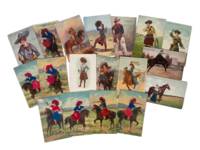
1880194351880. Cowgirl imagery in late nineteenth and early twentieth century American visual culture documents the public fascination with women performers and riders associated with rodeo culture Wild West exhibitions and frontier mythology. Eighteen postcards dating from approximately the 1880s through the early 1920s depict cowgirls mounted on horseback performing actions associated with Western riding culture including firing revolvers and rifles galloping across open terrain and lassoing livestock. The images correspond to a period when female riders and sharpshooters gained national attention through rodeo competitions traveling Wild West shows and early popular media representations of the American frontier. Several postcards depict identifiable rodeo performers including Gene Fisher and Mildred Douglas whose participation reflects the visibility of women riders in Western entertainment and exhibition culture.<br /> <br /> Eighteen postcards dating from approximately the 1880s to about 1920 depicting cowgirls in action poses across Western landscapes. The archive includes both real photo postcards and printed postcards produced using color lithography and chromolithography several of which feature embossed design elements. Each postcard measures approximately 5.5 x 3.5 inches. The scenes portray women riders equipped with bandoliers pistols and rifles while mounted on horseback amid rugged Western environments populated by wild horses and cattle. One image shows a rider firing a revolver with visible muzzle flash as the horse rears back while another depicts a cowgirl swinging a lasso above her head. A real photo postcard shows rodeo rider Gene Fisher mounted on horseback and another image depicts female rodeo cowgirl Mildred Douglas riding a bucking steer. Several postcards contain handwritten messages referencing Western towns and travel including one reading "Dear Uncle Brainard is quite a town and plenty of saloons here."<br /> <br /> Visual representations of cowgirls became an established element of American frontier mythology during the late nineteenth and early twentieth centuries shaped by traveling Wild West shows rodeo exhibitions and early illustrated postcards circulated as souvenirs of Western identity. Performers such as female sharpshooters and rodeo riders appeared alongside male counterparts in popular entertainment challenging conventional gender expectations by presenting women as skilled riders marksmen and performers in public spectacles of frontier life. These postcards reflect the intersection of popular print culture and the romanticized imagery of the American West during the decades when rodeos and frontier reenactments were widely promoted as symbols of national heritage. Eighteen postcards measuring approximately 5.5 x 3.5 inches. Colors remain bright on the printed examples and the photographic postcards retain clear contrast. Minor handling wear typical of early twentieth century postcards. Overall condition very good. unknown
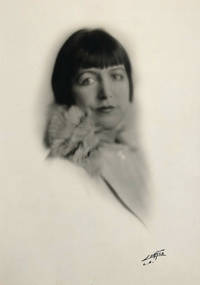
1927List325Los Angeles: Edward Curtis 1927. Silver Gelatin Print 5 x 7 inches with Curtis's Biltmore Hotel address and Unsell's name to verso. Signed by Curtis in ink on recto. Excellent. Eve Unsell was a highly prolific scenarist who wrote for over 95 films during her active period from 1914 to 1933. She first trained for the Kansas City Post before spending a year at Emerson College. Unsell impressed the theatrical agent Beatrice deMille with one of her short stories. Hired by deMille as a play reader Unsell learned the art of plot construction while reading plays. She met David Belasco through deMille and after a short career performing turned her career to writing by 1913. She sold two several scenarios to Pathes Freres and Kalem getting her big break in 1914 when Kalem produced Unsell's scenario The Pawnbroker's Daughter. She would go on to enjoy a lengthy career as a writer oscillating between freelance and contract work. She wrote under her own name and also used the pseudonym Oliver W. Geoffreys as her name E. M. Unsell as was common for women screenwriters at the time. <br /> <br /> Edward Curtis best known for his work photographing American Indians moved to Los Angeles in 1919 with his daughter Beth following a divorce. He opened a studio at the Biltmore Hotel. To finance his field work Curtis worked for Cecil B. DeMille as a still photographer and cameraman. Curtis lived off and on in Los Angeles until his death in 1952 leaving in 1927 to complete the final volume of his North American Indian series. At some point probably in the early 1920s whether through the DeMille friend circle or elsewhere Unsell had her picture taken by Curtis in his Biltmore Hotel studio. The image shows Unsell in the customary style of the time with Curtis's name etched into the negative. Near fine condition overall with a few slight indentations. Overall a wonderful and scarce image showing an important figure in Hollywood. Edward Curtis unknown books
1920List330New York: Arnold Genthe 1920. Silver gelatin print 6 ¾ x 9 ¼ inches on larger mount. Signed by Genthe on the mount inscribed by Marlowe as Marlowe Sothern on the mount as follows: "To Jean: our little comrade on our walks in Beautiful Stockbridge. In remembrance also of 'Sun Yat Sen' and Choo-Chio Chow. September. 1940. Julia Marlowe Sothern. Very Good. An uncommon image of the actress feminist and suffrage advocate Julia Marlowe who adopted the name - though never legally - Julia Marlowe Sothern after working with the Shakespearean actor E.H. Sothern. Ill health led Marlowe to retire from the stage in 1924 and she was seldom seen in public. This photograph inscribed later in her life is an uncommon relic from her reclusive later years. We can find no record of a Jean or the names mentioned. <br /> <br /> Arnold Genthe who famously photographed the San Francisco Earthquake of 1906 from the site of his destroyed studio moved to New York in 1911 where he became a portrait photographer. He most likely took this picture in his stint on the east coast. We find no other record of this specific portrait of Marlowe. Some silvering at margins otherwise excellent with some light normal tanning to mount. Arnold Genthe unknown books
Very Good Turkish Original oil on canvas with a grey frame. Signed by artist "T. Onat, [1]980". One of her early paintings depicting of a woman in abstract form, mostly with green tones. A fine oil on canvas. Prof. Tülin Onat was born in Istanbul in 1946. She graduated from the Department of Advanced Painting at Istanbul State Fine Arts Academy (Mimar Sinan University) in 1970. She studied with Prof. Adnan Çoker, Prof. Zeki Faik Izer and Prof. Özdemir Altan. She continued her master's degree at her alma mater between 1970 and 1971. In 1973, she was given a scholarship by the Austrian Government to study at the Salzburg Internationale Sommer Academie für Bildende Kunst. In 1977, she began teaching at Marmara University. She completed her doctoral degree with proficiency arts at Marmara University in 1985. Onat became an Associate Professor in 1990. Between 1967 and 1993, she researched painting and arts in museums and galleries in Europe. In 1987, Onat established Derimod Culture Centre with Hasan Yelmen and realized retrospective exhibitions. She has had many solo exhibitions and participated in numerous group exhibitions in Turkey and abroad. As of today, Onat continues to teach at Marmara University.
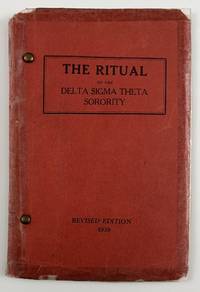
19395722N.p. likely Washington D.C. 1939. About good. 476pp. of mimeographed text plus one leaf of sheet music. Original red printed wrappers brad bound. Substantial edge wear reinforced with cello tape repaired tear and large area of loss to rear wrapper some dust-soiling to covers. Ink ownership inscription on front blank belonging to Ruth W. Lee otherwise internally clean. A delightfully homespun pamphlet containing the revised edition of the various rituals of the Delta Sigma Theta Sorority one of the "Divine Nine" sororities of the HBCU community founded at Howard University in 1913 and still active today. According to the organization’s own website Delta Sigma Theta is "committed to sisterhood scholarship service and addressing the social issues of the time.and has become one of the preeminent service-based sororities with more than 350000 initiated members and over 1050 chartered chapters worldwide." The present work was issued by the Ritual Revision Committee whose names are listed here along with a note from the committee chairman Edna B. Johnson-Morris and a Preface from the committee which includes notes of gratitude to various members including honorary member Mary McLeod Bethune thanking her for "The Beacon Light." The body of the work contains chapters on conducting both grand chapter sessions and regular meetings the initiation ceremony the establishment of new chapters conferring honorary status the process of reinstatement the pledge ceremony the funeral ceremony the observance of memorials dedication exercises the order of business for chapter meetings and closing ceremonies for both types of meetings. Much of the work is literally comprised of the scripts for these various processes and ceremonies. These chapters are followed by the text of the DST "National Hymn" sheet music for "How We Love Thy Name" and the text for the sorority's prayer oath and the "Sorority Charge."<br /> <br /> "As a sisterhood comprised primarily of Black college-educated women the Sorority seriously considers the issues impacting the Black community and boldly confronts the challenges of African Americans and hence all Americans. Over the years a wide range of programs addressing education health international development and the strengthening of African American families have evolved. The major programs of the Sorority are based upon the Five-Point Programmatic Thrust: economic development educational development international awareness and involvement physical and mental health and political awareness and involvement" - Delta Sigma Theta Sorority Inc. website. Printed works issued by the Delta Sigma Theta Sorority are exceedingly rare. OCLC reports just a few items of any type printed before 1970 along with just a few institutional collections relating to various chapters of the sorority containing material before 1950. The present work is not separately listed in OCLC and very likely not present in the chapter collections. unknown
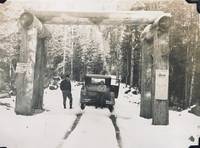
193156722Portland OR: Grace Lougheed & L.S. Lougheed 1931-1934. Three parts. 1st. -- Oblong 4to. 44 pp unpaginated. on thick black paper stock. With 126 silver gelatin photographs all mounted w/ black corners sized from 2.5 x 3.5 in. up to 5 x 7 in. and nearly all w/ manuscript annotations in white ink below in the margins. Contemporary faux alligator skin post-binder punch-sewn at gutter margin w/ black braid minor edgewear rubbing minor bumping to corners still NF album; 2nd -- 4 leaves unnumbered. pencil manuscript written in clear cursive using R.B. Pettijohn & Co. letterhead order sheets as scrap paper minor creasing a few corrections still VG; 3rd -- 8vo. 4; 4 pp. minor toning offsetting to front of first issue edgewear still VG copies. This remarkable photo album written and assembled by Grace Lougheed chronicling the multiple mountaineering expeditions to peaks in the Cascade Mountains for the Multnomah Amateur Athletic Club led by her husband L.S. Lougheed. “The first of our climbs for the summer of 1930†was Zigzag Mountain a 5007 foot peak considered a foothill of Mt. Hood and a popular hiking trail of about 8 miles with images of Loverne & Grace seated Loverne & Alden on one of the peaks and vistas of Mt. Hood in the distance. The couple followed this with trip and climb on Mt. St. Helens ascents of Mt. Hood from the South and North Sides with trails marked on the RPPC cards and noting that “Left Cloud Cap Inn at 2:40 AM reached top at noon. Very hard climb -- logs of rocks falling†with views glaciers on Mt. Hood and climbers in deep snow in August. In March 1931 they return to a climb on Mt. St. Helens with views across the crater from their cabin at the summit and crevasses they nearly fell into. In August 1931 they make ascent on Mt. Adams noting that they “left Cold Springs Camp at 2:40 AM arrived back at camp 5:20 PM went part of the way with a party of Crag Rats from Hood River†including photo of Grace seated with Joe & Loverne resting on the climb. August 31-Sept. 21 1931 illustrates climbs to Illumination Rock at the Summit rim on the Reid Glacier Ansel Rock Zigzag Glacier and finally Elliot Glacier at the last. In October they return for more climbs on Mt. Hood recording first new snow the summit cabin the Timberline Cabin in January 1931 with photo of the cabin interior. The first climb Jan. 11 1931 shows image of Ole Lien Al Builmore Don Hampton & Jim Harlan on the slopes above Government Camp. Their ascent of Mt. Rainier was undertaken from July 4-5 1931 with views near Anvil Rock and the summit at Camp Muir Gibraltar Rock and views of the Tatoosh Range. The final climb documented in the album was a climb to Eliot Glacier up the Sunshine Route which follows the lower aspects of the Cooper Spur Route and then climb toward Cathedral Ridge. The Climb up Mt. Jefferson is announced for MAAC members in The Winged “M†August 17 1934 with announcement that this would be the fourth climb of the year for the club whereas the pencil manuscript specifically notes that the Jefferson climb was the fifth in the series scheduled. Loverne writes that eleven people including the only woman Grace chose to go and that after leaving “Wapinitia Cut-Off eleven miles past Government Camp and turning down into the Oregon Skyline Trail we had a beautiful drive in the moonlight. The silvery light made the forest and meadows look like a fairyland with a lake now and then. . . at times we turned the car lights off and drove down the long forest road with just the bright moonlight shining through the trees.†The next day just as the sun was getting bright they were “ready for our trek of seven miles into Jefferson Park. Everyone was packed pretty heavily. . . and now and then we ran into bear tracks -- before we realized it we were came to the rim of Jefferson Park. Here the scene that is before one can hardly be put into words. . . the mountain with its pinnacles and great rought sic contours. The great bergschruds and crevasses shining in the sun made us all thrill to the sight.†They began the climb at midnight crossed ice fields hundreds of crevasses and reached the summit with Jay Oliver and Melwood Howlett. After their return climb down the mountain an hour before dark they packed out for the return of seven miles to the cars parked at Breitenbush Lake “a trip which was rather punishing after sixteen miles of steady climbing up the mountain & Back.†Grace Lougheed b. 1901 appears to have married Loverne Lougheed sometime in the late 1920s first appearing in Portland City directories in 1928 but we were unable to uncover her whereabouts after 1934. Loverne Lougheed 1902-1978 was a Canadian-American whose father Ormand Lougheed b. 1878 owned and operated a very successful sawmill and logging saw filing operation in Portland on Denver and later Union Ave. for decades. Loverne appears as Vice President of the O.J. Lougheed & Son until after World War II when his third wife Janet Lougheed is listed as a widow in 1948 but then he reappears returning from California and appearing in directory listings by the 1950s. Grace Lougheed & L.S. Lougheed, unknown
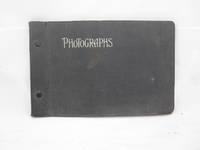
16119Marine Biologist Hope Hibbard. 1917 photo album of scientist Hope Hibbard during her marine biological studies at Woods Hole; an impressive and uncommon relic of an early female scientist working before American women's suffrage. <br/><br/>An album of biologist Hope Hibbard while on a research study program at Woods Hole Massachusetts in 1917. Containing 29 photos the majority of which focus on her study program. Hibbard was an acclaimed scientist specializing in biology cytology zoology and histology. She received numerous academic merits as well as renown for her dedication to promoting women in the scientific sphere and her involvement in associations that forwarded female roles in science and research such as the American Association of University Women AAUW. During her long academic career Hibbard taught at illustrious women's colleges Bryn Mawr and Elmira as well as the forerunner of coeducational colleges Oberlin. In this rare album annotated in white ink by Hibbard we see her as a young student conducting marine biological research from a floating biological laboratory. Hibbard's photos include according to her white ink annotation "Laboratory Launch at Woods Hole" which shows their floating laboratory departing from the harbor "Whitman Cottage where I lived" with other female students during the program her class dredging the ocean floor for samples "on a field trip" a rare photo of a young Hibbard in her college sweater and several labeled photos of Woods Hole locales which would have played a part in her studies including the Great Harbor Little Harbor Marine Biological Laboratory and the U.S. Fish Commission Buildings. Several photos also show Hope and her classmates on day trips and enjoying lobster or the bathing beach. A few photos at the beginning and end of the album show her family. Hibbard is viewed as a crusader for women in the scientific sphere. She held strong opinions about the untapped abilities of women due to both perpetuated stereotypes initialized by men and additional self-deprecating tendencies and she utilized her membership in several academic assemblies to express her viewpoints. Hibbard served as an avid member of the AAUW and the American Association for the Advancement of Science among others and wrote several discourses in which she urged women to integrate marriage and professional endeavors within science rather than abandoning one from the other. Examples of Hibbard's papers include "Vocations for Women and How College Can Prepare Them" 1935 "The Life of Oberlin Women Today" 1937 and "Women in Research." In these multiple dialogues Hibbard communicated her desire for women to overcome social boundaries concerning their position in science. She worked to encourage women to forge their paths independent of discouraging social views and to mold their own journey as both intellectuals and spouses as opposed to exclusively one of the two. Hibbard additionally spearheaded the Oberlin chapter of League of Women Voters while a professor at the institution. Photos and album are in very good condition. Silver gelatin prints lightly toned approximately 2" x 3" inches each. Pages and ink annotation clear and bright. 5" x 8" inch album with black leatherette cover and gold printed title "Photographs". Rubbed at top and bottom but over in very good condition. This is the only early relic we have seen from the life of an important early ambassador of Women in STEM. unknown books