8 017 résultats
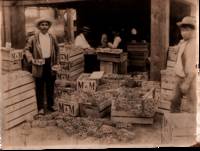
1910List2960Southern California 1910. Ten photographs measuring 8 x 10 inches and smaller with most measuring 5 x 7 inches. Brown Brothers stamps and manuscript captions verso; some with editorial overpainting; some mounted on heavy cardstock. Marginal damage with some tears and corners missing; very good. Japanese immigration to the US began at a large scale following the midcentury loosening of Japan’s emigration laws and the US’s 1882 Chinese Exclusion Act. Most Japanese immigrants entered through the west coast especially San Francisco Portland and Seattle and settled in central and southern California.<br /> <br /> Offered here are ten photographs of Japanese immigrants and laborers in California likely taken between 1900 and 1910 as one is dated 1903. Their work is mainly agricultural though one photograph possibly depicts miners: four men holding sledgehammers stand on a mountainside. Two show newly-arriving immigrants; in one women are lined up to receive a vaccine. Interestingly three of the photographs include women subjects—prior to the 1907 Gentlemen’s Agreement the Japanese population in some California counties had gender ratios of over 100 men to one woman and some simply had no female Japanese residents at all.1 One photograph that shows a woman at work in a cranberry field is identified as having been taken in Moneta California and the caption states that the cranberry farm was “leased by Japsâ€. Moneta actually had the least skewed gender ratio of any Japanese-American settlement at the time in part because its Issei residents were relatively economically better off and as the caption suggests could afford to lease or buy farmland.1<br /> <br /> Of interest to historians of Japanese immigration to California and the Japanese-American labor force around the turn of the century.<br /> <br /> 1 Lane Ryo Hirabayashi & George Tanaka “The Issei Community in Moneta and the Gardena Valley 1900–1920†Southern California Quarterly 70 no 2 Summer 1988: 127–158. unknown
19391709301939. WOMEN. Soviet Women. 50 ff. illustrated with photographs throughout. 4to 250 x 190 mm. bound in publisher's embossed yellow cloth in publisher's cardboard slipcase. Moscow: State Art Publishers 1939. A photographic homage to the role of women in Soviet Russia. Unlike so many of the Soviet propaganda books where the reality is far removed from that depicted in the books this work demonstrates a reality which was that in the Soviet Union women had in fact reached a point where many if not all were availed of the same opportunities given to men. Perhaps because it was published on the eve of the War this happens to be a particularly scarce book. A fine copy. Karasik The Soviet Photobook 1920-1940 pp. 484-485. hardcover
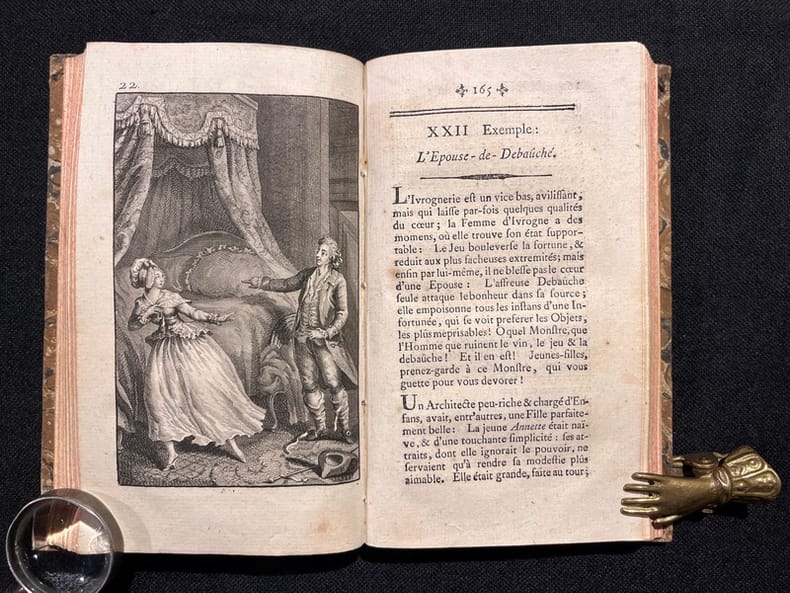
178620929A Neuchâtel, et se trouve à Paris, Chés Guillot, libraire de Monsieur, rue Saint-Jacques, vis-à-vis celle des Mathurins, 1786. 4 volumes in-12 de 272; 312; 312; 324-[16] pages, plein cartonnage de papier marbrés du temps, dos lisses, étiquettes de titre rouges, de tomaison sables; tranches mouchetées rouges.
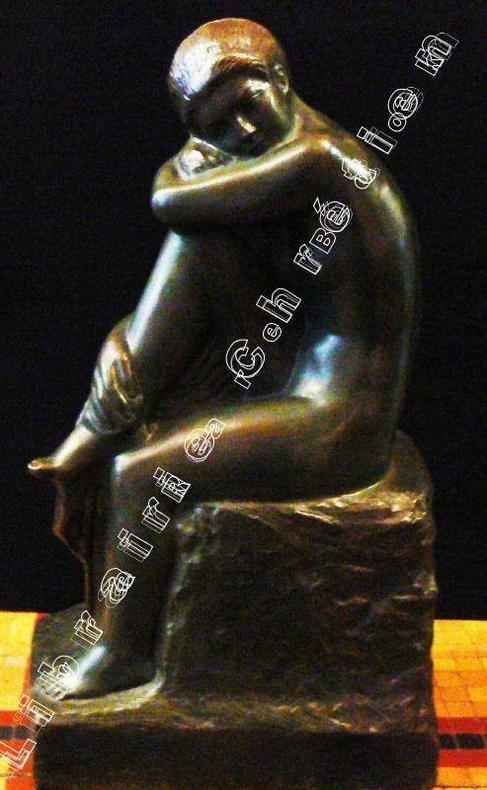
1910180901910 Sculpture en bronze à patine verte, signée sur la terrasse, 1910, 48 x 28 x 17 cm,
19425465Colorado; Massachusetts 1942. Hailing from an immigrant family that rose to prominence in the West Mary Tritch Rogers and her daughter Georgette Houston were often overlooked in their own time in favor of the family patriarchs. Mary's father George Tritch 1829-1899 was after all a German immigrant whose evolution from downtrodden pioneer to millionaire rail road and real estate magnate was documented in Sketches of Colorado 1911 and celebrated in numerous newspaper and society articles in his lifetime. Meanwhile Mary's husband Benjamin W. Rogers 1842-1917 was Colorado's first dentist and a community cornerstone. Yet the present collection reveals that Mary and Georgette after her were more than ballroom delights. Savvy investors and business women in their own quiet way they built and maintained their own empire even in the face of scandal marital separation and disinheritance. Without the documents preserved here we might never know their story.<br /> <br /> The territory and later state of Colorado had varying property laws for women across Mary's emergence to adulthood. It was a space where white male settlers drastically outnumbered their female counterparts; and when statehood in 1876 stripped women of suffrage there was little incentive for men to vote to reinstate it immediately. That said the increasing number of Married Women's Property Acts extending across the US did provide expanded protections for women to have control over their own wages their inheritance their land ownership and their investments. Mary Tritch Rogers used this to her benefit as portions of this collection show. Taking the allowances given her first by her father and later her husband she was able to grow her own little empire based in stock investments real estate purchases and interest earned from rents and loans to members of the community. This financial privilege allowed her to legally separate from her husband and her unhappy marriage in 1900 signing over $15925 -- or $576000 today -- for his promise to depart peacefully and disconnect from her. It also allowed her to survive disinheritance from her father -- something reported by newspapers following his death and potentially connected to the public scandal of her separation. Along with her daughter she relocated to Massachusetts for the remainder of her life. Though newspapers suggested this was for her "health" it's far more likely that the distance from her estranged husband and perhaps even Massachusetts' own property laws were a larger appeal.<br /> <br /> <br /> With her independent wealth Mary Tritch Rogers was also able to provide freedoms for her daughters that weren't available to her. Georgette would be widowed early on in her marriage and lived as a single mother to her children William and Dorothy. Account books from her household show however a comfortable life similar to her mother's. According to the 1910 and 1920 US Censuses she took up residence near Boston Massachusetts with her children and mother keeping at least one maid. Yet neither women list employments other than head of household. Notably neither show signs of remarrying either. By the time of Mary's death in 1935 her estate was valued at $269458 -- or $6.02 million today. A full accounting of her assets and debts owed for settlements and funeral expenses is included.<br /> <br /> The research rich assortment of ledgers checkbooks letters travel and stock documents legal materials and other personal ephemera give scholars an opportunity to examine not only the individual lives of these women but also how their financial savvy contributed to or harmed the white and Indigenous communities around them. To what extent did these women's lives in Colorado in Europe where Mary lived for a time or in Massachusetts expand or contract based on the localities' laws surrounding women's finances And to what extent did the women replicate or depart from some of the more fiscally aggressive and harmful practices of the men around them<br /> <br /> <br /> <br /> Collection contains:<br /> <br /> Mary Tritch Rogers' Loans and Banking Ledger 1894-1898<br /> Quarter roan over printed cloth with handwritten ownership title to front board. Measuring 235 x 185mm and containing 22 pages including pastedowns. With detailed information on Rogers' investments outgoing loans and payments owed or received during the later years of her marriage leading up to her formal separation. <br /> <br /> Georgette R. Houston Account Book 1908-1911<br /> Pictoral cloth with stitched edges. Measuring 185 x 60mm and containing 24 handwritten pages of financial information from her early years of marriage. Managing her household expenses and allowances.<br /> <br /> Georgette R. Houston Check Book 1941-1942<br /> Pebbled faux leather. Measuring 215 x 175mm and with all check stubs filled and all checks absent. Documenting her expenditures including household costs tuitions and charitable donations. <br /> <br /> Packet 1: Legal and Financial Documents <br /> 1895 Power of Attorney granted by Mary T Rogers to her father and husband while in Paris<br /> <br /> 1900 Formal Separation and settlements between Mary T Rogers and her husband 2 signed copies<br /> <br /> 1916 Attorney letter addressed to Mary T Rogers<br /> <br /> 1935 Mary T Rogers final estate and funeral expenses<br /> <br /> Packet 2: International Travel<br /> 1892 Family Visa for travel to Europe<br /> <br /> 1896 Single Visa for Mary T Rogers' travel to France<br /> <br /> 1899 Family Visa for travel to Europe<br /> <br /> 1904 Single Visa for Mary T Rogers' travel to Germany<br /> <br /> <br /> Packet 3: Assorted Family Documents<br /> <br /> 1 Sheet of Family Marriages & Births<br /> <br /> Unidentified dental record<br /> <br /> 1901 Stock Certificate<br /> <br /> 1911-12 Car Insurance Letter in Mary T Rogers' sole name<br /> <br /> <br /> Packet 4: Assorted Letters of the Houston Family<br /> Letters report cards clothing orders job references and other documents. <br /> <br /> <br /> Packet 5: Licenses & Ephemera<br /> Assorted hunting licenses and cricket ephemera<br /> <br /> Packet 6: Photos<br /> Assortment of 6 original family photographs including Mary Rogers in mourning<br /> <br /> Packet 7: Clippings<br /> Assortment of 6 society pages clippings regarding family marriages and deaths. unknown
19366410Various locations 1936. Good plus. Fifteen notebooks each about 6.5 x 4 inches; totaling approximately 200000 words. Some notebooks without covers scattered soiling some biopredation or wear. Written in ink and pencil. Diary archive of Jessie Tibbits Cochrane Willets a Long Island native who traveled extensively and wasn't afraid to speak her mind and be her own person. Throughout her diaries she expresses frustration at being shunned by her family undervalued and subject to gossip but is fiercely determined to live life on her terms. She is often traveling solo driving her own car staying in rooming houses or hotels and feeling she has no home of her own. She regularly renews her pistol license. She goes to the theater in New York attends lectures and meetings of women workers the League of Women Voters and speeches by Margaret Sanger. She believes strongly that women have a right to their own bodies. She reads widely and mentions stories in the newspapers of the Lindbergh kidnapping and the mistreatment of Black people in the South. She remarks on books she is reading writes of the men she encounters and notes the opinions of others about her lifestyle and liaisons. Through these diaries the life of a singular woman of the early 20th century is revealed. Jessie 1869-1943 was born in Nassau County New York the oldest of three children and the only girl. The Tibbits were early residents of Long Island an old colonial family and Tibbits Place was one of the oldest establishments on the island. Her father was one of the founders and first President of the Port Washington National Bank and started a real estate business in 1901 and the family was quite comfortable and respectable. Jessie married William Cochrane in 1890 though they divorced at some point and by 1910 she had moved home and was considered a bit of a disgrace as a result. In 1929 she married Nathaniel Louis Willet 1851-1933 and was subsequently able to live out the rest of her days on a more comfortable footing. She died in Palm Beach Florida. The diaries in this collection include the years 1910 to 1912 1917 1918 1921 to 1923 1927 in three parts 1928 1930 to 1932 1934 to 1936 and 1941; they therefore cover almost the entirety of her adult life.<br /> <br /> The first diary here begins with "let the past be the past" and opens with details of a trip to Europe in 1910. Starting in Gibraltar she travels all over Italy and then on to France and England. Though often discussing the company of the other passengers it seems she made the trip alone. In Genoa she has "a bad dream of Bill trying to kill me again" and one speculates that fleeing her husband may be part of the impetus for a European jaunt. Arriving home in October she feels distinctly unwelcome at the family homestead and can't wait to leave again. By June of 1911 she had moved to a rooming house in San Diego. She has made the acquaintance of a Reverend and often waits for him to come by and see her noting that he would marry her if she had enough money to support him so he could leave the clergy. Another woman in town is also vying for his affections. At the same time she is seeing another man named Baxter and when things get tense she leaves for short excursions to Los Angeles or Santa Barbara. On her return one time to San Diego she decides to take her own apartment so she can entertain gentlemen callers without being spied upon. In February 1912 she receives a letter warning her that a Mr. Warren was planning on calling her to the stand in his divorce proceedings. It is unknown what came of these upheavals.<br /> <br /> Her next diary begins in January 1918 with a hope for the end of the war and a strong statement on the value of women in the world: "Woman is slowly awakening to the realization of her position -- God grant she may see true Mother of Man -- this world is only as great as her women -- I blame men and out of this new knowledge there will grow a new world." She is traveling once again and mentions yet another gentleman friend. By the end of January she was in Miami. She went to hear William Jennings Bryan speak and found him a strong "man of the people." Someone asks her why she is not married and she wonders "is this fault all mine" She also says she believes "there is no real advantage in virtue if it chills and diminishes passion." While on an excursion by boat on the Indian River she considers whether she should "take up Mr. Rich -- but I am tired of old men." By March she had started back north by train to St. Augustine Charleston Charlotte and on to Danville Virginia where she spent the night. "The streets are hilly the shops are good but anywhere the old men stand on street corners spit and look insults to the women -- I would like to castrate a few of the old fools." By 1921 she is unhappily back with her family. Of her mother she writes: "God help a woman that has so much hatred in her heart." She spends time in the city at the theatre and lectures including one by Margaret Sanger advocating birth control: "Mrs. Sanger said all nurses and clinics should have the power to control birth and give a woman the right to know her own body and have the right to it." Jessie continued to advocate for birth control and a woman's right to her own body for the remainder of her life as mentioned in these diaries. Altogether a lengthy and fascinating account of one woman's life at the turn of the century. unknown
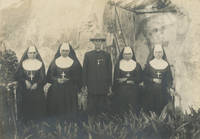
1900List518Most Cuba or Jacksonville 1900. Silver gelatin or albumen photographs various sizes ranging from 3 x 3 to 6 x 8 most captioned to verso. With handwritten manuscript four leaves discussing various diseases. The Spanish-American War was the first war in which nurses formed their own dedicated units as well as the first war in which they were accepted within military hospitals. While no nurses died in battle 153 died during the war from disease. Nurses were responsible for both treating soldiers as well as maintaining sanitary conditions within the camps. Conditions were often poor leading some to work until they were too sick to continue. <br /><br /> The current collection of photographs documents the experiences of a Mrs. Waters who was originally from Groton Massachusetts. The collection begins with a couple early photographs including a portrait as a young woman and a cyanotype of one of Waters' leprosy patients at Johns Hopkins Hospital in Baltimore. The next section shows Waters' training in Jacksonville Florida with either the Fourth or Seventh Army Corps at what was called Camp Cuba Libre both Corps trained there in 1898. The photographs of Jacksonville show life around the military camp and environs with some notable photographs of African-American inhabitants of the region. Three photographs quite notably show the Congregation of American Sisters a small group of American Indian nuns led by Reverend Francis Craft. The photographs taken in Cuba are notable for their portrayal of local life. Several photographs of military installations are taken around the "trocha" or line established by General Valeriana Weyler from Mariel to Majana. Another notable photograph is a cabinet card of a large group of nurses taken by the Havana photographer R. Testar. <br /><br /> The group overall shows very early photographic records of military nurses in training as well as a scarce photographic record from a woman in a combat situation. The photographs are generally well preserved in very good to excellent condition with some light fading. Accompanying the photographs is a four page manuscript essay presumably by Waters discussing leprosy as well as the booklet Spanish Phrase Book for American Soldiers and Sailors published by the National Relief Commission of Philadelphia. <br /><br /> Offered in partnership with Daniel / Oliver Gallery. books
168043533Paris, Antoine Dezallier, 1680. In-16 réglé de (16)-139-(1) pp., maroquin lavallière, dos à nerfs, double filet sur les plats, tranches dorées (Capé).
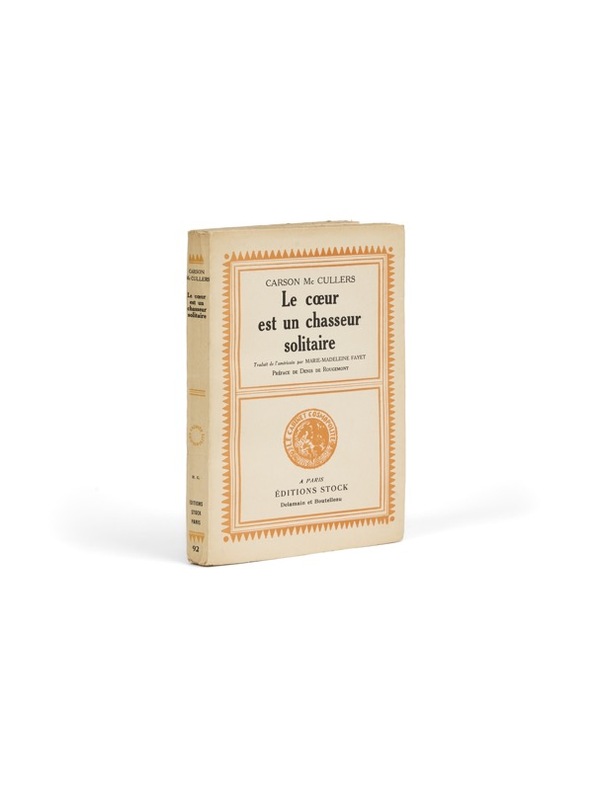
194730908Un des 100 exemplaires hors-commerce. Envoi signé à Francis Ambrière Paris, Stock, coll. « Le Cabinet cosmopolite », (30 mai) 1947. 1 vol. (130 x 195 mm) de 352 p. et [1] f. Broché. Édition originale de la traduction française, par M.-M. Fayet. Préface de Denis de Rougemont. Un des 100 premiers exemplaires hors commerce sur vélin suédois. Envoi signé : « To Francis Ambrière, from Carson Mc Cullers ».
Signed by Steadman and Clark upon front free endpaper. 270 pages. "In 1983, when Sally Ride became the first American woman to enter space, there was no question of whether she could handle the physical stress of the flight, because in 1961 a secret study found thirteen women were physically fit and properly motivated to become astronauts. Bernice Steadman was one of the twenty-five women invited, and one of the thirteen to pass that early strenuous physical. But then she was only allowed to watch, not to participate, as American men first flew into space." - from dust jacket. "A window into the life of a very remarkable lady. Bernice fought the battle of gender discrimination with grace, determination and, above all, ability." - Jerri Truhill, Pilot, Mercury 13. Appears unread. A superb copy. Book
1839223681London.: Smith Elder and Co. Cornhill. 1839. Engraved handcoloured frontispiece opposite the additional engraved title page sketch map and 7 other full-page illustrations one folding and 5 hand-coloured text illustrations 2 half-title xvii including both the engraved and printed title pages 283pp; original blind-stamped pebbled green cloth boards 23 x 14.5 cms re-backed mounting the original gilt-lettered backstrip endpapers renewed scant spotting the boards faded and the backstrip chipped at the foot with the neat inked inscription of a previous owner but in very good condition. Scarce. Pioneering account beautifully illustrated after sketches by the author. Marianne Postans travelled to India in 1833 with her husband Thomas Postans a Captain in the 15th Regiment of the Bombay Native Infantry where he was posted to Cutch Kutch the northwestern region of modern-day Gujarat. They both shared a deep interest in the people and traditions of India. Marianne's account attempts to describe the culture of the region its bards and bardic literature including specific songs and stories of Kutchi bards arts and crafts and agriculture and trade. She also describes in detail rituals such as infanticide and the practise of sati. <br>The beauty of the Rann awed her: “The distant aspect of the Runn resembles that of the ocean at ebb tide; and as some water always remains on it the refraction of light produces the most beautiful and mysterious effects decorating it with all the enchantments of the most lovely specimens of mirage whose magic power exerting itself on the morning mists indues this desert tract with the most bewitching scenes…”. . Smith, Elder and Co. Cornhill. hardcover
194512886Various locations mainly Texas Oklahoma and Arkansas 1945. Two albums. Album I: 24 leaves illustrated with twenty-four original photographs over two dozen postcards mostly photographic original letters and military documents and a large quantity of ephemeral items. Folio. Contemporary cream cloth decoratively stamped on front board in gilt and silver string tied. Album II: 11 leaves illustrated with ninety-eight photographs in mounting corners six loose photos and a couple of ephemeral items. Oblong folio. Contemporary brown cloth decoratively stamped on front board in gilt yellow and red string tied. Overall minor wear. Very good condition. A pair of annotated vernacular photograph album / scrapbooks compiled by Lt. Erma J. Frazier and her mother during her wartime service in the U.S. Army Nurse Corps. Frazier served in the Nurse Corps at various hospitals in the Trans-Mississippi West at Camp Swift in Bastrop Texas; Fort Sam Houston in San Antonio Texas; Okmulgee Oklahoma; and Camp Robinson Arkansas. Frazier hailed from East Brady Pennsylvania and worked as a Registered Nurse at the nearby Kittanning Hospital before she entered military service. She enlisted in early 1945 and served throughout the conclusion of the Second World War. The present albums record her service time in unusual detail with a mixture of original photographs picture postcards original military documents a few manuscript letters and various ephemeral items.<br /> <br /> The first album was compiled by Frazier's mother who inscribes the first page: "I dedicate this book to my daughter Erma Jean Eberhart Frazier who entered the Armed Services on March 17 1945 as a 2nd Lt. in the Nurse Army Corps a Camp Swift Texas." This album focuses mainly on Frazier's time at Camp Swift and Okmulgee Oklahoma. This album contains the lion's share of the ephemera including a patch the floral corsage she wore on the day she left for service military paperwork and forms and various newspaper clippings. The military paperwork includes enlistment documents including her "Application for Appointment" a manuscript postcard from the director of the Red Cross describing Frazier as a "professional qualified for military service" Army documents on qualifications for nurses and more. Other ephemera includes letters and cards received by her at Camp Swift a page of five pressed "Flowers from Texas" each preserved in a small plastic bag shipping tags from packages of clothing sent home by Frazier a couple of church programs a page of ten small postcards from her visit to Austin a menu from Brooke General & Convalescent Hospital at Fort Sam Houston some greeting cards and so forth. The photographs include portraits of Frazier from 1943 and 1944 while a nursing student; eight pictures of Frazier and other soldiers at Camp Swift; and eight shots of Frazier fellow soldiers and their barracks and administration buildings at Okmulgee Oklahoma.<br /> <br /> The second album was compiled by Frazier herself who provides a manuscript title on the inside front cover: "Memories of the Army Nurse Corps." There are also two photographs inscribed in the first person "Me on arrival at G.G.H." and "side entrance to my barracks G.G.H.". This album is almost entirely comprised of captioned photographs particularly valuable for identifying numerous fellow soldiers serving with Frazier. The images emanate from the last three locations at which Frazier served which she lists on the inside front cover: Brooke General Hospital at Fort Sam Houston Glennon General Hospital in Okmulgee and Regional Hospital at Camp Robinson Arkansas. Perhaps Frazier felt her mother's album largely focused on Camp Swift sufficiently memorialized here time there. The photographs are presented in chronological order and include portraits of dozens of men and women with whom Frazier served or patients served by Frazier often accompanied by informative and sometimes humorous manuscript captions on the album leaves or directly on the images. The photos also picture the hospitals themselves and include a handful of images taken during leisure time on base.<br /> <br /> A unusually informative pair of World War II-era albums and scrapbooks preserving the service of a highly-qualified Army nurse from Pennsylvania serving in the American West during the last year of the war. unknown
46418Liverpool: 1843. Quarto sheet folded once to make 4pp. Signed in three places "Emily Taylor"; marked "Private;" and "for Mrs. Chapman." Mild cover soil; small loss at right margin from opening; slight fading to ink. Very Good. Includes brief introductory followed by an anti-slavery poem of 67 lines "For the Liberty Bell" submitted for publication in the American gift annual of that name. Numerous ink corrections to the text in the author's hand. English poet and hymnist Emily Taylor 1795-1872 was the author of more than twenty books including the book-length anti-slavery poem The Vision of Las Casas 1825. Though best-known as an author of historical works for children she was also a prolific hymnist contributing more than a dozen works to various Unitarian hymnals in the first decades of the 19th century possibly providing her connection to Follen also a well-known hymnist. The present letter is addressed to the prominent abolitionist author Eliza Lee Follen of Boston and opens: "My dear Madam Our mutual friend Harriet Martineau assures me of a kind reception from you and accordingly I transcribe for you a few lines written immediately on reading your Liberty Bell for 1843. If you are to enroll my name among those which I hold so holy & dear as your contributors in the Abolition cause please to accept them." The substantial 67-line poem which follows begins with the prologue: "To a friend who asked the author's aid and prayers for the slave;" and continues: "Pity & prayers and pleading for the Slaves! / Them thou didst ask and soon as ask'd I gave." The poem goes on to extend the by-then familiar argument that the institution of slavery makes slaves not only of its subjects but of its perpetrators as well. Taylor concludes as a postscript on the final leaf: "Would you dear Mrs. Follen forward the enclosed to Mrs. Chapman Maria Weston Chapman editor of The Liberty Bell .I am sorry but do not know Mrs. C's address." <br/><br/>The poem was in fact published without revisions as "To A Friend" in the 1844 edition of Chapman's important anti-slavery gift annual The Liberty Bell; other contributors to this edition included James Russell Lowell Lydia Maria Child Harriet Martineau Amasa Walker William Llloyd Garrison and others. The recipient of the letter Eliza Lee Cabot Follen was herself a prominent and prolific abolitionist author scion of the Cabots of Boston and part of the Boston social circle that included William Ellery Channing Henry Ware George Ticknor and other patrician intellectuals of the period. An excellent and representative letter and manuscript involving three key women figures in the abolitionist movement during a particularly heady period for the cause. unknown books
964s. l. : 1861-1889. « [MADAME PARENT] EST À L'ENSEIGNEMENT PROFESSIONNEL DU PIANO CE QUE MME DE SÉVIGNÉ FUT AUX LETTRES »
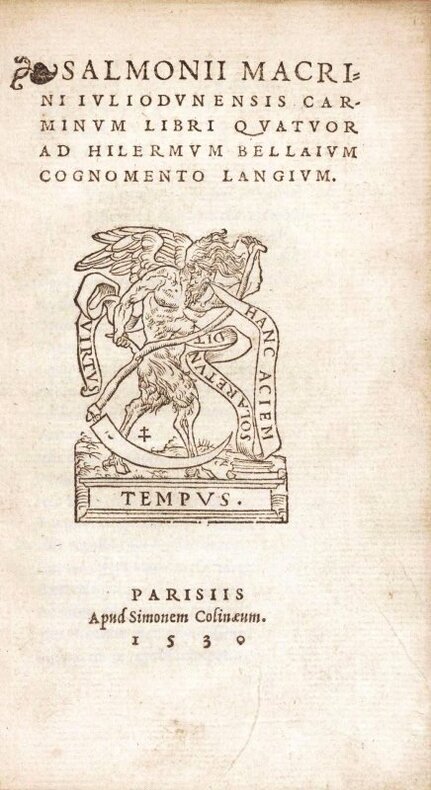
357Paris ; id. : Simon de Colines ; id., 1530 ; 1528. LES RETENTISSANTS DEUX PREMIERS RECUEILS D'ODES PROFANES DU PLUS GRAND POÈTE NÉO-LATIN DU XVIE SIÈCLE, « L'HORACE FRANÇAIS », PRÉCURSEUR DE LA PLÉIADE
169937916Amsterdam: By Jan ten Hoorn boekverkooper 1699. First Edition. In four parts each with half-title and separate pagination and signatures. Engraved pictorial title and eleven plates by J. Luyken. 16 192 4 128 4 159 1 blank 4 198 pp. 1 vols. 4to. Contemporary vellum. Minor soiling to covers engraved title with contemporary repair to lower margin one gathering loosened lower corner of one page torn with loss of one letter in marginal gloss else a fresh fine copy. Luyken J. First Edition. In four parts each with half-title and separate pagination and signatures. Engraved pictorial title and eleven plates by J. Luyken. 16 192 4 128 4 159 1 blank 4 198 pp. 1 vols. 4to. Compendium of short biographies illustrating the rise and fall of princesses women martyrs of the church and other notable women from history. With eleven "curious" plates by Luykens depicting murders executions and other violent deaths. By Jan ten Hoorn, boekverkooper unknown
16759Women's Education Movement. Pamphlet/ Volume 14 of 17: Acts for the State of Massachusetts January 12th Session 1804 Incorporation of Bradford Academy Containing the original incorporation of Bradford Academy. Bradford opened as the first coeducational institution in Massachusetts but due to overwhelming interest from parents of girls with no other option for education Bradford soon transitioned to become the first all-female academy in Massachusetts and among the first in the United States in 1836. Only three examples of these early Incorporation Acts could not be found among Institutional Collections according to OCLC Worldcat. <br/><br/>Women's colleges proliferated in the mid- to late- 19th century to fill the void created by their exclusion from most institutions of higher education. The prevailing notion that women were too delicate for a rigorous academic education was openly challenged when Elizabeth Cady Stanton spoke at the Seneca Falls Convention of 1848 "Man's intellectual superiority cannot be a question until woman has had a fair trial.When we shall have had our colleges our professions our trades for a century a comparison then may be justly instituted." Young women were quick to step up to the challenge; as quickly as female colleges opened they filled up. But this document predates Seneca Falls by 40 years and Bradford was among the very first institutions to educate women in the United States. unknown books
18006287Monclova: May 12 1800. Good plus. 4pp. on a bifolium. Light edge wear and staining. Some moderate offsetting. In a neat legible hand. A very interesting manuscript record of a colonial Mexican marriage dispute in 1800 which includes a request for separation by MarÃa Josefa Pruneda from her husband a report on her “illicit friendship†with another man and an official warning concerning her behavior from the judiciary. The manuscript copies MarÃa Josefa Pruneda’s petition to the governor of Coahuila y Tejas to separate from her husband Miguel Maldonado claiming he neglected her. The document begins “Con respecto al informe que el señor gobernador me pide en remitir en presentacion que hiso ante su señoria Maria Teresa Pruneda alegando que su marido ademas el no haverla assistido desde que se caso con ella se ha mudado aun Rancho Yermo Nombrado Sn. Andres distante de mariado de poblado donde esta mui espuesta al Riergo de los Enemigos.†<br /> <br /> However in the following reportThe intendant of Santa Rosa states that MarÃa Josefa refused to live with her husband due to her father’s influence and because of her “illicit friendship†with a young man named Thomas Zaralsa. The report notes that Miguel Maldonado was a hardworking man while the petitioner enjoyed her husband’s absences. The governor Manuel Antonio Cordero y Bustamante ordered the Justice of the Villa de Monclova to ensure she cohabited with her husband and warned her father to cease influencing her. A final report states that MarÃa Josefa was warned but disobeyed and left the town saying "No cumplio pues se fue sin presentarse a el tiempo de su salida loge. partisipo a Vm. porque en su inteligensia lede el debido cumplimiento segun sed ordena."<br /> <br /> A fascinating delineation of the process for seeking divorce and the difficulties of doing so in late colonial Mexico. May 12 unknown
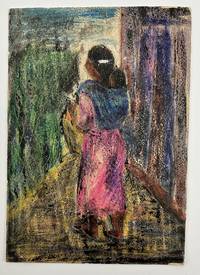
4357Mainly Chicago Il 1975. Very good. Spiral-bound sketchbook with nineteen full-page sketches some in color and some in pencil 12 x 9 inches; plus a finished color painting on art board 14 x 9.75 inches; twenty-eight photographs 3 x 3 inches to 8 x 10 inches; fourteen printed art exhibition catalogues; and a handful of ephemeral items. General overall wear. A wonderful archive of original artwork photographs programs and assorted ephemeral items belonging to noted Swedish-American and Illinois visual artist Grace Spongberg 1906-1992. Spongberg was educated at the Art Institute of Chicago where she studied under American Impressionists Albert Krehbiel and Louis Rittman. She traveled extensively in Mexico Europe and the Far East which informed her work throughout her career. The Illinois Women Artists Project describes Spongberg's categories of artistic production as "Ceramicist Lithographer Painter-Oil Pastelist Photographer Watercolorist." During her rich and fruitful career Spongberg completed muralist commissions under the Works Progress Administration painted private commissions exhibited at numerous museums in the United States and around the world and created a large body of paintings and lithographs that still trade on the art market today. Her four-panel mural in the lobby of the Bennett School in Chicago completed as part of the WPA's Federal Art Project in 1939 is still on display there.<br /> <br /> Grace Spongberg's original artwork is present here in two forms. The first is a quarto spiral-bound sketchbook in which she sketched a variety of subjects and settings. The drawings feature mostly urban scenes with drawings of buildings fountains a clock tower urban gardens and other scenes. One of the color drawings appears to picture seven flags arranged before a hedge row and may show part of the grounds of the United Nations in New York City. The second piece of original art here is a pastel impressionist depiction of what appears to be a Mexican woman carrying her small child on her back in a baby sling. The pastel was executed on art board and is unsigned but is unmistakably Spongberg's style. This piece was likely produced in the 1930s during her time working with the WPA when she was known to have made lithographs of various scenes in Mexico.<br /> <br /> In addition to the artwork the present collection includes twenty-seven photographs. These images feature some of Spongberg's paintings interior settings in her home Spongberg engaging with others at an art exhibition Spongberg at work on an architectural painting and more. A pair of black-and-white photographs feature Humpty-Dumpty-like characters painted on a bedroom wall; the manuscript caption on the verso of each identifies them as one of Spongberg's commissions described as "Decoration on nursery wall in a private home." Another photograph pictures a serigraph of Spongberg's painting "Open Shutters which according to the manuscript caption on the verso was "Property of the Chicago Society of Artists - This is the 1951 print presented to lay members." Most interestingly eight of the photographs feature Spongberg's longtime companion - an African-American artist named Hatti Hayes. Some of the photographs here feature the women both individually and together from relative youth to both women in their elder years. These include two black-and-white portraits of a smoldering Hayes taken in her younger years. The two also apparently traveled together as early as 1954 where they both appear on the Passenger List of a Trans World Airlines flight from New York to Paris. According to one newspaper record in November 1951 the two women exhibited ceramics together at the Benedict Art Gallery of Hull House in Chicago. The exact nature of the women's relationship -- whether it was platonic or romantic -- is unknown to us though they did in fact live together. The only envelope present here a 1983 envelope sent by the Chicago Symphony Society is addressed to both of them at a Rush Street address in Chicago.<br /> <br /> The present collection also includes over a dozen art exhibition catalogues. The catalogues date from 1934 to 1952. All but two of them feature various paintings watercolors or prints by Spongberg but one relates to an art piece by Hayes The latest-dated catalogue here for the 1952 Wichita Art Association's Decorative Arts and Ceramics Exhibition features a submission for an enamel plate by Hatti Hayes. In addition the material above the collection also contains a handful of ephemeral items. Most notably are an unsigned two-page typed meditation on the dropping of the atomic bomb in Hiroshima and a 1936 newspaper clipping memorializing Spongberg's prize-winning painting "Washington Square Chicago" which garnered the "purchase prize" at the eighteenth exhibition of the Swedish-America Art Association. The clipping states that the painting would eventually head to Växjö Sweden to be part of the town museum's permanent collection. According to the Illinois Women Artists Project this painting the aforementioned Bennet School mural and another mural at the Mason Elementary School in Chicago are Spongberg's permanent holdings.<br /> <br /> This is truly a case of the sum being greater than the parts and provides a much-needed foothold in researching the little-known career of Grace Spongberg. The material also provides unique photographs documenting the long-term relationship between Spongberg and Hayes the latter a distinguished artist in her own right. unknown
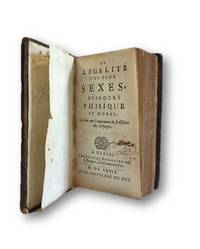
15585De L'Egalite des Deux Sexes Discours Phisique et Moral." Paris 1697. François Poulain Poullain de la Barre b. 1647 in Paris . Rare second edition. In French. Octavo. Contemporary brown calf binding with some edgewear and bumping to corners and spine. Poulain was the first to base his argument on reason alone. Minor chips and tears to pages throughout as well as names and annotations from previous owners. Spine tender. Overall very good condition for such an early and important title. Laying the groundwork for gender equality this text makes a case for men and women's physical and moral equality. While other feminist writers before him called upon religious and philosophical authorities. l'Égalité can be seen not only as a turning point in feminist thought and argumentation but also one of the first truly philosophical feminist works. Albistur and Armogathe much cited scholars of the history of feminism locate Poulain's involvement with Cartesianism as a catalyst in feminism: "Without Descartes there would not have been Poullain de la Barre; without Poullain de la Barre the history of feminism would have gone nowhere for a long time. Undeniably he must be considered the theoretician for women's emancipation the most important that we had from the Middle Ages to the middle of the nineteenth century" Histoire du féminisme français p. 84 as translated in Three Cartesian Feminist Treatises fn. 104 p. 33. Poulain's works were re-issued in French editions during the following fifteen years Alcover: 30 although his name did not appear on the title page of Égalité until 1690. Poulain's Equality had a significant influence in England following its translation in 1677 as The Woman as Good as the Man. Poulain's ideas and even the phrases in which they were expressed were plagiarized initially by an anonymous 'Sophia' in Woman Not Inferior to Man 1739 which appeared in an expanded edition as Beauty's Triumph 1751. Equality was also pirated in a loose translation by an anonymous 'Lady' as Female Rights Vindicated 1758; this was republished in two revised editions as Female Restoration 1780 and Female Rights Vindicated 1833. Thus Poulain's primary text about the equality of the sexes continued to influence discussion of that topic in English throughout the eighteenth and nineteenth centuries although its author's name had lapsed into oblivion and was not acknowledged by those who plagiarized his work. OCLC Worldcat reports no other known copies of this early feminist text in this original form at any library or institution worldwide. unknown books
192639273Tashkent Uzbekistan: Women of the Central Asian Office of the Organizational Bureau of the Central Committee of the Communist Party of the Soviet Union 1926. Quarto 30.5cm.; publisher's white pictorial staplebound wrappers printed in red blue purple and black; 30pp.; text illus. throughout including photographs and a 2-pp. comic strip printed in red blue and black. Some minor wear and dust-soil to wrapper extremities else a Very Good or better bright and unopened copy. Quite an attractive Communist women's liberation journal published in Tashkent in the Uzbek Soviet Socialist Republic promoting women's education and generously illustrated with political cartoons and comics. Women of the Central Asian Office of the Organizational Bureau of the Central Committee of the Communist Party of the Soviet Uni unknown books
169937916Amsterdam: By Jan ten Hoorn boekverkooper 1699. First Edition. In four parts each with half-title and separate pagination and signatures. Engraved pictorial title and eleven plates by J. Luyken. 16 192 4 128 4 159 1 blank 4 198 pp. 1 vols. 4to. Contemporary vellum. Minor soiling to covers engraved title with contemporary repair to lower margin one gathering loosened lower corner of one page torn with loss of one letter in marginal gloss else a fresh fine copy. Luyken J. First Edition. In four parts each with half-title and separate pagination and signatures. Engraved pictorial title and eleven plates by J. Luyken. 16 192 4 128 4 159 1 blank 4 198 pp. 1 vols. 4to. Compendium of short biographies illustrating the rise and fall of princesses women martyrs of the church and other notable women from history. With eleven "curious" plates by Luykens depicting murders executions and other violent deaths. By Jan ten Hoorn, boekverkooper unknown books
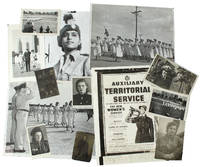
1940184471940. Women Military Archive of 17 silver gelatin photographs 1930s-1950s documents women's military service across multiple national contexts during the period surrounding the Second World War. As global mobilization required women to fill combat-support anti-aircraft and logistical roles these images record the transformation of gendered labor within armed forces. The archive supports research into wartime propaganda recruitment strategies colonial and postcolonial military participation and racial diversity within women's units.<br /> <br /> Archive of 17 photographs ranging from 2.25 x 3.25 inches to 8 x 10 inches. Includes press photographs real photo postcard and image of recruitment propaganda poster for the British Auxiliary Territorial Service reading "The New Women's Service. To relieve men of non-combatant duties during a national emergency." One larger portrait shows an Indian female soldier identified en verso as "Best cadet in National Cadet Corps of India." Another press photograph depicts an array of Air Force soldiers in parade rest including a woman of African American descent. Additional image shows male soldiers saluting a marching women's Air Force unit; original newsprint retained with one photograph.<br /> <br /> Produced during an era when over half a million women served in auxiliary and combat-support roles worldwide the archive reflects how military necessity reshaped public representations of female authority and competence. Light sunning to some photographs; surfaces clean and legible; annotations preserved. Overall very good condition. A cross-national photographic record of women's expanded military participation during mid-twentieth-century global conflict. unknown
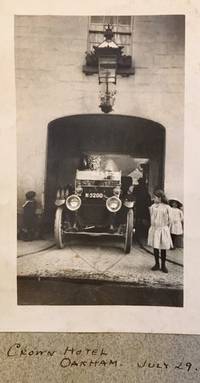
191153910n.p.: Kate Harris 1911. Oblong 4to. 12.75 x 10 in. 204 pp unpaginated. on gray paper stock w/ 416 original silver gelatin black & white photos tipped-in sized 2.75 x 3.5 up to 3.75 x 6 in. including as well over 100 panoramic photos sized mostly 2.8 x 7.5 in. all w/ extensive manuscript notes in neat printed hand following manuscript presentation preface preliminary and end leaves with chipping & fraying to fore-edges some creasing soiling minor tears affecting a few notes 9 photos removed at some point. Recent gray cloth gilt lettering to spine gray paper endpapers presented by Mrs. Harris to Joseph F. Pickett b. 1887 a professional New York driver and chauffeur who drove the group through Europe on Dec. 25 1911. This exceptional photo travelogue details the motoring adventures by Kate Harris her husband Arthur their friend Mrs. Wadsworth and chauffeur Joseph Pickett through Europe just three short years before the devastation of World War I. This album not only demonstrates the level of interest in the burgeoning automobile tourism fad of the Edwardian era but also offers an excellent snapshot of scenic areas throughout Europe. The Harris’s not only brought their luggage and chauffeur via ocean liner in July 1911 but also their 1910 Pierce-Arrow 48-SS Seven-Passenger Touring Sedan fitted with special luggage racks on the rear to haul the many trunks bags picnic & camping equipment as well as a special spare tire bracket on the side which held three spares at any one time often needed. Mrs. Harris appears to have been an enthusiastic amateur photographer and writes that when they drove through an Austro-Hungarian military road she had to lock up their Kodaks. Carefully documenting punctured tires pubs & hotels for lunches and stays and even the mileage covered the group begins their travels in England view the Roman Walls stop in Durham Cathedral Raby Castle onto York Cathedral stop over in Oakham and then down to Cambridge. They stop over in Lofts Hall travel the 51 miles to the London Ritz Hotel and the next day drive the 72.3 miles to Folkestone where the auto was loaded on the 5 PM Boat. They begin their drive in Boulogne with views of the docks the hotel and street scenes included sheep herders moving their flocks out of the way in Hucqueliers young girls hauling bundles of straw and then onto Sedan to visit Franco-Prussian battlefields including the Chateau of Bellevue where Napoleon III surrendered to William I during the Franco-Prussian War. They motor onto Luxembourg Trier view the Porta Nigra Roman gate drive along the Moselle River to the Rhine with stops in Mainz Wurzberg Rothenberg often taking photos of peasants harvesting in the fields children playing under the fountain or in the village streets and even giving locals the remains of their lunch which were gratefully accepted. The drive through the Austro-Hungarian Empire includes stopovers in Prague Iglau Moravia Jihlava including a wonderful image of a young couple with wall of contemporary exhibition and advertising posters plastered behind them; followed by a hair-raising drive up the Styrian Seeberg Pass pilgrims traveling down to Mariazell Leoben Eisnerz Mauterndorf and photos of Tyrolean hunters in local dress. They experience a number of punctured tires as they ascend the Tyrolean and Italian Alps include splendid panoramic photos of the Pasterze Glacier withing the Glockner Group in Carinthia the perilous switchback highway down to Cortina Italy numerous views of the treacherous roads tunnels and scenery along the roads and Alpine villages of the Dolomites including two excellent photos of hemp workers bundling the plants in Storo Italy. The tour continues to Lake Como then the Gondo Gorge and finally along the Simplon Road into La Brique in the southern French Alps and then St. Claude France. The last part of the album concludes with the troupe leaving Bolougne Sept. 14 1911 loading the automobile onto the steamship waiting for Sarah Bernhardt at Folkestone; and then a winding drive through Cornwall including the Dartmoor National Park forest The Lizard St. Michael’s Mount Penzance Lands End St. Ives Tintagel a traffic jam in Stratton viewing Glastonbury and finally panoramic views to roads leading to Chester. The couple and their chauffeur departed from Liverpool on Sept. 23 1911 sailing on the RMS Mauretania later arriving in New York. Kate Harris, hardcover
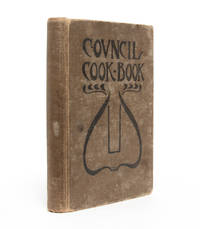
19093212San Francisco: International Printing Company 1909. First edition. Original publisher's cloth binding. Fraying to corners and extremities of spine. General spotting to cloth. In a contemporary hand several names and addresses of women from San Francisco and Atlantic City to the pastedowns and endpapers. Generally toned with occasional staining; in the same hand as the preliminaries occasional additions modifications and annotations to recipes. Quite a scarce community cookery particularly in such presentable condition it has the distinction of being the first Jewish cookery published in California and among the earliest west of the Mississippi.<br/><br/>An excellent early example of women's use of the domestic space as a site for social activism. Organized in 1893 and based out of Chicago the National Council of Jewish Women worked to "shape the destinies" of Jewish women and families by offering community support in the form of assisting immigrants with integration advocating for women's rights and providing support including financial assistance and job training. Under the leadership of Hannah Greenebaum Solomon the women desired to carve out space for Jewish women's identities and contributions operating on a model similar to other national figures such as Jane Addams and Susan B. Anthony. Within seven years the San Francisco section was founded and ran under the leadership of Hattie Hecht Schloss a philanthropist and the wife of a progressive associate justice of the California Supreme Court. With her guidance "the Council established San Bruno Settlement House to aid newcomers to San Francisco with classes for boys and girls.Aiding immigrants and later veterans.these issues at the forefront then prompted petitioning for legislative reforms such as immigration equal suffrage child labor human trafficking abolition and health centers for women and children" NCJWSF. The present text was published at a time when a number of women's groups were realizing that community cookeries were effective methods of fundraising and promotion. Drawing strength and authority from the expectation that they feed and nourish their families the women of the Council could justify feeding nourishing and otherwise supporting the community at large; and the money from this cookery supported a number of their programs. Notably this California chapter of the NCJW did include a chapter on Passover Dishes; yet they also include a range of dishes traditionally not considered Jewish or acceptable in Jewish households including lobster and other shellfish dishes common to the region. An excellent opportunity to research Jewish women's contributions to California culture and the extent to which regional foods shape Jewish households in the West. International Printing Company unknown books