7 962 résultats
184-Wo.J. Halbfigur im Dreiviertelprofil nach links, Darstellung im Hochoval mit kalligraphischer Umrahmung. Kupferstich, 1682, auf Bütten. 24:17,9 cm. Sehr guter Abdruck mit minimalem Rändchen um die Plattenkante. Literatur: Nagler 1; S. Lessmann: Susanna Maria von Sandrart (1658-1716). Arbeitsbedingungen einer Nürnberger Graphikerin im 17. Jahrhundert, Hildesheim 1991, S. 123 f.
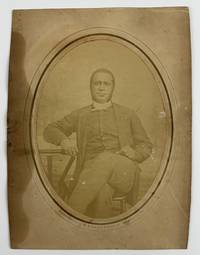
18804292Wilmington De: E. Webb 1880. Good. Oval albumen photograph 7.25 x 5.25 inches at nexus points on a printed studio mount measuring 10 x 7.5 inches. Long stain along left edge not touching the image some edge wear and spotting to mount minor soiling and surface wear to image. Verso tanned. A striking photographic portrait of a dignified African-American man in jacket and collar leaning against a table in a Delaware photographic studio in the latter part of the 19th century. The photographer was Emily Webb 1830-1914 an early Delaware photographer trained by her shutterfly father Benjamin Webb. The printed caption on the present studio mount reads "Photographed by E. Webb 302 Market St. Wilmington Del." Webb opened her Union Gallery studio on Market Street in 1864 and became a legendary local figure who at one time was referred to as "The Most Interesting Woman in Wilmington." She was a prolific photographer who took studio portraits of the local community especially the African-American community but also pets and other wildlife. She even helped found the Wilmington chapter of the SPCA in 1882. Webb's photographs are uncommon in the trade but her portraits of African-American figures even more so. E. Webb unknown
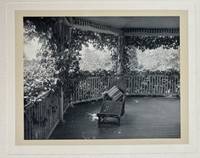
189559263Boston MA: Annie Louise Richards 394 Beacon Street August 1895. Oblong folio. 15 x 12 in. 9 leaves on thick card stock w/ mounted silver print photographs sized 6.5 x 8 in all carefully annotated on verso in manuscript w/ negative numbers identification and Richards’ address. Contemporary three-quarter red morocco over pebbled red cloth gilt borders raised bands on spine chipping wear front hinge split endpapers removed still good exemplar w/ all photos in excellent condition. The album includes a series of images of a stately Queen Anne Victorian summer home in Magnolia Massachusetts featuring a wide well-shaded veranda & wraparound porch climbing vines and plantings growing up the porch pillars well-appointed surrounding gardens beautiful balcony with curved canvas shade as well as an extra cottage nearby. Following the Civil War Magnolia MA grew into a popular summer village for well-to-do Boston families attracting celebrities as well and families often situated their homes with views of Kettle Cove. Annie Richards b. 1853 was the daughter of Calvin Richards 1828-1892 noted Boston merchant and later director of the Metropolitan Street Railroad. He retired in 1887 to become a real estate developer and landlord of the “Richards†office building at No. 114 State St. Annie worked as a photographer and artist as well as served as companion to her mother Ann Babcock Richards 1832-1923. The 1900 & 1910 census records list Annie Richards working on her “own account†out of 394 Beacon St. and although she is listed in several street directories along with her mother we could find no death record for her. Annie Louise Richards, 394 Beacon Street, hardcover
192463831New York: Brentano’s 1924. 8vo. 262 pp. Photo frontisp. 34 photo plates. Pictorial green black & orange publisher’s binding auto camping scene by Decorative Designers on front cover gilt lettering on spine minor shelfwear slight lean w/ d.j. photo cover art of Yosemite map of couple’s auto transcontinental auto trip on back cover minor dustsoiling edgewear tear affecting part of lettering w/ minor loss on front cover minor chipping head & foot of spine still VG/G- copy inscribed by the author on the title to Marcel & Quinta Kersell. First edition inscribed of this fascinating memoir of Mary and Fred Bedell’s trek across the perimeter of the United States in 1922 following World War I in their Hupmobile over some of the worst driving conditions imaginable including impassable roads holdup bandits in Texarkana tornadoes through Texas while featuring camping stops at Yosemite Crater Lake Mount Rainier Glacier National Park Yellowstone Banff and more. Political and racial upheaval make infrequent appearances as she often refers to the plight of African-Americans or Native Americans but she and her husband were particularly appalled at the prevalence of the Ku Klux Klan across the South and into Arizona “taking the law into its own hands and wearing masks to prevent detection. Could anything be more cowardly or more at variance with our constitution.†Bedell 1870-1936 was an active photographer while her husband Frederick Bedell 1861-1958 was a noted physicist at Cornell specialist in alternating currents audiologist specialist and later professor at Caltech. Exceedingly scarce in original jacket. See: Bliss Autos Across America 41. Brentano’s, unknown
198461448Portland & Gresham OR: Susan Higgins Ballet Instructor & Artistic Director Cascade Athletic Club; Oregon Concert Ballet Co. 1984. 4to. Approx. 250 pp sections separately paginated and unnumbered some numbered in ink several with duplicate numbering consisting of typescript musical score and illustrations many of the pages with extensive ink and/or pencil annotations some updates photocopies with additional revisions many pages with updates taped onto the musical score approx. 200 pp. preserved in archival mylar sleeves remainder 3-hole punched at gutter margin and inserted. Contemporary black vinyl 3-ring binder minor scuffing edgewear still VG exemplar. A wonderful original ballet director’s art direction notebook for the Peter Pan ballet staged in 1984 intended to offer young up-and-coming ballet students at the time to experience live performances and to unify Eastside/Westside Royal Academy of Dancing trained students. It would be 5 years before the Oregon Ballet and Pacific Ballet Theater would consolidate under the direction of James Canfield to form the Oregon Ballet Theatre. This ballet featured four acts divided into The Nursery Neverland Ship of the Pirates and Conclusion featuring solos by Wendy Tinker Bell Peter and Captain Hook over the length of the production. Dancers 4-5 years old were featured as the Neverland Fairies 5-7 years old with 2 years of training and pre-primary Royal Academy examinations behind them played Forest Fairies; Lost Children were 6-9 years old and had performed Barre and footwork; followed by the Pirates and soloists including Wendy Heather Miller Peter Pan Laura Spradlin Captain Hook Elizabeth Johnson and the mermaids drawn from the Lake Oswego School of Ballet under the directorship of Christine Donald. The original score by Anita Perry b. 1960 an up-and-coming Canadian composer out of British Columbia where she had studied piano with Lee Kum Sing and composition with Cortland Hultberg. In her early 20’s M. Perry had already won several composition awards was known for her original ballet works and wrote this score with orchestration for a variety of instruments “lending to the performance. . . a more closely approximated real environment experienced by professional dancers.†Peter Pan as a ballet required a fair amount of athleticism and as indicated here in Higgins’s artistic director’s notebook required extensive choreography changes scene adjustments and revisions by M. Perry. Higgins studied and danced at the British Royal Ballet later with Elvie DeMarko 1924-1989 of Ballet Russe and then with Robert Barnett of the Atlanta Ballet. No similar notebooks or programs survive for this 1984 ballet and there are no recordings or printed musical scores this cataloguer could uncover. Susan Higgins, Ballet Instructor & Artistic Director, Cascade Athletic Club; Oregon Concert Ballet Co., unknown
189164156New York NY: Hurst & Co. 1891. 12mo. vi 7-504 pp. Frontisp. Decorated emerald-green publisher’s cloth gilt & black ornament borders lettering front cover & spine patterned endpapers uniform interior toning throughout as typical with 19th-Century Hurst publications still a VG copy from the library of David Kohl 1946-2025 former art teacher at the Hong Kong International School musician artist and historian. First Hurst edition of this well-written memoir first published in 1869 by Robert Carter detailing her life as a Presbyterian missionary to China with husband John Nevius 1829-1893 after first sailing for China in March 1853 arriving in Ningbo Hangzhou Yantai then Chefoo in China’s Shandong Province. The couple’s efforts included diligently learning the Chinese language setting up schools for Chinese women and young female children coping with Cholera outbreaks warlords bandits and setting up schools. One particular section of the memoir focuses on preparing tea and tea leaves for market and how the varieties were determined as well as traveling up the Yangtze River. Despite her frequent illnesses Helen Nevius 1833-1910 devoted considerable time and support into her husband John’s development of the “Nevius Method†of missionary efforts in China whihc emphasized personal evangelism Bible centric instruction self-propagation and self-government encouraging local fundraising church and mission building and cooperation with other missionaries along with continually building and expanding schools which received partial subsidies. They were frequently apart for extended periods due to her frequent poor health and over 40 years returning to the U.S. from China due to incapacity and overwork. See: Joshua Bowman The “Nevius Method:†Retrieving Theological and Missiological Criteria for Money in Missions Training Leaders 2026. Hurst & Co., hardcover
194256718Eugene OR: Obsidian Club 1942-1945. Oblong 8vo. 9.5 x 6.25 in. 36 pp unpaginated. on thick black paper stock. With 44 photographs tipped-in 1 Kodacolor colour photo w/ all on hinges many w/ annotations in pencil manuscript on verso 1 newspaper clipping for the 1945 climb. Contemporary lim suede calf post-binder painted illust. of Native American Chief & headdress wigwams on front cover Vancouver Canada punch sewn at gutter margin w/ black silk braid minor shelfwear rubbing VG exemplar. This mountaineering album offers a detailed visual record of the Obsidian Club Camp Outings during World War II opening with their summer camp Aug. 2-16 1942 at Linnton Meadows at the base of Husband peak east of Husband Lake with splendid views of Middle Sister South Sister and the Husband. The many photos show the Husband hiking near the Lake followed by climbs of the North and South Sister peaks including several images of the climbing parties trekking across the glaciers and passes. This outing also included visits by Forrest Morgan Ray Engles and Supervisor Bruckart of the Willamette National Forest with Engles making his first major climb on the North Sister. The second part includes photos for the 1945 Outing held at Obsidian Camp and featured climbs of the North Sister Middle and South Sisters as well as the Husband and Little Borthers and several views of the Linnton Meadows Lake campsite. Also included is a the souvenir photo invitation from the Obsidians announcing the Summer Camp Reunion Sept. 22 1945 urging members to bring their photos and stories. Florence Sims became the Obsidian Club’s first woman president in the Fall of 1942. The Obsidian Club was originally founded after two students were lost in the Three Sisters in 1927 and it was determined their needed to be a local mountaineering and rescue group. See: The Obsidian Vol. V Nos. 2-3; Vol. VI No. 1; Vol. VII No. 9; History of Obsidians - Obsidians’ First Year The Obsidian Bulletin Vol. 77 No. 9 Oct. 2017. Obsidian Club, unknown
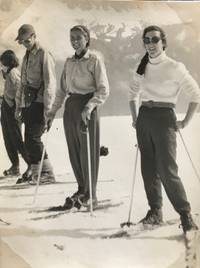
195358350Flumserberg Switzerland & UK: Barbara 1953. Oblong 4to. 9.5 x 6.7 in. 36 pp unpaginated. on thick black paper stock. With 58 photographs sized from 2.5 x 3.25 in. up to 3.5 x 5.5 in. some w/ scalloped edges nearly all w/ white lettered captions 2 real photo postcards nearly all mounted w/ glassine corners 4 pp. of brochure photo clippings 2 lift tickets 32 pp separately numbered leaves of ink manuscript ALS to “Mummy & Daddy†written in cursive w/ fold creases from previous insertion into mailing envelopes originally. Contemporary black textured boards post-binder brass screw posts at gutter margin gilt lettering stamped on front cover hand-lettered title minor rubbing NF exemplar. This excellent photo album records the completely new Ramblers’ skiing center in Switzerland established near Flumserberg in the Swiss Alps following World War II which featured three consecutive chair- and ski-lifts and a wide diversity of ski runs and close by shops. Barbara has included a photo postcard of her Pension Schwendiewiese and listed it as her return address in the letters home. After arriving at the Pension the group rents some skis have them fitted learned her instructor was to be Walter who “speaks a little†English and believes they will be more efficient than the Sr. Anton ski school. She writes while they were training that they “passed a squad of Swiss soldiers on the way down. . . and seem to be in an Alpine training school.†She writes about hearing of the death of Queen Mary of Teck March 24 1953 which is the only indication of dating within the year. She writes about the glorious weather riding the Tannenboden ski lift to Prodkamm slope writes about the skiing the slopes hiking back up and her great progress. Her letters also describe their evening sing-a-longs dances organized by the instructors and staying up way too late before being tired on the slopes the next day. The photos reveal the striking views and the participants in the skiing excursion. Barbara has included photos of the three instructors her intermediate group of skiers the snow-covered road to Tannenboden the snow-covered chapel at Flumserberg and the views from Flumserberg. Also included are images of the ski slopes the Tannenboden ski lift attached to the cable ski-hoist and the Kreuz ski-hut. The group was a mixed skiing group of men and women with most of the participants identified by first name with views in the background. Album ends with photo of the group reaching Victoria station on their route home at the end of the trip. Barbara, hardcover
176663921London: Printed for P. Vaillant in the Strand and W. Johnston in Ludgate-Street 1766. Two vols. 12mo. xvi 2 267 1; 2 252 pp. Uniformly bound in full tan polished calf Bickers & Son Leicester Square raised bands gilt fleur-de-lis on spines gilt & green morocco spine labels gilt ruling & inner dentelles a.e.g. very slight small scuff spot back cover vol. II still a NF set from the library of William C. Laurence 1870-1945 and Louise Buermann Laurence 1878-1963 former owners and managers of the famed George B. Lawrence Co. Western Saddlery and supply company for leather and cowboy goods until the 1950’s with their Mount Hood bookplate on front pastedowns of both vols. First edition in English of these “Memoirs†or “Letters†originally published in Liege in 1766 and subsequently quickly translted into English two years after the death of the famed mistress of Louis XV and powerful Jeanne-Antoinette Poisson Marquise de Pompadour. According to Joseph-Marie Querard these Memoirs consisting of a set of fictitious letters were most likely actually written by Crebillon 1707-1777 whose father had been elevated from poverty by Pompadour while detailing the descriptions of “the cabals and intrigues of courtiers; the characters of generals and ministers of state with the causes of their rise and fall; and in general the most remarkable occurrences at the court of France during the last twenty years of the Reign of Louis XV.†Pompadour protected both Voltaire and Montesqieu encouraged Diderot and d’Alembert in their efforts and was a noted political force in not only contributing to the circumstances leading to the Seven Years War but also suppression of the Jesuits in France. Printed for P. Vaillant, in the Strand, and W. Johnston in Ludgate-Street, hardcover
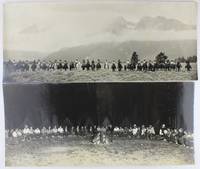
19503559N.p. likely Colorado 1950. Good plus. Two panoramic photographs each measuring approximately 6.25 x 15.25 inches. Minor surface staining to one photograph light soiling and edge wear. A pair of small panoramic photographs capturing a large group of women during the day and then at night on a dude ranch in the American West. The daytime photograph pictures about twenty-five women on horseback in a single line with a large mountain range in the background; the nighttime photo shows about thirty-five women ranged around a small campfire with several tents in the background. A handful of men accompany the women perhaps the ranch staff or instructors or simply the male counterparts to a few of the women. All of the subjects are dressed in typical western wear with all but one of the women on horseback wearing a cowboy hat. A nice pair of photographs documenting women in the west in the mid-20th century. unknown
16427Girls' Education Original vintage cross-stitch sampler. 1815. 11.5" x 15" in. Alphabet cross-stitched in capital and lower case letters with decorative embroidered border and information on maker stitched at bottom: "Mary Ruffle October 25 1815 Aged 9". Samplers were valuable parts of girls' education from the sixteenth to nineteenth centuries as it demonstrated both their skill in needlepoint and their achievements in literacy. From the 1800s the very first schools and academies for young women in America had their students create needlepoint pieces with decorative motifs such as verses or the entire alphabet being stitched on the sampler. The parents of these young women proudly displayed their embroideries as showpieces of their daughter's talent and status. In recent years these samplers have become important in museum collections as representations of early American female education. Alphabet "&" numbers 1 through 8 and motif of trees vines flowers and a crown in navy orange pink dark green brown and white thread. C. Toned. Few threads frayed. Very good. unknown books
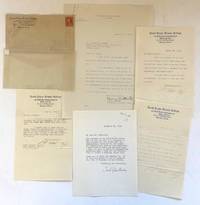
1912180021912. Archive of presidential correspondence 1912-1954 documenting the administrative professional and personal roles of women leading American colleges during a period of expanding opportunities for women in higher education. The letters written on institutional letterhead and signed by female presidents of Vassar College North Texas Female College and Florida State College for Women provide direct evidence of governance practices within women's colleges including faculty appointments institutional decision-making and ceremonial matters such as approval of official college materials. The correspondence reflects the emergence of women in senior academic leadership positions in institutions founded in the nineteenth century to provide advanced education for women excluded from most universities. These documents also illustrate professional networks and mentorship structures that supported the advancement of women within academia as well as the dual public and private roles these administrators occupied.<br /> <br /> Archive of five autograph and typed letters signed dated between 1912 and 1954 on official college letterhead measuring approximately 6 x 8 inches to 8.5 x 11 inches. Included is a 1912 letter from L.A. Kidd-Key of North Texas Female College discussing faculty appointment terms and candidate selection noting multiple applicants for a position and requesting confirmation of acceptance. A 1954 letter from Sarah Gibson Blanding of Vassar College addressed to a Mr. Saltfords combines personal reflection with professional obligations referencing travel to a meeting in Atlantic City alongside acknowledgment of a birthday gift. Additional letters document routine administrative and institutional communication across the three colleges. One letter retains its original postmarked envelope.<br /> <br /> Five letters with minor wear consistent with handling including a rust stain from a paper clip on one example not affecting text; overall very good condition. A concise documentary group illustrating the development of women's leadership in American higher education and the administrative responsibilities shaping women's colleges in the twentieth century. unknown
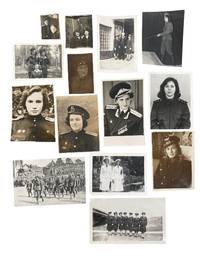
1941231851941. Women's HistoryMilitary Women's military service photo archive documenting the incorporation of women into military organizations in the United States Russia and Europe from the ear;y 40s through the end of World War II with especially strong evidence of uniformed training rank identity weapons instruction and military parades in the 1940s. The group shows women as enlisted or commissioned participants in military systems in portrait sittings unit groupings drill formal dress and liberation era parade culture. Several images center on Czechoslovak and Soviet aligned visual culture at the end of the war including a Prague parade photograph explicitly identifying women volunteers attached to the 1st Czechoslovak Army on 17 May 1945 placing female service on the public stage of postwar victory.<br /> Photo archive of 14 likely silver gelatin photographs ranging from 1.5 x 2 to 3 x 5.5 inches United States and Europe circa 1910s-1945. The archive includes formal studio portraits of individual women in military tunics with shoulder boards insignia peaked caps and medals; a close portrait of a decorated woman officer wearing a sash and multiple campaign medals; and a full length image of a young servicewoman holding a rifle on what appears to be a stage or drill platform. Group scenes include seven women in matching belted uniforms and caps posed outdoors near a long low building captioned 1944 three women in service dress photographed among trees and two women in white formal or naval style uniforms standing in a landscaped garden. A small early portrait shows a younger female figure in uniform beside an older woman extending the chronology back before the Second World War. The Prague parade image is the most textually grounded item: its printed Czech caption states that the military review of the 1st Czechoslovak Army was held in Old Town Square on 17 May 1945 in the presence of President Edvard Beneš and identifies the marching contingent as women volunteers assigned to that army. Recurring themes across the collection include rank display military insignia paired and group portraits emphasizing unit identity and the shift from informal military support to organized involvement and state recognition.<br /> Across the first half of the twentieth century women entered military institutions through auxiliary organizations medical and communications branches transport and administrative service anti aircraft and weapons training and in some national contexts direct incorporation into regular formations. This archive tracks that process through its own evidence: portraiture records accession into uniformed hierarchy group photographs show women organized in units the rifle image places female service within martial training rather than clerical abstraction and the Prague review demonstrates how women's wartime labor and service were folded into liberation politics and postwar state ceremony. The international span gives the group unusual strength for institutional collecting on women's military history because it places American and European service culture in one frame and shows the common mechanisms by which states made women visible disciplined and legible within military life between the two world wars and at the end of the second. Light to moderate wear scattered creasing edge wear handling marks and some fading or softness to several prints; overall good condition. This is a compact but pointed body of photographic evidence for how women were absorbed into military systems through uniform training ceremony and public recognition across the WWI-WWII era. unknown
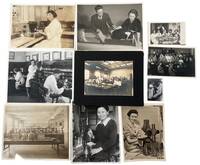
1910231281910. Women's History Women in scientific and medical laboratories photo archive documenting female participation in laboratory education microscopy chemical work dental training and technical employment across the first half of the twentieth century providing concrete visual evidence of how women entered scientific institutions in the years before full professional parity. The group brings together press and non-press photographs with identifiable news-service and reference-file markings that place several images within the public circulation of women's technical labor. Many of these photographs show women operating microscopes handling laboratory equipment conducting demonstrations and working within instructional and testing settings making the group especially effective as evidence of women's participation in scientific education industrial science and medical training.<br /> <br /> Photo archive of 10 silver gelatin photographs various sizes ranging from 2" x 3 to 7 x 10 inches United States and around the globe circa 1910-1946. The group includes a 1934 press photograph of Victoria Fischer in a laboratory identified on the verso as connected to Tokio Girl's Medical College in Japan shown standing at a bench with pipette flask and rack of test tubes; a 1946 photograph of Kinjian Laboratory showing a large coeducational classroom of students in white lab coats seated and standing around laboratory tables with test tubes and other equipment in hand; and a circa 1920s non-press photograph of four dental students all young women in lab coats seated around a table of instruments. Another non-press photograph circa 1930 identifies the senior female students of Mother Catherine High School and shows an all-female laboratory class with biological and ecological samples in the foreground bell jars between table and shelving and additional worktables beyond. A thick matted photograph with black border circa 1910 shows a skylit laboratory interior with approximately twenty-five men and four women gathered around long benches. Press photographs include a March 4 1941 Ottawa image of a woman operating a high-powered microscope in a gauge testing laboratory; a 1930s U.S. Testing Company Laboratories image from Hoboken New Jersey showing a woman in the fiber analysis section at a microscope bench; a 1933 press image of a woman and man conducting an experiment involving heated metal apparatus; and a 1924 Washington D.C. press photograph identifying Theresa Karger as chief of the chemical laboratory at Mount Alto U.S. Veterans Hospital described as one of the women in unusual employment. <br /> The archive aligns with a long period in which women entered scientific and medical work through segregated colleges women's schools wartime necessity industrial laboratories and specialized technical training often gaining access first in educational or auxiliary settings before achieving broader professional recognition. Its international scope is a particular strength: the photographs place women in laboratory systems from the the beginning of the century through World War II and the immediate postwar period showing how female students technicians and researchers across studied and contributed to science. Minor corner and edge wear and residue on versos from press filing stamps and caption mounts; overall good condition. A concise and materially grounded record of women's scientific labor and educational access as women's presence in STEM moved from exceptional visibility into institutional practice. unknown
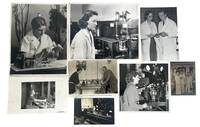
1910231321910. Women in STEM Women's scientific and technical employment photo archive documenting female laboratory labor from the early twentieth century through the 1940s historically significant for showing how women entered academic industrial and commercial research settings in roles that ranged from student and aide to biologist technician and physician at a period when scientific work remained overwhelmingly male and women's access to professional authority was still sharply constrained. The group includes five press photographs and three non press photographs with women pictured not as incidental clerical staff but as active operators of instruments handlers of test animals readers of charts and participants in experimental procedure establishing direct visual evidence of women's expanding place within the infrastructure of American science industrial testing and laboratory employment.<br /> <br /> Photo archive of 8 silver gelatin photographs ranging from 3.5 x 5.5 to 8 x 10 inches various U.S. locations circa 1910 to 1940s. The archive spans classroom laboratory and industrial interiors. One 1910 photograph shows two men and one woman standing in a laboratory identified as "three scientists or science students" an early image of mixed gender scientific training. A 1937 press photo titled "aviation biologist works with hatchlings" shows Dr. Manisera in a lab coat hand feeding two week old canaries with a third bird perched on her head turning animal handling and experimental care into a public image of female scientific expertise. Another press photo shows Sally Wulff identified on the verso as an engineering aide with a science degree from the University of Iowa seated at a control bench calibrating experimental instruments at Wright Field. A 1938 non press image shows Dr. Marie D'Amour and Fred D'Amour studying a chart before a blackboard covered with formulas and technical notations linking the photograph to mammalian physiology research. A Hoboken New Jersey press photo depicts a female technician in the chemical division of the United States Testing Company operating a Fisher titrimeter "for performing volumetric analyses by electronic means" while a 1939 press photo from Newton Massachusetts shows a laboratory worker testing newly developed Permatron tubes used in high frequency welding and power transmission. Another press image captioned "A 'noise machine' used in experiments in the Colgate laboratory" shows a woman and man positioned on either side of the apparatus and a separate 1940s laboratory group photograph places a single woman among five men before a long demonstration bench and blackboard diagrams underscoring both women's presence and their numerical isolation within technical settings. Several versos retain typed caption slips editorial markings and reference stamps consistent with press photo circulation.<br /> <br /> Across the first half of the twentieth century women entered scientific work through normal schools universities wartime research demand industrial laboratories and auxiliary technical appointments yet their advancement was often channeled into subordinate or specialized designations even when their work required substantial training. This archive makes that structure visible through named and captioned examples of women conducting measurement instrument calibration physiological research electronics testing and experimental animal work across corporate academic and applied research environments. Minor residue on versos from former press labels or caption attachments; otherwise clean and well preserved. Overall very good condition. As a record of women's early technical labor the archive supplies concrete visual evidence of the pathways limits and visibility of women's participation in American scientific work before the full opening of postwar professional opportunity. unknown
15346Women's Property Rights Perry Sir Thomas Erskine. Pair of Autograph Letters Signed circa 1856 to an unnamed female correspondent about married women's property equality. Totaling 8 handwritten pages both signed "E Perry" both in good condition with only mild age related toning to paper.<br/> <br/>Perry a liberal politician and proponent of women's property rights actively petitioned in the House of Commons for the extension of legal and financial autonomy to women. In the first 4 page letter dated 14 March 1856 Perry writes that his female correspondent's "petition in the House was I think well received.get up as many petitions as possible from different places to be presented on or before that day in favor of a change of the law.and have it signed by men as well as women." Notably Perry recognized the need for alliance and collaboration among men and women and he positioned gender equality as a human rights issue.<br/> <br/>By the time of his second 4 page letter n.d. missing the opening pages Perry writes his correspondent with points of argument for changes in women's property law. These include "Rights and Responsibilities of Husbands and Wives" "Obligations to Support Children" and "Liability to be sued on her own contracts." While Perry acknowledges that he will need to "study the provisions of the law of this & other countries on the subject" he also asks his correspondent if she and her friends can provide him concrete "examples of the evils sustained under the present law" thus providing him a "cloud of witnesses" against the law as it currently stands.<br/> <br/>An important set of letters documenting men and women's collaborative pursuit of equality. unknown books
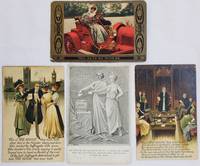
17160An attractive collection of 4 rare souvenir postcards from the UK France and US supporting women's suffrage. Featuring the postcard artwork of famed commercial artists the archive is both visually enthralling and historically fascinating; demonstrating the attempts of proponents of the movement to define and popularize a relatable sympathetic image of the suffragette. The golden age of the souvenir postcard from 1898 to 1915 during which time postcard collecting was an international past time dovetailed conveniently with the suffrage movement in America and Britain. 2 cards with original postal stamp 1909 and 1911. Souvenir postcards were the most popular form of suffrage ephemera among the suffragists themselves. Also included are two compelling British postcards from a noted 1910 pro-suffrage series "This is the House that Man Built" based upon the nursery rhyme "This is the House that Jack Built" in which the "House" refers to the Houses of Parliament. The series was answered by a similar series published by the opposition to the movement demonstrating the more boldly political nature of the suffrage postcard in Britain. French postcard calling for universal suffrage shows a man and woman in Greek togas casting ballots: in French "Women who are subject to the laws and pay taxes as well as men should have the same right to vote as they". 1 interesting American postcard shows a woman driving a car years before women's suffrage passed at the federal level. The archive includes both blank and posted cards all in generally very good condition. An essential and rare collection of one of the most enduring attractive artifacts of the struggle for women's rights. unknown books
12mo [16 x 10.5 cm]; vi, [ii, ads], 168 pp, 3 hand colored plates including frontis, with the half title page. contemporary half calf, marbled boards, spine title lettering faded, rubbed, corner wear to covers, interior quite good and clean, unmarked, the frontis view has been re-mounted, the other plates are of costumes. A picture of this book is available upon r A narrative of the author's travels in Crimea and her stay in village of Karagoss, for four years ending March 1920. The author based the book on a series of letters she wrote to a friend during her stay, and describes the people, customs, conditions, etc. Atabey 587. Robinson 240: 'Objective, factual and thorough. . . with a clear and unprejudiced eye, telling us plenty about the land and its people but nothing about herself'. The Crimean Tatars (Tartars) with whom she lived treated her and her children who were with here, with unfailing courtesy.
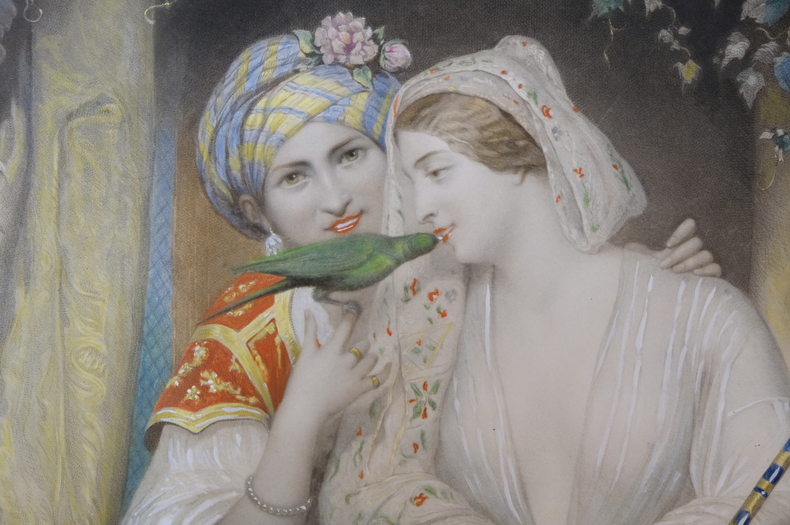
1840est246T6Dimension extérieur : 73 x 55,7 cm. Cuvette : 66,7 x 51,7 cm. Image : 56,8 x 48 cm. Gravure peint par Joseph Désiré Court (1797-1865) et gravée par Alphonse Martinet. Très belle gravure, en excellent état. Editée par Goupil et Cie, fondée en 1827.Restaurée ,dans son premier éclat !
1958148091958 Paris, Société des Cent Une, 1958 In-4, En feuillets sous couverture à rabats illustrée d'une lithographie de Jean Carzou et emboîtage de [5ff.], 167pp, [7ff.] Tirage à 145 exemplaires sur papier vélin d'Arches à la forme. Illustré de 20 lithographies en couleurs, dont 16 hors-texte par Jean CARZOU.. Exemplaire n° 1 a son altesse royale la princesse Georges de Grèce signé par la présidente des cent une, la vice présidente et CARZOU, Bel exemplaire,enrichi d'un envoi de l'artiste a Maurice Hondayer enrichi d'un dessin original de Carzou
2006002383Paris Arearevu)s(, (Alin Avila) 2006 In-4 à l'italienne Cart., chemise, étui Ed. originale
1935114977Le Vasseur 1935 Le Vasseur et Cie Editeurs, 3 volumes, 1935, 197-204-222 p., édition illustrée de 60 compositions en couleur par Edmond Malassis (dont 34 hors-textes), reliures éditeur sous étui, environ 26x20cm. Rares et menus frottements sur les dos et les coins, des frottements plus importants sur la coupe latérale des reliures, étuis frottés avec débuts de fente sur les ouvertures, le dos apparaît entre deux pages du tome 3. Sinon intérieurs propres.
462332 gouaches dans un double cadre argenté.Représentation de 3 et 2 jeunes femmes nues dans un lieu de plaisir appelé "Le Hanovre".( Larg: 10 cm.H: 16 cm.) Devant un sopha ou assise,chaque jeune femme est maquillée,portant de jolies chaussures et parfois des bijoux. Charmante composition de Fabiano.( 1882-1962 ).Cadre usagé. Photos sur demande.
192921659Paris, Gallimard NRF, 1929 ; in-16 (169 mm), broché ; 89 pp. [1]f. achevé d’imprimé, [1]f. volant Errata; couverture gris-rose pâle rempliée et décorée.
In-8°; pp. 143, un fregio xilografico al frontespizio; legatura in piena pergamena con titolo manoscritto al dorso. Commedia del letterato e storico senese Girolamo Gigli, 1660-1722, noto anche per la traduzione del Tartuffe di Moliere, che intitolò Don Pilone; con questa commedia Gigli si inserisce quindi nel filone della tradizione del teatro francese, adattandolo però sia nel linguaggio parodistico che nella definizione e caricatura dei personaggi più da commedia dell’arte, al pubblico italiano. siena accademie commedia theatre teatro drama comedy settecento donne women