8 005 résultats
16725Denmark Academy Catalog 1876-1877. Denmark Iowa. Pamphlet /Volume 8 of 17: Founded in 1843. Denmark Academy was coeducational from its inception. At first a small local school it reopened in in 1852 with a new building and began to attract students from further reaches. The first graduating class consisted of only 2 students both female. One was Emma Cooper who went on to serve as "Lady Principal." Very rare with no copies of this program in any institution or library as per OCLC Worldcat.<br/><br/>Women's colleges proliferated in the mid- to late- 19th century to fill the void created by their exclusion from most institutions of higher education. The prevailing notion that women were too delicate for a rigorous academic education was openly challenged when Elizabeth Cady Stanton spoke at the Seneca Falls Convention of 1848 "Man's intellectual superiority cannot be a question until woman has had a fair trial.When we shall have had our colleges our professions our trades for a century a comparison then may be justly instituted." Young women were quick to step up to the challenge; as quickly as female colleges opened they filled up. This document dates from 5 years before Seneca Falls. unknown books
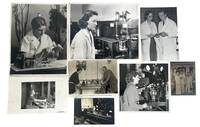
1910231321910. Women in STEM Women's scientific and technical employment photo archive documenting female laboratory labor from the early twentieth century through the 1940s historically significant for showing how women entered academic industrial and commercial research settings in roles that ranged from student and aide to biologist technician and physician at a period when scientific work remained overwhelmingly male and women's access to professional authority was still sharply constrained. The group includes five press photographs and three non press photographs with women pictured not as incidental clerical staff but as active operators of instruments handlers of test animals readers of charts and participants in experimental procedure establishing direct visual evidence of women's expanding place within the infrastructure of American science industrial testing and laboratory employment.<br /> <br /> Photo archive of 8 silver gelatin photographs ranging from 3.5 x 5.5 to 8 x 10 inches various U.S. locations circa 1910 to 1940s. The archive spans classroom laboratory and industrial interiors. One 1910 photograph shows two men and one woman standing in a laboratory identified as "three scientists or science students" an early image of mixed gender scientific training. A 1937 press photo titled "aviation biologist works with hatchlings" shows Dr. Manisera in a lab coat hand feeding two week old canaries with a third bird perched on her head turning animal handling and experimental care into a public image of female scientific expertise. Another press photo shows Sally Wulff identified on the verso as an engineering aide with a science degree from the University of Iowa seated at a control bench calibrating experimental instruments at Wright Field. A 1938 non press image shows Dr. Marie D'Amour and Fred D'Amour studying a chart before a blackboard covered with formulas and technical notations linking the photograph to mammalian physiology research. A Hoboken New Jersey press photo depicts a female technician in the chemical division of the United States Testing Company operating a Fisher titrimeter "for performing volumetric analyses by electronic means" while a 1939 press photo from Newton Massachusetts shows a laboratory worker testing newly developed Permatron tubes used in high frequency welding and power transmission. Another press image captioned "A 'noise machine' used in experiments in the Colgate laboratory" shows a woman and man positioned on either side of the apparatus and a separate 1940s laboratory group photograph places a single woman among five men before a long demonstration bench and blackboard diagrams underscoring both women's presence and their numerical isolation within technical settings. Several versos retain typed caption slips editorial markings and reference stamps consistent with press photo circulation.<br /> <br /> Across the first half of the twentieth century women entered scientific work through normal schools universities wartime research demand industrial laboratories and auxiliary technical appointments yet their advancement was often channeled into subordinate or specialized designations even when their work required substantial training. This archive makes that structure visible through named and captioned examples of women conducting measurement instrument calibration physiological research electronics testing and experimental animal work across corporate academic and applied research environments. Minor residue on versos from former press labels or caption attachments; otherwise clean and well preserved. Overall very good condition. As a record of women's early technical labor the archive supplies concrete visual evidence of the pathways limits and visibility of women's participation in American scientific work before the full opening of postwar professional opportunity. unknown
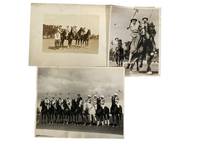
1920219031920. Women in Sports Archive of three photographs documenting women's equestrian sports 1920s-40s. Three original silver gelatin press photos capturing women actively engaged in and preparing for matches-scenes that challenge the male-dominated image of early 20th-century polo. Taken in the United States and Canada these images reflect the increasing public visibility and athletic accomplishments of women showcasing their skill camaraderie and the gradual erosion of gender barriers in elite sporting environments.<br /> <br /> The earliest photograph dated September 26 1928 depicts a historic international match between Canada and the United States-the first known women's international polo game in the U.S. according to the verso text. The players from Alberta are seen poised beside their horses as they await the match's commencement in Rye New York. The image bears the credit "International Newsreel" with annotations indicating it was distributed as a news photo under the slug "Two Teams." The second photograph is captioned "Women Now Play Polo" and is dated March 20 1940. It features prominent players Joan Baker daughter of famed Australian sportsman "Snowy" Baker Mrs. "Willie" Tevis and Yvette Barette at the Riviera Country Club in Santa Monica California. The image highlights how women's polo had begun gaining serious popularity and skill by this time especially in celebrity-adjacent venues like the Riviera. The third undated photograph by Boston-area studio photographer Paul J. Weber embossed stamp: "Paul J. Weber / Dorchester Centre Mass." shows a lineup of women riders mounted and dressed in coordinated attire likely posed before or after a match. Together the photographs capture a pivotal often overlooked chapter in the history of women's sports where gender and athletic prowess intersected in a highly public arena. Verso stamps and original caption slips intact on two press photos with clear studio embossing on the third. Overall very good condition. A compelling archive chronicling the rise of women in polo offering vital documentation of the sport's early gender integration and the public image of athletic women in the early 20th century. unknown
1861174981861. Women's in Sciences Sepia photograph circa 1860-1880 identified in manuscript at the upper left "State Eclectic Medical Society at Worthington" depicting approximately twenty five women alongside male practitioners in Worthington Ohio an early center of Eclectic medical organization just north of Columbus Ohio. The image documents a rare mixed gender professional gathering at a moment when women's participation in formal medical education remained severely restricted under prevailing institutional norms. Within the dominant nineteenth century medical establishment women were largely excluded from training and professional societies; however the State Eclectic Medical Society of Ohio and the broader Eclectic movement created alternative pathways into medical study. These networks were closely tied to reformist traditions that challenged orthodox practice and opened limited but meaningful access to women prior to the broader professionalization of female physicians following mid century breakthroughs such as the graduation of Elizabeth Blackwell in 1849.<br /> <br /> Original Photograph. C. 1860-1880. Sepia. Approximately 6" x 9" Inches. Written in black ink in the upper left corner "State Eclectic Medical Society at Worthington". Photo shows about 25 women along with their male peers. The the first woman graduated medical school in the 1850s. The Eclectic Medical Society was notable for accepting female students before most women were allowed to study medicine.<br /> <br /> The photograph reflects the intellectual and institutional culture of Eclectic medicine a distinctly American medical movement that drew on botanical therapies Native American knowledge systems and the herbal tradition associated with Samuel Thomson. In contrast to orthodox allopathic medicine Eclectic practitioners emphasized plant based remedies and a more flexible therapeutic philosophy which correlated with a greater willingness to admit women into study and practice. The presence of a substantial number of women within this group suggests not only participation but active integration within the society's professional sphere offering visual evidence of gender inclusion within an otherwise exclusionary nineteenth century medical landscape. As a primary source the photograph provides direct documentation of women's early entry into organized medical communities in the United States capturing both the social composition and institutional networks that facilitated their participation. It is particularly valuable for research in women's medical history alternative medical movements and the development of professional education outside orthodox channels illustrating how reformist medical systems functioned as critical entry points for women prior to broader legal and institutional change. Some creasing present; otherwise in good condition overall. unknown
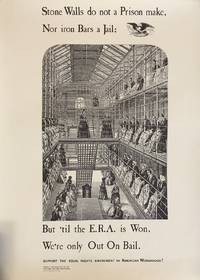
15287Stone walls do not a prison make nor iron bars a jail; but 'til the E.R.A. is won we're only out on bail poster Equal Rights Amendment Santa Monica CA: Helaine Victoria Enterprises 1975. 17.5x23 inch poster very good featuring a vintage image of a women's prison and a stanza adapted from the conclusion of the Richard Lovelace poem "To Althea from Prison." We have examples printed on several different shades of paper; please contact us if the shade makes a difference to you. unknown books
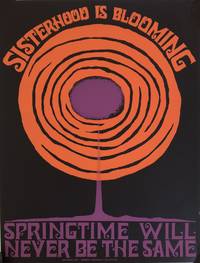
15974Chicago: Chicago Womens' Graphics Collective 1973. 19.75x25.75 silkscreened poster with stylized flower filling most of the page red and lavender ink on black paper fine.<br/><br/>The Chicago Women's Graphic Arts Collective was founded in 1970 by Estelle Carol as part of Chicago Women's Liberation in reaction to the lack of opportunities for women artists and as a way to communicate feminist ideas. Both lesbian and straight women collaborated on the posters as a collective process to set themselves apart from the male-dominated "Great Man" art world. unknown books
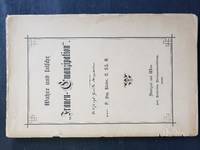
17141Women's Suffrage Germany P. Aug. Rosler. "Wahre und Falsche Frauen Emanzipation Truths and Lies: Women's Emancipation". Written in German. Stuttgart und Wien: Dof Roth'sche Verlagshandlung 1899. Printed by Hieronymus Muhlberger in Augsburg. 60 pages. 9 x 6 in. Original paper wraps. Very rare with 0 institutions or libraries in the US holding this volume per OCLC Worldcat. An early German language treatise regarding popular myths on women's suffrage and the Women's Question die Frauenfrage. The volume lists the Madonna mother of Christ as one example of virtuous women whom all respect. German women were granted the right to vote and be elected from November 12 1918 immediately after the Armistice of WWI. Handwritten ink annotation on front cover. Front and back cover are detached; pages 1-16 detached; pages 49-60 detached. In good condition. unknown books
16756Women's Educational Movement. Rural Repository News Journal 1841 Poughkeepsie Female Academy Founding Story and Engraving. Large Item. Poughkeepsie Female Academy- Hudson N. Y. This news journal the "Rural Repository" leads with a full page story on the opening of the Poughkeepsie Female Academy and engravings. More than 30 years later Vassar College would open near the same site. <br/><br/>Women's colleges proliferated in the mid- to late- 19th century to fill the void created by their exclusion from most institutions of higher education. The prevailing notion that women were too delicate for a rigorous academic education was openly challenged when Elizabeth Cady Stanton spoke at the Seneca Falls Convention of 1848 "Man's intellectual superiority cannot be a question until woman has had a fair trial.When we shall have had our colleges our professions our trades for a century a comparison then may be justly instituted." This document predates Seneca Falls by 7 years. unknown books
16752Women's Educational Movement. Chowan Baptist Female Institute Catalog 1877-1878. The Chowan Baptist Female Institute became Chowan College in 1910 when it began awarding baccalaureate degrees. Unique and personal piece of early Female Education history. Women's colleges proliferated in the mid- to late- 19th century to fill the void created by their exclusion from most institutions of higher education. The prevailing notion that women were too delicate for a rigorous academic education was openly challenged when Elizabeth Cady Stanton spoke at the Seneca Falls Convention of 1848 "Man's intellectual superiority cannot be a question until woman has had a fair trial.When we shall have had our colleges our professions our trades for a century a comparison then may be justly instituted." Young women were quick to step up to the challenge; as quickly as female colleges opened they filled up. This document dates 10 years before Seneca Falls.Not copy could be found among Institutional Collections according to OCLC Worldcat. unknown books
16753Women's Education Movement. Western Female Seminary Catalog 1868-1869. Oxford OH. Western Female Seminary was founded in 1853 as a daughter school of Mount Holyoke College in South Hadley Massachusetts. Its first principal Helen Peabody and most of the early faculty had been students and teachers at Mount Holyoke. Mary Lyon Residence Hall on the Western campus is named for Mount Holyok's founder Mary Lyon. It later received a charter and became Western College an all-female institution. Women's colleges proliferated in the mid- to late- 19th century to fill the void created by their exclusion from most institutions of higher education. The prevailing notion that women were too delicate for a rigorous academic education was openly challenged when Elizabeth Cady Stanton spoke at the Seneca Falls Convention of 1848 "Man's intellectual superiority cannot be a question until woman has had a fair trial.When we shall have had our colleges our professions our trades for a century a comparison then may be justly instituted." Young women were quick to step up to the challenge; as quickly as female colleges opened they filled up. No copy could be found among Institutional or library Collections according to OCLC Worldcat. <br/><br/>Women's Academy and Seminary Archive recording the first important movement of women into higher education in the United States seminary was synonymous with "academy" and did not have the religious connotation of today. In the 1800's the Female Academy and Seminary Movement transformed American educational norms allowing women the opportunity to receive secular non-religious college-level education. Women's colleges proliferated in the mid- to late- 19th century to fill the void created by their exclusion from most institutions of higher education. The prevailing notion that women were too delicate for a rigorous academic education was openly challenged when Elizabeth Cady Stanton spoke at the Seneca Falls Convention of 1848 "Man's intellectual superiority cannot be a question until woman has had a fair trial.When we shall have had our colleges our professions our trades for a century a comparison then may be justly instituted." Young women were quick to step up to the challenge; as quickly as female colleges opened they filled up. Not in OCLC Worldcat. unknown books
16755Women's Education Movement. New Hampshire Conference Seminary and Female College Catalog 1881. Tilton NH. The catalog has 36 pages of courses personnel and other information including tuition and fees. The most expensive were Piano and Voice Culture which were each $12 per semester. The seminary exists today at Tilton School. No copy could be found among Institutional or library Collections according to OCLC Worldcat. <br/><br/>Women's Academy and Seminary Archive recording the first important movement of women into higher education in the United States seminary was synonymous with "academy" and did not have the religious connotation of today. In the 1800's the Female Academy and Seminary Movement transformed American educational norms allowing women the opportunity to receive secular non-religious college-level education. Women's colleges proliferated in the mid- to late- 19th century to fill the void created by their exclusion from most institutions of higher education. The prevailing notion that women were too delicate for a rigorous academic education was openly challenged when Elizabeth Cady Stanton spoke at the Seneca Falls Convention of 1848 "Man's intellectual superiority cannot be a question until woman has had a fair trial.When we shall have had our colleges our professions our trades for a century a comparison then may be justly instituted." Young women were quick to step up to the challenge; as quickly as female colleges opened they filled up. unknown books
16759Women's Education Movement. Pamphlet/ Volume 14 of 17: Acts for the State of Massachusetts January 12th Session 1804 Incorporation of Bradford Academy Containing the original incorporation of Bradford Academy. Bradford opened as the first coeducational institution in Massachusetts but due to overwhelming interest from parents of girls with no other option for education Bradford soon transitioned to become the first all-female academy in Massachusetts and among the first in the United States in 1836. Only three examples of these early Incorporation Acts could not be found among Institutional Collections according to OCLC Worldcat. <br/><br/>Women's colleges proliferated in the mid- to late- 19th century to fill the void created by their exclusion from most institutions of higher education. The prevailing notion that women were too delicate for a rigorous academic education was openly challenged when Elizabeth Cady Stanton spoke at the Seneca Falls Convention of 1848 "Man's intellectual superiority cannot be a question until woman has had a fair trial.When we shall have had our colleges our professions our trades for a century a comparison then may be justly instituted." Young women were quick to step up to the challenge; as quickly as female colleges opened they filled up. But this document predates Seneca Falls by 40 years and Bradford was among the very first institutions to educate women in the United States. unknown books
16748Women's Education Movement. Goddard Seminary Catalog 1877. Pamphlet Catalog for the 1877 class of Goddard Seminary a coeducational school in Barre VT. Including the names of students. Goddard College began in 1863 in Barre Vermont as the Green Mountain Central Institute and in 1870 was renamed Goddard Seminary. Founded by Universalists Goddard Seminary was a four-year preparatory high school primarily for Tufts College. For many years the Seminary prospered. But the opening of many good public high schools made many of the New England academics obsolete. The trustees added a Junior College to the Seminary in 1935 and in 1938 Goddard College was chartered. It remains progressive Universalist institution. There are no copies of this very early female education catalog in any institution or libraries as per OCLC Worldcat. <br/><br/>Women's Academy and Seminary Archive recording the first important movement of women into higher education in the United States seminary was synonymous with "academy" and did not have the religious connotation of today. In the 1800's the Female Academy and Seminary Movement transformed American educational norms allowing women the opportunity to receive secular non-religious college-level education. Women's colleges proliferated in the mid- to late- 19th century to fill the void created by their exclusion from most institutions of higher education. The prevailing notion that women were too delicate for a rigorous academic education was openly challenged when Elizabeth Cady Stanton spoke at the Seneca Falls Convention of 1848 "Man's intellectual superiority cannot be a question until woman has had a fair trial.When we shall have had our colleges our professions our trades for a century a comparison then may be justly instituted." Young women were quick to step up to the challenge; as quickly as female colleges opened they filled up. unknown books
Women's Education and Development analyses the contribution of women's education in India to various dimensions of development. The contribution of the scholars drawn from various disciplines, presents a rich and insightful analyses of women's educational issues from sociological, economic and political angles, and their relation to different facets of development in the labor market, inside the home and in the larger society. It includes discussion on comparisons between various states in India, and comparisons between India and a few selected countries in the East Asian region, aspects relating to literacy, school education, higher education and even professional technical education. Of considerable interest to all those who are interested in research and policy related issues on women's education. About The Author:- Dr. Jandhyala B.G. Tilak, an economist education is a Professor at the National Institute of Educational Planning and Administration , New Delhi. Contents:- Foreword • Preface • List of Contributors • Introduction • Women's Education and Development: East Asian Lessons for South Asia • Women's Education in India: Trends, Interlikanges and Policy Issues • Literacy and Education Among Women in Gujarat • Caste, Gender and Education: Dalit Girls' Access to Schooling in Maharashtra • Contextualizing Gendered Discourses: Training Skills and Urban Labour Market • Vocational Training for Women in Informal Employment • Neglected Terrain in the Quest for Equality: Women in Elite Engineering and Technology Education • Gender Equity, Research and Institutional Change in Globalized Higher Education: The Case of India • Women's Education, Dowry Bargaining and Gains to Marriage • From Womanhood to Personhood: The Role of Education • Index The Title 'Women's Education and Development written/authored/edited by B.G. Tilak', published in the year 2007. The ISBN 9788121209212 is assigned to the Hardcover version of this title. This book has total of pp. 310 (Pages). The publisher of this title is Gyan Publishing House. This Book is in English. The subject of this book is Women Studies. Size of the book is 14.34 x 22.59 cms Vol:-
1918166281918. Unidentified compiler. Photograph album of young woman student 1911-1918 documents school life recreation and community activity in Washington State and the Pacific Northwest during the 1910s. The album centers on a female student's progression from school-age years through graduation capturing educational environments organized physical activities and civic participation. The material records the presence of young women in structured school settings alongside informal leisure and public events providing visual evidence of student life and gendered social experience in the years surrounding the First World War.<br /> <br /> Photograph album. Washington State and British Columbia 1911-1918. Oblong format 7 x 10.5 inches containing 209 gelatin silver print photographs mounted across 40 pages supplemented by 12 postcards depicting locations in Washington State and Victoria British Columbia. The images include a graduation portrait of a young woman in cap and gown holding a pennant reading "Haddon H.S. 1911" along with later images referencing "1918" suggesting continued documentation across her school years. Photographs depict female students engaged in organized activities including tennis bicycling and calisthenics with groups of girls in uniform marching in formation across open fields. Additional sequences show camping excursions with tents and forest settings indicating school-sponsored outdoor programs. The album also includes scenes of younger children in school environments at play and participating in staged productions some in historical or theatrical costume including colonial-era dress and one child in a Japanese kimono. Community scenes include parades with extensive displays of American flags and images of shipbuilders at work situating the album within a broader civic and labor context. Scattered captions in manuscript such as "cutie" and "happy" provide limited but personal commentary.<br /> <br /> The album spans a period of expanding public education and increasing visibility of organized physical training and extracurricular programming for girls reflecting broader educational reforms of the early twentieth century. The inclusion of civic events and industrial labor scenes connects student life to wider community structures during the wartime era. The Pacific Northwest setting including references to regional institutions such as the University of Washington situates the material within a developing regional identity shaped by education industry and cross-border movement. Black cloth boards with light handling wear; photographs generally well-preserved with occasional minor wear; album complete and fully populated; overall very good condition. A substantial visual record of female student experience and community life in the early twentieth-century Pacific Northwest. unknown
1555403190.Ghardcover. Good. Access codes and supplements are not guaranteed with used items. May be an ex-library book. hardcover
pp. ix, 262 + Numerous portrait photographs. Tall 8vo. Original full cloth binding. Original dust jacket, rubbed without loss. Spine faded. Hardbound. Very good. W10
309 pages. Signed and inscribed atop first leaf by Lynda Kirby, one of the artists featured in this exhibition catalogue. Profusely illustrated with plates in colour and black and white. Exhibition for a Chinese exhibit featuring both Canadian and Chinese women artists including: Alice Mansell; Tawny Maclachlan Capon; Gerda Hofman; Debbie Knevevich; Sheila Norgate; Anne Jones; Karen Cain; Donna Boyko; Lynda Kirby; Nana Cook; Cheisey Dionne Braham; Mickie Acierno; Leona Petrak; Jan Smart; Joan Larson. Clean and unmarked with light wear. Tight and square. A nice copy. Book
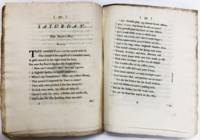
13540Archive on women's crucial role in the creation and development of vaccines especially it's accessibility to children regardless of economic class and the global eradication of smallpox. Containing 3 early and rare pieces that show how women emerged as a driving force in developing and sharing immunization techniques that continue increasing child survival rates today. Includes 2 scarce first edition books by Lady Mary Wortley Montagu with writing about her experiences bringing inoculation to the Western world and her advocacy for mothers using inoculation to save their children's lives. Accompanied by a letter to Lady Mary by Lady Margaret Cavendish Bentinck the curator of an influential scientific collection and a proponent of women's scientific research. By 1796 Lady Mary's work was advanced by Edward Jenner who developed a safer method of immunization using a vaccine derived from cowpox. <br/> <br/>Having witnessed the lifesaving benefits of immunization while traveling in Turkey Lady Mary Wortley Montagu made medical history in 1721 when she had her own children inoculated and became the first person to bring inoculation to the West. As one of the first immunization activists in the West she used her power and influence as a literary pioneer to publish about it promoting the procedure to combat Britain's smallpox epidemic. This archive's two rare books by Lady Mary contain her writing on smallpox prevention: a 1747 first edition of "Six Town Eclogues" never before sold at auction which focuses on the hardships women and girls faced when unable to access inoculation; and an 1803 five volume first edition of "The Works of the Right Honorable Lady Mary Wortley Monagu" describing "the introduction of the art of inoculation into this Kingdom" and her time "dedicated to various consultations" about the procedure. Accompanied by a letter to Lady Mary Montagu written by Lady Margaret Cavendish Bentinck who curated an influential natural science collection and encouraged women's work in science. Lady Mary Wortley Montagu and the thousands of other women who supported Jenner's vaccine were responsible directly and indirectly for saving tens of thousands of lives. Over the following decades women were crucial in helping Jenner provide the vaccine to children around the world and by the 1850's records suggest that in England alone women were responsible for ensuring vaccination for over 30000 children and for soliciting funding to allow Jenner's clinics to rescue even more. 150 years later the World Health Organization finally declared smallpox eradicated in 1980. An important archive revealing women's crucial role in the past present and future of vaccination. unknown books
New English Paperback. Pbo. 299 p. In English and Turkish. Color ills. Women's costume of the late Ottoman era from the Sadberk Hanim Museum Collection.= Osmanli Imparatorlugu'nun son döneminden kadin giysileri. Sadberk Hanim Muzesi. [Exhibition catalogue].
The main thrust of the theme is on several socio-economic problems being faced by the women. The economic parameters, their health and educational problems, rape laws and justice, globalisation and women's question in India, women in decision-making and women's movement in India have been meticulously discussed in this work. The book contains sixteen chapters, divided into three sections. About The Author:- Dr. Vibhuti Patel holds a Doctorate in Economics. She has been the founder member and Trustee of Anusandhan Trust and its institution Centre for Enquiry into Health and Allied Themes (CEHAT). She has made contributions in Women's Studies and Gender Economic. She has co-authored two books: Indian Women: Change and Challenge and Reading for Half the Sky. For twelve years she wrote on Development Studies and Gender Issues for Economic Times and several academic journals. She worked as a reader at Research Centre for Women's Studies, SNDT Women's University for 5 years (1988-1993). She has authored research monographs on Women’s movement, Sex Determination Tests and Work Participation of Women and has presented papers in several national and international seminars, workshops, training programmes and conferences on development studies with gender perspectives. At present she is Co-ordinator at Sophia Centre for Women's Studies and Development, an autonomous centre housed in the Sophia College campus, Mumbai. Contents:- Preface • Acknowledgements • Introduction • SECTION I: POLITICAL ECONOMIC OF GENDER • Women and Structural Adjustment Programmes in India • Women's Issues-Economic Parameters • New Social Movements and Gender in India: Lessons for Feminist Economists • Budgetary Policy: A Gender Analysis • Gender Economics • Women's Education and Social Development • Women and Health: An Indian Scenario • SECTION II : SOCIAL CHANGE AND GENDER RELATIONS • Women's Movement in India • Challenges of the New Millennium and Voluntary Organisations • Effective Governace: Importance of Women’s Leadership in Local Bodies • Rape Laws-Travesty of Justice • SECTION III: WOMEN IN DECISION MAKING • Globalisation and Women’s Question in India • Women in Decision Making • Evolution of Women’s Studies in India • Dynamics of Women’s Studies and Women’s Movement in India • Conclusion • Index. The Title 'Women's Challenges of the New Millennium written/authored/edited by Vibhuti Patel', published in the year 2002. The ISBN 9788121208062 is assigned to the Hardcover version of this title. This book has total of pp. 270 (Pages). The publisher of this title is Gyan Publishing House. This Book is in English. The subject of this book is Women Studies. Size of the book is 14.34 x 22.59 cms Vol:-
Community Development Programmes meant for the Upliftment of rural masses. Their problems have arisen due to various social factors such as the very nature off CDP, the roles assigned to these employees, the prevailing socio-economic situation in rural area, the constraints of the social structure, the Bureaucratic fame-work in which they have to work, the sex-role norms and the like. Thus the volume brings to light one more aspect of the problem of rural development the hitherto unexplored. About The Author:- Dr. Sila Basak Ph.D., D. Lit., FRAS(London) was Born in 1947, Kolkata, India. Working as an academic, attached to the Dept. of Folklore and language studies with various Universities. She is also associated with the training and research programmes in Folkloristics with diffirent institutions both India and abroad. She is the author of a number of books and research papers on the various aspect of Bengal's folklore and life including Women Brata Rituals, Bengali Culture and Society through its Riddles and Nakshi Kantha of Bengal (Embroidered Quilt of Bengal). She lives with her family in Kolkata. Contents:- List of Photographs • Preface • Brata: Meaning and Origin • Brata Ways and Customs • Brata: Wishes, Ingredients, Rules • Brata: The Alpana and Rhymes • Classification of Bratas • Brata: Folk Tales • Brata: Bengali Poetry in the Old and Middle Ages • Brata: Sociological Analysis • Various Bratas • Brata: District-wise Observance • Brata: Other States and Neighbours • Brata: Comparisons • Field Survey • Motif Index in Brata Narrations • List of Popular Bratas Observed in India • Bibliography • Index The Title 'Women's Brata Rituals written/authored/edited by Sila Basak', published in the year 2006. The ISBN 9788121208970 is assigned to the Hardcover version of this title. This book has total of pp. 268 (Pages). The publisher of this title is Gyan Publishing House. This Book is in English. The subject of this book is Women Studies. Size of the book is 14.34 x 22.59 cms Vol:-
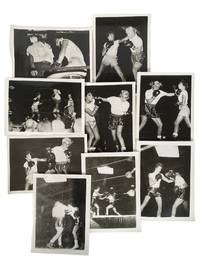
1940206121940. Unidentified photographers female boxing photograph archive late 1940s-1950s documents the emergence of organized women's boxing in the United States supporting research into gender barriers in professional sport postwar athletic culture and the early institutional recognition of female fighters. The photographs capture three central figures in mid-century women's boxing-Barbara Buttrick Phyllis Kugler and Jo-Ann Hagen-whose careers intersected in exhibition bouts and championship contests during a period when women's participation in boxing required legal and promotional negotiation. The material provides visual evidence of competitive matches and ringside moments at a time when women's boxing was only beginning to secure formal licensing in certain jurisdictions.<br /> Nine black-and-white silver gelatin photographs each approximately 5 x 7 inches depicting in-ring action and between-round scenes. Three images show a bout between Hagen and Kugler with both fighters captured mid-exchange in close quarters gloves raised and bodies angled forward in offensive and defensive stances. Five photographs document a match between Kugler and Buttrick likely connected to their 1957 championship contest in San Antonio Texas where the fighters successfully petitioned for a state boxing license for women; scenes include active exchanges as well as ring positioning under overhead lighting. One image shows Buttrick seated in her corner resting between rounds attended by seconds just outside the frame. Across the group the fighters wear standard boxing attire of the period and the ring environment-ropes canvas and audience proximity-appears consistent with mid-century professional venues.<br /> Produced during a period when women's boxing was contested both culturally and legally the archive documents early efforts to legitimize female participation in a sport historically restricted to men. Buttrick's victory in Texas marked a milestone in the recognition of women's championship boxing while Kugler's extensive bout record and Hagen's career-long rivalry with both fighters illustrate the development of a competitive circuit. All three figures were later inducted into the International Women's Boxing Hall of Fame underscoring their role in establishing the sport's foundations. Light surface wear consistent with handling with strong contrast and clear detail throughout. Overall in very good condition. unknown
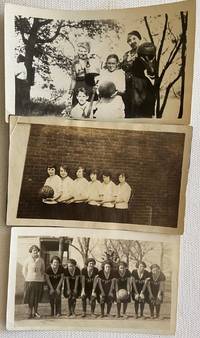
1910178711910. Women in Sports Photo archive of 3 photos of women holding basketballs two with women in early women's sports uniforms. Circa 1910-20s. Small silver gelatin prints. Each measures 4.5" x 2.75" inches. The photos encapsulate the excitement of young women entering the sport. In two of the photos players wear knee-length bloomers as part of their uniform. Women's basketball began in 1892 the year after the invention of the sport. Bloomers were designed in 1896 to preserve the modesty of skirts with the free movement of shorts. One photo shows a team of seven lined up in high school uniforms marked F.H.S their coach standing to one side. Another shows a different group of six girls also in uniforms posing in a line with a ball marked R.H.S. The third photo shows a woman in long dress holding a ball aloft with another woman holding a bucket presumably a stand in for the net and a young girl and boy posing with them the girl holding a basketball. Early photos of Recreational sports for girls are still uncommon. All three photos in good condition. unknown
This book based on the data collected from a sample of 2400 currently married women aged 15 – 29 years, mainly focuses on the differentials and determinants of women's autonomy and its influence on their reproductive behaviour in both rural and urban areas of Tamil Nadu. In this book, women's autonomy is measured in eight different dimensions. The level of women's autonomy on each of these eight dimensions as well as the total autonomy and its correlates are assessed and discussed in detail in the first stage. In the second stage, the impact of women's autonomy on their reproductive behaviour as well as on their knowledge and adoption of family planning methods is assessed. This book will serve as an useful guide to measure the level of women's autonomy in different dimensions. The setting of objectives, methodology followed, data analysis and presentation of results are of immense value. About The Author:- Dr. S. Gunasekaran is basically a statistician (M.Sc. Statistics) and had his training in demography (M.Sc. Demography) at the London School of Economics and Political Science, University of London, U.K. He had completed his Ph.D. in Population Studies in the Department of Population Studies at Sri Venkateswara University, Tirupati.He has earlier worked in the Population Research Centre (PRC) of the Government of India attached to the Gandhigram Institute of Rural Health and Family Welfare Trust and now he is working as Associate Professor in the Department of Applied Research of the Gandhigram Rural University, Gandhigram, Tamil Nadu, India. Besides teaching Statistics, Demography and Research Methods to the students of both graduate and post-graduate courses, he has also been guiding a number of students for their M.Phil. and Ph.D. He has also been involved in a number of research projects in the field of population, gender, human rights and reproductive health funded by various national and international agencies such as Government of India, Ministry of Health and Family Welfare, Indian Council of Social Science Research, University Grants Commission, Indian Council of Medical Research, UNICEF, UNESCO, etc. So far he has successfully completed more than 25 research projects. He is a member of a number of professional forums like International Union for the Scientific Study of Population (IUSSP), Indian Association for the Study of Population (IASP), Population and Environment Research Network (PERN) and Asia Population Network (APN). He has published a number of articles on Population, Gender, Human Rights and Reproductive Health. Contents:- List of Tables • List of Figures • List of Abbreviations • Foreword • Preface • Acknowledgements • Introduction • Review • Methodology • Background Characteristics of the Respondents • Women’s Autonomy • Level of Autonomy and Factors Associated with Women’s Autonomy • Women’s Autonomy and Reproductive Behaviour • Women’s Autonomy and Family Planning • Focus Group Discussion (FGD) • Summary and Conclusion • Women’s Autonomy • Women’s Autonomy and Reproductive Behaviour • Women’s Autonomy and Family Planning • Conclusion • Annexures • Bibliography • Index. The Title 'Women's Autonomy and Reproductive Behaviour written/authored/edited by S. Gunasekaran', published in the year 2010. The ISBN 9788178358048 is assigned to the Hardcover version of this title. This book has total of pp. 380 (Pages). The publisher of this title is Kalpaz Publications. This Book is in English. The subject of this book is Rural Development / Women Studies. Size of the book is 14.34 x 22.59 cms Vol:-