692 507 résultats
4to. 3 in 4 vols. With 2 folding maps and one folding panorama. Numerous illustrations and plans. Original wrappers. First edition of this standard work on the region: the first scientific account of the Nabataean antiquities, including the ruins of Petra. The Bohemian scholar Alois Musil (1868-1944) was fluent in 35 Arabic dialects. In 1898 he had rediscovered the lost desert castle of Qusayr Amra (built ca. 715 A.D.) in the Jordanian desert north of Amman. During WWI he was sent to the Middle East to thwart British operations against the Ottoman Empire, thus becoming the opponent of T. E. Lawrence. In 1827 he helped establish the Oriental Institute of the Academy of Sciences in Prague. - With contemp. ownership "Dr. Zweig" on wrapper covers (in Hebrew and German). Some pages uncut; professional repairs to edges. Rare with all 4 volumes; no complete copy recorded at auction during the past decades. Macro, Bibliography of the Arabian Peninsula, 1667. Howgego III, M103 (p. 664). Fück 262. NYPL Arabia coll. 171. OCLC 3114451.
LCS-4368Édition originale de l’éloge de la Faculté de Médecine de Paris prononcé par Gabriel Naudé en 1628. Lutetiae Paris., Jean Moreau, 1628.Petit in-8 de (12) pp., 150, (1). Ancien ex-libris manuscrit rayé à l’encre sur le titre. Petit cachet d’appartenance sur le titre. Relié en plein vélin souple de l’époque, dos lisse avec le titre manuscrit en long.171 x 109 mm.
2 parts in one volume. Engraved title page, letterpress title in red and black, 2 armorial engraved plates, 2 ff. of dedication, 208 pp. 258, (10) pp. With 111 engravings in the text, 1 folding engraved map, and 35 double-page-sited engraved plates. Full calf, spine and covers stamped in blind, spine label. Folio. Second Dutch edition (previously published in 1665) of this description of the 1655-57 embassy of Peter de Goyer and Jacob de Keyzer, with a general account on China in part 2. The plates show views (including Batavia, Canton, Macao, Nanjing, and Beijing), plans, costumes, flora and fauna etc. - "The Dutch, being at the height of their power, having supplanted the Portuguese, desired to gain access to China and a portion of the Chinese trade. After much opposition the Government succeeded in sending merchants to try the pulse of the Chinese at Canton. Upon their report it was determined to despatch ambassadors from Batavia to the Court of Peking to solicit liberty to trade. This is the embassy written up by Nieuhoff, who was steward to the ambassadors" (Cox). - The selection of plates varies from copy to copy. The present one contains two engraved armorial plates not called for in the list of plates, but not the portrait (not mentioned there either) and also lacks the plate "Paolinxi". - Hardly browned of soiled; insignificant edge flaws at beginning and end. Map wrinkled, waterstained and with repaired edge tears. Cat. Nederl. Hist. Scheepvart Mus. 499. Cordier, BS 2345. Graesse IV, 675. Tiele 800. Cf. Boucher de la Richarderie V, 297; Cox I, 325; Henze III, 612.
19622409180259xbvkJamaica, Island Worcester [and Things] - Ceramics, 1962. Material: Ceramic / Total height (Pot with lid): ca. 39 cm; diameter at foot: ca. 15 cm, largest diameter (open top of 'pot'): ca. 24 cm. / Colour: lightbrown-rosé with white partly gilt-lined embossments and partly gilt inscriptions; foot and pineapple-top: white. / Weight: ca. 3 kg.
4to (165 x 213 mm). Arabic manuscript on polished oriental paper. 53 pp. on 28 ff. 19 lines, per extensum, written in a Naskhi script in black ink, some words in red, some marginal notes. Contemporary half leather binding over marbled boards with fore-edge flap. A manuscript on Arabic prosody and metrics, forming a commentary on the well-known prosodic manual "Kitab al-'Arud al-Andalusi" by Abu al-Jaysh al-Ansari al-Qisti al-Andalusi (d. 626 H / 1229 CE). - The commentator Al-Qaysari, who flourished in Anatolia in the 14th century CE, both condensed and expanded on the work of Al-Jaysh, with the aim of providing a summary for students as well as adding his own perspective on the study of poetic metre and verse. He dedicated his effort to Emir Süleyman bin Tashun, an important political figure in Anatolia, who had commissioned the book. After a traditional introduction and long foreword, Al-Qaysari's work contains quotations from the original text, which he then juxtaposes with his own opinions. For his commentary, Al-Qaysari also drawn upon the standard works of Al-Khalil ibn Ahmad al-Farahidi (who first systematized the art of Arabic prosody) and Al-Khalil's student Al-Akhfash al-Avsat. - By tradition, Arabic prosody ('Arud) scans poetry not in terms of syllables (as in most Western languages), but in terms of vowelled and unvowelled letters, which are combined into larger units, which in turn make up feet. Sixteen types of metre are distinguished, some very common, others exceedingly rare. - The present copy was written in the early 18th century CE by a scribe who names himself as Ali ibn Muhammad ibn Ali ez-Zuhri es-Shirvani al Madani, a scholar who is known to have resided in Medina all his life. On the recto of the first leaf are a few later pencil notes which erroneously attribute the work's authorship to Al-Madani himself, though the copyist did indeed add several notes of his own supercommentary in the margins. - Binding a little rubbed; hinges chipped and weakened in places, interior very well preserved with minimal staining or smudging. A fine example. GAL I 310, 8 & S I 544, 9. Cf. Joan Maling, The Theory of Classical Arabic Metrics (1973). Ernest N. McCarus, "Identifying the Meters of Arabic Poetry", in: Al-’Arabiyya 16.1/2 (1983), pp. 57-83.
8vo. 2 vols. (4), XV, (1), 400 pp. (4), 488 pp. With 10 engr. plates (2 folding). Contemporary quarter calf over mottled boards on four raised bands. Gilt lettering and decoration to spines. Marbled endpapers and edges. First edition of J. T. Reinaud's (1795-1867) rare catalogue of the famous collection of Islamic Art amassed by the French statesman Blacas. Most copies have title changed to "Monumens arabes, persans et turcs". This copy is inscribed by Reinaud to the Duc de Luynes, another famous French antiquarian. - The French antiquarian and diplomat Pierre Louis Jean Casimir, prince de Blacas d'Aulps (1770-1839) acted as prime minister to Louis XVIII when he succeeded Napoleon in 1814 and later served as French ambassador to the Holy See. Remaining in Rome for many years, he provided Ingres with a commission and became a patron to the German classicist Theodor Panofka. He worked closely with Italian archaeologist Carlo Fea in the excavation of the Roman Forum, supported the orientalist Jean-François Champollion and created the "Musée Egyptien" within the Louvre. In 1866, his descendants sold most of his collection to the British Museum, where it remains to this day. - The plates show beautiful specimens of Arabic calligraphical art (including many seals). Some browning and staining throughout. From the library of the Ducs de Luynes from the Château of Dampierre with bookplate to pastedowns. Ibrahim-Hilmy II, 159. Gay 3592 bis (variant title). Brunet IV, 1198. Graesse VI, 72. Quérard VII, 513. OCLC 39974885. Not in Arntzen/Rainwater.
Small 8vo. (8), 252 [but 254], (2) pp. (includes final leaf of ads). Contemporary calf, rebacked. First edition of this extraordinary account of an Englishman’s capture by Barbary pirates and subsequent adventures as a slave in Algeria. The narrative is framed as an authentic journal of a deceased traveller, prepared for the press by a friend of the departed. Through this mechanism the reader is taken into a proto-novelistic fantasy, albeit one that must have been informed by genuine experience of Eastern travel. As a slave under numerous masters the author tricks his way variously into employment as the cook to the King of Algiers, is then demoted to Keeper of the King’s Bath and secretly fathers a daughter with one of the King’s wives. After an unsuccessful stint as a gardener’s assistant he journeys in the service of an officer, collecting tribute money with the Algerian army and offers his services as an advisor to the Ottoman governor of Tlemcen. He recounts observations on the various peoples encountered and their customs and peculiarities, marvelling at flying serpents, lions and ostriches and skirmishing with an army of Arabs. Against a backdrop of mosques, minarets and palaces, the narrative is peppered with anecdotes of meetings with Barbary pirates, European renegados, and dalliances with alluring women of the Maghreb. - The author takes particular relish in recounting the details of his sexual adventures: "the women in this country keep much at home, but their minds and affections are more wandering abroad, because they are so recluse; whereas if they had as much liberty as in other countries they would not be so furiously debauch’d: their husbands keep strict guard over them, that when they can escape their eyes, they give the reins to their passion, and labour to satisfy themselves more abundantly; stolen waters are sweet: the more they are forbidden and hindered from variety, the more pleasure and satisfaction they fancy in it [...] had my design been to make conquests in the Empire of Love, I think none could have been more happy [...] this good opinion of my ability spread & increased wonderfully in the town [...]". A separate appended section offers directions for navigating the Barbary coast. The work is of value both as a travel narrative and as a proto-novel reflecting the European fascination with the Orient. This is one of four journeys undertaken by Englishmen in the Ottoman Mediterranean analysed recently by Gerald Maclean in his 2004 study "The rise of Oriental travel: English visitors to the Ottoman Empire, 1580-1720". - Provenance: small stamp of Bibliothèque Generale, Rabat, to title, first leaf of dedication, and first leaf of text. Small ownership stamp of Alexander Gardyne, 1883, to verso of title. Manuscript bookplate of Henry White, Lichfield, 1820, to pastedown. A very good copy. Playfair, Morocco, 244. Playfair, Algeria, 155. Pforzheimer, 846. Wing S152. Not in Blackmer or Atabey.
Folio. (8), 168, (2) pp. With 37 etched plates. Contemporary full calf with richly gilt front cover, label to spine, and gilt edges. First (and only) edition in French. - Archduke Rudolf set out on his tour of the Middle East in 1881, travelling first from Vienna to Miramar, Corfu, Alexandria, and Cairo. From there the group sailed up the Nile to Aswan and Memphis, then journeyed on to Port Said, the Suez Canal, the Red Sea, and the Holy Land, returning to Vienna from Haifa via Cattaro (Kotor), Ragusa (Dubrovnik), and Trieste. This is an outstanding and unique copy in a sumptous Viennese binding, in immaculate condition, was created for Anton Ritter von Beck (1812-95), then director of the government's Imperial printing office in Vienna. With a long inscription by the translator, the Baron de Montandin, to "Monsieur le Hof Rath Anton Chevalier Von Beck" on the flyleaf, dated Vienna, 28 February 1885. Some slight staining to the guards of the etchings, otherwise a very clean copy. Hamann, Habsburger-Lexikon 415 ff. ÖBL IX, 315 ff. Wurzbach VII, 145 ff.
1 S. Folio. Mit papiergedecktem Siegel (eingerissen) und Adresse (Name getilgt). An [Gerhard Pichler?] und wohl im Zusammenhang mit einem an den "Ritterkrieg" sich anschließenden Streit zwischen dem Landgrafen Philipp dem Großmütigen von Hessen und dem Reich, das sich der Ansprüche einiger mit Franz von Sickingen verbündet gewesener Ritter angenommen hatte. "[...] Ich hab dem amptman zü marburg Etlich warnung meins g[nädigen] h[errn] [d. i. Fürstbischof Konrad III. von Würzburg?] halb zü geschriben uff sein schrifftlich ansuchen und Begern, da mit mein g[nädiger] h[err] gewarndt werde, wan in der still da von geredt wirt, Beym Bundt oder im her, als ob man uber sein gand [verschrieben für "land"?] im umwenden ziechen wölle, ist mir nit zweyffels sein f[ürstlich] g[naden] wiß sich uff solche warnung wol zü hallten, sye haben nit uber thaussent Reissiger pferde und Bis an neuntaussent zü fuß, aber Ein stargk geschoß Bey vier oder XXV stugken uff Redern die Eyssen schiessen, dar under wol acht Brechender stugk sind, aber fur war, die stradiotten und vil knecht underm hauffen wern lieber uff dem gegentheil dan Beym pund [...] Ich hab XIII artigkel Bey mir, die Sind schon gedrugkt, aber nit von mir, die Beschliessen allen Eingang des gannczen Regamenczs aller stend im Reich [...]". - Aus der 1911 durch C. G. Boerner versteigerten Sammlung Carl Geibel. - Von größter Seltenheit. - Mit kleinen Randläsuren und kl. Montagespuren verso.
Large 8vo. XVIII, 200 pp. With half-title, frontispiece portrait, 5 black-and-white plates, folding map and "Genealogical table of members of the Al Bu Said dynasty". Publisher's original blue cloth, title gilt on spine & upper cover, Said bin Sultan name gilt in Arabic on upper cover. Rare first edition. - Said-Ruete was the son of Princess Salma (1844-1924), daughter of Sayyid Sai’id ibn Sultan (1791-1856), ruler of Oman and Zanzibar. The Princess married Friedrich Ruete, a clerk at the German embassy, and lived for 52 years as a widow in Germany. Their son Rudolph produced this remarkable survey of his grandfather’s life and times, considered as important as Vincenzo Maurizi‘s "History of Seyd Said, Sultan of Muscat" (London 1819). Sayyid Said ibn Sultan became the ruler of Oman in 1806, when he was about 15 years of age. After defeating the opposition with British help he determined to reassert Oman's traditional claims in East Africa. He eventually succeeded, and in about 1840 shifted his capital to Zanzibar, where he introduced the cloves that became the foundation of the island's economy. He also controlled the Arab traders that brought back slaves and ivory from the African interior. In this monograph the author highlights the early history of Oman, the rise of Said ibn Sultan to power in Oman and Zanzibar, and his relations with foreign powers (France, England, and the United States). In his foreword to this work, Major General Sir Percy Cox identifies the establishment of an Arab dominion in Zanzibar as Sultan Said's most lasting achievement. - Covers a little soiled (lower cover more so); light wear to extremeties; insignificant spotting confined to flyleaves. A fine copy with ticket of The Times Book Club to lower pastedown. Provenance: from the library of Christopher Palmer Rigby (1820-85), who served as the East India Company's agent and British Consul in Zanzibar from 1858 to 1861. Macro 1986. OCLC 5705061.
Par le Sieur Sanson d'Abbeville, Geographe ordinaire du Roy, 1 vol. in-folio reliure d'époque pleine basane marron, format 435 x 330 mm, dos à 6 nerfs orné, sans page de titre, Chez Pierre Mariette, Paris, ruë S. Iacques de l'Espérance, 1665 (date imprimée à la fin des tables) avec la table imprimée (2 ff. n. ch.), la plupart des cartes avec les frontières rehaussées en couleur, en double page [ 1648-1667 ], format des cartes variant de 355 x 450 mm à 440 x 560 mm. Rare exemplaire du fameux atlas de Sanson, bien complet de la table des matières imprimée datée de 1665. Par rapport à l'exemplaire-type fictif décrit par Mireille Pastoureau (elle n'en a consulté que des incomplets), qui contiendrait 86 cartes, notre exemplaires contient 75 des cartes signalées, à savoir l'intégralité des cartes de l'Atlas publiées jusqu'en 1667 (les autres cartes signalées par Mireille Pastoureau parurent postérieurement à cette date), auxquelles ont été jointes 14 cartes de Nicolas Sanson publiées avant 1667 et provenant des "Cartes generales de toutes les Parties du monde"). De la bibliothèque H. du Bosc avec ancien ex-libris gravé contrecollé en garde (reliure d'époque fort. frottée et épidermée avec mq. en coiffes, des mouill. parfois fortes, dont certaines colorées avec qq. traces de champignons sur qq. cartes). Bibliographie : Mireille Pastoureau, Les Atlas Français XVIe - XVIIe siècles Notre exemplaire contient : 1 - Le Royaume de France et ses acquisitions, chez Pierre Mariette, 1665 (Pastoureau : Sanson, VB 126) ; 2 - Gallia Vetus in partes II, regions IV, provincias XVII et populos, Lutetia MDCLVIII (1658) (Pastoureau, Sanson VI, 1 ) 3 - La France et les environs jusques à l'Estendue de l'Ancienne Gaule, 1658 (Pastoureau, Sanson VI, 2 daté de 1651) 4 - Gouvernement général de la Picardie, Artois, Boulenois et pays reconquis, chez Pierre Mariette 1651 (Pastoureau, Sanson V 36) 5 - L'Isle de France, Champagne, Lorraine, Par N. Sanson d'Abbeville geogr. du Roy, 1648 (Pastoureau, Sanson V 38) 6 - Gouvernement général de l'Isle de France et pays circomvoisins, par le Sr. Sanson d'Abbeville, geogr. du Roy, A Paris, chez Pierre Mariette, 1651 (Pastoureau, Sanson V 127) 7 - Champaigne et Brie, par N. Sanson, geographe du Roy, A Paris, chez Pierre Mariette (Pastoureau, Sanson V 128) 8 - La Lorraine, et les Estats qui passent sous le nom de Lorraine, scav. le Duché de Lorraine, le duché de Bar, et les terres adjacentes au duc de Lorraine. Les Eveschés et Bailliage de Metz, Toul et Verdun, et autres terres circomvoisines à la France, par le Sr. Sanson d'Abbeville, 1661 (Pastoureau, Sanson V 129) 9 - Les deux Bourgognes, duché et Comté. la Bresse, &c. la souveraineté de Dombes, le Nivernois, &c. par N. Sanson d'Abbeville, 1648 (Pastoureau, Sanson V 41) 10 - Gouvernement Général du Lyonnois, suivant les derniers Estats Generaux ; où sont le Lyonnois, Forez, Beauiolois, Bourbonnois, Auvergne, La Marche, &c., A Paris, chez Pierre Mariette, rue de St Jacques à l'Espérance, s.d. (Pastoureau, Sanson V 42) 11 - Palatinat du Thein, Alsace et partie de Souabe de Franconie, 1648 (Pastoureau, Sanson V 48) 12 - L'Alsace, où conquestes du Roy en Allemagne, tant deçà que delà le Rhein, chez Pierre Mariette, 1666 (Pastoureau, Sanson V 130) 13 - Estats de la succession de Cleves et Iuliers, par N. Sanson d'Abbeville, 1648 (Pastoureau, Sanson V 49) 14 - Picardie et les Pays Bas catholiques &c par N. Sanson d'Abbeville, 1667 (Pastoureau, Sanson V 50) 15 - Provinces Unies des Pays Bas par N. Sanson d'Abbeville 166. (Pastoureau, Sanson V 51 daté de 1648) 16 - Les Suisses, les alliés des suisses et leurs suiets, par N. Sanson d'abbeville 1648 (Pastoureau, Sanson V 53) 17 - Belgica in provincias quatuor, Chez P. Mariette, 1659 (Pastoureau, Sanson VI 63) 18 - Belgica Prima cujus metropolis Augusta Treverorum. Province de Treves où sont les Dioeceses de l'Archevesché de Trèves, Toul et Verdun, par le Sr. Sanson, Chez P. Mariette, 1661 (Pastoureau, Sanson VI 65) 19 - Caerasi in Treveris. Partie du dioecese de l'archevesché de Treves. Partie méridionale du duché de Luxembourg divisé en ses principales jurisdictions. chez P. Mariette 1657 (Pastoureau, Sanson VI 68) 20 - Treveri. Archidiaconnés de Treves et de Tholey dans le dioecese de l'archevesché de Treves. Chez Pierre Mariette, Paris, 1658 (Pastoureau, Sanson VI 66) 21 - Treveri Archidiaconnés de Coblentz dans le dioecese de l'archevesché de Treves. Chez Pierre Mariette, Paris, 1658 (Pastoureau, Sanson VI 67) 22 Mediomatrici. Archidiaconnés de Metz, de Vic et de Marsal, dans l'Evesché de Metz ou sobt parties du temporel de l'evesché et le bailliage de Metz, du Marquisat de Pont à Mouson &c., chez l'Auteur, 1656 (Pastoureau, Sanson VI 69) 23 - Mediomatrici. Archidiaconnés de de Sarbourg, dans l'evesché de Metz où sonbt les balliage allemand dans le duché de Lorraine et les terres adjacentes sc. Principauté de Phaltzbourg, comté de Biche, &c. chez l'Auteur 1656 (Pastoureau, Sanson VI 70) 24 - Veroduni. Evesché de Verdun. A Paris, chez l'auteur, 1656 (Pastoureau, Sanson VI 74) 25 - Leuci. Archidiaconné de Toule, de Ligny et Reynel, chez l'auteur 1656 (Pastoureau, Sanson VI 71) 26 - Leuci. Archidiaconné de Port et Prevosté de St. Diey dans l'evesché de Toul, chez l'auteur 1656 (Pastoureau, Sanson VI 72) 27 - Leuci. Archidiaconnés de Vosges et de Vitel dans l'evesché de Toul, chez l'auteur 1656 (Pastoureau, Sanson VI 73) 28 - Belgica secunda. Province de Rheims de laquelle ont ésté tirées en partie celles de Cambray et de Malines, A Paris, chez Mariette, 1661 (Pastoureau, Sanson VI 75) 29 - Rhemi. Partie Septentrionale du dioecese et archevesché de Rheims en Champagne. A Paris chez l'Auteur, 1656 (Pastoureau, Sanson VI 77) 30 - Rhemi. Partie Meridionale du dioecese et archevesché de Rheims en Champagne. A Paris, chez l'Auteur 1656 (Pastoureau, Sanson VI 76) 31 - Catalauni. Evesché de Chaalons sur Marne et en Champagne. A Paris, chez l'Auteur, 1656 (Pastoureau, Sanson VI 78) 32 - Suessones. Evesché de Soissons où sont les balliages et eslections de Soissons, Chasteau Thierry et Crespy en Valois &c. A Paris chez l'Auteur, 1656 (Pastoureau, Sanson VI 79) 33 - Evesché de Laon, ou sont les duché et pairrie de Laon, balliage de Laon et Ribemont, eslections de Laon et de Guise &c. A Paris chez L'auteur, 1656 (Pastoureau, Sanson VI 80) 34 - Veromandui le Vermandois Evesché de Noyon où sont les comté et pairrie de Noyon balliages et prevostés de Noyon, Chauny, St Quentin, Peronne &c. A Paris chez l'Auteur, 1656 (Pastoureau, Sanson VI 81) 35 - Bellovaci et Silvanecte Les Eveschés de Beauvais et Senlis. Comté et pairrie de Beauvais. Les Balliages de Beauvais, Clermont et Senlis. A PAris, chez l'auteur, chez Pierre Mariette 1667 (Pastoureau, Sanson VI 82) 36 - Ambiani. Archidiaconné d'Amiens de l'evesché d'Amiens. A Paris, chez l'Auteur, 1656 (Pastoureau, Sanson VI 83) 37 - Britanni. Archidiaconné de Ponthieu dans l'Evesché d'Amiens. A Paris, chez l'auteur, 1656 (Pastoureau, Sanson VI 84) 38 - Oromansaci et Gesoriacus pagus in Morinis. Evesché de Boulogne ou sont les Comté et seneschaussée de Boulenois, A Paris, chez l'auteur, 1656 (Pastoureau, Sanson VI 85) 39 - La Belgique où sont les Provinces de Treves, Rheims, Mayence et Cologne. A Paris, chez P. Mariette (Pastoureau, Sanson VI 64) 40 - Morini, Gorduni et Pleumosii in Morinis. Les eveschés de St Omer, Ipres et Tournay, Partie occidentale du Comté de Flandre ou sont la Flandre Wallone et les quartiers du Plat Pays dy Franconat et d'Ipres dans la Flandre Teutone, A Paris chez l'Auteur, 1657 (Pastoureau, Sanson VI 88) 41 - Atrebates. Evesché d'Arras Comté d'Artois subdivisé en toutes ses juridictions scavoir Gouvernance d'Arras, comté de St Pol ... A Paris chez l'Auteur, 1656 (Pastoureau, Sanson VI 87) 42 - Nervii. Diocese de l'archevesché de Cambray ou sont les comté de Haynaut, le Cambresis. A Paris, chez l'auteur, 1656 (Pastoureau, Sanson VI 86) 43 - Advatici. Evesché de Namur Comté de Namuret partie de l'estat et seigneurie de Lyege, A Paris, chez P. Mariette, s.d. (Pastoureau, Sanson VI 89) 44 - Germania Prima sive superior cujus metropolis Moguntiacum. Province de Mayence dans la Gaule Belgicque ou sont les dioeceses de l'archevesché de Mayence et des eveschés de Worms, Spire et Strasbourg, chez P. Mariette (Pastoureau, Sanson VI 94) 45 - Tribocci Evesché de Strasbourg, Chez P. Mariette 1659 (Pastoureau, Sanson VI 100) 46 - Germania secunda sive inferior. Province de Cologne dans la Gaule Belgicque de laquelle ont esté tirées en partie celles d'Utrecht, de Malines et de Cambray où sont aujourdhuy les dioeceses de Cologne Utrecht ... A Paris chez P. Mariette 1660 (Pastoureau, Sanson VI 101) 47 - Ubii ubi antea Sunici Partie di Dioeceses et Archevesché de Cologne. Haute Partie de l'Estat et Seignrue de l'Archevesché de Cologne. 1660 (Pastoureau, Sanson VI 102) 48 - Ubii ubi antea Sunici Partie du Dioeceses et Archevesché de Cologne. Basse Partie de l'Estat et Seignrie de l'Archevesché de Cologne. chez P. Mariette 1660 (Pastoureau, Sanson VI 103) 49 - Ubii ubi antea Sunici Partie du Dioeceses et Archevesché de Cologne. Duché de Iuliers. chez P. Mariette 1660 (Pastoureau, Sanson VI 104) 50 - Gugernii in Menapiis Partie du dioecese et archevesché de Cologne. Duché de Clèves. Chez P. Mariette, 1660 (Pastoureau, Sanson VI 105) 51 - Eburones qui postea Tungri. Partie septentrionale dioecese de l'evesché de Lyege. Partie de l'Estat et seigneurie de Lyege duché de Limbourg. A Paris chez l'auteur 1657 (Pastoureau, Sanson VI 106) 52 - Paemani in Eburonibus. Partie du dioecese de Lyege. Partie du duché de Luxembourg divisée en ses principales juridictions. A Paris chez l'Auteur 1657 (Pastoureau, Sanson VI 107) 53 - Batavi ex parte, et Marsaci et Usipetes. Partie de l'Ancien dioecese et Evesché d'Utrecht a present Archevesché. &c. la Betuve, la Veluve et le Comte de Zutphen, qui sont trois quartiers de quatre du Duché de Gueldres, par le Sr. Sanson, chez P. Mariette (Pastoureau, Sanson VI 108) 54 - Menapii. Dioecese de l'archevesché de Malines. Partie méridionale du Duché de Brabant, A Paris, chez l'Auteur, 1657 (Pastoureau, Sanson VI 90) 55 - Centrones, et Grudiiin Morinis. Les eveschés de Gand et de Brugges. Partie orientale du Comté de Flandres où sont la Flandre Impériale et les Quartiers de Gand et du Franconat dans la Flandre Teutone. A Paris, chez l'Auteur, 1657 (Pastoureau, Sanson VI 93) 56 - Menapii. Evesché d'Anvers de de Bosleduc. Partie septentrionale du duché de Brabant ou sont les Quartiers d'Anvers et de Bosleduc et le Marquisat du St. Empire, A Paris, chez l'Auteur, 1657 (Pastoureau, Sanson VI 91) 57 - Menapii. Evesché de Ruremonde. Quartier de Gueldres dans le duché de Gueldres. A Paris, chez l'auteur, 1657 (Pastoureau, Sanson VI 92) 58 - Lugdunensis Prima cujus metropolis Lugdunum Segusianorum. Province de Lyon où sont les dioeceses de l'archevesché de Lyon et des eveschés d'Autun, Challon, Mascon et Langres, chez P. Mariette, 1659 (Pastoureau, Sanson VI 5) 59 - Segusiani. Partie du diocese et archevesché de Lyon. Le Lyonnois et le Haut Forez. Eslections de Lyon, de St Chamont et de Monbrison. A Paris chez l'auteur, Chez P. Mariette, 1659 (Pastoureau, Sanson VI 6) 60 - Segusiani. Partie du dioecese et archevesché de Lyon. Le Bas Forez et Beaujolais. Eslections de Roanne et de Villefranche. A Paris, chez l'auteur, chez P. Mariette, 1659 (Pastoureau, Sanson VI 7) 61 - Insubres in Segusianis. Partie du dioecese et archevesché de Lyon. Partie septentrionale de Bresse, Bugey et Valromey divisée en leurs mandements. Le Balliage du Gex. A Paris, chez P. Mariette, 1660 (Pastoureau, Sanson VI 9) 62 - Insubres in Segusianis. Partie du dioecese et archevesché de Lyon. Partie meridionale de la Bresse, du Bugey et le Valromey divisés en leurs mandements. la souveraineté de Dombes. A Paris, chez P. Mariette, 1659 (Pastoureau, Sanson VI 8) 63 - Aedui Brannovices et Boiorum pars Partie meridionale de l'evesché d'Autun. Balliage d'Autun et comté de Charollois en Bourgogne et partie du Bourbonnois &c. A Paris, chez l'Auteur et chez Pierre Mariette, 1659 (Pastoureau, Sanson VI 11) 64 - Aedui. Partie spetentrionale de l'Evesché d'Autun. Balliage d'Auxois dans le duché et gouvernement de Bourgogne, A Paris, chez l'Auteur et chez P. Mariette, 1659 (Pastoureau, Sanson VI 10) 65 - Brannovii in Aeduis. Evesché de Mascon, Balliage de Mascon en Bourgogne. A Paris, chez l'Auteur et chez P. Mariette, 1659 (Pastoureau, Sanson VI 13) 66 - Ambarri in Aeduis. Evesché de Challon sur Saone. Balliage de Challon sur Saone et en Bourgogne. A Paris, chez P. Mariette, 1659 (Pastoureau, Sanson V 12) 67 - Lingones. Archidiaconné de Dijon du dioecese de Langres Balliage de Dijon dans le duché et gouvernement de Bourgogne, A Paris, chez l'Auteur, et chez P. Mariette, 1658 (Pastoureau, Sanson VI 15) 68 - Lingones. Archidiaconés de Tonnerre et de Bar sur Seyne dans l'evesché de Langres ou sont en partie les balliages de Sens en Champagne, de Bar sur Seyne, de la Montagne de Semeur en Auxois & en Bourgogne, A Paris, chez l'Auteur, 1656 (Pastoureau, Sanson VI 16) 69 - Lingones. Archidiaconés de Langres, de Bar sur Aube et de Bassigny, dans l'evesché de Langrers ou sont les duché, pairie et balliage de Langres, parties des balliages de Chaumont en Champagne et de la Montagne en Bourgogne, A Paris chez l'Auteur, 1656, (Pastoureau, Sanson VI 14) 70 - Diocese du Mans divisée par doyennés ruraux. A Paris chez Pierre Mariette, s.d. (Pastoureau, Sanson VI 30) 71 - Lugdunensis quarta sive Senonia. Province de Sens et aujourd'hui de Sens et de Paris ou sont les dioeceses de l'archevesché de Sens et des eveschés de Troyes, Auxerre, Nevers de l'Archevesché de Paris et des eveschés de Meaux, Chartres, Orléans, A Paris, chez P. Mariette, 1667 (Pastoureau, Sanson VI 39) 72 - Senones. Partie septentrionale de l'archevesché de Sens. Eslections de Melun, Etampes, Provins, Nemours, et partie de celle de Sens et de Nogent sur Seyne, 1660 (Pastoureau, Sanson VI 40) 73 - Tricasses. Evesché de Troyes en Champagne où sont partie des balliages de Troyes, Chaumont et Sezane Les Eslections de Troyes, de Sezane, et partie de Bar sur Aube et de Nogent sur Seyne, etc. A Paris chez l'Auteur, 1656 (Pastoureau, Sanson VI 43) 74 - Senones. Evesché d'Auxerre Comté et balliage d'Auxerre Eslections de Clamecy, de Gien, de la Charité et de Vezelay etc., chez l'auteur 1660 (Pastoureau, Sanson VI 42) 75 - Ambivareti in Aeduis. ubi postea Vadicasses. Evesché de Nevers Duché, pairie et balliage de Nevers. Balliage de St Pierre le Monstiers &c. Eslections de Nevers, et Chateau-Chinon, de Vezelay, de Clamecy, de la Charité-sur-Loire A Paris, chez Pierre Mariette 1665 (Pastoureau, Sanson VI 44) 76 - Diocese, prevosté et eslection de Paris. Le diocese est divisé en archiprestrés ou doyennés ruraux, la prévosté en balliages ou prevostés sulbalternes et l'eslection en chastellenies et ces differentes divisions sont distinguées par differentes sortes de lettres et de points, A Paris, chez l'Auteur et chez P. Mariette, s.d. (Pastoureau, Sanson VI 45) 77 - Carnutes. Partie septentrionale de l'evesché de Chartres. Balliages de Chartres, Dourdan, Monfort l'Amaury, Mante, Dreux, Chasteauneuf en Thimerais &c. Eslections de Chartres et Dourdan de la generalité d'Orléans, de Dreux, Monfort l'Amaury et part. de Mantes, de la generalité de Pris et partie des eslections de Verneuil et Mortaigne de la généralité d'Alençon, A Paris, chez Pierre Mariette, 1660 (Pastoureau, Sanson VI 46) 78 - Carnutes. Partie meridionale de l'Evesché de Chartres. Balliages de Blois, et de Vendosme. Eslections de Chateau-Dun de Vendosme et de Blois, A Paris chez P. Mariette, 1660 (Pastoureau, Sanson VI 47) 79 - Diocese del'Evesché d'Orléans. A Paris, chez Pierre Mariette, 1653 (Pastoureau, Sanson VI 48) 80 - Sequani. Partie des Archidiaconnés de Favernay et de Luxeuil du dioecese de Besançon. Partie occidentale du balliage d'Amont dans la France Comté subdivisé en ses balliages, prévostés et autres jurisdictions subalteres, A Paris chez l'auteur et chez Pierre Mariette, 1658 (Pastoureau, Sanson VI 53) 81 - Sequani. Partie des Archidiaconnés de Favernay et de Luxeuil du dioecese de Besançon. Partie orientale du balliage d'Amont dans la France Comté subdivisé en ses balliages, prévostés et autres jurisdictions subalteres, A Paris chez l'auteur et chez Pierre Mariette, 1658 (Pastoureau, Sanson VI 54) 82 - Sequani. Partie du dioecese et archevesché de Besançon où sont les grands archidiaconné et celui de Gray ac. Partie de la Franche Comté ou est le balliage de Dole subdivisé en ses balliages et juridictions subalternes, A Paris, chez l'auteur et chez P. Mariette, 1658 (Pastoureau, Sanson VI 51) 83 - Sequani. Archidiaconné de Salins du dioecese de Besançon. Patie meridionale de la France-Comté ou est le balliage d'Aval, subdivisé en plusieurs balliages ou jurisidictions subalternes, A Paris, chez l'auteur, et chez Pierre Mariette, 1658 (Pastoureau, Sanson VI 52) 84 - Verbigenus pagus in Helvetiis. Partie du Wiflispurgergow en Suisse et dans l'évesché de Lausanne. Partie du canton de Berne, le canton de Fribourg, le balliage d'Orbe, A Paris, chez P. Mariette, 1661 (Pastoureau, Sanson VI 58) 85 - Verbigenus pagus in Helvetiis. Partie du Wiflispurgergow en Suisse et dans l'évesché de Lausanne. Partie du canton de Berne, le comté de Neufchastel les balliages de Murat, de Granson &c., A Paris, chez P. Mariette, 1661 (Pastoureau, Sanson VI 57) 86 - Rauraci. Partie meridionale de l'Evesché de Basle Seigneurie de l'Evesché de Basle et les cantons de Basle et de Soleurne les quatre villes forestières, A Paris, chez P. Mariette, 1660 (Pastoureau, Sanson VI 56) 87 - Sequani Latobrigi. Partie Septentrionale de l'evesché de Basle et partie de l'evesché de Constance Haute Alsace Sundow, Brisow &c., A Paris, chez P. Mariette 1660 (Pastoureau, Sanson VI 55) 88 - Ambrones in Helvetiis. Bassee Partie du pays d'Argow en Suisse. Partie de l'evesché de Constance. Partie septentrionale du canton de Berne. A Paris, chez P. Mariette, 1660 (Pastoureau, Sanson VI 60) 89 - Tigurini sive Tigurinus Pagus in Helvetiis le Zurichgow en Suisse et dans l'évesché de Constance ou sont les Cantons de Zurich, Schaffhouse, et Appenzel l'abbaye et ville de St Gall ; comté de Toggenbourg le comté de Rappershwyl et les balliages de Turgow, Rhintal, Uznach, Gastal, &c., chez P. Mariette, 1660 (Pastoureau, Sanson VI 62) Rare exemplaire du fameux atlas de Sanson, complet de la table des matières imprimée datée de 1665. Par rapport à l'exemplaire-type fictif décrit par Mireille Pastoureau (elle n'en a consulté que des incomplets), qui contiendrait 86 cartes, notre exemplaires contient 75 des cartes signalées, à savoir l'intégralité des cartes de l'Atlas publiées jusqu'en 1667 (les autres cartes signalées par Mireille Pastoureau parurent postérieurement à cette date), auxquelles ont été jointes 14 cartes de Nicolas Sanson publiées avant 1667 et provenant des "Cartes generales de toutes les Parties du monde"). De la bibliothèque H. du Bosc avec ancien ex-libris gravé contrecollé en garde (reliure d'époque fort. frottée et épidermée avec mq. en coiffes, des mouill. parfois fortes dont certaines colorées avec qq. traces de champignons sur qq. cartes). Bibliographie : Mireille Pastoureau, Les Atlas Français XVIe - XVIIe siècles Français
Collection of 14 maps (nos. MI 1-13 and MI 18). Mostly in full colour; various sizes but mostly ca. 70 x 100 cm; scale mostly 1:100,000 (MI 3: 1:250,000; MI 6: 1:2,470 [b&w]; MI 7: ca. 1:1,600 [b&w with red overlays]; MI 8: 1:800 [b&w with red overlays]; MI 9: set of 2 maps [ca. 1:2,340 and 1:1,200] and 1 cross-section [all b&w, maps with red overlays]). All folded in original brown printed envelopes. 14 maps of the 25-map series published between 1966 and 1971, including the complete set of the first 13 maps. Many photomaps based on aerial reconaissance and photomosaics, showing geological or geochemical information. Some sheets include location diagrams, text, notes, cross sections, charts, index map, and insets. The mapped resources also concern ancient gold mines. Among the credited cartographers are some Arabian scientists, but mainly Americans: James Mytton, Robert F. Johnson, Virgil A. Trent, C. W. Smith, J. Kouther, M. Q. Asad, Gerrit Eijkelboom, Mohammed Gendi, Bernard Henry, Xavier Leca, Mohammed Shanti, Phillippe Delange, and Jean Pflaum. Abdullah O. Ankary contributed to the text of several maps, and much of the geology is based on work done in the 1950s and early 1960s by Glen F. Brown, one of the pioneers of the partnership between the U.S. Geological Survey and the Saudi government which began in the 1940s, spanned the next five decades and played such an important role in the development of the kingdom. The map and envelope design closely match that of the geological maps of Saudi Arabia issued by the USGS since the 1950s. - Perfectly preserved. OCLC 977893902.
Large 4to. 3 vols. LXVI, 202 pp. (2), 337, (1) pp. (2), 394 pp. With 10 folding engraved plates and numerous foling tables. Contemporary calf with gilt spines. All edges red. Marbled endpapers. Only edition. - Exceptionally rare Latin translation of this history of the 1795 plague epidemic in Syrmia, first published in German as "Geschichte der Pest in Sirmien in den Jahren 1795 und 1796" by the Budapest physician Franz von Schraud (1761-1806). - Titles stamped on reverse. Hinges and extremeties professionally repaired; a good copy. Petrik III, 331. Wurzbach XXXI, 274. ADB XXXII, 453. OCLC 14833959. Cf. Lesky, Kat. der Josephin. Bibliothek, p. 596 (German ed. only).
4to. 160 unnumbered pp. Title page printed in red and black. With a large title woodcut in red and black and 3 woodcuts in the text (1 page-sized cut, 2 repeats). Modern vellum bound to style, stored in custom cloth-lined slipcase. Scarce account of a 1556/59 journey to the Holy Land by the Silesian nobleman Melchior von Seydlitz. First published in 1580, the work begins with the events of the trip from Venice via the Greek islands to Cyprus, where the pilgrims stayed from July 4 through 14, 1556. An entire chapter is devoted to the description of the island, its geography, agriculture, salt works, etc. Substantive chapters are dedicated to Jerusalem, Damascus, and Constantinople. Also mentions Mecca, "16 days from Jerusalem". "Seylitz's party was taken captive in Palestine; the 'honourable warrior' Hand von Ehrenberg visited them in Ramleh" (cf. Tobler). The fine title woodcut shows the travellers' capture; the full-page illustrations depicts te Holy Sepulchre in Jerusalem. - Several contemporary underlinings and marginalia in red ink. Small, faint erased stamp to reverse of title. A fine copy. VD 16, ZV 14388. Röhricht 710. Yerasimos p. 245. Cf. Tobler 76.
Folio (243 x 367 mm). (12), 237, (1), 45, (7) pp. With engr. portrait of the author by R. White and 48 (of 49) engraved plates (lacking plate I). Contemporary calf with modern morocco label to gilt spine. First edition. Andrew Snape served as serjeant farrier to King Charles II. In his dedication to the king, he speaks of "being a Son of that Family that hath had the honour to serve the Crown of this Kingdom in the Quality of Farriers for these two Hundred Years." It is this classic work on which François Garsault was to base his 1734 "Anatomie Générale du Cheval". - Some brownstaining; some leaves with repaired tears, binding repaired. With armorial bookplate with cipher of George Simon Harcourt, Earl Harcourt (1736-1809) on front pastedown. Huth 26. Mellon 31. Wing S4382. ESTC R-14873. Nissen ZBI, 3887. OCLC 29155938. Cf. Mennessier de la Lance I, 526.
Folio (500 x 350 mm). IV, 42 pp. With 19 aquatints by Edward Orme after sketches by Spilsbury in original hand colour. Contemporary half cloth with red boards and printed label to upper cover. Second edition of English naval surgeon Francis Spilsbury’s account of his travels in Palestine and Syria during the Napoleonic campaigns there, with 19 finely hand-coloured folio aquatint views. Spilsbury was surgeon on board HMS Tigre during the campaigns of 1799 and 1800. The Tigre brought Sir William Sidney Smith to defend Acre against Napoleon’s siege, and led a naval force in support of Turkish armies which finally relieved Acre, and his text gives some account of the military campaigns and the Turkish dignitaries. In his reminiscences Napoleon accused Smith of making him miss his destiny, as Smith’s timely appearance thwarted Napoleon’s drive to invade Syria and forced him to retreat to Egypt. The views are mostly connected with the coastal towns of modern Lebanon and Israel, though several are from Spilsbury’s travels inland to meet the Grand Vizier in charge of the Turkish army, Jezzar Pacha, and other dignitaries. First published in folio in 1803, with a mezzotint portrait of Sir William Sidney Smith that was not included in this second edition; a third followed in 1823. - Some staining to covers; aquatints are perfectly preserved. Tooley 464. Cf. Atabey 1168f. Blackmer 1585. Abbey, Travel 381. Colas 2788. Weber II, 835. Aboussouan 852.
Folio (220 x 325 mm). (36), 566, (2) pp. With woodcut title border by J. Faber after Hans Holbein, 2 additional borders, printer's device, and numerous initials. Blindstamped limp leather on four raised bands. Early Latin translation of the geography of Strabo, who had visited Egypt and sailed up the Nile in 25 BC. - Even in the introductory chapters, Strabo provides important details on the Arabian Peninsula: "Adjoining the Ethiopians, a needy and nomad race, is Arabia: one part of which is distinguished above all other lands by the title of Felix [i.e., Hedjaz and Nejd-ed-Ared], and the other, though not dignified by that name, is both generally believed and also said to be pre-eminently blessed. Though Homer knew of Arabia Felix, at that time it was by no means wealthy, but a wild country, the inhabitants of which dwelt for the most part in tents. It is only a small district which produces the aromatics from which the whole territory afterwards received its name, owing to the rarity of the commodity amongst us, and the value set upon it. That the Arabians are now flourishing and wealthy is due to their vast and extended trade" (p. 30f.); "Arabia Felix is bounded by the entire Arabian and Persian Gulfs, together with all the country of the tent-dwellers and the Sheikh-governed tribes. [...] Beside the ocean the country is tolerably fitted for habitation of man, but not so the centre of the country: this for the most part is barren, rugged sand desert. The same applies to the country of the Troglodytic Arabians and the part occupied by the fish-eating tribes" (p. 90f.) Furthermore, chapters 15 and 16 are devoted entirely to the Orient (chapter 16 on Arabia in particular), while the final chapter 17 discusses Egypt and Libya. - The fine title border shows King Solomon among the philosophers and poets of Greco-Roman antiquity; at the bottom, the Nine Muses lay a wreath on the head of Homer. Occasional insignificant brownstaining. The uncommon binding is slightly rubbed; some edge defects professionally restored. Title page has contemporary ms. ownership of the classical scholar Johannes Lyresius from Kleve, professor of Greek at Ingolstadt from 1568 onwards. A few marginalia and underlinings by his and later hands. VD 16, S 9346. Hoffmann III, 457. Schweiger I, 304. Cf. Macro 2148 (only later English translations).
Oblong 4to (220 x 167 mm). Plate volume only (without the text). 84 engraved plates (13 folding) in original hand colour and gilt throughout. Contemporary half calf with giltstamped red spine label; spine attractively gilt. First edition. - A sumptuous copy in luxuriant and meticulous original colour, in nuanced hues with all the stars splendidly gilt. The plates show astronomical instruments, diagrams of cosmological theories, armillary spheres, celestial and terrestrial globes, a compass rose, a sundial, two maps of the moon, a map of Salzburg, and (in 54 engravings) the constellations of both hemispheres, including the zodiac. The plates are engraved by A. C. Fleischmann, J. C. Bernd, and J. Hering. Their Baroque iconography, mirroring the splendour of the absolutist prince in that of the celestial orb, places the work in the tradition of earlier astronomers such as Johannes Hevelius: Thomas situates a pair of stag's antlers, the armorial crest of the dedicatee, the prince-archbishop Leopold von Firmian, in the constellation of the Corona Borealis (Northern Garland), rechristening it "Corona Firmiana" in his honour. The frontispiece (fol. 2) shows Firmian's portrait. - The Benedictine monk Thomas (1694-1767) was an astronomer and mathematician, professor (in 1721), later librarian and vice-rector of the University of Salzburg. He taught Exegesis, Biblical Hermeneutics, rhetoric as well as Hebrew. - Covers rubbed; corners and spine professionally repaired using most of the original material, resewn. Endpapers somewhat soiled; handwritten ownership of Alfons Olsson (dated 7 March 1909) to front pastedown. Occasional fingerstaining to margins and a few small edge flaws; repaired tears to the folding "Tabula synoptica" and to the Virgo plate; a corner repair to fol. 12. Altogether very appealingly preserved. Cf. Wurzbach XLIV, 252. Lalande 392. Poggendorff II, 1096. Zinner (Instrumente) 535 (all citing the 1731 second edition).
Folio (260 x 382 mm). (6), X, 244 pp. With engraved title vignette, 4 engravings in the text, and 8 folding engraved plates (all in original hand colour, some raised with mineral dust). Contemporary marbled boards with green spine label. All edges red. First edition of this famous, splendidly illustrated monograph on mining; also the first geological study of Germany's Harz region. Contains details on mineralogy, fossils, lodes, and mines, as well as "some excellent early observations on chemical geology; obviously inclined to afford those slow and inconspicuous changes in the earth crust the importance that they really deserve" (ADB). Also remarkable for the fine vignettes, engraved by G. M. Kraus after drawings by F. H. Spoerer. These vignettes, as well as Goethe's contributions to the entire work, are discussed extensively in Schmid, "Goethe und die Naturwissenschaften", no. 414f. Trebra (1740-1819) accompanied Goethe on his journey over the Harz and remained his advisor in mineralogical matters throughout his life. The plates, some of which are raised with ore dust, are based on drawings now in the Goethe-Nationalmuseum in Weimar. - Binding slightly rubbed and bumped along the raised bands; otherwise a very clean, crisp copy on superior paper. Includes the second illustration to plate V (Vb, mounted); the window in plate 2, providing a view of the lode in plate 3, lacks the flap as usual. Provenance: from the library of Pfannberg castle in Styria, bearing the stamp of the Austrian industrialist Franz Baron Mayr von Melnhof (1810-89, owner of the Donawitz ironworks and the Kapfenberg steel foundry) on pastedown and title. Hoover 796. DSB XI, 455. Reichardt I, 136. Poggendorff II, 1127. Ferchl 541. Kippenberg 5736. ADB LIV, 708f.
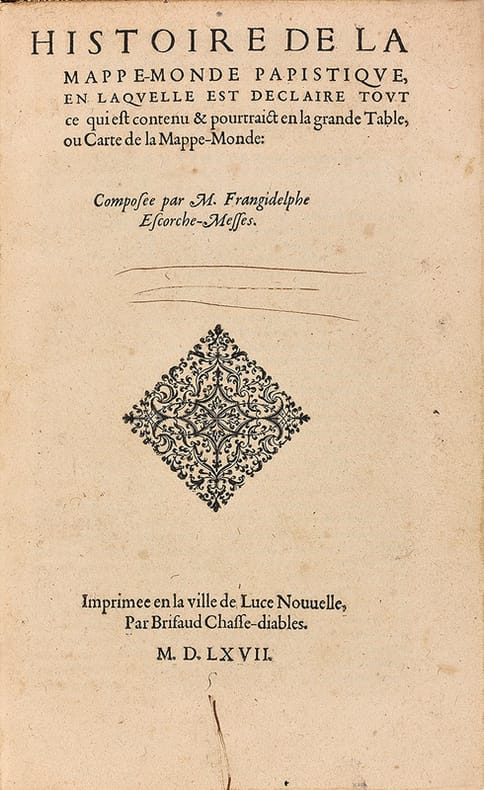
LCS-18245Superbe exemplaire relié en maroquin rouge par Derome le Jeune. Imprimée en la ville de Luce Nouvelle, par Brisaud Chasse-diables [Genève, François Perrin], 1567. Grand in-8 de (4) ff., 190 pp., (1) f.bl., qq. piqûres, pâle mouillure dans la partie inf. des 7 derniers ff. Maroquin rouge, triple filet doré en cadrant les plats, dos lisse orné de filets et lyres dorés, coupes décorées, roulette dorée intérieure, tranches dorées. Reliure de Derome le jeune avec son étiquette. 229 x 143 mm.
8vo. 80 pp. 18th-century blind-ruled brown calf, blindstamped arms of William Stirling Maxwell on the upper cover and his blind cipher on the lower cover. Spine and vertical title label gilt; turn-ins gilt. Marbled flyleaves. All edges red. Green silk marker. First edition in a Western language of the celebrated autobiographical lament of the poet, royal secretary, and soldier Al-Tughra'i, who rose to Vizier only to be beheaded. His elegy, "Lamiyyat al-'Adjam", is probably the first major work of Arabic poetry published in the west. The other significant early Arabic work here contains an offering of proverbs selected from the "Exalted Aphorisms" of the fourth Caliph Ali ibn Abi Talib (601-661), the only person born in Mecca's sacred Kaaba sanctuary, cousin and son-in-law of the prophet Muhammad. - The editor and Royal Interpreter for Arabic, Pierre Vattier (1623-47), translated these pieces into French for their stylistic elegance and textual importance. He held the Chair of Arabic at the Collège de France from 1658 until his death and contributed an extended opening essay on Arabic prosody, here in its only edition. - Front joint cracked, extremeties slightly bumped; title remargined at lower edge. Altogether a fine copy. - Provenance: from the collection of the proverb bibliographer P. A. Gratet-Duplessis (1792-1853), recording on the final flyleaf the date of his acquisition (Lyon, 1828) and the price paid. In the sale of his library in 1856, the volume was described as a "joli exemplaire de ce curieux et rare petit volume" (p. 156, no. 969). A slightly later owner has quoted from Duplessis' bibliography on the second front flyleaf. Later bookplates of William Stirling Maxwell, Keir House, and Lt. Col. V. S. M. de Guinzbourg on pastedowns and flyleaf. Schnurrer 196. Zenker, BO 403. Cioranescu 65583. Gratet-Duplessis, Bibliographie parémiologique, 70. Moll, Sprichwörterbibliographie, 7624 ("1640" in error).
LCS-18571Précieux exemplaire dédicacé par l’auteur à sa cousine la comtesse de Clérembaut revêtu d’une fine et élégante reliure romantique. Paris, Urbain Canel, 1826. 2 tomes en 2 volumes in-8 de : I/ (1) f.bl., (2) ff., 411 pp., (1) p.; II/ (2) ff., 491 pp., (1) p. Reliés en plein veau glacé, filet doré et diverses roulettes à froid encadrant les plats, large motif décoratif frappé à froid au centre des plats, dos à nerfs finement ornés, coupes décorées, tranches dorées, rares rousseurs. Reliure de l’époque. 202 x 125 mm.
8vo. VII, (1), 126 pp., final blank f. With lithogr. map at the end of the volume; printed notes of a Bedouin melody within the text. Contemporary green half calf with giltstamped spine title and marbled sides, original printed yellow wrappers bound within with wood-engraved desert illustration on back cover. First edition, published posthumously. - Extremely rare account of Wallin's principal journey through Arabia, unknown to most bibliographers: "It was not until two years after his death", writes Henze, "that the report of his first (and most important) journey (performed in 1845, a year before the appearance of the first volume of Carl Ritter's 'Arabia') was published". This refers to the English "Narrative of a Journey from Cairo to Medina and Mecca", which was printed in the Journal of the Royal Geographical Society in 1854. In fact, an extensive account of the first leg of this highly significant journey was first given to the world in December 1853, but little more than a year after the author's passing. Of this Swedish-language book, edited by Berndt Otto Schauman, less than two dozen copies are known worldwide, 12 of which are in Finnish libraries (the remainder distributed throughout Sweden [4 copies], Germany [2 copies], Denmark, France, and the U.S.A. [a single copy each]). In contrast with the later JRGS publication, the present work includes an appendix rendering Arabic terms and phrases that occur throughout the text in the original language and script. - Like his more famous contemporary J. L. Burckhardt, Wallin was fluent in Arabic and, in local costume, was capable of passing for a scholarly sheikh. Indeed, the two explorers are often compared: "I see many points of resemblance between them, the same iron constitution, the same versatility, the same indomitable energy, the same imperturbable temper" (H. C. Rawlinson, quoted in Henze). Financially backed by his alma mater, the University of Helsinki, Wallin departed for the Middle East in 1843 and set out on his expeditions from Cairo under the name of Abd al-Wali. "In 1845, proceeding southeast across the wastelands of the Nafud Desert, he reached Ha'il then continued by force of circumstances southward to Medina and Mecca. From there he returned to Egypt" (Howgego). More precisely, he "moved eastwards from Wadi al-Araba, first touching upon the upper regions of Wadi Sirhan, then on to the oasis of Djuf ('Algawf') and crossed the central regions of Shammar, via Djobbah ('Gubbi'), the Great Nefud ('Nufood'), and Hail [...] Of Shammar and its inhabitants he provided the fullest account, unsurpassed by later travellers in its scholarly precision" (Henze). After his return to Europe in 1850, Wallin was made Professor of oriental languages at Helsingfors. His notes provide a detailed overview of the political and religious movements and the role of the different tribes in Palestine and especially in Saudi Arabia. - Occasional brownstaining; binding somewhat rubbed, but a fine copy on the whole. Provenance: contemp. ownership "Bergelin" to front wrapper cover; bookplate of the journalist Kurt Bergengren (1920-85) on pastedown. K.-E. Henriksson (A Wallin Bibliography), in: Studia orientalia 17 (1952), p. 13-16, at p. 13. OCLC 551923531. Cf. Macro 2262. Howgego II (1800-50), W12, p. 627. Henze V, 452 (all citing only the 1854 JRGS publication). Cf. Fück 198 (mentioning the journey). Not in Gay or Ibrahim-Hilmy.
1 page. 4to. In pencil. Addendum. Extremely rare specimen of Wellington's handwriting, created shortly after the capture of Péronne by allied forces on 26 June, during the retreat of the French army after their defeat at Waterloo, sending an unnamed officer from Cambrai to Péronne and Nesle with orders for the commanding officer at Péronne: "He must send me without loss of time a return of the ordnance & stores in the place including Provisions in order that I may know what to throw in [...]". - Somewhat waterstained. Includes an autograph letter signed by Seymour Thomas Bathurst to his sister Emily, describing the storming of Péronne and enclosing Wellington's orders: "In case you would like to have some orders of the Duke of Wellington's own handwriting I send you the enclosed which he gave me to carry [...]" (Conchy-les-pots near Roije, 28 June 1815. 5 pp. on bifolium and single sheet, 4to and 8vo, with autograph address on verso). - Seymour Thomas Bathurst (1793-1834), whom Wellington entrusted with these orders, was the third son of the 3rd Earl Bathurst, and served as a Lieutenant in the Grenadier Guards at Waterloo. - With small marginal flaws.
Oblong large 8vo. Altogether 5 pp. Together with a telegram in a different hand (2 ff). All to her husband Karl, Archduke of Austria. - I: "How was the march? [...] I'm doing very well and look forward so much to tomorrow. A thousand kisses | Zita" (23 March 1912). - II: "Of course I am happy to place the Countess Thun at your disposal. Warmest regards, Zita" (23 March 1912). - III: "I am doing very well, am really happy for you. Embrace | Zita" (22 March. 1912). - IV+V: Written in her husband's name, to Archduke Rainer and Archduchesse Maria Josefa: "Zita and I thank you most sincerely for being accommodated so kindly at your castle Izdebnik [...]" (to Rainer, March 1912).