WORLD WAR II; US ARMYBiblio.com
119 846 résultats
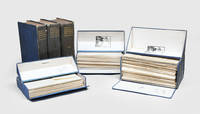
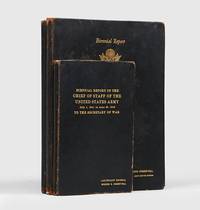
1943190146Washington: United States Government Printing Office 1943-45-46. Presentation copies from General George Marshall to his "miracle worker" General Brehon B. Somervell A complete set of the original official US Army wartime reports handsomely produced the personal copies of General Brehon Burke Somervell 1892-1955 George Marshall's commander of Services of Supply the first two being presentation copies from Marshall the cover of each volume gilt lettered with Somervell's name and rank. Services of Supply was one of the three "superagencies" organized by the US Army after the United States's entry into the war in December 1941 - the other two being Army Ground Forces and Army Air Forces - and gathered under its overarching aegis Quartermaster Corps Chemical Warfare Service Signal Corps Corps of Engineers Ordnance Department Medical Corps and Transportation Corps. "General George C. Marshall the army's chief of staff during World War II held Somervell in high regard for his ability to perform monumental tasks and was willing to overlook his penchant for antagonizing others. "What he did was a miracle" said Marshall in a postwar interview. The U.S. Army in World War II was probably the best-supplied army that had ever gone to war. Much of the credit for that accomplishment goes to Somervell who provided the "sinews of war" for a military effort that literally spanned the globe" American National Biography. Somervell is mentioned directly by Marshall in his concluding remarks to the first volume where he notes "The requirements of logistics are seldom understood. The burdens they impose on the responsible military authorities are rarely appreciated. The conflicting demands of our theater commanders of Allied sovereign powers and of the home front pose difficulties never before approximated in war. The necessity for a high degree of efficiency in management is evident and it has been found in the coordination of all the various supplies and administrative departments of the Army under the command and leadership of Lt. Gen. Brehon B. Somervell. "Published at two-year intervals these reports provide a comprehensive picture of global war as seen from the perspective of the Chief of Staff. The first report describes the race to mobilize an unprepared country and Marshall's appeal on the eve of war for the renewal of Selective Service a reminder of how far the U.S. Army had to come to meet the Axis challenge. The second recounts the initial defeats after Pearl Harbor and the ultimately successful efforts of the United States and its Allies to turn the tide. The final report describes the drive to victory and outlines Marshall's analysis of the reasons for the Allied triumph. Summaries give an overall view of the progress of the war but the scholar and military professional will find most interesting Marshall's comments on such topics as technology the "90-division gamble" the replacement system troop morale and the citizen-soldier and demobilization. These comments and the other material presented in the reports provide not only a fresh perspective on the myriad problems of conducting a global war at the highest levels but also renewed appreciation for the man whom Churchill appropriately called 'the organiser of victory'" Brigadier-General John W. Mountcastle foreword to the 1996 Center of Military History edition. This is a set of the scarce original edition produced by the United States Government Printing Office in Washington; trade editions were also produced by the Infantry Journal Press in the US and HMSO in Britain. The set comprises: Biennial Report of the Chief of Staff of the United States Army July 1 1941 to June 30 1943 to the Secretary of War. Octavo pp. v 56. 6 folding maps and 19 folding charts. Presentation copy from General George Marshall inscribed on a preliminary blank: 'To General Somervell with appreciation and warm regard G. Marshall". Biennial Report of the Chief of Staff of the United States Army to the Secretary of War July 1 1943 to June 30 1945 to the Secretary of War' Quarto pp. iii 123. bound with the supplementary Atlas of World Battle Fronts in Semimonthly Phases to August 15 1945 pp. 101. Presentation copy from General George Marshall inscribed on a preliminary blank: "Dear Somervell - Please accept this copy of my final report as Chief of Staff with appreciation of your tremendous service to the army and support of me with my affectionate regards - G. Marshall October 5 1945". Report by the Supreme Commander to the Combined Chiefs of Staff on the Operations in Europe of the Allied Expeditionary Force 6 June 1944 to 8 May 1945. Quarto pp. x 123. Several colour maps. 3 vols one octavo 232 x 135 mm 2 quarto 305 x 210 mm. Contemporary black pebble-grained skiver gilt lettered on front covers first 2 vols with dark blue vertical-rib cloth endpapers third with white moiré silk-effect endpapers. Bindings a little worn at extremities some mottling to covers scattered foxing otherwise very good. hardcover
A COMPLETE SET--PERHAPS UNIQUE--OF THE FOUR BOOKS PUBLISHED BY "INTER NOS" IN PARIS DURING WORLD WAR TWO, THE FIRST TWO OF WHICH WERE ISSUED DURING THE OCCUPATION. The first three are EXTREMELY RARE because of the tiny edition sizes (by the time the fourth was published, the Germans had surrendered, so a somewhat larger edition could be printed). While many livres d'artiste were printed in France under the Occupation, they were subject to Nazi censorship, and thus limited themselves to uncontroversial subject-matter. "INTER NOS", as the name implies ("among us", in Latin), was the only organization (in fact a small group of friends) that published clandestine livres d'artiste, with texts and illustrations depicting graphic sex and sadistic violence. *****(1) Edouard Peisson, "Hans le marin" (1943), with 22 origlnal etchings by Paul-Louis Guilbert. EDITION LIMITED TO 17 COPIES PRINTED ON FINE WOVE PAPER, OF WHICH THIS IS ONE OF ONLY FIVE "EXEMPLAIRES DE COLLABORATEURS" ("collaborators" in a positive sense, we must assume). THIS COPY WAS SPECIALLY PRINTED FOR EDOUARD PEISSON, THE AUTHOR. This copy includes a second suite of the 22 etchings in second (remarque) state, as well as a suite of the three "planches refusÈes" and an additional proof without text of one of the etchings. One of the subversive remarques features a small portrait of a German officer complacently smoking a cigarette, with the etched text, "26 MARS 1943 / 1.005e jour / DE L'OCCUPATION_". Folio. Loose as issued in original wraps, housed in a custom clamshell box. FINE AND BRIGHT. ******(2) FrÈdÈric Boutet, "Un scandale au XVIIIe siËcle" (1943), with 20 original etchings by Guilbert. EDITION LIMITED TO 17 COPIES PRINTED ON FINE WOVE PAPER, OF WHICH THIS IS ONE OF FIVE COPIES WITH A REMARQUE SUITE OF THE ETCHINGS AND TWO SIGNED ORIGINAL DRAWINGS. This copy additionally has two etchings justified "Èpreuve unique", a working proof of one of the etchings, two additional drawings, the "planche refusÈe", two signed letters from Guilbert, and a signed original drawing opposite the half-title. This book and the following one have an extremely unusual feature: many of the etchings in the suites are actually other versions of the etchings in the book, rather than merely other states (in other words, they were not printed from the same plate). In some cases, the etchings used in the book are "decent" and the etchings in the suites are most certainly not. Folio. Loose as issued in original wraps. Board chemise and slipcase. FINE AND BRIGHT. ONE COPY IN WORLDCAT (BN). *****(3) Pierre Louˇs, "La femme et le pantin" (1945: completed April 25, two weeks before VE Day), with 41 original etchings by Guilbert. EDITION LIMITED TO 30 COPIES PRINTED ON FINE BFK RIVES WOVE PAPER, OF WHICH THIS IS ONE OF 13 WITH THREE SUITES OF THE ETCHINGS AND TWO ORIGINAL DRAWINGS. This copy additionally has four drawings (in addition to the two announced in the justification); two additional proofs of etchings (including one signed and annotated "Èpreuve unique"); twelve pages of typographical proofs (including two with etchings); a proof of the title-page with an original drawing; and two additional proofs of the spine label. 4to. Loose as issued in original wraps. FINE AND BRIGHT, in the slightly worn original chemise and slipcase. NO COPIES IN WORLDCAT. EVEN THE BIBLIOTHEQUE NATIONALE DOESN'T HAVE THIS ONE. *****(4) Charles-ThÈophile FÈret, "Le manchot" (1945), with 21 original aquatints by Guilbert. Edition limited to 66 numbered copies beautifully printed on fine Arches wove paper, of which this is ONE OF TEN WITH AN ORIGINAL SIGNED GOUACHE PAINTING IN FULL COLOR. In this copy, the gouache is the preliminary design for the aquatint on p. 37. 4to. Loose as issued in original wraps, board chemise, and slipcase. A bit of light foxing, else FINE AND BRIGHT. Very rare. ******** COMPLETE SETS LIKE THIS ONE ARE OF THE GREATEST RARITY: EVEN THE INDIVIDUAL BOOKS ARE EXTREMELY RARE, AND I HAVE FOUND NO REFERENCE TO THE EXISTENCE OF ANY OTHER COMPLETE SET.
Signed and inscribed by Jan Karski upon front free endpaper. Karski [1914-2000] recounts his experiences when his homeland of Poland was rent asunder by the joint Nazi and Soviet invasion of 1939, and his harrowing subsequent life as a member of the Polish underground, during which he was captured by the Gestapo and severely tortured. Provides a ghastly eyewitness account of life in the Warsaw ghetto, into which Karski was smuggled so his observations could be reported to the outside world. Firearms advocates will cringe at Karski's account of what happened after he and a large group of Polish soldiers handed over their weapons to their 'comrades' from the Soviet Union. In 2012 Karski was posthumously awarded America's highest civilan honor, the Presidential Medal of Freedom, by President Obama. 391 pages. Moderate wear to publisher's red cloth. Dust jacket now preserved in archival-grade Brodart. Binding intact. A sound copy of this truly unforgettable WWII narrative. Laska 672, Kehr & Langmaid 5407, Weiner Library Catalogue Seven 997, Enser p.343. Book
185521630Washington D. C.: Gpo. Very Good. 1855-1857. First Edition. Hardcover. The first 8 volumes are uniformly bound in contemporary three-quarter red leather. The last four volumes have been rebound to match in red cloth. Volumes 2 6 & 7 have some damp-staining. Moderate foxing. ; 4to 11" - 13" tall . Gpo hardcover
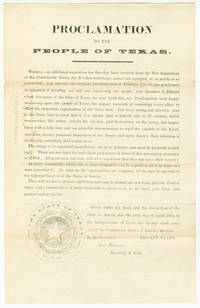
1861WRCAM56192Austin 1861. Letterpress broadside 12 1/2 x 8 inches. Docketed in manuscript on verso. Old folds tiny fold separations at edges minor wrinkling. Near fine. A phenomenal Texas Confederate broadside calling for the recruitment of infantry volunteers just two weeks after the attack on Fort Sumter ushered in the Civil War. It is only the second copy of this broadside that we have been able to locate. The proclamation was issued by Texas Governor Edward Clark who arouses the southern patriotism of potential Texas Confederate recruits asking them to join the battle since "the arrogant administration of Abraham Lincoln has proclaimed its intention of invading our soil and conquering our people." Governor Clark "most deeply impressing upon the people of Texas the urgent necessity of combining every effort to effect the immediate organization of our brave men" calls for volunteers for the Confederate Infantry. <br> <br> Clark appeals not only to patriotism and a sense of religious destiny but also evokes an obvious and widely-shared disdain for the northern states of the Union: <br> <br> "Let every young and chivalric man in the State bear in mind that it is a solemn duty to himself and his country which now invokes his action and let the old men gird their armor on the young and inspire them with a holy zeal and an inflexible determination to repel the vandals of the North who have already possessed themselves of our homes and made known their intention of destroying everything that is dear to us." <br> <br> Governor Clark calls for the immediate formation of one or more companies in as many communities as possible in the state of Texas and orders those companies to report to the Adjutant General in Austin. Clark hopes that these companies will soon number "eight thousand men to defend our new-born glorious Confederacy and a reserve force of many thousands to preserve us as we have ever been independent and invincible." <br> <br> The attack on Fort Sumter raged from April 12 to 14 1861 and resulted in a resounding Confederate victory. In the aftermath of the battle both Union and Confederate officials kicked off aggressive recruitment campaigns. The news of Fort Sumter was received by Governor Clark in Austin on April 17; that day Clark issued a directive to establish and instruct volunteer companies dividing the state into six districts Parrish & Willingham 4233 Winkler 1662. The present broadside issued a week later was a response to the Confederate government's request for five thousand more troops for a total of eight thousand new Texas infantry recruits in the two weeks following the outbreak of the war which were promptly furnished by the state. <br> <br> This is an extraordinarily rare Texas Confederate broadside. Parrish & Willingham and Winkler record only a single copy at the University of Texas. PARRISH & WILLINGHAM 4230. WINKLER 1663. unknown books
18559027465Washington D. C.: A.O.P. Nicholson 1855 - 1860. 1st . Hardcover. Fine. Rebound in quarter black cloth and marbled paper boards brown paper label on spine printed in black and white. Volumes 1 2 11 map volume and 12 part I are Senate issues; the rest are House of Representative issues.Observations on condition: VOLUME FOUR; 21 of the black and white lithographic plates foxed more heavily than the rest. VOLUME FIVE; 7 of the colored lithographic views foxed more than the rest one plate loose. VOLUME SEVEN; waterstain to the first eighty-three pages affecting the upper perimeter of the text and eight color lithographic views. VOLUME TEN; slight foxing to four color bird lithographs and overall foxing to one black and white reptile lithographs and minor overall spot foxing to several black and white reptile and fish lithographs. VOLUME ELEVEN the upper and lower folds of the maps have some wear weathering and separation. The fore edge folds are clean and strong. VOLUME TWELVE BOOK TWO; two black and white rodent lithographs heavily foxed one black and white fish lithographs heavily foxed with minor scattered foxing to several others. <br/><br/> A.O.P. Nicholson hardcover books
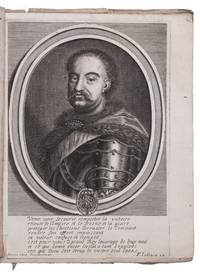
168722346Bordeaux: Pierre Abegou 1687. Marbled wrappers. 4to. With an inserted latter engraved frontispiece portrait of the Polish King Jan III Sobieski engraved by F. Jollain. Very rare pamphlet published during the European wars against Turkey with a frontispiece portrait of the Holy Roman Emperor Léopold I 1640-1705 Archduke of Austria and King of Bohemia and Hungary. He succeeded his father Ferdinand III in 1657 and immediately had to fight against the Turks in the Great Turkish War also known as the War of the Holy League 1683-1699. This war finally led to the Peace of Karlowitz in 1699.This work gives directions and arrangements for ritual processions that the Turkish Sultan Suleiman III ordered after his victories during the so-called Holy Wars against the Christians. It is of great importance for our understanding of the problematic Turkish-European relations during the 17th century especially as an interesting example of counter-propaganda. One of Suleiman IIIs directions presented in the book for example ordered that one Christian slave or one Jew was to be killed every fifteen minutes as part of the procession. One can imagine the reaction of a Christian reading this text: although the crusades were over this could provoke war and violence between the parties.Wrappers worn and somewhat frayed a few worm holes but still in good condition.l Bibliotheca bibliographica Aureliana CX XVIIe siècle XIV Bordeaux 2176 not mentioning the portrait; cf. Desgraves Bordeaux 1580. Pierre Abegou, unknown
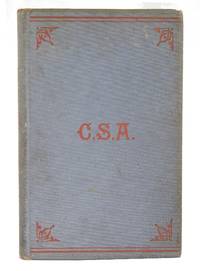
1882H-104A very rare signed edition of privately printed 100 copies of Captain Francis W Dawson's memoir by The News and Courier Book Press. Blue-gray cloth binding decorated with red stamped C.S.A and embellishments. 240 x 150 mm. 9 3/8 x 5 7/8". 180 pp.Author signed: "Mr. W.L. Daggett from F.W. Dawson Jan 1883". The author inscribed this book to William L. Daggett 1824-1889 a printer working for the Charleston's News and Courier with Dawson. Presumably Mr. Daggett was responsible for printing this book making this a presentation copy.This very rare book is a remarkable account of an Englishman traveling to the American South to join the Southern Confederacy. His book includes 18 wartime letters to his friends and family in England.Note: A few pages pp 9-16 inside are loosening from spine not completely detached there is also no loss to text or tear hence we have adequately reduced the price. Overall this book is in great condition and would be a beautiful addition to the library of someone passionate about the American Confederacy. hardcover
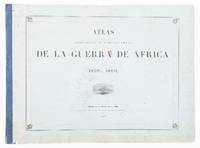
54197Madrid 1861. FIRST EDITION. Large oblong folio. 52 x 70 cm. Original printed blue boards. Complete with title index first part title and 12 text leaves second part title and 20 plates lithographs with hand-colourof battle plans &c. inc 6 double page and third part title and 12 very fine tinted lithographs by J. Donon after Hurrel and Velasco Madrid 1861 hardcover
1904150900Berlin: Kartographische Abteilung der Königlich Preußischen Landesaufnahme 1904. One of just two known complete sets An exceedingly rare large 15-sheet map of China's strategically pivotal Liaodong Peninsula printed for senior German military commanders during the Russo-Japanese War and the Japanese siege of Port Arthur. We have traced one complete set at the Berlin State Library and the University and State Library Darmstadt has an incomplete set of six sheets. For the German army possessing up-to-date information on Liaodong was pressingly essential. Despite being officially neutral during the conflict Germany had significant geopolitical interests in north-eastern China having acted with Russia and France in 1895 to curtail Japanese expansion in East Asia after the First Sino-Japanese War. Russian-Japanese hostilities in particular the gruelling engagements around Port Arthur also threatened to spill over into Germany's nearby maritime territorial concession Qingdao. This highly detailed cartographic production printed at a scale of 1:42000 from Russian military maps from 1898-99 shows settlements of every size topography and spot-heights roads railway lines and other information of use in any potential military operation. 16 untrimmed photolithographed sheets 670 x 630 mm to 170 x 510 mm colour and black and white including 15 map sheets combining to form one large map as well as one key sheet with contemporary supplementary annotations. Generally clean and bright several sheets with fraying in margins 1 sheet with few tape repairs on verso 2 sheets with small loss at head in 1 case just crossing neatline occasional creases. A well-preserved set. unknown
1910138398London: His Majesty's Stationery Office 1910-20. With over 100 maps and plans First edition one of only 250 possible complete sets with the bookplate of Thomas Beaumont Hohler Second Secretary at the British Embassy in Tokyo from 1902 to 1905. During the Russo-Japanese War Hohler visited the front as an observer and enjoyed a strong relationship with the commander of the Japanese navy Vice-Admiral Saito Makato. The last complete set to appear at auction sold at Sotheby's in 1982. "As record of what actually happened this is probably the best account of the Russo-Japanese War produced by any general staff in Europe. Reports of the British observers and the official accounts of Austria Germany the United States Russia and Japan were all consulted; Russian authorities provided much useful information and the proofs were 'very carefully revised' by Japanese military officers in Tokyo" Higham. The volumes were compiled by a team led by Sir Ernest Swinton 1861-1951 the head of Historical Section of the Committee of Imperial Defence and the future inventor of the tank while Russian documents were translated by Archibald Wavell 1883-1950 later Viceroy of India. Swinton's group completed the series by 1914 but the outbreak of war delayed the printing of the third volume until 1920. Of Volume II only 250 copies were printed compared to 2000 for Volume I and 1500 for Volume III. Working under the leadership of Sir Claude Macdonald Hohler 1871-1946 monitored the course of the war and advised Britain's Japanese allies. Re-assigned in 1906 he later served as Secretary of Legation Mexico 1910-17 and was the diplomat responsible for intercepting the Zimmerman Telegram. Further postings took him to the US Turkey Hungary and Denmark. His describes his time in Japan in his Diplomatic Petrel 1942. Together 3 vols and 3 map cases octavo. vols with half-tone frontispieces 20 plates 18 folding views sketch 17 maps/plans 16 folding 7 folding tables 2 folding diagrams; 4 folding tables in appendices vol.; 95 folding maps and plans 1 on wax linen housed across 3 map cases. Original blue cloth spines lettered in gilt. Vol. III map case with appendices volume in original printed wrappers as issued. Ownership signature in each volume and case of one G. D. Dixon stating that set was purchased on 17 November 1951 on the Charing Cross Road London. Cloth soiled in places extremities worn; Vol. I front inner hinge tender Vol. II with professional repairs to spine joints and hinges Vol. III with old and crude brown tape repairs to front inner hinge frontispiece and first few leaves; Vols II & III map cases repaired and strengthened a little lettering re-touched; a few folding illustrations creased or proud where sometime incorrectly refolded several maps plans and views with old and crude tape repairs occasional negligible stub tears a few items in Vol. III map case with losses at corners and several annotated with numbers: a very good set. Higham p. 492. hardcover
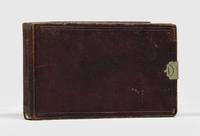
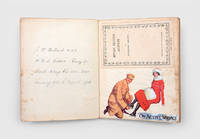
1861152570Tientsin: 1861. Peace reigns in Tianjin after the bloody taking of the Taku Forts Highly engaging album the core of which comprises 26 sketches of Tientsin Tianjin in 1861 sketched by Ensign Francis Sadleir Brereton the year following the conclusion of the Second Opium War; with additional views of Singapore and Java. A unique visual record of Qing dynasty Tianjin as seen through the eyes of a young British army officer. Brereton 1838-1911 was commissioned ensign in the Royal North Gloucestershire Militia in November 1855 transferring to the 2nd Battalion 60th Rifles in December of the same year. Even among sharpshooters he was clearly a crack shot serving as inspector of musketry and winning both the Ladies' Purse and Challenge Prize. In 1857 he sailed with his battalion to South Africa. Following service in India during the Rebellion and in China during the Second Opium War he resigned his commission in 1865. He afterwards practised as an architect with his father-in-law Frederick Beeston then independently as an architect and surveyor. In 1889 he was elected to serve on the first London County Council. During the 18th century drawing masters were established at the military training centres at Woolwich Chatham High Wycombe and Addiscombe with the aim of instructing officer cadets in drawing and watercolour. Although there is no record of Brereton having studied in this way his sketchbook comprises an accomplished series of views very much in the tradition of the soldier-artist. In light of his subsequent career his interest in architectural detail is evident in a number of highly worked and painstaking sketches of temples and cityscapes occasionally employing dense hachures and some interesting compositional framing. To the modern eye they have a haunted quality reminiscent of the deserted vistas of Giorgio de Chirico. Views are in the main captioned on verso some at lower right of image all of Tientsin each dated 1861 and initialled unless otherwise noted: View of traditional roundhouses in a landscape "Head Quarters Square 2/60th Royal Rifles" "South West angle Tien Tsin Wall" "Mahomedan Temple" "Bell Temple" "Treaty Joss House" "Pallisir's Grave" Lieut. John R. Palliser 2. Battalion 1st Royal Foot died of fever after taking part in the capture of the Taku Forts "Old Castle near Tien Tsin" View of wall and fort View of fortified tower Three temples "South Forts" double-sheet panorama "Angles of Treaty Joss House" "Treaty Joss House" "Tien Tsin from West Gate" "West Gate from the Wall" "Tien Tsin from East Gate" "Tien Tsin from North Gate" "North Gate Tien Tsin from street" "Tien Tsin from South Gate" "English burial ground & Treaty Joss House from South Gate" "Chinese Graves French Side Tien Tsin" "South Forts Tien Tsin" "South Taku Fort" "2nd North Taku Fort" "Chinamans Houses French Side Tien Tsin" 59th Regiment graveyard "Singapore" seascape "Singapore Nov. 16 1861" double-sheet panorama of the coastline showing junks and ships Java double-sheet panorama with shipping in the foreground View of palm trees in a mountainous landscape Plus another 26 views and sketches 6 double-sheet executed later with appealing panoramas in the west of Scotland Dunoon Tarbert Dumbarton Bowling and elsewhere. The album is accompanied by a typed letter by the popular boys author Lt.-Col. F. S. Brereton 1872-1957 reading in full: "These sketches were made by my father Ensign Frank Sadleir Brereton 2nd Battn. 60th Rifles when on service with his regiment in China 1861. The first action in which he was engaged was I believe an attack on the Taku Forts when he and a small command went over the side and waded ashore" undated personal stationery. Albums such as this are certainly not common on the open market and this is a particularly attractive exemplar. Landscape octavo 105 x 182 mm. Contemporary dark red roan sketchbook by Henry Penny metal clasp stamped with his name label to front pocket gilt patterned endpapers marbled edges; some 60 leaves in all 26 with views of Tientsin and environs plus blanks one of two leaves toward the end excised. Housed in a burgundy cloth flat-back box by the Chelsea Bindery. Loss of leather at foot of spine minor scuffing expected rubbing and signs of handling otherwise remarkably well preserved. hardcover
1417131561At sea: 1914-17. Including an eyewitness account of the war's first British-Ottoman military engagement A detailed firsthand account of naval operations in the Middle Eastern theatre during the war's formative first year. HMS Minerva saw action at the 1 November Battle of Akaba the first British attack on Turkish forces after Mehmed V joined the Central Powers and later at Gallipoli. The log substantially enriches the publicly available captain's record. Its author John Robert Butland 1869-1932 joined the Royal Navy at 18 served until 1912 and was recalled in August 1914 when reserves and pensioners were mobilised by royal proclamation. As Minerva's master-at-arms he served aboard the Eclipse-class cruiser from 1914 to 1917 before two further years on HMS Victory and final discharge in February 1919. Minerva joined Admiral de Robeck's 9th Cruiser Squadron in August 1914. A meticulous diarist Butland devotes extended entries to 1914-15. The diary opens on 2 August 1914 the day of his recall and follows Minerva to Port Said where passage through the Suez Canal was delayed by mine-sweeping amid fast-moving diplomacy. "30 October. About noon we got the news that England and Turkey would be at war in a few hours. That means plenty of fighting out this way". On 1 November the ship was ordered to Akaba: "On arrival at Akaba we at once commenced bombarding. 4 pm exactly as forts would not surrender. Turks made escape to the mountains our small guns firing Lyddite shell at them. A lot did not get far". Subsequent entries describe landing parties skirmishes ashore and include a translation of a British proclamation of friendship posted in the town. Akaba remained central to operations. The ship patrolled the gulf landed troops and countered renewed Turkish activity: "29 Nov. Arrived 'Akaba' 12 noon. Visited the town and found that the Turks had been back and had started rebuilding some of the places up again. No doubt their scouts on the high hills each side of the gulf saw us coming and gave the alarm." A French hydroplane was landed for reconnaissance and on 16 December the ship was attacked at night by Turkish forces who had secretly emplaced guns on the beach. A later landing turned into a desperate rescue vividly recorded: "The order was given to land a large party to rescue the few Marines that had been landed Some severe rifle fire took place. The Turks finally left their position and left for the hills being shelled from the ship they lost heavily." In 1915 Minerva operated at El Tor and Abu Zenima and took part in the raid on the Suez Canal. On 16 April she intercepted and destroyed a Turkish torpedo boat threatening a troop transport: "Seeing that she was cornered she turned to port and ran up on the shore We sent a party over with explosives and blew her up glad to know we had done a little more for King and Country." The ship then supported the Gallipoli landings with sustained bombardments later joining the action at Suvla Bay "This is the hottest engagement the Minerva has been in so far" - 7 August. In 1916 Minerva patrolled from Suez refitted at Singapore and later returned to Aden to survey landing points near Rabigh. As the focus of operations shifted to Mesopotamia she was redeployed to Africa and paid off at Simonstown. Quarto 235 x 190 mm. Mimeographed slips naval signal forms sketch map and other ephemera tipped in. Original black boards recently rebacked with purple cloth with 121 leaves completely filled in neat manuscript a few blank leaves at end. Binding sturdy usual rubbing and evidence of use: very good. hardcover
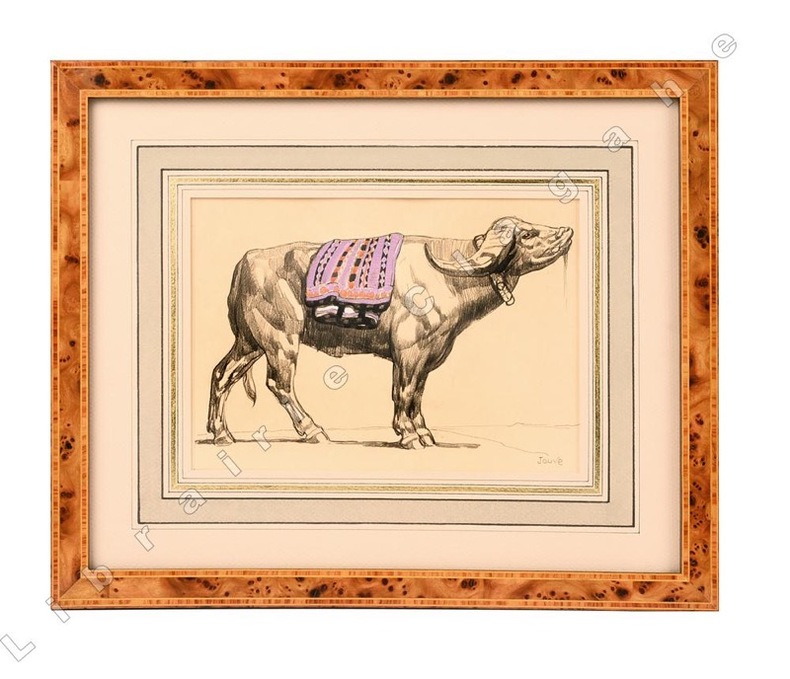
185221442Dessin original au crayon gras, gouache et aquarelle sur papier japon impérial (185 x 217 mm ; recadré 151 x 212), signé au crayon dans le coin inférieur droit ; passe-partout à large encadrement bicolore beige et vert et large filet doré, encadrement de loupe. Format total 295 x 355 mm. Au dos, partie de dessin au crayon et fusin, découpée.
187910407Londres, Imp. Delatre, Howland st. 23, 1879. 1 vol. in-folio de 1 titre, 19 planches et 1 table gravés, maroquin rouge, dos lisse orné, large roulette dorée d'encadrement sur les plats, titre frappé au centre (reliure anglaise de l'époque).
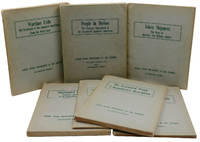
1946140941373Washington D.C.: U.S. Government Printing Office 1946. First Edition. Very Good. First edition first printings. Seven titles: Wartime Exile 167pp.; Impounded People 239pp.; The Relocation Program 105pp; Administrative Highlights of the WRA Program 82pp.; Token Shipment 104pp.; The Evacuated People 200pp.; People in Motion 270pp. Good. Wraps worn some soiled foxed chipped or stained; People in Motion has a long tear to the rear cover. Handwritten titles on spines which are also creased and chipped with loss to spine ends. Pages toned sometimes creased. <p><br /> <br /> Rare documents of the American government's official record of its WWII internment of people of Japanese descent one of the most controversial official programs in American history as reported by the War Relocation Authority. The WRA managed the forced confinement of people of Japanese ancestry in America during World War II as well as their return to civilian life with the commencement of the war. U.S. Government Printing Office unknown
1946140941373Washington D.C.: U.S. Government Printing Office 1946. First Edition. Very Good. First edition first printings. Seven titles: Wartime Exile 167pp.; Impounded People 239pp.; The Relocation Program 105pp; Administrative Highlights of the WRA Program 82pp.; Token Shipment 104pp.; The Evacuated People 200pp.; People in Motion 270pp. Good. Wraps worn some soiled foxed chipped or stained; People in Motion has a long tear to the rear cover. Handwritten titles on spines which are also creased and chipped with loss to spine ends. Pages toned sometimes creased. <p><br /> <br /> Rare documents of the American government's official record of its WWII internment of people of Japanese descent one of the most controversial official programs in American history as reported by the War Relocation Authority. The WRA managed the forced confinement of people of Japanese ancestry in America during World War II as well as their return to civilian life with the commencement of the war. U.S. Government Printing Office unknown books
7743Washington; 1855-1861: Government Printing Office. First Edition. Hard Cover. Quarto 12 volumes in 13 uniform bindings of contemporary 3/4 brown leather over marbled boards; marbled end papers and marbled edges. A COMPLETE COPY having all the maps charts color and black and white illustrations which are called for by Wagner-Camp. All plates and maps are very good to fine. These surveys were the government's first attempt to examine the vast compendium of vital information which detail the topographical botanical zoological and the natural history aspects of a largely unknown West. This monumental work contains over 650 striking color some hand-colored and black and white illustrations charts and maps. An excellent set internally clean in very good contemporary bindings volume XII-I expertly rebacked with original spine laid down; Muhlenberg Library stamp on some page edges a few erased neat owner name on FEP's; pockets unobtrusively removed from rear end papers volume VIII with small hole in rear end paper; some plates from another copy more in volume XII-I; all volumes are the Senate issue except for XII-I which is the House issue. Most title pages with location numbers in lower right. Altogether a handsome set with all plates very good to fine and quite scarce as such. Armorial bookplate. Passenger railroad service first appeared in the United States in the 1830's. Plans to build a transcontinental railroad quickly emerged but controversy delayed movement for about 20 years. Then in 1853 Congress authorized Jefferson Davis Secretary of War to begin "explorations and surveys.to ascertain the most practical and economic route for a railroad from the Mississippi River to the Pacific Ocean." Four routes were then designated one along the 47th parallel along the Missouri River and over the northern Rockies a second along the 38th parallel through middle America to the Salt Lake Basin then West a third route along the 35th parallel crossing Texas New Mexico and Arizona into southern California and a fourth along the 32nd parallel across central Texas along the Gila River to Fort Yuma and San Diego. Another survey was ordered linking southern California and the Pacific Northwest. A more than adequate budget was provided for a fairly tight schedule; these explorations were conducted in 1853-54. The expedition parties were staffed with the nations most competent artists cartographers botanists geologists naturalists and other specialists and the very best equipment was purchased. The first of the above quarto volumes appeared in 1855 and the final volume in 1861. "Despite their flaws these volumes contain a monumental collection of scientific information geographical zoological botanical geological.Upon first examination the volumes seem forbiddingly disorganized; reports clearly were printed as they were received.However these faults are amply compensated by the richness of the material within." Wagner-Camp 261. <br/><br/> Government Printing Office hardcover books
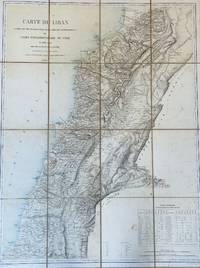
18622737Paris: Imp. Lemercier rue de Seine 57. Gravée per Erhard Schièble rue Bonaparte 42 1862. Color lithograph map in 16 sections mounted with linen. Bookseller’s vignette on verso A. Corion Succ.r de H. Dorlin Paris. Map somewhat tanned with few stains and light foxing. Linen tanned worn at the two outer foldings of the upper section. Overall in very good condition. Color lithograph map in 16 sections mounted with linen. Bookseller’s vignette on verso A. Corion Succ.r de H. Dorlin Paris. 74 × 96.5 cm. First edition of the most important map in the history of Lebanon the first scientific map of the country.<br /> A highly detailed separately issued large-format lithograph scientific map of Lebanon “based on surveys conducted by French military topographers during their Lebanon-Syria Expedition of 1860–1861. This map defined the notion of ‘Greater Lebanon’ the basis for the creation of modern Lebanon in the wake of the 1919 Paris Peace Conference. Lebanon was at that time part of the Ottoman Empire. The cartographic part of the mission was headed by Captain Charles Gelis who led teams that made advanced systematic trigonometric surveys of the countryside representing the first time that Lebanon had ever been accurately topographically mapped. Map extends into parts of Israel and Syria. Showing cities towns villages Christian monasteries mosques fortified places windmills aqueducts landmarks roads rivers mountains districts which are labeled with their names. Includes Table of population. Relief shown by hachures formlines and spot heights.†David Rumsey Map Collection The statistical table in the bottom right gives the population of the major towns and cities in Lebanon by religion. <br /> Scarce no records on RBH. Imp. Lemercier, rue de Seine 57. (Gravée per Erhard Schièble rue Bonaparte 42) unknown
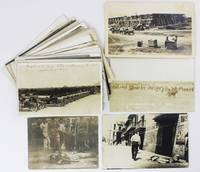
19216158Various places in Mexico Texas and Arizona 1921. Overall about very good. 106 real photo postcards including six duplicates. Varying sizes but most approximately 3.5 x 5.5 inches. Scattered contemporary and later manuscript annotations. Light wear at edges occasionally a bit heavier. Some scattered damp and dust soiling. A substantial collection of over 100 real photo postcards that depict scenes from the Mexican Revolution and the related border war interventions of the United States Army. The images included here some quite violent in nature are dated from 1913 to 1922; most are captioned in the negative. They show ruined buildings military encampments injured soldiers and corpses on both sides of the U.S.-Mexican border and in Veracruz. Also included are identified portraits of individuals such as Francisco Madero Pancho Villa on his deathbed and American General John Pershing. Many of the images are by El Paso photographer W.H. Horne who was one of the most prominent photographers of Border War incidents captured the Columbus Raid in New Mexico and photographed skirmishes near his home in El Paso. Also present are a short series of images by Cal Osborn who documented border incidents near Douglass Arizona and a group by William Hadsell William Hadsell an American resident of Veracruz who ran a Kodak store and was a prolific recorder of events there. Several Mexican photographers are represented as well. Many of the photos are quite gruesome in nature and show corpses in various states of decomposition as well as the aftermath of battles and executions but in all provide an arresting visual document of the interventions by the United States in Mexico during the 1910s. Powerful images of the Mexican Revolution and the resulting upheaval there and along the border with the United States. unknown
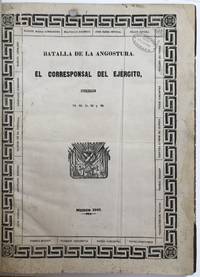
18471307Mexico City 1847. Good plus. 202pp. Large folio. Original printed wrappers bound in contemporary marbled boards rebacked and recornered in recent morocco gilt leather spine label all edges marbled. Numerous additional blank leaves bound in. Rubbing and scuffing to boards moderate edge wear; wraps with repaired chips and tears. Early 20th-century bookplate on front pastedown small ink stamps scattered throughout. A couple of short repaired edge tears internally; light tanning and foxing. A rare Mexican view of the defeat suffered by forces under the command of Santa Anna in the Battle of Buena Vista at the hands of Zachary Taylor during the Mexican-American War. The battle occurred in late February 1847 when Santa Anna freshly recalled from exile in Cuba rushed his new army north to halt the southern advance of Taylor's forces from Texas. Taylor had already been victorious at the battles of Palo Alto and Resaca de la Palma and had captured Monterrey and Saltillo before much of his army was sent to assist in the invasion of Veracruz being prepared by Winfield Scott. When Santa Anna attacked the American forces dug in at Buena Vista south of Saltillo on February 22nd he did so with an army far superior numerically but also one far less trained and experienced and was driven back with heavy losses. Taylor's enhanced reputation and legend that grew out of the battle took him to the White House in 1848.<br /><br />Both sides claimed victory in the battle. Santa Anna did so on the perhaps dubious grounds that although his own army suffered numerous casualties and withdrew from the field Taylor with his now limited forces halted his advance after the conclusion of the engagement. The present work provides a detailed account of the battle from the Mexican point of view printed as five consecutive issues of their official military periodical but published separately with its own wrappers and a sheet with two large woodcut maps. The report as the introduction from the editor makes clear was intended as a defense against criticism from parties within Mexico concerning the conduct of the brief campaign: <br /><br />"Despues de terminar los partes oficiales nos encargaremos de refutar un cuaderno que se ha impreso recientemente con el solo objecto de eclipsar el brillo que las armas mexicanas adquierieron el mes de Febrero ultimo en el estado de Coahuila y que parece escrito si no por Taylor mismo si bajo su influencia y por el poder del oro americano. El ilustre general Santa-Anna nunca ha sido mas digno del amor y reconocimiento de sus conciudadanos y nunca tampocoha debido considerarsele come general y como mexicano mas digno de elogio que en la epoca actual."<br /><br />The work first contains a lengthy report by Santa Anna and several shorter ones from his lieutenants that present the performance of the Mexican army and the results of the battle in the most positive possible light. The majority of the work comprises a unit-by-unit account of Mexican action during the battle with detailed descriptions of the participation of each regiment including lists of soldiers killed wounded and missing in action. The two woodcut maps delineate the geography and trails of the area surrounding Saltillo and the initial order of battle on the field. As a result the work serves not only as a brisk defense of Mexican military conduct but also as an important and comprehensive record of the Mexican side of the engagement.<br /><br />Very rare -- we locate only three copies at Yale Harvard and the University of Texas and none in auction records. books
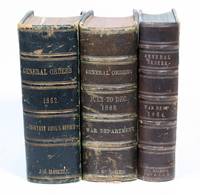
18622923Washington D.C.: War Department 1862. Calf marbled boards. Very Good. FIRST OBTAINABLE PRINTING OF THE PRELIMINARY EMANCIPATION PROCLAMATION setting a date for the freedom of more than three million enslaved in the United States and reframing the Civil War as a fight against slavery. Issued by the War Department to regimental commanders in the field during the Civil War in the week after the completion of President Lincoln’s official manuscript version. Contained is a set of three volumes of General Orders covering the full year 1862 July-Dec 1863 and the full year 1864. History of the Emancipation Proclamation:<br /> <br /> “The proclamation has been called by responsible persons one of the three great<br /> documents of world history ranking with Magna Carta and the Declaration of<br /> Independence†– Eberstadt<br /> <br /> “From the first days of the Civil War slaves had acted to secure their own liberty. The Emancipation Proclamation confirmed their insistence that the war for the Union must become a war for freedom. It added moral force to the Union cause and strengthened the Union both militarily and politically. As a milestone along the road to slavery’s final destruction the Emancipation Proclamation has assumed a place among the great documents of human freedom†– National Archives<br /> <br /> Following the Seven Days Battle and General McClellan’s retreat from the Peninsula at the end of June 1862 President Lincoln realized that there would be no early end to the war and found himself “as inconsolable as it was possible for a human to be and yet live.†Anxious for news from the army and needing to escape the constant interruptions at the White House he frequently visited the telegraph office in the War Department building to await dispatches. It was during one such visit early in July that he asked the chief of the telegraph staff Major Thomas Thompson Eckert for some paper to “write something special†and began the first draft of the Emancipation Proclamation completing it in a few weeks. Lincoln had long hoped to resolve the slavery issue through a congressional act of emancipation compensating slave owners for their loss of “property†but that approach was roundly rejected by representatives from the border states leaving the President who had decided upon the necessity of emancipation with a presidential proclamation as the only option. The extraordinary document he conceived would announce the liberation on January 1 1863 of all slaves in those states still in rebellion against the Union and promised compensation to slave owners in those states that returned to the fold before that time if they adopted “immediate or gradual abolishment of slavery.†This proclamation would be followed by a final proclamation issued on the 1st of January identifying those states still in rebellion and confirming the liberation of all slaves therein.<br /> <br /> On Tuesday July 22 Lincoln presented his draft to the Cabinet telling them that he had resolved firmly upon the course of action it specified and asking them not for advice but suggestions. The only observation he had not anticipated came from Secretary of State Seward who proposed that it might be best to wait for a military victory before issuing the Proclamation as it could otherwise seem like “the last measure of an exhausted government.†Immediately recognizing the wisdom of the suggestion Lincoln held back. On September 17 after an anxious wait of nearly two months he received the victory he needed at the bloody Battle of Antietam. Completing his final draft Lincoln presented it to his cabinet for refinement on September 22. Following the meeting Seward took the amended draft with him to the State Department where a formal manuscript copy was made then signed by Lincoln and Seward. The formal official “Emancipation Proclamation†was of course issued on January 1 1863 the day it became the law of the land.<br /> <br /> Printing History:<br /> <br /> This printing in the War Department’s official “General Orders†is the fourth printing overall but realistically the first obtainable printing. It is preceded by:<br /> <br /> -The first printing Eberstadt #1 a small three-page circular intended for distribution within the government and to the local press likely printed on September 22. At the time that Charles Eberstadt published his study of the Proclamation 1950 he was able to locate only one copy which he himself owned and as nearly as we have been able to determine no other copies have come to light since then.<br /> <br /> -The second printing Eberstadt #2 may be a phantom printing. Charles Eberstadt was not able to locate a copy but he inferred its existence from the standard State Department practice of printing a folio edition consisting solely of the text of the proclamation followed by another printing consisting of the text of a letter of transmittal from the Secretary of State as well as the text of the proclamation. While there may be a copy of Eberstadt #2 in the National Archives as he speculated it is not recorded in their online catalogue nor have we been able to find a copy in any other online catalogue including OCLC the Library of Congress and the Abraham Lincoln Library.<br /> <br /> -Eberstadt’s third printing is of legendary rarity. It consists of Secretary of State Seward’s one-page letter of transmittal addressed “To the Diplomatic and Consular Officers of the United States in foreign countries†and the text of the proclamation. Eberstadt located a total of only five copies in institutions at the Library of Congress the National Archives Yale the Clements Library and Brown. OCLC does not record any additional copies nor is it recorded in Monaghan. There has been one copy at auction $400000 in 2021 and that was described as the only copy in private hands. <br /> <br /> -The present copy General Orders No. 139 is Eberstadt’s fourth printing of the Preliminary Emancipation Proclamation dated in print on September 24. Eberstadt surmises that this field order printing could have been accomplished as late as September 29 or 30. Although it may have been printed in as many as 15000 copies it is very rare in commerce likely due to the ephemeral nature of the printing and distribution.<br /> <br /> Additional General Orders and Provenance:
<br /> <br /> The three volumes once belonged to John G. Haskell A.Q.M. Chief Quartermaster and contain the General Orders for the year 1862 July-December only for the year 1863 and for the full year 1864. John Gideon Haskell 1832-1907 was a resident of Kansas and joined the Union Army when the war broke out. He enlisted with the 14th Kansas Volunteer Cavalry Regiment and later served as Assistant Quartermaster General of Kansas as quartermaster of the Third Kansas and the Tenth Kansas Volunteers as Captain and Assistant Quartermaster on the staff of General James G. Blunt and as Chief Quartermaster of the Army of the Frontier. After the war Haskell was named official state architect and worked on the state house the capitol the State University and more.<br /> <br /> In addition to the preliminary Emancipation Proclamation the three volumes also contain the Acts of Congress on many other subjects including pay discharge recruitment handling of troops etc.<br /> <br /> Washington D.C.: War Department Adjutant General’s Office 1862-64. Three volumes. Small octavo contemporary three-quarter brown morocco two volumes with cloth boards one with marbled boards. Some rubbing and wear to bindings pencil notations on endpapers with collation and highlighting certain orders and some internal pages. Dampstaining to general title of 1862 volume; internal text and Emancipation Proclamation generally fine. RARE AND IMPORTANT.<br /> <br /> References:<br /> <br /> Charles Eberstadt. “Lincoln’s Emancipation Proclamation.†New York: 1950. War Department unknown
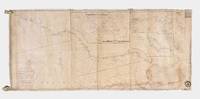
1808367005London: P. Mason at Steel's Navigation Warehouse 1808. Blue-backed sea chart. Insets of the harbor of Rio the Bay of All Saints and the Island of Fernand Noronha. Manuscript annotations by Conner plotting the course of the USS Hornet in the War of 1812. Approx. 31 x 70 inches. Tape repairs on verso some staining. Manuscript note on verso by Philip Syng Physick Conner. Blue-backed sea chart. Insets of the harbor of Rio the Bay of All Saints and the Island of Fernand Noronha. Manuscript annotations by Conner plotting the course of the USS Hornet in the War of 1812. Approx. 31 x 70 inches. Pennsylvania native David Conner joined the navy as a midshipman in 1809 and during the War of 1812 served with distinction aboard the USS Hornet where he rose to the rank of first lieutenant during the war. He participated in action aboard the Hornet against the HMS Peacock in February 1813 and in the March 1815 capture of HMS Penguin and was awarded two medals of valor. In 1817 he was commissioned first lieutenant under Captain Biddle aboard the USS Ontario for its voyage to the Pacific. He would eventually rise to the rank of Commodore commanding the blockade of the Gulf Coast during the Mexican War and responsible for landing Scott's army at Vera Cruz.<br /> <br /> On October 26 1812 the frigate USS Constitution and sloop USS Hornet left Boston to raid British shipping along the coast of South America. The Hornet sailed under the command of famed American naval captain James Lawrence best remembered for his order "Don't give up the ship" in the June 1813 battle between the Shannon and the Chesapeake. After a couple months cruising the waters off the coast of Brazil on February 24 1813 the USS Hornet engaged the HMS Peacock off the mouth of the Demerary River. Exchanging broadsides the Hornet's cannons shot true damaging the British ship. Outmaneuvering the Peacock downwind the Hornet approached from the stern firing and forced the Peacock which had lost her captain and taken heavy casualties to strike. The American ship sent on a boarding party but the Peacock quickly sank. <br /> <br /> This large sea chart oriented with north to the east depicts the coast of Brazil from Sao Luis Maranhao to the Lagoon Merim and is profusely annotated by Conner charting the cruise of the Hornet off the coast between December 1812 and February 1813 i.e. the movements of the ship prior to the engagement with the Peacock. Included in the manuscript additions is evidence of the brief blockade of the English frigate Bonne Citoyenne at Salvador where Lawrence challenged the ship to single ship combat with the Hornet but had to abandon the blockade upon the arrival of a British line of battle ship. "Running up the coast she took on January 6 1813 the schooner Ellen loaded with dry goods . On the fourth of February off Pernambuco she seized the brig Resolution ten guns carrying coffee fustic etc. from Rio to Marnaham and a nice little purse containing 23000 in specie. This the Hornet put intop her opwn pocket and then burnt the brig" Conner. After several more weeks of cruising the Hornet engaged the Peacock.<br /> <br /> On June 18 1914 auctioneer Stan V. Henkels sold the books papers journals and log books from the younger Conner's library which included Lt. David Conner's original logs of the voyage of the USS Ontario now at the Library of Congress MSS84251. The present map was not included in that sale; however it appeared within lot 71 at Parke Bernet on May 25 1971. Conner Philip Syng Physick. "The Hornet's Sting and Wing" in The New England Magazine Vol. XXIII No. 3 Nov. 1900 pp. 268-274 P. Mason at Steel's Navigation Warehouse unknown
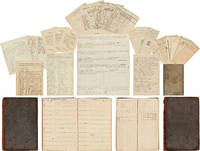
1864WRCAM54525Various places including Ohio Kentucky and Georgia but mostly Tennessee 1864. Five cloth-bound manuscript ledgers two printed books and over 100 documents letters and related forms either wholly manuscript printed or partially printed. Some soiling and staining to bound volumes some bindings partially perished. Typical folds some edge wear and soiling to documents. Overall fair to very good condition. A valuable collection of ledger books and documents recording the Civil War service of Company H of the 40th Ohio Volunteer Infantry. This archive contains five manuscript ledger books two printed volumes and more than 100 documents and letters relating to the unit. The 40th Ohio Volunteer Infantry was organized at Camp Chase Ohio in December 1861. They saw action at Chickamauga the Siege of Chattanooga Lookout Mountain the Siege of Atlanta and the Battle of Franklin. While some of the regiment was mustered out in October 1864 the remainder was mustered out in Nashville in December 1864 with the exception of veterans who were consolidated with the 51st Ohio Infantry. <br> <br> These materials were preserved by 1st Lieut. George Day Stone whose reports and letters can be found in this archive. Lieutenant Stone served in Company H of the 40th Volunteer Infantry from Oct. 9 1861 until Dec. 6 1864. He enlisted as a 2nd lieutenant and was promoted to 1st lieutenant on April 25 1862. He served under two company captains - William Cunningham through 1862 and whose account book is present here and John C. Meagher who is referenced throughout the archive. <br> <br> The 40th Ohio regiment lost over 200 men during service with six officers and ninety- six enlisted men killed or mortally wounded and one officer and 134 enlisted men who died of disease. A healthy number of these casualties are recorded here in the Company H ledger books. <br> <br> The bound volumes chronicle important service details and include: <br> <br> 1 Folio account book of Capt. William Cunningham of the 40th Regiment Ohio Infantry 109pp. September 1861 to August 1862. The ledger records pertinent details regarding moneys issued to various members of Company H throughout the first years of the war. <br> <br> 2 Folio ledger book 57pp. listing commissioned and non-commissioned officers along with a one-page detailed listing of thirty soldiers killed and a descriptive roll of the company with detailed remarks on desertions mustering in and out soldiers taken prisoner and more. <br> <br> 3 Folio ledger book with 16pp. of furlough lists descriptive roll notes and manuscript general orders. <br> <br> 4 Folio volume of Morning Reports 50pp. dated November 1861 to October 1864 listing number of troops with about twenty full reports and a dozen pages of remarks. <br> <br> 5 Oblong folio ledger book 190pp. dated 1862-1864 recording soldier pay and supplies for Company H with notes. <br> <br> 6 INSTRUCTIONS FOR MAKING QUARTERLY RETURNS OF ORDNANCE AND ORDNANCE STORES. Washington: Government Printing Office 1863. 140pp. Publisher's pebbled cloth gilt. Captain Meagher's copy with his ownership signature on the front endpapers. <br> <br> 7 A volume of printed General Orders dated 1863-1864 variously paginated but approximately 150 pp. reporting rolls of officers and men assigned to various units including those judged unfit for duty or removed to invalid units. <br> <br> A sampling of the loose letters and documents is as follows: <br> <br> 1 Lieutenant Stone's report Nov. 15 1863 detailing the capture of John Meagher at Chickamauga and stating that he "was placed in command of said company." Stone then relates the inventory of supplies he found among the remaining men in the company. <br> <br> 2 Two letters addressed to Brig. Gen. Montgomery C. Meigs one dated June 4 1864 and one Sept. 13 1865 being letters of transmittal of men and materials. <br> <br> 3 Letter dated Dec. 5 1864 reporting on David Holmes a private who was "captured and taken prisoner by the enemy while in the line of Duty on or about the 22nd day of September 1864." <br> <br> 4 Several partially-printed "Quarterly Returns of Deceased Soldiers" from 1864 completed in manuscript. <br> <br> 5 Manuscript report from Sept. 25 1863 2pp. reporting on soldiers taken prisoner and supplies lost to the enemy at Chickamauga and Missionary Ridge Tennessee. The report reads in part: "I certify.at Chickamauga.The Regt. to which my company belongs was directed to advance under the fire of the enemy to take a certain position; in so doing one private was killed two severely wounded & two taken prisoner." The report then lists the material lost to the Confederates and a similar report follows detailing prisoners taken and material lost at Missionary Ridge. <br> <br> 6 Two manuscript field orders from the Army of Kentucky dated in the Spring of 1863. The first dated March 20 gives directions on uniform regulations and then instructs officers and soldiers "now quartered at dwelling houses will at once remove to their tents or such hospital as the Regimental Surgeon or Medical Director shall direct." The second field order instructs all soldiers to carry "forty rounds of cartridge in their cartridge boxes." <br> <br> 7 Commissioned officer list for Company H from October 1863 listing thirty-two officers including Stone a sergeant a corporal the wagoner and twenty-eight privates along with detailed remarks on recent movements of everyone but Stone. Most of the privates are listed as either absent or sick. <br> <br> 8 Commissioned officer list for Company H from December 1863 listing thirty-eight officers taken prisoner by the Confederates at the Battle of Chickamauga on Sept. 21 1863 including the aforementioned Captain Meagher and David Holmes. <br> <br> 9 Various blank report forms including morning reports inspection reports receipts for ordnance volunteer descriptive lists and more. <br> <br> An important collection from the 40th Regiment Ohio Infantry providing insight into the various day-to-day activities experiences and duties of the unit during its Civil War service. hardcover books
176337559London: Robert Sayer 1763. Engraved map on four joined sheets hand coloured sectioned and linen backed at a contemporary date. Overall sheet size: 42 1/8 x 47 3/8 inches. Housed in a tan cloth box. An early issue of Bowen and Gibson's impressive wall map of North America: the first issue following the end of the French and Indian War.<br/> <br/>Bowen and Gibson's map was first issued in about 1755 under the title An Accurate Map of North America. It was reprinted and served as a template for the enormous political changes of the next forty years attesting to its importance. Aside from its stunning visual impact Bowen and Gibson's map teems with information including numerous Native American placenames in the western areas native tribal regions notes and routes of early roads and the forts along the Mississippi and to the west of the Appalachians. The two insets are of Baffin and Hudson's Bays and the mouth of the Colorado River the latter map based on the explorations of Eusebio Kino. The roccoco cartouche is particularly attractive and features a Native American couple with their small child and a group of indigenous animals: beaver alligator parrot and the skin of a mountain lion. The present issue was the first to the published following the French and Indian War and includes the boundaries as reflected by the Treaty of Paris of 1763.<br/> <br/>Stevens & Tree "Comparative Cartography" 49b in Tooley The Mapping of America; Degrees of Latitude 36; Phillips A List of Maps of America p. 589. Robert Sayer unknown books