119 846 résultats
19431050611943. WORLD WAR II. Archive: Wake Island Raid maps photographs and documents. Near Wake Island: Intelligence Center Pacific Ocean Areas October 5-6 1943. Sixteen maps photographs and documents; maps range in size from 8 by 8 inches to 18 by 21-3/4 inches; photographs range from 6-1/4 by 8 inches to 18 by 9-1/4 inches. $9500.Superb archive of rarely seen map and photographs used in planning and documenting the October 5 1943 raid on Wake Island which was taken by the Japanese only weeks after the Pearl Harbor attack.Wake Island a U.S. airbase located approximately 2200 miles west of Pearl Harbor was captured by the Japanese in late December 1941. The island remained under Japanese control until the garrison there surrendered on September 7 1945. In October 1943 a U.S. task force conducted a two-day air raid on the island. The Japanese commander Shigematsu Sakaibara convinced the raid was the beginning of an attempt to retake the island marched 98 American civilian prisoners of war to a remote corner of the island and executed them. Following the war Sakaibara was tried and executed for war crimes. Of particular interest is a large map on thick stock folded into quarters and reinforced with tape on the verso bearing copious pencil annotations documenting the second day of air raids on the island recording various points in the action from the initial takeoff from the carrier at ""0515"" through the squadron's departure around ""0745."" The pilot carefully draws the route of two bombing runs the first against the runways on the main island of Wake and the second targeting the barracks and ammunition storage on nearby Peale Island. The pilot noted the direction of anti-aircraft fire positions of guns as well as the wind and the general weather conditions: ""Cumulus @ 2500 strong vertical development Squalls to and from island."" The pilot recorded damage sighted including ""Red flame black smoke 0710"" coming from an underground storage area adjacent to Runway A. On his second run he observed ""Black smoke 0706-0715still going strong at 0725"" near the barracks on adjacent Peale Island. The archive also features four large highly detailed reconnaissance photographs of Wake island together with a large body of smaller maps all used in the planning of the October raid. Also of interest is a mimeographed document titled ""U.S.S. Yorktown Air Department Plan of the Day Tuesday 5 October 1943"" which details the schedule of the first day of operations beginning at ""0245"" and ending prior to sunset at ""1645"" noting the planned launchings and landings of seven major sorties against Wake. Several of the items are stamped ""VT-5 Air Intelligence""; VT-5 was a torpedo bomber squadron stationed on the Yorktown during the war. All items apparently from the collection of Lt. H.T. Reynolds of torpedo bomber Squadron VT-5 stationed aboard the U.S.S. Yorktown. One of the photographs of an Avenger in flight over Wake Island is captioned ""Lt. Reynolds U.S.S. Yorktown 1943.""Typical folds and other wear consistent with use though generally very well preserved in excellent condition overall. A superb collection of original materials used in the planning and subsequent reports on this historic attack. unknown
19451175421945. WORLD WAR II. Mimeographed typescript of the USS Salamaua News. No place September 3 1945. Two sheets of beige paper staple-bound as issued each measuring 8 by 13 inches; pp. 2. $9500.Original mimeographed USS Salamaua News newsletter containing detailed news of Japanese surrender preliminary reports on POWs in Japan and their treatment by the Japanese Japanese reactions to the surrender brief news from around the world and baseball standings accompanied by a black-and-white photograph of the newsletter's owner Lt. Commander Fred R. Salisbury II of the Salamaua.This newsletter was issued for crewmen on the USS Salamaua best known for being attacked on January 13 1945. This ship newsletter from nine months after the attack kept the crew of approximately 570 officers and enlisted men informed of world eventsparticularly those relevant to their service. This issue of the newsletter provides details of the Japanese surrender; initial reports on prisoners in Japanese prison camps; and other world news including standings for the National League and American League baseball teams.Notable quotations from the newsletter include: ""TOKYO BAY Japan surrendered formally and unconditionally to the United States and its allied partners today MacArthur told the Japs that 'As supreme commander for the allied powers I announce it is my firm purpose in the tradition of the countries I represent to proceed in the discharge of my responsibilities with justice and tolerance while making all necessary dispositions to insure that terms of surrender are fully promptly and faithfully complied with President Truman speaking over a radio hookup proclaimed Sunday September 2nd as 'V-J Day' The day of formal surrender by Japan Liberated allied prisoners of war Sunday recited more instances of beating hunger and humiliation There was no indication of deliberate German scale mass extermination Approximately 4200 Americans British and Dutch remain in camps in the Tokyo-Yokohama area TOKYO The Japanese said Saturday that for two days after Emperor Hirohito told his people the war was over several planes evidently flown by fanatical suicide pilots dropped pamphlets on major Japanese cities asking the people to disregard the Emperor's word and fight on ""The USS Salamaua had participated in the invasion of Lingayen Gulf in the Philippines. A kamikaze attack carried out by a Ki-84 airplane left a 16-foot by 32-foot hole in the Salamaua's flight deck. It also sparked a number of fires. The plane had carried two 551-pound bombs allowing it to penetrate deeply into the lower decks. One bomb detonated near the tank tops just above the bilge and narrowly missing the bomb stowage compartment. The blast sent debris and fuselage across the flight deck collapsing a number of bulkheads. The second bomb failed to explode and was ejected through the starboard side of the ship at the waterline. The 20-inch hole it left allowed seawater to rush into the ship. As a result the ship lost power communications and steering becoming a sitting duck.While the Salamaua sat immobile two more planes tried to strike it. One crashed into the sea while another detonated in mid-air as it approached. The failure of those pilots meant that the attack killed only 15 of the Salamaua's crew. Another 88 crewmen were injured some seriously.When Rear Admiral Calvin T. Durgin in command of a task force asked for the origin of the smoke he saw coming from the Salamaua he received the reply ""Something just went through our flight deck."" The starboard engine was submerged and the ship listed 8 degrees to starboard. Yet the crew managed to get the ship functional using only the portside engine. Ten long hours after the attack the Salamaua was able to break away to Leyte for repairs. An entire day of pumping failed to alleviate the flooding so the ship merely underwent stabilization repairs before being sent to San Francisco for two rounds of repair. The Salamaua returned to the Philippines in May and eventually was retired from service in 1946 earning the dubious distinction of being the last ship to be successfully attacked by a kamikaze. From the collection of Lt. Commander Fred R. Salisbury II of Minnesota. Salisbury worked in his father's business a furniture manufacturer until the outbreak of World War II Salisbury enlisted in the U.S. Navy in February of 1942 and was assigned to be lieutenant commander of the USS Salamaua a Casablanca-class escort aircraft carrier. Salisbury was released on inactive duty in March 1946 and became vice president of the family business. Laid-in photograph of Salisbury in Guam in 1945.A fascinating World War II artifact. unknown
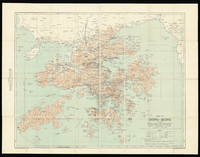
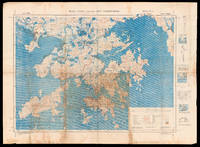
194516008London : War Office August 1945. 780 by 1050mm. 30.75 by 41.25 inches. Chromolithograph map with manuscript annotations in pencil and pen with three insets and diagrams to right margin minor browning a few nicks and tears to margins. A unique map of Hong Kong and the New Territories with contemporary manuscript annotations showing the liberation of Hong Kong from Japanese occupation. This map which shows Hong Kong Kowloon and the New Territories was first published by the British War Office in 1936. The present example a second edition was published shortly after the end of the Second World War when Britain reoccupied the islands following four years of Japanese occupation. Thick red lines across the map indicate the "all weather roads" that could be relied upon for travel and communications across the region. Extending from Lantau Island to the west to Mirs Bay in the east from the Chinese city of Shenzhen in the north to the southern Soko Islands it is generally considered one of the most detailed maps of Hong Kong made in the early twentieth century. The present example is made more interesting by the copious manuscript annotations that appear across the centre of the map. A grid has been drawn over Hong Kong in pencil marking the lines of longitude and latitude more precisely. Discolouration indicates that it this lower central portion that was the primary focus of the map during its use. Annotations in pen identify features such as "Dockyard Stores" "Canal" and "Coal Dump" and military information including "Officers Mess" and "2 AA Guns". There are also numerous annotations listing the number of Japanese soldiers in Victoria these include "3000 Japs" together with a further 200 with horses and the Japanese Officer's Mess. Japanese troop numbers are noted on Kowloon totalling just under 2000 men. More annotations can be seen further north near modern day Shenzhen marking the location of the Head Quarters for both the Hong Kong Artillery Force and the Defence Force as well as military companies and infantry divisions. A note in the upper right margin identifies it as the hand of "Capt Owens" an officer in the British Task Force that landed in Hong Kong on 30th August 1945 to take back control of the territory from the Japanese. Established in 1857 the British War Office was the governmental department responsible for the administration of the British Army until 1964 when its functions were transferred to the Ministry of Defense. During this time it produced many maps with the number of publications increasing rapidly during years of conflict. War Office, unknown
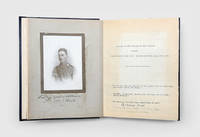
1918156559India Mesopotamia and Persia: December 1914 - July 1918. I have come to the conclusion that the war out here is much more pukka campaigning than in France An unpublished and otherwise untraced First World War album recording the experiences of an officer serving in India Mesopotamia and with Dunsterforce in Persia. It preserves his lively letters home and over 150 photographs taken on duty the final letter written only days before he was killed in action at Resht. Most letters are addressed to his mother Ada Eliza Wilkinson née Machin and the album opens with his formal portrait signed by her on the verso. Beginning with his voyage to India in December 1914 he records life in Port Said the Suez transit and his posting to Quetta where he lived comfortably but grew frustrated at being far from the fighting. Throughout 1915 he describes training frontier camps and the slow grind of the war his early enthusiasm giving way to weariness and disillusion. In late 1916 he finally volunteered for active service in the Middle East reaching Basra in October and soon taking part in mobile desert operations railway protection and frequent skirmishes with Turkish forces. His letters convey both the hardships and the relative freedom of campaigning compared with the Western Front. Wounded by a sniper in early 1917 he recuperated briefly in India before returning to the field. In December 1917 he joined Dunsterforce in Persia reporting on the weakening Ottoman position. He was killed in action at Resht on 20 July 1918 and buried with military honours at the Russian consulate. The album concludes with numerous letters of condolence from senior officers and comrades. The photographs document Bombay Quetta Delhi and daily military life in India as well as Basra Amara Beit Nama and operations in Mesopotamia and Persia including irrigation works armoured cars and troop movements. Loosely inserted are three autograph letters a postcard and a 1949 British Legion Service of Remembrance. No other manuscript or typescript copies of the letters are known. The family also compiled a memorial volume for Wilkinson's brother Geoffrey Miles Wilkinson killed later in the war. Quarto 255 x 205 mm. Occasional contemporary manuscript annotations. Together 258 typescript sheets each with text one side only 153 mounted photographs with typescript captions mostly gelatin silver snapshots photographic portrait mounted on card. Bound in contemporary black leatherette front cover monogrammed "J.G.W." Binding with some wear typescript sheets toned some photos oxidized as expected foxing and adhesive marks to opening portrait: a very good example. hardcover
192214937Hong Kong 1922. 665 by 860mm. 26.25 by 33.75 inches . Colour lithographed map dissected and mounted on linen folding map. An early attractive and detailed map of Hong Kong and the New Territories first published in 1905 and re-issued with additions in 1922. From another example of this chart we have handled it appears that the coastline from Sai Kung to Mirs Point onwards was taken from Admiralty charts; that of Deep Bay from the mouth of the Sham Chun River to South-West Point from a survey by the P.W.D.; thence northward and westward from Admiralty charts; that of Lan Tao and adjacent islands from a 1-inch map compiled by Tate; and the New Territories from a map compiled by W. J. Newland in 1903-04 with additions and revisions by P.W.D. in 1913 and 1922. As listed in the Reference table the map shows Important Villages & Market Places; Villages; Churches & Mission Stations; Pagodas & Temples; Pass; Heights in Feet above Sea Level; Bridges; Limit of Navigation for Large Junks; Cart Roads; Pack Roads & Paths; Telegraphs; Tramways; Boundary of British Territory; and Railways. "The local spelling of place-names has been followed". This map has been compiled from Existing Intelligence Division maps of Hong Kong; Admiralty Charts; Map of New Territory Kowloon compiled by Mr. Tate for Colonial Government Survey 1899 1900; Survey of Kowloon and part of New Territory 8 In. 1 Mile carried out in 1902-1903. The boundary along the Shores of Mirs Bay and Deep Bay is the High Water Mark. It has not yet been surveyed and is only shown provisionally. Geographical Section General Staff No. 1393. Additions Mar. 1922 War Office Aug. 1905. Scale 1:84480 or ¾ Inch to 1 Mile. unknown
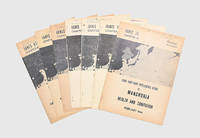
1944188792Washington DC: Joint Intelligence Study Publishing Board 1944-46. The lead compiler's copies Classified material from the first significant US joint-intelligence programme each with the lead researcher's ownership signature "Capt. H. Kuhlenbeck" at the head of the front wrapper and all but the first identified as a "contributor's advance copy" in his hand. Established in 1943 the JANIS programme produced comprehensive reports on different strategic theatres and involved personnel from military naval and air intelligence as well as the Office of Strategic Services and the Office Chief of Engineers. For each area either a country or a subregion JANIS operatives compiled briefings on geography climate demographics communications military facilities and health and sanitation. By the end of the war the reports had become the model for all strategic intelligence work and long-term planning. In 1947 the programme was absorbed into the CIA. A naturalized American citizen Hartwig Kuhlenbeck 1897-1984 was recruited into the US Army Medical Corps in 1944 at the rank of captain. Having travelled in Asia and been a visiting professor in Tokyo in the 1920s he was assigned to the Office of the Surgeon General as an expert in health and sanitation in East Asia. His reports here on Manchuria China and parts of Japan provide assessments and recommendations concerning environmental conditions public health facilities and the spread of major diseases. For the China East Coast volume he was assisted by Dr E. A. Struthers a British medical officer in Malaya. Kuhlenbeck remained with JANIS until 1946 returning to his successful academic career shortly after a promotion to major. Loosely inserted in three of the works are memoranda from the Joint Intelligence Study Publishing Board that list the programme's participating personnel. Kuhlenbeck is identified as the lead for the health reports and reachable on a War Department landline. 7 works folio. With folding maps in 2 works illustrations and tables in text; 3 works with loosely inserted memorandum. Original buff card front covers printed in black hole-punched as issued. Housed in custom green cloth portfolio spine lettered in gilt. General signs of handling some wrappers toned: a well-preserved collection. hardcover
18142677Hunthill House Scotland 1814. Written in English in a small and narrow but legible italic hand with occasional corrections or additions in a different hand on wove paper watermarked Budgen & Wilmott / 1812. Four unnumbered pages of French text at front and four at back the latter dated 27 May 1814 in a different hand apparently the author’s on different paper with no visible watermark. Very good; some occasional spotting. Contemporary red straight-grained morocco gilt edges scuffed and scraped joints strained head of spine chipped.<br /> <br /> An unpublished first-hand memoir filled with searing descriptions of the horrors of war by a French army officer veteran of the terrible Peninsular War. The narrator was one of few survivors of the surrender of French forces after the Battle of Bailén in July 1808. The background to this event was Napoleon's attempt to complete the isolation of England from the continent by sending a French army into the Iberian Peninsula to occupy Portugal and Spain thereby preventing British trade with the Continent.  Napoleon later referred to the Peninsular War characterized by appalling cruelty on both sides as the ‘Spanish ulcer’; it was to be one of the primary factors in his downfall. <br /> <br /> General Pierre Dupont de l'Étang was charged with securing French control of the major cities in Spain. Dupont's 20000 men had initial success but as they penetrated deeper into Spain they faced increasing resistance. This memoir by H. de Montvaillant an 18-year-old Protestant officer from Montpellier who was serving in the second Corps d’Observation of the Gironde recounts the route and experiences of Dupont's army to its furthest point of penetration into Spain: Córdoba. There after a particularly bloody and cruel occupation the army was forced to withdraw and was soon overwhelmed. Dupont surrendered his army at Bailén. Originally promised safe passage most of the French were slaughtered immediately after their surrender. <br /> <br /> Montvaillant’s account commences with the French arrival in Bayonne in November 1807. By December 22 the French troops had arrived in the town of Vittoria 50 miles west of Pamplona and by January 9 1808 they had advanced to south of Burgos. Detailed descriptions of the monuments churches libraries art and inhabitants of various localities passed through in their zigzagging progress south through French-occupied Spain enliven this first part of Montvaillant’s narrative: he describes with evident pleasure Burgos Valladolid Guadarrama and the Escorial Madrid and Toledo where the troops spent most of May. He makes the acquaintance of many Spaniards. In Toledo a young woman explains to him the contradictions of Spanish women rendered emotionally susceptible by their extreme religious devotion but whose sometimes shocking to the French frankness contrasts with a strict sexual morality. Later he deplores the time wasted in Toledo while the Spanish insurgents were building up their strength. <br /> <br /> As the French troops proceed southward the local populations exhibit increasing hostility often hidden under excessive politeness. They encounter a Frenchwoman who has fled Bailén saying that she was not safe there because of her nationality but the soldiers assume that she exaggerates. By the end of May the French pass the Sierra Morena and enter Andalusia and the truth becomes evident. It is at this point that the narrative takes on an ominous tone. Montvaillant notes that the population had abandoned the villages taking all foodstuffs. He records that the senior officers had assumed that the army would only be harassed by small bands of “brigands†a far cry from the massive resistance that it encountered: “We learned that the insurgents each day gathered strength and that the Junta of Seville was determined to stop us in our March. The following day we got to the little town Baylen in whose plains two months afterwards our destiny was decided†p. 86. <br /> <br /> The first battle was engaged at Alcoléa just upstream from Córdoba an event Montvaillant describes in a poem in French transcribed. The next day the French arrived at Córdoba where the Spanish enemy had taken refuge. A musketry attack upon their arrival so enraged General Dupont that “he gave up the town to pillage" p. 88. Allowed to run wild the French soldiers sacked the city committing hideous crimes: “Neither tears promises or humble supplications could arrest the thirst for pillage.†p. 89. Discipline was nonexistent drunkenness and looting continued for eight days. The soldiers raped the women and ransacked homes. Montvaillant presents himself as a savior of women and the elderly on several occasions but notes that some of the Spanish whom he and fellow officers placed under protection in Córdoba were later “the first to persecute the unprotected French prisoners and even those who had been their Benefactors†p. 92. While he does not detail the contents of the soldiers’ plunder it is known that the rich churches of Córdoba were heavily looted. Notwithstanding the circumstances he manages to visit and describes in amazement the great mosque-cathedral scarcely changed in a thousand years. <br /> <br /> Nine days after the French entrance into Córdoba Montvaillant and his troops were ordered back to Alcolea to guard a bridge crossing. En route there from Cordóba he discovered and graphically describes the many mutilated corpses of the French sick and wounded who had been left along the line of march while the main body of General Dupont's troops had taken Córdoba. “It is almost incredible how people calling themselves Christians could push inhumanity to such an excess†p. 96.<br /> <br /> The army moved back to Andújar near Bailén and encamped. Montvaillant records that the general staff had by now realized that the French were outnumbered and that the opposition had organized itself. Dupont's army was isolated without hope of reinforcement or re-supply defending a garrison situated on a flat plain in the scorching sun. The narrative becomes one of revenge heat troop dispositions losses tactical mistakes errors of the general staff and increasing difficulties. Dupont's surrender came on July 20 1808 and thus begins the second part of the memoir devoted to the narrator’s experiences as a prisoner of war. <br /> <br /> The officers were segregated from the defeated army before being escorted supposedly to return to France. Most of the army was slaughtered within days. Montvaillant records details of the survivors’ months-long “death march†southwards to the coast. Having finally arrived at Jerez de la Frontera near Cádiz to await embarkation to France they waited in vain. Their captors kept them in Jerez having discovered that the ruling Junta of Seville had abrogated the surrender treaty and that the inhabitants were planning to massacre them on their approach to Cádiz. Montvaillant’s account is henceforth devoted to anecdotes of captivity and of the prisoner’s horrendous treatment at the hands of their escorts and guards. He is unclear as to exact dates but it seems that the French captives were held at Jerez until mid-December and then hastily driven aboard ships to sail for the Balearic Islands. A severe storm intervened and they were blown off course to Africa finally coming to port at Gibraltar; several days later they were blown back to Andalusia at Málaga. After more storms and much sailing having been at sea 25 days for a voyage which normally took a week they finally made the Balearics. <br /> <br /> And here the worst surprise of many bad surprises awaited them: the desert island of Cabrera. Montvaillant counts some 4000 soldiers and 400 officers who were forced to survive as best they could on this scorching hot nearly waterless uninhabited island p. 148. Details of his account square with Denis Smith’s monograph on the subject. During the next four years close to 9400 French prisoners of war were exiled to this island; possibly 40% died of disease or malnutrition. The officers as usual fared much better than their soldiers. Montvaillant was one of 216 officers who were collected from this exile after a month and taken to the capital Palma p. 150; another group was sent to Mahon in Minorca. There imprisoned in better circumstances the group waited although the news from outside was threatening as the Spanish "mobs" were calling for their "sacrifice." The officers between attempting escapes were able to conjure up some distractions. The narrator passed the time translating Spanish poems and plays and spending up to eight hours at a stretch playing chess. They also freely imbibed the good Mallorcan wine danced and partied; making do without women Bacchus presided as he delicately puts it. <br /> <br /> But nearly half these officers were massacred during a riot and assault on the prison by the inhabitants of Palma described by Montvaillant in gory detail pp. 158-162. The survivors were returned to Cabrera in March 1810 as were the officers from Mahon. They found there a diminished population of half-naked walking skeletons. During the next five months spent on Cabrera Montvaillant was nonetheless able to observe a thriving “political economy†on the island where enough food was still provided that the prisoners had the energy for theater productions and dances. Describing the gender-bending that took place as the men playing female roles in the performances instinctively took on conventionally feminine attitudes even to the point of inspiring crushes bickering and jealousy among the audience members Montvaillant comments that the theatrical chronicle of Cabrera would make quite a book â€un bel in folioâ€- p. 170.<br /> <p>In early August Montvaillant and the officers were removed from the island on an English ship — all unhesitatingly leaving their men to rot on the island where they remained for four more years. A diplomatic impasse kept the officers off the coast at Gibraltar for several weeks until they were finally put on ships for Portsmouth and Plymouth. Montvaillaint went on to Salisbury for a short time and then embarked again for Leith en route to his final destination in Scotland where he remained in comfortable exile until the accession of Louis XVIII in 1814. <br /> <br /> The text is written in an occasionally stilted English a translation from the author’s own French account by a family whom he had befriended at Hunthill House near Jedburgh Scotland where he stationed. Eight pages of notes in French by the author are inserted four pages at the beginning the bifolium is inserted using wax seals and four pages at the end. The French preface contains a romanticized account of the author’s Scottish sojourn including a temptress fairy and concludes with the author’s promise to never forget his friends in Scotland. The English text is preceded by the title-leaf and a one-page dedicatory poem introduced by a statement that these “`Recollections’ in an English Garb are presented by the sincerest of Friends to the Author†and dated Hunt Hill 1 January 1814. <br /> <br /> Following the narrative in a letter to his family dated from Jedburgh 27 May 1814 Montvaillant explains the history of the manuscript the remaining pages contain literary notes including translations into French of poems by Robert Burns and Sir Walter Scott. During his years of exile in Jedburgh Montvaillant had become deeply attached to the owners of Hunthill House and to their three daughters. Without them he claims he would not have survived the loneliness of his exile. In homage and gratitude he dedicated his memoir to them. His friends retained the original French version as a keepsake of their friend and an engrossing biographical narrative and presented him with this translation which he brought back to France planning to render it anew into French to share with his family and close friends. He emphasizes that he plans to keep the manuscript unpublished; perhaps the memories were too painful. <br /> <br /> Cf. Denis Smith The Prisoners of Cabrera: Napoleon's Forgotten Soldiers 1809-1814 New York 2001.</p> unknown
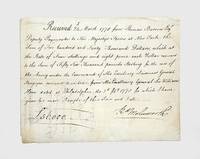
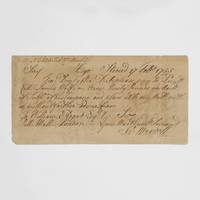
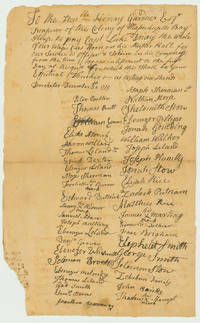
1778155748Rhode Island: 24 March 1778. Sustaining Burgoyne's Wandering Army Revealing a crucial moment in the aftermath of Saratoga this 1778 receipt documents the transfer of £56000 from New York to support General Burgoyne's imprisoned Convention Army in Boston. The receipt was signed at a delicate point for the British Army. In the summer of 1777 General William Howe succeeded in taking Philadelphia but in October a separate force under John Burgoyne was forced to surrender to Horatio Gates following the two battles of Saratoga in the autumn of 1777. Subsequently the Convention Army named for the treaty of surrender was marched to Boston where they were held prisoner. Burgoyne was permitted to leave for England in April 1778 but his army remained in captivity until the end of the war. This immense sum of £56000 perhaps equivalent to £9500000 today was sent to Burgoyne to feed his starving army. The Battles of Saratoga represented the turning point of the Revolutionary War winning the assistance from France "which was the last element needed for victory" Morgan pp. 82-3. The receipt was signed by Richard Molesworth 1737-1799 a longstanding deputy paymaster in the War Office. Molesworth is briefly mentioned in a letter to Howe on 10 April 1778 where the need for money to support General Burgoyne and his army in Boston is discussed. Richard was the brother of the Robert 5th Viscount Molesworth who inherited the title from his cousin Richard Nassau Molesworth 4th Viscount Molesworth who died without heirs. This document was previously folded and kept in an envelope mounted on the front pastedown of a book from the Molesworth family library a first edition of the English translation of Souligné's The Desolation of France Demonstrated. It was gifted by Souligné to Robert Molesworth 1st viscount Molesworth 1656-1725. Molesworth has inscribed the front blank: "Donum Authoris" Gift from the Author and his note on the title-page reads: "Mons. De Souligny sic Grandson to the famous Du Plessis Mornay". The 1st Viscount Molesworth was an experienced political figure and a prominent member of the Privy Council of Ireland who later held a seat for Dublin County in the Irish House of Commons. The book has a later ownership inscription of Samuel Crompton 1753-1827 on the preliminary blank. Crompton was a pioneer of the spinning industry and was married to Harriet Molesworth the daughter of John Edward Nassau Molesworth. John was the great-grandson of Robert Molesworth 1st Viscount Molesworth. A 20th-century bookplate of another viscount Molesworth is pasted over the white envelope which held the subsistence receipt on the front pastedown. Also present is a manuscript bankers' draft dated 1796 signed by the 5th Viscount Molesworth requesting a payment to his son-in-law John Forster Hill. Single leaf 147 x 187 mm hand-written on both sides in black ink; the book: octavo 186 x 117 mm; also with manuscript bankers' draft dated 1796 and signed by Robert 5th Viscount Molesworth. The book: contemporary black crushed morocco raised bands spine gilt in compartments covers ornamentally gilt marbled endpapers. Ink annotations possibly in Crompton's hand. Rubbed minor loss at spine ends a few marks to covers binding open to the cords after free endpapers but sound occasional minor staining. ESTC R8752; Goldsmiths' 3380. 3380. Edmund Sears Morgan The Birth of the Republic 1763-89 1956; Report on the American Manuscripts in the Royal Institution of Great Britain volume 9 No. 180. hardcover
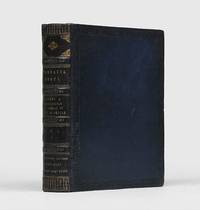
1826154580London: Printed by Thomas Davison c.1826. Dividing the spoils of the Maratha Empire A remarkable sammelband of 12 exceptionally rare papers documenting the financial aftermath of the Third Anglo-Maratha War 1817-19 focused on Pune Nagpur and Mahidpur and on the campaigns against Baji Rao II and Bhima Bai Holkar. Only eight of the twelve items are institutionally recorded each by a single copy at the British Library or National Library of Scotland. Together they constitute an unusually full record of the disputes that followed Sir Thomas Hislop's Deccan campaign including the controversies surrounding his conduct at Talnar and the long bitter wrangle over the "Deccan Prize". The papers offer a detailed narrative of operations official correspondence on the suppression or disclosure of reports formal statements of service by the divisions engaged and extensive memorials and claims submitted by Hislop and his officers. Running through them is a sustained argument over entitlement: whether booty seized at Pune Nagpur and Mahidpur belonged to the forces directly engaged under Hislop or must be shared with the more distant but formally "co-operating" Bengal Army under Lord Hastings. Viewed collectively the papers illuminate both the scale of the spoils and the legalism of their distribution. Several documents analyse the enormous sums involved from the c. £200000 formally recognised as prize to the far larger amounts in treasure and arrears appropriated by the Company's government including the celebrated hauls at Nagpur Nashik Belgaum and from arrears due to the Peshwa - figures running into millions of pounds. Others reconstruct the fighting strength movements and actions of the Deccan Army providing granular detail on its pursuit of the Peshwa the capture of his forts and the Reserve Division's decisive role in the operations against Holkar. Hislop's own long memorial to the Treasury closes the group setting out his defence and the claims of his officers in the face of adverse public scrutiny and protracted litigation. These documents are unusually revealing of East India Company warfare at the moment when the Maratha confederacy collapsed. They expose the transactional reality of campaigning - the expectation of plunder the complex distinction between "prize" and "pillage" and the intense competition between presidencies for the proceeds. They also underscore why Indian service remained attractive: opportunities for promotion were rapid conditions often lethal and the prospect of prize money a powerful incentive. Provenance: ownership inscriptions of William Rothery 1775-1864 one dated June 1833 probably the Treasury's legal adviser on slave-trade matters and later a witness before the 1864 Royal Commission on Army Prize. The volume is numbered "Vol. 3" evidently once part of a larger set now dispersed. A full list of the contents is available on request. Quarto 254 x 203 mm. Contemporary dark blue diced calf spine with four low raised bands gilt decorated and lettered direct covers with blind anthemion frame gilt edge roll Spanish on Italian pattern marbled endpapers. Binding professionally refurbished and presenting handsomely a number of papers with light vertical fold internally very good. Richard H. Davis Lives of Indian Images 1999; Rosie Llewellyn-Jones The Great Uprising in India 1857-58: Untold Stories Indian and British 2007; Carolyn Steedman The Radical Soldier's Tale: John Pearman 1819-1908 2016. hardcover
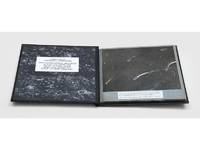
1944150498May-July 1944. Eyes over Normandy - the Reich in ruins Taken between February and July 1944 these remarkable large-scale images portray major operations against Axis infrastructure and the preparations for and execution of the Allied invasion of Europe. This is a well-curated selection in terms of both subject matter and size and quality of the prints. We have traced one other copy in institutional libraries at the Library of Congress donated by General Carl Spaatz commander of Strategic Air Forces in Europe in 1944. The shots gathered here include the bombing of Berlin "vast areas of Berlin in ruins"; the destruction of aircraft factories at Limoges Gotha Leipheim and Marienburg and of the railway marshalling yards around Paris; 14 images relate to the D-Day landings and the operations immediately following including landing craft protected by war ships off the coast and at the beaches temporary harbour with "breakwater which consists of Merchantmen and old warships anchored in a continuous line while special pontoon sections make up another and also piers and jetties"; Horsa and Hamilcar gliders at Caen; the bombardment of Caen; Tirpitz at her moorings in Kaafjord; oil refineries at Hamburg in flames; 13 images relating to the V Weapons project: Bois Carré the first V1 launch site to be identified before and after bombing; a V1 in the air pursued by a Hawker Tempest photographed from an American Lockheed Lightning; attacks on the V2 site at the "La Coupole" bunker complex at Wizernes and "the massive concrete structure at Mimoyecques. probably connected with Germany's V.2 rocket weapon" but which was actually intended to house a battery of V-3 cannons the "London Gun" supergun the site was put out of commission by 617 Squadron - "The Dambusters" - with 11900lb Tallboy bombs. A full listing of the photos is available on request. Contemporary landscape quarto post-backed album 288 x 367 mm black sand-grain cloth black marbled paper pastedowns. Containing 54 large-format original photographs 200 x 230 mm to 230 x 330 mm mounted on 27 leaves of heavy grey paper stock all with detailed typed captions giving location details of the events portrayed and in most cases date aircraft crew and height. Calligraphic title page. Binding lightly rubbed the mount leaves lightly rippled but the attached plates in excellent state; overall very good indeed. hardcover
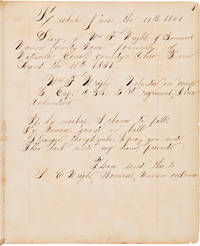
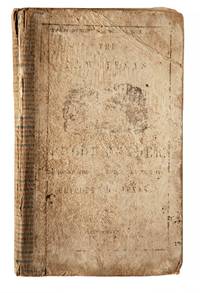
1861WRCAM56124Various places in Iowa and Missouri as described below 1861. 1022pp. approximately 16000 words. Contemporary half sheep and marbled boards. Boards detached but present worn and rubbed. Bookseller stamp on front free endpaper. Pages loosening but all present pages 33-34 with old repairs to a vertical tear running the length of the page. Occasional spots of soiling throughout but overall the text is quite clean and very easily read. Overall very good. An engaging account of the early days of the Civil War in Missouri by William F. Wright a Union volunteer from Somerset Iowa. Missouri was a highly-contested border state with both Union and Confederate supporters. It sent soldiers and arms to both sides was represented with a star on both flags maintained dual governments and featured a vicious intrastate war within the larger national war. William Wright's journal of his service in the first year of the war ably communicates the dangerous and unprecedented nature of guerilla warfare in the western theatre of the Civil War. <br> <br> Wright 1837-1905 enlisted in the 3rd Iowa Infantry Regiment in May 1861 responding to President Lincoln's first call for troops. Much of the diary centers on the months from July to September 1861 as his unit traveled back and forth across Missouri facing a guerrilla enemy with no clear battle lines. Unlike the large armies and massive battles further east Wright's regiment was frequently on the move by rail and foot often splitting off into companies squads and scouting parties prone to ambush by raiding parties with small detachments occasionally getting picked off by snipers. In addition to Confederate soldiers Wright's regiment also faced bands of pro-Confederate irregulars known as "bushwhackers." The war in Missouri was continuous from 1861 to 1865 with conflicts throughout the state. There were over 1200 distinct engagements in the state during the war; only Virginia and Tennessee exceeded this total. <br> <br> Wright is generally stoic throughout though he does admit to occasional homesickness and is justifiably distressed over a case of ague that comes on in August. When not drilling or recounting recent attacks Wright frequently mentions attending church prayer meetings and Bible study though he does not seem overly picky as to where. He attends a Catholic mass and a Presbyterian service on the same day and on another attends Episcopal Methodist and Presbyterian services on the same day. <br> <br> The diary begins on May 27 1861 as Wright puts his affairs in order and travels to Indianola where he "was sworn into the state service for three years" after which he proceeds with other recruits to Keokuk Iowa a major staging area for Union forces. His unit is officially sworn into "United States service" on June 8 receive their rifles on the 23rd and then assemble in camp on the 26th. The next day they receive word that they are heading to Missouri in the morning: "we received orders to cook enough provisions for three meals the drum would beat at 3 in the morning at which time we were to pull up stakes." They march to the docks board several steamships and head south on the Mississippi to Hannibal Missouri. Upon disembarking Wright comes across two men taken prisoner by the home guard "and I had for the first time the privilege of seeing a secession prisoner." <br> <br> The next day July 1 they board trains and head west: "I was surprised to see so many fine residences also quite a number of slaves were to be seen at work in the fields who cheered lustily as we passed.We passed several encampments of soldiers on the way who were all in good spirits. We hauled up at Utica in Livingston Co. slept in the cars." After a couple of weeks of false alarms of pending attack mysterious shots at night low rations and rumors of murdered soldiers the company was on edge. On July 18 Wright and nine other men were detailed to guard the railroad station in Utica after reports "that the enemy was going to burn it." During their watch "a spy came in with the information that from 500 to 800 men on Spring Hill were making preparations for an attack at the bridge and station simultaneously." No attack materialized however: "Daylight came and no enemy we were disappointed as we were well prepared for them and would have been pleased to have seen from 50 to 100 make their appearance." <br> <br> Tensions continued in a similar vein for the next few weeks as they shifted back east to Kirksville. Wright reports of all-night guard duty multiple nights in a row and frequently going without meals due to inadequate rations. On August 19 they received warning of a pending enemy attack which ends up as a small skirmish: "Six of our scouts were surrounded by 25 of the enemy. They killed Corporal Dix. The others made their escape after killing 3 or 4 of the enemy." Not long after they start heading south and while passing through Shelbina Missouri three of their men were shot one died by an enemy squad hidden in the brush. Circling back to Shelbina to rest they find the town partially destroyed by Rebel forces. Wright's unit then finished the task which he describes neutrally: ".the boys were allowed to go where they pleased and they took and destroyed ev'y thing in town. When ever a chicken was heard to crow a dozen men were ready to start for the place. Chickens and pigs were killed women's dresses taken children's playthings &c &c." Passing through Macon Missouri Wright and his comrades "dropped into a Brewery. There were quite a number of the boys there. Some of them were trading their shoes some shirts and others drawers for beer. I do not know whether they were their own clothes or whether they had stolen them. Saw three fights today." <br> <br> Heading west just outside of Kansas City they notice enemy scout activity. After more than two months of skirmishing and sniping the regiment saw its first pitched battle. On September 17 "3 p.m. we started from Liberty about 600 strong in the direction of the river. The enemies scouts were retreating as we went forward. The enemy killed 4 and wounded one of our men. About 4 o'clock we were fired into by the enemy which was the first that we knew of their position. We were within about 100 yds of their lines when we were fired on.We fought about an hour and 20 minutes when we were ordered to fall back as they had three men to our one and were flanking us. Four of the artillery men were kiled & four wounded which did not leave enough to man the gun and she was only fired three times when we had to haul her back by hand.we had 17 killed about 60 wounded and a number missing.it is reported that there were over 100 enemy killed and wounded." This was the Action at Blue Mills Landing also known as the Battle of Liberty. The next day Wright wrote "I have been helping to make coffins for our killed 12 bodies which will be buried in the evening.The most shocking scene that I have ever witnessed is one of the dead men whose face has been skined said to have been done by his brother-in-law." <br> <br> Wright had reported on his unit's tendency to loot earlier in the diary and now makes an interesting clarification: "When in the free State of Kansas the boys behaved very well. But since we have again come into Mo. they have began their old tricks. Last night there were quite a number of chickens stolen and a calf taken out of a man's dooryard." Perhaps in fairness to the Iowa troops they regularly went without rations or were given only flour and because they were often in hostile territory they rarely had permission to hunt or fish for their meals. <br> <br> Until this point Wright does not mention any direct encounters with African Americans but on October 18 as they depart Kansas City he notes they ".took three slaves with us who had run away from Lexington." Upon reaching Quincy Illinois "Will Newton and I went down town and got lodging for the three darkys who came from Kansas City. We left them with the supt. of the Colored Peoples Church." <br> <br> For the remainder of this diary Wright was stationed at the Benton Barracks in St. Louis; some of these entries are slightly out of order chronologically as though Wright inadvertently skipped pages. On December 1 he writes "In the evening one of Co. K was killed by accident. One of his comrades cocked his gun not knowing that it was loaded and shot the top of his head off. It was the most horrible sight that I have yet seen." Not much else happens until the end of the month when they get word that they'll be heading back out soon and start prepping their equipment. Leading up to Christmas he notes many of the men planning a big Christmas dinner: "For my part do not feel like celebrating the day. Think it will not pay here will pass it by as other days for this time." <br> <br> Wright's final entry on Christmas Day is also introspective. Having reflected on his past seven months in the army the things he has seen and how frequently he has been spared he concludes: "I do not like a sol. life. Would be far from following it from choice but believe that it is my duty as we are engaged in a just and noble cause trying to sustain one of the best governments ever formed. Co. G is not drunk to night but slightly inebriated." <br> <br> At the end of the diary Wright has transcribed a letter from a rebel which gives a sense of some the psychological warfare practiced during the conflict. Dated at Fillmore Missouri July 18 1861 it reads in part: "I hope when this letter comes to hand you may have time to read it. And I think that I shal be nearby. And then as soon as it is red I shal be near enough to nock your life out of you. I hope the time may come when the flag of the fifteen glorious states may fly over the free and independent.Instead of one thousand of us there is about 8000 of us and we are coming there as soon as we can get there." <br> <br> Wright reached the rank of sergeant in 1863 and survived to muster out in 1864. After the war he married raised a family and farmed in Kansas and Nebraska. <br> <br> A detailed and informative diary of the brutal and chaotic early months of the Civil War in Missouri. hardcover books
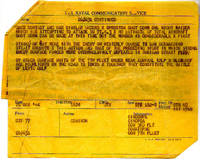
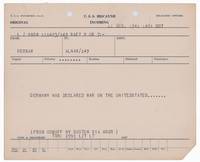
886016 Radio Telegrams including detailed Action Reports Tactical Operation Commands Battle Assessments Damage Reports etc. spanning the full duration of The Battle of Leyte Gulf 24 October - 28 October 1944. Imprinted upon wartime U.S. Communication Service USS Hector - 20M Sets yellow onionskin paper. 8" x 6.5". 7 designated "Secret- Urgent" 4 designated "Operational Priority-Secret" 2 designated "Priority-Secret" 1 designated "Top Secret-Operational Priority" 1 designated "Secret-Op-Op-Op"1 designated "Routine-Confidential". TRANSCRIBED DESPATCHES #240315 10/24/44 06;14 From: CTF 77-Vice-Admiral Kinkaid--7th Fleet - King II Attack Force Action: CTG 77.2 - Rear-Admiral Olendorf - Bombardment & Fire Support Group CTF 78 - Rear Admiral Barbey - Northern Attack Force CTF 79 - Vice-Admiral Wilkinson - Southern Attack Force CTG 77.3 - Rear Admiral Berkey - Close Covering Group CTG 70.1 - Commander S.S. Bowling - MTB Group PREPARE FOR NIGHT ENGAGEMENT X ENEMY FORCE ESTIMATED 2 BB 4 CA 4 CL 10 DD REPORTED UNDER ATTACK BY OUR CARRIER PLANES IN EASTERN SULU SEA AT 09101 24 OCT X ENEMY CAN ARRIVE LEYTE GULF TONIGHT X MAKE ALL PREPARATIONS FOR NIGHT ENGAGEMENT X TG 77.3 ASSIGNED TO CTG. 77.2 AS REINFORCEMENT X CTG 70.1 STATION MAXIMUM NUMBER PT'S LOWER SURIGAO STRAIT TO REMAIN SOUTH OF 10-10N DURING DARKNESS. #240504 10/24/44 06:34 From: CTG 70.1 - Commander S.S. Bowling - MTB Group Action: All TFC 7th Fleet All TGC 7th Fleet AGP 8 Wachapreague EXPECT TOKYO EXPRESS TONIGHT X BEFORE DARK STATION BOATS IN SECTIONS OF 2 OR 3 BOATS EACH AT FOLLOWING POSITIONS X SOUTHWEST TIP PANOAN X SOUTH OF MADILAO POINT X SOUTH OF LIMASAWA ISLAND X 2 SECTIONS PATROL BETWEEN AGIO POINT BOHOL PAST CAMIGUIN ISLAND TO SEPACG POINT MINDANAO X VITAL EASC OSTOKOWSW FILE REPORT CONTACTS AND THAT OTHER SECTION LEADERS AND WACHAPREAGUE RELAY THESE REPORTS TO CODLIVER X 21 BOATS FROM OYSTER BAY STATIONED BY SECTIONS AS FOLLOWS x SOURGDB T TIP PANOAN ISLAND X BILAA POINT MINDANAO X IN SURIGAO STRAIT 5 SECTIONS X 1 OFF SUMILON ISLAND X 1 MEDCHANTRN OFF KANHATID POINT DINAGAT ISLAND X 2 OFF KANIHALN ISLAND X 1 SOUTHEAST AMAGUSAN POINT X WACHAPREAGUE INFORM LCIS LAST STATION X SECTIONS ATTACK INDEPENDENTLY AFTER MAKING CONTACT REPORT X CTG 70.1 SENDS. #240938 10/24/44 From: CTG 77.4 - Rear Admiral T. L. Sprague - Escort Carrier Group - CarDiv22 Action: CTG 77.4 THE SUPERB AIRMANSHIP AND FIGHTING SPIRIT DISPLAYED TODAY WILL LIVE IN HISTORY X IT IS MY OPINION THAT THIS IS THE FIRST DAY OF A RUNNING FIGHT WHICH WILL MARK THE ECLIPSE OF JAPANESE SEA POWER x TO BE EQUAL TO THE TASK IS ONLY TO REPEAT WHAT YOU HAVE DONE TODAY X UNIT COMMANDERS PASS TO THOSE UNDER YOUR COMMAND. #242232 10/25/44 From: CTG 77.4 - Rear Admiral T. L. Sprague - Escort Carrier Group - CarDiv22 Action: CTF 77 Vice-Admiral Kinkaid--7th Fleet - King II Attack Force CTF 78 Rear Admiral Barbey - Northern Attack Force CTF 79 Vice-Admiral Wilkinson - Southern Attack Force All CTG's TF 77 King II Attack Force COMPLETE REPORT OF ESCORT CARRIERS OPERATIONS TWENTY FOUR OCTOBER X ENEMY AIR RAIDS IN FORCE CAUSED CANCELLATION OF VISAYAS STRIKES AND SOME REDUCTION OF SUPPORT AIRCRAFT X OUR REINFORCED COMBAT PATROL SHOT DOWN FORTY EIGHT TWIN ENGINE AND EIGHTEEN SINGLE ENGINE JAP PLANES PLUS EIGHT MORE TWIN ENGINE PLANES PROBABLY DESTROYED IN A WILD MELEE OVER LEYTE ISLAND THE BEACHES AND SHIPPING IN LEYTE GULF X PLANES SHOT DOWN INCLUDED TWENTY LILYS EIGHTEEN SALLYS SEVEN FRANCES AND WIDE ASSORTMENT OF OTHER ARMY AND NAVY TYPES X HIGH SCORE FOR THE DAY WAS MADE BY LT CDR FUNK OF SANTEE WITH FIVE KILLS ON A SINGLE FLIGHT WHILE SAWANNEE PILOTS REPORTED KNOCKING DOWN EIGHT OUT OF EIGHT IN ONE GROUP X OUR LOSSES IN COMBAT WERE TWO PILOTS AND EIGHT PLANES WHICH INCLUDED ONE FOX SIX FOX FOUR FOX MIKE TWO TARE BAKER MIKE PLUS ONE FOX MIKE MISSING X OPERATIONAL LOSSES WERE ONE FOX MIKE WHICH SPUN IN JUST AFTER TAKEOFF DURING DARKNESS WITH THE LOSS OF THE PILOT X SPECIAL STRIKE ON BACOLOD FIELD DESTROYED TWO IRVINGS ONE KATE ONE BETTY AND ONE SINGLE ENGINE PLANE ON THE FIELD DAMAGED ONE IRVING AND ONE TOJO AND SANK ONE LUGGER AND FOUR BARGES X ONE JUDY CAME OUT TO FIND OUT WHAT WE WERE DOING OUTSIDE WAS CHASED FROM FIFTEEN THOUSAND TO FIFTY FEET AND SHOT DOWN BY THE LLERT LOCAL CAP X ALL IN ALL A GRAND DAY X FROM COMTASKFBBUP SEVENSEVEN DOT FOUR. #242348 10/25/44 01:07 From: COM 3RD FLT - Admiral Halsey -Commander 3rd Fleet Action: CTG 38.1 - Vice-Admiral John McCain PROCEED AT BEST POSSIBLE SPEED TO SOUTHWEST STRIKE EARLIEST POSSIBLE ENEMY FORCE REPORTED TO BE 4 BB'S8 CA'S PLUS DD'S IN VICINITY11-20N 127-00E AT 0800 X FROM COM 3RD FLT ACTION CTG 38.1 INFO ALL TGC'S 3RD AND 7TH FLTS CTF 77 ALL TFCS 3RD AND 7TH FLTS. #250615 10/25/44 07:08 From: CTU 77.4.3 - Rear Admiral G.A.F."Ziggy" Sprague -Escort Carrier Group - CarDiv 25 Action: CTG 77.4 - Rear Admiral T. L. Sprague - Escort Carrier Group - CarDiv22 SECOND BATTLE DAMAGE REPORT X KALININ BAY RECEIVED 15 SHELL HOLES IN HULL IN ADDITION TO A FEW SMALL FRAGMENTATION HOLES X MOST HOLES PLUGGED UP AND ONLY LEAKING SLIGHTLY NOW X NUMEROUS HOLES IN FLIGHT DECK BY SUICIDE PLANE BEING REPAIRED X AT01L FLOODED BUT UNDER CONTROL X SMALL FIRE IN FUEL OIL TANK UNDER MACHINE SHOP X GYRO OK BUT HAVING GREAT DIFFICULTY STEERING X ELEVATOR LOWERED AND DECOMMISSIONED X ALL COMMUNICATIONS ON BRIDGE OUT X CAN RECEIVE VHF ONE CANNOT TRANSMIT ON ANYTHING NO RADAR X CANNOT STAND ANY INCREASE IN DRAFT XX 1020 HOEL REPORTED STOPPED TO PLUG HOLE 6 FEET IN DIAMETER 2 FEET BELOW WATERLINE X ONE GUN OUT X SOUND GEAR OUT X 200 ROUNDS OF AMMO LEFT NO TORPEDOES X NOT HEARD FROM SINCE X KITKUN BAY DAMAGE TO SHIP NEGLIGIBLE FROM NEAR BOMB HIT AND CRASH OF ENEMY PLANE X ONE KILLED 16 WOUNDED. #260139 10/26/44 06:05 From: CTF 77 - Vice-Admiral Kinkaid--7th Fleet - King II attack Force Action: None Information: CTF 38 - Vice Admiral Mitscher - Fast Carrier Forces COMAF 5 - Lt. General Ennis C Whitehead COMFEAF - General George Kenney ENEMY CRUISER AND FIVE DD PROCEEDING COURSE 300 FROM BULALAOUI POINT NORTH CEBU X SHIPS 1000 POSITIONS FROM 5 TO 45 MILES NORTH CEBU X CRUISER IN VAN X CVE STRIKE NOW IN PROGRESS BUT ADDITIONAL STRIKES NEEDED. #260427 10/26/44 04:55 From: CTF 77.4 - Rear Admiral T. L. Sprague - Escort Carrier Group - CarDiv22 Action: CTF 77 - Vice-Admiral Kinkaid--7th Fleet - King II attack Force UNDER AIR ATTACK X SUWANNEE HIT BY SUICIDE DIVE FORWARD OF BRIDGE X FIRE UNDER CONTROL. #260551 10/26/44 06:07 From: CTF 77.4 - Rear Admiral T. L. Sprague - Escort Carrier Group - CarDiv22 Action: CTF 77 - Vice-Admiral Kinkaid -7th Fleet - King II attack Force RECOMMEND ESCORT CARRIERS BE RETURNED TO MANUS IMMEDIATELY DUE SHORTAGE FUEL BOMBS TORPEDOES AND LOSS YESTERDAY OF ABOUT TOTAL OF 130 PLANES X DETAILS IN MESSAGE FOLLOWING. #260631 10/26/44 16:24 From: CTF 77 - Vice-Admiral Kinkaid--7th Fleet - King II attack Force Action: COMINCH Admiral Ernest King - Commander-In-Chief U.S. Fleet Information: CINCSWPA General Douglas Macarthur - Commander U.S. Forces Far East CINCPOA Admiral Chester Nimitz - Commander-In-Chief Pacific Fleet COM3RDFLEET Admiral Halsey -Commander 3rd Fleet COMA/RPAC Vice-Admiral John Hoover - Task Force 57 - Forward Area Central Pacific COM7THFLEET Vice-Admiral Kinkaid -7th Fleet - King II Attack Force WITH THE DEEPEST REGRET ITEM REPORT THE LOSS OF 2 CVE'S 2 DD'S AND 1 DE PLUS DAMAGE TO OTHER SHIPS IN A BATTLE FOUGHT TO THE EASTWARD OF SAMAR ON 25 OCT BETWEEN ENEMY AIR AND SURFACE FORCES AND A GROUP OF 16 CVE'S PLUS DD AND DE ESCORTS X THIS GROUP WITH SUPERB DETERMINATION AND SKILL FOUGHT AND DEFEATED A STRONG ENEMY SURFACE FORCE SUPPORTED BY REPEATED ATTACKS BY SHORE BASED ENEMY AIRCRAFT X THEY STRUCK REPEATEDLY WITH ALL MEANS AT THEIR DISPOSAL UNTIL THE ENEMY RETIRED DEFEATED AND CONTINUED TO STRIKE HIS RETREATING FORCES UNTIL DARKNESS X THE REPORT OF THE VALLIANT COMMANDER OF THIS GALLANT GROUP REAR ADMIRAL T.L. SPRAGUE IS TRANSMITTED HEREWITH X QUOTE X CTG 77.4 DESPATCH 25_00 X AS A RESULT OF TODAY SURFACE AND AIR ACTIONS CTU 77.4.3 REPORTS SAINT LO FORMER MIDWAY HIT BY DIVE BOMBER FOLLOWED BY HEAVY EXPLOSION WHICH DESTROYED SHIP X GAMBIER BAY JOHNSON AND ROBERTS MISSING SINCE BOMBARDMENT BY STRONG ENEMY FORCE BELIEVED TO CONTAIN 4 BB 8 CA AND CL 7 OR MORE DD ALL VERY FAST X ALL CARRIER GROUPS WERE UNDER ATTACK THROUGHOUT THE DAY X SANTEE RECEIVED TORPEDO HIT AND SUICIDE CRASH ON DECK WHICH STARTED FIRE AND PENETRATED BOTH FLIGHT AND HANGAR DECK X SANGAMON HAD SUICIDE CRASH ALONGSIDE WHICH PUNCTURED SIDE IN MANY PLACES X FIRES AND DAMAGE WERE BROUGHT UNDER CONTROL AND ALL VESSELS CONTINUED TO LAUNCH STRIKES AGAINST ENEMY FORCE TILL SUNDOWN X VESSELS OF TU 77.4.2 WERE UNHIT UP TO LATE AFTERNOON AND THIS GROUP LAUNCHED A TOTAL OF 6 HEAVY STRIKES ARMED WITH TORPEDOES AND HEAVY BOMBS X NORTHERN GROUP TU 77.4.3 WAS UNDER MORE OR LESS CONTINUOUS FIRE OF ENEMY BATTLESHIPS CRUISERS AND AIRCRAFT THROUGHOUT THE DAY X ALL SURVIVING CARRIERS WERE DAMAGED X WHITE PLAINS FANSHAW BAY AND KITKUN BAY GOT FIRES AND OTHER DAMAGE UNDER CONTROL AND CONTINUED TO LAUNCH ATTACKS UNTIL THE END OF THE DAY X LAST STRIKES FROM ALL SHIPS WERE OVERTAKEN BY DARKNESS AND MANY LANDED ON LEYTE X DAMAGE TO ENEMY CANNOT BE ASSESSED AT PRESENT BUT UNKNOWN DAMAGE INCLUDES 4 TORPEDOES IN BB AND NATORI CLASS CRUISER STOPPED AND SET AFIRE IN MINDANDO SEA X OFF SAMAR 2 BB WERE HIT BY TORPEDOES AND ONE CA STOPPED DEAD X DD AND DE OF SCREEN TU 77.4.3 MADE A GALLANT HEAD ON ATTACK WITH GUNS AND TORPEDOES WHEN THE CARRIERS WERE BROUGHT UNDER FIRE BY THE ENEMY BB X CASUALTIES OF SUNK AND MISSING SHIPS CANNOT BE ESTIMATED X THERE WERE 40 DEAD AND 40 CRITICALLY WOUNDED ON SANTEE X ONE DEAD ON SANGAMON X ONE DEAD ON ROWELL X REPORTS FROM OTHER TASK UNITS ARE NOT YET AVAILABLE X RICHARD S BULL AND EVERSOLE WERE ORDERED TO SCENE OF SINKING TO RECOVER SURVIVORS REPORTED IN WATER X REPORT ON SINKING RECEIVED TOO LATE TODAY BUT SEARCH WILL BE CONTINUED ASSISTED BY AIRCRAFT TOMORROW X DURING RETIREMENT COOLBAUGH GOT WHAT IS BELIEVED TO BE A SUB 11 GROUPS MISSED X SHE WAS ORDERED TO SIT ON HER CONTACT THROUGHOUT THE NIGHT X THE SPROSTON ALSO HAD GOOD CONTACT AND HAS SIMILAR ORDERS X SPROSTON SHOT DOWN ONE NIGHT RAIDER WHICH WAS ATTEMPTING TO ATTACK TU 77.4.3 X NO ESTIMATE OF TOTAL AIRCRAFT SHOT DOWN CAN BE MADE AT THIS TIME BUT THE NUMBER IS CONSIDERABLE X FIRST STRIKES OF THE DAY WERE WITH THE ENEMY ON A WESTERLY COURSE TO SAN BERNARDINO STRAIT UNQUOTE X THIS ACTION AND THAT OF THE PRECEDING NIGHT IN WHICH STRONG ENEMY SURFACE FORCES WERE OVERWHELMINGLY DEFEATED IN SURIGAO STRAIT BY OTHER SURFACE UNITS OF THE 7TH FLEET UNDER REAR ADMIRAL RALP B OLENDORF ARE HIGHLIGHTS ON THE ROAD TO TOKYO X TOGETHER THEY CONSTITUTE THE BATTLE OF LEYTE GULF. #261131 10/26/44 16:53 From: CTF 77 - Vice-Admiral Kinkaid -7th Fleet - King II attack Force Action: CTF 77.4 Rear Admiral T. L. Sprague - Escort Carrier Group - CarDiv22 Information: All TGC & TFC 3rd and 7th Fleets ESSENTIAL THAT SIX OF YOUR CARRIERS REMAIN THIS AREA IF AT ALL POSSIBLE TO PROVIDE FIGHTER COVERAGE REFERRING YOUR 260614 x DESIGNATE SIX THAT ARE IN BEST OPERATING CONDITION TO REMAIN X FILL THEM WITH FIGHTERS RETAINING ONLY SUFFICIENT VT FOR YOUR OWN ASP X SEND REMAINING CVE's TO MANUS WHEN TRANSFER OF PLANES EFFECTED X GROUP REMAINING WILL BE FUELED ACCIPITER 28 OCTOBER X CTF 77 SENDS. REF ATTACHED. #262355 10/27/44 09:43 From: CTU 77.4.3 - Rear Admiral G.A.F."Ziggy" Sprague -Escort Carrier Group - CarDiv 25 Action: CTF 77 Vice-Admiral Kinkaid--7th Fleet - King II attack Force CTG 77.4 - Rear Admiral T. L. Sprague - Escort Carrier Group - CarDiv22 Information: COMINCH - COMINCH Admiral Ernest King - Commander-In-Chief U.S. Fleet CINCPAC - Admiral Chester Nimitz - Commander-In-Chief Pacific Fleet COMAIRPAC -Vice Admiral George Murray - Commander Air Force Pacific Fleet COM3RDFLT - Admiral Halsey -Commander 3rd Fleet COM7THFLT - Vice-Admiral Kinkaid -7th Fleet - King II Attack Force CINCSOWESPAC - General Douglas Macarthur - Commander U.S. Forces Far East NPM PASS TO COMINCH CINCPAC COMAIRPAC FOR INFO X MAIN ENEMY BODY SIGHTED BY ASP AS PER MY CONTACT REPORT AT 0603 ITEM OCT 25 X FOR OVER 2 1/2 HOURS THIS FORCE WAS SUBJECTED TO ENEMY BB CA AND DD GUN AND TORPEDO ATTACK X WE WERE HIT NUMEROUS TIMES X GAMBIER BAY HAD ONE ENGINE PUT OUT OF COMMISSION DROPPED BACK AND MUST HAVE BEEN SUNK BY ENEMY GUNFIRE PLUS HOEL JOHNSTON AND ROBERTS X REMAINING 5 CVE EMERGED FROM THIS DAMAGED BUT ABLE TO MAINTAIN 16 KNOTS X ABOUT 1 HOUR 20 MINUTES LATER 6 SUICIDE BOMBERS ATTACKED X ATTACK HAD TO BE SEEN TO BE BELIEVED X 3 PLANES HIT BY AA NARROWLY MISSED SHIPS X 1 HIT PORT CATWALK OF KITKUN BAY X 1 SKIDDED LENGTH OF KALININ BAY FLIGHT DECK OVER BOW X 1 WENT THROUGH DECK OF SAINT LO WHICH SHORTLY BLEW UP X PRELIMINARY REPORTS FROM SUCH OF OUR PILOTS AS ARE IN COMPANY SHOW FOLLOWING DEFINITE DAMAGE BY OUR PLANES X 1 CA SEEN TO BLOW UP AND SINK X 1 CA HIT BY 2 TORPEDOES AND 20 MINUTES LATER OBSERVED ON ITS SIDE X 3 MORE CA TORPEDOED X 1 BB DAMAGED X THE REST GOT AWAY X THIS UNIT TOGETHER WITH PLANES OF TU 77.4.1 AND 77.4.2 TURNED BACK ENEMY FLEET BEFORE ANY OTHER OFRENBURCPNAO COUOD ATTACK X 3 REMAINING SHIPS OF MY DIVISION REQUIRE EXTENSIVE NAVY YARD REPAIRS BEFORE COMBAT DUTY X PRELIMINARY REPORT OF CASUALTIES OF SHIPS NOW WITH ME X 10 KILLED 59 WOUNDED X I UNDERSTAND 800 SANIT LO SURVIVORS HAVE BEEN PICKED UP X DETAILED REPORT LATER. #270122 10/27/44 03:45 From: CTG 77.4. - Rear Admiral T. L. Sprague - Escort Carrier Group - CarDiv22 Action: CTF 77 Vice-Admiral Kinkaid--7th Fleet - King II attack Force FOR ADMIRAL KINKAID x I DEEPLY REGRET THE EMBARRASSMENT WHICH MY 260614 MUST HAVE CAUSED YOU X YOUR 261328 HAS RELIEVED MY ANXIETY FOR MY SHIPS WHICH HAVE DEMONSTRATED A HOPELESS DEFENSE AGAINST THE CURRENT TECHNIQUE OF SUICIDE DIVES X MY RECOMMENDATION WAS BASED ON ERRONEOUS INFORMATION THAT THE AIR CORPS HAD ARRIVED X SPRAGUE #271147 10/28/44 00:40 From: CTF 77 Vice-Admiral Kinkaid--7th Fleet - King II attack Force Action: COMINCH - Admiral Ernest King - Commander-In-Chief U.S. Fleet Information: CINCSWPA - General Douglas Macarthur - Commander U.S. Forces Far East CINCPAC - Admiral Chester Nimitz - Commander-In-Chief Pacific Fleet COM3RDFLT - Admiral Halsey -Commander 3rd Fleet COM7THFLT - Vice-Admiral Kinkaid -7th Fleet - King II Attack Force All TFC & TGC 3rd and 7th Fleets ON THE 26TH CVE COVERING GROUP TG 77.4 DESPITE BATTLE LOSSES SUFFERED FROM THE PRECEDING DAY CONTINUED TO COVER OUR FORCES IN THE LEYTE GULF AREA AND LAUNCHED STRIKES IN THE CAMOTES SEA X 1 ENEMY CL WAS HIT WITH 4-500 POUND BOMBS AND 1 TORPEDO AND 1 DD CONFIRMED SUNK AFTER STRAFING ATTACK BELIEVE IT OR NOT X OTHER ATTACKS AS YET UNREPORTED X ABOUT 1100 OUR CVES WERE ATTACKED BY ENEMY PLANES X AFTER COMBAT PATROL HAD SHOT DOWN 4 OF GROUP 8-12 PLANES NIPS BEGAN A SERIES OF SUICIDE DIVES X 3 SHOT DOWN BY SHIPS GUNFIRE X 1 LANDED ON FLIGHT DECK SUWANNEE AMONG PARKED PLANES X SEVERE DAMAGE TO SHIP AND PLANES X MANY PERSONNEL CASUALTIES NUMBER UNDETERMINED X DE ROWELL OF CVE GROUP ABOUT 0900 SIGHTED PERISCOPE AND ATTACKED X MUCH OIL AND DEBRIS KEPT RISING DURING THE DAY X CLAIMS SUNK X CTF 77 SENDS ACTION COMINCH INFO CINCSWPA CINCPAC COM3RDFLT COM7THFLT ALL TFC AND TGC 3RD AND 7TH FLEETS X CRUISER AND DESTROYER GROUP HAVING REPLENISHED FUEL AND AMMUNITION AFTER THE SURIGAO STRAIT ACTION IS NOW WITH CVE COVERING GROUP X FAST CARRIERS OF 3RD FLEET ARE NOW PROVIDING CLOSE SUPPORT OF LEYTE AREA X ENEMY AIR RAIDS CONTINUED TODAY BUT WITH REDUCED EFFECTS CONTRIBUTED TO THE EFFECTIVENESS 3RD FLEET FAST CARRIERS AGAINST THE ENEMY AIR FIELDS X MORE ACCURATE INFORMATION IS NOW AVAILABLE ON THE RESULTS OF THE NIGHT BATTLE OF SURIGAO STRAIT STARTING EARLY MORNING OF 25 OCTOBER X 05 THE ENEMY FORCE WHICH ATTEMPTED TO FORCE INTO LEYTE GULF VIA THE SURIGAO STRAIT 2 BB 2CA 2 CL AND 10 DD ONLY 1 CA 1 CL AND 4 DD GOT OUT THE WAY THEY CAME IN X 2 BB IDENTIFIED AS YAMASHIRO AND BUSO 1 CA 1 CL AND 6 DD WERE DEFINITELY SUNK BY THE COMBINED TORPEDO ATTACKS OF OUR PT'S SNF DD'S AND THE NOTE: REMAINDER OF MESSAGE ABOUT 25 GROUPS MISSED ON BOTH MANUS AND BELLS TRANSMISSIONS. #272207 10/28/44 01:08 From: CTF 77.4 Rear Admiral T. L. Sprague - Escort Carrier Group - CarDiv22 Action: CTF 77 Vice-Admiral Kinkaid--7th Fleet - King II attack Force Information: TO WELCOME THE AIR CORPS CTF 78 Rear Admiral Barbey - Northern Attack Force CTF 79 Vice-Admiral Wilkinson - Southern Attack Force ALL TGC OF TF 77 OPERATIONS 27 OCTOBER X COMTASKGROUP 77.4 SENDS X BOTH OPERATING GROUPS WERE REINFORCED BY CRUISERS AND DESTROYERS TODAY AND ALL HANDS BREATHED EASIER TO SEE THE BRISTLING GUNS WHICH SPELL THE ONLY KNOWN REMEDY FOR THE REPEATED SUICIDE DIVES WHICH THE ESCORT CARRIERS HAVE EXPERIENCED X ONE FORMATION OF JAPS ATTACKED IN THE EARLY MORNING BEFORE THE RENDEZVOUS WITH THE CRUISERS BUT WERE BEATEN OFF BY SHIPS GUNFIRE X LATER ANOTHER GROUP OF BOGIES APPROACHED BUT WERE DRIVEN OFF WITH ONE SHOT DOWN BY CAP X SUWANNEE WAS SENT TO KOSSOL TO EVACUATE WOUNDED AND PROCEED MANUS X SANTEE WAS ORDERED TO PROCEED TO MANUS DIRECT X A REDUCED CAP OVER THE LANDING AREA SHOT DOWN 6 ENEMY PLANES AND PROBABLY GOT 3 MORE X 3 WERE SHOT DOWN BY THE CAP OVER THE FORCE WHILE 1 BETTY WAS DESTROYED AND 6 WERE DAMAGED ON LAHUG FIELD X THE LAST FLYABLE PLANES FROM THE LANDINGS OF THE NIGHT OF THE BATTLE OF LEYTE GULF WERE RECEIVED ABOARD X PLANES OF TU 77.4.3 HELPED TO REPLACE LOSSES OF THE OTHER GROUPS X ALL HANDS WERE DELIGHTED. #272351 10/28/44 02:00 From: COMPHIBGROUP 8 Rear Adm. W. M. Fechteler Action: COMINCH - COMINCH Admiral Ernest King - Commander-In-Chief U.S. Fleet CINCSWPA - General Douglas Macarthur - Commander U.S. Forces Far East COM7THFLT - Vice-Admiral Kinkaid -7th Fleet - King II Attack Force CTF 77 Vice-Admiral Kinkaid--7th Fleet - King II attack Force COMCARDIVS 23 25& 26 - Commander Carrier Divisions 23 25 - Rear Admiral G.A.F. Sprague 26 - Rear Admiral Ofstie CINCPAC - Admiral Chester Nimitz - Commander-In-Chief Pacific Fleet SENIOR SURVIVOR CAPT VIEWIG NOW IN FREMONT REPORTS GAMBIER BAY SANK ABOUT 0900/I 25 OCTOBER IN LAT 12-30N LONG 126-30E AS RESULT ABOUT 20 8-INCH HITS FROM NIP HEAVY CRUISERS FINAL RANGE 2000 YARDS X COMPHIB GROUP 8 THROWS ACTION TO COMINCH CINCSWPA COM7THFLT CTF 77 COMCARDIVS 23 25 AND 26 CINCPAC X NO COMPROMISE CLASSIFIED MATTER X 18 FIGHTERS AND 8 AVENGERS AIRBORNE AND PRESENT STATUS UNKNOWN X ABOUT 650 OFFICERS AND MEN RESCUED. Cataloguers Note - No designation for CARDIV 23 appears in "Command Communication Manual for King II" ADDITIONALLY - 1. Communication Manual for King II. 86pps.4.5" x 5.5".Designated TOP SECRET with admonition - " THIS BOOKLET WILL NOT BE TAKEN ASHORE NOR CARRIED IN AIRCRAFT". Copy # 0157 and marked Flag Bridge this is presumably Rear Admiral T. L. Sprague's copy whilst Commanding Taffy 1 Task Group aboard USS Sangamon during the Battle of Leyte gulf. 2. Propaganda Leaflet 2-J-1 - Japanese Soldier In A Rowboat.1944. 8.25" x 5.25". One of the earliest Army leaflets dropped on Japanese troops is 2-J-1 entitled Japanese soldier sitting in a rowboat. The U.S. did not want to antagonize the Japanese so they used a technique they call soft-soaping to point out their predicament without appearing to gloat. The leaflet depicts an unhappy Japanese soldier alone in a rowboat near a barren island. It appears that the 6th Army liked the leaflet so much that they reprinted it and used it in their section of the Philippines. The text on the front translates to: "Left Behind With Only Small Boats an Army Chokes With Grief!" The back is all text and says in part: "Soldiers and Officers of Japan. We wish neither to insult nor make fun of you. Because at Bataan and Corregidor we faced the same miserable conditions you are now facing we cannot but sympathize with you Where are the ships that brought you and your supplies here Where is the Navy which escorted your transportsWhen ships can no longer reach an island garrison do you not realize for the first time that the island has been abandoned" 3. Propaganda Leaflet - 2-F-1 MacArthur Has Returned.1944. 10.5" x 8" Notice that it is MacArthur that has returned and not thousands of American soldiers and sailors. Still the General apparently believed that the Filipinos reacted to his own charisma and personality and perhaps he was correct. The two page bi-fold above shows MacArthur saluting on the front and debarking from an aircraft on the back. There are three black and white pictures of him inside the booklet. It appears that all the F leaflets were to the Filipinos after the American landing. The front of the leaflet depicts General MacArthur saluting. The back of the leaflet depicts the general stepping off an aircraft with the text: "General MacArthur steps out of a plane at an advance airbase somewhere in New Guinea." When the bi-fold is opened there are three black and white photographs inside the leaflet with MacArthur on a warship walking down a Philippine road and in a landing craft. The text is: "General MacArthur keeps his pledge. When General MacArthur left Corregidor under orders from President Roosevelt to proceed to Australia and organize the offensive against Japan his last words were I shall return. From that moment his one driving ambition has been to get back to the Philippines to drive out the Japanese and to restore the legitimate government of the Philippines. Today General MacArthur is back in the Philippines. He has returned as he promised. His great task is now entering its final phase. The forces under his command are assaulting the Japanese invaders throughout the Philippines. With these forces General MacArthur will accomplish the liberation of the Filipino people. But that liberation can be accomplished more quickly and at smaller cost to American and Filipino lives with your help and co-operation. General MacArthur will tell you over the radio in proclamation and by leaflet exactly how and when you can help. Watch closely for these instructions." 4. Propaganda Leaflet 3-F-1 - A Message to Every Filipino.1944. 8" x 5.5" This leaflet bears a Philippine seal on the front and a picture of the president on the back. This leaflet bears no code but my files show that it was 3F1. Some of the text is: President Osmena elected to high office by the Filipino people at the last popular elections held in this country has returned to the Philippines with General MacArthur. He and the members of his government with the complete support and backing of the American government come to assist in the restoration of your freedom. There is a photograph of President Osmena on the back in front of a CBS microphone addressing the Philippine people. The title is: "The Need for Unity". 5. Propaganda Leaflet 4-F-6 - The Yanks Have Landed On your Island.1944. "8.5" x 5.25". Leaflet depicts American soldiers walking ashore. It was prepared on 23 September 1944 to be used on islands where the Americans land from D-Day to D plus 5. The back text is in English and warns the Filipinos to stay away from Japanese military objectives and ends with: "Remember: Planes bombs and shells cannot tell a friend from a foe." 6. Propaganda Leaflet 3-J-1 - Island Hopping.1944. 8.25" x 5.25". Army Psychological Warfare Branch leaflet 3-J-1 seems to be the first in a series of leaflets that depicts Japanese soldiers left behind as General MacArthur advanced using his "Island-Hopping" campaign. Other similar leaflets depicted a lone Japanese soldier standing on an island 6-J-1 or a lone Japanese soldier watching a battle take place on a nearby island 22-J-1. These leaflets all had the basic same message. You are cut off and there will be no resupply. There will be no food no water no ammunition and no reinforcements. Some of the text on this leaflet is: "Before you reach this miserable state which is more than men ought to endure so far from home we want you to keep something in mind. Those who choose to come to an honorable understanding with us will find that we treat them as human beings not as enemies. We shall hold it a duty to see that they gave clothing food shelter and medical care." This leaflet does not ask the Japanese soldier to surrender. To save face it simply asks that he reach an "honorable understanding" with the Americans. 7. Propaganda Leaflet 1bJ1 - I Surrender.1944. 9.5" x 13" Leaflet with English text on front and Japanese text on reverse. Some of the message is: "Officers and Soldiers of Japan The battle you have put up has our sincere respect. We are quite confident however that victory will be ours as in past operations. We have this confidence because of our officers and men our superior scientific equipment our artillery and our bombing. When you left home many thousands of miles away you thought the Japanese would win. You have since learned that your planes and equipment are no match for those of the Allied forces. Through the operations of our Air Force and navy air and sea supremacy on the Pacific south of Taiwan belongs to us. Because of this it is impossible to move raw materials of military importance from the South Seas to Japan. Therefore what is needed on the front line is lacking. For the same reason the very moving of supplies to the front line is difficult. We take it for granted therefore that you know you have no hope of winning. It is clear that your plight is not your fault but the fault of the army and navy staffs. With the battle hopeless what can you do You can come to an understanding with our forces and preserve yourself for the rebuilding of Japan. That was what Japanese officers and men on Guadalcanal and New Guinea did. They realized the futility of bloodshed and came to an understanding with us for the sake of their country after the war ." Propaganda leaflet research and cataloging by- SGM Herbert A. Friedman Ret. The United States PSYOP Organization in the Pacific during World War II. 8. Plan of the Day-U.S.S. Sangamon- for Tuesday 31 October 1944.Marked "Restricted".1 page Ship's Schedule listing activities 0435 - 1800 hours to front page. Reprinting of 3 congratulatory Radio despatches from Battle Commanders CINCPAC Nimitz Kinkaid Sprague to men participating in the Leyte Gulf Battle. 9. Radio Manus NTF Frequency Employment. Official Photograph. Chief of the Bureau of Aeronautics.15 August 1944.Chart depicting tree of radio frequencies disseminated throughout Radio Manus Control. Stamped "Confidential" to front and rear. Marked "CVE. 26" USS Sangamon in ink to rear. 8" x 10.5". 10. Aircraft Radio Frequency Tables and Air Ground Liaison. Official Photograph. Chief of the Bureau of Aeronautics.15 August 1944.Stamped "Confidential" to rear.Stamped USS Sangamon to rear.8" x 10.5". 11. Frequency Chart Task Force 78. Associated Ships and Commands. Appendix I Annex C. n.d. 1944.Stamped "Confidential" to rear. Chart detailing frequency distributions to ships and commands of Task Force 78 Northern Attack Force commanded by RearAdmiral Daniel Barbey at the Leyte Gulf Battle. 8" x 10.5". 12. Army Air Force Cloth Chart - Philippine Series.No. C-40 Luzon Island.Army Air Force Cloth Map - Asiatic Series. No. 34 Southeast China. Folding 2 sided limp cloth.1944. 20.5" x 27". 2 copies. 13. Army Air Force Cloth Map. No. 20 Ambonia. No.21 Halmahera. Folding 2 sided limp cloth. 1944. 28" x 34" . Sporadic Light Foxing. 14. Royal Australian Air Force Silk Map.Halmahera. n.d. c.1944. 31" x 23" Radiograms are beyond Very Good with crisp texture and highly legible text. King II Communication Manual presents wear and soiling to covers as expected. Staples rusted. Some sporadic usual soiling to internals. A Very Good nicely preserved copy. Very Good "I Surrender" propaganda leaflet presents a 1 inch nonintrusive split along mid-line fold crease. All other leaflets Near Fine. Radio Frequency Tables all Near Fine. Cloth and Silk maps present standard creasing from folding. All Fine and bright. Ship's schedule presents repairs to chipped and folded edges with polyethylene adhesive tape. Delicate but Very Good. Radiograms are beyond Very Good with crisp texture and highly legible text. King II Communication Manual presents wear and soiling to covers as expected. Staples rusted.Some sporadic usual soiling to internals. A Very Good nicely preserved copy. Very Good "I Surrender" propaganda leaflet presents a 1 inch nonintrusive split along mid-line fold crease. All other leaflets Near Fine. Radio Frequency Tables all Near Fine. Cloth and Silk maps present standard creasing from folding. All Fine and bright. Ship's schedule presents repairs to chipped and folded edges with polyethylene adhesive tape. Delicate but Very Good. Full Photos of this collection may be found at: http://www.heldfond.com/pages/books/8860/the-battle-of-leyte-gulf-a-gathering-of-original-combat-despatches-and-various-original-ephemera hardcover
886016 Radio Telegrams including detailed Action Reports Tactical Operation Commands Battle Assessments Damage Reports etc. spanning the full duration of The Battle of Leyte Gulf 24 October - 28 October 1944. Imprinted upon wartime U.S. Communication Service USS Hector - 20M Sets yellow onionskin paper. 8" x 6.5". 7 designated "Secret- Urgent" 4 designated "Operational Priority-Secret" 2 designated "Priority-Secret" 1 designated "Top Secret-Operational Priority" 1 designated "Secret-Op-Op-Op"1 designated "Routine-Confidential". TRANSCRIBED DESPATCHES #240315 10/24/44 06;14 From: CTF 77-Vice-Admiral Kinkaid--7th Fleet - King II Attack Force Action: CTG 77.2 - Rear-Admiral Olendorf - Bombardment & Fire Support Group CTF 78 - Rear Admiral Barbey - Northern Attack Force CTF 79 - Vice-Admiral Wilkinson - Southern Attack Force CTG 77.3 - Rear Admiral Berkey - Close Covering Group CTG 70.1 - Commander S.S. Bowling - MTB Group PREPARE FOR NIGHT ENGAGEMENT X ENEMY FORCE ESTIMATED 2 BB 4 CA 4 CL 10 DD REPORTED UNDER ATTACK BY OUR CARRIER PLANES IN EASTERN SULU SEA AT 09101 24 OCT X ENEMY CAN ARRIVE LEYTE GULF TONIGHT X MAKE ALL PREPARATIONS FOR NIGHT ENGAGEMENT X TG 77.3 ASSIGNED TO CTG. 77.2 AS REINFORCEMENT X CTG 70.1 STATION MAXIMUM NUMBER PT'S LOWER SURIGAO STRAIT TO REMAIN SOUTH OF 10-10N DURING DARKNESS. #240504 10/24/44 06:34 From: CTG 70.1 - Commander S.S. Bowling - MTB Group Action: All TFC 7th Fleet All TGC 7th Fleet AGP 8 Wachapreague EXPECT TOKYO EXPRESS TONIGHT X BEFORE DARK STATION BOATS IN SECTIONS OF 2 OR 3 BOATS EACH AT FOLLOWING POSITIONS X SOUTHWEST TIP PANOAN X SOUTH OF MADILAO POINT X SOUTH OF LIMASAWA ISLAND X 2 SECTIONS PATROL BETWEEN AGIO POINT BOHOL PAST CAMIGUIN ISLAND TO SEPACG POINT MINDANAO X VITAL EASC OSTOKOWSW FILE REPORT CONTACTS AND THAT OTHER SECTION LEADERS AND WACHAPREAGUE RELAY THESE REPORTS TO CODLIVER X 21 BOATS FROM OYSTER BAY STATIONED BY SECTIONS AS FOLLOWS x SOURGDB T TIP PANOAN ISLAND X BILAA POINT MINDANAO X IN SURIGAO STRAIT 5 SECTIONS X 1 OFF SUMILON ISLAND X 1 MEDCHANTRN OFF KANHATID POINT DINAGAT ISLAND X 2 OFF KANIHALN ISLAND X 1 SOUTHEAST AMAGUSAN POINT X WACHAPREAGUE INFORM LCIS LAST STATION X SECTIONS ATTACK INDEPENDENTLY AFTER MAKING CONTACT REPORT X CTG 70.1 SENDS. #240938 10/24/44 From: CTG 77.4 - Rear Admiral T. L. Sprague - Escort Carrier Group - CarDiv22 Action: CTG 77.4 THE SUPERB AIRMANSHIP AND FIGHTING SPIRIT DISPLAYED TODAY WILL LIVE IN HISTORY X IT IS MY OPINION THAT THIS IS THE FIRST DAY OF A RUNNING FIGHT WHICH WILL MARK THE ECLIPSE OF JAPANESE SEA POWER x TO BE EQUAL TO THE TASK IS ONLY TO REPEAT WHAT YOU HAVE DONE TODAY X UNIT COMMANDERS PASS TO THOSE UNDER YOUR COMMAND. #242232 10/25/44 From: CTG 77.4 - Rear Admiral T. L. Sprague - Escort Carrier Group - CarDiv22 Action: CTF 77 Vice-Admiral Kinkaid--7th Fleet - King II Attack Force CTF 78 Rear Admiral Barbey - Northern Attack Force CTF 79 Vice-Admiral Wilkinson - Southern Attack Force All CTG's TF 77 King II Attack Force COMPLETE REPORT OF ESCORT CARRIERS OPERATIONS TWENTY FOUR OCTOBER X ENEMY AIR RAIDS IN FORCE CAUSED CANCELLATION OF VISAYAS STRIKES AND SOME REDUCTION OF SUPPORT AIRCRAFT X OUR REINFORCED COMBAT PATROL SHOT DOWN FORTY EIGHT TWIN ENGINE AND EIGHTEEN SINGLE ENGINE JAP PLANES PLUS EIGHT MORE TWIN ENGINE PLANES PROBABLY DESTROYED IN A WILD MELEE OVER LEYTE ISLAND THE BEACHES AND SHIPPING IN LEYTE GULF X PLANES SHOT DOWN INCLUDED TWENTY LILYS EIGHTEEN SALLYS SEVEN FRANCES AND WIDE ASSORTMENT OF OTHER ARMY AND NAVY TYPES X HIGH SCORE FOR THE DAY WAS MADE BY LT CDR FUNK OF SANTEE WITH FIVE KILLS ON A SINGLE FLIGHT WHILE SAWANNEE PILOTS REPORTED KNOCKING DOWN EIGHT OUT OF EIGHT IN ONE GROUP X OUR LOSSES IN COMBAT WERE TWO PILOTS AND EIGHT PLANES WHICH INCLUDED ONE FOX SIX FOX FOUR FOX MIKE TWO TARE BAKER MIKE PLUS ONE FOX MIKE MISSING X OPERATIONAL LOSSES WERE ONE FOX MIKE WHICH SPUN IN JUST AFTER TAKEOFF DURING DARKNESS WITH THE LOSS OF THE PILOT X SPECIAL STRIKE ON BACOLOD FIELD DESTROYED TWO IRVINGS ONE KATE ONE BETTY AND ONE SINGLE ENGINE PLANE ON THE FIELD DAMAGED ONE IRVING AND ONE TOJO AND SANK ONE LUGGER AND FOUR BARGES X ONE JUDY CAME OUT TO FIND OUT WHAT WE WERE DOING OUTSIDE WAS CHASED FROM FIFTEEN THOUSAND TO FIFTY FEET AND SHOT DOWN BY THE LLERT LOCAL CAP X ALL IN ALL A GRAND DAY X FROM COMTASKFBBUP SEVENSEVEN DOT FOUR. #242348 10/25/44 01:07 From: COM 3RD FLT - Admiral Halsey -Commander 3rd Fleet Action: CTG 38.1 - Vice-Admiral John McCain PROCEED AT BEST POSSIBLE SPEED TO SOUTHWEST STRIKE EARLIEST POSSIBLE ENEMY FORCE REPORTED TO BE 4 BB'S8 CA'S PLUS DD'S IN VICINITY11-20N 127-00E AT 0800 X FROM COM 3RD FLT ACTION CTG 38.1 INFO ALL TGC'S 3RD AND 7TH FLTS CTF 77 ALL TFCS 3RD AND 7TH FLTS. #250615 10/25/44 07:08 From: CTU 77.4.3 - Rear Admiral G.A.F."Ziggy" Sprague -Escort Carrier Group - CarDiv 25 Action: CTG 77.4 - Rear Admiral T. L. Sprague - Escort Carrier Group - CarDiv22 SECOND BATTLE DAMAGE REPORT X KALININ BAY RECEIVED 15 SHELL HOLES IN HULL IN ADDITION TO A FEW SMALL FRAGMENTATION HOLES X MOST HOLES PLUGGED UP AND ONLY LEAKING SLIGHTLY NOW X NUMEROUS HOLES IN FLIGHT DECK BY SUICIDE PLANE BEING REPAIRED X AT01L FLOODED BUT UNDER CONTROL X SMALL FIRE IN FUEL OIL TANK UNDER MACHINE SHOP X GYRO OK BUT HAVING GREAT DIFFICULTY STEERING X ELEVATOR LOWERED AND DECOMMISSIONED X ALL COMMUNICATIONS ON BRIDGE OUT X CAN RECEIVE VHF ONE CANNOT TRANSMIT ON ANYTHING NO RADAR X CANNOT STAND ANY INCREASE IN DRAFT XX 1020 HOEL REPORTED STOPPED TO PLUG HOLE 6 FEET IN DIAMETER 2 FEET BELOW WATERLINE X ONE GUN OUT X SOUND GEAR OUT X 200 ROUNDS OF AMMO LEFT NO TORPEDOES X NOT HEARD FROM SINCE X KITKUN BAY DAMAGE TO SHIP NEGLIGIBLE FROM NEAR BOMB HIT AND CRASH OF ENEMY PLANE X ONE KILLED 16 WOUNDED. #260139 10/26/44 06:05 From: CTF 77 - Vice-Admiral Kinkaid--7th Fleet - King II attack Force Action: None Information: CTF 38 - Vice Admiral Mitscher - Fast Carrier Forces COMAF 5 - Lt. General Ennis C Whitehead COMFEAF - General George Kenney ENEMY CRUISER AND FIVE DD PROCEEDING COURSE 300 FROM BULALAOUI POINT NORTH CEBU X SHIPS 1000 POSITIONS FROM 5 TO 45 MILES NORTH CEBU X CRUISER IN VAN X CVE STRIKE NOW IN PROGRESS BUT ADDITIONAL STRIKES NEEDED. #260427 10/26/44 04:55 From: CTF 77.4 - Rear Admiral T. L. Sprague - Escort Carrier Group - CarDiv22 Action: CTF 77 - Vice-Admiral Kinkaid--7th Fleet - King II attack Force UNDER AIR ATTACK X SUWANNEE HIT BY SUICIDE DIVE FORWARD OF BRIDGE X FIRE UNDER CONTROL. #260551 10/26/44 06:07 From: CTF 77.4 - Rear Admiral T. L. Sprague - Escort Carrier Group - CarDiv22 Action: CTF 77 - Vice-Admiral Kinkaid -7th Fleet - King II attack Force RECOMMEND ESCORT CARRIERS BE RETURNED TO MANUS IMMEDIATELY DUE SHORTAGE FUEL BOMBS TORPEDOES AND LOSS YESTERDAY OF ABOUT TOTAL OF 130 PLANES X DETAILS IN MESSAGE FOLLOWING. #260631 10/26/44 16:24 From: CTF 77 - Vice-Admiral Kinkaid--7th Fleet - King II attack Force Action: COMINCH Admiral Ernest King - Commander-In-Chief U.S. Fleet Information: CINCSWPA General Douglas Macarthur - Commander U.S. Forces Far East CINCPOA Admiral Chester Nimitz - Commander-In-Chief Pacific Fleet COM3RDFLEET Admiral Halsey -Commander 3rd Fleet COMA/RPAC Vice-Admiral John Hoover - Task Force 57 - Forward Area Central Pacific COM7THFLEET Vice-Admiral Kinkaid -7th Fleet - King II Attack Force WITH THE DEEPEST REGRET ITEM REPORT THE LOSS OF 2 CVE'S 2 DD'S AND 1 DE PLUS DAMAGE TO OTHER SHIPS IN A BATTLE FOUGHT TO THE EASTWARD OF SAMAR ON 25 OCT BETWEEN ENEMY AIR AND SURFACE FORCES AND A GROUP OF 16 CVE'S PLUS DD AND DE ESCORTS X THIS GROUP WITH SUPERB DETERMINATION AND SKILL FOUGHT AND DEFEATED A STRONG ENEMY SURFACE FORCE SUPPORTED BY REPEATED ATTACKS BY SHORE BASED ENEMY AIRCRAFT X THEY STRUCK REPEATEDLY WITH ALL MEANS AT THEIR DISPOSAL UNTIL THE ENEMY RETIRED DEFEATED AND CONTINUED TO STRIKE HIS RETREATING FORCES UNTIL DARKNESS X THE REPORT OF THE VALLIANT COMMANDER OF THIS GALLANT GROUP REAR ADMIRAL T.L. SPRAGUE IS TRANSMITTED HEREWITH X QUOTE X CTG 77.4 DESPATCH 25_00 X AS A RESULT OF TODAY SURFACE AND AIR ACTIONS CTU 77.4.3 REPORTS SAINT LO FORMER MIDWAY HIT BY DIVE BOMBER FOLLOWED BY HEAVY EXPLOSION WHICH DESTROYED SHIP X GAMBIER BAY JOHNSON AND ROBERTS MISSING SINCE BOMBARDMENT BY STRONG ENEMY FORCE BELIEVED TO CONTAIN 4 BB 8 CA AND CL 7 OR MORE DD ALL VERY FAST X ALL CARRIER GROUPS WERE UNDER ATTACK THROUGHOUT THE DAY X SANTEE RECEIVED TORPEDO HIT AND SUICIDE CRASH ON DECK WHICH STARTED FIRE AND PENETRATED BOTH FLIGHT AND HANGAR DECK X SANGAMON HAD SUICIDE CRASH ALONGSIDE WHICH PUNCTURED SIDE IN MANY PLACES X FIRES AND DAMAGE WERE BROUGHT UNDER CONTROL AND ALL VESSELS CONTINUED TO LAUNCH STRIKES AGAINST ENEMY FORCE TILL SUNDOWN X VESSELS OF TU 77.4.2 WERE UNHIT UP TO LATE AFTERNOON AND THIS GROUP LAUNCHED A TOTAL OF 6 HEAVY STRIKES ARMED WITH TORPEDOES AND HEAVY BOMBS X NORTHERN GROUP TU 77.4.3 WAS UNDER MORE OR LESS CONTINUOUS FIRE OF ENEMY BATTLESHIPS CRUISERS AND AIRCRAFT THROUGHOUT THE DAY X ALL SURVIVING CARRIERS WERE DAMAGED X WHITE PLAINS FANSHAW BAY AND KITKUN BAY GOT FIRES AND OTHER DAMAGE UNDER CONTROL AND CONTINUED TO LAUNCH ATTACKS UNTIL THE END OF THE DAY X LAST STRIKES FROM ALL SHIPS WERE OVERTAKEN BY DARKNESS AND MANY LANDED ON LEYTE X DAMAGE TO ENEMY CANNOT BE ASSESSED AT PRESENT BUT UNKNOWN DAMAGE INCLUDES 4 TORPEDOES IN BB AND NATORI CLASS CRUISER STOPPED AND SET AFIRE IN MINDANDO SEA X OFF SAMAR 2 BB WERE HIT BY TORPEDOES AND ONE CA STOPPED DEAD X DD AND DE OF SCREEN TU 77.4.3 MADE A GALLANT HEAD ON ATTACK WITH GUNS AND TORPEDOES WHEN THE CARRIERS WERE BROUGHT UNDER FIRE BY THE ENEMY BB X CASUALTIES OF SUNK AND MISSING SHIPS CANNOT BE ESTIMATED X THERE WERE 40 DEAD AND 40 CRITICALLY WOUNDED ON SANTEE X ONE DEAD ON SANGAMON X ONE DEAD ON ROWELL X REPORTS FROM OTHER TASK UNITS ARE NOT YET AVAILABLE X RICHARD S BULL AND EVERSOLE WERE ORDERED TO SCENE OF SINKING TO RECOVER SURVIVORS REPORTED IN WATER X REPORT ON SINKING RECEIVED TOO LATE TODAY BUT SEARCH WILL BE CONTINUED ASSISTED BY AIRCRAFT TOMORROW X DURING RETIREMENT COOLBAUGH GOT WHAT IS BELIEVED TO BE A SUB 11 GROUPS MISSED X SHE WAS ORDERED TO SIT ON HER CONTACT THROUGHOUT THE NIGHT X THE SPROSTON ALSO HAD GOOD CONTACT AND HAS SIMILAR ORDERS X SPROSTON SHOT DOWN ONE NIGHT RAIDER WHICH WAS ATTEMPTING TO ATTACK TU 77.4.3 X NO ESTIMATE OF TOTAL AIRCRAFT SHOT DOWN CAN BE MADE AT THIS TIME BUT THE NUMBER IS CONSIDERABLE X FIRST STRIKES OF THE DAY WERE WITH THE ENEMY ON A WESTERLY COURSE TO SAN BERNARDINO STRAIT UNQUOTE X THIS ACTION AND THAT OF THE PRECEDING NIGHT IN WHICH STRONG ENEMY SURFACE FORCES WERE OVERWHELMINGLY DEFEATED IN SURIGAO STRAIT BY OTHER SURFACE UNITS OF THE 7TH FLEET UNDER REAR ADMIRAL RALP B OLENDORF ARE HIGHLIGHTS ON THE ROAD TO TOKYO X TOGETHER THEY CONSTITUTE THE BATTLE OF LEYTE GULF. #261131 10/26/44 16:53 From: CTF 77 - Vice-Admiral Kinkaid -7th Fleet - King II attack Force Action: CTF 77.4 Rear Admiral T. L. Sprague - Escort Carrier Group - CarDiv22 Information: All TGC & TFC 3rd and 7th Fleets ESSENTIAL THAT SIX OF YOUR CARRIERS REMAIN THIS AREA IF AT ALL POSSIBLE TO PROVIDE FIGHTER COVERAGE REFERRING YOUR 260614 x DESIGNATE SIX THAT ARE IN BEST OPERATING CONDITION TO REMAIN X FILL THEM WITH FIGHTERS RETAINING ONLY SUFFICIENT VT FOR YOUR OWN ASP X SEND REMAINING CVE's TO MANUS WHEN TRANSFER OF PLANES EFFECTED X GROUP REMAINING WILL BE FUELED ACCIPITER 28 OCTOBER X CTF 77 SENDS. REF ATTACHED. #262355 10/27/44 09:43 From: CTU 77.4.3 - Rear Admiral G.A.F."Ziggy" Sprague -Escort Carrier Group - CarDiv 25 Action: CTF 77 Vice-Admiral Kinkaid--7th Fleet - King II attack Force CTG 77.4 - Rear Admiral T. L. Sprague - Escort Carrier Group - CarDiv22 Information: COMINCH - COMINCH Admiral Ernest King - Commander-In-Chief U.S. Fleet CINCPAC - Admiral Chester Nimitz - Commander-In-Chief Pacific Fleet COMAIRPAC -Vice Admiral George Murray - Commander Air Force Pacific Fleet COM3RDFLT - Admiral Halsey -Commander 3rd Fleet COM7THFLT - Vice-Admiral Kinkaid -7th Fleet - King II Attack Force CINCSOWESPAC - General Douglas Macarthur - Commander U.S. Forces Far East NPM PASS TO COMINCH CINCPAC COMAIRPAC FOR INFO X MAIN ENEMY BODY SIGHTED BY ASP AS PER MY CONTACT REPORT AT 0603 ITEM OCT 25 X FOR OVER 2 1/2 HOURS THIS FORCE WAS SUBJECTED TO ENEMY BB CA AND DD GUN AND TORPEDO ATTACK X WE WERE HIT NUMEROUS TIMES X GAMBIER BAY HAD ONE ENGINE PUT OUT OF COMMISSION DROPPED BACK AND MUST HAVE BEEN SUNK BY ENEMY GUNFIRE PLUS HOEL JOHNSTON AND ROBERTS X REMAINING 5 CVE EMERGED FROM THIS DAMAGED BUT ABLE TO MAINTAIN 16 KNOTS X ABOUT 1 HOUR 20 MINUTES LATER 6 SUICIDE BOMBERS ATTACKED X ATTACK HAD TO BE SEEN TO BE BELIEVED X 3 PLANES HIT BY AA NARROWLY MISSED SHIPS X 1 HIT PORT CATWALK OF KITKUN BAY X 1 SKIDDED LENGTH OF KALININ BAY FLIGHT DECK OVER BOW X 1 WENT THROUGH DECK OF SAINT LO WHICH SHORTLY BLEW UP X PRELIMINARY REPORTS FROM SUCH OF OUR PILOTS AS ARE IN COMPANY SHOW FOLLOWING DEFINITE DAMAGE BY OUR PLANES X 1 CA SEEN TO BLOW UP AND SINK X 1 CA HIT BY 2 TORPEDOES AND 20 MINUTES LATER OBSERVED ON ITS SIDE X 3 MORE CA TORPEDOED X 1 BB DAMAGED X THE REST GOT AWAY X THIS UNIT TOGETHER WITH PLANES OF TU 77.4.1 AND 77.4.2 TURNED BACK ENEMY FLEET BEFORE ANY OTHER OFRENBURCPNAO COUOD ATTACK X 3 REMAINING SHIPS OF MY DIVISION REQUIRE EXTENSIVE NAVY YARD REPAIRS BEFORE COMBAT DUTY X PRELIMINARY REPORT OF CASUALTIES OF SHIPS NOW WITH ME X 10 KILLED 59 WOUNDED X I UNDERSTAND 800 SANIT LO SURVIVORS HAVE BEEN PICKED UP X DETAILED REPORT LATER. #270122 10/27/44 03:45 From: CTG 77.4. - Rear Admiral T. L. Sprague - Escort Carrier Group - CarDiv22 Action: CTF 77 Vice-Admiral Kinkaid--7th Fleet - King II attack Force FOR ADMIRAL KINKAID x I DEEPLY REGRET THE EMBARRASSMENT WHICH MY 260614 MUST HAVE CAUSED YOU X YOUR 261328 HAS RELIEVED MY ANXIETY FOR MY SHIPS WHICH HAVE DEMONSTRATED A HOPELESS DEFENSE AGAINST THE CURRENT TECHNIQUE OF SUICIDE DIVES X MY RECOMMENDATION WAS BASED ON ERRONEOUS INFORMATION THAT THE AIR CORPS HAD ARRIVED X SPRAGUE #271147 10/28/44 00:40 From: CTF 77 Vice-Admiral Kinkaid--7th Fleet - King II attack Force Action: COMINCH - Admiral Ernest King - Commander-In-Chief U.S. Fleet Information: CINCSWPA - General Douglas Macarthur - Commander U.S. Forces Far East CINCPAC - Admiral Chester Nimitz - Commander-In-Chief Pacific Fleet COM3RDFLT - Admiral Halsey -Commander 3rd Fleet COM7THFLT - Vice-Admiral Kinkaid -7th Fleet - King II Attack Force All TFC & TGC 3rd and 7th Fleets ON THE 26TH CVE COVERING GROUP TG 77.4 DESPITE BATTLE LOSSES SUFFERED FROM THE PRECEDING DAY CONTINUED TO COVER OUR FORCES IN THE LEYTE GULF AREA AND LAUNCHED STRIKES IN THE CAMOTES SEA X 1 ENEMY CL WAS HIT WITH 4-500 POUND BOMBS AND 1 TORPEDO AND 1 DD CONFIRMED SUNK AFTER STRAFING ATTACK BELIEVE IT OR NOT X OTHER ATTACKS AS YET UNREPORTED X ABOUT 1100 OUR CVES WERE ATTACKED BY ENEMY PLANES X AFTER COMBAT PATROL HAD SHOT DOWN 4 OF GROUP 8-12 PLANES NIPS BEGAN A SERIES OF SUICIDE DIVES X 3 SHOT DOWN BY SHIPS GUNFIRE X 1 LANDED ON FLIGHT DECK SUWANNEE AMONG PARKED PLANES X SEVERE DAMAGE TO SHIP AND PLANES X MANY PERSONNEL CASUALTIES NUMBER UNDETERMINED X DE ROWELL OF CVE GROUP ABOUT 0900 SIGHTED PERISCOPE AND ATTACKED X MUCH OIL AND DEBRIS KEPT RISING DURING THE DAY X CLAIMS SUNK X CTF 77 SENDS ACTION COMINCH INFO CINCSWPA CINCPAC COM3RDFLT COM7THFLT ALL TFC AND TGC 3RD AND 7TH FLEETS X CRUISER AND DESTROYER GROUP HAVING REPLENISHED FUEL AND AMMUNITION AFTER THE SURIGAO STRAIT ACTION IS NOW WITH CVE COVERING GROUP X FAST CARRIERS OF 3RD FLEET ARE NOW PROVIDING CLOSE SUPPORT OF LEYTE AREA X ENEMY AIR RAIDS CONTINUED TODAY BUT WITH REDUCED EFFECTS CONTRIBUTED TO THE EFFECTIVENESS 3RD FLEET FAST CARRIERS AGAINST THE ENEMY AIR FIELDS X MORE ACCURATE INFORMATION IS NOW AVAILABLE ON THE RESULTS OF THE NIGHT BATTLE OF SURIGAO STRAIT STARTING EARLY MORNING OF 25 OCTOBER X 05 THE ENEMY FORCE WHICH ATTEMPTED TO FORCE INTO LEYTE GULF VIA THE SURIGAO STRAIT 2 BB 2CA 2 CL AND 10 DD ONLY 1 CA 1 CL AND 4 DD GOT OUT THE WAY THEY CAME IN X 2 BB IDENTIFIED AS YAMASHIRO AND BUSO 1 CA 1 CL AND 6 DD WERE DEFINITELY SUNK BY THE COMBINED TORPEDO ATTACKS OF OUR PT'S SNF DD'S AND THE NOTE: REMAINDER OF MESSAGE ABOUT 25 GROUPS MISSED ON BOTH MANUS AND BELLS TRANSMISSIONS. #272207 10/28/44 01:08 From: CTF 77.4 Rear Admiral T. L. Sprague - Escort Carrier Group - CarDiv22 Action: CTF 77 Vice-Admiral Kinkaid--7th Fleet - King II attack Force Information: TO WELCOME THE AIR CORPS CTF 78 Rear Admiral Barbey - Northern Attack Force CTF 79 Vice-Admiral Wilkinson - Southern Attack Force ALL TGC OF TF 77 OPERATIONS 27 OCTOBER X COMTASKGROUP 77.4 SENDS X BOTH OPERATING GROUPS WERE REINFORCED BY CRUISERS AND DESTROYERS TODAY AND ALL HANDS BREATHED EASIER TO SEE THE BRISTLING GUNS WHICH SPELL THE ONLY KNOWN REMEDY FOR THE REPEATED SUICIDE DIVES WHICH THE ESCORT CARRIERS HAVE EXPERIENCED X ONE FORMATION OF JAPS ATTACKED IN THE EARLY MORNING BEFORE THE RENDEZVOUS WITH THE CRUISERS BUT WERE BEATEN OFF BY SHIPS GUNFIRE X LATER ANOTHER GROUP OF BOGIES APPROACHED BUT WERE DRIVEN OFF WITH ONE SHOT DOWN BY CAP X SUWANNEE WAS SENT TO KOSSOL TO EVACUATE WOUNDED AND PROCEED MANUS X SANTEE WAS ORDERED TO PROCEED TO MANUS DIRECT X A REDUCED CAP OVER THE LANDING AREA SHOT DOWN 6 ENEMY PLANES AND PROBABLY GOT 3 MORE X 3 WERE SHOT DOWN BY THE CAP OVER THE FORCE WHILE 1 BETTY WAS DESTROYED AND 6 WERE DAMAGED ON LAHUG FIELD X THE LAST FLYABLE PLANES FROM THE LANDINGS OF THE NIGHT OF THE BATTLE OF LEYTE GULF WERE RECEIVED ABOARD X PLANES OF TU 77.4.3 HELPED TO REPLACE LOSSES OF THE OTHER GROUPS X ALL HANDS WERE DELIGHTED. #272351 10/28/44 02:00 From: COMPHIBGROUP 8 Rear Adm. W. M. Fechteler Action: COMINCH - COMINCH Admiral Ernest King - Commander-In-Chief U.S. Fleet CINCSWPA - General Douglas Macarthur - Commander U.S. Forces Far East COM7THFLT - Vice-Admiral Kinkaid -7th Fleet - King II Attack Force CTF 77 Vice-Admiral Kinkaid--7th Fleet - King II attack Force COMCARDIVS 23 25& 26 - Commander Carrier Divisions 23 25 - Rear Admiral G.A.F. Sprague 26 - Rear Admiral Ofstie CINCPAC - Admiral Chester Nimitz - Commander-In-Chief Pacific Fleet SENIOR SURVIVOR CAPT VIEWIG NOW IN FREMONT REPORTS GAMBIER BAY SANK ABOUT 0900/I 25 OCTOBER IN LAT 12-30N LONG 126-30E AS RESULT ABOUT 20 8-INCH HITS FROM NIP HEAVY CRUISERS FINAL RANGE 2000 YARDS X COMPHIB GROUP 8 THROWS ACTION TO COMINCH CINCSWPA COM7THFLT CTF 77 COMCARDIVS 23 25 AND 26 CINCPAC X NO COMPROMISE CLASSIFIED MATTER X 18 FIGHTERS AND 8 AVENGERS AIRBORNE AND PRESENT STATUS UNKNOWN X ABOUT 650 OFFICERS AND MEN RESCUED. Cataloguers Note - No designation for CARDIV 23 appears in "Command Communication Manual for King II" ADDITIONALLY - 1. Communication Manual for King II. 86pps.4.5" x 5.5".Designated TOP SECRET with admonition - " THIS BOOKLET WILL NOT BE TAKEN ASHORE NOR CARRIED IN AIRCRAFT". Copy # 0157 and marked Flag Bridge this is presumably Rear Admiral T. L. Sprague's copy whilst Commanding Taffy 1 Task Group aboard USS Sangamon during the Battle of Leyte gulf. 2. Propaganda Leaflet 2-J-1 - Japanese Soldier In A Rowboat.1944. 8.25" x 5.25". One of the earliest Army leaflets dropped on Japanese troops is 2-J-1 entitled Japanese soldier sitting in a rowboat. The U.S. did not want to antagonize the Japanese so they used a technique they call soft-soaping to point out their predicament without appearing to gloat. The leaflet depicts an unhappy Japanese soldier alone in a rowboat near a barren island. It appears that the 6th Army liked the leaflet so much that they reprinted it and used it in their section of the Philippines. The text on the front translates to: "Left Behind With Only Small Boats an Army Chokes With Grief!" The back is all text and says in part: "Soldiers and Officers of Japan. We wish neither to insult nor make fun of you. Because at Bataan and Corregidor we faced the same miserable conditions you are now facing we cannot but sympathize with you Where are the ships that brought you and your supplies here Where is the Navy which escorted your transportsWhen ships can no longer reach an island garrison do you not realize for the first time that the island has been abandoned" 3. Propaganda Leaflet - 2-F-1 MacArthur Has Returned.1944. 10.5" x 8" Notice that it is MacArthur that has returned and not thousands of American soldiers and sailors. Still the General apparently believed that the Filipinos reacted to his own charisma and personality and perhaps he was correct. The two page bi-fold above shows MacArthur saluting on the front and debarking from an aircraft on the back. There are three black and white pictures of him inside the booklet. It appears that all the F leaflets were to the Filipinos after the American landing. The front of the leaflet depicts General MacArthur saluting. The back of the leaflet depicts the general stepping off an aircraft with the text: "General MacArthur steps out of a plane at an advance airbase somewhere in New Guinea." When the bi-fold is opened there are three black and white photographs inside the leaflet with MacArthur on a warship walking down a Philippine road and in a landing craft. The text is: "General MacArthur keeps his pledge. When General MacArthur left Corregidor under orders from President Roosevelt to proceed to Australia and organize the offensive against Japan his last words were I shall return. From that moment his one driving ambition has been to get back to the Philippines to drive out the Japanese and to restore the legitimate government of the Philippines. Today General MacArthur is back in the Philippines. He has returned as he promised. His great task is now entering its final phase. The forces under his command are assaulting the Japanese invaders throughout the Philippines. With these forces General MacArthur will accomplish the liberation of the Filipino people. But that liberation can be accomplished more quickly and at smaller cost to American and Filipino lives with your help and co-operation. General MacArthur will tell you over the radio in proclamation and by leaflet exactly how and when you can help. Watch closely for these instructions." 4. Propaganda Leaflet 3-F-1 - A Message to Every Filipino.1944. 8" x 5.5" This leaflet bears a Philippine seal on the front and a picture of the president on the back. This leaflet bears no code but my files show that it was 3F1. Some of the text is: President Osmena elected to high office by the Filipino people at the last popular elections held in this country has returned to the Philippines with General MacArthur. He and the members of his government with the complete support and backing of the American government come to assist in the restoration of your freedom. There is a photograph of President Osmena on the back in front of a CBS microphone addressing the Philippine people. The title is: "The Need for Unity". 5. Propaganda Leaflet 4-F-6 - The Yanks Have Landed On your Island.1944. "8.5" x 5.25". Leaflet depicts American soldiers walking ashore. It was prepared on 23 September 1944 to be used on islands where the Americans land from D-Day to D plus 5. The back text is in English and warns the Filipinos to stay away from Japanese military objectives and ends with: "Remember: Planes bombs and shells cannot tell a friend from a foe." 6. Propaganda Leaflet 3-J-1 - Island Hopping.1944. 8.25" x 5.25". Army Psychological Warfare Branch leaflet 3-J-1 seems to be the first in a series of leaflets that depicts Japanese soldiers left behind as General MacArthur advanced using his "Island-Hopping" campaign. Other similar leaflets depicted a lone Japanese soldier standing on an island 6-J-1 or a lone Japanese soldier watching a battle take place on a nearby island 22-J-1. These leaflets all had the basic same message. You are cut off and there will be no resupply. There will be no food no water no ammunition and no reinforcements. Some of the text on this leaflet is: "Before you reach this miserable state which is more than men ought to endure so far from home we want you to keep something in mind. Those who choose to come to an honorable understanding with us will find that we treat them as human beings not as enemies. We shall hold it a duty to see that they gave clothing food shelter and medical care." This leaflet does not ask the Japanese soldier to surrender. To save face it simply asks that he reach an "honorable understanding" with the Americans. 7. Propaganda Leaflet 1bJ1 - I Surrender.1944. 9.5" x 13" Leaflet with English text on front and Japanese text on reverse. Some of the message is: "Officers and Soldiers of Japan The battle you have put up has our sincere respect. We are quite confident however that victory will be ours as in past operations. We have this confidence because of our officers and men our superior scientific equipment our artillery and our bombing. When you left home many thousands of miles away you thought the Japanese would win. You have since learned that your planes and equipment are no match for those of the Allied forces. Through the operations of our Air Force and navy air and sea supremacy on the Pacific south of Taiwan belongs to us. Because of this it is impossible to move raw materials of military importance from the South Seas to Japan. Therefore what is needed on the front line is lacking. For the same reason the very moving of supplies to the front line is difficult. We take it for granted therefore that you know you have no hope of winning. It is clear that your plight is not your fault but the fault of the army and navy staffs. With the battle hopeless what can you do You can come to an understanding with our forces and preserve yourself for the rebuilding of Japan. That was what Japanese officers and men on Guadalcanal and New Guinea did. They realized the futility of bloodshed and came to an understanding with us for the sake of their country after the war ." Propaganda leaflet research and cataloging by- SGM Herbert A. Friedman Ret. The United States PSYOP Organization in the Pacific during World War II. 8. Plan of the Day-U.S.S. Sangamon- for Tuesday 31 October 1944.Marked "Restricted".1 page Ship's Schedule listing activities 0435 - 1800 hours to front page. Reprinting of 3 congratulatory Radio despatches from Battle Commanders CINCPAC Nimitz Kinkaid Sprague to men participating in the Leyte Gulf Battle. 9. Radio Manus NTF Frequency Employment. Official Photograph. Chief of the Bureau of Aeronautics.15 August 1944.Chart depicting tree of radio frequencies disseminated throughout Radio Manus Control. Stamped "Confidential" to front and rear. Marked "CVE. 26" USS Sangamon in ink to rear. 8" x 10.5". 10. Aircraft Radio Frequency Tables and Air Ground Liaison. Official Photograph. Chief of the Bureau of Aeronautics.15 August 1944.Stamped "Confidential" to rear.Stamped USS Sangamon to rear.8" x 10.5". 11. Frequency Chart Task Force 78. Associated Ships and Commands. Appendix I Annex C. n.d. 1944.Stamped "Confidential" to rear. Chart detailing frequency distributions to ships and commands of Task Force 78 Northern Attack Force commanded by RearAdmiral Daniel Barbey at the Leyte Gulf Battle. 8" x 10.5". 12. Army Air Force Cloth Chart - Philippine Series.No. C-40 Luzon Island.Army Air Force Cloth Map - Asiatic Series. No. 34 Southeast China. Folding 2 sided limp cloth.1944. 20.5" x 27". 2 copies. 13. Army Air Force Cloth Map. No. 20 Ambonia. No.21 Halmahera. Folding 2 sided limp cloth. 1944. 28" x 34" . Sporadic Light Foxing. 14. Royal Australian Air Force Silk Map.Halmahera. n.d. c.1944. 31" x 23" Radiograms are beyond Very Good with crisp texture and highly legible text. King II Communication Manual presents wear and soiling to covers as expected. Staples rusted. Some sporadic usual soiling to internals. A Very Good nicely preserved copy. Very Good "I Surrender" propaganda leaflet presents a 1 inch nonintrusive split along mid-line fold crease. All other leaflets Near Fine. Radio Frequency Tables all Near Fine. Cloth and Silk maps present standard creasing from folding. All Fine and bright. Ship's schedule presents repairs to chipped and folded edges with polyethylene adhesive tape. Delicate but Very Good. Radiograms are beyond Very Good with crisp texture and highly legible text. King II Communication Manual presents wear and soiling to covers as expected. Staples rusted.Some sporadic usual soiling to internals. A Very Good nicely preserved copy. Very Good "I Surrender" propaganda leaflet presents a 1 inch nonintrusive split along mid-line fold crease. All other leaflets Near Fine. Radio Frequency Tables all Near Fine. Cloth and Silk maps present standard creasing from folding. All Fine and bright. Ship's schedule presents repairs to chipped and folded edges with polyethylene adhesive tape. Delicate but Very Good. Full Photos of this collection may be found at: http://www.heldfond.com/pages/books/8860/the-battle-of-leyte-gulf-a-gathering-of-original-combat-despatches-and-various-original-ephemera hardcover books
1864373734Houston Texas: Published by E. H. Cushing 1864. First edition. Full page cut of a Texas lone star. viii 184pp. 12mo. Publisher's striped cloth backed lettered paper boards heavily worn front hinge starting. First edition. Full page cut of a Texas lone star. viii 184pp. 12mo. A very rare Texas-printed Confederate juvenile reader intended for Texas children in the midst of the Civil War. The contents are largely historical in nature with sections on Texan history and heroes as well as accounts of Civil War battles in which Texas troops played a role. "Among the large number of original articles here presented we have bestowed special care on those which relate to our State . with the view of inspiring our youth with a love of Texas and an admiration for Texan heroes. The struggles of those who settled the country and fought its battles should be familiarly known to our children . The 'Texas Reader' is a home production. It is a Southern work and is called for not merely from the feelings of State pride but is also demanded by the wants of the country" Preface. Lessons include the history of the first American settlement by Stephen F. Austin the Fall of the Alamo the Texas Santa Fe Expedition Battle of Sabine Pass and many more. <br /> <br /> The publisher's preface notes that "in preparation of this book we are largely indebted to Rev. J. R. Hutchinson D.D. of the Houston Academy and many other gentleman and ladies of our State." A few of the articles include bylines by B. H. Hollinsworth.<br /> <br /> The last example of this work in the auction records not to be confused with another rare work titled New Texas Primary Reader published in 1863 appeared in 1930. Parrish & Willingham 7705 noting 8 copies Published by E. H. Cushing unknown
1755374677Stroud 1755. Other endorsements on verso. Other endorsements on verso. A very rare French and Indian War signature. Wolfe fell famously in battle on the Plains of Abraham during the siege of Quebec in 1759. unknown
186412722Various locations in Virginia Maryland and Washington DC 1864. Occasionally soiled foxed and toned. Minor closed tears along old folds. One letter separated along central horizontal fold. Overall very good. An extensive archive of approximately ninety letters consisting of sixty-four letters from Dr. Charles T. Simpers occasionally signed "Sempers" to his wife Elisa along with eighteen of her replies and eleven letters from assorted friends and family. Dr. Charles T. Simpers 1821-1903 enlisted into service from North East Maryland on August 21 1862 as an Assistant Surgeon. He served with General Grant in the Wilderness campaign and was captured at the Second Battle of Winchester on June 13 1863 while tending to the wounded. There is a gap in the present archive from June to December of 1863 while he spent six months in Libby Prison. After his release he was promoted to Surgeon and served as an Executive Officer of the military hospital at Camp Parole before fighting in the Overland Campaign at the Battle of the Wilderness; he was discharged October 26 1864.<br /> <br /> Dr. Simpers' letters average in length from two to four pages and begin a few days after his enlistment. The first is dated August 25 1862 with the bulk of Simpers' letters ending on July 31 1864 though a handful of letters from family continue past that point until July 1865. His letters offer a glimpse into the daily life of a Civil War hospital camp life and military news. While Maryland stayed loyal to the Union there were many Confederate sympathizers within the state. Though staunch Unionists themselves Charles and Elisa write extensively to each other about the sympathetic feeling to the Confederacy amongst other citizens of the state offering a unique glimpse into life within a border state at a time of war.<br /> <br /> A few weeks after enlisting Simpers writes to Elisa about the damage to crops and bridges throughout the countryside created by the retreating Confederates. On September 21 he writes: "the residents of this section of Maryland hailed our arrival with unmistakable evidence of joy as they do the arrival of all the federal troops they do not desire a second visit from such deliverers as Jeff but amongst them they found that instead of being delivered from Lincoln's tyranny they were delivered of their property." He was placed in charge of a hospital after another surgeon was injured in October of 1862; he wrote to Elisa to complain that "I much prefer living in camp and sharing the fortunes of my regiment than to be pent up in a noisome hospital." Despite his preference he excelled during his time at the "Brigade Hospital" in Williamsport. On November 8 he writes that the Sanitation Commission informed him he had the best-regulated brigade hospital they had examined so far and that the patients "ask to come to the hospital they say they know I will attend to them but them other fellers they think don't care wheather sic they get well or not and they try to get under my care" but despite his diligence "Typhoid Fever is the dominant disease in hospital &.there is a sprinkling of everything else from the mumps down we have not had any small pox yet and I trust may not have."<br /> <br /> By the following February Simpers was back with the regiment at Harper's Ferry however the trials of the first six months of service had begun to wear on him. On February 1 he writes to Elisa that "this soldering business tests the material of which men are made. Some improve under it while others become broken down." By March 25 his patience with the enemy had worn thin and he writes a harshly open letter to his wife venting his frustrations: ".If I have betrayed the feelings I entertain for Rebbels.no reasonable minded person would wonder at it if they could come to this part of accursed rebeldom and see as I have the true character of those engaged in the Rebellion.were I in command of the federal armies I would burn every town and house where Rebels are. I would execute or transport or expatriate or consign to close confinement in prisons.all not avowedly loyal I would totally exterminate them both in person and property not only in this country but in the north and any one that enters your house and talks treason or speaks favourably of the Rebbel cause tell them your husband is in the service of the Federal Government endeavoring to aid in sustaining the only Republican Government on earth."<br /> <br /> On May 29 1863 while in Berryville Virginia Simpers witnesses the devastation in the countryside and ruminates on the cost of such widespread loss: "I write you more in detail of the country through which I have passed and the condition of the suffering inhabitants of Old Virginia. Virginia has paid dearly for her error and will require years of patient toil to restore her to her former prosperous condition but what is the loss of property in comparison to the slaughter of her sons.what is the slaughter of her sons in armed rebellion compared to the sacrifices of the lives of patriots upon her soil battling for the preservation of the best Government on the Earth It is dust in the balance - of no value whatever. I feel as if this blessed Government of ours must be preserved at every cost - if need be to the last dollar and the last man." On June 13 General Lee attacked the brigade at Berryville capturing Simpers at the Second Battle of Winchester while he tended to the wounded. He was sentenced to six months in Libby Prison and the archive picks back up in December of 1863 upon his release and promotion to Surgeon. While in prison their infant son Harry passed away in the northeast and Simpers's health took a significant downturn. He was placed at Camp Parole to serve at a military hospital while he recovered.<br /> <br /> Simpers recovered enough to be present for the Wilderness Campaign in the Spring of 1864. He writes to Elisa describing the losses they'd sustained at the Battle of the Wilderness on May 10: "Having an opportunity to send you word by mail of my safety and preservation through the perilous days that have passed recently. I have been.constantly employed with little time for sleep & none for rest. I came on to this place with a large number of wounded & arrived here yesterday and have established hospitals & have the worst cases under shelter. Our dear old flag is pressing on gloriously the enemy feels the valorous arms that now are dealing to them blows heavy and which must subdue them. Maj. J.C. Hill of our Regt is wounded though not seriously a flesh wound of the thigh. Capt Martin & Lieut Myers of the 6th Md are killed & all the officers of our Regt except the Col. One Capt and three Lieuts are wounded our Regimental loss is heavy it opened the fight was in the front for three days during the fighting & then took its turn. After three days fighting our regt surrendered about one hundred and fifty men."<br /> <br /> Just days before the Battle of Cold Harbor Simpers wrote to his wife that they were a handful of miles from Richmond: "I am again with the Hospital of the 3rd Division of the 6th Corps which I enjoined on Tuesday night last. Our position at present is on the south side of the Pamunkey River & near Hanover Court House we are about from 12 to 15 miles from Richmond and expect in a few days to be knocking at its gates for admission." He does not write again until his final letter in the archive on July 15 when the regiment was near Baltimore in order to aid in repulsing General Early from Washington. He writes to Elisa that he intends to resign as soon as possible and was summarily discharged on October 26 1864. After the war he returned home to Cecil County Maryland where he practiced medicine until his death in 1903.<br /> <br /> An example of his wife's responses reads as follows from her letter on "New Year's Night" 1864: "I have been very busy all day preparing eatibles to send tomorrow to you in a box & have just got through at this late hour. Asbery is sick and have no one to assist me but got along very well. The cakes I send you I think will keep and carry better than crullars & hope they will please your taste. The fruit cake I fear is baked too much. Our cow does much better. I send you some butter. Would send more but used part of the churning in your cakes & butter is not to be obtained here often."<br /> <br /> The present collection of Dr. Simpers' war-date letters as well as the smaller collection of his wife's homefront responses provide a detailed picture of Civil War medical and military life over the course of the conflict's first two years with ample opportunities for deeper research. unknown
1926List302Massachusetts 1926. Ink on paper 18 ½ x 23 ½ inches. Excellent. Alexander Johnson an African-American musician from New Bedford enlisted in the army at age 16 and was believed for some time to be the first African-American musician in the Union Army. He mustered into mustered into Company "C" of the Massachusetts 54th Infantry under Colonel Shaw. The 54th Massachusetts was the second African-American regiment in the Union army formed only after the 1st Kansas Colored Volunteer Infantry. New Bedford had a large population of escaped slaves and African-Americans from the city enrolled heavily. Johnson had been orphaned at a young age and his adopted father William Henry Johnson strongly advocated for African-American enrollment in the Union army a factor which most likely played a part in the young Alex's enrollment at age sixteen. <br /> <br /> Johnson served in the 54th for the duration of the war including the bloody charge of Fort Wagner on Morris Island on July 18 1863. The 54th lost 272 of its 600 men on that day including Colonel Shaw. Johnson's musical acumen was widely acknowledged and he became known - erroneously it would later turn out - as being the first African-American musician in the Union army. After the conflict ended Johnson settled in Worcester organizing a band called "Johnson's Drum Corps" and instructing young musicians. <br /> <br /> Augustus St. Gaudens famously erected a monument to the 54th at the Massachusetts state house. Johnson visited the monument at a G.A.R. event in 1904 and noted to others in attendance the similarity between his own likeness and that of the drummer boy in St. Gaudens monument. This proved to be pure coincidence as St. Gaudens had based his work on models but the idea persists to this day that Johnson is the drummer boy pictured.<br /> <br /> Johnson painted this memorial to the Ladies of the G.A.R. in 1926 at age seventy-nine four years before his death. The painting shows two birds with banners reading "Friendship" and "Loyalty" over a heart reading "Honor the Boys / of / 1861-1865" with a book open to pages reading "Mrs Elizabeth / Towne / Merry Christmas / and A / Happy New Year" and "President / Of / Gen. / Chas. Deven / Circle / No / 30 / Ladies of the GAR / 1926." Most of his comrades-in-arms were likely dead at this point and we find no record of Elizabeth Towne. A wonderful folk art memorial to the 54th Massachusetts well preserved and attractive in very good condition overall with light normal wear. <br /> <br /> <br /> References: Coddington Ronald. Colonel Shaw's Drummer Boy. New York Times March 5 2013. unknown books
18803009121880. Newspaper clippings maps and illustrations laid down on card stock and bordered in black ink others extracted complete plus some contemporary photographs engravings and other pictorial material. 31 vols. 4to & large 8vo. Half contemporary morocco and marbled boards spines & boards gilt t.e.g bookplate of C.B. Farwell to front pastedowns. Newspaper clippings maps and illustrations laid down on card stock and bordered in black ink others extracted complete plus some contemporary photographs engravings and other pictorial material. 31 vols. 4to & large 8vo. A remarkable collection of newspaper dispatches maps plans portraits and illustrated scenes of battles and views. The maps portraits and illustrations are drawn from a variety of published sources including The New York World but many are coloured or engraved and on heavier stock. This set provides an incredible overview of how the Civil War was not only reported but depicted in a multitude of media. <br/><br/>The bulk of the set consists of fourteen volumes of "Dispatches to the World Newspaper" spanning the period between January 1861 and June 1865. The New York World newspaper commenced publication in 1860 and was ongoing until 1931. It was a major organ for the Democratic Party and Joseph Pulitzer was its head from 1883-1911. In its first years however it was run by Manton Marble. In 1864 the paper was shut down for a short period having printed a document purportedly by Lincoln but obviously forged. <br/><br/>A third of the set is devoted to the Southern Rebellion. The ten volumes illustrating it are as follows: Plans maps and battlefields; Forts and batteries Military uniforms; Battle scenes and incidents; Emblems Arms and Endurance; portraits; war pictures many coloured patriotic covers by Charles Magnus a full page watercolour of greiving soldier2 vols; scenes and views 3 vols. The remainder of the set comprises: Portraits of Army Officers 3 vols; Portraits of US Representatives 2 vols; Portraits of US Senators; and Portraits of Distinguished Men.<br/><br/>The set was formerly owned and likely compiled for C.B. Farwell whose bookplate adorns the front pastedown of each volume. This would be Charles B. Farwell 1823-1903 the former US Senator and Member of the House of Representatives. Farwell was a Democrat and this is certainly the type of set that might be owned by a politician whose philanthropy extended into education. Furthermore the bookplate itself was printed in Chicago and Farwell was a representative for Illinois. He was a major benefactor of Lake Forest College. unknown books
16563World War II U.S. Navy. Navy Original Cable Dispatch declaring "GERMANY HAS DECLARED WAR ON THE UNITED STATES." U.S.S. Biscayne heading The cable was sent from the Secretary of Navy "SECNAV". 8" x 6.5" inches. Dated "11 Dec 1941". Two punch holes along top edge. In near-fine condition. On December 11th 1941 four days after the Japanese attack on Pearl Harbor and the United States' declaration of war against the Japan Nazi Germany declared war against the United States bringing America which had been neutral into WW II. With a single page the fates of hundreds of thousands of Americans currently serving in the US Navy was decided: World War II had officially begun for America. <br/><br/>At the time of this telegram The U.S. Navy was officially neutral but was already attacking German U-boats in the Atlantic. On Thursday 11 December 1941 American Chargé d'Affaires Leland B. Morris the highest ranking American diplomat in Germany was summoned to Foreign Minister Joachim von Ribbentrop's office where Ribbentrop read Morris the formal declaration of war the meeting lasted 3 minutes from 2:18 to 2:21 pm Berlin time. At 3:30 p.m. on December 11 1941 the German charge d'affaires in Washington handed American Secretary of State Cordell Hull a copy of the declaration of war. Roosevelt wrote to Congress on that same day asking them to declare war on Germany and Italy the motion passed through both houses without dissent the declaration was signed by Roosevelt at 3:00 pm EST. This original US NAVY cable dispatch is from the day of the declaration itself and has a Time stamp of 1451 GCT 2:51 PM- Greenwich Civil Time <br/><br/>Hitler's declaration of war against the United Sates is generally seen as an enormous strategic blunder on his part as it allowed the United States to enter the European war in support of the United Kingdom and the Allies without much public opposition while still facing the Japanese threat in the Pacific. Hitler had in fact committed Germany to fight the US while in the midst of a war against Russia and without having first defeated the UK instead of taking the option of putting off a conflict with the US for as long as possible. Hitler's lack of knowledge about the US and its industrial capacity for mounting a war on two fronts probably led him to this fatal decision. unknown books
177520781.03<p>A scarce petition for pay listing 44 members of Captain Luke Drury's Company 27 of whom were Grafton Massachusetts-area Minutemen who had marched 36 miles to respond to the Lexington-Concord Alarm on April 19-21 1775. The list includes Fortune Burnee a Minuteman of African American and Native American heritage and his half-brother Joseph Anthony who enlisted on April 29th and died in service. Another of the Minutemen listed is the famous clockmaker Aaron Willard.</p> <b>REVOLUTIONARY WAR.</b>Manuscript Document Dorchester Massachusetts December 30th 1775 addressed to Massachusetts Treasurer Henry Gardner. 1p. 8 x 13 in. Likely Drury's retained copy from the time with the signatures all in one hand though some may be signed with marks & Jonathan Hemenway has signed himself.<p>Petition<i> "to pay Capt Luke Drury the Whole of our Wages as born on his Muster roll for our Services as Officers & Soldiers in his Company from the time of our inlistment to the first Day of August for which this shall be your effectual voucher." </i></p><p>Today the terms <i>minuteman </i>and <i>militiaman</i>are often used interchangeably but there was a distinction in the eighteenth century. Militia were men in arms formed to protect their towns from foreign invasion. They could designate up to one quarter of their force as minutemen a specially trained force required to be highly mobile and able to assemble instantly to a call to arms. It is difficult to categorize specific men into either of the two groups based on the surviving historical record. We apply the term here to all of those militia who responded April 19-21 1775 to the Lexington-Concord Alarm. </p><p>The 27 soldiers and officers listed here who were part of Luke Drury's Grafton Aaron Kimball's Grafton & John Putnam's Sutton April 19-21 Minutemen companies are: 1st Lt. Asaph Sherman Sgt. Nathan Morse Sgt. Shelomith Stow Sgt. Ebenezer Phillips Sgt. Jonah Goulding Cpl. William Walker Cpl. Joseph Leland Drummer Elijah Rice Fifer Zadock Putnam Matthias Rice Isaac Brigham Eliphalet Smith George Smith Peter Butler Thomas Pratt William Evans Elisha Aldrich Aaron Willard Eseck Dexter Moses Sherman Fortinatus Fortune Burnee signed with mark Edward Buttrick Ebenezer Leland Solomon Brooks Ebenezer Melendy Thomas Leland Sr. & Samuel Stearns.</p><p><b>Luke Drury</b>1734-1811 of Grafton Massachusetts joined the militia in 1757 during the French and Indian Wars. As captain of a company of Minutemen and Militamen he responded to the Lexington Alarm and later joined Colonel Jonathan Ward's regiment to fight at Bunker Hill. Drury and his men served in different areas during the war from West Point to Grafton where his company guarded military stores. He also supported the Continentals financially at one point giving £50 fifty pounds to enlist soldiers in Grafton.</p><p>In 1786-1787 Drury became deeply involved in Shays' Rebellion a tax revolt led by farmers in western Massachusetts. The uprising was quashed and Drury imprisoned as "a person dangerous to the state." He was eventually released on good behavior. Drury remained active in state and local politics serving terms as constable deputy sheriff tax collector assessor selectman and state legislator.</p><p><b>Condition</b></p><p>Usual folds small loss at bottom left corner affecting some marginal ciphering else fine condition.</p><p><b>Joseph Anthony</b> and <b>Fortune Burnee Jr.</b> half brothers were both part African-American and Hassanamisco Nipmuc Native American. Compared to records of white New Englanders we know relatively little about them but even so more information exists on these freedmen than is the norm. Several of the Anthonys and Burnees were recorded in the Grafton vital land and probates records the U.S. census neglected to record Native Americans from 1790-1890 and the Burnees have been discussed in recent historical and sociological literature: exploring the relationships both amongst marginalized peoples as well as with their white Yankee neighbors in eighteenth century New England; the definitions of race and identity; social mobility; Indian and black cultures; gender roles; Anglo-Nipmuc land dealings; and the remarkable preservation and history of an 190-acre tract of land in Grafton known as Hassanamesit Woods which is the site of a seventeenth-century "praying Indian" village with Nipmuc habitations that clung on into the mid-nineteenth century.</p><p><b>Joseph Anthony</b>was born in Grafton on December 24 1753 son of Joseph/William Anthony "Negro" and Abigail Printer Abraham "Indian." According to a Nipmuc leader and genealogist Anthony's ancestors include Hassanamisco Nipmuc Chief Anaweakin second in command in King Philip's War in 1675-6; along with Philip/Metacom Anaweakin was killed and his children sold into slavery; his father Noas Sachem of Hassanamesit forced into exile at the same time and died at Deer Island in Boston Harbor; and Nanapashemet Great Sagamore of the Massachuset Federation who was killed in battle in 1619 at Rock Hill Medford the year before Massachusetts was colonized by the English.</p><p>In 1728 seven Indian "Planters" or householders and 33 English re-divided the land at Hassanamesit to incorporate the town of Grafton. In 1739 Abigail Printer married Andrew Abraham Jr. "Indian Planter." Based on Abigail Printer's surname and the very small population left at Hassanamesit in the 1700s it is believed that she is a descendant of Rev. John Eliot's notable contemporary James Printer a Harvard student in 1645-46 who worked for Samuel Green printing Eliot's famous "Indian Bible" in 1663. Abigail and Andrew had three sons before he died in August 1746 after returning from service in the Port Royal Campaign.</p><p>Abigail married second November 14 1752 Joseph/William Anthony. Little is known of him other than his listing in town records as a "Negro." It appears he died circa 1756. Their son the signer of this document <b>Joseph Anthony</b> married Lydia Mercy Johnson. He enlisted in the army April 29 1775 and was reported missing July 6 1777 probably at the Battle of Ticonderoga and dead December 26 1777 possibly a prisoner of war on board an infamous New York City British prison ship. At the time he was a private in Capt. Blanchard's Company of Col. James Wesson's 9th Massachusetts Regiment.</p><p><b>Fortune Burnee Jr.</b> Grafton records spell his name a number of different ways. Dr. David R. Mandell believes there was one man of that name but we find that Electa Kane Tritsch's postulation that there was a father and a son of the same name makes more sense. Abigail again a widow married a third time January 27 1757 to Fortune Burnee Sr. described as "Negro" a veteran of one or more expeditions to Canada during the French and Indian War and widower of another Hassanamisco Sarah Muckamaug Whipple. Mandell writes that Burnee had changed his first name from William to Fortune based on his good luck but does not cite the source or anecdote: Fortune seems more likely a given slave name. He also claims that Burnee abandoned his first wife Sarah before her death but Tritsch has found no evidence for this: that statement may have been compounded with Sarah's first husband Aaron Whipple of Providence Rhode Island. It is thought that Burnee Sr. died about 1771. If so his son <b>Fortune Burnee Jr</b>. is the man who served under Capt. Luke Drury. It is as yet unknown if he is the son of Fortune Burnee Sr.'s second wife Abigail Printer Abraham Anthony Burnee who died in 1776 or his first wife Sarah Muckamaug Whipple Burnee who died in 1751 thus he is either Anthony's younger half-brother or older step-brother. It is interesting to observe that Burnee signs another Drury document with a mark while Anthony was capable of signing in full – whether that hints that Anthony was the younger brother with less responsibilities on the homestead and more opportunity for education is mere speculation. However Tritsch probably by process of elimination finding that Fortune Burnee Jr. does not appear in Sarah's estate papers assigns him as the younger a son of Abigail and half-brother of Joseph Anthony. Fortune Burnee Jr. marched on April 21 1775 in response to the Lexington-Concord Alarm. Marriage records then show that Fortune Burnee Jr. married July 31 1778 "Phylis…negro servant of Rev. Mr. Frost…of Mendon both are listed as "Negroes" and then November 8 1781 Sarah Hector of Sutton again both are listed as "Negroes". He died in 1795.</p><p>Without going into the complex history of Hassanamesit and the Hassanimisco praying Indians Reverend Ezra Stiles's 1761 impressions of the settlement are notable: "At Grafton…I saw the Burying place & Graves of 60 or more Indians. Now not a Male Ind. in Town & perh. 5 Squaws who marry Negroes." By 1770 the town selectmen reported "that there is but one male Indian left" – this man was in fact one of Sarah Muckamaug Whipple's bi-racial children Joseph Aaron. 87 years earlier in 1674 Daniel Gookin had noted that the Indian village had contained twelve families perhaps sixty souls – King Philip's War of 1675-76 and its lingering years of conflict played a major part in this population displacement and decrease.</p><p><b>African Americans & Native Americans in the American Revolution</b></p><p>Of the estimated 100000 men who served in the Continental Army at least 5000 were black. Most black soldiers fought in integrated units as in Massachusetts; some states like Rhode Island had segregated regiments while Connecticut seems to have had both segregated and integrated. Both enslaved and free African-Americans served in the army as soldiers laborers and servants. In some cases slaves were offered freedom for their services as soldiers though others remained enslaved fighting in place of their masters. Many states had been reluctant to arm the black population but had no other countermove to the British Lord Dunmore's offer of freedom to Southern black enlistees. A significant number of colonial blacks at this time were also partly of Native American ancestry – to take once state Massachusetts's eighteenth-century Indian population had two females to one male while the majority of the imported African slave laborers were male. Those figures coupled with their removal to neighboring outskirts of colonial society as well as the enslavement of many Indians in New England after King Philip's War did much to comingle the two ethnic groups.</p> books
195310075Herman Manasse 1953. Quarter Leather. Very Good binding. Oblong folio. 3 61 ll. Photographic reproduction. All pages are photographic paper likely sliver gelatin prints stubbed and bound in cloth boards backed in morocco. Binding is 16" x 19." Cover titled in gilt with presentation name in gilt below: "Mr. and Mrs. T. Harry Gatton." The first leaf is a photographic reproduction of the endpaper of the original copy capturing an ownership note in French dated 1952. This note along with a printed inclusion also part of the photograph identifies the copy used for reproduction as belonging to G. M. ver Hulst having come to him from his uncle the Comte Francois de Montholon who died 23 December 1951. The printed inclusion notes that this reproduction was done "by Herman Manasse especially for Mr. & Mrs. T. Harry Gatton of Raleigh North Carolina." We use the endpaper inscription as the earliest possible date of reproduction. Based on the physical aspects of the book it was probably done not long after that time. <br /> <br /> Only light wear to the binding. The "contents" leaf has a small closed tear to the top margin; rippling to the photographs throughout. It appears that during the rephotographing process the border of each photograph was masked off except for each photograph's title. Count Montholon's copy was exceptionally clean making this a remarkably good reproduction a couple of the images capture some abrading to the original but generally these are very clean bright images of one of the great American photographic works. As official photographer of the Military Division of Mississippi Barnard photographed Sherman's march to the sea capturing the devastation left in the wake of the general's controversial scorched earth campaign. The images are indeed striking. A contemporary review calls this "a splendid volume containing 61 imperial photographs embracing scenes of the Occupation of Nashville the Great Battles around Chattanooga and Lookout Mountain the Campaign of Atlanta March to the Sea and the Great Raid through the Carolinas. These photographs are views of important places of noted battle-field of military works; and for the care and judgment in selecting the points of view for the delicacy of execution for scope of treatment and for fidelity of representation they surpass any other photographic views which have been produced in this country—whether relating to the war or otherwise." Harper's Weekly Dec. 8 1866. p. 771. And indeed it has held up as a monument of American photography. While the first edition does come to market periodically it realizes some extraordinary prices. <br /> <br /> We've been unable to determine how many copies of this full-sized reproduction were created. Though the inclusion on the first leaf specifically states that this copy was for Gatton a series of cards could have been substituted as the leaf was repeatedly photographed individualizing each copy. So while it is certainly possible that this is a one-off it is more likely that a very small number were reproduced and presented to friends family and notables. To that end Thomas Harry Gatton 1918-2001 was a notable North Carolinian. Beyond his professional endeavors he was a World War II veteran chairman of the North Carolina Historical Commission and was appointed to the American Battle Monuments Commission by presidents Kennedy Johnson and Carter. In short one to whom this presentation would have been warranted and meaningful. Howes B-150; Sabin 3462; De Renne p.1317 all for the first edition Taft Photography and the American Scene p. 232 486. Herman Manasse unknown
19223735Mainly Vladivostok 1922. Very good. 261 images about half real photo postcards and half vernacular photographs between 2.5 x 1.5 inches and 3.5 x 5.5 inches. Oblong folio. Contemporary brown leather photograph album string-tied. Lacking fore-edge flap spine chipped moderate rubbing and scuffing to boards. Minor occasional wear to photographs. A unique collection of photographs documenting the joint military expedition by Allied Forces into Vladivostok in southeastern Russia after the conclusion of World War I the October Revolution and the Russian Civil War most likely assembled by an American soldier serving there at the time. The American contingent of the incursion was called the American Expeditionary Force Siberia which partnered with nine other countries to attempt to bring stability to the region rescue 40000 members of the Czechoslovakian Legion being held up by Bolsheviks outside Vladivostok protect and retrieve American supplies in eastern Russia and stem the early spread of Communism. A similar expedition to northern Russia now known as the Polar Bear Expedition was attempted in Archangel. By practically every standard the joint missions failed and in fact damaged relations between the Allied Forces and Russia especially for the United States for decades to come. <br /> <br /> The present collection of photographs and real-photo postcards opens with several photo postcards with printed captions showing parades of the military forces of the various Allied countries who participated in the expedition to Vladivostok as they arrived in the city. These include the British Army landing in Vladivostok the Imperial Japanese Expedition marching in front of the Czech Headquarters the Japanese Vanguard relieving the Imperial Japanese Naval Party the French Army landing in the city the Allied Naval Fleet in the Vladivostok harbor and two views of the landing of the American Army. Two additional captioned postcards show the Czech forces joining the French Army and a rather shocking image of about ten dead Czech soldiers with the image captioned "Czech victims in vicinity of Nicholoske former Bolshevik Head-quarters at Vladivostok." <br /> <br /> The remainder of the photo postcards and photographs capture additional parades numerous street scenes but also scores of images showing the outskirts and countryside around Vladivostok ships from various countries anchored in the harbor or trying to navigate the icy conditions military patrols often carrying weapons American and other soldiers interacting with the locals scenes along the railway views of refugees fleeing the region and much more. Upon arriving in Vladivostok American soldiers were tasked with guarding segments of the rail lines of the Trans-Siberian Railroad running into and out of Vladivostok. American forces are seen here performing those duties but also overseeing a temporary dormitory of beds in an evacuation hospital patrolling the area around the city as well as the refugees along the railway hanging out in their makeshift barracks and more with one image even showing a group of American soldiers posing in baseball uniforms.<br /> <br /> Particularly striking are the images of the indigenous refugees posed near the railroad and in other locations. Some of the subjects appear to be Siberian nomads but others traveling along the rail line are almost certainly Czech refugees fleeing Russia after their role in fighting for their own freedom against the new Russian regime. Several photos here capture groups of people obviously en route to somewhere else along the railroad at train depots and resting in makeshift encampments or tent cities overseen by military personnel.<br /> <br /> Historical material from the Vladivostok expedition is exceedingly rare especially images of soldiers with boots on the ground. The present collection provides a fascinating glimpse of life in Vladivostok during this volatile moment in Russian history as well as a notable instance when American and Allied gunboat diplomacy utterly failed. unknown
190617633London: Intelligence Division War Office Geographical Section 1906. 490 by 475mm 19.25 by 18.75 inches. British map charting the progress of the Hejaz Railway Colour printed lithographed map. Produced by the War Office Intelligence Division in 1906 the present map depicts the Arabian Peninsula at the beginning of the twentieth century with an inset map of 'Koweit and Surrounding Country'. During this period the Ottoman Empire maintained control over most of the peninsula which was a mosaic of tribal rulers subject to Ottoman suzerainty. Throughout the nineteenth century the Al Saud strove to regain the control that they had briefly held at the beginning of the century. By 1891 however they had been defeated by their Al Rashid rivals who cooperated closely with the Ottomans and were driven into exile in Kuwait. Of the tributary Arab states the Sharif of Mecca was the most important who ruled the western Hejaz region where the important cities of Mecca and Medina are located. In 1900 the Ottomans had initiated the project of building a railway line between Damascus and Medina passing through the Hejaz. From the beginning however the railway line was subject to attacks from local Arab tribes and although no one of these was ever particularly successful they caused considerable difficulties for Turks posted to the project. Nonetheless by the time the present map was produced a significant length of tracks had been laid through Hejaz indicated by the solid black line and the rest of the track planned down to Medina. The following year the line reached Al-'Ula and amid the celebration of this achievement a group of Harb tribesmen began a small rebellion with the hope of halting the project. Their attempt ultimately failed and by 1908 the line between Damascus and Medina had been completed. At the outset of the twentieth century the British presence in the Arabian Peninsula was concerned primarily with maintaining access to British India protecting the Suez Canal supporting the declining Ottoman power against the threat posed by Russia guaranteeing an oil supply from the Middle East administering protectorates in present-day Yemen Oman and the United Arab Emirates and enforcing its naval role in the Mediterranean. At this time railways were widely considered an indispensable tool in administering gaining and buttressing power not only in this region but across the world. This is probably why the present map which was made some time earlier was revised and updated in 1906 with the changes recently made to the Hejaz Railway: "Corrections July 1905; Railways revised Sept 1906". It also shows other transport routes as well as regional boundaries numerous significant cities and settlements and relief indicated by hachures. Furthermore in the lower left-hand corner there is an inset map showing Kuwait and parts of the surrounding areas. Kuwait had become a British protectorate in 1899 and remained so until 1961. Along the lower edge of the map beneath the list of agents licensed to sell it is a manuscript signature in black ink which is likely by the same hand as the annotations found on the map across parts of Hejaz. Provenance: Annotations adding place-names in black ink. [Intelligence Division, War Office] Geographical Section, unknown
18251238721825. First Edition. RAWLE William. A View of the Constitution of the United States of America. Philadelphia: H.C. Carey & I. Lea 1825. Octavo period-style three-quarter brown calf and marbled boards red morocco spine label. $8000.First edition of Rawle's groundbreaking study of the Constitutionthe ""first authoritative interpretation"" of the right of state secessiona powerful influence on ""subsequent leaders and supporters of the Confederacy although in fact Rawle opposed secession.Rawle's early and highly influential study of the U.S. Constitution contains a foundational consideration of the rights of states to secede and offers a major consideration of the several powers in the Constitution including freedom of speech and the scope of the Second Amendment. This is the ""first authoritative interpretation in which was admitted the abstract right of state secession. These views exerted a profound influence on Southern political thought"" Howes. Rawle's View of the Constitution with its crucial views on the right of secession ""was used as a textbook for many years at West Point It is therefore generally considered to have influenced subsequent leaders and supporters of the Confederacy although in fact Rawle opposed secession"" Cohen. ""Elected to the Pennsylvania legislature in 1789 Rawle declined Washington's repeated offers to serve as the first Attorney General. He accepted Washington's appointment as U.S. Attorney for Pennsylvania however and held the post from 1792 to 1800."" Rawle also greatly influenced legal interpretations of the 2nd Amendment in this work. ""Writing a century and a half before the Congressional power 'to regulate commerce among the several States' was construed as a power to ban the simple intrastate possession of firearms Rawle stated that even putting the 2nd Amendment aside Congress would have no power to disarm the people"" Kopel Brigham Young University Law Review. A trustee of the University of Pennsylvania and first president of the Historical Society of Pennsylvania Rawle also founded Rawle and Henderson the law firm with the longest continuous practice in the United States. Sabin 68003. Howes R77. Cohen 2893. Shoemaker 22035. Harvard Law Catalogue 426. NYU 401. Warren 541. Faint ownership signature of William Samuel Johnson likely a descendant of the signer of the Declaration of Independence of the same name.Some foxing to text; binding attractive and fine. hardcover
1865333099Vp 1865. Approx. 290 clipped signatures approx. 48 songsheets many illustrated and printed in colors and approx. 10 photographs cdvs removed from their mounts. Each autograph and photograph mounted recto and verso within the album the songsheets generally tipped in. Oblong small folio 7-1/2 x 11 inches. Black leather worn. Approx. 290 clipped signatures approx. 48 songsheets many illustrated and printed in colors and approx. 10 photographs cdvs removed from their mounts. Each autograph and photograph mounted recto and verso within the album the songsheets generally tipped in. Oblong small folio 7-1/2 x 11 inches. Includes signatures by Robert E. Lee E. Kirby Smith Daniel Ruggles Gideon Pillow Raphael Semmes Alexander Stephens M.F. Maury Jubal Early N.B. Forrest John Breckinridge S. Buckner Lew Wallace George Sykes W. T. Sherman P. H. Sheridan Daniel Sickles W. Rosencrans Fitz John Porter O.O. Howard G. B. McClellan H. W. Halleck D. C. Buell and more. The songsheets include many published by the Supervisory Commission for Recruitng Colored Regiments as well as examples by Magnus and Magee. unknown