1 575 résultats
1908011404Hartford: Published by the State Connnecticut 1908. 1st Edition. Hardcover. Very Good . The actual original edition published in 1908 large 8vo blue ribbed cloth gilt-pressed titles and vignette to front and titles to spine. Two frontispieces of sepia photographs of the Union soldier sculpture monument one of his face in close-up separated by tissue guard. 73pp. Laid-in is printed card "Compliments of the State of Connecticut. Library stamp of CT town on pastedown but no other library markings. Published by the State (Connnecticut) hardcover books
1840011098Washington: Blair Rives 1840. This is Document Number 161 from the House of Representatives 26th Congress 1st Session and dated April 1 1840. 14pp. A letter from the Secretary of War "relative to a plan for the defence of the western frontier; also what tribes of Indians inhabit the country immediately west of Arkansas and Missouri". Contains good information on estimates of cost for accommodating troops required strengths of garrisons names of tribes with estimations of numbers of warriors in each tribe. 14pp. Wrappers. Light Soiling. Octavo. Blair Rives Paperback books
1838WRCAM51077Washington 1838. 19pp. Dbd. First leaf mostly detached. Otherwise very good. A critical report of American coastal defenses in the midst of the Second Seminole War with recommendations for improvements by J.R. Poinsett the Secretary of War. "With a letter of W.H. Chase March 3 1838 on the completion of Fort Pickens and the need for other defenses at the rear of the Navy yard" - Servies. Rare with no copies in OCLC. SERVIES 2212. unknown books
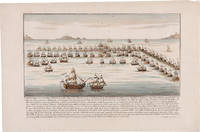
1782WRCAM56168Augsburg 1782. Handcolored engraving 11 1/2 x 17 3/4 inches. Some light soiling and tanning. Near fine. Matted. An attractive and well-preserved contemporary print by German engraver Johann Martin Will with delicate hand-coloring depicting the British and French fleets in combat formation during the Battle of the Saintes also known as the Battle of Dominica/Bataille de la Dominique. Britain's victory over the French navy in April 1782 effectively ended French control of the Caribbean. The engraving depicts over eighty ships which are keyed for identification in captions in German below the image. The upper middle ground depicts Rodney's flag ship "Formidable" and two supporting vessels attacking and breaking the French line. Among the many other ships identified are the flagship of the French admiral Comte de Grasse's "Ville de Paris" here identified as "Stadt Paris" as well as Sir Francis Samuel Drake's division Admiral Samuel Hood's division and the Prince George which according to this account broke its main mast while breaking the line. Also depicted is the French fleet's attempt to reestablish the line in which they have little luck as ships were already starting to flee. <br> <br> The battle was named after the Saintes a group of islands between Guadeloupe and Dominica in the West Indies. The year before the French fleet under de Grasse had decisively defeated the British fleet in the Battle of the Chesapeake and then blockaded the coast until Cornwallis surrendered at Yorktown helping to secure American victory in the Revolution. This time the British fleet soundly defeated the French capturing the flagship and de Grasse the first French admiral in history to be captured by an enemy and inflicting significant causalities. This emboldened the British in the ongoing negotiations with the Americans and French as well as in ongoing conflicts with Spain. The French-American alliance effectively dissolved and Britain reaffirmed its claims on the Newfoundland fisheries and Canada. Further the French and Spanish abandoned their planned invasion of Jamaica focusing instead on protecting their existing holdings. <br> <br> Johann Martin Will 1727-1806 was a prominent engraver and publisher in Augsburg who specialized in producing images for the British and American markets. A most uncommon image of an important naval battle in the West Indies. unknown books
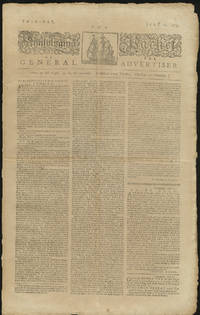
177921556.04Philadelphia PA 1779. No binding. Fine. The Pennsylvania Packet or the General Advertiser. Newspaper. The Pennsylvania Packet or the General Advertiser John Dunlap: Philadelphia Pa. July 15 1779. 4 pp. 10 1/2 x 16 1/2 in. untrimmed. The front page prints a lengthy letter from ""A Farmer of Virginia"" on inflation taxation and monetary policy. Excerpts""There are three principal causes of the depreciation of our paper-currency. First the great quantity in circulation. Second the want of confidence in the will and ability of the States to redeem it by taxes and specie. Third the deranged State of the public business and the want of effectual laws for regulating the conduct of an bringing to account all such as are employed in the service of the public.I shall endeavor to shew by what methods the quantity in circulation may be lessened and the value restored without violating the public faith or oppressing the citizens of these United States. The paper-money of these States differs from that of any country in Europe because the principle on which it is emitted is different. The principle is taxation; and if it be not duly applied the quantity must encrease according to the exigencies of the States and the credit or value will be diminished in proportion as the quantity emitted exceeds the sum necessary for a circulating medium. This will generally be ascertained by comparing the price of commodities purchased with paper-money to that which shall be purchased with specie. Taxation then being the principle on which the paper money was emitted if it had been applied when the depreciation commenced it would most certainly have produced a remedy for the evil. This would have prevented the enormity of the public debt. p. 1 col. 1-3Also on the front page: an advertisement for ""Good Bohea Tea"" sold by Jewish merchant Benjamin Seixas who had relocated to Philadelphia from New York during the British occupation. p.1 col.3This issue also contains a letter from George Washington responding to Doctor John Morgan who was in the process of a very public vindication. ""No fault I believe ever was or could be found with the economy of the Hospitals during your Directorship. Things in the first stage of the war were plentiful and cheap and I am inclined to think that you contributed as much as lay in your power to provide at the lowest rates."" p.2 col.1As well as the protests of the ""tanners curriers and cordswainers of the city"" in response to inflation: ""The depreciation of our currency is a fact so notorious that the cause of America can receive no injury from mentioning it in the course of the observations we are about to make. For many years preceding the issuing of the present currency the prices of skins leather and shoes were so proportioned to each other as to leave the tradesmen a bare living profit.The prices of leather and shoes continued the same as formerly until the depreciation of the currency had made considerable progress nor did we advance our price until the increased expence of almost every other article of consumption rendered it absolutely necessary and then we kept a great distance behind many other tradesmen and infinitely almost behind the advance on foreign articles. Thus in the beginning of 1777 when money had depreciated or which is the same thing goods had risen for the most part to three and four prices our commodities had advanced scarcely two prices.Having thus stated our ideas of this matter for your consideration we think ourselves justified before the world in declaring that we do not consider ourselves bound by the regulated prices of our commodities and we shall not observe them until a general regulation of all other articles shall take place by common consent."" p. 2 col. 2-3 p. 3 col. 1Along with other reports of the war. ""We have been twice out after the enemy's fleet but can't bring them to action. On our passage to this port in company with the Carrisfort we fell in with a fleet fr. See website for full description unknown books
1863WRCAM48378ASt. Louis: Wiebusch und Sohn 1863. Four volumes bound in one. 2208; 200 of 208; 4208 lacks pp.137-144; 2200pp. Vol. 17 lacks issue 26. Vol. 18 lacks issue 18. Folio. Half morocco and marbled boards. Spine and corners heavily worn front cover detached. Titlepage of first volume torn; second and third leaves heavily torn with some minor loss. Light to moderate foxing and wear. Else good. Lutheran German-language newspaper founded in 1844 by Carl Ferdinand Wilhelm Walther 1811- 87. The paper and its founder were key components in introducing the idea of an umbrella church for Lutherans in America and the Midwest founding in 1847 the German Evangelical Lutheran Synod of Missouri Ohio and Other States. In the 1840s and '50s Germans were the largest immigrant group in America settling heavily in the Midwest. Wiebusch und Sohn hardcover books
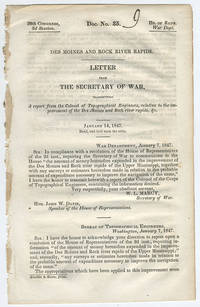
184711439Washington: Ritchie & Heiss prs. 1847. 8vo. 2 pp. <br><br>$54000 has been spent in equipment boats labor etc. for the improved navigation on the specified rivers. Removed from a nonce volume. Good condition. Ritchie & Heiss, prs. unknown books
539588vo. 3 pages approximately 225 words. "We have a nice view of the city and of the ever flowing waters of the Potomac and of the Capitol of the United States and of the President's house." Red and blue patriotic letterhead a flowing American flag and eagle "The Star Spangled Banner Must Be upheld." Folded. Very good. <br/><br/> unknown books
1925536421925. Folio. Eight pages approximately 2750 words; accompanied by another autograph letter from Russell to Trowbridge 14 March 1925; 4to four pages approximately 750 words with more information on the political situation in Missouri on the eve of war and an autograph transcription by Russell of the long poem "The Battle of Wilson's Creek August 10 1861" folio two pages with his own commentary on the poem. Folded. Insect damage to the poem and first leaf of the longer letter resulting in the loss of a number of letters but quite legible throughout. 813. Russell a native of St. Louis enlisted under Lincoln's first call for troops and served in a Missouri regiment through the summer of 1864. Following an outline of sectional struggle from 1820 and early events of the war given in the first half of the longer letter Russell describes the events of the Wilson's Creek Campaign and then his own eyewitness to history: "The Kansas boys like ourselves were resting when all at once the rebels crept up the hill to the top of the crest opened a tremendous fire right into the Iowa boys and our regiment but we went at them anyway and a hand to hand struggle began . My Captain Cary Gratz was killed . I was wounded four times and the Kansas boys were holding their own. Capt. Lyon had been hit twice once a scratch along the forehead and a light superficial wound in the knee. I was carried down the hill and placed on the hill side opposite the line of battle the valley being merely a hollow. I had a good view of the fight as it went on. My first attention was attracted to my right as I lay there and watched Capt. Lyon trying to rally the Iowa boys who were in a panic their Colonel had been killed and although the Kansas boys had saved them Capt. Lyon was rallying them into formation to use as they were then near the front. All at once I saw him rear off that dople sic gray horse and fall to the ground. Maj. Schofield also ran to his side a messenger sent for our surgeon Dr. Comyns . Capt. Lyon was carried down the hill he was shot nearly half way up from the hollow to the battle lines. The bullet had struck him squarely in the breast and had gone through his hear and he had lost the pleasure of seeing the victory his indomitable courage had won."_The Confederates commanded by Gen. Sterling Price made another assault following the death of Lyon but Samuel Sturgis rallied the Union troops and the Federal lines held. Sturgis then left the field toward Springfield and the Confederates did not pursue him. "The campaign marked the beginning of the war in Missouri and the trans-Mississippi. Afterward the Federal army withdrew to rolla Missouri leaving the Southerners in possession of most of the southwestern region of the state" "Encyclopedia of the Confederacy"._Lyon 1818-1861 a Connecticut native graduated from West Point in 1841 served in the Mexican War and on the western frontier most of the time to the eve of Civil War in "Bleeding Kansas" becoming involved in the political issue of slavery in the territories. Appointed brigadier general in May 1861 to command the Union forces in St. Louis he also led discussions with Confederate sympathizers on Missouri's position in the union; when compromise failed he launched his first military campaign which culminated in his death at Wilson's Creek. "The entire north mourned his death and he immediately became a national hero and martyr . his brilliant work had done much to hold Missouri for the Union" DAB. <br/><br/> unknown books
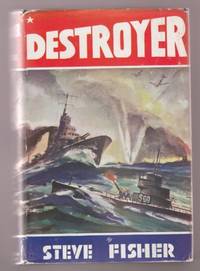
19412117NY: Appleton-Century 1941. First edition first prnt. Inscribed by Fisher on the front free endpage. "For Mark Hellinger - One of America's really great writers - this book is humbly and respectfully dedicated Steve Fisher Aug. 23 1941." Slight spinecocking beginning page toning and faint small stain on the foreedge; dustjacket with a a two inch closed tear on the front panel not immediately apparent chipping at spine ends and corners and light rubbing on the white rear panel. Tight and bright copy of Fisher's first novel. Very Good condition in a Good dustjacket with an archival cover. Fisher was widely read and respected for his short stories which appeared in the popular magazines of the 1930's such as "Cosmopolitan" "Saturday Evening Post" "Colliers" "Liberty" etc. when his first novel was published. The adaptation of his novel I Wake Up Screaming is regarded as the first of Hollywood's film-noir genre. Fisher worked on the screenplays for "Berlin Correspondent" "To the Shores of Tripoli "Destination Tokyo "Lady in the Lake" and "Song of the Thin Man" among others. Mark Hellinger's career in Hollywood included producer credits for "They Drive by Night" "High Sierra" "The Horn Blows at Midnight" and "The Naked City" among others. This copy was inscribed by Fisher during the production of the film version of the novel on which he also worked as screenwriter. Inscribed & Dated by Author. First Edition. Hardcovers. Very Good/Good. 12mo - over 6¾" - 7¾" tall. Association Copy. Appleton-Century Hardcover books
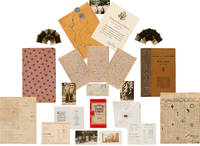
1919WRCAM55901Various locations including Ohio Georgia France Luxembourg Germany and Belgium 1919. Folio manuscript diary 153pp. one printed book and various family papers certificates dog tags photographs and more. In very good condition overall. An important and informative World War I archive belonging to Wilson Kappel of Bolivar Ohio including a phenomenal starkly-written and uncensored diary kept by him throughout his service detailing war deaths mustard gas attacks and the notable Meuse-Argonne offensive near the end of the war. Kappel 1893-1979 served as a mechanic with Company C of the 6th Infantry of the United States Army. He registered for the service on June 5 1917 was drafted in July shipped out to training in October and served until his return from Europe on July 31 1919. Kappel spent significant time in France Luxembourg Belgium and Germany during his service all of which he details here. <br> <br> By far the most significant item in the present archive is Kappel's manuscript diary which covers in amazing detail every aspect of his service from home to Europe and back again. The diary which Kappel titles in manuscript on the first page DIARY OF THE WORLD WAR is large format and closely written for over 150 pages in an eminently readable and uncensored style. It is likely that he either wrote out this diary from notes made during the war or wrote it out from memory shortly after the war. The text conveys a sharpness that immediacy that would likely have been slightly dulled by the passage of time. The diary begins with the line "I registered June 5th 1917" and takes Kappel first to the mobilization camp at Camp Sherman in Chillicothe Ohio and thenceforth to basic training at Camp Forrest in Georgia. Kappel writes in unhurried detail about training on the rifle range in Georgia traveling to Hoboken New Jersey to board a troop ship to Europe and writes extensively about his experiences overseas. <br> <br> Kappel's European diary entries begin with his arrival at the "sorting yards" at Brest France. He continues to various locations in France namely Barsubaube Soulaine Pagny- Sur-Meuse Remiremont and Le Tholy before arriving at the front and the front line trenches near Gerardmer in mid-June of 1918. At the front Kappel and his unit experience their first encounter with enemy shellings and the types of activity faced by soldiers near the front lines: <br> <br> "We all got scared as none of us ever heard a shell before and we thought they were going to hit us but they went way above our heads and went crashing against the hill side we could hear it echo many times. We got orders to lay in the ditch along the road till they stopped shelling. I and Corporal Fox of Massillon was together in the ditch he said to me 'I wish we would be back in Massillon Ohio instead of being in this ditch.' As soon as they stopped shelling we went on again. When we got within about two miles of the front line trenches the Germans must have heard us walk as they had a powerful search light on top of a high hill and they shined that down direct on us for about ten minutes and then it went out again." <br> <br> Kappel spent almost a month at the front where he writes about getting shot at by German snipers cooking clandestinely in the basement of a French church encountering a private who shot off his own finger while on guard duty firing on German patrols encroaching into the American side a strange incident in which a corporal intentionally blew his own hand off with a grenade presumably in order to avoid further service and much more in often astonishing detail. <br> <br> On July 16 Kappel and his unit left the front lines near Gerardmer continuing to St. Die and then arriving again at the front lines this time at St. Claire. On August 15 Kappel and his unit were caught in a mustard gas attack which he recounts in excruciating detail. The Germans in the area "shot over a large number of mustard gas shells all along the front.I and about fifty more soldiers all ran down in a dugout that was gas proof but the gas came in through the cracks of the door and we all had to wear our gas masks for about an hour.The gas was so strong that it got in between our shoes and leggings and many of us got blisters on our ankles." <br> <br> Two days later Kappel participated in the attack on the German border town of Frappell. Kappel writes that "The American barrage started Aug 17th 1918 at three-fifty a.m." and was met with a German response that "killed many Americans." As usual Kappel's recounting of the battle is unusually detailed and affecting ranging over several pages and including meticulous accounts of the horrors of battle. He writes in part: "At one place four American soldiers carried a wounded soldier on a stretcher in a trench. The trench was not wide enough around a corner so they had to lift him up out of the trench. Just as they were doing this a German shell came and killed all five of them." Later he writes: <br> <br> "The first shell that the Germans fired on his headquarters made a direct hit on the closet and was all blown to pieces with several soldiers in it and a few standing out around the building. I was half asleep in my dugout at the time. I had my pack rolled in the morning but I jumped up when the first shell hit. Mechanic White was with me he told me 'It is time to go' we both ran out of our dugout because it was not shell proof and just as we got outside of the door Private Raymond Barmos was rolling his pack. We both jumped over him and that was the last that was ever seen of him. He was blown to pieces a few seconds after we had jumped over him." <br> <br> Kappel's diary continues in much the same manner and with the high level of detail throughout the remainder of the text. He and his unit continue to Pouxeux St. Nicolas St. Christophe Martin Court Saint Mihiel Avirinville Rigny and Verdun. Just north of Verdun Kappel participates in the historic Meuse-Argonne offensive from September to November 1918. Kappel's account of the Meuse-Argonne offensive occupies ten pages of his diary and is typically thorough in relating the specific brutalities heaped upon the young soldiers during the Great War. A few excerpts will relay the flavor of Kappel's narrative of the offensive: <br> <br> "When we started over the top we had to cross a valley this was full of gas. The Captain told us to put on our gas masks. I put my gas mask on quick and started to walk away a German shell came and exploded to the right side of me and a piece of shrapnel went through my gas mask. I pulled my gas mask off quick and walked back a little ways and took a gas mask off a dead American soldier and put that over my face. The Germans were only a few rods away from us. We started to shoot at them they did the same. We killed some and captured a few the rest ran over the hill. We kept going after them the whole day. One German shell came and made a direct hit on Lieutenant Roche of our company. He was blown to little shreds." <br> <br> "The Germans had many barbwire entanglements here. It was a common sight to see from six to ten American soldiers lay on a pile dead. They shot a German spy at this front. He was in the American Artillery and was always shooting short. The Artillery Sergeant killed him with his revolver." <br> <br> "We stayed here for one day and night. We dug our shelter trenches two soldiers for each shelter trench.The bullets were flying thick. We had to stop digging several times and crawl behind the fresh dug grounds for safety. When Private Pike of our company was done digging his little shelter trench he reached up with his hand to tear some weeds off so he could see out better a bullet came and went right through the middle of his hand.From this place when we looked back we could see the canal river railroad and the city of Brieulles. It was nice to watch the German big shells explode. Some would hit right in the river. It would throw the water up about forty feet in the air. Some shells would hit the buildings at Brieulles and tear them all to pieces." <br> <br> "We went past a cabbage patch. We made out that in coming back that we were going to take some cabbage along with us. When we got down into Brandyville the Germans started to bombard the town. I gave the message to an officer. It took him about one hour to write out another message for me to take back. I was looking every minute for the house to get hit by a shell.I finally got my message and we all ran out of town till we got to the cabbage patch. There we stopped. Just as each one of us was going in the patch a big German shell hit right in the center and surely did make the cabbage heads fly. I got one big head and some of the others got two heads a piece. This we took back to our company and at midnight we all had raw cabbage to eat." <br> <br> After the Meuse-Argonne offensive Kappel moved on to Liny Brandeville Louppy Marville and Rehon in France then spent a short time in Luxembourg Belgium and Germany before shipping back to the States. <br> <br> In the final eighteen pages of his diary Kappel records a short history of the USS America; a couple of poems; a detailed list of Army pay with title and monthly pay; a list of Army divisions with enlistments casualties captures wounded and more; a complete roster of Company C from March 1918 "just a few days before we started for France" which includes a list of all the men who were in the unit from March 1918 to March 1919 and what happened to them during the course of the war; a list of divisions to which each unit belonged; and ending with four small color drawings and descriptions of the principal airplane markings belonging to England France the United States and Germany during the war. <br> <br> In addition to his diary the present archive is rounded out with a batch of personal papers and other material kept by Kappel and his family. These additional items include a war-dated letter from Wilson Kappel to his brother Owen sent home from France in September 1918; five early Kappel family photographs showing Wilson and Owen; a printed certificate from President Jimmy Carter honoring Kappel's service sent to Owen after Wilson's death; Kappel's dog tags; twenty-two later small photographic negatives; a Civil War bullet passed down through the family and with a note by William Kappel; a portion of the January 17 1919 issue of STARS AND STRIPES; Kappel's 8th and 9th grade report cards; his address book; Kappel's funeral notice indicating he died on Oct. 22 1979; and a hardcover book entitled THE OFFICIAL HISTORY OF THE FIFTH DIVISION U.S.A. Washington D.C.: The Society of the Fifth Division 1919 with original shipping box addressed to Wilson Kappel. <br> <br> An historically important and uncensored firsthand account of the First World War that reads like an undiscovered classic from the Lost Generation rounded out with a small selection of the soldier's personal war- related material. hardcover books
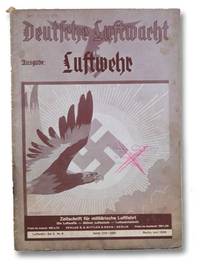
19382181998E.S. Mittler & Sohn 1938. Stapled Binding. Good. Wrappers splitting along spine ink 'File Copy' stamp on front wrapper faint stain on fore-edge margin. 1938 Stapled Binding. v 216-258 pp. A photographic guide to various military aircraft. E.S. Mittler & Sohn unknown books
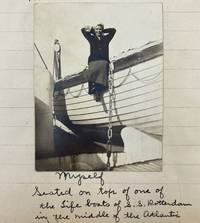
19141820Various places in Germany mostly Darmstadt as well as England Holland the Atlantic Ocean New York and Allentown 1914. Good plus. 144pp. with ten original photographs and printed document mounted at rear. Quarto commercial journal. Black cloth boards edges dyed red. Spine perished boards attached with amateur tape repairs. Text block solid. Minor offsetting from photographs; a bit of soiling to first leaf; light even tanning. Accomplished for the most part in highly legible hand; approximately 17500 words in total. A remarkable manuscript travel journal that documents the European trip of a 22-year-old Pennsylvania woman its interruption by the outbreak of World War I her subsequent stranding in Germany and her trials in securing passage back to the United States. Anna F. Weil b. about 1892 the daughter of an Allentown grocer John Weil departed New York on June 29 1914 aboard the S.S. Rotterdam a 3400 passenger luxury cruise liner operated by the Holland America Line. She arrived in Rotterdam Germany on July 9th and proceeded to connect with family and sightsee in Germany and the Netherlands with plans to proceed to Switzerland and Germany which were cut short by the declaration of war between Germany and England:<br/><br/>"Wed. July 29. To-day war was declared I have many postal cards written to send to American but was told not to send them as they would not reach their destination so all communication with outside countries is cut off. The harbor is closed and no ships can leave or enter German ports. The English cut the German cable a few days ago before war was declared so now we can't even send a telegram from Germany." p.68<br/><br/>At first the war is present in daily life but still seems some distance from it:<br/><br/>"On Sunday Aug. 23. I saw the first wounded French soldiers saw a wagon full but there were well treated by the Germans and the people expressed pity for them as they were a sad looking party. We were at Frankenstein's Castle a ruin on the mountain which can be seen way in the distance from Darmstadt. It was a very nice ramble through the woods and part of the castle is used as a restaurant where we had some thing to eat and drink before resuming our ramble in and about the castle. When at the top of the town it was nice to look over the tops of the trees over the fields and see the villages and the city away off in the distance." <br/><br/>The reality of the situation however quickly becomes more evident and more pressing:<br/><br/>"Aug. 28. Friday. Received a letter from Angeline dated July the 23d. also one from Frank dated August the 4th. Saw hundreds and hundreds of horses which are taken and sent to battle with the men. Saw many companies leaving it was a beautiful sight to see them march as one man. As they passed through the streets the women came and greeted them and gave them flowers. Horses wagons men every thing was covered with the acorn leaves the German emblem of victory and as the women gave the flowers they were placed among the acorn leaves and so they left their homes families and country with flowers and song and their flags waving high above them. It was a beautiful and inspiring sight to see them go but to think of their return made one's heart grow sad. One company that I saw Company 115 had but 30 men left after the battle the rest were dead or wounded."<br/><br/>Throughout the account her German heritage shapes a favorable view of the Germans in the war:<br/><br/>"In Belgium the Germans were very much ill treated they had to flee the country in 1 hours notice and leave every thing back Elizabeth Buehler and her brother as well as other Germans who were living in Belgium in the city of Antwerp had to flee for their lives and all their belongings were taken from them they arrived in Darmstadt with nothing but what they had on their bodies. When the war first broke out the Russians who were in Germany threw bombs and tried various ways of doing mischief. So all were given a chance to leave and got to their own country. Those who refused and did any mischief were taken into custody and placed under guard until the war is over. Those who did any wrong were sentenced to death were shot. This was at least more human that the way some of the Belgians and Russians treated and mutilated the Germans when they had done no wrong and deserved no punishment. War is war and there are rules which we cannot change and are considered honest in warfare but I don't think it right to torture or mutilate a wounded soldier whether friend or foe."<br/><br/>She remained with family at an estate on Dieburger Strasse in Darmstadt Germany until she was able to secure an emergency passport from the American Consul in Frankfurt on September 15th. The return passage was fraught as Holland America misplaced her reservation the ship was delayed and she was forced to find temporary lodgings in Rotterdam when she arrived on October 1st:<br/><br/>"When we got there the proprietor said all was taken this made the porter cross and he said he would find some kind of place for us but we were not going to take any kind of a make shift so we turned and hurried back to the station the porter took hold of my arm and tried to detain us but I broke loose and Mrs. Kramer and I ran as fast as could when we reached the station we were just in time to catch the other four who were driving away in carriages. The eldest one saw us running and stopped the team and waited for us. We got in and such a time till we found lodgings. Every thing was taken which was due to so many Americans and fleeing Belgians. We succeeded in finding a place at 2.30 am where all six of us stayed. Then there was trouble with the driver and one of the Americans went out and called a police-man and settled the trouble and we retired at 3am."<br/><br/>She eventually landed back in The States after a return trip that saw rough seas and an intense scrutiny of passengers upon landing in New York:<br/><br/>"At Staten Island the doctor came to our ship with a yacht flying the yellow flag. Here we stopped for some time the mail ship came and all mail bags were given over to this ship. Then another yacht crowded with American custom officers arrived on the scene and boarded our ship. Then we all had a hurried lunch as there was no time for supper. All had to go on deck until the dining room was in readiness for the officers. It was dark by this time and the ship under way again. When all was ready we had to stand in line with our yellow tickets. Only a few at a time were allowed to enter the dining-room. When once inside we had to look about for the table bearing the number of our ticket. Here we were interviewed by the officer at that table. Some people had a great deal of trouble and were sent from one table to another. Others were refused admission into the United Sates and some had to go to Ellis Island."<br/><br/>The rear pages of the journal are illustrated by 10 mounted original photographs of her initial journey family some sightseeing and her return passage; also tipped in are her emergency passport and a typed letter from the American consul. Overall the journal is a detailed and eventful original woman's travel manuscript as well as a rich primary record of an American civilian caught in Europe during the outbreak of the Great War. A partial transcription with additional excerpts is available upon request. unknown books
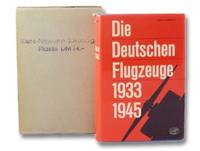
19642118807J.F. Lehmanns Verlag Munchen 1964. Hard Cover. Very Good/Very Good. Includes slipcase. 1/4 inch closed tear to jacket spine head. J.F. Lehmanns Verlag, Munchen hardcover books
1236Philadelphia: Druck von H. B. Ashmead 1863. . 8vo printed buff wrappers front pictorial small loss to front bottom outer corner; bottom outer corners of text slightly dog-eared A collection of articles on northern sedition against the Union and foreign intervention culled from leading newspapers. There is also a signed declaration by the officers of 150th Pennsylvania Volunteer Regiment scorning northern traitors who were trying to harm the efforts of the army. Funk is credited with the section "Rede eines braven alten Patrioten" and Rousseau with "Die Worte eines patriotischen Soldaten". Includes a quote from Oliver Cromwell and a call by a Democrat for both Republicans and Democrats to join together to defeat traitors to the Northern cause Philadelphia: Druck von H. B. Ashmead, 1863. unknown books
186480068México: Palacio Imperial de México 20 Mayo 1864. Secretaría de Guerra y Marina Letterhead form signed 2p Military award of merit signed on front by Juan de Dios Peza and on verso by Tomas Gomez Joaquin Sorrano and Rafael Laranga with three governmental seals. Platon Roa would become ambassador to Guatemala in 1888 Palacio Imperial de México unknown books
4739saNicosia Cyprus: The Pancyprian Committee of Parents and Relatives of Undeclared Prisoners of War and Missing Persons. Tall octavo stapled illus. wrappers 38 pp. Very Good with slight rubbing to covers. Enclosed: The Irish Times Monday June 6 1977: The Rape of Cyprus. From introduction: ‘In the summer of 1974 Turkish troops invaded and occupied over a third of the territory of the Republic of Cyprus. Over the years those who lost their loved ones their homes and their livelihoods have begun the painful process of rebuilding their shattered lives. But for us the fathers the mothers the brothers the sisters and the children of the ‘missing’ the passage of time has deepened rather than healed the wounds inflicted by the Turkish invasion. There are 1619 ‘missing’ persons our relatives. This number includes women young children other civilians and soldiers who ‘disappeared’ consequent to the Turkish invasion of Cyrus in 1974.’ The Pancyprian Committee of Parents and Relatives of Undeclared Prisoners of War and Missing Persons. unknown books
539598vo. 4 pages approximately 450 words. Fighting with the 34th New York Infantry White asks "don't you think it is all for the nigers sic I think it is and I am played out fiting sic for the damn nigers . unless we get McClellan back we shall lose our glorious union." Folded with mailing envelope. <br/><br/> unknown books
500995printed completed in holograph of the Selectmen's Office Phillips September 15 1864. Signed by 3 Phillips selectmen with stamps of the U.S. Internal Revenue totaling 7 cents. Oblong 8vo 1 page. with holograph annotations on verso. Document authorizing payment of $100.00 and interest to one William B. Wheeler for enlistment "to fill the quota of this town.". Signed by Authors. F. Soft cover. paperback books
500999printed completed in holograph monthly report form of Douglas Hospital Washington March 31 1865 signed by Assistant Surgeon William F. Aims. 4to sheet folded to form 3pp. 1 1/2pp. recto and verso. Report on the physical condition and pay account of one Ed. Burckhouse of the 131st Company 2nd Battalion: ".is a Patient here and is unfit for duty with his Regiment.". Signed by Authors. F. Soft cover. paperback books
500996printed completed in holograph transportation requisition " To New Jersey Rail Road and Trans. Co." New York February 18 1864. Legal size sheet 1 page. Signed by Authors. F. Soft cover. paperback books
500997holograph "Official Copy" in the hand of 1st Lieutenant William Stone of "General Order No. 1" on "Office Act. Ass't. Pro. Mar. Gen'l" letterhead Philadelphia April 9 1864. Order routing information in red ink at bottom in another hand. 4to 1 page. Signed by Authors. F. Soft cover. paperback books
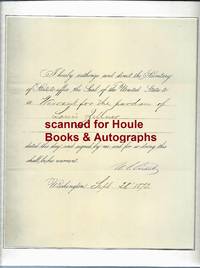
18722221603<p>"U. S. Grant" 1 page Washington D.C. September 28 1872. 11 1/4" x 9" tipped on left to album leaf. A warrant for the pardon of Louis Zellner for an unspecified crime. Fine fresh.</p><p>Grant 1822-85 Ohio-born Civil War general; 18th U.S. President 1869-77 noted for the campaign victories at Vicksburg July 1863 and at Richmond March 1865; conferred general of the armies 1865-67 and secretary of war after Stanton until the Senate restored Stanton; administration noted for corrupt officials and the Credit Mobilier scandal; spent final year sin poverty only to be restored by the success of his "Personal Memoirs."</p> unknown books
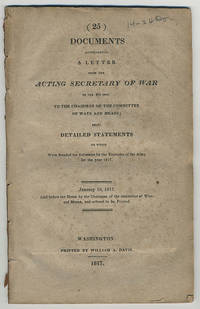
181721315Washington D.C.: William A. Davis 1817. 8vo. 32 pp. 1 folded leaf. <br><br>10 reports from various officers of the War Dept. <br>Â Â Â Â <br>Â Â Â Â Shaw & Shoemaker 42467. Removed from a nonce volume. William A. Davis unknown books
1814WRCAM16837Washington 1814. 15pp. plus folding table. Dbd. Good. A report on the status of the new war ships with a table listing the principal ships in the United State naval force. SHAW & SHOEMAKER 33231. unknown books