Gurney, Myers et Podmore :Livre Rare Book

34 339 résultats
18919414Paris, Félix Alcan, 1891 ; in-8 ; demi-chagrin maroquiné havane, dos à nerfs soulignés d'un filet doré, pièces d'auteurs tête-de-nègre et de titre bronze, tête dorée, couverture et dos conservés, non rogné (Champs) ; XVI, 395, (3) pp.
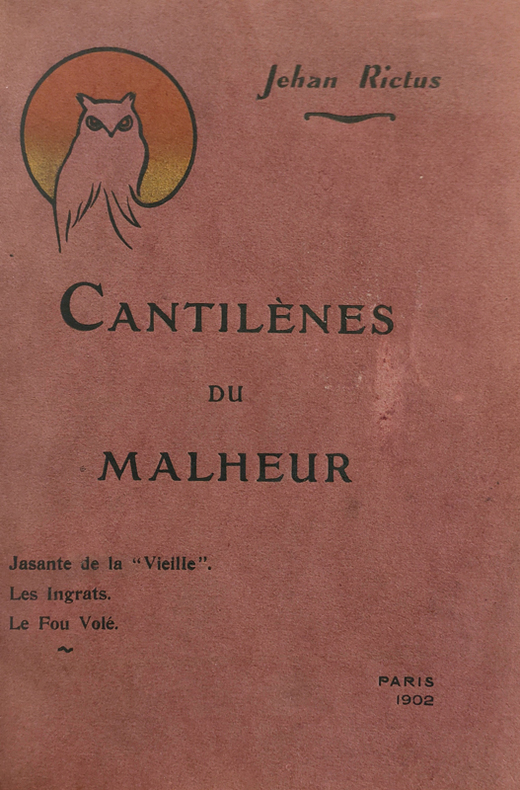
190210924Paris, P. Sevin et E. Rey (Tours, Imprimerie Deslis Frères), 1902 ; in-8 ; demi-maroquin à coins vert foncé, dos à quatre nerfs encadrant les pièces d'auteur et de titre mandarine, tête dorée, couverture prune illustrée d'un hibou sur fond de lune dorée, et dos conservés.
441 pages. Index. Extensive bibliography. "Provides for the first time in English the full story of the fundamental changes in the relationship of government to organized Buddhism in the Japan of the 1500s." - from dust jacket. Prior owner's name atop front free endpaper otherwise clean, bright and unmarked with light wear. Dust jacket now preserved in glossy new archival-grade Brodart cover. Two pieces from publisher laid-in. A high quality copy. Book
Paperback New. Available after July 15, 2008. Pre - orders now taken. Orders to delivered only after July 20, 2008.
304 pages. Black and white illustrations. "Few of us have known until the release of this book that NAFTA may be an elaborate camouflage for a totalitarian police state stretching from the Canadian Arctic to the southernmost reaches of Mexico. Yet this is the thrust of a Secret Report by a North American Counter Intelligence Military Team and certain ancillary documents. The Report cites far-reaching legislation which shifted the responsibility for law enforcement in the U.S. to the U.N. The creation of MJTF and FINCEN seem preliminary to a massive round-up of North American citizens opposed to the New World Order." - back cover. Clean and unmarked with moderate wear. Tight and square. A sound copy of this conspiracy classic. Book
193-288, 126 [ads] pages. Profusely illustrated with diagrams and black and white photos. Includes many pages of wonderfully nostalgic illustrated ads. Printed upon glossy stock. Features: The Wisconsin State Capitol, Madison, WI - Geo. B. Post & Sons, Architects; The Links Club, New York City, Cross & Cross, Architects; The Destruction of Historic Buildings as Revealed by The Official French War Photographs, Part I - Cathedral of Soissons; Nelson Goodyear - Architect and Inventor; Renaissance Architecture and Its Critics, Part II, Neo-Paganism and Art; Portfolio of Current Architecture; The Architect's Library - Prof. Schevill's "Karl Bitter" by Peter B. Wight, Books on Colonial Architecture - Part VII - Photographs, Porter's "Lombard Architecture"; Notes & Comments. Library stamp upon front cover otherwise unmarked with average wear. Two small binding holes near spine. A sound vintage copy. Book
Very Good Turkish Original manuscript color map of Middle East including Syria, Palestine and Transjordan. Signed by cartographer. 28x20 cm. In Turkish (with Latin letters). The Mapping Department, which moved to Ankara from Istanbul after the Independence War, settled in the Attar Basi Khan in Koyunpazari and the press section also started its studies in the building which is the Art School in Ulus today. In 1924, the department, which is still inside the General Directorate Garrison, moved to the hut-shaped buildings with single floor between the Military Sewinghouse and the General Directorate. On the other hand, the production of maps and plans, which were to be used in development services carried out in parallel to the revolutions starting with the declaration of the Republic and following each other, was considered to be based on a legal arrangement. Because of the necessity of an urgent legal arrangement, the bill of law concerning to the General Directorate of Mapping, whose preparations were initiated by Lieut. Gen. M. Sevki (Ölçer) who knew the importance of the subject, was sent to the Ministry of Defense at the beginning of 1925. After the approval of Ministry of Defense, the bill, which was sent to the Prime Ministry, was discussed in the Council of Ministers and presented to the Grand National Assembly of Turkey. As a result; the Mapping Department was re-organized as the General Directorate of Mapping affiliated with the Ministry of Defense with the law bearing the number 657 on May 2, 1925 in order to do all mapping works and meet the needs of maps and plans of all ministries, institutions and organizations. [.] The first application of photogrammetry was made in Kayas, Ankara with the Wild Autograph plotting apparatus which was purchased in that year. Captain Ömer Kadri and Captain Niyazi came back from their photogrammetry education in Germany. Major Halit and Major Nüzhet were sent to France for photogrammetry education and Captain Ishak and Captain Bahri were sent to Germany. Captain Ahmet (Denkmen) and Captain Ömer Kadri attended the Congress of Photogrammetry assembled in Berlin. (Source: The Illustrated History Of Turkish Cartography). Halid Ziya was born in Izmir, Tire. He went to Istanbul and continued to Hendese-i Mülkiye and Engineer Mekteb-i Âlîsi for seven years. After starting with "Aydin Province Umur-i Nafia Third Class Engineering", Halid Ziya Bey, who continued to work as a deputy chief engineer on 14 March 1910, left Aydin and returned to Istanbul after continuing this duty for about six and a half months. As a teacher, he taught Accounting, Algebra, Geometry, and Topography at Halkali Ziraat Mekteb-i Âlîsi and Darussafaka. Halid Ziya Bey, who was appointed as a teacher of Hendese and Cosmography in Kabatas High School, started to practice the profession of engineering and cadastral, which was his main specialty in 1327. After the First World War, the Istanbul Government started its activities in order to capture and neutralize Halid Ziya Bey and his friends. Upon the harsh measures taken, Halid Ziya Bey had to live as a fugitive in the Hasirci Mountains of Eskisehir for a while with the armed force attached to him. Halid Ziya Bey, who was involved in the movement in Anatolia until the end of the National Liberation Struggle, returned to his engineering duty after the proclamation of the Republic and was included in the cadastral works again. In 1925, Halid Ziya Bey was appointed as the Head of the Science Committee of the new cadastre organization. He wrote 5 books on cadastre, photogrammetry, trigonometry, and cadastral tools in 1928 and 1929. In addition, as a result of personal work in 1928, the road between the provincial division of the Republic of Turkey with cities has prepared a comprehensive map to show up in the forest and mining. (Source: Kadastro ne idi, nedir, ne olacaktir, Kadioglu - Yildirir. From Preface.). No scale.
Very Good Turkish, Ottoman (1500-1928) A very attractive chromo-lithograph map on paper. Oblong: 26,5x37,5 cm. In Ottoman script (Old Turkish with Arabic letters). Light foxing and fading on margins and printed area. A very detailed and fine double hemisphere map of the northern and southern skies, showing the various constellations, together with a third map showing the zodiacs on one paper. On the bottom margin, it's written 'Printed in the 549 Numbered Press', and 'Dersaadet...'. This map seems to be influenced (or, a direct translation) from the map of the sky of Sir Francis Baily, (1774-1844), who was one of the leading English Astronomers of the first part of the 19th Century. He is most famous for his observations of "Baily's beads" during a total eclipse of the Sun. Baily was also a major figure in the early history of the Royal Astronomical Society, as one of the founders and as the president four times. After a tour in the unsettled parts of North America in 1796-1797, his journal of which was edited by Augustus de Morgan in 1856, he entered the London Stock Exchange in 1799. The successive publication of Tables for the Purchasing and Renewing of Leases (1802), of The Doctrine of Interest and Annuities (1808), and The Doctrine of Life-Annuities and Assurances (1810), earned him a high reputation as a writer on life-contingencies; he amassed a fortune through diligence and integrity and retired from business in 1825, to devote himself wholly to astronomy. He had already, in 1820, taking a leading part in the foundation of the Royal Astronomical Society. In 1827, the Society awarded him its Gold Medal for preparation of the Astronomical Society's Catalogue of 2881 stars. He was instrumental in the reform of the Nautical Almanac in 1829. In 1837, he recommended to the British Association and later worked extensively on the reduction of Joseph de Lalande's and Nicolas de Lacaille's catalogues containing about 57,000 stars. He also supervised the compilation of the British Association's Catalogue of 8377 stars (published 1845) and revised the catalogues of Tobias Mayer, Ptolemy, Ulugh Beg, Tycho Brahe, Edmund Halley and Hevelius. His notice of Baily's Beads, during an annular eclipse of the sun on May 15 1836, at Inch Bonney in Roxburghshire, started the modern series of eclipse-expeditions. Very rare.
Very Good Turkish Original grey cloth bdg. Roy. 8vo. (25 x 17 cm). In Turkish. [xxviii], [4], [4], 1112 p., 2 full-page color maps. First map is the most famous one showing the Nile and the second one shows the Mediterranean shores and cities of Egypt. Rare first edition of the 10th, and the last volume of the Evliya's travel corpus including his descriptions of Egypt, Sudan, and Ethiopia in the late 17th century. This legendary travel account was published between 1896-1938 respectively in ten volumes. "Book X lands him in Egypt and takes him up the Nile to the Sudan and Ethiopia. When Evliya reaches Ibrim on the Nile, the southernmost limit of the Ottoman Empire, he remarks on the intense heat of the place; contrasting it with the intense cold he experienced at the northernmost limit, Azov; and with the mild climates at the eastern and western frontiers, Baghdad on the one hand, and Istolnibelgrad on the other. Apparently, Egypt suited him best, and he found Cairo a worthy counterpart to Istanbul; for he settled there to work up his memoirs of forty-one years of travel. He died around 1683, and there is controversy over whether a certain cryptic passage refers to the Ottoman defeat at Vienna.". (Evliya Çelebi's book of travels. 2. Evliya Çelebi in Bitlis). Evliya Çelebi visited Suakin during one of his journeys across Egypt, Sudan, Ethiopia, Somalia, Djibouti and Tanzania. He describes this territory under the title "The characteristics of old throne center Suakin" as "we stayed in this city for 12 days, trading with all kinds of people with camel trains. I sold 40 dromedaries in return for 500 piasters and also disburdened, sold 50 tusks for 500 piasters. Then we started to wander around the city. The Suez Sea is to the north of the island, and it takes 12 hours to reach Mecca from the island. Therefore, the direction of Mecca from this city is to the north. Suakin is a little island stretching three miles from east to west. (Afyoncu, Daily Sabah). Further travels in the 1670s took him to western and southwestern Anatolia and Syria. He completed the Hajj again and appears to have settled in Egypt for several years. He traveled in Upper Egypt, Sudan, and Ethiopia searching for the sources of the River Nile, before settling down to compile his great travel book. OCLC 630428224 (with four copies).
Very Good Turkish, Ottoman (1500-1928) Original 1/3 leather bdg. in a traditional Ottoman style. Foolscap 8vo. (18 x 12 cm). In Ottoman script (Old Turkish with Arabic letters). 276 p. Third Edition. Very early edition of this first translation of Fenelon's "Telemaque"; made by Yusuf Kamil Pasha (1808-1876), under the influence of the leading French writers and thinkers like La Fontaine, Racine, Voltaire, Montesquieu, Rousseau; which introduced early Ottoman / Turkish literature to the utopian city called "Salante" for the first time. Özege 20335.; TBTK 10653.; This third edition cannot be found in OCLC. (Utopias from the Middle East 15).
Very Good Arabic Original wrappers. Roy. 8vo. (24 x 17 cm). In Arabic. 50 p., b/w plates. First edition of this rare excerpt book to "Masâlik al-absâr fi mamâlik al- amsâr" by Arab-Mamluk statesman, geographer and historian Shihâb al-Dîn Ah?mad ibn Yahyâ al-'Umarî al-ma'rûf bi-Ibn Fadl Allâh al-Kâtib al-Dimashqî, (1301-1349). "Masâlik al-absâr fi mamâlik al- amsâr" is an account of the Mohammedan kingdoms of the west, excluding Egypt, by Shihâb al-Dîn, who was descended from an old Arab family. The countries described in the book are Abyssinia, Kanem, Nubia, Mali, the Kingdom of the Berber mountains, Ifriqiya, Morocco, and Andalusia. This rare pamphlet includes North Africa (Maghreb) and Andalusia sections of Shihâb al-Dîn's book with a commentary by Al-Wahhâb. Al-Wahhâb was a polygraph and scholar born into a family of dignitaries and high officials of the Tunisian state. OCLC 78694883, 235966687, 863484408.
Very Good Turkish, Ottoman (1500-1928) Paperback. Roy. 8vo. (23 x 16 cm). In Ottoman script. 185 p. Some stains on cover and interior. Pages are very clean. Faded on margins slightly. Otherwise a good and clean copy in its original wrappers. The work, which could not be published due to the war despite the necessary permission to be published while its author was alive, was admired by those who read it before it was published, and some copies were sent to well-known authors and intellectuals of the period such as Nâmik Kemal and Recâizâde Ekrem and were appreciated by them. Completed by Râci Efendi in 1897 and published by Necmi Râci who was his son artillery major after Raci Efendi's death as a posthumous edition, the work consists of three sections under the titles "History-i Vak'a-i Zagra" [i.e. History of the events in Stara Zagora], "Hercümerc-i Kit'a-i Rumeli" [i.e. Chaos in the Rumelia Army] and "Hicretnâme" [i.e. The book of migration]. The first part, with a short introduction by Necmi Râci and the author at the beginning, was written in a style of "memoirs" and begins with the entry of the Russians into the Ottoman lands by crossing the Danube River on 21 June 1877; The news of the invasion reaching the Old Zagra, the anxious waiting here, the persecution of the Bulgarians during the Russian invasion, the rescue of the town by the Ottoman army under the rule of Süleyman Pasha, and it ends with the depiction of the immigration and the disasters that took place with a short account of Stara Zagora and environs. The first part of the second chapter summarizes the military operation on the Rumelia front during the Ninety-Three War [i.e. '93 Harbi - Russko-Turetskaya voyna 1877-1878 - Russo-Turco War 1877-78], and the mistakes made during this time and what they cost are explained. The events that took place since the beginning of January 1878, when the Russians occupied Zagra and the surrounding towns for the second time, the situation of the Muslims and the sad scenes of the second migration are described, and parts of the articles of foreign journalists who saw this disaster are also quoted. Huseyin Râci Efendi was a müfti (clergyman) in Stara Zagora during the Russo-Turkish War of 1877-1878. (Source: Islam Ansiklopedisi). This war was a conflict between the Ottoman Empire and the Eastern Orthodox coalition led by the Russian Empire and composed of Bulgaria, Romania, Serbia, and Montenegro. Fought in the Balkans and in the Caucasus, it originated in emerging 19th-century Balkan nationalism. Additional factors included Russian goals of recovering territorial losses endured during the Crimean War of 1853-56, re-establishing itself in the Black Sea, and supporting the political movement attempting to free Balkan nations from the Ottoman Empire. The Russian-led coalition won the war, pushing the Turks back all the way to the gates of Constantinople but for the timely intervention of the western European great powers. (Wikipedia). Roumi 1326 = Gregorian 1910. Özege 19975. Extremely rare.
Very Good Turkish, Ottoman (1500-1928) Original wrappers. Cr. 8vo. (20 x 14 cm). In Ottoman script (Old Turkish with Arabic letters). 15 p., b/w portrait of Charles Darwin, (1809-1882) on front cover. Taken from a volume including multiple booklets. Minor wear on spine. Small tear on pages' extremities. Slightly faded on pages. Otherwise a good copy. First and only edition of the first Darwin biography in the Ottoman / Turkish world. "Büyük Adamlar Serisi" [i.e. The "Big Men" series], consisting of about 41 small books, all of which were published in 1927, by a delegation under the presidency of the body and some of which were written by him personally, filled an important gap on 'biography' field in its period. This delegation includes Ali Resat, Tezer Agaoglu, Galip Ata Ataç besides Gövsa. This small book is the first and ever biography of Darwin in Ottoman literature. Gövsa was an Ottoman / Turkish writer and poet who is known for his biography and encyclopedia studies. Extremely rare. Özege 3636.; Not in OCLC.
Very Good Turkish, Ottoman (1500-1928) Paperback. Folio. (33 x24cm). In Ottoman script and French. [3], [1] p. Ottoman stamped in period. The Ottoman Empire used anthems since its foundation in the late 13th century, but did not use a specific imperial or national anthem until the 19th century. During the reign of Mahmud II, when the military and imperial band were re-organized along Western lines, Giuseppe Donizetti was invited to head the process. Donizetti Pasha, as he was known in the Ottoman Empire, composed the first Western-style imperial anthem, the Mahmudiye Marsi. Like in many other monarchies of its time, the anthem of the Ottoman Empire was an imperial anthem, not a national one. Hence it paid homage to a specific ruler and a new anthem was composed at each imperial succession. However, in 1844, with the Tanzimat reforms, the Mecidiye Marsi was recognized as the first official Ottoman national anthem. The first official Ottoman national flag (which was in essence identical to the present-day Turkish flag) was also adopted in 1844. Giuseppe Donizetti was an Italian musician. From 1828 he was Instructor General of the Imperial Ottoman Music at the court of Sultan Mahmud II (1808-39). His younger brother was the famous opera composer Gaetano Donizetti. He studied music first with his uncle, Carini Donizetti, and, later, he was a pupil of Simone Mayr. After enlisting in Napoleon's army (1808), he served there as band leader. He took part in the campaigns against Austria and in Spain, and followed Napoleon to Elba. He was present at the Battle of Waterloo. After the fall of Napoleon, he continued his career as a bandmaster in the Savoy army. Giuseppe Donizetti Pasha, as he was called in the Ottoman Empire, played a significant role in the introduction of European music to the Ottoman military. Apart from overseeing the training of the European-style military bands of Mahmud's modern army, he taught music at the palace to the members of the Ottoman royal family, the princes and the ladies of the harem, is believed to have composed the first national anthem of the Ottoman Empire, supported the annual Italian opera season in Pera, organised concerts and operatic performances at court, and played host to a number of eminent virtuosi who visited Istanbul at the time, such as Franz Liszt, Parish Alvars and Leopold de Meyer. Although the elder Donizetti was born in Bergamo, Italy, Constantinople became a second home for him, and he lived there until his death in 1856. He is buried in the vaults of the St. Esprit Cathedral, near the Beyoglu district of Istanbul, in Pera. Giovanni Avolio, (1849-1936) was an Italian conductor and composer. According to the sheet musical paper, this first anthem was composed in 1831 by Donizetti and arranged by Avolio into piano in 1918. J. D. Andria is one of the best known music publishers among the Ottoman Empire mionrities. According to he documents in hand, it can be estimated that he began musical score publication in the year of 1904. Andria dealt with music publication at the address of Beyoglu, Istiklal Street (Near Agha Mosque) at 68 no. Andria also published four pieces of Turkish marche parties for piano as far as we know; besides his big sized west music works, which were published in general by him. Donizetti's 'Marche' is one of them as well besides Halit Recep Arman's, Miilok's, and Orente's ones. It is known when publishing life of Andria ended. (Source: Musical publications from Ottoman Empire up today, 1876-1986.; BÜLENT ALANER).
Very Good Turkish, Ottoman (1500-1928) Original wrappers. Cr. 8vo. (19 x 13 cm). In Ottoman script (Old Turkish with Arabic letters). 39 p., portrait of Ziya Pasha on the front cover. First edition of this Turkish political utopia by Ziya Pasha, published posthumously, describing his dream. In his dream, he had a conversation with the sultan of the time, Abdülaziz, during which Ziya Pasha told the sultan that the country was mismanaged and the reasons for this mismanagement. He informs the sultan about the main aims of the society called the New Ottomans. Ziya Pasha, the pseudonym of Abdul Hamid Ziyaeddin was an Ottoman writer, translator, and administrator. He was one of the most important authors during the Tanzimat period of the Ottoman Empire, along with Ibrahim Sinasi and Namik Kemal. Özege 4592. (Utopias from the Middle East 6).
198295273United States Government Printing 1982-01-01. Hardcover. Good. Good; Ex-Library; Hard Cover; United States Government Printing; 1982; 0 United States Government Printing hardcover
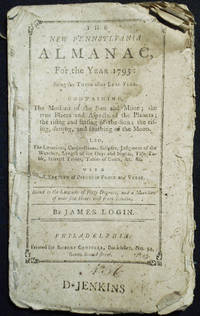
1794007663Philadelphia: Robert Campbell 1794. Paperback. Good. 32 p.: woodcut illustration tables; 19 cm. Stitched. Wrapper included in page count. Wrapper title. Woodcut illustration of "The Anatomy of Man's Body as governed by the Twelve Constellations." "DJenkins" stamped at lower edge of front wrapper. Not in Early American Imprints or WorldCat. Very scarce. In Good Condition: restitched at some point; some chipping from fore-edges; old dampstaining heaviest on first 2 leaves; hole at upper corner of back wrapper with minor loss of printing from tables; corners creased. Robert Campbell paperback
18570104891857. Hardcover. Good. Approx. 200 pages; 31 cm. Calf spine and marbled paper over boards. Contains: 66-page store ledger with surname index 1856-57; 71-page "Accounts of the Firm of Shank & Weltmer" 1857-58; 52-page "Diary by C. H. Shank" Jan. 1868-April 1870. Christian Henry Shank 1834-1895 son of Henry and Magdalena Shank was born in North Annville Township Lebanon Co. Pa. He worked in stores in Annville and Union Deposit; farmed the Shank homestead in North Annville; engaged in timber land speculations in North Carolina; went into the shoe business with John Kelchner; and was the bookkeeper of the Lebanon Stove Works. He married first Leah Landis 1842-1868 with whom he had Alice 1859-1938 Clara 1860-1881 and Ida 1868-1868; and second Barbara Funck 1840-1924 with whom he had Florence 1879-1956 and Henry 1881-1949. In the period covered by the diary he was working the farm and then moved into Lebanon and started working in a store. His non-work activites included: travelling to Virginia for a week; attending camp meetings the state fair political meetings a convention in Lebanon "the Drummer Boy of Shiloh" possibly the play by Samuel Muscraft church conferences and lectures and an organ dedication; serving as a juror; joining a hay fork company; and taking goods to the poor house. His wife Leah Landis Shank "gave birth to a Female child" in Feb. 1868; on Sept. 2 he notes: "Been to the Doctor several times about my wife she died at Quarter past one oclock." Several days after the funeral he rented out the farm and mill. The baby Ida who had been staying with his mother in Lebanon died a month later. In Feb. 1869 he sold his personal property at the farm moved to a house he had purchased in Lebanon and started working in John Rauch's store. He continued to be involved in various other money-making ventures including raising and selling Italian bees; making medicine "under the name of Shank Heiss & Co"; and investing in a hay rake company and in land in the Bay River area of North Carolina which he visited in Jan. 1870. In Nov. 1869 he "Left for Detroit Michigan this morning to have Perry arrested and brought in to Lebanon if Possible but he made his escape to Canada" probably someone who owed him money. In Jan. 1870 he notes that he "spent a few hours after church with Miss Funck" which continues regularly until the beginning of April when he prepared to return to North Carolina. In Good Condition: loss of leather from spine; back board is detached but present; old dampstaining at upper edges of ledgers and into upper half of pages in the diary which is still legible. hardcover
1994057869Pasadena: A. C. Vroman / Ward Ritchie 1994. 1st Edition 1st Printing. Hardcover. Fine. Photographs. 138 Pp. Brown Cloth Gilt Over Patterned Boards. One Of 2000 Copies Of The Trade Edition. Fine No Wear Or Damage. Inscribed By The Author "With Affectionate Best Wishes To Nancy From Her Friend Jane" And With Ownership Signature Of Nancy Parsons. <br/> <br/> A. C. Vroman / Ward Ritchie hardcover
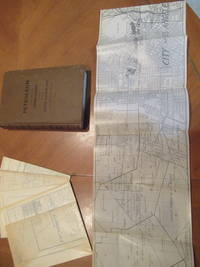
1913057427California State Mining Bureau 1913. 1st Edition . Hardcover. Very Good. Plates Maps. 430 Pp 3 P Catalog At Rear All 6 Folding Maps In Pocket At Rear. Brown Cloth Lettered In Black. All Maps Clean Unworn Complete No Damage. Long Fold-Out Map Of Los Angeles Centered On Wilshire And Westward Shows That Much Of Los Angeles Including Many Of Its Most Valuable Present Real Estate Was Then Just Oil Fields- Today Tens Or Hundreds Of Billions Of Dollars Worth Of Residential And Commercial Property Almost Completely Built Out Over About 50000 Acres. <br/> <br/> California State Mining Bureau hardcover
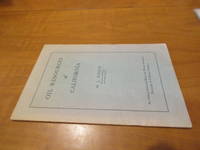
1910029394Berkeley / San Francisco: Mining Association University Of California / Bolts And Braden 1910. 1st Edition . Soft cover. Very Good . 24 Pp. Green Card Covers Printed In Dark Green Text Printed In Black With Red Marginal Summaries. Very Good Some Fading At Edges Minor Wear. Per Wikipedia Mark L. Requa 1866 -1937 Was An American Mining Engineer And Petroleum Conservationist. Mark Lawrence Requa Was The Son Of Isaac Requa A One Time President Of Oakland Bank Of Savings And Who Made A Fortune In Silver And Gold Mining In Virginia City. He Was Also An Engineer With Comstock Mining And Served As President Of The Central Pacific Railroad. Requa Was Educated At The Requa School In Piedmont California And At Private Schools. He Was Admitted Into Yale University But Could Not Attend Due To Poor Eyesight. Requa Was The Manager Of The Eureka-Palisades Railroad. Requa Organized The White Pine Copper Company In 1902. In 1904 Requa Merged The White Pine Copper Company And The Boston And Nevada Copper Company Into The Nevada Consolidated Copper Company. He Formed The Nevada Northern Railway To Transport Copper Ore From The Robinson Mine Near Ely Nevada To Cobre Nevada. Requa First Met Herbert Hoover In 1905. Requa Served As Vice President Of The American Institute Of Mining Metallurgical And Petroleum Engineers From 1917 To 1920 And Served As A Trustee From 1917 To 1919. He Also Served As A Member Of The American Petroleum Institute. Herbert Hoover Brought Requa With Him When He Joined The U.S. Food Administration In June 1917 And Requa Served As His Assistant. By 1918 Requa Was In Charge Of The Commercial Relations Division Of The Food Administration. He Also Served As A Consulting Engineer With The U.S. Bureau Of Mines. In January 1918 Requa Became The Director Of The Oil Division Of The U.S. Fuel Administration. He Helped To Coordinate The Production And Marketing Policies To Enable The Oil Industry To Support The Military Needs Of The United States During The War. He Served In That Role Through World War I Until The Administration Was Dissolved On June 30 1919 And Also Served As The Petroleum Waste Conservator. He Established "Motorless Weekends" While At The Fuel Administration. In 1921 At The World Engineering Congress In Tokyo Requa Warned Nations About Wasting Petroleum. After The War He Moved Back To California. Requa Would Help Manage Hoover's Campaigns For The 1928 And 1932 Presidential Elections. In 1930 Requa Served As Chairman Of The San Francisco Bay Bridge Commission; The Commission Set Up To Determine The Site Of The San Francisco Bay Bridge. He Served As A Committeeman From California To The National Republican Committee From 1932 To 1936. Requa Partnered With Hoover In Mining Ventures After His Presidency; Hoover Had A Son Who Was Prominent In Oil Exploration In South America And Elsewhere. Requa Wrote At Least Two Other Books Grubstake And The Relation Of Government To Industry. <br/> <br/> Mining Association, University Of California / Bolts And Braden paperback
1935036820Los Angeles California: Title Guarantee And Trust / Title Insurance And Trust 1935 1936 1937 1938 1942 1946 1949 1951 1956 1957 1959 1961 1935. First Edition 1st Printing. Soft cover. Very Good/No Dust Jacket. 9 1/4" High. A Group Of 30 Different Booklets Including 19 Different First Printings 1935-1961 One With Second Issue Tipped In Slip 8Th Printing Of Old Spanish And Mexican Ranchos Of Orange County Six Are First Printings Of Later Revisions There Were Many Minor Revisions Usually Each Time They Were Re-Issued. Several Have Notations On Covers That They Were Gifts To Dr. George Hill Hastings From Arthur Mordan President Of Title Guaranty Who Employed Robinson. The Beverly Hills Book Has A Presentation Inscription From Mordan To Hastings The Island Of Santa Catalina Has A Long Notation By Hastings That It Was A Gift From Robinson Upon The Death Of Mordan A Dear Friend; Signed H. H. All Very Good To Near Fine Except Culver City Which Has Wear And Some Damp Spotting Centered On Spine And Extending Inwards Up To 1/4"; And The Forest And The People Is Only Good Worn And Some Small Light Water Spots. <br/> <br/> Title Guarantee And Trust / Title Insurance And Trust 1935 1936 1937 1938 1942 1946 1949 1951 1956 1957 1959 1961 paperback
1904058095Boston: Richard G Badger 1904. First Edition First Printing . White Cloth / Green Boards. Near Fine/No DJ. 45 Pp. White Cloth Over Green Boards. A Very Nice Example No Wear To Paper Covered Boards Contents As New Slight Wear And Browning. Bookplate Of Charles F. Saunders His Personal Copy. Charles Francis Saunders 1859-1941 Was Born To Quaker Parents In Bucks County Pennsylvania. He And His First Wife Elisabeth Hallowell Saunders D. 1910 Were Both Avid Naturalists; Charles Began Publishing Essays On Botany As Early As The 1890S. Charles And Elisabeth Also Collaborated On A Number Of Publications He As Author She As Illustrator. After A Honeymoon Trip To California And The Southwest In 1902 The Couple Moved Permanently To California In 1906 And Settled In A Craftsman Bungalow On North Lake Avenue In Pasadena Where Charles Devoted Himself Full Time To Writing. He Eventually Published More Than A Dozen Books Inspired By California And The Southwest. Both Charles And Elisabeth Were Amateur Photographers And Many Of Their Photographs Were Used To Illustrate Saunders' Books The Indians Of The Terraced Houses 1912 And Under The Sky In California 1913. In 1921 Saunders Married Mira Barrett Culin D. 1968 Whom He Had Met At The Pasadena Garden Club. Also A Writer Mira Shared Saunders' Interest In Gardens Botany And Photography. For Many Years Mira Published Articles On Pasadena Gardens Parks And Trees In The Pasadena Star News For Which She Took Dozens Of Photographs. First With Elisabeth And Then With Mira Saunders Travelled Extensively Throughout California And The Southwest Photographing All Of The California Missions The Regions' Natural Wonders Native Americans And Flora Among Other Things. These Interests Became The Subjects Of 18 Books And Numerous Essays And Articles Saunders Published In His Lifetime. Many Of These Books Were Illustrated With Photographs Taken By Their Author On His Many Excursions. Saunders' Collection Of Native American Pottery And Crafts Is Now In The Collection Of The Southwest Museum Los Angeles And His Botanic Library Is In The Possession Of The Santa Barbara Botanic Gardens. Source: Apostol Jane. "Southern California Through The Lens Of Charles Francis Saunders" Southern California Quarterly Volume 81 Spring 1999: 1-88. <br/> <br/> Richard G Badger hardcover
1920018932Santa Barbara: Orena Studios 1920. First Edition . Illustrated Card Wrappers. Good/No Dust Jacket. 7 1/2" Tall. 268 Pp. Card Wrappers With Mission And Title And Author's Name On Front Cover Title Author And Publisher On Spine. Most Of First 48 Pages Were Neatly Broken Or Cut Off Near The Gutter Edge Then Re-Attached With Tape; Possibly They Were Bound In Incorrect Order And Then Re-Attached In Correct Order. In 1920 Clarence A. Black Sold The Covarrubias Adobe To John R. Southworth A Writer And Historian Who Had Lived In Mexico For 34 Years Before Moving To Santa Barbara Where He Opened An Antique And Curio Store In The Oreña Studios. Southworth Remodeled The Covarrubias By Cladding The Interior With Asbestos Wallboard And Redwood In A Gothic Style. Outside He Constructed A Wall Of Cement Around And Underneath The Old Walls Making A Cradle To Insure Its Survival For Another Hundred Years. Also In 1920 The Natural History Museum Was Under Pressure To Vacate Its Premises At 930 Anacapa Street So A Women'S Hotel The Margaret Baylor Inn Could Be Built. They Announced The Sale Of Their Adobe Building And Hundreds Of Old "Indian-Made" Roof Tiles. No Buyer Stepped Forward And The Native Daughters And The Native Sons Of The Golden West Advocated Demolishing The Old Adobe Which They Felt Had No Historic Significance. John Southworth Came To The Rescue Purchased The 1836 Malo Adobe And Laid Plans To Move It Next To The Covarrubias. "It Will Be The First Adobe In California To Be Moved Without Melting Away" He Said. By 1924 Its Resurrection Was Complete And It Rested Across From The Covarrubias Leaving A Charming Patio Between. For The Next 18 Years The Covarrubias And The Historic Adobe Were Alternately Leased In Whole Or Part By Southworth Who Periodically Lived There And Ran His Antique Business. Lessees Included Residents Who Ran A Tearoom Antique Dealers A Photographic Studio An Interior Decorating Business Shops And Art Gallery. In 1932 Mebane Beasley Opened A Vocal Studio At The Covarrubias. After A Recital The Reviewer Remarked "The Charm Of The Large Room Where The Recital Was Held Is Felt In Its Lighting Of Candles And Everywhere Are To Be Seen Delightful Old Paintings And Furniture While The Steinway Piano In Its Most Original Casing Is A Work Of Art." In Keeping With The Music Theme In 1935 Roger Clerbois A Founder Of The Community Arts Association Orchestra Leased The Covarrubias For His Mozart Society. In 1936 Southworth Tried To Rid Himself Of Both Adobes And Put Them Up For Auction. The Morning Press Report Was A Bit Wistful As It Stated "The Buildings Though Privately Owned Have Been Among The Principal Show Places Of Santa Barbara For Years And Have Been Regarded Almost In The Light Of Community Possessions." Back In 1931 The California State Chamber Of Commerce Had Marked Them As One Of 18 Points Of Historic Interest In Santa Barbara County. There Were No Takers At The Auction However And They Were Leased Out Again. Santa Barbarans Must Have Been Pleased When The New Business "Los Adobes" Advertised They Had Opened A Night Club With Dining Dancing And Cocktails. That August Eddie Valencia And His Beach Combers Entertained With Their Signature Big Band Sound Tinged With A Hawaiian Twang. Dancing Began At 8:30 Pm On A Newly Installed Dance Floor. In 1938 Southworth Was Finally Able To Sell The Adobes. Los Rancheros Visitadores Planned To Restore And Preserve Them As A Club Center Complete With Museum And Art Gallery. Leo Carrillo Direct Descendent Of The Pioneer Carrillo Family Became Head Of The Building Committee And Was Assisted By Architect Joseph Plunkett. They Replaced The Shingle Roof With Tile Restored The Adobe Walls While Adding Buttressing And Restored The Fountain In The Courtyard. They Named The Complex "Los Adobes De Rancheros" And Invited The Public To Visit. Donations Of Art And Other California Relics Provided Décor As Did A Unique Set Of Paintings Of The California Missions By California Artist Will Sparks. <br/> <br/> Orena Studios unknown
2019SKU0591356National Association of State Contractors Licensing Agencies NASCLA 2019. spiral_bound. Good. 9x7x1. Textbook May Have Highlights Notes and/or Underlining BOOK ONLY-NO ACCESS CODE NO CD Ships with Tracking National Association of State Contractors Licensing Agencies (NASCLA) unknown