Radl, Anton - 1774 Wien - Frankfurt am Main 1852Antiquariat.de

48 779 résultats
445-Eo.J. Feder in Grau, über Bleistift, auf Bütten mit Wasserzeichen: D & C Blauw, rechts unten signiert ?A. Radl?. 17,6:22,6 cm. Provenienz: Dr. Julius Cahn, Basel, ehemals Frankfurt a.M. Literatur: Ausst. Katalog:Anton Radl 1774-1852. Maler und Kupferstecher. Frankfurt a. M., Museum Giersch 2008, Nr. 94, Abb. Seite 218. Vorzeichnung zu einer Gouache, im Besitz der Graph. Sammlung Städel (Inv. Nr. 1770). Die Zeichnung ist nach einem Kupferstich von Pieter van der Borcht (ca. 1535-1608) entstanden. Vgl. New Hollstlein 197.
652-Eo.J. Bleistift, auf Velin, links unten bezeichnet und datiert ?rechts der Eisenbahnbrücke. Sept 1847?. 13:21 cm. Mit Nadellöchlein in den Ecken. Provenienz: 1. Sammlung R. Meyer, nicht bei Lugt; 2. Sammlung G. C., nicht bei Lugt.
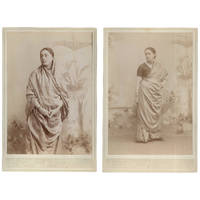
1892307182San Francisco: Abell & Priest 1892. Two fine images of pioneering physician Pauline Root dressed in a sari presumably one she wore in Madurai India while working as a doctor for the American Board of Commissioners for Foreign Missions ABCFM. <br /> <br /> Root 1859–1944 graduated from the Women's Medical College in Philadelphia and was the first female doctor to hold many posts throughout her working life. She spent seven or eight years in India establishing a Woman's Hospital in Madurai. She left India in 1891 and visited China and Japan before returning to the West Coast of the United States giving talks on her work to Christian groups along the way. She gave a lecture to the Occidental Board of Foreign Missions in San Francisco on February 3 1892 and these photographs are likely to have been taken at that time. <br /> <br /> After returning to the East Coast Root studied surgery at Cornell obtained licenses to practice in Massachusetts and New York and took a position as the resident physician at Smith College. In the 1920s she taught "social hygiene" sex-ed for the Bureau of Indian Affairs. <br /> <br /> Nineteenth century photographs of Dr. Root and other female physicians are uncommon. Drexel University has two poor condition cabinet cards of Root in Japan a few months before she arrived in San Francisco. Both images are fine with medium contrast sepia tones. The albumen silver prints measure 3-3/4 by 7-7/16 inches on 4-1/4 by 6-7/16 inch mounts. The photographer's imprint is "Abell & Priest Bancroft Building / 723 Market St. S.F. Cal." Both have blank backs with the notation "Dr. Pauline Root" and "India. Abell & Priest unknown
192226368France: Artist Published 1922. Signed by the artist in pencil below the image at bottom right; at left is the artist's tear-drop shaped red 'seal' and the pencil '40.' Our research indicates this piece was accomplished circa 1922 the catalog raisonne giving it the title 'Dreaming'. There is a pencil title written at bottom left "The Evening" as well. Reverse with a small "Made in France" oval sticker. The art approx 210 x 155 mm approx. 8 1/4" x 6 1/4" size; the overall sheet size is approx. 390 x 270 mm 10 1/2" x 15 1/4" bottom edge deckle. Some darkening to the paper; faint old crease line top right corner; in very good condition; a lovely moody image evocative of the 'dream' state of the title. Art. Not Bound. Very Good. Artist Published paperback books
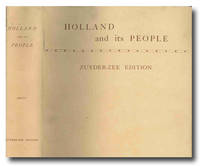
1885WRCLIT66997New York & London: G.P. Putnam's Sons 1885. Quarto. Publisher's mauve cloth heavily decorated in gilt and blind untrimmed. Plates and illustrations. Minor speckling to the cloth sizing at the extreme foretips some foxing early and late and occasionally to a few margins of plates institutional bookplate on pastedown otherwise about fine and bright in faintly hand-smudged printed dust jacket with some offsetting to the lower panel from the rather battered publisher's box. The "Zuyder-Zee Edition" limited to 600 numbered copies of which this is one of 250 copies on untrimmed Linen paper. However this copy is at variance with the colophon in that it is accompanied by the extra suite of ten mounted etchings specially printed on satin that was to accompany the first 25 copies rather than the two sets of ordinary impressions associated with this middle issue. The corners of the mats are a bit bumped and worn and one of the etchings is a bit foxed otherwise the suite is in very good order in the chipped remnants of the original printed paper wrapper also bearing a bookplate. This deluxe edition features original etchings some in Japon proof state by and photogravures after the likes of Pennell Gifford Vanderhoof Colman et al. The jacket is not among those selected examples of 19th century jackets cited by Tanselle. G.P. Putnam's Sons hardcover books
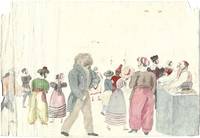
186018931860. Watercolor and pencil on cream wove J Whatman 1827 paper with a partial watermark 7 x 10 1/8 inches 176 x 256 mm the full sheet. The left sheet edge has significant wear; the result of its removal from a page in an album to which the sheet was tipped in. There is also a horizontal tear in the center left sheet edge which extends approximately one inch into the image through the image of the figure with outstretched arms. Small corner losses at the the top right and left sheet as well as a small 1/4 inch at the lower left corner. Colors are extensive and saturated. unknown
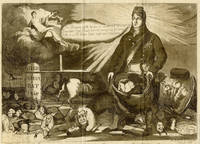
18111538London: The Satirist 1811. Etching with aquatint on buff wove paper with an 1808 watermark 9 3/4 x 13 inches 248 x 330 mm wide margins. Scattered paper repairs on the verso as well as four vertical hard creases and one horizontal crease in the lower quadrant of the sheet. Scattered uniform age tone. The Satirist or the Censor of the Times was a controversial 19th-century British newspaper which featured reports of scandals involving well known residents of London. It was published by Barnard Gregory who faced multiple libel charges and was later imprisoned due to its articles. The Satirist unknown
183426035Italy 1834. Pen-and-ink watercolour and gouache painted black border titled and dated in white gouache in the lower margin within the border. Lovely 19th-century watercolour of Palermo.<br/> <br/> Catering to the foreigners flocking to the region on the Grand Tour this lovely watercolour shows the town of Palermo with its beautiful hills and mountains in the background with a large fort in the harbour with a British and French ship beside it. The sky is awash in pinks and blues displaying the incredible light of the region. unknown
185528465Susquehanna Depot 1855. Pencil pen and ink. Signed in ink: "Theodore Krausch. Susquehana sic Depot. N.Y. and Erie Railroad. October 13 1855." A very handsome drawing of a locomotive by a prominent inventor and engineer.<br/> <br/> Theodore Krausch dates unknown was employed by what was then known as the New York and Erie Railroad at Susquehanna Depot where railway cars and locomotives were designed built and repaired. The town in northeastern Pennsylvania just below the New York border and Binghamton came into existence with the coming of the railroad. Krausch who obtained several patents during his life one for innovations in railway chair design also received a Silver Medal from the American Institute of the City of New York for a drawing of a locomotive no doubt similar to this one. During the 1850s when railway lines and companies were spreading out across the country each railroad customized its engines and cars to its specific needs. There was a large degree of standardization and this Krausch drawing is a perfect rendition of the 4-4-0 wheel arrangement and overall design that was used almost universally in 19th century America. unknown
196065476ABMilano., E.P.I. editoriale periodici italiani., 1960. 30 x 21 cm. 24 unpaginierte S. OKarton., 65476AB Umschlag an den Rändern leicht nachgedunkelt, etwas angestaubt und am Rücken etwas berieben und marginal knitterspurig. Gutes Exemplar.
FH-101o.J. Farbholzschnitt und Lithographie, 1897, auf Bütten, links unten außerhalb der Darstellung monogrammiert. Darstellungsgröße 28,9:20,4 cm, Blattgröße 37:28,2 cm, mit Seidenhemdchen. Erschienen in: PAN 1897/98, 4, S. 242.- Literatur: Söhn HDO 52804-4; Ausst. Katalog: Daniel Studer, Faszination Farbholzschnitt. St. Gallen/Reutlingen, 2016/17, Farbabb. S. 28. Studer bemerkt zu diesem Blatt: ?Von ganz anderer Auffassung ist Paul Herrmanns in der gleichen Nummer erschienenes ?Spielendes Meerweib?. Fläche und Form sind aufgelöst, die Komposition zerfließt in einzelne Linien, jegliche Tiefenwirkung ist aufgehoben, und die Figur der Frau mit Fisch und der Hintergrund liegen auf einer Ebene. Die in Mischtechnik (drei Holzplatten plus Lithographie) entstandene Graphik wirkt schon fast divisionistisch. Sie entstand unter dem Einfluss der gleichzeitigen französischen Kunst - Herrmann arbeitete damals in Paris und nannte sich auch Henri Héran - und kann als wichtiges und frühes Werk des floralen Jugendstils bezeichnet werden.? - Bei seinem Vergleich bezieht sich Studer auf den Farbholzschnitt von William Nicholson ?Alte Frau?, der in derselben Nummer des PAN erschienen war. [2 Warenabbildungen]
299-Eo.J. Aquarell und Feder und Pinsel in Grau, über Bleistift, auf Bütten, verso von älterer Hand bezeichnet ?Brn v Klein fec?, am Oberrand der Zeichnung mit Ortsbezeichnungen von der Hand des Zeichners sowie einer Nummer. 21:29,5 cm. - Papierrand rechts und unten etwas unregelmäßig. Provenienz: Sammlung Heinrich Stiebel, Lugt 1367. Vergleichsliteratur: Ausst. Katalog: Arkadien am Mittelrhein. Caspar und Georg Schneider. Mainz, Landesmuseum 1998, Nr. 138 mit Abb.
FH-172o.J. Farbholzschnitt, 1907, auf Japan, auf festeres Japan kaschiert, mit Bleistift signiert, datiert und als ?Aquarellhanddruck? bezeichnet. Darstellungsgröße 33,9:24,4 cm, Blattgröße 36,8:26,2 cm. - Mit vereinzelten Braunfleckchen.- Literatur: Führer des Rhein. Landesmuseums in Bonn: K. A. Reiser, Graphik des deutschen Jugendstils. Düsseldorf, 1972, Nr. 109.
098-Io.J. Kohle mit gelber Deckfarbe gehöht, auf grauem Papier, links unten bezeichnet ?Unterberger ?. 35,8:27,8 cm. Provenienz: Sammlung Comte A. d?Auffay (?), Lugt 63.
FH-253o.J. Farbholzschnitt, 1909, auf dünnem Japan-Bütten, mit Bleistift monogrammiert und datiert ?1910? und als ?Probedruck? bezeichnet, auf Untersatz montiert und bezeichnet ?Orig. Holzschnitt?. Blattgröße 21:16,7 cm. - Mit zwei Knickfalten, am Oberrand auf Untersatz geklebt. Sehr selten!
088-Do.J. Feder in Dunkelbraun, grau und blau laviert, auf grautonigem Bütten mit Wasserzeichen: Baseler Stab, verso ältere Sammlernotiz und -nummer. 19:30,2 cm. Vergleichsliteratur: Ausst. Katalog: A. de Andrés/H.Chr. von Tavel, Windwende. Menschen und Landschaften in der Schweizer Malerei um 1800. Pfäffikon 2002, Nrn. 44-53 mit farb. Abb.
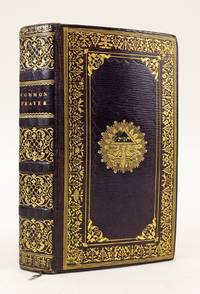
1820ST15600London: Printed by George Eyre and Andrew Strahan 1820. 142 x 80 mm. 5 5/8 x 3 1/8". 510 pp.; 80 2 pp. <br/> VERY FINE CONTEMPORARY STRAIGHT-GRAIN PURPLE MOROCCO ELABORATELY GILT covers with frame of gilt rules and anthemion-and-flower roll central panel with arabesque corners central sunburst medallion containing the Tetragrammaton within a triangle from which the dove of the Holy Spirit descends raised bands spine panels gilt in a floral and arabesque design gilt titling turn-ins with zig-zag gilt roll orange endpapers all edges gilt. Front pastedown with large morocco bookplate of Louisa Smyth dated 25th Dec. 1821 and signed with the initials E. P. Front flyleaf inscribed: "Harriet E. Thorpe / From her affectionate / Brother-- / As a remembrance of / her dear Aunt L. Dickens. / Nov. 1841." Griffiths p. 246. ◆A breath of rubbing to corners but A BEAUTIFUL COPY with no signs of use--clean fresh and bright internally and in a sparkling ORNATE binding.<br/> <br/> Bound in somber purple but with religious imagery in bright gilt this pretty little prayer book is very typical of an era in which such luxurious volumes were popular gifts among the moneyed classes as was the case here. Miss Louisa Smyth must have treasured this Christmas gift from "E. P." as its condition clearly indicates it was seldom if ever used for daily devotions. It likely served as a perfect accessory for Louisa's Sunday finery and perhaps she carried it at her 1831 wedding to Lt. Col. Thomas Mark Dickens of the Royal Engineers. After Louisa's 1841 death the book passed to Harriet E. Thorpe wife of Louisa's nephew Rev. William Smyth Thorpe. Both families are well documented in the county of Norfolk where their eminent lineage goes back generations. Whoever inherited our prayer book from Harriet continued to care for it assiduously as it appears little changed from the days when Louisa first held it in her hands. Printed by George Eyre and Andrew Strahan unknown
1781ST13831Venice: Giovanni Gatti 1781. 214 x 147 mm. 8 1/2 x 5 3/4". Four volumes. <br/> Attractive contemporary limp paper boards patterned with yellow red and black inks paper manuscript labels on spines deckle edges. With four folding engraved plates at the end of volume IV. Pastedown of volume I with a small square of paper with some inscrutable pencil notations glued down. Bolton p. 646; Cole 893; Partington III pp. 80-90. ◆Edges just a touch bumped a few pages with some very light foxing one page with a small hole affecting a word or two of text plates a little browned along the fold and one plate partially torn along the fold but still A SUPERB COPY exceptionally fresh and clean inside and out.<br/> <br/> Offered here in very pleasing contemporary paper boards this is the first combined edition in Italian of two of Macquer's most popular works: "Élémens de chymie-théorique" 1749 and "Élémens de chymie-pratique" 1751. Coherently written in a straightforward manner primarily with the classroom in mind Macquer himself was a highly respected teacher these works became instantly successful as university-level textbooks. Partington tells us that they replaced Lemery's rather outdated "Cours de Chymie" as the favored text for teaching and they were eventually translated into English German Russian and Italian. Macquer 1718-84 made a few modest chemical discoveries but his chief contributions to the science were his applications of chemistry in particular to the porcelain industry and most importantly his writing. In addition to the present work he also penned "the first dictionary of chemistry in the modern sense" according to Partington. Given that Macquer's works were often destined for the hands of students our copy is a fortunate survival indeed not to mention enormously charming with its original deckle edges clean contents and vibrant pattern. This edition also appears to be quite rare. OCLC locates only 10 copies worldwide with just one in the US Huntington and one in the UK Wellcome. Giovanni Gatti unknown
16294435Anvers, Plantin (Balthazar Moretus), 1629 ; fort in-12 (11,5 x 6 cm) ; plein maroquin grenat, dos et plats encadrés d'un double filet doré, toutes tranches dorées (reliure de l'époque) ; 861 pp., (1) p. nom d'imprimeur, (1) f. marque au compas, verso blanc.
196666528ABStuttgart. London. Reykjavik.], Edition Hansjörg Mayer., 1966 - 1994. 23 x 17 cm. OBroschur / OKarton / Farbig illustrierter OKarton., 66528AB 25 Hefte. Von sehr geringen Altersspuren abgesehen sehr gutes Exemplar.
197148097London, Trustees of the British Museum, 1963-1971. Fol. Mit zahlr. Schriftproben auf Tafeln. OHLwd.-Bde.
356-Eo.J. Pinsel in Grau, über Bleistift, auf gelblichem Velin, links unten monogrammiert und datiert ?18 AA (ligiert) 36.? sowie mit brauner Feder bezeichnet ?A. Achenbach.?. 12,1:19 cm. Verso am oberen Rand und den unteren Ecken Reste alter Verklebung. Provenienz: Sammlung Adolf Gruis, Berlin, nicht bei Lugt.
191-Wo.J. Aquarell, Feder und Pinsel in Schwarz, auf festem strukturiertem Papier, links unten signiert ?Lou Albert-Lasard.?. 36,1:51,4 cm. Da sie seit ihrem Berlin-Aufenthalt in den 20er Jahren ihren Namen mit s statt mit z schreibt, ist davon auszugehen, daß das Blatt nach 1919 entstand.
310-Eo.J. Aquarellskizze über Bleistift, auf Zeichenkarton. 17,6:25,2 cm. Verso Bleistiftskizze.
19230028-C1923. Radierung in Rotbraun, V 1923, signiert, betitelt und datiert. 15,5:14,6 cm. Vollrandiger Abdruck auf gelbem Velin.