[Charles Malo or Loeve-Weimars]Biblio.com
7 654 résultats
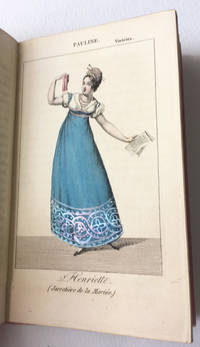
1818Flo136<p>Very rare complete set of all 8 volumes of this review of French theatre in the years 1818-1824.</p><p>All eight years of publication complete with 8 handcolored engraved title pages and over 90 finely handcolored engraved portraits of actors actresses opera singers ballet dancers and comedians in costumes of their famous roles.</p><p>"Very interesting almanac attributed to Charles Malo or Francois-Adolphe Loeve-Weimars giving a summary of Parisian and provincial theaters reviews on the plays and their performers notes on debuts repertoires etc." Grand-Carteret<em> Les almanachs français</em></p><p>Includes portraits of sopranos Mme. Gavaudan and Angelica Catalini tenors Jean-Blaise Martin and Simon Cheard ballet dancers Emilie Bigottini Genevieve Gosselin Antoine Paul and Mlle. Clotilde child actress Leontine Fay actors Francois-Joseph Talma and Charles-Gabriel Potier and many more. Odd volumes turn up occasionally but it is very rare to find the complete set of this intriguing anecdotal overview of Parisian theatre from the first quarter of the 19th century.</p><p>Condition: All volumes in their pastel card slipcases paper bindings holding some spots of foxing to a few plates but overall very good with tissue guards. Complete with all engravings and calendars at end.</p><p>Charles Malo 1790-1871 was a French author editor and translator whose books included a series of gift books for women illustrated by Pancrace Bessa almanacs city guides battlefield guides etc.</p> Louis Janet paperback
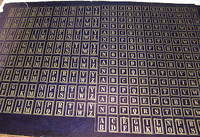
68-2531Paris France: ca. 1860. 19.5" x 13" image size Good with tears. Original uncut sheet of binding paper one side black & printed with gold letters [Paris, France: ca. 1860]. unknown
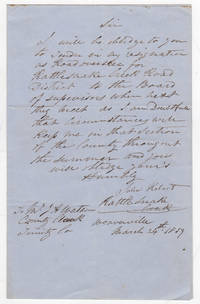
185944772Weaverville CA 1859. Very good minor creasing along edges and folds minor soiling contents clean. 1 pp. Bifolium. 5 x 8 inches. March 24th 1859. Gold Rush era letter from John Hobart to Trinity County Clerk J.A.Watson resigning from his post in Weaverville California . "I will be obliged to you to tender in my resignation as Road overseer for Rattlesnake Creek Road District to the Board of Supervisors when next they meet as I am doubtfull that circumstance will keep me in that section of the County throughout the summer." <br /> <br /> Weaverville California founded in 1850 was a Gold Rush town and once had a population of nearly 2500 Chinese goldminers. In 1855 the Weaverville Trinity Times called attention " the large and rapidly increasing number of Chinese among us.crowding themselves into every vacant spot they can find." unknown
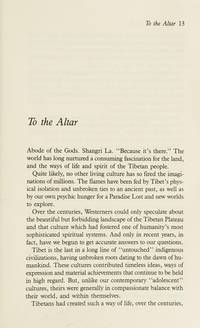
1990Q-0937938440Snow Lion Publications 1990-01-01. Paperback. New. In shrink wrap. Looks like an interesting title! Snow Lion Publications paperback
3740750219.Gpaperback. Good. Access codes and supplements are not guaranteed with used items. May be an ex-library book. paperback
0243414919.Gpaperback. Good. Access codes and supplements are not guaranteed with used items. May be an ex-library book. paperback
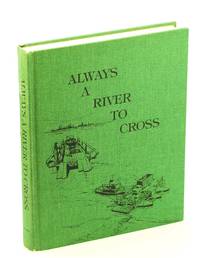
1981157j0994Bear Canyon Alberta: Silver and Gold History Committee. Good with No dust jacket as issued. 1981. First Edition. Hardcover. 0889252610 . Presents the local history of Bear Canyon Alberta and vicinity located a seven-hour drive northwest of Edmonton. "This history book is dedicated to the people who saw a future in a land that was untamed and unsettled. They showed a tenacity and determination of true pioneers having many hazards to overcome. Unmapped trails muskegs sloughs hills and valleys and above all the great 'Peace River' to contend with." - Dedication page. vi 334 pages. Index. Maps of landowners. Generously illustrated with black and white reproductions of archival photos. Map endpapers. Over two-hundred pages of family histories. Clean and unmarked with moderate wear to original decorated green cloth. Moderate lean to spine. A sound copy of this informative local history and invaluable genealogical reference. Krotki 2nd Edn 927 Alberta Histories pg. 2. ; 4to . Silver and Gold History Committee hardcover
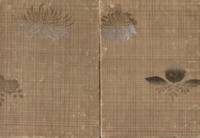
86003001Edo c.1700-50 n.p. Brown & silver covered boards very clean 7 double-page b.w. erotic woodblock illustrations mounted on mica flecked paper 18 x 25 cm. accordion folded illustration size: 31 x 12 cm. FIRST & ONLY UNRECORDED COPY! . . . . A VERY RARE UNRECORDED EARLY BOOK . . . A BIZARRE & UNIQUE EROTIC BOOK . . . UNSIGNED BUT CLEARLY THE WORK OF A MASTER ARTIST . BY SUKENOBU OR HIS :SCHOOL: . A unique and hitherto unfound odd and most unusual erotic book of the early-mid-18th century. One of the most bizarre erotic books ever done in Japan. . The graphically explicit work portrays men and women with genitals on their foreheads engaged in heterosexual and homosexual intercourse. There is no other book with such unusual and strange illustrations. . . THE TITLE: THE LEGEND OF AMANJAKU or AMAN NO JAKU: Chinese Title: TIAN XIE GUI YUN . THE MEANING OF AMANJAKU: Japanese Buddhist literature is abundant with variations on the theme of "Aman-No-Jaku" aka. "Amanjaku" "Manojaku" commonly understood to be a "Heavenly Evil Spirit." . This spirit or demon-like creature in Japanese folklore is usually depicted as being a male during the day and female at night. The demon is usually depicted as a kind of small Oni devil and is thought to be able to provoke a person's darkest desires and instigate him into perpetrating wicked deeds. . Amanjaku is also depicted in Chinese and Japanese mythology the AMANOJAKU is a changeling a water spirit that infiltrates the human world to play cruel tricks on people by reading their minds and twisting their requests or desires to be used against them. . The "AMANOJAKU" is also known the "Lord of the River" and in Japan serves Bishamonten one of the four Deva kings of Buddhism as a minor demon. See Wikipedia below. . In Japanese the term "Amanojaku" also refers to a person who is deliberately contradictory someone who argues for the sake of arguing or can be used in common Japanese conversation to refer to someone who is a "Perverted Demon." . THE ILLUSTRATIONS: THE BUDDHIST THEME:. This work is unusual in that the genitals of common people are located on their foreheads. A symbolist meaning can be in Buddhist concept that sex and sexual hedonism is openly on the minds of 'lay' people. The Buddha and his disciples on the other hand do not have sex organs on their foreheads meaning their organs are covered and in a different usual location. This can symbolize 'self control' over such biological energies. Devout Buddhist disregard sex as a pleasurable pastime and devote themselves to monastic focus. By contrast "lay" people are distracted with hedonistic pleasure a path away from rather than towards the Dharma or teachings of Buddhism. . In a sense this work illustrates the overwhelming force of evil or the "Amanojaku" and how it distracts people from the "Righteous Path" towards the Dharma and the ultimate goal of attaining Nirvana. It can be posited that this work is designed to give understanding to "lay" people by way of visual example of what forces direct their energies away from the Buddhist teachings in an effort to redirect them towards the "Righteous Path" and life style. . EXCEPTIONALLY RARE UNIQUE WORK: . The work is exceptionally RARE unusual and erotic there are no other example showing genitals on the foreheads of any other Japanese book cited anywhere in the bibliographic literature or record. . This work is certainly RARE in subject content and quantity. Though it was woodblock printed and unsigned which was usual for Japanese erotic works which were banned by the Shogun we have not found anything similar or recorded anywhere in the bibliography. Being woodblock printed one assumes there are other copies in existence. The average printing from woodblocks were somewhere between 100-200 copies. However in this instance no others exist. We have the strong feeling the book could have been the production of a famous Japanese illustrator and perhaps financed by a Buddhist temple again there are no known facts about this rarity. . THE EROTIC ILLUSTRATIONS: . Number 1: This work begins showing the Buddha flanked by two of his disciple monks. The title is written in four Japanese Kanji in Kambun & Chinese characters. The Buddha and his two disciples listen to two elderly Buddhist believers: one is a male he has and erect penis on his forehead. The other is a woman she has a vagina on her forehead. Neither the Buddha nor his two disciples monks show genitals on their foreheads. The couple have come to consult with the Buddha about their grievances. . Number 2: Shows a man and a woman in a Tatami matted room both wear lovely 18th century decorated Kimono. They embrace each other and are engaged in making love from their foreheads which show an erect penis and testicles inserted into the woman's forehead where her vagina is located. Adjacent to the young couple is an older woman who has become aroused by the adjacent couple's making love. The old woman uses a dildo tied to a post which she hugs while inserting the dildo into the vagina on her forehead. . Number 3: Shows a couple laying on a blanket their Kimono pulled down and opened and used as a top cover. They engage in love-making and kiss. The man has an erect penis on his forehead the woman a vagina on hers. There is some used Chirishi toilet paper just above her head on the floor used to wipe the love fluids. There is a folded package of yet unused Chirishi in readiness. Chishiri shown in Japanese Shunga erotic prints prints & paintings is an 'erotic symbol' indicative of sexual excitement with lots of love fluids flowing. Ergo the need for paper to clean up the results of erotic love-making. . Number 4 shows an adult man with an erect penis on his forehead penetrating the anus of a younger man who's smaller but erect penis is seen on his forehead as he faces his lover. The younger man has no pubic hair yet indicating his youth. . Adjacent to these two men is a woman in the next room. The door is open she is a secret voyeur of the two men. Her vagina is also on her forehead. A Shogi board and two bowls for stones is located in the front left of the illustration. Gay activities in Japanese society were accepted as a norm and were not especially unusual. However to find graphic examples in Japanese erotic books are exceptionally rare and seldom found. . Number 5: Depicts a fully clothed man on his knees he bends over a sleeping woman. He has a very large erect penis and begins to penetrate a woman with her vagina on her forehead. She is fully clothed and sleeping on a wooden "pillow" which supports her elaborate hair coiffeur. . Number 6: Depicts a lively scene of two men and a woman. One man with a very large and erect penis pulls the woman's arm toward him while she fends him off with a straight arm to his head. A second excited man also with a large and erect penis on his forehead masturbates and ejaculates in ecstasy. The woman has a vagina on her forehead. The scene is likely an intended rape of a young girl. She looks away in an effort not to allow him to pull her close enough to insert his penis into her exposed vagina. . Number 7: Illustrating a lonely old man in bed. He has an erect penis on his forehead and holds a kind of pot with a large opening. He faces down and inserts his penis into the pot for gratification. . THE TEXT: The text in Shunga erotic Japanese books & prints is often an erotic dialogue describing the erotic action. Often these words are onomatopoetic mimicking the sounds of people in orgasm or making comments about making love or the pleasure and good feelings. The size and hardness of the penis or the flavor and the juices of the vagina and its supple feelings of euphoria when engaged in love-making. All wear 18thcentury period Kimono. . MODE AND FASHION OF THE MID-18TH CENTURY: The room furnishing and Kimono of the participants in this work all wear 18th century period Kimono with period decorations. The style of Kimono and room screens reflect this period. . BINDING AND MOUNTING: Binding: The book has probably been rebound sometime after the 1750's with a more recent thin brown decorated paper with a silver chrysanthemum and a Mon family crest with gold and black on both front and rear covers. Each cover has a distinctly different kind of illustration but of the same theme. The corners and edges are a bit worn some loss to the paper as usual for a work from this period. . Mounting: At an earlier time each page was expertly mounted on a stiff Washi hand-made Japanese paper into an accordion folded book. Each illustration is bordered with a rare and stunning crushed oyster-shell powder mixed with rice-glue and overlaid on the border paper. The stunning effect is a rare shimmering pearl-like color and hue with a remarkable effect. This rare and largely unknown effect has been used for print backgrounds by some of the later masters. . This was no ordinary mounting and appropriate for an exceptionally and most unusual RARE book ! . Contents: By and large the contents are clean solid with a two old worm holes for the first 6 of 7 pages. These are small and towards the edge and does not detract from the overall quality of the illustration. On page 7 there are a few center margin old minor worm holes. All of these have been restored when the prints were laid down on the thick Washi paper creating book format. The work is otherwise solid and firm. There are a few 'rubs' on the old Washi paper which was made from very soft Kozo fibers common to any item of this period on this on handmade papers of the period. . CONDITION OF THE WOODBLOCK PRINTS: . These are very early black and white woodcut prints. Each print has an excellent and vivid impression key blocks are black and superbly printed with strong images. The paper is old and has the patina of paper from that age the usual minor mild surface rubbing or thumbing in the lower corners which is common. . We tend to be overly critical of any flaws found on our books and believe it is better to overly describe rather than avoid such discussion any imperfections. Suffice to say by and large this is an excellent item in very nice condition something that any collector or museum would be proud to own. Please review photos posted to our website. . R A R I T Y OF SUBJECT: The placement of the genitals on the forehead gives one a lot of room to theorize on the meaning of such artistic expression. In our 50 years of experience in dealing Japanese woodblock printed books and painted original art this is the first and only example with such imaginative and symbolist expression. With the beginning of the work showing the Buddha and his two disciples lacking any genitals on their foreheads one can simply assume that in a Buddhist way they have given up carnal desire as represented by common people who's foreheads display genitals perhaps meaning that sex is on their minds or they simply view others as sexual objects eager to make love and engage in carnal thoughts and activities. Obviously seeing an erect penis on some man whiles others see what he thinks and feels is an insight to his innermost thoughts and desires. In all cases in this book the men all show an erect penis. The women are a bit more difficult to fathom. Their vaginas are simply visible on their foreheads and no fluids are visible or other evidence of their carnal desire or sexually excited stated. All of the men have public hair adjacent to their sex organs while all women are lacking any pubic hair completely. This is an erotic symbolism giving full view to women's genitals. . "BANNED" or "PROHIBITED" BOOKS: Shun Pon Haru Bon: In the case of this item it is very likely that it was printed in a much smaller discreet quantity than the 200 copies possible off the blocks. Due to the "banned" nature of such books there is no date publisher nor place cited. One is simply left to determine the date and artist by stylistic analysis. It is well-known that during the Tokugawa period 1603-1868 erotic prints and books were "BANNED" or "PROHIBITED" by decree of the Shogun. One of the influencing factors was that during this period some Shoguns were changing their views and being influenced by Christians who entered Japan during this period. The Shogun did not want foreigners and Jesuit missionaries to think that Japan was a crass and base nation. Naturally foreigners soon learned that prostitution was rampant and so this strange logic from the Shogun never had much affect on the Christians and surely not on the Japanese. . The Shogun enforced severe punishments for persons involved in drawing printing carving blocks and publishing erotic books and prints. With out the "Kiwame" or censor's approval seal all such items were "Banned" outright by the Shogun decree. . While these "Prohibited" books and prints were widely circulated in an "underground" society there are ample examples of famous artists taking on commissions to produce erotic books and prints fun or profit. The record and bibliography is loaded with these examples. "Banning" such erotic works simply meant that the number printed were limited to smaller numbers and distribution was done under the table discretely circulating such books privately among collectors. During these times it was not necessary for artists to sign their such artistic creations by-and-large the population had a very good idea who the artist was by being familiar with their style and other works it was simply a "public secret" who the artist was. Often the artist poked fun at the Shogun with political jokes and assumed names to confound any chance of being discovered by the authorities. . Over the centuries this knowledge decreased and is now the domain of the art historian or scholar to identify and determine the actual artist. Stylistic analysis remains the standard method for unsigned works. . THE ARTIST/SCHOOLS: While there are no signatures or seals indicating the artist's name or even his alternate Go studio name we believe this work is part of the "Primitives and First Century of Ukiyo-e School 1660-1765" period. See Lane below. The women's coiffeur is very similar to those found in this period as well as the drawing style technique and genre. It is this cataloger's opinion that this work was likely the creation of one of the Moronobu School masters. Perhaps done by Sukenobu Yoshikiyo Morishige Sugimura Moronobu Kiyonobu Masanobu or others from this period. We believe this work was likely done from around 1710-1750. It was also likely that it was done by one of the artists listed below. . LIKELY ARTIST ATTRIBUTION: . MORONOBU SUKENOBU SCHOOL: Nishikawa Sukenobu 1671 -August 20 1750 often called simply "Sukenobu" was a Japanese printmaker from Kyoto. He was unusual for a Ukiyo-e in being based in the imperial capital of Kyoto. He did prints of actors but gained note for his works concerning women. His Hyakunin Joro Shinasadame: Appreciating 100 Women in two volumes published in 1723 depicted women of all classes from the empress to prostitutes and received favorable results His Hyakunin Joro Shinasadame: Appreciating 100 women in two volumes published in 1723 depicted women of all classes from the empress to prostitutes and received favorable results Leading members of this school were: Nishikawa Sukenobu the founder; Nishikawa Suketada; Kawashima Nobukiyo; Nishikawa Terunobu; and Takagi Sadatake. . NISHIKAWA MORONOBU SCHOOL: Nishikawa Moronobu 1618-July 25 1694 was a Japanese painter and printmaker known for his advancement of the Ukiyo-e woodcut style starting in the 1670s. Leading members of the MORONOBU school were: Nishikawa Moronobu the founder; Hishikawa Morofusa; Hishikawa Moroyoshi; Hishikawa Moronaga; Hishikawa Moroshige; Hishikawa Morohira; and Tamazaki Ryujo. . BIBLIOGRAPHY: . This title is NOT listed in any of the below resources: SHIBUI Kiyoshi. UKIYO-E NAISHI. BIBLIOGRAPHY OF JAPANESE EROTIC ILLUSTRATED WOODBLOCK PRINTED BOOKS. H. KERLEN. CATALOGUE OF PRE-MEIJI JAPANESE BOOKS & MAPS IN PUBLIC COLLECTIONS IN THE NETHERLANDS. Richard Lane: IMAGES FROM THE FLOATING WORLD THE JAPANESE PRINT; pages 28 40-60 show examples of the Ukiyo-e primitives 1660-1765 especially the Moronobu school pp.60-88 et al. . NOT LISTED IN: . KSM SHIBUI Kiyoshi: UKIYO-E NAISI. BIBLIOGRAPHY OF JAPANESE EROTIC ILLUSTRATED WOODBLOCK PRINTED BOOKS. Modern Reading: UKIYO-E NAISHI KERLEN H.: CATALOGUE OF PRE-MEIJI JAPANESE BOOKS & MAPS IN PUBLIC COLLECTIONS IN THE NETHERLANDS. Not in any other usual bibliographies on Japanese E-hon woodblock printed books. . See: WIKIPEDIA:. unknown
2009Q-0895562588Gateways Books & Tapes 2009-03-01. Paperback. New. In shrink wrap. Looks like an interesting title! Gateways Books & Tapes paperback
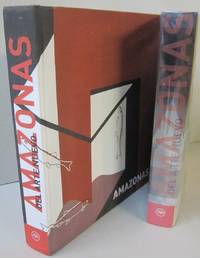
200737664Archives de Art 2007. Hard Cover. f./f. quarto. 307pp A fine copy in a fine dust jacket. Protected in an archival mylar wrapper. Archives de Art unknown
197926579Fresno CA: Pioneer Press. Very Good in Good dust jacket. 1979. First Edition. Hardcover. 0914330314 . Text is clean. Cover shows light normal wear. Inscribed by author to previous owner on half title page. Dust jacket is chipped at corners and spine ends and shows some overall soiling. ; 184 pages; Signed by Author . Pioneer Press hardcover
0259229687.Gpaperback. Good. Access codes and supplements are not guaranteed with used items. May be an ex-library book. paperback
A9780367152994Paperback / softback. New. paperback
0367152991.Gpaperback. Good. Access codes and supplements are not guaranteed with used items. May be an ex-library book. paperback
1332318029.Gpaperback. Good. Access codes and supplements are not guaranteed with used items. May be an ex-library book. paperback
2005Q-0895560518Gateways Books & Tapes 2005-04-01. Paperback. New. In shrink wrap. Looks like an interesting title! Gateways Books & Tapes paperback
1985Q-0915419025First Comics Inc 1985-06-01. Paperback. New. In shrink wrap. Looks like an interesting title! First Comics, Inc paperback
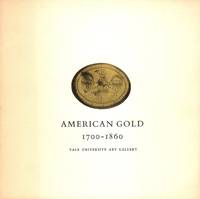
196327360New Haven CT: Yale University Art Gallery 1963. 1st. Soft cover. Very Good. 6.9x6.9x0.2in. toning to covers at the spine. <br>This monograph is based upon a loan exhibition at the Yale University Art Gallery New Haven Connecticut April 2- June 28 1963. 147 objects are described of which 24 are illustrated in black and white and 2 in color on the front and back covers. <br>52pp 0.23lb 6.9x6.9x0.2in Yale University Art Gallery paperback
191264223Portland OR: American Map and Reproducing Company Corner E. Stark & E. 43rd 1912. One double atlas folio colour lithograph map sized 28 x 40.5 professionally mounted on archival linen sized 32 x 45 in. w/ scale of 1:24000 minor edgewear slight age toning at fore-edges and lower corner still a VG bright copy. First edition of this very uncommon Progressive Era map of Portland Oregon in the years between the Lewis & Clark Centennial Exposition and World War I. The map depicts public lands including township range and section grids along with neighborhood and addition place names steam & electric interurban railroads and electric streetcar lines along with parks city limits and radial distances from point in downtown Portland included. Place names included Zion Town the old steel bridge built in 1888 followed by a new Steel bridge which opened later in 1912 the Plank/Old Canyon Road Laurelhurst and others. Of particular interest beyond most maps of Portland during the era this map delineates a significant portion of Vancouver Washington prior to the construction of the Interstate Bridge across Hayden Island as well as inroads into portions of Northwest Portland and Washington County in the Southwest. Fritsche 1877-1928 was an intrepid German-American photo-lithographer architect printer and later photographer who first arrived in New York before coming West to the Pacific Northwest in 1907 where he set up an architecture and engraving firm with his brother Rudolph Fritsche. Wenzel is perhaps best remembered as architect of the historic Henry C. & Wilhemina Bruening House Craftsman bungalow located at 5919 North Williams in Portland’s Humboldt neighborhood erected in 1910. However by 1914 Wenzel had returned to Manhattan with his family including one son and three daughters. Worldcat locates 5 copies U of IL Boston Pub. OHS Reed U of O. American Map and Reproducing Company, [Corner E. Stark & E. 43rd], unknown
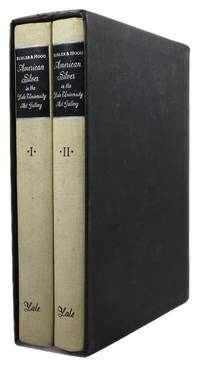
197018271New Haven CT: Yale University Press 1970. 1st. HC. Very Good. 10.6x8.4x2.8in. two hardcover volumes in slipcase <br>Two volume set: Volume I covers New England and describes 547 objects; Volume II covers the Middle Colonies and the South and describes 496 objects. Most objects are illustrated. Each volume contains Reproductions of Marks and Index. <br>644pp 6.32lb 10.6x8.4x2.8in <br>EXTRA SHIPPING CHARGES NECESSARY Yale University Press hardcover
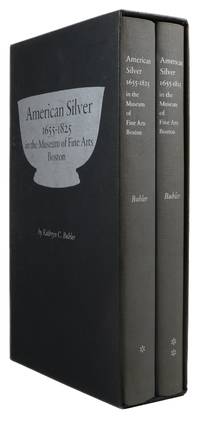
197219093Boston MA: Museum of Fine Arts 1972. 1st. Hardcover. As New. 11.6x7.0x2.6in. two hardcover volumes in fine slipcase. <br>566 objects are described and illustrated: most are from Massachusetts remainder from New Hampshire Connecticut Rhode Island New York Philadelphia and Baltimore. <br>708pp 5.51lb 11.6x7.0x2.6in Museum of Fine Arts hardcover
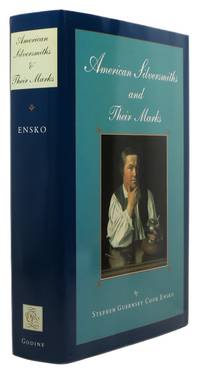
198910920Boston MA: David R. Godine 1989. 1st. Hardcover. As New/As New. 9.4x6.5x1.9in. Signed by Authors. 1 of 125 copies signed by author; lacking slipcase. Dust jacket in clear protector. <br>478pp 2.77lb 9.4x6.5x1.9in David R. Godine hardcover
1608700399.Glibrary. Good. Access codes and supplements are not guaranteed with used items. May be an ex-library book. unknown
0928B802344Very Good. ND first ed. no later printings mentioned in an age when these things were mentioned boldly. Decor. green black gilt on green cloth HC in no DJ. Circa 1890. Printed in Scotland for F. H. Revell Co. hardcover
1334237492.Gpaperback. Good. Access codes and supplements are not guaranteed with used items. May be an ex-library book. paperback