40 618 résultats
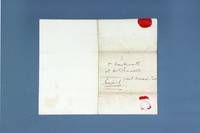
17716000068London 1771. Quarto autograph manuscript in ink; single page on a bifolium with address panel; on paper watermarked "LVG" <p><p>Amusing original letter from Sandwich to John Hawkesworth ghostwriter of the official account of Cook's first voyage. Sandwich writes: "That I may be certain whether you are alive or dead I shall be obliged to you if you will either come yourself or send your ghost to dine with me tomorrow. I am most sincerely yours Sandwich." This witty communication dates from the period when Hawkesworth was preparing the Cook account during Sandwich's third term as First Lord of Admiralty 1771-82; of course it was during this appointment that James Cook discovered Hawaii on his third voyage and named them the Sandwich Islands in his honour. The letter probably dates from late 1771 while Hawkesworth was at work on the journal. He died in November 1773 not long after the book's publication. </p> <p>Hawkesworth was introduced to Sandwich by Charles Burney in September 1771 when "the First Lord was casting around for someone to 'write the voyage' - that is to take Cook's journal and put it into a form suitable for the reading of the polite world; and not only Cook's journal but those of the three other circumnavigators Byron Wallis and Carteret. Cook and Banks we remember were patriotically anxious that this should be done as soon as possible and it was all the more important to get something authentic on the market. Burney recommended his friend Dr John Hawkesworth who had time and could do with the money." Beaglehole. </p> <p>Fanny Burney recorded in her diary for 15 September 1771 that "My father has had a happy opportunity of extremely obliging Dr. Hawkesworth. During his stay in Norfolk he waited upon Lord Orford who had always been particularly friendly to him. He there among others met with Lord Sandwich. His Lordship was speaking of the late voyage round the world and mentioned his having the papers of it in his possession; for he is First Lord of the Admiralty; and said that they were not arranged but mere rough draughts and said that he should be much obliged to any one who could recommend a proper person to write the Voyage. My father directly named Dr. Hawkesworth and his Lordship did him the honour to accept his recommendation. I cannot but be amazed that a man of Lord Sandwich's power &ca. should be so in ignorance of men of learning and merit as to apply to an almost stranger.".</p> <p>The money was decent: Hawkesworth earned a substantial £6000 from the publishers Strahan and Cadell and completed the first two volumes in just four months. A landmark publication this would help to cement Cook's reputation in the eyes of the public serving Sandwich's official purpose.</p> </p> . unknown
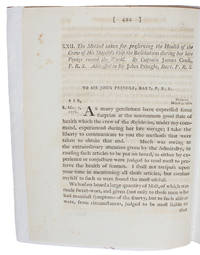
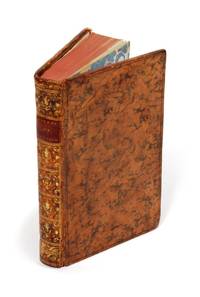
177757073London, Lockyer Davis, 1777. 4to. In recent marbled paper wrappers. Extracted from ""Philosophical Transactions"". Including title-page of volume 61 and 66. Leaves reinforced/mounted in margin. Light offsetting from folded plates as usual. Pp. (2), 401-406, 447-450, (4), 397-436 pp. + 3 folded plates.
177757073London Lockyer Davis 1777. 4to. In recent marbled paper wrappers. Extracted from "Philosophical Transactions". Including title-page of volume 61 and 66. Leaves reinforced/mounted in margin. Light offsetting from folded plates as usual. Pp. 2 401-406 447-450 4 397-436 pp. 3 folded plates. <br/><br/><em>Second appearance but first journal-edition of Cook's landmark paper on his successful measures taken against scurvy on his first two voyages. The paper was read to the Royal Society by its president Sir John Pringle in the absence of Cook himself on his final voyage. Cook was awarded the year's Copley medal award for the present paper. "No commander before had been so particular about the diet of his men . sour krout mustard vinegar wheat orange and lemon juice saloop and portable soup were used regularly and every chance of obtaining fresh vegetables and 'scurvy-grass' was eagerly seized" Beaglehole pp 256-57Cook's triumphs over scurvy soon proved to be one of the most important and influtial archievements in the general field of exploration.Withbound are four other papers by Cook all first editions.Beddie 1288 </em> unknown
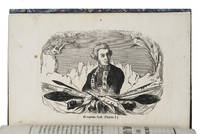
1853ABC_46299Madrid: Doña Teresa Martinez é Hijo 1853. Modern half black morocco marbled sides gold-tooled spine with title in gold blue sprinkled edges new marbled and blank endpapers with the original publishers back wrapper bound in but with a front wrapper apparently from a different work published by M. Gonzalez 1855. 8vo. With 4 full-page wood-engraved plates. Surprisingly rare Spanish account of Cook's first voyage preceded by a short account of his life extracted from Kippis. Spanish editions of Cook's voyages are remarkably few. Kippis's biography had already been translated in the 18th century but Marta Torres Santo Domingo found only three Spanish publications in the 19th century relating to Cook. The present work was planned to cover all Cook's voyages the drop-title on page XIII reading "Relacion de los tres viajes. Primer viaje." but apparently this was never realised. Oddly the illustration on the front wrapper seems to depict South American vaqueros hardly relevant to James Cook. The plates include portraits of Cook and Tupaia.The original publishers back wrapper bound in at the end contains an advertisement for the book.The original front wrapper is not preserved. With some very minor water stains but overall in very good condition. A scarce Spanish edition of Cooks first voyage.l Beddie 155; WorldCat 3 copies; cf. Torres Santo Domingo "Los viajes del Capitán Cook en el siglo XVIII. Una revisión bibliográfica" in: Biblio 3W VIII April 2003 no. 441; not in Ferguson. Doña Teresa Martinez é Hijo, unknown
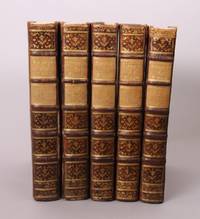
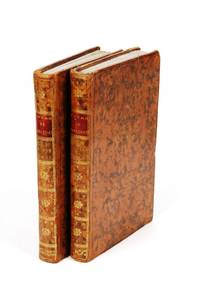
247751Paris Hôtel du Thou 1778. 4to. 66 engraved plates and maps of which many folding in first four volumes 5 inserted from another copy complete according to index 1 folding map in volume five. Engravings by Benard based on drawings made by William Hodges. Contemporary mottled calf with five raised bands. Gilt spines. Rubbed. Previous owner’s signature on front endpaper verso. Vols 1 & II joints split but holding. Some wear to spine ends. Occasional minor soiling foxing and water stains a few plates with minor tears but overall a complete and well preserved copy. First French edition of Cook’s second voyage. . hardcover
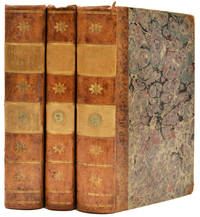
98520Upsala Johan Edman 1776 1783 1787. . Three works: I. 2 vols in one xxviii 308 ii; ii 326 vi pp. folding map at end; II. xx 366 x pp.; III. xii 618 xii pp. folding map at end. Uniformly bound in contemporary half-calf morocco labels blue morocco numbering roundels a little staining to third work at beginning and end a very good set. <br /> An attractively bound first edition set of Cook's voyages in Swedish.<br /> Beddie 721 1227 & 1566; Forbes 126; Kroepelien 1137. Upsala, Johan Edman, 1776, 1783, 1787. unknown
in-folio (430x300), ff.25 (titolo litografato e 24 tavole). Sul titolo non è presente la data di stampa che compare, invece sulle tavole. Legatura posteriore in mezza pelle e angoli, titolo e fregi al dorso. La maggior parte delle incisioni sono disegnate da Pinelli (21), 3 da Hullmandel, tutte litografate da questo noto artista inglese. Le scene costituiscono veri e propri spaccati di vita popolare della città e dei dintorni di Roma, resi ancora più suggestivi dalla tecnica incisoria utilizzata. Il metodo di riproduzione consentiva un'ottima resa grafica anche per i colori tenui, permettendo così l'impressione delle varie sfumature espressive e gli esiti della pittura ad acquerello. Charles Hullmandel (1789-1850) Importante litografo. Incontrò Senefelder a Monaco nel 1817, lavorò presso il suo studio londinese al numero 51 di Great Marlborough Street dal 1819 fino alla morte producendo migliaia di stampe. Apportò innovazioni importanti al metodo di stampa a colori (lithotint). Le stampe di Hullmandel furono particolarmente ricercate anche per le opere di storia naturale, geografia e geologia. Il suo saggio del 1824 "The art of drawing on stone" non fu solo un autorevole manuale in materia, ma anche un'appassionata difesa della nuova arte litografica. Esemplare ben conservato e con le tavole ben impresse e fresche.. Colas, Bibliogr. du Costume, 2382. Manca a Lipperheide..
Otto parti legate in quattro volumi di cm. 19, pp. viii, 296; lxxiv, 232; 285 (1); 336 (di 352); 317 (1); 340; 372; 381 (1). Solida legatura ottocentesca in piena pergamena con nervi a vista, dorsi lisci con fregi in oro e titoli su tasselli. Poche, leggere arrossature marginali, una gora chiara appena accennata ad alcune carte, peraltro esemplare assai genuino, marginoso e ben conservato. Seconda edizione, rivista, aumentata e corretta rispetto all'originale del 1790. I due volumi d'appendice sono invece in originale (assai rari). Mancano 16 pagine all'indice finale del quarto volume. Francesco Leonardi inizia a lavorare a Parigi, a metà del Settecento, nelle cucine del Maresciallo di Richelieu. Ritorna in Italia, a Napoli, presso Michele Imperiale, principe di Francavilla e marchese d Oria: Maggiordomo maggiore del Re dal 1753. Nel 1772 è assunto dal cardinale De Bernis, ambasciatore di Francia presso la Santa Sede. Lavora in diverse campagne di Luigi XV, viaggia per tutta Europa con il generale Ivan Ivanovic Shouvaloff, gran ciambellano di Russia e, al suo seguito, giunge nel 1778 a Pietroburgo dove diviene maestro di casa del principe Grigorij Grigorevic Orloff e, alla morte di questi nel 1783, cuoco particolare e scalco dell'imperatrice Caterina II. Costretto a lasciare la Russia a causa del clima troppo rigido, rientra in Italia, dove attende alla stesura della sua prima opera, L'Apicio moderno ossia l'arte di apprestare ogni sorta di vivande e, nel 1791 è secondo cuoco e cuoco particolare del cardinale De Bernis, plenipotenziario di Luigi XV presso la Santa Sede, per il quale organizzerà un sontuoso banchetto di più di 100 persone per festeggiare la nascita del Delfino di Francia. Nel 1803 è in Austria al seguito del principe Soltikoff. Nel 1804 a Napoli presso il duca di Gravina, in qualità di maestro di casa, fino all'arrivo dei francesi e alla partenza del suo padrone per la Sicilia il 23 gennaio 1806, quindi sembra rientrare a Roma dove assiste, quale scalco, l'imperatore d'Austria, Francesco I in occasione della sua visita di stato a Roma nella primavera del 1816 nel corso del fastoso banchetto offerto al Quirinale da Pio VII. L'Apicio moderno, ossia l'arte di apprestare ogni sorta di vivande, una monumentale opera in sei tomi stampata a Roma nel 1790 e ancora nel 1807-8 con l'aggiunta di due nuovi tomi sull'arte del credenziere, che tenta il recupero di una dimensione nazionale della cucina italiana. Nell'introduzione del libro Leonardi abbozza la prima indagine storico della cucina italiana, di età romana attraverso il Rinascimento fino al 18. secolo. Leonardi voleva che il suo trattato fosse moderno, scientifico e internazionale (fino allora aveva dominato la cucina francese), realizzò perciò una specie di enciclopedia gastronomica; vi elencò tremila ricette, con storie e suggerimenti legati alla trasformazione e conservazione delle vivande. Leonardi grazie ai suoi cinquant'anni d esperienza, adattò a ricette straniere ingredienti tipicamente italiani, come la ricotta e il parmigiano. Dai tempi di Scappi, duecentocinquanta anni prima, non si era più scritto un grande manuale e L'Apicio moderno fu un capolavoro fondamentale per la cultura gastronomica italiana. In apertura dell'opera è posto, secondo lo stile francese, un cenno storico sull'evoluzione del gusto gastronomico, il primo tentativo del genere in Italia, da cui traspaiono chiaramente sia i mutamenti intervenuti nella cucina italiana nel corso dei secoli, che l'importanza delle tradizioni locali e regionali per la rinascita di un'autentica cucina italiana. Leonardi fu il primo grande cuoco ad usare stabilmente i pomodori, vantando come propria l'invenzione della classica combinazione napoletana della pasta con il pomodoro.
17723812970Paris: Saillant & Nyon 1772. Very slight rubbing to joints but a fine tall copy with good margin. Octavo blind-stamped ex-libris to half title; contemporary French marbled calf flat spine gilt in compartments red morocco label. <p><p>A fine copy of the first French account of Cook's Endeavour voyage and the first French book on the east coast of Australia. Fréville translates the text now considered to be by Magra which - published in English in 1771 - was the unauthorised and earliest account of the progress of the Endeavour voyage. This is one of two probably simultaneous issues this one having the "Supplément" title-page; in this form the publishers intended the book to complement the octavo edition of Bougainville's voyage. The work also includes some material that did not appear in the original London edition including a 'Lettre de M. de Commerson' the famed naturalist from Bougainville's circumnavigation who remained behind at Mauritius to continue his research. </p> <p>The second supplement is equally important: the 'Lettre de M. le B. de G.' is a learned treatise on the possibility of a northwest passage written at Königsberg modern Kaliningrad and quoting from experts on the region such as Gmelin Muller and Engel. Although the identity of this scholar remains hazy it is surprising that such an interesting - and relatively early - report on the northwest passage has been largely ignored. Continuing the parade of famous explorers included in this short work the Commerson letter is said to have been conveyed to France by none other than Kerguelen promoter of the "Terre Australe".</p> <p>Rolf du Rietz in the Kroepelien catalogue further notes that a letter from Sir Joseph Banks to the Académie des Sciences is also quoted in the introduction said to have first been published in the Journal des Savans. Despite his best efforts to distance himself from Magra's work including having the false dedication in the London edition removed it appears that his unwilling association with the work continued on the continent. Indeed one of the attractive aspects of this copy is not only the fine contemporary French binding but the spine label which reads 'Voyage de Solander': it was not unusual for Banks to be given top-billing in the excitement of the return of the Endeavour but there cannot be too many examples that plump for Solander.</p> </p> . Saillant & Nyon unknown
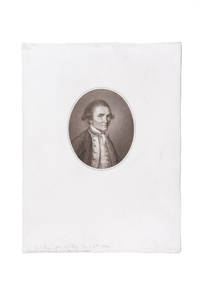
17844504227London: J.Webber June 4 1784. Very good. Stipple engraving oval 120 x 95 mm printed in sepia; a proof before letters; mounted. <p><p>Rare proof impression before letters of John Webber's and Francesco Bartolozzi's fine oval portrait of Captain Cook. This portrait has a very large margin unusual for this decorative oval shape which is perhaps more often seen clipped to fit an oval frame. </p> <p>The original portrait of Cook was painted by Webber in 1776 and has been in London's National Portrait Gallery since 1858. Webber had collaborated with Bartolozzi earlier in 1784 to execute his famous depiction of the death of Cook and the relationship was evidently a happy one as they also issued the rare oval version of the depiction of Cook's death as well as this portrait. It is fair to say that the original painting of Cook has not met with universal acclaim: Beaglehole claims that on first viewing Mrs Cook exclaimed 'Who is that low villain' Beaglehole On the Character of Captain James Cook p. 418.</p> <p>Born in Florence in 1728 Bartolozzi arrived in 1764 in England where he worked for the next three decades. He introduced the vogue of "stippled" engraving and this portrait is a particularly good example of his work.</p> </p> . J.Webber, June 4 unknown
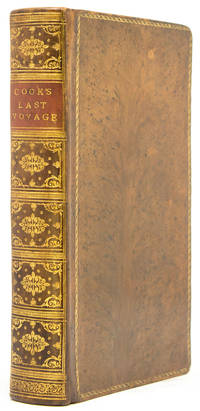
1781310852Dublin: Price Whitestone Chamberlain et al. 1781. First Dublin edition. Complete with 5 engraved plates including frontispiece plate of the Death of Cook and large folding map. 4 xlvii 1 396 pp. 1 vols. 8vo. Contemporary calf rebacked to style marbled endpapers. Occasional spotting and dustsoiling better than very good. First Dublin edition. Complete with 5 engraved plates including frontispiece plate of the Death of Cook and large folding map. 4 xlvii 1 396 pp. 1 vols. 8vo. First Dublin edition. The first Dublin edition of the first full account in English of Cook's third and final voyage. Rickman was a second lieutenant aboard the Discovery. "It provides an important supplement to the official account of the Third Voyage published in 1784" Forbes. Howes R-276 "aa"; Forbes 36; Wickersham 6555a; Davidson p 64; Kroepelien 1078; Beddie 1608 Price, Whitestone, Chamberlain, et al. unknown books
178615119London: Alex. Hogg at the Original King's Arms No. 16 Pater-noster-Row 1786. First Edition. Full Leather. Very good. The Anderson Edition of Captain Cook's Voyages Round the World published in 1784. Folio frontispiece title blank iii-iv preface map 5-650pp 651-653 tables 654-655 "Concluding Remarks by the Editor" and "Contents of this Work" Directions to the Bookbinder 2pp subscribers list. Modern full brown morocco new endpapers title in gilt on spine raised bands Folio measures 15.5" x 10". Housed in slipcase paste on marbled boards solid hinges. Frontispiece portrait of Captain Cook engraved by "Mr. Thornton" dated Feb. 14 1779. This work is complete with 157 illustrated copper plate engravings 41 Maps/Elevations 109 Illustrations including large fold-out map and the plate depicting the "Death of Captain Cook." Plates in near fine condition with only occasional toning. Archival tissue repair through "Directions to Bookbinder" leaf now stable. Includes directions to bookbinder and 2-page list of subscribers. Beddie 19 From Forbes this work is State IV of the first edition with the publisher's imprint lacking reference to "booksellers and News Carriers" and is not dated. Forbes 61 Howgego I C176. This important work is a compilation of Captain Cook's three voyages. It also includes voyages by Carteret Anson Drake and others. An attractive copy of this rare folio. Alex. Hogg, at the Original King's Arms, No. 16, Pater-noster-Row unknown
Second edition, small 4to (187 x 130 mm), [8], 232pp., title with woodcut ornamental border and illustration of record ear of barley on verso, woodcut illustrations, title with ink initials at head & small ink stain and browned at edges, one or two old manuscript notes, a few other small stains, mostly to last few leaves, new endpapers, modern calf, covers with double fillet border in blind, spine tooled in gilt and faded, red morocco label. Compendium of useful household information including instructions on storing fruit and flowers, "how to carry gold in a most secret manner", brewing, "how to speak by signs onely", stealing bees, preventing drunkeness, helping smoking chmineys, killing rats, keeping oysters good ten or twelve days, distilling, how to cheat at cards, etc. First published in 1594 this edition also includes a discourse on minerals by Arnold Boate. Wing, P2390.
170261916Nürnberg, Joh. Ernst Adelbulner für Wolfgang Moritz Endter, 1702. 4°. Mit einem gest. Frontispiz von Cornelius Nicolaus Schurtz, 2 gefalt. Kupfertafeln, 15 gefalt. Tabellen u. zahlr. Holzschn.-Vignetten u. -Initialen. 6 Bll., 1098 S., 32 Bll., Pgmt. d. Zt. m. durchzogenen Bünden u. handschriftl. Rückentitel.
8634Commencé à Draguignan le 25 Août 1829 et fini le 11 mars 1830 (suite du Journal de Dépense, du mois de mars 1830), (Journal de Dépense commencé le 28 juin 1830 et fini le 19 octobre (Cahier de dépenses journalières commencé à Nismes le 15 novembre 1830), (Dépenses journalières de la maison à Nismes commencé le 18 janvier 1831 et fini le 11 juillet 1831), (Livre des dépenses journalières de Nismes commencé le 12 juillet 1831 et fini en octobre), (Livre des dépenses journalières de Nismes du 19 septembre 1831 et fini le 13 mars 1832), (Livre du Boulanger commencé le 1er janvier 1827 et fini, Boucher à la fin du cahier du 13 août 1828 à octobre 1829), (Compte ouvert pour le Boulanger le 15 janvier 1829), (Boulanger, Nismes le 15 septembre 1830), (Livre du Boucher du 1er novembre 1829 (du 15 novembre 1830), Menu de l’ordinaire, janvier 1830, Livre de dépenses hors celles de l’ordinaire, commencé le 1er janvier 1830. On joint à ces cahiers concernant l’ordinaire: Journal de mes dépenses particulières commencé le 29 août 1824, Dépenses me concernant (1829), Cahiers des dépenses étrangères à celles de l’ordinaire, le 29 novembre 1830, Journal de recettes commencé le 1er janvier 1831, Dépense pour la repasseuse. On joint à ces cahiers, quinze documents (Inventaire du linge de maison, huit documents concernant la nourriture, Journée de la couturière, Courriers au cordonnier, à la couturière, Liste des ustensiles de cuisine. Draguignan et Nismes, 1824-1832. Ensemble de vingt cahiers de 15 x 20 cm et quinze documents manuscrits).
168864491Graz, Widmanstetter Erben, 1688. 4°. Titel m. Holzschn.- Bordüre u. -Vignette. 1 Bl., 236 S., 7 Bll., Ldr. d. Zt. a. 4 Bünden m. goldgepr. Deckelfileten, etw. Rückenverg. u. 2 Schließen.
9798Florence : Giunti, 1569. 4° bois sur la page de titre et deux grandes initiales gravées sur bois . 4 feuillets non chiffrés, 89 pp. Suivie d'une feuille vierge M6. vélin moderne dos orné, pièces de titre en maroquin rouge. Des passages ont été anciennement soulignés à la plume.
in-8, pp. 271, (9), leg. coeva piena perg. rigida, titolo ms. al dorso. Carattere corsivo, greco e rom.; riccamente illustrato da 84 silografie di piante, per la maggior parte a piena pagina, realizzate da Gerard Janssen van Kampen, Cornelis Muller e Arnold Nicolai su disegni di Pieter van der Bocht; marca al tit. (compasso retto da una mano che esce dalle nuvole con motto ''Labore et constantia''), iniziali istoriate. Precede il testo la dedica a ''D. Viglio Zuichemo, S. Bavonis Gandavensis praeposito'' datata 1565 e la prefazione dell'autore al lettore. Prima edizione di questo interessante trattato sui cereali e su varie specie di piante palustri ed acquatiche realizzato da Dodoens, medico e botanico olandese (1517-1585) che compì numerosi viaggi in Francia, Inghilterra ed Italia; divenne medico dell'imperatore Massimiliano II (1574) ed in seguito professore a Leida. Raro, censito in sole 5 biblioteche italiane. Buon esemplare (lievi ingialliture, alone d'umido al margine esterno degli ultimi dieci ff.). Ex-libris di Maurice Villaret.. Nissen 513. Graesse II, 416. Davies, 136. Pritzel 2346..
Prima edizione. Ottimo esemplare a grandi margini, tagli spruzzati in rosso. Ex libris «Westbury» ai contropiatti. Raro trattato di cucina. Ogni volume ha al fine un indice analitico delle ricette descritte. Cfr Henssler, I, p. 427 6 voll.
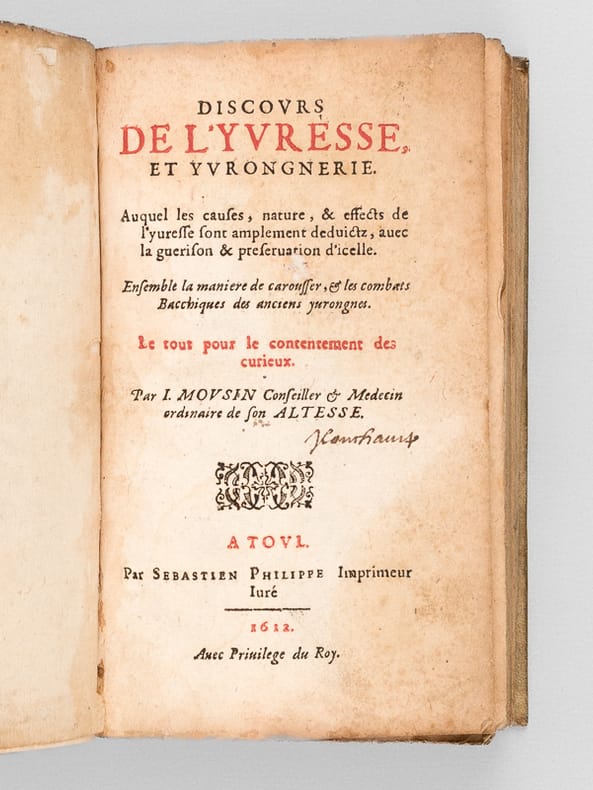
161263906Par I. Mousin, 1 vol. petit in-8 reliure postérieure plein vélin blanc, dos à 3 nerfs, Par Sébastien Philippe, A Toul, 1612, 1 f. blanc, 12 ff. n. ch. (titre, épitre dédicatoire, table, vers adressés à Mousin, extrait du privilège), 390 pp.
8716P., Delalain fils, An X (1801). (faux-titre)-(titre)-210-IV pp. Edition originale. Ex-libris manuscrit et tampon «Bouchard».Relié avec: APPERT - L’art de conserver pendant plu-sieurs années toutes les substances animales et végétales… P., Patris et Cie, 1810. (faux-titre)-XXXII-116 pp. avec une planche dépliante. Deux éditions originales en un volume in 8 veau marbré, dos lisse orné de filets et motifs dorés (petites égrenures sur les plats, et le dos, coiffes usées, coins émoussés, quelques rousseurs).
17973807772Paris: De l'Imprimerie de Guillaume 1797. A few leaves a little foxed; a very good copy. Two volumes octavo six folding engraved plates after Parkinson a handsome set in contemporary French mottled calf flat spines gilt double red and tan morocco labels. <p><p>First French edition first issue: the artist's account of Cook's first voyage and the discovery of eastern Australia. Translated by C. Henri from the 1784 English edition it also contains material from later voyagers updating the account including the experiences of the Forsters on the second voyage. This is the octavo issue noted by Kroepelien as preceding the otherwise identical quarto of the same year.</p> <p>Parkinson had been employed in 1767 by Sir Joseph Banks who thought so highly of his work that he arranged for the young man to join him on Cook's first voyage. When the expedition's draughtsman Alexander Buchan died at Tahiti Parkinson was called on to take over all of the topographical work completing some 1300 sketches quite apart from compiling vocabularies in Tahiti and New Holland. At the end of the voyage en route from Batavia to the Cape of Good Hope he died of a fever and after the return of the Endeavour ownership of his manuscripts and drawings was disputed: Banks considered that they were his while Parkinson's brother Stanfield claimed them under the provisions of his brother's will. When Hawkesworth learned of the impending English publication of this work he got an injunction to delay its appearance until some time after his official account and despite having used Parkinson's work extensively retaliated by deliberately omitting Parkinson's name from the narrative: even the botanical illustrations in the official account have no credit to the artist.</p> <p>Some of the bibliographical history of this work is quite complex. An extended note by Rolf du Rietz in the Kroepelien catalogue explains that this octavo issue although textually identical to a quarto issue published the same year by the same publisher is actually the genuine first issue du Rietz demonstrates from an error in the signatures that the quarto was re-imposed. Du Rietz knew the octavo only from the copy in the University of Oslo although no complete census of the two issues has been attempted. A note in O'Reilly-Reitman suggests - as if we needed more complexity - that the number of plates is uncertain as they examined copies with any number between five and eight; nonetheless six plates is the standard collation.</p> </p> . De l'Imprimerie de Guillaume unknown
1982005532Association of Canadian Map Libraries 1982. No Binding. Very Good. About the print: Framed print measuring approximately 42 by 57 centimetres. Print has some soiling we believe otherwise it was part of the design to give it an antiquated appearance. Print is in good condition regardless. Published in 1982 by the Association of Canadian Map Libraries in co-operation with The Department of Georgraphy at Memorial University of Newfoundland. This is facsimile No. 99. This edition limited to 500 copies. This is copy 138. 2025 marks the 250th anniversary of James Cook's "General Chart of the Island of Newfoundland." Additional photos available upon request. Outside of Canada additional shipping charges may apply. <br/> <br/> Association of Canadian Map Libraries unknown
in-12, pp. (20), 505, (46), leg. in p. vitello, titolo e ricchi fregi in oro al dorso a nervetti (cerniera ant. Fessurata). Impresa sul frontespizio, fregi e iniz. xilogr. Seconda edizione, rarissima, del libro di cucina più importante di Massialot. Pubblicato per la prima volta nel 1691, ebbe numerose edizioni e fu considerato autore fondamentale per la compilazione delle successive opere gastronomiche e per lo sviluppo dei ristoranti. La prima parte comprende modelli di menu distribuiti secondo le stagioni e pranzi realmente preparati dall'autore, mentre la seconda presenta per la prima volta le ricette proposte per ordine alfabetico, costituendo de facto un prodromo dei dizionari di cucina. Innovativi sono l'introduzione delle essenze nella preparazione dei fondi da cucina e l'utilizzo nelle ricette del cioccolato, fino ad allora considerato soltanto come bevanda. Ottimo esemplare, malgrado qualche fioritura e strappo al margine del ff. T2, con perdita di poche lettere; antico timbro con monogramma al frontesp.. Livres en bouche 117 (I ediz.). Vicaire, 574. Menell, All Manners of Food pp. 74-5: ''The social connotations of food were being made more and more explicit: not only was anything reminiscent of rusticity and the food of the peasants to be avoided, but the court and the 'best circles' were offered as models to be copied. The growing sense of ''good taste,'' national pride, and deference to the court as the fount of all fashion are all evident' (Mennell)..
Edizione originale. Ottimo esemplare. Il menù del primo pranzo futurista, esordio del ristorante Santopalato, prima «taverna futurista», e dell’investimento futurista sul tema culinario, che culminerà l’anno successivo nella pubblicazione del libro di Marinetti e Fillia «La cucina futurista». Edizione fuori commercio in tiratura sconosciuta, presentata e distribuita il giorno stesso dell’evento, in due emissioni: con copertina muta metallica e in brossura semplice spillata, come il presente esemplare. Solo quattro le localizzazioni istituzionali nel mondo (Milano, Apice; Firenze, Kunsthistorisches; Yale e Northwestern negli Stati Uniti). Notevole frontespizio decorato a fotomontaggio da Diulgheroff, cui segue il testo di Marinetti «La cucina futurista» («Contro la pasta asciutta», «Invito alla chimica», «Il carneplastico», «Equatore + Polo Nord»), il menu «Lista del primo pranzo futurista» con i piatti ideati da Fillia, Saladin, Diulgheroff, Prampolini e Mino Rosso, sei tavole pubblicitarie futuriste di bevande e prodotti alimentari in fine. Salaris, Storia, pp. 214-216; Ead., Il futurismo e la pubblicità, pp. 172s.; Echaurren, Futurcollezionismo, pp. 176-178; Cammarota, Marinetti, 154: «Rarissimo»; Nuovi archivi del futurismo I, 1931/7