40 617 résultats
Edizione originale. Ottimo esemplare. Il menù del primo pranzo futurista, esordio del ristorante Santopalato, prima «taverna futurista», e dell’investimento futurista sul tema culinario, che culminerà l’anno successivo nella pubblicazione del libro di Marinetti e Fillia «La cucina futurista». Edizione fuori commercio in tiratura sconosciuta, presentata e distribuita il giorno stesso dell’evento, in due emissioni: con copertina muta metallica e in brossura semplice spillata, come il presente esemplare. Solo quattro le localizzazioni istituzionali nel mondo (Milano, Apice; Firenze, Kunsthistorisches; Yale e Northwestern negli Stati Uniti). Notevole frontespizio decorato a fotomontaggio da Diulgheroff, cui segue il testo di Marinetti «La cucina futurista» («Contro la pasta asciutta», «Invito alla chimica», «Il carneplastico», «Equatore + Polo Nord»), il menu «Lista del primo pranzo futurista» con i piatti ideati da Fillia, Saladin, Diulgheroff, Prampolini e Mino Rosso, sei tavole pubblicitarie futuriste di bevande e prodotti alimentari in fine. Salaris, Storia, pp. 214-216; Ead., Il futurismo e la pubblicità, pp. 172s.; Echaurren, Futurcollezionismo, pp. 176-178; Cammarota, Marinetti, 154: «Rarissimo»; Nuovi archivi del futurismo I, 1931/7
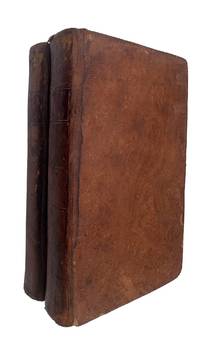
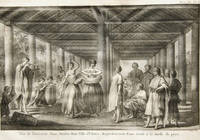
1797269Boston Massachusetts: Thomas and Andrews and D. West 1797. First American Edition. original sheepskin. Good. A complete first US edition set of James Cook's collected works has only come to auction three times in the past 55 years. A significant majority of known sets are held by institutions chiefly in the US. This scarce set is in its original contemporary full sheep binding with original endpapers.<br /> <br /> This set is famous for containing the first American-published illustration of the Pacific Northwest - "A View of the Habitations in Nootka Sound" plate in volume II. <br /> <br /> Condition: VG for an 18th century American publication.<br /> <br /> BOOK INFO<br /> <br /> Published January 1797 in Boston by Thomas & Andrews and D. West. First US collected edition of Captain Cook's voyages and biography. In its original full contemporary sheep with gilt-lettered morocco spine labels. Rebacked with original spine laid down. Two volumes. Duodecimo 12 vo. Collated and complete including blanks and 8 copper engraved plates: Vol. 1: vii 2 10-315 1 pp.; v. 2: 5 6-351 1 pp. Includes the famous "Death of Captain Cook" plate. <br /> <br /> ABOUT CAPTAIN COOK<br /> <br /> Captain James Cook FRS November O.S. 27 October 1728 - February 1779 was a British explorer cartographer and naval officer famous for his three voyages between 1768 and 1779 in the Pacific Ocean and to New Zealand and Australia in particular. He made detailed maps of Newfoundland prior to making three voyages to the Pacific during which he achieved the first recorded European contact with the eastern coastline of Australia and the Hawaiian Islands and the first recorded circumnavigation of New Zealand. In these voyages Cook sailed thousands of miles across largely uncharted areas of the globe. He mapped lands from New Zealand to Hawaii in the Pacific Ocean in greater detail and on a scale not previously charted by Western explorers. He surveyed and named features and recorded islands and coastlines on European maps for the first time. He displayed a combination of seamanship superior surveying and cartographic skills physical courage and an ability to lead men in adverse conditions. During his third voyage in the Pacific Cook encountered the Hawaiian islands in 1779. He was killed while attempting to take hostage the chief of the island of Hawaii during a dispute.<br /> <br /> CONDITION REPORT<br /> <br /> The volumes are in Good or better condition for an 18th century US publication in original binding. Rebacked with original spine laid down. Original blanks and endpapers.<br /> <br /> Exterior: Dryness rubbing and some areas of skinning. Square spines firm hinges and joints tight pages. Some areas of shallow pitting and naturally aged discoloration. Sunned spines. <br /> <br /> Interior: Former owner bookplate on front pastedown of each volume. Small bookstore sticker on front pastedown. Pencil writing on front pastedown of Vol. I. Generally toned pages with offsetting from text block and plates. Some light and sporadic foxing. Six of the plates are a lovely Near Fine with the other two Good or VG with some toning. A few plates appear to have been trimmed by the printer have seen several examples of the same plates with the bottom margin trimmed. Typical handling - some creases smudges ink stains a few marginal tears or marginal paper loss. A few areas with some marginal insect nibbling. Volume I p 97-98 with some insect nibbling along fore-edge affecting several letters of multiple words. Volume II p. 17-18 with three small holes affecting one letter of text. Book in Very Good condition less the latter condition issues. Thomas and Andrews and D. West unknown
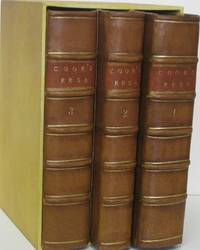
1776138599Upsala: Johan Edman 1776-1787. Hardcover. fine. 1st Swedish Editions. xxviii 308 2 ii 326 6; xx 366 10; xii 618 12 2 pp. Octavo 3 vols. With two copper engraved folding maps Handsome period style matching brown gilt tooled half sheep with speckled papered boards and brown gilt labels housed in a matching slipcase. A fine set. fine Very Rare complete set of all three of Cook's Voyages in Swedish. The First Voyage is a translation from Freville's compilation. The Second and Third Voyages were translated from the official accounts but with editorial notes by an anonymous Finnish editor Second Voyage and Oedmann Third Voyage. The second voyage caused animosity between the editor and Sparrman who condemned the work and is ironically also listed as an author in the book. Du Rietz 1 9 12; Forbes 126 Third Voyage 1776 Johan Edman hardcover
161541142Paris, Jean Moreau, 1615. Petit in-8 de (8)-152 pp., demi-maroquin rouge à coins, dos orné à nerfs (reliure du XIXe siècle).
2 parti in un vol. in-4, ff. (20, i primi 2 ff. in antico facsimile), pp.464; ff. (6), pp.98, (1) f. di errata, legatura coeva in pergamena, titolo manoscritto al dorso. Entro ovale emblema inc. in rame sui due titoli, bel ritratto del Frugoli in medaglione, due tavole ripieg. fuori testo in antico facsimile, raffig. attrezzi di cucina. Il ''Trinciante'' ha titolo e numeraz. propri ed appare qui in ediz. originale, mentre la ''Pratica e Scalcaria'' era già apparsa presso il medesimo Cavalli nel 1631. Copioso trattato di gastronomia italiana di alto rango, con estese e dettagliatie ricette in ogni campo del cibo di carne, di pesce, di legumi e di frutta e dei servizi annessi. Corredato di copiosi indici di utile consultazione. L'autore descrive la mansione dello scalco, il modo di allestire banchetti nello stile italiano, spagnolo, francese e tedesco, la qualità delle pietanze e i menu per i pranzi da lui organizzati nelle capitali europee. Egli fu per anni al servizio della corte di Madrid, e la moda spagnola si riflette nelle pietanze che propone. Opera rara ed importante, mancante a molte collezioni specializzate in materia. Esemplare con qualche arrossatura, margine interno di alcuni fogli rinforzato, foglio con ritratto con alcuni difetti e primi 2 ff. e le rarissime tavole in antico facsimile (tra le bibliografie solo l'esemplare della Fondaz. B.IN.G, possiede entrambe le tavole).. B.I.N.G. 855. Vicaire 375-376. Bitting 170. Westbury 106-107..
3 opere in un vol. in-8, legatura del tempo p. pelle marrone, bordura con triplice filetto a secco sui piatti, dorso a nervi (alcune abrasioni poco visibili al cuoio la cuffia inferiore ottimamente restaurata, piccole mende agli spigoli), tagli rossi. Tutti e tre i titoli, con l'impresa tipogr., sono racchiusi nella medesima bordura ornamentale a motivo architettonico; grandi e piccole iniz. silogr., testo in car. tondo e note a stampa nei margini. Prima edizione della raccolta delle opere del Platina, il grande umanista e storico Bartolomeo Sacchi (1421- Roma 1481, detto Platina dal nome latino del villaggio ''Piadena'' in provincia di Cremona). - I) ''De vita et moribus Summorum Pontificum'': ff. ccclxviii, (4). E' la celebre ''Storia dei Pontefici'', dedicata a Papa Sisto IV, tra i maggiori fondatori ed estimatori della Biblioteca - I) ''De vita et moribus Summorum Pontificum'': ff. ccclxviii, (4). E' la celebre ''Storia dei Pontefici'', dedicata a Papa Sisto IV, tra i maggiori fondatori ed estimatori della Biblioteca Vaticana, della quale il Platina fu il primo bibliotecario.- II) ''De falso et vero bono dialogi. Contra amores. De vera nobilitatei. De optimo cive'': ff. cxxxvi. Sono dei trattatelli filosofico-morali in forma di dialogo. - III) ''De honesta voluptate. De ratione victus, etc.'': ff. xcviii, (2, di cui ultimo bianco). Composta attorno al 1460, è l'opera più nota del Platina, di grande curiosità ed interesse gastronomico, che tratta di ogni genere di commestibili, loro virtù , benefici o danni che possono arrecare al corpo; come cucinare vari tipi di vivande, salse e condimenti appropriati; quali luoghi siano adatti per l'abitazione, gli esercizi corporali, ecc. Il volume è piuttosto attraente, malgrado i margini non grandi, con la conseguenza che le tre bordure, larghe e impresse storte, risultano in qualche porzione del lato destro rifilate di 1-2 mm. . BMC, French, 388 (sotto Sacchi). I) Adams P-1417. - II) Adams P-1407. - III) Adams P-1410. Vicaire 691. Simon, Bacchica II, n. 523..
1574W93823Franckofurti Moeni [Frankfurt am Main], Martinus Lechler 1574 viii + 143 [i.e. 286] + [vii] pp., with one blanco ff. between f.111 and 112, with index, Original 1574-edition, with numerous woodcut initials, 21cm., 19th cy. hardcover binding (spine in leather with gilt title, corners bit bumped, in good condition), marbled endpapers, upper left corner of all pages is lacking some paper (not affecting the text, except for - at some pages - the first word of the repeated chapter name mentioned on top of each page), text is very well readable and clean except for some vague spots at some pages, old ex-libris stamp and ex-dono on title page, [German title: "Durch Gottes segen, newe Speisskammer und Speiskeller in vorstehenden hungers nöten, Landstheuwerungen, und Kriegsslaeufften, sampt anmuetiger Haussapotecken und Kuchenartzney ; dergleichen niemals vorhin publiciert worden". This is a scarce complete edition of this interesting work discussing nutrition during wartime and famine. It contains numerous receipts for making bread, the use of fruit, liquor, etc. The text is written in Latin, but the shouldernotes in the receipts are in German. Ref.: Oberle 67 "Ouvrage rare et très curieux", Vicaire Sp.804f.: "Ouvrage assez rare", Wellcome I,6125], W93823
viii + 143 [i.e. 286] + [vii] pp., with one blanco ff. between f.111 and 112, with index, Original 1574-edition, with numerous woodcut initials, 21cm., 19th cy. hardcover binding (spine in leather with gilt title, corners bit bumped, in good condition), marbled endpapers, upper left corner of all pages is lacking some paper (not affecting the text, except for - at some pages - the first word of the repeated chapter name mentioned on top of each page), text is very well readable and clean except for some vague spots at some pages, old ex-libris stamp and ex-dono on title page, [German title: "Durch Gottes segen, newe Speisskammer und Speiskeller in vorstehenden hungers nöten, Landstheuwerungen, und Kriegsslaeufften, sampt anmuetiger Haussapotecken und Kuchenartzney ; dergleichen niemals vorhin publiciert worden". This is a scarce complete edition of this interesting work discussing nutrition during wartime and famine. It contains numerous receipts for making bread, the use of fruit, liquor, etc. The text is written in Latin, but the shouldernotes in the receipts are in German. Ref.: Oberle 67 "Ouvrage rare et très curieux", Vicaire Sp.804f.: "Ouvrage assez rare", Wellcome I,6125], W93823
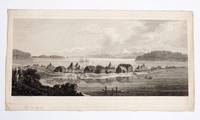
17843611651London 1784. Engraving 253 x 533 mm. to plate mark paper size 290 x 540 mm.; a little light old creasing at right side; in fine condition. <p><p>Rare proof impression of one of the most atmospheric views made by Webber to illustrate Cook's third voyage: the St Peter and Paul ostrog as seen during the expedition's first visit to Avacha Bay.</p> <p>This wonderful panorama of St Peter and St Paul with Cook's ships at anchor in the bay would later appear as plate 74 in the atlas to the official account of the third voyage. Webber's image depicts the small Kamchatkan settlement with its inhabitants fishing in front of their distinctive dwellings all in an untouched landscape with wooded coastline and distant snow-covered mountains. It offers an arcadian vision of the place wildly at variance with what it would become: modern Petropavlovsk-Kamchatsky now a major commercial port and the home of Russia's nuclear submarine fleet. It was at St Peter and St Paul that the battered vessels called in late April 1779 and here that Major Behm agreed to take the news of Cook's death overland to St. Petersburg.</p> <p>This is an early state of the print before letters. The temporary credits here scratched into the plate are differently worded to the final version that would appear in the publication: here there is no caption identifying the view and the image is identified as "Drawn from Nature by J. Webber" and "Engraved by B.T. Pouncy". In the finished version these would be differently expressed as "J. Webber del." and "B.T. Pouncy sc.". The proof engraving is printed on a noticeably different paper and its inking is distinctly finer than the examples of the finished version with which we have compared it. The result is a greater tonal quality.</p> <p>Joppien and Smith discuss the Kamchatkan visit at some length in both text and catalogue volumes of their study of the art of Cook's third voyage. In their description of the related watercolour view now in the Dixson Library in Sydney they note that the original version has probably been lost and that the Dixson watercolour is probably related to the engraving process. </p> <p>This is a desirable and rare version of one of Webber's most successful images from Cook's third voyage. `</p> </p> . unknown
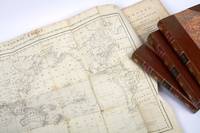
17843712595London: Stockdale Scatcherd and Whitaker Fielding & Hardy 1784. A few spots and stains but a good set. Four volumes octavo with two folding maps and 49 plates in a smart modern binding of polished half calf with gilt labels edges rough-trimmed only with the often discarded half-titles present. <p><p>First octavo edition of the third voyage account with a large chart of the world as discovered by Captain Cook and a finely engraved folding map of the Hawaiian Islands. Intense public interest in the fabulous discoveries of the third voyage and widespread consternation over the death of England's beloved mariner resulted in copies of the quarto edition selling out quickly. The demand prompted two London octavo editions of 1784-1785 including this set printed for John Stockdale and a group of entrepreneurial publishers. The text was abridged omitting some technical and navigation details and as a result reads more like an adventure than the official quarto edition. The list of subscribers is considerable indicating the fervent public interest and a modest price considerably reduced from that of the expensive quarto edition.</p> <p>In addition to the two impressive maps the plates have been re-engraved for the smaller format. Aside from the large chart accompanying the first volume showing the progress of the expedition the two folding plates are noteworthy. The first depicts the death of Cook and was engraved after the original by Dodd. It ignominiously depicts the last moments of the great navigator here shown lying face down and clutching the shore whilst dragged by the calves by a Hawaiian warrior in a tapa cape. The second folding plate is a map of the Hawaiian Islands with a separate chart of Karakakooa Bay marked with soundings details of native villages and areas under cultivation - and the location 'Here Capt. Cook was killed' duly noted.</p> <p>This edition was originally issued in weekly parts with printed wrappers; half-titles for this edition seem to be usually absent though this set includes those for volumes 2 to 4 none is called for in volume 1. The title pages are dated 1784 although the span of publication passed into the following year.</p> </p> . Stockdale, Scatcherd and Whitaker, Fielding, & Hardy unknown
1862WRCAM54585Washington D.C.: War Department Adjutant General's Office 1862. Three volumes with over 300 individual imprints. 12mo. Uniformly bound in contemporary three- quarter roan and marbled boards gilt leather labels. Wear to leather and edges boards somewhat rubbed front hinges tender. Contemporary ownership inscriptions and binder's tickets on front endpapers of second and third volumes; later bookplate on front pastedown of first volume. Light toning in places otherwise internally clean. Very good. A uniformly-bound set of General Orders issued by the Adjutant General's Office of the War Department in Washington D.C. previously owned by Brig. Gen. John Pope Cook. The orders cover 1861 and 1862 and comprise a nearly complete run of orders for the Union Army during the first two years of the Civil War. Undoubtedly the most significant General Order in this collection is a preliminary printing of the Emancipation Proclamation. <br> <br> A handful of the orders are signed in ink by the various adjutant generals. The Emancipation Proclamation bound in the third volume is as follows: <br> <br> GENERAL ORDERS No. 139. THE FOLLOWING PROCLAMATION BY THE PRESIDENT IS PUBLISHED FOR THE INFORMATION AND GOVERNMENT OF THE ARMY AND ALL CONCERNED: BY THE PRESIDENT OF THE UNITED STATES OF AMERICA A PROCLAMATION caption title. Washington D.C.: War Department Adjutant General's Office ca. September 24 1862. 3pp. This work is one of the earliest printings of the Preliminary Emancipation Proclamation issued to regimental commanders in the field during the Civil War in the week after President Lincoln's official manuscript version was finished. Here the third paragraph rings out with Lincoln's timeless words: "That on the first day of January in the year of our Lord one thousand eight hundred and sixty- three all persons held as slaves within any State or designated area of a State the people whereof shall then be in rebellion against the United States shall be then thenceforward and forever free." <br> <br> Following the Seven Days Battle and Gen. McClellan's retreat from the Peninsula at the end of June 1862 President Lincoln realized that there would be no early end to the war and found himself "as inconsolable as it was possible for a human to be and yet live." Anxious for news from the army and needing to escape the constant interruptions at the White House he frequently visited the telegraph office in the War Department building to await dispatches. It was during one such visit early in July that he asked the chief of the telegraph staff Maj. Thomas Thompson Eckert for some paper to "write something special" and began the first draft of the Emancipation Proclamation completing it in a few weeks. <br> <br> Lincoln had long hoped to resolve the slavery issue through a congressional act of emancipation compensating slave owners for their loss of "property" but that approach was roundly rejected by representatives from the border states leaving the President who had decided upon the necessity of emancipation with a presidential proclamation as the only option. The extraordinary document he conceived would announce the liberation on January 1 1863 of all slaves in those states still in rebellion against the Union and promised compensation to slave owners in those states that returned to the fold before that time if they adopted "immediate or gradual abolishment of slavery." This proclamation would be followed by a final proclamation issued on the 1st of January identifying those states still in rebellion and confirming the liberation of all slaves therein. <br> <br> On Tuesday July 22 Lincoln presented his draft to the Cabinet telling them that he had resolved firmly upon the course of action it specified and asking them not for advice but suggestions. The only observation he had not anticipated came from Secretary of State Seward who proposed that it might be best to wait for a military victory before issuing the Proclamation as it could otherwise seem like "the last measure of an exhausted government." Immediately recognizing the wisdom of the suggestion Lincoln held back. On September 17 after an anxious wait of nearly two months he received the victory he needed at the bloody Battle of Antietam. Completing his final draft Lincoln presented it to his cabinet for refinement on September 22. Following the meeting Seward took the amended draft with him to the State Department where a formal manuscript copy was made then signed by Lincoln and Seward. <br> <br> The first edition of the Preliminary Emancipation Proclamation Eberstadt #1 a small three-page circular intended for distribution within the government and to the local press was likely printed on September 22. At the time that Charles Eberstadt published his study of the Proclamation 1950 he was able to locate only one copy which he himself owned and as nearly as we have been able to determine no other copies have come to light since then. <br> <br> Eberstadt #2 is a supposed second edition no copy of which Charles Eberstadt was able to locate whose existence he inferred from the standard State Department practice of printing a folio edition consisting solely of the text of the proclamation followed by another printing consisting of the text of a letter of transmittal from the Secretary of State as well as the text of the proclamation. While there may be a copy of Eberstadt #2 in the National Archives as he speculated it is not recorded in their online catalogue nor have we been able to find a copy in any other online catalogue including OCLC the Library of Congress and the Abraham Lincoln Library. <br> <br> Eberstadt's third printing of the Preliminary Emancipation Proclamation is without a doubt the earliest obtainable printing. It consists of Secretary of State Seward's one-page letter of transmittal addressed "To the Diplomatic and Consular Officers of the United States in foreign countries" and the text of the proclamation. Eberstadt located a total of only five copies in institutions at the Library of Congress the National Archives Yale the Clements Library and Brown. OCLC does not record any additional copies nor is it recorded in Monaghan. This firm sold a copy several years ago. <br> <br> The present copy of GENERAL ORDERS No. 139 is Eberstadt's fourth printing of the Preliminary Emancipation Proclamation dated in print on September 24. Charles Eberstadt surmises that this field order printing could have been accomplished as late as September 29 or 30 and produced in as many as 15000 copies. It is however rather uncommon in the market and this is the first copy of this printing of the Preliminary Emancipation Proclamation offered by this firm. <br> <br> "From the first days of the Civil War slaves had acted to secure their own liberty. The Emancipation Proclamation confirmed their insistence that the war for the Union must become a war for freedom. It added moral force to the Union cause and strengthened the Union both militarily and politically. As a milestone along the road to slavery's final destruction the Emancipation Proclamation has assumed a place among the great documents of human freedom" - National Archives. "The proclamation has been called by responsible persons one of the three great documents of world history ranking with Magna Carta and the Declaration of Independence" - Eberstadt. <br> <br> Besides including about 300 orders on all manner of Union military activity at the outset of the Civil War the present collection also contains the 1861 printing of REGULATIONS FOR THE UNIFORM AND DRESS FOR THE ARMY OF THE UNITED STATES. Set out in GENERAL ORDERS No. 6 this twenty-four-page printing of the Army dress regulations was the first to set out uniform requirements for the Union during the conflict. The first sentence of the first section requires officers to "wear a frock coat of dark blue cloth." Thus the Blue and the Gray begins. <br> <br> This set was collected and bound by John Pope Cook who began the Civil War as a colonel in command of the 7th Illinois Volunteer Regiment. He was promoted to brigadier general after his troops played a key role in the Union victory at Fort Donelson early in 1862. After his promotion he was transferred to a command in the Department of Iowa and Dakota Territory where he remained until early 1863 conducting campaigns against the Sioux from his base in Sioux City Iowa. These orders must have been bound near the end of this period since contemporary labels note the binder one William F. Kiter as being from relatively close by Council Bluffs. <br> <br> A very early printing of one of the most important political acts in the Civil War and indeed in American history contained in a set of General Orders contemporaneously assembled by a significant Union Army commander. EBERSTADT LINCOLN'S EMANCIPATION PROCLAMATION 4. War Department, Adjutant General's Office hardcover books
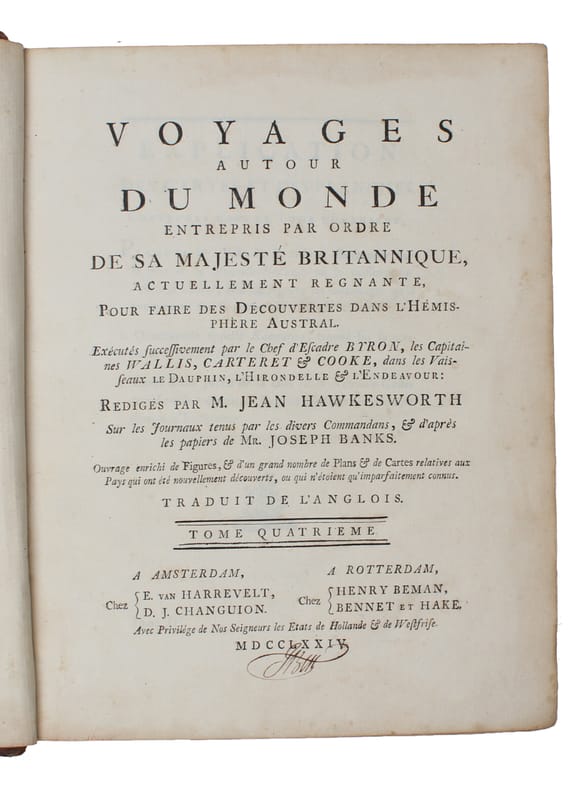
1774WRCAM15266Paris 1774. Four volumes. ivxvi2xxxii388pp. plus sixteen folding maps and plates; 2536pp. plus sixteen maps and plates mostly folding; 2394pp. plus seventeen maps and plates mostly folding; viii367pp. plus three maps and plates two folding. Quarto. Modern half mottled calf and marbled boards spines gilt leather labels. Some scattered foxing and tanning. Overall very good. The first French edition after the original English edition of the previous year. Hawkesworth was commissioned by the Admiralty to edit this collection of voyages which includes Cook's first voyage to Tahiti to observe the transit of Venus across the sun determine the distance between the sun and the earth and continue Byron's explorations. During this voyage Cook visited Tahiti and made the necessary calculations named and charted the Society Islands explored and surveyed New Zealand and charted the eastern coast of Australia naming it New South Wales finally returning to England in 1771. Other narratives are of Byron's voyage to the Gilbert and Tuamoto Islands Wallace's discovery of Tahiti and Moorea and Carteret's discovery of Pitcairn Island after his separation from Capt. Wallis in a storm. The handsome plates depict the natives landscapes and seascapes and the maps show the routes of the ships and areas charted. An early and important compilation. This French edition is not listed in Hill. Sabin calls for only 361 pages in the fourth volume and states that the French editions "should be accompanied by an Atlas entitled: CARTES ET FIGURES a Paris Chez Saillant et Nyon. M.DCC.LXXIV. 4to." The NUC makes no mention of an atlas but the set cited there is imperfect lacking the third volume. SABIN 30940. hardcover books
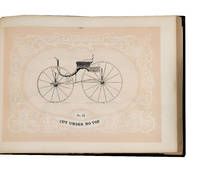
18601701081860. COOK G.D. & Co. Illustrated Catalog of Carriages and Special Business Advertiser New Haven Ct. iv 226 pp. Oblong 8vo 170 x 245 mm. bound in original embossed brown cloth rebacked in tan calf spine gilt. New York: Baker & Godwin 1860. This illustrated catalog is a wonderful study of mid-nineteenth century American commerce. G. & D. Cook established in 1794 produced this catalog not only to showcase their extensive line of carriages but also to introduce the numerous commercial enterprises in and around New Haven Connecticut. Ninety-seven of the 145 carriages found in the descriptive price list are illustrated. Those in search of the "Alabama Six Seat" "World's Fair Buggy" "Eureka Jump Seat" "The Gem" or "Pride of the South" would have to look no further than this catalog. In addition to carriages the catalog also features a wide range of products from Connecticut and New York so numerous that an alphabetical index by product has been included. Among the wide variety of goods offered one can find advertisements for artificial heat guano mowing machines time indicators area hotels and firearms. Each advertisement is wonderfully illustrated in the greatest detail. All advertisements are black and white engravings with the exception of the tinted plate advertisement for architect Henry Austin. To further advertise the city and its commerce an essay has been included entitled: "New Haven in 1860. A Few Notes by a Business Man Who Loves the Town." The essay is essentially a commercial guide for the city expounding on the growing industry and population and includes a map of New Haven and its surrounding areas. A very bright fresh copy binding restored and inscribed by Cook. ROMAINE p. 80. hardcover
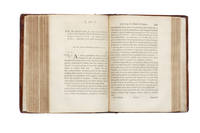
17765000612London: Printed by W. Bowyer and J. Nichols: for Lockyer Davis in Holbourn Printer to the Royal Society 1776. Small library and release stamps in a few places. Quarto with many folding plates and tables; in very good condition in original calf binding well rebacked. <p><p>This collective publication of Transactions of the Royal Society for 1776 running to altogether 53 articles on a rich variety of subjects includes two original works by James Cook who appeared in print surprisingly little during his illustrious career. The first piece pp. 402-6 is Cook's famous account of the measures taken on the Resolution during the second voyage to combat scurvy in which he discusses the merits of malt "Sour Krout" "portable soup" and citrus fruit. Cook's piece is addressed to the Royal Society's president Sir John Pringle who read it on Cook's behalf to the Society in the absence of Cook himself then just beginning his final voyage. It was awarded the Society's famous Copley medal for 1776.</p> <p>Cook was also responsible for another article in the same year his piece pp. 447-9 on the tides 'in Endeavour River on the East Coast of New Holland'. Yet a third piece in the volume relates to Cook's second voyage William Anderson surgeon on the Resolution contributing "An Account of some Poisonous Fish in the South Seas".</p> </p> . Provenance: John Crerar Library University of Chicago with release stamps; R. David Parsons American collector of voyage books with booklabel; private collection Sydney. Printed by W. Bowyer and J. Nichols: for Lockyer Davis, in Holbourn, Printer to the Royal Society unknown
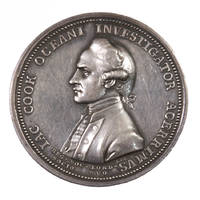
98570London Royal Society 1784. . Silver medal 43 mm in diameter. Obverse: bust of Cook in relief with the legend 'Iac. Cook Oceani Investigator acerrimus' the most intrepid investigator of the seas; reverse: full-length portrait of Britannia her shield resting by her side and the legend 'Nil intentatum Nostri Liquere' our men have left nothing unattempted and 'Auspiciis George III' in exergue.<br /> Commissioned by the Royal Society following Cook's death this is the rare silver issue: one of only 322. News of Cook's death in Hawai'i in 1779 reached the Royal Society in the following year and Sir Joseph Banks set about ensuring that Cook was memorialised through the commissioning of this medal and the publication of the official account of his Third Voyage. The medal was engraved by Lewis Pingo 1743-1830 who succeeded his father Thomas as Assistant Engraver at the Royal Mint in 1776. <br /><br />Fellows of the Royal Society were entitled to a bronze medal a total of 577 of which were struck but an additional 22 medals were struck in gold and 322 in silver as here.<br /> Beddie 2790; Nan Kivell Portraits of the Famous and Infamous p72. London, Royal Society, 1784. unknown
177419257Amsterdam, Rotterdam, E. van Harrevelt, Henry Beman, 1774. 4to. Bound in 4 cont. full mottled calf. 6 raised bands, gilt titlelabels. Backs a little rubbed, some cracking to leather along hinges, but covers not detached. Corners bumped. Ocasionally somewhat brownspotted, a few tears in plates (no loss). A few corners dampstained. With all 4 halftitles. (8),XXXII,388 - (6),536 - (6),394 - VIII,367,(3) pp. and 52 engraved plates, mostly large and folded, among these are 28 folded maps. (all).
177419257Amsterdam Rotterdam E. van Harrevelt Henry Beman 1774. 4to. Bound in 4 cont. full mottled calf. 6 raised bands gilt titlelabels. Backs a little rubbed some cracking to leather along hinges but covers not detached. Corners bumped. Ocasionally somewhat brownspotted a few tears in plates no loss. A few corners dampstained. With all 4 halftitles. 8XXXII388 - 6536 - 6394 - VIII3673 pp. and 52 engraved plates mostly large and folded among these are 28 folded maps. all. <br/><br/><em> First French edition of Cooke's first travel a title-issue identical with the Paris-edition from the same year only with a different title-page and a printed Privilege in Dutch for the Dutch publisher. It is the 4to-edition not one of the 8vo -editions published the same year. - Sabin 30941. </em> hardcover
178248142Paris chez Pissot Pre et 1782 In-8, veau brun, dos nerfs orn de roulettes pousses or, filet or sur les coupes; doublures et gardes de papier peigne, tranches lisses rouges (reliure de l'poque).Edition originale de cette premire traduction franaise, illustre en frontispice d'une gravure sur acier reprsentant les indignes tuant le capitaine Cook Owhy-he en fvrier 1779, et comportant une grande carte dpliante galement grave sur acier, retraant la route suivie par Cook en 1776, 1777, 1778, et 1779 lors de son troisime et dernier voyage. Ce rcit du dernier voyage du capitaine Cook au cours duquel il fut tu par des indignes aux les Hawa, fut publi trs discrtement deux ans avant la version officielle par John Rickman, lieutenant de vaisseau bord du Discovery; on y trouve quelques dtails et incidents indits. La traduction est due Jean-Nicolas Dmeunier (1751-1814) dput du tiers tat aux tats gnraux de 1789, puis prsident de l'Assemble nationale constituante. Bel exemplaire en reliure de l'poque. De la bibliothque du comte Nicolas d'Esterhzy (ex-libris armori).
173964769Halberstadt-Leipzig, Christian Friedrich Schopp, 1739. 8°. Mit gest. Frontispiz. 7 Bll., 880 (recte 850) S., Ppbd. d. Zt. m. handschriftl. Rückenschild u. gespränkeltem Farbschnitt.
054900Paris Chez Saillant et Nyon. Chez Panckoucke 1774 in 4 (25,5x19) 1 volume reliure demi basane fauve de l'époque, dos à nerfs orné de caissons dorés, pièce de titre de cuir beige, 52 planches ou cartes gravées dépliantes. Et successivement exécutés par le Commodore Byron, le Capitaine Carteret, le Capitaine Wallis, et le Capitaine Cook, dans les vaisseaux le Dauphin, le Swallow et l'Endeavour. Rédigée d'après les journaux tenus par les différents commandants & les papiers de M. Banks, Par J. Hawkesworth. Sir Joseph Banks, Londres 1743-1820, aristocrate et naturaliste britannique, participa au premier voyage de James Cook autour du monde (1768-1771). Atlas seul (collationné complet). Bel exemplaire ( Photographies sur demande / We can send pictures of this book on simple request )
in-4, pp. 94, (2 bb.). Leg. coeva cart. Impresa tipogr. al tit., alcune iniz. silogr., testo in nitido car. rom. Prima ed unica edizione di questo interessante trattatello concernente la dietetica, ultimo lavoro del Fracanzani publicato in vita, frutto del ciclo di lezioni di medicina teorica tenute a Padova. «Dedicato al card. Alessandro Farnese, l'opuscolo presenta la traduzione latina del testo ippocratico corredato di un breve commento per ogni singola frase..., il linguaggio fortemente tecnico e la stringatezza dello stile conferiscono all'opera un carattere di "prontuario" per medici eseprti, o per studenti già in possesso delle basilari nozioni di medicina ippocratica» (Diz. Biogr. Ital.vol. 49, p. 524-5). Il Francanzani (Vicenza 1506 - Padova 1567) fu illustre medico e professore nelle Università di Padova e Bologna, autore anche del "De morbo gallico fragmenta", pubblicato nel 1563 a Padova in appaendice all'omonima opera di Gabriele Falloppio. Bellissimo esempl. a pieni margini, con barbe.. Non in Wellcome. Durling 1630. BING 846. BMC 275..
In Firenze, presso Giuseppe Luchi in faccia al Fisco, 1797, volumi 2, in-8 piccolo, cartonatura rustica coeva, pp. 276, XI, [1] - 16, 272. Prima ed unica edizione, rarissima. Non presente in ICCU né nelle principali biblioteche europee (altre importanti opere del Leonardi - "L'Apicio moderno", "Gianina o sia la cuciniera della Alpi", "Il cuciniere perfetto italiano" - sono invece presenti in ICCU). La Libreria del Congresso ne possiede un solo volume. Westbury, p. 133, n. 3. Pennell 119 (un solo volume). Il termine "pasticciere" è qui da considerarsi nel senso più ampio della parola: notate tantissime ricette di pasticci salati: di carne rossa, di carne bianca, di cacciagione, di pesce, ecc. Francesco Leonardi, di nascita romano, lavorò al servizio del maresciallo di Richelieu e dei potenti di Polonia, Turchia, Germania e Inghilterra, fino ad arrivare, con il ruolo di cuoco e scalco, alla corte di Caterina II imperatrice di tutte le Russie. Ottimo esemplare con solo qualche brunitura sparsa.
158140653DBRom, in aedibus populi Romani, 1581 (im Druckevermerk 1582). Folio. 340 S., (12) Bl. (Index). Mit einer Holzschnitt-Druckermarke auf dem letzten Blatt. Etwas späterer Pergamentband mit goldgeprägtem Rückentitel. + Wichtig: Für unsere Kunden in der EU erfolgt der Versand alle 14 Tage verzollt ab Deutschland / Postbank-Konto in Deutschland vorhanden +, A|B [2 Warenabbildungen]
193654291Chicago: Walter Hill 1936. Each signed with initials of the Artist. Matted with the corresponding captioned illustrations. 1 vols. Various Sizes 13.5 x 11 inches to 3 x 7 inches matted on 14.5 x 22 inch boards . In worn and split cloth drop box morocco label. Each signed with initials of the Artist. Matted with the corresponding captioned illustrations. 1 vols. Various Sizes 13.5 x 11 inches to 3 x 7 inches matted on 14.5 x 22 inch boards . Bitting p. 13: "Fully annotated. The name was synonymous with gourmandise and among the ancients was given to choice dishes the name of the author was probably Coelius who gave the name Apicius to his book"; Vicaire p. 277 Walter Hill unknown
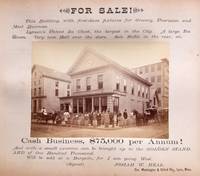
187955602Lynn MA: Published by Josiah W. Heal 1879. Oblong 4to. 12 x 9.2 in. 100 pp unpaginated. printed on thick paper stock all leaves hinged at gutter margin w/ linen hinges all printed w/ woodcut-engraved borders. With 24 albumen photographs sized primarily 4.5 x 6.75 in. mounted on leaves sized 10.75 x 8.75 in. all w/ printed captions or further explanatory text below 2 colour chromolithograph advertisement plates for Sawyer’s Crystal Blue & Howard Patent Metallic brushes; 7 advertising plates printed w/ red & black or red blue & black inks woodcut-engraved illustrations throughout and on illustrated ads on pastedowns. Publisher’s black cloth over beveled boards decorative gilt lettering on front cover wear & rubbing to fore-edges head & foot of spine corners worn minor wear to corners to textblock leaves minor lifting of the cloth 2 leaves hinge repaired at gutter margin still a good unsophisticated copy w/ the albumen photos retaining strong contrast. First edition of this scarce and fascinating business and land promotion for the city of Lynn Massachusetts at the height of the Gilded Age filled with advertising extolling the virtues and products of this New England manufacturing town. Following the Civil War Lynn rapidly developed as the center of shoe manufacturing and leather manufacturers in Massachusetts revolutionized by the introduction widespread adoption and use of the shoe sewing machine. The advertisements in this work the photographs and text all indicate a fast growing economy filled with wide streets well built homes & businesses a broad array of retailers including jewelers carpenters gunsmiths cigar stores lumber stores grocery stores hardware stores as well as a wider group of dyers leather makers machinists and factories all acting as suppliers for the dominant shoe trade. The photographs include street scenes businesses and contemporary advertising as well as photographic photos of the Kid & Morocco Manufactory for P.P. Tapley & Co. at No. 114 Broad Street; Factory & retail operation for C.H. Aborn & Co. Lennox & Co. Goat & Morocco; John Mahon & Sons Shoe Manufacturers; the Bay Street Wheel Co. with sample wheels arranged in front; the Lynn Hotel first opened in 1803 and built by the Salem Turnpike & Chelsea Bridge Corp. Also included is a photo advertising Josiah Heal’s attempt to sell his grocery business & building for $ 75000 at the corner of Washington & Oxford Streets in order to go West he does not appear in census or street directories for about 10 years. Of particular interest is the photo of Lydia E. Pinkham’s residence & laboratory producing the famed Vegetable Compound marketed to women to relieve menstrual cramps and menopausal symptoms first developed in 1873 containing black cohosh life root unicorn root pleurisy root and fenugreek seed with a “preservative†of 20% alcohol. From 1860 to the end of the 19th century Lynn’s population increased from about 12000 to over 60000 with a massive influx of farm workers leaving the farms to fill the factory jobs as well as increased immigration. Cook fl. 1872-1879 operated as a photographer in Sharon and Hudson Massachusetts but no address for a studio appear in contemporary street directories. Heal 1841-1925 was one of the most successful grocers and civic boosters for Lynn Massachusetts and although unclear whether he ever made the move West he does not appear to have directory listings for his business during part of the 1880s. Worldcat locates 8 copies collations vary although most appear to indicate 71-95 pp. whereas this copy is 100 pp.; See: Polito & Steele A Directory of Massachusetts Photographers: 1839-1900 2018; History of Lynn Lynn Open Space and Recreation Plan June 2016 pp. 14-17; Rainey Horwitz Lydia Pinkham’s Vegetable Compound 1873-1906 The Emryo Project 2017. Published by Josiah W. Heal, hardcover