BONNEFONSLivre Rare Book
40 620 résultats
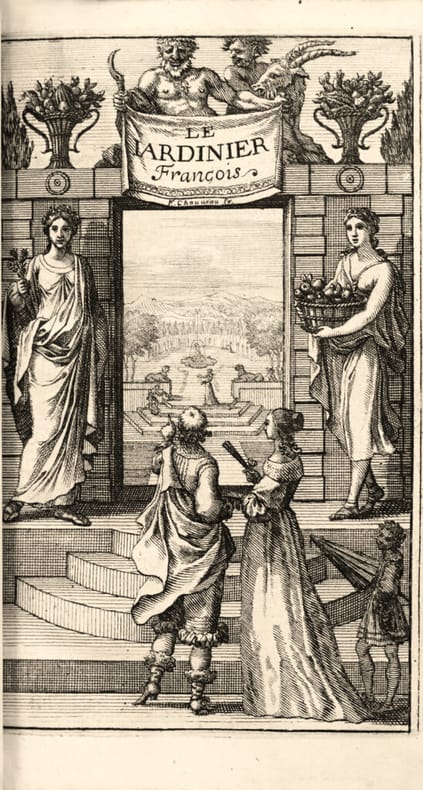
LCS-1864068«Très bel exemplaire dans une charmante reliure de cet intéressant ouvrage de Nicolas de Bonnefons, valet de chambre du Roi Louis XIV» (Bulletin Morgand, 1893, n° 23436). Paris, Pierre Deshayes, 1651. In-12 de 1 frontispice, (24) pp., 380 pp., (2), 3 planches hors texte à pleine page. Maroquin rouge, décor doré sur les plats en variante de l’encadrement à la Duseuil, dos à nerfs cloisonné et fleuronné, double filet or sur les coupes, roulette intérieure dorée, tranches dorées sur marbrures. Trautz-Bauzonnet. 135 x 75 mm.
Seconda edizione. Bell’esemplare, con leggero e sporadico foxing e alcuni restauri professionali: al margine interno delle prime tre carte per sanare un parziale distacco; al frontespizio per tamponare un piccolo buco da corrosione di inchiostro antico; all’angolo superiore di p. 53; alla tavola più volte ripiegata. Nel complesso un esemplare molto fresco e marginoso (mm 150x205). Ex libris Helene Freiin von Gutschmid. Rara edizione che segue l’originale del 1629, stampata sempre a Padova. Il volume di Giegher è considerato uno dei più importanti trattati del ’600 sull’arte della tavola. L’autore, di origini bavaresi, approdò in Italia poco più che ventenne intorno al 1616 e qui imparò tutti i segreti del lavoro dello scalco, il soprintendente alle cucine principesche e aristocratiche. Dopo un breve periodo di insegnamento all’Università di Padova, raccolse l’esperienza acquisita lavorando per le maggiori cucine del tempo dapprima nel volume «Il trinciante», uscito a Padova presso Martini (1621), e poi ne «Lo Scalco», uscito anch’esso a Padova, per Crivellari (1623). Ma il suo capolavoro vide la luce qualche anno più tardi, nel 1629, sotto il titolo complessivo «Li Tre Trattati», all’interno del quale Giegher racchiuse la somma delle sue conoscenze: fece infatti confluire in un’unica opera le due pubblicazioni precedenti, e ve ne aggiunse una terza, inedita, il «Trattato delle Piegature». Il testo fu corredato da splendide incisioni raffiguranti nel dettaglio la piegatura dei tovaglioli, il posizionamento dei piatti sulla tavola, i differenti tagli della carne e del pesce, le modalità di affettatura e gli strumenti ad essa preposti, e infine le tecniche di decorazione della frutta. La serie delle tavole è anticipata dal ritratto dell’autore, con i motti «Esto vigilans» e «non sine causa». B.IN.G., n. 937; Paleari Henssler, Gastronomia, p. 346; Vicaire, Bibliogr. gastronomique, coll. 402-403
17835001095Hartford Connecticut: Nathaniel Patten 1783. Small octavo lacking the map as do virtually all known copies top four lines of title-page in well prepared facsimile; as always a little browned throughout but generally in rather better condition than most copies; in the original dark calf binding. <p><p>Highly important personal account of Cook's third voyage: the first American account of Cook's third voyage and thus the very earliest American account of the discovery of the Hawaiian Islands later to become the fiftieth state of America. This rare and significant book is notoriously hard to find in good shape. </p> <p>Ledyard one of several Americans on the voyage and the only one to publish an account of the expedition sailed as a corporal of marines. It is now generally acknowledged that he got hold of a copy of Rickman's narrative which he used to help him compile this account after his return to America. He himself describes the sealing of all diaries drawings memorandums and charts of all officers and crew aboard ship at Canton. However the narrative contains considerable information not available elsewhere including the first published description of the Russian presence on Unalaska the first permanent Russian settlement in northwest America only Ledyard Samwell and Edgar visited the settlement. The chart supposed to have been issued with the book which seems to have been an almost direct copy of the Rickman map is missing in almost every copy known and in view of the erratic nature of American eighteenth-century publishing it is nowadays accepted that it was not generally issued.</p> <p>Ledyard's description of his stay at Hawaii his expedition inland and the death of Cook occupies sixty-four pages of the text. The account of New Zealand and Australia is short but includes his observation that 'the island of New-Holland for its boundaries are now ascertained is by much the largest known and most eligably sic situated on the map of nature. even the Empress of Russia might be gratified with such a portion'.</p> </p> . Nathaniel Patten unknown
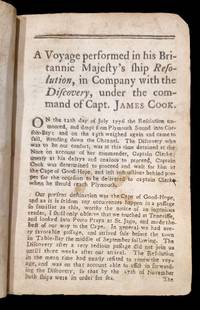
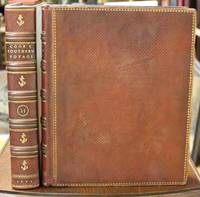
1777B3134London: W. Strahan & T. Cadell 1777. Mispagination on xxvi no loss. A few folding charts with small closed tears vol.2 2A4 torn across page no loss; professionally repaired otherwise a fine copy. Text and plates are clean and crisp bound in decorative period gilt diced calf. Edition: first edition Binding: contemporary diced calf with gilt tooled border rebacked tastefully with matching diced calf with double-raised bands and six compartments gilt nautical motifs gilt text in 2 and 4. Board edges gilt inner dentelles gilt. Endpapers marbled. Notes: The account of Cook’s second voyage. Captain Cook’s three great voyages from the basis for any collection of Pacific books. The success of Cook’s first voyage led the Admiralty to send him on a second expedition described in the present work which was to circumnavigate the globe as far south as possible in search of any southern continents. Cook proved that there was no “Terra Australis†which supposedly lat between New Zealand and South America but became convinced that there must be land beyond the ice fields. The men of this expedition became the first to cross the Antarctic Circle. Further visits were made to New Zealand and on two great sweeps Cook made an astonishing series of discoveries and rediscoveries including Easter Island the Marquesas Tahiti and the Society Islands Niue the Tonga Islands the New Hebrides New Caledonia Norfolk Island and a number of smaller islands. Rounding Cape Horn on the last part of the voyage Cook discovered and charted South Georgia after which he called at Cape Town. William Hodges was the artist with the expedition…This voyage produced a vast amount of information concerning the Pacific peoples and islands proved the value of the chronometer as an aid in finding longitude and improved techniques for preventing scurvy in addition to the aforementioned discoveries.†Hill Size: 4to Illustration: Complete with engraved portrait frontispiece and 63 plates charts and portraits many folding. Volume: 2 vol. References: Hill p.61; Mitchell Library Cook 1216; Rosove 77A1; Sabin 16245; PMM 223 4to for W. Strahan and T.Cadell 1777 . PMM. Pages: P. Vol 1. 5 frontis title 1 contents 6 introduction ix-xxxvi list of plates xxxvii-xl 1-378 4; Vol 2. 4 title 1 contents and errata 5 advertisement 1-315 1 half-title 1 319-396 4. Category: Book Voyages General;Book Pacific W. Strahan & T. Cadell hardcover
190387972London George Allen; New York Longmans Greet 1903-01-01. Leather. Very Good. 1903 George Allen 3/4 leather over marbleized boards 39 volume set. Top edge gilt. Uniformly bound and titled except all volumes are numbered with Roman numerals except for volume 3. Tight and unmarked with illustrations throughout. oversized and overweight. fe7234f61 Please email for photos. London, George Allen; New York, Longmans, Greet, hardcover
17738607<p><strong>Cook's First Voyage</strong></p><p><strong>Accounts of the not-yet-famous Cook</strong></p><p>Three Volumes. Quarto. 12 x 9 inches. 20 xxxvi 4 456 4 xiv 410 4 395 3. 52 charts and plates collated complete. Original calf rebacked in antique style calf maroon leather spine labels marbled endpapers. Library bookplates in front cover of each volume oval library stamps on verso of folding frontis map title page and p. 3 of vol. I on title page and p. 1 of vol. II on title page and p. 7 of vol. III. Small chip to bottom edge of one plate in Vol. II not affecting image closed tear to large folding map in vol. III. A few minor dampstains to top edge some light offsetting from plates. General wear to covers and corners. Overall a very good set internally quite bright and crisp.</p><p>Second edition published the same year as the first. Considered the best edition by Hill. Includes the chart of the Straight of Magellan that the first edition does not. Also includes a preface to the second edition containing a reply from Hawkesworth to a letter from Mr. Dalrymple about some groundless imputations in his account of the late voyages to the South Seas. The official account of the first voyage of the not-yet-famous Cook as prepared by Hawkesworth upon commission of the British Admirality. The voyage was primarily scientific in nature intending to sail to Tahiti to observe the transit of Venus calculate the distance of the earth from the sun and to continue the geographical discovery begun by Byron. After leaving Tahiti Cook discovered named and charted the Society Islands then continued on to New Zealand and Australia. The first volume contains narratives of the voyages of Byron Wallis and Carteret while the second and third volume relates to Cook. Beddie: 650; Hill: 783; Sabin: 30934.</p> Printed for W. Strahan; and T. Cadell
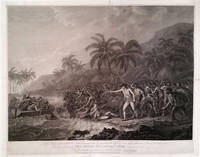
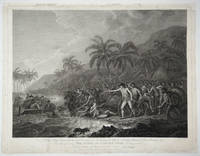
178422690London: W. Byrne No. 79 Titchfield Street & J. Webber No. 312 Oxford St. 1784. First printing. Print. Very good condition. The separately published image by Webber of one of the iconic images of the 18th century. Cook already a successful navigator was immortalized after his death at the hands of Hawaiian natives at Karakakoa Bay. Cook had spent two months on the Big Island in 1779 and was well received the natives believing he was a god. When he was forced to return due to a damaged mast he was viewed as a mortal who had already sorely stretched the supplies of the Hawaiians. It is also thought that his handling of the natives was uncharacteristically brusque leading to conjecture that this consummate traveler's judgment was somehow impaired. Copper engraving published as the Act Directs 1st Jan. 1784 by J. Webber No. 312 Oxford Street and W. Byrne No. 19 Titchfield Street London. 22 3/4 x 18 1/4" image size. A very crisp impression on laid watermarked paper. Without the impression mark with an archival border added to aid in framing. A very nice copy of an important separately published engraving. W. Byrne, No. 79 Titchfield Street & J. Webber, No. 312 Oxford St. unknown
in-4, ff. (6), pp. 606, ff. (5 di Indice), legatura coeva in pergamena, titolo manoscritto al dorso. Con bellissimo antiporta raffigurante vari animali vivi (mucca, maiale, tacchino, quaglia...) su piatti da portata disposti a piramide e circondati da un albero di vite; un ritratto dell'autore firmato da ''Franc.co de Grado'' (attestato dal Piantanida) e un altro (attestato nell'esemplare della Wellcome e della Biblioteca Napoletana di storia patria) raffigurante il Latini a 45 anni; 2 tavole ripiegate f.t. (una con illustrati i vari modi di tagliare la frutta; l'altra un tavolo scenograficamente imbandito). Edizione originale della prima parte (la seconda apparve due anni più tardi) di quella che è ritenuta «la summa di tutta la letteratura precedente, dagli esordi della gastronomia umanistica ai trattati maggiori dell'età rinascimentale» (E. Faccioli). L'a. fornisce ragguagli sull'organizzazione della cucina e sulla preparazione dei banchetti da lui allestiti a Roma, Napoli, Loreto, Albano, Pozzuoli, Posillipo, Torre del Greco e dintorni. Contiene nozioni su come imbandire le tavole e realizzare i trionfi; numerose ricette di arrosti, bolliti, stufati, fritti, brodi, minestre, pasticci, pizze, salse, aceti profumati, conserve. Ma soprattutto contiene la ricetta della «salsa di pomodoro alla spagnuola» (p. 444), con cipolla, timo, «peparolo», sale, olio e aceto. Non è solo la prima ricetta pubblicata di una preparazione a base di pomodoro, ma quella di un sugo che, «con qualche aggiustamento» – scrivono Alberto Capatti e Massimo Montanari – «sarà destinato a grande avvenire nella cucina italiana e nell'industria conserviera». Latini è pioniere anche nell'impiego di un altro ortaggio giunto dal Nuovo Mondo, il peperone, che utilizza per insaporire alcune salse. L'a. ebbe vita avventurosa e nota grazie ad un manoscritto recentemente ritrovato: ebbe umili origini ma seppe guadagnarsi notevole fortuna tanto da divenire scalco presso diverse corti (a Roma da Antonio Barberini, Macerata, Mirandola e Faenza per concludere la carriera a Napoli presso Esteban Carillo Salsedo). Ottimo esemplare con usuali lievi arrossature,. Westbury 129 (erra nella paginazione e parla di ritratto e 3 tavole). B.I.N.G. 1103 (erra perché considera prima edizione quella del 1693). Vicaire 491. Vinciana 140. Wellcome p. 155 con ritratto a 45 anni come nel nostro esemplare..
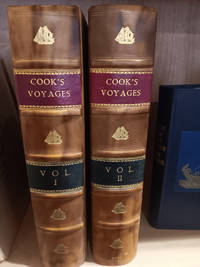
1779B3280London: W. Strahan; T. Cadell c. 1779. A very good set text and plates are clean and crisp. Edition: Third edition Binding: Recent ½ morocco with cloth boards spine in six compartments of raised gilt bands with gilt nautical motifs in gilt borders titles on two four and six top edge gilt endpapers renewed. Notes: Shortly after his return from the first voyage Cook was once again commissioned by the Royal Society to search for the mythical Terra Australis. On his first voyage Cook had demonstrated by circumnavigating New Zealand that it was not attached to a larger landmass to the south; and by charting almost the entire eastern coastline of Australia he had shown it to be continental in size. Cook commanded HMS Resolution on this voyage while Tobias Furneaux commanded its companion ship HMS Adventure. Cook's expedition circumnavigated the globe at a very high southern latitude becoming one of the first to cross the Antarctic Circle on January 17 1773 reaching 71°10' south. He also discovered South Georgia and the South Sandwich Islands. In the Antarctic fog the Resolution and Adventure became separated. Furneaux made his way to New Zealand where he lost some of his men following a fight with the MÄori and eventually sailed back to Britain while Cook continued to explore the Antarctic. Cook almost discovered the mainland of Antarctica but turned back north towards Tahiti to resupply his ship. He then resumed his southward course in a second fruitless attempt to find the supposed continent. On his return voyage he landed at the Friendly Islands Easter Island and Vanuatu in 1774. His reports upon his return home put to rest the popular myth of Terra Australis. Size: 4to Illustration: Complete with engraved portrait frontispiece and 63 copper engraved plates charts and portraits 50 plates; 14 maps and charts many folding. Volume: 2 volumes References: Beddie 1226; Hill 358 Pages: P. Volume 1. 6 blank frontis title blank contents 6 ix-xl 1-378 6; Volume 2. 6 title blank contents 5 advertisement 1-396 6. Category: Book Arctic & Antarctic; Book Voyages General; Book Pacific W. Strahan; T. Cadell hardcover
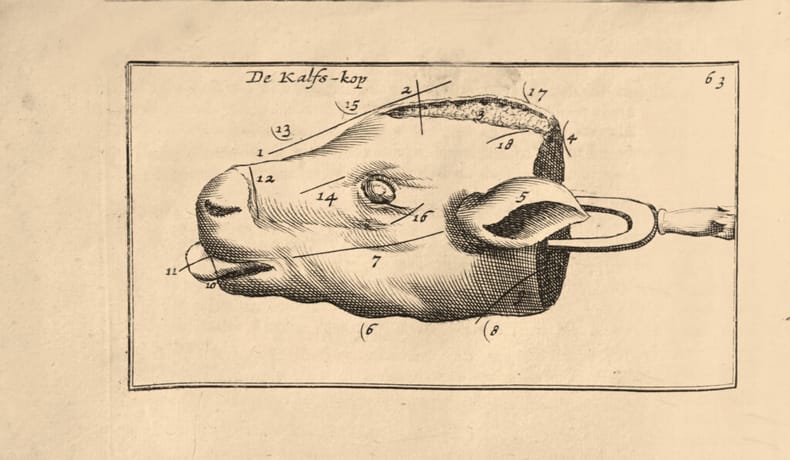
LCS-18485Précieux exemplaire de ce rare ouvrage sur l’art de trancher, particulièrement grand de marges. Amsterdam, Hieronymus Sweerts, 1664. In-12 oblong de: 1 frontispice gravé, 96 pages, 31 planches hors texte gravées sur cuivre (comme souvent sans la planche dépliante), qq. taches sur le frontispice. Conservé dans sa brochure de la fin du XVIIe siècle, petit manque à l’angle supérieur gauche du premier plat. 101 x 154 mm.
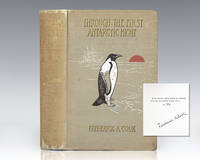
1900111201New York: Doubleday & McClure Co 1900. Signed limited edition of American arctic explorer Frederick Cook's narrative of the first expedition to winter in the Antarctic region in which he saved numerous lives as the ship's surgeon. Octavo original illustrated cloth tissue-guarded frontispiece in color illustrated. One of one thousand numbered copies signed by the author on the limitation page opposite a tissue-guarded engraved portrait this is number 92. From the library of James Stephen "Steve" Fossett with his bookplate to the pastedown. American businessman and record-setting aviator Steve Fossett became the first person to fly solo nonstop around the world in 2002 in his 10-story high balloon Spirit of Freedom. He completed the 2002 trip in 13 days 8 hours and 33 minutes and set records for both the Longest Distance Flown Solo in a Balloon and Fastest Balloon Flight Around the World. Fossett was also one of sailing's most prolific distance record holders set the Absolute World Speed Record for airships with a Zeppelin NT in 2004. He received numerous awards and honors throughout his career including aviation's highest award the Gold Medal of the Federation Aeronautique Internationale FAI which he was awarded in 2002. Fossett disappeared on September 3 2007 while flying a light aircraft over the Great Basin Desert between Nevada and California. In near fine condition. American physician Frederick Albert Cook was the surgeon on Robert Peary's Arctic expedition of 1891-1892 and on the Belgian Antarctic Expedition of 1897-1899. He contributed to saving the lives of its crew members when their ship--the Belgica--was ice-bound during the winter as they had not prepared for such an event. It became the first expedition to winter in the Antarctic region. To prevent scurvy Cook went hunting to keep the crew supplied with fresh meat. "His narrative is certainly one of the finest and most interesting from any Antarctic expedition" Rosove and the first to contain an extensive photographic record of the region. Doubleday & McClure Co hardcover books
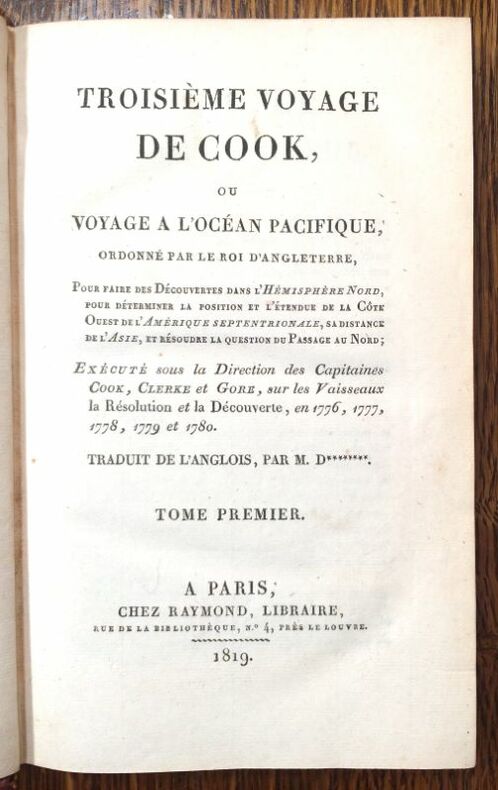
53521 In-8° pour le texte et in-4° pour les atlas. Demi-veau havane. Dos lisse souligné par des paires de filets dorés. Auteur, titre, tomaison et n° du voyage dorés. Plats décorés de papier marbré. Frottements timides çà et là. Coins légèrement émoussés. Intérieur très frais. Tampon encré aux initiales d'un ancien propriétaire à la 1ère garde du tome I du 1er voyage : M de J. Édition des trois voyages du capitaine Cook, dans une reliure homogène vers 1820. Les trois volumes d'atlas (un par voyage) avec les planches au format in-4° s'ajoutent à cet exemplaire, ce qui est loin d'être toujours le cas. Complet de toutes les cartes et planches à savoir : Atlas 1er voyage : 50 planches Atlas 2e voyage : 66 planches Atlas 3e voyage : 87 (portrait-frontispice de Cook compris ; erreur de numérotation : 2x la n°52) + 1 planche non numérotée relatant la mort de James Cook Soit au total 204 planches. Beaux tirages (marges parfois courtes pour les voyages 1 et 2). Paris, Nyon et Mérigot, 1789, 8 volumes ; Paris, Mérigot, 1792, 6 volumes ; Paris, Raymond, 1819, 4 volumes ; + 3 volumes d'atlas in-4° (l'atlas consacré au 1er voyage daté 1774 (année de la 1ère édition) et l'atlas consacré au 3e voyage imprimé à Paris, Hôtel de Thou, 1785). Soit 21 volumes au total.
53521 In-8° pour le texte et in-4° pour les atlas. Demi-veau havane. Dos lisse souligné par des paires de filets dorés. Auteur, titre, tomaison et n° du voyage dorés. Plats décorés de papier marbré. Frottements timides çà et là. Coins légèrement émoussés. Intérieur très frais. Tampon encré aux initiales d'un ancien propriétaire à la 1ère garde du tome I du 1er voyage : M de J. Édition des trois voyages du capitaine Cook, dans une reliure homogène vers 1820. Les trois volumes d'atlas (un par voyage) avec les planches au format in-4° s'ajoutent à cet exemplaire, ce qui est loin d'être toujours le cas. Complet de toutes les cartes et planches à savoir : Atlas 1er voyage : 50 planches Atlas 2e voyage : 66 planches Atlas 3e voyage : 87 (portrait-frontispice de Cook compris ; erreur de numérotation : 2x la n°52) + 1 planche non numérotée relatant la mort de James Cook Soit au total 204 planches. Beaux tirages (marges parfois courtes pour les voyages 1 et 2). Paris, Nyon et Mérigot, 1789, 8 volumes ; Paris, Mérigot, 1792, 6 volumes ; Paris, Raymond, 1819, 4 volumes ; + 3 volumes d'atlas in-4° (l'atlas consacré au 1er voyage daté 1774 (année de la 1ère édition) et l'atlas consacré au 3e voyage imprimé à Paris, Hôtel de Thou, 1785). Soit 21 volumes au total.
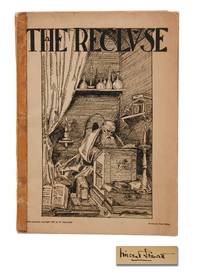
1927140947953Athol MA: W. Paul Cook 1927. First Edition. Very Good. An association copy of the first and only issue of the legendary amateur periodical published by W. Paul Cook. Provenance: Vincent Starrett's copy with his name written on the first page. Starrett who corresponded with Lovecraft had short stories published in the earliest issues of Weird Tales and poems in Arkham House anthologies. A journalist writer and literary scholar he is best know for his pioneering works of Sherlock Holmes scholarship. <p>78 pp. Stapled sheets in publisher's original pictorial wraps illustrated by Vermont Country Store co-founder and friend of Lovecraft Vrest Orton. Very Good. Textblock completely detached from wraps old tape reinforcement to spine small faint tidemark to front cover at top edge light chipping to spine ends and corners. <p>The New England writer and publisher William Paul Cook was a friend and supporter of H. P. Lovecraft and encouraged the literary research that Lovecraft synthesized into his famous essay "Supernatural Horror in Literature." The essay occupied pages 23 through 59 of The Recluse a periodical Cook began for his own amusement. The contributors who included Clark Ashton Smith Donald Wandreiand Vrest Orton were not paid and Cook never got around to publishing a second issue. Joshi I-B.ii.335a. W. Paul Cook unknown
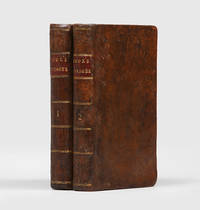
1797132846Boston: Thomas & Andrews and D. West January 1797. The first collected edition of Cook's voyages to be published in the US First US collected edition of Cook's three voyages. Forbes notes that it "appears to be an adaptation of the text contained in Volumes VI and VII of William Mavor's Historical Account of the Most Celebrated Voyages Travels & Discoveries" 1796. This edition is uncommon with just two copies traced institutionally in the UK. "Cook earned his place in history by opening up the Pacific to western civilisation and by the foundation of British Australia. The world was given for the first time an essentially complete knowledge of the Pacific Ocean and Australia and Cook proved once and for all that there was no great southern continent as had always been believed. He also suggested the existence of Antarctic land in the southern ice ring a fact which was not proved until the explorations of the nineteenth century. Cook was a brilliant navigator and hydrographer an excellent administrator and planner and probably the first sea captain to realise the importance of preserving the health and well-being of his crew. He did everything possible to maintain their physical fitness and the cleanliness of both men and ships. He conquered the hitherto prevalent scurvy by cutting down the consumption of salt meat and by always having fresh vegetables and fruit on board" Printing and the Mind of Man. 2 vols duodecimo 170 x 95 mm. Copper engraved frontispieces and seven plates the plate "A view of the habitations in Nootka Sound" present twice though only called for in vol. II. Contemporary brown calf rebacked to style titles to red morocco label to spines. Ownership inscription dated 1952 in green ink to p. iv of both vols; ownership stamp of Vasconcellos to foot of p. 5 of volume II. Careful restoration to spine ends and tips. A couple of scuffs to covers edges toned pencil marks to pastedowns occasional worming to contents most notably at foot of gathering y in volume II tear to fore edge of p 289-90 of volume II occasional dampstains to contents offsetting to text nevertheless a very good copy. Beddie 58; Forbes 270; not in Hill; Sabin 16258. unknown
1777230013<p><strong>A Voyage Towards the South Pole and Round the World. </strong>Performed in His Majesty's Ships the Resolution and Adventure in the Years 1772 1773 1774 and 1775. Written By James Cook Commander of the Resolution In which is included Captain Furneaux's Narrative of his Proceedings in the Adventure during the Separation of the Ships.</p><p>Illustrated with Maps and Charts and a Variety of Portraits of Persons and Views of Places drawn during the Voyage by Mr. Hodges and engraved by the most eminent Masters. London: Printed for W. Strahan; and T. Cadell in the Strand.</p><p>In Two Volumes. The Second Edition. MDCCLXXVII 1777. <strong>$12000 NZD</strong></p><p>Unique Quarto 11 inches high Second Edition Set of Captain Cook's Voyages highquality rebinding 1990's with 62 engraved illustrations maps and charts.</p> W Strahan and T Cadell hardcover
17854401834Paris: Hôtel de Thou 1785. Fine. Five quarto volumes including the final atlas volume containing a total of 88 engraved maps and plates; uniform full calf armorial bindings of the period. <p><p>A superb set of the desirable first French edition of the official account of Cook's third voyage in outstanding contemporary French bindings bearing the arms of the Ruolz Montchal family and the motto "Toujours pret". A smaller edition in octavo was published at the same time but this larger and handsome version is or course greatly preferred. It is illustrated in the manner of the English publication and has a version of the famous "Death of Cook" plate based on the original drawing by John Webber not all copies of the French quarto edition include this plate. Furthermore the fourth and final volume of the text is complete with all seven appendices including the folding vocabulary table.</p> <p>The full story of Cook's great third voyage and his eventual murder while revisiting the Hawaiian Islands that he had discovered earlier during the voyage was almost as eagerly awaited by the European as by the English public: the approximately forty ediitns that appeared befpre 1800 included vesion sin Fench Dutch Geman ruswsian Swedish and Italiqan. This French version is th emost handsome of all the 4editiins ager the English official account.</p> <p>Bligh Burney Colnett Vancouver and Riou - all later to command important voyages of their own - were all members of the expedition which set out to return Omai to Tahiti and to search for a northwest passage. They called at Kerguelen Island Tasmania the Cook Tonga and Society Islands turned north and discovered Christmas Island and the Hawaiian Islands and went on to chart the northwest coast of America from Northern California to 70o 44' where they were stopped by pack ice. On their retrn to Hawaii Cook was killed.</p> <p>The official artist on the voyage was John Webber and his romantic views of the islands of the Pacific published here remain the most evocative portrayals of the islands - helping to create the notion of an island paradise that so affected the public eagerly reading the voyages of discovery being published in the eighteenth century.</p> <p>The Ruolz-Montchal family derived from the Ardèche. but moved in the 18th century to the Lyon area where they held the property of Le Chatelard in Francheville until the early 20th century. Their most famous member was Henri-Catherine-Camille de Ruolz-Montchal 1808-1887 the French industrial chemist composer and comte a friend of both Balzac and Alexandre Dumas.</p> </p> . Provenance: Ruolz Montchal family large gilt coat-of arms on all covers. Hôtel de Thou unknown
H1007London Alexander Hogg 1780. Titel S. 593-1172 2 Bl. =der Appendix über Cooks 3. Reise 11 S. Index 1 S. directions to the bookbinder 2 Bl. Subskribentenliste. Mit zahlreichen Tafeln und Karten. Dekorativer Ganzlederband der Zeit mit 2 Rückenschildern und auf Bünden. Gelenke gebrochen berieben. Der Ba enthält auf den Seiten 1117–1156 eine umfangreiche Beschreibung von Cooks zweiter Reise. Was ihm jedoch weit größere Bedeutung gibt ist der fast immer fehlende 4seitige Appendix über Cooks dritte Reise und seinen Tod. Dieser wird in größeren Teilen Ellis und Rickman zugeschrieben. Jedoch enthält er auch Passagen unbekannten Ursprungs. Hierzu Forbes: "Although in great measure extracted from William Ellis' 'Authentic Narrative…' London 1782 this little-known account of Cook's stay at Kealakekua and of his death also contains frequent unacknowledged passages from the anonymously authored account 'Journal of Captain Cook's Last Voyage' London 1781 by John Rickman. There are however comments and embellishments to this text that appear in neither the Rickman nor the Ellis account. Though of unidentified authorship as most of the account is from Ellis he was probably the compiler. This appendix is very rare. Holmes says that 'of the eight copies he examined but one … contains the 4 p appendix.'" Das 2-bändige Werk erschien ursprünglich in 100 wöchentlichen Lieferungen die ersten davon bereits 1778 noch zu Lebzeiten Cooks. Die beschriebenen Inhalte reichen bis 1780 die letzten Ausgaben erschienen vermutlich 1782. Alle großen frühen Reisen werden beschrieben: Cook Columbus Drake Dampier Bougainville Byron etc. etc. - Forbes 42 Holmes 103 Beddie 751. unknown
177342375London: for W. Strahan & T. Cadell 1773. 4 volumes 4to. 11 3/8 x 8 5/8 inches. Vol. I: xx xxxvi 4 138 '139-360' 361-676 pp. Vol II: xv 1 410 pp. Vol III: vi 411-799 pp. With the 'Preface to the Second Edition' the earliest state of Vol. I text and continuous pagination sequence in Vols. II-III. Complete with 52 plates maps and charts 18 folding 24 double-page including the large folding 'Chart of the Streights of Magellan.' The maps and charts are here contemporaneously bound in a separate atlas volume. Contemporary full calf spines with raised bands forming seven compartments red and green morocco lettering pieces in the second and third compartments<br/> <br/> A fine copy of the second and best edition of Hawkesworth's account of all the most important mid-18th century English voyages of exploration to the southern hemisphere: including the official account of Cook's first voyage. A fascinating narrative intended to 'embellish England's prestige as a maritime power' Hill and describing events that were to be major factors in the shaping of the subsequent history of the region. This copy with the map of the Straits of Magellan not generally issued with the first edition of the same year and all maps and charts bound in a unique fourth volume at the time of publication.<br/> <br/> One of the standard works of Pacific voyages giving an account of English voyages of the 1760s in the first volume and of Cook's first voyage in the second and third volumes. The first volume includes an account of John Byron's voyage to the Tuamoto Islands and the Gilberts as well as Capt. Wallis' voyage of discovery to Tahiti and Moorea. Captain Carteret's discovery of Pitcairn Island is also told. The majority of the book is devoted to an account of Cook's first Pacific voyage. "The first voyage under Captain Cook's command on the Endeavour was primarily of a scientific nature. The expedition was to sail to Tahiti in order to observe the transit of Venus across the disk of the sun to determine the earth's distance from the sun and also to carry on the geographical discovery that John Byron had started. Entering the Pacific around Cape Horn Cook reached Tahiti in 1769 and carried out the necessary astronomical observations.Leaving Tahiti in July Cook discovered named and charted the Society Islands and then heading southwest explored New Zealand then headed towards Australia and discovered and charted the eastern coast for 2000 miles naming the area New South Wales. Both Australia and New Zealand were annexed by Britain as a result of this voyage which began in 1768 and ended in 1771" Hill.<br/> <br/> Beddie 648; cf. Hill 2004 782; Holmes 5; Sabin 30934. for W. Strahan & T. Cadell unknown
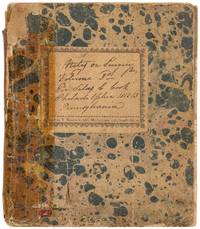
1812550272Philadelphia 1812. Softcover. Very Good. Manuscript notebook. Small quarto 6½" x 7¾". Contains 85 manuscript pages written in ink on the rectos and versos in two separately paginated parts. Each part or "volume" consists of two lectures: Lecture 4 - Mortification pp. 1-12 and Lecture 5 - Wounds pp. 13-42; Lecture 6 - Wounds continued pp. 2 1-24 and Lecture 7: Ulcers pp. 24-42. Original marbled paper wrappers with a bookseller's printed paper titling label: "Sold by T. Desilver 220 Market and 152 South 6th St." mounted on front cover. The label is titled in manuscript: "Notes on Surgery Volume 3d - per Silas C. Cook . ." Laid-in is a folded octavo sheet titled: "Recipe for Pills" which lists the ingredients of cough and digestive pills. One page in the notebook also contains a recipe for "Cathartics Emetic." The wrapper is torn at head of spine with some loss spine and left edge of front cover mended with old strips of clear tape minor toning and scattered short tears and nicks very good overall.<br /> <br /> A remarkable notebook documenting early American diagnosis and treatments of "mortification" defined as "the certain destruction or death of any part of the body"; and of multiple types of wounds including: punctured lacerated and penetrating wounds; wounds of the face and abdomen etc. as well as gun shot wounds. Also included is a final lecture on ulcers. Celebrated today as the "Father of American Surgery" Philip Syng Physick was among the few doctors who remained in Philadelphia to care for the sick during the city's devastating Yellow Fever Epidemic of 1793. A surgeon at Pennsylvania Hospital 1784-1861 and professor of surgery at the University of Pennsylvania Physick was one of the most sought-after medical lecturers of the 19th century. His lectures prepared a generation of surgeons for service throughout America including Dr. Silas Cook.<br /> <br /> Born in 1791 Silas Cook was raised in Morristown New Jersey and pursued his medical studies under the guidance of Dr. Lewis Condit a leading Morris County physician. He attended Physick's medical lectures at the University of Pennsylvania during the winters of 1812 and 1813. Licensed to practice in 1813 he conducted a successful practice throughout New Jersey until 1842. From 1842 until 1857 he was located at Easton Pennsylvania where he was rated as one of Easton's most skillful and successful physicians. In 1857 he returned to Hackettstown New Jersey and continued in practice until his death in 1873.<br /> <br /> An important notebook documenting contemporary surgical procedures and the education of an early American doctor in the early 19th Century. unknown
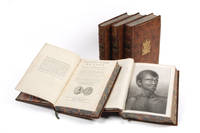
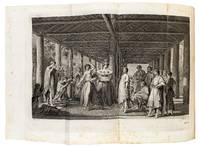
177341891London: for W. Strahan & T. Cadell 1773. 3 volumes 4to. 11 1/4 x 8 5/8 inches. 52 plates maps and charts 18 folding 24 double-page. Contemporary full calf spines with raised bands forming six compartments red and black morocco lettering pieces in the second and fourth compartments other compartments tooled gilt.<br/> <br/> Second edition of Hawkesworth's account of all the most important mid-18th century English voyages of exploration to the southern hemisphere: including the official account of Cook's first voyage. A fascinating narrative intended to 'embellish England's prestige as a maritime power' Hill and describing events that were to be major factors in the shaping of the subsequent history of the region.<br/> <br/> One of the standard works of Pacific voyages giving an account of English voyages of the 1760s in the first volume and of Cook's first voyage in the second and third volumes. The first volume includes an account of John Byron's voyage to the Tuamoto Islands and the Gilberts as well as Capt. Wallis' voyage of discovery to Tahiti and Moorea. Captain Carteret's discovery of Pitcairn Island is also told. The majority of the book of course is devoted to an account of Cook's first Pacific voyage. "The first voyage under Captain Cook's command on the Endeavour was primarily of a scientific nature. The expedition was to sail to Tahiti in order to observe the transit of Venus across the disk of the sun to determine the earth's distance from the sun and also to carry on the geographical discovery that John Byron had started. Entering the Pacific around Cape Horn Cook reached Tahiti in 1769 and carried out the necessary astronomical observations.Leaving Tahiti in July Cook discovered named and charted the Society Islands and then heading southwest explored New Zealand.then headed towards Australia and discovered and charted the eastern coast for 2000 miles naming the area New South Wales. Both Australia and New Zealand were annexed by Britain as a result of this voyage which began in 1768 and ended in 1771" Hill.<br/> <br/> Beddie 648; cf. Hill 2004 782; Holmes 5; Sabin 30934. for W. Strahan & T. Cadell unknown
178427732London: W. Byrne No. 79 Titchfield Street & J. Webber No. 312 Oxford St. 1784. First printing. Print. Very good condition. The separately published image by Webber of one of the iconic images of the 18th century. Cook already a successful navigator was immortalized after his death at the hands of Hawaiian natives at Karakakoa Bay. Cook had spent two months on the Big Island in 1779 and was well received the natives believing he was a god. When he was forced to return due to a damaged mast he was viewed as a mortal who had already sorely stretched the supplies of the Hawaiians. It is also thought that his handling of the natives was uncharacteristically brusque leading to conjecture that this consummate traveler's judgment was somehow impaired. Copper engraving published as the Act Directs 1st Jan. 1784 by J. Webber No. 312 Oxford Street and W. Byrne No. 19 Titchfield Street London. 22 3/4 x 18 1/4" image size. A very crisp impression on laid watermarked paper. With the impression mark. A very nice bright clean copy of an important separately published engraving. Some cracking of edges outside the impression mark restored and the print is laid on archival paper. W. Byrne, No. 79 Titchfield Street & J. Webber, No. 312 Oxford St. unknown
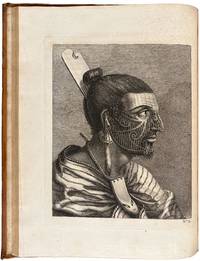
177725578London: W. Strahan and T. Cadell 1777. 2 volumes quarto. 11 x 9 inches. Engraved portrait of Cook by J. Basire after Wm. Hodges 63 engraved plates maps and charts 15 folding 16 double-page 1 folding letterpress table. A few plates trimmed close as usual. Contemporary calf covers with decorative borders tooled in blind expertly rebacked to style spine with raised bands in six compartments red and black morocco labels in the second and fourth the others with a repeat decoration in gilt<br/> <br/>First edition of Cook's second voyage on which he was directed to circumnavigate the globe as far south as possible to search for any southern continent.<br/> <br/>"Cook earned his place in history by opening up the Pacific to western civilization and by the foundation of British Australia. The world was given for the first time an essentially complete knowledge of the Pacific Ocean and Australia and Cook proved once and for all that there was no great southern continent as had always been believed. He also suggested the existence of antarctic land in the southern ice ring a fact which was not proved until the explorations of the nineteenth century" Printing and the Mind of Man p.135. "The success of Cook's first voyage led the Admiralty to send him on a second expedition described in the present work which was to circumnavigate the globe as far south as possible in search of any southern continents . the men of this expedition became the first to cross the Antarctic Circle. Further visits were made to New Zealand and on two great sweeps Cook made an astonishing series of discoveries and rediscoveries including Easter Island the Marquesas Tahiti and the Society Islands Niue the Tonga Islands the New Hebrides New Caledonia Norfolk Island and a number of smaller islands. Rounding Cape Horn on the last part of the voyage Cook discovered and charted South Georgia after which he called at Cape Town St. Helena and Ascension and the Azores . This voyage produced a vast amount of information concerning the Pacific peoples and islands proved the value of the chronometer as an aid to finding longitude and improved techniques for preventing scurvy" Hill p.123 "This the official account of the second voyage was written by Cook himself . In a letter dated June 22nd 1776 to his friend Commodore William Wilson Cook writes: - 'The Journal of my late Voyage will be published in the course of the next winter and I am to have the sole advantage of the sale. It will want those flourishes which Dr. Hawkesworth gave the other but it will be illustrated and ornamented with about sixty copper plates which I am of the opinion will exceed every thing that has been done in a work of this kind; . As to the Journal it must speak for itself. I can only say that it is my own narrative .'" Holmes pp.35-36.<br/> <br/>Beddie 1216; Hill 2004 358; Holmes 24; Printing and the Mind of Man 223; Rosove 77.A1. W. Strahan and T. Cadell unknown books
1786320931London: Alexander Hogg 1786. First one-volume collected edition of the three Voyages. With engraved portrait frontispiece large folding map and 155 copper engraved maps charts and plates. Pp. iv 5-655 656 directions to binder 4 list of subscribers. 1 vols. Folio. Contemporary reversed calf red morocco spine label. Ownership signature of Joshua Baskitt. Title page shaved along foot with loss of part of a line in imprint minor marginal paper flaws to plates facing 45 450 546 643 not affecting image. A sound and clean copy. Very good plus to near fine. First one-volume collected edition of the three Voyages. With engraved portrait frontispiece large folding map and 155 copper engraved maps charts and plates. Pp. iv 5-655 656 directions to binder 4 list of subscribers. 1 vols. Folio. First one volume edition of Cook's voyages begun soon after the publication of the official account of the Third Voyage and issued in eighty serial parts with plates. The volume also includes accounts of the voyages of Drake Anson Byron Carteret Phipps and Wallis. The page of directions to the bookbinder lists the engravings 157 in all which accompany the text. A few plates are bound out of order; the plate of the Death of Captain Cook a frequent casualty is present here at p. 587.<br/><br/>An attractive copy in original condition. Beddie 19; Hill 18; Forbes 61; Sabin 52455 Alexander Hogg unknown books
177721449London: W. Strahan and T. Cadell 1777. 2 volumes 4to. 11 x 8 5/8 inches. Engraved portrait of Cook by J. Basire after Wm. Hodges 63 engraved plates maps and charts 1 folding letterpress table. Expertly bound to style in half eighteenth century russia over period marbled paper covered boards spine with raised bands in six compartments red and black morocco lettering pieces in the second and fourth the others with a repeat decoration in gilt<br/> <br/> Cook's second voyage describing his attempt to circumnavigate the globe as far south as possible in search for a southern continent.<br/> <br/> "Cook earned his place in history by opening up the Pacific to western civilization and by the foundation of British Australia. The world was given for the first time an essentially complete knowledge of the Pacific Ocean and Australia and Cook proved once and for all that there was no great southern continent as had always been believed. He also suggested the existence of antarctic land in the southern ice ring a fact which was not proved until the explorations of the nineteenth century" Printing and the Mind of Man p.135. "The success of Cook's first voyage led the Admiralty to send him on a second expedition described in the present work which was to circumnavigate the globe as far south as possible in search of any southern continents . the men of this expedition became the first to cross the Antarctic Circle. Further visits were made to New Zealand and on two great sweeps Cook made an astonishing series of discoveries and rediscoveries including Easter Island the Marquesas Tahiti and the Society Islands Niue the Tonga Islands the New Hebrides New Caledonia Norfolk Island and a number of smaller islands. Rounding Cape Horn on the last part of the voyage Cook discovered and charted South Georgia after which he called at Cape Town St. Helena and Ascension and the Azores . This voyage produced a vast amount of information concerning the Pacific peoples and islands proved the value of the chronometer as an aid to finding longitude and improved techniques for preventing scurvy" Hill p.123 "This the official account of the second voyage was written by Cook himself . In a letter dated June 22nd 1776 to his friend Commodore William Wilson Cook writes: - "The Journal of my late Voyage will be published in the course of the next winter and I am to have the sole advantage of the sale. It will want those flourishes which Dr. Hawkesworth gave the other but it will be illustrated and ornamented with about sixty copper plates which I am of the opinion will exceed every thing that has been done in a work of this kind; . As to the Journal it must speak for itself. I can only say that it is my own narrative ."' Holmes pp.35-36.<br/> <br/> Beddie 1217; cf. Hill 2004 358; cf. Holmes 24; cf. Printing and the Mind of Man 223; Rosove 77.A2; cf. Sabin 16245. W. Strahan and T. Cadell unknown