184 824 résultats
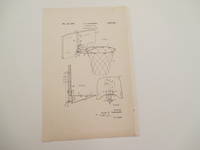
194119551AB1941. University City 1941. 29 : 195 cm. 1 leaf text 1 leaf illustrations. Alvie E. Sanberg of University City Missouri invented a number of different goal improvements. On February 24 1936 he filed both a design patent application and a utility patent application for his new "Baketball Goal"; the two patents were issued a week apart in September of that same year. Prior to his invention nets had to be tied or lanced on to the hoop. But thanks to Sandberg all one neeeds to do is take loops from the net and hook them over the connectors circling the ring. This method is so effective that we could not think today of attaching the net any other mode. - See "Smithonian - The patent behind Basketball". unknown
107 pages. A very rare first printing copy of this early title from Alison Uttley's beloved Little Grey Rabbit Series. Top half-inch of backstrip missing. Openings of up to one inch at each end of remaining backstrip. Moderate wear externally with bright colour illustration upon front board. Hinges intact. Contemporary Mora Road Infants' School prize-winner's bookplate upon front free endpaper else contents unmarked with light wear and soiling. Minimal foxing to endpapers. Slight lean to spine. Hairline openings to binding at first blank leaf and pages 32, 64, 80 and 97. Overall a quality copy. Book
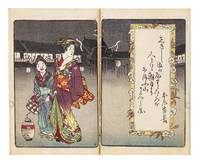
11135Four double-page & nine full-page color-printed illus. and ten pages of text with background coloring. 31.5 folding leaves. Small 8vo orig. semi-stiff patterned wrappers new stitching. Osaka: UnkindÅ é›²éŒ¦å ‚ 1857.<br /> <BR> <BR> An early printing of this beautifully illustrated book with considerable blind embossing. The text and the illustrations have been printed on thickish paper leaving deep impressions and giving a 3-D appearance. The subject of this book is a famous Osaka courtesan Shikishima of the Shinmachi pleasure quarter. For many years she worked in the KyÅya “tea house†until she married a lacquer artisan. The book portrays her as a symbol of refinement and high taste serving as a muse for painters poets and celebrities. The text is rich with puns and double meanings.<br /> <BR> <BR> Akatsuki no Kanenari 1793-1860 was a prolific Osaka author painter and illustrator producing books that blended humor social commentary and historical themes. Hanzan 1818-82 “was Osaka’s artist for all occasions prepared to undertake whatever the publishers demanded for verse-books comic picture-books and especially views of Osaka and its neighbourhood.â€â€“Hillier. Brown considered him “one of the best of the Osaka illustrators of the years just before the Restoration.â€<br /> <BR> <BR> Very good copy with the original printed wrapper. Minor worming throughout well repaired. Preserved in a chitsu. The title-slip for the upper cover is not present.<br /> <BR> <BR> ⧠For author & artist see Brown Block Printing & Book Illustration in Japan pp. 79-80 and Hillier The Art of the Japanese Book p. 861. unknown
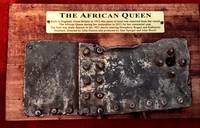
264California & Florida: Hollywood 2012. original movie prop. wooden plaque. Fine/Fine. Stained Wooden plaque 17" W x ~10 3/8" H mounted with two steel plates ~14" W x ~ 6" H x 3/4-1" D from the vessel "African Queen." The plates have a total of 18 rivets and a grouping of 4 bolts & nuts which surround a 3/4" hole seemingly from a former bolt. The left lower plate has been signed in ink "Stephen Humphrey Bogart" by Humphrey Bogart's son. 7 lbs. 7 oz. A brass plate 10 3/8" W x 2" H screwed onto the board reads: "THE AFRICAN QUEEN / Built in England Great Britain in 1912 this piece of steel was removed from the vessel / The African Queen during her restoration in 2012 for her centennial year. / The boat was made famous in the 1951 movie starring Humphrey Bogart and Katharine Hepburn directed by John Huston and produced by Sam Spiegel and John Woolf." Two LARGE POVENANCED & MOUNTED FRAGMENTS from THE "AFRICAN QUEEN"! We also include a fine black & white promotional photo of the memorable "African Queen" depicting Kate Hepburn and Bogie in costume. Much of the film was shot in Technicolor with huge cameras in Uganda and the Congo in Africa. During the shooting on location the cast and crew often suffered from sickness and had to endure rough living conditions. In one scene Hepburn was playing an organ but had a bucket nearby because she was frequently sick between takes. Bogart later boasted that he was the only one to escape illness which he attributed to not drinking any water but instead fortifying himself with whiskey that he had brought. Because it was too dangerous to film actors Bogart and Hepburn in an actual croc-and-creature infested African rivers the scenes in which Bogart and Hepburn are in leech-infested water were shot in studio tanks at Isleworth Studios Middlesex. Because of the dangers involved when the "Afrtican Queen" went through rapids and over a waterfall a model was used in the studio tank in London. Most of the action takes place aboard the African Queen of the movie's title. Many scenes aboard the boat were filmed using a raft with a mockup of the boat on top. Once when removing sections of the boat to make room for the large Technicolor camera a heavy copper replica of the boiler nearly fell on Hepburn. The small steam-boat used in the film to depict the African Queen was built in 1912 in England for service in Africa. At one time it was owned by actor Fess Parker. In December 2011 plans were announced to restore the boat and an auction was held to help pay for its restoration which was completed by the following April. The African Queen is now on display at Key Largo Florida. "The African Queen" is a 1951 adventure film adapted from C. S. Forester's 1935 novel. The film was directed by John Huston and produced by Sam Spiegel and John Woolf. The screenplay was adapted by James Agee John Huston John Collier and Peter Viertel. It was photographed in Technicolor by Jack Cardiff. The film stars Humphrey Bogart who won an Academy Award for Best Actor and Katharine Hepburn with Robert Morley Peter Bull and Theodore Bikel. The Library of Congress has declared the film "culturally historically or aesthetically significant." As World War I is about to begin Rev. Samuel Sayer Robert Morley and his sister Rose Katharine Hepburn are British Methodist missionaries serving in a village in German East Africa. Their supplies are delivered by a small tramp steamer named the African Queen captained by seedy Canadian boat captain Charlie Allnut Humphrey Bogart whose crude behavior they can barely tolerate. Though Charlie warns them that war has broken out between Germany and Britain the missionaries choose to stay only to witness the Germans destroy their mission village. When the Germans drive off its natives Reverend Samuel protests and is beaten by a German soldier. Afterwards he becomes delirious and dies. When Charlie returns shortly afterward he and Rose bury her brother and depart in the African Queen. After Charlie tells Rose that the Germans have a gunboat the Königin Luise German for "Queen Louisa" guarding a huge lake downriver Rose conceives of a plan to convert the African Queen into a torpedo boat in order to sink the hated German warship. Though Charlie believes that her plan to reach the lake is suicidal--since they would have to get past a German fort and run three sets of dangerous rapids on the Ulanga River--ever insistent Rose manages to convince him. During their journey down-river Charlie Rose and the African Queen overcome many obstacles including the German fort and the rapids. The African Queen is flooded after the first rapids; then sustains bullet holes in its boiler when they pass the fortress and its soldiers shoot at them. These holes cause the ship's engine to stop running. Charlie barely manages to patch up the boiler when they enter the second set of rapids. The steamer is again flooded as it gyrates through these rapids. While celebrating their survival the two embrace but break off from embarrassment. Soon however they develop an affectionate relationship. They manage to get more fuel and drain the boat and as they watch hippopotamuses and other creatures the third dangerous group of rapids comes up. This time as it goes over the falls the hull of the boat is badly scraped. When Charlie dives under the boat to inspect the damage he discovers that the propeller shaft and its blades have been damaged. With his expertise and Rose's suggestions Charlie manages to straighten the shaft and weld a new blade onto the propeller so they are able to resume their dangerous journey. All appears lost when Charlie and Rose get lost and the African Queen becomes stuck in muck and dense reeds. When Charlie tries to tow their boat he emerges from the water covered with disgusting leeches. All their efforts to free the African Queen fail. With no supplies left Rose and Charlie turn in convinced they have no hope of survival. Exhausted Rose prays that she and Charlie may go into Heaven. Providentially as they sleep heavy rains raise the river and float the African Queen into the lake where they narrowly avoid being spotted by the Königin Luise. Anticipating the warship's return Charlie and Rose hastily labor to fill two oxygen cylinders with explosives. They use nails as firing pins and shove the cylinders through holes in the bow of the African Queen as spar torpedoes. When the Königin Luise returns the couple steam the African Queen out onto the lake in darkness planning to ram the Königin Luise before diving overboard and swimming to safety in Kenya. Unfortunately a storm erupts as they head toward the warship. Because the bow holes of the African Queen aren't sealed water floods in causing the brave little vessel to sink and capsize. Thrown overboard Charlie loses sight of Rose but is soon taken aboard the Königin Luise. Because he believes Rose has drowned when the German captain Peter Bull accuses him of being a spy Charlie doesn't defend himself so the captain sentences him to be hung. Unexpectedly Rose is brought aboard right after Charlie's sentence is handed down. When questioned by the captain she defiantly confesses their plot. The captain then sentences her to be executed as a spy too. Charlie begs the German captain to marry them before carrying out his sentence so he conducts a brief marriage ceremony Just as the Germans are about to hang them there is a huge explosion which causes the Königin Luise to sink. The warship had struck the submerged hull of the African Queen and detonated its torpedoes. Rose's plan worked after all and the newly married couple swim happily to safety. Details adapted from Wikipedia and other sources. Best available condition. Formerly in the possession of a gentleman who attended the 2012 Florida auction. Hollywood unknown
2012264California & Florida: Hollywood 2012. original movie prop. wooden plaque. Fine/Fine. Stained Wooden plaque 17" W x ~10 3/8" H mounted with two steel plates ~14" W x ~ 6" H x 3/4-1" D from the vessel "African Queen." The plates have a total of 18 rivets and a grouping of 4 bolts & nuts which surround a 3/4" hole seemingly from a former bolt. The left lower plate has been signed in ink "Stephen Humphrey Bogart" by Humphrey Bogart's son. 7 lbs. 7 oz. A brass plate 10 3/8" W x 2" H screwed onto the board reads: "THE AFRICAN QUEEN / Built in England Great Britain in 1912 this piece of steel was removed from the vessel / The African Queen during her restoration in 2012 for her centennial year. / The boat was made famous in the 1951 movie starring Humphrey Bogart and Katharine Hepburn directed by John Huston and produced by Sam Spiegel and John Woolf." Two LARGE POVENANCED & MOUNTED FRAGMENTS from THE "AFRICAN QUEEN"! We also include a fine black & white promotional photo of the memorable "African Queen" depicting Kate Hepburn and Bogie in costume. Much of the film was shot in Technicolor with huge cameras in Uganda and the Congo in Africa. During the shooting on location the cast and crew often suffered from sickness and had to endure rough living conditions. In one scene Hepburn was playing an organ but had a bucket nearby because she was frequently sick between takes. Bogart later boasted that he was the only one to escape illness which he attributed to not drinking any water but instead fortifying himself with whiskey that he had brought. Because it was too dangerous to film actors Bogart and Hepburn in an actual croc-and-creature infested African rivers the scenes in which Bogart and Hepburn are in leech-infested water were shot in studio tanks at Isleworth Studios Middlesex. Because of the dangers involved when the "Afrtican Queen" went through rapids and over a waterfall a model was used in the studio tank in London. Most of the action takes place aboard the African Queen of the movie's title. Many scenes aboard the boat were filmed using a raft with a mockup of the boat on top. Once when removing sections of the boat to make room for the large Technicolor camera a heavy copper replica of the boiler nearly fell on Hepburn. The small steam-boat used in the film to depict the African Queen was built in 1912 in England for service in Africa. At one time it was owned by actor Fess Parker. In December 2011 plans were announced to restore the boat and an auction was held to help pay for its restoration which was completed by the following April. The African Queen is now on display at Key Largo Florida. "The African Queen" is a 1951 adventure film adapted from C. S. Forester's 1935 novel. The film was directed by John Huston and produced by Sam Spiegel and John Woolf. The screenplay was adapted by James Agee John Huston John Collier and Peter Viertel. It was photographed in Technicolor by Jack Cardiff. The film stars Humphrey Bogart who won an Academy Award for Best Actor and Katharine Hepburn with Robert Morley Peter Bull and Theodore Bikel. The Library of Congress has declared the film "culturally historically or aesthetically significant." As World War I is about to begin Rev. Samuel Sayer Robert Morley and his sister Rose Katharine Hepburn are British Methodist missionaries serving in a village in German East Africa. Their supplies are delivered by a small tramp steamer named the African Queen captained by seedy Canadian boat captain Charlie Allnut Humphrey Bogart whose crude behavior they can barely tolerate. Though Charlie warns them that war has broken out between Germany and Britain the missionaries choose to stay only to witness the Germans destroy their mission village. When the Germans drive off its natives Reverend Samuel protests and is beaten by a German soldier. Afterwards he becomes delirious and dies. When Charlie returns shortly afterward he and Rose bury her brother and depart in the African Queen. After Charlie tells Rose that the Germans have a gunboat the Königin Luise German for "Queen Louisa" guarding a huge lake downriver Rose conceives of a plan to convert the African Queen into a torpedo boat in order to sink the hated German warship. Though Charlie believes that her plan to reach the lake is suicidal--since they would have to get past a German fort and run three sets of dangerous rapids on the Ulanga River--ever insistent Rose manages to convince him. During their journey down-river Charlie Rose and the African Queen overcome many obstacles including the German fort and the rapids. The African Queen is flooded after the first rapids; then sustains bullet holes in its boiler when they pass the fortress and its soldiers shoot at them. These holes cause the ship's engine to stop running. Charlie barely manages to patch up the boiler when they enter the second set of rapids. The steamer is again flooded as it gyrates through these rapids. While celebrating their survival the two embrace but break off from embarrassment. Soon however they develop an affectionate relationship. They manage to get more fuel and drain the boat and as they watch hippopotamuses and other creatures the third dangerous group of rapids comes up. This time as it goes over the falls the hull of the boat is badly scraped. When Charlie dives under the boat to inspect the damage he discovers that the propeller shaft and its blades have been damaged. With his expertise and Rose's suggestions Charlie manages to straighten the shaft and weld a new blade onto the propeller so they are able to resume their dangerous journey. All appears lost when Charlie and Rose get lost and the African Queen becomes stuck in muck and dense reeds. When Charlie tries to tow their boat he emerges from the water covered with disgusting leeches. All their efforts to free the African Queen fail. With no supplies left Rose and Charlie turn in convinced they have no hope of survival. Exhausted Rose prays that she and Charlie may go into Heaven. Providentially as they sleep heavy rains raise the river and float the African Queen into the lake where they narrowly avoid being spotted by the Königin Luise. Anticipating the warship's return Charlie and Rose hastily labor to fill two oxygen cylinders with explosives. They use nails as firing pins and shove the cylinders through holes in the bow of the African Queen as spar torpedoes. When the Königin Luise returns the couple steam the African Queen out onto the lake in darkness planning to ram the Königin Luise before diving overboard and swimming to safety in Kenya. Unfortunately a storm erupts as they head toward the warship. Because the bow holes of the African Queen aren't sealed water floods in causing the brave little vessel to sink and capsize. Thrown overboard Charlie loses sight of Rose but is soon taken aboard the Königin Luise. Because he believes Rose has drowned when the German captain Peter Bull accuses him of being a spy Charlie doesn't defend himself so the captain sentences him to be hung. Unexpectedly Rose is brought aboard right after Charlie's sentence is handed down. When questioned by the captain she defiantly confesses their plot. The captain then sentences her to be executed as a spy too. Charlie begs the German captain to marry them before carrying out his sentence so he conducts a brief marriage ceremony Just as the Germans are about to hang them there is a huge explosion which causes the Königin Luise to sink. The warship had struck the submerged hull of the African Queen and detonated its torpedoes. Rose's plan worked after all and the newly married couple swim happily to safety. Details adapted from Wikipedia and other sources. Best available condition. Formerly in the possession of a gentleman who attended the 2012 Florida auction. Hollywood unknown books
Copies of this wonderful title are rare, but to find a copy in such wonderful condition as this is almost too much to hope for. Book is clean, bright and unmarked with minimal wear and a minor bump to the upper back corner of the backstrip. Dust jacket is clean and unmarked with light wear and no chips or tears. Dust jacket is not price-clipped and is now preserved in a clear protective sleeve. Original price on each flap of dust jacket has been overlaid with what may be a distributor's small sticker stating a new price of 4'- net. Truly a premium copy. Book
18002305250028Philadelphia : Printed by W.W. Woodward 1800. First Edition. Hardcover. Acceptable. Quackery: Early American Law and Medicine; Defamation Slander Rare publication of the infamous libel trial of William Cobbett by Dr. Benjamin Rush. Cobbett had printed strident criticism of Rush's advocacy of bloodletting in his Porcupine's Gazette in 1797. "The times are ominous indeed When quack to quack cries purge and bleed." Under the pen-name Peter Porcupine Cobbett had referred "to Rush as a bleeder the Samson of medicine who had actually slaughtered thousands of citizens and as a poisonous trans-Atlantic quack." During the calamitous Yellow Fever outbreak of 1797 Rush's advocacy of bleeding may have resulted in the death of numerous patients. Rush was a prominent founding father and signer of the Declaration of Independence. Cobbett lost this libel trial and was ordered to pay Rush $5000. To avoid the hefty judgement Cobbett left Philadelphia for New York set up his "Rush Light" and fled ultimately to Britain. An interesting proceeding where the question of what is a "quack" is explored and the patriotism and republicanism of Rush is oratorically chest thumped. Possibly Austin 1597. <br> Collated: 64 pages of 70 Lacks first 2 leaves and final leaf but complete provided in facsimile. Bound in modern cloth. Fine binding and cover. Library stamps. Title page has numerous marks. Scattered marginalia. Shelf wear to edges. Light damp stain along top edge. Lacking last leaf. Refs: Evans 37103. Sabin 14030. NLM 2182034R. <br> IMPORTANT TRIAL IN THE SUPREME COURT OF PENNSYLVANIA. Doctor Benjamin Rush versus William Cobbett. December term 1799. ACTION on the case for a Libel was brought in the autumn of 1797 by the Plaintiff against the Defendant for certain defamatory publications which appeared in a newspaper entitled "Porcupine's Gazette" of which COBBETT was the Editor. Philadelphia : Printed by W.W. Woodward hardcover
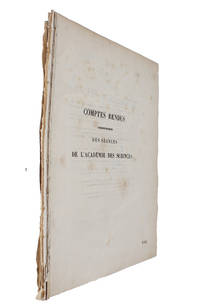
183946845Paris, Bachelier, 1839. 4to. No wrappers. In: ""Comptes Rendus Hebdomadaires des Séances de L'Academie des Sciences"", Tome VIII (No.1)+ IX, (No. 8) Entire issues offered with htitles and titlepages to both volumes. Pp. 1-36 + Pp. 249-282 and 1 lithographed plate. The papers: pp. 4-7 and pp. 250-267. A faint stamp to top of titlepages. A few brownspots to titlepages.
178544907Paris, Moutard, Panckoucke, 1785. 4to. Extract from ""Mémoires fe Mathematique et de Physique, Présentés à l'Academie des Sciences par divers Savans"", Tome X. Withtitlepage to vol. X. Pp. 131-332 and 5 folded engraved plates. The memoir has also its own titlepage. Fine and clean. Wide-margined.
188248088Paris, Gauthier-Villars, 1882, 1888, 1892. 4to. No wrappers. 7 entire issues. In: ""Comptes Rendus Hebdomadaires des Séances de L'Academie des Sciences"", Tome 95, No 1, 6 a. 14. Tome 107, No 16, 17 a. 18, Tome 114, No 18. (7 entire issues offered). With halftitles and titlepages to Vol. 95, 107 a. 114. The papers: pp. 14-16 (No1), 267-270 (no 6), 583-585, 2 textillustr. (no 14) - pp. 607-609 (No 16), 643-645, 1 textillustr. (No 17), 677-678 (No 18) - pp. 989-990 (No. 18). Stamps on verso of titlepages.
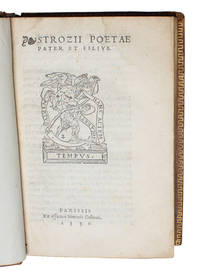
153045363Parisiis, Ex officina Simonis Colinaei, 1530. 8vo. Bound in a very fine later full calf (around 1700), profusely gilt spine, titlelabel in leather with gilt lettering, broad gilt borders on covers, edges of covers gilt, edges of leaves gilt. A very small nick to top of spine. (8) lvs. + (1-)256,(3) lvs. + 1 blank. A small and very faint dampstain to upper inner margins of the first 8 lvs. Otherwise very clean throughout. A beautifull printed and wide-margined copy (17x11,5 cm).
182046026(Paris, Crochard, 1820). No wrappers. In ""Annales"". In ""Annales de Chimie et de Physique, Par MM. Gay-Lussac et Arago"" Tome XIV, Cahier 4, Titlepage to vol. 14 + pp. 337-442. (Entire issue offered). Ørsted's paper: pp. 417-25. A few scattered brownspots.
183946845Paris Bachelier 1839. 4to. No wrappers. In: "Comptes Rendus Hebdomadaires des Séances de L'Academie des Sciences" Tome VIII No.1 IX No. 8 Entire issues offered with htitles and titlepages to both volumes. Pp. 1-36 Pp. 249-282 and 1 lithographed plate. The papers: pp. 4-7 and pp. 250-267. A faint stamp to top of titlepages. A few brownspots to titlepages. <br/><br/><em>First Edition of the official and complete report of the invention of the "daguerreotype" the photographic process invented by Louis Daguerre. Together with the preliminary report of the invention OF JANUARY 7. The presentation by Arago preceeded Daguerre's own publication "Historique de description des procédés du daguerreotype et du diorama" 1839. "When the attempt to exploit the process of daguerreotype was unsuccessfull Daguerre and Nièpce decided to offer their method to the government. Daguerre approached Francois Jean Arago to whom he imparted under the seal of secrecy his processes and those of Nicéphore Niépce. It was fortunate that Arago possessed such a great insight into the invention which he received enthusiastically. He reported the invention of the daguerretype to the Academy of Sciences on January 7 1839. The secrecy however was not observed very carefully for the "Gazette de France" published a note abouit it on January 6 1839 although without printing any details."Eder "History of Photography". </em> unknown
178544907Paris Moutard Panckoucke 1785. 4to. Extract from "Mémoires fe Mathematique et de Physique Présentés à l'Academie des Sciences par divers Savans" Tome X. Withtitlepage to vol. X. Pp. 131-332 and 5 folded engraved plates. The memoir has also its own titlepage. Fine and clean. Wide-margined. <br/><br/><em>First edition of this monumentalwork by which Coulomb CREATED THE SCIENCE OF FRICTION."1781 saw him win the Academy prize for his mémoir "Théorie des Machines Simples" in which the results of his experiments on the friction of different bodies slipping on one another dry or coated with greasy substances were presented."Timoshenko p. 48."Coulomb’s most celebrated study one that brought him immediate acclaim was "Théorie des machines simples" his prize-winning friction study of 1781. He investigated both static and dynamic friction of sliding surfaces and friction in bending of cords and in rolling. From examination of many physical parameters he developed a series of two-term equations the first term a constant and the second term varying with time normal force velocity or other parameters. In agreement with Amontons’s work of 1699 Coulomb showed that in general there is an approximately linear relationship between friction and normal force; but he extended the investigation considerably to show complex effects due to difference in load materials time of repose lubrication velocity and other considerations. Coulomb’s work in friction remained a standard of theory and experiment for a century and a half until the advent of molecular studies of friction in the twentieth century. To quote Kragelsky and Schedrov’s recent monograph p. 52 on the history of friction: "Coulomb’s contributions to the science of friction were exceptionally great. Without exaggeration one can say that he created this science."DSB.Poggendorff I:487. </em> unknown
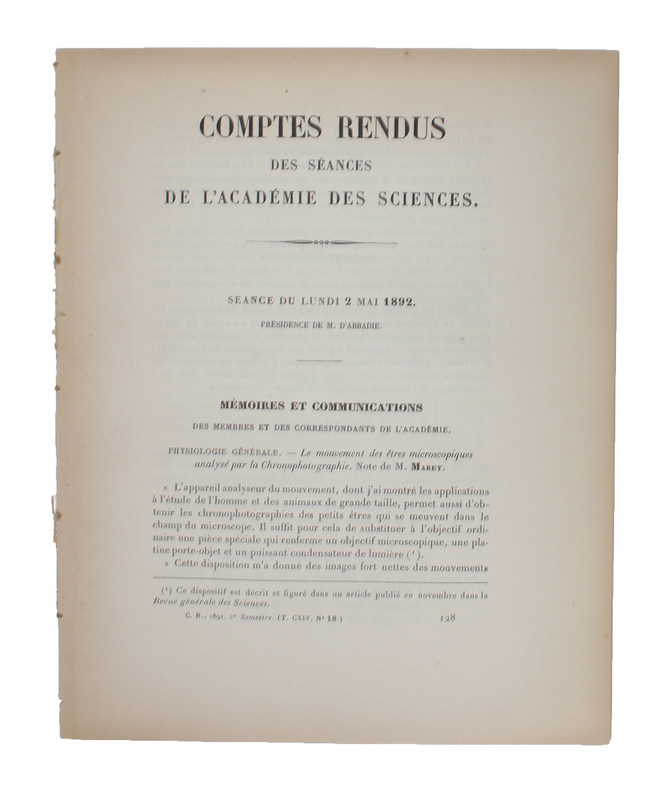
188248088Paris Gauthier-Villars 1882 1888 1892. 4to. No wrappers. 7 entire issues. In: "Comptes Rendus Hebdomadaires des Séances de L'Academie des Sciences" Tome 95 No 1 6 a. 14. Tome 107 No 16 17 a. 18 Tome 114 No 18. 7 entire issues offered. With halftitles and titlepages to Vol. 95 107 a. 114. The papers: pp. 14-16 No1 267-270 no 6 583-585 2 textillustr. no 14 - pp. 607-609 No 16 643-645 1 textillustr. No 17 677-678 No 18 - pp. 989-990 No. 18. Stamps on verso of titlepages. <br/><br/><em>First printing of the main papers CONSTITUTING THE INVENTION OF MODERN CINEMATOGRAPHY -- from his invention of 1888 of the "Chronophotograph" followed the modern "Cinematograph" first described here in the offered papers of 1888.It started with his invention of the chronographic apparatus with stationary plates and chronographic disk schutter. the paper of August 7 1882 later in 1882 his description of the photographic gun and in the 1892 paper "Marey constructs according to the reversible principle of the chronophotograph an apparatus for the projection on a screen of series of pictures taken by the afore-mentioned apparatus and thus realizes the photographic synthesis of motion" Joseph Maria Eder "History of Photography" p.510.Marey 1830-1904 was a French physician and his inventions sprang from his investigations in the physiology of the motion of men and animals."In 1882 Marey often claimed to be the 'inventor of cinema' constructed a camera or "photographic gun" that could take multiple 12 photographs per second of moving animals or humans - called chronophotography or serial photography similar to Muybridge's work on taking multiple exposed images of running horses. The term shooting a film was possibly derived from Marey's invention. He was able to record multiple images of a subject's movement on the same camera plate rather than the individual images Muybridge had produced. Marey's chronophotographs multiple exposures on single glass plates and on strips of sensitized paper - celluloid film - that passed automatically through a camera of his own design were revolutionary. He was soon able to achieve a frame rate of 30 images. Further experimentation was conducted by French-born Louis Aime Augustin Le Prince in 1888. Le Prince used long rolls of paper covered with photographic emulsion for a camera that he devised and patented. Two short fragments survive of his early motion picture film one of which was titled Traffic Crossing Leeds Bridge.The work of Muybridge Marey and Le Prince laid the groundwork for the development of motion picture cameras projectors and transparent celluloid film - hence the development of cinema. American inventor George Eastman who had first manufactured photographic dry plates in 1878 provided a more stable type of celluloid film with his concurrent developments in 1888 of sensitized paper roll photographic film instead of glass plates and a convenient "Kodak" small box camera a still camera that used the roll film. He improved upon the paper roll film with another invention in 1889 - perforated celluloid synthetic plastic material coated with gelatin roll-film with photographic emulsion." Tim Dirks "The History of Film. The Pre-1920s". </em> unknown
182046026Paris Crochard 1820. No wrappers. In "Annales". In "Annales de Chimie et de Physique Par MM. Gay-Lussac et Arago" Tome XIV Cahier 4 Titlepage to vol. 14 pp. 337-442. Entire issue offered. Ørsted's paper: pp. 417-25. A few scattered brownspots. <br/><br/><em>First French translation and the first translation of Oersted's epoch-making announcement in his Latin pamphlet "Extperimenta circa effectum conflictus electrici in acun magneticam. Hafniæ 1820" privately printed in a very small number and only distributed to colleques in Europe. This discovery and confirmation of the connection between 2 forces electricity and magnetism must be considered one of the happiest events in the history of science both with regard to scientific and practical results. - "From the moment that Ørsted's discovery became known it created an enormous sensation. The results communicated were so astounding that they were received with a certain distrust but they were stated with such accuracy that it could hardly be permitted to entertain any doubts. In the course of a short time the treatise was translated into all the chief languages." Kirstine Meyer. - Dibner:61 - PMM: 282 - Horblitt: 3 b. - Sparrow: 152. </em> unknown
153045363Parisiis Ex officina Simonis Colinaei 1530. 8vo. Bound in a very fine later full calf around 1700 profusely gilt spine titlelabel in leather with gilt lettering broad gilt borders on covers edges of covers gilt edges of leaves gilt. A very small nick to top of spine. 8 lvs. 1-2563 lvs. 1 blank. A small and very faint dampstain to upper inner margins of the first 8 lvs. Otherwise very clean throughout. A beautifull printed and wide-margined copy 17x115 cm. <br/><br/><em>Scarce second edition of the "opera" of the poetical works of both father and son. Their collected opere were first published by Aldus Manutius in 1513 together with works of his son under the title Strozii poëtae pater et filius. The offered edition is copied from this Aldus-edition. They were both members of the famous Strozzi-family exiled from Florence.Adams S 1957. - Graesse VI: 512. </em> hardcover
189833116Boston: Lamson Wolffe and Co. Very Good with no dust jacket. 1898. First Edition. Hardcover. FINE Binding; 1st Editions; 12mo 7" - 7½" tall; 241 pages; Nicely full bound in brown pigskin with gilt lettering and borders turned in denteles. Printed on rich laid paper. T E G. Owner's name neatly on an endpaper. Silk marker ribbon. Frontis shows Richard Mansfield as Cyrano. Performed by him at Garden Theater on opening Oct 3 1898. Contents clean and complete. Binding solid. . Lamson, Wolffe and Co hardcover
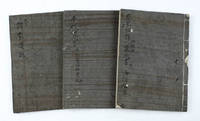
1573393 manuscript volumes neatly written in black and red ink. Original wrappers with later string ties. Wrappers damaged with a little loss in places. Some worming. Still overall very good. 19 x 13.5cm. These three volumes are a collection of manuscripts written in the late Edo period probably the 1860s. Most of the original documents on which the manuscripts were based were written shortly after the arrival of the American delegation led by Commodore Matthew Perry in July 8 1853 June 3 in Japanese calendar. These documents written in the face of this national crisis were mostly driven by the patriotic fervour of the authors. They show a variety of thoughts about the threat from the foreign powers. None of these were published at the time and only Watanabe Kazan’s Shinki-ron was published in modern times. <br> <br>Kazan wrote his treatise inspired not by the arrival of Perry but by the Edo government’s hostile treatment of the American merchant ship Morrison in 1837. <br> <br>Titles and short synopses of these works follow: <br> <br>Volume 1: Chiyoda mondō Questions and Answers in Chiyoda 千代田問答 1853; Momijiyama shinrei-ki紅葉山神靈記 Message from the Holy Spirit in Momijiyama <br> <br>The author of Chiyoda mondō is unknown. The word "Chiyoda" in Chiyoda mondō is the name of the area where the Edo Castle sat and refers to the god in the Tōshōgū Shrine in Momijiyama next to the western part of the Edo Castle. This document is difficult to read but it appears to explain how a group of mysterious people or possibly divine spirits tell stories related to Japan's national affairs in 1853 discussing the country's national defence against foreigners and the situation regarding Christianity. <br> <br>In Momijiyama shinrei-ki the anonymous author who was an attendant to the group of the high government officials visiting the Tōshōgū Shrine in Momijiyama fell asleep and in his dream a Holy Spirit appeared and told him the necessity of enhancing the coastal defence in the face of the American expansion. <br> <br>Volume 2: Daimyō shoka kengi 大名諸家建議 Proposals from War Lords and Various People <br> <br>This manuscript is a collection of proposals and opinions expressed by Daimyō war lords and the retainers of the Edo government on the subject of Japan's foreign policy after the arrival of the American delegation led by Commodore Perry which requested trade with Japan. The Daimyō discuss how to deal with the crisis in terms of such issues as trade and coastal defence. Some even proposed possible war with the American fleet. The daimyo some of whom were high-rank officials of the Edo government included Shimadu Nariakira島津斉彬 1809-58 Maeda Nariyasu 前田斉泰 1811-84 Matsudaira Shungaku 松平春嶽 1928-90 Tokugawa Yoshinobu 徳川慶喜 1837-1913 Ii Naosuke 井伊直弼 1815-60 Nabeshima Naomasa 鍋島直正 1815-71 and the retainers included Inoue Saburōemon 井上三郎右衛門 - and Katsu Rinsuke 勝麟助 1823-99. Katsu became a capable mediator when the Edo castle was surrendered peacefully to the new Meiji government in 1868. <br> <br>Volume 3: 海防備言 Kaibō bigen Words on Coastal Defence. Habu Kumagorō 土生熊五郎- Rifujutsui 嫠不恤緯 Widow Does Not Worry the Shortage of Weft the latter a Chinese expression referring to strong patriotism; Watanabe Kazan 渡辺崋山 1793-1841 Shinki-ron愼機論 Essay on Attention to an Opportunity 1838; Hakura Morochika羽倉用九 1790-1862 Gakaisho 畫灰書 Drawing in Ash and Gasuisho畫水書 Drawing in Water 1854; Fujimori Kōan 藤森弘庵 1799-1862 Kaibō biron 海防 備論Treatise on Coastal Defence 1853 <br> <br>Habu Kumagorō was a Confucian scholar in Wakayama. He proposed the developing the land of Ezo 蝦夷 Hokkaido. Rifujutsui discusses such topics as the advance of the Russians to Siberia and the necessity of developing Hokkaido as well as the art of war. <br> <br>Watanabe Kazan was a chief retainer of the Tahara Domain eastern part of present Aichi Prefecture Confucian scholar and also famous as a painter. Shinki-ron criticises the xenophobic foreign policy of the Edo government. <br> <br>Hakura Morochika was a Confucian scholar in Osaka. After the arrival of Perry he discussed the measures against foreign enemies. In Gakaisho a collection of historical essays Hakura objected to trade with America in the form of an answer to the sovereign message from America seeking trade with Japan. He also wrote an answer to the sovereign message from Russia but he was more sympathetic to the Russians because they sought trade through the official channel in Nagasaki while the American delegate in the military fleet came to Uraga in a threatening manner. In Gasuisho also Hakura mentions the harmful effects of Christianity. <br> <br>Fujimori Kōan was a Confucian scholar of the Ono Domain in present Ono City Hyogo Prefecture. In his later life he opened a private school in Edo and wrote the comprehensive treatise on Japanese coastal defence Kaibō biron after the arrival of Perry. . unknown
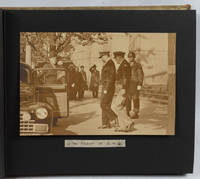
1946224036Tokyo.: 新世界通信社. Shinsekai Tsūshinsha. Circa 1946. Twenty three black and white fine photographs tipped in on twenty thick black card sheets each captioned in English and presented in a silk covered album with tassel ties. Fifteen of the photographs measure13.5 x 20cm with the rest 7.5 x 13cm approximately. Some light silvering on photographs but overall both the photographs and album are in very good condition. A handsome rare example of a album apparently issued by a Japanese company for US forces in Occupied Japan. This rare photographic album was published by Shinsekai Tsushin Sha 新世界通信社 soon after the Allied Occupation of Japan began. The scenes depicted are mainly from Tokyo where the occupation headquarters were located and American troops were concentrated but the album also includes photographs of scenic spots popular with the occupation forces including Nikko the Great Buddha of Kamakura and the ski resort of Zao in midwinter. There are also photographs of traditional Japanese cultural events including a tea ceremony flower arrangement and a Noh theatre performance. <br> <br>One image captioned “Shopping” depicts a young man in Allied forces uniform who appears to be one of the many Japanese American servicemen who took part in the occupation. He is shown examining items for sale in an ornately decorated Japanese souvenir store while a young Japanese woman reflected in a mirror looks on from behind. <br> <br>The album opens with an image of the Sacred Heart Cathedral in Yokohama also known as Yamate Catholic Church in the morning light captioned “Morning Meditation”. Other photographs feature major buildings connected with the Allied presence in Tokyo including the General Headquarters site in Marunouchi the JOAK Radio Tokyo and WVTR the American Armed Forces Radio building and St Luke’s Hospital. <br> <br>Interesting details in the Tokyo photographs include a view of central Ginza showing the Mitsukoshi Department Store under reconstruction following wartime bomb damage and the Tokyo Takarazuka Theatre at night vividly emblazoned in neon lights with the words “Ernie Pyle”. During the occupation US authorities requisitioned the theatre and renamed it the Ernie Pyle Theatre in commemoration of the Pulitzer Prize-winning war journalist who had been killed on 18 April 1945 during the Battle of Okinawa. It became the main venue for theatre and cabaret performances attended by members of the occupation forces before being returned to Japanese ownership and reverting to its original name in 1955. <br> <br>Other signs of Western cultural influence include two photographs of a performance of Shakespeare’s A Midsummer Night’s Dream at the Imperial Theatre Teikoku Gekijo in Tokyo. American Army jeeps also feature prominently in some photographs. <br> <br>The mood of the album is resolutely upbeat focusing on images of peace and reconstruction. One photograph shows American and Japanese children playing together captioned “Kids: ‘What’s going on’” suggesting hope for a peaceful future. <br> <br>Shinsekai Tsushin Sha was a publishing company founded during the Occupation period. It produced maps guidebooks and other material aimed particularly at the Allied military and civilian personnel who came to Japan during these years. The photographs in this volume are captioned in English and were clearly taken by a skilled professional photographer although the photographer is not named. . 新世界通信社. [Shinsekai Tsūshinsha]. unknown
1999mon0000068217Films for the Humanities & Scien 1999-01-01. Unknown Binding. Acceptable. in x in x in. Ex-Library. VHS. Films for the Humanities & Scien unknown
1980KOS01206755TBD 1980. Soft Cover. Fine. KOS01206755 TBD paperback
120398Mt. Horeb WI: The Perishable Press 1973. stiff paper wrappers. Perishable Press. small 4to. stiff paper wrappers. unpaginated. Limited to 120 numbered copies Hamady 61. Slight sunning to top third of front cover and along the spine of both the front and rear cover else a fine copy. First of a series of playful books perhaps a parody of the structure and parts of a book. Handset type on a variety of Shadwell papers of different sizes. Handsewn into blue Fabriano wrappers with U.S. Geodetic Survey maps of the Blue Mounds region of Dane and Iowa counties Wisconsin as inner wrappers. Dedication table of contents foreword preface acknowledgments introduction. Endnotes bibliography. The Perishable Press unknown
189456228N.p. Cambridge Mass. 1894. 4to approx. 200 pages several diagrams and drawings in loose sheets often with paste-overs and cancels and bound in contemporary marbled boards tied with string and nearly broken; spine perished; good or better and legible. For a good account of Holmes see DAB. Born in 1815 in Peterborough N.H. and a graduate of Phillips-Exeter Harvard and Harvard Law he removed to St. Louis where he was first the city then the county attorney. In 1868 he returned to Cambridge where he became a professor of law at Harvard. He "did no legal writing but was widely interested in other subjects. His Realistic Idealism in Philosophy Itself 1888 exhibits extensive philosophic and scientific reading but has no perceptible influence and now seems unreadable . His scholarship and fairness have been praised by his opponents. In his old age he compiled a Genealogy of the Holmes Family of Londonderry N.H. containing garrulous sketches of his relatives and a long autobiography" DAB. As well as this extensive treatise on gravitation and electricity begun when he was nearly 80. <br/><br/> hardcover books
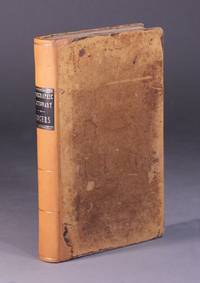
184556973Baltimore: published by F. Lucas Jr. 170 Market Street 1845. 8vo pp. x 2 xi-xii 2 11-334 2; frontispiece and 4 chromolithograph plates of signal flags; contemporary full sheep neatly rebacked new black morocco label on spine; the plates lightly spotted but on the whole very good and sound. This copy with a presentation on the front pastedown: "To the Association of New York Pilots with the compliments of Messrs. Rogers and Black per Colt & Robinson proprietors of the New York & Offing Electro-Magnetic Telegraph." Dedicated to Samuel F. B. Morse "inventor of the American Electro-Magnetic Telegraph." Rogers a trained engineer from New York City worked as Morse's assistant in constructing the first telegraph line from Washington to Baltimore. He was himself an inventor and pioneered the use of insulated cables for use underground and underwater. During the Civil War he helped develop the military telegraph system. American Imprints 5604; see Sabin 72626 for a later edition. <br/><br/> published by F. Lucas, Jr., 170 Market Street unknown books