184 825 résultats
240591 April 1896. On letterhead of the Reform Club Pall Mall S.W. London. See his entry in the Oxford DNB. 1p 12mo. On the first leaf of bifolium. In good condition lightly aged. Folded once. He begins by thanking him ‘most sincerely for your cheering note of congratulation’. Whilst it is ‘pleasant to be raised to the “Upper Shelfâ€â€™ he finds that ‘the position of Associate of the Royal Academy is one that is quite Ideal. To gain that - and to paint a good picture were my two great ambitions’. 1 April 1896. On letterhead of the Reform Club, Pall Mall, S.W. [London.] unknown
23776Anstey's TLS on his Daily Telegraph Magazine letterhead and dated 20 March 1970. Hayden-Guest's article evidently written shortly before that date. A curious artefact indicating Garbo’s iconic status and an early example of a journalistic trend which has gained ground since the late 1960s. Hayden-Guest still active as a writer is the son of the diplomat Peter Haden-Guest 4th Baron Haden-Guest and brother of the 5th Baron Christopher who is won fame as ‘Nigel’ in the film ‘Spinal Tap’. Anstey who edited the Daily Telegraph magazine for twenty-two years from its inception in 1964 has been variously described as ‘the last of the great autocratic magazine editors’ ‘tyrannical’ and ‘completely terrifying’ with a habit of sending his employees ‘alarming memos on the eve of their summer holidays’. He ‘did not often meet his reporters personally instead he wrote notes and invited them once a year to the magazine’s Christmas party’. While grateful for the money John Betjeman found working for the magazine ‘hateful’. Gitta Sereny who contributed extensively to what she considered ‘the best of the weekend colour supplements’ found Anstey ‘difficult’ but ‘extraordinary’. Both are items in fair condition lightly aged and stapled together. ONE: Unsigned Carbon Typescript of article titled ‘GRETA GARBO - a Personal Memoir Anthony Haden-Guest’. 5pp long 8vo. Single-spaced on five leaves. As Item Two makes clear the article is a spoof of the ‘type of article’ which Anstey describes as the ‘anti-profile’: pretentious and implying in conspiratorial tones an implausible familiarity with the subject. It is the sort of writing which Martin Amis would begin by satirizing. The beginning sets the tone: ‘Some people just a few call her ‘Greta’ right to her face That face. Charlie Chaplin does to name but one. All the same most people who are so close that they could call her ‘Greta’ in fact call her ‘G. G.’. Acquaintances But wouldn’t that be enough call her “Miss Garbo†and a very few indulge her own conspiratorial urges and refer to her as “Miss Brownâ€. As indeed she sometimes does herself. I am indebted for this information to the writings of Mr Norman Zierold who does not say what he calls her or what she calls him. / Personally I like to call her simply “Greta Garboâ€.’ Further on comes a passage which like the rest of the article may or may not be a complete fiction: ‘Actually the first time that I was introduced to Greta Garbo was under pretty funny circumstances but Destiny as so many of her great motion pictures have pointed out gets up to some pretty funny things. Certainly it seemed funny to see Garbo at a party especially this sort of party a flourescent celebration of . . . Well not Garbo though she is incontestably the centre of it all. An acid/rock group is pounding nervily away into the statutory light-machine and a film is being projected onto a wall which is white and narrow - so narrow that most of the party is taking place without artistic licence in the movie.’ Towards the end Haden-Guest stretches the bounds of credulity with the following: ‘Great Garbo! Now she is looking at me . . . The ageing roue is nowhere to be seen. Her shoulders are working hugely and her throat and the face . . . planes shift as conflicting emotions do massive internal furniture removals but now Garbo looks so worried and she says it - She actually says it - “I want to be aloneâ€. / Yes she is really saying it and not just once because she repeats it - “I want to be aloneâ€. / Well yes. Great Garbo want to be alone -’. TWO: Typed Letter Signed ‘J A’ from John Anstey 20 March 1970 addressed to ‘Anthony Haden-Guest Esq. C/o Chateau Marmont Los Angeles California U.S.A.’ ‘c. c. Pat Kavanagh’ 1p 8vo. He begins: ‘Dear Anthony I read the Great Garbo article when it first came in. Last night I read it again. It is a difficult one. However I know that you have misgivings about it - and I fear that I have them too.’ Anstey’s opinion is that the piece ‘just does not work at the moment. ‘It does not come across as the sort of “anti-profile†we were thinking about. It starts off by being intriguing. But then one just gets confused and there is a danger of it seeming rather pretentious: which is one of the faults of the type of article which it should be satirizing.’ He suggests that they ‘look at it again’ when Haden-Guest gets back from America. ‘The formula is right at the moment but we must overcome the danger of pretentiousness and it must seem less pointless than it is at the moment. The last paragraph cleverly suggests that there is nothing more to know about Greta Garbo than we learn here: but somehow I think that we have got to say more.’ The letter ends: ‘How is California Can you let me know about the Hollywood idea as soon as possible.’ Not known if published in any form despite Googlebooks. Anstey's TLS on his Daily Telegraph Magazine letterhead, and dated 20 March 1970. Hayden-Guest's article evidently written short unknown
aly1150Stamford: 1921. 4to. pp. 450. b/w text illus. cloth corners bumped some rubbing at head & foot of spine Stamford: [1921] unknown
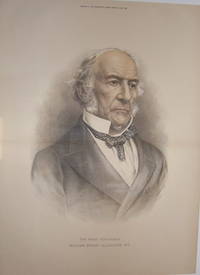
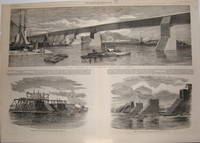
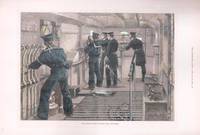
71-7630London: The Illustrated London News November 27 1886. Lithographic illustration. 38 x 28 cm sheet. Very Good light toning along sheet edges.Provenance: From the collection of the late Frederick G. Ruffner Jr. founder of Gale Research Detroit. London: The Illustrated London News, November 27, 1886. unknown
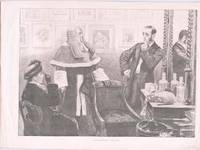
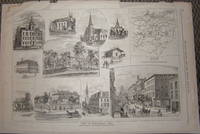
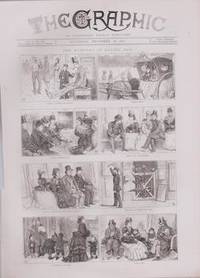
71-7678New York: The Daily Graphc June 10 1878. Wood engraving. pp. 707-708. 52 x 35 cm sheet. Good tears along sheet edges missing some areas at left and top sheet edges.Provenance: From the collection of the late Frederick G. Ruffner Jr. founder of Gale Research Detroit. New York: The Daily Graphc, June 10, 1878. unknown
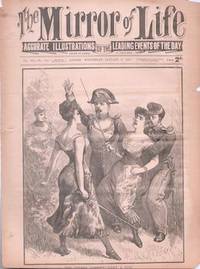
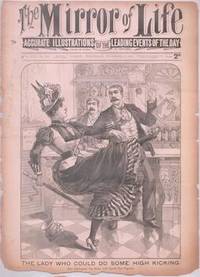
71-7568London: The Mirror of Life January 27 1897. Wood engraving. 38 x 28.5 cm sheet. Good some tears and stains along sheet edges.Provenance: From the collection of the late Frederick G. Ruffner Jr. founder of Gale Research Detroit. London: The Mirror of Life, January 27, 1897. unknown
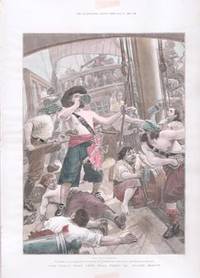
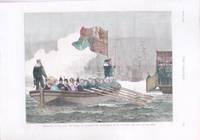
71-7652London: William Little Saturday December 11 1886. Hand-colored wood engraving. pp. 641-642. 40 x 29 cm sheet. Very Good.Provenance: From the collection of the late Frederick G. Ruffner Jr. founder of Gale Research Detroit. London: William Little, Saturday, December 11, 1886. unknown
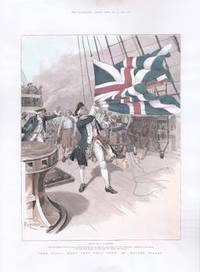
71-7653London: The Illustrated London News July 31 1886. Hand-colored wood engraving. pp. 129-130. 40 x 28 cm sheet. Very Good light toning along sheet edges.Provenance: From the collection of the late Frederick G. Ruffner Jr. founder of Gale Research Detroit. London: The Illustrated London News, July 31, 1886. unknown
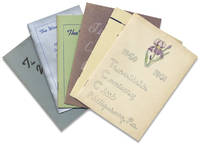
3729845<p>Philipsburg Centre County Pennsylvania 1936–1963. 13 Booklets printed wrappers. In various formats approx. 3¼ x 4¾ inches to 6 x 4½ inches and various paginations approx. 10 to 36 pages each. Scattered ownership inscription. All in near fine condition.</p> <p>The Woman’s Club was organized in 1936 by consolidating three earlier women’s clubs with the oldest dating back to 1912. These yearbooks spanning from 1936 to the mid-1950s the bulk include club officers department chairmen committees member lists by-laws and the club’s program of meetings for the year.</p> <p>Also included are two yearbooks 1960–1962 from another Philipsburg women’s club The Twentieth Century Club organized in 1924.</p> unknown
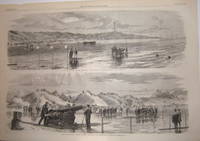
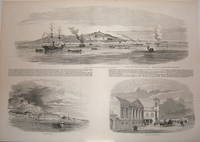
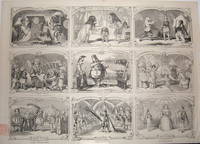
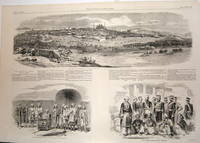
71-7774London: The Illustrated London News March 10 1860. Wood engravings. pp. 231-243. 40 x 54 cm sheet. Very Good center folded short tears along top sheet edge. London: The Illustrated London News, March 10, 1860. unknown
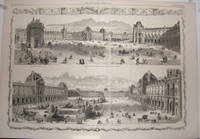
71-7911London: The Illustrated London News June 23 1855. Wood engravings. pp. 635-638. 40 x 54 cm sheet. Very Good center folded light toning along sheet edges. London: The Illustrated London News, June 23, 1855. unknown
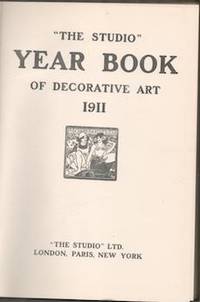
71-4573London Paris New York: The Studio Ltd. 1911. 4to. 274 pp. Hard Cover in original green cloth. Color and black and white plates throughout. Very Good. Very light rubs to cover edges. Spine lightly sunned.Heavy volume could cost extra for shipping. London, Paris, New York: The Studio Ltd., 1911. hardcover
71-7939London: The Illustrated London News Supplement July 20 1889. Color lithograph. 40 x 55 cm sheet. Very Good center folded light toning along sheet edges. London: The Illustrated London News, Supplement, July 20, 1889. unknown
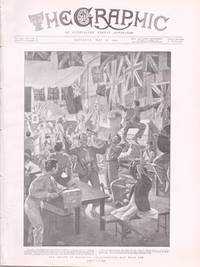
71-7608London: H. R. Baines & Co. May 26 1900. Illustrations. pp. 748-780. 39 x 29 cm sheet. Very Good toning along sheet edges.Provenance: From the collection of the late Frederick G. Ruffner Jr. founder of Gale Research Detroit. London: H. R. Baines & Co., May 26, 1900. unknown
71-7959London: The Illustrated London News Jan. 1 1853. Wood engraving. pp. 7-10. 40 x 55 cm sheet. Very Good center folded tears along sheet edges vertical tears with missing areas. London: The Illustrated London News, Jan. 1, 1853. unknown
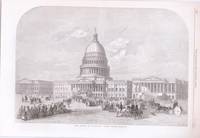
71-7908London: The Illustrated London News August 15 1857. Wood engraving. pp. 159-162. 40 x 54 cm sheet. Very Good center folded light toning along sheet edges. London: The Illustrated London News, August 15, 1857. unknown
71-7569London: The Mirror of Life November 3 1897. Wood engraving. 38 x 28.5 cm sheet. Good some tears and stains along sheet edges.Provenance: From the collection of the late Frederick G. Ruffner Jr. founder of Gale Research Detroit. London: The Mirror of Life, November 3, 1897. unknown
71-7611London: Illustrated Newspapers Ltd. December 26 1874. Wood engravings. pp. 606-628. 39 x 29 cm sheet. Very Good toning along sheet edges foxing on back page.Provenance: From the collection of the late Frederick G. Ruffner Jr. founder of Gale Research Detroit. London: Illustrated Newspapers, Ltd., December 26, 1874. unknown
71-7902London: The Illustrated London News Nov. 221856. Wood engraving. pp. 517-520. 40 x 54 cm sheet. Very Good center folded light toning along sheet edges short tears along sheet edges. London: The Illustrated London News, Nov. 22,1856. unknown
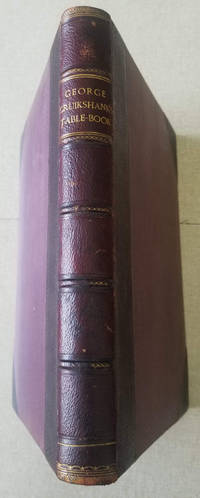
18921650<p>This Limited Edition copy of the 1892 Limited Edition of <strong>"The Cruikshankian Momus" by The Three Cruikshanks The Elder Isaac Robert and the Great George</strong> was published in 1892 in London by John C. Nimmo. This is copy No. 79 of the 520 copies "printed for England and America". The book's title is enhanced by several sub-titles such as "Pictorial Broadsides and Humorous Song-Headings" "Fifty-two Comic Designs to Popular Ballads" and "Coloured By Hand After the Originals. In Greek mythology the Momus of this book's title was the personification of satire and mockery. A book plate attached to the inner front cover identifies a previous owner to be B. Jones-Bateman of Pentre Mawr.</p><p>The book which measures approximately 7 ¾ inches wide by 11 ½ inches tall by 1 ¼ inches thick contains vii pages of preliminary matter followed by 136 numbered pages of text with small B&W text illustrations. The 52 plates colored by hand are each on an unnumbered sheet. The book is hardbound in blue cloth covered boards with gilt printing on the front and spine. The pages are gilt edged on top and untrimmed on the other edges. The pages are very lightly tanned but all text and plates are clear and easily read. There are signs of wear on the cover particularly at the outer corners and the top and bottom of the spine. The book is overall in very good condition.</p><p>The illustrations accompanying this description show the book's cover front and spine the Title page/frontispiece the text Title page a full page plate and a typical 2-page spreads of text and a colored plate.</p><p><strong>Isaac Cruikshank</strong> 1764–1811 Scottish painter and caricaturist was born in Edinburgh and spent most of his career in London. Cruikshank is known for his social and political satire. His sons Isaac Robert Cruikshank 1789–1856 and George Cruikshank 1792–1878 also became artists and the latter in particular achieved fame as an illustrator and caricaturist. Wikipedia</p><p><strong>Isaac Robert Cruikshank</strong> sometimes known as Robert Cruikshank 27 September 1789 – 13 March 1856 was a caricaturist illustrator and portrait miniaturist the less well-known brother of George Cruikshank both sons of Isaac Cruikshank. Just like them he holds importance as a pioneer in the history of comics for creating several cartoons which make use of narrative sequence and speech balloons. Wikipedia</p><p><strong>George Cruikshank</strong> 27 September 1792 – 1 February 1878 was a British caricaturist and book illustrator praised as the "modern Hogarth" during his life. His book illustrations for his friend Charles Dickens and many other authors reached an international audience. Wikipedia</p> John C. Nimmo hardcover
71-7654London: The Illustrated London News July 31 1886. Hand-colored wood engraving. pp. 457-458. 40 x 28 cm sheet. Very Good light toning along sheet edges.Provenance: From the collection of the late Frederick G. Ruffner Jr. founder of Gale Research Detroit. London: The Illustrated London News, July 31, 1886. unknown
71-7910London: The Illustrated London News Oct. 31 1857. Wood engravings. pp. 431-434. 40 x 54 cm sheet. Very Good center folded light toning along sheet edges upper right sheet corner missing. London: The Illustrated London News, Oct. 31, 1857. unknown
71-7629London: William Little 1859. Wood engraving. pp. 425-426. 40 x 28 cm sheet. Very Good light toning along sheet edges.Provenance: From the collection of the late Frederick G. Ruffner Jr. founder of Gale Research Detroit. London: William Little, 1859. unknown
71-7651London: William Luson Thomas March 14 1874. Hand-colored wood engraving. pp. 241-242. 40 x 28 cm sheet. Very Good crease to lower right sheet corner.Provenance: From the collection of the late Frederick G. Ruffner Jr. founder of Gale Research Detroit. London: William Luson Thomas, March 14, 1874. unknown
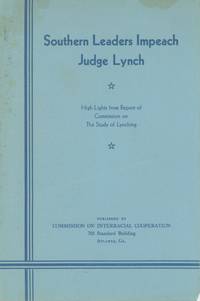
1932List2904Atlanta Georgia: Commission on Interracial Cooperation 1932. Four page booklet measuring 6 x 9 inches. Some staining and slight wear overall near fine. A 1932 booklet summarizing the results of the Southern Commission on the Study of Lynching’s findings about the crime published by the Commission on Interracial Cooperation CIC. Formed in 1919 the Atlanta-based CIC involved white and African-American leaders and worked to reduce racial tensions in a way tailored to each Southern region in which it had a chapter.1 In the 1930s due to the Great Depression the CIC’s focus shifted from expensive community work to research and education including forming the Southern Commission on the Study of Lynching. The study was headed by sociologist Arthur F. Raper who would publish The Tragedy of Lynching 1933 based on these findings. We find nineteen copies of this booklet in OCLC.<br /> <br /> 1 Ann Pullen “Commission on Interracial Cooperation†in New Georgia Encyclopedia April 5 2021 https://www.georgiaencyclopedia.org/articles/history-archaeology/commission-on-interracial-cooperation/. Commission on Interracial Cooperation unknown