Jacob SPONBiblio.com
260 résultats
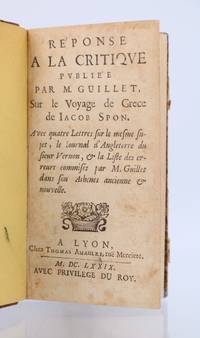
167989345Lyon: Thomas Amaury 1679. Fine. Thomas Amaury Lyon 1679 8.5 x 15 cm Relié Very rare first edition. Some light foxing. Contemporary 19th-century modest half-grained cloth binding spine faded marbled paper boards with surface abrasions yellow endpapers and pastedowns marbled edges. Sole edition uncommon of this vindication by Jacob Spon 1647-1685 concerning his major travel account of the Levant Voyage d'Italie de Dalmatie de Grèce et du Levant fait aux années 1675 & 1676 published in 1678. Georges Guillet de Saint-Georges 1624 or 1625-1705 had a little earlier 1675 produced a description of the contemporary state of the city and monuments of Athens which Spon disputed in his own narrative even going so far as to question whether Guillet had ever travelled in Greece at all. Hence a quarrel of the kind scholars delight in: sharp and somewhat futile. Bookplate of a Greek educational institution affixed to a pastedown. Thomas Amaury hardcover
1685D7313Amsterdam / Utrecht: chez Jean Wolters et Ysbrand Haring / Frans Halma 1686 / 1685. Hardcover. Very Good. 12mo 155 x 88 mm. 432pp. 7. Full-page engraved portrait of Chardin above his heraldry bearing arms of two rosettes chevron and bird additional engraved title 16 engraved plates including two chapter headpieces 12 folding are maps city panoramas or charts. The first English edition appeared in 1686 in London by Moses Pitt of 1686; Chardin having settled in England after his travels and was knighted there by Charles II. The title was reprinted twice in Amsterdam in the original French at different locations. First at Abraham Wolfgang and then at Wolters and Haring as in this copy. Contemporary vellum ms. title on spine with foldover edges speckled edges; light soiling and few small stains few minor tears on engraved title or marginal wear to plates. A very nice copy with plates in excellent shape. Bound after: SPON Jacob 1647-1685. Histoire de la Ville Et de l'Estat de Genève. Utrecht: Frans Halma 1685. 522pp. 16 of table. Woodcut printers device of Halma with motto Vivitur ingenio one lives on in spirit to title additional engraved title 6 plates of which 3 are folding among which the view of the Geneva region with placenames highlighted in yellow woodcut headpieces and decorative initials; one small fold-tear to Geneva plate. Formerly in the collection of famed bibliophile Henri Burton of Geneva his morocco bookplate neatly to front endpaper. <br/><br/>French sammelband of the Travels of Sir Jean Chardin; one of the finest works of early Western scholarship on Persia and India and Spons History of Geneva from the collection of Henri Burton. A great deal of European travel writing details the history of Europes relationship to the Orient a place highly exoticized by western observers. Jean Chardin was a trader and the son of a jeweler who first went to the Levant in 1665 to purchase gems. He made a second journey in 1671 in the company of the artist Guillaume Grelot whom he met in Istanbul and whose drawings inspired the engravings in the present work. This edition comprises the first volume of the authors manuscript dealing with the period 1671-1673 and is all that was published until 1711. His work is divided into four parts: the first recounts his journey from Paris to Ispahan 1671-77 the second describes Persia and Ispahan the third the ruins of Persepolis and the fourth gives a history of Persia based on Persian writers. /// Spon 1647-1685 was a doctor and pioneering archaeologist of Greek antiquities. After the revocation of the Edict of Nantes he fled France for Switzerland dying not long after in Geneva. His history of Geneva first published in 1680 was translated into English in 1687. Chardin an experienced trader is in a position to give detailed accounts of trade-routes prices articles bought and sold customs problems and so on whereas Spon is primarily interested in Antiquity concentrating on giving the exact wording of inscriptions illustrations of medals and ancient buildings and the comparison of towns and landscapes with the descriptions which appear in Classical texts. A fine sammelband neat and sturdy contained two important travel texts printed within just one year of each other. chez Jean Wolters et Ysbrand Haring / Frans Halma hardcover books
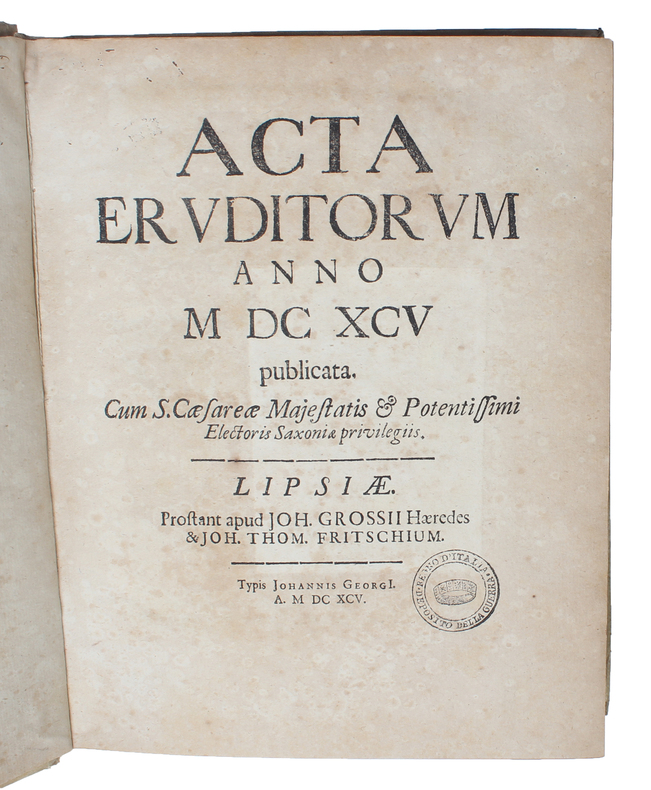
169542860Leipzig, Grosse & Gleditsch, 1695. 4to. Contemp. full vellum. Faint handwritten title on spine. A small stamp on titlepage and pasted library label to pasted down front free end-paper. In: ""Acta Eruditorum Anno MDCXCV"". (2), 560, (52) pp. + 10 plates. As usual with various browning to leaves and plates. The entire volume offered. Leibniz's papers: pp. 145-57" 184-185 310-316 369-372 493-495. Jacob Bernoulli's paper: pp. 537-553 + one folding table 65-66. Johann Bernoulli's: pp. 59-65" 374-376.
169542860Leipzig Grosse & Gleditsch 1695. 4to. Contemp. full vellum. Faint handwritten title on spine. A small stamp on titlepage and pasted library label to pasted down front free end-paper. In: "Acta Eruditorum Anno MDCXCV". 2 560 52 pp. 10 plates. As usual with various browning to leaves and plates. The entire volume offered. Leibniz's papers: pp. 145-57; 184-185; 310-316; 369-372; 493-495. Jacob Bernoulli's paper: pp. 537-553 one folding table; 65-66. Johann Bernoulli's: pp. 59-65; 374-376. <br/><br/><em>First printing of a series of influential papers by Leibniz Jacob Bernoulli and Johann Bernoulli.First publication of Jakob Bernoulli's famous and influential "Bernoulli Equation". In "Notatiuncula Constructiones Lineae" Bernoulli proposed a solution to non linear equations which today is one of the most common used solutions of the general fluid. Bernoulli equations are significant because they are nonlinear differential equations with known exact solutions. In the "Specimen dynamicum" Leibniz presents a conception of body and force which distinct between primitive and derivative forces and between active and passive forces. This article is regarded as being the clearest exposition of Leibniz' dynamics. DSB VII 151b."The first attempt at a detailed account of the dynamics was a long dialogue the "Phoranomus seu de potentia et legibus naturae" written in July 1689 while Leibniz was in Rome. This was quickly followed be the composition of the massive Dynamica de potential et legibus naturae corporeae 1689-90 . Though it was written with the intention of publication and though Leibniz work at publishing it he never considered it entirely finished and it remained unpublished during his lifetime.The later . he finally revealed some of the metaphysical foundations of the project in an essay the present paper." Garber Daniel. Leibniz: body substance monad. 2009. 132 p."Its title suggests a summary of or a selection from the earlier work . However it actually contains something in a way rather more interesting: a careful exposition of the metaphysical foundations of the new science something that is hard to find in the old Dynamica or any of the more Technical pieces." Garber Daniel. Leibniz: Body Substance Monad. 2009. 133 p. </em> hardcover
167989345Thomas Amaury | Lyon 1679 | 8.5 x 15 cm | Relié
1658383431658. Das ist: Beschreibung einer Reiss so zwee Exulanten durch Heuteliam gethan Eine Satyre auf Helvtien die Schweiz von anno dazumal schon damals geprägt durch Korruption und Vetternwirtschaft. Pagination fehlerhaft wie bei allen Ausgaben S.235 236 übersprungen. Kleine Fehlerstelle im Papier des Titelblattes. Handgeschriebenes Gloss auf den Nachsatzseiten. Alter Besitzerstempel u. Medaillons Haller V 1195. - Barth 2193 Kl.-8°. Pbd. Helvetica unknown
165260208Frankfurt, G. Schönwetter, 1652. Folio (335 x 203 mm). Three volumes bound in one contemporary full vellum bindings with title in contemporary hand to spine. Binding with some miscolouring and a bit of wear. Title-page with a few dots and light soiling, otherwise a fine and clean copy. 141, (7), (4), 183, (7), 176, (3) pp. 151 engraved plates included in the pagination. Pp. 171-172 in vol. 2 copied in contemporary hand.
165260208Frankfurt G. Schönwetter 1652. Folio 335 x 203 mm. Three volumes bound in one contemporary full vellum bindings with title in contemporary hand to spine. Binding with some miscolouring and a bit of wear. Title-page with a few dots and light soiling otherwise a fine and clean copy. 141 7 4 183 7 176 3 pp. 151 engraved plates included in the pagination. Pp. 171-172 in vol. 2 copied in contemporary hand. <br/><br/><em>Later edition of Typot’s famous and beautifully illustrated work on emblems. The designs of the emblems were compiled by Ottavio Strada antiquarian to Emperor Rudolf III and were reproduced by the engraver Aegidius Sadeler - Typot wrote the Latin commentaries. The extensive work covers a broad array of subjects such as popes emperors kings and The Santa Eucharista. </em> hardcover
16364833Amsterdam 1636. 4to. Joan Blaeu Contemporary vellum with the manuscript author and title on the spine sewn on 4 supports laced through the joints. With a woodcut printer's device on the title page of each work an engraved portrait of Pieter Dirkszoon Hasselaer in the text and 30 engraved emblems by Christoffel le Blon in ad 1 a full-page engraved portrait of Hendrik de Grote in ad 2 and several decorated woodcut initials head- and tailpieces in both works. 2 works in 1 volume. 2 blank 6 "464" = 460; 8 203 5 pp. First edition of the collected poems plays sonnets and songs of the most famous Dutch poet of the 17th century Pieter Corneliszoon Hooft 1581-1647. It was also the only edition of his collected poems published during his lifetime. The work was intended to show his literary abilities and to serve as an example for later authors. It opens with a dramatic play followed by emblemata songs love and wedding poetry and ends with psalms highlighting Hooft's complete skillset in the literary realm. The second work in the present binding is the third enlarged edition of Hooft's first historical biography on the life of the king of France Henry IV a work that would later grant him the title of knight.The collection was edited by Hooft's close friend the scholar statesman and poet Jacob van der Burgh 1600-1659 who dedicated this edition to Constantijn Huygens. The collection contains the plays Granida Geeraert van Velzen Baeto and Paris oordeel. His Emblemata here with the title Minnezinne-beelden are illustrated with 30 charming half-page emblems engraved by Christoffel le Blon or Pieter Serwouters printed from the same plates as used in the original edition of the Emblemata in 1611 each with a Dutch Latin and French motto repeated below the engraving followed by distichs in the same three languages. The Latin verses are by C.G. Plemp the French by R.J. de Nérée.The portrait of Pieter Dirkszoon Hasselaer who was a lay judge and member of the Amsterdam counsel has here been reduced in size; it was first published in Hooft's Lijkklaght over Pieter Dircxz. Hasselaer 1617. Also included are Hooft's sonnets songs miscellaneous poems and wedding poems on the two weddings of P.C. Hooft: with Christina van Erp in 1610 and Heleonora Hellemans in 1627 by C.G. Plemp Laurens Reael W. de Groot Constantijn Huygens and Caspar Barlaeus. The work closes with psalms.With the label of Henri Dircx mounted on the front pastedown. The vellum is slightly soiled. The leaves are somewhat browned and foxed especially in ad 2 a water stain in the outer margin of the first 100 pages of ad 1 and another in the lower margin nearly throughout the lower corner of page 37 of ad 1 has torn off. Otherwise in good condition.l Ad 1: Landwehr Emblem and Fable Books 322; Leendertz 117; Scheurleer Liedboeken p. 140; STCN 852658524; USTC 1032392; ad 2: STCN 851961835; USTC 1031841. hardcover
1633E4IGP2PR2ETVAmsterdam 1633. 4to. Broer Jansz. Contemporary vellum. With woodcut illustration on title-page and 35 woodcut illustrations in text several full-page. 8 pp. 9-"74" =70 4 ll. Rare sixth edition of the Dutch translation of Jacob Rüff's classic and well-illustrated book on the conception generation and birth of the child the duties of the midwife the attendant diseases of child-bearing etc. Translated into Dutch by Marten Everart. Rüff's work is an improved version of Rosslin's Der Swangern frawen and contained the first true anatomical pictures in an obstetrics book.It was originally published in 1554 as Ein schön lustig Trostbüchli von den empfengknussen und geburten der Menschen translated into Latin in the same year as De conceptu et generatione hominis. insuper. The first of the many Dutch editions appeared in 1591 all early editions are very rare. The present edition contains the preface by Sigmund Feyerabend who published the Latin edition of 1580.Bookblock nearly detached first few leaves with restored corners title-page worn a few pages lightly browned and some occasional minor stains. Reasonable copy.l Bibl. Belg. IV p. 928; Krivatsy 10016; STCN 2 copies. hardcover
165832984-176Lutetia i.e. Ulm n.pr. 1658. Engr. title printed title. 2 unn. leaves 297 =295 pp. 1 blank p. 2 leaves "Clavis" name keys. 8vo. Contemporary half calf. sm. library stamp on title. Lutetia i.e. Ulm n.pr. 1658. Bound with: GRIMM Hans Rudolf. Kleine Schweitzer Cronica Oder Geschicht=Buch.Erstlich woher der Nahmen Schweitzer komme.Benebst auch ein Beschreibung der Natur=Wunder dess Schweitzer=lands. 4 unn. leaves 204 pp. 12 unn. pp. index. Burgdorf 1723. Ad I: First edition of this interesting work of baroque literature. "In the year 1658 a script was published with the purported place of publication Lutetia Paris that caused a most disagreeable sensation: Heutelia Anagram for Helvetia . It contains the following fiction: A Palatine nobleman and a jurist from Wurttemberg both Protestants flee from the Thirty Years War to Switzerland and making ironical comments as they travel from place to place . The tone is unrestrained satirical and sometimes cynical especially when the status of women is concerned. A lot of brutianism is involved. Behind that facade however there is a scientific seriousness that gets to the bottom of things . The intention was always to uncover the oddities of Switzerland." transl. from Feller/Bonjour. Politically the travellers represent the aristocracy and take a firm stand against democracy. Zurich comes away relatively lightly whereas Bale does not. Of Bern however an unsparing social picture is outlined that led to a storm of protest and the "Gnadigen Herren" tried to surpress the book by all means. "Heutelia" was already identified in the 18th c. as a "liber satyricus rarissimus". Haller talks of a rare work and names as authors Jakob Graviseth or Gravisset Herr zu Liebenegg and Landvogt von Oron. More recent research especially by Walter Weigum declares the "Heutelia" to have been written by Hans Franz Veiras 1577-1672 the secretary of the Palatine Elector and Bohemian King Friedrich V who had fled to Zurich. Graviseth maybe translated and reworked the "Heutelia" from Latin giving it a Swissgerman interpretation. At the end the key to the names is found for example: Guretum=Zurich Sebilacopolis=Bale Rusinopolis=Bern Bonzus Corvinus=Jesuit Druida=Pastor Muftus=Messpriest etc. Ad II: First edition of the historic work by the Burgdorf councilman H.R. Grimm 1665-1749 who participated in the 2nd Villmerger War in 1712. Although this popular writing has many misrepresentations and mistakes it is characterized by its lively descriptions. The work also contains popular descriptions of the mountains rivers and natural wonders of Switzerland. Nice copy of two rare works. _ - Ad I: Paisey H 1019; VD17 23:299560W; Weller Druckorte I p. 30; Hayn/Gotendorf VII 257; Haller V 1195; Barth 2193; Faber du Faur 448; Jantz 2571; Kosch II 969; Feller/Bonjour 405f.; cf. Baechtold 473f.; not in Bircher/Bürger. Ad II: Haller IV 470; HBLS III 747; not in Barth; cf. Simmen René. Vom grossen Misch-Masch 1965. LITERATURE: GERMAN ; HELVETICA: ALLGEMEIN ; yes ; Lutetia (i.e. Ulm), n.pr. unknown
165832984-310Lutetia i.e. Ulm n. pr. 1658. With engr. title. Printed title 2 unn. leaves 297 pp. =295 pp. 1 blank p. 4 unn. pp. last blank "Clavis Heutelia" keys for the numerous anagrams and acyrogolia. 8vo. 18th century half calf. Sm. monastic libr. stamp on title. Lutetia i.e. Ulm n. pr. 1658. Bound with: GRIMM Hans Rudolf. Kleine Schweitzer Cronica Oder Geschicht=Buch.Erstlich woher der Nahmen Schweitzer komme.Benebst auch ein Beschreibung der Natur=Wunder dess Schweitzer=lands. 4 unn. 204 12 unn. pp. index Burgdorf 1723. Ad I: First edition of a notable work of baroque literature Heutelia is one of the few literary products of Switzerland in this time and one of the wittiest. This is a journey description based on satire and utopia. Written by Veiras former advisor of the Winter King i.e. Frederick V Elector of the Palatine and King of Bohemia and by Gravisseth who was Bailiff of Oron it is a critical account on the social conditions in 17th century Switzerland. The title "Heutelia" is an anagram of "Helvetia" the Latin name of Switzerland. "Die Absicht war durchaus die Schäden und Verkehrtheiten der Schweiz aufzudecken" Feller/Bonjour. Politically the travelers represent the aristocracy and take a sharp stand against democratic Switzerland. Ad II: First edition. Although this popular writing contains numerous disortions and errors it is also characterized by lively and interesting descriptions of the mountains rivers and natural wonders of Switzerland.- Nice copy with two rare works bound together. _ - Ad I: Paisey H 1019; VD17 23:299560W; Weller Druckorte I p. 30; Hayn/Gotendorf VII 257; Haller V 1195 under Gravisset;; Barth 2193; Faber du Faur 448; Jantz 2571; Kosch II 969; Feller/Bonjour 405ff.; cf. Baechtold 473f.; not in Bircher/Bürger. Ad II: Haller IV 470; not in VD18 nor in Barth; HBLS III 747; cf. Simmen René. Vom grossen Misch-Masch 1965. LITERATURE: GERMAN ; HELVETICA: ALLGEMEIN ; yes ; Lutetia (i.e. Ulm), n. pr. unknown
1646046444Hoorn: Arent Jansz Chalon 1646. First Edition. Hardcover Vellum. Very Good Condition. Contemporary overlapping vellum modest discoloration and soiling but sound. Spine darkened remains of labels bookplate on pastedown and endpaper. Two works in one the second unpaginated and dated 1647 on the separate title; printed in a mix of black letter and Roman type faces. 8 252 60pp. <br/><br/>The first edition of a popular and much reprinted book of moral tales about violence. 15 engravings in the first work 3 in the second and a vignette on the title and an extra engraved title to Gulden-Spiegel. As here it was often paired with Mayvogel's life of Amnon apparently present here in the second edition first published in 1646. No other copies of the first edition located in OCLC or auction records. Size: Octavo 8vo. Quantity Available: 1. Shipped Weight: Under 1 kilo. Category: Philosophy; Antiquarian & Rare. Inventory No: 046444. Arent Jansz Chalon hardcover books
1601048514Amsterdam: Corneille Nicolas 1601. First Edition. Disbound. Fair Condition. Disbound in later wraps. Lacking title page 2 with the map on the verso and the second title for the vocabulary section. Upper corner of final vocabulary torn with loss to Javanese column and text on verso. All missing parts supplied in facsimile. Chipping at edges general browning small wormtrail near bottom margin touching some letters. 22 large engravings of 25 lacking the two title woodcuts and one map 2 woodcuts of plants. Size: Quarto 4to. Quantity Available: 1. Shipped Weight: Under 1 kilo. Category: Travel & Places; Antiquarian & Rare. Inventory No: 048514. Corneille Nicolas unknown
16171307120067Thomas Adams 1617-01-01. Hardcover. Good. Folio. Contemporary boards rebacked with later leather spine. 5 raised bands. Solid binding and cover. 20 790 122 p. Generally clean unmarked pages with minor toning. Provenance: Christopher Will 1701. Inked with calligraphic flourish on end page. Thomas Adams hardcover
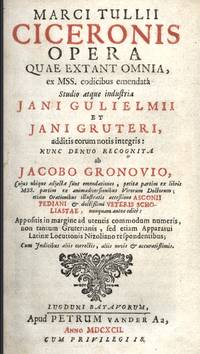
16923306804Lyon: Vander Aa 1692. One part moderately water-stained another with slight marginal worming three of the folding plates repaired. Eleven volumes duodecimo the first with four engraved folding plates and all eleven volumes embellished with charming ornamental title-pages; a handsome set in mid eighteenth-century dark panelled calf with original labels. <p><p>Attractively bound set of Cicero in eleven volumes noted as "respectable and correct" by Moss. The title-page boasts that the accuracy of the text arises from the editorial finesse of Dutch classical scholar Jacob Gronovius whose portrait appears as frontispiece to the first volume curiously the English literary lion Thomas Dibdin claimed the editorial attribution to Gronovius was spurious. Jacob Gronovius was the father of botanist Jan Frederik Gronovius correspondent and patron of Carl Linnaeus and the author of a treatise on the native plants and herbs of Virginia.</p> <p>A charming set in an appealing early binding this is a considerable publication continuously paginated for a total of 3611 pages. The folding engraved plates include the detail of an epigraphic tribute to Cicero and numismatic relics relating to the famed Roman orator.</p> </p> . Vander Aa unknown
170023508Amsterdam: Daniel van den Dalen and François Halma; Utrecht: Wilhelm vande Water 1700. Two volumes. Second edition. Folio. 28 666 10 pp. 183-184 repeated and page numbers 343-348 omitted as usual the text and signatures continual; 18 390 6 393-608 61 1 pp. Contemporary mottled full calf spine with raised bands gilt lettered red labels gilt decorated to the spines elaborate gilt borders to the boards which also feature a central gilt device. Two portraits of the author and Anna Maria Schurman and three double page plates plus hundreds of superb engravings a few full page but mostly set in the text. One of the double page plates and two text leaves with marginal tears without loss some wear to the extremities repairs to the joints of volume I a handsome set. The life and works of this Dutch writer was first published in 1655. Cats' literary work primarily consists of moral poetry and these editions of his writings are embellished with numerous fine copper engravings of varying sizes including engraved title pages head & tailpieces vignettes and most notably hundreds of emblematic illustrations to accompany the verses. A lovely example of an extraordinary work. Amsterdam: Daniel van den Dalen and François Halma; Utrecht: Wilhelm vande Water unknown
167512522Nuremburg: J. von Sandart 1675. Copper engraving with early colour. Printed on laid paper. Title in manuscript ink on verso of sheet. Cleveland Historical Society collection stamp on verso of sheet. Numerous tears and creases in outside margins which have been expertly repaired. Center fold has been strengthened. An early map of Africa by the great mapmaker Jacob von Sandrart engraved by Homann.<br/> <br/>Sandrart's stunning map of Africa is a close copy of Fredrik de Wit's map 'Nova Africa Descriptio' published in 1660. With the prime meridian running through Ferro Island the map is typical of late seventeenth century maps of Africa. Like other maps of the period Sandrart has included a highly decorative and informative cartouche in the lower left corner of the sheet. Homann's continental cartouches aspired to convey the natural history as well as the costume and manner of life of the human inhabitants. Here while a woman peacefully nurses her baby in a hammock a native chief stares out at the viewer from under the shade of a large umbrella. On the right side of the vignette two riders on horseback one with a cutlass and one with a decaptitated head ride by a river where one man is attacking another with his sword. Among the humans are a lion a snake a reptile of some sort and another fox-like animal. Although the map repeats De Wit's decorations it relies on Ptolemy for its description of the Nile basin. It is to some degree remarkable that seventeenth century maps of the interior of Africa were filled with geographical features and named locations since there had been very little European exploration of the interior at this date. European trade took place at specific locations along the coast and almost nothing was known about the interior of the dark continent except through rumor. This is a fascinating map by Sandrart and one of only two maps engraved by Homann before 1690. Born at Frankfurt-on-Main Jacob von Sandrart was one of the most esteemed mapmakers in Nuremberg at the close of the seventeenth century. He learned his trade from his uncle Joachim von Sandrart and from Cornelius Danckerts. As with this impressive map all of Sandrart's charts are filled with a wealth of decorative details and highly ornate cartouches. J. von Sandart unknown books
1698112089à Amsterdam, chez Adrian Braakman, marchand 1698 2 volumes. In-18 14 x 7,5 cm. Reliures de l’époque veau havane, dos à nerfs encadrés de petits fers dorés, [8]-[4]-934 pp. en pagination continue pour les deux volumes, frontispices gravés par Gaspard Luyken, bandeaux & culs-de-lampe, 7-5 gravures hors texte avant la lettre, tables des pièces. Reliures légèrement frottées, intérieur très frais.
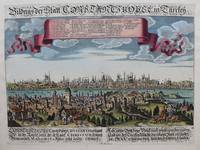
1665P4556Nuremberg : Paul Furst c.1665. Very Good. Notes: A scarce and charming view of Constantinople during the mid 17th century. This view is based off of the Merian view of 1635. Image Size : 272x373 mm 10.71x14.69 Inches Platemark Size : Paper Size : 335x419 mm 13.19x16.50 Inches Coloring: Hand Colored Medium: Copper Engraving Categories: Views Asia Near East Turkey; Paul Furst unknown
164724501London: Printed by M. S. for H. Blunden at the Castle in Corne-hill 1647. 1st Edition variant issue Wing B-3408A. Another issue of the same year has the printer's name "Matth. Simmons. in the yeare 1647". Period full leather with modern rebacking to style. Red morocco title label in second spine compartment. Modern eps. An overall VG copy text paper beginning to brown at edges with some associated chipping/repaired hole to lower right quarter of E2 affects last few words of two lines on p 25 and first few words of four lines on page 26/occasional po marginal pencil annotation a/o check mark. 18 155 7 28 4 pp. Separate t.p. for "Clavis". Last 4 pp: 2 pp 'Catalogue of Bookes' viz. bibliographical list by Behmen 1 pp of "Faults Escaped in Printing" & a blank. Inserted table & plate imperfect lacking 'folded' left side approx. 1 - 1.5". 4to: ¢4 -¢1 a half-title a2 a3 B1 A4 -A1 C - 2B4 2C2. <br/><br/>Bohme a German philosophical mystic who had a profound influence on such later intellectual movements as idealism and Romanticism. Born of poor parents in Goerlitz Germany as a boy he tended cattle later becoming a shoemaker marrying & fathering 4 children. Boehme at the robust age of 37 in 1612 wrote his first treatise Aurora oder Die Morgenroete in Aufgang. In 1613 an unauthorized copy of the manuscript was copied and circulated by Karl von Ender. Its reception "raised him out of his homely sphere and made him the centre of a local circle of liberal thinkers considerably above him in station and culture." However the local pastor primarius of Gorlitz Gregorius Richter leveled a charge of heresy. The local muncipal council administered an admonishment to no further "meddle in such matters." This charge Boehme publicly followed for 5 years. In 1618 Boehme again started writing expository & polemical treatises. The majority of his works were written though not formally published from 1619 - 1624. A second major work Der Weg zu Christo was published in 1624 and signaled a renewal of clerical hostility. Boehem however was destined to suffer but a short period of this second persecution; he died of an illness on 17 November 1624. Boehme has been said to have a "fertility of ideas" and a "trasncendent greatness of religious insight." Boehme was studied by Sir Isaac Newton and influenced the work Henry More as well as and especially William Law 1686 - 1761. Xl Questions concerning the Soule was translated by the English mystic John Sparrow in collaboration with John Ellstone & financed by Humphrey Blunden. This the first of several works by Boehme that Sparrow & Ellstone were to translate into English between 1644 - 1662. Boehme proved to be highly popular in England where there were regular societies of Behmenists at the time. This work XL Questions went into a second edition in 1648 and a third edition in 1665. 11th EB. A scarce title in the Boehme canon. We find no copies currently offered via the major on-line databases OCLC records but 4 institional cc and the work has only appeared at auction 3 times in the last 25 years the last in 1989. Printed by M. S. for H. Blunden, at the Castle in Corne-hill hardcover books
163711639Dordrecht Hendrick van Esch voor Matthias Havius 1637. 2 uitvouwbare titelprent 52 772 136 p. Origineel Leer met ribben goudbestempeld groot 4° met tekstgravures fraai exemplaar Dordrecht, Hendrick van Esch, voor Matthias Havius unknown
1621R119850Köthen, Cothenis Anhaltinorum 1621 [8] + 843 pp., printer's device of ornamental fleur-de-lis on title page, head pieces, 25x19cm., Text of the New Testament in old Syriac (Peshitta version) with parallel text of Latin translation by Tremellius at the foot of the page as well as a select list of various readings prepared by Martin Trost, The Syriac text is printed in large type, pagination and register read front to back, contemporary full vellum binding (intact except for a minor defect at spine, somewhat soiled), text is clean and bright except for few minor occasional foxing and stains, good condition, cfr. OCLC 247662296, weight: 1.5 kg., R119850
169745644Leipzig, Grosse & Gleditsch, 1697. 4to. No wrappers. In: ""Acta Eruditorum Anno MDCXCVII"", No V, May-issue. Pp. 193-240 (entire issue offered). With titlepage to the volume 1697. Leibniz: pp. 201-205. Johann Bernoulli: pp. 206-211. Jacob Bernoulli: pp. 211-214. Newton: pp. 223-224. As usual, some leaves with browning.
169745644Leipzig Grosse & Gleditsch 1697. 4to. No wrappers. In: "Acta Eruditorum Anno MDCXCVII" No V May-issue. Pp. 193-240 entire issue offered. With titlepage to the volume 1697. Leibniz: pp. 201-205. Johann Bernoulli: pp. 206-211. Jacob Bernoulli: pp. 211-214. Newton: pp. 223-224. As usual some leaves with browning. <br/><br/><em>First appearance of the famous issue of Acta Eruditorum in which the 4 solutions by the 4 most eminent mathematicians at the time were printed together. There were in all 5 solutions to the posed problem and Newton's solution was first printed in the Philosophical Transactions January 1697 and reprinted here. The solution proposed by L'Hopital not printed here was not published until 1988.The brachistochrone problem was posed by Johann Bernoulli in Acta Eruditorum in June 1696. He introduced the problem as follows: "I Johann Bernoulli address the most brilliant mathematicians in the world. Nothing is more attractive to intelligent people than an honest challenging problem whose possible solution will bestow fame and remain as a lasting monument. Following the example set by Pascal Fermat etc. I hope to gain the gratitude of the whole scientific community by placing before the finest mathematicians of our time a problem which will test their methods and the strength of their intellect. If someone communicates to me the solution of the proposed problem I shall publicly declare him worthy of praise." Johann Bernoulli and Leibniz deliberately tempted Newton with this problem. It is not surprising given the dispute over the calculus that Johann Bernoulli had included these words in his challenge:- ."there are fewer who are likely to solve our excellent problems aye fewer even among the very mathematicians who boast that they. have wonderfully extended its bounds by means of the golden theorems which they thought were known to no one but which in fact had long previously been published by others."According to Newton's biographer Conduitt he solved the problem in an evening after returning home from the Royal Mint. Newton: . "in the midst of the hurry of the great recoinage did not come home till four in the afternoon from the Tower very much tired but did not sleep till he had solved it which was by four in the morning."Newton send his solution to his friend Charles Montague and Montague published anonymously in the Transactions. Newton's solution presented here in the Acta is also anonymous. The episode did not please Newton as he later wrote: "I do not love to be dunned pestered and teased by foreigners about mathematical things ." After the competition Johann Bernoulli said ". my elder brother made up the fourth of these after Leibniz himself and Newton that the three great nations Germany England and France each one of their own to unite with myself in such a beautiful search all finding the same truth."Struik Edt. "A Source Book in Mathematics 1200-1800 pp. 391 ff. </em> unknown