262 résultats
1671D6213Amsterdam: Barent Otto Smient 1671. Hardcover. Very Good. 12mo 155 x 90mm. In two parts separately titled and paginated Lof-Sang op het geestelyk houwelyk van godes soone Laudatory Song on the Spiritual Marriage of the Son of God. 44 544pp. 120pp. 5. Added engraved title page Proef steen van den trou-ringh in addition to the letterpress title to the first work two engraved full-page portraits one of prolific artist and poet Anna Maria van Schurman and one of Jacob Cats and a full-page allegorical engraving Het Derde Deel facing p. 249 in addition to 51 half-page engravings in the text depicting scenes of domestic and married life. Engraved printers device depicting Adam and Eve in the Garden of Eden. Near contemporary vellum ms. title to spine somewhat effaced; some slight thumbsoiling lightly toned with age; corners bumped. <br/><br/>This 1671 edition based on the imprint of Trou-Ringh by Jacob Cats was first published in Dordrecht in 1637. Cats a Dutch Golden Age poet and politician wrote these rhymed dissertations on marriage and fidelity using very different marriage cases from literature in which conjugal ethics emerged. Cats method was to treat human behavior and society in all its aspects through the lens of marriage both human and spiritual ie. the marriage of Christ and His Church. He takes examples from the Bible Adam and Eve David and Abigail etc. and from classical and modern authors Cyrus and Aspasia Marc Anthony and Cleopatra etc. Cats tells of marriages to patriarchs ancient and modern; cases from Israel Persia Egypt from the life of Charles the Great and of the Great Mogul and Spanish gypsies. Also included are discussions of marriage after rape the breaking of marriage bonds adultery and the like. Because marriage dominated all periods and regions of the world all classes all ages with a variety of feelings and soul states this work resonated with the reader although Cats unusual storytelling intended moral and religious teachings. He propagated that marriage with its many possibilities and moral demands which it always must fulfill totally belong together: as do the ring and the stone. Cats was a distinguished Dutch writer but his Orangist and Calvinistic opinions set him apart from the liberal school of Amsterdam poets. Still for nearly two centuries he enjoyed enormous popularity. Wonderfully preserved important work on 17th century societal structures the many engravings are delightful and captivating. Barent Otto Smient hardcover books
1603046923Basel: Conrad Waldkirch 1603. Early Edition. Hardcover Vellum. Very Good Condition. Two volumes in full contemporary vellum - the first work with no place or publisher 1603 the second Waldkirch Basel 1603. Modest browning throughout heavier in a few spots scattered minor dampstains in the second book; clean and very good overall. 32 416 24 ; 14 334 12 pp with a folding table in Hotman.<br/><br/>Early editions first editions were 1585 and 1565 respectively - the Acontius is rare in commerce and not much more common in libraries. Acontius fled to Basel as the counter reformation began to find an increasingly wide variety if ideas heretical. Stratagematum satanae became central to later ideas of religious toleration and what constitutes dogma. Size: Octavo 8vo. Quantity Available: 1. Shipped Weight: Under 1 kilo. Category: Religion & Theology; Antiquarian & Rare. Inventory No: 046923. Conrad Waldkirch hardcover
1603046923Basel: Conrad Waldkirch 1603. Early Edition. Hardcover Vellum. Very Good Condition. Two volumes in full contemporary vellum - the first work with no place or publisher 1603 the second Waldkirch Basel 1603. Modest browning throughout heavier in a few spots scattered minor dampstains in the second book; clean and very good overall. 32 416 24 ; 14 334 12 pp with a folding table in Hotman.<br/><br/>Early editions first editions were 1585 and 1565 respectively - the Acontius is rare in commerce and not much more common in libraries. Acontius fled to Basel as the counter reformation began to find an increasingly wide variety if ideas heretical. Stratagematum satanae became central to later ideas of religious toleration and what constitutes dogma. Size: Octavo 8vo. Quantity Available: 1. Shipped Weight: Under 1 kilo. Category: Religion & Theology; Antiquarian & Rare. Inventory No: 046923. Conrad Waldkirch hardcover books
1690265353Frankfurt: Zunner 1690. hardcover. very good. 2 volumes Pars Generalis & pars Specialis bound together in 1. Illustrated with 2 copper-engraved allegorical frontispieces rubricated title pages with engraved vignettes. xii 23 engraved sheets with 1780 figures of of heraldic shields 368 38 page index; 2 index sheets torn with significant loss; viii 778 35 engraved sheets with 397 larger heraldic shields 32 page index. A few pages have minor soiling including the first frontispiece. Thick tall folio full velum somewhat stained but very sound and attractive with manuscript spine title; red edges. Frankfurt John David Zunner 1680. A very good copy. -- Brunet V 486; Graesse VI 464.<br/><br/> Zunner unknown books
1690265353Frankfurt: Zunner 1690. hardcover. very good. 2 volumes Pars Generalis & pars Specialis bound together in 1. Illustrated with 2 copper-engraved allegorical frontispieces rubricated title pages with engraved vignettes. xii 23 engraved sheets with 1780 figures of of heraldic shields 368 38 page index; 2 index sheets torn with significant loss; viii 778 35 engraved sheets with 397 larger heraldic shields 32 page index. A few pages have minor soiling including the first frontispiece. Thick tall folio full velum somewhat stained but very sound and attractive with manuscript spine title; red edges. Frankfurt John David Zunner 1680. A very good copy. -- Brunet V 486; Graesse VI 464.<br/> <br/> Zunner unknown
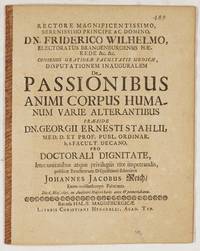
1695419751695. Halae Magdeb. Literis Christiani Henckelii 1695 Kl.4° 16 6 pp. orig. Broschur. Erste Ausgabe zweiter Abdruck! Die hier vorliegenden "Disputatio de passionibus animi" "Über den mannigfaltigen Einfluß von Gemütsbewegungen auf den menschlichen Körper" zeigt daß es Stahl schon zum Beginn seines Wirkens in Halle seit 1694 also um das Problem der psychophysischen Wechselwirkung gegangen ist. Er hat seine Bedeutung seine Auswirkung in der Praxis beobachtet. Man findet hier die Grundlagen der medizinischen Psychologie. Es werden Beispiele für den Einfluß seelischer Erregungen auf den menschlichen Organismus angeführt. In der Einleitung wird hervor gehoben: "So leiten sich von den Leidenschaften des Gemütes in ihrer vielfältigen Bestimmung Leitung oder Änderungen der Bewegungen des menschlichen Körpers auch viele Krankheitsanzeichen her." Die Mehrschichtigkeit seelischer Alterationsstufen das Unverlierbare besonders tiefe Eindrücke wird in der Vorahnung späterer Erkenntnisse Freudausgesprochen: Zugegeben sei "daß der im Erbgang geprägte Prototyp der Leidenschaften und Neigungen des Gemüthes in gewohnheitsmäßiger Festigung nicht ganz umgekehrt werden kann" so vermag doch "die domminierendende Leidenschaft durch eine ihr entgegengesetzte Gewohnheit an die zweite oder gar dritte Stelle verdrängt werden wo sie zwar noch innerhalb der Ordnungen steht gleichwohl ihre Rangstufe wechselt." Es liegt dem in nuce die Idee von der Verdrängung zugrunde. Es wird schließlich empfohlen die psychologischen Beobachtungen bei der Behandlung der Patienten nützlich anzuwenden und zu verwerten indem man den Kranken "viele Ausbrüche des Erschreckens der Furcht des Zornes anhebender Ängstlichkeit durch guten Zuspruch und durch vertrauenserweckende Sicherheit" benimmt. So zieht die Arbeit die Folgerung: "Seelenleiden die von Verletzungen des Körpers herrühren sind oft mit schwerwiegenden und dauernden Folgen verbunden. Doch sie sind zu vertreiben mit der Heilung der Körperschäden." Die Lehre von den symptomatischen Psychosen wird im Ansatz vorweggenommen wenn auch die Terminologie auf einen noch neuen Begriffsterain vortastet. Es sind Gehversuche auf einem noch dunklem Gebiet in der ärztlichen Praxis. Man kann die "Disputatio" als eine frühe Arbeit bezeichnen die sich aus der Sicht des Arztes mit dem Problem psychisch verursachter Störungen von Krankheitsabläufen beschäftigt. Es handelt sich hierbei nicht um Geisteskrankheiten. Es geht vor allem um die körperlichen Einflüsse transitorischer Seelenzustände die man heute in der Lehre von den Neurosen und ihren verschiedenen Erscheinungsformen zusammenfassen würde. Die seit der Antike beknatte Verbindung zwischen Knostitution und Charakter wird auch nach der therapeutischen Seite hin erwogen und berücksichtigt. Es ist der Geist einer naturwissenschaftlichen Betrachtungsweise der sich durch diese Arbeit hindurchzieht. Es zeigt wie vorbeitreffend die Annahme war den STAHL'schen Animismus nur religiös zu interpretieren." "In dem an zweiter Stelle stehenden "Propempticon inaugurale" - es ist eine dem Doktoranden JOHANN JACOB REICH gewidmete Abschiedsrede STAHLS mit angeschlossener Vita REICHS - nimmt STAHL zu dem Thema "De synergeia naturae in medendo" Stellung. Man findet hier alle Merkmale des STAHLschen Systems und erkennt wie sehr der aus der Erfahrung schöpfende Psychologe den Vorrang gehabt hat. So wird eine tiefe Kenntnis des Eigenrhythmus biologischer Abläufe in dem Gedanken ausgesprochen: "Die Natur hat ihr eigenes Zeitmaß und verwendet dieses bei den rhythmischen Vorgängen des Lebens von längerer Zeitdauer so bei der Embryonalentwicklung bei der Geburt Zahnung Pubertät". Die Synergie der Organe unter der Direktion der Lebenskraft enthält im Krankheitsfalle das ärztliche Problem die nützlichen Bewegungen der Naturheilkraft von den eigentlichen Krankheitsbewegungen zu unterscheiden. Der Arzt muß vor allem die Bewegungen erkennen die auf einen nützlichen Zweck abzielen. Theoretische Fragen werden aus dieser Sicht kurzerhand beiseite geschoben und in der für STAHL typischen Art das Leib-Seele-Problem zu einem biologischen Postulat'gemacht : "Es handelt sich nicht um eine Annahme sondern wir beweisen a priori mit der Vernunft daß im Menschen von einer einzigen Seele alle diese Akte und Bewegungen vollzogen werden können. Erfahrung und Vernunft zeigen a posteriori daß diese Zusammenhänge zwischen Leib und Seele in der Tat vorliegen." In diesem Problem sieht STAHL den Inhalt seiner Lebensarbeit: "Darauf werfe ich mich mit ganzer Seele. Dem gilt meine ganze Arbeit. Weder Mühe noch Neid können mich dabei verdrießlich machen. Ich hoffe vielmehr mit dem Problem in würdiger Weise fertig zu werden. Möge die Medizin dann wieder auf ihr rechtes Fundament gestellt sein"!" Diese beiden Texte "vermitteln so ein interessantes Bild der ärztlichen Persönlichkeit STAHLS ihres Temperamentes und ihrer Suche nach den biologischen und psychologischen Gesetzen einer wirksamen Therapie. Er gibt sich mit der Vorstellung einer nur mechanistischen Arzneiwirkung nicht zufrieden. Er nennt die besondere "Chronometrie" biologischer Abläufe das Gesetz der Ganzheit den Begriff des allen Einzelerscheinungen übergeordneten Organismus den Einfluß seelischer Erregungen auf die Vitalbewegungen desselben. Die psychophysische Wechselwirkung wird dem Arzt als praktisch wichtiges Problem gestellt. Jedenfalls hat STAHL bereits im Jahre 1695 alle wesentlichen Gedanken seines medizinischen Systems dargelegt. Die Ansicht er habe erst durch CHRISTIAN WOLF gewichtige Anregungen erhalten ist nicht mehr haltbar. Bereits 12 Jahre vor dem Erscheinen seiner "Theoria medica vera" hat die Forschungsrichtung STAHLS ihr wesentliches Ziel gehabt. Wenn man die Geschichte der medizinischen Psychologie überdenkt so wird man GEORG ERNST STAHL auf Grund der Einsichten in die ärztliche Bedeutung des Psychischen wie schon KORNFELD mit Recht ausgeführt hat an den Anfang einer Erschließung dieses Fachgebietes stellen dürfen. Die Leitsätze am Schluß der "Disputatio" enthalten das historische Fundament dieser neuen erst in unserer Zeit zur Anerkennung gekommenen Wissenschaft." B.J. Gottlieb G.E.Stahl Sudhoffs Klassiker der Medizin pp.18-21 23-47 unknown
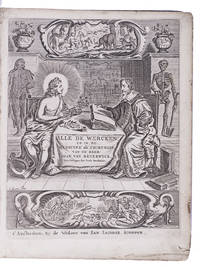
1672KBJA62HZUVCNAmsterdam 1672. 4to. widow of Jan Jacobsz. Schipper Contemporary vellum. With engraved frontispiece 28 engravings in volume one 29 engravings in volume two including one on the title-page and 20 engravings including one on the title-page plus 1 woodcut in volume three. 3 volumes bound as 1. 18 252; 8 127 1 328 48; 8 278=276 12 pp. Penultimate edition of the most influential medical work in the Low Countries during the 17th-century the collected works of Johannes Van Beverwijck 1594-1647. It was very popular partly through the inserted poems by Jacob Cats and its illustrations. The three main parts contain a general survey of the several elements of medicine varying from medical folklore and herbal knowledge to anatomy and chirurgy. At the end of the third part "Heel-konste" letters from and to Van Beverwijck as well as some other important letters are issued. Among these are letters of Descartes on the motion of the hart written ca. 1637-1643 to and from Anna Maria van Schurman ca. 1640 and William Harvey. Van Beverwijck was a very well-read man and all his writings include many references to ancient and contemporary authors on the subject. With owners' inscriptions on flyleaf and some modern underscoring and annotations in pencil. Front board and spine detached from bookblock a few tiny wormholes a couple tears in the foot margin otherwise in good condition.l BMN I p. 387; Krivatsy 1191; STCN 840960328; Wellcome II p. 159. hardcover
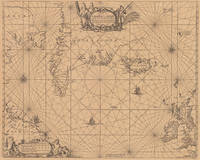
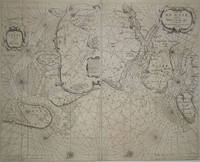
166215989Amsterdam: Jacques & Gasper Anthoine 1662. Other. A strong impression in excellent condition. 426 by 533mm 16¾ by 21 inches. Rare seachart by Jacobsz Theunis of the North Atlantic showing prominent Greenland Iceland and parts of the North American continent. The map is decorated with a large figurative title cartouche in the upper center as well with compass roses ships and an allegoric ornated decorative milage scale. Derived from the Goos 1650 this charts progenitor was actually by his father Theunis Jacobsz c. 1649. Centred on the North Atlantic it concentrated on providing information on the approaches to the North West Passage. Terra Nova is omiited as it was on the Goos. At first Jacob adopted his fathers name being known as Jacob Theunisz. Later with his brother Caspar in association they applied the noun Lootsman to their name to avoid confusion. In 1666 Jacob Lootsman published the first known edition of the Nieuwe Water-Werelt Ofte Zee-Atlas which also encluded this map. -Burden #372. Our copy of the map here can be dated c. 1662 it was bound with a collection of seacharts French text edition of his atlas Le Grand & Nouveau Miroir ou Flambeau De la Mer. by J. Theunis the engraved title was definitly dated 1662. Burden #372 2nd state of 4; Koeman IV pp. 223-4 & 231 Jac. 1.9 & Jac. 19B.25 Jacques & Gasper Anthoine unknown
166424197Johann Andreas & Wolfgang Endters Nürnberg 1664 1664. priv. Pappband . 477s Register. 7 Tafeln. Fraktur. in gutem Zustand AZC91. HC Johann Andreas & Wolfgang Endters, Nürnberg 1664, unknown
167517584Lyon, Antoine Cellier Fils (imprimerie Jacques Faeton), 1675 ; in-8 veau glacé caramel, dos à nerfs décoré et doré aux petits fers, triple filet d'encadrement des plats, roulette intérieure, tranches dorées (Koehler) ; [18], 234 (i.e. 232 pp. 95-96 numérotées 2 fois), [4] pp. ; dédicace à Monsieur de Carcavy (mathématicien lyonnais), conseiller du Roi et Garde de sa bibliothèque, avec ses armes gravées vis à vis. lllustrations gravées sur bois et sur cuivre dans le texte, 4 planches hors-texte gravées sur cuivre.
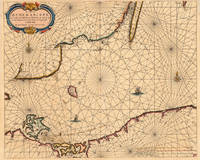
166215951Amsterdam: Jacques & Gasper Anthoine 1662. Other. A decorative handcoloured map in a strong impression and excellent condition. 432 by 533mm 17 by 21 inches. 432 by 533mm 17 by 21 inches. Detailled seachart of a part of the Baltic Sea with the Southern Swedish coast from Schoenen towards Calmer with the island of Oeland. As well the islands Meun Bornholm Rügen and the Southern tip of Gothland are shown. Below is the Pommeranian coastline from Stralsund towards Rygshooft showing prominent the island of Rügen. The map is equipped with many details names of towns and villages along the coastlines anchor places islands and sandbanks with marked depths. The map is ornated in the upper left corner with a large title-cartouche one compass-rose and a ship. In the lower right corner we find a milage scale to convert Dutch Spanish English & French leagues to degrees. Koeman Jac. 14 and a variant of Jac 33 #26 Jacques & Gasper Anthoine unknown
166215961Amsterdam: Jacques & Gasper Anthoine 1662. Other. A strong impression in overall good to very good condition however there are two older very carefully mended tears or thin places in the paper of the Maase map in the blank sea between right of the lower centerfold and the compass-rose. 432 by 540mm 17 by 21¼ inches. 432 by 540mm 17 by 21¼ inches. Two sea-charts on one doublepage. The left one is showing Medenblick Texel and Wieringen. Additional there is a small inset of Medenblick and Enckhuysen. On the other map the area of the river Maase with Rotterdam Scheidam towards West Voeren is detailled shown. Both maps are ornated with title-cartouches and compass-roses. As well we find a milage scales to convert Dutch English & French leagues to degrees. The maps are very accurately engraved towns harbour-places sandbanks depths are marked. Koeman Jac. 14 and a variant of Jac 33 #36 Jacques & Gasper Anthoine unknown
16222666Middelburg: Jan van der Hellen for Jan Pieterss. van de Venne 1622. <p>4to 233 x 176 mm. 16 60 19 1 blank pp. Large emblematic publisher’s mark on title-page four half-page engraved illustrations by Pieter de Jode 2 Pieter Serwouters and Willem van der Passe after Adriaen van der Venne. Woodcut head- and tail-pieces and initials. Short marginal tear to title light dampstaining to first and last leaves. Later parchment over pasteboards ms. spine title. Provenance: Samuel Ashton Thompson Yates 1842-1903 bookplate dated 1894.  <br /> <br /> First Edition of Cats’ retelling of the Biblical tale of Queen Vasthi the first wife of the Persian king Ahasuerus who refused her husband’s summons to appear before his guests wearing the royal crown to display her beauty in the Jewish tradition of the Midrash she was ordered to wear nothing else which would better explain her refusal. For this she was punished with exile and the King went on to marry another strong-willed woman Esther. The tale was especially familiar to 17th-century Dutch audiences for whom Esther had come to symbolize Netherlandish resistance to Spain.  <br /> <br /> The first part of Cats’ word-playing verse adaptation whose title may be translated as The Theater of Manly Respectability is a long speech in the Queen’s defense and in defense of all women followed by a speech against her and in favor of “Manly Respectability.†The work concludes with the Judgment which is that Vasthi should obey her husband because women’s subservience to men is a law of nature. A final poem titled “Aller Princessen Spiegel aller Vrovwen Spoor†is illustrated with an engraving showing the humbled queen wearing a yoke around her neck. The parallels and differences between the Biblical Ahasuerus and Herodotus’ tale of King Candaules supplied in Latin and Dutch translations in an appendix whose wife’s rebellion was more successful are fully exploited by Cats and by the illustrator Cats’ usual partner the painter and engraver Adriaen van de Venne whose brother Jan published the edition.<br /> <br /> Van de Venne’s engravings notably the scene of Candaules’ naked wife being surprised by Gyges served as models for a number of Dutch painters. The Van de Venne brothers played a central role in the dissemination of Cats’ poetry and it is their joint production that makes the works come alive: “The complete works of Cats together with Van de Venne’s illustrations formed a sort of housebook of the Dutch people which remained popular for two centuries.†Bol p. 117.<br /> <br /> Following the privilege on the title verso is a letter from the publisher to all bailiffs officials and readers â€Noodige Waersschouwinge.†complaining of the many counterfeit editions of an earlier Cats work the 1620 Self-stryt and explaining how to tell them apart. A second edition without the Noodige Waersschouwinge appeared later in 1622 and several further editions followed. <br /> <br /> De Jonge van Ellemeet Museum Catsianum 97; Bol Adriaen Pietersz. Van de Venne 1989 p. 118.</p> Jan van der Hellen for Jan Pieterss. van de Venne unknown
16222666Middelburg: Jan van der Hellen for Jan Pieterss. van de Venne 1622. 4to 233 x 176 mm. 16 60 19 1 blank pp. Large emblematic publisher's mark on title-page four half-page engraved illustrations by Pieter de Jode 2 Pieter Serwouters and Willem van der Passe after Adriaen van der Venne. Woodcut head- and tail-pieces and initials. Short marginal tear to title light dampstaining to first and last leaves. Later parchment over pasteboards ms. spine title. Provenance: Samuel Ashton Thompson Yates 1842-1903 bookplate dated 1894.  First Edition of Cats' retelling of the Biblical tale of Queen Vasthi the wife of Ahasuerus who refused her husband's summons to appear before his guests wearing the royal crown and presumably nothing else and who was duly punished. The first part of Cats' word-playing verse adaptation whose title may be translated as The Theater of Manly Respectability is a long speech in the Queen's defense and in defense of all women followed by a speech against her and in favor of "Manly Respectability." The work concludes with the Judgment which is that Vasthi should obey her husband because women's subservience to men is a law of nature. A final poem titled "Aller Princessen Spiegel aller Vrovwen Spoor" is illustrated with an engraving showing the humbled queen wearing a yoke around her neck. The parallels and differences between the Biblical Ahasuerus and Herodotus' tale of King Candaules supplied in Latin and Dutch translations in an appendix whose wife's rebellion was more successful are fully exploited by Cats and by the illustrator Cats' usual partner the painter and engraver Adriaen van de Venne whose brother Jan published the edition.Van de Venne's engravings notably the scene of Candaules' naked wife being surprised by Gyges served as models for a number of Dutch painters. The Van de Venne brothers played a central role in the dissemination of Cats' poetry and it is their joint production that makes the works come alive: "The complete works of Cats together with Van de Venne's illustrations formed a sort of housebook of the Dutch people which remained popular for two centuries." Bol p. 117.Following the privilege on the title verso is a letter from the publisher to all bailiffs officials and readers "Noodige Waersschouwinge." complaining of the many counterfeit editions of an earlier Cats work the 1620 Self-stryt and explaining how to tell them apart. A second edition without the Noodige Waersschouwinge appeared later in 1622 and several further editions followed. De Jonge van Ellemeet Museum Catsianum 97; Bol Adriaen Pietersz. Van de Venne 1989 p. 118. Jan van der Hellen for Jan Pieterss. van de Venne unknown books
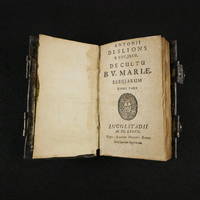
1678733Ingolstodt: Joannis Philippi Zink 1678. Hardcover. Fair. Three poetical works of early 17th century Jesuit poets bound into one binding with beautiful silver decorations covering the front and rear board. About the Literary Works - Three works are bound within: 1. 1672 De Cultu B. V. Mariae Elegiarum in three books not ""book three"" as it is often catalogued; all three ""libri"" are found within the printing by Antoine Deslions. 2. No title page bound in starts at A1 page 1 - Epigrammatum Selectrorum by Bernard Bauhuis 3. 1672 Silvulae Hendecasyllarborum by Jacob Bidermann About the Binding - No maker's mark is readily visible. The book was published in Ingolstadt where the silversmith family of Kienlin see book bindings attributed to Johann Adam Kienlin plied their trade. It was common for bindings of this time to have a silver spine but I see no hinges which indicate one might have been removed and the leather of the spine was decorated. Still a silver spine may have been removed and the board edges cut of their hinges. but removing the hinges seems unlikely. This book was sold in the 1924 Sotheby Sale of the Library of Dr. E Marion Cox. Bibliographic Details - All three works are printed by Joannis Philippi Zinck in Ingelstadt. The first and third work have a printing date of 1672; presumptively the middle work would also have been printed in 1672 the title page is not bound-in but Worldcat doesn't have record of a 1672 edition. The Deslions work is catalogued in Worldcat as OCLC 836616102 among others. The Bauhuis work is catalogued in Worldcat as OCLC 1088278417 with a printing date of 1678. The Bidermann work is catalogued in Worldcat as OCLC 78071635 among others. Physical Attributes - Measures approx. 13 x 8 x 3 cm. Leather binding with blind tooling. Over the front and rear board silver covers have been added; these are likely repousse hammered from the back side and are decorated in the French rococo style each with a proud central medallion. The front medallion is a woman holding a goblet and books the rear medallion is a woman holding her baby and guiding her child. The covers have been turned-in just like a leather binding. The silver clasps work and one clasp depicts a putti holding a spade and the other a lute. The endpapers are dutch-gilt the front one is missing the flyleaf and the rear endpaper shows a wonderful depiction of a lute player in gilt. Three works bound into one binding. The second work is missing its title page and any prefatory printed material it begins at page 1 signed A1. Pages - vi 106 128 title page vi 128 The third work seems like it might not have had a leaf bound-in; the first gathering is fifteen leaves instead of 16 but the catchwords match and nothing seems missing so it was likely a blank the binder chose not to include. Condition - See pictures. Silver tarnished with some bumps around the edges. Leather binding under is dried out. The spine is crazed and chipped from the head and tail; there is evidence of glue repair along the front and rear leather joint. There is a little rubbing noticeable on the leather under the silver covering the boards. Front flyleaf missing. Blank bookbinder endpaper mounted instead; some numbers written on it and the remnants of an auction ticket presumably. Text block has some toning throughout with occasional fox spots page edge bumps etc. A few pages seem slightly proud. The index at the back of the Deslions work insn't included. Also the title page and any intros are not bound in for the Bauhuis it starts on page 1. I see a very occasional annotation. Blank endpaper at rear has notes on which poems apply to different life situations. Rear flyleaf has a white mark at bottom and the fore-edge is a little rough; also several small holes which may be from binding. Joannis Philippi Zink
1690129107Norimbergae Sumptibus Johannis Andreae Endteri Filiorum 1690. First Edition. Hardback. Finely and period sympathetically bound in modern aniline calf over marble boards. Raised bands with a contrasting Morocco gilt-blocked label. An exceptional copy - scans and additional bibliographic detail on request. ; 254 pages; Physical desc. : 1 v various pagings : frontis; coats of arms geneal tables ; 33cm 20 . Subjects: Great Britain - Kings and rulers - Genealogy. Notes: ""Appendix ad Historiam genealogicam regum pariumque Magnae Britanniae anno superiore editam "" inserted at end has special t. P. : 1691. Norimbergae, Sumptibus Johannis Andreae Endteri Filiorum hardcover
160856<p>Early Latin Edition of Both of Wecker's Famed Collections Of Alchemical Medical Formulas</p><p>Wecker Johann Jacob. Antidotarium Generale et Speciale. Apud Georgium Variscum. Venice. 1608.</p><p>Dual binding of Wecker's alchemical magio-medical formularies for general and special antidotes first published in 1561 and 1588 respectively.</p><p>The texts include sections on medicines for different parts of the body as well as by the elements in addition to more complicated remedies and including instructions for the creation of pills oils unguents and elixirs.</p><p>Its formulas are notable for their mix of "simples" and polypharmacy compounds demonstrating a relationship with the work of alchemists like Paracelsus including his recipe for laudanum – here "laudanum Theophrastii". In addition to its relatively explicit instructions for the creation of abortifacient medicines it also contains entries for the benefits to be derived from various baths as well as instructions for the use of stones and precious gems in medicine including their occult powers and use in amulets. In addition to an index and tables of contents the books also feature useful charts for navigating the text and identifying the proper remedy for specific ailments.</p><p>Wecker 1528 – 86 a professor at the College of Basel is most famous for authoring his own widely published book of secrets De Secretis mostly concerned with natural philosophy and trade secrets but which also including explicit descriptions of Goetic and necromantic magic among many other topics.</p><p>6 copies of this edition found in OCLC as of March 2025.</p><p>8 222 cl 2 6 1210 col 21. Vellum bound with minor worming and soiling. Title in pen to spine. Small split to top spine vellum. Text block toned. Pages largely clean with occasional spotting. Front pastedown cracked with pencil notation. Soiling to front pastedown and first free endpaper bottom edge. Stain affecting upper fore corners of index and back pastedown. Minor worming to index up to H. Includes multiple charts and some illustrations.</p><p>$1125</p> Apud Georgium Variscum
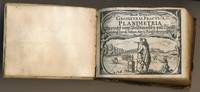
1663904348674<p>Extremely rare first edition of Jacob Meyers <em>Geometria Practica sive Planimetria</em> complete with the fold-out. Our copy please see images has been severly burned on the back cover vellum damaged and partly missing - with surprisingly little impact on the inside of the book which shows age-appropriate browning but no signs of burn.<br />Numerous geometrical images. Printed by Johannes Rudolph Genath. Coat of arms ex libris with the initials "OGHZS" Otto Gall Herr zu Stubenberg; 1631-1688. See the copy of Universitätsbibliothek Basel here: https://doi.org/10.3931/e-rara-65110</p><p>A beautiful example of the first refinement of the recording methods of land use documenting the demarcation of sovereign power and private use. The book shows a large number of precise calculation methods mathematical geodesy.</p> Johann Königs Büchführeren hardcover
1683BTETM0002447France: A Lyon Chez Thomas Amaulry ruë Merciere au Mercure Galant. 1683. 1st Edition. Hardcover. Good/No Jacket. quarto 4to 9 12 × 12 in 241 × 305 mm . Please email for Photographs or further information. Good - Contemporary calf binding unrestored with strong shelf presence and desirable originality but with clear age-related wear. Joints split spine worn at head and foot corners rubbed boards marked and scuffed and binding somewhat fragile; nevertheless the volume remains structurally intelligible and visually handsome. Internally complete with engraved frontispiece title separate plate full text final table and terminal blanks all present. One preliminary leaf with a tear; some expected age-toning handling wear and occasional minor marking. A genuine unsophisticated 1683 first edition: complete appealing and valued more for originality and bibliographical integrity than condition perfection. Binding: Hardcover quarto approx. 9.75 x 7.4 in / 250 x 188 mm Language: French with Latin in parts of the preliminaries and inscriptions. Collation: pp. 1538 final Table des principales matieres 19 pp. plus 2 terminal blanks. Complete: engraved frontispiece letterpress title dedication and preliminaries separate engraved plate pp. 1538 final Table des principales matieres 19 pp. plus 2 terminal blanks. Pagination jump from pp. 40 to 49 is as issued. Please see Photos as part of condition report. References: Cicognara 3012 Brunet V 499 Graesse VI 472 OCLC 490214459. 1683 1st Edition RECHERCHES CURIEUSES D'ANTIQUITE CONTENUES EN PLUSIEURS DISSERTATIONS Complete copy including engraved frontispiece separate plate final index table and terminal blanks. A substantial seventeenth-century antiquarian survey: medals bas-reliefs statues mosaics inscriptions and other remains of the ancient world treated in a long sequence of learned dissertations and enriched throughout with engraved material. One of the more attractive productions of early French antiquarian scholarship poised between cabinet culture and the beginnings of archaeology. By Monsieur Spon Jacob Spon Author Bio: Jacob Spon 16471685 was the Lyonnais physician scholar traveller and antiquary whose publications helped shape the early modern study of classical remains. Best known today for his travels in Italy Greece and the Levant Spon brought together the habits of the collector philologist and observer of monuments producing works that stand close to the emergence of archaeology as a more systematic discipline. His antiquarian books were widely consulted by later scholars especially for inscriptions medals and the interpretation of ancient objects preserved in cabinets and collections. Synopsis: This is the first edition of Spons important illustrated antiquarian work a wide-ranging gathering of dissertations on ancient material culture. The book moves across medals sculpture mosaic pavements inscriptions funerary monuments architectural ornaments ritual objects and related survivals of classical antiquity combining close visual attention with learned comparison from texts and collections. As with the best seventeenth-century antiquarian books it is both a record of objects and a demonstration of method: a cabinet of evidence arranged for the curious and the learned reader alike. The engraved title separate plate and typographic presentation give the volume considerable presence while the original binding preserves much of its early character. Format: Hardcover quarto 4to 9 12 × 12 in 241 × 305 mm Note: Binding/size selection follows standard bibliographic conventions and is approximate; exact measurements may vary. Language: French/Latin Published By: A Lyon Chez Thomas Amaulry ruë Merciere au Mercure Galant. France Condition Report: Dust Jacket: No Jacket Dust Jacket Condition: No Jacket Good - Contemporary calf binding unrestored with strong shelf presence and desirable originality but with clear age-related wear. Joints split spine worn at head and foot corners rubbed boards marked and scuffed and binding somewhat fragile; nevertheless the volume remains structurally intelligible and visually handsome. Internally complete with engraved frontispiece title separate plate full text final table and terminal blanks all present. One preliminary leaf with a tear; some expected age-toning handling wear and occasional minor marking. A genuine unsophisticated 1683 first edition: complete appealing and valued more for originality and bibliographical integrity than condition perfection. Binding: Hardcover quarto approx. 9.75 x 7.4 in / 250 x 188 mm Language: French with Latin in parts of the preliminaries and inscriptions. Collation: pp. 1538 final Table des principales matieres 19 pp. plus 2 terminal blanks. Complete: engraved frontispiece letterpress title dedication and preliminaries separate engraved plate pp. 1538 final Table des principales matieres 19 pp. plus 2 terminal blanks. Pagination jump from pp. 40 to 49 is as issued. Please see Photos as part of condition report. References: Cicognara 3012 Brunet V 499 Graesse VI 472 OCLC 490214459. SKU: BTETM0002447 Shipping Info: Approximate Package Dimensions H: 12.5 L: 30 W: 25 Units: cm W: 2Kg Tracked Shipping Insurance Coverage as per Customer Request A Lyon, Chez Thomas Amaulry, ruë Merciere, au Mercure Galant. hardcover
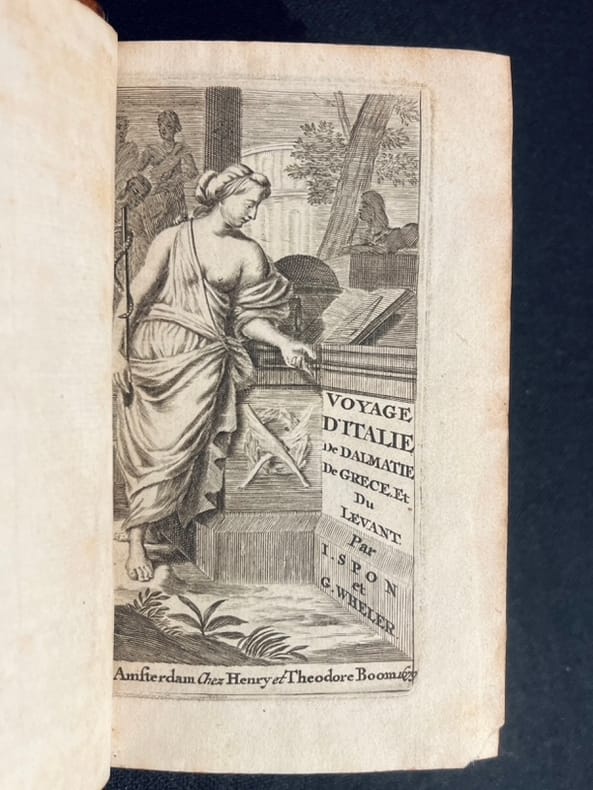
167921803A Amsterdam, chez Henry & Theodore Boom, 1679. 2 volumes in-12 de [24]-456 et 322-[14] pages puis de 323 à 489.*12; A-T; A-X12. Pleine basane marron, dos à nerfs ornés de filets et fleurons dorés.
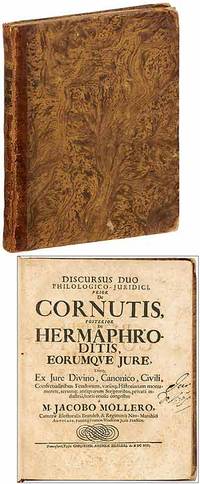
1692396062Francofurti Frankfurt: Typis Christoph Andreæ Zeitleri 1692. Hardcover. Very Good. First edition. Quarto. 8 214pp. Bound in late 18th century quarter leather and marbled paper over boards gilt spine. Small contemporary owner's name on the title page the front joint is partially split scattered foxing very good. One of the earliest treatises to survey the history and phenomenon of hermaphroditism: "from earliest mythological sources to anatomical description and medical consideration. Möller seriously attempts to understand and explain the phenomenon ." Cornell Human Sexuality Collection. A scarce copy of the first edition the only edition published in Möller's lifetime. Typis Christoph Andreæ Zeitleri hardcover
160662172Graz, Georg Widmanstetter, 1606. 4°. 6 nn., 158 num., 20 nn. Bll., HLdr. d. Zt. a. 3 Bünden.
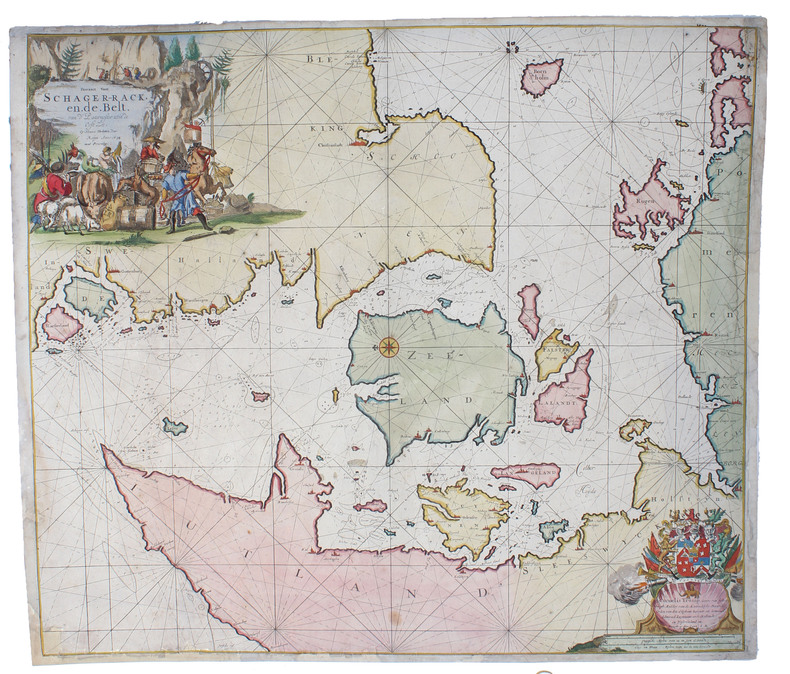
169647333Amsterdam 1696. 52x595 cm. Kobberstukket og håndkoloreret søkort visende Bælterne mellem Østjylland Fyn Sjælland Lolland og Falster Sydsverige Rü Bornholm Nordtyskland m.v. Med det danske rigsvåben i nederste højre hjørne; heri dedikation til Cornelis Tromp den danske og hollandske flådes admiral. Den store kartouche i øverste venstre hjørne viser scener fra folkelivet og brydning af kalksten fra Møn eller Stevns. Fin reparation i højre margin. <br/><br/><em>Sjældent søkort over de indre danske farvande og porten til Østersøen. Kortet "ligger ned" med øst orienteret oppe. Jacob Robyn var kortsælger og kortudgiver. Han købte rettighederne til Pieter Goos's Zee-Spiegel og Zee Atlas fra Goos' enke men han udfærdigede også selv adskillige kort. Hans lager blev overtaget af Johannes Loots i Amsterdam."Alle de anførte hydrografers samtidige kartografer kortarbejder er overordentlig sjældne både herhjemme og i udlandet og noteres betydelig højere i pris end de samtidige landkort" Bo Bramsen p. 112. </em> unknown
169647333(Amsterdam), 1696. 52x59,5 cm. Kobberstukket og håndkoloreret søkort visende Bælterne mellem Østjylland, Fyn, Sjælland, Lolland og Falster, Sydsverige, Rü Bornholm, Nordtyskland m.v. Med det danske rigsvåben i nederste højre hjørne" heri dedikation til Cornelis Tromp, den danske og hollandske flådes admiral. Den store kartouche i øverste venstre hjørne viser scener fra folkelivet og brydning af kalksten fra Møn eller Stevns. Fin reparation i højre margin.
164548771Paris: Nicolaum Redelichuysen 1645. First edition. Hardcover. Good condition. Octavo. 11 150 25 39 1 leaves. Rebound in modern brown cloth with gilt lettering on spine. Red edges. First title page printed in red and black with publisher's device. Historiated and decorative headpieces tailpieces and initials. Both titles second editions Alpini's title first published in 1591 Bondt's in 1642. Alpini was a physician and botanist Bondt a Dutch physician and pioneer of tropical medicine. Alpini's work is illustrated with four in-text and two full page woodcuts.<br /> <br /> Alpini traveled in Egypt and became the fourth prefect of the Botanical Garden in Padua. "One of the earliest European studies of nonwestern medicine. Alpini's work dealt primarily with contemporary i.e. Turkish practices observed during a three-year sojourn in Egypt. These included moxibustion - the production of counter-irritation by placing burning or heated material on the skin - which Alpini introduced into European medicine. Alpini also mentioned coffee for the first time in this work" Norman. With extensive index at rear. <br /> <br /> De Bondt was a pioneer of tropical medicine. His work on East Indian medicine included here is based on experiences during four years he spent in Djakarta. It was the first important treatise on diseases in East India and includes the first modern description of Cholera and other tropical diseases. First published posthumously in 1642. Index at rear. <br /> <br /> Text in Latin. Binding with light wear along edges and rubbed spine lightly sunned. Ex-Libris of German-born British professor of chemistry Franz Sondheimer on inside front cover. The first four leaves frayed with small chips at lower foredge no loss of text a few small inked entries and a small stamp of the Royal Medical Society Edinburgh on front cover. Title page with paper reinforcement on back. First in-text woodcut with stamp in center second woodcut with stamp grazing image third and fourth with stamp outside imagery. The two full page woodcuts with stamps grazing the border of image. Some light sporadic foxing of block and last page with chipping along edges some loss of the printed word Index and foxing and browning along edges. Small dealer sticker on inside back cover. Nicolaum Redelichuysen hardcover