Józef CzechowiczMareMagnum

4 198 résultats
18×13 cm; 53, (3) pp. Brossura editoriale. Un piccolo restauro al dorso rinforzato con carta di riso e per il resto esemplare in buone-ottime condizioni di conservazione. Prima rara edizione di questa raccolta di componimenti del celebre poeta avanguardista polacco, Józef Czechowicz (15 Marzo 1903 Lublin – 9 Settembre 1939 Lublin). L’opera, che rappresenta la seconda raccolta poetica dell’autore, contiene i versi composti dal 1927 al 1930 e presentano la tipica impostazione grafica senza punteggiatura e maiuscole. L’autore fu il il leader della letteratura d’avanguardia e bohémien di Lublino. Autore dallo spirito visionario, combinava lettere e parole, spesso inventando abili neologismi, per creare musicalità e suggestive visioni. Stampò il suo primo lavoro “Kamin” (Pietra) nel 1927, anche se il suo debutto letterario si fa risalire alla pubblicazione nel primo numero della rivista Reflektor dello scritto “Opowiesc o papierowej koronie”, (Una storia una di una corona di carta), prosa poetica il cui protagonista è Henryk è un amante omosessuale deluso e un suicida fallito. Omosessuale dichiarato andò incontro all’ostracismo dell’opinione pubblica cosa che segnerà profondamente la sua opera letteraria e che rende oggi assai rare tutti i suoi lavori, molti dei quali andarono distrutti. Lavorò a lungo come insegnante. Fu amico di Czeslaw Milosz e Anna Swirszczynska ed aiutò attivamente Henryk Dominski, Waclaw Mrozowski e Bronislaw Ludwik Michalski. Allo scoppio della guerra lasciò Varsavia dove viveva da alcuni anni per ritirarsi a Lublino dove pensava sarebbe stato più al sicuro ma il 9 settembre del 1939, alle dieci di mattina mentre si trovava dal barbieri, rimase ucciso nel crollo del palazzo dove si trovava il negozio a causa di una bomba tedesca. Czeslaw Milosz scrisse che la poesia di Czechowicz è intrinsecamente legata alla cosiddetta ‘lirica borghese’ del XVII secolo e alle canzoni popolari, mentre colpisce per la sua musicalità armoniosa che utilizza onomatopee, strumentazioni sperimentali fonetiche e sonori neologismi creando così le assonanze originali tipiche della sua poetica. Una delle caratteristiche non solo grafiche, ma anche stilistiche della sua poesia, è la totale mancanza della punteggiatura e delle maiuscole. Milosz, che fu anche un grande traduttore, ha sempre sostenuto che la poesia di Czechowicz non può essere tradotta. Raro. First edition. Rare.
Affascinante carta del Regno di Prussia in cui si vedono raffigurate porzioni dei territori dell'odierna Polonia e Lituania. Nell'angolo in basso a destra sono riportate le scale grafiche. Coloritura coeva all'acquerello. Ottima conservazione
1876002510Paris, Laplace, Sanchez et Cie, 1876
1944187614Breda: Louis Vermijs N.V. 1944. First edition celebrating the Polish contribution to the allied liberation of Europe while the war was still ongoing. At this time the 1st Armoured Division were stationed in the Netherlands having freed cities including Breda where this work was published. The illustrations show battles throughout the campaign German tanks and the division's commander Major General Stanis aw Maczek. The 1st Polish Armoured Division was formed in 1942 from the remains of the 10th Motorized Cavalry Brigade after they were defeated during the German invasion of Poland. After training in Scotland they were transferred to Normandy in August 1944 proceeding to fight across France Belgium and the Netherlands. The latter half of the work celebrates the liberation of Breda during Operation Pheasant where the Germans were forced out without any civilian casualties. It shows Polish Liberation Day festivities held in the city local shops welcoming the allied forces and the plaque recording the freedom of the city given to the division on 30 October 1944. We have traced only eight institutional copies. Oblong octavo 159 x 321 mm. Half-tone photographic illustrations throughout route map in text. Original buff paper wrappers orange cord binding front wrapper decorated with blue and black border and crest of the 1st Armoured Division in colour rear wrapper lettered in black. Title page inscribed "To my best friends - Mr. & Mrs. A. M. Burchart Limberg 17 Holland 9th Dec 1944". Wrappers a little creased small patch of soiling on front wrapper minor offsetting internally: a very good copy. unknown
In folio, 39x30, leg. in tela verde con tit. in oro al piatto e al dorso, pp.29, testi in polacco e francese su due colonne, e 44 tavole col. applicate alle pagine con velina protettiva con a stampa descrizione delle singole opere.Privo di data, stampato a Parigi (1910 c.ca), segni d'uso alla testa e al piede del dorso, piccola fessura alla cerniera post., nella parte centrale, interno in buono stato, alcune veline distaccate e con qualche piega, ma complessivamente ben tenuto.
1st Polish edition. Later boards, 8vo, 91 pages. Includes 12 illustrated plates. In Polish. Title translates to Majdanek: Court Proceedings of the Special Criminal Court in Lublin. A recording of court Preceedings of the Polish-Soviet Special Criminal Court established in Lublin in August 1944, in order to investigate the Nazi crimes in the Majdanek extermination camp. This Polish edition was published with several photographic reproductions, showing the members of the commission, the Nazi officers of the camp, the findings, human remains in Majdanek. The Majdanek concentration camp was established on Heinrich Himmler's order and operated from October 1, 1941 until it was liberated by the Soviet Army on July 22, 1944. It is known to be the best preserved Nazi concentration camp of the Holocaust, as the Germans did not have enough time to destroy the evidences of their crimes. The Commission for investigating the German crimes was established in August 1944 and soon they published this booklet in several languages. Despite of the importance of this statement it must be mentioned that the Commission made many erroneous assumptions regarding the duration of the camp or number of people killed at Majdanek, probably because they were motivated rather by political and propaganda agenda than by a search for historical facts. The total number of the victims is still controversial, in this report 1.5 million victims of different nationalities were counted, however according to the latest researches there were 79, 000 victims, 59, 000 of whom were Jews. [Kranz, T. : Bookkeeping of Death and Prisoner Mortality at Majdanek. Pp. 81-110. In: Silberklang, D. (ed. ) : Yad Vashem Studies. Vol. 35: 1. Jerusalem, 2007.].. WorldCat lists 15 copies worldwide. Overall in very good condition. (HOLO-2-140-1U) .
17951226249Berlin, Fr. Vieweg d. Ä. 1795. 263, (1) S.; 306 S., 1 Bl. Hübscher Hldrbd d. Zeit m. floraler Rverg. (Deckel etwas berieben, Ex Libris, Stempel a. d. Titelrückseite, z.T. stärker braunfleckig).
2023SKU0573060Routledge 2023-12-01. hardcover. Good. 6x0x9. Textbook May Have Highlights Notes and/or Underlining BOOK ONLY-NO ACCESS CODE NO CD Ships with Tracking Routledge hardcover
2023SKU0620567Routledge 2023-12-01. hardcover. New. 6x0x9. New Textbook Ships with Tracking Routledge hardcover
89076aafBruxelles, Imprimerie et Lithographie de Ch. Vanderauwera, 1860, in-8vo, 75 p., brochure originale, fendue.
1990x-9810204051World Scientific Pub Co Inc 1990. Hardcover. New. 660 pages. 9.00x6.00x1.38 inches. World Scientific Pub Co Inc hardcover
1st edition. Original pink printed paper wrappers, 8vo, 34 pages ; 23 cm. In Yiddish. SUBJECT (S) : Jews -- Galicia (Poland and Ukraine) -- Fiction. Europe. -- Ethnic relations. OCLC lists only 1 copy worldwide (Cambridge) , but theirs lacks the title page. None listed in the US in any condition. Covers fragile, reinforced, and heavily worn with some loss to rear, with spine rebacked. Internal paper toned but good and solid. Good Condition thus. Rare and interesting! (KH-6-25)
Original Cloth. 4to. XXVII, 519; XXVII, 519; 623 pages. 32 cm. First edition. Text in Yiddish; summaries in English. Volumes 1, 2, 3 of Filologishe Shriftn. Shriftn fun Yidishn visnshaftlekhn institut 1-3. Other titles: Landoy-bukh; 1926; Filologishe serye; 1926; Serya filologiczna; 1926-1928; Studies in philology; 1928-1929; Prace filologiczne; 1929. Complete run of the Filologishe Shriftn, a "three-volume series published in Vilna by the Yiddish Scientific Institute (YIVO) in 1926, 1928, and 1929. Filologishe shriftn (Studies in Philology) was co-edited by Zalmen Reyzen and Max Weinreich. The inaugural volume of Filologishe shriftn, titled the Landoy-bukh (Landau Book) , was a Festschrift in honor of the German Jewish philologist Alfred Landau (18501935) . In the 1920s, Soviet authorities tolerated cooperation with YIVO; hence, works by authors from the USSR were included in the three volumes. The periodical YIVO-bleter (YIVO Pages) , launched in 1931, continued the tradition of Filologishe shriftn. " - YIVO Encyclopedia. All volumes in original cloth binding with gilt title. Subjects: Yiddish philology - Periodicals. Yivo Institute for Jewish Research. Yiddish philology. Periodicals. Light soiling to cloth. Very slight ageing to outer margins of pages, otherwise very clean and fresh. Very good + condition. An outstanding set. (YID-22-1)
1819445295Cracoviae, typis academicis, 1819/44. Jeweils 12-16 Seiten. Alte Heftung. 4to.
1807LBW-5965Paris, Basset, [1807]. 170 x 197 mm.
Quattro tomi in 16° (cm 9,7 x 16), solide legature piena pelle coeva con titoli su tasselli al dorso, angoli ammaccati, minuscoli radi tarletti ai dorsi e ad un piatto ma suggestive legature; cuffia inferiore del tomo secondo con mancanza ma buon esemplare; pp lviij, 385 per il primo tomo; (4), 584 per il secondo; (4), 517 per il terzo; (4), 443 per il quarto. Radi marginalia e annotazioni ai frontespizi datate 1884; al tomo quarto, da p 437 al fondo, tarletti con minima perdita di testo. Al fondo del volume quarto, "Anecdotes sur la révolution de Russie, en 1762, par le même auteur", con proprio frontespizio. Quest'ultima opera era già apparsa nel 1797; l'"Histoire", invece, circolò a lungo manoscritta, prima di essere impressa postuma in questa prima edizione. Nato nella "banlieue" di Parigi, l'A. (1735-1791), ufficiale, diplomatico, storico, amico di Rousseau e dei "philosophes", A. di opere anonime, membro dell'Académie Française dal 1787, compose una poderosa "Histoire de Russie". La presente opera fu composta per il Delfino, il futuro Luigi XVI, il sovrano ghigliottinato. Ciò gli valse una pensione di 6000 "livres". Rivale di Chamfort et di Rivarol, Rulhière «est un écrivain non seulement spirituel, mais savant et habile, qui, après avoir longtemps disséminé ses finesses et ses élégances sur des sujets de société, a essayé de rassembler finalement ses forces, de les appliquer aux grands sujets de l'histoire, et y a, jusqu'à un certain point, réussi». (Sainte-Beuve, IV). Catalogue Russica, ii, R-1528; cf.: Zaleski, i, 16.
New York, No Publisher (United Hebrew Trades) , 1928. Paper Wrappers, Large 4to, 160 pages. 30 cm. In Yiddish. Includes beautiful cover art and period ads and portrait photos. Feinstone (1878-1945),was born in Warsaw and trained as a woodcarver there. "After completing school he emigrated to England where he became president of a woodcarvers' union in London (1895). Later in Birmingham he was active in the beginnings of the British Labour Party. In 1910 Feinstone emigrated to the U.S. where he found employment in various skilled trades, securing permanent work in the umbrella industry. He soon became an official of the Umbrella Handle and Stick Makers' Union and an important figure in the United Hebrew Trades, an organization which sheltered the smaller and weaker American Jewish trade unions. Feinstone was a close associate of the organization's outstanding leader, Max Pine, whom he succeeded as United Hebrew Trades' secretary in 1928. Feinstone continued Pine's policy of supporting the socialist labor sector in Jewish Palestine through the Histadrut. He also represented the United Hebrew Trades on the executive board of the Central Trades and Labor Council of Greater New York, wrote articles in the New York Call and the Yiddish Jewish Daily Forward endorsing socialism and labor Zionism, and worked for the establishment of an independent labor party. With the advent of the New Deal, Feinstone's socialist teachings were incorporated by the American Labor Party, which satisfied his desire for a working class political organization. Thereafter, until his death he concentrated on obtaining support for Jewish labor in Palestine" (Melvyn Dubofsky in EJ). SUBJECT(S):Jewish labor unions -- United States. Jewish socialists -- United States. OCLC lists 3 copies worldwide (Harvard, Florida, NYPL), none west of New York. Edgewear to covers, otherwise Good Condition. (Y-18)
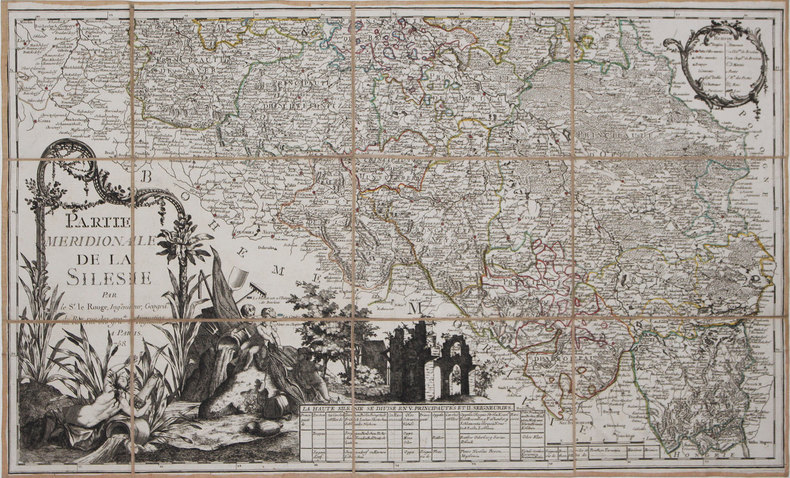
1758LBW-31491758. En 12 sections montées sur toile et pliées, formant une carte de 464 x 764 mm.
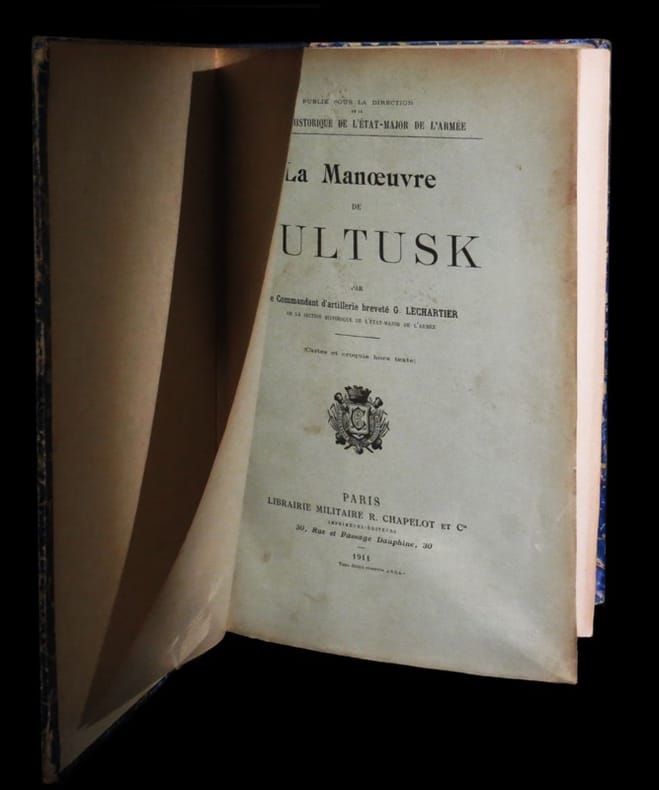
191127960Paris, Librairie militaire R. Chapelot et Cie, 1911. Un fort vol. au format in-8 (248 x 173 mm) de xviii - 509 pp. + planches dépliantes in fine. Reliure de l'époque de demi-cartonnage marine à l'imitation de chagrin, dos lisse orné de doubles filets dorés, pièce de titre de maroquin carmin titre doré, couvertures conservées.
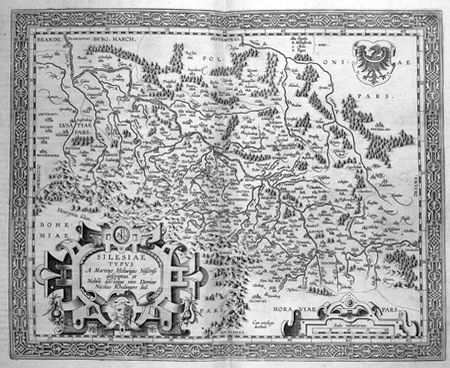
1603LBW02528[Anvers, 1603]. 344 x 420 mm.
In 4° piccolo; 175, (1) pp. Brossura editoriale con piccolo restauro al margine basso del piatto anteriore e al dorso. Prima edizione di questa raccolta poetica del celebre poeta, critico, teorico dell'arte e drammaturgo polacco, nato a Cracovia il 3 maggio 1891, morto a Varsavia il 9 novembre 1969. Fondatore della rivista Zwrotnica (Lo scambio) si oppose alla poetica del gruppo Skamander (che pubblicava l’omonima rivista), fu tra i massimi teorici del movimento poetico dell’avanguardia costruttivista polacca influenzando notevolmente l’opera di Julian Przybos, Jan Brzekowski e Jalu Kurek. Nato da una famiglia di avvocati ebrei si convertì in giovane età al cattolicesimo passando diversi anni della sua giovinezza in Spagna. “Muovendo da una visione ottimistica della civiltà moderna, P. ha elaborato una concezione razionalistico-costruttivista della poesia, intesa come rigorosa organizzazione intellettuale del materiale linguistico, in cui occupano un posto chiave la metafora, una funzione nuova del ritmo e della rima”. La sua poesia è incentrata sulle le “3xM” città, masse e macchine (in polacco miasto, masa, maszyna) che divenne, fra l’altro, il motto dei costruttivisti. La sua teoria della poesia respinse la linea melodica, il versetto sillabato ed il verso libero era consentito solo per quelle metafore che potevano essere interpretate in modo chiaro. Peiper, come i futuristi, si allontanò dalla tradizione poetica, perché a suo avviso, l'incontro con la nuova realtà non poteva avvenire usando i vecchi schemi. Difese un difficile linguaggio nella poesia, perché il poeta non può chiamare direttamente stati ed emozioni, come fa la prosa. Quella qui presentata è la prima edizione della raccolta completa dei lavori costruttivisti di Peiper e contiene oltre alle tre opere “Z”, “Zywe linie” e “Raz”, una serie di componimenti apparsi su “Zwrotnica”, “Telegram” e “Almanach Nowej Sztuki”. Di grande importanza è il testo critico che Peiper antepose alla raccolta, qui pubblicato per la prima volta che raccoglie la teoria estetica e poetica di Peiper. Il testo è a volte stampato in orrizontale a volte in verticale. Rif. Bibl.: NuNukat, Katalog zbiorow Polskich Bibliotek Naukowych, n° zz2002920499.
P., Ménard et Desenne, 1819. 6 volumes in-8 reliés pleine basane havane racinée (reliure d'époque), dos long, portrait en frontispice au premier volume des Oeuvres posthumes ; de 330 à plus de 500 pp. par volume, pièces de titre et de tomaison noires, caissons soulignés de 4 filets dorés et ornés de fleurons, roulettes d'encadrement sur les plats. quelques coins fragiles et arrondis, une départ de fente à un mors, un petit manque de cuir au bas d'un dos, une coiffe faible, néanmoins bel exemplaire. C. C. de Rulhière, tour à tour officier et diplomate, poète et historien, fut l'ami de J.-J. Rousseau et des philosophes. Il accompagna le baron de Breteuil à Saint-Pétersbourg en 1760 et il retraça plus tard la révolution russe de 1762 (O. Posthumes). Il écrivit pour les Dauphin (Louis XVI) une histoire de la Pologne. Sainte-Beuve le donne comme "écrivain spitrituel, savant et habile". Les Oeuvres contiennent : Eclaircissements historiques sur les causes de la Révocation de l'Edit de Nantes, poèmes et discours en vers, épitres, lettres en vers et en prose, contes, épigrammes, poésies diverses. Les Oeuvres Posthumes : Histoire de l'anarchie en Pologne ; Anecdotes sur la révolution de Russie en l'année 1762
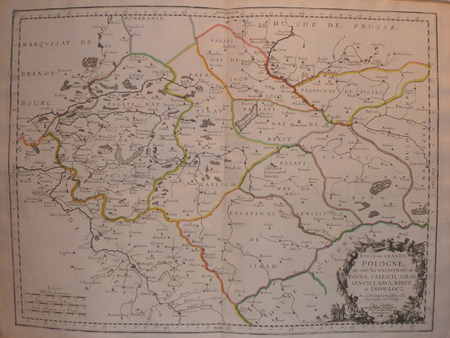
1703LBW02524Paris chez l'autheur 1703 417 x 560 mm.