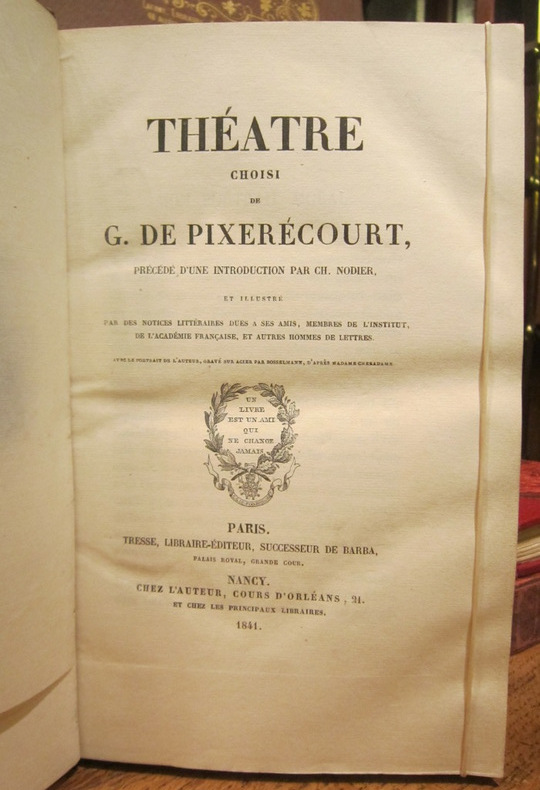
PIXERECOURT (René-Charles Guilbert de)Livre Rare Book
4 198 résultats
1841002830Paris et Nancy, Tresse, et Chez Lauteur, 1841
1771001602Paris Imprimerie Royale 1771
1657PHO-1458A Troyes, par Nicolas Oudot, et se vendent à Paris: Chez François Clousier, 1657. in-4; [6ff. (sur 7: feuillet de dédicace en fac-simile), dont titre, portrait légendé de La Boullaye, préface], 558p., [5ff. Table, fautes, privilège du 12 février 1657]; 33 illustrations sur bois dans le texte dont 16 à pleine page. Reliure d'époque en basane brune, dos à nerfs avec titre , coupes , coiffes et coins usés , frottements. un coin déchiré au titre sans atteinte au texte. Mouillure angulaire au premier portrait P. 73 déchirée avec manque de papier ,sans atteinte au texte. P. 165: manque en coin avec perte de qq mots; PP. 173 et 175: déchirures sans perte de texte; P. 234: manque de papier en pied avec perte de quelques mots; taches d'encre pp. 264 ; pp. 460 à 485: petites galeries de vers marginales en pied. Ex-libris manuscrit Dominium Antonium Biguet. Seconde édition
0143530445New. Brand new and still unused unknown
1942SZEPEBKS007359IRussia - S.S.S.R. : Poloni in Russia S.S.S.R. 1942. Hardcover. Near Fine/No Jacket. POLISH CATHOLIC IMPRINT IN THE SOVIET UNION - MISSAL FOR POLISH SOLDIERS IN RUSSIA DURING WORLD WAR II Typographia Exercitus Poloni in Russia S.S.S.R. - No date1942. - Small 8vo 20x13.5 cm. - 64 pp. - Royal blue hardback fine. - A Roman Catholic missal for chaplains of the Polish Army in Russia during World War II. - On the title- page a tipped-in printed slip with the text: "Ad usum Capellanorum Militum in Russia" On verso of front free endpaper: "Concordat cum originali / Jangi-July3 Maii 1942 / Vlodimirus Cienski / Decanus Militaris Polonorum in Russia. / Imprimatur Joseph Gawlina Episcopus / 11.VII 1942 g.". - In Latin and Polish. - WorldCat locates 2 copies only Buffalo History Museum and NUVAT Union Catalog of Polish Research Libraries. - No other book listed in WorldCat by this publisher. <br/> <br/> Poloni in Russia (S.S.S.R.) hardcover
200481275Warsaw Poland: Warsaw City Hall c2004. Presumed First Edition First printing. Wraps. Very good. 48 pages. Oversized 12 inches by 12 inches. Minor wear. Many color illustrations. Hand Signed by the Mayor of Warsaw Lech Kaczynski on page 1. Topics include the Anniversary of the Warsaw Uprising; Business; Cultural Life; Development; Education; Festivals; Gardens and parks; Hotels and restaurants; Investors; Jewish heritage; Key offices; Leisure activities; Museums and galleries; New and older architecture; Old Town; Powazki cemetery; Royal Route; Shopping; Transportation system; Vistula River; Warsaw Mermaid; Yesterday's Warsaw; Zoo; and Warsaw history. Warsaw is the capital and largest city of Poland. The metropolis stands on the Vistula River in east-central Poland and its population is officially estimated at 1.8 million residents within a greater metropolitan area of 3.1 million residents which makes Warsaw the 7th most-populous capital city in the European Union. The city limits cover 517.24 199.71 sq. mi. while the metropolitan area covers 2355.39 sq. mi. Warsaw is a major international tourist destination and a significant cultural political and economic hub. Its historical Old Town was designated a UNESCO World Heritage Site. The city rose to prominence in the late 16th century. The elegant architecture grandeur and extensive boulevards earned Warsaw the nickname Paris of the North. The city was largely destroyed by the Warsaw Ghetto Uprising in 1943 the general Warsaw Uprising in 1944 and the systematic razing by the Germans in advance of the Vistula-Oder Offensive. Warsaw gained the new title of Phoenix City because of its reconstruction after the war. Lech Aleksander Kaczy ski 18 June 1949 - 10 April 2010 was a Polish lawyer and politician who served as the Mayor of Warsaw from 2002 until 2005 and as the President of Poland from 2005 until his death in 2010. Before his tenure as president he previously served as President of the Supreme Audit Office from 1992 to 1995 and later Minister of Justice and Public Prosecutor General in Jerzy Buzek's cabinet from 2000 until July 2001. Born in Warsaw he starred in a 1962 Polish film The Two Who Stole the Moon with his identical twin brother Jaros aw. Kaczy ski was a graduate of law and administration of Warsaw University. In 1980 he was awarded his Ph.D. by Gda sk University. In 1990 he completed his requirements in labor and employment law. He later assumed professorial positions at Gda sk University and Cardinal Stefan Wyszy ski University in Warsaw. During the communist period Kaczy ski was an activist in the pro-democratic anti-communist movement in Poland the Workers' Defence Committee as well as the Independent Trade Union movement. In August 1980 he became an adviser to the Inter-Enterprise Strike Committee in the Gda sk Shipyard and the Solidarity movement. After the communists imposed martial law in December 1981 he was interned as an "anti-socialist element". After his release he returned to trade union activities becoming a member of the underground Solidarity. When Solidarity was legalized again in the late 1980s Kaczy ski was an active adviser to Lech Wa sa and his Solidarity Citizens' Committee in 1988. From February to April 1989 he participated in the Polish Round Table Talks along with his brother. After Solidarity's victory in the 1989 Polish legislative election Kaczy ski became a senator and vice-chairman of the movement. Then in the 1991 Polish parliamentary election he was elected into the Sejm as a non-party member. He was also the main adviser and supporter of Lech Wa sa when the latter was elected President of Poland in December 1990. In 2003 Kaczy ski co-founded the Law and Justice party after splitting from the Solidarity Electoral Action and the Christian National Union along with his brother. Kaczy ski was the party's presidential candidate during the 2005 Polish presidential election. In the first round of voting Kaczy ski received 33.1% of the valid votes. In the second round of voting Kaczy ski received 54.04% of the vote defeating Donald Tusk who received 45.96% of the vote. He was sworn in as President on 23 December 2005. In 10 July 2006 Kaczy ski appointed his brother as Prime Minister of Poland upon the resignation of Kazimierz Marcinkiewicz the brothers then became the first pair of brothers in the world to serve as President and Prime Minister of a country and the only twin brothers to achieve the feat. His brother was succeeded as prime minister by his former presidential rival Donald Tusk. On 10 April 2010 he was killed along with his wife in the crash of a Polish Air Force jet that occurred on a landing attempt at Smolensk North Airport in Russia. He was the first conservative president of Poland since 1922 and the second president to die in office since the assassination of Gabriel Narutowicz. Warsaw City Hall paperback
1933173338New York: Edgar Weyhe 1933. Limited to 200 numbered copies. Paperback. VG with minor coiling to orange dustjacket covers otherwise almost like new except for some separation of spine at the very top. Orange printed dustjacket surrounding a white printed glued wrap-around stiff cover. 54 pp. Two color plates including a signed in pencil lithograph portrait of Shore by Jean Charlot 18 bw photographic reproductions after photographs of the artist's work by Edward Weston 5 smaller bw reproductions which may be lithographs at the head of the text articles. The first color plate may also be a color lithograph but it is not signed. One of Armitage's rarest works. A monograph on the art and career of California modernist painter Henrietta Shore.The portrait by Charlot is signed by the artist. Includes an article by Edward Weston who also photographed the original artworks by Shore. Includes articles by Merle Armitage Edward Weston and an Appraisal by Reginald Poland. Very rare. Forward colophon reads "Two hundred numbered copies of this book designed by Merle Armitage have been printed . by the Will A. Kistler Company . It is set in twelve point Rockwell type and the entire contents of the book is printed by the Artochrome Process. The photographs of the paintings pastels crayons and drawings in this book were made from the originals by Edward Weston. This is copy no. blank"--Colophon./ Descriptive letterpress on versos facing the plates." Edgar Weyhe paperback books
226917Varsovie, Thorn, 1807 in-4, 1 à 4 pp. chacune,
9542Paris, Galland, 1806. In 8, pleine basane racinée, dos lisse ornée CIV-215 pp. avec deux cartes dépliantes (Varsovie et Théâtre de la Guerre).
594174Kraków-Warszawa, Druk. W. L. Anczyca i Spolki, 1904. 3 vol. in-folio, rel. moderne demi-papier velours blanc à coins, dos lisse, titre & tomaison rouge et noir en long, tête dorée ; 308-XXXVII pp. en continu, texte sur 2 colonnes, qq. figures dans le texte, très nombr. planches de dessins, dont quelques-unes colorées.
1st edition. Original Paper Wrappers, 8vo 32 pages. In Hungarian. Title translates as, Those who Died and Fought for the Honor of our People. Heavily illustrated catalog of an exhibit in Budapest, 1946, to illustrate the persecution of the Hungarian Jews during World War II. Printed entirely on glossy paper, this catalog includes 55 photos, facsimiles, and other images from the exhibition, primarily anti-Nazi Hungarian Jewish artwork and posters, but also anti-Semitic posters, death cam photos, and scenes of new life in Palestine. The picture material was collected by the Jewish Agency for Palestine Documentation Department in January 1946 (translated from page 2) . The Foreword notes (translated) that The first anniversary of the liberation of the Budapest ghetto has arrived. It is time to bring to the world the terrible documents of the tragedy of Judaism and put the still unbelievers who turn their heads into thinking; those who do not believe because they do not want to believe. But not only the persuasion of the doubters is the goal of this attempt, but also of recalling over and over again for those who forget quickly. This is the purpose of this sad picture book, with all the cries, complaints and death blows coming from all sides. These pictures are just dull shadows of reality. Subjects: Jews--Persecutions--Hungary--History--20th century. Holocaust, Jewish (1939-1945) --Hungary--Exhibitions. OCLC: 1022126577. OCLC lists just one copy anywhere (NLI) . Light wear to wrappers, old dampstains to margins, but no images or text affected. Very Rare and important. (HOLO2-139-13U)
1st edition. 4to, Original Paper Wrappers, 8 pages each issue, 13 numbers in 12 separate issues, as published. In Yiddish. Title translates as Bulletin of the Bund. Complete run of this early post-Holocaust iteration the Bunds monthly newsletter (also serving Kindred Jewish Socilaist Organizations), reflecting the concerns of its membership of secular Polish Holocaust survivors as well as pre-war immigrants to the US. Full of interesting articles including: Reports and declarations from the World Bund Conference in Brussels, including declarations on Antisemitism the workers movement, etc; The 1947 Socialist conference in Zurich; Bund activity in postwar-Poland, Belgium, Italy, France, Brazil, and Argentina; Jewish Socialists in Rumania; Bund Resolutions on the Camps; German Socialists and the Jewish Question; Professor Hirsh and Palestine; Discussion in the Bun on the Status of Palestine; On the Bundist Youth Movement in Poland; Special Camps; The Bulletin of the Bund [ie this periodical] in the [DP] Camps; Five Years in the Warsaw Ghetto, by Bernard Goldshtein; Bundist Academy in the Gan Eden Camp in New York; A Memorial for the Bund at the Congress of the French Socialists; etc. The General Jewish Labour Bund in Lithuania, Poland and Russia (Yiddish: algemeyner yidisher arbeter-bund in lite, poyln un rusland), generally called The Bund or the Jewish Labour Bund, was a secular Jewish socialist party.... founded in Vilnius on October 7, 1897 ..In 1917 the Polish part of the Bund, which dated to the times when Poland was a Russian territory, seceded from the Russian Bund and created a new Polish General Labor Bund which continued to operate in Poland in the years between the two world wars .The Bund sought to unite all Jewish workers in the Russian Empire into a united socialist party, and also to ally itself with the wider Russian social democratic movement to achieve a democratic and socialist Russia. The Russian Empire then included Lithuania, Latvia, Belarus, Ukraine and most of present-day Poland, areas where the majority of the world's Jews then lived. They hoped to see the Jews achieve a legal minority status in Russia. Of all Jewish political parties of the time, the Bund was the most progressive regarding gender equality, with women making up more than one-third of all members. The Bund actively campaigned against anti-Semitism. It defended Jewish civil and cultural rights and rejected assimilation. However, the close promotion of Jewish sectional interests and support for the concept of Jewish national unity (klal yisrael) was prevented by the socialist universalism of the Bund. The Bund avoided any automatic solidarity with Jews of the middle and upper classes and generally rejected political cooperation with Jewish groups that held religious, Zionist or conservative views. Even the anthem of the Bund, known as "the oath" (di shvue in Yiddish), written in 1902 by Sh. An-ski, contained no explicit reference to Jews or Jewish suffering. At the heart of the vision of the future of the Bund was the idea that there is no contradiction between the national aspect on the one hand and the socialist aspect on the other. As a strictly secular organization, the Bund renounced the Holy Land and the sacred language (Hebrew) and chose to speak Yiddish .In its early years the Bund had remarkable success, gaining an estimated 30,000 members in 1903 and an estimated 40,000 supporters in 1906, making it the largest socialist group in the Russian Empire . the Bund was a founding collective member at the RSDLP's first congress in Minsk in March 1898. For the next 5 years, the Bund was recognized as the sole representative of the Jewish workers in the RSDLP, although many Russian socialists of Jewish descent, especially outside of the Pale of Settlement, joined the RSDLP directly .The Bund generally sided with the party's Menshevik faction led by Julius Martov and against the Bolshevik faction led by Vladimir Lenin during the factional struggles in the run-up to the Russian Revolution of 1917 .In the Polish areas of the [Russian] empire, the Bund was a leading force in the 1905 revolution. At that time the organization probably reached the height of its influence. It called for an improvement in living standards, a more democratic political system and the introduction of equal rights for Jews. At least in the early stages of the first Russian Revolution, the armed groups of the "Bund" were likely the strongest revolutionary force in Western Russia. During the following years, the Bund went into a period of decay .The Bund eventually came to strongly oppose Zionism, arguing that emigration to Palestine was a form of escapism. The Bund did not advocate separatism. Instead, it focused on culture, rather than a state or a place, as the glue of Jewish nationalism. . The Bund also promoted the use of Yiddish as a Jewish national language and to some extent opposed the Zionist project of reviving Hebrew. The Bund won converts mainly among Jewish artisans and workers, but also among the growing Jewish intelligentsia. It led a trade union movement of its own. It joined with the Poalei Zion (Labour Zionists) and other groups to form self-defense organisations to protect Jewish communities against pogroms and government troops. During the Russian Revolution of 1905 the Bund headed the revolutionary movement in the Jewish towns, particularly in Belarus and Ukraine ..In 1921, the Communist Bund [in the USSR] dissolved itself and its members sought admission to the Communist Party....Many former Bundists, like Mikhail Liber and David Petrovsky, perished during Stalin's purges in the 1930s. The Polish Bundists continued their activities until 1948. During the latter half of the 20th century the Bundist legacy was represented through the International Jewish Labor Bund, a federation of local Bundist groups around the world .Among the exiled Bundists who went on with Socialist politics in America was Baruch Charney Vladeck (18861938), elected to the New York Board of Aldermen as a Socialist in 1917 [and] 1937 [and] manager of The Jewish Daily Forward Moishe Lewis (18881950)....the father of David Lewis (19091981), a leader of the New Democratic Party in Canada .David Dubinsky (18921982), though never formally a member of the party, had joined the bakers' union, which was controlled by the Bund, and was elected assistant secretary within the union by 1906 ..He later became a member of the Socialist Party of America, helped found the American Labor Party in 1936 and was from 1932 till 1966 the leader of the International Ladies' Garment Workers' Union ..under the name Max Goldfarb, David Petrovsky (18861937) was a member of the Central Committee of the Jewish Socialist Federation of America, a member of the Socialist Party of America, and the labor editor of The Forward (Wikipedia). SUBJECT(S): Jews -- United States -- Periodicals. Jewish socialists -- New York (State). Jewish labor unions. OCLC: 234327189. OCLC: 234327189. OCLC-Worldcat lists 6 holdings worldwide (NYPL, NLI, YIVO, Harvard, Yale, USHMM), though some listings may be for partial runs. Light wear, Very Good Condition. Rare and important complete set. (Yid-33-51)
In Venetia, per Giovan. Griffio, 1569, in-4, pergamena coeva con residui di laccetti, pp. 254. Piatti semi-staccati, qualche mancanza, sciolte le prime carte, con difetti minori. Iniziali, diagrammi di formazioni di battaglia e 12 figure xilografiche nel testo. Una nota coeva (formula apotropaica a difesa del volume?) manoscritta in inchiostro al piatto anteriore. Nonostante all'esemplare manchino l'intera segnatura a8 (contenente frontespizio, dedicatorie al duca di Parma Ottavio Farnese e al nobiluomo Marc' Antonio Fiubbi, Accademico Stordito come l'autore) e le carte 2E2 e 2I4 (c. bianca) siamo riusciti a stabilire tramite impronta che si tratta della rara 1a edizione di quest'opera apparsa in 3 versioni: questa, stampata nel 1569 da Griffio; quella del 1570, che a partire dall'invenduto acquistato da Giolito di Ferrarij, ristampa con dedicatoria invariata al Farnese ma con 2a prefazione indirizzata al marchese Malaspina, a cura di Tommaso Porcacchi; infine una 3a formata da alcune copie di questa edizione che apparirono anche con marca dell'editore Vincenzo Valgrisio. Assai rara perchè quasi tutte le copie sopravvissute riportano il frontespizio del Giolitti. Il bolognese Mora (c. 1536-1610?), che vantava origini nobiliari nel Cantone dei Grigioni, fu scrittore di militaria (la sua 1a opera, del 1567 è dedicata a Cosimo de' Medici), ma sopratutto uomo d'armi al servizio di Stefan Batory e Sigismund III Vasa; fervente cattolico, considerò suo dovere di militare la difesa della fede cristiana contro l'eresia protestante e contro Turchi e Tatari.
Anton Koberger, Norimberga, 1493. Anton Koberger, Norimberga, 1493. Dal “Liber Chronicarum Nurembergensi”, xilografia, b/n, cm 47,5 x 67,5 circa (il foglio). Difetti nella parte superiore del foglio, al testo e in parte nella zona bianca dell'inciso, peraltro ottima. .
139322aafDresden, Walther, 1791, gr. in-8vo, Titelbl. mit gest. Vign. u. Stempel (=III/IV) + V-XVIII (ohne Vortitelbl.) + S. 3 bis 309 + 1 S. leer + 2 Bl. , 3 Textkupferstiche + 1 gef. Kupfertafel u. 1 mehrfach gef. kolor. petrographische Kupferstichkarte sowie 1 gef. Tabelle. Auf Vorsatz hs. Vorbesitzer-Eintrag / exlibris Peter E. Obergfell, Original Halb-Lederband der Zeit mit Rsch. Rotschnitt.
In-8 p. (mm. 223x141), 2 volumi, mz. pelle coeva, dorso a cordoni con filetti e tit. oro, pp. XII,439; 732,(8); molto ben illustrati da 107 pregevoli tavole f.t. (come da Indice), disegnate e inc. in rame da valenti artisti, di cui: 11 tavv. di uniformi e costumi popolari, 2 con stemnmi e ordini cavallereschi, 1 molto bella che raffigura una fiera polacca (più volte ripieg.), 1 con un bisonte e 2 grandi carte geografiche (situazione della Polonia prima del 1772 - situazione attuale al 1831) sono finemente colorate a mano d'epoca; le restanti immagini in b.n. (molte ripieg.) raffigurano scene di battaglia, fatti storici, ritratti di personaggi illustri, vedute di città, monumenti, incluse le piante delle città di Cracovia e Warsavia (più volte ripieg.). Affascinante opera soprattutto per la parte iconografica. "Prima edizione". Cfr. CLIO,VI, p. 4902. Con fiorit. o lievi arross. ma complessivam. discreto esemplare. Raro trovarlo completo delle tavole.
2 voll. in 8°(mm 224x140); pagg. (4), pagg. XII, 439, (1), con 64 tavole f.t. di cui 2 ripiegate e 15 acquarellate, (1); pagg. 732, (8 di indice), 43 tavole f.t. di cui 2 acquarellate e 9 ripiegate, (8). Molto ricco l'apparato iconografico completo complessivamente di 107 tavole, finemente incise in rame f.t. (molte in coloritura coeva) così costituito: 2 grandi carte geografiche della Polonia, ripiegate più volte, la pianta di Varsavia e quella di Cracovia anch'esse ripiegate; numerose tavole fuori testo finemente incise in rame, con vedute di città, scene di battaglia, medaglie, stemmi gentilizi, prospetti architettonici, fiere, ritratti dei vari regnanti, etc. Elegante mezza pelle di vitello color nocciola, piatti in cartone marezzato, titoli impressi in oro su doppio tassello al dorso in rosso e verde, dorso con quattro nervi, ricchi fregi dorati agli scomparti e cuffie. <BR>Prima edizione italiana. Le belle tavole corredano il testo magnificando l'opera di Zaydler, che tratta la storia della Polonia dalle sue origini fino al 1831. Pregievole e bell'esemplare, raro da trovare completo di tutte le tavole; minime saltuarie fioriture e tracce d'uso agli spigoli
194547189Krakow: Spóldzielnia Wydawnicza "Czytelnik" Czytelnik Publishing Cooperative 1945. First edition. Softcover. g to von-. Octavo 8 1/4 x 6". 93pp. 13 leaves of double sided photographic plates interleaved and unpaginated. Illustrated tan red and black wrappers with black lettering on the front cover. Photographic b/w frontispiece. Spóldzielnia Wydawnicza "Czytelnik."<br /> <br /> Possibly an earlier publication on lower quality paper compare to a slightly smaller publication by the "Library of the Union of Polish Patriots in the USSR" Biblioteczka Zwiazku Patriotów Polskich w ZSRR with the same text in different layout. That publication issued on higher quality paper and with twenty-eight photogravures three more than in this publication with twelve photographs appearing in both publications though in lesser quality here.<br /> <br /> Court Proceedings of the Polish-Soviet Special Criminal Court established in Lublin in August 1944 in order to investigate the crimes committed by the Germans in the Majdanek extermination camp. Despite the importance of this document it must be mentioned that the Commission made erroneous assumptions regarding the duration of the camp and the number of people killed at Majdanek. The Publishing cooperative "Czytelnik" was established behind Soviet front lines in 1944. It became the first post-World War II. publisher in Poland.<br /> <br /> The total numbers of the victims is still controversial: In this report 1.5 million victims of different nationalities were counted however according to the latest researches there were 79000 victims 59000 of whom were Jews See: Kranz T.: "Bookkeeping of Death and Prisoner Mortality at Majdanek." pp. 81-110. In: Silberklang D. Ed.: Yad Vashem Studies. Vol. 35:1. Jerusalem 2007.<br /> <br /> Illustrated with 25 pages of b/w photographic reproductions including a frontispiece on 13 double-sided interleaved plates altogether thirty-two photographs depicting members of the Commission Nazi guards now prisoners who used to run the camp and survivors alike testifying before the Commission. Also includes views of the actual concentration camp piles of suitcases Zyklon B poison gas pellets gas chambers ovens and survivors amid corpses.<br /> <br /> Wrappers with some chipping rubbing creasing and/or closed tears to extremities. Small stain on the back cover and side edge of book block. Verso of frontispiece with a vertical crease. Some pages throughout with some light age toning or small water spots. Overall text and images clear and vibrant. Wrappers in good interior in very good- condition overall. One of two editions of this work published in Moscow and Krakow in 1945. It is not certain which was released first. Each has different wrappers size pagination and publishers. Spóldzielnia Wydawnicza "Czytelnik" (Czytelnik Publishing Cooperative) unknown
19501709801950. POLAND. L'exécution du plan triennial: de reconstruction économique en Pologne. 62 pp. illustrated throughout with isotype diagrams charts and photographs. Small oblong folio 210 x 287 mm. bound in publisher's illustrated wrappers. Warszawa: n.p. 1950. A stunning example of avant-garde book design with extremely imaginative use of isotypes as is often the case in the service of boring material. Wrappers sightly soiled otherwise fine. Rare with OCLC listing just International Labor Office and Northwestern in the U.S. and copies in Europe unknown
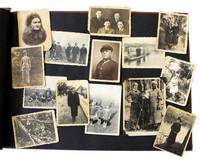
1939187411939. Polish Jewish family photographs created between 1934 and 1939 documenting Jewish life in Poland during the final years before the outbreak of World War II and the destruction of much of Eastern European Jewry. The photographs record members of a Polish Jewish family including men women and children during a period when Jewish communities remained deeply rooted throughout Poland but faced increasing political hostility and anti-Semitic agitation across Central Europe. Poland contained one of the largest Jewish populations in Europe during the inter war period with many families living in small Jewish communities often referred to as shutters as well as in larger towns and cities. The images capture everyday family and community life immediately before the German invasion of Poland in September 1939 a moment that would fundamentally transform the lives of Jewish communities across the region.<br /> <br /> Photo archive consisting of 21 silver gelatin photographs mounted in a photograph album together with 10 additional loose photographs. Images measure approximately 2.5 x 3.5 inches and depict family members in individual portraits group gatherings and scenes of school children assembled in large smiling groups. Several photographs carry handwritten inscriptions on the verso written in Polish and possibly Yiddish indicating personal exchanges between family members or relatives. Among the photographs are two portraits of a Polish Jewish man wearing Polish Army uniform one dated 1939 documenting Jewish participation in the Polish armed forces in the months immediately preceding the outbreak of war. The album pages preserve images of family gatherings and posed portraits reflecting domestic and social life within a Polish Jewish household during the final years of the inter war period.<br /> <br /> The photographs were created during a period of growing political instability in Europe that culminated in the German invasion of Poland on September 1 1939. That invasion followed the collapse of the German Polish non aggression agreement and the signing of the German Soviet pact that divided Poland between the two powers. German forces entered Poland with a large mechanized army supported by aircraft and armored divisions overwhelming the Polish military within weeks despite organized resistance. Jewish citizens served in the Polish armed forces and were present throughout the country's military and civilian life before the war. Album measuring approximately 15 x 11 inches containing 21 mounted photographs and accompanied by 10 loose photographs. Minor edge wear present with occasional cracks to several prints that do not affect the clarity of the images. Many photographs bear inscriptions and dates on the verso. Overall condition very good. unknown
1944187231944. Polish Armed Forces soldiers serving with Allied forces during World War II documented in a group of photographs dating from 1945 to 1946 preserving visual evidence of the Polish II Corps and its role in the Italian Campaign. The Polish II Corps formed from Polish soldiers who had been released from Soviet imprisonment after the German invasion of the Soviet Union and were reorganized under Allied command receiving training in the Middle East before deployment to the Mediterranean theater. These troops participated in some of the most difficult operations of the Italian Campaign including the assault on German defensive positions at Monte Cassino in 1944 one of the decisive engagements that opened the road to Rome for Allied forces. The photographs record the presence of Polish soldiers in Italy during the final stages of the war and in the immediate aftermath of Allied victory.<br /> <br /> Photo archive consisting of 34 black and white silver gelatin photographs depicting members of the Polish Armed Forces serving with Allied units in Italy and surrounding regions during and immediately after the war. The photographs include individual portraits and group images of soldiers in uniform along with scenes of soldiers posed in front of prominent Roman landmarks such as St. Peter's Basilica the Colosseum and the Giuseppe Garibaldi monument. Several photographs show large groups of soldiers assembled near military vehicles and supply trucks while others depict soldiers aboard ships likely involved in transport within the Mediterranean theater. Many photographs carry inscriptions on the verso written in Polish including references to "Włochy" the Polish word for Italy confirming the location of the photographs. Some images show soldiers standing among palm trees suggesting photographs taken during the earlier phase of the corps' movement through the Middle East before deployment to Italy.<br /> <br /> By the end of the war the Polish forces serving alongside Allied armies had expanded significantly and the soldiers photographed here belonged to a formation that grew to more than 100000 personnel. After the war many Polish soldiers faced uncertain futures as their homeland fell within the Soviet sphere of influence following the war's conclusion. Photographs documenting Polish soldiers in the Italian theater therefore preserve visual records of a military force composed largely of displaced individuals who continued fighting under Allied command despite the political upheaval affecting their country. Thirty four silver gelatin photographs measuring approximately 2.5 x 3.5 inches to 5.5 x 3.5 inches. Minor edge wear present; overall condition very good. unknown
1st edition. Period boards with gilt lettering. 4to. [272 pages], 33 cm. In Hebrew. Title translates to The Time: A Periodical of Politics, Literature, and Science for All Matters Related to Jews and Judaism. One of the early Haskalah Hebrew literary journals published out of Galicia. Issued a weekly basis (September 1890 - May 1891) . The periodical appeared under the names Ha-Zeman and Ru'a? Ha-Zeman in alternate weeks, to avoid paying the duty levied on a weekly. (EJ, 2007) . As YIVO notes, even after the center of the Hebrew Haskalah movement had passed to Russia, animated literary life persisted in Galicia until the beginning of the twentieth century, though it was mainly local and provincial in character. This activity found expression in a broad spectrum of periodicals including Ha-Zeman. YIVO, 2018) Not to be confused with the later-published Hebrew newspaper of the same name, but published from 1903-1915. SUBJECTS: Hebrew periodicals -- Poland. OCLC lists 3 copies worldwide (Oxford, HUC, NLI) , none on the East Coast. Ex-library with usual markings. Some pages are brittle and chipping. Pages browning and fragile but in good condition. Overall Good Condition. (YID-30-22)
242326Paris, Ambroise Dupont et Cie, 1828 in-8, [4]-270 pp., demi-chagrin rouge, dos à nerfs, couv. cons. (reliure moderne).
in-4, pp. 226, broch. edit. fig. (dorso allentato). Bel volume impresso su carta pesante, interamente consacrato da Ettore Cozzani alla Polonia, una delle ''nazioni martire'' della prima guerra mondiale. E' corredato di numerose silografie a piena pag. e di 35 ornamenti silogr. originali dell'artista Alessandro Pandolfi (Pescara 1887 – Pavia 1953; cfr. Servolini 596) e molte riproduz. di opere di artisti polacchi. Contiene anche scritti dello stesso Cozzani e di vari saggisti polacchi sulla storia, la cultura e l'arte della loro nazione. Importantissima pubblicazione sia dal punto di vista artistico che storico-politico.. .
013852Marc Myron ou Miron (?-1608), médecin né à Tours, reçu docteur en 1558, médecin du duc d'Anjou en Pologne (futur Henri III), premier médecin du roi Henri III et son confident, docteur de la faculté de médecine de Paris en 1558. Il est le médecin qui a publié faussement qu'Henri III était malade pour favoriser son retour en France. P.S. avec note vraisemblablement autographe au dos, 15 (?) mai 1582, 1p in-4 oblong. Sur parchemin. Reçu pour le paiement des frais d'un voyage aux bains de Bourbon-Lancy. La note au dos : « pour servir de Reçu. » (3 lignes) Rare signature. [329-2]