Aldor, FrancisMareMagnum

4 198 résultats
261 pages. "Nazi theory has evolved the concept of 'Lebensraum' (living space) - Nazi practice has realised the fact of 'Todesraum' (death space)" - subtitle. Author conversed with scores of Polish refugees in Paris. "As I listened to their stories I saw with searing vividness the similarity between what is happening in Poland today and what happened in Belgium 25 years ago; the similarity and the difference, which lies in the fact that the Germans today are even more brutal, more bestial than they were in 1914-1918. I decided to publish these stories, together with an essay comparing German conduct during the last war and during the present one, and showing that if they have changed at all it has been for the worse. Some of the stories are so horrible that they exhaust all ordinary human capacity for horror and indignation. However, some, at least, of the victims of German blood lust have escaped death. Let them speak." - Publisher's Statement, pages 6-7. Heavy soiling to publisher's yellow cloth. Front hinge starting. Moderate foxing to and near endpapers. Dust jacket not included. A worthy reference copy of this grim testament to the suffering of the Poles in WWII. Enser p.341. Book
GF28391Amsterdam - Henri Desbordes - 1732 - 2 volumes in8 de 410 -7 et 336 - 6 pages - Reliure pleine basane d'époque - Coiffes un peu usées - Mors légérement frottés - Un mors fendu sur 3 cm - dos cinq nerfs ornés -
in-8° (200x124 mm); leg. in piena pelle di colore bruno chiaro maculata in bruno scuro; tagli dei piatti finemente decorati in oro, dorso liscio con preziosi decori dorati a formare sei compartimenti, compreso quello ove si trova il titolo dorato su pelle rosso bordeaux, numerazione dei tomi dorata su ovale in pelle verde entro uno dei compartimenti; guardie marmorizzate, tagli di color giallo chiaro; 4 Tomi legati in 2 vol.; pp. VIII-380-(4), 404; 393-(1), 303-(1); ogni tomo ha il suo frontespizio, preceduto dall'occhietto; ill. calc., cornici e fregi xil., 19 carte di tav. incise su rame di cui qualcuna più volte ripiegata: 5 carte (Polonia, Russia, Mar Caspio, Svezia e Danimarca), 7 piante (Mosca, San Pietroburgo, Canale di Vishnei-Voloshok, Stoccolma, Canale di Trolhoetta, Copenhaghen e Canale di Kiel), 4 ritratti (Stanislas-Auguste de Pologne, Catherine II, Pugatchev e Gustave III de Suède) e altre 3 tav. (uccelli, scritture cirilliche e costumi). Interessante opera geografica riportante i resoconti di viaggi effettuati dal Coxe in Polonia, Russia, Svezia, Danimarca e Norvegia, tradotta in francese dal Mallet. Un particolare risalto è dato alla Russia (dalla fine del I tomo all'inizio del III); la parte aggiuntiva relativa alla Norvegia (p. 159 - IV tomo) è stata curata direttamente dal Mallet. William Coxe (1747-1828), è stato uno storico inglese e sacerdote che ha servito come compagno di viaggio e tutore di nobiltà dal 1771 al 1786. Scrisse numerose opere storiche e cronache di viaggio. Ordinato diacono nel 1771, ha lavorato come rettore e poi arcidiacono di Bemerton vicino a Salisbury dal 1786 fino alla sua morte. Paul Henri Mallet (1730-1807), scrittore e traduttore svizzero, è stato professore di lingua e letteratura francese in Danimarca. Rif.: IT\ICCU\IEIE\005989-005990-005991-005992-005993 (5 copie). OCLC, 9997601. Cond.: Leggerissime macchie d'umidità su alcune pp.; opera completa ed in perfette condizioni generali. -- Veau raciné de l'époque, dos lisses à compartiments fil. et fleuronnés dorés (lég. passés, minimes frottements), étiq. de cuir rouge ou vert, coiffes et coupes guillochées dorées, tr. jaunes, (qqs défauts marginaux, qqs lég. souill. et bruniss., mouill. angulaire aux 1ers ff. du t. III). Bel ex. Edition in-8 (après une in-4) de cette traduction par Paul-Henri Mallet de "Travels into Poland, Sweden and Denmark" (Londres 1784) du voyageur et historien anglais William Coxe (1747-1828). Ex. complet des 19 planches gravées sur cuivre dont qqs-unes dépliantes: 5 cartes (Pologne, Russie (1 déchir. rest.), mer Caspienne, Suède & Danemark), 7 plans (Moscou, Saint-Pétersbourg, canal de Vishnei-Voloshok, Stockholm, canal de Trolhoetta, Copenhague & canal de Kiel), 4 portraits (Stanislas-Auguste de Pologne, Catherine II, Pugatchev & Gustave III de Suède) et 3 autres pl. (oiseaux, écriture cyrillique et costumes). L'ouvrage concerne surtout la Russie (fin du t. I, t. II et début du t. III); la partie relative à la Norvège (p. 159 sq. du t. IV) est due au suisse Paul-Henri Mallet (1730-1807), un temps professeur de langue et littér. française au Danemark. -- FIRST FRENCH EDITION OF THIS INTERESTING GEOGRAPHICAL WORK SHOWING THE ACCOUNTS OF TRAVELS MADE BY COXE IN POLAND, RUSSIA, SWEDEN, DENMARK AND NORWAY. Very light water stains at some pp .; complete copy, in perfect conditions.
1760340901760 Paris - Paris - La Compagnie des Libraires - 1742 - 4 volume in8 de 355; 501; 411; 432 pages - Reliures plein veau blond d'époque - coins un peu émoussés - toutes tranches dorées - Dos cinq nerfs - Mors un peu frottés - Triple filet doré d'encadrement et Chiffre couronné sur les plats - Taille de premier volume légérement inférieure à celle des autres -
1931223BBZürich, Leipzig, Orell Füssli Verlag, 1931. 8°. 8 S., (english), 7 S. (hebrew). Mit 65 Abb. nach Photos von M. Vorobeichic. Illustr. Orig.-Halbleinenband + Wichtig: Für unsere Kunden in der EU erfolgt der Versand alle 14 Tage verzollt ab Deutschland / Postbank-Konto in Deutschland vorhanden +, 223BB (berieben und bestossen). = "Schaubücher", Bd. 27.
2 gr. voll. in-4, pp. XVIII, 397; 411, bross. edit. Poderosa opera che raccoglie oltre tremila nominativi di italiani che, per diversi motivi, operarono in Polonia. Perfetto esempl. nella veste editoriale originale e in barbe. Raro. [015]
1931223BBZürich, Leipzig, Orell Füssli Verlag, 1931. 8°. 8 S., (english), 7 S. (hebrew). Mit 65 Abb. nach Photos von M. Vorobeichic. Illustr. Orig.-Halbleinenband (berieben und bestossen). = "Schaubücher", Bd. 27.
ORD-2643Traduit de l'anglais, enrichi de notes & des éclaircissemens nécessaires, & augmenté d'un Voyage en Norvège. Par M. P. H. MALLET. Ouvrage orné de Cartes géographiques, Portraits, Plans & Figures en taille-douce. Genève. Barde, Manget & Comp. Paris. Buisson. 1786. 4 volumes in-8 (128 x 198mm) plein moucheté de noir, dos à 5 nerfs ornés or, pièces de titre maroquin rouge, de tomaison maroquin noir, tranches rouges, XII, 380; 1f., 404; 1f., 393 et 1f., 303 pages. Bien complet des 19 planches hors texte. Ex-libris Duhamel. 2 coiffes supérieures habilement restaurées, petits accidents aux derniers plats des tomes 1 et 2 sinon très bel exemplaire.
1920145501920 br. format 30 x 24 cm, Paris s.d. (ca. 1920)
Brossura editoriale con risvolti usurata agli angoli, ai margini e al dorso, sia alle estremità che sulla lunghezza. Piatti macchinati; dorso brunito, probabilmente per l'esposizione al sole. Pagine salde alla cerniera, con ampio margine, brunite, così come i tagli. Presenti tavole fuori testo, lievemente ingiallite, con fotografie di Teodoro Susicch, in bianco e nero, con didascalia. Numero pagine 277. USATO
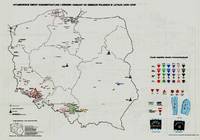
197941929Warszawa Warsaw: Pan´stw. Wydawn. Naukowe 1979. 1st Edition. Original black printed portfolio 8vo. Portfolio of seven large folding maps on on 4 sheets of heavy paper 3 are double sided 1 is singled sided. Primarily black and white with some color. Text in Polish. <br> Title translates to “Nazi camps in Poland 1939 - 1945. An Encyclopaedic Reference Book: Maps." Collection of 7 maps each 84 cm x 60 cm 33 x 24 inches produced by Jan Laskowski at the Main Commission for the Investigation of Nazi Crimes in Poland. The maps comprise Volume II of the work; Volume I is a heavily illustrated 676-page book of the same title which we offer separately. <br> The Seven maps all present are: <br> - Map 1 Single Sided: Hitlerowskie obozy na ziemiach polskich w latach 1939 - 1945. “Nazi camps in Poland in the years 1939 - 1945â€. Showing: concentration and extermination camps sub-camps of concentration camps extermination centers POW camps more important sub-camps working divisions commandos and temporary POW camps penal labor camps major labor camps prisons transit camps & ghettos. <br> - Map 2A: Getta na ziemiach polskich w okresie okupacji hitlerowskiej w latach 1939 - 1945 “Ghettos in Poland during the Nazi occupation in 1939 - 1945â€. <br> - Map 2B: Hitlerowskie obozy przejsciowe na ziemiach polskich w latach 1939 - 1945 “Nazi transit camps in Poland in 1939-1945â€. <br> - Map 3A: Hitlerowskie wiezienia i areszty na ziemiach polskich w latach 1939 - 1945 “Nazi prisons and arrests in Poland in 1939 - 1945â€. <br> - Map 3B: Hitlerowskie obozy pracy na ziemiach polskich w latach 1939 - 1945 “Nazi labor camps in Poland in the years 1939 - 1945â€. <br> - Map 4A: Hitlerowskie obozy jenieckie na ziemiach polskich w latach 1939 - 1945 “Nazi POW camps in Poland in 1939 - 1945â€. <br> - Map 4B: Hitlerowskie obozy koncentracyjne i osrodki zaglady na ziemiach polskich w latach 1939 - 1945 “Nazi concentration camps and extermination centers in Poland in 1939 - 1945â€. <br> Maps 2A & 2B have been described as a “Terrifying pair of maps showing the locations of German POW and internment camps in Poland during World War II highlighting the widespread locations of these establishments. In some parts of the map the information becomes so dense that three inset maps are shown. This map was designed by Jan Laskowski and printed in 1979 as part of a work on the Nazi extermination machine produced by PWN Warsaw a state-owned research-focused publishing house in Poland.<br> The map on the front is particularly interesting for its depiction of symbols used to classify internees in German camps. The uppermost of these depictions shows the combinations that can be made for different types of prisoners of different levels of importance. The armbands that would have been worn by these prisoners is shown as well as the prison uniforms. Other details are also shown. <br> The map lists hundreds of sites run by Nazi operators throughout the country. These include concentration camps death camps transitional camps and ghettos. The map is divided according to Poland's voivodeships with a key in the lower left. Names of cities too long to spell are also provided in the lower left. <br> This map was produced during a point in Poland's history during which it was actively revisiting the period during the Second World War. Leading social scientists devoted their time to trying to gather all the living as well as the recorded history of the events of the Holocaust and related atrocities before this information vanished. Leading these efforts particularly during the 1960s and 1970s was the Glówna Komisja Scigania Zbrodni przeciwko Narodowi Polskiemu known as the Chief Commission for the Prosecution of Crimes against the Polish Nation. They were active in publishing maps both for domestic educational purposes and for international remembrance and diplomatic efforts regarding the Holocaust. Jan Laskowski was a leading cartographer who produced a number of maps in this field. <br> These maps were produced as part of a series of maps that purported to combine to form an atlas of all of Hitler's crimes in Poland. Many of the large wall maps produced during this period could only show a fraction of the crimes or only the atrocities committed in one region. Thus a series of maps was needed to show all the points necessary which this present work contributes to. <br> Polish Reinterpretations of the Holocaust: Studying the effects of German occupation in Poland is a delicate subject. While it is certain that Poland suffered at least as badly as any other European nation during the Second World War reinterpretations of the Holocaust in the country have also been used to satisfy nationalistic tendencies. It has become evident to Western observers in the last several years that there is a strong nationalist movement in Poland that seeks to place blame for the Holocaust solely on the shoulders of non-Polish actors a movement originally fostered under Soviet rule. This movement has gone so far as to limit freedom of speech criminalizing with a three-year sentence the suggestion that Poland or its citizens in any form participated in the murders committed by Nazis. As such the term ‘Polish concentration camps’ has been deemed unacceptable with the government-approved term being ‘concentration camps on Polish territory.’ <br> All lines of evidence show that this map 2A & 2B was produced using the most accurate and impartial historical sources. The language on the map is simple naming only ‘Hitler's Atrocities’ and there is no evidence of a clear anti-German bias. However it is impossible to separate this map one of the most important productions of the remembrance movement during this period from the social situation in which it was produced. Maps like these can easily be converted into propaganda instruments and today's Polish leaders most of whom grew up during Soviet occupation will have formed their understanding of the Holocaust through maps like these. <br> Soviet Censorship: While the content of the map appears to have been produced free from bias the map still had to go through Soviet censorship. Mentioning prisoner of war camps in which primarily Soviet troops were interned would have been a prerequisite condition upon which the publication of the map rested. Further the lack of mention of any Soviet killings or camps requires no explanation….The map unlike many later maps makes no differentiation between the populations who suffered at the various camps. This represents the Soviet agenda that all nations suffered fought and won equally which sought to limit divisions in this post-identity state†Ruderman 2022. <br> SUBJECTS: World War 1939-1945 -- Prisoners and prisons German. -- Concentration camps -- Poland. Guerre mondiale 1939-1945 -- Prisonniers et prisons des Allemands. -- Camps d'internement -- Pologne. Obozy koncentracyjne -- Polska -- 1900-1945. OCLC: 830885973. <br> Light shelf wear to portfolio as expected. All maps in pristine condition with normal folds as issued. Very Good Condition. Complete and dramatic BR5 holo2-147-19-'cc. Warszawa (Warsaw): Pan´stw. Wydawn. Naukowe unknown
183130282large folio broadsheet circular printed on both sides "Supplement." At upper left corner but no other imprint information. Folded in quarters some minor spotting else a very good copy. <br /><br /><p>The Marquis de Lafayette the president of the committee once again leads a fight for freedom although this time only diplomatically. Lafayette subscribed 2000 francs – the largest subscriber. </p> <p> The presumed first printing of this broadsheet very likely an extra or supplement to the Journal des Debats a Parisian weekly with regular contributions by Victor Hugo one of the committee members and with what would have been a sympathetic political stance. The broadsheet prints the resolutions in favor of the committee in four columns dated in type at end February 12 1831. The committee members are also listed as well as subscribers throughout France and their donations. Victor Hugo and Lafayette's son George were both among the committee members. </p> <p> The November Uprising 1830-1831 Polish-Russian War also known as the Cadet Revolution was an armed rebellion in the heartland of partitioned Poland against the Russian Empire. The uprising began on 29 November 1830 in Warsaw when the young Polish officers from the local Army of the Congress Poland's military academy revolted led by lieutenant Piotr Wysocki. They were soon joined by large segments of Polish Society and the insurrection spread to the territories of Lithuania western Belarus and the right bank of Ukraine. Despite some local successes the uprising was eventually crushed by a numerically superior Imperial Russian Army under Ivan Paskevich. Czar Nicholas I decreed that henceforth Poland was an integral part of Russia with Warsaw little more than a military garrison and its university closed. </p> <p>Sympathetic echoes of Polish aspirations were reverberating throughout Europe. Under Lafayette's chairmanship enthusiastic meetings were held in Paris. James Fenimore Cooper the American author who was in France at that time was also involved in attempts to help the Poles. Money for the Polish cause was also raised and collected in the United States. </p><p>Although early reprints are available we have been unable to locate a copy of this undoubted first printing. A complete reprint appears beginning on page 19 in La Pologne et la France en 1830-1831 volume 9 Paris: Typ de Pinard 1831. </p> books
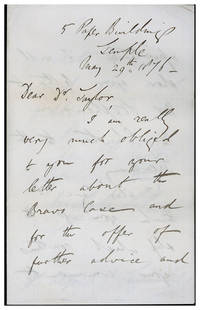
1876484621876. <p>Taylor Alfred Swaine 1806-80. Archive of material relating to the famous Charles Bravo poisoning case consisting of 1 Autograph letter signed to Taylor from Harry Bodkin Poland 1829-1928. Bifolium. 3pp. Temple London 29 May 1876. 205 x 127 mm. 2 3 autograph letters signed to Taylor from Augustus K. Stephenson 1827-1904. 15pp. total. London 3 June 1876 2 bifolia 8pp.; 5 June 1876 bifolium 4pp.; and 22 July 1876 bifolium 3pp. 184 x 114 mm. 3 Taylor. The Balham mystery. Galley proof corrected in Taylor's hand of the first portion of an unsigned article in The British Medical Journal 20 May 1876: 631-633. 578 x 148 mm. Together 4 letters and one printed proof. Some rodent damage to Stephenson's letters affecting several words mended in several places with clear tape. Small lacuna along one fold in the galley proof affecting a few words. Minor dampstaining but good to very good.</p> <p> From the library of Alfred Swaine Taylor founder of forensic toxicology an archive relating to the notorious and sensational Charles Bravo poisoning a case that is still unsolved. The Bravo mystery has inspired several works of fiction including Shirley Jackson's We Have Always Lived in the Castle 1962 and a three-part BBC serial titled The Poisoning of Charles Bravo 1975.</p> <p> Bravo 1845-76 a 33-year-old barrister died of tartar emetic antimony poisoning on 21 April 1876 less than five months after his marriage to a wealthy widow; the marriage was reportedly an unhappy one. The inquest on Bravo's death held on 25 and 28 April returned an open verdict but the circumstances of the case were so suspicious that Taylor offered his expert advice to Harry Bodkin Poland one of the attorneys for the Crown. Our archive includes the letter Poland sent thanking Taylor for "your letter about the Bravo Case and for the offer of further advice and assistance" and informing Taylor that he "will show your letter to Mr. Augustus K. Stephenson the Solicitor to the Treasury." Stephenson is represented in the archive by three letters asking for Taylor's expert opinion on the case: "You have read the account of the Post-mortem encl. by Dr. Payne . . . That being so does it enable you to form an opinion as to whether the antimony was taken in solid food . . . letter of 3 June. "Assuming small traces of antimony to have been found in the liver of a deceased person-Can you form any opinion as to length of time before death that the antimony was taken" letter of 5 June. "Can you tell me whether antimony in the form of tartar emetic wd. if taken in small doses at intervals during pregnancy induce a miscarriage letter of 22 July.</p> <p> The last item in our archive is a galley proof corrected in Taylor's hand of the first two-thirds of an article on the Bravo case published on 20 May in the British Medical Journal; although the article is unsigned it was most likely written by Taylor. Based on the medical evidence Taylor concluded that Bravo had ingested the fatal dose of antimony during his last meal. He severely criticized the investigators in the case for not testing the remains of the bottle of wine he had drunk with the meal-"the only article of food not shared in common with the three who sat at the dinner-table . . . If tartar emetic had been found in this wine much of the present mystery hanging about the case would be removed . . . In tracing the further history of this bottle we learn that no one now knows what became of it or its contents." </p> . unknown
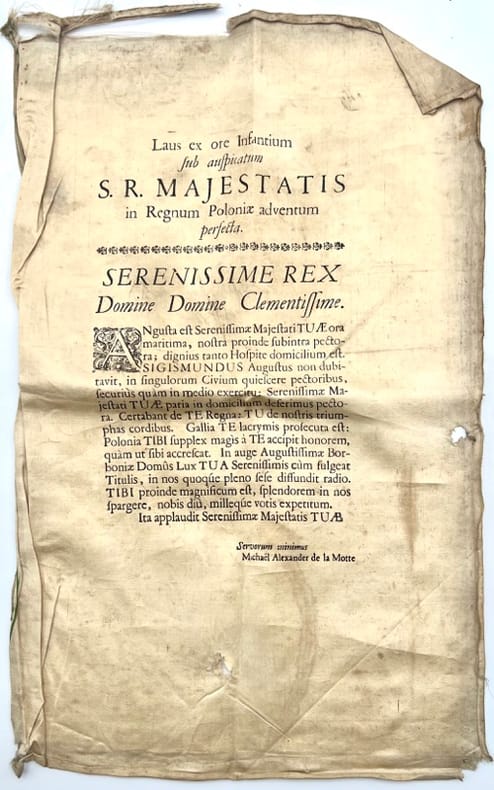
171444331S.l.n.d., , 1714-1734. Placard in-quarto sur soie (39 x 25 cm).
1913585PARIS. J. LEROY ET CIE, EDITEURS. 1913. GRAND ET FORT IN-4 (30 X 39,5 X 6,5 CENTIMETRES ENVIRON) DE (8) + III + (1) + 314 ET (2) PAGES, RELIURE D’EPOQUE 1/2 CHAGRIN ROUGE, DOS A QUATRE NERFS, TITRE DORE, DOUBLE COUVERTURE ILLUSTREE D’UNE VIGNETTE AVEC TITRE IMPRIME EN NOIR, ET DOS CONSERVES. SPLENDIDE OUVRAGE ILLUSTRE DE 48 PLANCHES HORS TEXTE D'UNIFORMES EN COULEURS, DE 10 PLANCHES HORS TEXTE, DONT 6 DE PORTRAITS MULTIPLES ET 4 D’ETENDARDS ET FANIONS (2 EN COULEURS) ET DE 24 VIGNETTES DANS LE TEXTE. EDITION ORIGINALE ET PREMIER TIRAGE, LIMITE A 1000 EXEMPLAIRES NUMEROTES, 300 SUR ARCHES ET 700 SUR ALFA. UN DES 700 SUR ALFA, CELUI-CI PORTANT LE NUMERO 432. QUELQUES ROUSSEURS EPARSES SANS GRAVITE, SINON TRES BEL EXEMPLAIRE.
19133004PARIS. J. LEROY ET CIE, EDITEURS. 1913. GRAND ET FORT IN-4 BROCHE (28,5 X 38,5 X 5,5 CENTIMETRES ENVIRON) DE (8) + III + (1) + 314 ET (2) PAGES, COUVERTURE GRISE REMPLIEE ILLUSTREE D’UNE VIGNETTE EN NOIR, TITRE IMPRIME EN NOIR. SPLENDIDE OUVRAGE ILLUSTRE DE 48 PLANCHES HORS TEXTE D'UNIFORMES EN COULEURS, DE 10 PLANCHES HORS TEXTE, DONT 6 DE PORTRAITS MULTIPLES ET 4 D’ETENDARDS ET FANIONS (2 EN COULEURS) ET DE 24 VIGNETTES DANS LE TEXTE. EDITION ORIGINALE ET PREMIER TIRAGE, LIMITE A 1000 EXEMPLAIRES NUMEROTES, 300 SUR ARCHES ET 700 SUR ALFA, CELUI-CI SUR ALFA, PORTANT LE NUMERO 319. ERREUR DE FACONNAGE DE L’OUVRAGE AU MOMENT DE SA PARUTION, NEAMMOINS BIEN COMPLET ET COLLATIONNE, AVEC DES PAGES SUPPLEMENTAIRES (46-49, 47-52, 45-50 ET 51-48), UN CAHIER VOLANT A REFIXER (PAGES 45-52). QUELQUES TRACES D’HUMIDITE ANCIENNE, PETITS DEFAUTS EXTERIEURS SANS GRAVITE, COMME SOUVENT COMPTE-TENU DU POIDS DU VOLUME, SINON BON EXEMPLAIRE. ON JOINT UN BULLETIN DE COMMANDE ET UN BULLETIN DE SOUSCRIPTION AVEC UNE PLANCHE SPECIMEN SUPPLEMENTAIRE.
19133371PARIS. J. LEROY ET CIE, EDITEURS. 1913. GRAND ET FORT IN-4 BROCHE (28,5 X 38,5 X 5,5 CENTIMETRES ENVIRON) DE (8) + III + (1) + 314 ET (2) PAGES, COUVERTURE GRISE REMPLIEE ILLUSTREE D’UNE VIGNETTE EN NOIR, TITRE IMPRIME EN NOIR. SPLENDIDE OUVRAGE ILLUSTRE DE 48 PLANCHES HORS TEXTE D'UNIFORMES EN COULEURS, DE 10 PLANCHES HORS TEXTE, DONT 6 DE PORTRAITS MULTIPLES ET 4 D’ETENDARDS ET FANIONS (2 EN COULEURS) ET DE 24 VIGNETTES DANS LE TEXTE. EDITION ORIGINALE ET PREMIER TIRAGE, LIMITE A 1000 EXEMPLAIRES NUMEROTES, 300 SUR ARCHES ET 700 SUR ALFA, CELUI-CI SUR ARCHES, NON JUSTIFIE. QUELQUES ROUSSEURS, SINON BON EXEMPLAIRE. .
In-4°,(8cc), 40pp, 2 illustrazioni calcografiche, legatura in cartonato.
1st edition. Original Color Wrappers, many photographic or illustrated, bound into publishers cloth, 4to, generally 24-36 pages per issue. In Yiddish, with English section at rear. Loaded with photos and illustrations, some on the Yiddish or English covers, and many of them by William Gropper. Nazi-era Communist monthly in support of Soviet Birobidjan, the Soviet Autonomos Jewish Republic. Much on rising Antisemitism in Germany, as wel asl, of course, the history of antisemitism in pre-Soviet Russia, reports Icor and settlement of Jews into Birobidzhan, why Icor opposes Zionism, photos, literary works, including poetry, fiction, humor, satire and other materials covering virtually all aspects of life in the Jewish Autonomous region. Monthly Periodical of the Association for Jewish Colonization in the Soviet Union. "IKOR: Buletin Fun Der Gezelshaft " was issued on an excellent quality paper in Yiddish and English from 1928 to 1935 under the title Icor, and from 1935 to 1950 as Naylebn. The magazine features articles, photos, literary works, including poetry, fiction, humor, satire and other materials covering virtually all aspects of life in the Jewish Autonomous region of Birobidzhan. "IKOR: Buletin Fun Der Gezelshaft " ran 65 issues (eight volumes) between March 1925 and April 1935. It was Monthly (except usually for Aug.) from Jan. 1930-Apr. 1935; and was irregular from 1925-1929. It was succeeded by Naylebn (New York) in 1935 (see volume below). Subjects: Idishe Kolonizatsie Organizatsie (IKOR). Jews - United States - Periodicals. Jews - Colonization - Soviet Union - Periodicals. Jews - Russia (Federation) - Birobidzhan. Jewish periodicals - United States. Jewish periodicals. OCLC Number: 174120726. OCLC lists 8 holdings. Slight mustiness. Boards, paper, and color paper covers remain bright and strong. Very Good Condition, a beautiful set (Yid-22-25C-elx)
244825Paris, Leroy, 1913 fort gr. in-4, III-314 pp., index et biblio., toile écrue (reliure moderne).
1649LBW-3597[1649]. 203 x 389 mm.
181913828Paris, Chez H. Nicolle et Chez Desenne, 1819. 4 vol. in-8 de (4)-CLXVI-342 pp. ; (4)-500 pp. ; (4)-464 pp. et (4)-397-(2) pp., veau blond glacé, dos ornés à nerfs, large plaque romantique poussée à froid sur les plats, guillochis dorés sur les coupes, dentelles dorées sur les chasses tranches marbrées (reliure de l'époque).
1933173338New York: Edgar Weyhe 1933. Limited to 200 numbered copies. Paperback. VG with minor coiling to orange dustjacket covers otherwise almost like new except for some separation of spine at the very top. Orange printed dustjacket surrounding a white printed glued wrap-around stiff cover. 54 pp. Two color plates including a signed in pencil lithograph portrait of Shore by Jean Charlot 18 bw photographic reproductions after photographs of the artist's work by Edward Weston 5 smaller bw reproductions which may be lithographs at the head of the text articles. The first color plate may also be a color lithograph but it is not signed. One of Armitage's rarest works. A monograph on the art and career of California modernist painter Henrietta Shore.The portrait by Charlot is signed by the artist but hideous. Includes an article by Edward Weston who also photographed the original artworks by Shore. Includes articles by Merle Armitage Edward Weston and an Appraisal by Reginald Poland. Very rare. Forward colophon reads "Two hundred numbered copies of this book designed by Merle Armitage have been printed . by the Will A. Kistler Company . It is set in twelve point Rockwell type and the entire contents of the book is printed by the Artochrome Process. The photographs of the paintings pastels crayons and drawings in this book were made from the originals by Edward Weston. This is copy no. blank"--Colophon./ Descriptive letterpress on versos facing the plates." Edgar Weyhe paperback
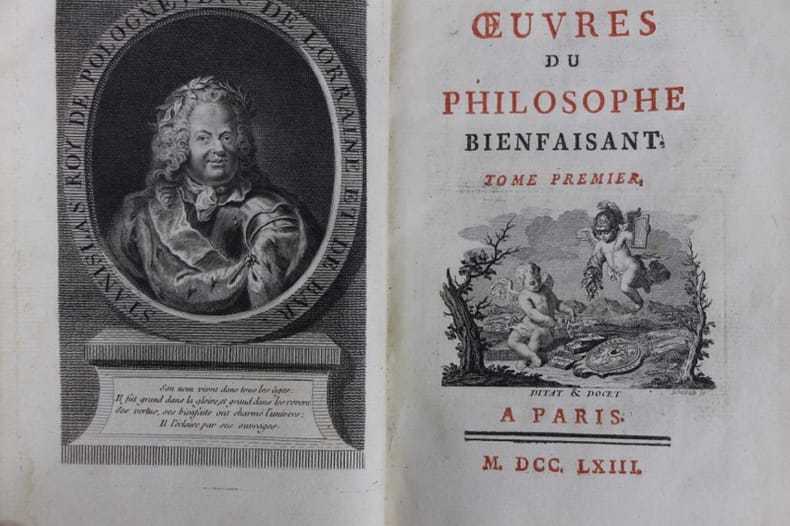
176394405Paris, sn, 1763 3 volumes tomes 1, 2, 4, in-8 maroquin grenat époque, dos à nerfs, caissons ornés, triple filet doré encadrant les plats, tranches dorées. Portrait en frontispice, titre gravé pour ch. vol., LXII- 347- 48- LXXXIV- 268- 416 pp. Un volume in-12 tome 3, veau ép., dos à nerfs, caissons ornés, titre gravé, 402 pp. Epidermures et légers frottements.
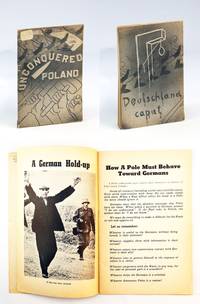
1943442j1479New York: Poland Fights - Polish Labor Group. Fair with no dust jacket. 1943. First Edition. Paperback. "As German boots marched and German tanks rumbled through the mined streets of Warsaw the workers buried their remaining arms drew closer to one another and silently disappeared to continue the fight with means other than rifles and bullets. Underground Poland was born! And this is its story." - page 2. Topics include: How a Pole Must Behave Toward Germans; List of 15 Strictly Forbidden Activities; Underground Poetry; Invisible Sabotage; Roads To Death; 1.5 Million Slave Laborers; Boycott; Recalcitrant Peasants; Avengers and Guerrillas; The Ghetto Strikes Back; Collective Responsibility of Monuments; Wawer Massacre; Hide It From The Germans!; Our Future. Stapled booklet with 44 glossy unnumbered pages in illustrated covers. Text in English. Profusely illustrated with black and white reproductions of photos document facsimiles illustrations and a map. No indication of any prior printings. Former library copy with related markings to front and back of front cover. Bound by a single staple which is pulling from the tender illustrated covers. One-inch opening at bottom of coverfold. A worthy example of this highly informative WWII-era artifact. Wiener Library Catalogue Series 7 1004. 8.5" x 5.5"; Front Cover; 8vo . Poland Fights - Polish Labor Group paperback