4 198 résultats
Original Paper Wrappers, 8vo, ca. 100 pages. Monthly Bundist periodical ran from Vol. I, Nr, 1 (Oct. 1927) to 1932. 23 cm. In Yiddish. Unobtrusive Bund rubber stamp. Levin (1977) reports that it was in UNZER TSAYT that the very first reports of the Bund's split over the National Question with the Russian Social Democrats were published (in 1927). The Bund in Poland, here providing its unique Polish Jewish Socialist anti-Zionist perspective. The General Jewish Labour Bund in Lithuania, Poland and Russia (Yiddish: algemeyner yidisher arbeter-bund in lite, poyln un rusland), generally called The Bund or the Jewish Labour Bund, was a secular Jewish socialist party.... founded in Vilnius on October 7, 1897 ..In 1917 the Polish part of the Bund, which dated to the times when Poland was a Russian territory, seceded from the Russian Bund and created a new Polish General Labor Bund which continued to operate in Poland in the years between the two world wars .The Bund sought to unite all Jewish workers in the Russian Empire into a united socialist party, and also to ally itself with the wider Russian social democratic movement to achieve a democratic and socialist Russia. The Russian Empire then included Lithuania, Latvia, Belarus, Ukraine and most of present-day Poland, areas where the majority of the world's Jews then lived. They hoped to see the Jews achieve a legal minority status in Russia. Of all Jewish political parties of the time, the Bund was the most progressive regarding gender equality, with women making up more than one-third of all members. The Bund actively campaigned against anti-Semitism. It defended Jewish civil and cultural rights and rejected assimilation. However, the close promotion of Jewish sectional interests and support for the concept of Jewish national unity (klal yisrael) was prevented by the socialist universalism of the Bund. The Bund avoided any automatic solidarity with Jews of the middle and upper classes and generally rejected political cooperation with Jewish groups that held religious, Zionist or conservative views. Even the anthem of the Bund, known as "the oath" (di shvue in Yiddish), written in 1902 by Sh. An-ski, contained no explicit reference to Jews or Jewish suffering. At the heart of the vision of the future of the Bund was the idea that there is no contradiction between the national aspect on the one hand and the socialist aspect on the other. As a strictly secular organization, the Bund renounced the Holy Land and the sacred language (Hebrew) and chose to speak Yiddish .In its early years the Bund had remarkable success, gaining an estimated 30,000 members in 1903 and an estimated 40,000 supporters in 1906, making it the largest socialist group in the Russian Empire . the Bund was a founding collective member at the RSDLP's first congress in Minsk in March 1898. For the next 5 years, the Bund was recognized as the sole representative of the Jewish workers in the RSDLP, although many Russian socialists of Jewish descent, especially outside of the Pale of Settlement, joined the RSDLP directly .The Bund generally sided with the party's Menshevik faction led by Julius Martov and against the Bolshevik faction led by Vladimir Lenin during the factional struggles in the run-up to the Russian Revolution of 1917 .In the Polish areas of the [Russian] empire, the Bund was a leading force in the 1905 revolution. At that time the organization probably reached the height of its influence. It called for an improvement in living standards, a more democratic political system and the introduction of equal rights for Jews. At least in the early stages of the first Russian Revolution, the armed groups of the "Bund" were likely the strongest revolutionary force in Western Russia. During the following years, the Bund went into a period of decay .The Bund eventually came to strongly oppose Zionism, arguing that emigration to Palestine was a form of escapism. The Bund did not advocate separatism. Instead, it focused on culture, rather than a state or a place, as the glue of Jewish nationalism. . The Bund also promoted the use of Yiddish as a Jewish national language and to some extent opposed the Zionist project of reviving Hebrew. The Bund won converts mainly among Jewish artisans and workers, but also among the growing Jewish intelligentsia. It led a trade union movement of its own. It joined with the Poalei Zion (Labour Zionists) and other groups to form self-defense organisations to protect Jewish communities against pogroms and government troops. During the Russian Revolution of 1905 the Bund headed the revolutionary movement in the Jewish towns, particularly in Belarus and Ukraine ..In 1921, the Communist Bund [in the USSR] dissolved itself and its members sought admission to the Communist Party....Many former Bundists, like Mikhail Liber and David Petrovsky, perished during Stalin's purges in the 1930s. The Polish Bundists continued their activities until 1948. During the latter half of the 20th century the Bundist legacy was represented through the International Jewish Labor Bund, a federation of local Bundist groups around the world .Among the exiled Bundists who went on with Socialist politics in America was Baruch Charney Vladeck (18861938), elected to the New York Board of Aldermen as a Socialist in 1917 [and] 1937 [and] manager of The Jewish Daily Forward Moishe Lewis (18881950)....the father of David Lewis (19091981), a leader of the New Democratic Party in Canada .David Dubinsky (18921982), though never formally a member of the party, had joined the bakers' union, which was controlled by the Bund, and was elected assistant secretary within the union by 1906 ..He later became a member of the Socialist Party of America, helped found the American Labor Party in 1936 and was from 1932 till 1966 the leader of the International Ladies' Garment Workers' Union ..under the name Max Goldfarb, David Petrovsky (18861937) was a member of the Central Committee of the Jewish Socialist Federation of America, a member of the Socialist Party of America, and the labor editor of The Forward (Wikipedia). SUBJECT(S) : Jews -- Poland -- Periodicals. Jewish labor unions -- Periodicals. Socialism and Judaism -- Periodicals. Yiddish literature -- Poland -- Periodicals. OCLC Number: 642969688. OCLC lists only runs (Arizona State, Stanford, LOC, U of Washington), all of which appear to be incomplete. Very light wear, a beautiful set! Very Good Condition. (Y-1-12) xx
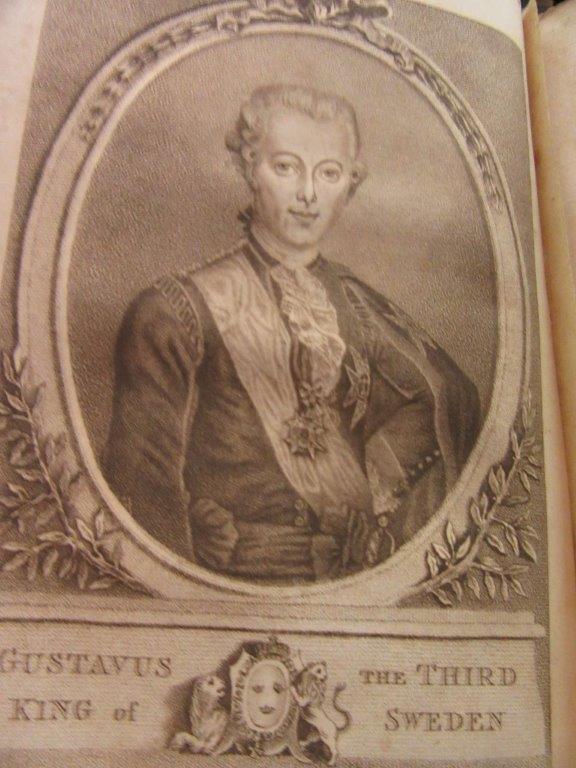
41205London.1787.The third edition.4 vols.in-8 reliés.30 pl. dont 12 cartes dépliantes.Tableaux dépliants.Figures,portraits,costumes,animaux.Appendice.Table.En langue anglaise. BE.Cartonnages XIXème,recouverts de papier à la cuve.Pièces de titre et tomaison manuscrites.Qlques rousseurs.
3 volumes in-12, plein veau raciné de l'époque, dos lisses ornés de compartiments, dentelle d'encadrement sur les plats et les coupes, tranches citron, pagination particulière pour chaque texte. Seconde édition augmentée de quatre traités: De la liberté - Des peuples qui vivent sous les loix de la nature - Du mérite des actions humaines…- Des divers cultes. Contient, de plus: De l'égoïsme - Anecdotes de la vie de Pierre-le-Grand - Le premier des mérites est d'être heureux - Des peines et des délits - De la noblesse - Des erreurs de Rousseau en politique - Sur la Russie - Sur la Suisse - De certaines opinions - De la vérité - Essai sur le bonheur - De la poésie et des vers - De la musique dramatique et vocale - Eloge de J.-J. Rousseau - De Rousseau et des philosophes du XVIIIe siècle - De l'imprimerie et des livres - De la supériorité du XVIIIe siècle - De la critique et des journaux (…). Né à Neuchâtel, le comte François-Louis d'Escherny (1733-1815) voyagea à travers l'Europe; en Autriche et en Allemagne où il fut reçu par les souverains, en Pologne et en Russie où il rencontra Catherine II, puis il occupa diverses fonctions diplomatiques. De retour à Paris il fréquenta les salons et se lia avec les Encyclopédistes, Diderot, d'Alembert et Rousseau avec lequel il devint ami, partageant avec ce dernier la même passion pour la musique. Partisan de la Révolution française à ses débuts, il quitta Paris en 1792 et revint en 1796. (Jeanneret et Bonhôte, 'Biographie neuchâteloise', p. 320, n°4). Seulement 5 exemplaires sont recensés dans les bibliothèques dans le monde (WorldCat) dont uniquement deux dans les bibliothèques françaises au CCFr: Sainte-Geneviève et BnF. Dos passé et frotté avec quelques accrocs. Quelques rousseurs éparses. Envoi de l'auteur au verso de la première garde: "Pour Monsieur Chaussier de la part de l'auteur".
183964468Avec une préface par M. Saint-Marc Girardin, Troisième édition revue et augmentée, 1 vol. in-8 reliure de l'époque demi cuir de russie, dos estampé à froid, Chez Brockhaus et Avenarius, Paris, Leipzig, 1839, portrait de Jean Sobieski, en frontispice, 460 pp. avec une gravure hors texte (portrait de Kosciuszko)
253 pages. "A biography interspersed with recollections of social and cultural history in memory of our Jewish ancestors in Poland and particularly in Galicia...This beautifully written chronicle brings back to us pictures of the life of the non-existent any more Jews in Poland. It is an inexhaustible source for the study of the way of life, the culture and folklore of a bygone era in Jewish history." - from dust jacket. Somewhat above-average wear with some lean to spine. Binding intact. Usual library markings. Dust jacket now preserved in glossy new archival-grade Brodart cover. A worthy copy of this important reference. Book
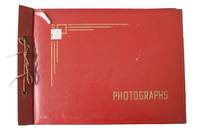
1918184801918. American Red Cross Poland photo album Warsaw Operations 1918-1920 documents U.S. humanitarian operations in Eastern Europe following World War I recording relief work conducted during the Polish-Soviet War and the broader reconstruction of Polish civil and medical infrastructure. The images identify personnel locations and operational units associated with American Red Cross efforts as they provided transport medical care and material aid in a region destabilized by the collapse of empires and the reestablishment of an independent Polish state in 1918. A caption referencing "the Polish-Russian front ARC 1920 Poland" situates the album within active conflict conditions while additional annotations tied to supply trains and field units establish the material as a contemporaneous record of organized international relief.<br /> <br /> Photo album measuring approximately 8 x 11.5 inches with 34 photographs mounted across 11 leaves each image approximately 3 x 5 inches. The photographs depict American Red Cross personnel aboard trains and railway platforms including a documented ARC supply train as well as automobile units in transit or undergoing roadside repair captioned "American Red Cross cars 1918 Poland." Several images include handwritten annotations identifying subjects locations and squadron designations. One photograph shows a group of workers assembled on a makeshift structure with a caption identifying "Van Wert in charge of one of the relief trains" indicating named personnel connected to field operations.<br /> <br /> Produced during the initial phase of internationally coordinated humanitarian intervention in postwar Poland the album aligns with the 1919 recognition of the Polish Red Cross by the International Committee of the Red Cross which facilitated the transfer of hospitals medical trains and logistical infrastructure into Polish administration. The photographs document the integration of American aid within these systems including rail-based medical transport and mobile support units critical to relief distribution in contested and newly reorganized territories. Some photographs detached from leaves and a tear to the front cover; images and structure otherwise intact. Overall very good condition. unknown
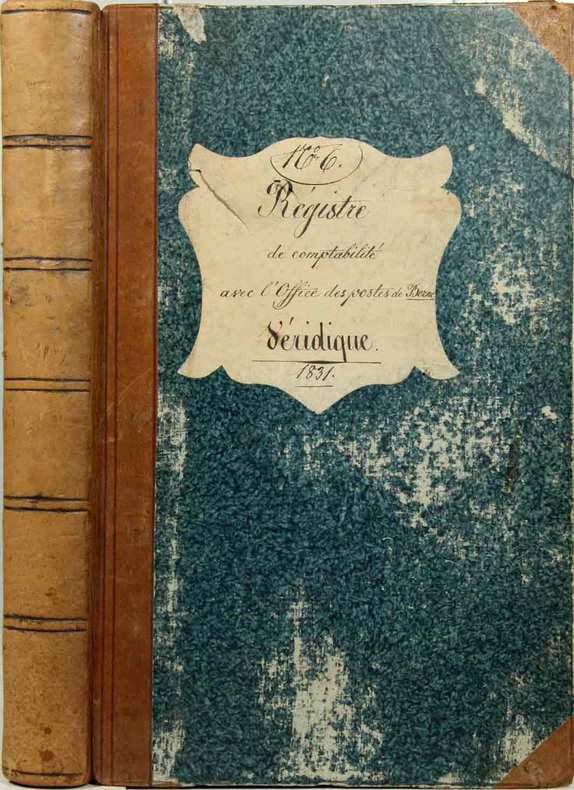
103316aafFribourg, L.J. Schmid, 1831, gr. in-4°, 4 p., texte sur 2 colonnes par fasc. quelques légères rousseurs, le tout en bon état; 18 ff. + env. 140 ff. vierges, avec feuille volante de décomptes ms. entre les pages (à l’origine collée sur feuille de garde), cartonnage muet original.
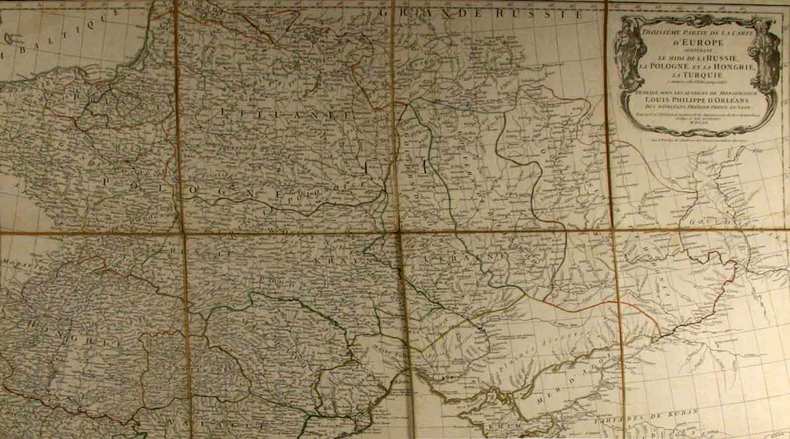
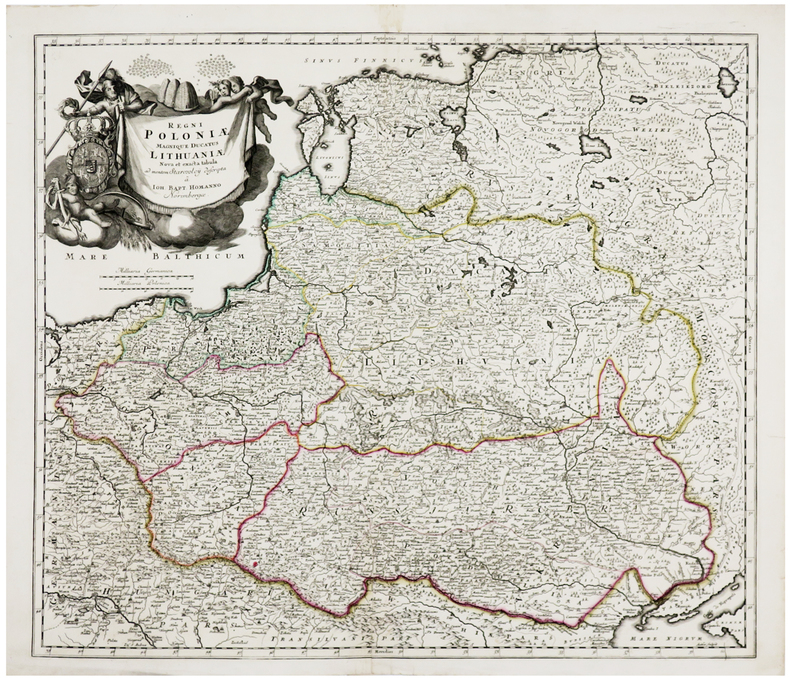
116334aafPubliée sous les auspices de Monseigneur Louis Philippe dOrléans premier Prince du Sang. MDCCLX, 1760, 84x100 cm, Carte en 16 éléments montés sur toile d’époque, carte pliée 26x21.5 cm. (frontières en couleurs / Map coloured in outline).
20796A Paris, pour Robert le Mangier libraire, 1575. Plein maroquin bordeaux sombre à grains longs, dos à nerfs orné de fleurons, roulette intérieure et sur les coupes, tête dorée, signet en soie, couverture muette d'époque conservée, gardes marbrées. Petit in-4 (11 x 16 cm) de 1 feuillet blanc, titre, 5 feuillets non chiffrés, 41 feuillets chiffrés (A1-H4), 1 feuillet blanc (soit 92 pages), ex-libris manuscrit sur la page de titre, bandeaux, lettrines, dernier feuillet manquant (41).
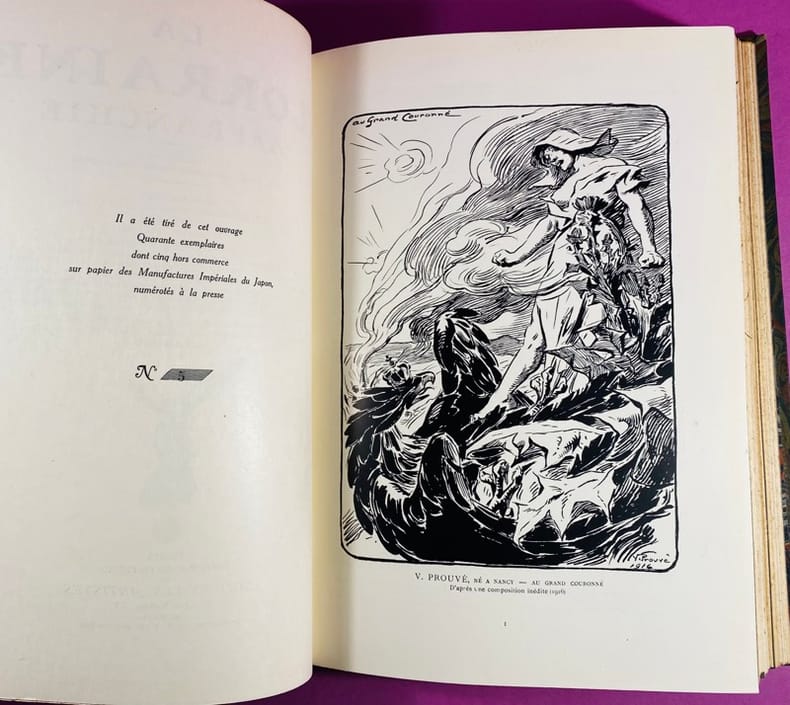
191618541916 Couverture rigide Paris, L'Art et les Artistes, 1916, 1917. 5 numéros spéciaux de la revue regroupés dans un volume in-4 (30 x 21,5 cm), reliure demi-chagrin signée Louis Marchand, dos à 5 nerfs orné de caissons dorés, papier à la cuve aux plats et contreplats, tranche supérieure dorée, dos insolé avec quelques frottements. Les 5 numéros grand luxe du volume sont numérotés sur papier de la Manufacture Impériale du Japon (tirage limité entre 25 et 55 exemplaires selon les numéros). LA POLOGNE IMMORTELLE, 80 pages, 2 états sur Japon d'un bois original en deux tons de Jacques Beltrand dont un avant la lettre, représentant le poète Adam Mickiewicz, textes notamment de maurice Maeterlinck, 154 illustrations. LA LORRAINE AFFRANCHIE, 66 pages, 2 états sur Japon d'un dessin original de Bernard Naudin dont un avant la lettre, "L'Oriflamme", texte de Maurice Barrès, 128 illustrations. LILLE SOUS LE JOUG ALLEMAND, 48 pages, 2 états sur Japon d'un croquis original de Paul Renouard dont un avant la lettre, représentant des troupes en marche, textes de Robert Hénard, 48 illustrations. ROUMANIE, 68 pages, 2 états sur Japon d'un dessin original de Jacques Beltrand dont un avant la lettre, "portrait de la Reine Marie en paysanne roumaine", texte notamment de Marie Ionesco, 104 illustrations. L'ART ASSASSINÉ, 48 pages, 2 états sur Japon d'un bois original de Eugène Dété dont un avant la lettre, "La tête du Roi David", texte de Camille Mauclair, 58 illustrations. Fondée en 1905 par Armand Dayot, alors Inspecteur général des Beaux-Arts, la revue L'Art et les Artistes devient pendant la Grande guerre un organe de résistance intellectuelle et de témoignage, invitant auteurs et illustrateurs à s'exprimer sur le conflit en cours. Provenance : Adolphe Thalasso, proche collaborateur de la revue, écrivain et critique d'Art né à Constantinople, figure orientaliste à Paris dans le monde littéraire. Bel état du texte et des planches, bon exemplaire sur grand papier.
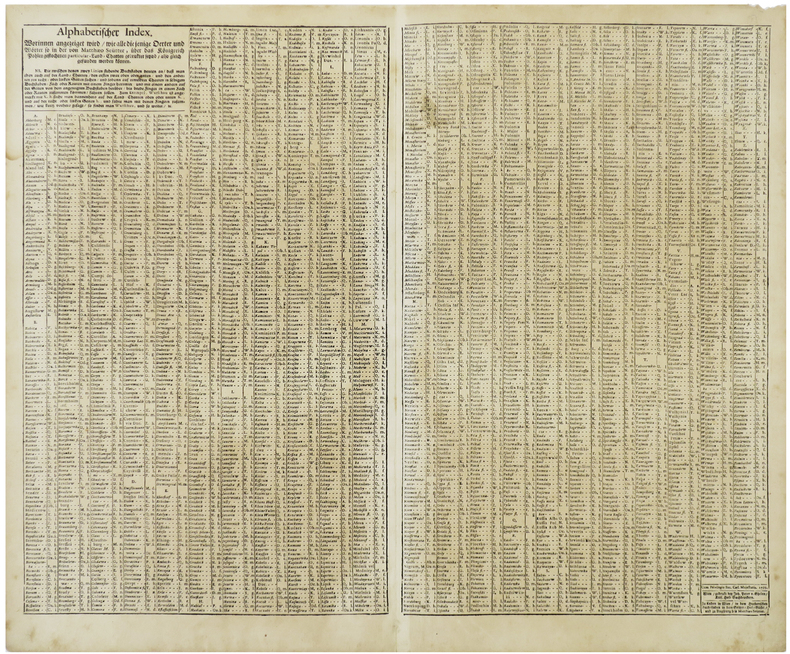
1735LBW-6404Augsbourg, 1735. 501 x 583 mm + 1 index alphabétique de 479 x 585 mm.
SLIVCN-9781631173028NOVA SCIENCE PUBLISHERS INC (5/2014)
1814393561814 2 volumes in-8 (200 x 125 mm), demi-veau havane de lépoque, dos lisses ornés de doubles filets gras au noir en place des nerfs, auteur, titre et tomaison dorés, (4), iv, 303 pages et (4), 352 pages. Paris, Treuttel et Wurtz, Renouard, Le Normand, Delaunay, 1815.
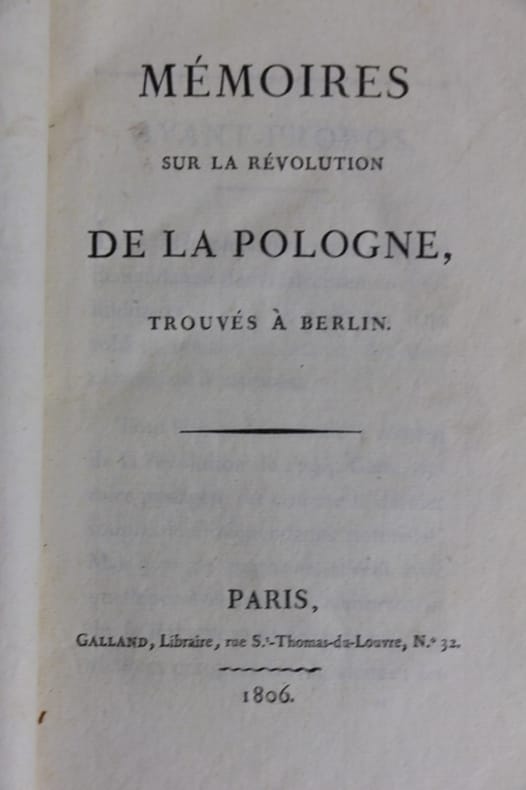
180694403Paris, Galland 1806 In-8 demi-veau époque à petits coins de vélin, dos lisse fileté, p. de titre en bas. verte, CIV- 215 pp. Très bon exemplaire bien complet des 2 grandes cartes dépliantes in fine Plan de la ville de Varsovie et Partie du Théâtre de la Guerre en Pologne de l'année 1794.
3 voll. in 8, pp. 309 + (1) di errata; 389 + (1) di errata; 548. Gora leggera al marg. sup. delleprime carte del II vol. Legatura in mz. pl. coeva (abrasione della carta all'angolo inferiore del II vol.). Opera anonima attribuita a Girolamo Lucchesini stampata fra il 1819 e il 1823: 'vi sono esposte molte notizie istoriche spettanti alla Polonia e specialmente la permanenza e le trattative fatte dall'autore in qualita' di Ministro del Re di Pussia e Varsavia. Nell'articolo necrologico sopra Girolamo Lucchesini morto in Firenze a' 28 di novembre 1825 si legge: - Era gia' destinato ministro regio in Olanda, quando gli venne imposto di recarsi a Varsavia per togliere la Polonia dalla autorita' della Russia e la tolse col farla ligia al Suo Re prussiano. Da cio' vietatogli d'essere a Pietroburgo, ove ad impulso di Caterina stessa era gia' scelto a Ministro fu spedito mediatore prussiano a condurre in Reichenbach la pace composta poi a Sistow tra l'Imperatore Leopoldo e la Porta' (Ciampi, Bibliografia critica delle antiche reciproche corrispondenze politiche, ecclesisastiche... dell'Italia colla Russia, colla Polonia ed altre parti settentrionali, 1834, p. 299). Melzi, p. 404.
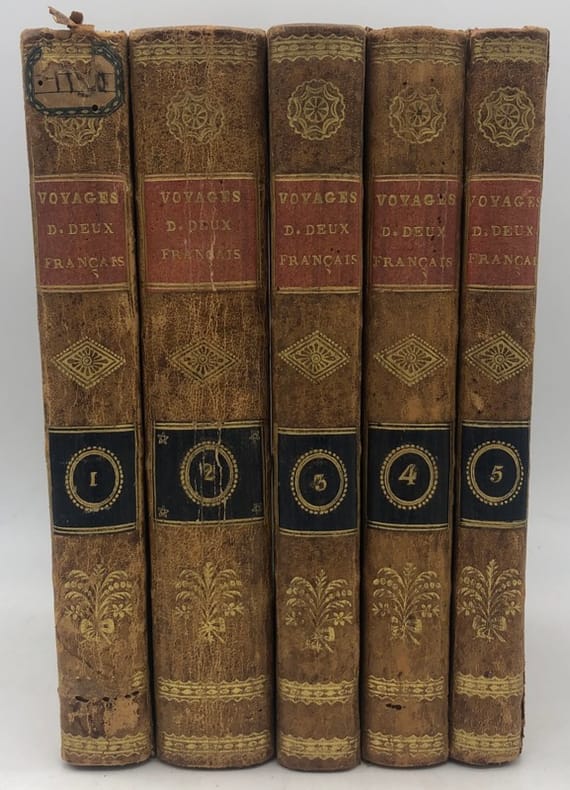
663833A Paris, Chez Desenne, 1796 5 vol. in-8, [4]-VIII-391, VIII-556, VIII-372, [4]-400 et [4]-299 pp., avec 6 tableaux dépliants, basane fauve marbrée, dos lisse orné de fleurons et de filets dorés, tranches mouchetées jaunes (reliure de l'époque). Petits trous de vers au dos de certains tomes, mors du tome V fendus. Qqs épidermures sur les plats. Rousseurs.
238091A Paris, Chez Desenne, 1796 5 vol. in-8, [4]-VIII-391, VIII-556, VIII-372, [4]-400 et [4]-299 pp., avec 6 tableaux dépliants, demi-basane brune à coins, dos lisse, filets dorés (reliure de l'époque). Accroc à la coiffe supérieure du tome 1.
111832A Paris, Chez Nicolas Le Gras, 1706 (I, IV, VI, VII) - 1701 (II, III, V) -1700 (VIII), 8 volumes in-12 de 90 x 160 mm environ, 292-268-349-426-316-367-234-341 pages. Ensemble comportant 27 cartes et 5 vues contrecollées. Pleines reliures mouchetées d'époque, dos à 5 nerfs portant tomaisons dorées et titres dorés sur pièce de cuir tabac, caissons ornés, roulettes dorées sur les coupes, tranches mouchetées. Reliures solides mais avec des défauts (7 coiffes manquantes, travail de vers par endroits, coins émoussés, quelques manques de cuir), des rousseurs, des pages brunies et des traces de mouillures, il manque 1 feuillet au tome VIII (p.223-224, sans manque de texte : feuillet vierge ? faux-titre ?), ensemble néanmoins très correct.
19131011PARIS. J. LEROY ET CIE, EDITEURS. 1913. GRAND ET FORT IN-4 (30 X 39 X 5,5 CENTIMETRES ENVIRON) DE (8) + III + (1) + 314 ET (2) PAGES, RELIURE D’EPOQUE 1/2 CHAGRIN VERT, DOS A CINQ NERFS, TITRE DORE, COUVERTURE ET DOS CONSERVES. SPLENDIDE OUVRAGE ILLUSTRE DE 46/48 PLANCHES HORS TEXTE D'UNIFORMES EN COULEURS, DE 10 PLANCHES HORS TEXTE, DONT 6 DE PORTRAITS MULTIPLES ET 4 D’ETENDARDS ET FANIONS (2 EN COULEURS) ET DE 24 VIGNETTES DANS LE TEXTE. EDITION ORIGINALE ET PREMIER TIRAGE, LIMITE A 1000 EXEMPLAIRES NUMEROTES, 300 SUR ARCHES ET 700 SUR ALFA, CELUI-CI SUR ALFA, NON JUSTIFIE. QUELQUES ROUSSEURS, SINON BEL EXEMPLAIRE. IL MANQUE 2 PLANCHES PAGES 88 (16° REGIMENT DE LANCIERS. COMPAGNIE D’ELITE) ET 152 (14° REGIMENT DE CUIRASSIERS). ON JOINT PAR CONTRE 2 PLANCHES DE CHELMINSKI PROVENANT DE L’OUVRAGE CONSACRE A LA GARDE IMPERIALE PAR LOUIS FALLOU EN 1901 : OFFICIERS DU 1° REGIMENT DE LANCIERS POLONAIS ET TARTARE LITUANIEN). PRIX ETABLI EN FONCTION DES MANQUES SIGNALES.
230917Paris, Paulin [Imprimerie de Ducessois], mai 1832 in-8, 28 pp., demi-basane fauve, dos lisse orné de guirlandes et fleurons dorés, pièces de titre bouteille et de tomaison brique (14), tranches citron (reliure de l'époque). Légers accrocs aux coiffes, manque de carton sur le plat supérieur et aux coupes.
17231949PARIS. BAROIS. 1723. IN-4 (21 X 25,5 X 4,5 CENTIMETRES ENVIRON) DE XII + 610 + 38 ET 22 PAGES, RELIURE D'EPOQUE PLEIN VEAU MARBRE, DOS A CINQ NERFS ORNE DE CAISSONS A FLEURONS DORES, TITRE DORE SUR ETIQUETTE MAROQUIN BRUN, DENTELLE DOREE SUR COUPES, TRANCHES ROUGES. EDITION ORIGINALE. (BARBIER. II. 793). LE SOCINIANISME EST UN COURANT CHRETIEN CREE PAR LEON SOCIN (1525-1562) ET PAR SON NEVEU FAUST SOCIN (1539-1604), DANS LA MOUVANCE DU PROTESTANTISME. IL REFUSE ENTRE AUTRES LA DOCTRINE DE LA SAINTE TRINITE. QUELQUES DEFAUTS EXTERIEURS, DONT MANQUES DE CUIR AUX COINS ET AUX MORS, SINON BON ETAT INTERIEUR, POUR CET OUVRAGE TRES RARE..
1710LBW-6237Nuremberg, [circa 1710]. 492 x 568 mm.
Da Stefano della Bella, disegno coevo a inchiostro e lavis - scuola di Jan de Bisschop (Giovanni Episcopo).<BR>Cm. 13 x 16.<BR>CONDIZIONI BUONE ma coon due angoli restaurati non professionalmente.
36290Paris Editions Les Gémeaux 1952 in 12 (19x14) 1 volume broché, vignette en noir et blanc contrecollée sur la couverture, 28 pages [2], avec des illustrations en noir et blanc. Ex-libris illustré de Georges Annenkov. Georges Annenkov (Yury Pavlovich Annenkov), Petropavlovsk 1889 - Paris 1974, artiste peintre, dessinateur et costumier français. Séverin Rajjchman, dit Sevek, né en 1918 d'un père polonais et d'une mère austro-tchèque - Annecy 1994. Collection ''Les artistes du temps présent''. Edition originale. Envoi autographe signé par l'auteur à Georges Annenkov. Bel exemplaire ( Photographies sur demande / We can send pictures of this book on simple request )
In 4°; 128 pp. Brossura editoriale costruttivista. Rinforzo al dorso. Prima rara edizione e ancor più raro a reperirsi ancora a fogli chiusi. “Aiuto! S. O. S.! Salva le nostre anime!” questo urla il celebre poeta futurista polacco, Jalu Kurek, ps. "Mafarka", Jan Skowron (nato il 27 febbraio 1904 a Cracovia come Franciszek Kurek, morto il 10 novembre 1983 a Rabka) nel frontespizio della sua seconda opera che qui presentiamo. Il romanzo è un racconto surrealista a tratti fantastico, caratterizzato da una prosa bizzarra, giochi di parole, neologismi e sperimentazioni linguistiche e presenta una veste sperimentale tipica dei romanzi d’avanguardia dell’epoca con scarsa introspezione dei personaggi, azione simultanea alla narrazione e una narrazione frammentata. Il protagonista del romanzo è Lorda Samotnika e del suo segretario Jan Skowron, apostoli del nichilismo e della disperazione che dopo una serie di traversie che vedono mischiate finzione a realtà attraverso l’Africa, l’Italia e Marte, insieme ad un gruppo di altri adepti, si lasciano annegare volontariamente nel Mar Baltico come segno di protesta contro la civiltà moderna senz'anima ma con un colpo di scena, nel finale del romanzo, Jan Skowron tradisce il suo Lord e si mette in salvo in quanto troppo innamorato delle donne. Kurek, amico di lunga data di Marinetti, compì i suoi studi universitari a Napoli. Abile traduttore dall’italiano, fu autore di numerosi romanzi e componimenti poetici, oltre a collaborare con numerose riviste. Alle sue traduzioni delle opere dei futuristi italiani, molte nemmeno pubblicate, si deve la propagazione delle idee del futurismo italiano in Polonia ed i forti legami fra i due movimenti. Dal 1931 al 1933 fu direttore del celebre giornale dell’avanguardia polacca “Linea”. Kurek si occupò anche di teatro e cinema realizzando uno dei primissimi film sperimentali polacchi “OR - Obliczenia Rytmiczne” mel 1933. Praticante di sport, fu un discreto alpinista ed un abile pittore. Negli anni 20’ del XX° secolo fu tra gli animatori del nascente movimento futurista polacco partecipando a serate futuriste, pubblicando diverse opere e facendo da collegamento fra i futuristi polacchi e quelli italiani. Prima edizione, in buone-ottime condizioni di conservazione ed ancora a fogli chiusi. Rif. Bibl.: Polska Bibliografia Literacka, PBL online, 1115719 (IH); sull’autore, Parlagreco Silvia, Costruttivismo in Polonia, Bollati Boringhieri, 2005.